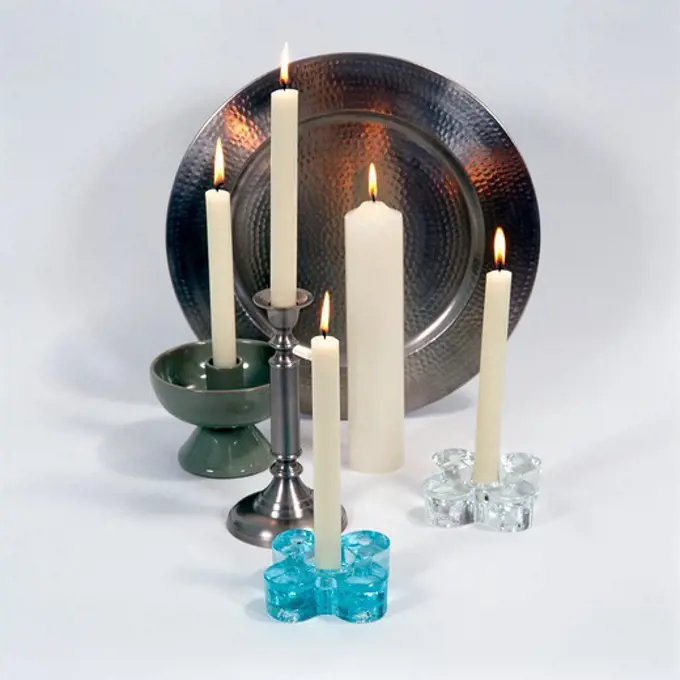
Elegant Candle Holders

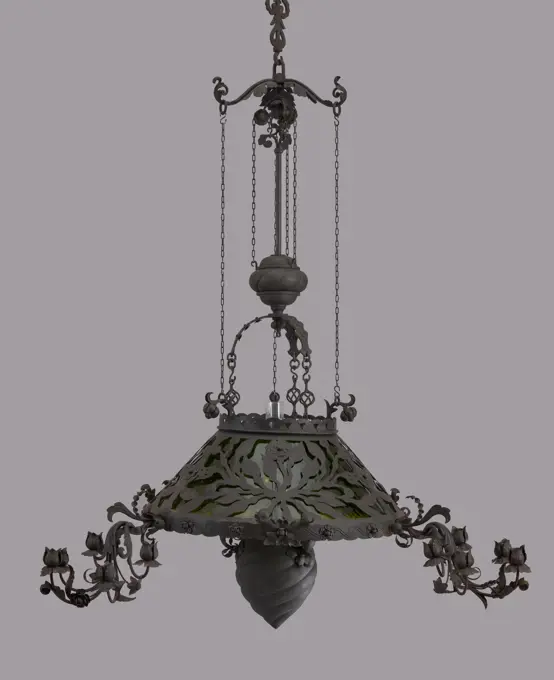
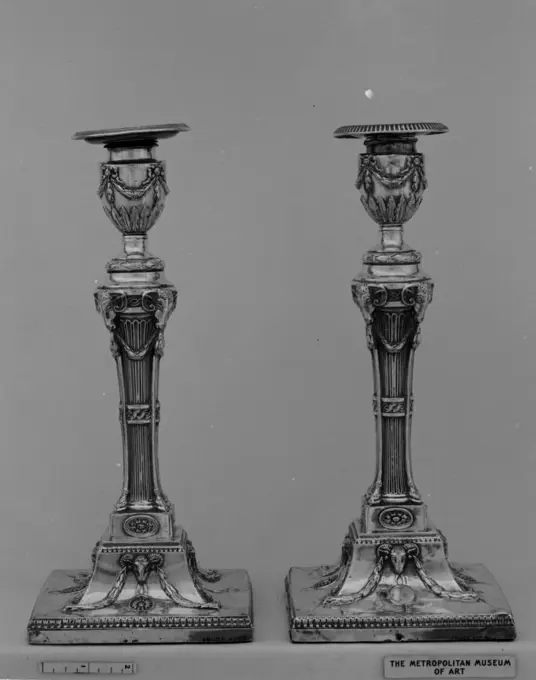
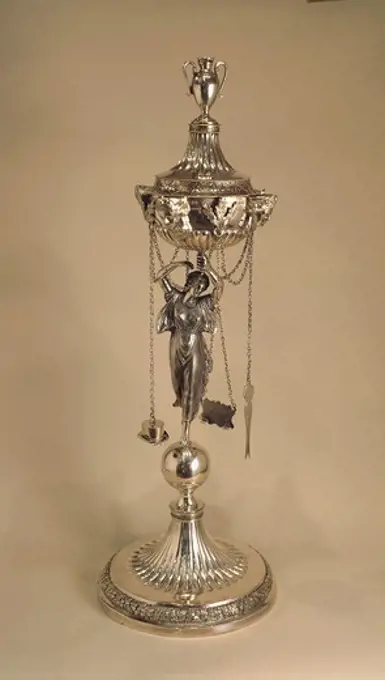
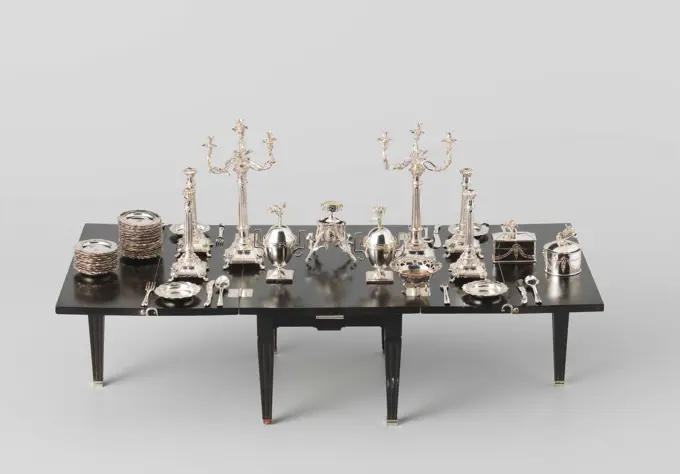
A variety of decorative candle holders and candelabra in silver and metalwork, showcasing intricate designs and historical artistry.

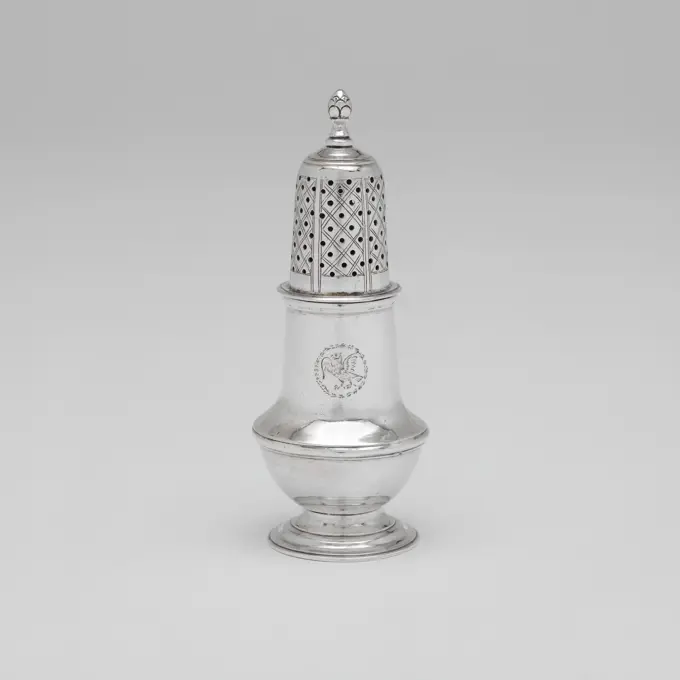
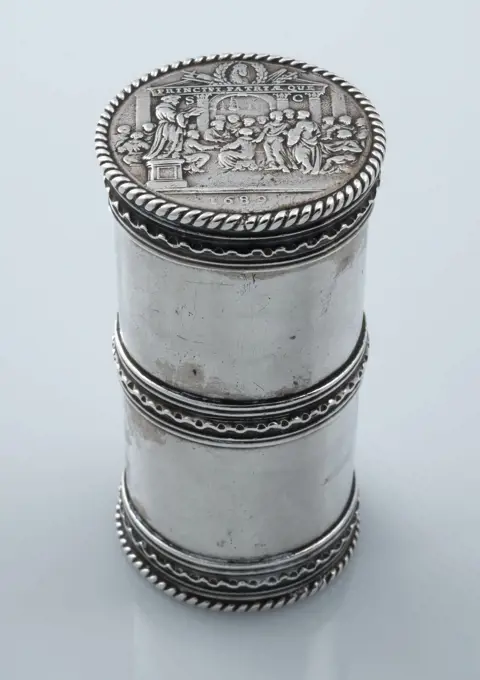
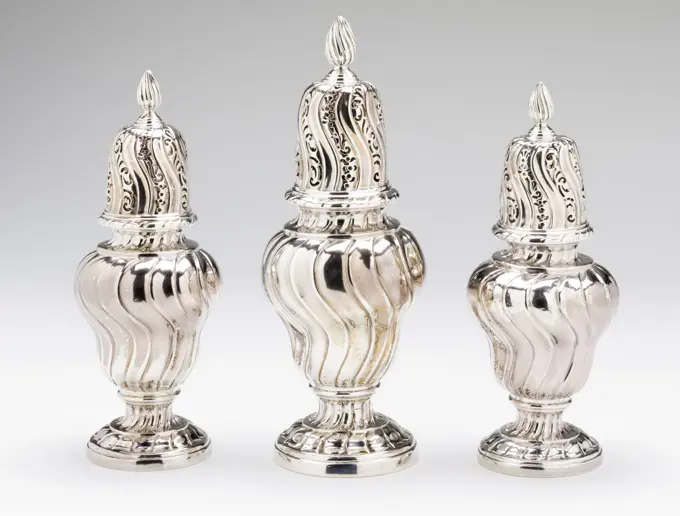
Sugar Caster (one of a pair) (sucrier à poudre); Simon Gallien (French, died 1757 (master 1714)); Paris, France; 1743; Silver; 26 × 11.4 cm, 1042.44 g (10 1,4 × 4 1,2 in., 33.5152 ozt.);
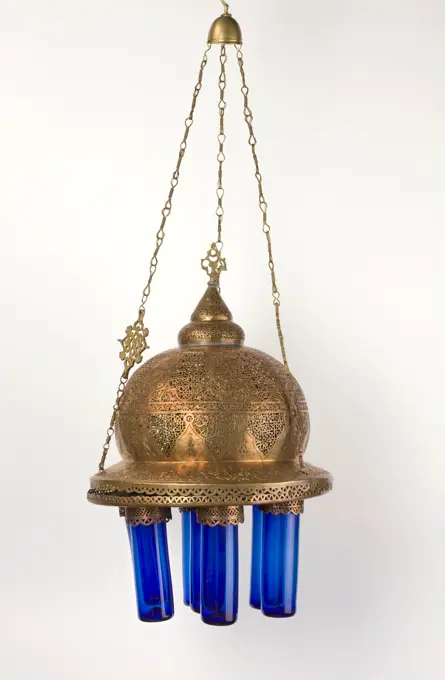
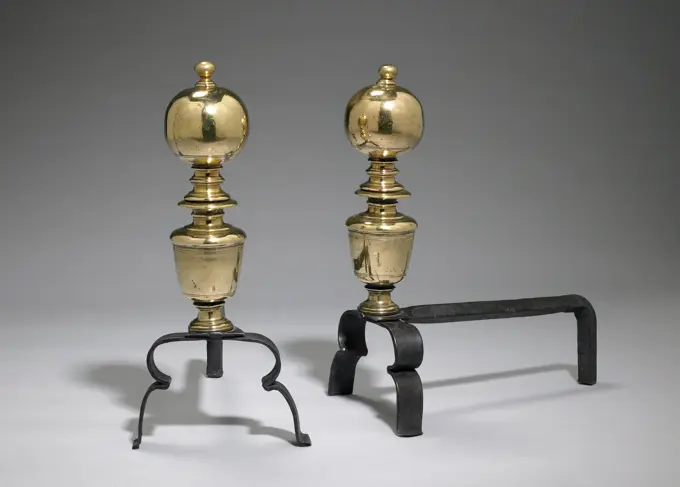
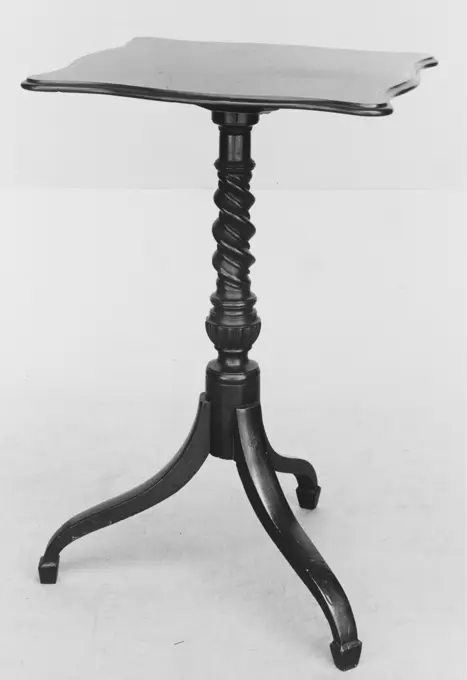
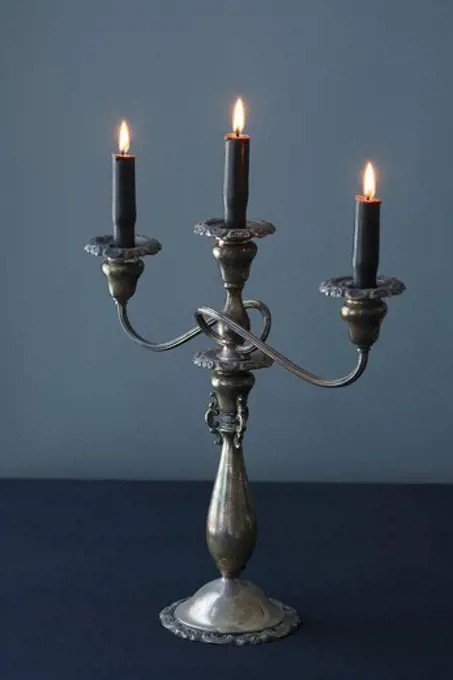
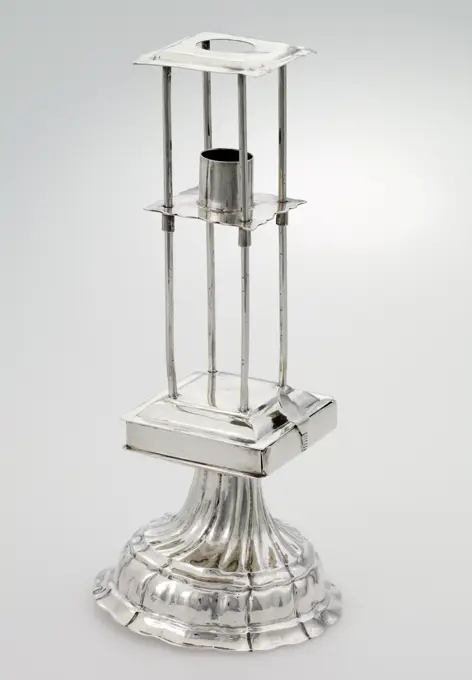
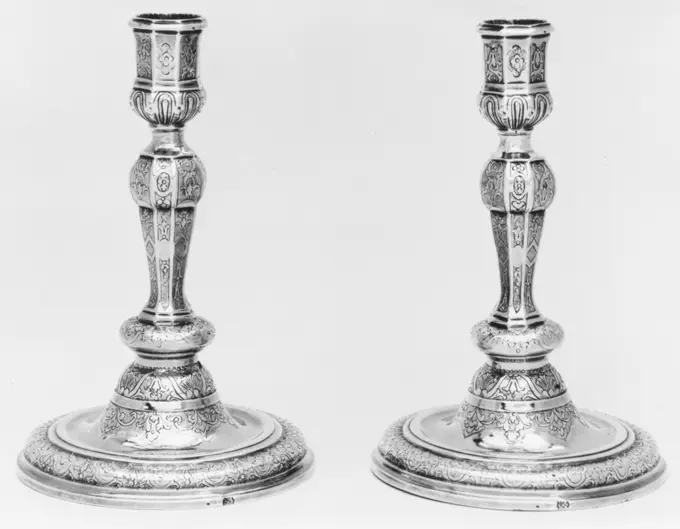
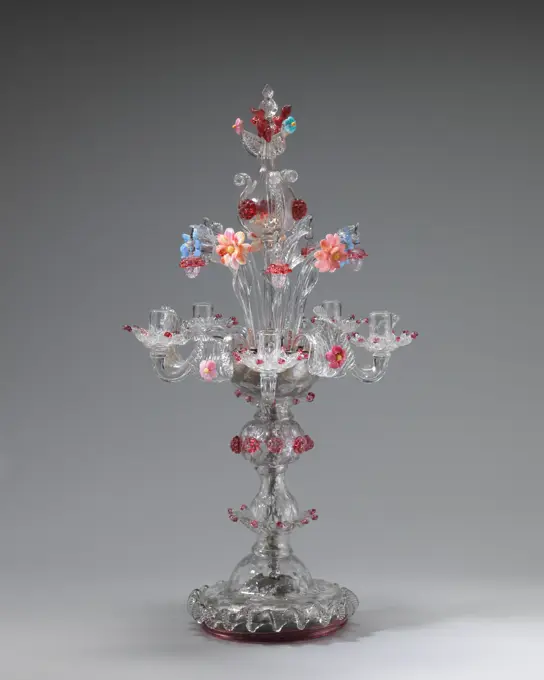
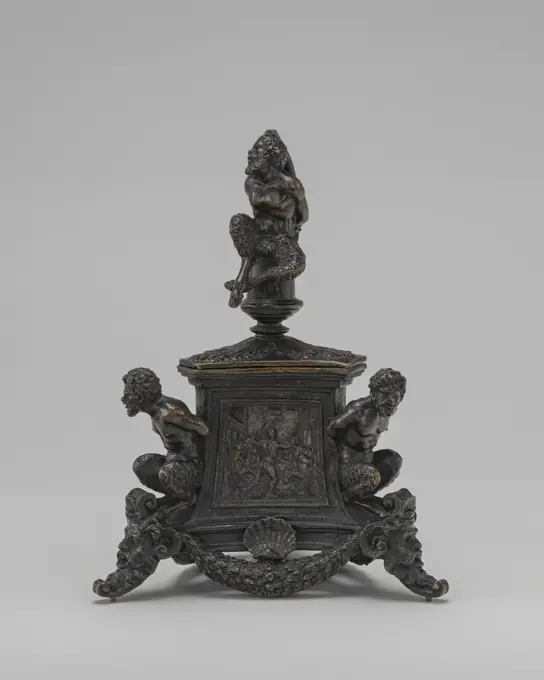
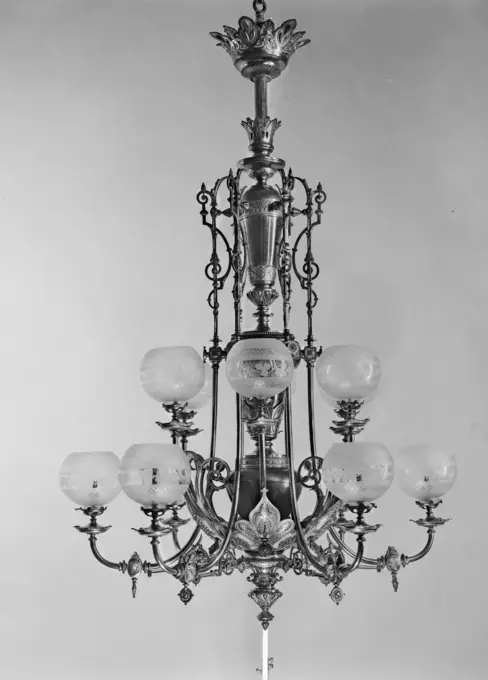
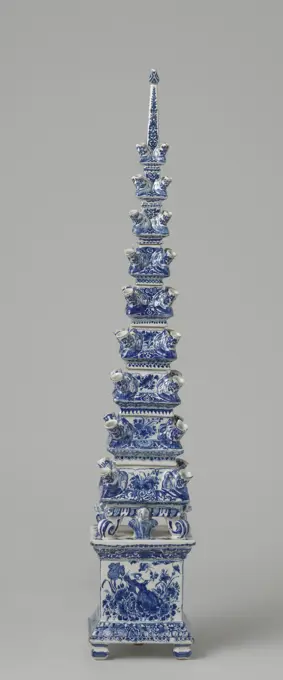
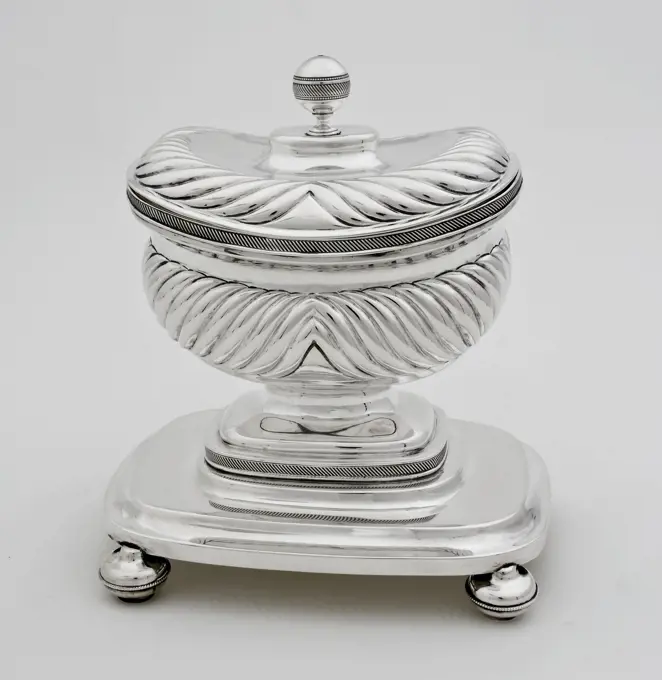
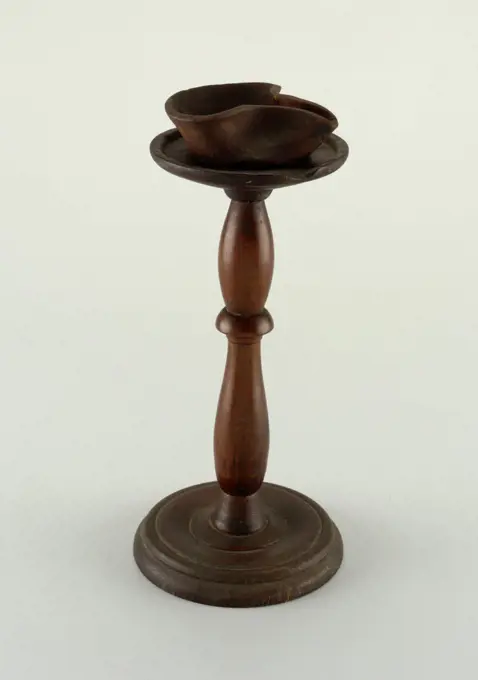
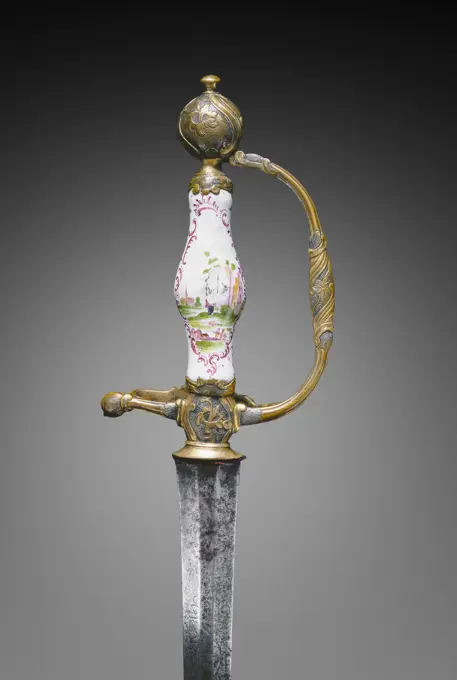
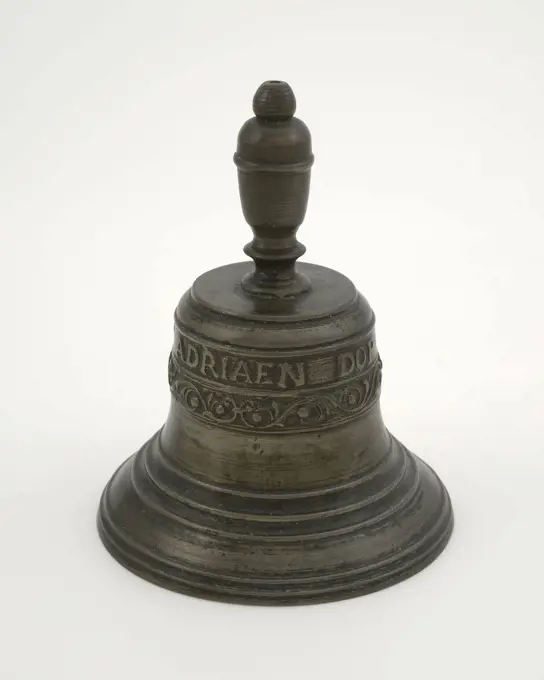
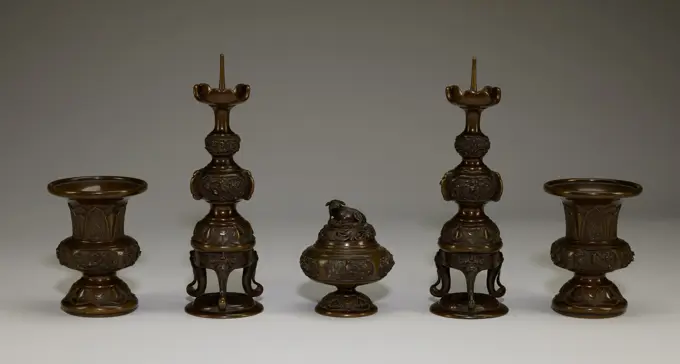
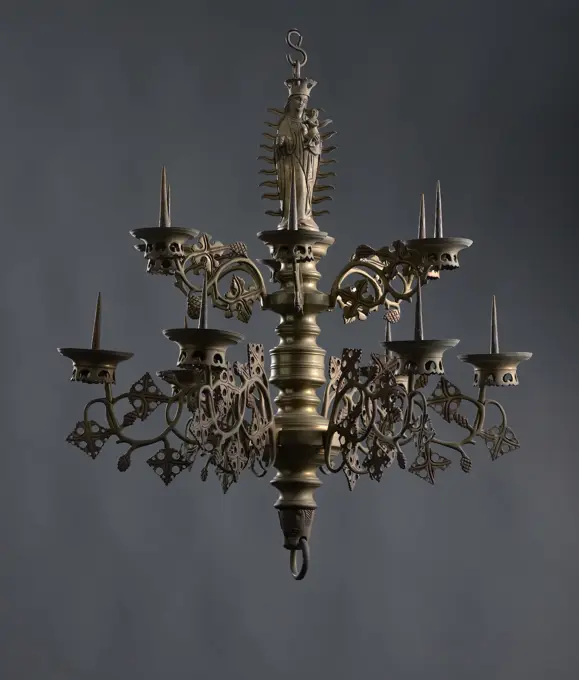
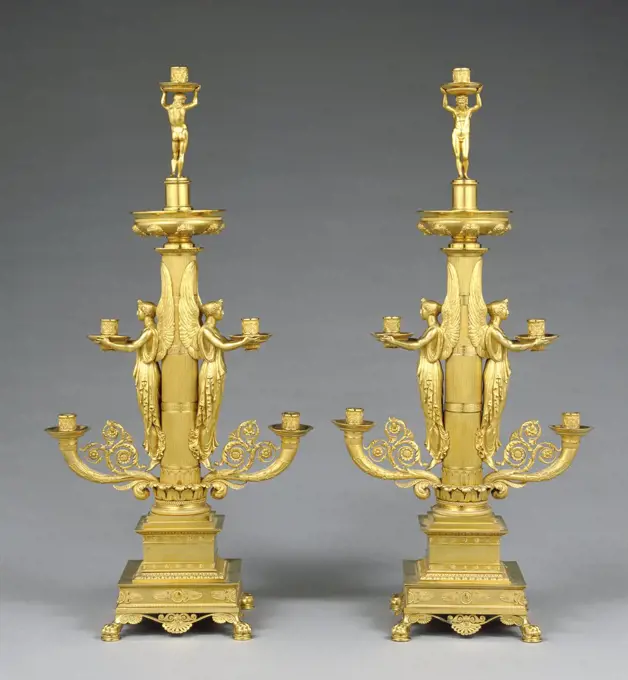
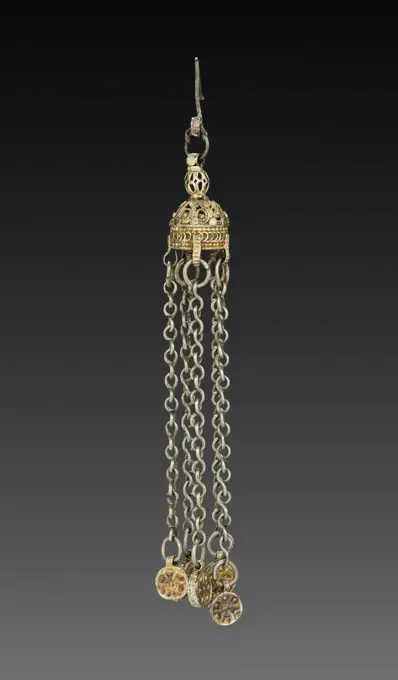
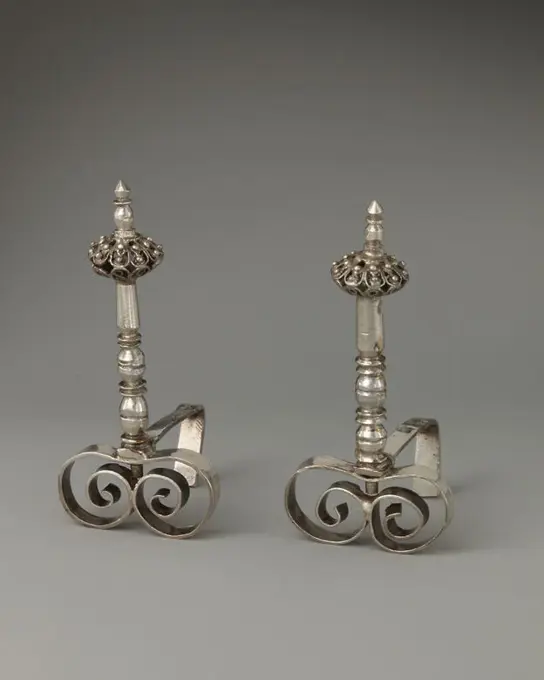
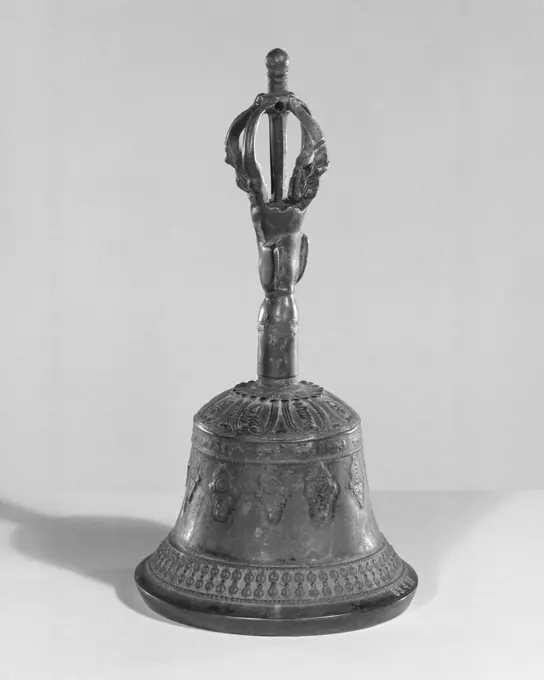
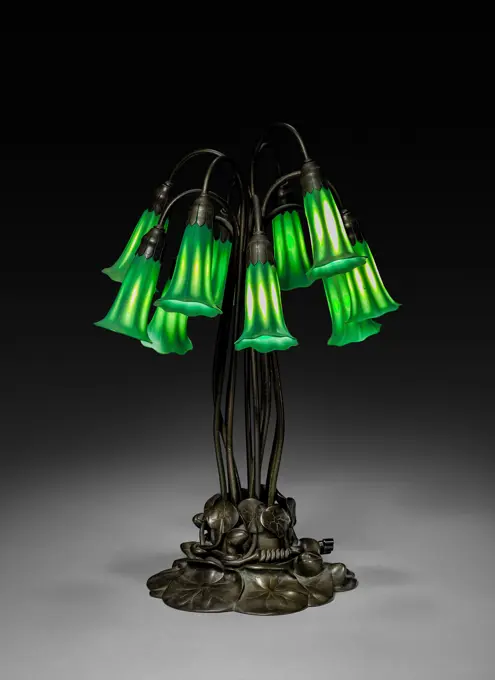
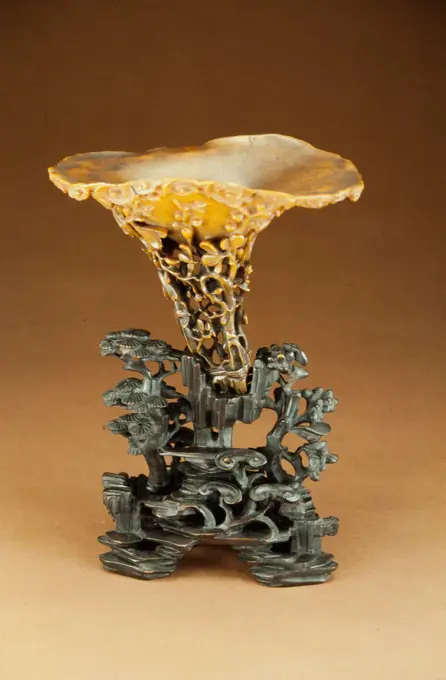
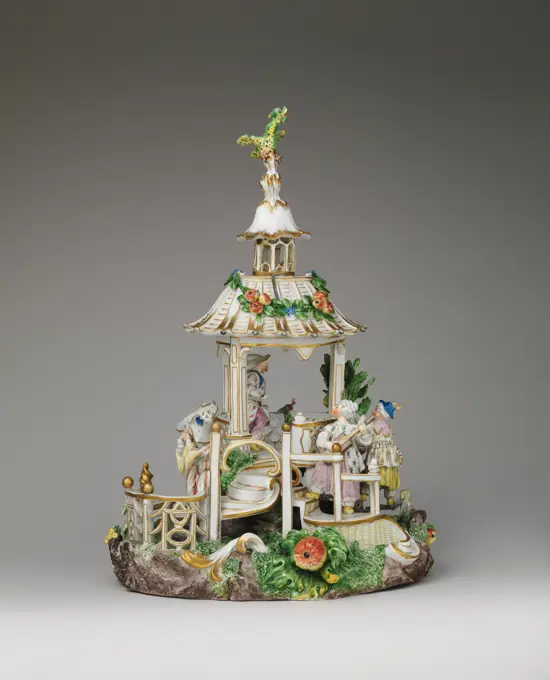
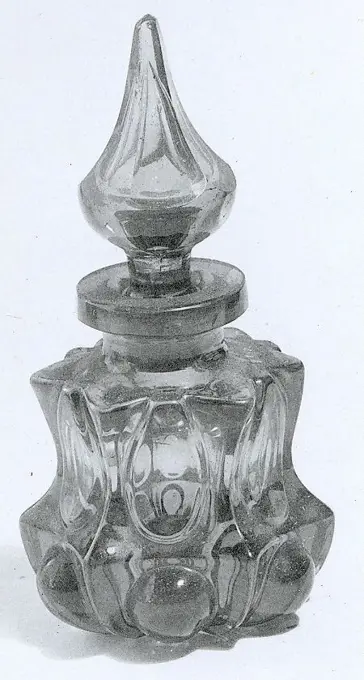
PerfumeBottleCaster 1750-70 Possibly made by Mark Nelson. Caster 1476Lamp;  19th/20th century (1801-00-00-1940-00-00);Arabian (culture), gift (provenance), metals, Islamic artUrn (cover), c. 1815. Flight, Barr and Barr (British). Artificial porcelain;Inkstand 1725-26 Simon Pantin I British. Inkstand. British, London. 1725-26. Silver. Metalwork-Silverstand for bottles, copper, silver, Flat base with reeded molding around edge; thick reeded guard rings for 7 bottles supported by vertical brackets with feathered motifs; tall central loop handle with two applied floral mounts at base., Sheffield?, England, ca. 1810, metalwork, Decorative Arts, stand for bottlesPair of Stirrups. Culture: Argentinian. Dimensions: 42.50.466; H. 7 1/4 in. (18.4 cm); W. 5 1/2 in. (14 cm); D. 1 in. (2.5 cm); Wt. 13 oz. (368.5 g); H. 7 1/4 in. (18.4 cm); W. 5 1/2 in. (14 cm); D. 1 in. (2.5 cm); Wt. 12.9 oz. (365.7 g). Date: 19th century.This pair of stirrups is of a type called in Spanish estribos de campana, or bell stirrups. Extremely popular in Argentina, they evolved from 18th-century baroque stirrups imported from Spain. The richest of them are usually chiseled in silver, while more modest examples like this pair were simply made of cast iron. Museum: Metropolitan Museum of Art, New York, USA.Andiron, one of a pair, 17th century, 19 3/4 x 21 3/4in., 35.3lb. (50.2 x 55.2cm, 16kg), Brass, iron, Netherlands, 17th centuryCandlestand 1795-1805 American. Candlestand 1161A Candelabra with Three Dark Candles Lit, 11/29/2013Coat rack with hat plateau, mirror and two umbrellas, anonymous, c. 1925 Coat rack of wrought iron, with hat plate, mirror and two umbrella branches. Northern NetherlandsNetherlands wrought iron (iron alloy). looking glasses Coat rack of wrought iron, with hat plate, mirror and two umbrella branches. Northern NetherlandsNetherlands wrought iron (iron alloy). looking glassesBlack candlestick engraved in retro style on white background. Hand drawn doodle sketch style. Vintage vector illustrationSilversmith's Art, England 18th century. Lewis Mettayer (1700-1740), Silver andirons. London, 1715.Epergne ca. 1810. Epergne 3537Havdalah candle holder and spice box, 1760, Johann Samuel Beckensteiner, German, 1713-1781, 7 3/4 x 3 3/8 x 3 3/8 in. (19.69 x 8.57 x 8.57 cm) (overall), Silver, Germany, 18th century, Johann Samuel Beckensteiner was a master silversmith in 18th century Nuremberg, a major center of silver production. Beckensteiner made a variety of silver forms, including ritual objects for both the Christian and Jewish communities. This type of Havdalah object, combining a holder for a ritual candle and a drawer to hold the aromatic spices, was developed and used in the 18th century only in Germany. It is used during the Havdalah ceremony marking the end of the Sabbath on Saturday evening. Artists continue to copy this form even in the present day.Pair of candlesticks 1714-15 N.H. (). Pair of candlesticks 200091Arm with candle crown candle holder, Anonymous, 1825 - 1875 Candle belonging to a brass candle crown. The S-shaped arm is decorated with nine vine leaves of wingerd leaves, partly to entangled tenders, and ends in the flat thickening with a screw hole. The round Vetvanger is equipped with ajour processed serrated decorations on the underside. This is attached with an eight -fold front and rear perforated candle holder on a vertical ring -shaped base, which are screwed onto the arms. This is the sixth arm, numbered with 6 triangles. West-Europa brass (alloy) casting Candle belonging to a brass candle crown. The S-shaped arm is decorated with nine vine leaves of wingerd leaves, partly to entangled tenders, and ends in the flat thickening with a screw hole. The round Vetvanger is equipped with ajour processed serrated decorations on the underside. This is attached with an eight -fold front and rear perforated candle holder on a vertical ring -shaped base, which are screwed onto the arms. Camphene Lamp. Dated: 1935/1942. Dimensions: overall: 29 x 15.3 cm (11 7/16 x 6 in.). Medium: graphite and watercolor on paperboard. Museum: National Gallery of Art, Washington DC. Author: Eugene Barrell.Oil Lamp 1790-1800. Oil Lamp. 1790-1800. Sheffield silver plate. Made in South Yorkshire, Sheffield, EnglandCandelabrum (one of a pair) 18th century Italian, Venice (Murano). Candelabrum (one of a pair). Italian, Venice (Murano). 18th century. Glass. GlassCelestial globe cup, anonymous, c. 1650 The standing figure tells the sky ball on shoulders, head and lifted left hand; He supports a tree branch with the judge. The sides of the pedestal are surrounded by cartilage ornament, while on the top, between plants and grasses, a frog, a turtle and other animals have been installed. The whole rests on four volute legs connected by Bloemslingers, on which Putti were seated. Silversmith: Venicesigner: Germanymaker: Amsterdammaker: Prague silver (metal) casting The standing figure tells the sky ball on shoulders, head and lifted left hand; He supports a tree branch with the judge. The sides of the pedestal are surrounded by cartilage ornament, while on the top, between plants and grasses, a frog, a turtle and other animals have been installed. The whole rests on four volute legs connected by Bloemslingers, on which Putti were seated. Silversmith: Venicesigner: Germanymaker: Amsterdammaker: Prague silver (metal) castingNorth Italian 16th Century, Inkstand with Bound Satyrs and Three Labors of Hercules, c 1530 1540 Inkstand with Bound Satyrs and Three Labors of HerculesChandelier 1868-70 Attributed to Mitchell, Vance & Co. This twelve-light brass chandelier, along with four corresponding two-branch sconces (68.143.6-.7, and .15-.16), originally illuminated the sitting room, or rear parlor, of the mansion built for Jedediah Wilcox at 816 Broad Street in Meriden, Connecticut. Completed in 1870, the house was heralded as one of the states grandest residences. Previously outfitted for gas lighting, the fixture has been electrified for use in the Museum. Likely made by Mitchell, Vance and Co., the chandelier incorporates a Néo-Grec decorative vocabulary that features stylized palmettes, fleur-de-lis, and portrait medallions above the gas keys and coordinates with the room's original suite of seating furniture, overmantel mirror, and window cornices (see 68.133.1-.5, .8-10, and 68.134.11).. Chandelier 3879Pair of Flower Pyramids, De Metale Pot, c. 1710 - c. 1720 Flower pyramid of faience Delft . Flower pyramid of faience Delft .Fifteen-light chandelier ca. 1785-90 French. Fifteen-light chandelier. French. ca. 1785-90. Gilt bronze, rock crystal. Metalwork-Gilt BronzeSilversmith: Jacobus Schalkwijk, Silver tobacco pot with lid on plateau with legs, tobacco pot pot holder metal silver, driven Base shape: base and body with lid rounded rectangular. Boat-shaped body with constriction under upper edge on constricted foot with ascending profile edge by means of four screws attached to ground surface with necking edge resting on four knot-shaped legs, boat-shaped lid protruding towards the center and crowned with spherical button on round constricted foot, bottom bottom surface (smashed) smoking store tobacco tobacco boxDrinking cup in the form of a ship on four wheels, witnessed with mast and sail, five soldiers on the back plecht, Abraham Werner, 1650 - 1700 Ship on four wheels of gilded silver. Five cast soldier figures are on the back pile. A silver sail on the mast. Augsburg silver (metal). gilding (material) gilding Ship on four wheels of gilded silver. Five cast soldier figures are on the back pile. A silver sail on the mast. Augsburg silver (metal). gilding (material) gildingBetty, earthenware, turned wood, Grease lamp of red earthenware; base with flaring rim which is circular except for one wick channel. Wooden stand with turned column rising from circular base and supported circular piece on which lamp rests., Pennsylvania, USA, ca. 1840, lighting, Decorative Arts, Lamp, LampSmall Sword, c. 1770. Germany, 18th century. Steel, gilt-brass, porcelain grip; overall: 90.5 cm (35 5/8 in.); blade: 76.9 cm (30 1/4 in.); grip: 11.3 cm (4 7/16 in.); hilt: 8.3 cm (3 1/4 in.). The small-sword was a light, quick weapon that emerged during the 18th century. It was carried by unarmored civilians, the noblemen of the upper classes. The porcelain hilt, elaborately decorated, would have been visible even when the sword was sheathed-making this object more an accessory of male attire than a utilitarian weapon.Adriaen Dop, Handbell with ADRIAEN DOP FECIT 1692, handbell sound bronze, handle h 6.5 molded Bell shape and baluster-shaped handle Loose clapper on hook inside molded in relief around top rank decoration: ADRIAEN DOP FECIT 1692 metal casting communication soundWater kettle on burner. A kettle of this kind was used for water, kept hot by the flame from the burner. The water was used to dilute strong tea, made in small teapots. The decoration of this kettle is in the neo-classical style.Candle holder, Iron, fruitwood (pear), Flat iron strip, wound to form a hollow vertical spiral, and terminating in a hook at the top. Inside, a candle socket, the projecting pin of which runs in the spiral opening to regulate the height of the candle. Dome circular wooden base., France or England, 18th century, metalwork, Decorative Arts, Candle holderSt Peters Chains in The Church San Pietro in Vincoli in Rome, Italy.Incense burner, from a five-piece Buddhist altar set, 18th century, Unknown Japanese, 4 3/4 x 3 13/16 x 3 13/16 in. (12.07 x 9.68 x 9.68 cm), Bronze, Japan, 18th century, In East Asia, Buddhists place incense, flowers, and light (candles) before holy images as an expression of homage and to increase the magnificence of the worship hall. Incense is believed to purify the space, flowers constitute an offering or gift to the diety, and light symbolically illuminates the darkness of ignorance. Altar sets consisting of flower vases, candleholders, and incense burners were first brought to Japan by traveling priests in the 1200s. By the 1300s, the Japanese were casting their own versions, which were more subdued than their Chinese prototypes and often featured birds and flowers of the four seasons cast in high relief. Miniature altar sets, such as this one, were used in formal reception halls when the painting on display in the alcove represented a Buddhist diety.Silversmith's art, Italy, 17th century. Cosimo Merlini (1580-1641), silver chalice, 1637. Located in Tuscany region, at Luco di Mugello fraction of Borgo san Lorenzo (Florence province), in the former Camaldolese Convent of San Pietro. Detail of the base with reliefs representing the symbols of Jesus Christ's Passion.GRAN CRUZ PROFESIONAL DE PLATA SOBREDORADA. Author: ENRIQUE DE ARFE (1475-1545). Location: CATEDRAL DE SAN MARTIN. Orense. SPAIN.. Candle arm belonging to a candle wreath of two heights with maria figure at the top. The arm is bent twice and is decorated with two grape vegetables and two winger leaves. The round fat catcher has opened, knurled vertically placed edges on the bottom, to mask the attachment to the arm. This is done by a round iron pin, which has been screwed into the end of the arm. This is the fourth arm of the upper ring, numbered with 4 vertical notches.Cadel from the cover;  19th century (1801-00-00-1900-00-00);Pair of Candelabra; Designed by Filippo Pelagio Palagi, Italian, 1775 - 1860; about 1830 - 1840; Gilt bronze; Various, see extensionsEarring, 1800s. Bulgaria, 19th century. Silver gilt; average: 12.1 cm (4 3/4 in.).Miniature firedog (one of a pair) (part of a set). Artist: Probably George Manjoy (British, active 1685-ca. 1720). Culture: British, London. Dimensions: 2 1/2 × 1 1/8 × 1 3/8 in. (6.4 × 2.9 × 3.5 cm). Date: 1690-91. Museum: Metropolitan Museum of Art, New York, USA.Tibetan buddhist ceremonial religious bell isolated on whitehanger hanging;  End of the 19th century (1890-00-00-1900-00-00);Clutha Vase; Designed by Christopher Dresser (Scottish, 1834 - 1904); Manufactured by James Couper & Sons (United Kingdom); Scotland; mold-blown glassdesign: Romeyn de Hooghe, Toolbox, with image Erasmus, city weapon Rotterdam and principi patriae que, 1689, medallions case holder silver h 6.8, beaten rolled Cylindrical tube with lid Bottom and lid are built around the Rotterdam tool medal of 1689 Both medals are encased in thin cable edge Underneath and above bottom three profile ribs between cable edge Around the middle of the tube four profile ridges with cable edge between them On token: principi patriae que (for frost and fatherland) 1689 SC (Senatu Consulto = having heard the senate vroedschap). And on the other side (inside lid and bottom) ROTERO DAMAM Rotterdam heraldry vroedschap government Erasmus Maas Collection .O van Kerkwijk.Pair of candlesticks ca. 1777 probably by John Winter and Co.. Pair of candlesticks. British, Sheffield. ca. 1777. Sheffield plate. Metalwork-SilverplateSilversmith's Art, Italy 19th century. Silver oil lamp, Neoclassical style. Venetian manufacturing.Close-up of ornate silver candle-holder with lidLand;  early XIX century (1801-00-00-1810-00-00);Chandelier ca. 1690 British. Chandelier. British. ca. 1690. Wood, gilt gesso, yellow metal gilt lead. Woodwork-FurnitureSet of Three CastersMount, Andiron; brass; 1902-17-2Door lock;  approx. 1720 (1715-00-00-1725-00-00);Brass design fitting on antique wooden carving bottle with lid, Jodhpur, Rajasthan, India Copyright: xSafatxAli/DinodiaxPhotoxDisplay case with gold and silverware; Amsterdam gold and silver. .. Round eating sign with scalloped edge. Guird builds are engraved on the edge. A flower is engraved in the middle of the board. The sign has been labeled: stk. = Amsterdam, jrl. = X (1782) and mt. = Foot 430. The plate is a copy from a set consisting of 36 identical plates (BK-NM-11177-189 up to / m. NM-11177-224).Plate. Round eating sign with scalloped edge. Guirlandes are engraved on the edge. A flower is engraved in the middle of the board. The plate has been marked: stk. = Amsterdam, jrl. = X (1782) and mt. = Foot 430. The plate is a copy of a set consisting of 36 identical plates (BK-NM-11177-189 up to / m. NM-11177-224).Plate. Round eating sign with scalloped edge. Guird builds are engraved on the edge. A flower is engraved in the middle of the board. The sign has been labeled: stk. = Amsterdam, jrl. = X (1782) and mt. = Foot 430. The plate is a copy from a set consisting of 36 identical plates (BK-NM-11177-189 up to / m. NM-11177-224).Throne for the Exposition of the Blessed Sacrament, anonymous, c. 1680 - c. 1720  Antwerp Linden. Some leaves: metal. Construction: Iron (Metal)  Antwerp Linden. Some leaves: metal. Construction: Iron (Metal)Salt barrel. Salt barrel on three legs. Garlandes hang between the legs. Above the Guirlandes is an openwork gallery with ovals. The loose inner bin has a pearl edge. The salt vessel has not been marked. Three identical salt vessels with Inputrs are among the salt barrel. BK-NM-11177-249, BK-NM-11177-250 and BK-NM-11177-251.Set of fireplace accessories isolated on white backgroundGuz do półoficjalnej czapki urzędnika pierwszej rangi. unknown, craftsmanRoman civilization, silver strainers, from House of Menander, Pompei, ItalyPerfume container;  End of the 19th century (1880-00-00-1895-00-00);Marble trophy cup - 3d madeGlass Globe. Dimensions: H. 5 5/8 in. (14.3 cm); Diam. 3 3/4 in. (9.5 cm). Date: ca. 1895. Museum: Metropolitan Museum of Art, New York, USA.Antique lamp Antique table lamp with gold ornaments and clipping path includedla Copyright: xZoonar.com/Baloncicix 8008821Dril-bu late 19th century Tibetan The dril-bu (bell) along with the dorje (scepter) are indispensable liturgical instruments used during Buddhist ritual recitation. They are usually regarded as one object, are matched and used together. The bell is held in the left hand and the scepter in the right as both hands gracefully move in prescribed gestures that serve as a commentary to the recitation. As a pair, they reflect the two aspects of Buddhist practice: method and wisdom, intuition and compassion. The prongs emerging from the bell's handle have their roots in Indic mythology and recall the thunderbolt scepter of Indra, a Hindu warrior god who governs rain, clouds and lightning. Small dorjes appear at the bell's rim. Listen to experts illuminate this artwork's story Listen Play or pause #9360. Dril-bu Supported by Bloomberg Philanthropies We're sorry, the transcript for this audio track is not available at this time. We are working to make it available as soon as possible.. Dril-bu. Still-Life, ancient Chinese Hats, Tian-tsui art, golden metal wedding headdress and Kingfisher feathers, nineteenth century.Vintage Tiffany Studios Lamp. Pond Lily Table Lamp, Art Nouveau lamp with multiple green shades in shape of flowers. c.1902-1910Bord, anonymous, 1782 Round eating plate with scalloped edge. Shiringes are engraved on the edge. A flower is engraved in the center of the board. The board is marked: stk. = Amsterdam, JRL. = X (1782) and Mt. = Foot 430. The board is a copy of a set consisting of 36 identical plates (BK-NM-111177-189 to BK- NM-11177-224). Amsterdam silver (metal) Round eating plate with scalloped edge. Shiringes are engraved on the edge. A flower is engraved in the center of the board. The board is marked: stk. = Amsterdam, JRL. = X (1782) and Mt. = Foot 430. The board is a copy of a set consisting of 36 identical plates (BK-NM-111177-189 to BK- NM-11177-224). Amsterdam silver (metal)Andiron 1795-1810 American. Andiron. American. 1795-1810. Brass, iron. Made in New York, New York, United StatesAn image of birdcage on white backgroundLantaarnopsteker, anonymous, in or before 1704 On an elongated plate is a ladder against a street lamp. At the foot of the ladder is a lantern rag plug with an oil can in his right hand. A diamond pattern is engraved in the plate. The image is marked: twice a grape paw with two leaves in a round shield and the letters O W in a rectangle. Netherlands silver (metal) On an elongated plate is a ladder against a street lamp. At the foot of the ladder is a lantern rag plug with an oil can in his right hand. A diamond pattern is engraved in the plate. The image is marked: twice a grape paw with two leaves in a round shield and the letters O W in a rectangle. Netherlands silver (metal)The Chamberlain Casket, 1903, Top view Designer: Henry Wilson (d. 1934) Commissioned by Members of the Constitutional Club to express admiration and gratitude to the Rt Hon Joseph Chamberlain MP in 1903 for his services at home and abroad. It was made at the Central School of Arts & Crafts, London., Precious metal, Gold, Enamel, Precious metal, Silver, Precious stone, moonstone, Birmingham historyFlask 17th century possibly French. Flask. possibly French. 17th century. Glass. GlassSilver oil and vinegar with two crystal bottles and a silver spray bus, Isacq Samuel Busard, 1767 Silver oil and vinegar with two crystal bottles and a silver pear-shaped spray bus. The underside of the basket is decorated with branches. The wall is sawn open with a pattern of crossing tires. On the bottom of the basket and on the bus, the alliance weapon of Alexander Rijksgraaf van Bylandt and Anna Barones van der Duyn is engraved. The Hague silver (metal). crystal (lead glass) casting / engraving Silver oil and vinegar with two crystal bottles and a silver pear-shaped spray bus. The underside of the basket is decorated with branches. The wall is sawn open with a pattern of crossing tires. On the bottom of the basket and on the bus, the alliance weapon of Alexander Rijksgraaf van Bylandt and Anna Barones van der Duyn is engraved. The Hague silver (metal). crystal (lead glass) casting / engravingLibation Cup with Base, 17th-18th century, 6 1/4 x 7 x 4 1/2in. (15.9 x 17.8 x 11.4cm), Rhinoceros horn, China, 17th centurySouvenir spoon with view of with tower at Coruña and arms of Spain European late 19th century View more. Souvenir spoon with view of with tower at Coruña and arms of Spain. European. late 19th century. Silver-gilt and enamel. Metalwork-SilverChandelier red Classic design of chandelier with red lampshade isolated Copyright: xZoonar.com/Baloncicix 14275077Chinese Pavilion ca. 1770 Frankenthal Porcelain Manufactory. Chinese Pavilion 207174Weathervane Line DrawingTea Caddy 1725-40 Peter Van Dyck. Tea Caddy 8261Close-up of lighted candles in group of glass and pewter candle holdersGiant in Tower' mechanical bank, c. 1892, John Harper & Company, Ltd., English, Willenhall, Staffordshire, England, 1790-1980s, 9 1/4 x 3 3/8 x 3 3/8 in. (23.5 x 8.57 x 8.57 cm), Iron, pigment, 19th century