Elegant Decorative Boxes

A range of ornamental boxes featuring intricate designs and materials, displaying cultural craftsmanship and artistic detailing.

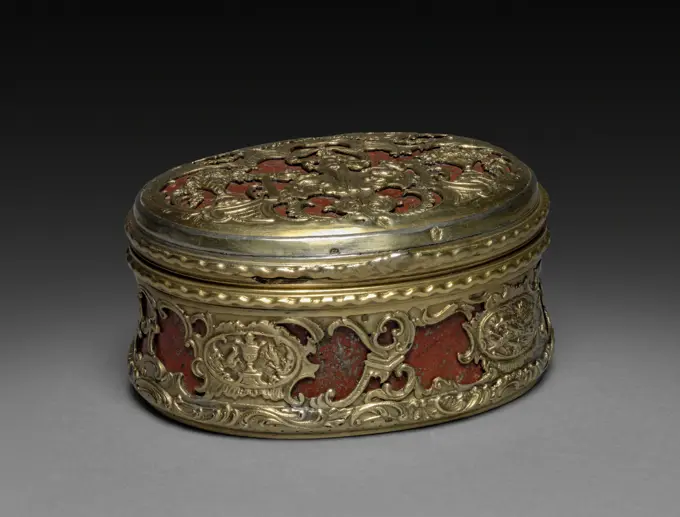
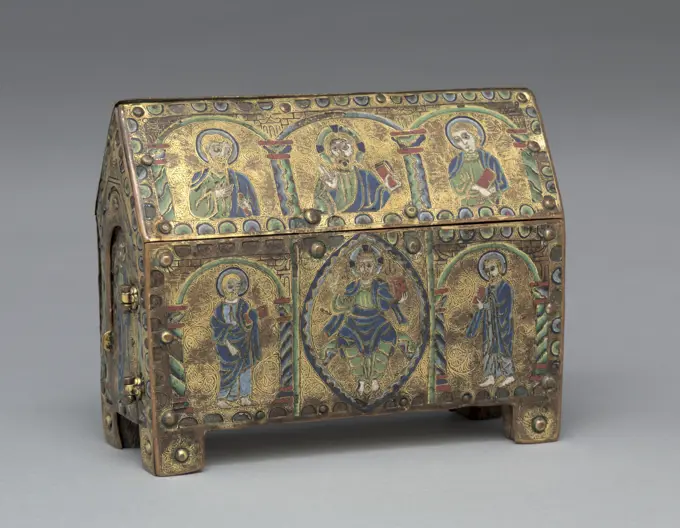
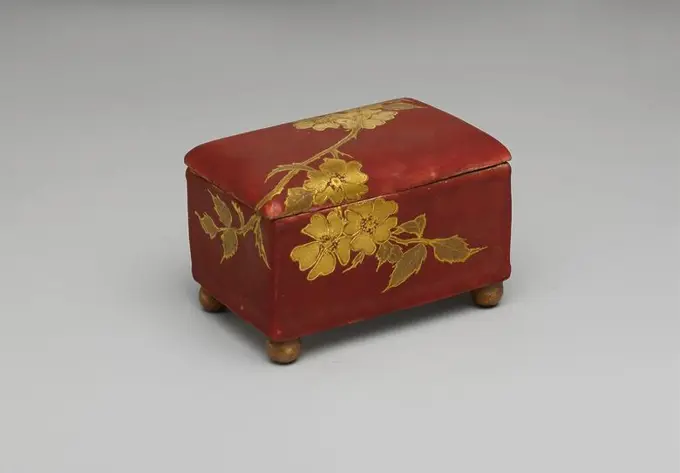
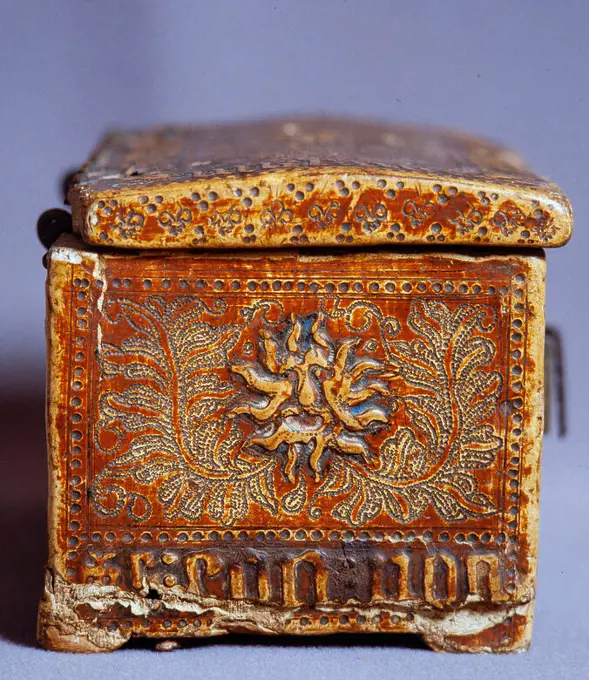
Wood box with four small boxes in the inside in which fish (chips) of bone, anonymous, c. 1700 - c. 1720 Wood box with four small boxes in the inside in which fish from bone. The woodwork is painted red on the outside and covered with gold ornaments: figures in parchment cut out in Louis Xive style.  wood (plant material). beech (wood). paint (coating). parchment (animal material). horn (animal material) Wood box with four small boxes in the inside in which fish from bone. The woodwork is painted red on the outside and covered with gold ornaments: figures in parchment cut out in Louis Xive style.  wood (plant material). beech (wood). paint (coating). parchment (animal material). horn (animal material)
Wood box with four small boxes in the inside in which fish (chips) of bone, anonymous, c. 1700 - c. 1720 Wood box with four small boxes in the inside in which fish from bone. The woodwork is painted red on the outside and covered with gold ornaments: figures in parchment cut out in Louis Xive style. wood (plant material). beech (wood). paint (coating). parchment (animal material). horn (animal material) Wood box with four small boxes in the inside in which fish from bone. The woodwork is painted red on the outside and covered with gold ornaments: figures in parchment cut out in Louis Xive style. wood (plant material). beech (wood). paint (coating). parchment (animal material). horn (animal material)
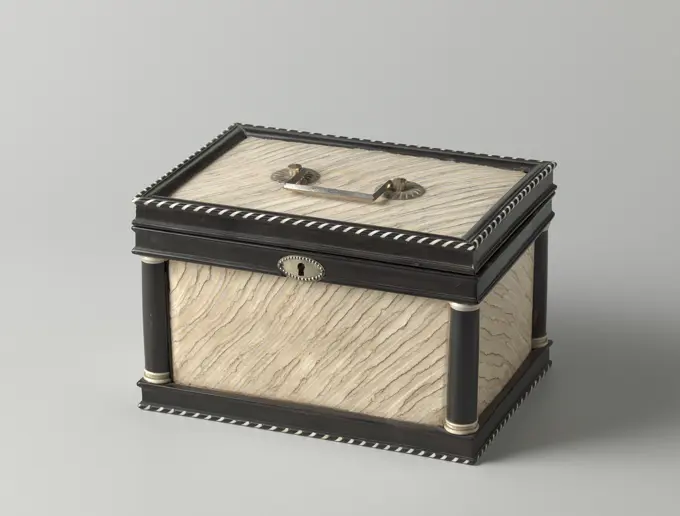
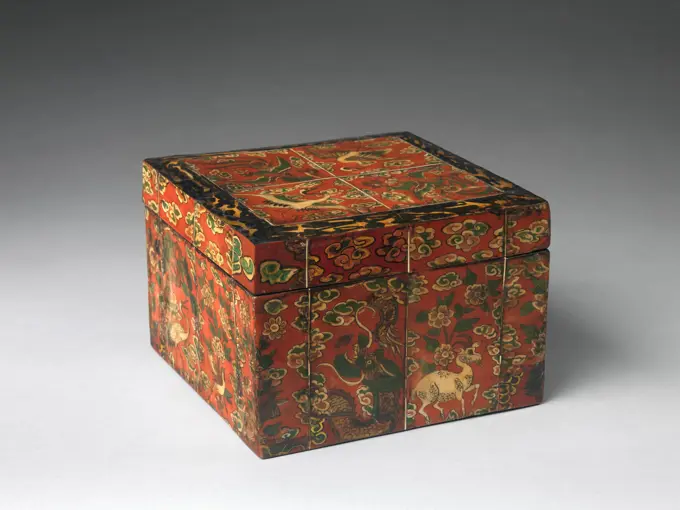
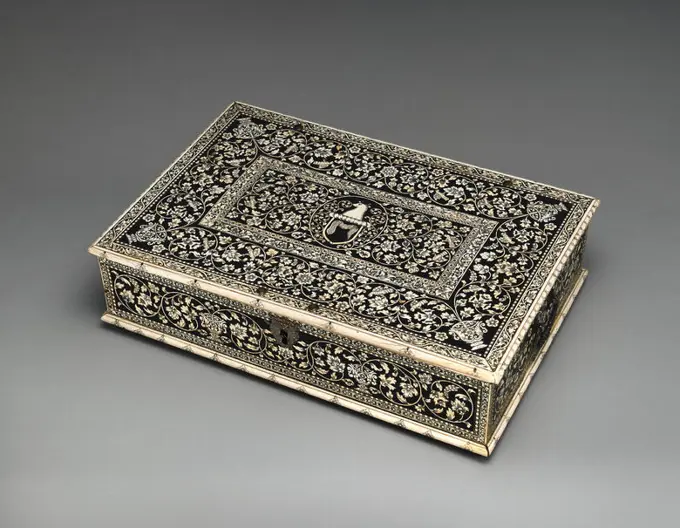
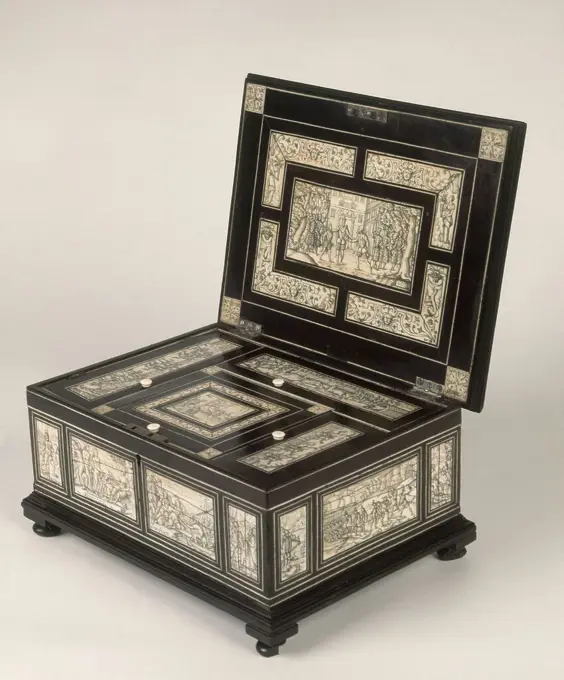
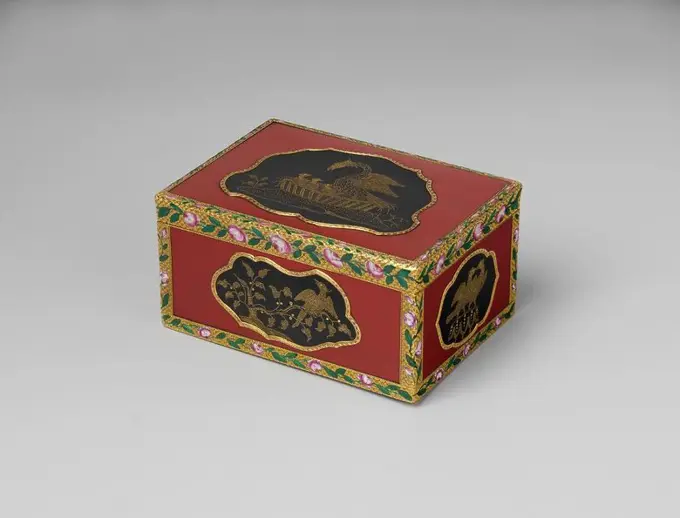
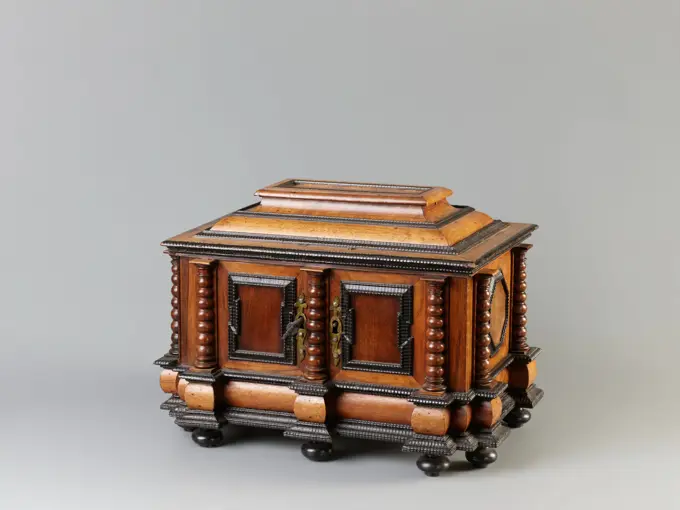
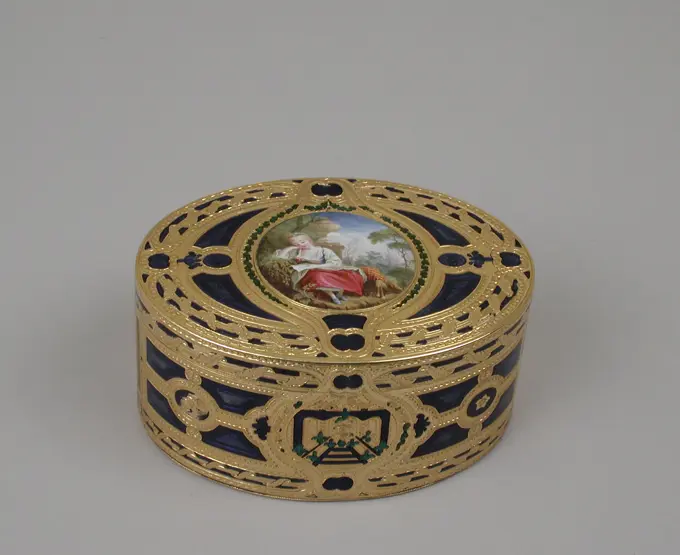
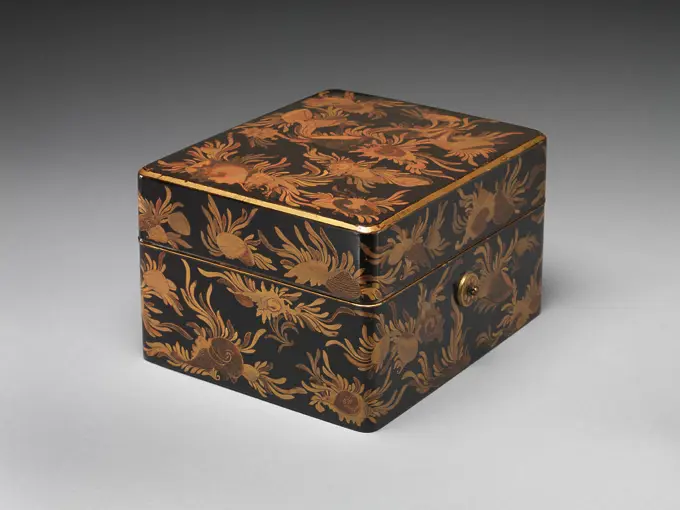
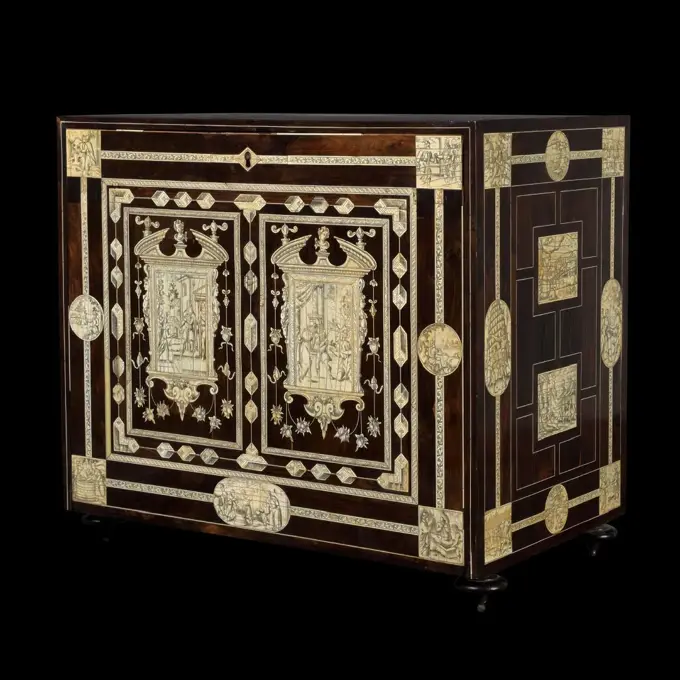
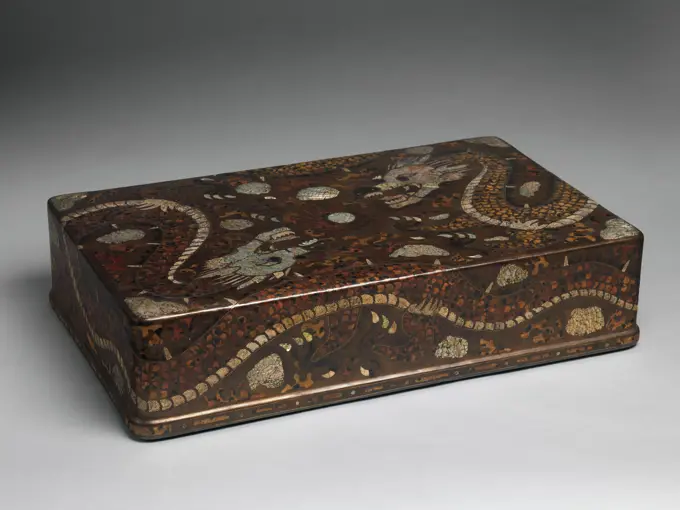
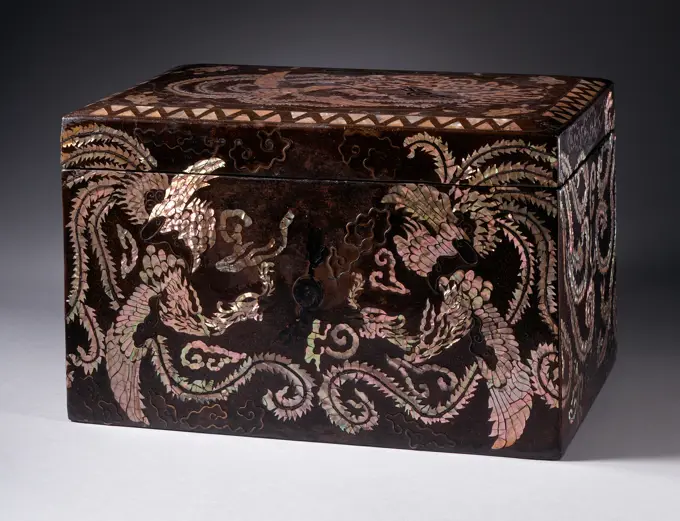
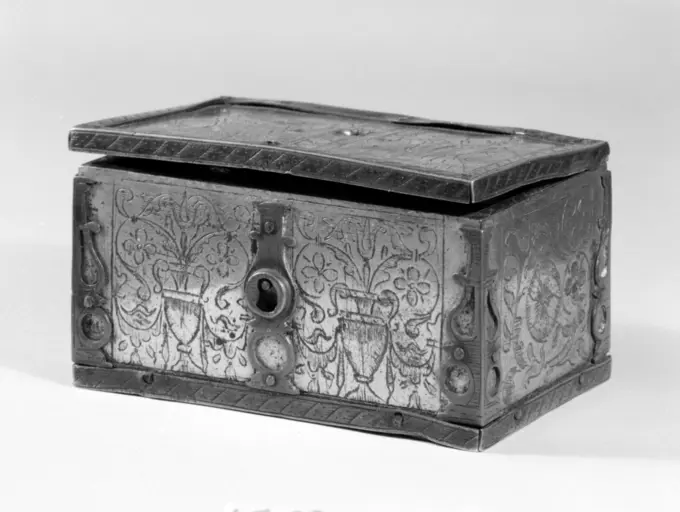
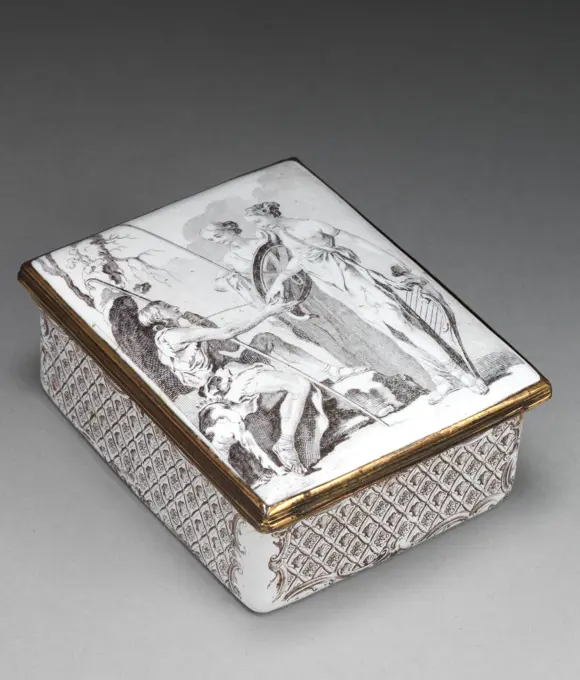
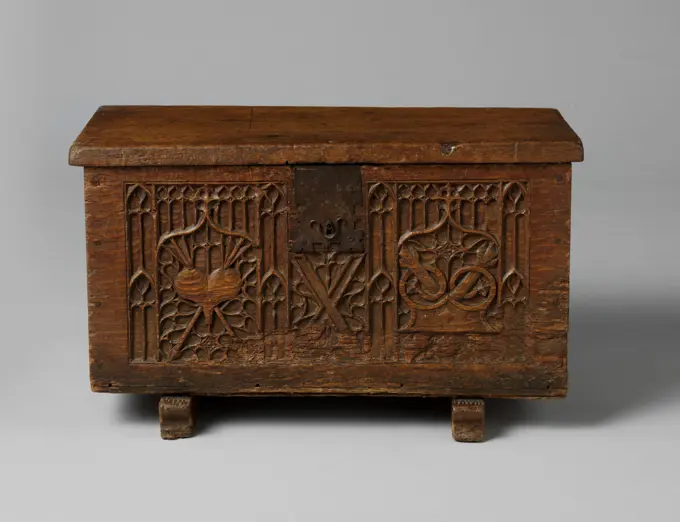
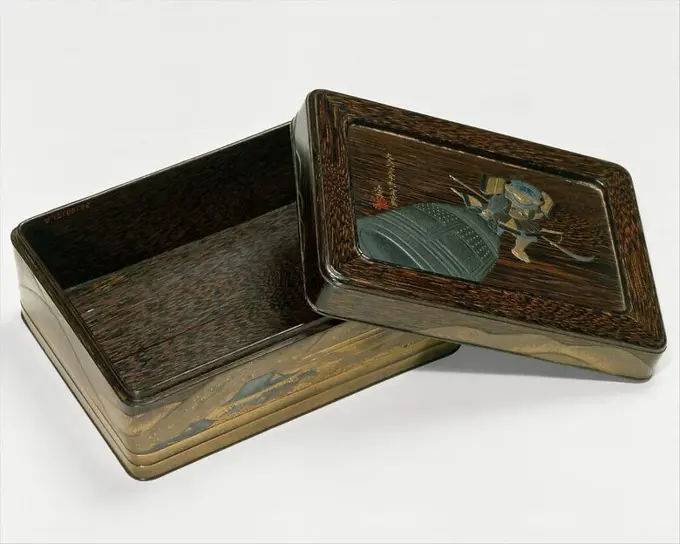
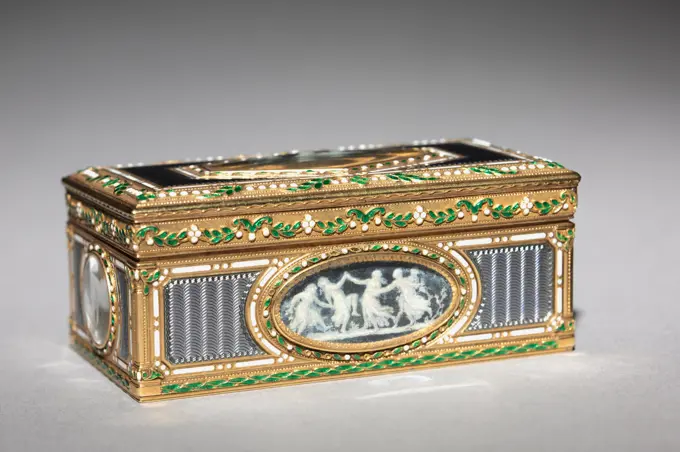
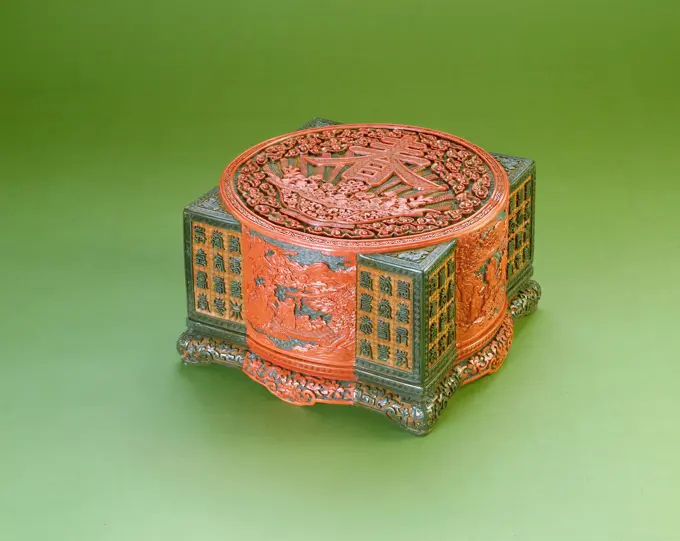
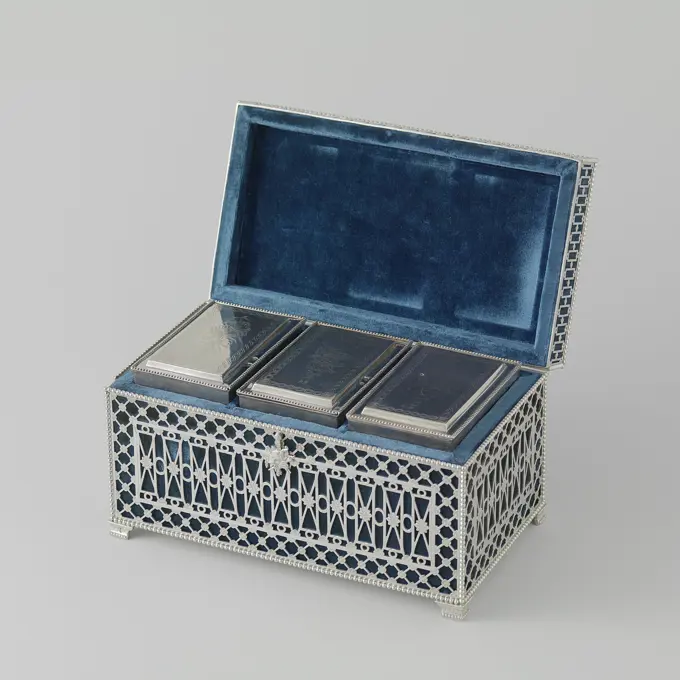
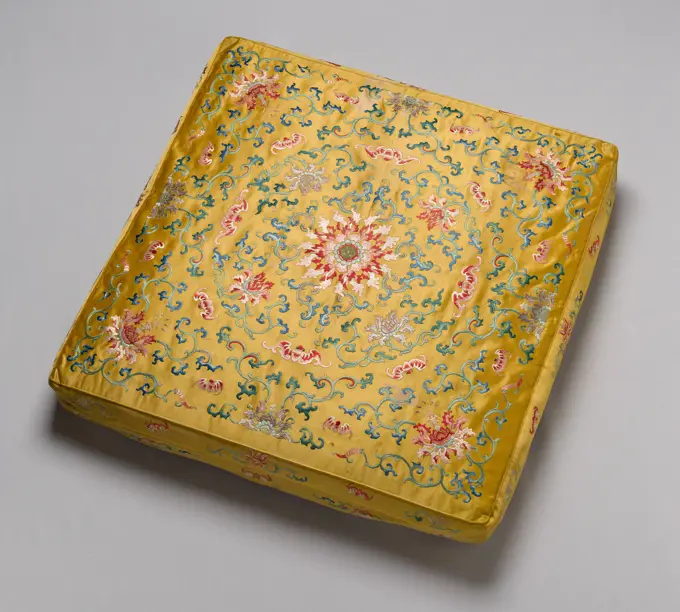
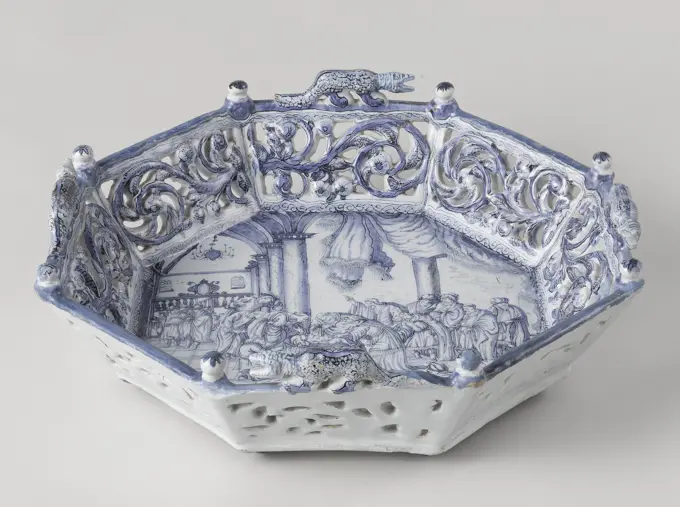
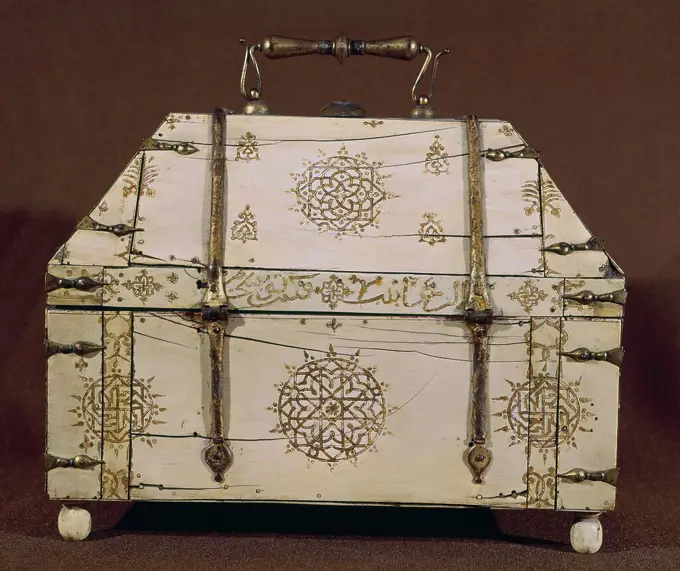
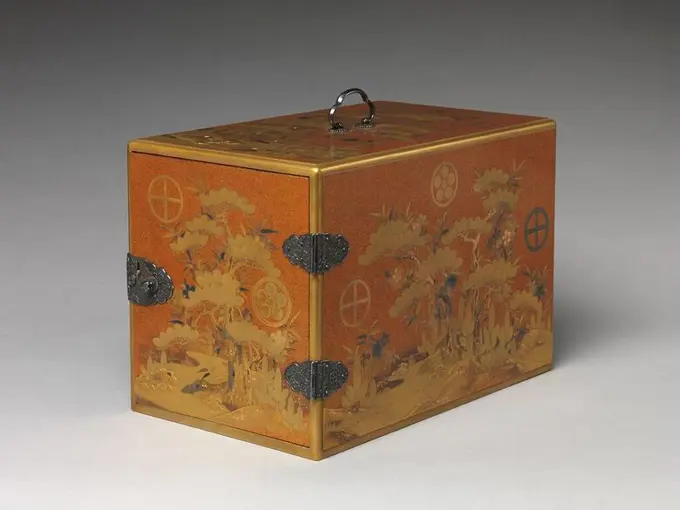
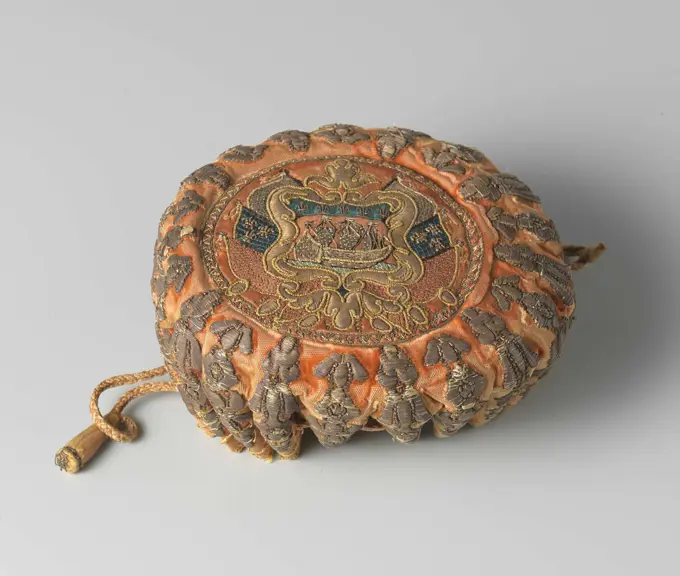
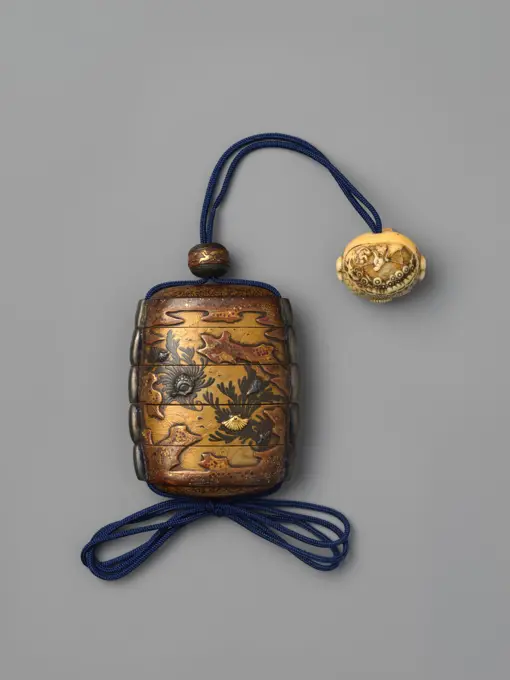
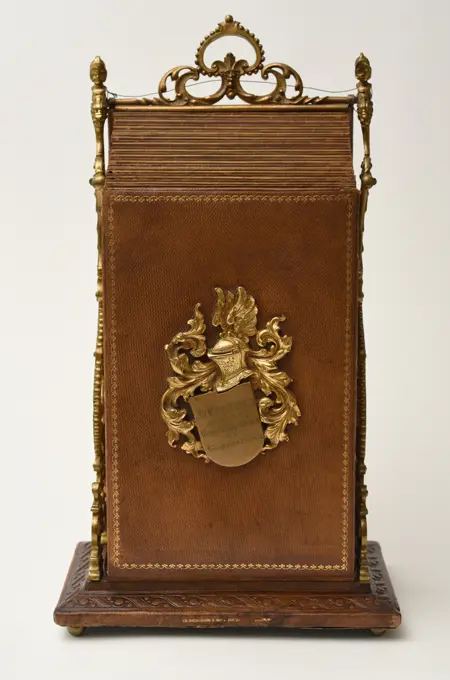
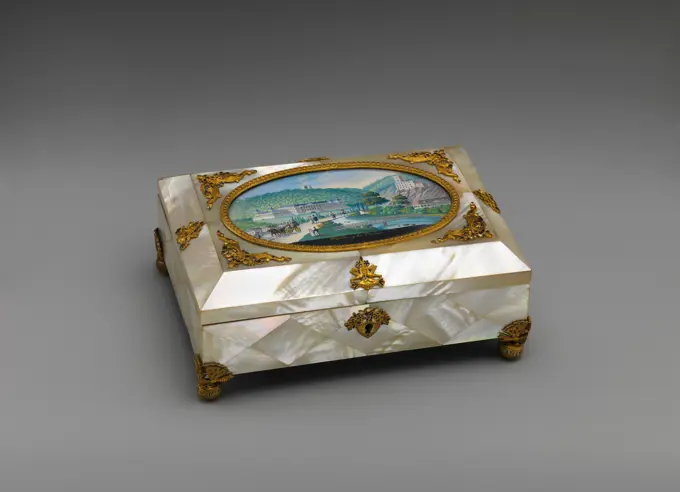
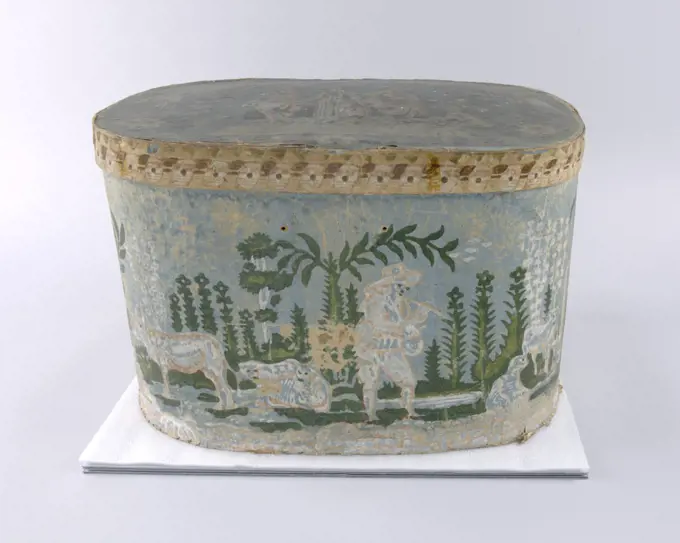
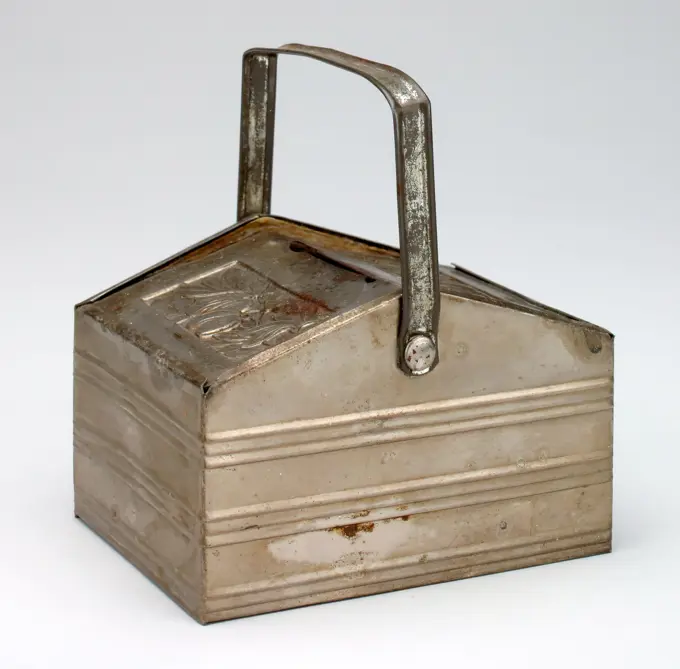
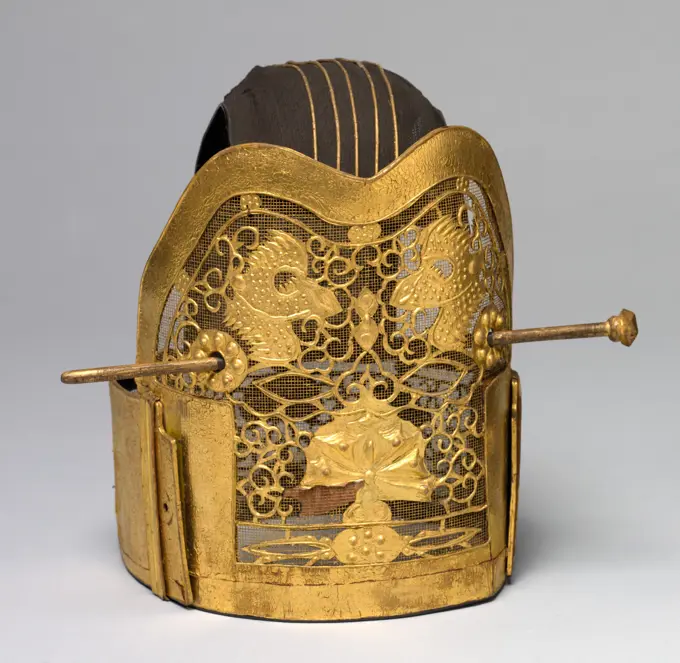
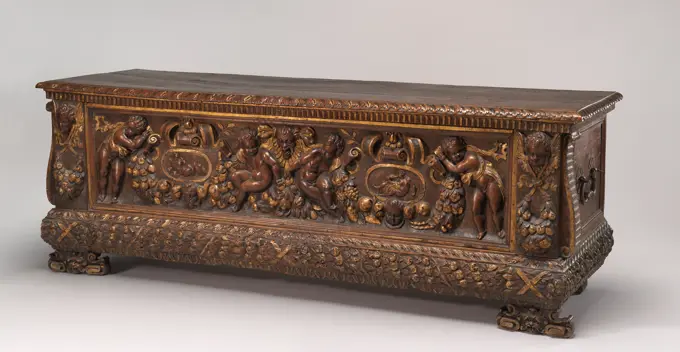
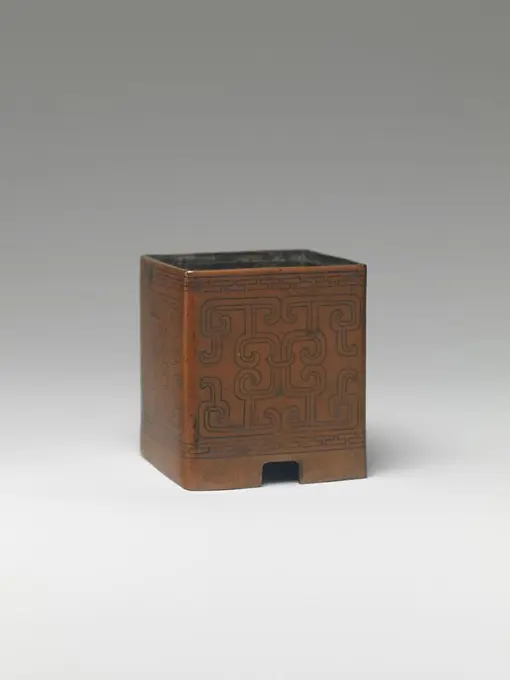
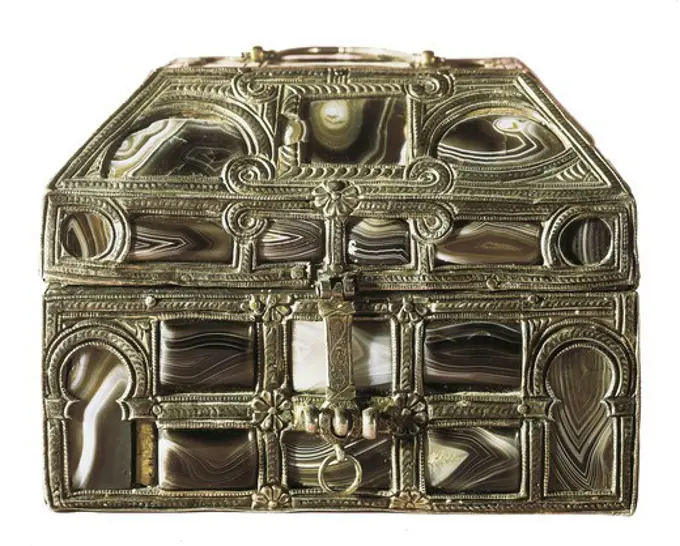
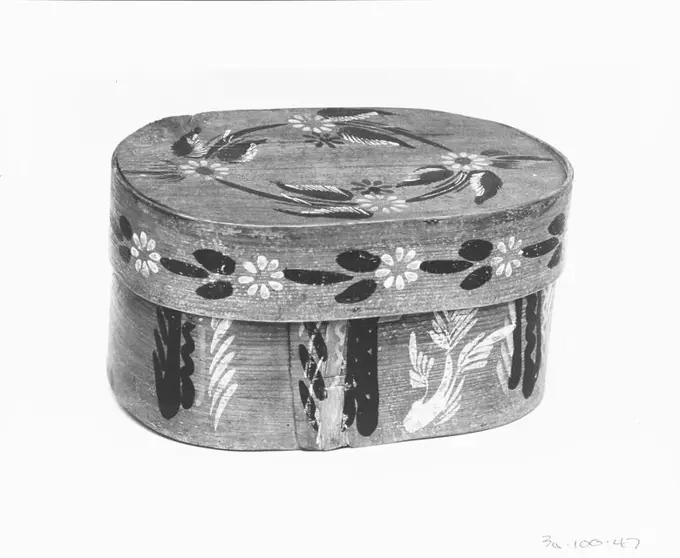
Fiches box with seven inner boxes, twelve sheet dishes and one hundred and twenty -seven chips, Anonymous, c. 1830 - c. 1840 Octagonal box on four claw feet and with a bombarded lid. The box is decorated with gold lacquer on a black surface. On the wall and the lid decorative tires with valuables and (lotus) branches in low relief against a background of fine golden lines and geometric patterns. In the center of the lid and on the four long walls, cartouches with figures at pavilions on the water. The inner and bottom of the box is black. An inscription is applied in the middle of the lid: 'Ant: Luden J. Hzn'; On the inside of the lid: 'Souvenir de R.R. Toe Laer '. The box is filled with seven inner boxes and two piles of a total of twelve sheet trays. The lids of the inner boxes and four of the bins are decorated with figures in a water landscape with pavilions, surrounded by decorative tires; Seven of the sheet trays have been decorated with playing card figures against a background Casket of ivory () Decorated with edges, stripes and columns of ebony. Casket of ivory (), Rectangular, decorated with edges, stripes and columns of ebony and with lock plate, hinges and silver handle ().Brass and iron fitting design on wooden book holder, Jodhpur, Rajasthan, India Copyright: xSafatxAli/DinodiaxPhotoxBox decorated with auspicious symbols 19th century Korea This lacquered wood box is decorated with thin sheets of ox horn painted in bright colors. The technique developed fully in later Joseon lacquer ware, becoming a fashionable art form during this period, alongside lacquer with mother-of-pearl. Decorative motifs on this piece include animals symbolizing good fortune, longevity, or protection, such as cranes, deer, dragons, phoenixes, and tigers. Similar imagery was also popular on paintings and ceramics during the nineteenth century.. Box decorated with auspicious symbols 44987Casket. Culture: Indian, Vizagapatam. Dimensions: Overall (confirmed): 5 1/4 × 20 5/8 × 14 in. (13.3 × 52.4 × 35.6 cm). Date: ca. 1760-65.Based on a European prototype but constructed from indigenous timber and densely decorated with ivory inlays displaying European ornament, this casket is an excellent example of an Anglo-Indian export piece. Writing boxes, rifles and gun boxes with European marquetry decoration are likely to have been used by Europeans. This particular casket is decorated with the crest of the Hastings family, presumably of Warren Hastings (1732-1818). Hastings had a brilliant and finally tragic career in service of the British East India Company. Leaving England in 1750, he became the British resident in Murshidabad seven years later, returning to England in 1765. Hastings went back to India in 1769 and was appointed Governor General of Bengal in 1773. Hastings ultimately left India in 1785 to face a long trial for impeachment charges. Museum: Metropolitan Museum oSuitcase, covered with leather in which a crowned and ajared shield with three lily. Suitcase, with Turkish Leather covering in which gold-plated pressed ornaments. At the top decorated with a crowned and behaved by angels with three lilies. Handles and corners E.D. from buyer.¡CONSULTAR DISPONIBILIDAD! -CAJA DE MARFIL-ABIERTA-. Location: PRIVATE COLLECTION. MADRID. SPAIN.Box (possibly Flanders); wood, metalSewing Cabinet (England); papier maché, paint, gilt, ivory, mother-of-pearlWood box with four small boxes in the inside in which fish (chips) of bone, anonymous, c. 1700 - c. 1720 Wood box with four small boxes in the inside in which fish from bone. The woodwork is painted red on the outside and covered with gold ornaments: figures in parchment cut out in Louis Xive style.  wood (plant material). beech (wood). paint (coating). parchment (animal material). horn (animal material) Wood box with four small boxes in the inside in which fish from bone. The woodwork is painted red on the outside and covered with gold ornaments: figures in parchment cut out in Louis Xive style.  wood (plant material). beech (wood). paint (coating). parchment (animal material). horn (animal material)Chasse 12th century German. Chasse 464386 German, Chasse, 12th century, Silver-gilt, wood, gems, intaglio, cameo over wood core, Overall: 5 5/8 x 8 1/4 x 3 7/8 in. (14.3 x 20.9 x 9.9 cm). The Metropolitan Museum of Art, New York. Gift of J. Pierpont Morgan, 1917 (17.190.404)Inkstand, 1800s. Continental, 19th century. Fused red and green glass () mounted with gold, pearl, jewels; interior lined with velvet; overall: 8.9 x 7 x 7 cm (3 1/2 x 2 3/4 x 2 3/4 in.).Vessel for betel kun it;  XIX - 1. PO. 20th century (1800-00-00-1950-00-00);Toeplitz-Mrozowska, Jadwiga (1880-1966), Toeplitz-Mrozowska, Jadwiga (1880-1966)-collection, gift (provenance), Burmese artSnuffbox. Culture: French, Paris. Dimensions: Overall: 1 9/16 × 3 1/8 × 2 1/4 in. (4 × 7.9 × 5.7 cm). Maker: Jean Ducrollay (French, born 1709, master 1734, recorded 1760). Date: 1754-55.The shaped black panels that decorate the top, bottom, and sides of this box were intended to imitate Japanese lacquer, which was very much in fashion in France throughout the eighteenth century. The six panels are in fact made of tortoiseshell decorated in a technique known as piqué, in which extremely thin gold and silver wire is inlaid in the shell. The resulting compositions provide a close approximation of black-and-gold Japanese lacquer. These panels with piqué decoration are set into rectangular panels made of imitation red lacquer.Because of the high cost of importing Japanese lacquer -- and the length of time it took the lacquer to reach France -- there was considerable impetus to develop a French alternative to Asian lacquers. In 1730 a patent was given to Guillaume Martin (d. 1749). MartinCasket;  1670-1690 (1670-01-01-1690-12-31);Box with Design of Pine, Bamboo, and Cherry Blossom 19th century Japan. Box with Design of Pine, Bamboo, and Cherry Blossom 44874Snuffbox 1763-64 Claude Perron In eighteenth-century Europe, Paris led the production of high-quality luxury goods. Parisian goldsmiths made a wide range of small, personal articles such as snuffboxes; étuis to hold sealing wax, tweezers, or utensils for sewing; souvenirs, which contained thin ivory tablets for note taking; and shuttles for knotting lace. Gold snuffboxes and boxes decorated with portrait miniatures were prized and frequently given as royal gifts, often to ambassadors or members of the court in lieu of cash payments for their services. Coveted and admired, these boxes were produced from a variety of materials. The best were skillfully made of gold and embellished with diamonds, enameled decoration, lacquer, and other luxurious materials. By the middle of the century, the taking of snuff had become an entrenched social ritual, and the snuffbox, too, had become an important social prop. Snuffboxes were considered highly fashionable accessories, with some merchants advertiBox for Personal Accessories (Tebako) with Shells and Seaweed Design. Culture: Japan. Dimensions: H. 6 1/2 in. (16.5 cm); W. 8 5/8 in. (21.9 cm); L. 10 1/4 in. (26 cm). Date: 17th century.Boxes of this shape were used as early as the twelfth century to hold personal accessories such as combs. From the seventeenth century onward, groups of such boxes were part of the extensive sets of lacquered furnishings found in the trousseaus of the elite and of the expanding merchant class. Museum: Metropolitan Museum of Art, New York, USA.Anonymous / 'Cabinet'. XVII century. Ebony wood, Bone, Pinewood, Ivory, Palo santo wood. Museum: Museo del Prado, Madrid, España.Box -Clothing box decorated with dragons 19th century Korea This boxs lively design features two dragons chasing a flaming jewel. The beasts long, sinewy bodies wrap around the sides of the box; their heads face each other at opposite corners at the top. The masterful mixture of diverse materials—mother-of-pearl, tortoiseshell, and ray skin—highlights different textures, emphasizing not only the tactile quality of the mythical beasts but also their dynamic character.. Clothing box decorated with dragons 40528Cover, lacquered wood, Japan, 1875-1900, containers, Decorative Arts, CoverMiniature spit rest ca. 1720-30 David Clayton British. Miniature spit rest. British, London. ca. 1720-30. Silver. Metalwork-Silver-MiniatureBox with Phoenixes Chasing a Flaming Pearl. Korea, Joseon dynasty (1392-1910), 18th century. Furnishings; Accessories. Brown lacquer on wood core with mother-of-pearl, brass wire inlay, and metal fittingsBox, late 1800s. Austria, Vienna, late 19th century. Silver gilt and hardstone; overall: 4.8 x 9.1 x 7.7 cm (1 7/8 x 3 9/16 x 3 1/16 in.).Art Nouveau casket; Karkainne, Emilia (Fl. Ca 1890-1900); around 1900 (1895-00-00-1905-00-00);Partage Plus, plant ornaments, secession (style), purchase (provenance)Box -Lacket. Small red lacquer, inlaid with mother-of-pearl.Box, c. 1750. Italy, Naples (), 18th century. Tortoise shell and gold; overall: 9.9 x 20.2 x 14.6 cm (3 7/8 x 7 15/16 x 5 3/4 in.).Writing Case (Nécessaire), c. 1760. Attributed to James Cox (British). Agate, gold and diamond. mounted with 18 KT gold cagework; overall: 10.2 x 7.6 cm (4 x 3 in.).Box, anonymous, 1800 - 1825 Rectangular box. Lid and sides with landscapes decorated in gold. Japan wood (plant material). lacquer (coating) Rectangular box. Lid and sides with landscapes decorated in gold. Japan wood (plant material). lacquer (coating)Coffret early 17th century probably Southern German. Coffret. probably Southern German. early 17th century. Brass, copper. Metalwork-BrassBrass design fitting on antique wooden box, Jodhpur, Rajasthan, India Copyright: xSafatxAli/DinodiaxPhotoxChest, wood, wrought iron, 16th century, furniture, Decorative Arts, ChestTwo tea caddies, anonymous, c. 1750 Rectangular tea bus with a drum -shaped cap with the coat of arms of the De Wendt family on the belly; Decorated in blue, pink -red, iron red, white and gold. A fleur-de-lis and a red rose or flower bud on a blue background are depicted on an asymmetrical shield. The helmet sign is also a fleur-de-lis and the cover consists of shell ornaments in rococo style and leaf work. On the rest of the tea box are cartouches with flowering (peony) plants in Chinese style. On all sides is a decoration of leaf vines and four (half) flowers on a green -yellow background per side. On the top a decoration of leaf vines. The lid has a geometric pattern on the side and a flower on top. China copper (metal). Rectangular tea bus with a drum -shaped cap with the coat of arms of the De Wendt family on the belly; Decorated in blue, pink -red, iron red, white and gold. A fleur-de-lis and a red rose or flower bud on a blue background are depicted on an asymmetrical shield. TBox ca. 1720-30 German or Dutch. Box 187208Snuffbox 1753-56 British, London (Battersea) Listen to experts illuminate this artwork's story Listen Play or pause #413. Retail Value. High and Low Supported by Bloomberg Philanthropies We're sorry, the transcript for this audio track is not available at this time. We are working to make it available as soon as possible.. Snuffbox. British, London (Battersea). 1753-56. Enameled copper. Enamels-PaintedChest, decorated with gothic tracing, crossed arrows, fires and Burgundian cross, anonymous, c. 1500 Eakhout box. The front board shows stabbed decorations, formed by gothic tracing with a heart with two crossed arrows on the left, a fires with two crossed sticks on the right and a Burgundian cross in the middle, above which an iron lock plate. The box rests on sleeve feet. Probably from a militia guild. Netherlands wood (plant material). oak (wood). iron (metal) Eakhout box. The front board shows stabbed decorations, formed by gothic tracing with a heart with two crossed arrows on the left, a fires with two crossed sticks on the right and a Burgundian cross in the middle, above which an iron lock plate. The box rests on sleeve feet. Probably from a militia guild. Netherlands wood (plant material). oak (wood). iron (metal)SquareBoxTiered box with a praying official late 14th century China An official stands before an incense burner on the lid of this box. He may be praying to the heavens on a moonlit night, a traditional Chinese practice. The use of gold underneath the figural decoration is uncommon and suggests that the box was particularly valuable.. Tiered box with a praying official 39700GuildBandbox (USA); machine-printed paper, pasteboard support, sized cotton; 43 x 34.5 x 29 cm (16 15/16 x 13 9/16 x 11 7/16 in.)Arqueta relicario, siglo XIV. Museo Episcopal de Vic.Box with Design of Benkei and a Bell. Artist: Shibata Zeshin (Japanese, 1807-1891); Ikeda Taishin (Japanese, 1825-1903). Culture: Japan. Dimensions: H. 2 1/2 in. (6.4 cm); W. 6 in. (15.2 cm); D. 4 1/2 in. (11.4 cm). Date: 1862.Musashibo Benkei (d. 1189), a historical figure known for phenomenal strength, can be identified here by the temple bell in his right hand and the Japanese halberd--one of the seven weapons with which he is associated--in his left. In his youth as a monk soldier at Enryakuji Temple on Mount Hiei, Benkei took the gigantic temple bell from Onjoji Temple, also known as Miidera, at the foot of Mount Hiei, dragging it with one arm up to the mountaintop compound. On the side of this box, Onjoji Temple appears in the foreground and Mount Hiei in the distance. Zeshin's pupil Ikeda Taishin (1825-1903) decorated the inside of the lid with a rosary design and a priest's Buddhist fringe used for preaching. Museum: Metropolitan Museum of Art, New York, USA.Snuffbox. unknown, authorIron design fitting on antique wooden photo frame, Jodhpur, Rajasthan, India Copyright: xSafatxAli/DinodiaxPhotoxSnuff Box (Tabatière), 1777-1778. François Chazeray (French). Gold and enamel; overall: 2.9 x 3.9 cm (1 1/8 x 1 9/16 in.).Presentation Box and Cover in Tsung Form, 1736-1795, 6 1/4 x 9 5/8 x 9 5/8 in. (15.88 x 24.45 x 24.45 cm), Carved tri-color lacquer, China, 18th century, Carved lacquer is an exacting medium that involved building up a considerable thickness through the application of successive layers of lacquer, which is produced from the sap of the sumac tree. By alternating the colors in this lengthy layering process and then carving down to a specific depth to reveal the desired color, artisans were able to create multi-colored scenes. The top of this box presents the auspicious character for spring, above a bowl with symbols of wealth and auspicious emblems. This complex motif is found on many other examples of Qianlong period (1736-95) lacquer.Charles Von Urban, Pa German Jamb Stove, c 1942 Pa. German Jamb StoveTea chest, 1785 The rectangular wooden box is divided into three compartments on the inside by means of two wooden slides. Both the interior and the sliders are covered with blue velvet. It is caught in a silver holder that has a hinged lid, containing the loose wooden lid of the box. The holder rests on four curved, scanned legs, closed on top and bottom by profile edges. It has a bottom of smooth silver but is open to all other sides. The four sides of the holder of the coffin each show a field of angular Guilloches against a background of rosettes, surrounded by an edge of similar, smaller grid work. At the front, the decoration is interrupted by the keyhole, which is closed by a movable cast plate in the form of a trophy hung on a ribbon of music books and instruments, a torch and leaf wreaths and circles. The new blue velor upholstery is applied in such a way that the lock is covered on all sides. The four sides of the lid holder are open with angular Guilloches. The same edge runTea chest, Pieter Adolf Bruné, 1785 Rectangular, silver tea bus, decorated with a hunted trophy with a dead bird and a dead hare, a gun, hunting ears, a basket, a weitas and a field bottle. Amsterdam silver (metal). wood (plant material) engraving Rectangular, silver tea bus, decorated with a hunted trophy with a dead bird and a dead hare, a gun, hunting ears, a basket, a weitas and a field bottle. Amsterdam silver (metal). wood (plant material) engravingCovered Box with Butterflies, Gourds, and Scrolling Vines 1700-1799 China. This vessel plays upon a rebus the words for ìbutterflyî and ìgourdî together allude to the wish for innumerable generations of sons and grandsons. The image of fruit-bearing stems visually reinforces this ideal, which was highly valued in traditional Confucian society. Butterflies with beautifully contoured wings flutter amid red, orange, and pale green gourds, melons, pumpkins, or squash. The lobed fruits are decorative rather than botanically specific; together, they grow from gracefully trailing stems with large palmette leaves and elegantly curled tendrils.. Carved cinnabar lacquer on wood .Basket with BeadedLidCasket. unknown, craftsmanInkwell, blue painted with children a sled drag and dancing children and the word VreedeVase lei. Bronze. Chine. Par musée musée malée. 70002-18 Chinese art, bronze, decorative motif, relief, vase leiCushion Cover Made 1750-1800 China. Silk, warp-float faced 7 1 satin weave; embroidered in knot, satin, and stem stitches . ManchuBrass design fitting on antique wooden box, Jodhpur, Rajasthan, India Copyright: xSafatxAli/DinodiaxPhotoxWriting cabinet of Governor Janssens. Bottom with foldable writing sheet, including a tray with layout in boxes, one of which contains a mirror that is decorated in the same way as the outside work. Stove cupboard with two doors on either side of three middle letters. Upper tray over the entire front width. The hood has been awarded a broken fronton. Decoration: Inside boxes are with O. I. ink different buildings (residential buildings) And colonial landscapes drawn at all drawers, doors and sides of the cabinet.Chasse, 1200-1250. France, Limousin, Limoges, Gothic period, first half of 13th century. Copper: gilded, engraved, chased; champlevé enamel; wood core; overall: 17 x 21.4 x 9.9 cm (6 11/16 x 8 7/16 x 3 7/8 in.).Kist at photo album about the sugar industry and topography of Java, Van Arcken & Co., 1876 - 1884 chest Wooden box belonging to photo album, with handles of brass on both sides. The box hinges at the rear and at the bottom of the front. The inside has a padded purple velvet upholstery (damaged), on which label stuck. The box closes with a lock in the middle of the front. The key is missing. Belongs to the Surabayasche Vereeniging of sugar manufacturers offered to Frederik Beyerinck, resident of Surabaya. silversmith: BataviaRemscheidSurabaya Case: Wood (Plant Material). upholstery: velvet (fabric weave). Handles box: Brass (Alloy) cutting  Java. SurabayaBowl with Inscription Cartouches and Repeating Floral Ornament 16th-17th century. Bowl with Inscription Cartouches and Repeating Floral Ornament 444613Bidri Box for Holding Pan early-mid 17th century This box was probably meant to hold pan, the digestif made of a betel leaf rolled with lime paste and spices. Its robust architectonic form, reminiscent of early Islamic architecture in India, is a perfect foil for the bold rhythms of the arabesque designs that dominate its surface.. Bidri Box for Holding Pan. early-mid 17th century. Zinc alloy; cast, engraved, inlaid with silver and brass (bidri ware). Attributed to India, Deccan, Bidar. MetalPrzeszo Przyszoci unknownCarrier of wood. A wooden carrying lantern, on the corners of hermatlants, engraved on the door, a challenge iron handle.Pierced openwork boxes of painted ivory. Qing dynasty, 19th century.Gothic chest with lid, XV century, Palma Cathedral Museum, Majorca, Balearic Islands, Spain, EuropeCovered Jewel Box. Culture: American. Decorator: Mary Louise McLaughlin (American, Cincinnati, Ohio 1847-1939 Cincinnati, Ohio). Dimensions: 2 5/8 x 4 in. (6.7 x 10.2 cm). Date: 1888. Museum: Metropolitan Museum of Art, New York, USA.Layette with the Circumcision of Christ, anonymous, c. 1670 - c. 1690 Octagonal diaper basket from Faience. Blue painted with the image of circumcision (Luk 2:21). Delft . Octagonal diaper basket from Faience. Blue painted with the image of circumcision (Luk 2:21). Delft .ARQUETA - SIGLO XII - MARFIL MADERA Y COBRE - 41x38 CM - PERIODO ALMOHADE. Location: INSTITUTO VALENCIA DE DON JUAN-COLECCION. MADRID. SPAIN.Cabinet with Design of Pine, Bamboo, and Cherry Blossom. Culture: Japan. Dimensions: H. 9 1/2 in. (24.1 cm); W. 13 3/4 in. (34.9 cm); D. 8 3/4 in. (22.2 cm). Date: 19th century.Well-born Japanese brides brought elaborate sets of household articles in gold- and silver-sprinkled lacquer to their new homes. Their trousseaux usually contained writing implements, tea utensils, toiletry articles, and equipment for such refined pursuits as incense games and the tea ceremony. Gold, which was carefully rationed by a sumptuary law specifying the permitted amount for various ranks, was lavishly expended on wedding sets. These ensembles were rarely used and, after being displayed at the wedding, were preserved in storerooms and handed down as heirlooms. The lacquer objects on display bear the Maeda and Shimazu family crests, probably those of the influential daimyo lords of the Kaga clan in Kanazawa and the Satsuma clan in Kagoshima. Museum: Metropolitan Museum of Art, New York, USA.Bronze fang ting (four-legged food vessel), Shang dynastyCasket. Pakistan, Panjab, Sialkot or Gujrat, Kotli Loharan, circa 1867. Furnishings; Accessories. Iron overlaid with gold wire and gold leafAnonymous / 'Case for ten pieces of lacquer ware'. 1690 - 1711. Leather, Wood, Fabric. Museum: Museo del Prado, Madrid, España.Burial BoxToy cookstove - Kenton Hardware Company Kenton Hardware CompanyBox for writing toolsCassone of partially painted poplar wood. Front with arabesken in grisaille on a blue fond, anonymous, 1500 - 1600 Cassone of partially painted poplar wood. The sawn -out base is decorated with tifles in grisaille on a blue stock. The slightly spherical bent front shows a rectangular field, surrounded by a palmet edge in gilded stucco. The field is painted with arabesks in grisaille on a blue stock; The left and right side shows a coat of arms within a gilded stucco wreath. The arabesks on the sides with iron handles have a golden yellow stock. Light roasted lid with red velvet. Italy wood (plant material). poplar (wood). spruce (wood). iron (metal). gilding (material). stucco. velvet (fabric weave) gilding Cassone of partially painted poplar wood. The sawn -out base is decorated with tifles in grisaille on a blue stock. The slightly spherical bent front shows a rectangular field, surrounded by a palmet edge in gilded stucco. The field is painted with arabesks in grisaille on a blue stBandbox (USA); block-printed on handmade paper, pasteboard support; 44 x 35.5 x 32 cm (17 5/16 x 14 x 12 5/8 in.)Play fair of orange-red velvet, embroidered with silver thread and multicolored silk with the town of Paris. Play fair of orange-red velvet (whose pool is largely thrilled away), embroidered with silver thread and multicolored silk with the city of Paris. Model: Flat round bottom where a wavy upright edge is provided with holes through which a cord of braided silk - on either side with a tapered button with wooden core and originally completely wounded with flossy (one button missing) - has been drawn. Lined with goat leather. Decoration: The 20 bulges or 'ribs' are decorated with alternating stacked ornaments in relief of silver thread. To over or down there is a circle with edge where a silver lover is in sewn (lack in many cases). A horizontal line of silver thread runs at three-quarters of height. Along the top it is completely trimmed with a border silver wire. The bottom is circled by a double edge within which a zigzag line of silver wire. This surrounded the city pavement of PaInk stand with circles and a flower roundel, anonymous, c. 1750 - c. 1799 Ink set of stoneware on three low feet, with a pen box and two holders for the ink pot and the sand spreader. Partly covered with cobalt blue. The front and back with a decoration of stamped, connected circles. Circles stamped on the outer wall of the pen box and on the top. A flower rosette between the two holders. On the top four times and on the pen box twice a modeled 'Klinknagel'. Westerwald. Westerwald stoneware. glaze. cobalt (mineral) vitrification Ink set of stoneware on three low feet, with a pen box and two holders for the ink pot and the sand spreader. Partly covered with cobalt blue. The front and back with a decoration of stamped, connected circles. Circles stamped on the outer wall of the pen box and on the top. A flower rosette between the two holders. On the top four times and on the pen box twice a modeled 'Klinknagel'. Westerwald. Westerwald stoneware. glaze. cobalt (mineral) vitrificationSpoon Rack c 1730-1775 New Jersey. Yellow poplar and paint . Artist unknownSecurity Safe Deposit' still bank, c. 1889, Kyser & Rex Company, Philadelphia, c. 1879-1898, 4 3/16 x 2 15/16 x 3 1/4 in. (10.64 x 7.46 x 8.26 cm), Iron, pigment, 19th centuryCase (Inr) with Design of Shells on Background of Seaweeds, Rocks and Waves 17th-18th century Japan. Case (Inr) with Design of Shells on Background of Seaweeds, Rocks and Waves. Japan. 17th-18th century. Lacquer, roiro and rubbed fundame, gold and black hiramakie, applied metals; Interior: nashiji and fundame. Edo period (1615-1868). InrAlbum of the Gearspectors of the Kingdom of SaxonySewing casket with view of Weilburg near Baden in Austria 1820-30 Painting by Balthasar Wigand The mother-of-pearl industry in Vienna reached its apogee during the 1820s and 1830s, when numerous luxury items such as candle screens and desk sets were embellished with the iridescent material. Balthasar Wigand, responsible for the miniature on the lid of this box, specialized in views of the city and its surroundings, painted especially for use on small pieces of furniture and caskets.. Sewing casket with view of Weilburg near Baden in Austria 207906Bandbox, Block-printed paper, pasteboard support, USA, ca. 1830, Wallcoverings, BandboxPicnic Basket' still bank, 20th century, 2 x 3 3/8 x 2 3/8 in. (5.08 x 8.57 x 6.03 cm), Tin, Germany, 20th centuryCrown for the Royal Ceremonial Costume, late 1800s-early 1900s. Korea, Joseon dynasty (1392-1910). Gilded paper, metal wire, and black silk; overall: 24.2 x 26.7 x 17.8 cm (9 1/2 x 10 1/2 x 7 in.). This is a set of royal ceremonial robe and accessories worn by a high-ranking court official for attending special state ceremonies. The set consists of an inner coat, an outer coat, a skirt, a back apron, a crown, a pair of jade tassels, a tablet, and a belt.Italian 16th Century, Cassone with Garlands and Cupids, c 1540 1560 Italian 16th Century, Cassone with Garlands and Cupids, c. 1540/1560, walnut with gilded gesso, Widener Collection 1942.9.360Incense burner. Culture: China. Dimensions: H. 2 1/2 in. (6.4 cm); W. 2 1/4 in. (5.7 cm); D. 2 1/4 in. (5.7 cm). Date: 18th century. Museum: Metropolitan Museum of Art, New York, USA.Edmond Lorts, Cast Iron Toy Stove, c 1939 Cast Iron Toy StoveSmall chest of the agates. 11th c. Made of silver, agate and wood. Mozarabic art. Jewelry. SPAIN. MADRID (AUTONOMOUS COMMUNITY). Madrid. National Museum of Archaeology. Proc: SPAIN. CASTILE AND LEON. LeÑn. Royal Collegiate Church of San Isidoro.Silver filigree cosmetic box. India, 18th century. The box is said to have come from the apartments of Tipu Sultan's palace in Mysore, looted after the 1799 Battle of Seringapatum.Sewing case, ChinaBandbox (USA); Manufactured by Hannah Davis (1784 - 1863); block-printed paper, wood support, newsprint lining; 47 x 34 x 36 cm (18 1/2 x 13 3/8 x 14 3/16 in.)With Lion on Tambour-Style Opening Matchsafe; ivory, wood, canvas, brass; 3.7 x 6.4 x 1.3 cm (1 7/16 x 2 1/2 x 1/2 in. )Arqueta, siglo XV. Fundación Juan March.Sofa. Culture: American. Dimensions: 34 1/2 x 83 1/2 x 25 in. (87.6 x 212.1 x 63.5 cm). Date: ca. 1820.When acquired in 1939, this superbly carved sofa still retained its original claret-colored wool velvet cover, which served as the basis for the current (modern) upholstery. Noteworthy is the unusual trimming of rich stamped brass, rather than the woven galloon or series of brass-headed nails that were customary in this period. Museum: Metropolitan Museum of Art, New York, USA.Trinket Box. Culture: American. Dimensions: 4 1/4 x 8 5/8 x 5 3/4 in. (10.8 x 21.9 x 14.6 cm). Date: 1770-1800. Museum: Metropolitan Museum of Art, New York, USA.