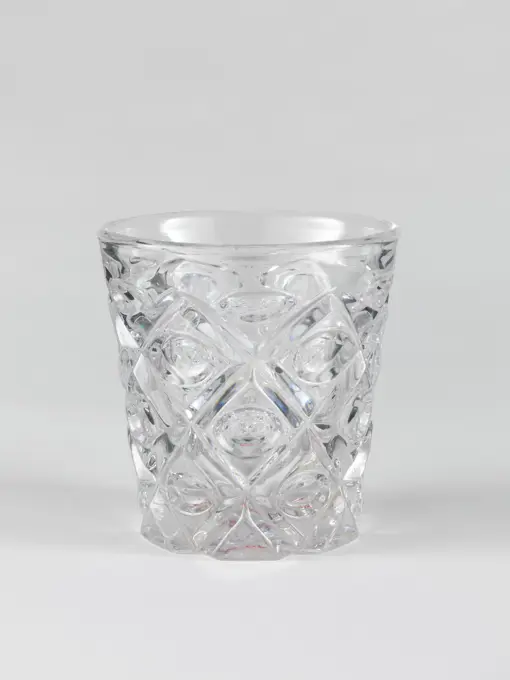
Elegant Glass Chalices

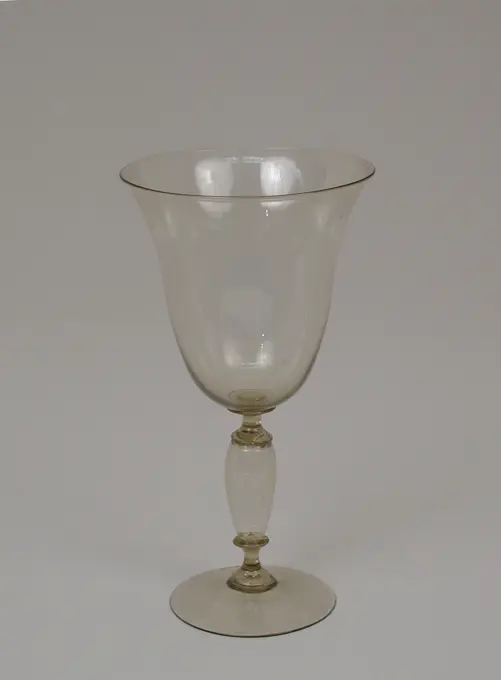
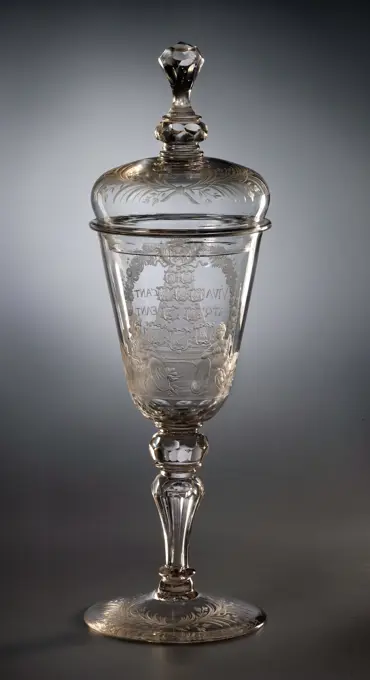
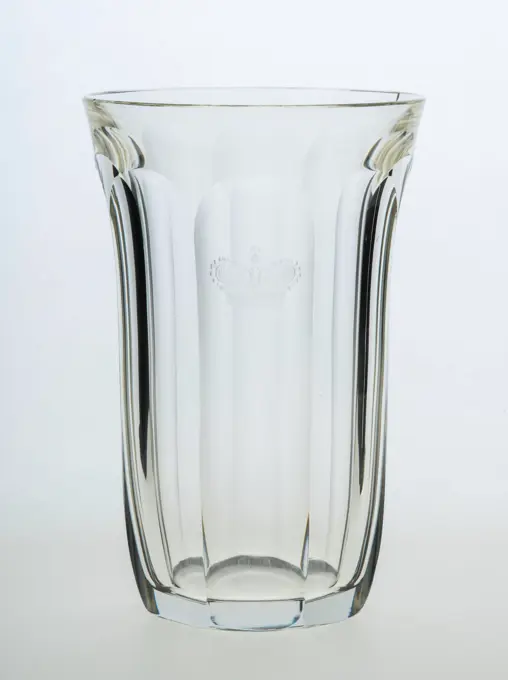
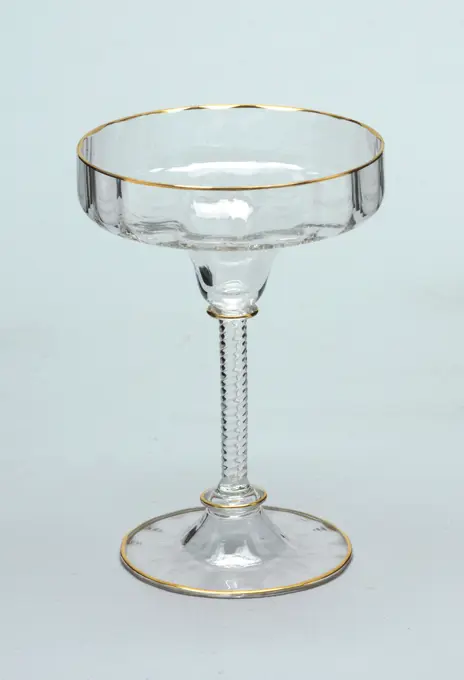
A collection of beautifully crafted glass chalices, featuring intricate designs and engravings, highlighting historical elements and decorative styles.
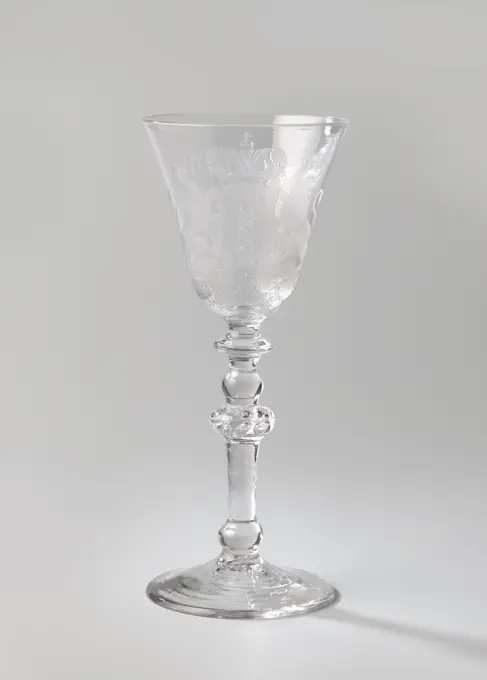
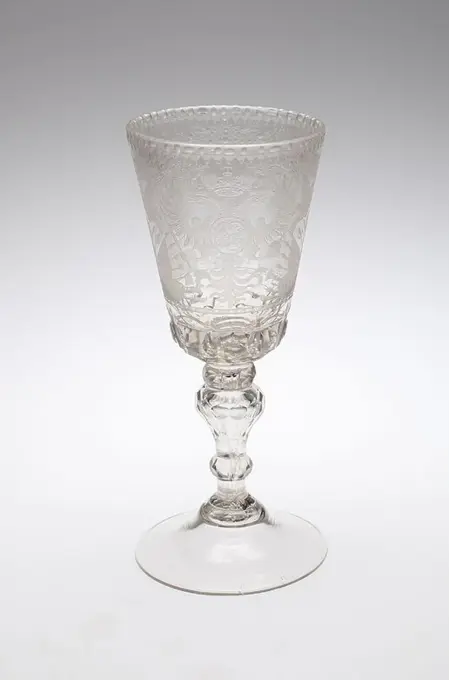
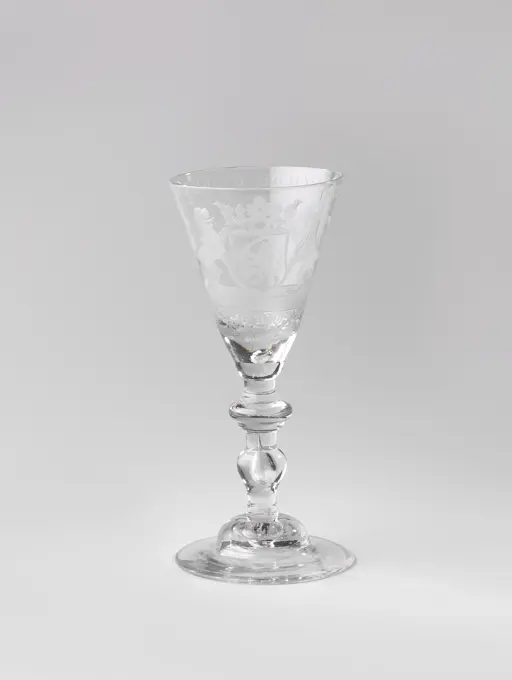
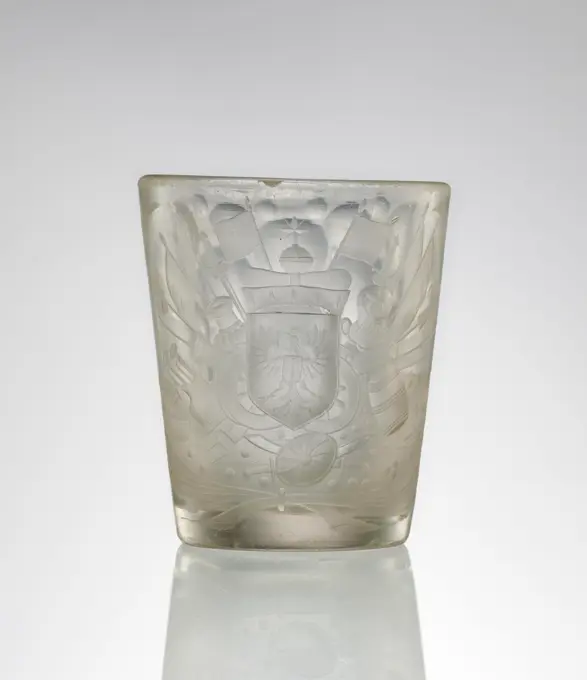
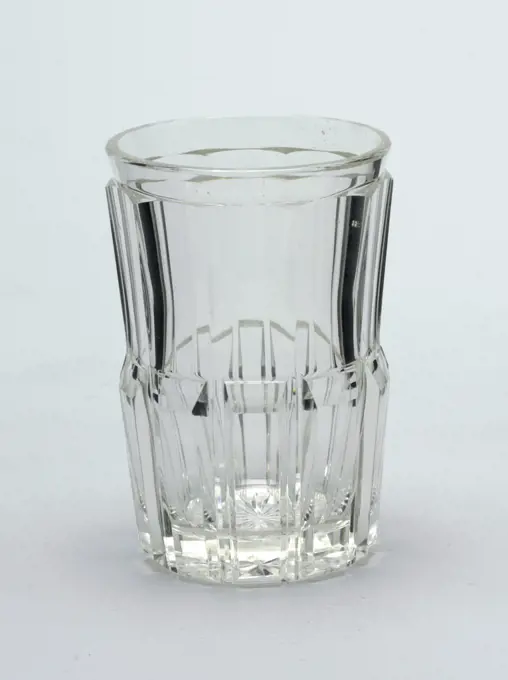
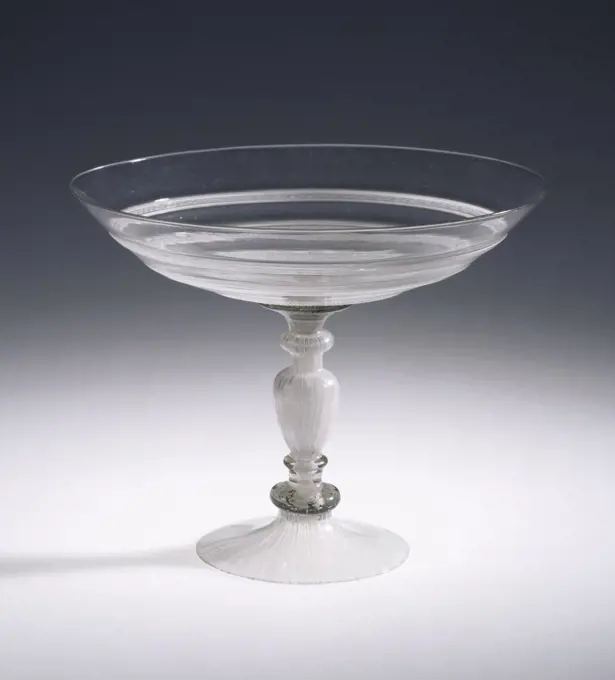
Chalip glass with the coat of arms of the city of Amsterdam, Anonymous, c. 1750 - c. 1775 Chalice glass with conical foot. The baluster -shaped trunk with three nodes. The funnel -shaped chalice with a round bottom. On the chalice, on a base of rococo ornaments, the crowned weapon of the city of Amsterdam flanked by two lions. On the other side a battleship between rococo ornaments. glassblower: Low CountriesNorthern Netherlands glass glassblowing Chalice glass with conical foot. The baluster -shaped trunk with three nodes. The funnel -shaped chalice with a round bottom. On the chalice, on a base of rococo ornaments, the crowned weapon of the city of Amsterdam flanked by two lions. On the other side a battleship between rococo ornaments. glassblower: Low CountriesNorthern Netherlands glass glassblowing
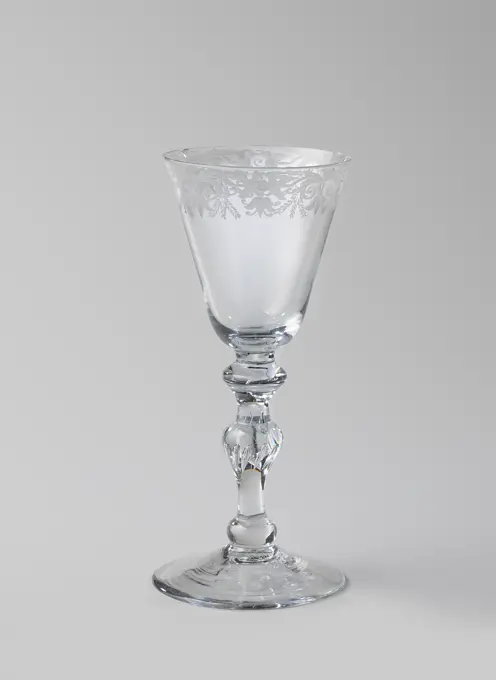
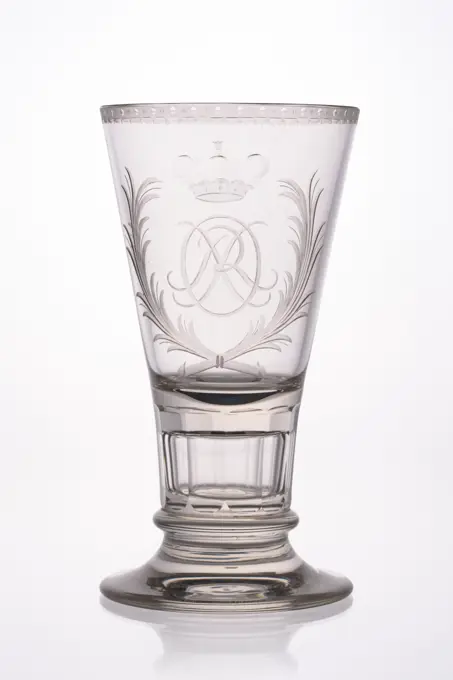
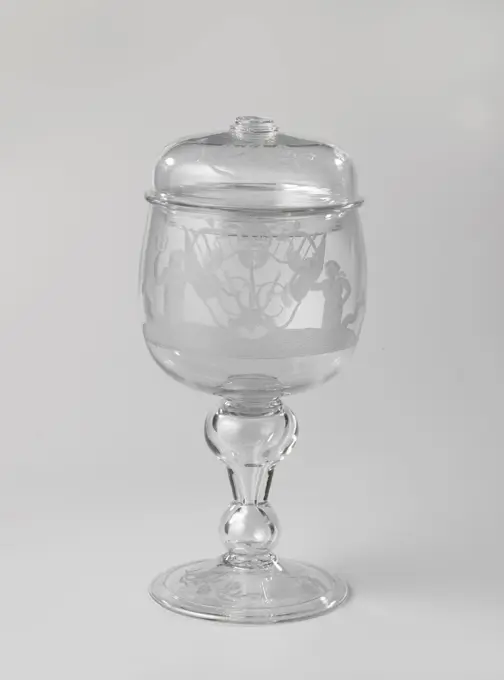
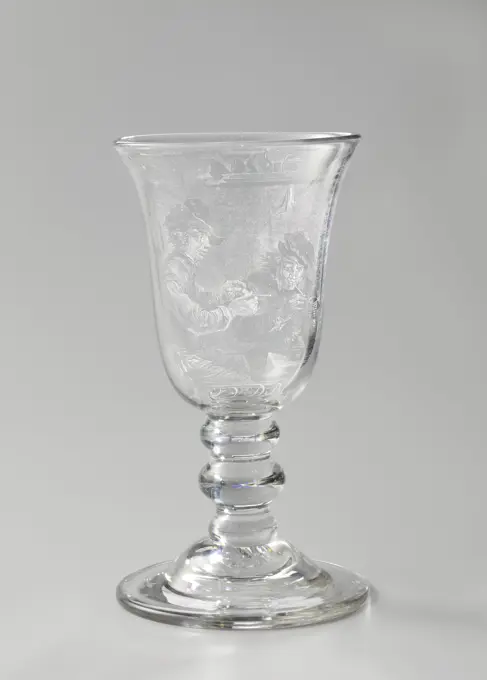
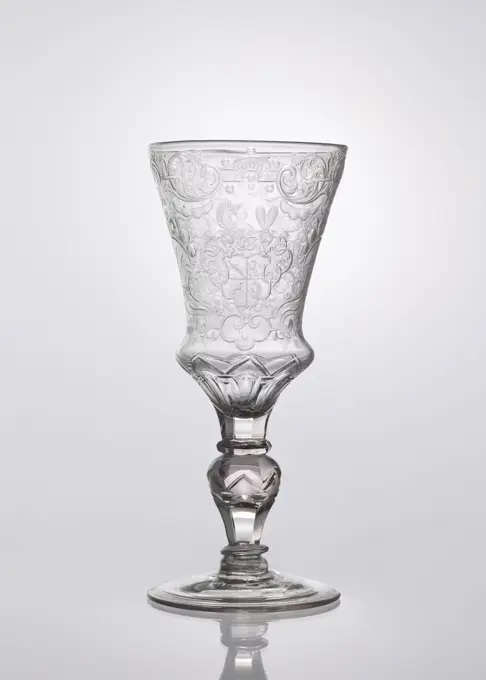
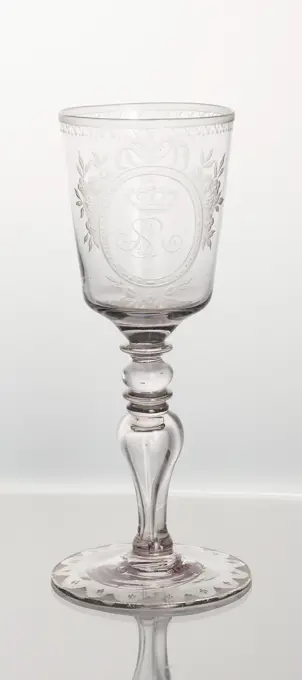
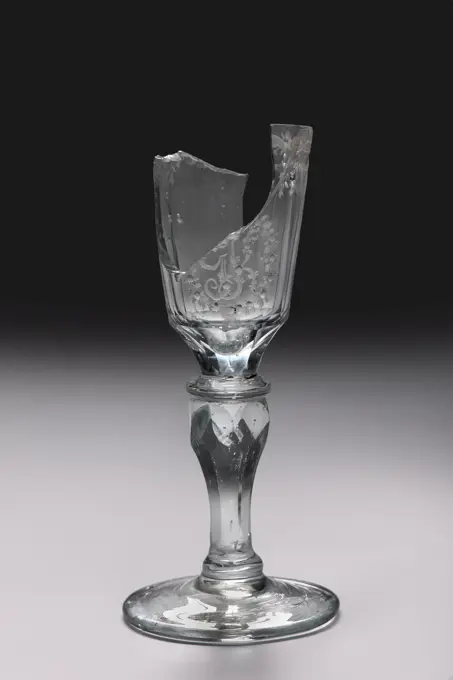
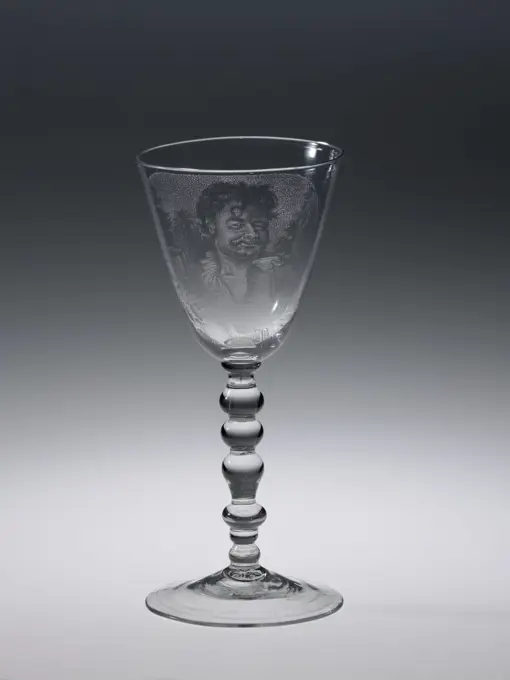
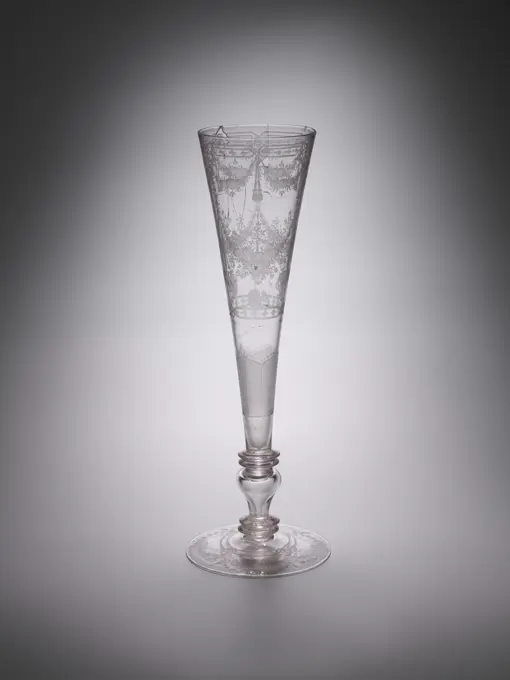
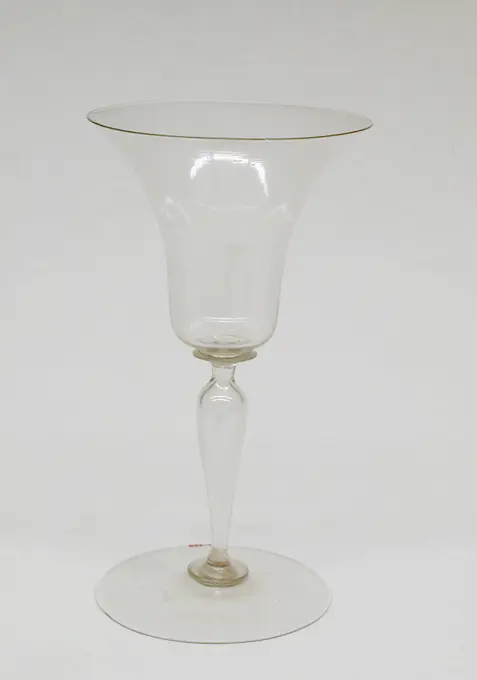
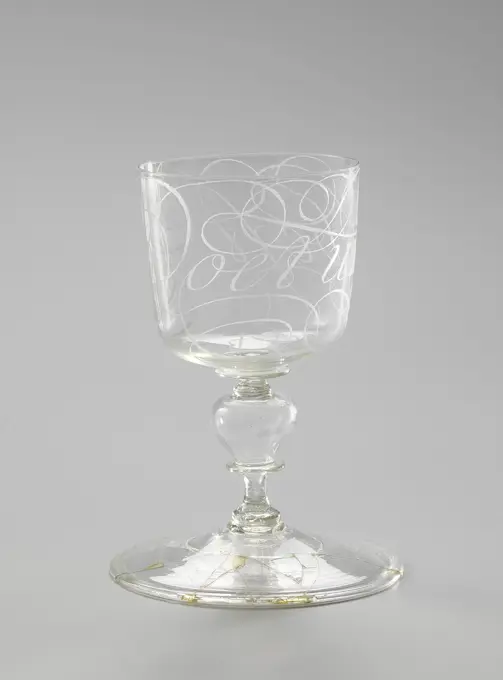
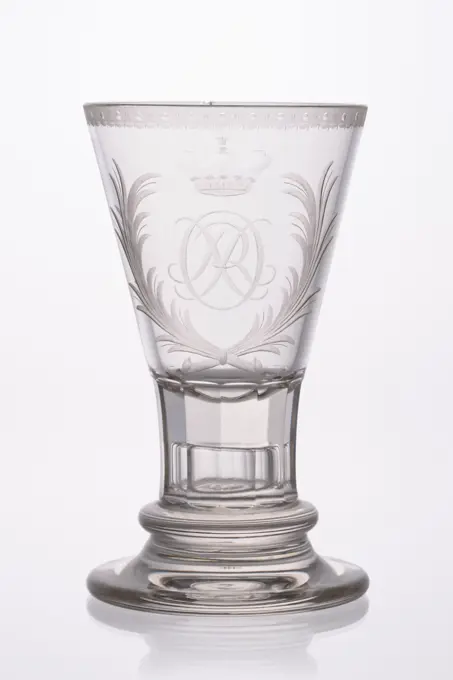
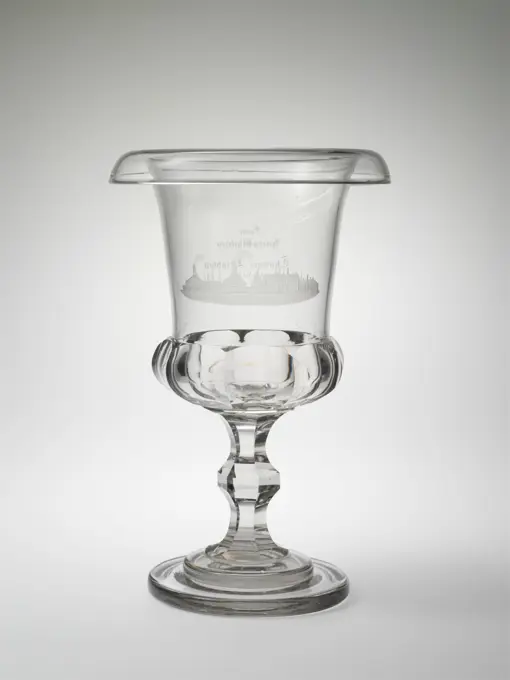
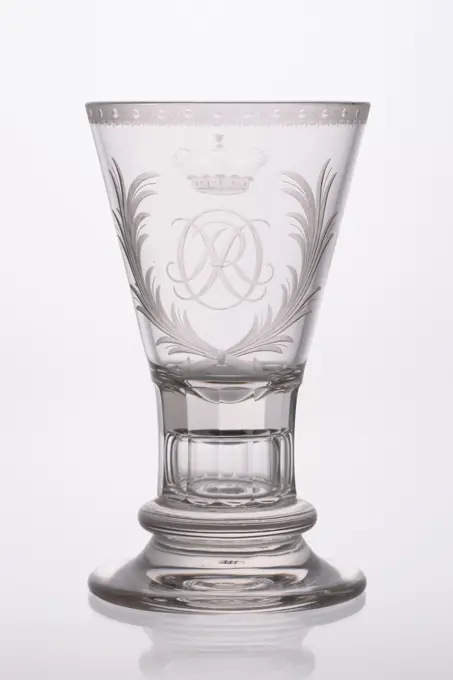
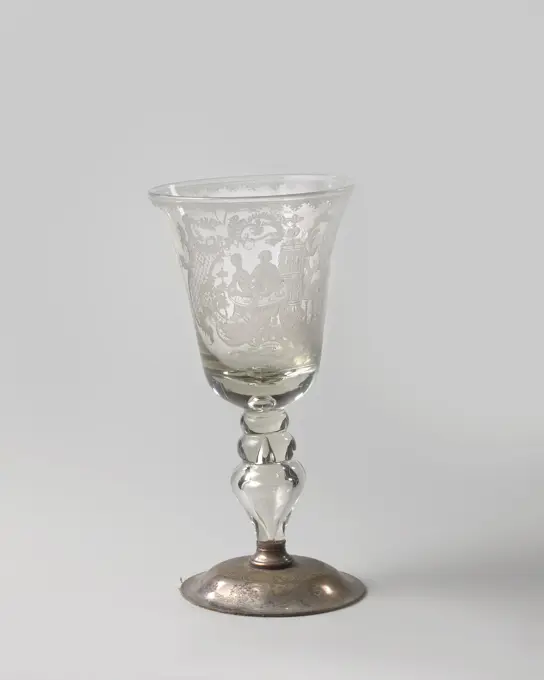
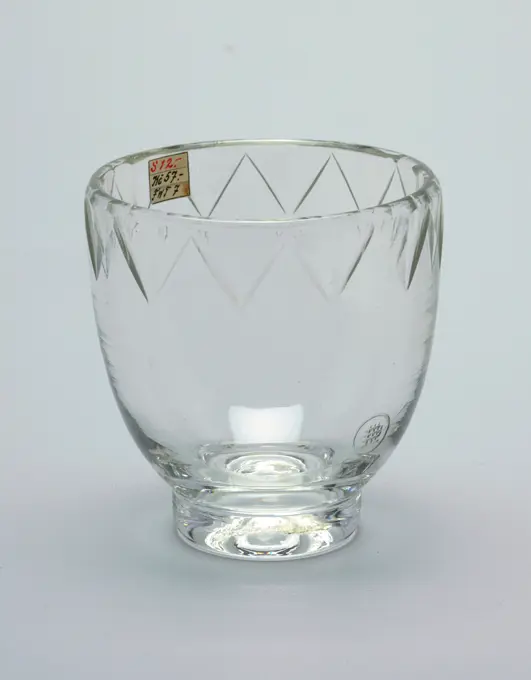
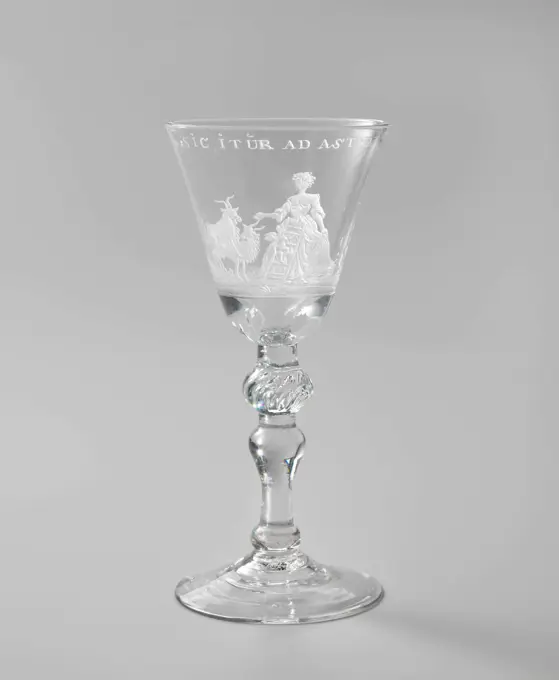
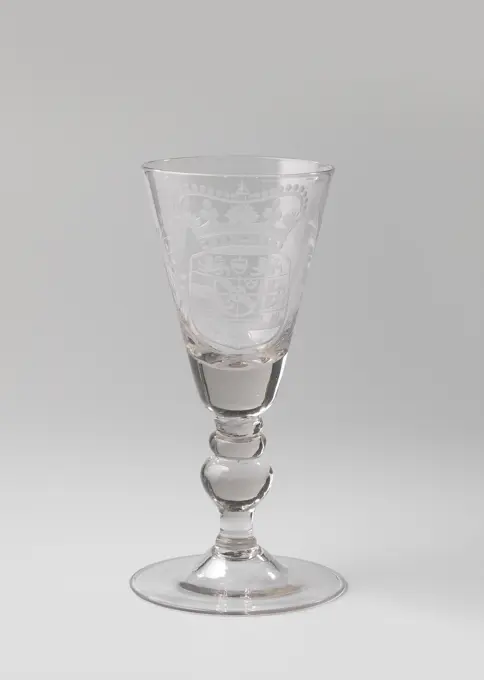
Bowl with the weapon of Willem IV. Bowl with flat foot. Baluster-shaped strain with three knots. Funnel-shaped chalice with solid soil. On the chalice The crowned weapon of Stadholder Prince Willem IV (1711-1751) flanked by an orange branch on the right side and a palm branch on the left. Both branches are knotted under the weapon.Chalip glass with the coat of arms of the city of Amsterdam, Anonymous, c. 1750 - c. 1775 Chalice glass with conical foot. The baluster -shaped trunk with three nodes. The funnel -shaped chalice with a round bottom. On the chalice, on a base of rococo ornaments, the crowned weapon of the city of Amsterdam flanked by two lions. On the other side a battleship between rococo ornaments. glassblower: Low CountriesNorthern Netherlands glass glassblowing Chalice glass with conical foot. The baluster -shaped trunk with three nodes. The funnel -shaped chalice with a round bottom. On the chalice, on a base of rococo ornaments, the crowned weapon of the city of Amsterdam flanked by two lions. On the other side a battleship between rococo ornaments. glassblower: Low CountriesNorthern Netherlands glass glassblowingCupCommemorative Wineglass for the Coronation of George I 1709-1719 . Diamond-engraved lead glass .Kelkglas with ornament edge. Conical foot. Baluster-shaped strain with three buttons with some air bubbles. Funnel-shaped chalice with rounded soil. On the chalice, along the mouth edge, a symmetrical ornament edge with tape work, leaf drinks, bells and two turtle doves.Wine Glass. England. Date: 1715-1725. Dimensions: 13.9 cm (5 1/2 in.). Glass. Origin: England. Museum: The Chicago Art Institute, Chicago, USA.Bokaal with the inscription: Der Burg'ren Love and Trou is the safest shield for one/that peace and freedom mint and angry hey dares toe, anonymous, 1738 Bokaal with trunk with profiled nodus including a leg with hollow facets on double ring. The foot is flattened spherical with flat outstanding edge. The chalice is conical and runs to the bottom with air bubbles, round. Decoration: Virgin with helmet and shield next to a man in Roman gestation who puts his foot on an adder and wears a bayer wreath in the left hand. Behind the virgin a lamb; Left and right of this group of putti with weaponry. On the other side a crowned weapon with three lilies in rocaille frame, of which flowers and a cornucopium full of fruits depend. At the top around the inscription: Der Burg'ren Love and Trou is the safest for one/ that peace and vryheidt mint and angry heit dared. Signed and dated: W: O: R: 1738. With Foedral (BK-1959-28-2). glassblower: Low CountriesNorthern Netherlands glass glassblowing BokaaBokaal with flowers and leaf vines, anonymous, c. 1725 - c. 1750 Vaulted foot. Facet cut, baluster -shaped trunk with two discs. Conical chalice with facet cut, rounded soil. On the chalice, above a continuous line of arches that follow the facets of the soil, two four passes made up of four circles connected by stylized leaf branches and flowers, which are repeated on the foot. Bohemia glass grinding / glassblowing Vaulted foot. Facet cut, baluster -shaped trunk with two discs. Conical chalice with facet cut, rounded soil. On the chalice, above a continuous line of arches that follow the facets of the soil, two four passes made up of four circles connected by stylized leaf branches and flowers, which are repeated on the foot. Bohemia glass grinding / glassblowingSlingerlas with a representation of a bull, anonymous, 1775 Conical foot. Straight trunk with a double, white pendulum around a white stocking. Funnel -shaped chalice with rounded bottom. On the chalice, in a rectangular field, in a landscape with trees, a bull by a fence. Signed in the bottom left G HOO/LAART/1775. Glassblower: Englanddrudet glass glassblowing Conical foot. Straight trunk with a double, white pendulum around a white stocking. Funnel -shaped chalice with rounded bottom. On the chalice, in a rectangular field, in a landscape with trees, a bull by a fence. Signed in the bottom left G HOO/LAART/1775. Glassblower: Englanddrudet glass glassblowingWine glass with scenes relating to marriage and fertility, anonymous, c. 1725 - c. 1750 Vaulted foot. Baluster tribe with buttons and three air bubbles. The conical, rounded chalice, is completely decorated with band and leaf work between which three saved circles in which the following representations respectively: 1. A woman with a large Cornucopia in the right arm; With the other hand she wood is a boy who has birds in hand. They are in a landscape with a chicken with chicks in the foreground. 2. Two entangled hands above a burning altar in a landscape, above it a radiant sun and the words not to be burned. 3. Two symmetrical hands, in which arrows bundles. glassblower: Low CountriesNorthern Netherlands glass glassblowing Vaulted foot. Baluster tribe with buttons and three air bubbles. The conical, rounded chalice, is completely decorated with band and leaf work between which three saved circles in which the following representations respectively: 1. A woman with a large Cornucopia Goblet. unknown, glass worksTrumpet Wine Glass 1735-1755 . Diamond-engraved lead glass .Glass; Lobmeyr, J. & L. (Vienna; 1823-); 1920-39 (1920-00-00-1939-00-00);Jar with a maternity room and the inscription: the sailing of the stall Woman and Kintie, Anonymous, c. 1750 goblet Vaulted foot. Stam consists of a faceted, massive knot. Klock -shaped chalice with faceted, rounded bottom. The chalice is decorated with plant motifs at the bottom, and has a ground presentation of a living room with a maternity bed in the middle, in which the maternity woman is located. Inscription: 'The sailing of the stall Woman and Kintie' - all around. glassblower: GermanyNorthern Netherlands glass grinding / glassblowingChalip glass with the coat of arms of the Van Beuningen family, Anonymous, c. 1700 - c. 1725 Chalice glass made of clear, colorless glass. Flat. The twisted, baluster -shaped trunk has a red spiral, a bubble and three Mereses. The trumpet -shaped chalice has a rounded bottom. On the chalice, in a cartouche consisting of volutes with matted surfaces with dots and circles, surrounded by leaf work, there is an oval medallion with the crowned family crest of Beuningen, flanked by two branches that are bound together at the bottom. Along the mouth edge a band with symmetrical leaf work and flower branches and two pigeons between a cartel edge and a stylized branch with leaves. The foot is trimmed with a tire consisting of matted half ovals. Glassblower: BOHEME DEPTION (POSSIBLY) glass glassblowing Chalice glass made of clear, colorless glass. Flat. The twisted, baluster -shaped trunk has a red spiral, a bubble and three Mereses. The trumpet -shaped chalice has a rounded bottom. On the chaliWineglass 1725-75 British. Wineglass. British. 1725-75. Glass. GlassKelkglas with a hope of hope. Conical foot. Breached in facets of tribe, undervantage in a curved chalice. On the chalice, in a landscape with trees, hope, personalized by a woman, leaning on an anchor.Goblet. St Petersburg Glass Factory; Russian, 1738-1917. Date: 1755-1765. Dimensions: 24.5 × 11.2 × 11.2 cm (9 5/8 × 4 3/8 × 4 3/8 in.). Blown and cut glass with engraved decoration. Origin: Russia. Museum: The Chicago Art Institute, Chicago, USA.Cup; Non -like Lona Huta; 1. PO. 18th century (1700-00-00-1750-00-00);Cup, c. 1720. Bohemia, 18th century. Glass; diameter: 11.5 cm (4 1/2 in.); overall: 21 x 9.7 cm (8 1/4 x 3 13/16 in.).Jar with lid, with the weapon of Batavia and the VOC monogram, anonymous, c. 1700 - c. 1725 Vaulted foot with turned around. Hollow baluster tribe with a button. On the tulip-shaped chalice the VOC monogram in a shield between Neptune and Mermaid, as well as the weapon of Batavia. Foot and lid with leaf ornament. The lid button is missing. glassblower: EnglandNorthern Netherlands glass glassblowing Vaulted foot with turned around. Hollow baluster tribe with a button. On the tulip-shaped chalice the VOC monogram in a shield between Neptune and Mermaid, as well as the weapon of Batavia. Foot and lid with leaf ornament. The lid button is missing. glassblower: EnglandNorthern Netherlands glass glassblowingGoblet with two men smoking, anonymous, 1776 Vaulted foot. The trunk made up of three flattened nodi. Bell -shaped chalice. On the chalice, in a rectangular field, two men sitting at a table. Above them a shelf with bottles and pots. Under the performance I: V: D: token F = 1776. Glassblower: Englanddrudet glass glassblowing Vaulted foot. The trunk made up of three flattened nodi. Bell -shaped chalice. On the chalice, in a rectangular field, two men sitting at a table. Above them a shelf with bottles and pots. Under the performance I: V: D: token F = 1776. Glassblower: Englanddrudet glass glassblowingBokaal with a three -mast and the inscription: S.lands.welvaaren, Anonymous, c. 1725 - c. 1750 Vaulted foot. Hollow baluster tribe. On the chalice: S.lands.welvaaren, including a sailing ship. Germany glass glassblowing Vaulted foot. Hollow baluster tribe. On the chalice: S.lands.welvaaren, including a sailing ship. Germany glass glassblowingWine Glass. England. Date: 1685-1695. Dimensions: H. 17 cm (6 11/16 in.). Glass. Origin: England. Museum: The Chicago Art Institute, Chicago, USA.Cup; Weissbach (glassworks; 1617-1754), Weiberge (glassworks; post 1702-1754), Jeleniogórska Valley (engraving center; Ca 1600-); 1720-1730 (1720-00-00-1730-00-00);Herby, Silesia (Habsburgs - 1526-1740)Chalip glass with a performance of charity, anonymous, c. 1775 - In or Before 1798 Conical foot. Broadening, facet -cut trunk, transferring to a curved chalice. On the chalice, in a landscape with trees, there is charity (Charitas), presented as a woman who breasts a nude child. Two naked boys on either side of the woman. glassblower: EnglandNorthern Netherlands glass grinding / glassblowing Conical foot. Broadening, facet -cut trunk, transferring to a curved chalice. On the chalice, in a landscape with trees, there is charity (Charitas), presented as a woman who breasts a nude child. Two naked boys on either side of the woman. glassblower: EnglandNorthern Netherlands glass grinding / glassblowingCupGoblet. Urzecze (huta zwierciadlana ; 1737-1846), glass works, Naliboki (huta szkła ; 1722-1862), glass worksWine Glass 1795-1805 Bohemia. Glass with engraved gold leaf decoration .Chalice glass with hunting scenes, anonymous, c. 1725 - c. 1750 Chalice glass made of clear colorless glass. On the chalice hunting scenes. Bohemia glass glassblowing Chalice glass made of clear colorless glass. On the chalice hunting scenes. Bohemia glass glassblowingGlass;  4. W. 18th century (1775-00-00-1800-00-00);Krystall, Bronisław (1887-1983) - collection, gift (provenance), monogramsChalice glass with funnel -shaped chalice, anonymous, c. 1725 - c. 1750 Chalk glass with curved foot with turned around. Balus -shaped tribe. Funnel -shaped chalice with rounded underside England glass glassblowing Chalk glass with curved foot with turned around. Balus -shaped tribe. Funnel -shaped chalice with rounded underside England glass glassblowingWineglass 1700-1735 British. Wineglass. British. 1700-1735. Glass. GlassBeer or ale glass first half 18th century British. Beer or ale glass. British. first half 18th century. Glass. GlassChalip glass with a smiling man with birchermous, Anonymous, 1743 Conical foot. Balus -shaped trunk with five knots. Conical chalice rounded at the bottom. On the chalice, in a rectangular field with rounded upper corners, a portrait, halfway, of a smiling man with a filled bircher in his left hand. F. Greenwood Fect signed on the reverse side. 1743. glassblower: EnglandNorthern Netherlands glass glassblowing Conical foot. Balus -shaped trunk with five knots. Conical chalice rounded at the bottom. On the chalice, in a rectangular field with rounded upper corners, a portrait, halfway, of a smiling man with a filled bircher in his left hand. F. Greenwood Fect signed on the reverse side. 1743. glassblower: EnglandNorthern Netherlands glass glassblowingRummer. England. Date: 1820. Dimensions: H. 12.7 cm (5 in.). Glass. Origin: England. Museum: The Chicago Art Institute, Chicago, USA.Flute; Non -like Lona Huta; around 1720-1740 (1720-00-00-1740-00-00);Rummer Tumbler. Culture: American. Dimensions: H. 4 1/4 in. (10.8 cm). Maker: Bakewell, Pears and Company (1836-1882). Date: 1850-70. Museum: Metropolitan Museum of Art, New York, USA.Kelkglas with an opened bird cage and the inscription: Aurea Libertas. Vaulted foot. Baluster trunk with three buttons and a bond with air bubbles. The conical chalice has a rounded basis. On the chalice on a piece of grass that grows on a Rococo ornament is a bird on top of a bird cage with an opened door. Above the performance the inscription: Aurea Libertas. Signed on foot: Jacob Sang, Inv: ET FEC: Amsterdam 1760.Vase of the 'Association of Ouden van Dagen Maastricht' offered to Willem Drees for his 65th birthday, Anonymous, 1951 vase Crystal vase. Front: Inscription in crowned weapon. Reverse: crowned weapon in which a pentagonal star. Maastricht crystal (lead glass)   MaastrichtBeaker, anonymous, 1606 Silver cup, wider wider; The foot surrounded by a sphere profile, a circle band and a toothed leaf edge. The cup is equipped with engraved performances. Along the top edge, between two horizontal strips, an edge of flowers, tendrils and birds and three low -hanging motifs of volutes, band work and grotesken. The lower piece of one of these is dragged away for the purpose of the later applied weapon of Sonsbeeck, being a sectioned weapon with above a sun and under a twill with three hammers. Below a globe with cross. In one of the hanging motifs, God is depicted the Father, walking on clouds; In both other flower vases. The spaces are filled with fruit bunches. Along the underside the kneeling figures of pope, emperor and farmer with the respective captions: GHI + Sult + praying; + GHI + Sult + Strides; + GHI + Sult + Arben +. On top of the mouth rim: Ick Roelof van Sonsbeeck from Olden Gestenshte. After I mushed the pous feet. And had greeted the Kaiser in WeeneWineglass 17th century Italian, Venice (Murano) During the Renaissance, Venetian glassmakers, working on the island of Murano, were celebrated across Europe for their fine and sparkling work. Called cristallo” emulating the clarity of rock crystal, in the hands of the most skilled glassblowers the medium could be delightfully manipulated, variously stretched paper-thin flat, or playfully twisted, or blown into molds with spectacular patterns.. Wineglass 187350 Italian, Venice (Murano), Wineglass, 17th century, Glass, H. 6 7/8 in. (17.5 cm). The Metropolitan Museum of Art, New York. Edward C. Moore Collection, Bequest of Edward C. Moore, 1891 (91.1.1459)Bokaal with the inscription: Do your best, Anonymous, 1681 Low, conical base with turned around. Balus -shaped, hollow trunk. Cylinder -shaped chalice rounded at the bottom, on which it is calligraphy in Italian letters' does your best 'and under the foot' Who Staegh In 't Good does his best the best on' t Lest 'Willem van Heemskerk AO 1681'. glassblower: Low CountriesLeiden glass glassblowing Low, conical base with turned around. Balus -shaped, hollow trunk. Cylinder -shaped chalice rounded at the bottom, on which it is calligraphy in Italian letters' does your best 'and under the foot' Who Staegh In 't Good does his best the best on' t Lest 'Willem van Heemskerk AO 1681'. glassblower: Low CountriesLeiden glass glassblowingGoblet American 1850-60 With the development of new formulas and techniques, glass-pressing technology had improved markedly by the late 1840s. By this time, pressed tablewares were being produced in large matching sets and innumerable forms. During the mid-1850s, colorless glass and simple geometric patterns dominated. Catering to the demand for moderately-priced dining wares, the glass industry in the United States expanded widely, and numerous factories supplied less expensive pressed glassware to the growing market. At the Exhibition of the Industry of All Nations at New Yorks Crystal Palace in 1853, for example, the New England Glass Company exhibited 130 pieces of one design, "consisting of bowls, tumblers, champagnes, wines, and jelly glasses." This object belongs to one such service. Although the glass manufactory is not known, the glassware is very typical of the large services that were very popular with Americas middle class in the nineteenth century.Vase and Stand. Designed by Edward Hald; Swedish, 1883-1980; Made by Orrefors Glassworks (Glasbruk); Småland, Sweden, founded 1898. Date: 1917. Dimensions: Bowl: 20.8 x 27.2 cm (8 3/16 x 10 11/16 in.); Stand: diam. 20.3 cm (8 in.). Glass. Origin: Sweden. Museum: The Chicago Art Institute, Chicago, USA.Roemer with vines, anonymous, c. 1750 - c. 1810 Roemer with inserted bottom on high base spun from a wire. The spherical chalice and the trunk, which is occupied with three blackberry naps, have been blown separately. A vine is engraved on the chalice with the wheel. The transition from the chalice to trunk is indicated by a ribbed thread. Netherlands glass glassblowing Roemer with inserted bottom on high base spun from a wire. The spherical chalice and the trunk, which is occupied with three blackberry naps, have been blown separately. A vine is engraved on the chalice with the wheel. The transition from the chalice to trunk is indicated by a ribbed thread. Netherlands glass glassblowingKelkglas with an ornament edge. Kelkglas with baluster-shaped strain with buttons in which air bubbles. Chop-shaped glass with garlands engraved along the top edge.Wine glass with the arms of the Guild of St Joseph in The Hague, anonymous, c. 1750 - c. 1775 Conical foot. Balus -shaped trunk with a wreath of air bubbles, two knots. Conical chalice rounded at the bottom. On the chalice, in a shield with a frame of Rococo motifs, the coat of arms of Sint Jozefsgilde in The Hague, surrounded by weapon trophies and crowned by an open visor. glassblower: EnglandNorthern Netherlands glass glassblowing  The Hague Conical foot. Balus -shaped trunk with a wreath of air bubbles, two knots. Conical chalice rounded at the bottom. On the chalice, in a shield with a frame of Rococo motifs, the coat of arms of Sint Jozefsgilde in The Hague, surrounded by weapon trophies and crowned by an open visor. glassblower: EnglandNorthern Netherlands glass glassblowing  The HagueCock lid, anonymous, c. 1680 - c. 1700 Graved flower and leaf garland on the lid. Low Countries glass glassblowing Graved flower and leaf garland on the lid. Low Countries glass glassblowingGlassGlass; Lobmeyr, J. & L. (Vienna; 1823-); 1920-39 (1920-00-00-1939-00-00);Chalip glass with a portrait of Willem V, Anonymous, c. 1775 - In or Before 1798 Conical foot. Smooth, broadening tribe, transferring to a slightly bent chalice. On the chalice, in frame of rococo ornament and flower garlands, stopped by a floating putto, the medallion portrait of Stadholder Prince Willem V (1748-1806), the husband of Princess Wilhelmina van Pruisen (1751-1820). On the downside Incirptie Willem de Vyfde Prins van Oranje. glassblower: EnglandNorthern Netherlands glass glassblowing Conical foot. Smooth, broadening tribe, transferring to a slightly bent chalice. On the chalice, in frame of rococo ornament and flower garlands, stopped by a floating putto, the medallion portrait of Stadholder Prince Willem V (1748-1806), the husband of Princess Wilhelmina van Pruisen (1751-1820). On the downside Incirptie Willem de Vyfde Prins van Oranje. glassblower: EnglandNorthern Netherlands glass glassblowingDish on foot with flower branches, anonymous, c. 1725 - c. 1750 Flat base, baluster -shaped, facets -sharpened trunk, four -lobe, oval chalice with four flower branches in red, blue, white and gilded, a gilded piping along the top edge. Silesia glass glassblowing Flat base, baluster -shaped, facets -sharpened trunk, four -lobe, oval chalice with four flower branches in red, blue, white and gilded, a gilded piping along the top edge. Silesia glass glassblowingCommemorative Wineglass for the Coronation of George I. England. Date: 1709-1719. Dimensions: 20.6 × 10.1 × 10.1 cm (8 1/8 × 4 × 4 in.). Diamond-engraved lead glass. Origin: . Museum: The Chicago Art Institute, Chicago, USA.Chalice glass with a lady and a gentleman at the table and the inscription: .vivat.alle.ab Sente. Vrinden., Anonymous, c. 1700 - c. 1725 Klok -shaped curved foot with turned around. Baluster tribe with elongated bubble and a button. On the conical chalice an engraved representation of a lady and a gentleman at the table and the inscription: .vivat.alle.ab Sente. Frinds. glassblower: GermanyNorthern Netherlands glass glassblowing Klok -shaped curved foot with turned around. Baluster tribe with elongated bubble and a button. On the conical chalice an engraved representation of a lady and a gentleman at the table and the inscription: .vivat.alle.ab Sente. Frinds. glassblower: GermanyNorthern Netherlands glass glassblowingPresentation vase 1843 New England Glass Company Depictions of glasshouses on glassworks are rare. The engraving on this important presentation vase depicts the New England Glass Company with the chimneys of its three furnacestwo for glass and one for lead. The inscription “From / Henry Whitney / to / Thomas Leighton / East Cambridje / August 1843 / A token of grateful remembrance” highlights two notable figures of the New England Glass Company, Henry Whitney and Thomas Leighton. The vase was presented to Leighton on Whitney’s retirement from the firm in 1843. Listen to experts illuminate this artwork's story Listen Play or pause #4521. Presentation vase Supported by Bloomberg Philanthropies We're sorry, the transcript for this audio track is not available at this time. We are working to make it available as soon as possible.. Presentation vase 9173Glass; Lobmeyr, J. & L. (Vienna; 1823-); 1920-39 (1920-00-00-1939-00-00);Goblet and case of the Nieuwer Amstel Dike-reeves Board. This glass belonged to the heemraadschap (board of dike-reeves) of Nieuwer Amstel (now Amstelveen), near Amsterdam. The dike-reeve and board members regularly inspected the dikes in their district. These inspections concluded with a dinner, at which the goblet was removed from its case and used to toast the success of the inspection and the future of the board.Translation of inscription: Dike-reeve of Nieuwer Amstel.Bokaal with a company on a terrace and the inscription: Vivat, De Wijnkooperij, Anonymous, c. 1750 - c. 1760 Curious foot of silver -plated buyer. Baluster tribe with three knots and an elongated bubble. On the Kolok -shaped chalice an engraved representation of a gentleman and a lady with a servant on a terrace and the inscription: Vivat, the/ Wijnkooperij. glassblower: GermanyNorthern Netherlands Glass. Foot: Copper (Metal) glassblowing Curious foot of silver -plated buyer. Baluster tribe with three knots and an elongated bubble. On the Kolok -shaped chalice an engraved representation of a gentleman and a lady with a servant on a terrace and the inscription: Vivat, the/ Wijnkooperij. glassblower: GermanyNorthern Netherlands Glass. Foot: Copper (Metal) glassblowingSlinger glass with conical chalice. Vaulted foot. Baluster trunk with a multiple air garland. Conical, rugged on the bottom. The edge of the foot is damaged.Kelkglas with cut elips. Hexagonal, conical foot, baluster-shaped strain with an embedded air bubble and two buttons. Conical, rugged on the bottom. Facet cut foot and trunk, chalice in ellipsen ground.Empty glass isolated on a white                                    Cup; Friedrichsgrund (Glassworks; 1772-TO 1945); 1770-1790 (1770-00-00-1790-00-00);Chalice with the Inscription: Vivat good health Your unknownJar with the weapon of the seven united provinces, c. 1725 - c. 1750 Vaulted foot. Balus -shaped trunk with bubble and composite knot. Funnel -shaped chalice with rounded, thickened underside with bubble. On the chalice, on a stepped pedestal on which a lambrequin hangs, the crowned weapon of the seven united provinces, flanked by two lions. On the reverse side along the mouth edge the inscription: t.welvaren of the genneralentyd. glassblower: EnglandNorthern Netherlands glass glassblowing Vaulted foot. Balus -shaped trunk with bubble and composite knot. Funnel -shaped chalice with rounded, thickened underside with bubble. On the chalice, on a stepped pedestal on which a lambrequin hangs, the crowned weapon of the seven united provinces, flanked by two lions. On the reverse side along the mouth edge the inscription: t.welvaren of the genneralentyd. glassblower: EnglandNorthern Netherlands glass glassblowingTumbler 1850-70 Bakewell, Pears and Company. Tumbler. American. 1850-70. Pressed glass. Made in Pittsburgh, Pennsylvania, United StatesBerkemeyer with four rows of prunts, anonymous, c. 1625 - c. 1675 Low, conical base of injured glass wire. Inserted soil. Cylindrical shaft blown on one piece with conical chalice. Four rows of Doornnoppen on shaft. The transition from the chalice to the shaft indicated by a smooth thread. Germany glass glassblowing Low, conical base of injured glass wire. Inserted soil. Cylindrical shaft blown on one piece with conical chalice. Four rows of Doornnoppen on shaft. The transition from the chalice to the shaft indicated by a smooth thread. Germany glass glassblowingWine Glass. England or Netherlands. Date: 1790-1800. Dimensions: 6 1/4 in. u.d. 2 1/2 in. Glass; stipple engraved. Origin: England. Museum: The Chicago Art Institute, Chicago, USA.Parfait Glass 1830-70 With the development of new formulas and techniques, glass-pressing technology had improved markedly by the late 1840s. By this time, pressed tablewares were being produced in large matching sets and innumerable forms. During the mid-1850s, colorless glass and simple geometric patterns dominated. Catering to the demand for moderately-priced dining wares, the glass industry in the United States expanded widely, and numerous factories supplied less expensive pressed glassware to the growing market. At the Exhibition of the Industry of All Nations at New Yorks Crystal Palace in 1853, for example, the New England Glass Company exhibited 130 pieces of one design, "consisting of bowls, tumblers, champagnes, wines, and jelly glasses." This object belongs to one such service. Although the glass manufactory is not known, the glassware is very typical of the large services that were very popular with Americas middle class in the nineteenth century.. Parfait Glass. 1830-70Zig-Zag Small Bowl/beaker; Designed by Max Snischek (Austrian, 1891 - 1968); Manufactured by J. & L. Lobmeyr GmbH (Austria); Austria; mouth blown crystal, cut and polishedWine Glass. England. Date: 1735-1745. Dimensions: H. 14.6 (5 3/4 in.). Glass. Origin: England. Museum: The Chicago Art Institute, Chicago, USA.Kelkglas with a woman, a putto and two goats and the inscription Sic Itur Ad Astra. Vaulted foot. Baluster trunk with buttons and air bubbles. Conical chalice with a rounded basis. On the chalice the engraved representation of a woman, a putto and two goats and the text Sic Itur Ad Astra.Wineglass 17th century Italian, Venice (Murano) During the Renaissance, Venetian glassmakers, working on the island of Murano, were celebrated across Europe for their fine and sparkling work. Called cristallo” emulating the clarity of rock crystal, in the hands of the most skilled glassblowers the medium could be delightfully manipulated, variously stretched paper-thin flat, or playfully twisted, or blown into molds with spectacular patterns.. Wineglass. Italian, Venice (Murano). 17th century. Glass. GlassChalice with a lid. Drezno (huta szkła ; 1699-post 1756), creatorKelkglas with the weapon of Vlissingen. Vaulted foot. Baluster trunk with buttons, air bubbles and a double band air bubbles. Bell-shaped chalice. On the chalice, together on two symmetrical leaf raft with a flower celk, the crowned weapon of Vlissingen flanked by two climbing lions. The name of the city is engraved under the weapon.Glass;  1920-39 (1920-00-00-1939-00-00);CupFluitglas, anonymous, c. 1600 - c. 1699 Flute glass on a flat base with turned around. Balus -shaped tribe. Funnel -shaped chalice Venice glass glassblowing Flute glass on a flat base with turned around. Balus -shaped tribe. Funnel -shaped chalice Venice glass glassblowingWine Glass. United States, 1815-1840. Furnishings; Serviceware. GlassChalice glass with funnel -shaped chalice, anonymous, c. 1550 - c. 1600 Flat base, hollow balluster -shaped trunk, above which two discs and funnel -shaped chalice. Venice glass glassblowing Flat base, hollow balluster -shaped trunk, above which two discs and funnel -shaped chalice. Venice glass glassblowingBeaker 1685-1695 Bohemia. Glass .Chalip glass, funnel -shaped with unadorned cylindrical trunk and round foot, Anonymous, 1800 - 1900 Chalip glass, funnel -shaped with unadorned cylindrical trunk and round foot.  glass Chalip glass, funnel -shaped with unadorned cylindrical trunk and round foot.  glass. Conical foot. Straight trunk with a double white spiral around a white stocking. Funnel-shaped, rugged on the bottom. On the chalice, between low trees, an old Chinese, which is in an armchair and carries a parrot, which hangs in a braided screen, which is placed on a table. On the left a Chinese boy with a straw hat.No. 196 Champagne Cup; Designed by Ludwig Lobmeyr (Austrian, 1829 - 1917); Manufactured by J. & L. Lobmeyr GmbH (Austria); Austria; mouth-blown crystalWineglass 17th century Italian (Venice). Wineglass 461229Glass; Potsdam (Huta Szk A; 1674-1736); before 1701 (1688-00-00-1701-00-00);. Flat foot with beaten edge. Hollow Baluster trunk with two flat buttons and two discs. Cylindrical chalice with the coat of arms of Holland, two eike, orange tree and grape vines.Glass; Lobmeyr, J. & L. (Vienna; 1823-); 1920-39 (1920-00-00-1939-00-00);No. 2, Josef Lobmeyr Senior, Austrian, 1792 - 1855, J. & L. Lobmeyr GmbH, Vienna, Austria, founded ca. 1935, Mouth-blown crystal, faceted and relief-prismatic-cut and polished, Mouth-blown crystal beer tumbler, faceted and relief-prismatic-cut and polished., Austria, ca. 1835, glasswares, Decorative Arts, Beer tumbler, Beer tumblerCovered Cup 1575-1599 Belgium. Glass .Beaker 17th century Italian, Venice (Murano) During the Renaissance, Venetian glassmakers, working on the island of Murano, were celebrated across Europe for their fine and sparkling work. Called cristallo” emulating the clarity of rock crystal, in the hands of the most skilled glassblowers the medium could be delightfully manipulated, variously stretched paper-thin flat, or playfully twisted, or blown into molds with spectacular patterns.. Beaker. Italian, Venice (Murano). 17th century. Glass. GlassStemmed Filigrana Wineglass (Tazza); Unknown; Venice, Italy, Veneto, Europe; late 16th - early 17th century; Free- and mold-blown colorless (pinkish-gray) glass with lattimo canes; Object: H:  12.07 x Diam.:  17.46cm (H:  4 3/4 x Diam.:  6 7/8 in.)Kelkglas with strain with hollow balusters and discs. Flat foot with beaten edge. The stem constructed from two hollow balusters and three connecting pieces with each two discs. Funnel shaped chalice.Glass; Non -like Lona Huta; 1. PO. 18th century (1700-00-00-1750-00-00);Goblet 1880-90 Adams and Company. Goblet. American. 1880-90. Pressed yellow glass. Made in Pittsburgh, Pennsylvania, United StatesTumbler 1850-60 American With the development of new formulas and techniques, glass-pressing technology had improved markedly by the late 1840s. By this time, pressed tablewares were being produced in large matching sets and innumerable forms. During the mid-1850s, colorless glass and simple geometric patterns dominated. Catering to the demand for moderately-priced dining wares, the glass industry in the United States expanded widely, and numerous factories supplied less expensive pressed glassware to the growing market. At the Exhibition of the Industry of All Nations at New Yorks Crystal Palace in 1853, for example, the New England Glass Company exhibited 130 pieces of one design, "consisting of bowls, tumblers, champagnes, wines, and jelly glasses." This object belongs to one such service. Although the glass manufactory is not known, the glassware is very typical of the large services that were very popular with Americas middle class in the nineteenth century.. Tumbler 9127Unknown , United States, Decanter, c. 1825-1850, colorless glass.Tumbler 1860-70 Bakewell, Pears and Company. Tumbler 9073Slingerlas with a distillery and the inscription: the prosperity of the Dri Saijers, Anonymous, c. 1750 - c. 1775 Konical foot with pontil brand. Straight trunk with double white pendulum. Klock -shaped chalice with a thick bottom, in which a double wreath is stung air bubbles. A distillery has been presented on the chalice, for which two workmen are busy. On the right two other workmen wear a ton. To the left of the burnerij a pile of tons. Above the performance the inscription 'The Welfare of the Dri Saijers'. glassblower: EnglandNorthern Netherlands glass glassblowing Konical foot with pontil brand. Straight trunk with double white pendulum. Klock -shaped chalice with a thick bottom, in which a double wreath is stung air bubbles. A distillery has been presented on the chalice, for which two workmen are busy. On the right two other workmen wear a ton. To the left of the burnerij a pile of tons. Above the performance the inscription 'The Welfare of the Dri Saijers'. glassblower: EnglaGlass