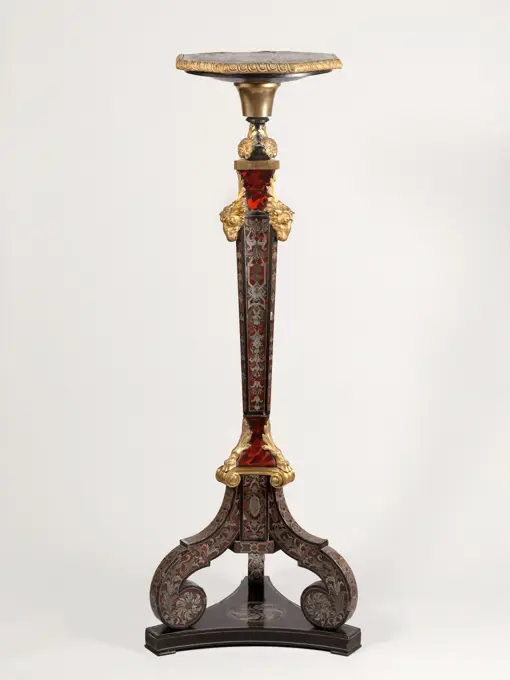
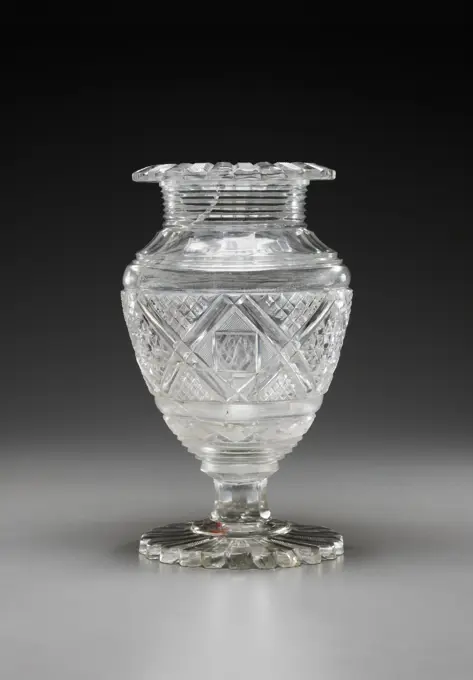
Elegant Glass Vessels

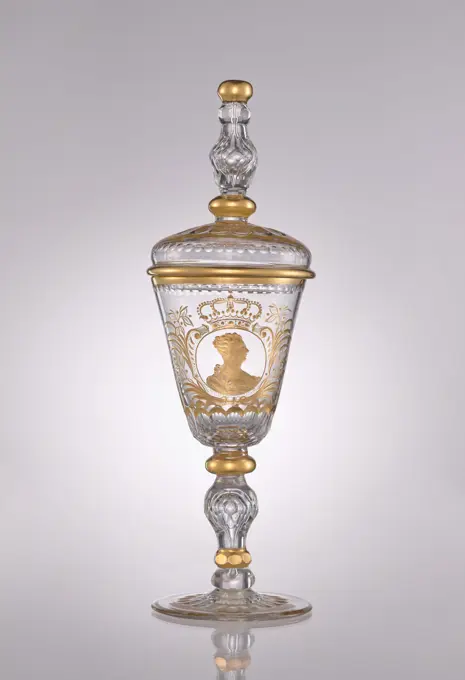
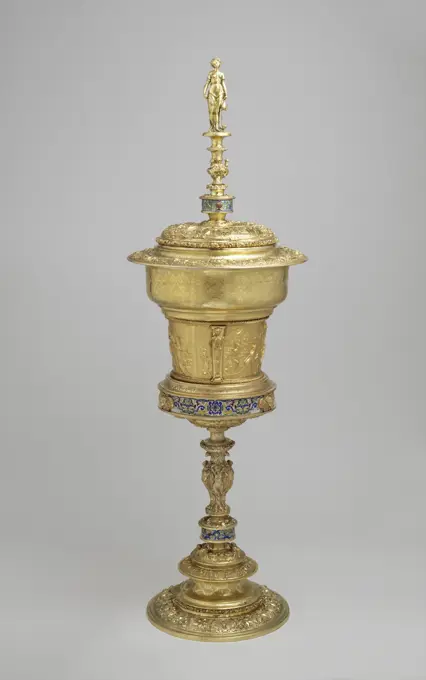
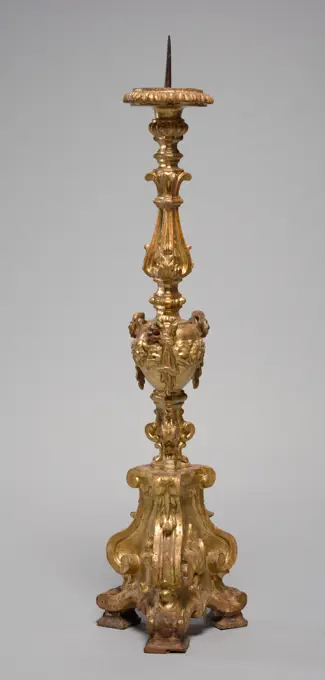
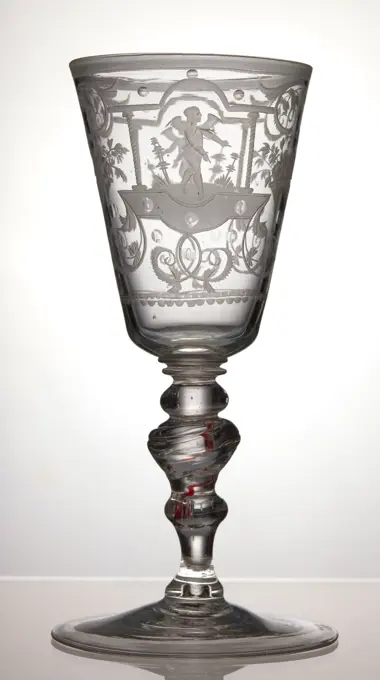
Decorative glass cups and chalices with intricate designs and gold detailing, often depicting hunting themes or religious symbols.

Jar with a hunting scene, anonymous, c. 1850 - c. 1875 Flat, octagonal, faceted foot. Facet cut, baluster -shaped tribe. Funnel -shaped, rounded and faceted chalice at the bottom. On the chalice, in Neo-Louis XV style, in gold a hunting scene with a hunter with a shot duck. A deer, a stork and a dog surrounded by rocaille ornament. The facets on foot, trunk and button with gold. Bohemia glass glassblowing / grinding / gilding Flat, octagonal, faceted foot. Facet cut, baluster -shaped tribe. Funnel -shaped, rounded and faceted chalice at the bottom. On the chalice, in Neo-Louis XV style, in gold a hunting scene with a hunter with a shot duck. A deer, a stork and a dog surrounded by rocaille ornament. The facets on foot, trunk and button with gold. Bohemia glass glassblowing / grinding / gilding
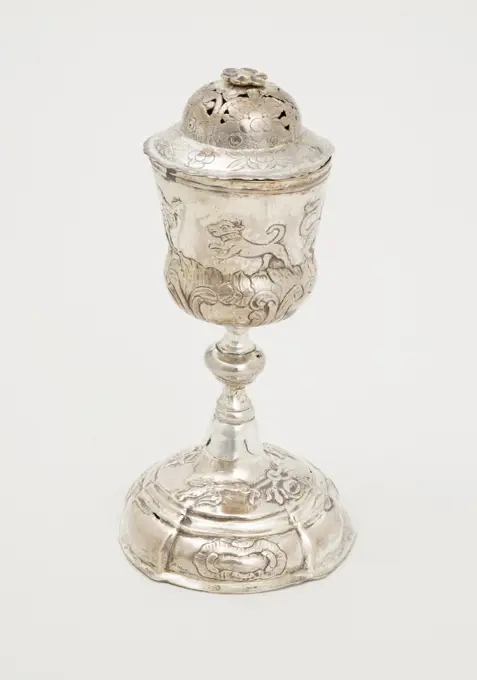
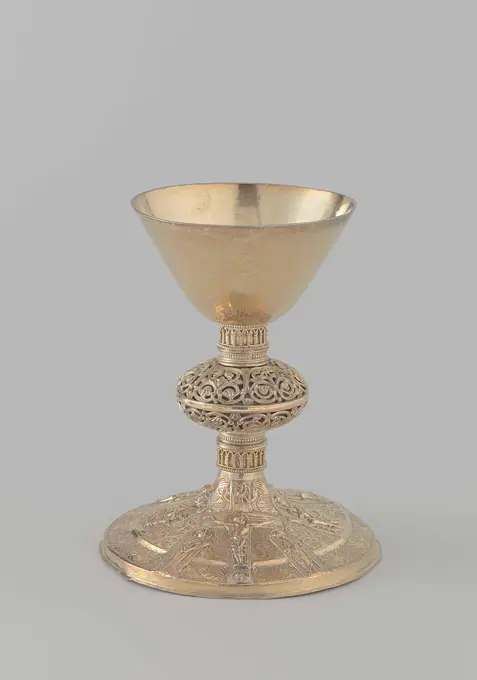
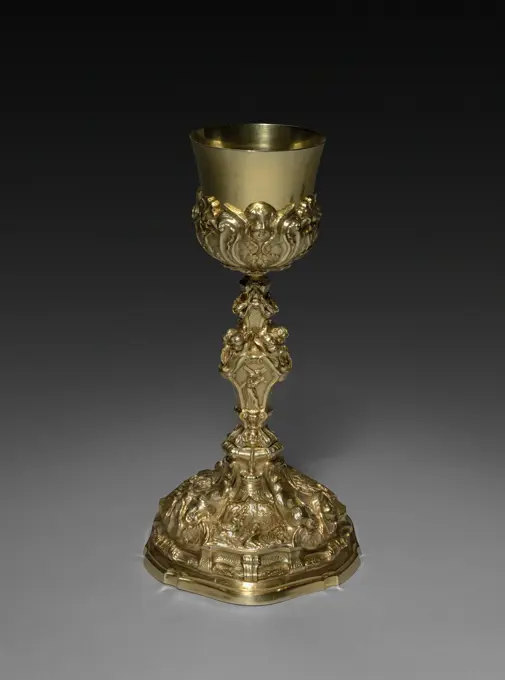
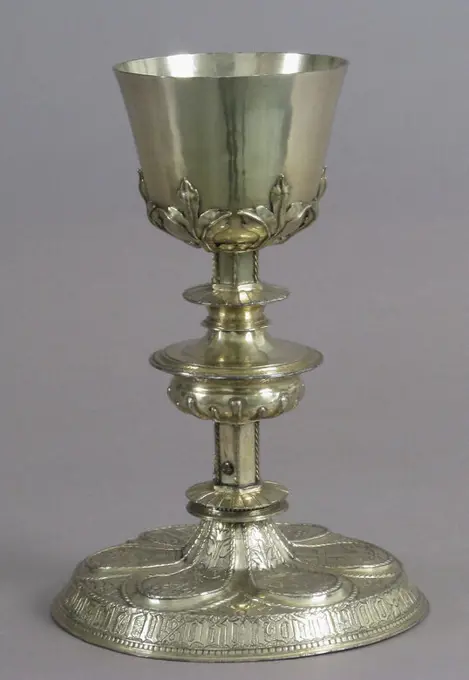
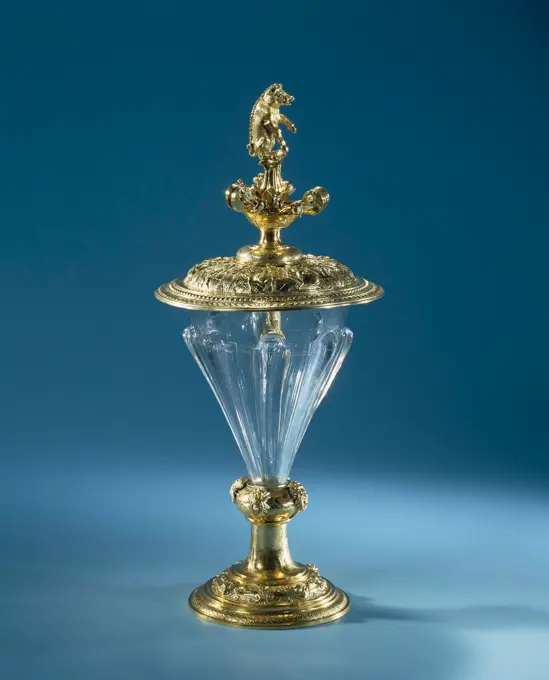
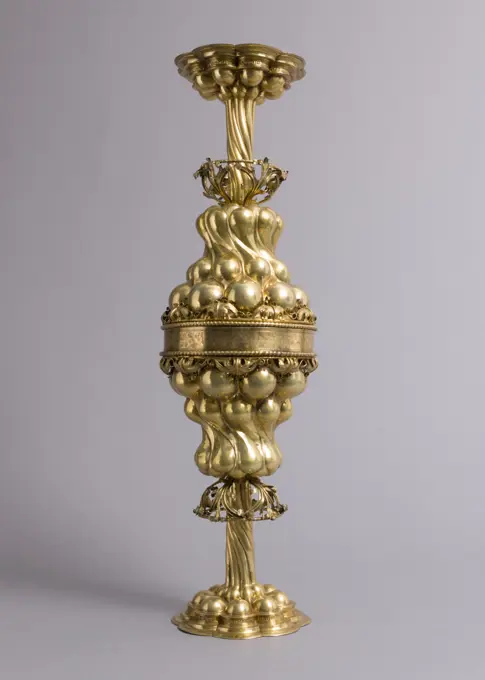
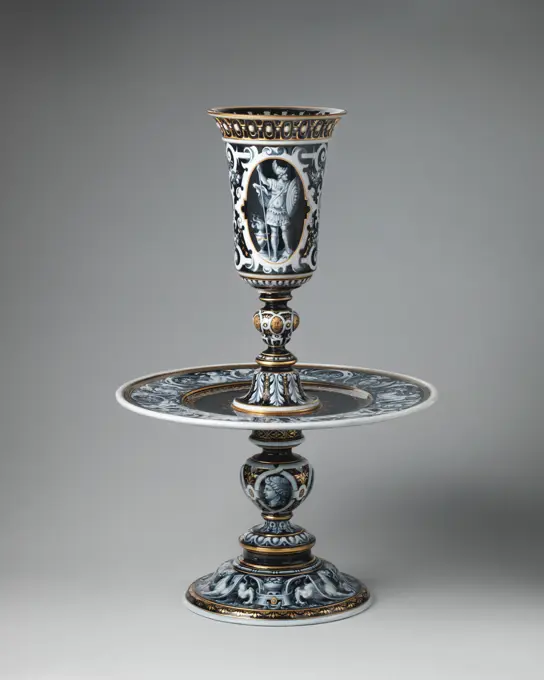
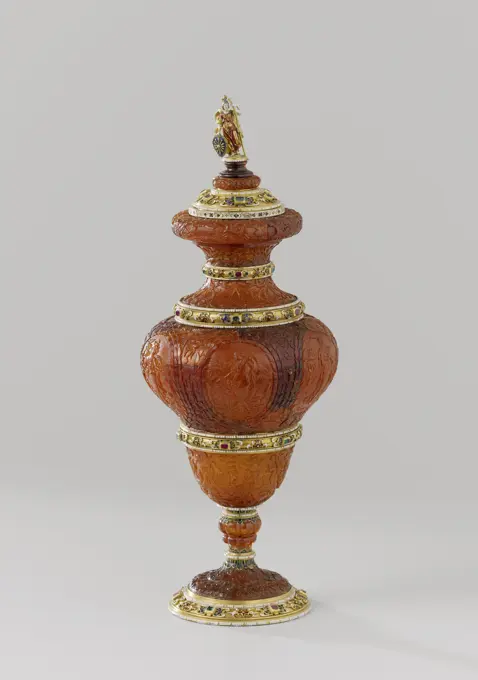
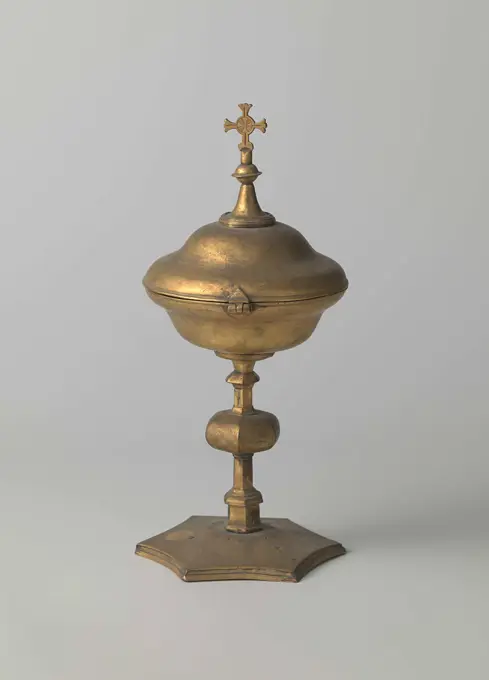
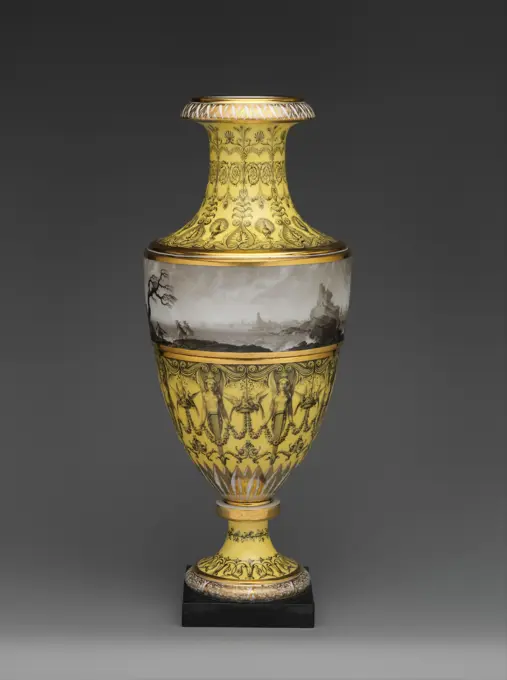
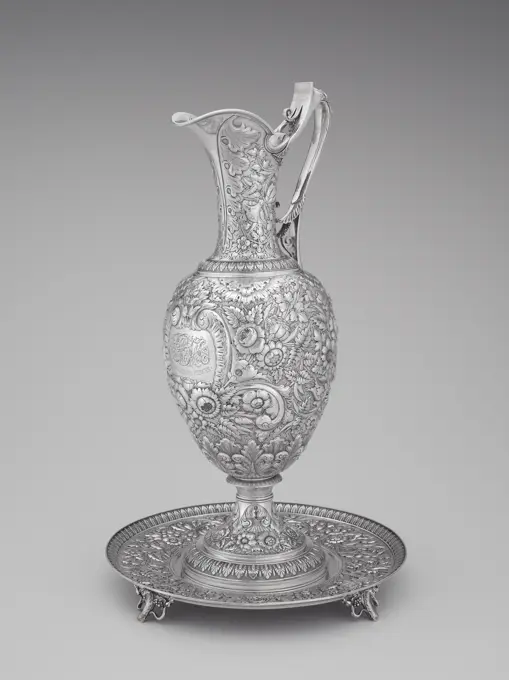
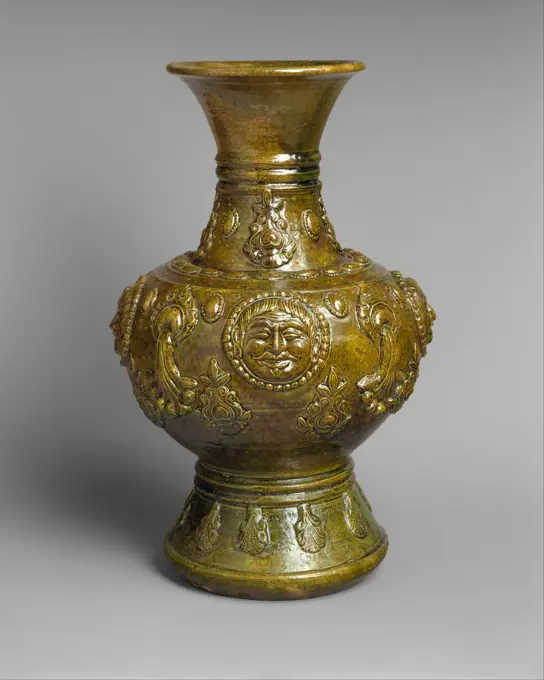
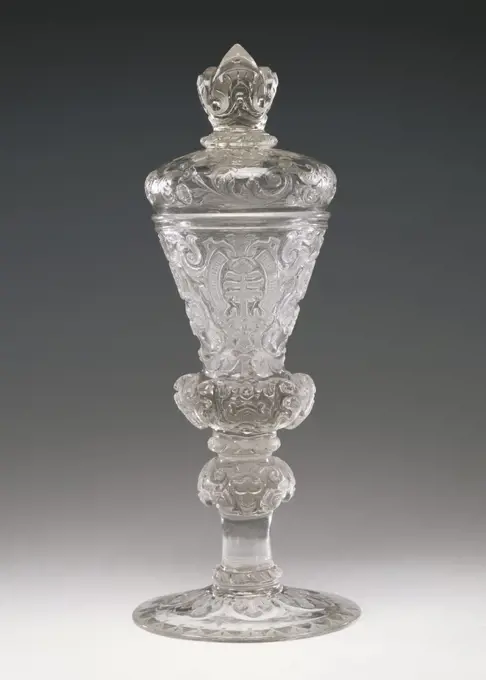
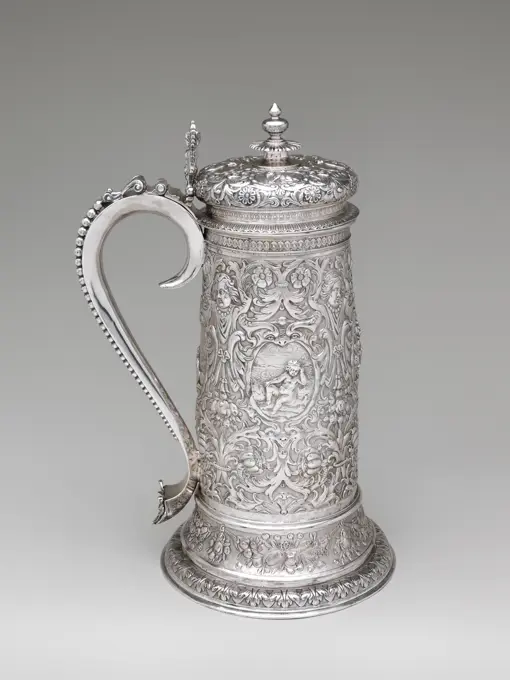
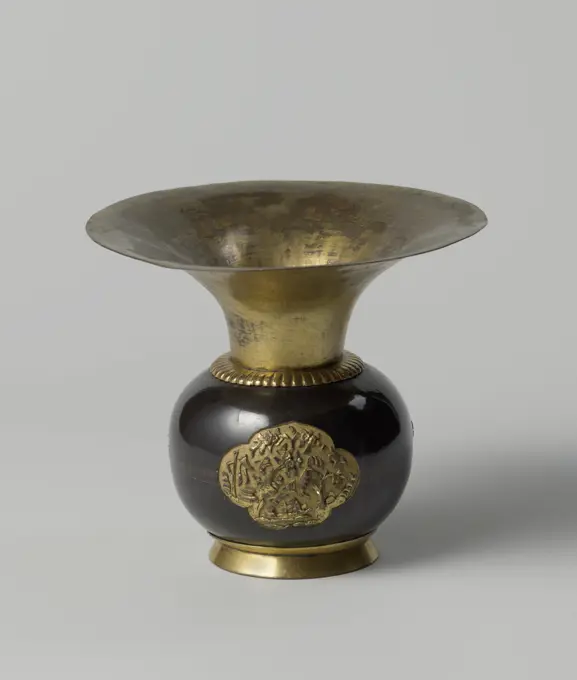
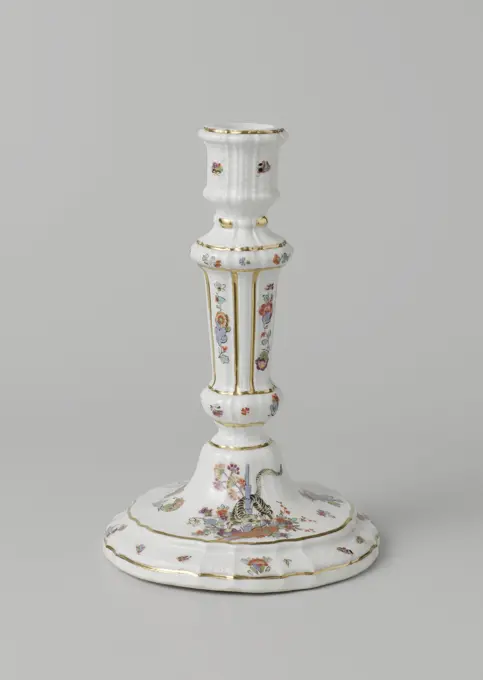
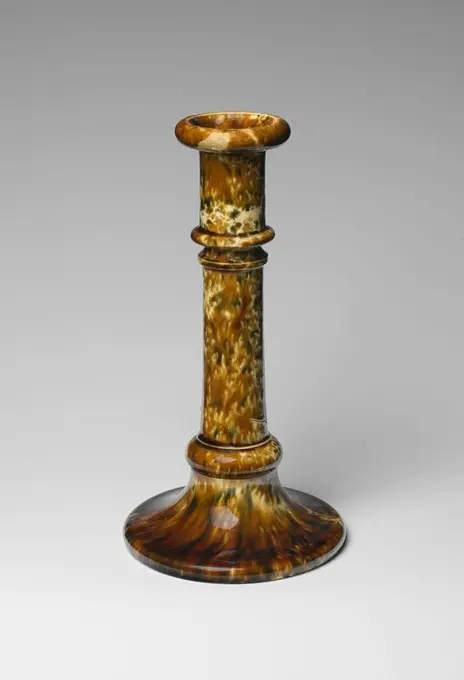
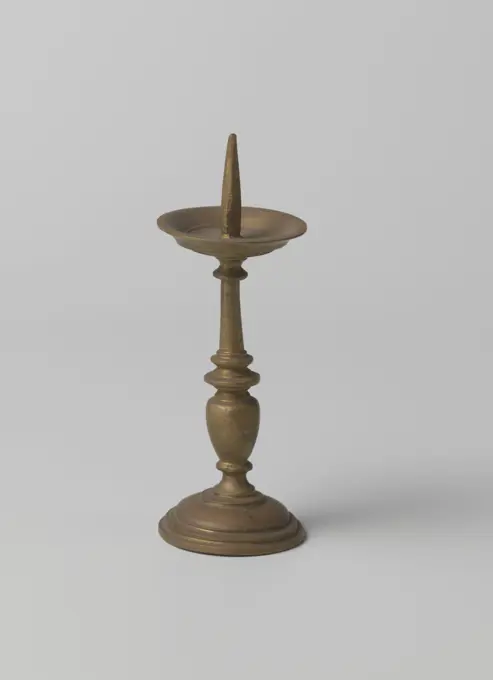
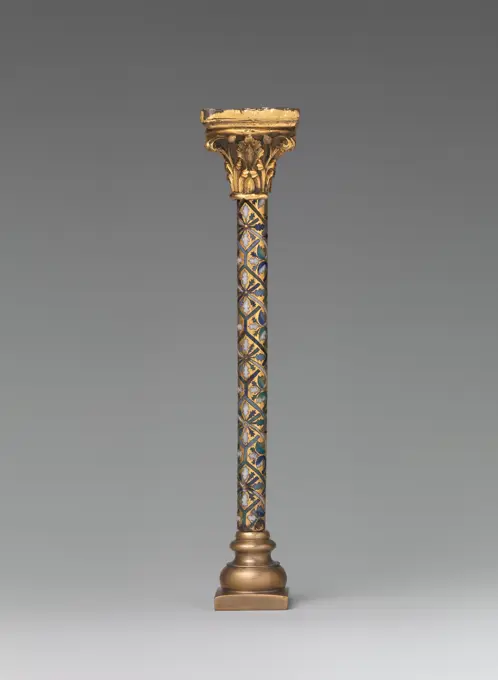
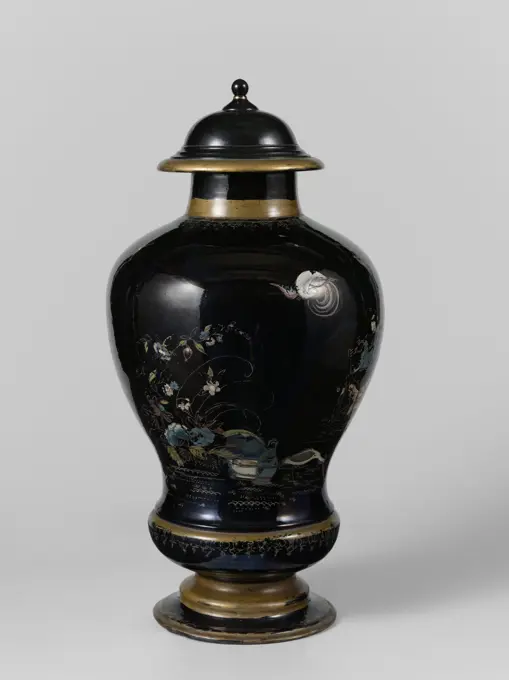
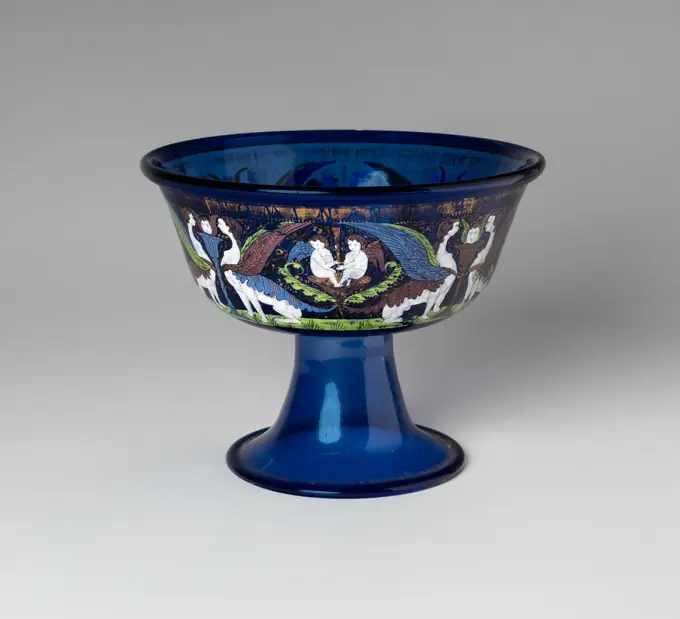
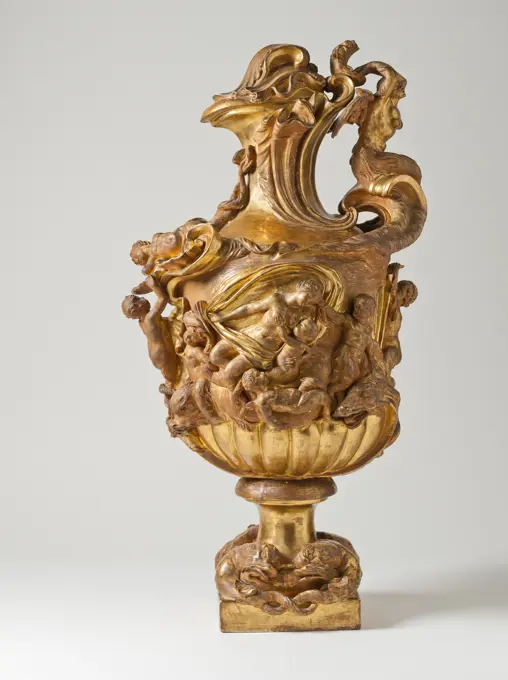
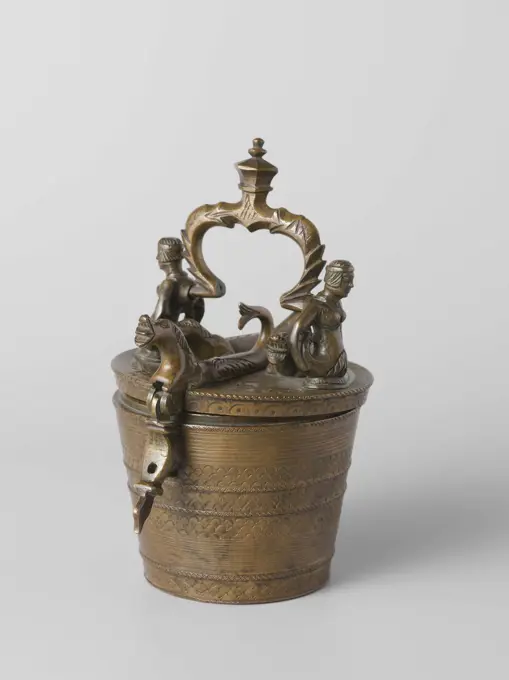
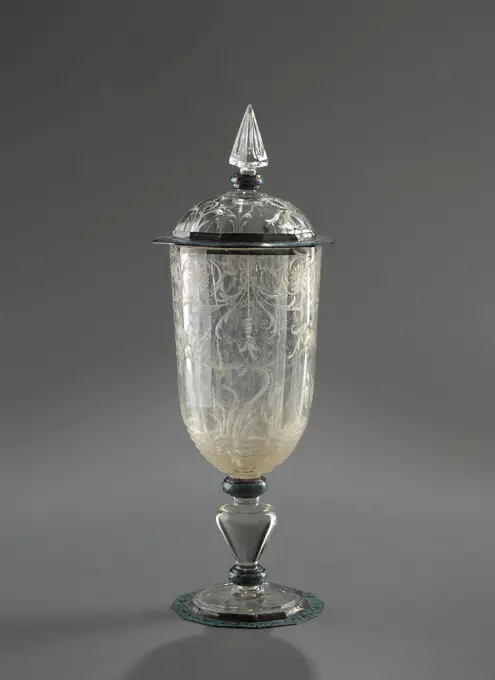
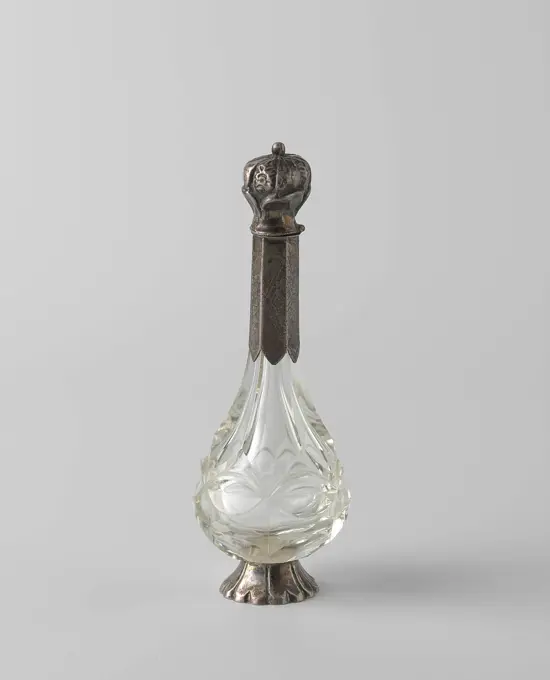
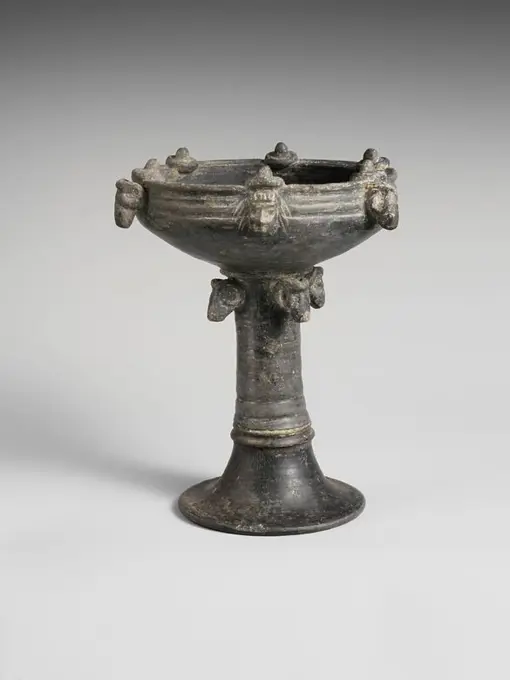
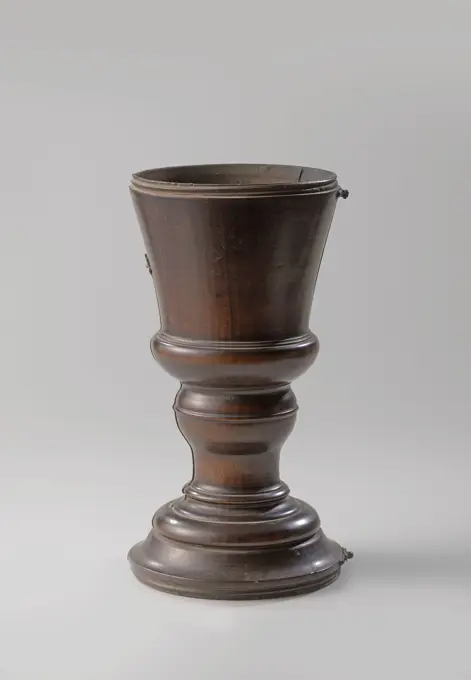
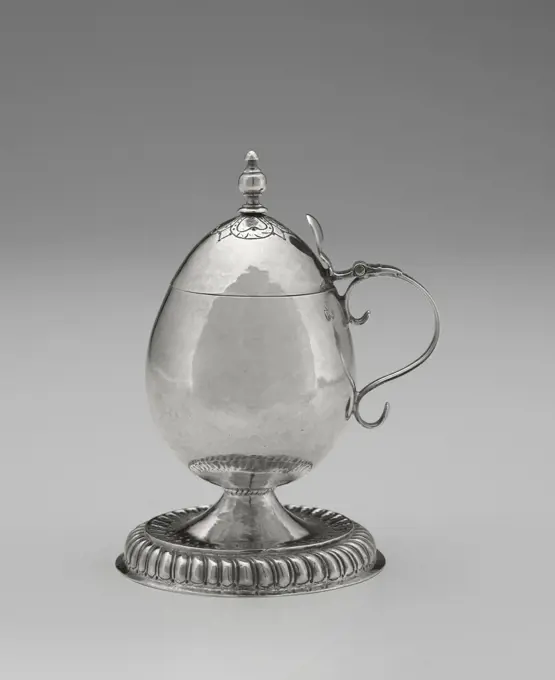
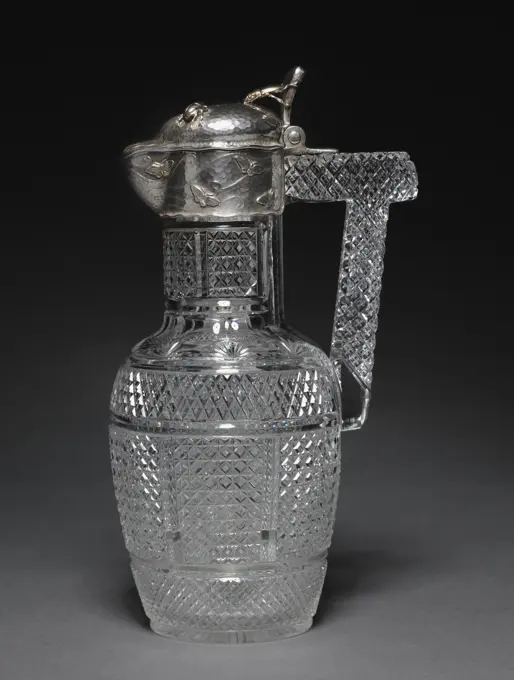
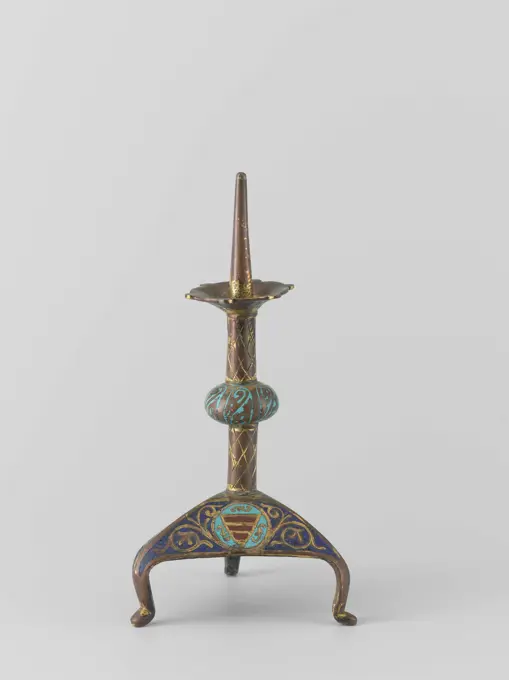
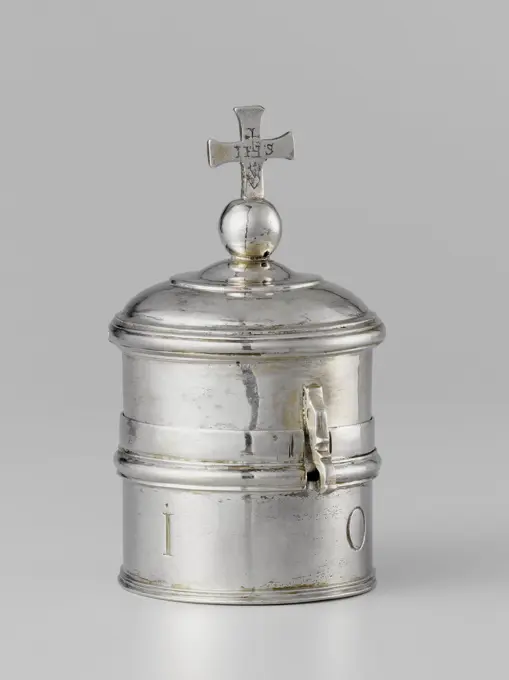
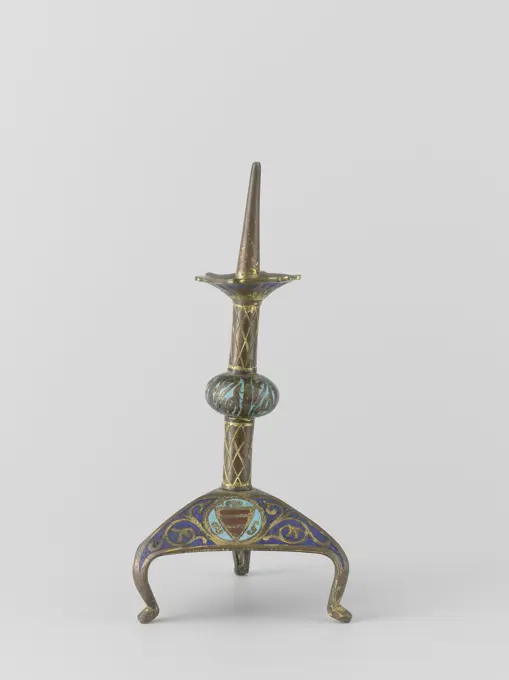
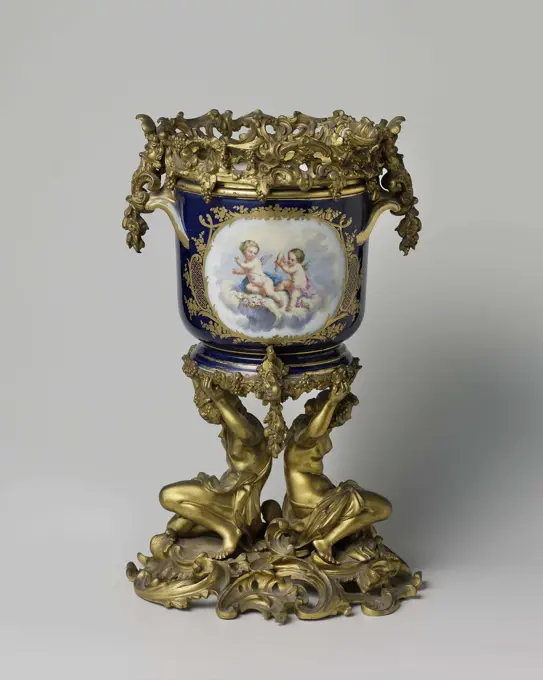
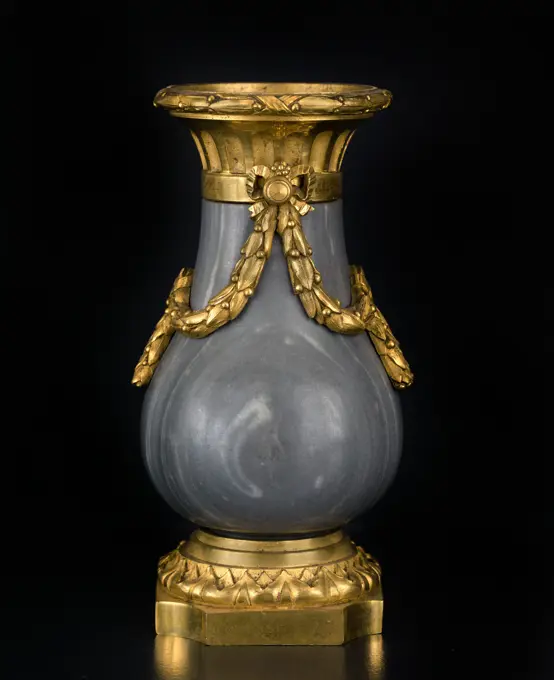
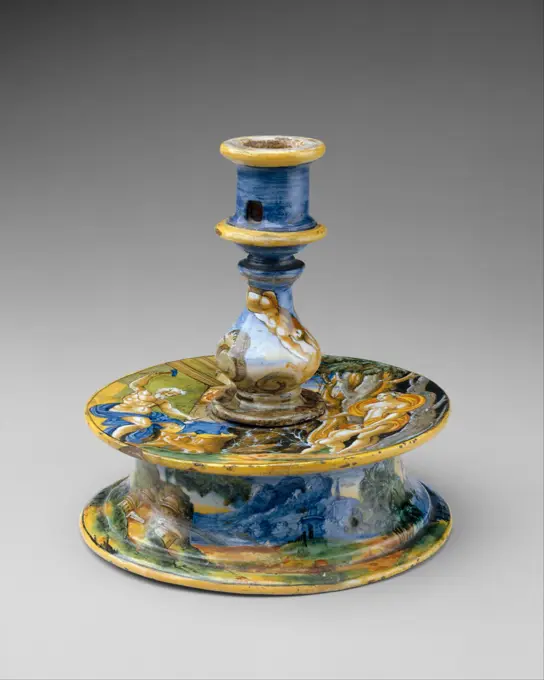
Cup with lid, with a yacht scene. Flat, octagonal, facet cut foot. Facet cut, baluster-shaped strain. Funnel-shaped, rounded and faceted chalice. Facet cut, vaulted lid with overrunning edge and a facet cut, baluster-shaped button, ending in a point. On the chalice in gold a yacht scene with a hunter with a gun. At the foot and the lid a deer, a stork and a dog between Rocaille ornament. The facets on foot, trunk and knob dipped off with gold.Jar with a hunting scene, anonymous, c. 1850 - c. 1875 Flat, octagonal, faceted foot. Facet cut, baluster -shaped tribe. Funnel -shaped, rounded and faceted chalice at the bottom. On the chalice, in Neo-Louis XV style, in gold a hunting scene with a hunter with a shot duck. A deer, a stork and a dog surrounded by rocaille ornament. The facets on foot, trunk and button with gold. Bohemia glass glassblowing / grinding / gilding Flat, octagonal, faceted foot. Facet cut, baluster -shaped tribe. Funnel -shaped, rounded and faceted chalice at the bottom. On the chalice, in Neo-Louis XV style, in gold a hunting scene with a hunter with a shot duck. A deer, a stork and a dog surrounded by rocaille ornament. The facets on foot, trunk and button with gold. Bohemia glass glassblowing / grinding / gildingStanding cup and cover, Silver, A) Waisted bowl with three fantastic animals and dog in repousse; knopped stem, scalloped where it fits over domed and stepped foot with two flying birds holding ribbons of festoons in beaks and three scrolled cartouches. B) Domed and rimmed cover pierced and incised with floral design; finial is floral head of pin which holds round plate inside cover., possibly Poland, Europe, 18th-19th century, metalwork, Decorative Arts, Standing cup and coverChalice. According to Christian doctrine, Christ died on the cross to atone for the sins of mankind. For Roman Catholics, this sacrifice is repeated during Mass: the wine in the chalice is turned into the blood of Christ. For this reason this chalice depicts the crucified Christ, flanked by his mother, the Virgin Mary, and his disciple John the Evangelist.Group of vases. Two of the vases in this group bear the mark of the Porceleinfabriek aan den Amstel, the successor of the Loosdrecht porcelain factory. Just as the factory at Loosdrecht had earlier bought up the stock and moulds of its predecessor in Weesp, so did the factory in Ouderkerk aan de Amstel take over the inventory of Loosdrecht.Chalice, 1732. Antonio Lopez (Spanish). Silver gilt; overall: 29.7 x 15.9 cm (11 11/16 x 6 1/4 in.).Chalice. Artist: Diego Muñoz. Culture: Spanish. Dimensions: Overall: 9 1/16 x 6 5/16 in. (23 x 16 cm). Date: 16th century.This chalice made of silver was used during the celebration of the Eucharist to serve the consecrated wine. It was produced by the Spanish silversmith Diego Muñoz, whose maker's mark appears between the medallions on the vessel's foot. A second mark, showing an aqueduct surmounted by a bust and the letters SECO below, belongs to the town of Segovia. According to the inscription engraved on the rim of the foot, the chalice once was "the property of the chapel of Señor Pero Lopez, son of the deceased Lord Rodrigo Lopez.". Museum: Metropolitan Museum of Art, New York, USA.. The production of clear glass was introduced in Antwerp in the 16th century by Venetian glassblowers. This luxury goblet illustrates the high level of craftsmanship in Netherlandish cities. Seated atop the gilded silvercover is a wild boar, with a unicorn emerging on the underside. With the other figures, these animals symbolize faith, loyalty and purity.Double Cup 1574/1575 Mattheus Epfenhauser German (Nuremberg) The double cup bears the hallmark of the city of Nuremberg and of the goldsmith Mattheus Epfenhausen, listed as a master in 1570. A medallion set in the base of one cup portrays Sigmund Richter, and his family arms are represented in a medallion of the other cup.. Double Cup. Mattheus Epfenhauser (German). German. 1574/1575. Silver gilt, silver medallions. Made in Nuremberg. Metalwork-SilverCenterpiece 1866 Minton(s) British The centerpiece is marked underneath "HS & M" in monogram, and is possibly the mark of the painter of the grisailles representing classical busts and figures from mythology.. Centerpiece. British, Stoke-on-Trent, Staffordshire. 1866. Porcelain, enameled and gilt. Minton(s) (British, Stoke-on-Trent, 1793-present). Ceramics-PorcelainLidded goblet, Georg Schreiber (attributed to), c. 1600 - c. 1625 Cup with lid of sliced amber, surrounded by eight tires of gold with imposed motifs from email and precious stones. As a crown an enamelled Minerva figure with shield and lance. Around the belly of the vase, Olympic gods have been presented in the amber in six oval and wrapped fields. Königsberg amber (fossil resin). gold (metal). emerald (mineral). ruby (mineral). Cup with lid of sliced amber, surrounded by eight tires of gold with imposed motifs from email and precious stones. As a crown an enamelled Minerva figure with shield and lance. Around the belly of the vase, Olympic gods have been presented in the amber in six oval and wrapped fields. Königsberg amber (fossil resin). gold (metal). emerald (mineral). ruby (mineral).Goblet and cover. Zechlin (huta szkła ; 1736-1890), creatorStanding cup with cover 19th century, after 1570 original Franchi and Son This electrotype is after a sixteenth-century original (1570) in the Landesmuseum Joanneum, Graz (Austria).. Standing cup with cover 185883Standing cup. Artist: Jean-Valentin Morel (French, 1794-1860). Culture: French. Dimensions: Height: 9 1/4 in. (23.5 cm). Date: 1850-51.Romantic historicism was one of many nineteenth-century revival styles, and Morel was unsurpassed in his skill in fashioning hard stones, enameling, and an eclectic assortment of decorative motifs into highly refined evocations of seventeenth-century goldsmiths' work. Trained under the pre-Revolution maker of gold boxes Adrien Vachette (act. 1779-1839), Morel is a direct link to the long history of French jewelers and goldsmiths. Morel practiced in Paris for many years before moving to London in 1848, following the adverse settlement of a business dispute (an expatriation that lasted until 1852, when he returned to France). In London he established a workshop staffed by more than fifty craftsmen and enjoyed the patronage of Queen Victoria and the exiled Louis-Philippe. The culmination of Morel's London career was his display at the Great Exhibition of . Salt barrel, in the form of a fountain. The vaulted, profiled base with raised center carries, above a double insulation, the reverse uniform member on which the wide pelvis with beat outer edge is located. A garden vase has been placed on an increase in the middle of the basin with a dancing women's figure as a crowning. Foot and pelvis are surrounded by a ribbed edge and finely driven tendrils ornament on granulated soil. To enter the interpretation over the foot and the vase shape godrink edges.Prince Willem van Oranje, Hendrick de Keyser (I), c. 1780 - c. 1800 Miniature bust of Prince Willem van Oranje (De Zwijger), seen frontally. The head is slightly downwards with the chin on the chest. The prince is dressed in a tabola fitted with fur, over a shirt closed with buttons. He also wears a large pleated and a sleeping cap. The Arman moves end in spiral -shaped volutes and the cutting on the bottom also ends in a double volute. Just above the cutting, the inscription is: AET ATIS 51. The bust stands on a cylindrical base of red porphier, trimmed with gold -plated bronze profiles - with leaf motifs and a laurel wreath - along the foot and top and a ditto -channeled, rejuvenating support for the portrait. The pedestal dates from the late 18th century. Netherlands Bust: Bronze (Metal). base:. Profiles: Gilding (Material) casting / gilding Miniature bust of Prince Willem van Oranje (De Zwijger), seen frontally. The head is slightly downwards with the chin on the chest. The prince Candleholder, mid-late 1600s. Italy, mid-late 17th century. Gilded wood; overall: 81.3 cm (32 in.).Przeszo Przyszoci unknownCALIZ S XVI (IRIA FLAVIA). Location: MUSEO DE ARTE SACRO. Padrón. Coruña. SPAIN.Table bubble with a snake on the handle. Silver table. To clock a pearl edge with dependent giurlands. Along the bottom edge a engraved pendulum edge. A hose winds around the columnar stem.BalsamineFlower vase. Wolff, Karol (fl. ca 1800), company owner, Bielino (manufaktura fajansu ; 1779-1800), factoryCiborie with round, vaulted lid, crowned by a cross. The object consists of foot, trunk, box and lid. The box, the lid, the blade of the foot and maybe the hollow nodus have been made out of plate and then calculated. The foot leaf consists of two pieces. The area around the strain is riveted to the remaining piece and reinforced on the bottom. The lid is attached with a hinge and is equipped with a retlience. The object is gold-plated, also at the bottom of the foot and on the inside of box and lid. The cross on the lid can be updated. The closing pin is missing.Anonymous / 'Case for oval jasper bowl with fretwork stem'. 1650 - 1711. Leather, Wood, Metal, Cloth. Museum: Museo del Prado, Madrid, España.Vase with scenes of storm at sea ca. 1797-98 Dihl et Guérhard French In the closing decades of the eighteenth century, a number of porcelain factories were established in Paris that offered both commercial and artistic competition to the Sèvres factory, despite the latters royal status and the patronage of its products as encouraged by Louis XVI (1754-1793), king of France. Many of these newly founded factories had royal protectors who allowed them to operate regardless of the monopoly that Sèvres continued to enjoy, and the majority of the Paris enterprises focused solely on the production of hard-paste porcelain. One of the most successful of these factories was first known by the name of its protector, Louis-Antoine dArtois (French, 1775-1844), duc dAngoulême (Manufacture de Monsieur Le Duc dAngoulême), and later known as the Dihl et Guérhard factory at the time of the French Revolution (1789-99). The factory was founded in 1781 by Christophe Dihl (German, 1753-1830), a potter fPitcher andtray. Manufacturer: Tiffany and Company, American, founded 1837Honorand and Recipient: George Townsend Adee, American, 1804-1884Sgabello, Chair of Notenhout, Anonymous, 1500 - 1600 Sgabello van Notenhout resting on a front and hind leg in the form of two flat-set claw legs, between which a hanging, stylized lily. By a profiled list, his rear and front board separated from the wide seating rules; The hexagonal seat crosses. The flat back is cut out vase -shaped. See also: BK-15383 and 15385. Italy wood (plant material). walnut (hardwood) Sgabello van Notenhout resting on a front and hind leg in the form of two flat-set claw legs, between which a hanging, stylized lily. By a profiled list, his rear and front board separated from the wide seating rules; The hexagonal seat crosses. The flat back is cut out vase -shaped. See also: BK-15383 and 15385. Italy wood (plant material). walnut (hardwood)Vase with human faces mid-6th century China Four pearl roundels, each containing the same image of a frontal man's head with a Central Asian face, dominate this jar. Frontal heads surrounded by pearl beading occur in several kinds of early Central Asian art; for example, they appear frequently on unglazed Khotanese earthenwares.Elements of the Buddhist decorative grammar appear here as well: the elongated earlobes are characteristic of images of the Buddha, and the highly stylized palmettes are reminiscent of carvings in some Buddhist cave temples. The tasseled streamers issuing from an ornamental disk are similar to those embellishing late Six Dynasties (220-589) stone figures of bodhisattvas; they also occur in Khotanese earthenwares. Listen to experts illuminate this artwork's story Listen Play or pause #7433. Jar Supported by Bloomberg Philanthropies We're sorry, the transcript for this audio track is not available at this time. We are working to make it available as soon as possibMeasure 1854-93 Carl Adolph Ferdinand Heidorn. Measure. German, Lübeck. 1854-93. Pewter. Metalwork-PewterLime Container(Tagan)Candlestick, painted multi-colored with a kakiemon decor. Candlestick of painted porcelain. The candlestick has a round, scalloped foot with a profiled strain with two nodi. The 'Altbrandenstein' pattern has been painted on the candle holder and the foot edge. A tiger is painted on the foot to a bamboo stalk in flowers. The candlestick is noticed.Pitcher (Austria); Designed by Ludwig Lobmeyr (Austrian, 1829 - 1917); Manufactured by J. & L. Lobmeyr GmbH (Austria); enameled and gilt glassGoblet with Cover 1700-1725 Germany. Glass .Covered Goblet; Friedrich Winter, Polish (Silesian), died about 1711 or 1712; about 1691 - 1694; Colorless glass with wheel-engraved, high-relief deocration; Object: H: 31 cm (H:  12 3/16 in.)AJLC Berger. "Cup". Money. 1811-1819. Museum of Fine Arts of the City of Paris, Petit Palais. 74382-30 Money, silverware, gobletCandlestick (one of a pair) ca. 1743-45 Johann Peter Pepfenhauser German. Candlestick (one of a pair) 231582Candlestick;  1. PO. 19th century (1830-00-00-1850-00-00);Flagon (one of a pair) 1646-47 Attributed to Richard Blackwell II British These wine flagons bear the mark of a silversmith who supplied many prominent Royalist and high-church clients during the turbulent period of the Civil War. For the sensitively chased floral ornament here, he must have employed a Dutch or Netherlandish artist.. Flagon (one of a pair). British, London. 1646-47. Silver gilt. Metalwork-SilverLazio Roma Velletri Museo Capitolare4. Hutzel, Max 1960-1990 Medieval: Breviaries (two, 14-15th century); "The Passion" on vellum (French school, late 13th century); reliquaries. Post-medieval: Paintings, frescoes, vestments, sculpture, metalwork, panel painting Object Notes: Bibliographic material housed in Center library. Hutzel photo campaign dates: one undated, another November 9, 1985. It is likely that notes for the Pinacoteca Cattedrale (no separate Hutzel entry) describe items under this heading. TCI seems to indicate that the Museo Capitolare is adjacent to the cathedral. As well, some prints are missing; the initial Hutzel entry indicates that there are 422 prints. At this count, I can find 142. German-born photographer and scholar Max Hutzel (1911-1988) photographed in Italy from the early 1960s until his death. The result of this project, referred to by Hutzel as Foto Arte Minore, is thorough documentation of art historical development in Italy up to the 18th century, incluSpittoon, 1700 - 1800  Wagging with gilded foot and a trumpet -shaped mouth and a black lacquered convex belly decorated with three cartouches in relief, representing pagodas and a figure in a boat in the midst of a traditional Chinese landscape with trees, birds and a butterfly. The inside of the mouth is engraved with fruit, flowers and birds. Tonkin . casting  Vietnam. CantonCandlestick; Silver Products Factory K.F. Malcza (Warsaw; Sreber label; 1828-1864), Malcz, Karol (1797-1867); 1852 (1840-00-00-1860-00-00);Coupe with topographic images in medallions. Porcelain coupe, painted with topographic images in medallions.Candlestick, multicolored painted with a kakiemon decor, meissener porzellan manufaktur, c. 1740 - c. 1745 Candlestick of painted porcelain. The candlestick has a round, scalloped foot with a profiled trunk with two nodes. The 'Altbrandenstein' pattern is painted on the candle holder and the foot edge. On the foot, a tiger is painted around a bamboo stalk in flowers. The candlestick is marked. Float porcelain Candlestick of painted porcelain. The candlestick has a round, scalloped foot with a profiled trunk with two nodes. The 'Altbrandenstein' pattern is painted on the candle holder and the foot edge. On the foot, a tiger is painted around a bamboo stalk in flowers. The candlestick is marked. Float porcelainStanding cup with cover early 18th century Bohemian. Standing cup with cover. Bohemian. early 18th century. Glass. GlassCandlestick. Culture: American. Dimensions: H. 7 5/8 in. (19.4 cm). Maker: United States Pottery Company (1852-58). Date: 1849-58. Museum: Metropolitan Museum of Art, New York, USA.Candlestick with vase -shaped trunk, anonymous, c. 1800 - c. 1900 The candlestick is composed of four parts: foot, trunk, fat catcher and candle pin. The foot is roughly profiled. The trunk is vase at the bottom. The trunk is sounding in the foot. Netherlands brass (alloy) casting The candlestick is composed of four parts: foot, trunk, fat catcher and candle pin. The foot is roughly profiled. The trunk is vase at the bottom. The trunk is sounding in the foot. Netherlands brass (alloy) castingScandinavia. Altar chandelier. Church of Askoy, Rennesoy, Rogaland. 1100. Bronze. Probably Flemish work. Historical Museum. Oslo. Norway.Pair of Vases (jardinières). UnknownColonnette from a Reliquary Shrine ca. 1175-1200 German. Colonnette from a Reliquary Shrine 464400Tazza 1840-1860 France. Tortoise shell and enameled gold . Charles DuronCup with funnel-shaped chalice with vertical, slightly teared optically blown ribs. Flat foot with beaten edge. The stem made up of two, hollow, ribbed balusters, connected by a blue rod and triangles of thread on which six blue bram buds. Fully shaped chalice with vertical, slightly teared optically blown ribs.Beaker, 1807-1812. Austria, Vienna, 19th century. Silver; diameter of mouth: 6.7 cm (2 5/8 in.); overall: 9.6 cm (3 3/4 in.).Vase lid, painted with chinoiseries on a black stock, Meissener Porzellan Manufaktur, c. 1710 - c. 1715 Lid of baluster-shaped vase of red Böttger-SteenGoed Float Cover: Wood (Plant Material) lacquering Lid of baluster-shaped vase of red Böttger-SteenGoed Float Cover: Wood (Plant Material) lacqueringVase, painted with chinoiseries on a black stock, Meissener Porzellan Manufaktur, c. 1710 - c. 1715 Balus-shaped vase of red Böttger-SteenGoed. The vase has a constricted, profiled foot and a short neck. The lid is a copy in wood. The original lid is missing. The vase, with the exception of the inside, is covered with black glaze, on which in multicolored cold lacquer and gold images are painted: on one side Chinese figures sitting on chairs on a table, on the other side a fence for which a handle basket with flowers . On the sides a tree with Chinese figures and a dog and a plant, bowl, vase and crane. A golden band with hanging lace-like ornaments runs between the foot and the body, between the shoulder and the neck and on the flat foot edge. The constricted part of the foot is completely gilded. A few small restorations at the foot and the mouth edge. The painting is rather damaged. Float stoneware. deksel: wood (plant material) lacquering Balus-shaped vase of red Böttger-SteenGoed.Goblet. Dated: c. 1936. Dimensions: overall: 35.7 x 24.3 cm (14 1/16 x 9 9/16 in.). Medium: watercolor, graphite, and colored pencil on paper. Museum: National Gallery of Art, Washington DC. Author: Vera Van Voris.Vase; Pałowy Kiev-Miegor region Manufaktura Fajansu (Ceramics Factory; 1798-1917); around 1820 (1815-00-00-1825-00-00);Galvanoplastic reproduction of a bowl with a deer within fence from the Lüneburger Ratssilber, Fa. Vollgold & Sohn, c. 1505 Galvanoplastic reproduction of a bowl with swellings, on which hertel on green email, on high base of gilded silver. Berlinsilversmith: Lüneburg copper (metal). silver (metal) gilding Galvanoplastic reproduction of a bowl with swellings, on which hertel on green email, on high base of gilded silver. Berlinsilversmith: Lüneburg copper (metal). silver (metal) gildingA copy of the cup from the 15th centuryFooted Bowl 1485-1495 Venice. This footed bowl was intended to make a luxurious statement in late fifteenth-century Italy. Brilliant blue glass, meant to replicate the color of sapphires, was a specialty of Venetian glass blowers. The finely painted enameled decorationócherubs and fantastical sphinxesóas well as the classical shape of the vessel, reflects the Italian Renaissance admiration for art and design of ancient Rome.Such bowls were used only for special occasions such as weddings or celebratory feasts. This exampleís gilded rim is inscribed with the phrase TENPORE FELICI MVLTI NOMINANTVR AMICI In times of abundance one has lots of friends that evokes a festive environment of largess in which the bowl was originally used.. Blue glass, enamel, and gilding .Galatea Vase. Massimiliano Soldani-Benzi (Italy, Florence, 1656-1740). Italy, circa 1695. Furnishings; Accessories. Gilded terracottaIncense Burner with Peony Scroll 1050-1127 China. Cizhou ware; stoneware, slip-coated with underglaze sgraffito decoration and overglaze painting in iron brown .Pricket Candlestick with Birds, Vines, and Leaves 1175-1200 German. Pricket Candlestick with Birds, Vines, and Leaves 464141. Brass closing weight of 16 Hollands Troois pounds.Monstrance. The object consists of parts that are driven, driven, poured or sawn. The foot and strain are removable, the upper part is soldered. At the foot, the raised and flat edges as well as the profiled closure to the trunk are roasted. In this seal a round hole, thereby inserting the pin provided at the end of a threaded pin, which can be screwed into nut with a four-sheet nut. At the other end, it has a round plate that fits into the lower cylinder frame and which has been arranged on the pin that has a little step out of the LUNULA. The hexagonal strain is inserted around this pin with a profiled edge on the side of the foot and with such a border on the side of the nodus. The hollow nodus is then placed with a profiled edge at the top that just fits under the openings extended in each other, so that a pen can be clocked. A piece is placed on the upper end of the strain, which repeats the edge motif five times and which serves to form the turnation for the initially hexagonal aCup with a cover. unknown, authorCracking bottle of six-sided cut crystal with frame, foot and cap from silver. Scent bottle of six-sided cut crystal; Bolle belly and high slim neck, lightly vaulted base of silver with lobby bottom edge and alternating high and low notches. The neck has a frame of silver with engraved geometric motifs, the cap is attached to this consisting of a leaves rising lobby and that is awarded by a round button. DOP in cap. Netherlands, ca. 1860.Terracotta chalice. Culture: Etruscan. Dimensions: H. 7 in. (17.8 cm); diameter of mouth 5 1/4 in. (13.4 cm). Date: ca. 575-550 B.C..Cup on high foot with human and rams' heads and knobs on lip. Museum: Metropolitan Museum of Art, New York, USA.Wine cup, 20th century, 5 3/16 x 2 7/8 x 2 7/8 in. (13.18 x 7.3 x 7.3 cm), Stone, Israel (), 20th centuryHout, Horend with Bokaal, Anonymous, 1725 - 1750 Foedraal is not complete.  wood (plant material). velvet (fabric weave) Foedraal is not complete.  wood (plant material). velvet (fabric weave)Lamp - vase. unknown, craftsmanGalvanoplastic reproduction of a jar with lid with scenes related to hunting, fa. Elkington & Co., after 1863 - Before 1878 Galvanoplastic reproduction of a jar with lid, with ties with engraved scenes with topics related to hunting interspersed with ties with rolling work in relief; A vase with flowers forms the crown of the lid. London copper (metal). silver (metal) gilding Galvanoplastic reproduction of a jar with lid, with ties with engraved scenes with topics related to hunting interspersed with ties with rolling work in relief; A vase with flowers forms the crown of the lid. London copper (metal). silver (metal) gildingBase, belonging to a sundial, anonymous, c. 1700 - c. 1750 Hard stone base. Corning with a sundial. From the courtyard of the buildings of the management of the grandbooks in Amsterdam. The sphere on top is most likely from a later date. unknown ashlar brick Hard stone base. Corning with a sundial. From the courtyard of the buildings of the management of the grandbooks in Amsterdam. The sphere on top is most likely from a later date. unknown ashlar brickBRASERO DEL S XVII. Location: CONVENTO DE LAS CARMELITAS. Toledo. SPAIN.Incense burner. The French bronze-founder Ferdinand Barbedienne exhibited this design at the international exhibitions in Paris (1855) and London (1862). The incense burner caused a furore. Its style was referred to as Greek Revival in reviews of these world fairs, but it is actually a mixture of assorted Middle Eastern and natural motifs, such as the large dragonfly on the burners neck.Beaker ca. 1670 John Hull. Beaker 399Maker: Peter Van Dyck, American, 1684-1751, MustardPot, ca.1710, Silver, 5 1/8 in. (13 cm), Made in New York, New York, American, 18thcentury, Containers -MetalsMetallic jug adorned with a feminine mask. unknown, authorClaret Jug, c. 1880. Tiffany & Co. (American, New York, est. 1837). Rich cut-glass and silver; overall: 26.7 x 15 x 12.1 cm (10 1/2 x 5 7/8 x 4 3/4 in.).Kandelaar, made up of ranks, Koninklijke Utrechtsche Fabriek van Zilverwerken by C.J. Desire, 1904 Two candlesticks (see also BK-1990-6-B), almost identical. Stam made up of four series of three tendrics that, at the bottom, gracefully curls the open foot ring and act as feet. Just above the foot ring, the tenders flow together to split into groups of two in a nodus at half height of the trunk. This schedule repeats itself in a second larger Nodus, which is located below the top of the trunk. From this the tiflines open as curling petals, from which the candle holder rises like a tulip -like chalice. Utrecht silver (metal) Two candlesticks (see also BK-1990-6-B), almost identical. Stam made up of four series of three tendrics that, at the bottom, gracefully curls the open foot ring and act as feet. Just above the foot ring, the tenders flow together to split into groups of two in a nodus at half height of the trunk. This schedule repeats itself in a second larger Nodus, which is locateChalice from the Beth Misona Treasure, c. 500-700. Early Byzantium, Constantinople or Syria, Byzantine period, 6th-7th Century. Silver; overall: 17.1 x 14.9 cm (6 3/4 x 5 7/8 in.).Kraantjeskan, cylindrical, with two handles. The object consists of a house with a door and two handles, a reservoir with a crane and lid with an elevated opening. The glass pear-shaped reservoir with copper faucet and a light, which would be heard at missing according to the description at the time.Jar with lid, with hunting presentation, anonymous, c. 1725 - c. 1750 Cup with lid, with three knots in the trunk, the middle one with a red spiral. Chalice divided into the rounds in courses in which sharpened a hunting presentation. Lid with decoration, the button contains a red spiral. Bohemia glass glassblowing Cup with lid, with three knots in the trunk, the middle one with a red spiral. Chalice divided into the rounds in courses in which sharpened a hunting presentation. Lid with decoration, the button contains a red spiral. Bohemia glass glassblowingDecorative Ewer, royal porcelain manufactory, c. 1850 - c. 1870 Can be made of porcelain on high base, covered with blue and on the glaze blue, red, green and gold. The jug has an egg-shaped body, high s-shaped earnings in a modeled mask and a narrow neck with a wide spout on one side and a curl, where the ear rests on the other side. On the shoulder a modeled swan neck with a 'frame' of imitation gold and precious stones on the base. The Kan is a follow -up of a 16th century example of Lapis Lazuli by Hans Domer. Marked on the underside with a medallion with the eagle, a scepter and a globe in his claws. The edge script reads' Koenigl. Porzellan Manufaktur '. Hereby the red government apple with K.P.M. Berlin porcelain. glaze. gold (metal) gilding / vitrification Can be made of porcelain on high base, covered with blue and on the glaze blue, red, green and gold. The jug has an egg-shaped body, high s-shaped earnings in a modeled mask and a narrow neck with a wide spout on one side and. Candlestick of gold-plated buyer and email champlevé. On the three sides of the triangular base in a blue circle arms enameled with a beam of throat in gold. The strain with engraved tendrils is divided by an enamelled nodus. The fat catcher is also enamelled.Cup honouring the captaincy of Jan Berewout Jan Lanckhorst (1668-1742), Jan Lanckhorst, 1705 The round cup has a loose lid. The foot rests on a low right -wing base. It is made up of a constricted part with a widened lower bead, and a ball part is decorated with a laurel wreath bound with ribbons. The flooded top shows on a scaly soil decorated with three oval fields flanked by volutes with leaves. The following representations are shown in the fields: Perseus frees Andromeda from the dragon, a goddess gives an arrow to Diana, and Hercules kills Nessus who kidnaps Deianeira. In the middle of the top is a part surrounded by a raised edge, the bottom of which is decorated with acanthus leaves on a punched soil. From this a triangular pedestal rises with swiveled sides. Each side is decorated with an oval medallion with a Janus head placed on the intersection of two tires with bay leaves, against a stock with leaves and volutes. There is a shell under each medallion. The excellent, profilPair of Guéridons, 1700-1725. Oak, ebony, scales, copper, tin, gilded bronze. Salle 21. Paris, Carnavalet museum. Pair of guidus Bronze gilded, oak, copper, ebene, tain, gueridon, furniture, room 21, furniture. Spreading gun, cylindrical vessel with a bell-shaped cap, rest on a profiled basis. Signature and dated.Silver chalice. Portugal, 13th century sacred vessel. Church plate.Tray Stand. Dimensions: H. 10 1/4 in. (26.0 cm)D. 9 5/8 in. (24.4 cm). Date: mid-14th century.Similar stands were widely employed in the Mamluk period to host large rounded metal trays (such as 91.1.604), on which fruits and other food were displayed.The cup motif inlaid with copper stands out among the richly decoration of this tray. It was a blazon of the cupbearer, one of the differentiated offices of the court of the Mamluk sultans. The inscription reads Husain, son of Qawsun, who was cupbearer to Muhammad b. Qalawun (al-Malik al-Nasir) (1294-1340/41). Despite having been ousted after the sultan's death, Qawsun's prestige must have endured, as his sons continued to use his emblem of the ringed cup set within a divided shield.The glass mosque lamp 17.190.991 was also made for him, as indicated by its inscription. Museum: Metropolitan Museum of Art, New York, USA.Pair of Anderson Candelabra, 1765-70 Manufacture attributed to Diederich Nicholas Anderson, Design attributed to James 'Athenian' Stuart, A pair of George III ormolu three-branch candelabra, Applied Arts, 18th Century, Metalwork, Candle, Metal, Ormolu, LampGoblet and cover. Nieokreślona huta, factoryCandlestick on three bolts. The candlestick is cast in four parts: the balls, the foot, the trunk with the pin and the fat catcher. The three scoops on which the candlestick rests, which is as well as the other components of grooved rings are attached to cams attached to the bottom of the foot. The profiled konic foot is about in a profiled trunk in the form of a vase, a knot and a baluster, and then in a profiled fat catcher with a fairly wide edge.Chrismatorium, weduwe Johan Henrich Thyl (attributed to), in or before 1761 Chrismatorium of silver. The cylindrical box has a loose, lightly pinched lid with a round button that is crowned by a cross. The body of the box is composed of two parts, the upper of which closes to the lower, and can be locked by means of a bayonet closure. Profiled tires run along the lower and upper edge of both parts. The inside of the lower part is subdivided into four courses by Scots. These are closed by a flat lid. The letters O, C and I are engraved on the lid. The inside of the upper part is gilded and is closed with a flat lid. The cross on the lid is decorated with engraving work: three pierced hearts and the letters IHS. On the underside is engraved: Geesteren 1761. Silversmith: Lingensilversmith: Lingensilversmith: Enkhuizen silver (metal) engraving Chrismatorium of silver. The cylindrical box has a loose, lightly pinched lid with a round button that is crowned by a cross. The body of the box isA pair of candlesticks with discreet members unknownCandlestick with three weapons, decorated with email, anonymous, c. 1200 - c. 1250 Gilded copper candlestick, decorated with email champlevé. The triangular base rests on three legs. The surfaces of the base are decorated with three circles in which a red weapon can be seen against a light blue background. On the base is the trunk, which is decorated halfway with a nodus. At the top is a fairly flat, flower -shaped fat catcher with a pointed point to attach the candle. Limoges copper (metal). gilding Gilded copper candlestick, decorated with email champlevé. The triangular base rests on three legs. The surfaces of the base are decorated with three circles in which a red weapon can be seen against a light blue background. On the base is the trunk, which is decorated halfway with a nodus. At the top is a fairly flat, flower -shaped fat catcher with a pointed point to attach the candle. Limoges copper (metal). gildingVase. Manufacturer: Pittsburgh Flint Glass WorksProprietor: Bakewell, Page & Bakewells, American, 1827-1832. Planter van imitation Sèvres-Porslein.Anonymous. Vase mounted. Marble, gilded bronze, 1780-1790. Paris, Cognacq-Jay museum. 79923-29 Bronze Dore, Marble, Vase Monte, 18th 18th 18th 1! Eme 18 18th 18th centuryPatera with insertCandlestick (candeliere) 1535 workshop of Guido Durantino Italian. Candlestick (candeliere) 460215