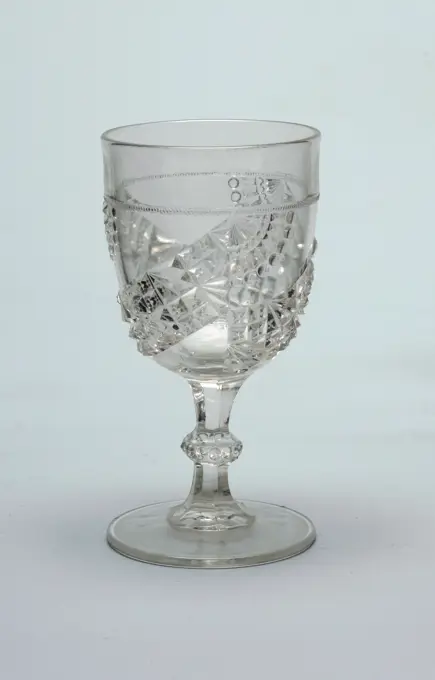
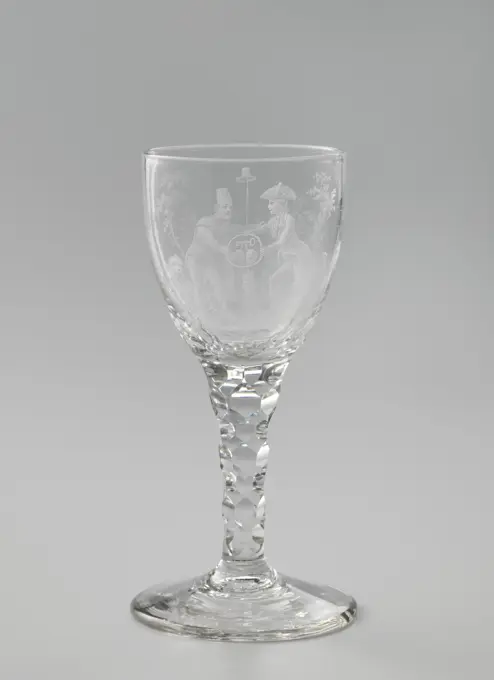
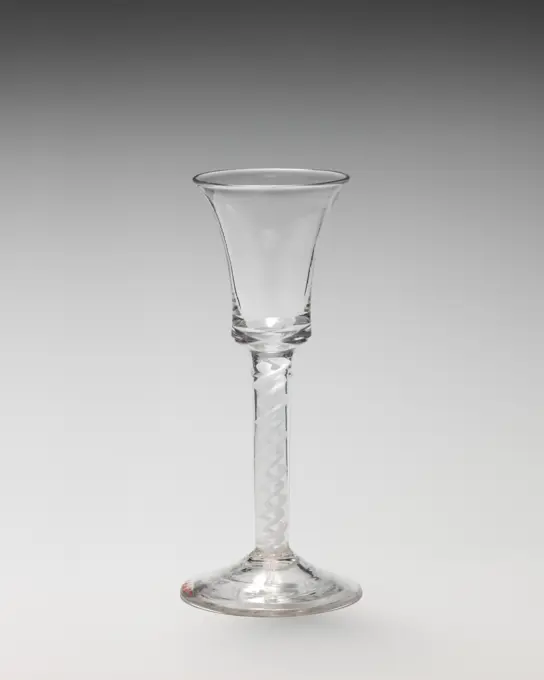
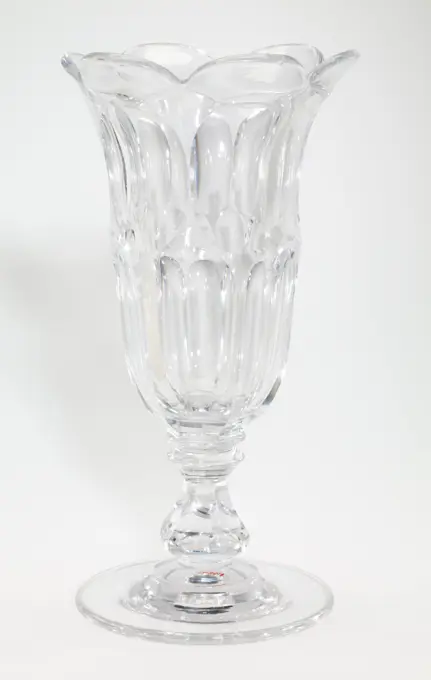
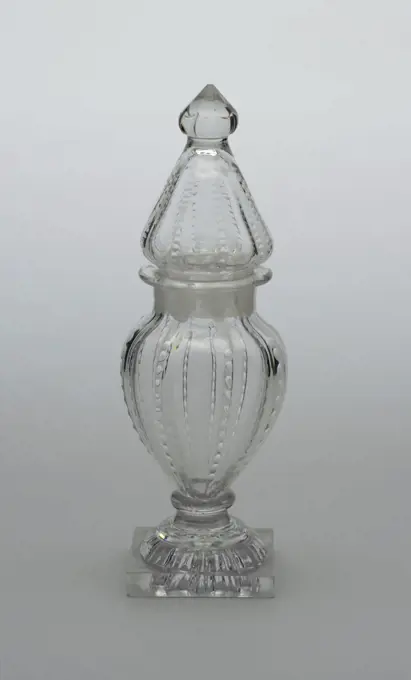
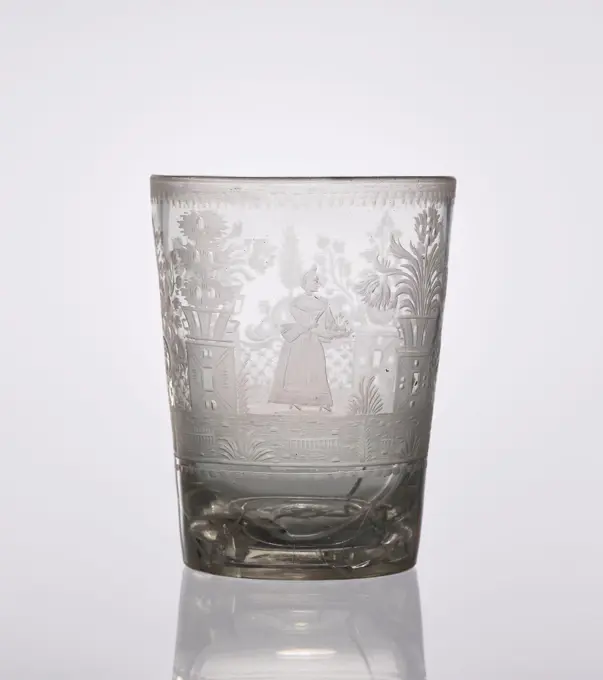
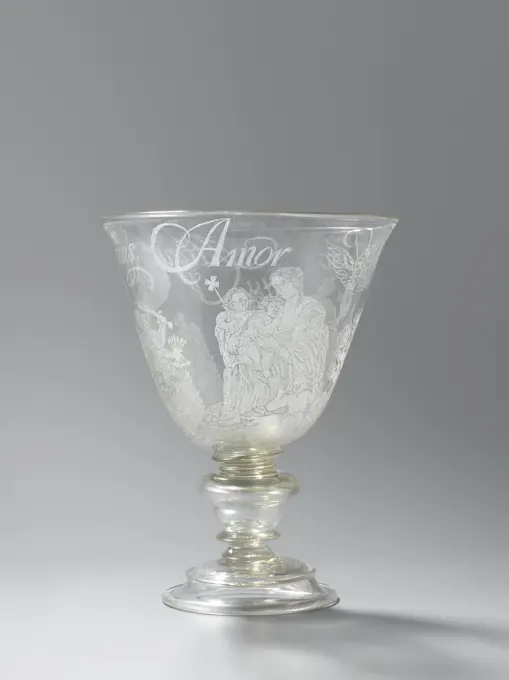
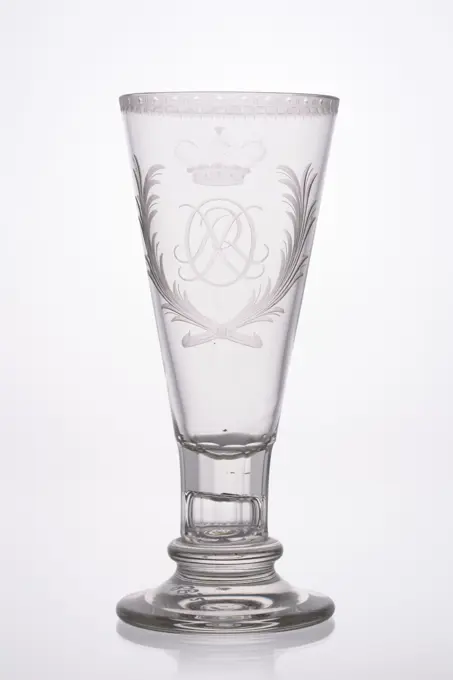
Elegant Glassware

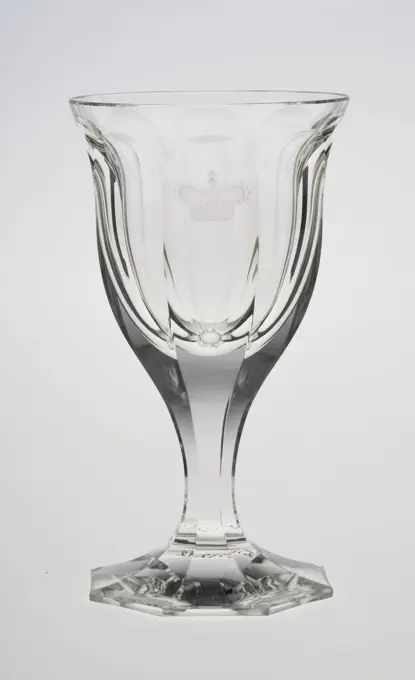
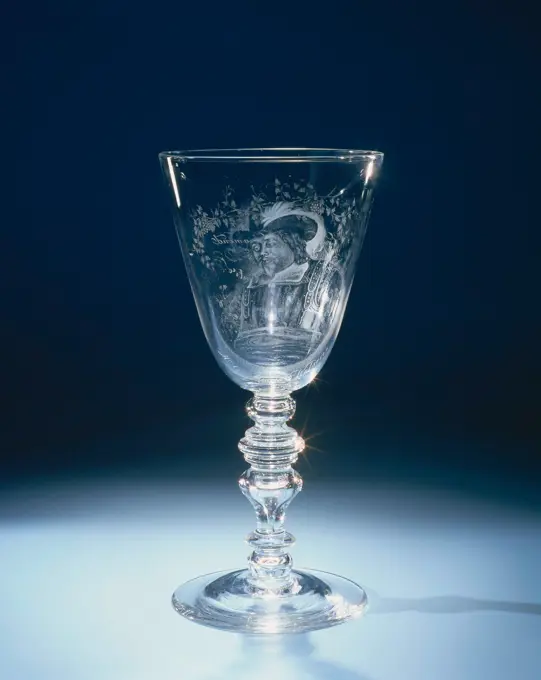
Decorative glass chalices and goblets, intricately designed with engravings and various shapes.

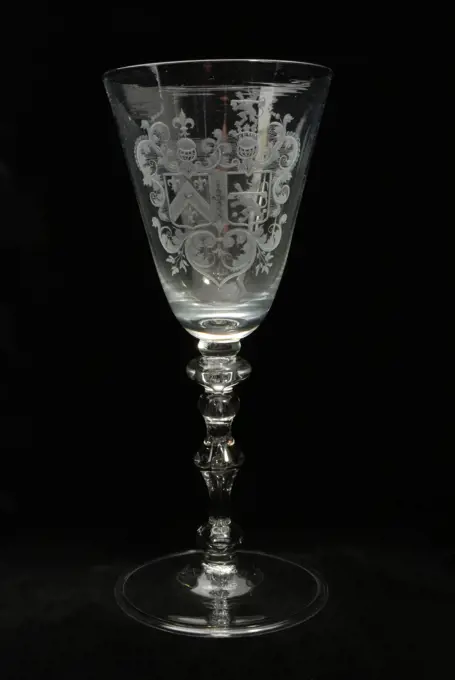
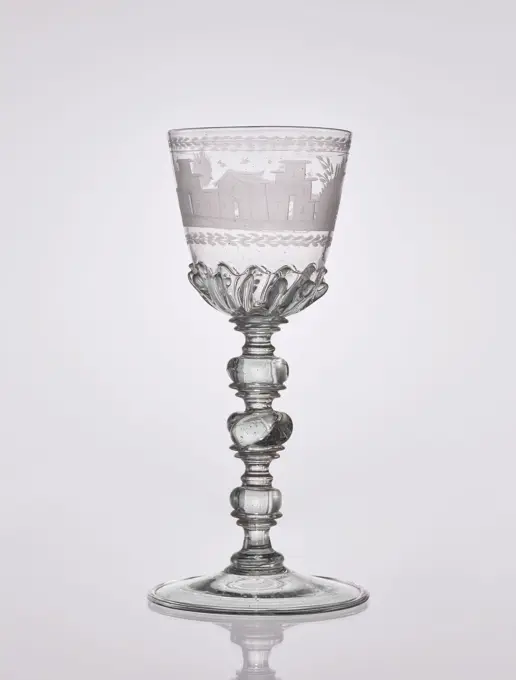
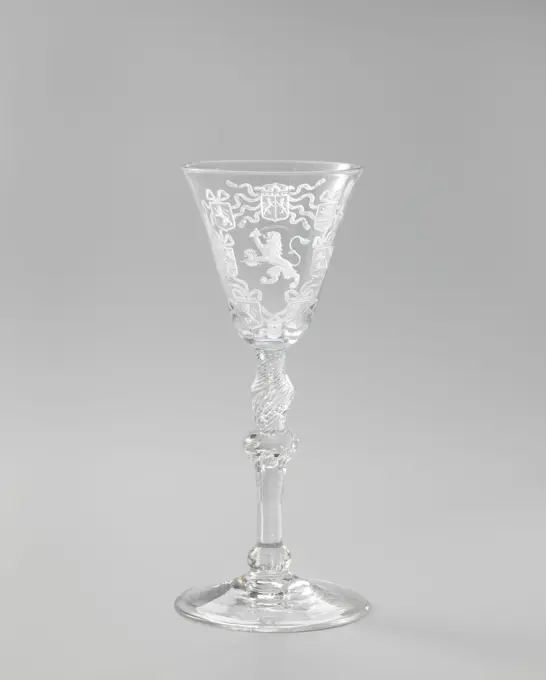
Chalip glass with the lion of the Republic of the United Netherlands and the inscription: Salus Patriae, Anonymous, c. 1675 - c. 1700 Flat base with turned around and pontil brand. Hollow, baluster -shaped trunk with two flat discs. Funnel -shaped chalice rounded at the bottom. On De Kelk, the lion of the Republic of the United Netherlands is engraved. On the downside the inscription 'Salus Patriae' (the well -being of the homeland). glassblower: Low CountriesRotterdam glass glassblowing Flat base with turned around and pontil brand. Hollow, baluster -shaped trunk with two flat discs. Funnel -shaped chalice rounded at the bottom. On De Kelk, the lion of the Republic of the United Netherlands is engraved. On the downside the inscription 'Salus Patriae' (the well -being of the homeland). glassblower: Low CountriesRotterdam glass glassblowing
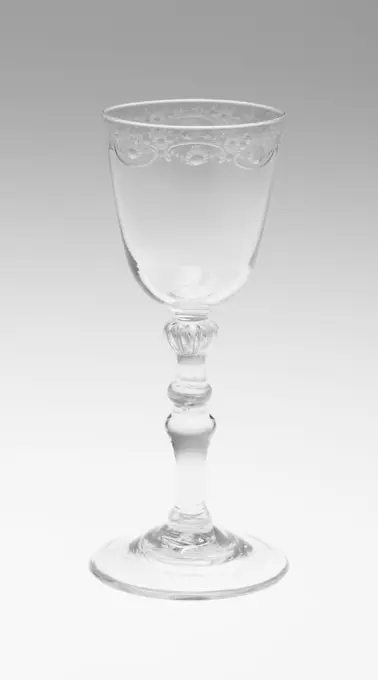
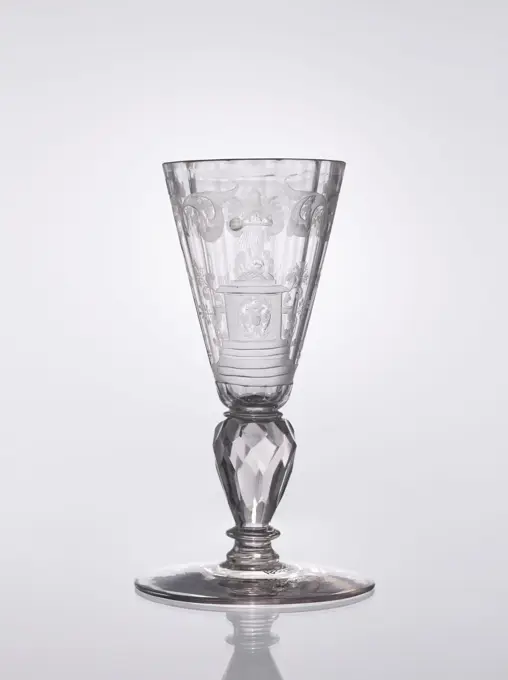
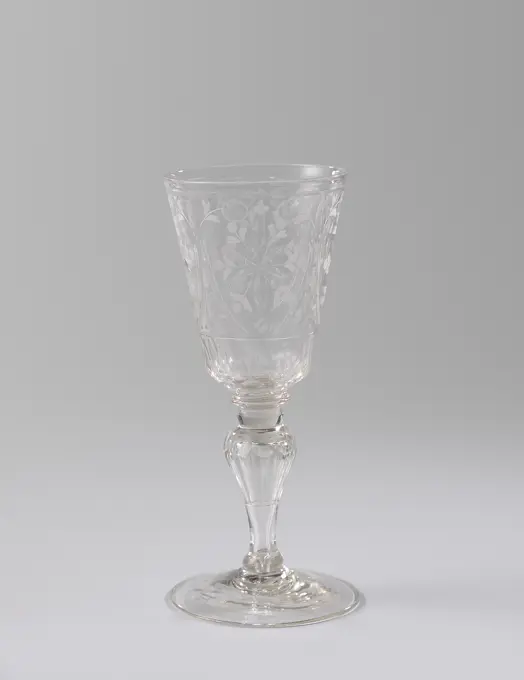
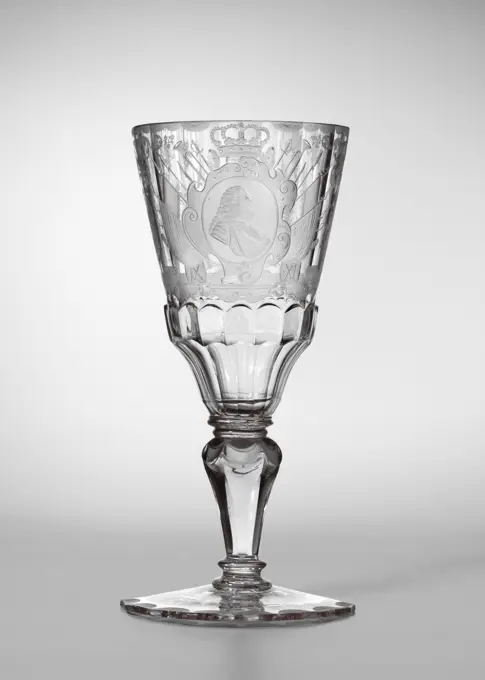
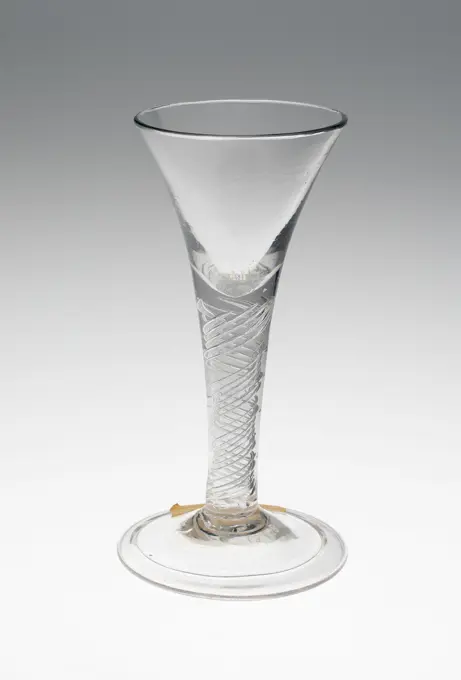
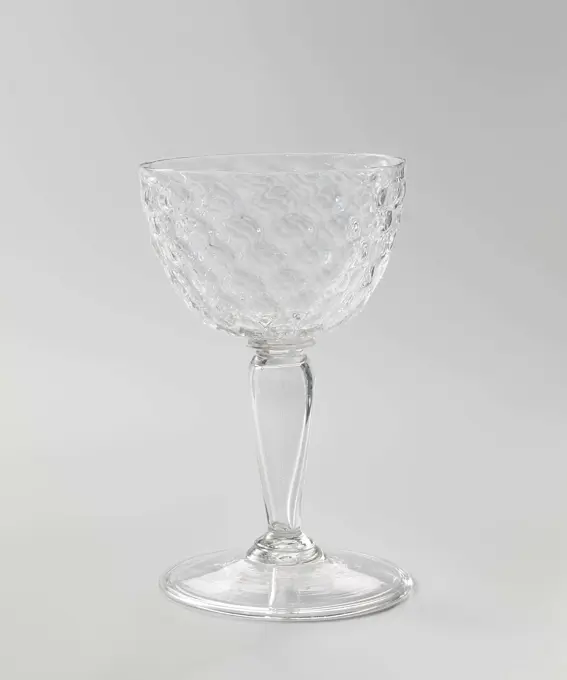
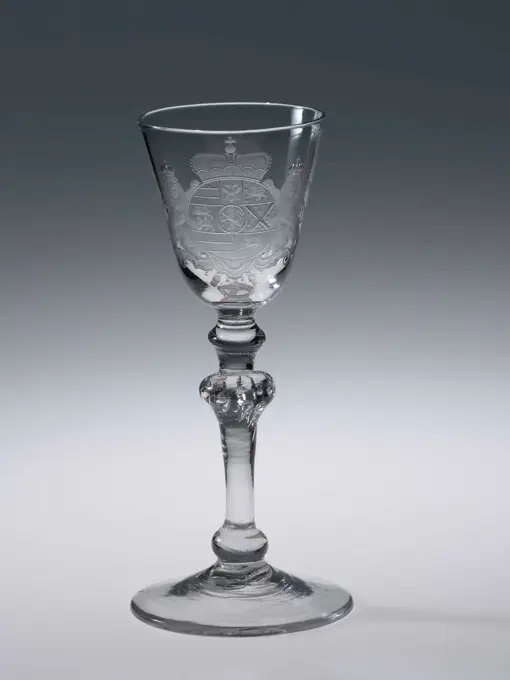
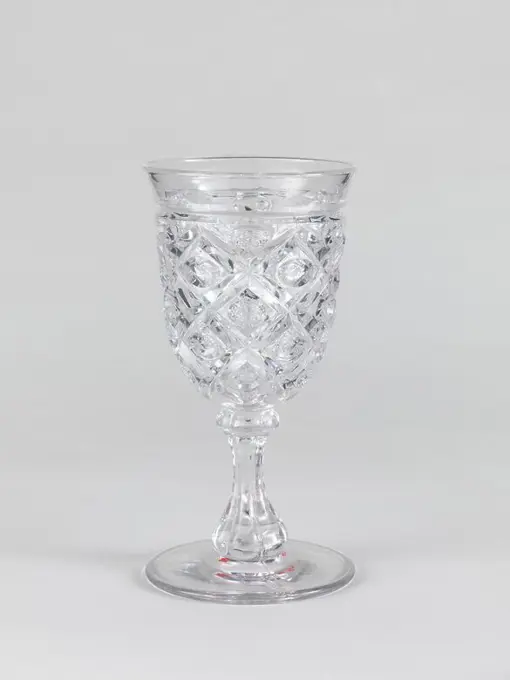
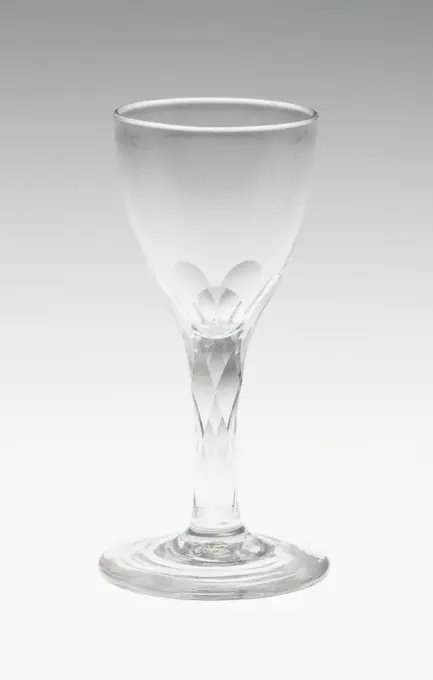
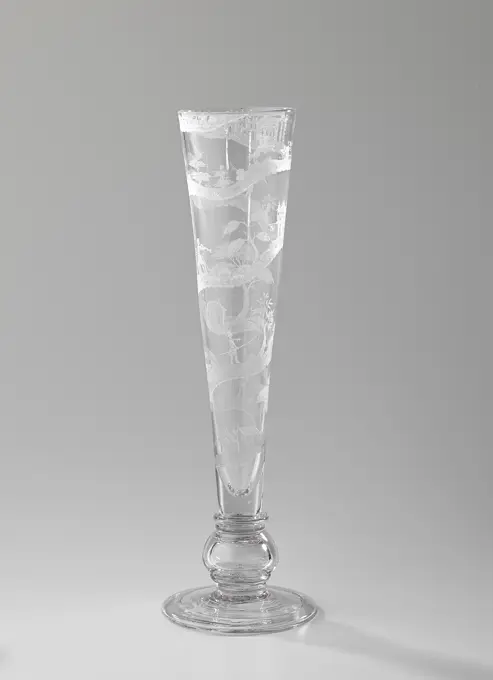
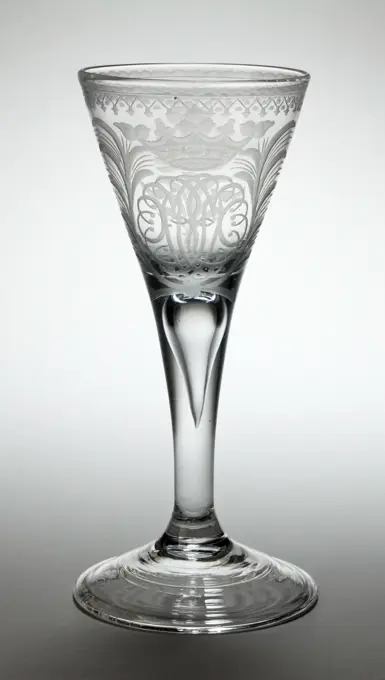
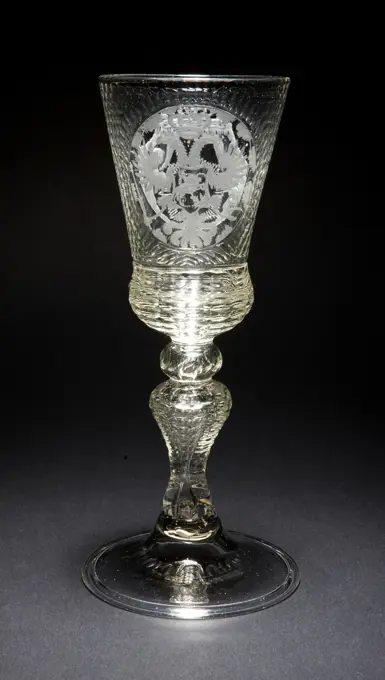
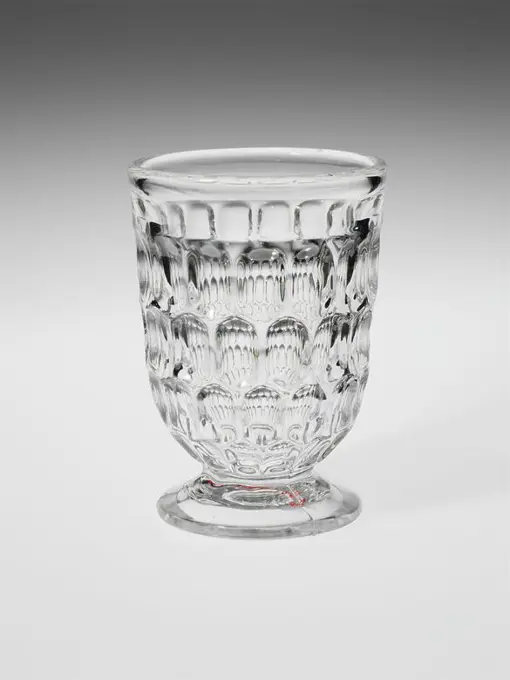
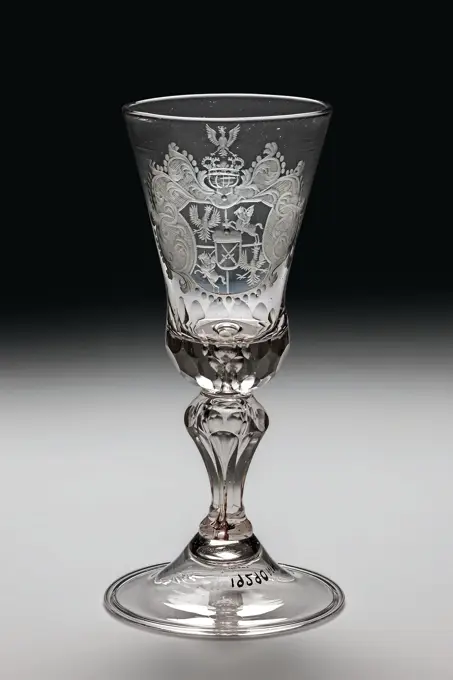
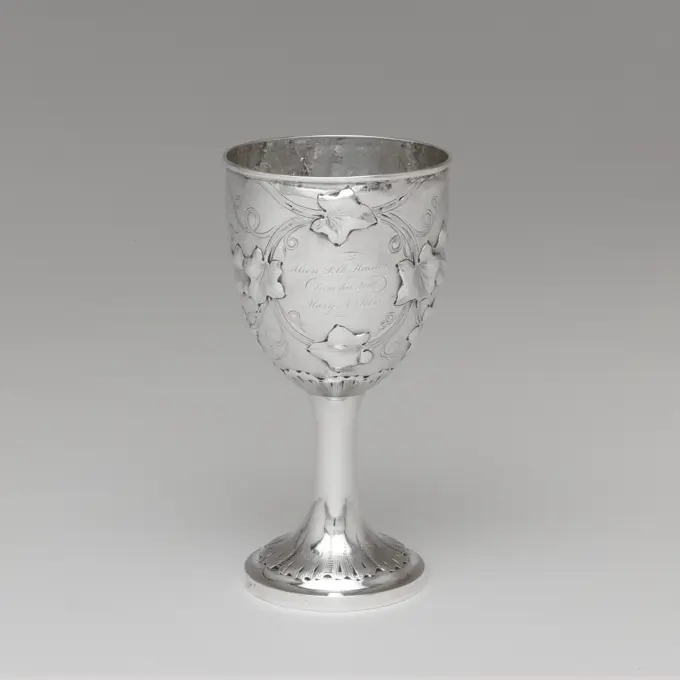
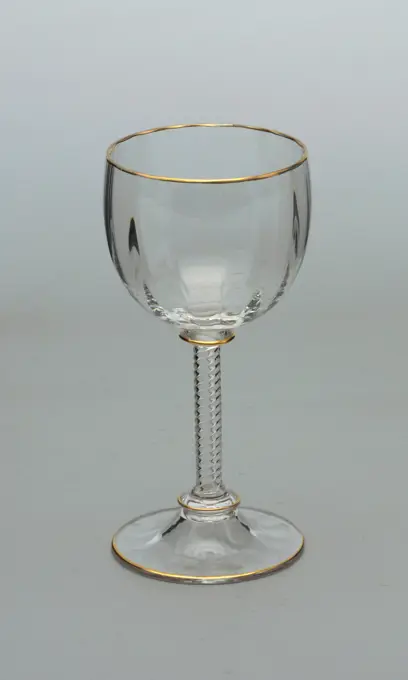
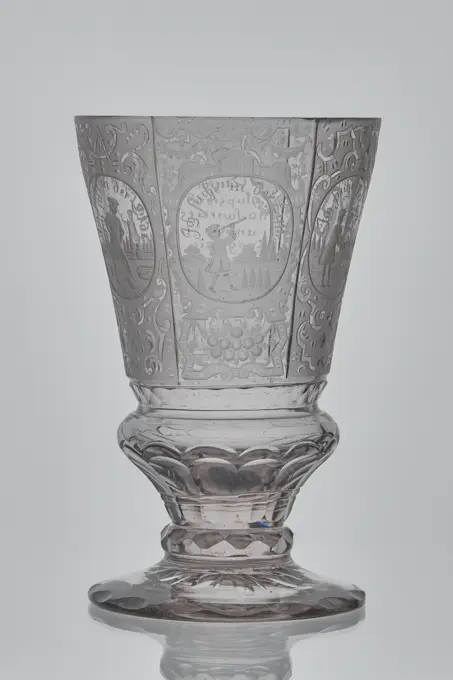
Kelkglas with David and Jonathan. Kelkglas with conical foot. Octagonal in shape blown Baluster trunk with flat button. An air bubble in the bottom of the conical chalice. At the chalice an engraved representation of David and Jonathan who reach the hand.Goblet. Drezno (huta szkła ; 1699-post 1756), creatorChalip glass with the lion of the Republic of the United Netherlands and the inscription: Salus Patriae, Anonymous, c. 1675 - c. 1700 Flat base with turned around and pontil brand. Hollow, baluster -shaped trunk with two flat discs. Funnel -shaped chalice rounded at the bottom. On De Kelk, the lion of the Republic of the United Netherlands is engraved. On the downside the inscription 'Salus Patriae' (the well -being of the homeland). glassblower: Low CountriesRotterdam glass glassblowing Flat base with turned around and pontil brand. Hollow, baluster -shaped trunk with two flat discs. Funnel -shaped chalice rounded at the bottom. On De Kelk, the lion of the Republic of the United Netherlands is engraved. On the downside the inscription 'Salus Patriae' (the well -being of the homeland). glassblower: Low CountriesRotterdam glass glassblowingWine Glass 1740-1750 England. GlassJar with Hanover Anna Coat of Arm. Cup with conical foot. Baluster trunk with three buttons and a disc. Multiple small and a large, elongated air bubble in the buttons. At the conical chalice the weapon of Princess Anna van Hanover (1709-1759).Kelkglas with three bows and medallions. Kelkglas with hexagonal trunk on round foot. The chalice is decorated with three winds to which small medallions are connected by Guirlandes.GlassWine Glass 1790-1800 England. Glass; stipple engravedCup; indefinite steelworks; 1. Exercise of the 18th century (1700-00-00-1725-00-00);coats of arms, symbolic scenesCup with heart-shaped cutouts with stars. Conical foot. Hollow faceted, baluster-shaped strain with two buttons and a composite disc. Fully shaped chalice with faceted, rounded soil. On the chalice four heart-shaped recesses with ground stars. Between the stars of the Stars Ranken with berries. The recesses are crowned with twigs.Cup; Weissbach (Huta Szk A; 1617-1754), Weiberge (Huta Szk 1730-1750 (1730-00-00-1750-00-00);August III (King of Poland - 1696-1763), peace (allegory), Rzeczpospolita both nations (coat of arms), Saxony, electorate (coat of arms), justice (allegory), Wettyn (coat of arms), coats of arms, coats of arms, portraits, rulers, Silesia (Habsburgs - Habsburgs - Habsburgs - 1526-1740), Silesia (Prussia-1740-1918)Goblet (USA); pressed glassBokaal with the coat of arms of the Ploos van Amstel family, Anonymous, c. 1725 - c. 1750 Bokaal with flat foot. Facet cut, baluster -shaped trunk with button. The bell -shaped chalice is faceted at the bottom. On the chalice the coat of arms of the Ploos van Amstel family. On the other side in a round medallion in a cartouche consisting of band work, stylized leaves and flower branches above two tied bay branches, the crowned monogram PVA. A flower branch on the foot. glassblower: BohemenNorthern Netherlands glass glassblowing Bokaal with flat foot. Facet cut, baluster -shaped trunk with button. The bell -shaped chalice is faceted at the bottom. On the chalice the coat of arms of the Ploos van Amstel family. On the other side in a round medallion in a cartouche consisting of band work, stylized leaves and flower branches above two tied bay branches, the crowned monogram PVA. A flower branch on the foot. glassblower: BohemenNorthern Netherlands glass glassblowingBowl with an ornament edge. Vaulted foot with beaten edge. Massive baluster trunk with a small and a large bubble. Bell-shaped chalice with rounded, massive bottom. Along the celk border a fine ornament edge. The foot is glued in two places.Chalice glass with allegorical representation, anonymous, c. 1795 Conical foot. Broadening, moving in facets, transferring to a curved chalice. On the chalice an allegory on the alliance between the Batavian and the French Republic, which was closed on May 16, 1795. In a landscape with trees there are a Batavier and a Frenchman who are arming each other and holding a snake together own tail. In the circle, which forms the snake, two hearts hang on a key. The Batavier kicks a yoke and buoys, the Frenchman on a crown and a scepter. Between them in fasses and a lance with a freedom hat. On the left the Batavian lion, on the right the Gallic Haan who chased the English dog away. glassblower: EnglandNorthern Netherlands glass grinding / glassblowing Conical foot. Broadening, moving in facets, transferring to a curved chalice. On the chalice an allegory on the alliance between the Batavian and the French Republic, which was closed on May 16, 1795. In a landscape with trees there are a BataviChalip glass with two women and a putto and the inscription: Love and friendship, Anonymous, 1750 - 1775 Chalice glass, decorated in radgravure with a sitting woman with a heart in the left hand, a putto, a standing woman and the inscription: love and friendship. glassblower: Low CountriesNorthern Netherlands glass glassblowing Chalice glass, decorated in radgravure with a sitting woman with a heart in the left hand, a putto, a standing woman and the inscription: love and friendship. glassblower: Low CountriesNorthern Netherlands glass glassblowingGoblet 1805 England. Glass .Cordial Glass. England, circa 1770-1780. Furnishings; Serviceware. GlassChalice glass with leaf vines and birds, anonymous, c. 1675 - c. 1700 Flat base with turned around and pontil brand. Four -lobe, hollow, baluster -shaped trunk with two discs. Funnel -shaped chalice. Grape vines, flowers and birds are engraved on the chalice. glassblower: Low CountriesNorthern Netherlands glass glassblowing Flat base with turned around and pontil brand. Four -lobe, hollow, baluster -shaped trunk with two discs. Funnel -shaped chalice. Grape vines, flowers and birds are engraved on the chalice. glassblower: Low CountriesNorthern Netherlands glass glassblowingWineglass 1750-1800 British. Wineglass. British. 1750-1800. Glass. GlassCablite with cover; Zchlin (Huta Szk A; 1736-1890); around 1740-1750 (1740-00-00-1760-00-00);Cup; Crystal glassworks (Naliboki; 1722-1862); around 1740 (1735-00-00-1745-00-00);Celery vase, c. 1835-1850, Bakewell, Pears and Company, 10 3/4 x 5 3/4 x 5 1/16 in. (27.31 x 14.61 x 12.87 cm), Flint glass, United States, 19th centuryKelkglas with the arms of the Beuningen family. Kelkglas of clear, colorless glass. Flat foot. The twisted, baluster-shaped strain has a red spiral, a bubble and three mereses. The funnel-shaped chalice has a rounded soil. On the chalice, in a cartouche consisting of volutes with matted surfaces with dots and circles, surrounded by leafwork, is an oval medallion with the crowned family crest of beuningen, flanked by two branches that are tied to each other at the bottom. Along the mouth edge a band with symmetrical leafwork and flower branches.Wine Glass 1725-1755 England. Glass .. Flat foot with beaten edge. Hollow, rejuvenating tribe. Curved chalice, optically blown into a honeycomb motif.Cup;  1920-39 (1920-00-00-1939-00-00);Chalip glass with a mill and the inscription: the prosperity of the Moolen Makeery, Anonymous, c. 1750 - c. 1775 Chalice glass made of clear, colorless glass, with conical foot. The baluster -shaped tribe has three nodes. The funnel -shaped chalice has a round bottom. On the chalice an engraved representation of a mill in a meadow with two farmers, one of which saws a shelf and scrapes the other. Along the mouth edge, left and right of the mill, the inscription: the prosperity of the Moolen Makeery. glassblower: Low CountriesNorthern Netherlands glass glassblowing Chalice glass made of clear, colorless glass, with conical foot. The baluster -shaped tribe has three nodes. The funnel -shaped chalice has a round bottom. On the chalice an engraved representation of a mill in a meadow with two farmers, one of which saws a shelf and scrapes the other. Along the mouth edge, left and right of the mill, the inscription: the prosperity of the Moolen Makeery. glassblower: Low CountriesNorthern NeGoblet. Spain. Date: 1775-1799. Dimensions: H. 10.8 cm (4 1/4 in.). Glass. Origin: Spain. Museum: The Chicago Art Institute, Chicago, USA.Bokaal with coat of arms of the Hoogheemraadschap de Vier Noorder Koggen, Anonymous, c. 1725 - c. 1750 Cup on Balus -shaped trunk with three nodi and stretched bubble. On the chalice, stopped by two trumpet -blowing mermaids, the weapon of the four Noorder Koggen. There under a band rolle with Devier Noorder Coggen. Above the weapon Neptunus on a shell drawn by two hippocampi. glassblower: GermanyNorthern Netherlands glass glassblowing Cup on Balus -shaped trunk with three nodi and stretched bubble. On the chalice, stopped by two trumpet -blowing mermaids, the weapon of the four Noorder Koggen. There under a band rolle with Devier Noorder Coggen. Above the weapon Neptunus on a shell drawn by two hippocampi. glassblower: GermanyNorthern Netherlands glass glassblowingWine glass, Glass, Slightly domed foot with baluster-shaped stem supporst straight-flaring bowl. Etched decoration, heightened by engraving. Floral wreath around top, and monogram W.C.S. (order () ) on side., New York, USA, ca. 1880, glasswares, Decorative Arts, Wine glassChalice glass on square base, with the inscription: Citadel Antw. 1830 & 1831 H J v Mourik 2 Lt Kwartm, Anonymous, 1831  Thick, square, smooth base, underside star -shaped. Facetted trunk with a disk. Spherical chalice with a smooth mouth edge. The chalice has three rings at the bottom, above which diamond -shaped band in relief, after which six medallions, interrupted by vertical notches; Circles in the squares, alternately followed with window reliefs; Upper edge smooth with text: out of opinion and friendship. Chalice m. Citadel Antw. 1830 & 1831 H J v Mourik 2 Lt Kwartm. glassblower: FranceLow Countries glass grinding / glassblowing  Citadel of Antwerp (19th century)Wine Glass 1700-1750 Europe. Glass .. Kelkglas with the crowned weapon of Karel Christiaan, Prince of Nassau Weilburg (1735-1788) in a round shield flanked by two crowned lions.Wine glass. Culture: American. Dimensions: Dimensions unavailable. Date: 1850-60.With the development of new formulas and techniques, glass-pressing technology had improved markedly by the late 1840s. By this time, pressed tablewares were being produced in large matching sets and innumerable forms. During the mid-1850s, colorless glass and simple geometric patterns dominated. Catering to the demand for moderately-priced dining wares, the glass industry in the United States expanded widely, and numerous factories supplied less expensive pressed glassware to the growing market. At the Exhibition of the Industry of All Nations at New York's Crystal Palace in 1853, for example, the New England Glass Company exhibited 130 pieces of one design, "consisting of bowls, tumblers, champagnes, wines, and jelly glasses." This object belongs to one such service. Although the glass manufactory is not known, the glassware is very typical of the large services that were very popular with America's midGlass; Weissbach (Huta Szk A; 1617-1754), Weiberge (Huta Szk 1730-1740 (1730-00-00-1740-00-00);No. 132 Wine Glass; Designed by Professor Josef Storck (Austria, 1830 - 1902); Manufactured by J. & L. Lobmeyr GmbH (Austria), Meyr's Neffen, Adolf; Austria; mouth-blown crystal, facet-cut and polishedWine Glass 1775-1799 England. Glass; cut and stipple engraved .Flute glass with a landscape, c. 1700 - c. 1725 Vaulted foot with turned around. The trunk consists of a hollow button and four writing. On the high conical chalice a spiral continuous landscape with a walking man, a fox hunt, a shepherd with his herd, a castle, a farmer and a peasantry and a rider. Glassblower: Saksenbohemen glass glassblowing Vaulted foot with turned around. The trunk consists of a hollow button and four writing. On the high conical chalice a spiral continuous landscape with a walking man, a fox hunt, a shepherd with his herd, a castle, a farmer and a peasantry and a rider. Glassblower: Saksenbohemen glass glassblowingGlassCupGlassGoblet, wineglass with two alliance weapons: Baelde and Van Teylingen, wine glass drinking glass drinking utensils tableware holder lead glass glass, gram free blown and shaped radgraving polishing goblet wineglass in clear colorless lead glass Pontil mark under round ascending hollow base with down turned rim. Hollow counterbalance stem made of two parts: lower part with convex knot and baluster knot; upper part with three stacked buttons: round and flat. Large round funnel-shaped chalice with an eccentric small enclosed air bubble in the bottom and fire-rounded rim Rotterdam Baelde heraldryChalip glass with the inscription: P.J. Prinsen, Anonymous, c. 1825 - c. 1850 Conical foot with a sharpened star at the bottom. Stam made up of two curved parts, separated by a disc. Funnel -shaped, faceted and cut in diamonds and windows. In one of the windows in Diamantgravure P.J. Princes between flower branches. glassblower: Southern NetherlandsLow Countries glass grinding / glassblowing Conical foot with a sharpened star at the bottom. Stam made up of two curved parts, separated by a disc. Funnel -shaped, faceted and cut in diamonds and windows. In one of the windows in Diamantgravure P.J. Princes between flower branches. glassblower: Southern NetherlandsLow Countries glass grinding / glassblowingGlass;  1920-39 (1920-00-00-1939-00-00);Wineglass ca. 1770-1800 British, probably Bristol. Wineglass. British, probably Bristol. ca. 1770-1800. Glass. GlassWine Glass. Culture: American or British. Dimensions: H. 4 in. (10.2 cm). Date: 1780-1825. Museum: Metropolitan Museum of Art, New York, USA.Cock from Bokaal with the Middelweg (the current Middenweg) in Diemen, Anonymous, After Daniël Stopendaal, 1768 On the lid vines. glassblower: Low CountriesAmsterdam glass grinding / glassblowing  Diemen. Amsterdam. Watergraafsmeer On the lid vines. glassblower: Low CountriesAmsterdam glass grinding / glassblowing  Diemen. Amsterdam. WatergraafsmeerFooted goblet with bulging bowl. Culture: British, London. Designer: Philip Webb (British, Oxford 1831-1915 West Sussex). Dimensions: Overall (confirmed): 4 3/4 × 3 3/8 × 3 3/8 in. (12.1 × 8.6 × 8.6 cm). Maker: James Powell and Sons. Manufacturer: Whitefriars Glassworks (British, 1834-1980). Retailer: Morris, Marshall, Faulkner & Co.. Date: 1860.This footed goblet provides an ideal bridge between the burgeoning Arts and Crafts movement championed by Morris and Company and the endeavors of James Powell & Sons' Whitefriars Glassworks to encourage modern, British design in glassware. The goblet was designed by Philip Webb in 1860, as part of a series of table glasses with spiral trails for William Morris's home, the Red House. Made by James Powell & Sons, the series of glassware was also sold through Morris, Marshall, Faulkner & Co. Harry Powell (grandson of the wine-merchant, James Powell, who had purchased the Whitefriars Glassworks in 1834) and principal designer at Whitefriars singledGlass;  1823 (1823-00-00-1823-00-00);Cup. Cup on a ribbed foot. The cup runs upwards and is marked: Mt. = W in escalating oval and the letter V.Wine Glass (USA); glassWineglass ca. 1750 British, Newcastle glass with Dutch engraving. Wineglass. British, Newcastle glass with Dutch engraving. ca. 1750. Glass. GlassGlass; Lobmeyr, J. & L. (Vienna; 1823-); 1920-39 (1920-00-00-1939-00-00);Glass; Lobmeyr, J. & L. (Vienna; 1823-); 1920-39 (1920-00-00-1939-00-00);Tumbler. Culture: American. Dimensions: H. 4 5/8 in. (11.7 cm). Maker: Bakewell, Pears and Company (1836-1882). Date: 1850-70. Museum: Metropolitan Museum of Art, New York, USA.Chalice glass with funnel -shaped chalice, anonymous, c. 1700 - c. 1800 Chalk glass on conical foot. Slim, high trunk moving into a funnel -shaped, slightly flared chalice. England glass glassblowing Chalk glass on conical foot. Slim, high trunk moving into a funnel -shaped, slightly flared chalice. England glass glassblowingSlinger glass with conical chalice, anonymous, c. 1750 - c. 1774 Slinger glass with conical foot and straight trunk. In the trunk a wide opaque white pendulum around a double spiral. Conical chalice. Note: Initially series of five glasses, four of which have been removed. England glass glassblowing Slinger glass with conical foot and straight trunk. In the trunk a wide opaque white pendulum around a double spiral. Conical chalice. Note: Initially series of five glasses, four of which have been removed. England glass glassblowingCup;  1736-1763 (1736-00-00-1764-00-00);August III (King of Poland-1696-1763), Rusiecki-Ursyn, Rzeczpospolita both nations (coat of arms), Saxony, Stanisław (1862-1944)-collection, Wettyn (coat of arms), gift (provenance), electorate (coat of arms), coat of arms, coat of arms, rulerParfait Glass 1830-70 American With the development of new formulas and techniques, glass-pressing technology had improved markedly by the late 1840s. By this time, pressed tablewares were being produced in large matching sets and innumerable forms. During the mid-1850s, colorless glass and simple geometric patterns dominated. Catering to the demand for moderately-priced dining wares, the glass industry in the United States expanded widely, and numerous factories supplied less expensive pressed glassware to the growing market. At the Exhibition of the Industry of All Nations at New Yorks Crystal Palace in 1853, for example, the New England Glass Company exhibited 130 pieces of one design, "consisting of bowls, tumblers, champagnes, wines, and jelly glasses." This object belongs to one such service. Although the glass manufactory is not known, the glassware is very typical of the large services that were very popular with Americas middle class in the nineteenth century.. Parfait GlassGoblet ca. 1845 Robert and William Wilson This goblet, one of a pair (1970.200.4), and a matching pitcher (1970.200.2) are decorated with a grapevine motif chased in repoussé and ruffled leaves that recall eighteenth-century rococo ornament. The set originally belonged to the donors grandmother Grizelda Gilchrist Polk, who married Russell Houston, chief attorney for the Louisville-Nashville Railroad. Her monogram, "GGH," is engraved on the front of the pitcher. The goblets are inscribed to two other members of the Polk-Houston family.. Goblet 4095No. 196 Red Wine Glass; Designed by Ludwig Lobmeyr (Austrian, 1829 - 1917); Manufactured by J. & L. Lobmeyr GmbH (Austria); Austria; mouth-blown crystalCablite with cover; Non -like Lona Huta; End of the 17th century (1680-00-00-1700-00-00);Glass of drinking water isolated on a white backgroundVase of the 'Association of Ouden of Days Maastricht' offered to Willem Drees for his 65th birthday. Crystal vase. Front: inscription in crowned weapon. Reverse: Crowned arm in which a pentagonal star.Chalip glass with the weapons of the States General and the Seven Provinciën, Anonymous, 1760 Vaulted foot. Baluster tribe with buttons, the middle one with a double row of air bubbles. Upper part of the trunk with air bubbles injured in spirals. On the conical chalice the weapon of the States General surrounded by the weapons of the seven provinces. Signed on the foot: Jacob Sang Fec. Amsterdam 1760. glassblower: Low CountriesAmsterdam glass glassblowing  Seven Provinciën Vaulted foot. Baluster tribe with buttons, the middle one with a double row of air bubbles. Upper part of the trunk with air bubbles injured in spirals. On the conical chalice the weapon of the States General surrounded by the weapons of the seven provinces. Signed on the foot: Jacob Sang Fec. Amsterdam 1760. glassblower: Low CountriesAmsterdam glass glassblowing  Seven ProvinciënHobble; Non -like Lona Huta; 2. W. 18th century (1725-00-00-1750-00-00);Standing cup with cover ca. 1725 Bohemian, Riesengebirge (Krkonoše). Standing cup with cover 195962Covered Goblet (Pokal) with a Bear Hunt 1680-1700 Nuremberg. Glass .Goblet. England. Date: 1815-1835. Dimensions: 14.6 × 10.2 cm (5 3/4 × 4 in.). Glass. Origin: England. Museum: The Chicago Art Institute, Chicago, USA.Goblet with Cover. Germany, Lauenstein. Date: 1786. Dimensions: 31.8 x 8.9 cm (12 1/2 x 3 1/2 in.). Glass with gilding. Origin: Lauenstein. Museum: The Chicago Art Institute, Chicago, USA.Cup; Weissbach (glassworks; 1617-1754), Weiberge (glassworks; post 1702-1754), Jeleniogórska Valley (engraving center; Ca 1600-); 1730-1750 (1730-00-00-1750-00-00);Wineglass probably ca. 1760 British. Wineglass. British. probably ca. 1760. Glass. GlassAfrica Standing Cup; After Georg Keller (German, 1568 - 1635); glassWine Glass 1870-90 Adams and Company. Wine Glass 9932Cordial glass, 18th century, 5 1/2 x 2 3/4 x 2 3/4 in. (13.97 x 6.99 x 6.99 cm), Lead Glass, England, 18th centuryArt Nouveau small cup. Orivit AG (Kolonia ; wytwórnia złotnicza ; 1894-1905 ; 1906-1914), factoryGlass; Lobmeyr, J. & L. (Vienna; 1823-); 1920-39 (1920-00-00-1939-00-00);No. 126, Ludwig Lobmeyr, Austrian, 1829 - 1917, J. & L. Lobmeyr GmbH, Vienna, Austria, founded ca. 1935, Mouth-blown crystal, hand-painted gold, Mouth-blown crystal wine pitcher with slim shape, hand-painted with gold rims., Austria, ca. 1870, glasswares, Decorative Arts, Wine pitcher, Wine pitcherBeaker with Allegorical Figure. Germany, Silesia, circa 1730. Furnishings; Serviceware. GlassWater Glass. Designed by René Lalique (French, 1860-1945); Manufactured by Lalique et Cie (French, founded 1885). Date: 1927. Dimensions: 11.8 x 8.9 cm (4 5/8 x 3 1/2 in.). Glass; colorless, black enamel, mold blown bowl and foot, mold pressed and enameled stem. Origin: Paris. Museum: The Chicago Art Institute, USA.Glass;  1920-39 (1920-00-00-1939-00-00);Tumbler, Cut and engraved glass, Cylindrical, flaring at the rim. Heavy base. Decoration includes 'D' in shield and small temple with vase on altar. Geometrical band at trim., France, 18th century, glasswares, Decorative Arts, TumblerGoblet, c. 1680. Hermann Schwinger (German, 1640-1683). Glass; diameter: 13.5 cm (5 5/16 in.); overall: 31.1 x 11.6 cm (12 1/4 x 4 9/16 in.).Goblet ca. 1730 Bohemian. Goblet. Bohemian. ca. 1730. Zwischengold glass. GlassCover, glass, Molded pear-shaped body on knopped, domed foot on square base. Conical cover with cut, pontill acorn finial. overall pattern of notched vertical ribs base has radial trefoil fluting on underside., Ireland, ca. 1800, glasswares, Decorative Arts, CoverBeaker ca. 1750 German, Augsburg. Beaker 206210Glass; St. Petersburg (glassworks; 1735-1774); 2nd half 18th century (1750-00-00-1800-00-00);Rusiecki-Ursyn, Stanisław (1862-1944)-collection, gift (provenance), genre scenesAperitif Glass, one of five, c. 1920, 7 3/8 x 2 1/2 in. (18.73 x 6.35 cm), Aventurine glass, Italy, 20th centuryKelkglas with the weapon of Veere. Vaulted foot. Baluster-shaped strain with five buttons, air bubbles and a double band air bubbles. Bell-shaped chalice. On the chalice, together on two symmetrical leaf refines with a flower celk, the crowned weapon of Veere flanked by two climbing lions. The name of the city is engraved under the weapon.GlassGoblet, anonymous, 1697 Vaulted foot with turned around. Balus -shaped, hollow trunk with three flat discs. Klock -shaped chalice on which the following three performances are engraved: Charitas, presented by a sitting woman with a nude child on her chest. In addition to her a second naked child with a staff in hand, on which a Greek cross is attached. A third naked child at her feet. A eagle is flying above her, engraved in calligraphic curls. To the right of Charitas, the Rotterdam city virgin is depicted, sitting, crowned her head with a crown with the city coat of arms of Rotterdam. In her right hand she holds up a merchant ship, while her left hand rests on a cornucopia. Behind and next to her weapons. The third scene represents the Dutch Lion with the freedom in the Dutch garden. Her cloak is supported by a maid. She holds a freedom staff with freedom hats. In the hair she wears a laurel wreath. In addition, the three scenes is engraved in Italian letters in the inscription 'AmorCup of ice glass. Cup of ice glass, with inserted bottom. Ribbed stand ring made of clear glass. Cup-shaped body. Along the top edge a silver frame.Glass; Lobmeyr, J. & L. (Vienna; 1823-); 1920-39 (1920-00-00-1939-00-00);Glass; Lobmeyr, J. & L. (Vienna; 1823-); 1920-39 (1920-00-00-1939-00-00);Glass;  1920-39 (1920-00-00-1939-00-00);. Vaulted foot. Strain made from a nodus, a disc a hollow buluster and two composite nodi. Fully-shaped, at the bottom of the chalice with a diamond and dot engraving a portrait of Cornelis Witsen with underneath Cornelis Jan Witssen 1653. On the downside, between a vine and flower branches, the inscription: Engraved with Diamondt at Daniel Henriques de Castro Ao 1862 Amsterdam.No. 222 Rhine Wine Glass; Designed by Stefan Rath (Austrian, 1876-1960); Manufactured by J. & L. Lobmeyr GmbH (Austria); Austria; engraved mouth-blown crystalGoblet (Roemer) early 17th century Dutch, probably Amsterdam A highly-skilled diamond point engraver was responsible for the intricately rendered map depicting the course of the Rhine river from Mainz to Utrecht, drawn after an illustrated map published in Cologne in 1555 by Caspar Vogel, a noted mathematician and cartographer. This particularly large and elaborate beaker would have been filled with wine and passed around at festive occasions. Both decorative and functional, the prunts on the stem may have steadied a greasy-fingered drinkers grip on the glass at a time when forks were not commonly used.. Goblet (Roemer) 188923 Dutch, probably Amsterdam, Goblet (Roemer), early 17th century, Glass, engraved wtih a diamond point, H. 11 1/4 in. (28.6 cm.); Gr. D. 5 7/8 in. (14.9 cm.). The Metropolitan Museum of Art, New York. Gift of Mrs. Samuel P. Avery, 1904 (04.24)Cup Lausitzer glassworks