Elegant Glassware

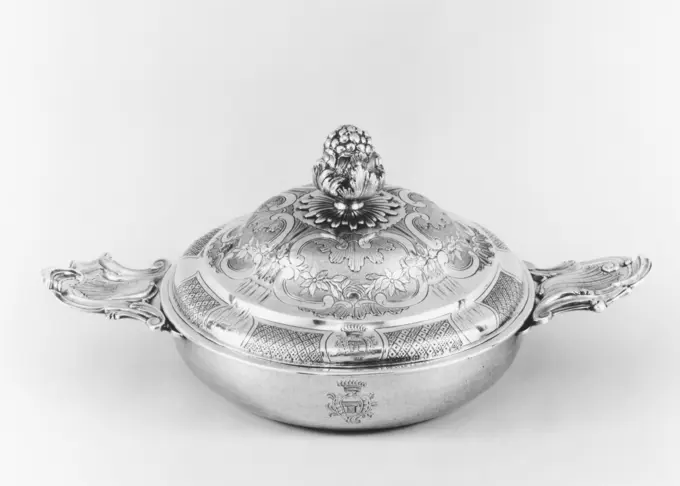
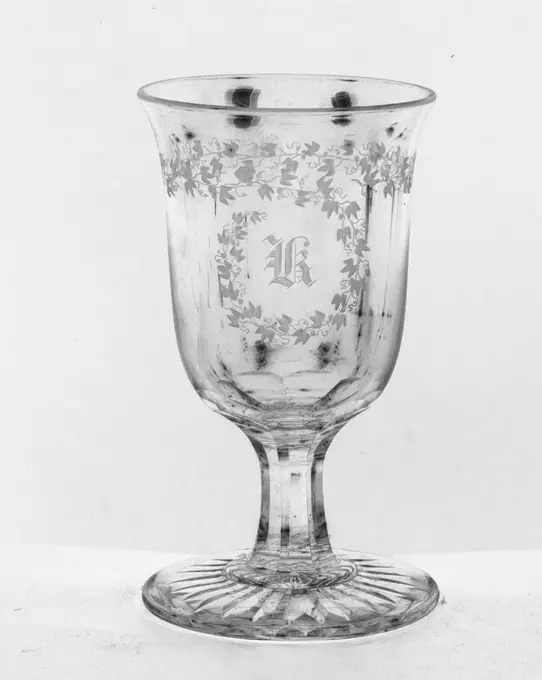
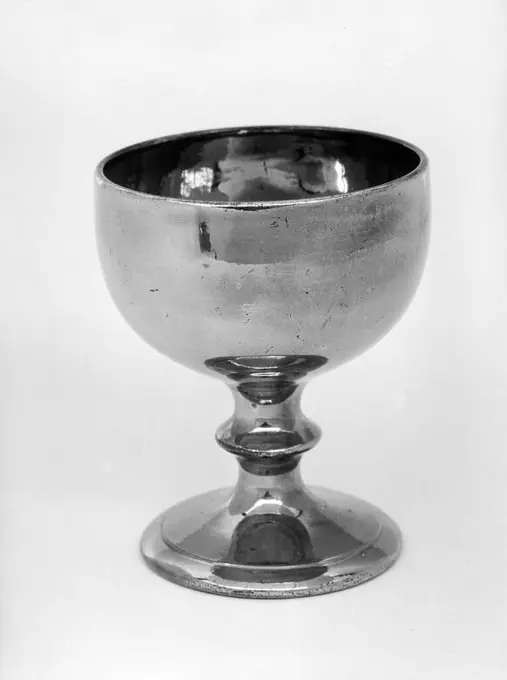
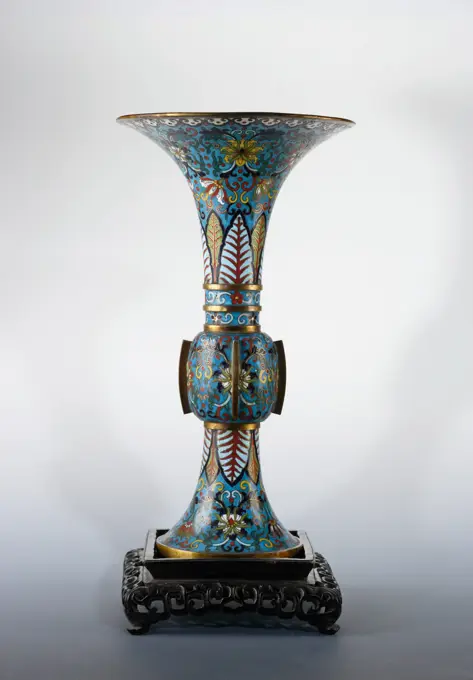
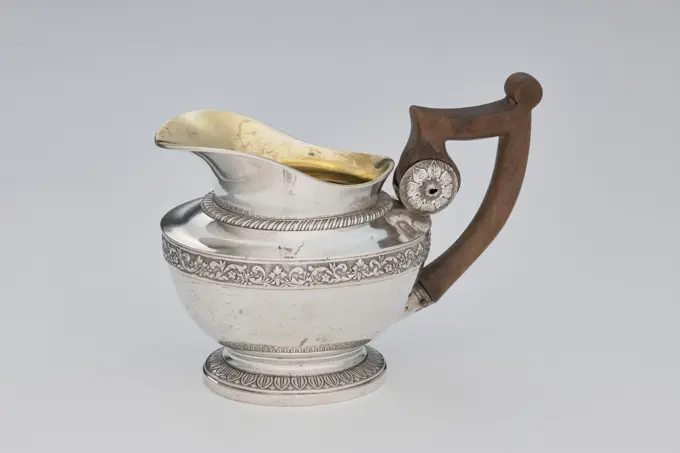
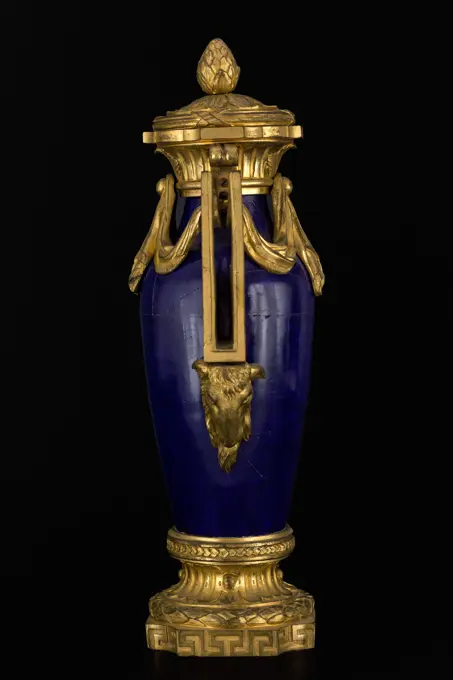
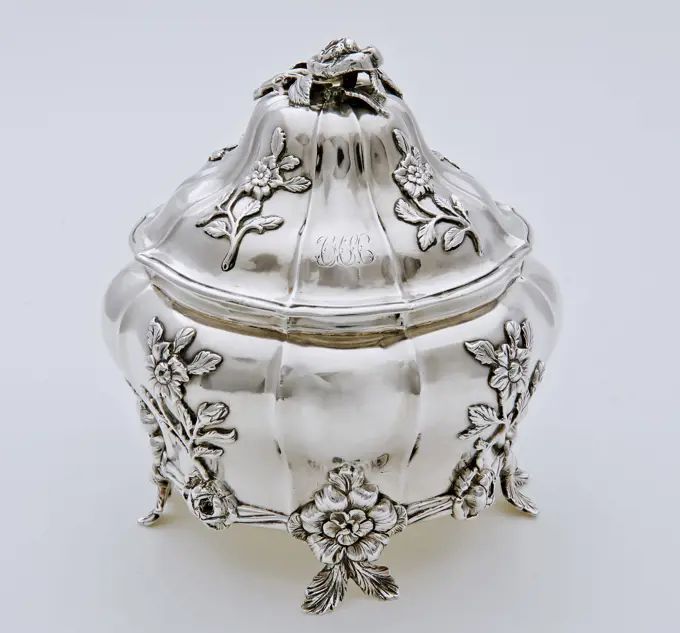
A collection of ornate glassware including goblets, vases, and candlesticks, showcasing intricate designs and craftsmanship from the 19th century.

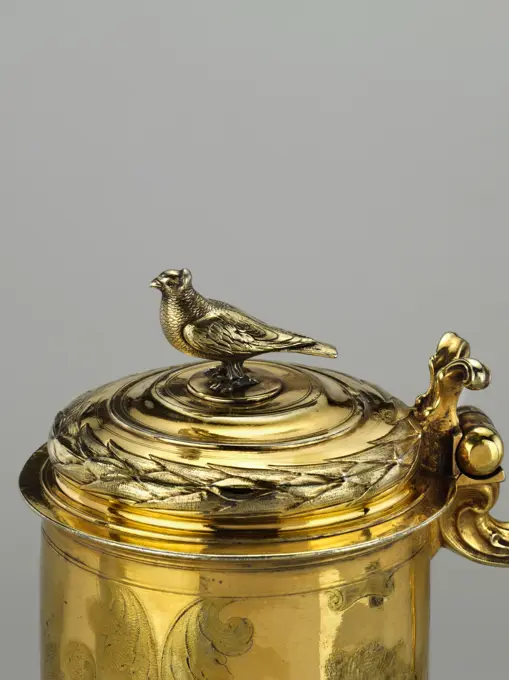
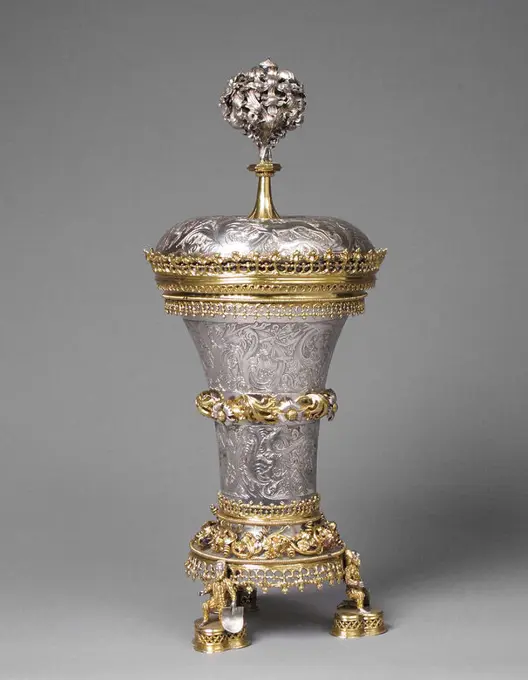
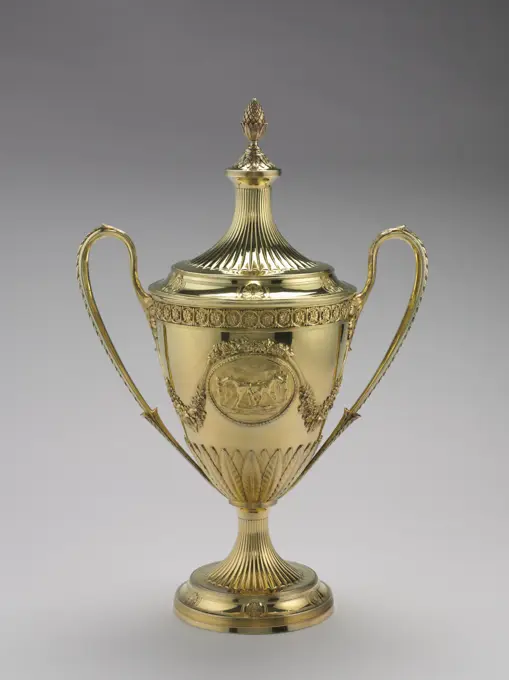
Bokaal of the Schuttersgilde in Leiden, Cornelis van Dijk, 1711 Bokaal of silver from the captains of the Schuttersgilde in Leiden from the years 1710-1712. For the chalice, in addition to the city coat of arms held by lions, their coats of arms, imposed and provided with captions: Jan des Tombe, Cornelis van der Meer, Johan Meerman, Daniel van de Velde, Frans van Kerkhem, Gerard de Bye, Cornelis van Bancem, Nicolaas Teding of Berkhout. The chamber base is caught in a rose edge and acanthus leaves. Around the lid, crowned by a leaf button: cracks, band and leaf work and weapon trophies. The foot surrounded by a kner edge is high in the middle and wears a band work decorations with cullots. On the vase-shaped nodus leaf and knot motifs on a grid. Delft silver (metal)   Leiden Bokaal of silver from the captains of the Schuttersgilde in Leiden from the years 1710-1712. For the chalice, in addition to the city coat of arms held by lions, their coats of arms, imposed and provided with capti
Bokaal of the Schuttersgilde in Leiden, Cornelis van Dijk, 1711 Bokaal of silver from the captains of the Schuttersgilde in Leiden from the years 1710-1712. For the chalice, in addition to the city coat of arms held by lions, their coats of arms, imposed and provided with captions: Jan des Tombe, Cornelis van der Meer, Johan Meerman, Daniel van de Velde, Frans van Kerkhem, Gerard de Bye, Cornelis van Bancem, Nicolaas Teding of Berkhout. The chamber base is caught in a rose edge and acanthus leaves. Around the lid, crowned by a leaf button: cracks, band and leaf work and weapon trophies. The foot surrounded by a kner edge is high in the middle and wears a band work decorations with cullots. On the vase-shaped nodus leaf and knot motifs on a grid. Delft silver (metal) Leiden Bokaal of silver from the captains of the Schuttersgilde in Leiden from the years 1710-1712. For the chalice, in addition to the city coat of arms held by lions, their coats of arms, imposed and provided with capti
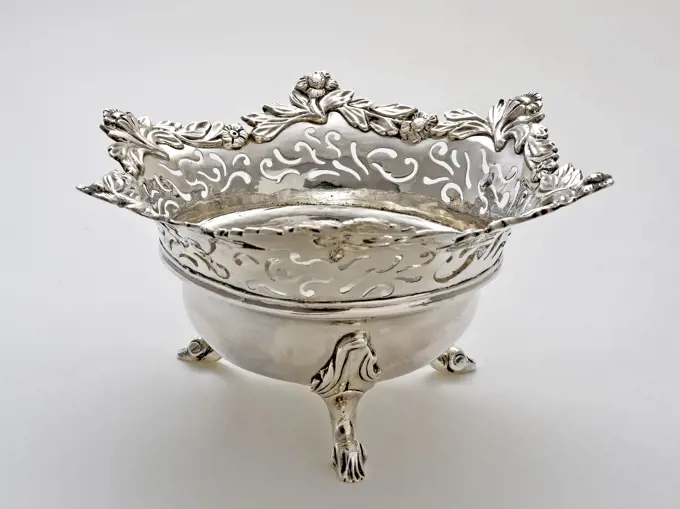
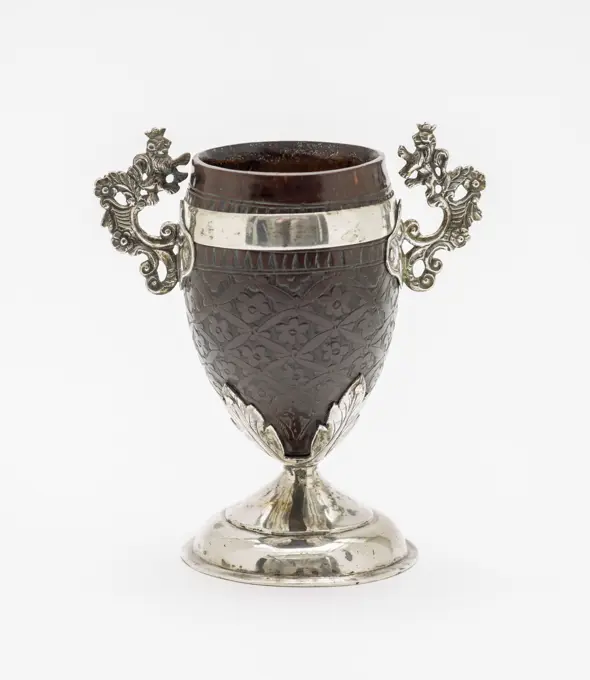
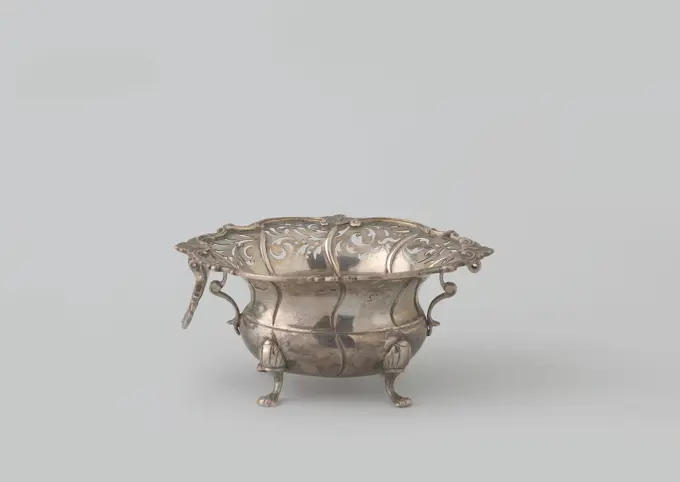
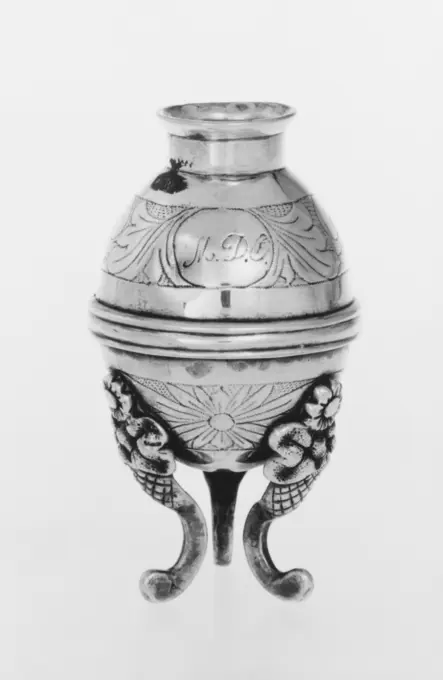
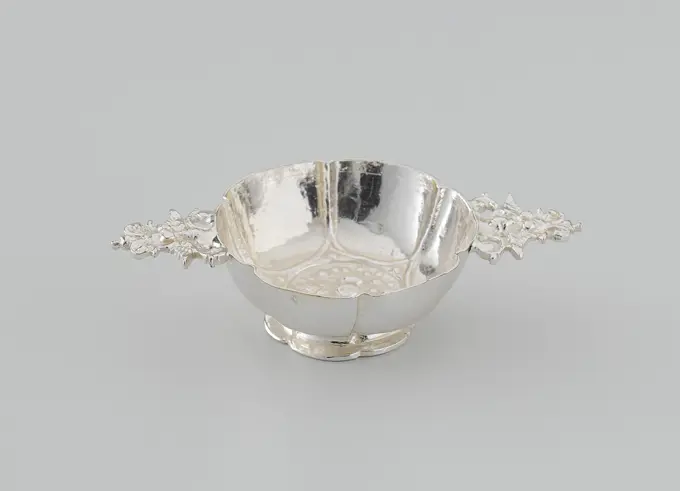
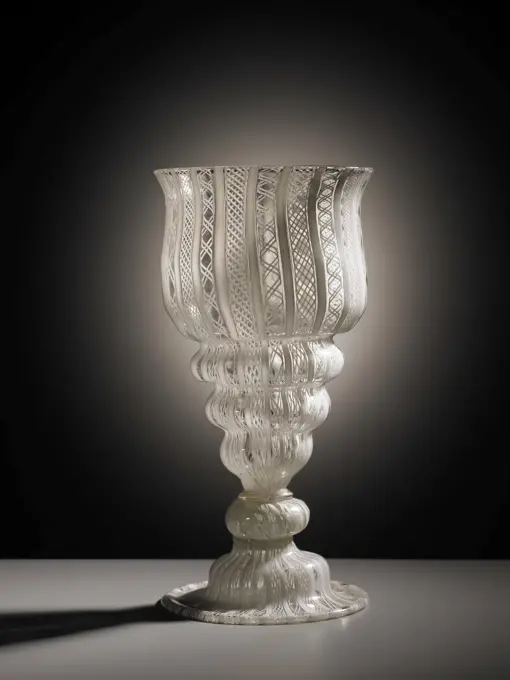
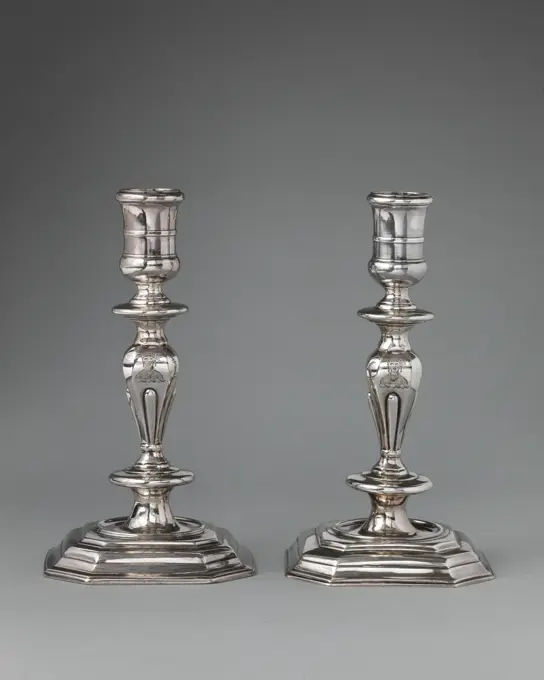
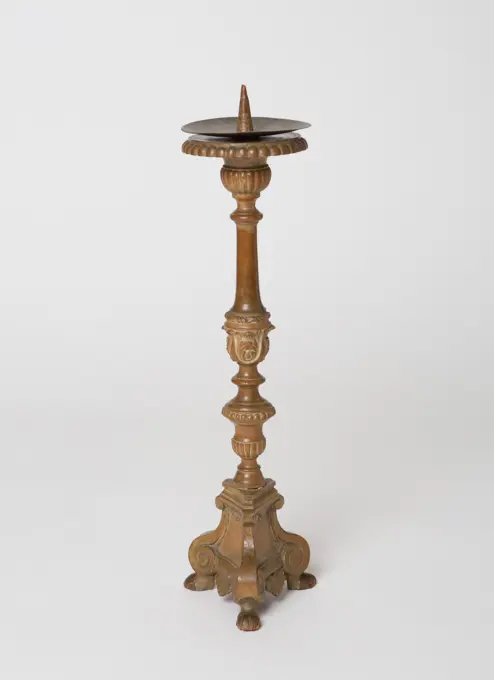
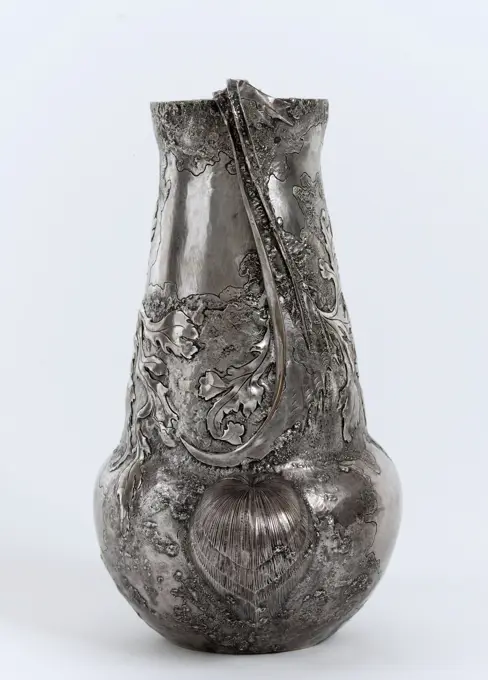
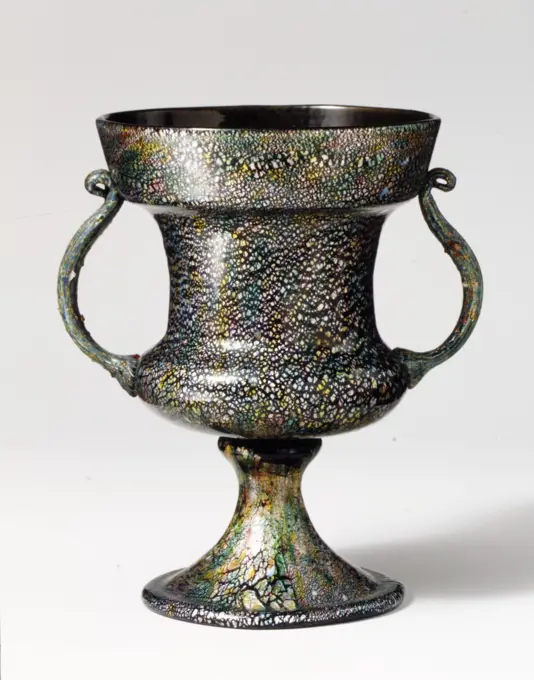
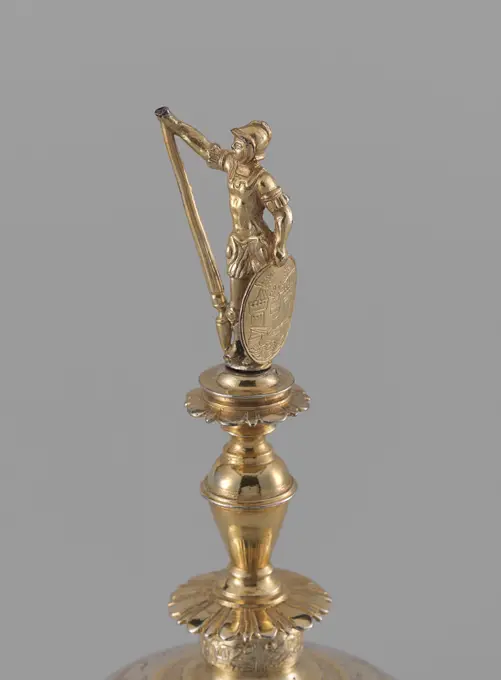
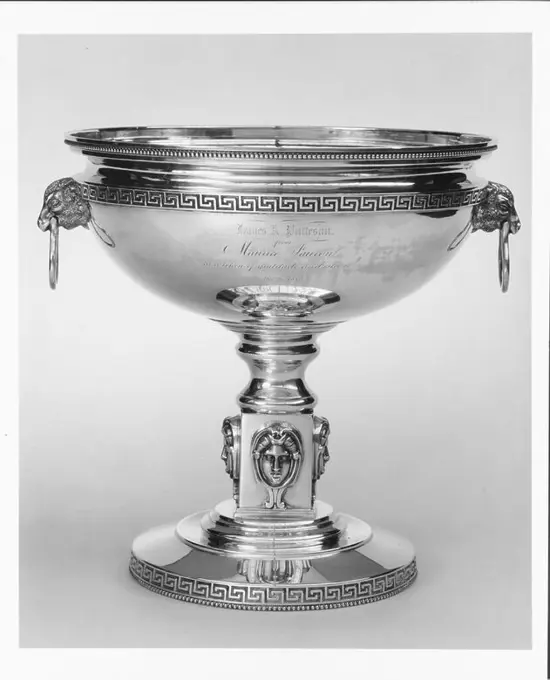
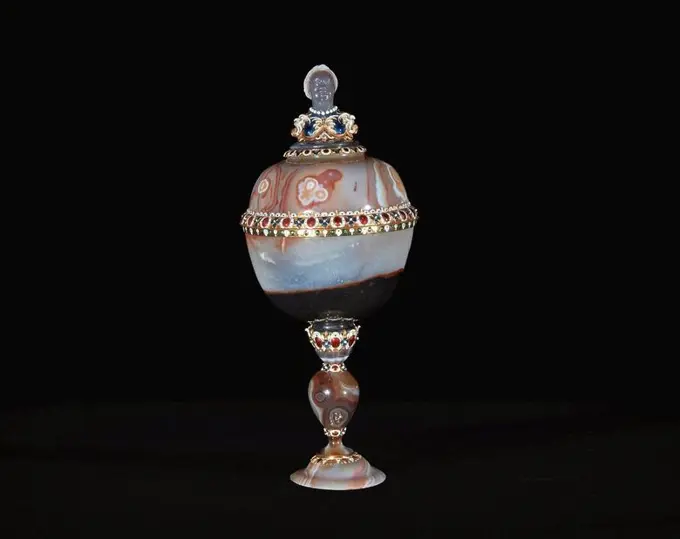
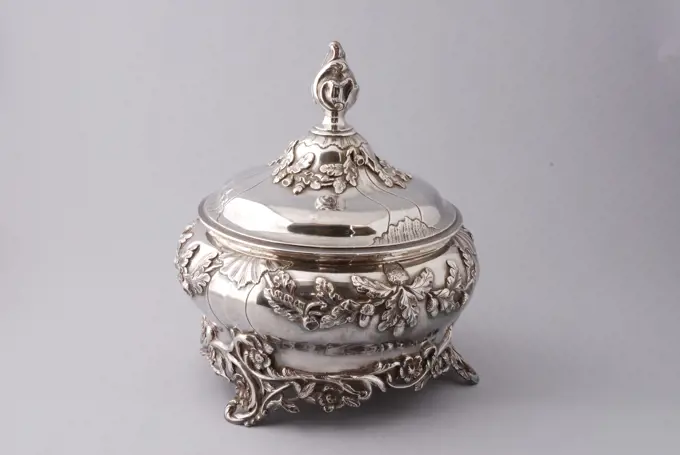
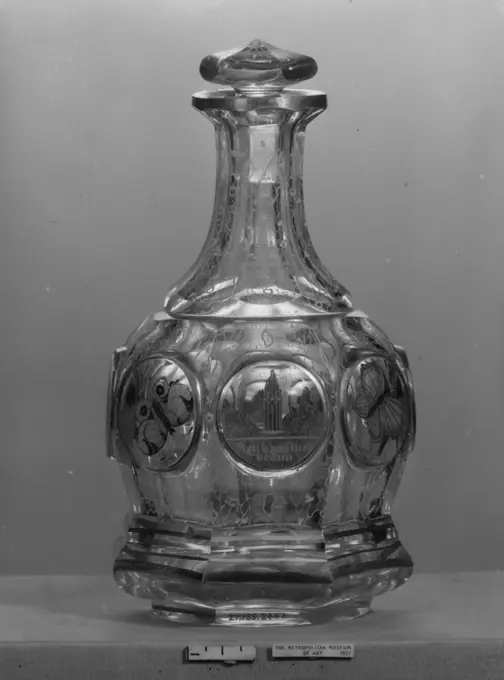
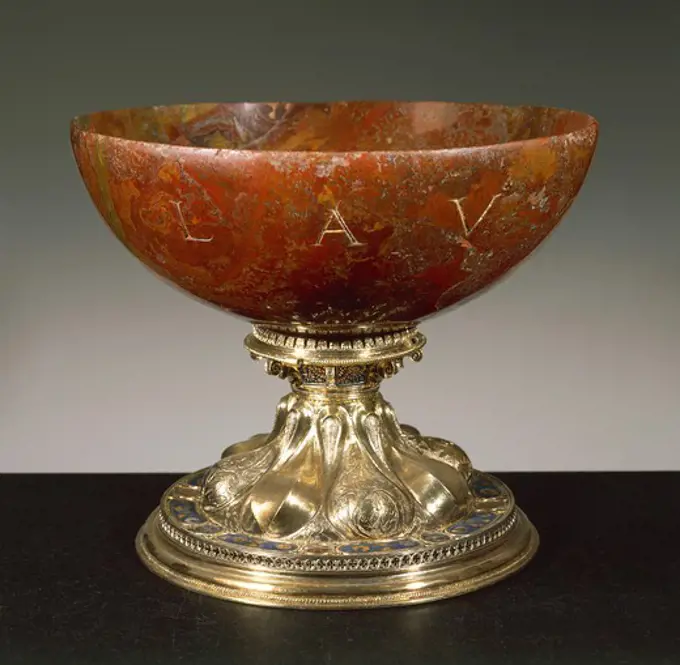
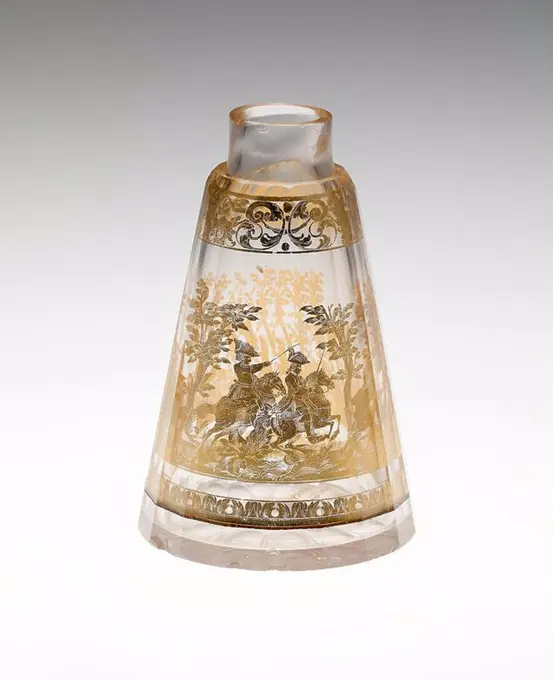
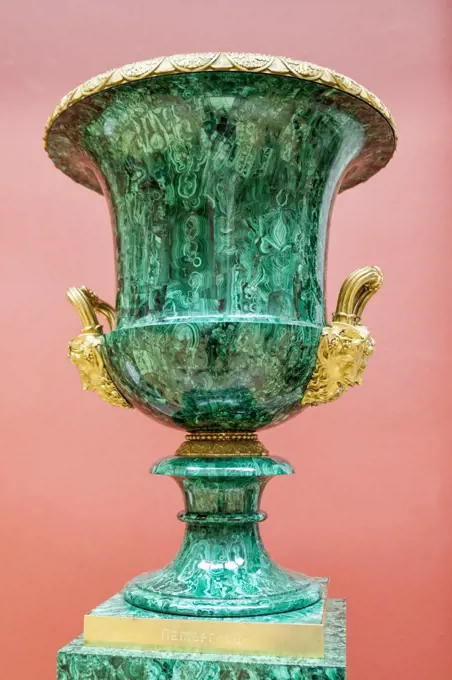
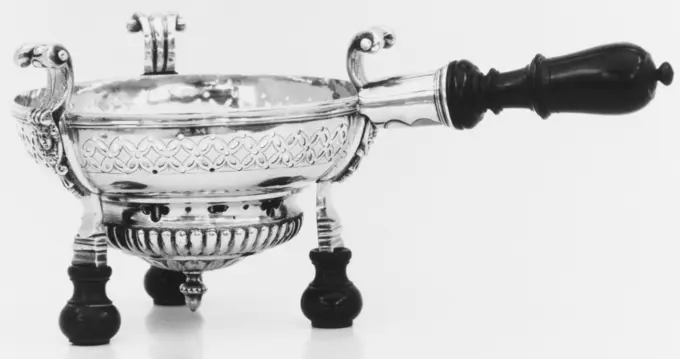
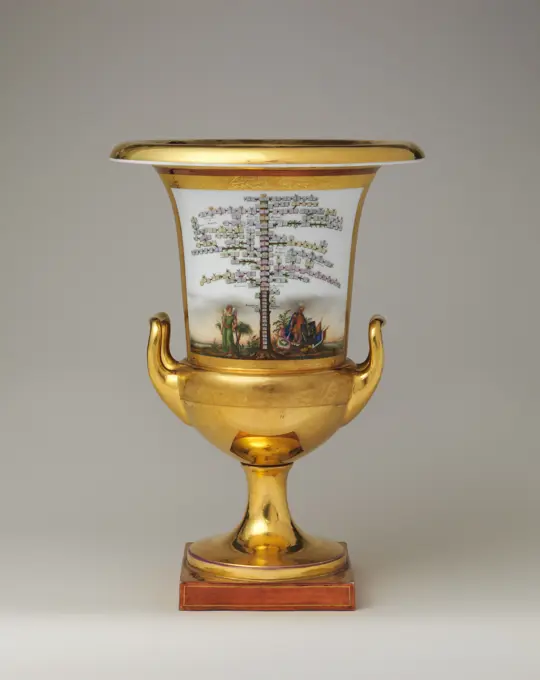
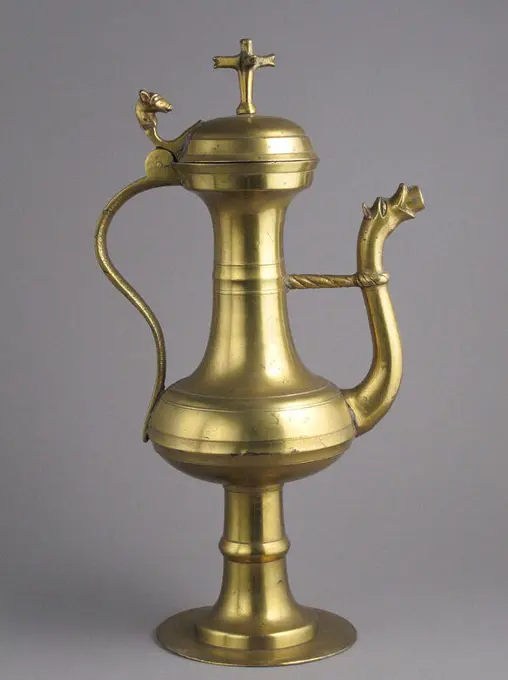
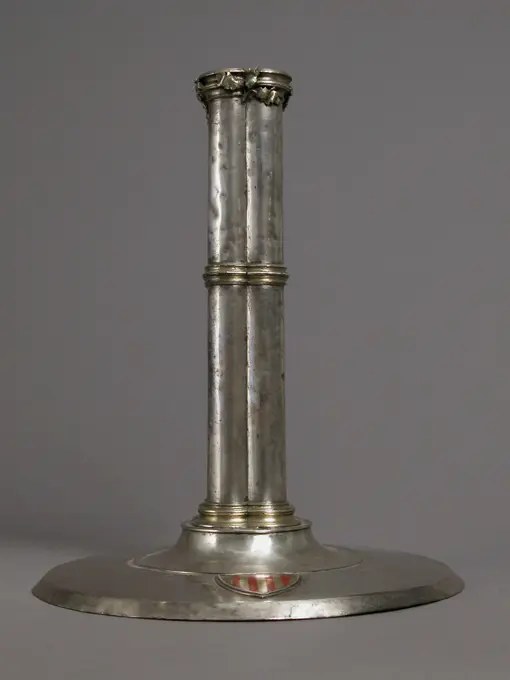
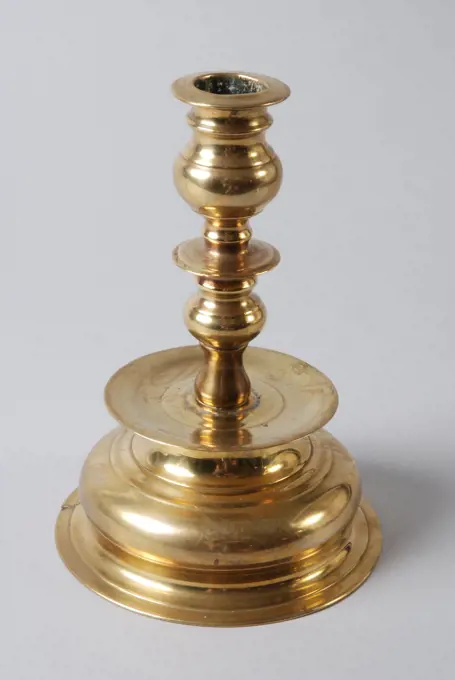
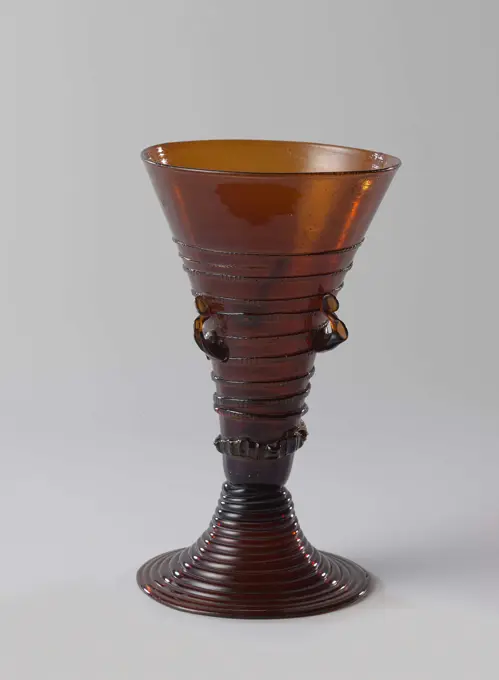
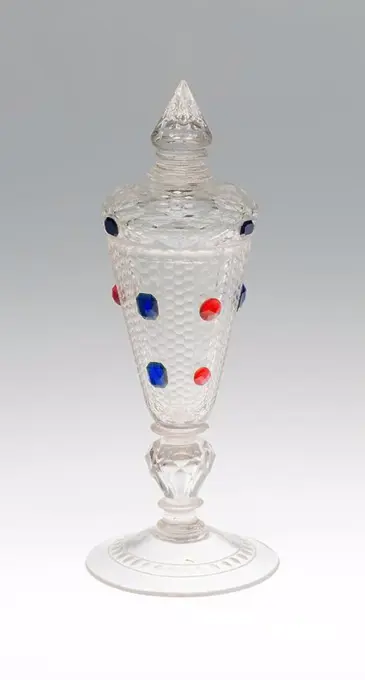
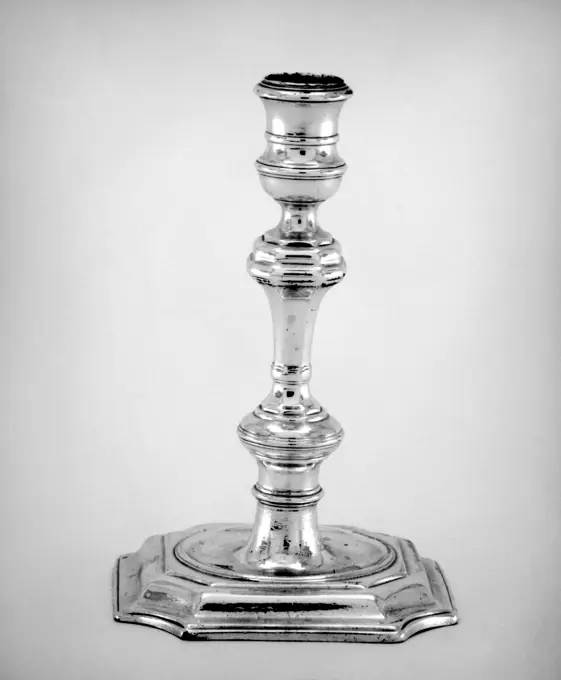
Sugar bowl 1786 Marc-Etienne Janety French Janety appears to have been the first European silversmith to work in platinum, newly available to silversmiths in the 1780s. It had recently been discovered that arsenic lowered the melting point of platinum, allowing it to be cast and then worked. The new medium also had the advantage of not tarnishing. This sugar bowl appears to be the only extant work in platinum by Janety. The crispness of the details, seen in the relief of the satyr and nymph and in the various decorative motifs, reflects his technical mastery of the medium.. Sugar bowl 205701Box with IIdBalthasar Levit, Silver pipe bowl, smoking pipe stove smoking utensils silver, hammered sawn cast Round bowl standing on three pivoting legs ending in claw-like shape; pivoting open sawn-off top with an edged edge of flowers underside: smoke lighting rococoCoconut-Shell Cup (Coco chocolatero). Unidentified artist. Mexico, 17th-18th century. Furnishings; Serviceware. Polished coconut shell, silverVase (USA); Made by George E. Ohr (American, 1857-1918); glazed earthenware; 18 x 7.8 cm (7 1/16 x 3 1/16 in. ); 1982-66-3Candlestick (one of a pair) third quarter 18th century François II Lacassaigne. Candlestick (one of a pair) 838974Candlestick of tin, teachered model. Candlestick of tin. The challenge stands on three low legs, formed by voluten. The baluster-shaped strain is twisted with a jar form above, to which the flower-shaped fat catcher is applied.Salt vessel () Of silver in form of cooling barrel with bent edge with treings in sawing., Anonymous, 1744 Silver salt barrel, in the form of a cooling vessel. The bent edge is decorated with teases in sawing. Master sign: hammer between letters P and V. Amsterdam silver (metal) Silver salt barrel, in the form of a cooling vessel. The bent edge is decorated with teases in sawing. Master sign: hammer between letters P and V. Amsterdam silver (metal)Sugar Bowl ca. 1825 John McMullin. Sugar Bowl 7962Maté cup late 18th century South American (Bolivian). Maté cup 206730Papkom, anonymous, c. 1600 - c. 1700 Round porridge on a foot with flat horizontal ears. The bowl is sea lobby by coves. The two ears are flat, horizontal and open. The foot is lobed and runs wide down. The bottom on the inside is decorated with a six -pointed star. The bowl is marked with an ax. Netherlands silver (metal) Round porridge on a foot with flat horizontal ears. The bowl is sea lobby by coves. The two ears are flat, horizontal and open. The foot is lobed and runs wide down. The bottom on the inside is decorated with a six -pointed star. The bowl is marked with an ax. Netherlands silver (metal)Goblet 19th century possibly Bohemian. Goblet. possibly Bohemian. 19th century. Glass. GlassAntique silver coffee pot on a white background. Vaulted foot with beaten edge. The stem made up of a hollow nodus between two discs. The lower part of the chalice has been cut three times, the upper bell-shaped. Foot, trunk and chalice of filigraanglas A fili and a retortoli, colorless glass rings.Pair of candlesticks 1713-14 Thomas Merry I. Pair of candlesticks. British, London. 1713-14. Silver. Metalwork-SilverReligious candlestick -Hébrard/Husson. "Vase". Silver, around 1909. Museum of Fine Arts of the City of Paris, Petit Palais. 70007-8 Lengthen, silver, leaf, motif, decorative object, vaseOlive glass cup with iridescent effect 19th century Attributed to the Barovier family glasshouse The form is derived from the classical kantharos. Its surface is a development of aventurine glass. Glass enclosing flakes of silver foil is covered with thin films of yellow, green, and red glass, all seated in a final colorless overlay.. Olive glass cup with iridescent effect 186024Pricket candlestick Flemish or Italian 17th century View more. Pricket candlestick. Flemish or Italian. 17th century. Brass. Metalwork-Brassbaroque (style), flowers, message (provenance), birdsLamp (one of a pair). Attributed to Union Flint Glass Works; American, founded 1826; Kensington, Pennsylvania. Date: 1835-1840. Dimensions: 26.7 × 10.8 cm (10 1/2 × 4 1/4 in.). Glass. Origin: Philadelphia. Museum: The Chicago Art Institute, Chicago, USA. Author: Union Flint Glass Co.Flowerpot with underfoon, decorated with multicolored birds and flowers. Flowerpot with bottom of porcelain, decorated with multicolored birds and flowers in vignettes on blue ground with golden edges.Decanter. Culture: Irish. Dimensions: Height: 9 3/4 in. (24.8 cm). Date: ca. 1820-30. Museum: Metropolitan Museum of Art, New York, USA.Paul Revere Sr., Creampot, c. 1740, silver.Slop Bowl. Culture: American. Dimensions: Overall: H. 3 15/16 in. (10 cm); 11 oz. 5 dwt. (350.1 g)Lip: Diam. 6 3/8 in. (16.2 cm). Maker: Charters, Cann & Dunn (active 1848-1854). Retailer: Ball, Tompkins and Black (active 1839-51). Date: 1848-51. Museum: Metropolitan Museum of Art, New York, USA.Reliquary. Culture: Hungarian. Dimensions: Overall: 4 7/16 x 2 1/16 x 2 1/16 in. (11.3 x 5.2 x 5.2 cm). Date: ca. 1500.The small size of this reliquary suggests that it was made for a wealthy private owner so that, in his private devotions, he could view a relic of his patron saint through the crystal. The rich surface decoration is similar to that of other objects known to have been made in Hungary in the early 16th century. Museum: Metropolitan Museum of Art, New York, USA.Beaker ca. 1770 Jean-Jacques Kirstein. Beaker 236508Pitcher. Culture: American. Dimensions: H. 7 1/2 in. (19.1 cm). Date: 1820-40. Museum: Metropolitan Museum of Art, New York, USA.Konew from the town hall of Old Warsaw; Mietelski, Antoni (Fl. Ca 1726-1737); 1726 (1726-00-00-1726-00-00);Cup with footDaniel van Voorhis, Pitcher, c. 1789, silver.Ridder, anonymous, 1600 - 1699 Ridder in armor with sword and shield on pedestal with screw. Netherlands silver (metal) gilding  Veere Ridder in armor with sword and shield on pedestal with screw. Netherlands silver (metal) gilding  VeereCompote. Culture: American. Dimensions: Overall: 9 1/2 x 10 7/16 in. (24.1 x 26.5 cm); 40 oz. 1 dwt. (1245.7 g)Lip: Diam. 9 3/8 in. (23.8 cm)Foot: Diam. 6 1/4 in. (15.9 cm). Maker: William Gale and Son (active ca. 1850-58 and 1863-66). Date: ca. 1860. Museum: Metropolitan Museum of Art, New York, USA.Egg Cup 1860-70 New England Glass Company. Egg Cup 3523Kantharos. nieznany warsztat beocki, workshopCave mug with Jan III Sobieski's medal; Holl, Johann Gottfried (Fl. 1678-1689), Höhn, Johann (Ca 1642-1693; m 1683-90 (1683-00-00-1690-00-00);Jan III Sobieski (King of Poland - 1629-1696), Baroque (style), portrait medallions, putta, purchase (provenance)Maker Unknown, Pitcher, c. 1907, colorless lead glass.Teapot 1771-72 Gillsland and Ker. Teapot 198037. Can of rock crystal, with gold-plated silver frame. The stretched crystal barrel is sloping ribbed. The long S-shaped spout, as well as the curved ear are formed by acanthus leaves and finish in a dragon head. The frame is to Hans Holbein d. J.Salt ca. 1795-1805 Robert Cruickshank. Salt 7087Pokal with cover ca. 1785 Johann Sigismund Menzel. Pokal with cover. German, Silesia (Warmbrunn). ca. 1785. Glass. GlassAnonymous / 'Agate goblet crowned by a bust'. 1600 - 1650. Agate, Enamel, Gold. Museum: Museo del Prado, Madrid, España.. The plate-driven model for a mold is equipped with Rococo ornament in which flowers are included.Beaker 19th century, after 17th century original British, after Russian original This electrotype is after a seventeenth-century original a treasure of the Patriarch, Moscow, at the time of reproduction.. Beaker. British, after Russian original. 19th century, after 17th century original. Silver, parcel gilt. Metalwork-ElectrotypeVase, c. 1800. Attributed to Pierre Philippe Thomire (French, 1751-1843). Bronze, partially gilt, marble base; diameter: 34 cm (13 3/8 in.); overall: 66.9 cm (26 5/16 in.). In 1798, a large quantity of French furnishings was acquired for the Michael Palace in St. Petersburg, Russia. Some of these pieces survive in museums like the Hermitage Museum in St. Petersburg. This institution recently staged an exhibition of such French pieces by and attributed to Thomire. Among the objects shown was a bronze vase virtually identical in design to this piece.Silversmith: Johannes Jansen, Silver tobacco spot, tobacco stain pot holder metal silver , driven cast Round wide baluster-shaped pot on three legs, vaulted lid topped by large flame-shaped bud bottom underside (smashed) smoking store tobacco tobacco boxDecanter with scenes of Marienbad ca. 1840 Bohemian This decanter and its matching beaker (27.185.285) are decorated with enamelled medallions with representations of spa buildings and beauty spots in the Bohemian health resort of Mariánské Lázne, then known as Marienbad. Those on the decanter are identified as Waldquelle (now Lesní pramen or Forest source), Carolinenbrunn (Karolinin pramen or Caroline's spring), Ambrosiusbrunn (Ambrožovy prameny or Ambrosius springs) and Kreuzbrunn (Krížovy pramen or Cross spring). Those on the beaker are of Hirten-Ruhe (Hirtenruhe), Friedrich-Wilhelms-Höhe (Výšina Bedricha Viléma or Frederick William Heights), and Ferdinandsbrunn (Ferdinanduv pramen or Ferdinand's spring).. Decanter with scenes of Marienbad. Bohemian. ca. 1840. Glass. GlassGalvanoplastic reproduction of a candlestick with twisted strain with mythological representations from the popta treasure. Galvanoplastic reproduction of a candlestick with a round foot and a twisted trunk with mythological representations.Clock Clockmaker: Martin Zoller late 16th-early 17th centuryKantharos representing a scene at a gymnasium, black-figure pottery., Greece. Greek Civilization, 5th Century BC.Waste Bowl 1845 Andrew Ellicott Warner. Waste Bowl. American. 1845. Silver. Made in Baltimore, Maryland, United StatesSilversmith's art, Italy, 15th century. Red jasper cup with enamelled silver gilt mount. Height 21,5 cm. Signed LAV.R.MED.Compote -Chocolate Pot,  c. 1760Porringer with cover (Écuelle) 1759 Philippe Lafourge. Porringer with cover (Écuelle) 200070Covered Beaker. Artist: Hans Greiff (German, active ca. 1470-died 1516 Ingolstadt). Culture: German. Dimensions: Overall: H: 14 3/8 in. (36.5 cm). Date: ca. 1470. Museum: Metropolitan Museum of Art, New York, USA.Spoon Holder. Culture: American. Dimensions: H. 7 in. (17.8 cm); Diam. 3 7/8 in. (9.8 cm). Maker: Boston & Sandwich Glass Company (American, 1825-1888, Sandwich, Massachusetts). Date: ca. 1867. Museum: Metropolitan Museum of Art, New York, USA.Goblet. Culture: British (American market). Dimensions: H. 4 1/2 in. (11.4 cm); Diam. 3 1/2 in. (8.9 cm). Date: 1800-1830. Museum: Metropolitan Museum of Art, New York, USA.Candlestick, worn by lions, anonymous, c. 1400 - c. 1500 The object is composed of the following parts: the foot and trunk that are cast in one whole, the fat catcher, the candle pin and the three pedestals. The trunk is hollow on the top to the upper knot. The round, slightly enhancing foot towards the middle, turns into the round trunk with three knots. The round fat catcher connects, which has almost the same cross -section as the foot, and whose bottom is slightly. The raised edge with six tilting has been enlivened with six ornaments, consisting of a perforation in the form of a five pass. The large candle pin is applied on top. Foot, trunk, fat catcher and pin are decorated with fine grooved rings. The candlestick has three cams at the bottom, on which the three pedestals are soldered in the form of lions. These were not originally and later applied. Northern Netherlands (possibly) brass (alloy) casting / soldering The object is composed of the following parts: the foot and trunkTrophy Cup and Cover, 1792-1793. Peter Bateman (British, 1740-1825), Anne Bateman (British, 1748-1813). Silver gilt; overall: 59.7 x 40 cm (23 1/2 x 15 3/4 in.). Silver fulfilled a prominent role in projecting wealth, status, power, and ritual in British life during the 1600s and 1700s. Elaborate forms such as this trophy, with its swags of flowers, neoclassical rosettes, acanthus spears, and acorn finial, not only represented wealth in its sheer silver weight but also provided royal and aristocratic owners a surface for displaying engraved coats of arms. Engraved on one side of this trophy cup can be found the arms of Robert Grosvenor (1767-1845), the first Marquess of Westminster, and Lady Eleanor Egerton (1770-1846), whom he married in 1794, a year after the trophys completion. The other side depicts preparations for a horserace, the most culturally significant leisure activity enjoyed by aristocratic families in the 1700s. Grosvenor owned a number of famous horses and was likely Flask. Bohemia, Czech Republic. Date: 1725-1735. Dimensions: 11.9 × 7 cm (4 11/16 × 2 3/4 in.). Glass with engraved gold leaf decoration. Origin: Bohemia. Museum: The Chicago Art Institute, Chicago, USA.Lazio Roma Rome S. Maria in Aquiro74. Hutzel, Max 1960-1990 Post-medieval: Architecture, architectural sculpture, sculpture, painting, religious artifacts (reliquaries), decorative arts (tapestries, furniture). From Counter-Reformation, built in 1590 and finished in 1774. A picture gallery exists in the former convent, which also houses offices. Located on Piazza Capranica. German-born photographer and scholar Max Hutzel (1911-1988) photographed in Italy from the early 1960s until his death. The result of this project, referred to by Hutzel as Foto Arte Minore, is thorough documentation of art historical development in Italy up to the 18th century, including objects of the Etruscans and the Romans, as well as early Medieval, Romanesque, Gothic, Renaissance and Baroque monuments. Images are organized by geographic region in Italy, then by province, city, site complex and monument.Silver skyphos (drinking cup) mid-1st century B.C. Roman On the underside of foot, inscription giving cup's weight and name of owner, Sattia.. Silver skyphos (drinking cup). Roman. mid-1st century B.C.. Silver. Late Republican. Gold and SilverSilversmith's Art, Great Britain 18th century. Decorated silver water jug.Candy box in the form of a cooling barrel, Anonymous, 1744 Silver candy, in the form of a cooling barrel. Along the edge an Applique from Lodewijk XIV ornaments. Master sign: A jumping hare in shield. (According to the label a jumping deer). Rotterdam silver (metal) Silver candy, in the form of a cooling barrel. Along the edge an Applique from Lodewijk XIV ornaments. Master sign: A jumping hare in shield. (According to the label a jumping deer). Rotterdam silver (metal)Egg Cup 1830-50. Egg Cup. 1830-50. Lacy pressed glassArm with candle crown candle holder, Anonymous, 1795 - 1800 The S-shaped arm has a curl at the end at the tribe side and turns outside into a thickening with screw hole. The candle holder is secured with the fat catcher. The round holder has a hol round pedestal, narrows upwards and then has an excellent edge. The fat catcher has a grooved ring at the top. This is the fifth arm, numbered with 5 round points. Amsterdam brass (alloy) casting The S-shaped arm has a curl at the end at the tribe side and turns outside into a thickening with screw hole. The candle holder is secured with the fat catcher. The round holder has a hol round pedestal, narrows upwards and then has an excellent edge. The fat catcher has a grooved ring at the top. This is the fifth arm, numbered with 5 round points. Amsterdam brass (alloy) castingCompote c 1835-1850 Boston. The patterns on this rare compoteóa peacock-feather border with a scrolled-eye centerówere two of the most important and popular early-19th-century American patterns produced. For Americans, such pressed designs were less expensive and more accessible alternatives to the cut glass produced in Great Britain and Continental Europe.. Pressed glass . Boston and Sandwich Glass Company (Manufacturer)A malachite vase in a skylight hall, Hermitage Museum, St Petersburg, RussiaPitcher, Cream (USA); Made by R. & W. Wilson, Philadelphia; silverJar of green glass. Snar of dark green glass, at vaulted foot. Cylindrical, solid stem, with a massive nodus in the middle. Clainable chalice.GU cup on the base;  18th century (1701-00-00-1800-00-00);Paderewski, Ignacy Jan (1860-1941), Paderewski, Ignacy Jan (1860-1941)-collection, qing (style), Chinese (culture), cloisonné, gift (provenance), ritual vessels, stands, GU cups, Chinese art, Chinese art, Lotos (ornament)Milk; Lilpop, Karol Jerzy (Fl. 1820-1833); 1920s (1820-00-00-00-1829-00-00);Soap box 1713-14 Anthony Nelme. Soap box 204962Anonymous. Vase mounted. Céladon, golden bronze, 1780-1790. Paris, Cognacq-Jay museum. 79737-7 Anse, art decorative, bronze gilded, celidon, lid, head, vase monte, 18th 18th 18th 18th 18th 18th century, animalCup with Diana and Actaeon, Fa. Elkington & Co., 1881 Galvanoplastic reproduction of a cup on foot with lid, with driven representation of Diana and Actaeon on the lid and the body. On the inside of the lid a portrait of Hendrik Julius, Bishop of Halberstadt and Duke of Braunschweig. Gilded. Londonmaker: Prague copper (metal). silver (metal) gilding Galvanoplastic reproduction of a cup on foot with lid, with driven representation of Diana and Actaeon on the lid and the body. On the inside of the lid a portrait of Hendrik Julius, Bishop of Halberstadt and Duke of Braunschweig. Gilded. Londonmaker: Prague copper (metal). silver (metal) gildingSilversmith: Douwe Eysma, Round baluster-shaped silver tobacco pot with lid, completely decorated with floral and leaf motifs, tobacco pot pottery holder metal silver, cast driven Round wide baluster-shaped pot on four legs of each two leaves corrugated wall by vertical ridges accented bell-shaped lid repeats wave pattern of wall set flower tray as button bottom underside (smashed) tobacco smoking store tobacco boxStanding Cup and Cover, 1800-1900. This is a well made example of an ornamental cup and cover which has been turned from sycamore. The decoration is built up from a number of carvings which were then glued and dowelled together... Purchased from Edward H Pinto, 1965.. .Goblet (Roemer) 19th century possibly German. Goblet (Roemer). possibly German. 19th century. Glass. GlassLidded vase (with reserve scene of a male figure).Brazier (one of a pair) first quarter 18th century L.B.. Brazier (one of a pair) 200112Vase 1820-25 Royal Porcelain Manufactory, Berlin The unusual decoration of this vase comprises the family tree of the Hohenzollerns, the royal family of Prussia. The tree charts the family's genealogical history from 800 to 1820, which provides an approximate date for the manufacture of the vase. The early history of the vase is not known, but it seems almost certain that, due to its subject matter, it was made for a member of the royal family. It is distinguished by the rich gilding that decorates much of the surface.. Vase 208152Ewer. Culture: German. Dimensions: Overall: 13 9/16 x 7 1/2 x 4 3/4 in. (34.5 x 19.1 x 12 cm). Date: 15th century. Museum: Metropolitan Museum of Art, New York, USA.Sugar bowl with gold borders on a red ground, anonymous, c. 1800 - c. 1824 Porcelain sugar bowl on spreading foot and with two handles in the form of a human head, covered on the glaze with red and gold. The outer wall is covered with red and the foot, outer edge and handles with gold. On the edge a flower vank in one of the golden tires. The lid with the same decoration. Marked on the bottom with SC under a horizontal line. Empire. France (possibly) porcelain. glaze. gold (metal) painting / gilding / vitrification Porcelain sugar bowl on spreading foot and with two handles in the form of a human head, covered on the glaze with red and gold. The outer wall is covered with red and the foot, outer edge and handles with gold. On the edge a flower vank in one of the golden tires. The lid with the same decoration. Marked on the bottom with SC under a horizontal line. Empire. France (possibly) porcelain. glaze. gold (metal) painting / gilding / vitrificationChalice 18th century Portuguese. Chalice 191999Pair of candlesticks 1734-35 Jean Mauzié. Pair of candlesticks 200087Oval refrigerator with scalloped edge, 1675 - 1725 Oval wine cooler from Tin on stand ring. The barrel consists of a shallow, convex belly, above it a profiled band that turns into a smooth, widening upper part. The upper edge is roughly sculpted. Two accolade forms with a moving handle on the top edge. Traces of black and gold paint visible. West-Europa tin (metal) casting Oval wine cooler from Tin on stand ring. The barrel consists of a shallow, convex belly, above it a profiled band that turns into a smooth, widening upper part. The upper edge is roughly sculpted. Two accolade forms with a moving handle on the top edge. Traces of black and gold paint visible. West-Europa tin (metal) castingCandlestick 15th century Spanish. Candlestick. Spanish. 15th century. Silver, silver-gilt, champlevé enamel. Metalwork-SilverTwo candelabra, 1842 Silver candelabar with round foot and a tribe rejuvenating upwards. Six arms bent outwards, which are grouped around a sphere. The foot and candle holders are decorated with Godrons. Leaf motifs and tiflines have been applied around the trunk and the crown. The tenders run out in a Greek palmet. On the foot the driven alliance weapon von Nagell from Gartrop-van Nagell van Ampsen. The Hague silver (metal) Silver candelabar with round foot and a tribe rejuvenating upwards. Six arms bent outwards, which are grouped around a sphere. The foot and candle holders are decorated with Godrons. Leaf motifs and tiflines have been applied around the trunk and the crown. The tenders run out in a Greek palmet. On the foot the driven alliance weapon von Nagell from Gartrop-van Nagell van Ampsen. The Hague silver (metal)Cachepot with Flower Motif and Animal Mask Handles, faience, On spreading foot an inverted bell-shaped, gadrooned body with six-lobed edge. Sides decorated with relief flowering branches. Two gaping animal masks form handles. Light buff clay with transparent glaze., Pont-aux-Choux or Creil, France, ca. 1765, ceramics, Decorative Arts, cachepot, cachepotTwo-quart Flagon 1825-27 Boardman and Company. Two-quart Flagon 9166Collar candlestick on round profiled base, the trunk with spherical baluster and broad rib, candlestick candlestick holder brass metal, cast turned Copper candlestick High profiled and bell-shaped foot crowned with shallow collar or disk Long column decorated with buttons and disks. Holder with large round sphere illuminate the base and flat outstanding top edge illumination evening nightEwer 19th century, after 1617-18 original Franchi and Son This electrotype is after a seventeenth-century original (1617-18), at the time of reproduction the property of the Corporation of Norwich. En suite with salver (73.8.29).. Ewer. British, London, after British, London original. 19th century, after 1617-18 original. Silver on base metal. Metalwork-ElectrotypeRingel cup. Concave, spun base from a wire. Funnel-shaped chalice, which is spiraling a ribbed wire. Halverweg the chalice three eyes.Patera with Meander; Horodnica (faience and porcelain factory; 1807-2012); 1857 (1857-00-00-1857-00-00);Candlestick with a engraved alliance weapon, consisting of two oval shields in which a crowned two -headed eagle with fleurons and clover leaves., Anonymous, 1709 Candlestick consisting of a foot, a trunk and a candle holder. An alliance weapon is engraved on the foot, consisting of two oval shields, each with a two -headed eagle, crowned with three fleurons and two clover leaves. Marked and dated. The Hague silver (metal) casting / engraving Candlestick consisting of a foot, a trunk and a candle holder. An alliance weapon is engraved on the foot, consisting of two oval shields, each with a two -headed eagle, crowned with three fleurons and two clover leaves. Marked and dated. The Hague silver (metal) casting / engravingEwer. Culture: French, Montpellier. Dimensions: Height: 10 1/4 in. (26 cm). Maker: Marc Bazille (1706-1777, master 1732). Date: 1745-46.A ewer with its accompanying basin was among the most important components of the washing and grooming ritual known in France as la toilette. The ewer would have held water; the basin served as a small, portable sink. The intended function of this ewer and basin is made clear by the aquatic motifs chosen to decorate them. Beneath the spout of the ewer is a dolphin mask framed by bullrushes, and the finial of the hinged cover is formed by a dolphin whose tail serves as a thumbpiece. Bullrushes also decorate the inner sides of the basin.This ewer and basin are among the Museum's finest pieces of French Rococo silver. The sinuous lines of the ewer and its handle are a hallmark of the Rococo style, and the dolphin, appearing both in mask and finial form, was a frequently used motif. Museum: Metropolitan Museum of Art, New York, USA.Goblet (Roemer) 18th century German. Goblet (Roemer). German. 18th century. Glass. GlassGoblet with Cover. Bohemia, Czech Republic. Date: 1710-1720. Dimensions: H. 27.3 cm (10 3/4 in.). Glass; blown, cut, and molded with applied glass stones. Origin: Bohemia. Museum: The Chicago Art Institute, Chicago, USA.Pair of candlesticks 1731-32 Paul de Lamerie British. Pair of candlesticks 205121