Elegant Glassware and Urns

Assorted glass items including decorative urns and bowls, showcasing intricate designs from various historical periods.

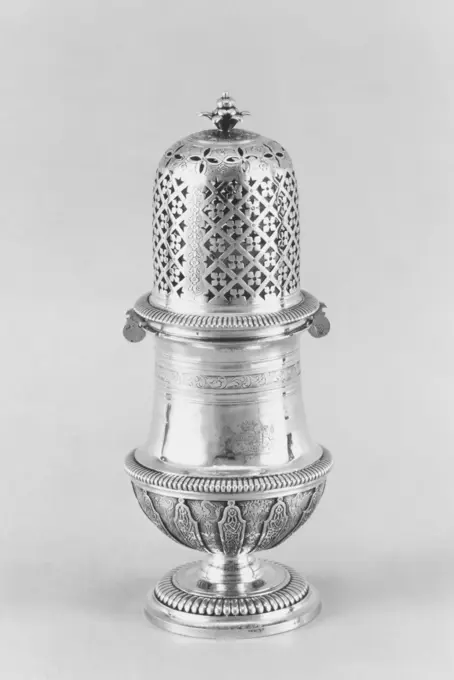
Lid, crowned with a crown, anonymous, c. 1800 - in or before 1885 Vaulted lid with overhanging edge. The button in the form of a crown with four brackets. England glass glassblowing Vaulted lid with overhanging edge. The button in the form of a crown with four brackets. England glass glassblowing
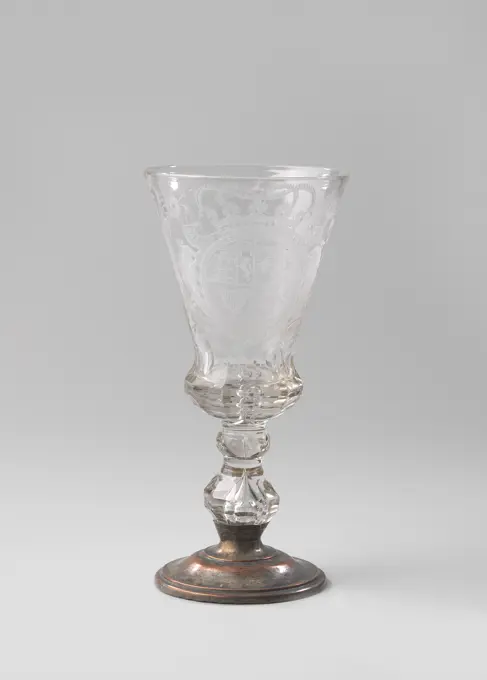
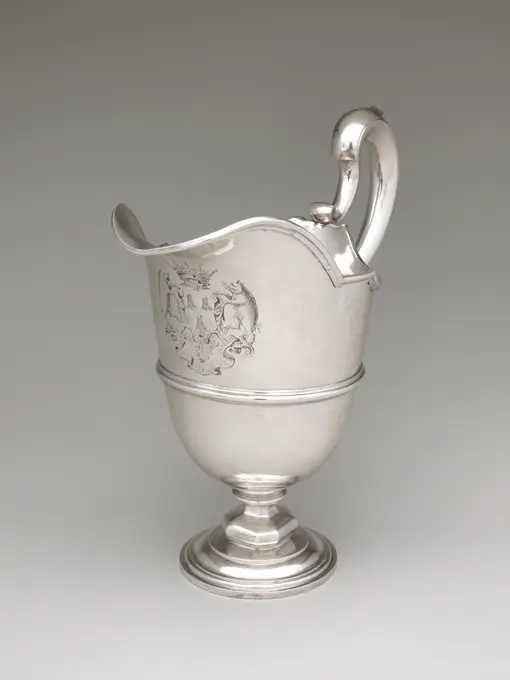
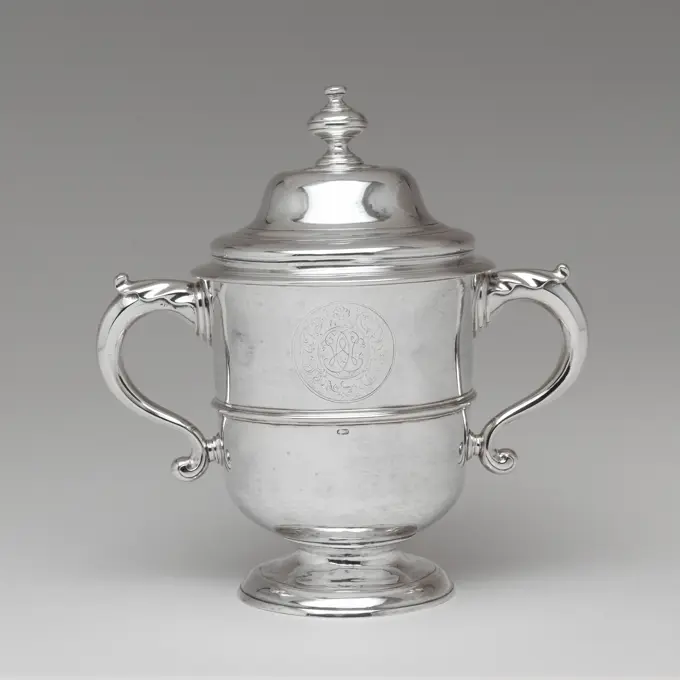
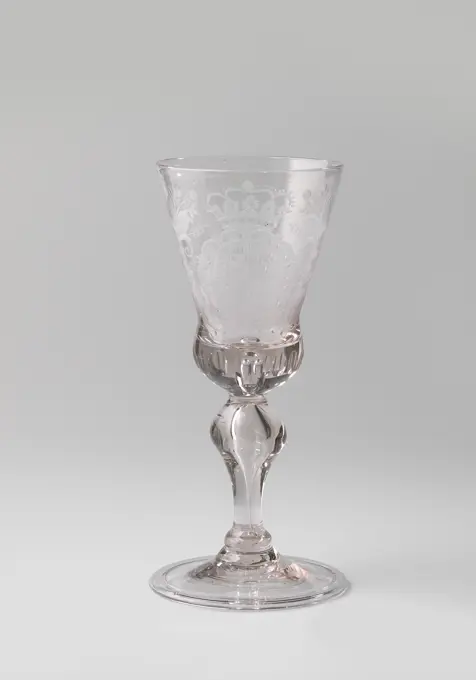
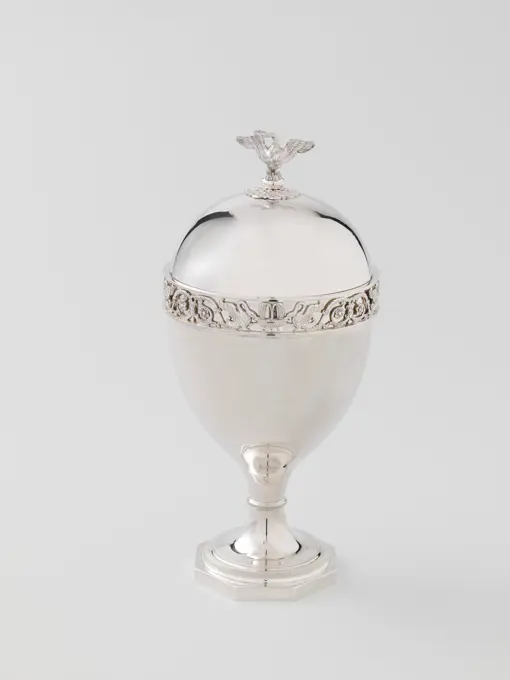
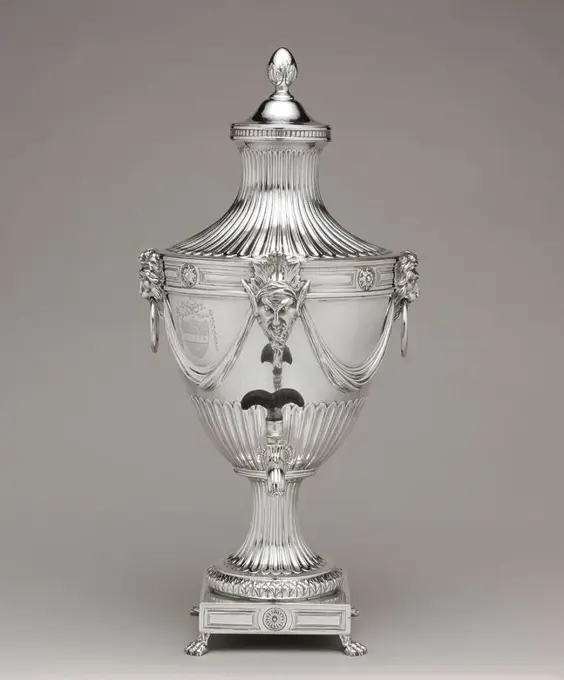
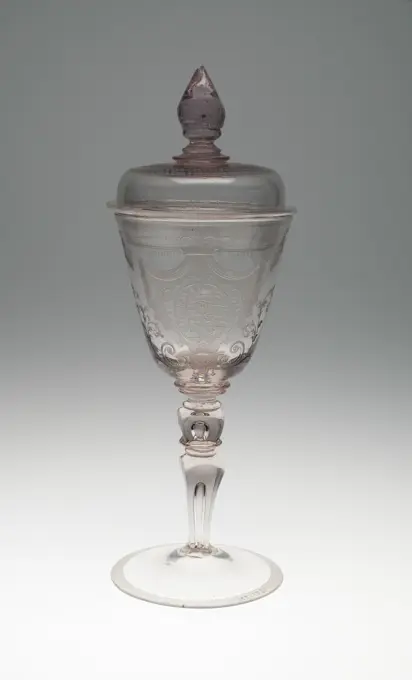
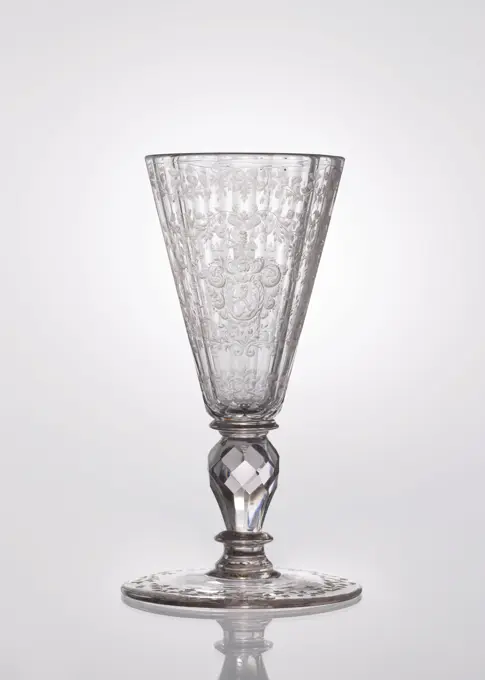
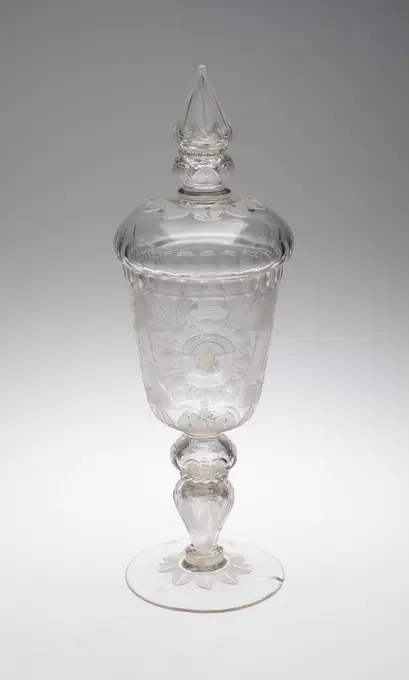
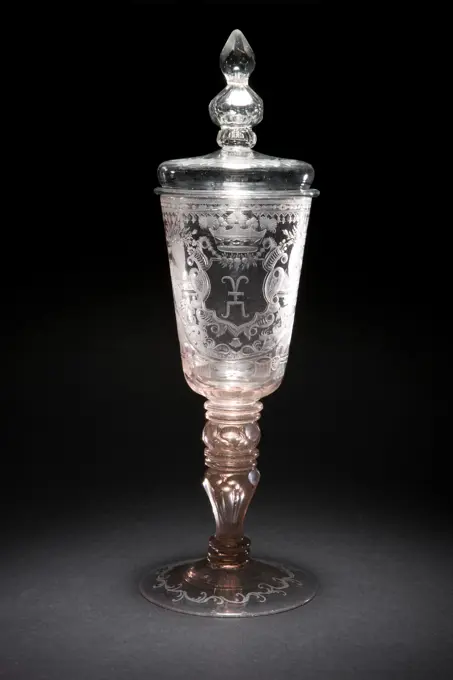
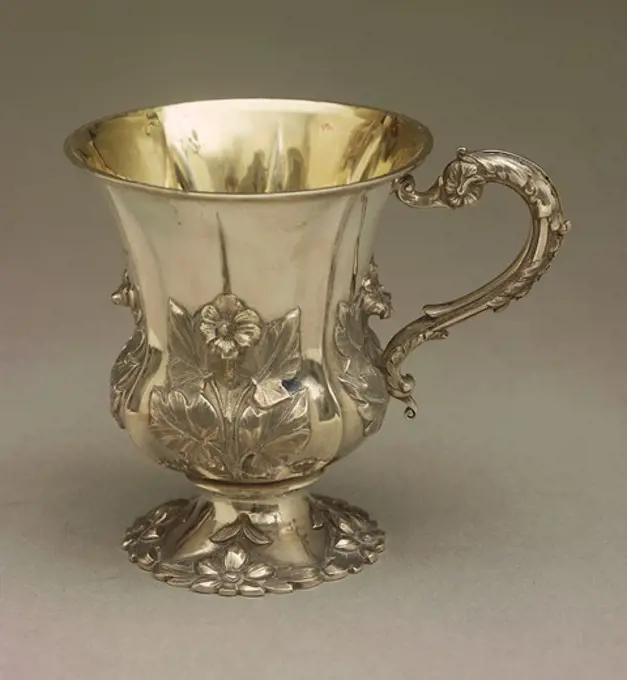
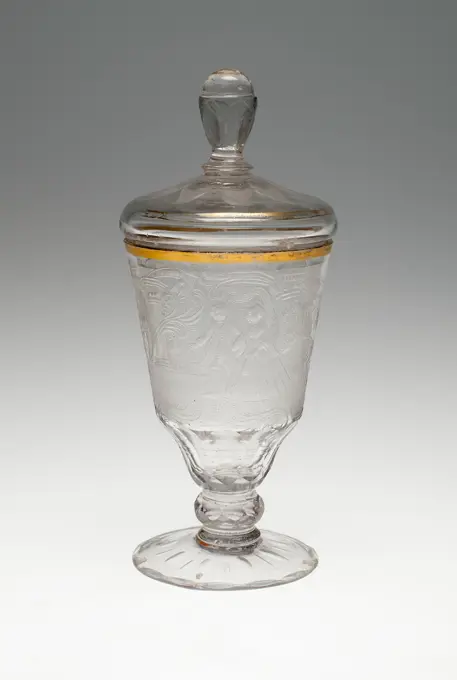
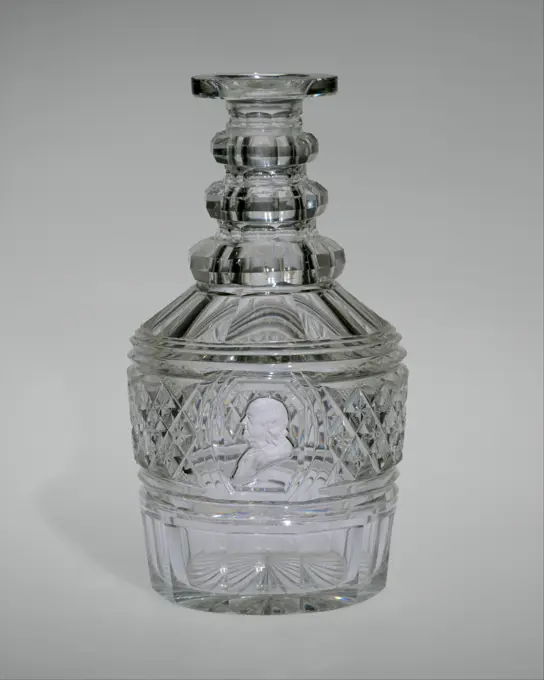
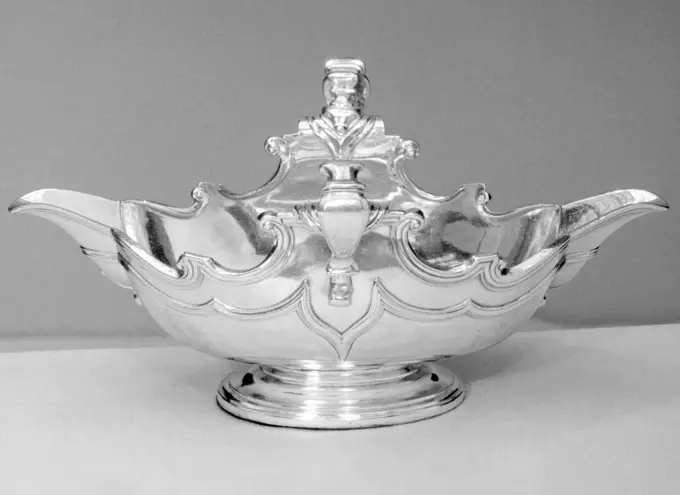
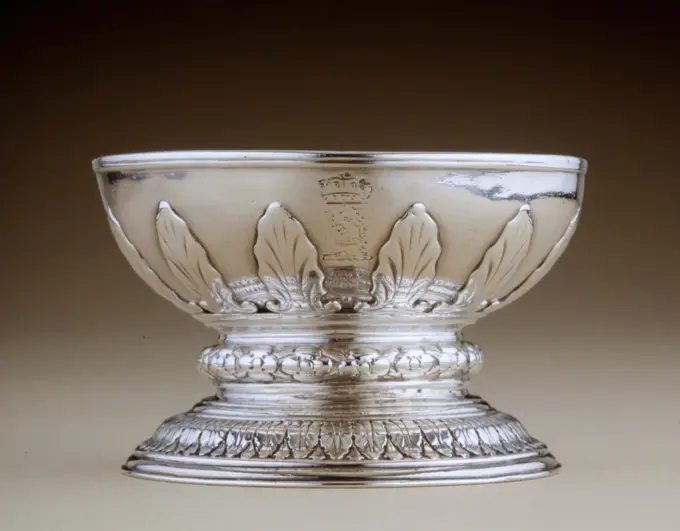
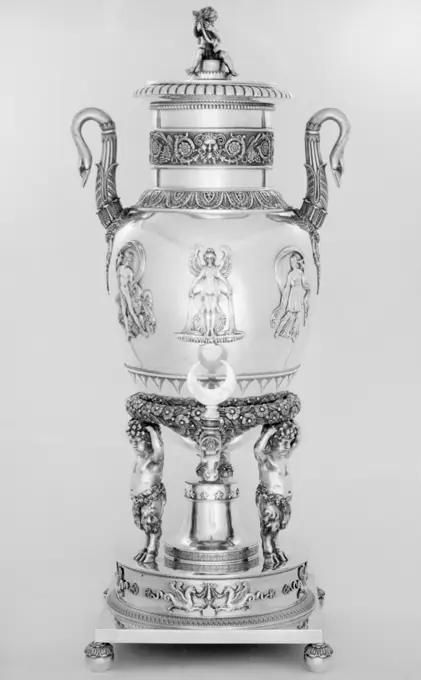
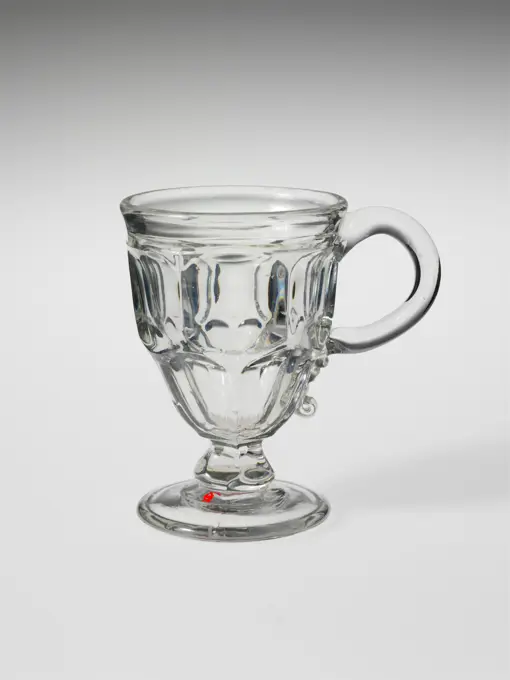
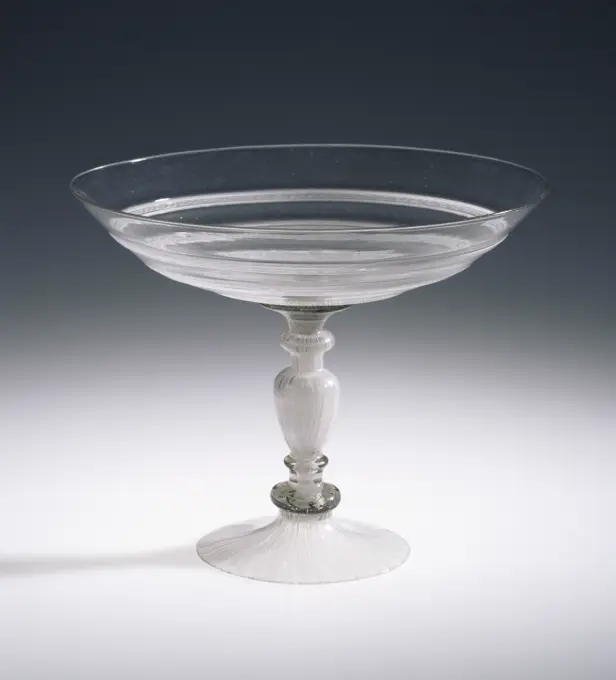
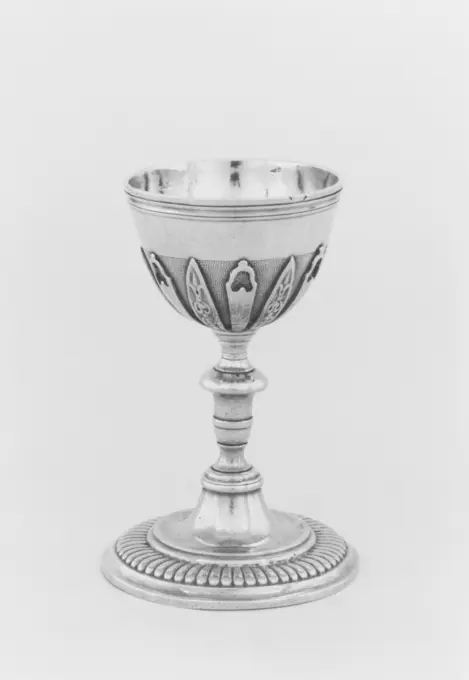
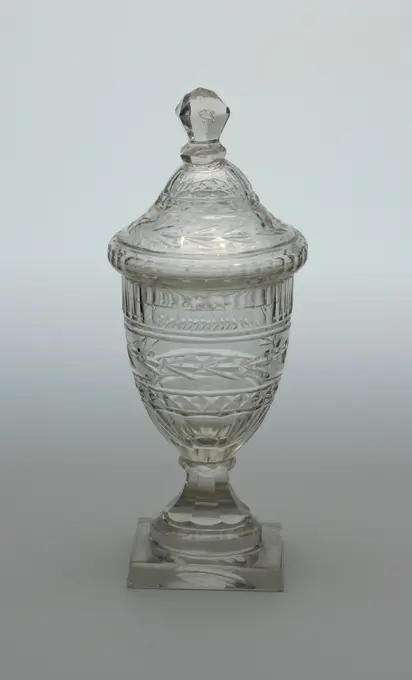
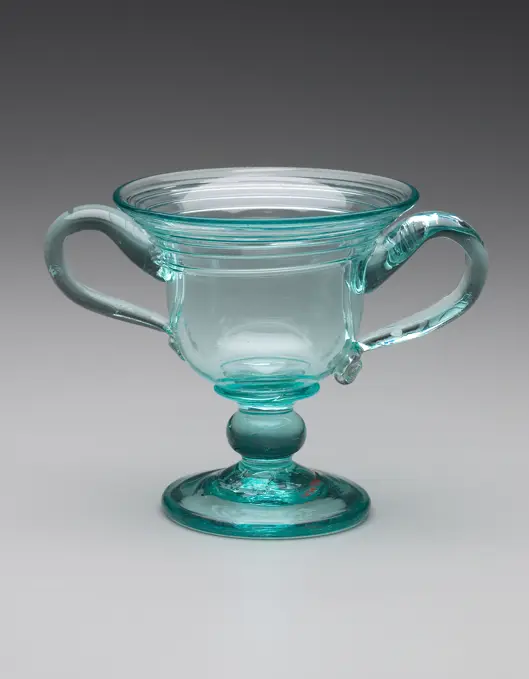
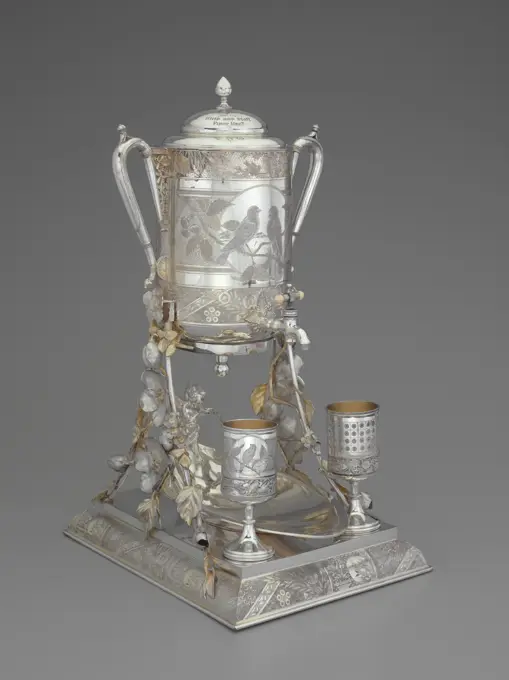
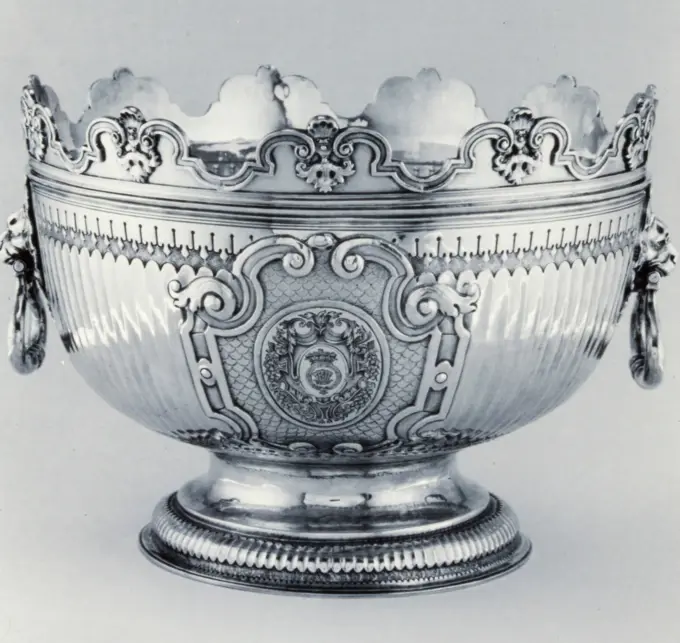
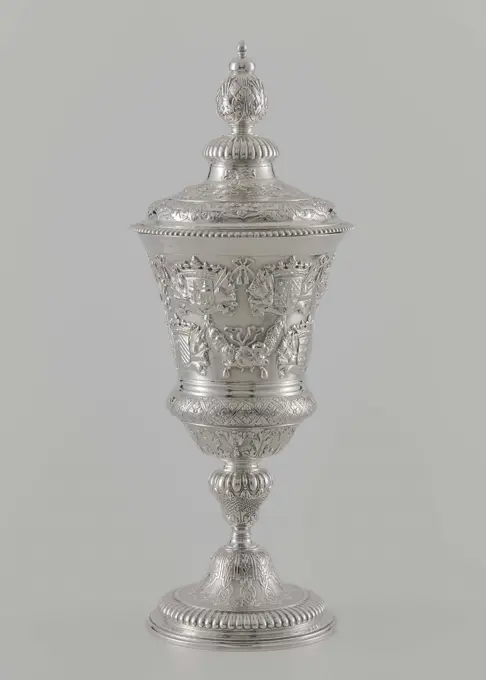
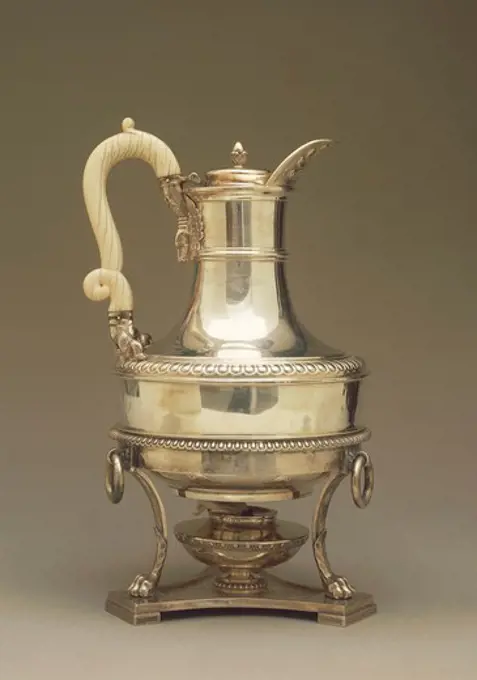
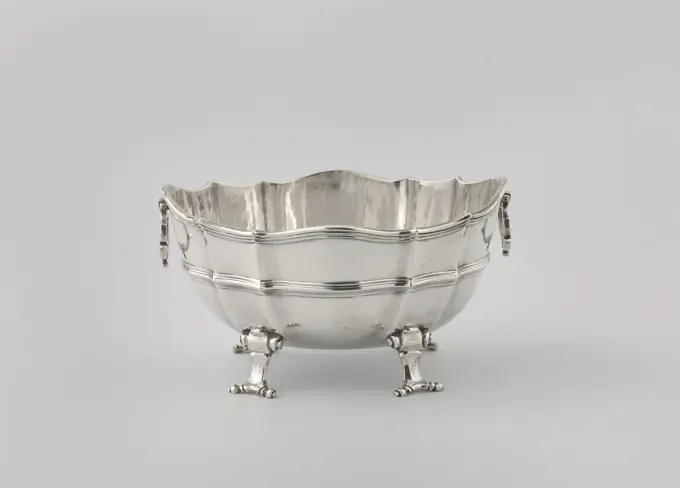
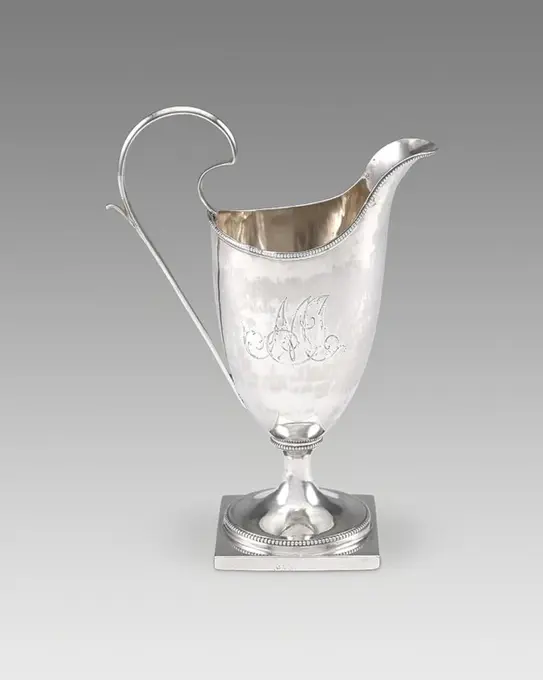
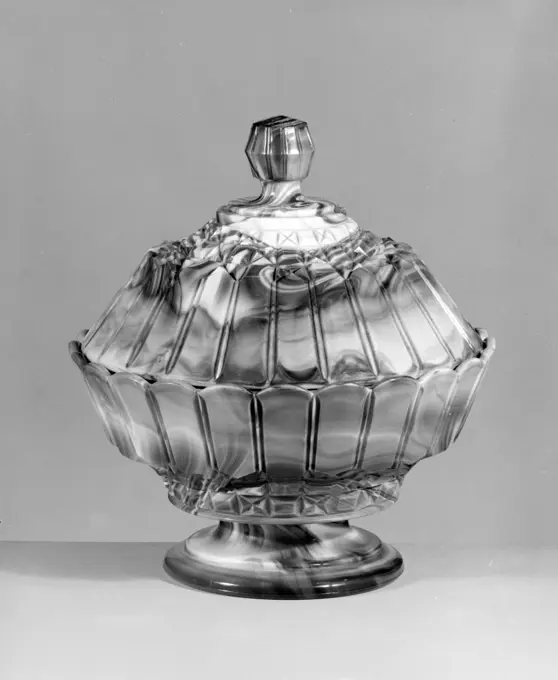
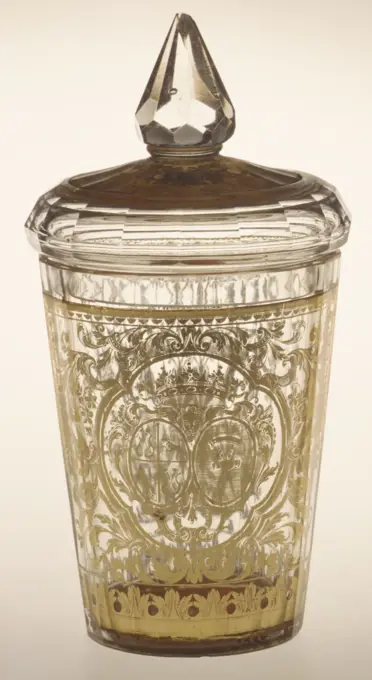
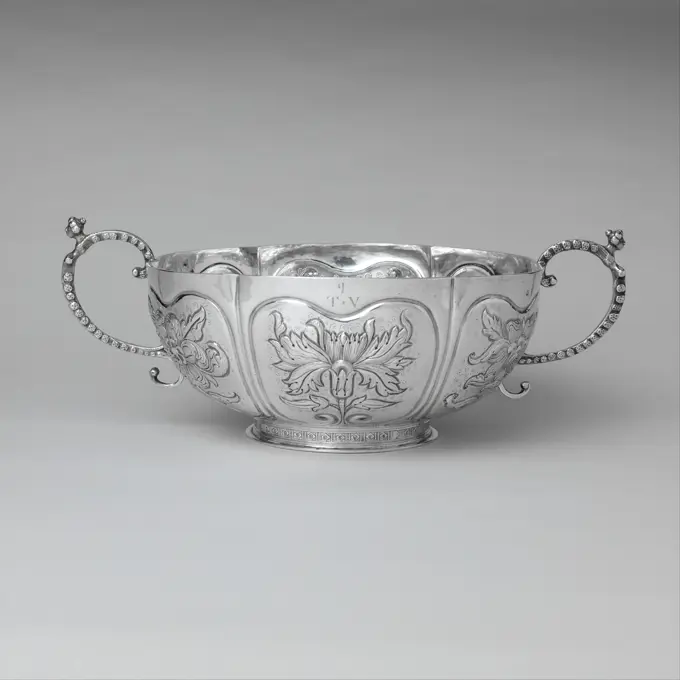
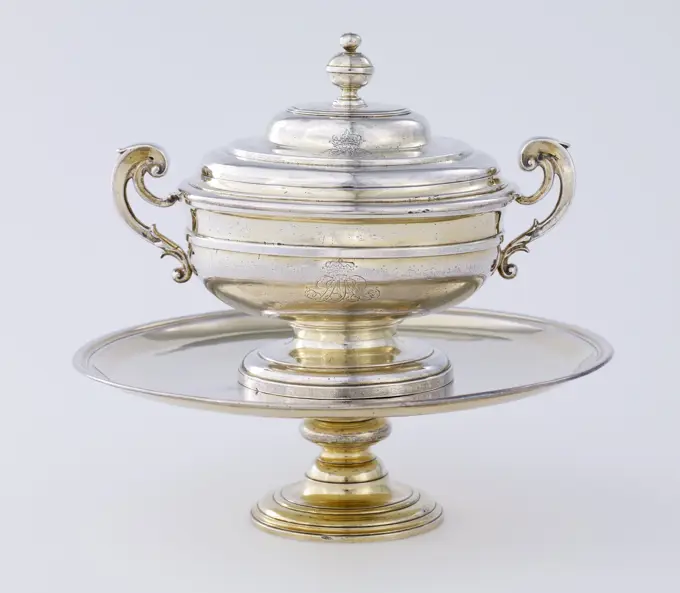
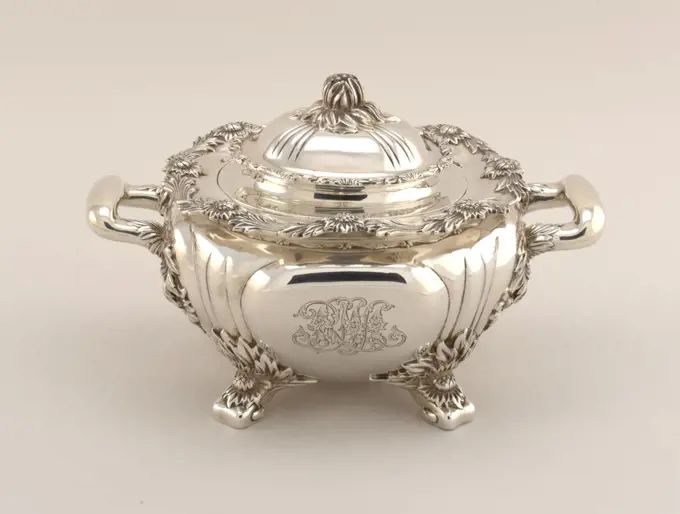
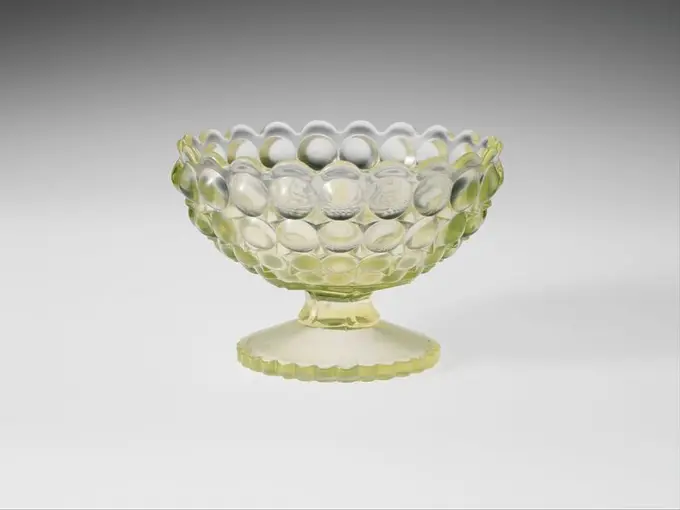
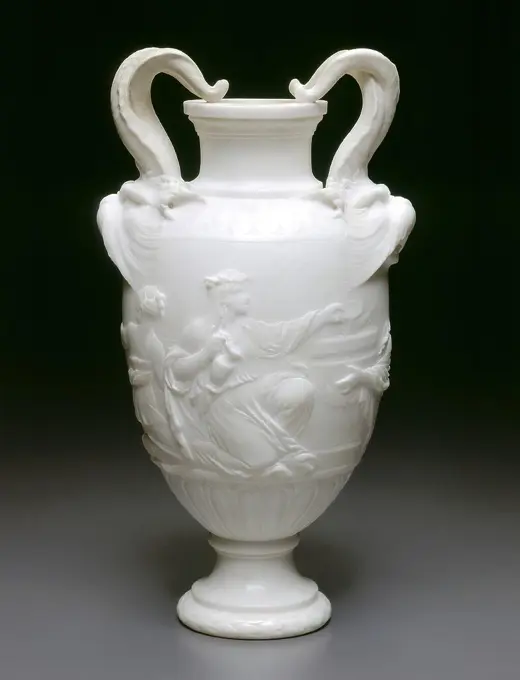
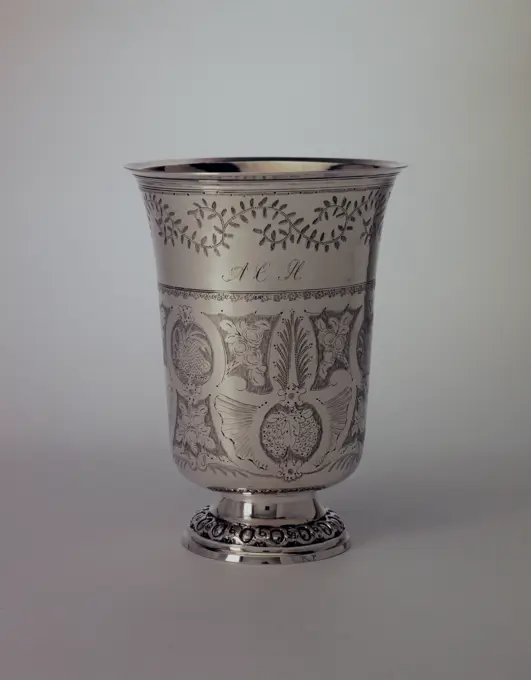
Urn (one of a pair) 1800-1815 Irish. Urn (one of a pair). Irish. 1800-1815. Glass. GlassJar and cover, Henry Chawner, 1764 - 1851, glass, silver, Flattened urn-shaped body on tall faceted flaring foot with scalloped edge;sides of body fluted, a band of diamonds above, above that a band of silverwith slightly everted lip; high domed cover with faceted sides and finial cut with diamonds, notch cut out of rim for spoon., London, England, ca. 1795, glasswares, Decorative Arts, Jar and coverBowl with Hanover Anna coat of arms. Bowl with archer vaulted foot. Faceted ground, baluster-shaped strain. Bell-shaped chalice with a facet cut, massive bottom with an air bubble. On the chalice on a round shield in a cartouche of rolling, and flanked by flower branches. Crowned Hanover Anna weapon (1709-1759), Stadtholder woman Prince Willem IV (1711-1751). On the reverse of the glass the inscription:. Vivat. Princess. VON. Oranien.Lid, crowned with a crown, anonymous, c. 1800 - in or before 1885 Vaulted lid with overhanging edge. The button in the form of a crown with four brackets. England glass glassblowing Vaulted lid with overhanging edge. The button in the form of a crown with four brackets. England glass glassblowingCovered Diamond-Engraved Armorial Marriage Goblet 1695-1714 England. Diamond-engraved lead glass .Ewer (one of a pair) 1740/41 Peter Archambo I British When George Booth became Earl of Warrington at the age of nineteen, he inherited the estate of Dunham Massey, which was heavily burdened by debt. Thirty years elapsed before he could afford to rebuild his family pride by buying silver on a large scale. This pair of monumental ewers (see also 68.141.140) was among the silver that furnished the ten principal bedrooms of the house, all of which were equipped with enough silver to perform the morning ablutions.. Ewer (one of a pair). British, London. 1740/41. Silver. Metalwork-SilverTwo-Handled Cup and Cover 1735-40 Jacob Hurd American Two-handled covered cups, a favored form of presentation silver in England, were rare in colonial America.. Two-Handled Cup and Cover. American. 1735-40. Silver. Made in Boston, Massachusetts, United StatesGoblet. William Gale & Son; American, 1850-58; 1862-66; New York, New York. Date: 1852. Dimensions: 10.2 × 7.6 × 7.6 cm (4 3/4 × 3 × 3 in.). Silver. Origin: New York City. Museum: The Chicago Art Institute, Chicago, USA.Sweetmeat Dish. Germany. Date: 1725-1735. Dimensions: 11 x 11.1 cm (4 5/16 x 4 3/8 in.). Glass. Origin: Germany. Museum: The Chicago Art Institute, Chicago, USA.Jar with Hanover Anna Coat of Arm. Flat foot. Baluster trunk with a bubble. Bell-shaped chalice with solid, rounded bottom in which an air bubble. On the chalice the crowned arm from Hannover.Pair of Chestnut Vases, Company Bennewitz a Zone, 1822 The round vase rests on an octagonal right -wing base. The vaulted, rejuvenating foot has a multiple vaulted bottom edge over which a vertically ribbed band runs, and is closed at the top by a second vertically ribbed band. The smooth, egg -shaped body with lid is decorated along the top edge of the barrel with a loose openwork edge with swans on either side of fountains and volutes with leaves and flowers, which is clamped around the vase. The lid button has the shape of a printed ball on a stylized rosette, on which a swan with spread wings and left to the left is seated. Amsterdam silver (metal) The round vase rests on an octagonal right -wing base. The vaulted, rejuvenating foot has a multiple vaulted bottom edge over which a vertically ribbed band runs, and is closed at the top by a second vertically ribbed band. The smooth, egg -shaped body with lid is decorated along the top edge of the barrel with a loose openwork edge withOlive lamp so called eternal Lekszycki, Marcin (Fl. 1763 1798)Tea urn. Culture: British, London. Dimensions: Height (wt. confirmed): 20 3/4 in., 7.5 lb. (52.7 cm, 3.4 kg). Maker: John Carter II (active 1768-1777). Date: 1773-74. Museum: Metropolitan Museum of Art, New York, USA.Goblet with Cover 1715-1725 Thuringia. Glass .. Kelkglas on vaulted foot on a square base. Short, faceted tribe. Curved chalice with faceted soil. On the chalice the engraved text: to celebrate the 25 year wedding day, Van // Dweder Mr. Barend Glaus and Lady Grietje de Groot. // op den 9 Maij 1791.Punch Bowl ca. 1755 Joseph Richardson Sr.. Punch Bowl 17588Altar vase Löbell, Michael. This wine glass is an example of vessels produced in Germany for the Dutch market. In French this type is known as verre de commande. A print of the manor house of Rupelmonde in Loenen served as the model for the engraving. This print was sent to Silesia, where the image was engraved on the glass. The view is accompanied by typical Silesian scrollwork ornament.Translation of inscription: The Well-being of Rijpelmonde.Cup; Weissbach (glassworks; 1617-1754), Weiberge (glassworks; post 1702-1754), Jeleniogórska Valley (engraving center; Ca 1600-); 1. Exercise of the 18th century (1700-00-00-1725-00-00);Herby, monograms, Silesia (Habsburgs - 1526-1740)Covered goblet. Culture: American. Dimensions: H. 11 1/4 in. (28.6 cm). Maker: New Bremen Glass Manufactory (1784-1795); John Frederick Amelung (active 1784-ca. 1791). Date: 1788.German glassmaker John Frederick Amelung (1741/2-1798) opened a glasshouse in western Maryland in 1787, responding to America's desire for economic independence from Britain and the need to develop domestic manufactures. Within a few years, he was producing a variety of window glass, bottles, and tableware at his New Bremen factory. Some of Amelung's products feature elaborate engraved decoration in the Germanic style. This example is signed by the factory and is the earliest dated example known. Engraved with the arms of Bremen, Germany, and the inscription, "Old Bremen Success and the New Progress / New Bremen Glassmanufactory 1788 / North America State of Maryland," this goblet, or pokal, was found in Germany and may have been presented by Amelung to his German investors as a triumphant toast to his succesCock lid, anonymous, 1860 On the lid an etched and engraved decoration of flowers and leaf vines. Glassblower: Franceamsterdam glass grinding / etching / glassblowing On the lid an etched and engraved decoration of flowers and leaf vines. Glassblower: Franceamsterdam glass grinding / etching / glassblowingCovered Goblet (Pokal) 1713-1720 Germany. Blown and molded glass with engraving and applied medallion .Dish, anonymous, anonymous, c. 1550 - c. 1575 Flat, four -lobed scale of rock crystal in a frame of gold with email. Two Hermen as ears. On the bottom a medallion with Neptune -driving on two dolphins, in matt sharpening. Maker: Milanjeweler: France frame: Gold (Metal). frame: Flat, four -lobed scale of rock crystal in a frame of gold with email. Two Hermen as ears. On the bottom a medallion with Neptune -driving on two dolphins, in matt sharpening. Maker: Milanjeweler: France frame: Gold (Metal). frame:Cup with coverSilversmith's Art, Great Britain 19th century. Repousse silver mug with floral decoration, Victorian style.Wine Glass and Cover 1735-1745 Schleswig. Glass; engraved and gilt decoration .Basin and ewer, Andries Grill, 1649  Silver pouring jug. The wide can has a lobed foot and an ear in the form of a dragon. The Hague silver (metal)  auricular ornament, lobe style ~ ornament. dragon (large fabulous serpent, sometimes with wings and legs). Cup with lid of gold-plated silver, from the chapter of St. Marie in Utrecht. A caperity crown on the lid. Decorated with acanthus leaf and pearl edges.Cup with coverCompote c 1830-1835 United States. Glass . Artist unknownCaster.   Maker: Benjamin Greene, American, 1713-1776Saltcellar 1780-1825 American, possibly. Saltcellar 6983Decanter ca. 1826-35 Bakewell, Page & Bakewell One of a pair (its mate is in the Philadelphia Museum of Art), this decanter features elaborate cut decoration. It is distinguished by a sulphide portrait of Benjamin Franklin on the front. A difficult technique developed in Europe, a high-fired ceramic material is embedded into a bubble of glass, which is then deflated so the image is surrounded by glass. Highly fashionable in France, sulphide portrait decoration was first produced in America by the Pittsburgh firm Bakewell, Page, and Bakewell in 1825 in an effort to compete with European glass manufacturers. The Museum has two glass tumblers with sulphide portraits embedded in their bases, one depicting George Washington (1984.152), the other Lafayette (47.44).. Decanter 14972Goblet early 19th century Irish. Goblet. Irish. early 19th century. Glass. GlassNautilus-Shell Cup 1600-1700 Augsburg. During the Age of Discovery, European artists were inspired by the exotic materials suddenly available to them. Goldsmiths seized on the opportunity to include wondrous and seemingly magical materialsóincluding coconuts (see the Coconut Cup), ivory, ostrich eggs, and, in this case, a nautilus shell from the Indian Oceanóinto works of art that celebrated both nature and artifice. These types of object were also popular with collectors during the 19th century, when the mounts on this cup were reworked.. Nautilus-shell cup and silver gilt .Sauceboat (one of a pair) 1717/18 Paul de Lamerie British. Sauceboat (one of a pair). British, London. 1717/18. Silver. Metalwork-SilverBowl with cover. Culture: possibly British. Dimensions: 5 1/2 × 4 3/4 in. (14 × 12.1 cm). Date: late 18th century. Museum: Metropolitan Museum of Art, New York, USA.Three candlesticks, Willem Brugman, 1652 candlestick Silver candlestick. The round, lobed foot, is decorated with driven lobe ornaments. The alliance weapon with the wedding button by Gerard Meerman and Agneta Deutz is on the foot. Amsterdam silver (metal)  auricular ornament, lobe style ~ ornamentSauce Tureen and Cover from the Hood Service 1807-1808 England. Sterling silver . Paul StorrFooted Bowl 1850-70 American With the development of new formulas and techniques, glass-pressing technology had improved markedly by the late 1840s. By this time, pressed tablewares were being produced in large matching sets and innumerable forms. During the mid-1850s, colorless glass and simple geometric patterns dominated. Catering to the demand for moderately-priced dining wares, the glass industry in the United States expanded widely, and numerous factories supplied less expensive pressed glassware to the growing market. At the Exhibition of the Industry of All Nations at New Yorks Crystal Palace in 1853, for example, the New England Glass Company exhibited 130 pieces of one design, "consisting of bowls, tumblers, champagnes, wines, and jelly glasses." This object belongs to one such service. Although the glass manufactory is not known, the glassware is very typical of the large services that were very popular with Americas middle class in the nineteenth century.. Footed Bowl. AmPatery base; Gedlitzka & Söhne (Vienna after 1900 (1900-00-00-0-00-00);Flowers, secession (style), purchase (provenance)Silversmith: Anthony Huijs, Silver, openwork mustard pot with blue glass inner box, decorated with flowers and with two handles, mustard pot pottery holder silver glass, sawn engraved cast Cup shaped body on four legs hinged flat arched lid notch in outer ring lid for spoon flower stem as button two volute shaped ears with pearl rim serve blue glass inner box bottom (debossed) HuysSalt cellar, 1728-1729, Paul de Lamerie, English, (born Holland), 1688-1751, 2 3/16 x 3 1/2 x 3 1/2 in. (5.56 x 8.89 x 8.89 cm), Silver, gilt, England, 18th centuryRoemer with the inscription: Beding your lusts, anonymous, c. 1650 - c. 1700 Insented soul, high, trumpet-shaped base, made up of a spun thread. Short, from above open trunk, occupied with two rows of brambles. Wide, scale -shaped chalice, that of the trunk is separated by a pinched wire. On the chalice, 'control your lusts' in Roman letters. glassblower: Low CountriesNorthern Netherlands glass glassblowing Insented soul, high, trumpet-shaped base, made up of a spun thread. Short, from above open trunk, occupied with two rows of brambles. Wide, scale -shaped chalice, that of the trunk is separated by a pinched wire. On the chalice, 'control your lusts' in Roman letters. glassblower: Low CountriesNorthern Netherlands glass glassblowingStem Cup 18th century Okuda Eisen Japanese. Stem Cup 63796Three candlesticks, Willem Brugman, 1652 candlestick Silver candlestick. The round, lobed foot, is decorated with driven lobe ornaments. The alliance weapon with the wedding button by Gerard Meerman and Agneta Deutz is on the foot. Amsterdam silver (metal)  auricular ornament, lobe style ~ ornamentCovered Sugar Bowl 1820-40 American. Covered Sugar Bowl 2481Bowl.  Maker: Richard Van Dyck, American, 1717-1770Galvanoplastic reproduction of a jar with lid awarded by a melon. Galvanoplastic reproduction of a jar with two handles lid. Around the base runs with a bond with Acanthus sheet. Similar ornament is applied to the lid, which is crowned by a melon.Silversmith's art, France, 17th century. Silver-gilt water ewer and basin.Hot water urn (part of a service) 1809-19 Marc Jacquart This tea and coffee service (38.12.1-.5) is distinguished both by the enormous scale of its pieces and the high quality of the cast and applied decoration. While its sugar bowl is missing, the service is an unusually grand survivor of silver from the Napoleonic period. The mother-of-pearl handles add to the impression of luxury but also serve a functional purpose, as they do not conduct the heat generated by the hot liquids that the vessels contained.. Hot water urn (part of a service) 198023Egg Cup 1830-70 American With the development of new formulas and techniques, glass-pressing technology had improved markedly by the late 1840s. By this time, pressed tablewares were being produced in large matching sets and innumerable forms. During the mid-1850s, colorless glass and simple geometric patterns dominated. Catering to the demand for moderately-priced dining wares, the glass industry in the United States expanded widely, and numerous factories supplied less expensive pressed glassware to the growing market. At the Exhibition of the Industry of All Nations at New Yorks Crystal Palace in 1853, for example, the New England Glass Company exhibited 130 pieces of one design, "consisting of bowls, tumblers, champagnes, wines, and jelly glasses." This object belongs to one such service. Although the glass manufactory is not known, the glassware is very typical of the large services that were very popular with Americas middle class in the nineteenth century.. Egg Cup 3506Sauceboat with stand (one of a pair) French 19th centuryTobacco box, Johannes Schiotling, 1776 The round pot has a loose lid. He rejuvenates somewhat and is closed at the top by a widened, straight edge. Along the bottom edge, a cast, openwork, wavy edge of C and S-Voluten and Rocailles runs, interrupted by the three legs in the form of imposed, cast leaf fillets. The wall is scanned and decorated with a driven, ribbon -bound pendulum of bay leaves and berries, which is hung on a ring above each leg. The lid is made up of a layer, convex, fluted part and a concave, high rising middle part with a driven decoration of three layers of rays -raid bay leaves and a flat top. This rests a bladderkelk, from which a bouquet of cast flowers rises, which serves as a button. Amsterdam silver (metal) The round pot has a loose lid. He rejuvenates somewhat and is closed at the top by a widened, straight edge. Along the bottom edge, a cast, openwork, wavy edge of C and S-Voluten and Rocailles runs, interrupted by the three legs in the form of imposed, castStemmed Filigrana Wineglass (Tazza). UnknownEgg cup 1725-26 Aymé (Edme) Joubert. Egg cup 200282Jar And Cover; glassTea urn and base, Silver, (a) Ovid body with fluting at top and bottom. Beaded vertical scroll handles fastened to body with twin leaves and berries. Fluted and foliated spigot with bone handle. Engraved coat of arms: Parter per fess, gules, two mullets and sun in its splendor; azure, a citadel with two towers; impaled with argent, a chevron azure, three holly leaves slipped, vertical. (b) High, concave cover, with bulging fluted top and flame finial., London, England, 1770-71, metalwork, Decorative Arts, Tea urn and baseJames Young, Soup Tureen and Cover, 1784/85, silver.Vase. Maker, possibly by: Redford Crown Glass Works, American, 1830-1854Vase with panels and handles in the shape of swans, anonymous, c. 1800 - c. 1810 vase Vase of porcelain on high, spreading foot with a square pedestal underneath, painted in gold. On the wall twice a golden compartment with a landscape with a dog and sheep or a boy with a swan. In between draperies on which musical instruments are on top of hands and smoking urns. On the neck a kind of coat of arms with a star surrounded by a flower livel and two pigeons and one with a rosette flanked by plants -filled horns. Gold tires on the foot, shoulder and neck. The two ears are in the form of gilded swans. France porcelain. glaze. gold (metal) painting / gilding / vitrificationCelery Vase 1870-90 Adams and Company. Celery Vase. American. 1870-90. Pressed yellow glass. Made in Pittsburgh, Pennsylvania, United StatesIce Urn, Goblets, and SlopBowl. Manufacturer: Meriden Britannia Company, American, 1852-1898Honorand: Lucius A. Barbour, American, 1846-1922Patron: First Regiment, Connecticut National GuardJar with funnel -shaped chalice with vertical, slightly twisted optically blown ribs, anonymous, c. 1600 - c. 1650 Flat base with turned around. The trunk made up of two, hollow, ribbed balusters, connected by a blue stick and triangles of wire on which six blue burrs. Funnel -shaped chalice with vertical, slightly twisted optically blown ribs. Low Countries glass glassblowing Flat base with turned around. The trunk made up of two, hollow, ribbed balusters, connected by a blue stick and triangles of wire on which six blue burrs. Funnel -shaped chalice with vertical, slightly twisted optically blown ribs. Low Countries glass glassblowingGlass tureen YouthfulnessSugar Bowl ca. 1800 Joseph Lownes. Sugar Bowl 8025Jar ca. 1820-30 Irish. Jar. Irish. ca. 1820-30. Glass. GlassBowl -. A large (A) and two small (B and C) oval terrines in Louis XVI style decorated with driven cannelures, garlands wrapped with ribbons, appliqued festans and pearl edges. Each terrine has a lid with button and stands on four legs. All terrines labeled under soil: Middelburg; annual letter K - 1773; Mt. P above prie = philippus prié; Crowned o = release sign; Bijl = tax fee. Terrine BK-1995-14-B is engraved by N: 1 on the inside. Note: All Terrines have an inner box.Monteith, 1705-1706, John Leach, English (London), English, active 1682-c. 1710, 9 1/2 in., 191.8lb. (24.1cm, 87kg), Silver, England, 18th centuryVase; Pałowy Kiev-Miegor region Manufaktura Fajansu (Ceramics Factory; 1798-1917); around 1820 (1815-00-00-1825-00-00);Trading of the Schuttersgilde. Bagic of Silver from the captains of the Schuttersgilde to lead from the 1910-1712. Around the chalice, in addition to the townswae and captured by lions, imposed their coats of arms, imposed and supplied: Jan des Tomb, Cornelis van der Meer, Johan Meerman, Daniel van de Velde, Frans van Kerkehem, Gerard de Bye, Cornelis van Banchem, Nicolaas Teeding of Berkhout. The cheries bottom is caught in a roset edge and acanthus leaves. To the lid, awarded by a leaf button: knerbands, tire and leafwork and weapent trophies. The base surrounded by a knerr edge is high-roughing in the middle and wears a belt work decoration with clots. On the vase-shaped nodus leaf and knock motifs on a grid.Paterka a Urla; Mappin & webb LTD (company Z Otnicz, Platernicza, seller; Fl. 1859-); 1903/04 (1903-00-00-1904-00-00);Silversmith's Art, Great Britain 19th century. Silver coffepot with pot-shaped stand and burner.Sauskom of silver, oval, on four raised legs. Filet edges along the scalloped top., Hendrik Swierinck, 1745 Oval sauce bowl of silver, on four rolled legs. Filetrand along the scalloped upper edge. Possibly a imitation. Amsterdam silver (metal) Oval sauce bowl of silver, on four rolled legs. Filetrand along the scalloped upper edge. Possibly a imitation. Amsterdam silver (metal)Pair of candlesticks. These candlesticks with acanthus leaves, medallions and festoons were inspired by a design by Paris artist Jean François Forty that was published around 1780. This type of short candlestick was probably intended for a dressing or gaming table.Bridal Cup, c. 1600. Germany, Nuremburg(), 17th century. Silver; overall: 27.4 cm (10 13/16 in.); container: 14 cm (5 1/2 in.).SugarBowl.   Maker: Boardman and Company, American, 1825-27Milk Pot. Bancroft Woodcock; American, 1732-1817; Wilmington, Delaware. Date: 1785-1794. Dimensions: 17.2 × 6.4 × 6.4 cm (6 3/4 × 2 1/2 × 2 1/2 in.). Silver. Origin: Wilmington. Museum: The Chicago Art Institute, Chicago, USA.Purple marble glass covered bowl 1870-90 Challinor, Taylor and Company. Purple marble glass covered bowl. American. 1870-90. Pressed purple marble glass. Made in Tarentum, Pennsylvania, United StatesCup; Venice (Occasional Szklarski; Ca 1000-), Netherlands; 2. PO. 16th century - 1. PO. XVII century (1550-00-00-1650-00-00);Beaker with cover ca. 1730 Bohemian. Beaker with cover 195918Candlestick (England); silverTwo-handled Bowl 1700-1710 Cornelius Kierstede American Derived from Dutch, Scandinavian, and English sources, brandywine bowls were used on festive occasions such as the kindermaal, when women gathered to welcome a newborn child. Following Dutch custom, a bowl would be filled with raisins and brandy and passed from guest to guest. Here, boldly chased tulips create a sumptuous effect. The bowl belonged to Theunis Jacobsen Quick, a wealthy baker, and his wife, Vroutje Janse Haring. Listen to experts illuminate this artwork's story Listen Play or pause #4516. Two-handled Bowl Supported by Bloomberg Philanthropies We're sorry, the transcript for this audio track is not available at this time. We are working to make it available as soon as possible.. Two-handled Bowl 802Butter dish - Canadian Flange pattern Burlington Glass Works Burlington Glass WorksJarro de Pico late 16th century Possibly by Hernando Solis A luxury utensil of near-mythic status, the jarro de pico was the quintessential domestic object of the so-called golden age of Hispanic silver. These ornately beaked ewers, intended for hand washing at the tables of the wealthy, typically meld elements of Renaissance style with the geometrically conceived forms of the Philip IIand Philip III periods, or the last half of the sixteenth and early part of the seventeenth century. In the jarro de pico the austerity of the ewers turned body is offset by the powerfully modeled detail on the spout, which is often reminiscent of the grotesque designs popular in Renaissance Italy. The sculptural vigor of this ewers spout, in theform of a bearded man with a foliate crown and pointed animals ears, contrasts with the sleekly functional, almost ergonomic form of the flamboyant handle, which features a spiky curve at its base and an unusually prominent thumb scroll that extends its heightCovered bowl with salver, 1716-1717, James Fraillon, English (London), English, active c. 1711-1727, 5 1/4 x 7 1/8 x 7 1/8 in. (13.34 x 18.1 x 18.1 cm), Silver, gilt, England, 18th centuryCup ". Silver. China, Tang dynasty. Paris, Cernuschi museum. 72687-28 Money, Asian art, cut, cup, tang dynasty, etndard, footSugar caster 1709-10 David André. Sugar caster. French, Paris. 1709-10. Silver. Metalwork-SilverChrysanthemum, Tiffany & Company, American, established 1853, Silver, Squat globular form engraved with foliate monogram 'RMA', with reeding, wavy rim, two squared, curved horizontal handles with foliate decoration; base with four foliate feet; domed and reeded lid with flower bud knop., New York, New York, USA, ca. 1893, metalwork, Decorative Arts, Sugar bowl and lid, Sugar bowl and lidRobert Hennell I and David Hennell II, Sugar Basket, 1795/96, silver.Tazza (footed dish). Everything on earth is transitory. This seems to be the almost ironic message conveyed by this costly object. The person taking the first sip from this tazza sees a couple entwined in an amorous embrace emerging from the wine. When the dish is drained, the merry drinker looks into the inside of a human skull.Sauce Dish. Culture: American. Dimensions: H. 2 5/8 in. (6.7 cm); Diam. 4 in. (10.2 cm). Maker: Richards and Hartley Flint Glass Co. (ca. 1870-1890). Date: ca. 1888. Museum: Metropolitan Museum of Art, New York, USA.Fluid lamp ca. 1855-75 Boston & Sandwich Glass Company. Fluid lamp 20770Vase. Clodion (Claude Michel); French, 1738-1814. Date: 1766. Dimensions: 36.4 × 19.9 cm (14 5/16 × 7 13/16 in.). Marble. Origin: France. Museum: The Chicago Art Institute, USA.Wine Cup with Cupids Holding Garlands; 50-25 B.C; Silver; 13 × 19.4 × 11.6 cm (5 1,8 × 7 5,8 × 4 9,16 in.)Louis-Jacques Berger. "Cup". Money. 1807-1819. Museum of Fine Arts of the City of Paris, Petit Palais. 74381-18 Money, silverware, gobletInkstand withcandlestick.   Maker: Obadiah Rich, American, 1809-1888Designer Possible designer: Horatio Greenough, American, 1805-1852Wig stand, Porcelain, Bulbous wig stand on a baluster stem and wide, hemispherical base. Stem painted with hanging tassels., China, 17th century, ceramics, Decorative Arts, Wig standSugar Bowl 1827 Harvey Lewis. Sugar Bowl 2521