Elegant Glassware and Vases

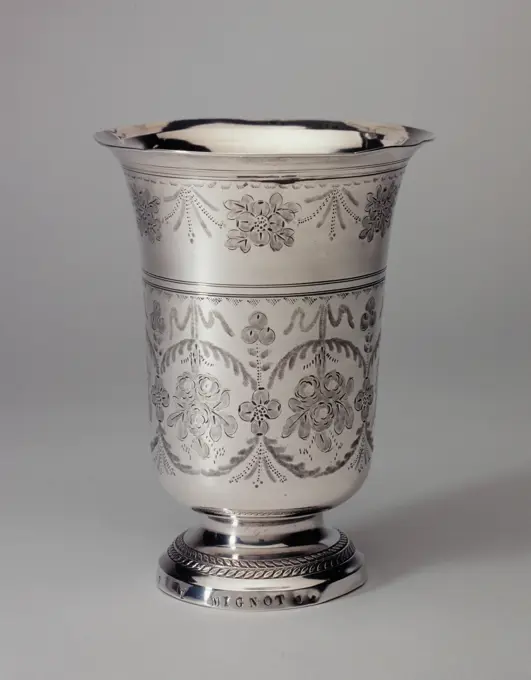
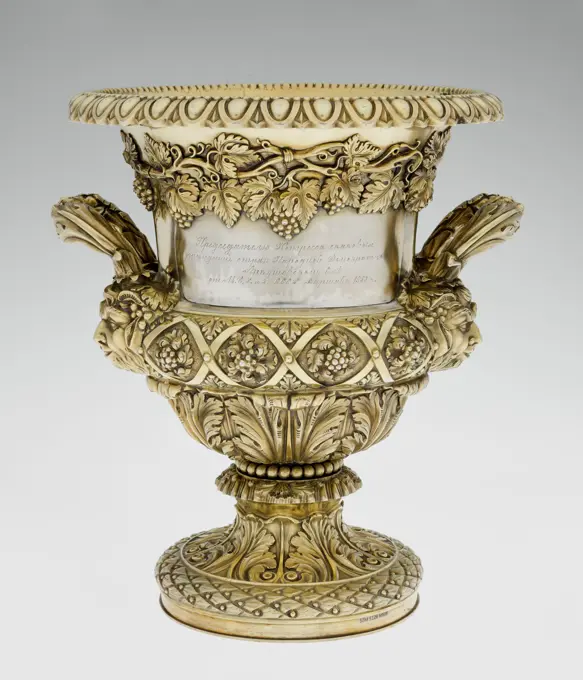
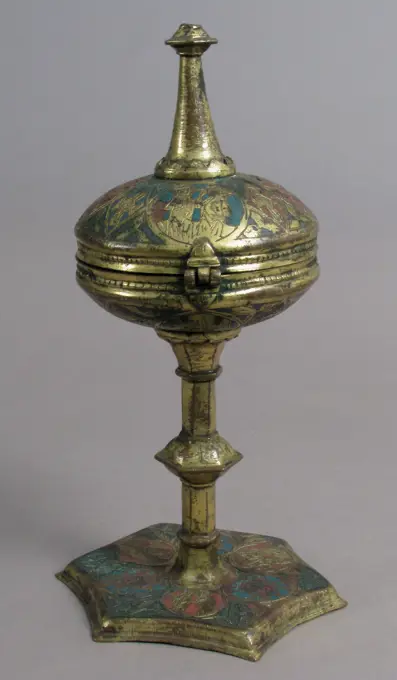
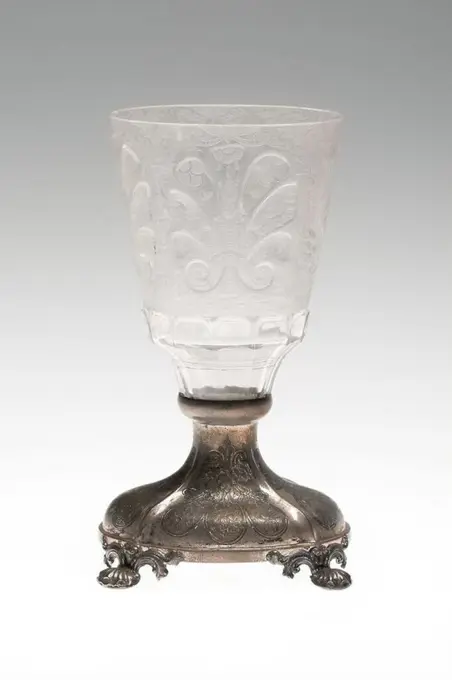
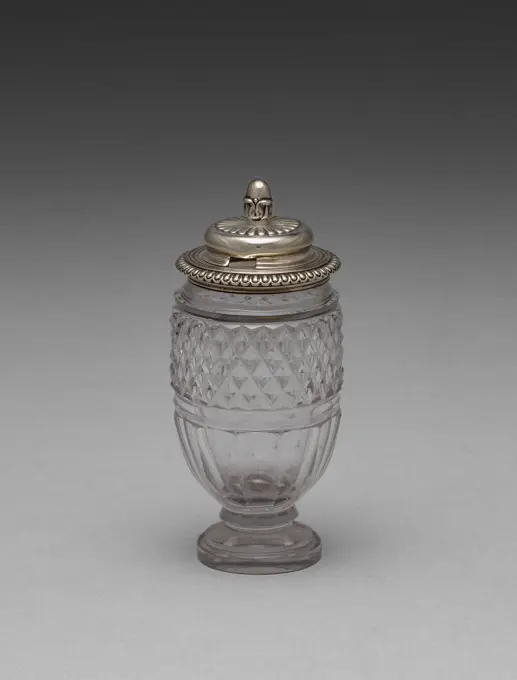
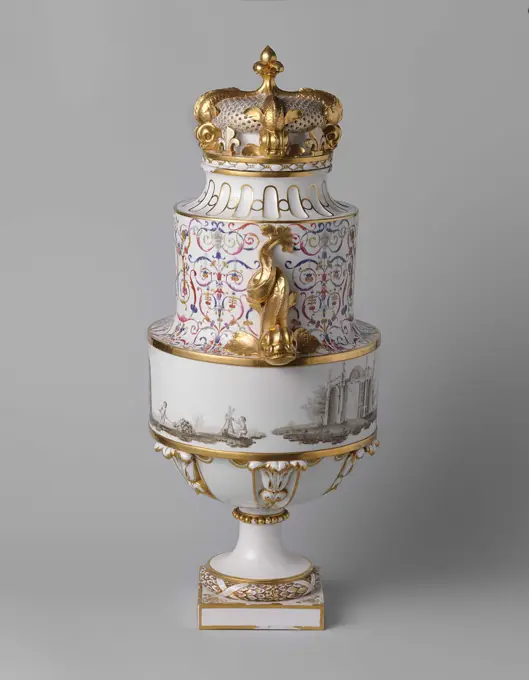
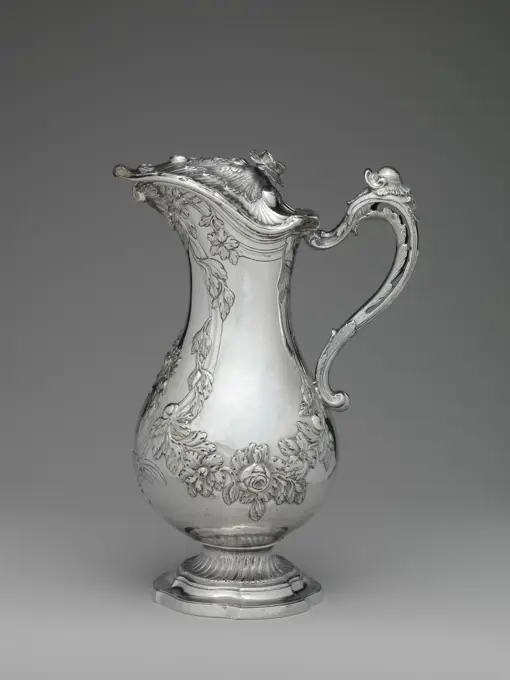
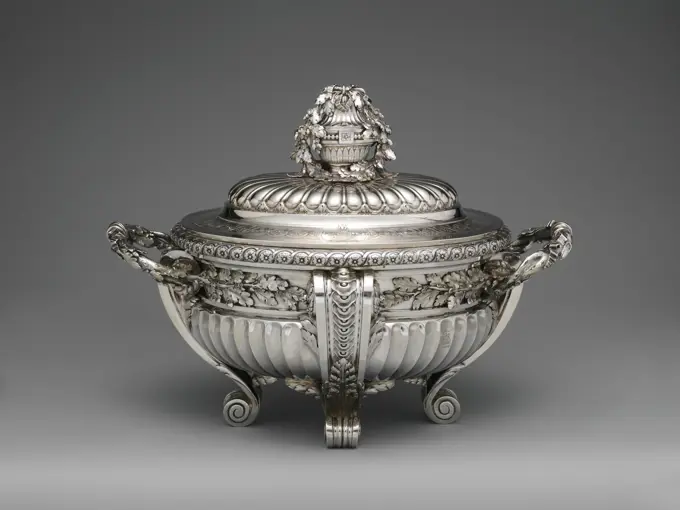
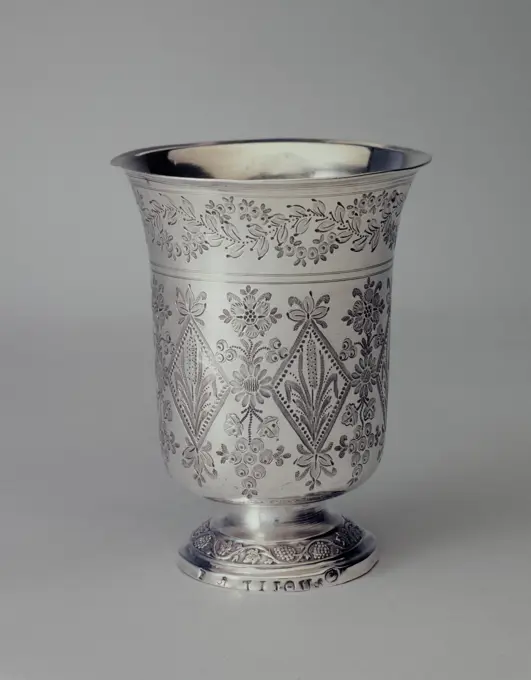
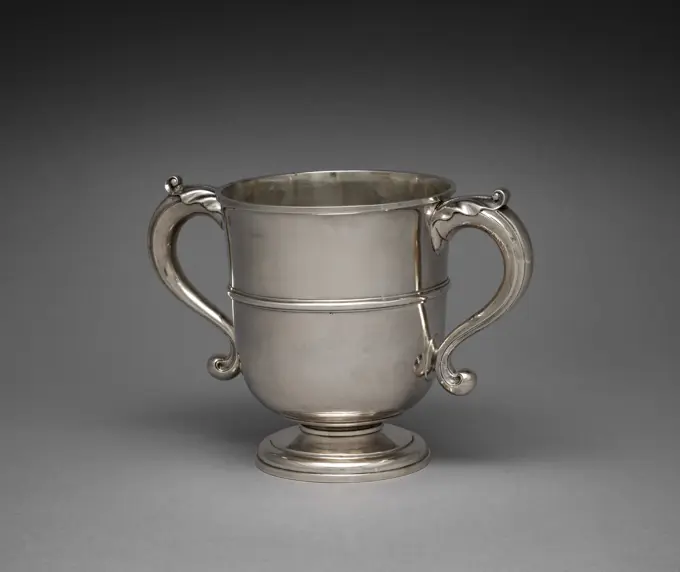
Intricate glass pieces with decorative frames and lids; adorned with ornate details, showcasing craftsmanship and historical designs.

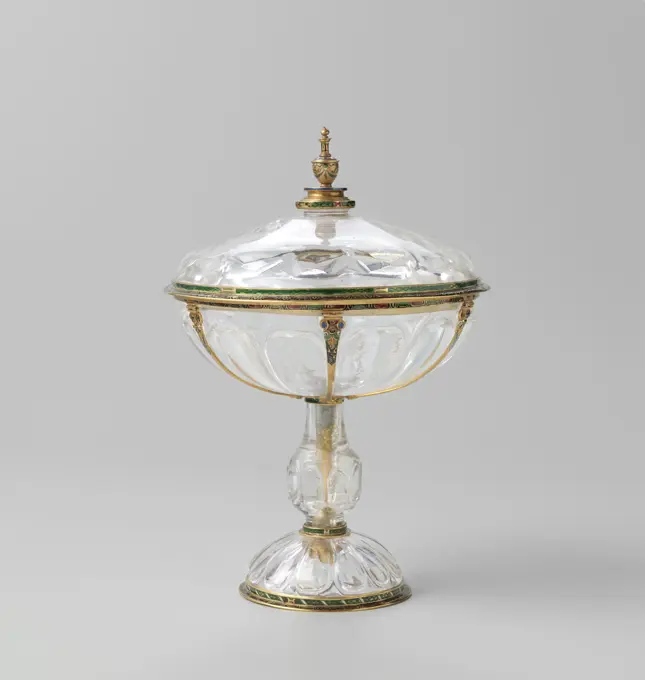
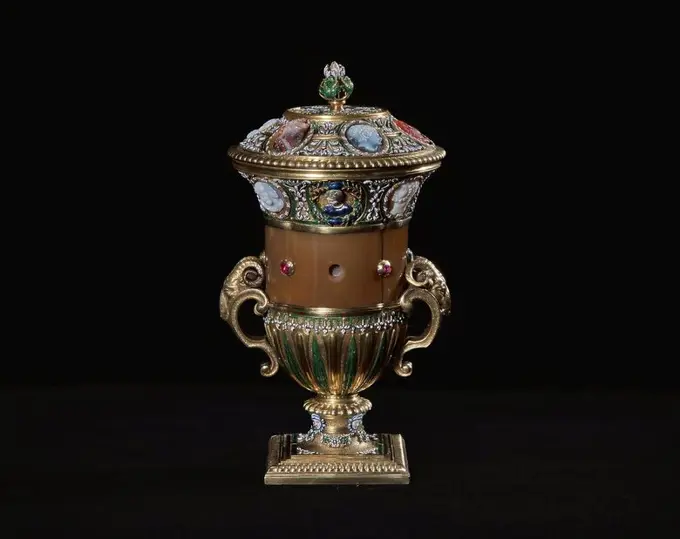
Goldsmith's art, Italy, 15th century. Grey jasper with ochre spots gold-mounted cup with cover. Height 18.7 cm. Signed LAV.R.MED.
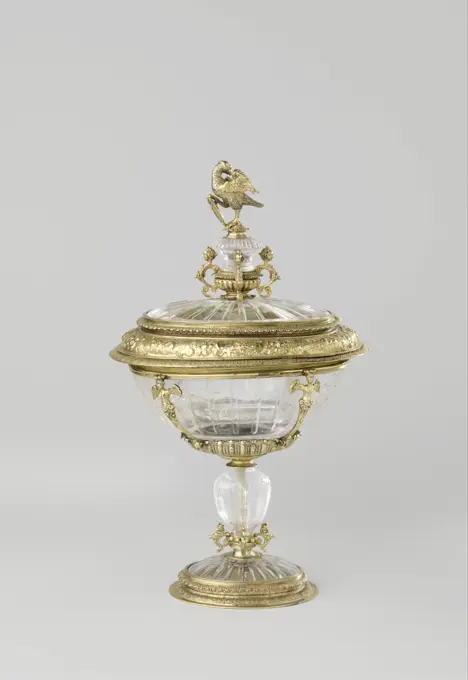
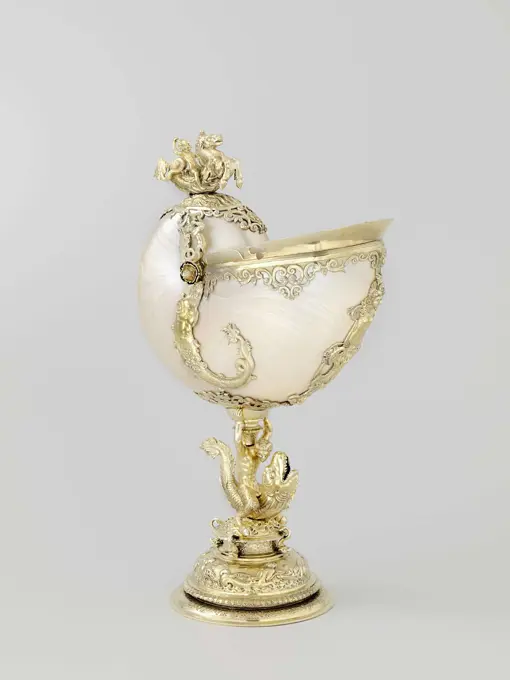
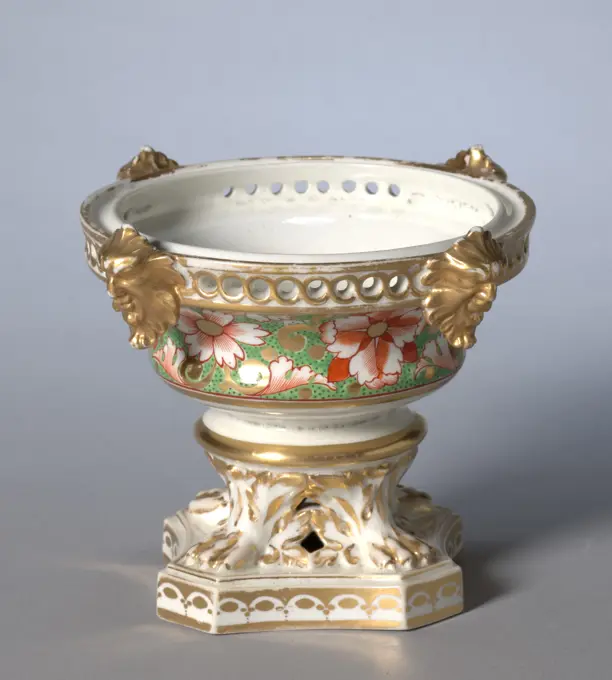
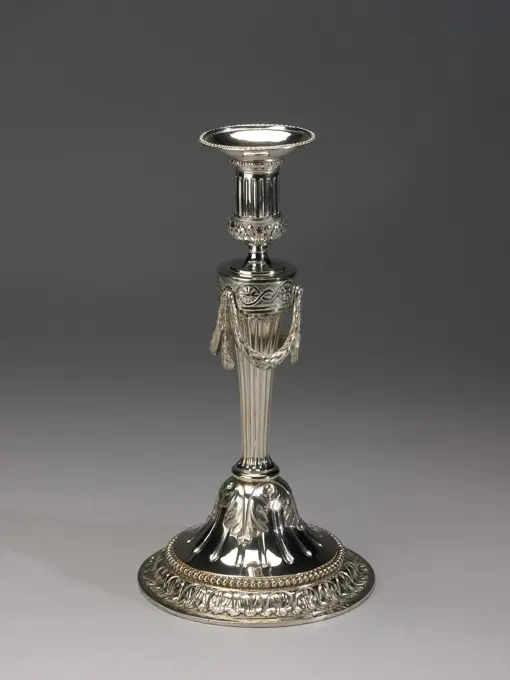
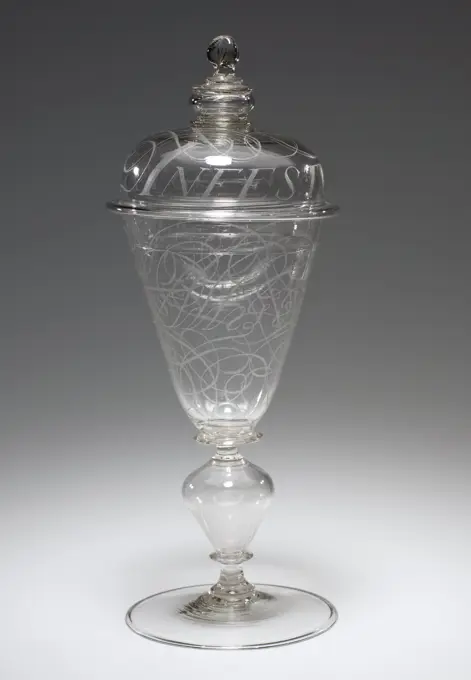
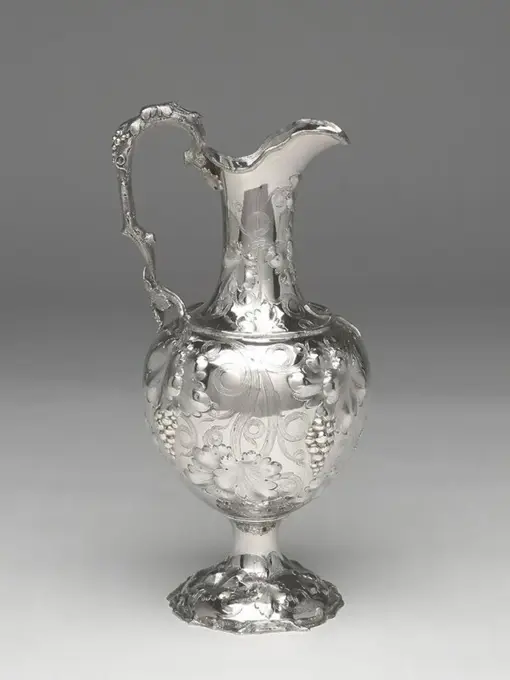
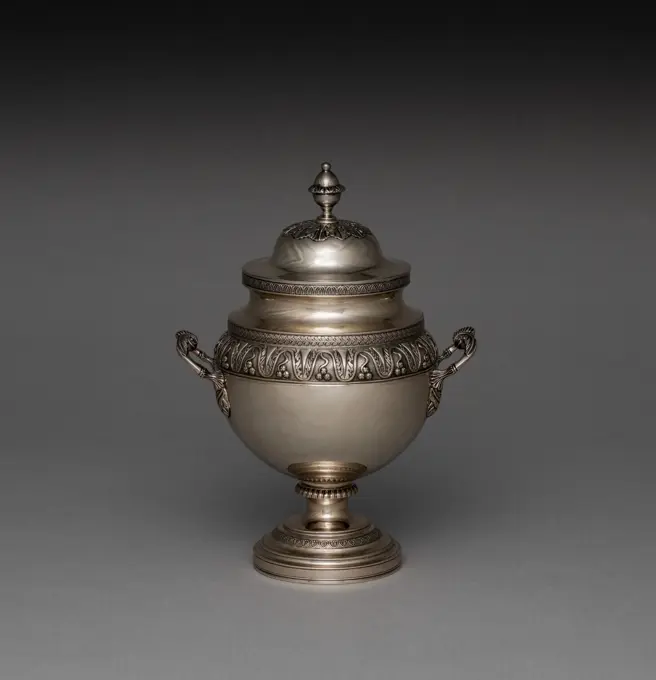
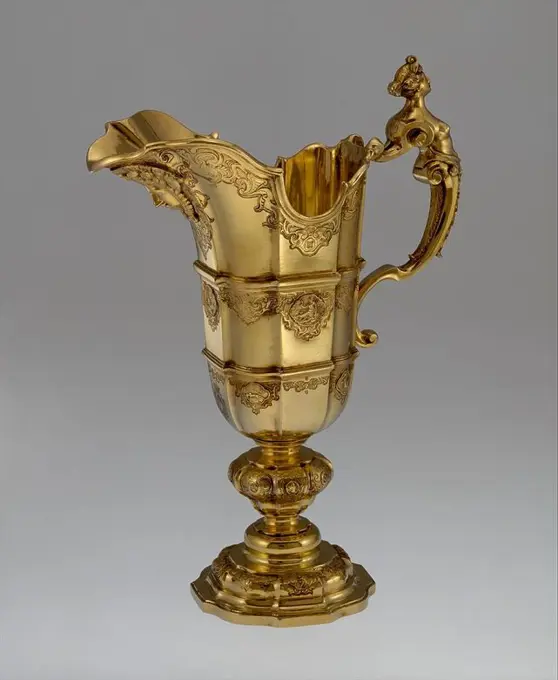
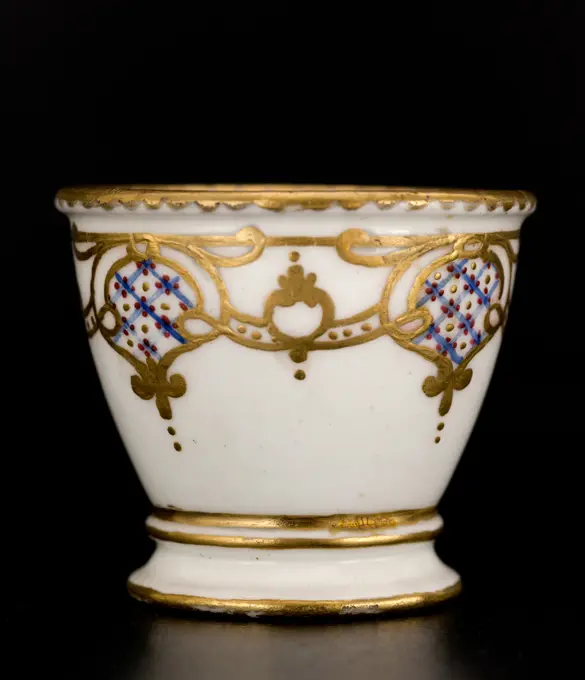
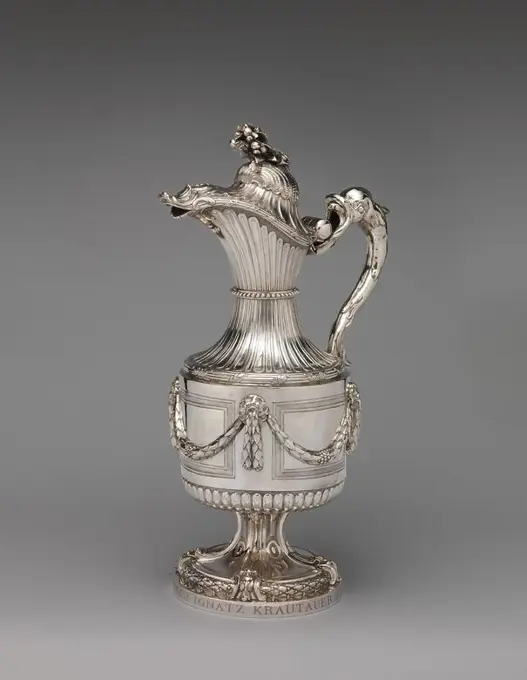
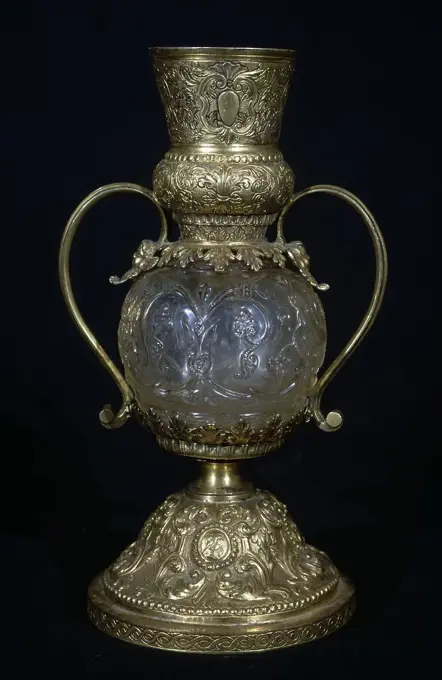
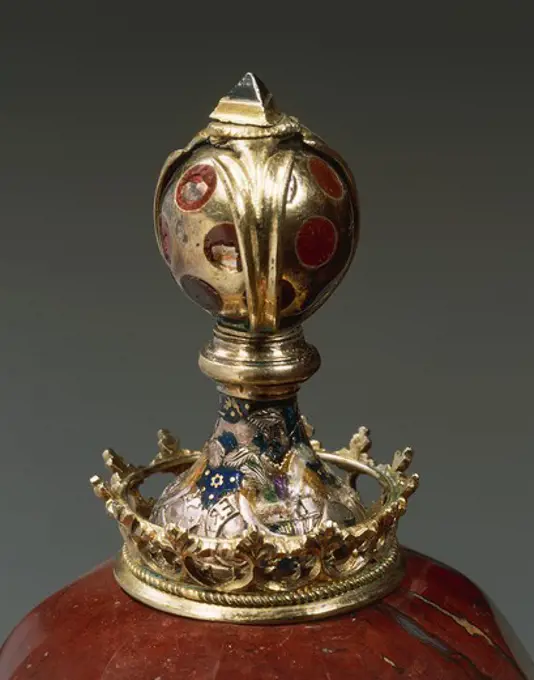
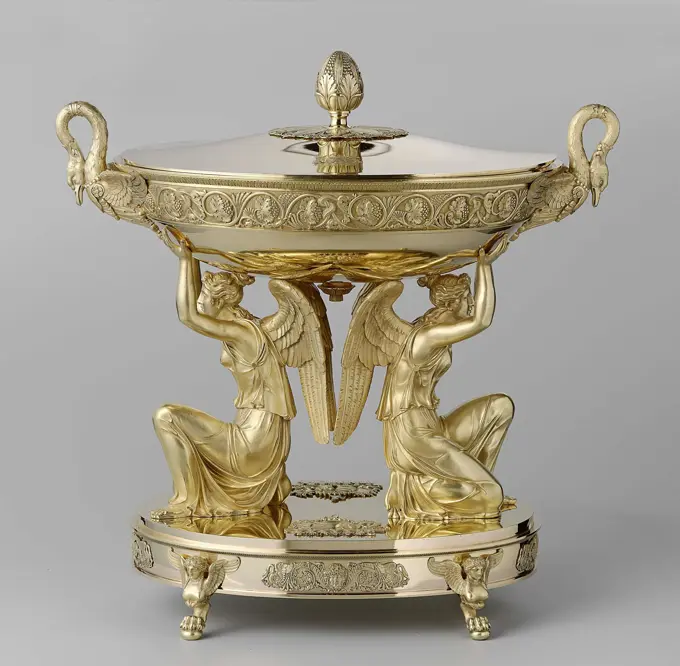
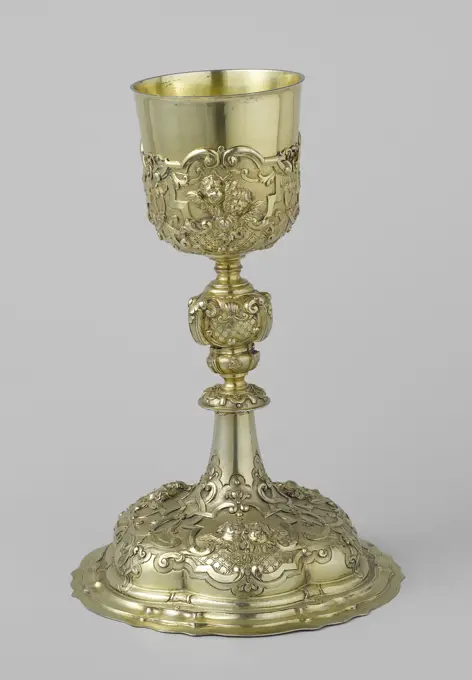
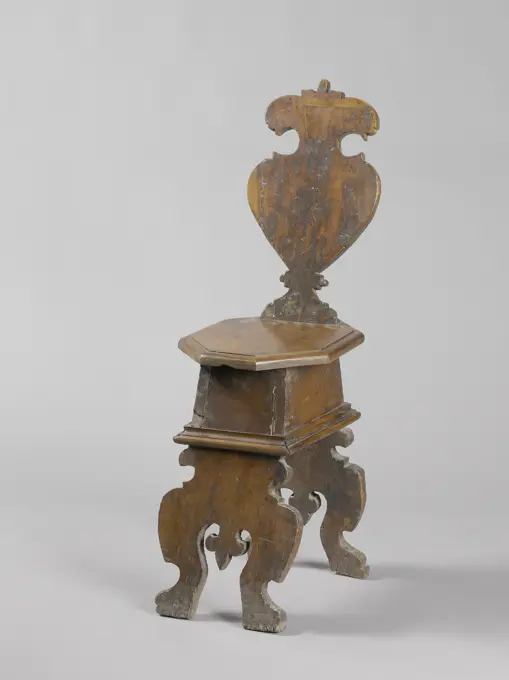
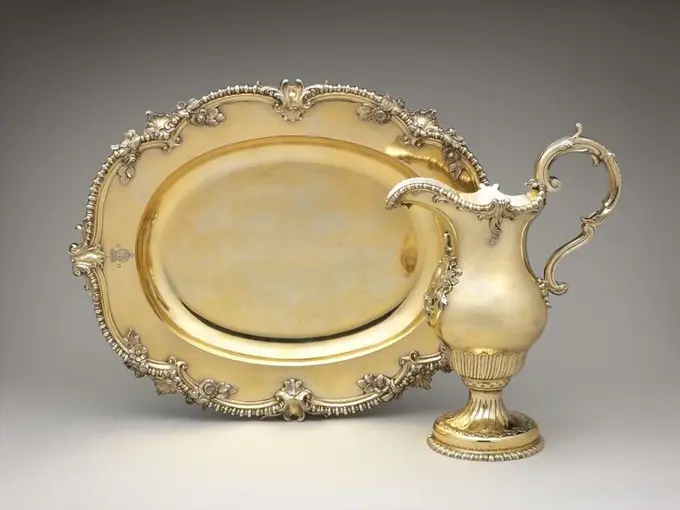
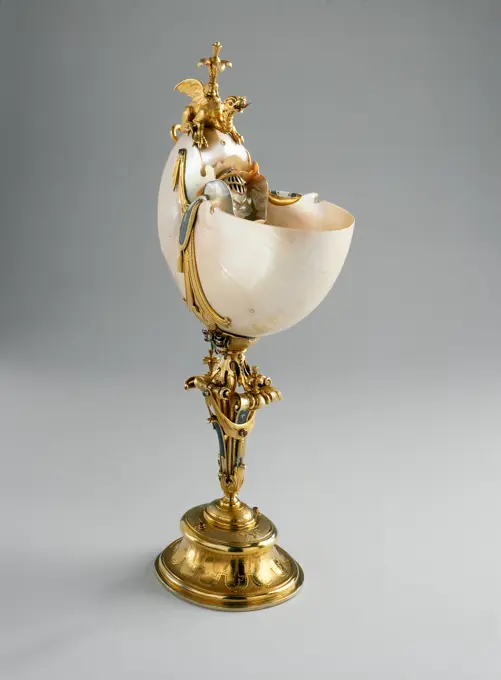
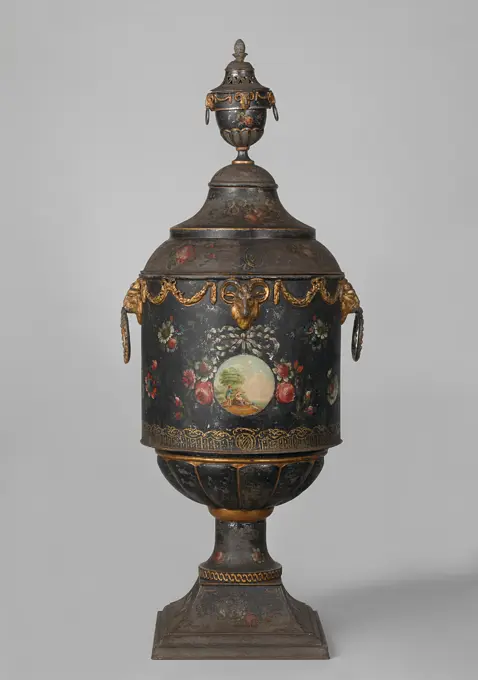
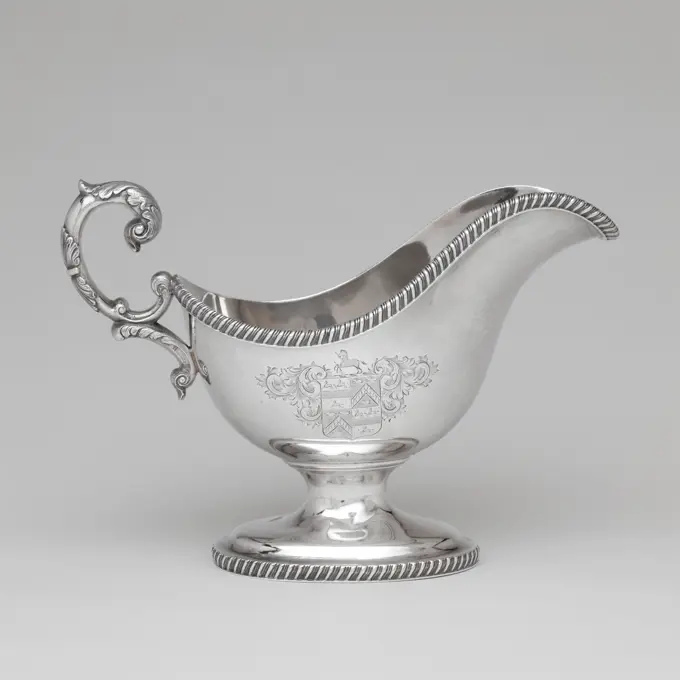
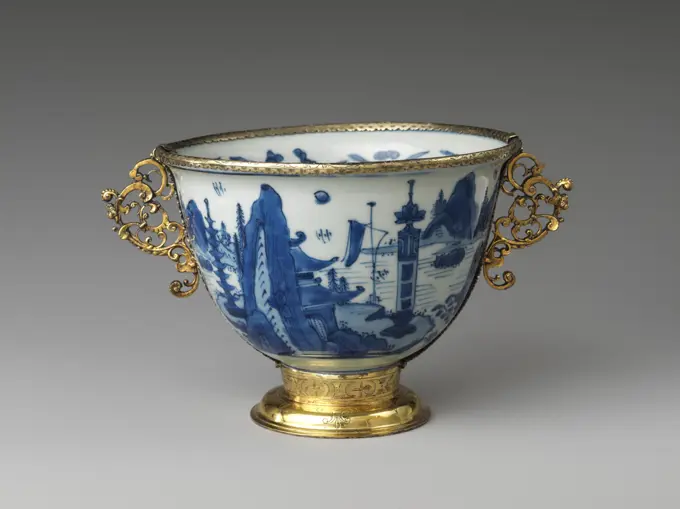
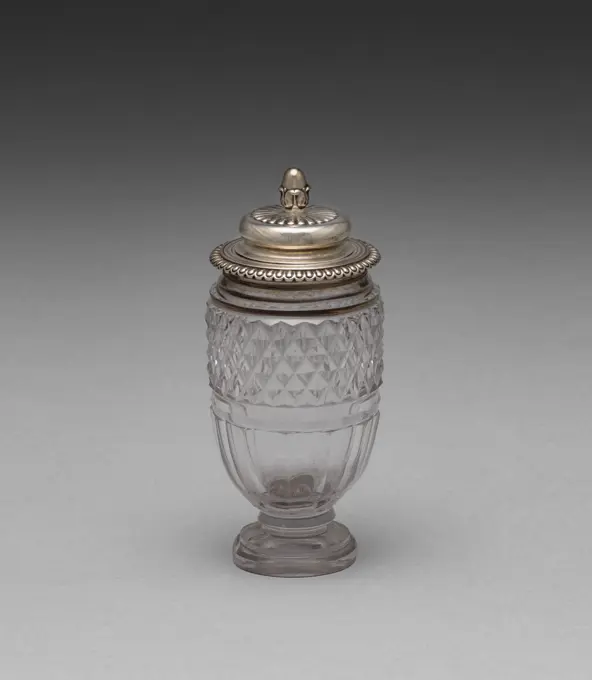
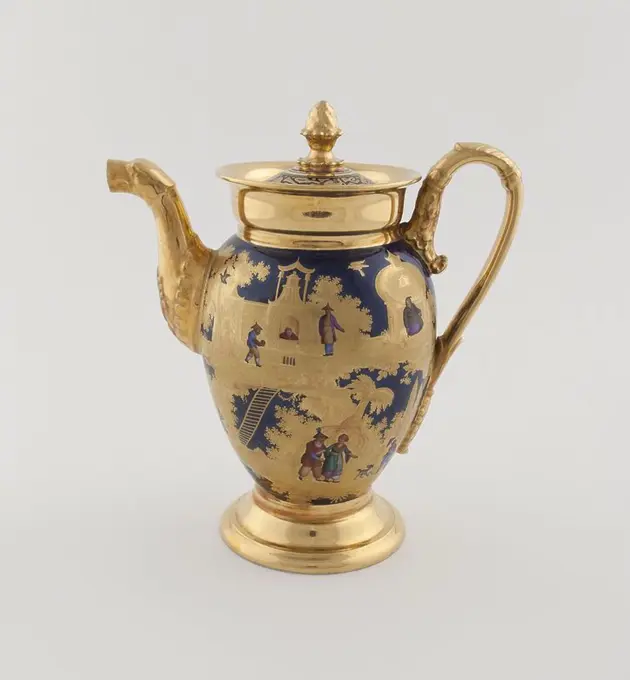
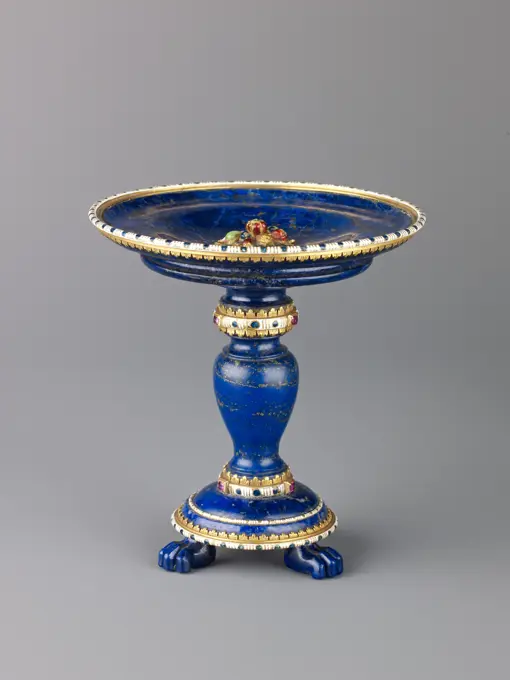
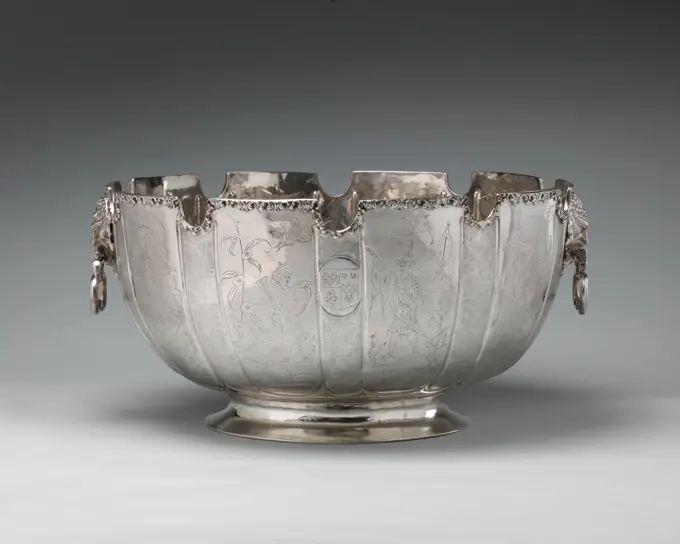
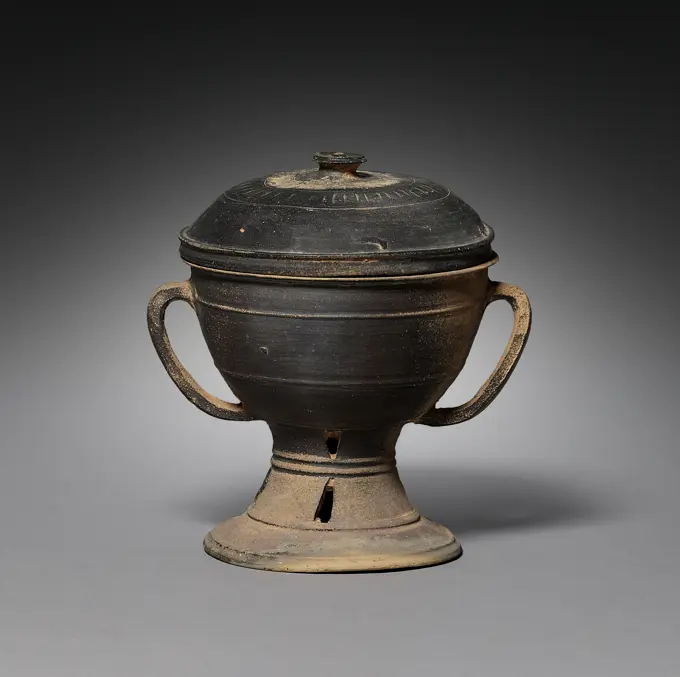
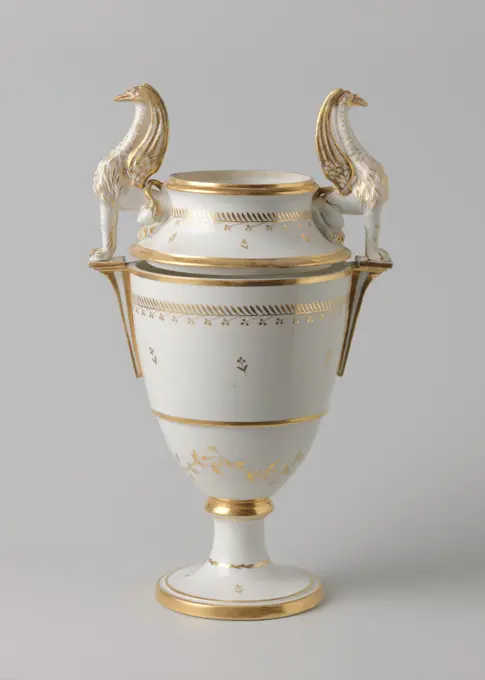
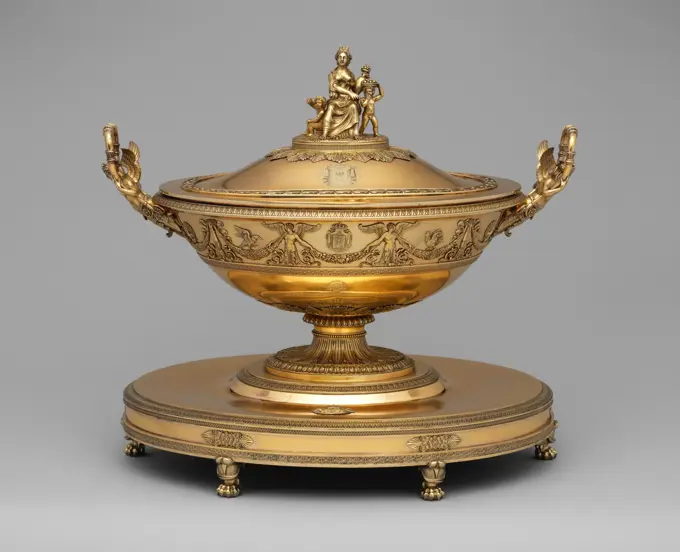
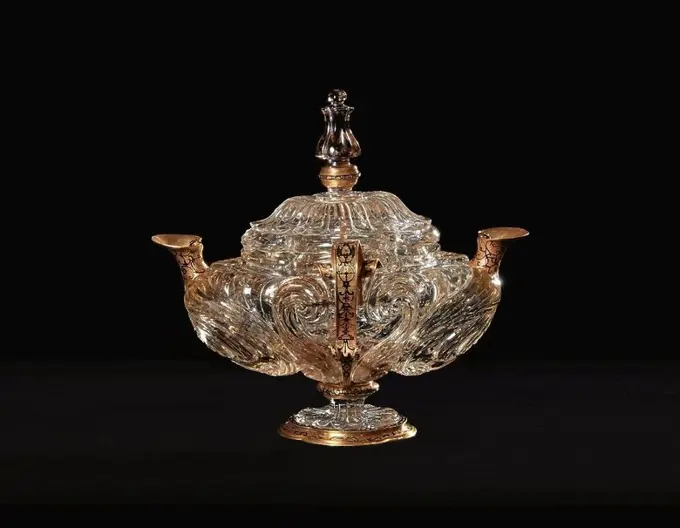
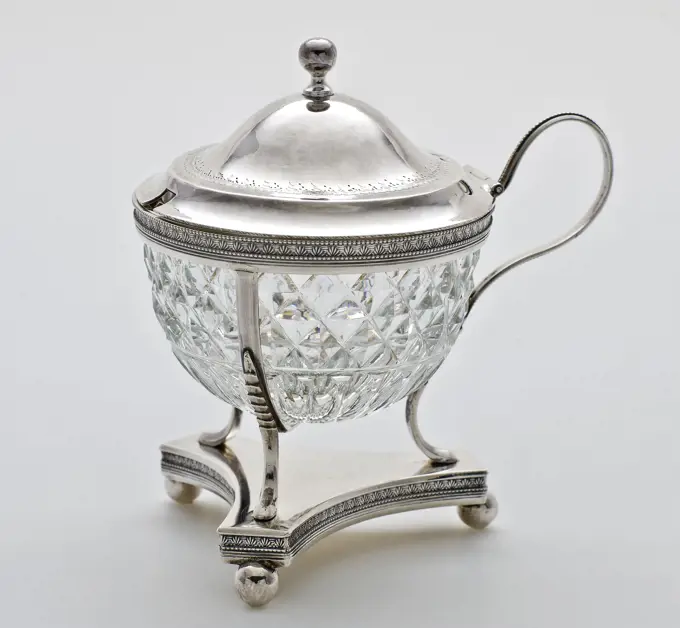
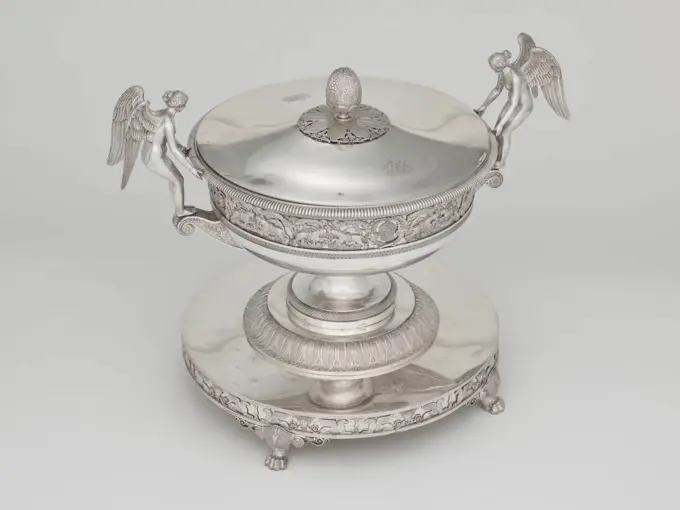
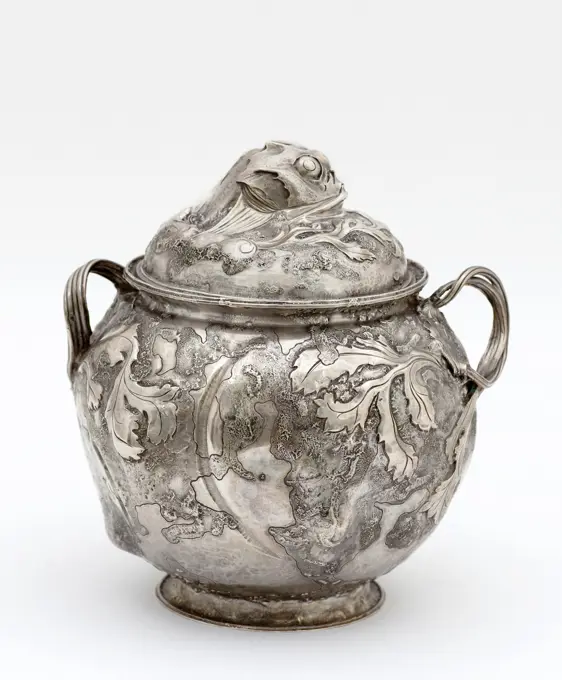
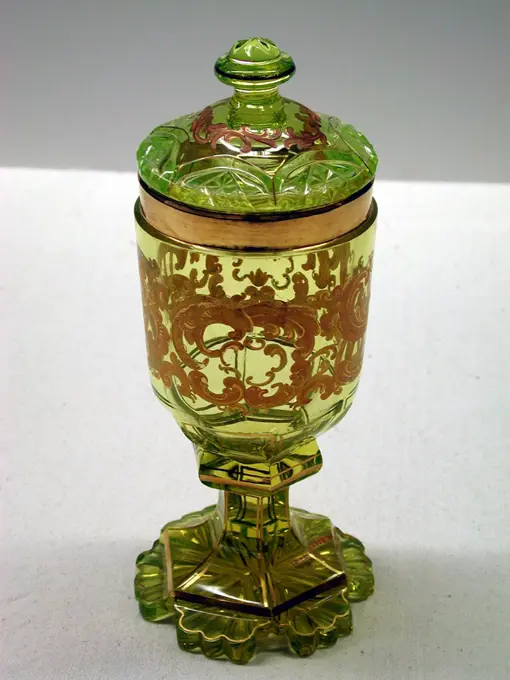
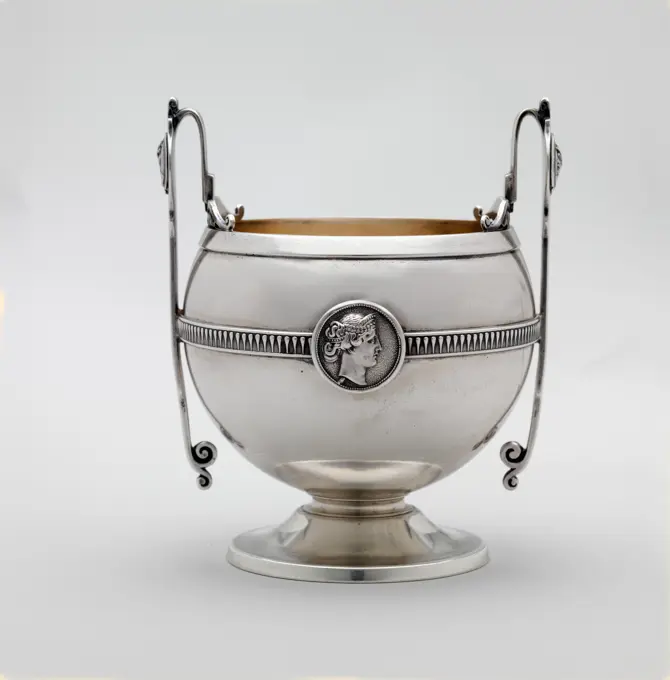
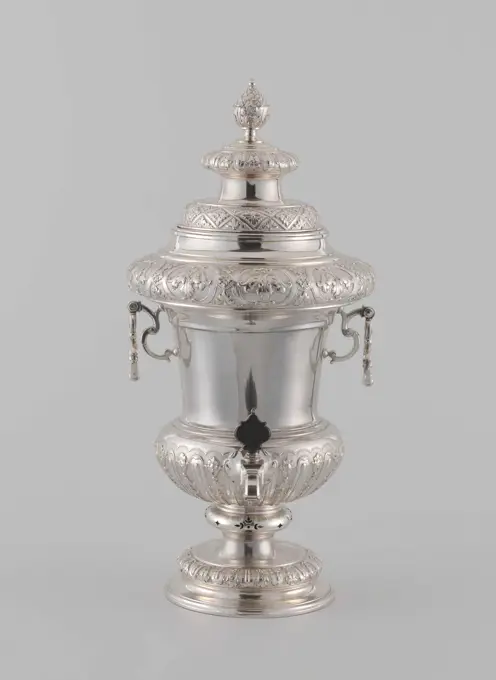
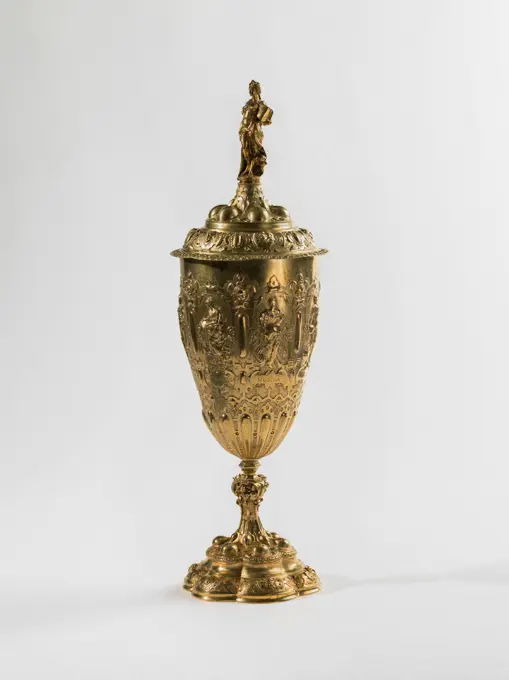
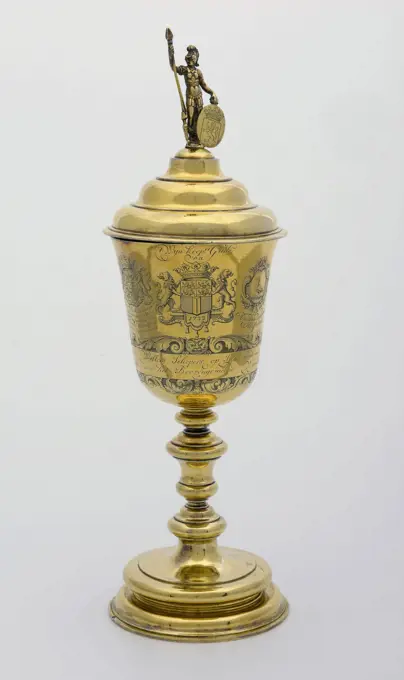
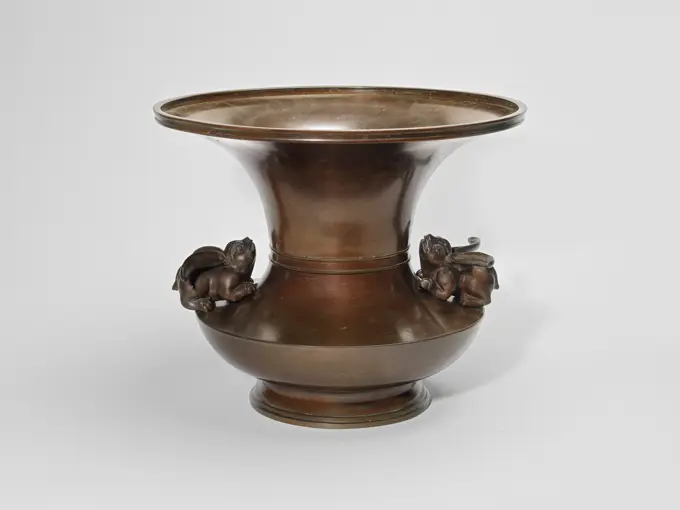
Coupe lid, Anonymous, c. 1600 Lid of rock crystal in a golden frame. Freiburg frame: Gold (Metal). frame: Lid of rock crystal in a golden frame. Freiburg frame: Gold (Metal). frame:Goblet and Cover, anonymous, c. 1580 Oval coupe from rock crystal in a frame of gilded silver. All parts of rock crystal are ribbed. On the lid a crystal button caught in a frame with four female hermes, an eagle with a white coat of arms on the top. Malib frame: Silver (Metal) gilding Oval coupe from rock crystal in a frame of gilded silver. All parts of rock crystal are ribbed. On the lid a crystal button caught in a frame with four female hermes, an eagle with a white coat of arms on the top. Malib frame: Silver (Metal) gilding. The nautilus, a mollusk related to the squid, stopped evolving millions of years ago. It is literally a living fossil, and its shell was considered one of natures wonders. Most of the elements of this cup - the dolphin, mermen, and Neptune on a seahorse - allude to the sea. The exception is the satyr who holds the shell aloft: he is a denizen of fields and forests.Cup on foot with lid, with double -headed eagle with monogram J.E.P. and a weapon trophy, anonymous, c. 1750 - c. 1800 Vaulted foot. Klock -shaped chalice with solid, faceted bottom. On the chalice is a crowned double -headed eagle with the monogram J.E.P. And a weapon trophy engraved. A leaf ornament on the lid. The radgravure is gold -plated. Germany (possibly) glass glassblowing Vaulted foot. Klock -shaped chalice with solid, faceted bottom. On the chalice is a crowned double -headed eagle with the monogram J.E.P. And a weapon trophy engraved. A leaf ornament on the lid. The radgravure is gold -plated. Germany (possibly) glass glassblowingPotpourri Vase, c. 1810. Derby (Crown Derby Period) (British). Porcelain; diameter of mouth: 11.5 cm (4 1/2 in.); overall: 15.1 cm (5 15/16 in.); container: 10 cm (3 15/16 in.).Creampot with later cover ca.1800 American. Creampot with later cover 8041Soup tureen with the Ogończyk coat of arms. Holke, Marcin (fl. ca 1765-ca 1792), goldsmith. Candlestick of silver, in Louis XIV style. The channeled tribe runs upwardly broader and is closed by a rosette list to which three garlands hang.Cincinnatus Lorillon. "Cup". Money. 1819-1838. Museum of Fine Arts of the City of Paris, Petit Palais. 74382-25 Money, silverware, gobletGoldsmith's art, Italy, 15th century. Grey jasper with ochre spots gold-mounted cup with cover. Height 18.7 cm. Signed LAV.R.MED.Wine crater; BUDZ & PLATA Co (Birmingham; Company Z Otnicz and Platernicza; FL. 1768-1834); 1826/27 (1826-00-00-1827-00-00);White milk jug with gold-colored edges and flower, acorn and leaf decoration, milk jug creamer crockery holder coffee service tea service tableware ceramics porcelain glaze enamel, fried glazed Coffee pot teapot sugar bowl milk jug 10 cup and saucers rinse bowl serve serve tea set dairyCiborium 14th century Spanish. Ciborium 467500Goblet. Germany; Attributed to Christopher Gottfried Schneider (German, early 18th century). Date: 1740-1750. Dimensions: 16.5 × 8.3 cm (6 1/2 × 3 1/4 in.). Glass with silver base. Origin: Bohemia. Museum: The Chicago Art Institute, Chicago, USA.Vase 1795-1805 Fürstenberg. Hard-paste porcelain, polychrome enamels, and gilding . Fürstenberg Porcelain FactoryGoblet and cover, 1685, Willem van Heemskerck, Dutch, 1613-1692, 10 1/2 × 4 1/16 × 4 1/16 in. (26.67 × 10.32 × 10.32 cm), Glass, Netherlands, 17th century, Glass goblets engraved with short quotations or mottos were a quintessential expression of Dutch art in the 17th century. They added food for thought to the dinner table, sparking conversations about religious, philosophical, and political subjects. The inscription on the bowl of this goblet reads, 'Alles heft sijn tyd. Eccles. Cap: 3.vs.I' ('There is a season for everything, Ecclesiastes, chapter 3, verse 1'). On the cover, another inscription reads, 'INFESTUS INFESTIS,' a saying that means 'Hostile (only) to the wicked,' an ideal of civic and national self-defense.Pitcher. Cann and Dunn; American, 1855-1860; Retailed by John Cox and Co.; American, active 1817-1863; New York, New York. Date: 1855-1863. Dimensions: 38.1 × 15.2 × 17.8 cm (15 1/4 × 6 1/2 × 7 1/2 in.);1220.2 grams. Silver. Origin: New York. Museum: The Chicago Art Institute, Chicago, USA.Sugar Urn with Cover, c. 1811-1825. Harvey Lewis (American, 1835). Silver; overall: 24.3 x 18.5 cm (9 9/16 x 7 5/16 in.).. Candlestick of silver, in Louis XIV style. The channeled tribe runs upwardly broader and is closed by a rosette list to which three garlands hang.Rosewater ewer. Culture: German, Augsburg. Dimensions: Height: 13 3/8 in. (34 cm). Maker: Possibly by Johann Erhard Heiglen (German, before 1687-1757). Date: ca. 1730.This ewer was undoubtedly made with a matching basin, now lost, and would have stood on a buffet in a dining room. Until forks became common after the seventeenth century, diners used ewers and basins to wash their hands. This ewer is an interpretation of a French style that evolved during the reign of Louis XIV (1643-1715) under the influence of his court designer Jean Berain (1640-1711), but the three bands of strapwork may have been designed by Heuglin. Museum: Metropolitan Museum of Art, New York, USA.Jean-Jacques Dieu (active from 1777 to 1811). COQUETIER. Porcelain, 1778-1780. Paris, Cognacq-Jay museum. 79171-9 Art Menager, Coquetier, Porcelain, Catsters, 18th 18th 18th 18th 18th 18th 18th centuryCALIZ S XVIII (ESCAVACIONES IRIA FLAVIA). Location: MUSEO DE ARTE SACRO. Padrón. Coruña. SPAIN.Ewer. Culture: Austrian, Vienna. Dimensions: H. 18 7/8 in., Weight. 9.2lb. (48 cm, 4.159kg). Maker: Ignatz Krautauer (master in 1771, died 1787). Date: 1775. Museum: Metropolitan Museum of Art, New York, USA.CALIZ DE SAN SEGUNDO. Location: CATEDRAL DE SANTA MARIA. ASTORGA. LEON. SPANIEN.Covered Goblet. Friedrich Winter (Polish (Silesian), died about 1711 or 1712)Waszek with TB floral monogram (i.e.); Korzec (Porcelain and faience manufacture; 1790-1832); 1790-1796 (1790-00-00-1790-00-00);Cup Kugler, Johann Georg (FL. 1733-1771)Silversmith's art, Italy, 15th century. Red jasper, enamelled gilded silver vase with two handles and lid. Height cm. 42. Signed LAV.R.MED. Detail of the lid.Cup 19th century, after 1610-11 original British, after British, London original This electrotype is after a seventeenth-century original (1610-11), at time of reproduction in the Troisata Monastery, Moscow.. Cup 186496Miniature sugar bowl with cover ca. 1720-30 David Clayton British. Miniature sugar bowl with cover. David Clayton (British, active 1689). British, London. ca. 1720-30. Silver. Metalwork-Silver-MiniatureJean Royel () / 'Square-footed jasper cup with cameos'. 1687 - 1689. Agate, Chalcedony, Cowry, Enamel, Emerald, Jasper, Gold, Silver-gilt, Ruby. Museum: Museo del Prado, Madrid, España.Cup and Cover early 20th century (original dated 1480) German. Cup and Cover 463210Sugar Bowl ca. 1760 Daniel Christian Fueter American. Sugar Bowl 14212Bowl with cover and stand. Artist: Engraving probably after designs by Simon Gribelin (working 1682-1733). Culture: British. Dimensions: Overall: 3 1/2 × 5 1/4 in. (8.9 × 13.3 cm). Maker: F.S.S. (British, probably London, ca. 1680-90). Date: ca. 1680.This bowl may have formed part of a traveling set similar to one by the same maker, formerly in the collection of Viscount Monck, inscribed: "A Bartlemew Fairing sent by his Grace the Duke or Ormond to Fridasweed Lady Stephens". The decorative engraving on this set and our bowl and stand were undoubtedly executed by the same artist and derived from one source of design, either by Simon Gribelin or under his influence. Museum: Metropolitan Museum of Art, New York, USA.Mleczny from the church r Czk; Radke, Emil (Fl. 1830-Ca 1867); The years four of the 18th century (1840-00-00-1849-00-00);. A confidante of the Russian empress commissioned this 140-piece service, several items of which are displayed here. Silversmith Odiot, the painter Prudhon and the architect Cavelier proudly presented the new models at the 1819 French national exhibition of decorative art. Notable are the kneeling angels supporting the soup tureen, which are characteristic of the late Empire style.Wineglass early 18th century German, Silesia. Wineglass 195856Coffeepot 1790-1800 Charles Faris. Coffeepot 2139Tea tray, cake stands, jam dish, sugar bowls, coffee pot and milk jug, Martin Guillaume Biennais, c. 1817 Empire sugar box made of gilded silver. The box is chalice -shaped with a slightly arched lid. On the pedestal is a wreath of spoon holders in which 3 winged sphinxes that support the baluster -shaped trunk. With crowned imperial monogram. Paris silver (metal). gilding (material). ebony (wood) gilding Empire sugar box made of gilded silver. The box is chalice -shaped with a slightly arched lid. On the pedestal is a wreath of spoon holders in which 3 winged sphinxes that support the baluster -shaped trunk. With crowned imperial monogram. Paris silver (metal). gilding (material). ebony (wood) gildingCup And Cover (Germany); silver giltCoffee urn (Kraantjeskan) 1764 Gerrit Boverhof This dainty silver urn is fitted with one spout for the serving of coffee. Ambitious in design and rich in execution, this so-called "kraantjeskan" with its undulating lines and asymmetrical decoration reflects the full-fledged Rococo style fashionable in Amsterdam between the late 1740s and throughout the 1760s. Since this coffee pot shows very little wear, it is likely that this exquisite piece of silver was made for display rather than use. Born in Steenwijk, in the province of Overijssel, Gerrit Boverhof became a master silversmith in Amsterdam in 1721 where he remained active until his death in 1772.. Coffee urn (Kraantjeskan). Dutch, Amsterdam. 1764. Silver, ebony. Metalwork-SilverPORTAINCIENSOS DE PLATA EN FORMA DE NAVETA S XVIII. Location: CATEDRAL. Tuy. Pontevedra. SPAIN.Miskelk, Johann Sebastian Kipfinger, c. 1725 Mandkelk of gilded silver, on a sixte base, decorated with cherubs and Louis XVide band ornament. The smooth chalice is caught in a wide strap on which the same decoration occurs as on the foot. Freising silver (metal). gilding Mandkelk of gilded silver, on a sixte base, decorated with cherubs and Louis XVide band ornament. The smooth chalice is caught in a wide strap on which the same decoration occurs as on the foot. Freising silver (metal). gildingCovered jar with monster heads and gilded bands with ruyi motif, anonymous, c. 1750 - c. 1799 Porcelain lid jar, the body upwards slightly walking out and with a round shoulder, covered with a monochrome -freaked gray glaze and on biscuit gold. A monster head with ring on either side of the pot; Around the foot, shoulder and neck a band with Ruyi motif, decoration in gilded biscuit. The lid with the same decoration; Lid button in the form of a gilt shishi (lion dog). Gilding flake. Monochrome. China porcelain. glaze. gold (metal) gilding / vitrification Porcelain lid jar, the body upwards slightly walking out and with a round shoulder, covered with a monochrome -freaked gray glaze and on biscuit gold. A monster head with ring on either side of the pot; Around the foot, shoulder and neck a band with Ruyi motif, decoration in gilded biscuit. The lid with the same decoration; Lid button in the form of a gilt shishi (lion dog). Gilding flake. Monochrome. China porcelain. glaze. gold (metalSgabello, Chair of Notenhout, Anonymous, 1500 - 1600 Sgabello van Notenhout resting on a front and hind leg in the form of two flat-set claw legs, between which a hanging, stylized lily. By a profiled list, his rear and front board separated from the wide seating rules; The hexagonal seat crosses. The flat back is cut out vase -shaped. See also: BK-15384 and BK-15385. Italy wood (plant material). walnut (hardwood) Sgabello van Notenhout resting on a front and hind leg in the form of two flat-set claw legs, between which a hanging, stylized lily. By a profiled list, his rear and front board separated from the wide seating rules; The hexagonal seat crosses. The flat back is cut out vase -shaped. See also: BK-15384 and BK-15385. Italy wood (plant material). walnut (hardwood)Ewer. Culture: British, London. Dimensions: Overall (confirmed): 16 × 23 1/8 × 18 1/4 in., 150 oz. 15 dwt. (40.6 × 58.7 × 46.4 cm, 4688.999g). Maker: Abraham Portal (British, active ca. 1747-died 1809). Date: 1755/56.Although silver made by the Jewel Office for diplomatic officers was generally classical in inspiration, this ewer (68.141.316) and basin (68.141.317) represent a rare foray into the rococo style. They were part of a large service for three dozen guests made for Sir Charles Hanbury Williams's embassy to Russia in 1755. Museum: Metropolitan Museum of Art, New York, USA.Vase 1880-90. Vase. 1880-90. Pressed green marble glass. Made in EnglandWater tincture; Schweiger, Matthias (Fl. Ca 1623-1635); 1630-1635 (1630-00-00-1635-00-00);Urn from Biscuit, Louis XVI, white with straight ears, Manufacture de Monsieur Le Duc, c. 1780 - c. 1790 Urn from Biscuit, Louis XVI, white with straight ears. Part of a few. Brand pressed on side foot: ma (nufactu) re de mer le duc d'Angouleme a paris. The urn has a lid. With accompanying glass bell jar. Paris biscuit (porcelain, material) Urn from Biscuit, Louis XVI, white with straight ears. Part of a few. Brand pressed on side foot: ma (nufactu) re de mer le duc d'Angouleme a paris. The urn has a lid. With accompanying glass bell jar. Paris biscuit (porcelain, material)Jar and lid, Glass, Ogee-shaped body on short stem with faceted knop and 12-sided flaring foot; sides cut to reveal clear glass behind flashed amber layer in pattern of rosettes in oval frames and underneath alternate colored vertical stripes; domed, stepped cover, faceted, with amber ball finial., Europe, 19th century, glasswares, Decorative Arts, Jar and lidStand from a Centerpiece, c. 1864, H.7-3/4 x W.13-3/4 x D.7 in. (overall), Electroplate, England, 19th centuryStanding cup. Culture: Hungarian, Brass. Dimensions: Overall: 9 1/8 x 5 in. (23.2 x 12.7 cm). Maker: Georgius May I (active ca. 1655-84). Date: ca. 1670.The dolphin, symbol of a long life, is also an attribute of Venus, goddess of love, as is the shell which is evoked by the form of the wine bowl. In ancient mythology, the dolphin is also a companion of Bacchus, god of wine and erotic ecstasy (Wolfram Koeppe. Die Lemmers-Danforth Sammlung Wetzlar. Heidelberg, 1992, pp. 444 and 452, nos. GO 11, GO 33; Wolfram Koeppe. "Mbel und Schaustcke" in Liselotte von der Pfalz. Madame am Hofe des Sonnenknigs. Exh. cat. Heidelberg, 1996, pp. 188 and 263). The cup's form and imagery allude to the dangers of living in a war-torn region and celebrate love and a long, prosperous journey through life. The sophisticated program and quality of the craftsmanship suggest that the maker traveled through South Germany, where comparable vessels were made in Ulm and Augsburg. LiteratureMaCovered Pot (2 of 2), 1817-18. England, 19th century. Cut glass and silver;Lidded vase. The Leperre-Durot porcelain factory was founded in 1784 and shortly afterwards placed under the patronage of the three-year-old dauphin, the eldest son of the French king Louis XVI. The lid of this impressive piece is sur-mounted by the dauphins crown, and the handles are in the shape of dolphins (dauphin is French for ‘dolphin). The crown princes coat of arms and monogram are incorporated in the decoration.Urn, late 1700s - 1800s. England, late 18th or 19th century. Earthenware; overall: 17.8 cm (7 in.).Jean Baptiste Potot, Cruet Stand with Oil and Vinegar Bottles, 1798-1809, silver and glass.Nautilus Cup. Germany, Saxony, Dresden Court Workshops, circa 1720. Furnishings; Serviceware. Nautilus shell and gilded silver mounts with enamel and gemstonesEwer 19th century, after 1558-59 original Franchi and Son This electrotype is after a sixteenth-century original (1558-59), at the time of reproduction in the Louvre, Paris.. Ewer. British, London, after Flemish, Antwerp original. 19th century, after 1558-59 original. Electroformed copper, silver plated and gilt. Metalwork-ElectrotypeLacked teammer. A lucked teammer with two gold-plated ears, hanging is two ram caps. Ground black with bouquets and two medallions, in which landscapes with images.Ewer 1771 Barthélemy Samson Fine workmanship and excellence in design were not confined to the work of Parisian goldsmiths; Toulouse was also a productive center of goldsmithing in eighteenth-century France. The artisans in the provinces did not merely copy those of Paris but were creative in their own right, with regard to both form and ornament. The goldsmiths of Toulouse were especially adept at interpreting Rococo ornament at its most exuberant. The zoomorphic dolphin handle is finely pierced to catch light and underscore the malleability of the precious metal.. Ewer 194885Tureen with cover and liner 1775-76 Jacques-Nicolas Roettiers This tureen is very similar to those in the Orloff service, and it is marked by the silversmith responsible for many pieces in that celebrated set, Jacques-Nicolas Roettiers (see also 48.187.386, .387). He was the son of a prominent silversmith, Jacques Roettiers (1707-1784), and he became one of the most accomplished practitioners of the Neoclassical style in silver. Roettierss skill as a silversmith is evident in this tureen, which employs bold Neoclassical motifs such as rosettes, acanthus leaves, guilloche molding, and volute feet that are all integrated into a harmonious and elegant composition. The detail and crispness of the motifs are notable, and the finial is a masterful three-dimensional essay in the Neoclassical taste.The quality of the object is evident not only in its design and execution but also in its significant weight. As works in silver were valued in the eighteenth century more for the intrinsic worth oThéodore Tonnelier. "Cup". Money. 1809-1819. Museum of Fine Arts of the City of Paris, Petit Palais. 74383-1 Money, silverware, gobletTwo-Handled Cup, 1712. Anthony Nelme (British). Silver; overall: 25.4 x 26.1 cm (10 x 10 1/4 in.). Nelme was one of the most famous and successful native English silversmiths of a time when Huguenots (French Protestants) dominated the creation of richly decorated pieces for the most fashionable market.Two-handled cup and cover, made from silver and silver gilt and is embossed, chased and pierced. Dated 1670Sauceboat ca. 1856 William Adams. Sauceboat 7199. Meissener Porzellan ManufakturMeissen, c. 1725painted decoration: Seuter family workshop, Augsburg, c. 1730-1735hard-paste porcelainSugar BowlBowl late 16th century China This type of bowl, with a thin body and a highly schematized representation of a port town painted in vivid underglaze blue, is a standard example of late-sixteenth-century export ware from Jingdezhen. Large numbers of these bowls have been found in Southeast Asia in recent decades. Its comparative rarity in Europe is evidenced by the addition of gilt-silver mounts, which also increase its usefulness.. Bowl. China. late 16th century. Porcelain painted with underglaze blue; gilt silver mounts, probably German, early 17th century. Ming dynasty (1368-1644), Wanli period (1573-1620). CeramicsCovered Pot (1 of 2), 1817-18. England, 19th century. Cut glass;Teapot. Denuelle Porcelain Manufactory (French, 1818-1829); France, Paris. Date: 1815-1825. Dimensions: H. 21 cm (8 1/4 in.). Hard-paste porcelain, polychrome enamels, and gilding. Origin: Paris. Museum: The Chicago Art Institute, Chicago, USA.Tazza last quarter 19th century probably French. Tazza. probably French. last quarter 19th century. Lapis lazuli, gold enamel, and rubies.Monteith 1686-87 Possibly by John Spackman The arms, probably added later, most likely are intended to represent those of Paul Souchay de la Merie and his wife, Constance Roux, Huguenots who emigrated to England. Their son, Paul de Lamerie, became a noted English goldsmith.. Monteith. British, London. 1686-87. Silver. Metalwork-SilverLidded Cup with Strap Handles, AD 300s-400s. Korea, Kaya period (AD 42-562). Stoneware with natural ash glaze; overall: 21.1 cm (8 5/16 in.); outer diameter: 15.7 cm (6 3/16 in.). Pottery vessels with a footed stand such as this one is the earliest known high-fired ware. Its gray color is the result of the reduction of oxygen in the closed kiln chamber. Footed vessels were not for everyday usage, but rather served to present offerings to the deceased.Wooden ring of chestnut cheese decorated with griffins, porcelain factory aan den Amstel, c. 1810  Wooden ring chestnut cheese between bin and cuppa, gold painted. Netherlands wood (plant material)Baking of Kastanjevaas decorated with griffins, Porcelinfabriek aan den Amstel, c. 1810  Baking of Kastanjevaas with ears in the form of griffins. Netherlands porcelainSugar bowl with lid, with landscape in which a hunter on a sofa. Sugar bowl with lid of pottery with lilac transfer decor. The ears in the form of lion's heads with a ring in the mouth. On the abdomen a representation of a hunter on a sofa, left is a boy, right is a woman with a child and a dog. The fell foot is unfromed. The lid has a uivorous button. The button and edge decorated with leaf raft and flowers.Two-handled bowl. Culture: British, London mounts and Chinese porcelain. Dimensions: Overall: 6 1/4 × 9 1/2 in. (15.9 × 24.1 cm);Width (with handles): 13 in. (33 cm). Date: porcelain 1573-1620, mounts ca. 1585.A magnificent house and its rich furnishings were an essential expression of power in the sixteenth century. This group of Chinese porcelain with finely-worked mounts is associated with the family of Elizabeth I's adviser, William Cecil, Lord Burghley. The pieces may have been a bequest from the colonizer of Virginia, Sir Walter Raleigh, to Lord Burghley's son Robert. Museum: Metropolitan Museum of Art, New York, USA.Tureen 1794-1814 Charles Percier French This tureen is part of a large table service reputedly given by Napoleon I to his sister Pauline and her husband, Prince Camillo Borghese.. Tureen. French, Paris. 1794-1814. Silver gilt. Metalwork-SilverRoemer with lid, with two rows of Braamnoppen, Anonymous, c. 1690 - 1800 Roemer with inserted bottom on high, conical, spun from a wire. The spherical chalice blown as a whole with the trunk, which is set with two rows of brambles. The transition from the chalice to the trunk indicated by a ribbed thread. Vaulted lid with a massive button made up of two nodes. Low Countries glass glassblowing Roemer with inserted bottom on high, conical, spun from a wire. The spherical chalice blown as a whole with the trunk, which is set with two rows of brambles. The transition from the chalice to the trunk indicated by a ribbed thread. Vaulted lid with a massive button made up of two nodes. Low Countries glass glassblowingWorkshop of the Miseroni; Dionisio Miseroni (); Ottavio Miseroni () / 'Citrine quartz vase in the shape of an oil lamp'. 1600 - 1630. Citrine, Enamel, Gold. Museum: Museo del Prado, Madrid, España.Rattling Wine Cup; South Italy; 4th century B.C; Terracotta; 21.5 × 29 cm (8 7,16 × 11 7,16 in.)Rosewater jug 17th century French, Avignon. Rosewater jug. French, Avignon. 17th century. Glazed earthenware. Ceramics-PotteryMortar Wilkes, AntoniShelf, Anonymous, c. 1700 - c. 1715 So-called "stupid servant", made up of four Chinese vases and three Japanese Imari signs with the weapons of Van Brederode-van Buren. The foot and vases are decorated with paintwork: the foot in gold on black soil, with medallions that show multicolored birds on a golden soil. The vases also wear such medallions. Northern Netherlands wood (plant material). paint (coating). porcelain lacquering So-called "stupid servant", made up of four Chinese vases and three Japanese Imari signs with the weapons of Van Brederode-van Buren. The foot and vases are decorated with paintwork: the foot in gold on black soil, with medallions that show multicolored birds on a golden soil. The vases also wear such medallions. Northern Netherlands wood (plant material). paint (coating). porcelain lacqueringSilversmith: Gerardus Peeters, Glass mustard pot with silver stand, ear and lid, mustard pot pottery holder silver glass lead glass, molded filed engraved Silver bowl-shaped holder consisting of three ribs carrying top edge and resting on curved legs standing on triangular swivel base resting on round feet loop-shaped ear hinged bell-shaped lid with notch in the outer edge and spherical knob, cup-shaped crystal bowl with silver frame along top edge, serving top lid (at hinge)Waza from the service of Hetman Branicki; Odiot, Jean-Baptiste-Claude (Fl. 1785-1827), Odiot, Maison (Paris; Złotnicza company; Fl. 1690-); 1819 (1819-00-00-1819-00-00);Ampul, Cornelis Willems Snijder (Attribute to), 1674 Ampul with a hinged, roared lid and rest on a round foot with a flat bottom edge. The foot is made up of a burned and a constricted, rejuvenating part. The rejuvenating part is articulated by a flat ring. The body has a convex belly and a straight wall. Profiled frames walk along the center of the wall and along the top. On one side there is a triangular spout, on the other side an ear in the form of a volute. De Duimrust has repeated the shape of an openwork, voluted letter, an A and V. This is repeated above the pour in engraved form. Haarlem silver (metal) hammering / soldering Ampul with a hinged, roared lid and rest on a round foot with a flat bottom edge. The foot is made up of a burned and a constricted, rejuvenating part. The rejuvenating part is articulated by a flat ring. The body has a convex belly and a straight wall. Profiled frames walk along the center of the wall and along the top. On one side there is a triangular spHenri Husson / Adrien-Aurélien Hébrard. Sugar. Money repelled and chopped. 1909-1914. Museum of Fine Arts of the City of Paris, Petit Palais. 75295-4 Money regrows, chisel, sugarGoblet with cover ca. 1830-40 Bohemian. Goblet with cover 207914French Cacheke. French Cacheke.Tankard 19th century, after 17th century original British, after German, Danzig original This electrotype is after a seventeenth-century original in the Chéréméteff collection, St. Petersburg, at the time of reproduction.. Tankard 186521Sugar Bowl ca. 1865 Gorham Manufacturing Company The mid-nineteenth century witnessed an efflorescence of creativity in the American silver industry, fueled by the burgeoning middle classs increasing demand for refined luxury goods. Silversmiths devoted considerable time and creative energy to generating an endless variety of new designs and patterns. During the 1860s and 1870s silver flatware ornamented with portrait medallions inspired by antique coins and cameos enjoyed widespread popularity, with virtually every American silversmith producing their own proprietary "medallion" pattern. Gorham Manufacturing Companys designer George Wilkinson patented a medallion flatware pattern in 1864, and the quantity and variety of surviving silver in this pattern attest to its success. Medallions from this flatware pattern ornament the tea set as well as a toast rack (.4) and goblet (.5) in the American Wings collection. Although the three pieces match, they are an assembled set; the teapot iFlowerpot with birds, flower sprays and foliate scrolls, anonymous, c. 1800 - c. 1899 pot Porcelain flowerpot with a cylindrical, slightly spreading body, two ties with profiles and two handles in the shape of a lion's head. Painted on the glaze in email colors and gold. On the outer wall a wide blue band with saved twice a cartouche decorated with leaf vines, which run over the wall. Two birds in a landscape or flower branches in the cartouches. Golden Rand. Hole in the soil. Marked on the bottom with 11. France porcelain. glaze. gold (metal) painting / gilding / vitrificationVase, early 19th century, 21 x 11 x 7 in. (53.34 x 27.94 x 17.78 cm), Porcelain, France, 19th century. Crater jug of driven silver, in the shape of a garden vase with tap and two handles. The printed trunk galvanized somewhat in a bowl-shaped floor of the foot. The flattened, smooth nodes has been opened. For foot, underside of the belly, the wide outstanding edge and the two privatizations of the profiled, cured lodge Louis XIV motifs on punched or scaly soil. As a button a pine cone in leaf. The hinged handles are hanging on brackets, which are attached at the top of the smooth, cured center of the vessel. The knob of the tap is made of ebony.Aristide Barré. "Renaissance cut". Golden money. 1890. Museum of Fine Arts of the City of Paris, Petit Palais. 101362-4 Gilded money, renaissance cut, lid, statuetteSilversmith: Adrianus Stratenus, Gilt silver cup from the wine buyers' guild, jug goblet drinkware tableware holder gold silver, hammered engraved cast gilded gilded silver. Round base with convex ascending, strongly constricted profiles balustere with four nodes and profiles detachable cuppa vaulted bell-shaped lid with ascending profile edges (C) crowned by Pallas Athene with shield on which engraved Dutch lion and lance in hand (D) lower edge foot (stamped in) Rotterdam Stadscentrum Stadsdriehoek Wijnhaven heraldry Wijnkopersgilde guild Admiralty on the Maze Hoogheemraad of Schieland Arnoldus Beijerman Leonard Swartendijk Jacob Ebervelt Jacob Vosmaer Willem SchepersTankard. Culture: Hungarian, Brass. Dimensions: Overall: 10 1/4 x 5 5/8 in. (26 x 14.3 cm). Maker: Michael May II (active 1731-76). Date: mid-18th century.This elegantly proportioned, gilded tankard is a late example of its type. The maker, who was a member of a well-known dynasty of goldsmiths, applied a harmonious decoration of late Baroque strapwork surrounding three bases imitating short lengths of decorative drapery, called lambrequins, each supporting an ancient bust. A cast pinecone finial surmounts the double-domed lid like a miniature monument.LiteratureImportant Silver. Sale cat., Sotheby's, New York, April 7, 1987, n.p., no. 40.Judit H. Kolba. Hungarian Silver: The Nicolas M. Salgo Collection. London, 1996, pp. 108-9, no. 86.ReferencesElemr Koszeghy. Magyarorszgi tvsjegyek a kzpkortl 1867-ig / Merkzeichen der Goldschmiede Ungarns vom Mittelalter bis 1867. Budapest, 1936, nos. 130 town mark, 264 maker's mark.Wolfram Koeppe 2015. MuseuSpherical Kettle. Malcz, Karol (1797-1867), goldsmithVase for 'Rikka' arrangement with low coat and acroters in the shape of rabbits. Bronze. Cernuschi Museum, Asia Museum of Asia in the city of Paris.