Elegant Glassware and Vases

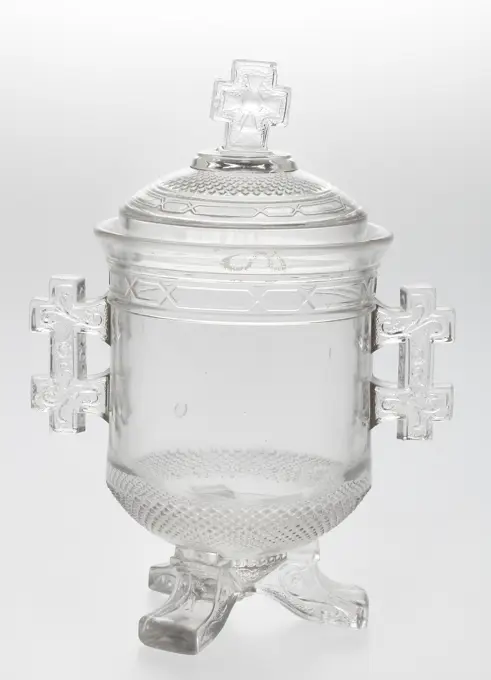
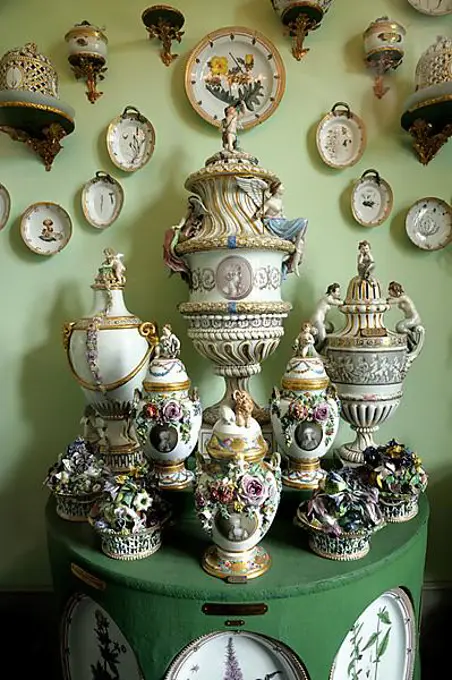
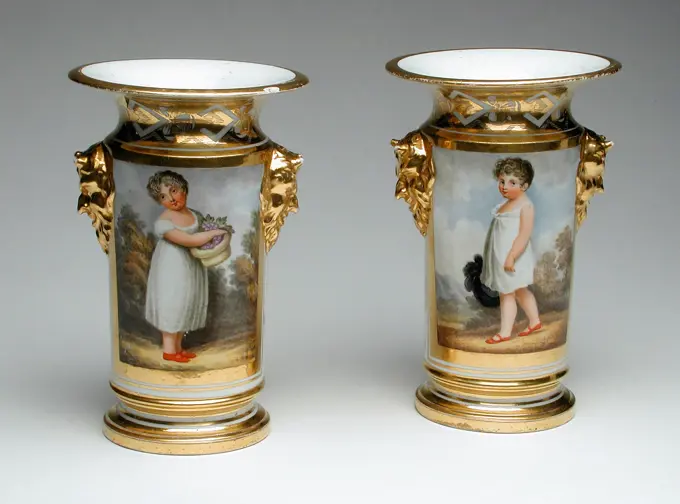
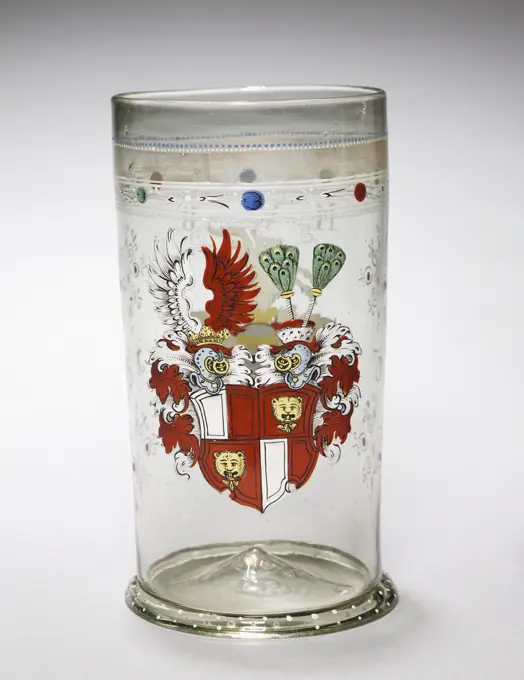
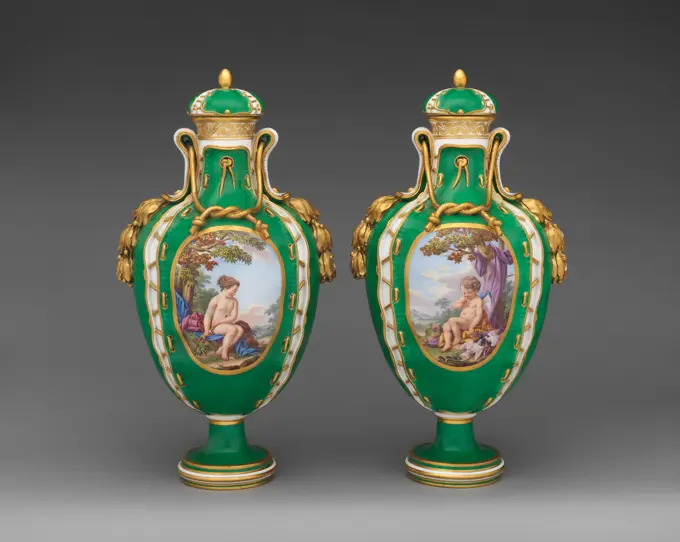
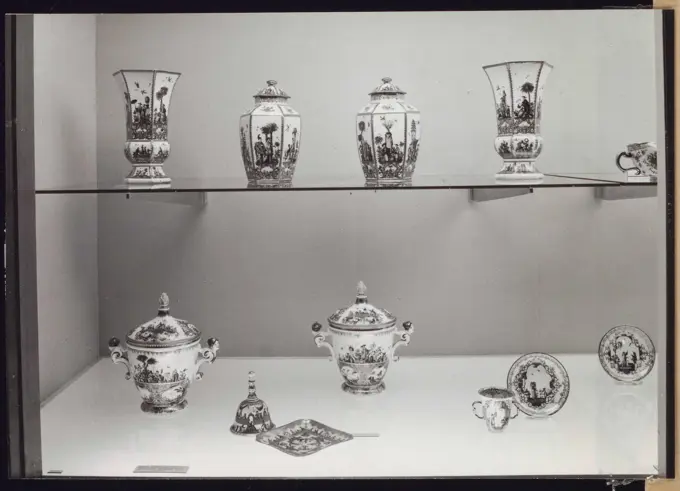
Intricate glass pieces with decorative frames and lids; adorned with ornate details, showcasing craftsmanship and historical designs.

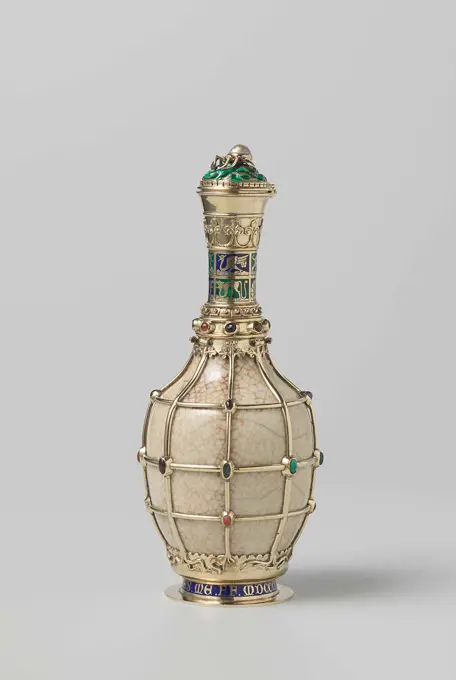
Goldsmith's art, Italy, 15th century. Grey jasper with ochre spots gold-mounted cup with cover. Height 18.7 cm. Signed LAV.R.MED.
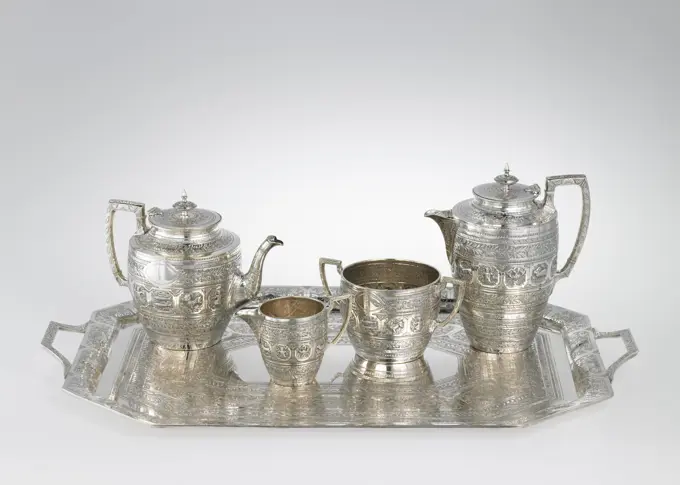
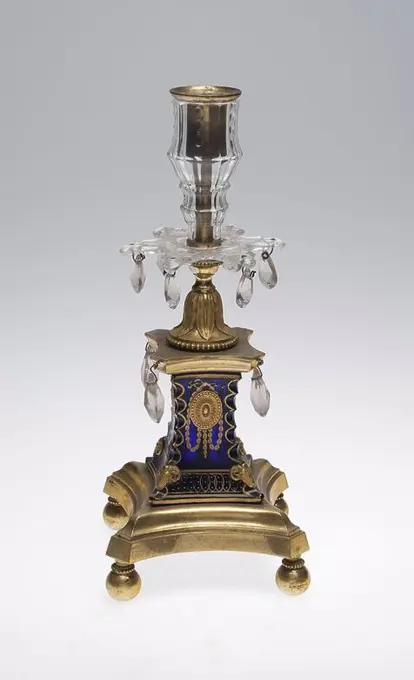
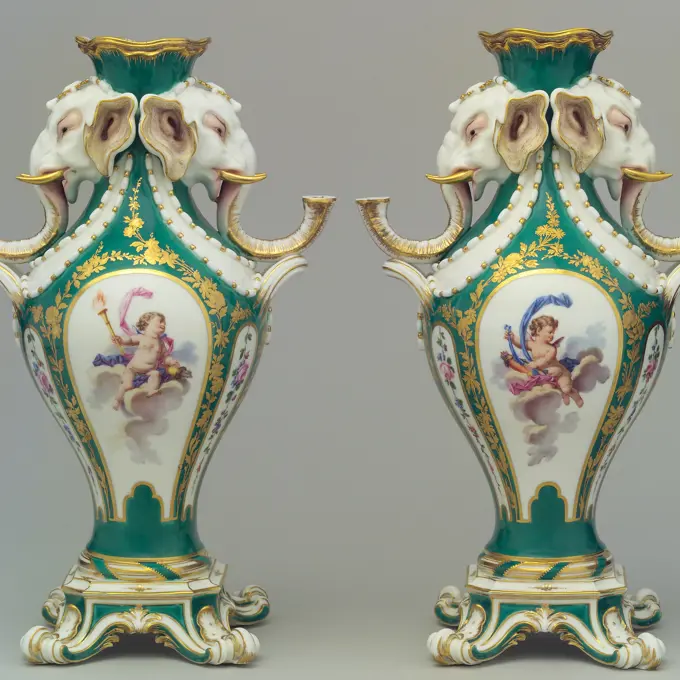
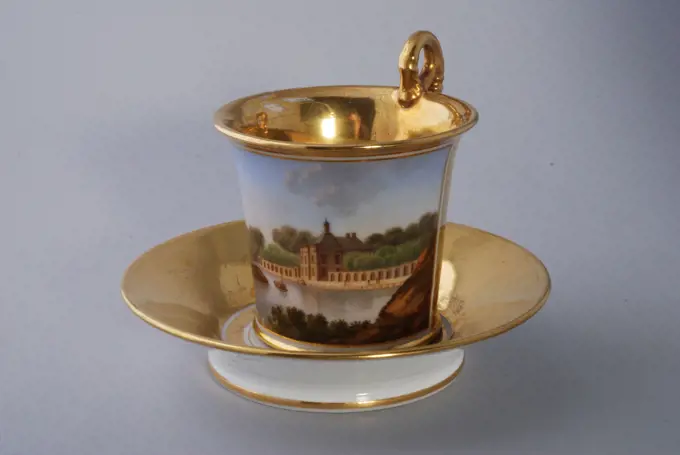
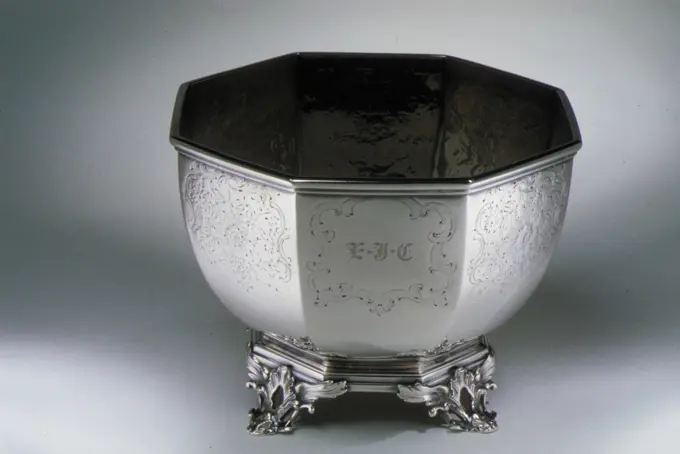
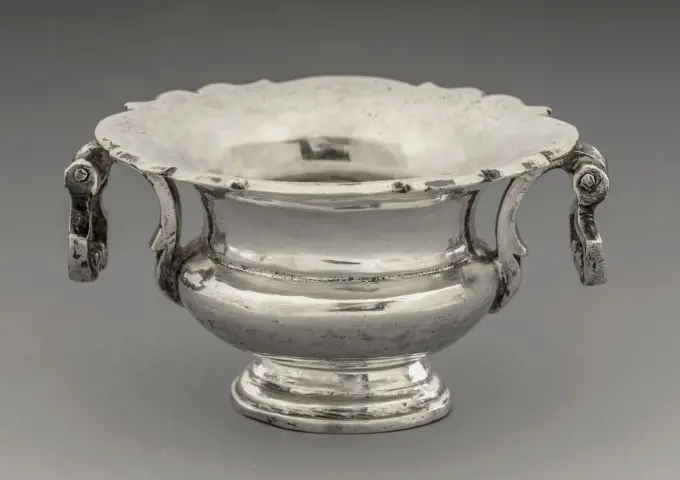
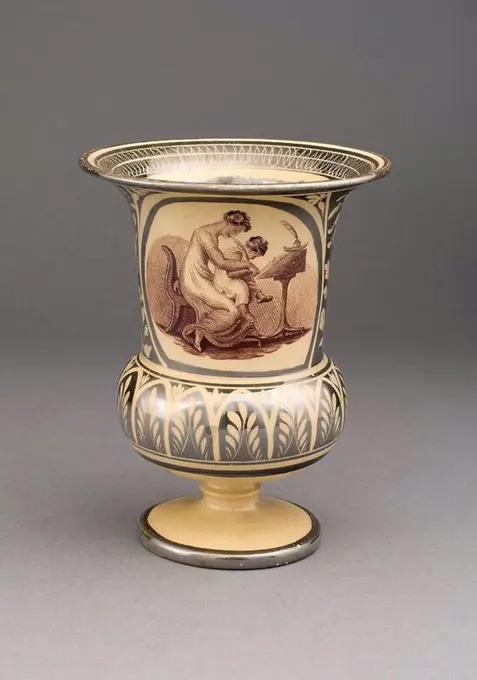
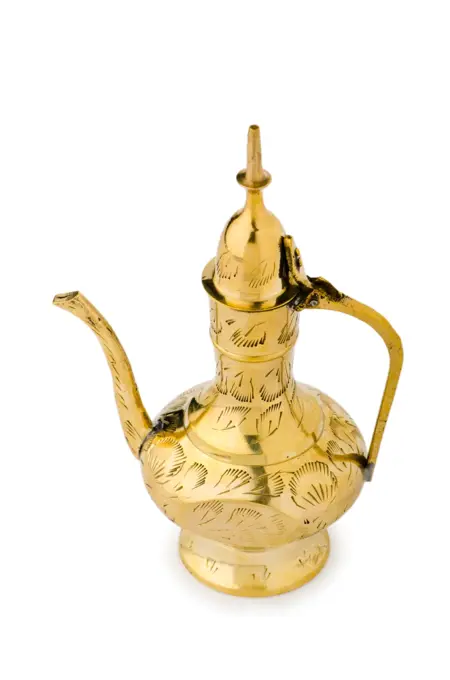
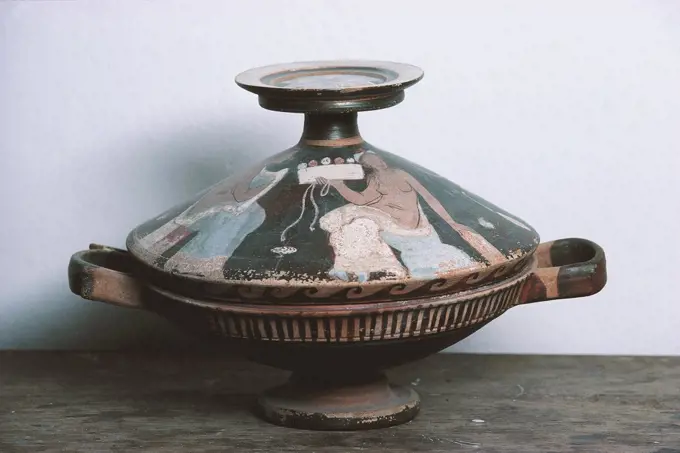
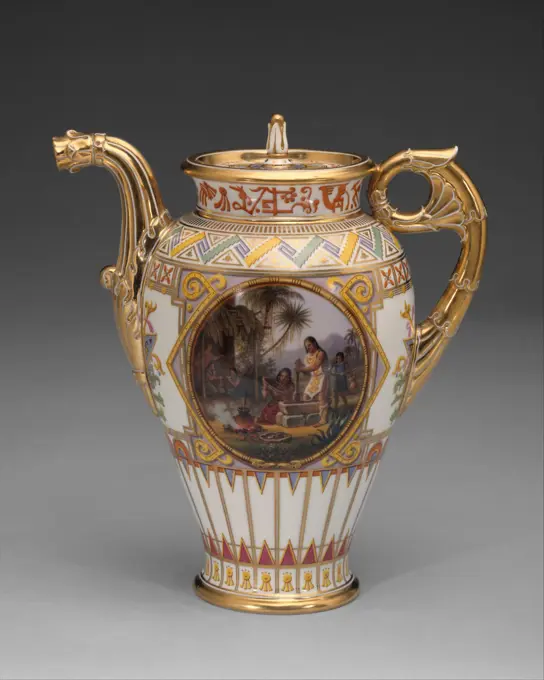
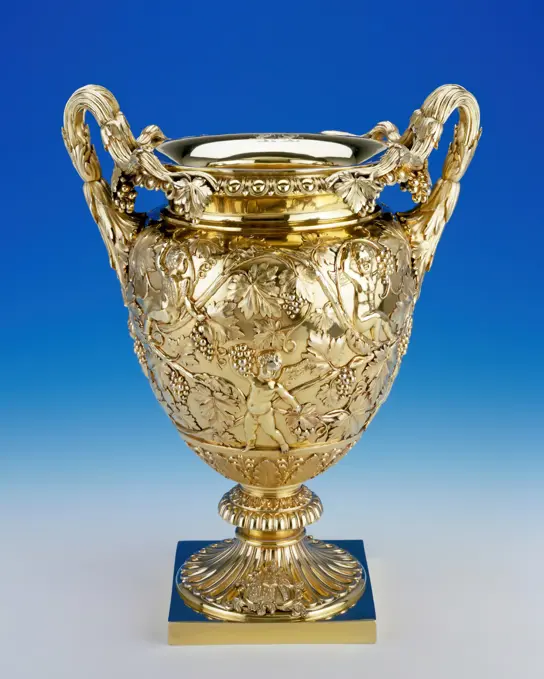
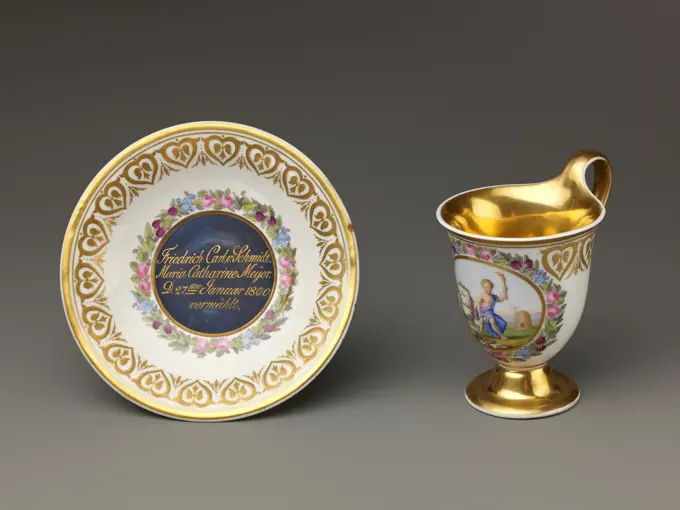
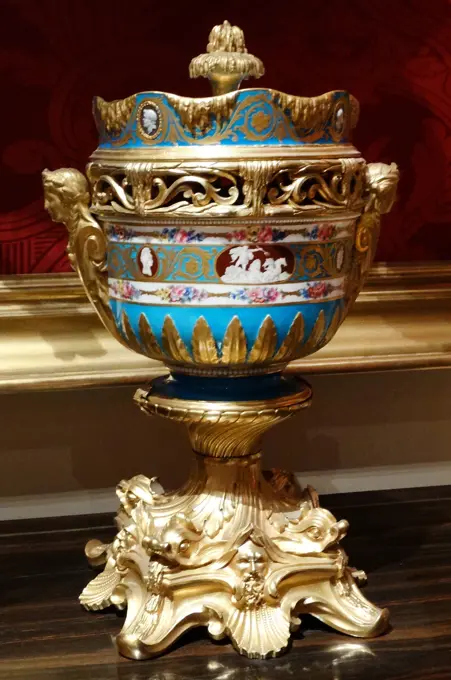
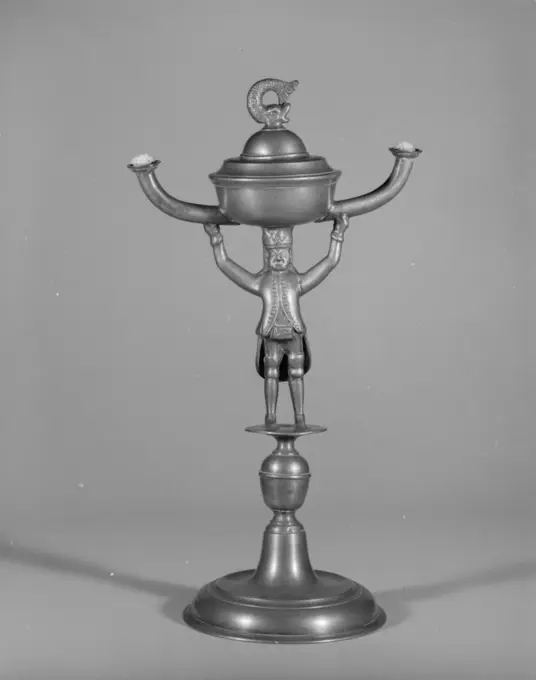
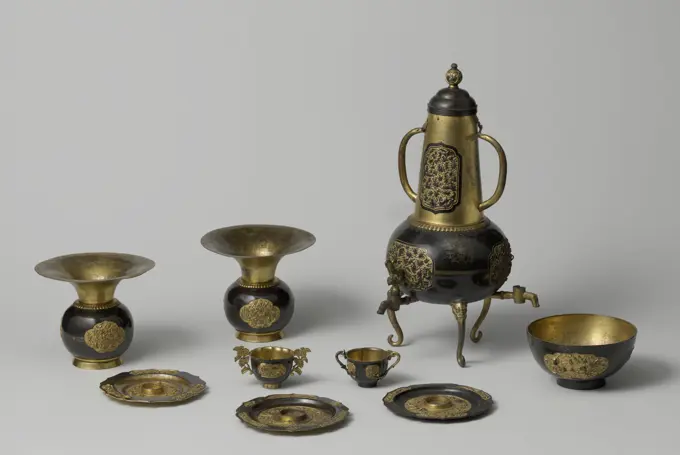
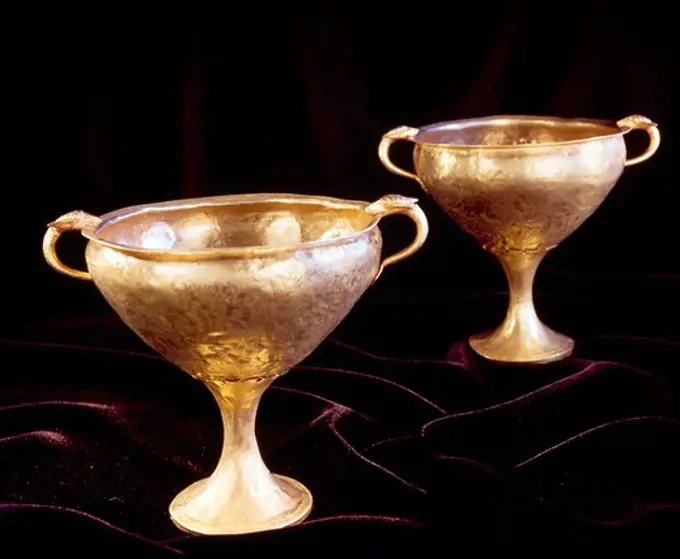
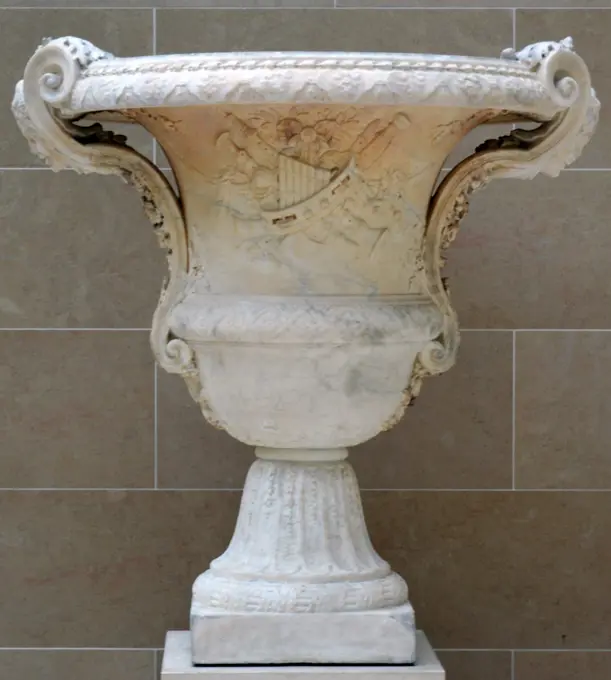
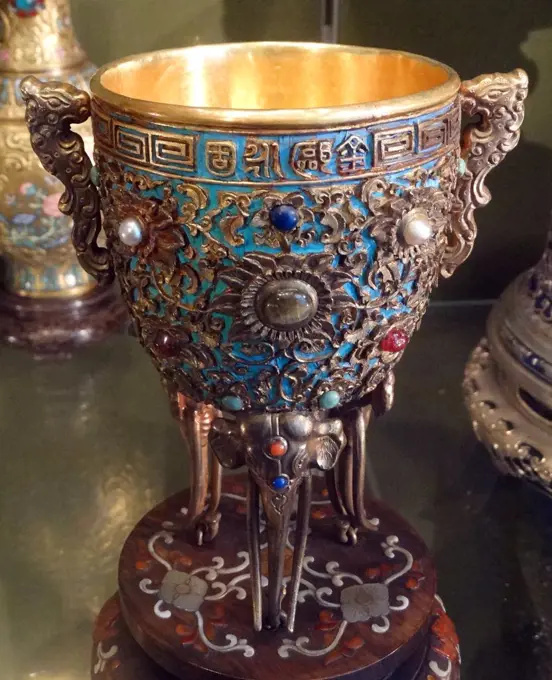
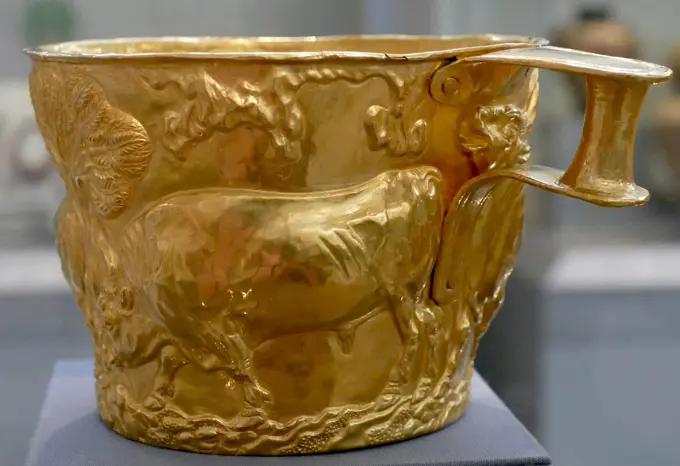
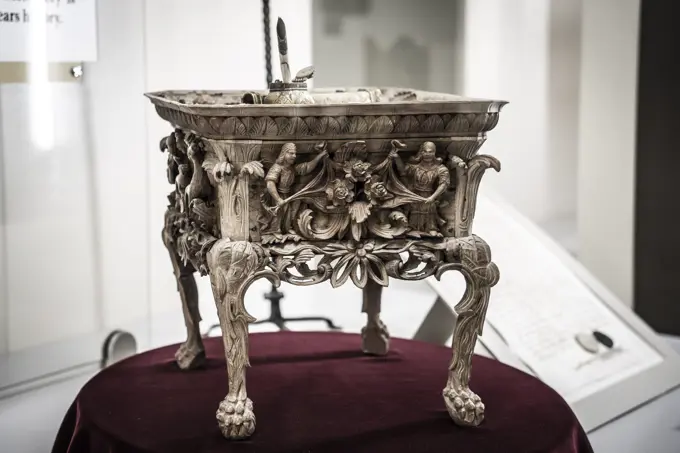
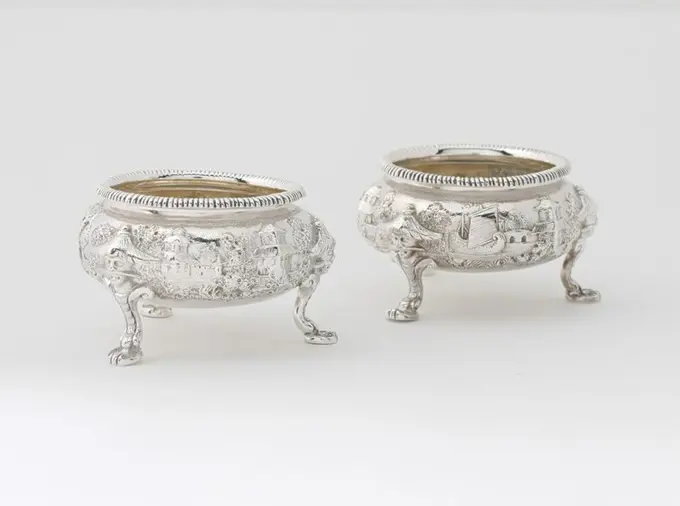
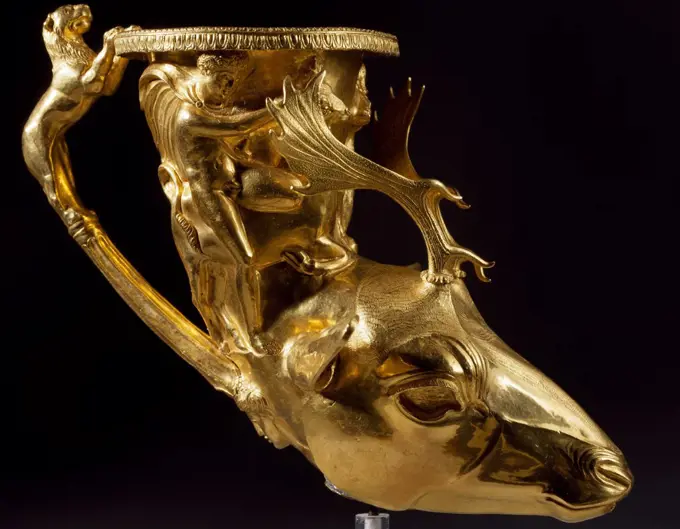
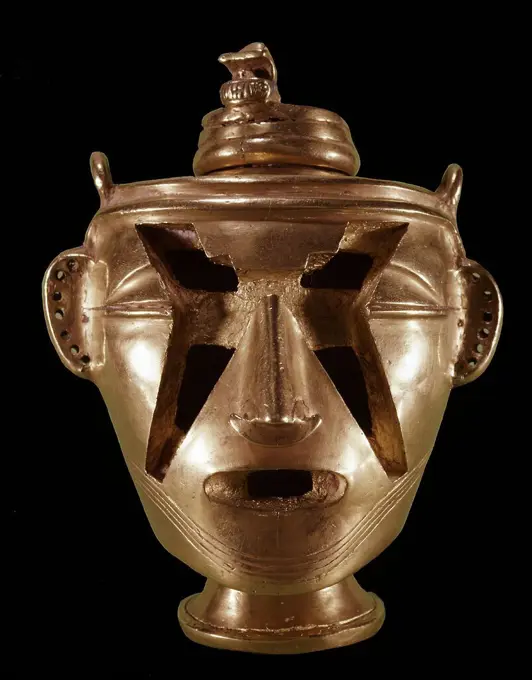
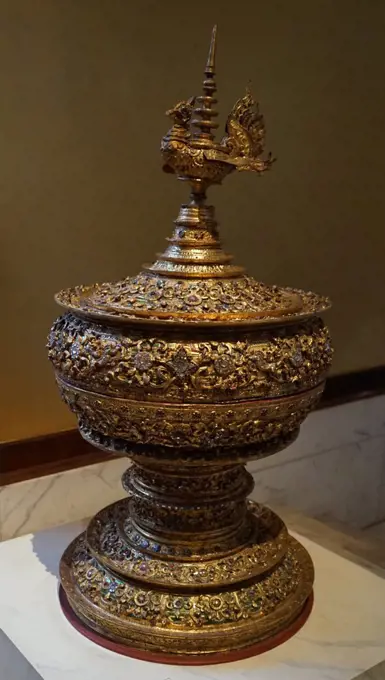
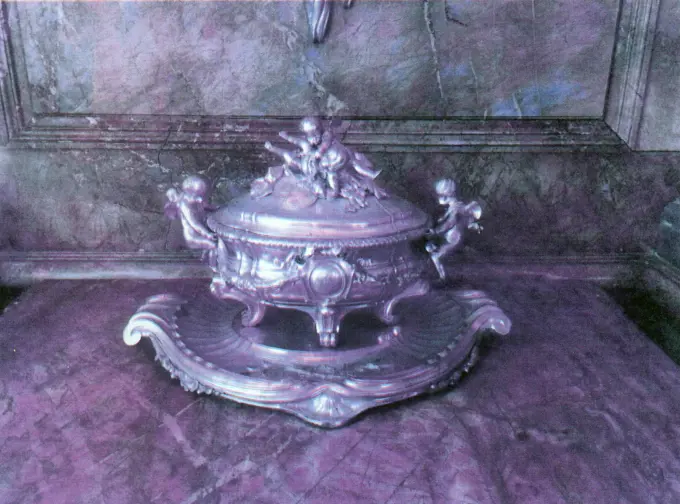
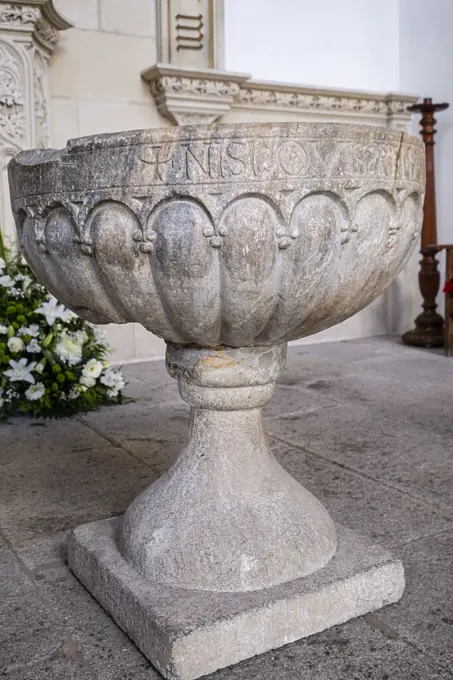
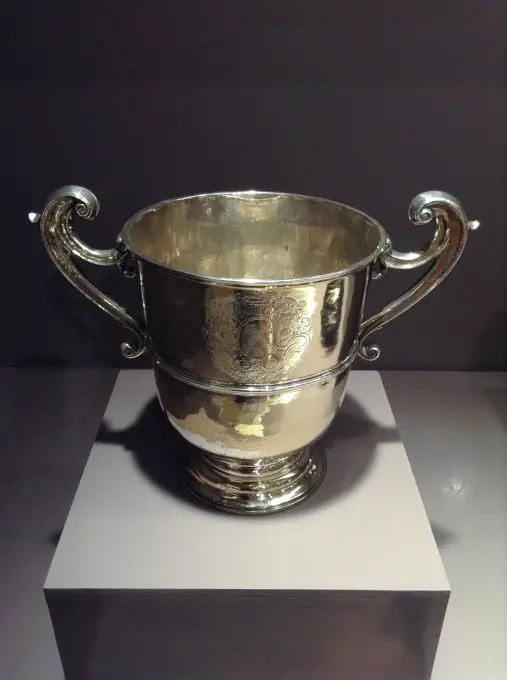
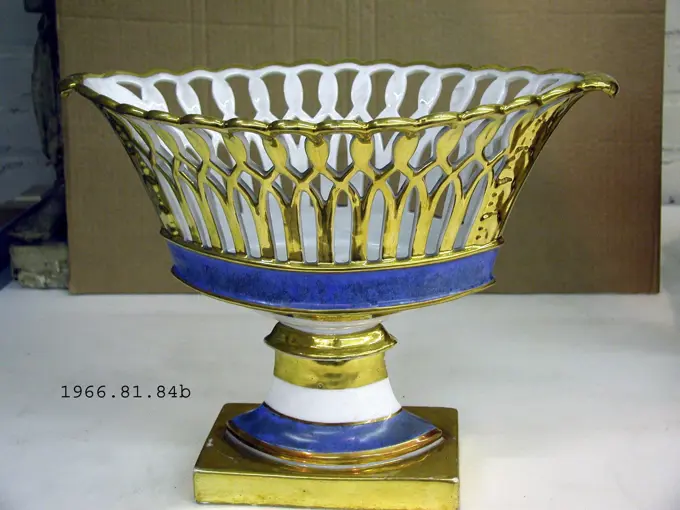
Tile Made 1775-1780 Liverpool. Tin-glazed earthenware, transfer-printed . John SadlerCream Pitcher, from a six-piece Coffee and Tea Set, 3 15/16 x 5 15/16 x 3 1/4 in. (10 x 15.08 x 8.26 cm), SilverGoelet Cup for the SchoonerLasca. Patron: Ogden Goelet, American, 1851-1897 Manufacturer: Tiffany and Company, American, founded 1837Candelabra. England. Date: 1780-1800. Dimensions: H. 31.4 cm (12 3/8 in.). Clear and blue glass, gilding and brass mounts. Origin: England. Museum: The Chicago Art Institute, Chicago, USA.Salt cellar; Barnard, Edward & Sons Ltd (London; company Z 1921/22 (1921-00-00-1922-00-00);Pair of elephant-head vases (vases à tête d'éléphant) ca. 1758 Sèvres Manufactory French Relatively few elephant head vases were produced at Sèvres, perhaps due to the sculptural complexity of the model and thus the cost in making it. Of the twenty-one examples known to have survived, this Museum is fortunate in possessing six (see also 1976.155.61; 58.75.90a, b; 58.75.91a, b; and 1983.185.9).. Pair of elephant-head vases (vases à tête d'éléphant). French, Sèvres. ca. 1758. Soft-paste porcelain. Ceramics-PorcelainCup and saucer, part of coffee and tea service with cityscapes, cup and saucer coffee service tea set tableware ceramics porcelain glaze, baked glazed painted stove enamelled Cup and saucer Free deep saucer on wide stand ring. Gilded at the top except the middle. Auger shaped head with protruding upper edge. Curled ear with loop resting on the edge of the head. At the front with window in which cityscape is the corresponding caption is located at the bottom of the head maison de Campagne rupel topography coffee drinking coffee drink tea drinking drink RupelmondWaste Bowl 1835-40 William Forbes. Waste Bowl. American. 1835-40. Silver. Made in New York, New York, United StatesPug with inscription Gerchken Wlffers AO 1605. The molded round mortar widens upwards, has a cursory profiled edge and a flared profiled foot. On the edge in Latin Majuskels The inscription Gerches Wlffers AO 1605 with interpunctions consisting of a window (four times). The upper fries consists of a repeat of three flowers on stealing in a flat-scale. The lower fries consists of a repeat of a four-leaf rosette. Simple dolphin ears.Silversmith: Daniel van Strant, Silver miniature wine cooler, cooler crockery holder dolls toy relaxant miniature model silver, Oval wine cooler on stand ring with scalloped upper edge and two hinged handles. stadskeur: three crosses under crown adorn play chilling serve home interior Rotterdam dollhouse BishopBell-shaped cup with a crucifixion scene, anonymous, c. 1780 Bell -shaped head of porcelain with a straight wall, painted on the glaze in black and gold. On the outside a representation of the crucifixion with the two Maria's; the soil with a twig; A band with a decorative pattern on the inner edge. A chip in the edge and a crack in the wall. Part of a tea set. European performance in Encre de Chine. China porcelain. glaze. gold (metal) painting / gilding / vitrification Bell -shaped head of porcelain with a straight wall, painted on the glaze in black and gold. On the outside a representation of the crucifixion with the two Maria's; the soil with a twig; A band with a decorative pattern on the inner edge. A chip in the edge and a crack in the wall. Part of a tea set. European performance in Encre de Chine. China porcelain. glaze. gold (metal) painting / gilding / vitrificationJohn Burt Lyng, Strainer, c. 1770, silver.Flask. .Vase. England, Leeds; With Transfer Decoration after Adam Buck; Irish, 1759-1833. Date: 1815-1825. Dimensions: H. 14 cm (5 1/2 in.). Earthenware with silver lustre decoration, monochrome brown, and yellow ground. Origin: Leeds. Museum: The Chicago Art Institute, Chicago, USA.Ancient lamp isolated on the whitePolychrome lekane painted with wedding symbols, by Pittore di Lipari (Painter of Lipari), from the necropolis of Lipari, Sicily, Italy. Magna Graecia civilization, 4th century BC.Tea service and stand, Meissener porcelain manufactory, c. 1731 - c. 1732 Marked tea set on a scaffold or chassis (BK-17017). porcelain company: Meissenmaker: Augsburgmaker: Augsburg porcelain. silver (metal) Marked tea set on a scaffold or chassis (BK-17017). porcelain company: Meissenmaker: Augsburgmaker: Augsburg porcelain. silver (metal)Beaker with medallions with hunting scenes ca. 1730 Bohemian. Beaker with medallions with hunting scenes 195952Minoan Middle Kingdom silver cup 2000-1800 BCVase-butter with lid; Imperial Porcelain Factory in St. Petersburg (1744-1917), Spiess, August Kar Sowow (1817-1904); 1869 (1869-00-00-1869-00-00);Chalice, Vetro a retorti mouth-blown glass, Two gold-flecked seahorses mounted on a chalice with spiral twists in pink and gold; the stem entwined with a serpent; the base matching the chalice with pink and gold reticello decoration, ca 1885, glasswares, Decorative Arts, ChaliceCoffeepot (cafétière "campanienne") (part of a service) 1836 Sèvres Manufactory French The interest in depicting foreign and exotic locations on Sèvres porcelain tea and dinner services begins in the earliest years of the nineteenth century, propelled in part by French Emperor Napoléon Is (1769-1821) expedition to Egypt in 1798-99. The fascination with Egypt was both profound and long lasting, and some of the factorys most inventive work is found on services that utilize Egyptian motifs in both two and three dimensions.[1 The curiosity about foreign lands extended far beyond Egypt, however, and the taste for depictions of exotic places lasted into the 1840s.[2 The popularity of this type of subject matter coincided with a growing interest in creating thematic programs for multi-piece services.[3 In a letter from 1834, Alexandre Brongniart (French, 1770-1847), director of the Sèvres factory, stated his belief in the importance of linking sets of objects together by theme, as well aTRÈFLE. Acquired by the artist on the Paris World Fair 1900Cup - Goblet, 1700-1800. Made in England. Pinto Collection - Purchased from Edward H Pinto, 1965.. This laburnum wood goblet is one of a pair, probably dating from the eighteenth century. We can tell that it was made on a pole lathe because the point where the goblet was held in place on the lathe leaves a characteristic mark on the base. It is very difficult to date these plain wooden goblets accurately as styles and patterns changed very slowly over the years. Laburnum wood was an interesting choice for this goblet as its warm tones and contrasting dark heart and yellow sapwood help to add a certain beauty and finesse to an otherwise everyday object.Set of four wine coolers, 1828, Edward, Edward, James, and Barnard (a.k.a. Edward Barnard & Sons); Retailer: David Ellis, London, 14 1/4 x 12 x 8 3/4 in. (36.2 x 30.5 x 22.2cm), Silver, gilt, England, NeoclassicalCup and saucer ca. 1825 Royal Porcelain Manufactory (Königliche Porzellan-Manufaktur), Berlin. Cup and saucer 461093Pair of Cups with Covers. Anthony Nelme (England, London, circa 1679-1723). England, London, 1713-1714. Furnishings; Serviceware. SilverFruit bowl - Sawtooth pattern Burlington Glass Works Burlington Glass WorksSoft-paste porcelain Ice-Cream cooler from the dinner service delivered to Catherine II of Russia. Dated 18th CenturyOil lamp first half 19th century German, Saxony. Oil lamp. German, Saxony. first half 19th century. Pewter. Metalwork-PewterTobacco cup. Round, shallow tobacco basin on three legs that go through to the edge of the container and walk out there in profiled buttons. The legs are curved in the bin. The Komfoor has an impetus for a handle that is missing. The Komfoor has been labeled: STK. = Amsterdam, MT. = Attributed to Pieter van Somerwil I and an ax.Tonkinservies, anonymous, 1700 - 1800 service (set) Crockery consisting of a tap, two kwispedors, two cups, three dishes and a sugar bowl. The crockery is partly black conquered and partly (fire) gilded Suassa, with frightened decorations and cartouches with similar representations in relief. Tonkin . casting  Vietnam. CantonOrnamental Finial, early 1800s. France, early 19th century. Bronze; overall: 10.2 x 7.7 cm (4 x 3 1/16 in.).Unknown, pair of vases (title of the whole). Painted and golden porcelain. Petit Palais, Museum of Fine Arts of the City of Paris.Pair of Vases (Pots Pourris à Bobèches). Sèvres Porcelain Manufactory; French, founded 1740; Designed by Jean-Claude Duplessis; (French, fl. 1745/48-1774, died 1783); Painted by André-Vincent Vieillard (attributed to); (French, 1717-90, active 1752-90). Date: 1754-1764. Dimensions: 1994.371.1: H. 24.1 cm (9 1/2 in.)1994.371.2: H. 25.2 cm (9 7/8 in.). Soft-paste porcelain, polychrome enamels, and gilding. Origin: Sèvres. Museum: The Chicago Art Institute, Chicago, USA. Author: Manufacture nationale de Sevres.Chalices, Found at Mycene in GreeceCup with relief decoration of a robbery of a caravan. Cup of porcelain with relief decoration in gold with a robbery of a caravan in a vignette in a landscape emt palm tree. Signature: BS & Cie à Paris.Kelch - At the beginning of the 17th century, Christian Grail Kelch - at the beginning of the 17th century, Christian GrailVase made of carrara marble decorated with trophies of musical instrumentsTerritorial Integrity wine cup, one of four cups made for the Qianlong Emperor. Made from gold, saltwater pearls, quartz and chrysoberyl cat's eyes, lapis, turquoises, carnelians, red spinels and kingfisher feather. The base is made from wood and inlaid with mother-of-pearl, ivory and carnelian. From China, the period of the Qianlong Emperor, 1736-1795.Gold grave object from the Pylos Tholos Tombs; 14th century BC; Mycenaean.HUMPEN with representations of a hunter and two women. Large huseps with light inserted bottom. Smooth, mounted stand ring, decorated with white dots. On the cylinder-shaped body two medallions, each surrounded by a lagoer wreath. In one medallion a hunter with over the shoulders glue sticks with birds and around the agent a row hare. In the second medallion two women, according to the captions of mother and daughter, the first with a glue stick in one hand and in the other a staff with a owl, the second with a glue in one and a mirror in the other hand. Between the medallions the year 1594. Along the top edge, a gold-plated band with rosettes and rows of rows. Above the hunter the caption: Hola Wo Her Mitt der Leimstaken Ich Mein du Wolst bird fangs. Belonder: Sich Lieber Sich Who Ein Fein Leimknecht Bin Ich Mitt Meiner Gesm CKTen Leimstaken Hab Ich Bird und Hasen Helsen. Above the mother: yes Mein hand full of mitt zu Feltt den Gleich und Gleich Sich Gern Geselt. Belonder: Meines GleA carved table of Debar masters A carved table by Debar-MeisterCharger ca. 1635 Workshop of David Winckler. Charger 208536Joseph L Boyd, Ornamental Oil Lamp, c 1940 Ornamental Oil LampCandy dish -White House furnishings and furniture, including silverware, chairs, tables, etc.. White House furnishings. Silver coffee urn on three legs with a repousse griffin motif. Vermeil Room, White House, Washington, D.C.COPON S XVII. Location: CONVENTO DE SAN CLEMENTE-MUSEO. Toledo. SPAIN.Pair of Salts. Charters, Cann, & Dunn; American, 1848-c. 1855; Thomas or James Charters; John Cann, David Dunn; for Ball, Black & Company; American, 1851-1876; New York, New York. Date: 1851-1855. Dimensions: 5.7 × 8.3 cm (2 1/4 × 3 1/4 in.); 1977.45a: 136.8 grams; 1977.45b: 141.9 grams. Silver. Origin: New York City. Museum: The Chicago Art Institute, Chicago, USA.Traditional Indian oil lamp, India, AsiaGold rhyton in the shape of a stag's head with Heracles, Cerinea's deer, Theseus and the bull, and a handle shaped like a lion, from the Treasures of Panagjuriste, Plovdiv Region, Bulgaria. Goldsmith art. Thracian Civilization, 4th-3rd Century BC.RECIPIENTE ANTROPOMORFO DE ORO CON TAPADERA EN FORMA DE SERPIENTE - TESORO QUIMBAYA- 200-1000 DC. Location: MUSEO DE AMERICA-COLECCION. MADRID. SPAIN.Oil lamp, vectorUrn with Satyr Heads, 1700s. France, 18th century. Bronze; overall: 80.6 x 67 x 55.9 cm (31 3/4 x 26 3/8 x 22 in.).Lidded offering vessels from Burma. Dated 19th CenturyTureen with cover 19th century, after 1769 original After an original by Paul Charvel This electrotype is after an eighteenth-century original (1769) in the Winter Palace, St. Petersburg, at the time of reproduction.. Tureen with cover. French, after French original. 19th century, after 1769 original. Silver on base metal. Metalwork-ElectrotypePorcelain collection, Rosenborg Slot or Rosenborg Castle, Copenhagen, Denmark, Scandinavia, EuropeBeaker ca. 1830-40 Bohemian. Beaker 207927Pair of Spill Vases. Flight, Barr & Barr (England, Worcester, 1813-1840)Thomas Baxter, Jr. (attributed to) (England, London, 1782-1821). England, circa 1807-1813. Furnishings; Accessories. Porcelain, gildingDouble snack; L.Z. (enamel; France; FL. CA 1700); early 18th century (1700-00-00-1710-00-00);TwoCompotes. Maker, formerly attributed to: Paul Storr, British, 1771-1844Beaker with Coats-of-Arms, 1607. Germany, 17th century. Enameled glass; overall: 19.4 x 9.7 cm (7 5/8 x 3 13/16 in.).Pair of vases (vases cuir) ca. 1765-70 Sèvres Manufactory French The curious form of these vases was inspired by pilgrim flasks made of leather-encase gourds intended for carrying water. The modeling realistically creates the impression of cut leather panels laced together, enclosing an inner container. The painted decoration makes no reference, however, to the function of the pilgrim flasks; the figures of Cupid and Psyche are based on popular sculptures by Etienne-Maurice Falconet (1716-1791).Jeffrey H. Munger, 2007. Pair of vases (vases cuir) 200572Showcase with objects of ceramics; Halls of crafts July 1962..Easter Egg on Stand, c. 1900-1910. Attributed to House of Fabergé (Russian, 1842-1918). Jade mounted in gold, cabochon rubies, jade and purpurine; part 1: 5.6 x 3.9 cm (2 3/16 x 1 9/16 in.); part 2: 6.1 cm (2 3/8 in.).Charles Caseau, Punch Bowl, c 1936 Punch Bowlfont, 16th century, chapel of the Immaculate, Monastery of San Juan de los Reyes, Toledo, Castilla-La Mancha, Spain.Sports Cup isolated on a white backgroundTwo-handled cup, 1705, Irish, d. 1712, 9 3/16 x 12 9/16 x 7 1/4 in. (23.34 x 31.91 x 18.42 cm), Silver, Ireland, 18th centuryCovered Box or Blue and Gold FruitBasket"Embrujo de Sevilla" de Myrurgia, frasco del perfume femenino. Colección privada.Censer, detail, goldsmithing and textile art from the 16th to the 20th century, St., Saint, Saint