Elegant Historical Fashion Accessories

A collection of vintage clothing accessories including bonnets, sleeves, and brocade fragments, showcasing intricate details and historical textiles.
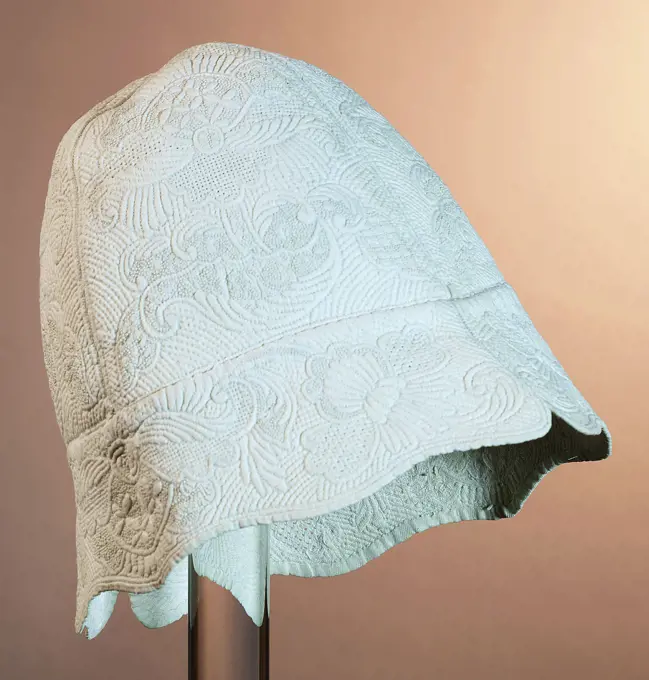
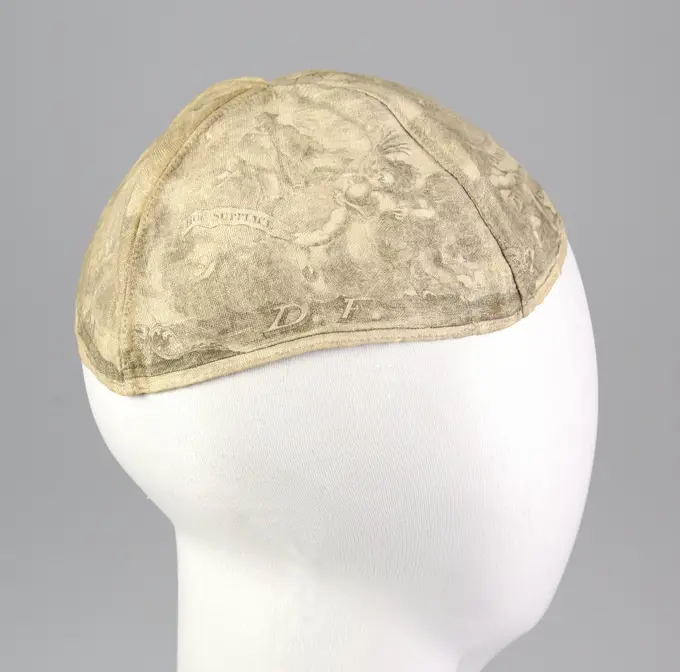
Kraammansmuts, typical cap worn by new fathers, made of white cotton, ball with Zaans stitching, cap hat cap headgear men's clothing linen cotton, filling, textile Cap hat made of white cotton ball with Zaans stitching of four parts with sewn-in edge edge man dress head cover night inside house birth maternity period
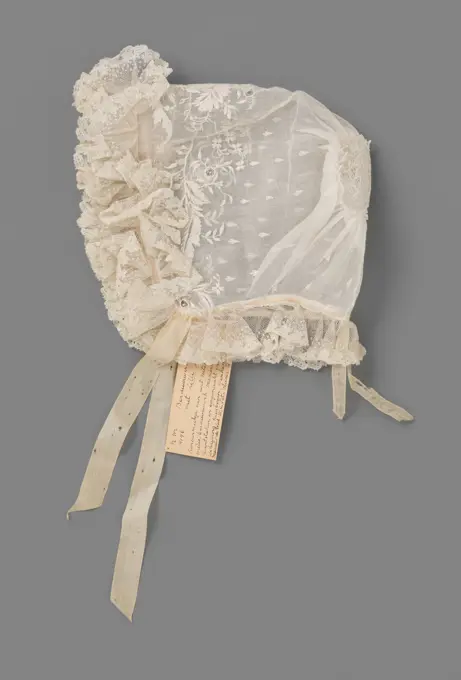
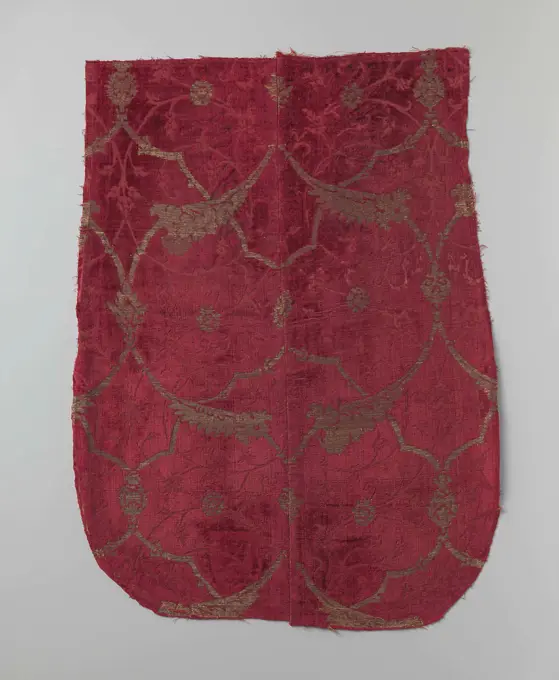
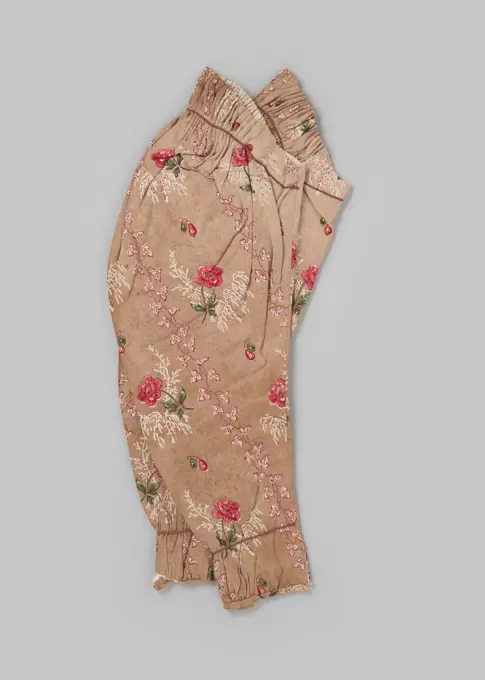
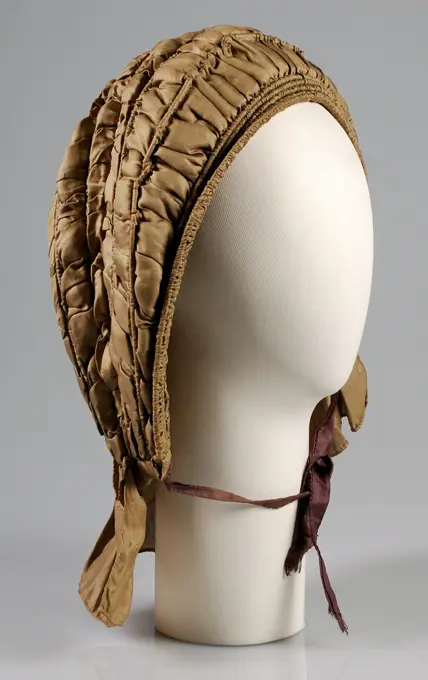
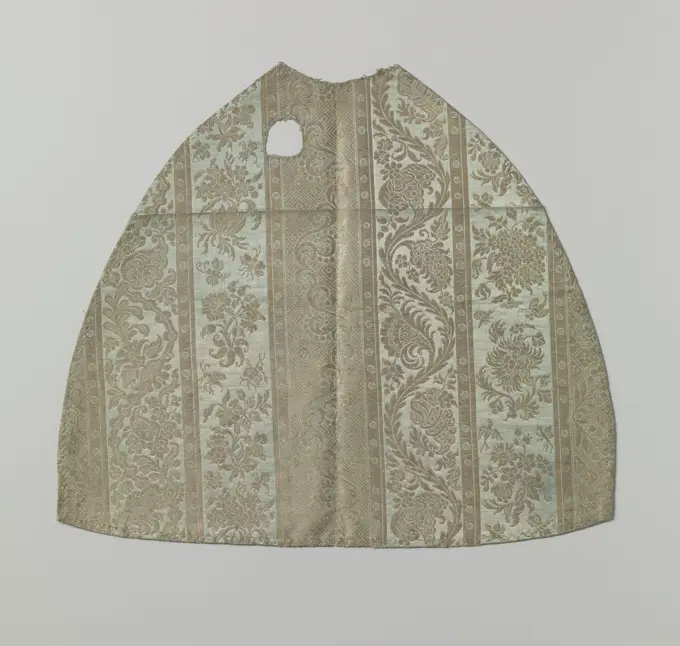
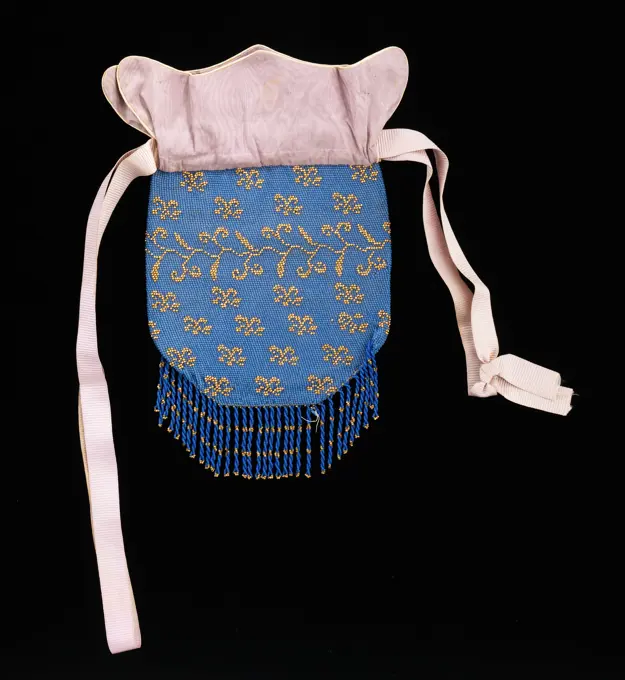
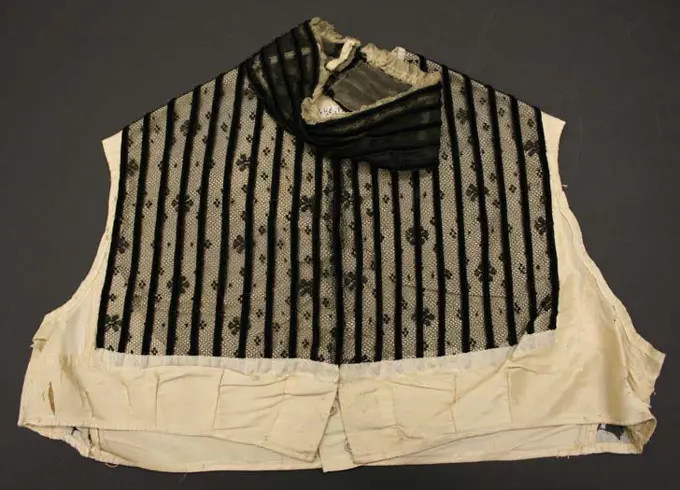
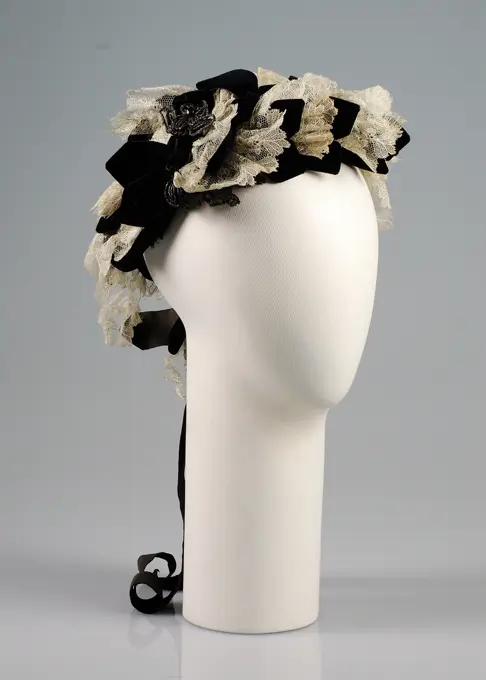
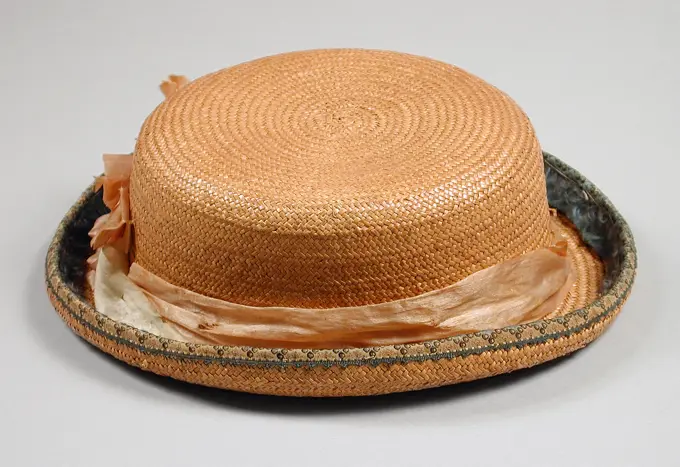
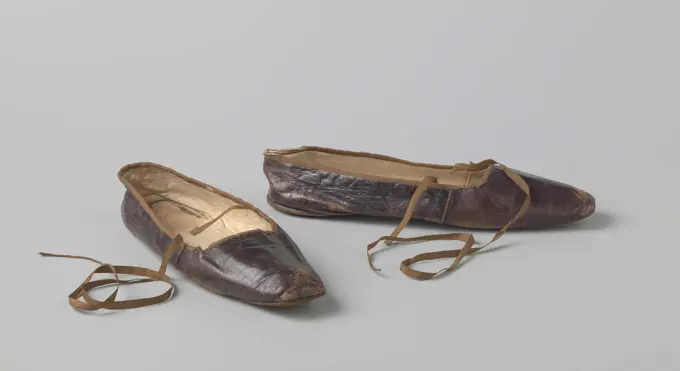
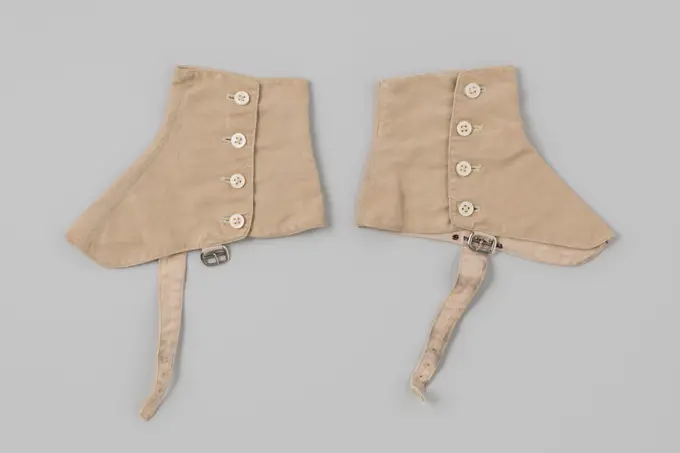
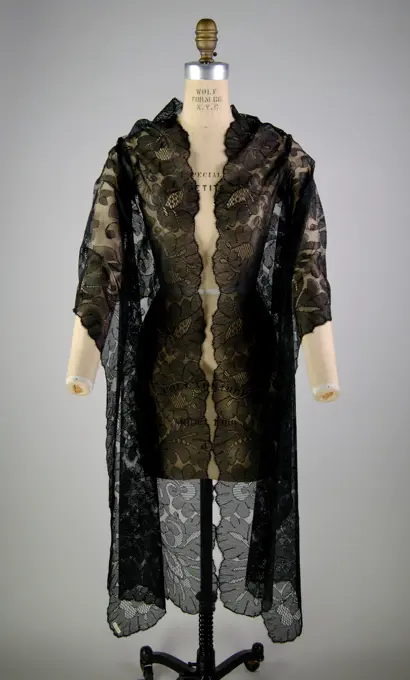
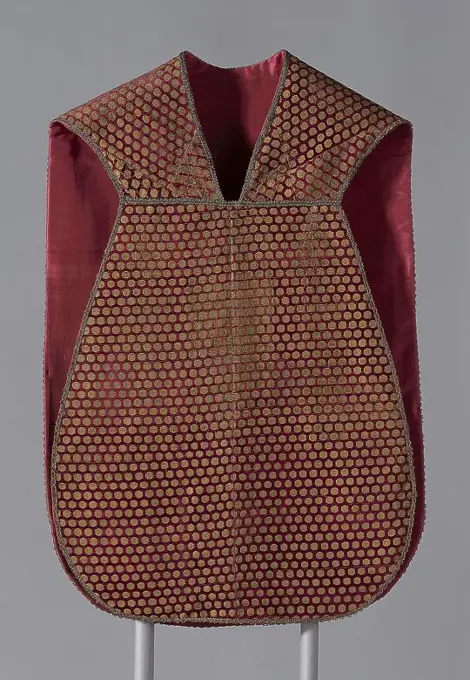
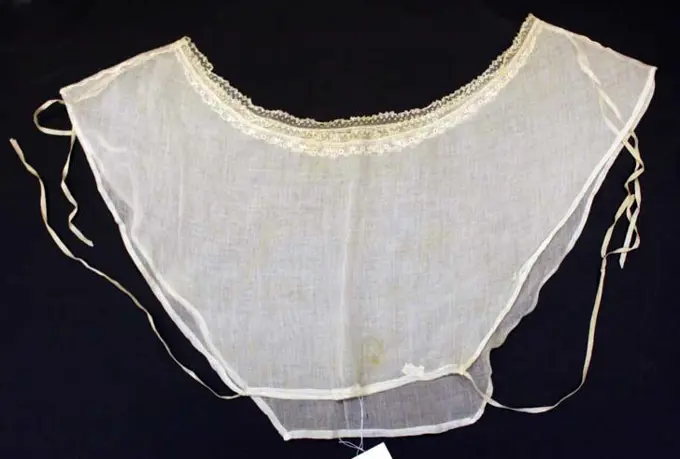
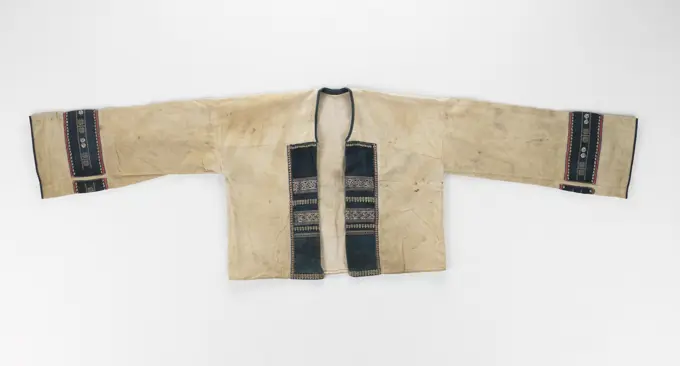
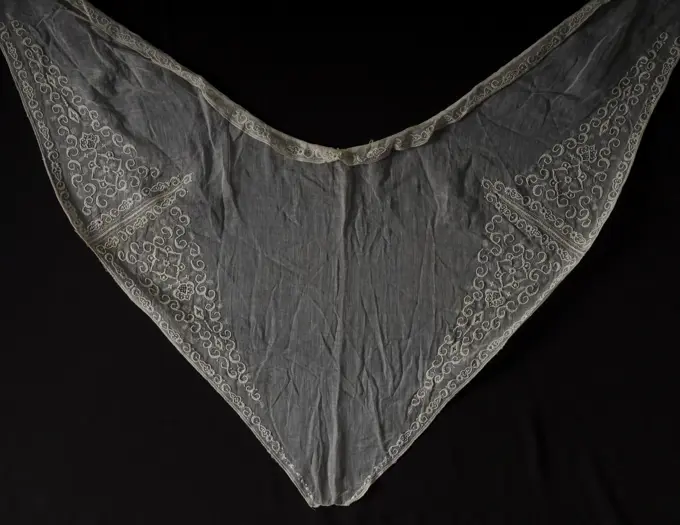
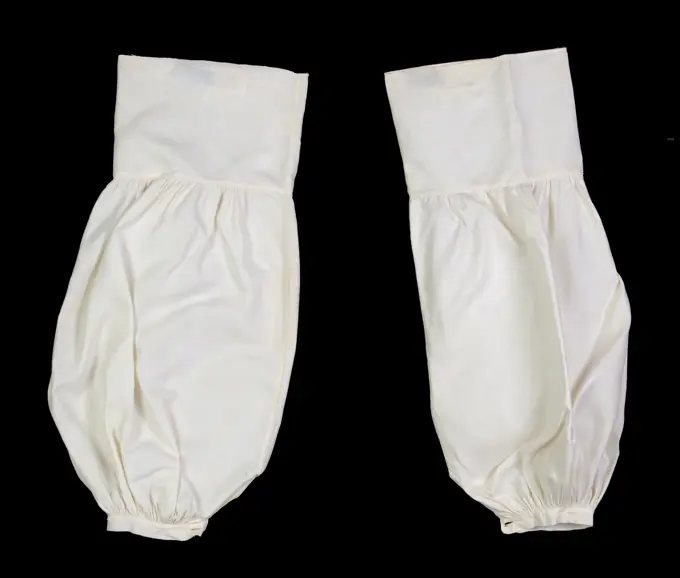
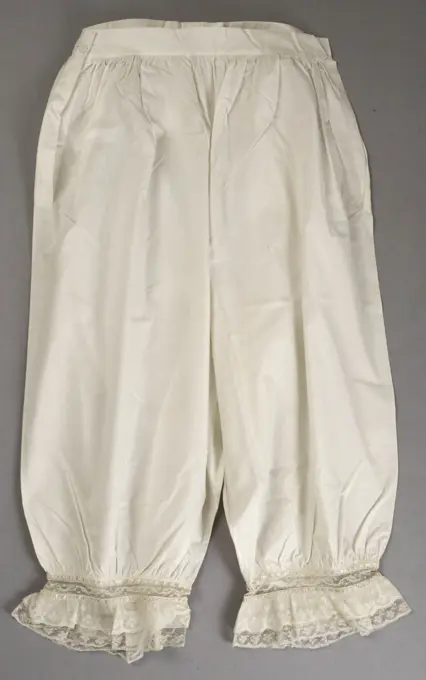
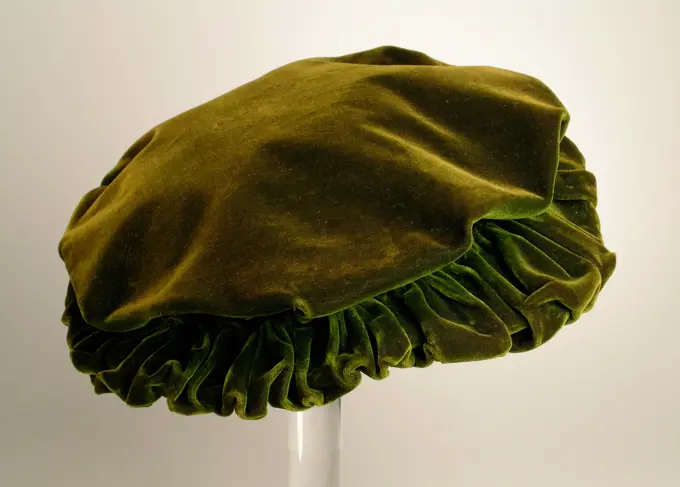
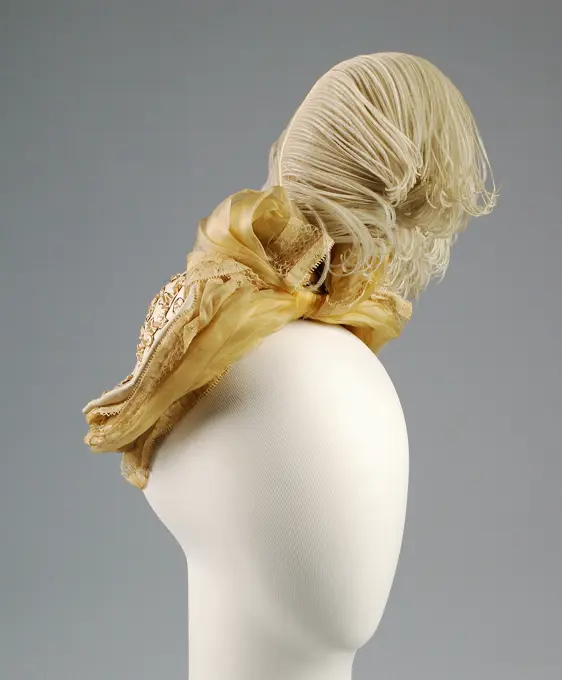
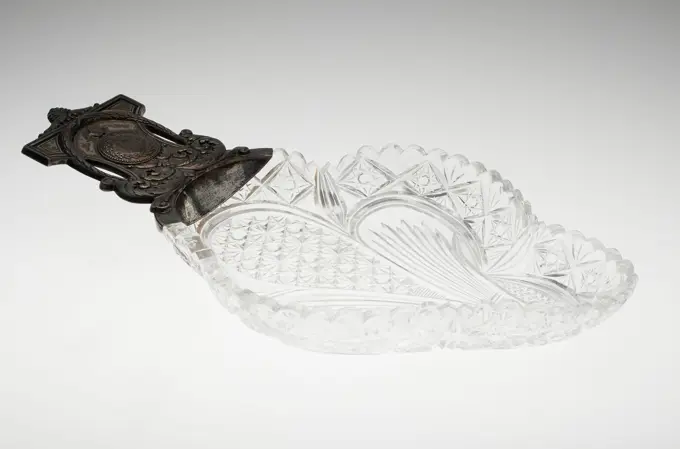
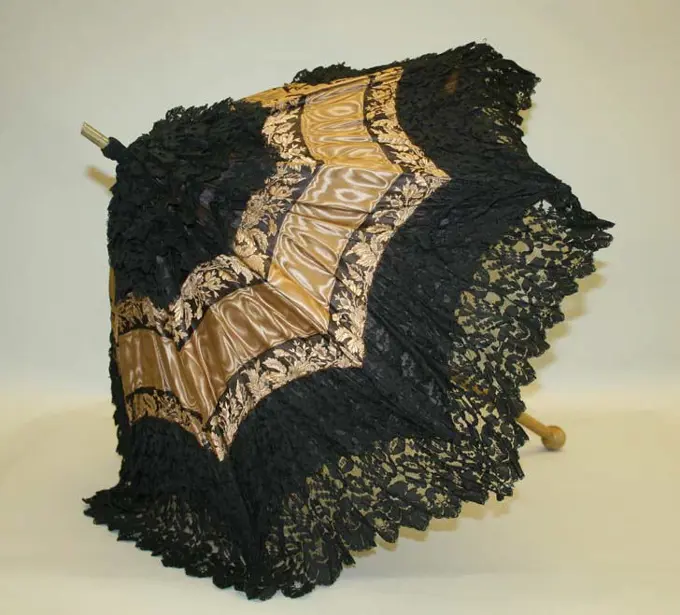
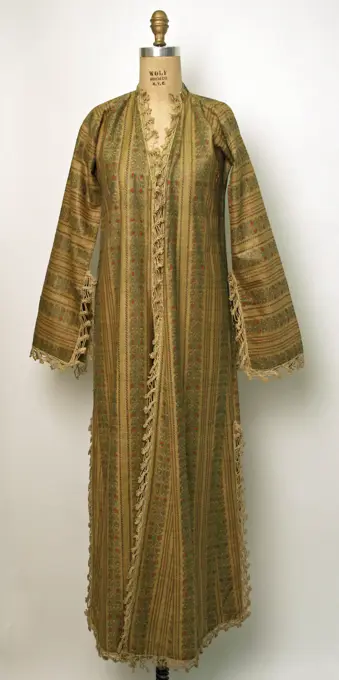
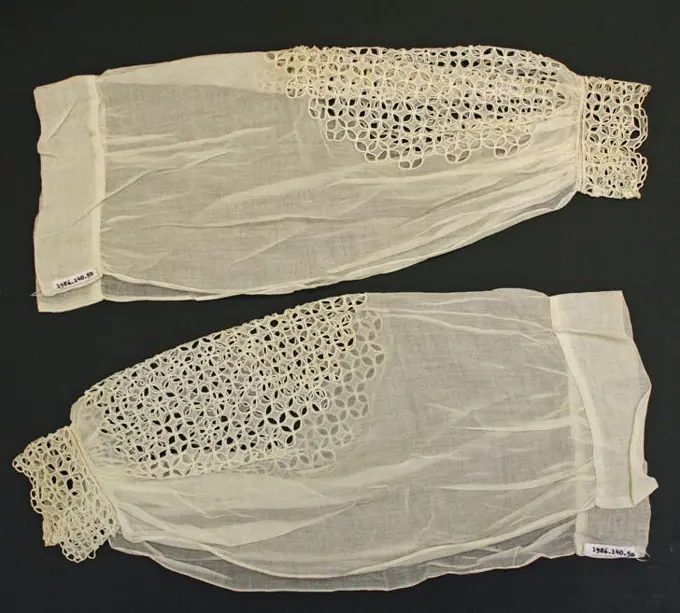
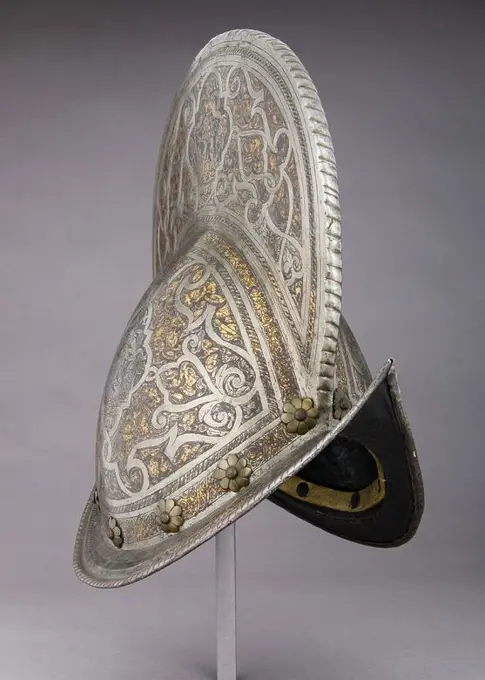
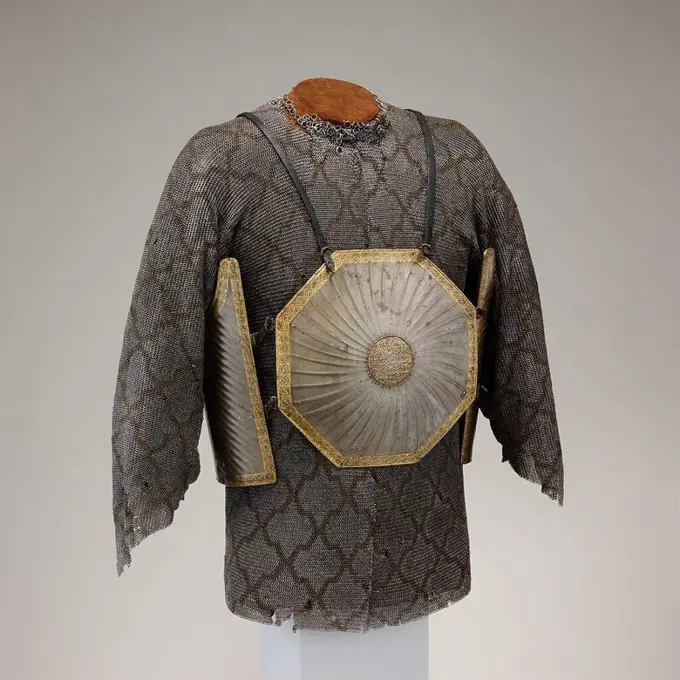
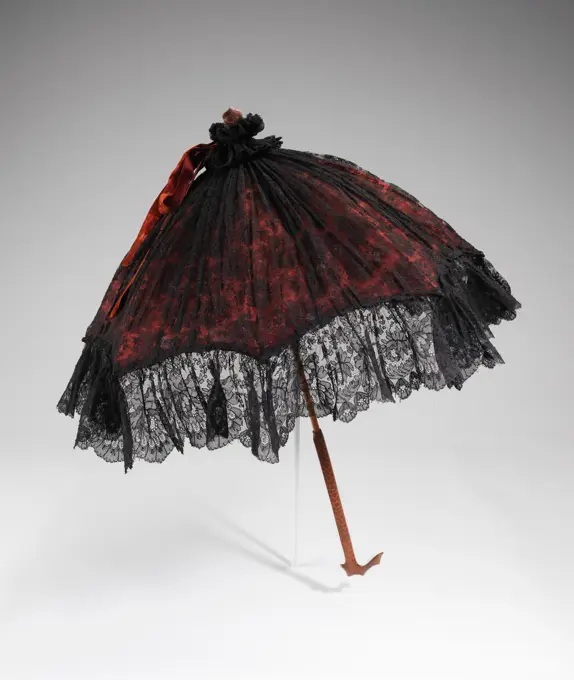
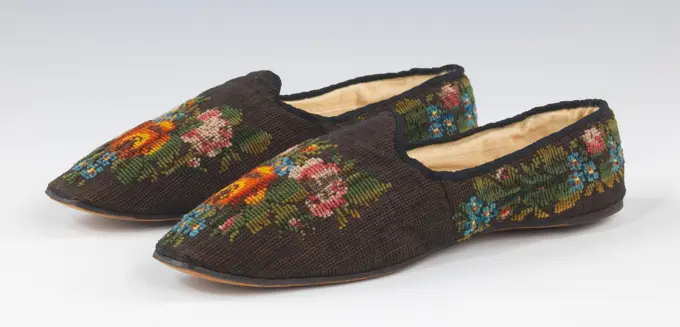
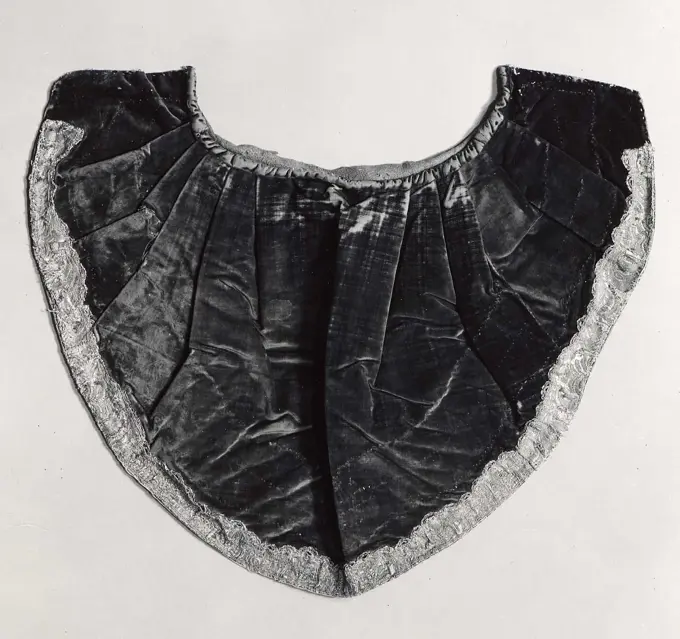
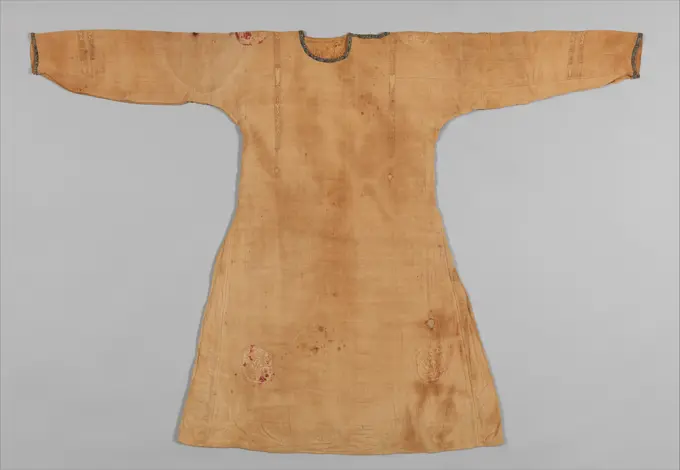
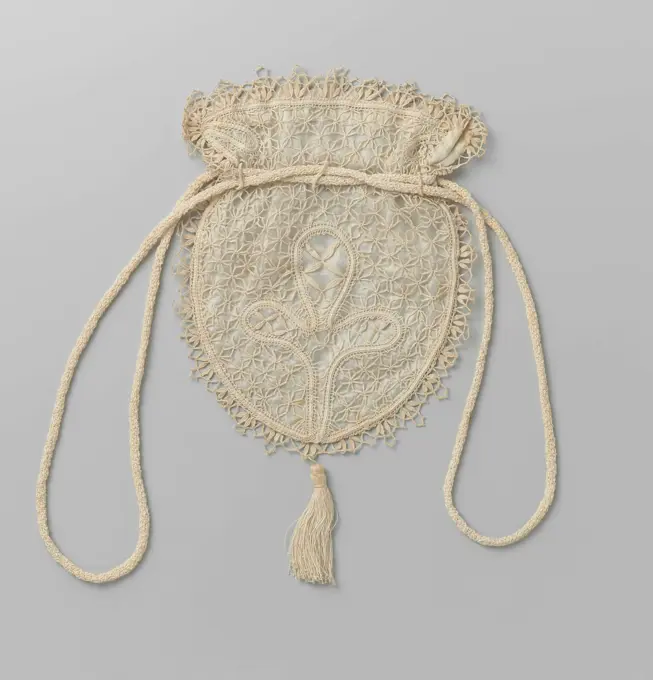
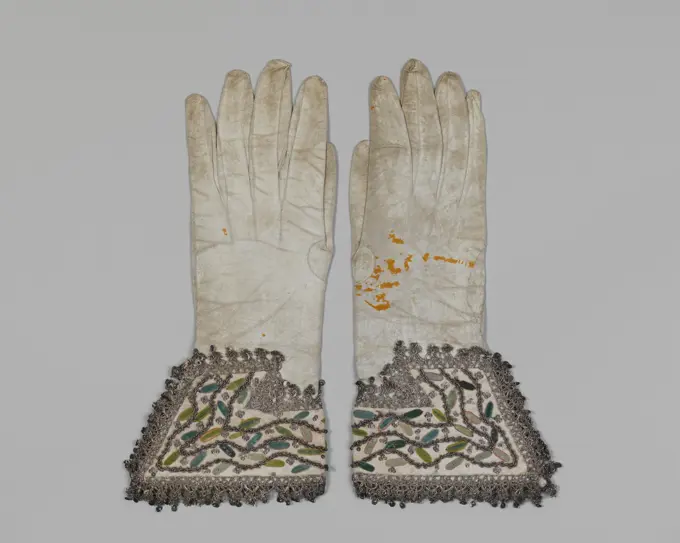
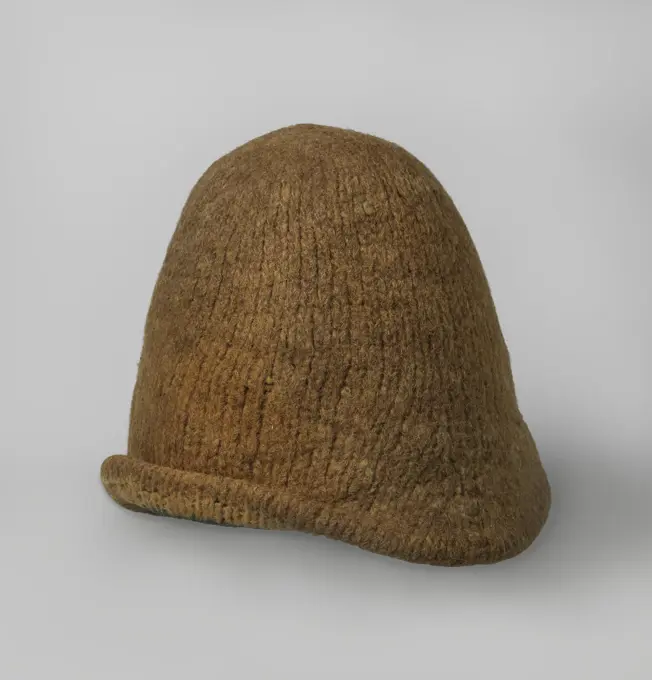
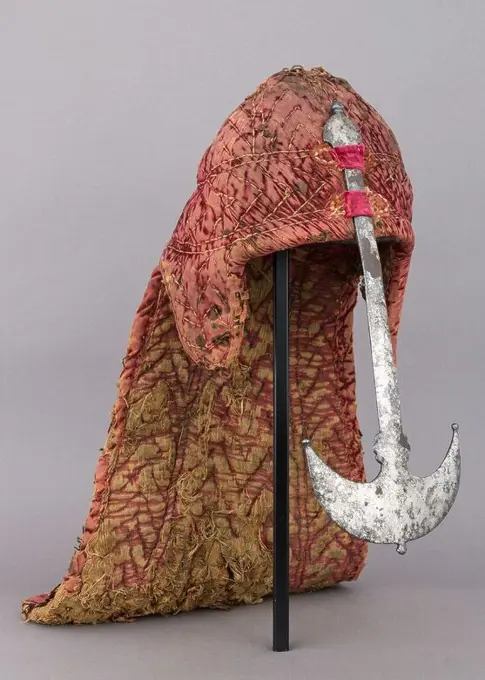
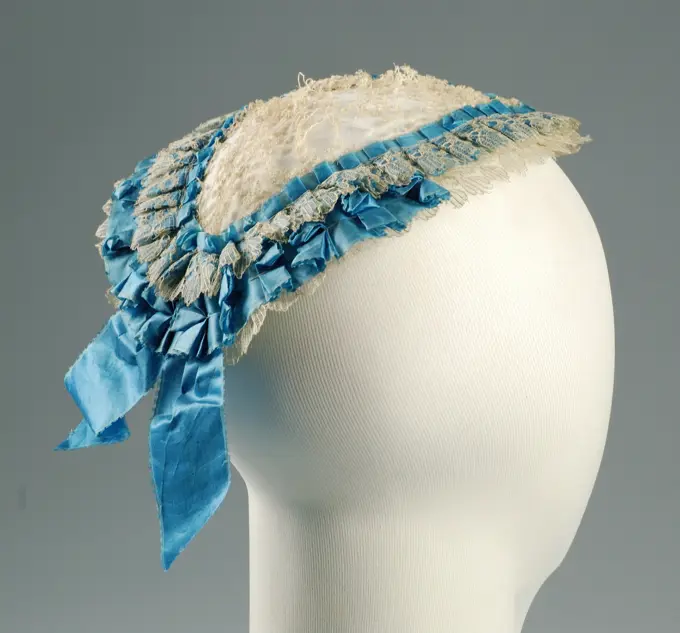
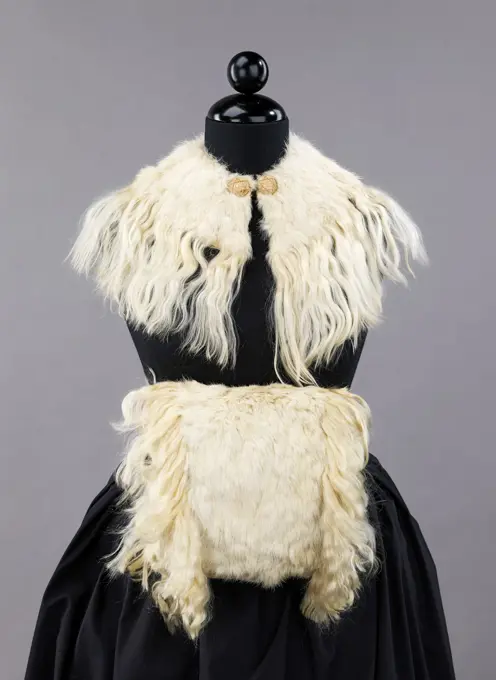
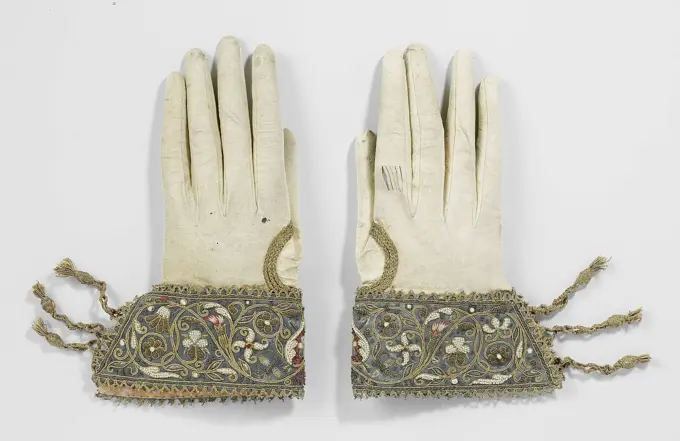
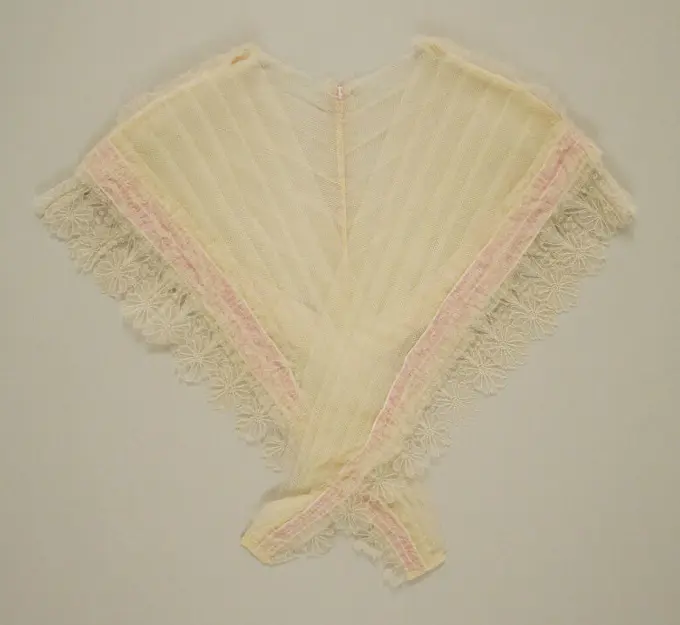
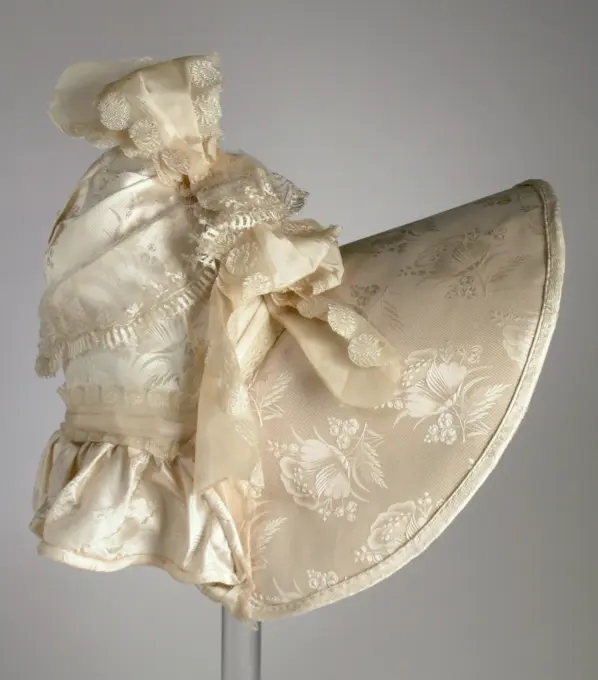
Woman's Bonnet (Wedding). United States, 1830s. Costumes; Accessories. Brocaded silkChildren's hat of white nettle cloth decorated with whitework and needle side stitches and trimmed with an edge of Rijssel side, anonymous, c. 1840 - c. 1860  Children's hat of white nettle cloth that is decorated with whitework in the form of leaves and feathers, and with needle side stitches. The hat ball is trimmed with pleated strips of Rijssel side. With two kinin tires from ribbon. Netherlands (possibly) buckram. kinnebanden: ribbon (material) Lille laceFragment red velvet brocade with tendrils. Fragment red silk veal brocade (two parts together) with a pattern of fine tendrils and in gold thread lancet leaves and scalloped tape work. Yellow self present. Probably a part of a kazufel.Sleeve of light brown cotton with flowers, branches and tendrils printed, anonymous, c. 1700 - c. 1800 Sleeve of light brown cotton with pink flowers, white branches and red and white tendrils printed. The lower edge of the cuff is cut and the outside of the entire sleeve shows old traces of mold. Netherlands cotton (textile) printing Sleeve of light brown cotton with pink flowers, white branches and red and white tendrils printed. The lower edge of the cuff is cut and the outside of the entire sleeve shows old traces of mold. Netherlands cotton (textile) printingHat with hat -sided hat slips with Spitsovaal Medallon, Anonymous, c. 1780 Hat with hat slips of natural-colored needle side: Alençon side. The pattern has formed a rush -in medallion on the hat ball by two flower garlands, who turn around each other and from which flower branches spring. In the medallion there is a symmetrical flower branch surrounded by a few sprinkling flowers. The slips have the same dual flower garland and sprinkling flowers along the edge. Fine hexagonal Maas soil. France linen (material) Alençon Lace Hat with hat slips of natural-colored needle side: Alençon side. The pattern has formed a rush -in medallion on the hat ball by two flower garlands, who turn around each other and from which flower branches spring. In the medallion there is a symmetrical flower branch surrounded by a few sprinkling flowers. The slips have the same dual flower garland and sprinkling flowers along the edge. Fine hexagonal Maas soil. France linen (material) Alençon LaceShirt 1781 American. Shirt 103743Kraammansmuts, typical cap worn by new fathers, made of white cotton, ball with Zaans stitching, cap hat cap headgear men's clothing linen cotton, filling, textile Cap hat made of white cotton ball with Zaans stitching of four parts with sewn-in edge edge man dress head cover night inside house birth maternity periodDrawers 1860s American. Drawers 108983Calash ca. 1840 American. Calash 168680Stockings ca. 1894 French. Stockings 121212Fragment of a silk satin brocade, anonymous, c. 1750 - c. 1800 Fragment of a silk tissue in irregular shape with a round cut; Perhaps once used for child Jesus sculpture. The pattern is made of gold to the blue side (green faded) and has a pattern of alternating a job in which geometric shapes, a job within which flower bouquets and a job within which flower garlands. France silk. Fragment of a silk tissue in irregular shape with a round cut; Perhaps once used for child Jesus sculpture. The pattern is made of gold to the blue side (green faded) and has a pattern of alternating a job in which geometric shapes, a job within which flower bouquets and a job within which flower garlands. France silk.Pouch 1840-60 American. Pouch 156812Model of a Razeail, Anonymous, 1700 - 1900 scale model Model of a sail with a different kind of gei blocks on the lap horn. On the other hand, an extra block has been added. On Sailing Subscription on Label. Flushing (possibly) textile materials. wood (plant material)Bliżej Kultury unknownSlip early 19th century American or European. Slip 90499ROPAS DE ALI-BAJA. Location: PALACIO REAL-REAL ARMERIA DE MADRID. MADRID. SPANIEN.Damn. Striped white cotton canvas. White linen canvas. 1760-190. Galliera, fashion museum of the city of Paris. 101510-4 Costume, 18th 18th 18th 18th 18th 18th centuryDickey 1895 American or European. Dickey 120834Bonnet ca. 1875 American. Bonnet. American. ca. 1875. Linen, silk, beadsTorsoBoy's Pork-pie Hat. Probably United States, 1865-1869. Costumes; Accessories. Plaited natural straw, silk ribbonAfternoon apron ca. 1875 American. Afternoon apron 168614Cap 1830-50 Slovak. Cap. Slovak. 1830-50. LinenCalot 1790-1820 probably Italian. Calot 175561Shoe of golden corner with straight cut nose and without heel and cross tires of brown ribbon.Shot from Golden Corn Leather. Left / Right Equal. Model: Right Cut Nose. No whole. Crocklet lines from brown ribbon. White Leather Lining, For The Toe With Linen. Slight Damage to The NoseFragment 16th century Italian. Fragment. Italian. 16th century. Silk, metal thread. Textiles-VelvetsSlobkous of sand -colored linen cotton on which four mother -of -pearl knots and a linen belt with metal buckle under the foot, The Diamond Gaiter, c. 1900 - c. 1930 Slobkous of sand -colored linen cotton on which four mother -of -pearl knots and a linen belt with silver -colored metal buckle under the foot. Lined with cotton. Inside a label with: 'The Diamond Gaiter. Reg'd. Made in England '. England whole: Cotton (textile). lining: cotton (textile). Buttons:. buckle: Metal Slobkous of sand -colored linen cotton on which four mother -of -pearl knots and a linen belt with silver -colored metal buckle under the foot. Lined with cotton. Inside a label with: 'The Diamond Gaiter. Reg'd. Made in England '. England whole: Cotton (textile). lining: cotton (textile). Buttons:. buckle: MetalStole fourth quarter 19th century Spanish. Stole 168605Chasuble. Iran (Persia, Tabriz). Date: 1275-1400. Dimensions: 107.5 x 70.6 cm (42 1/4 x 27 7/8 in.)Repeat: 3.2 x 3.2 cm (1 1/4 x 1 1/4 in.). Silk, plain weave with twill interlacings of secondary binding warps and gilt-animal-substrate-wrapped silk supplementary facing wefts; supplementary pile warps forming cut voided velvet; edged with gilt-metal-strip-wrapped silk, bobbin-made tape; lined with silk, plain weave. Origin: Tabriz. Museum: The Chicago Art Institute, Chicago, USA.Fichu 1850s probably American. Fichu 94246Corset of light blue silk with a white flower pattern, lined with ranned white flannel., Anonymous, 1740 - 1760 Silk corset with a white flower pattern on a light blue foundation. Presumably wooden ribs. Both in front and back. Incised on the sides. Lining of roughly white flannel. Netherlands (possibly) silk. wood (plant material) Silk corset with a white flower pattern on a light blue foundation. Presumably wooden ribs. Both in front and back. Incised on the sides. Lining of roughly white flannel. Netherlands (possibly) silk. wood (plant material)Jacket, 53 x 16 in. (134.62 x 40.64 cm), Linen, metal trim, ChinaTassel 18th century French. Tassel 213544Under skirt of cotton, anonymous Cotton underskirt. Part of a set of underwear.  cotton (textile) Cotton underskirt. Part of a set of underwear.  cotton (textile)FichuUndersleeves ca. 1850 American. Undersleeves 169926Mitaine from golden brown suede with closing two knots of copper, anonymous, c. 1880 - c. 1890 Right mitaine with a separate thumb of golden brown suede with closing of two knots of copper. Three lines on the back. Netherlands Completely: Suede. whole: Copper (Metal) Right mitaine with a separate thumb of golden brown suede with closing of two knots of copper. Three lines on the back. Netherlands Completely: Suede. whole: Copper (Metal)Drawers 1880s probably American. Drawers. probably American. 1880s. cottonWoman's Hat (Tam). France, Paris, late 1880s. Costumes; Accessories. Silk velvetBonnet ca. 1885 Berthe French. Bonnet 168343Beaker with Vertical Trails 13th-14th century Glass decorated with contrasting colors was common in the early Islamic period and continued to be made well into the thirteenth century, as is exemplified by these marvered, enameled, and applied glass beakers.. Beaker with Vertical Trails 448244Bowl 1800-1899 Russia. Glass with silver mount .Shirt ca. 1865 French. Shirt 80464Parasol 1890 American. Parasol 122328Cape. Culture: American. Date: mid-19th century. Museum: Metropolitan Museum of Art, New York, USA.Glove of white leather, anonymous, c. 1900 - c. 1925 Left evening glove, medium length, from white leather. At the wrist a split with three mother -of -pearl buttons. Netherlands (possibly) whole: Leather. Buttons: Left evening glove, medium length, from white leather. At the wrist a split with three mother -of -pearl buttons. Netherlands (possibly) whole: Leather. Buttons:Vest , 1800s. China, Qing dynasty (1644-1911). Beads strung together in diamond pattern; edges in plain weave cotton (); overall: 56.5 x 56.5 cm (22 1/4 x 22 1/4 in.).Old Town, Locorotondo is on a 400 meters high hill on the plateau called "Murgia dei Trulli ,Locorotondo is a delightful village of whitewashed houses, Apulia; Italy, EuropePanel (France); silk embroidered with metal thread and sequins on silkBelt of light blue satin from silk; On the pleated belt, one of the ends is a bow sewn, anonymous, c. 1910 - c. 1920 Belt of light blue satin from silk; A bow is sewn on one of the short ends on the pleated belt. The belt is reinforced with five ribs, and closes with hooks, eyes and snaps. Germany (possibly) whole: Silk. hook; eye; press stud: Metal Belt of light blue satin from silk; A bow is sewn on one of the short ends on the pleated belt. The belt is reinforced with five ribs, and closes with hooks, eyes and snaps. Germany (possibly) whole: Silk. hook; eye; press stud: MetalUcetek Entari 19th century. Ucetek Entari 85540Cape (Spain); silk, metallic threadUndersleeves 1850-69 British. Undersleeves 120028Glove from white cotton in Ajourbreiwerk. Left gloves from white cotton in Ajourbreiwerk. Horizontal tires with geometric figures and at the top of a border with flowers. The fingers knitted with cables.Glove from white cotton in Ajourbreiwerk. Right glove from white cotton in Ajourbreiwerk. Horizontal tires with geometric figures and at the top of a border with flowers. The fingers knitted with cables.Field cap WP MODUSGlove from white knitted silk. White silk right glove, with oval-shaped openings on the side of the fingertips, on the back three radiating cords ending in flowers.Bliżej Kultury unknownWhite baby hat with ribbons and strip of lace, anonymous, c. 1800 - c. 1900 White baby hat with four ribbons and strip side. Europe textile materials White baby hat with four ribbons and strip side. Europe textile materialsShirt 1795-1800 American or European. Shirt 90588Bliżej Kultury unknownBonnet 1850s French. Bonnet. French. 1850s. strawEvening shoes 1894 () J. & J. Slater American. Evening shoes 113197Vestee mid-19th century European. Vestee 119096Burse. unknown, authorMorion. Culture: Italian. Dimensions: H. 14 5/16 in. (36.4 cm); W. 9 1/8 in. (23.2 cm); D. 14 5/8 in. (37.1 cm); Wt. 4 lb. 5 oz. (1966 g). Date: ca. 1570. Museum: Metropolitan Museum of Art, New York, USA.Cuirass (Char Aina) with Mail Shirt. Culture: cuirass, Iranian; mail shirt, Iranian or Indian. Dimensions: Cuirass weight, 6 lb. 8 oz. (2948 g). Date: cuirass, 17th-early 18th century; mail shirt, 19th century.This exceptionally fine cuirass of crucible ("watered") steel is unusual in its use of octagonal plates decroated with fluting. The edges and central bosses are damascened in gold with Koranic inscriptions.Iranian and Indian cuirasses of this four-plate construction are known in Persian as char aina, "four mirrors." The term suggests the talismanic value of the mirror for repelling evil. Museum: Metropolitan Museum of Art, New York, USA.Parasol 1885 probably British The parasol featured is made with two sheer fabrics of different colors, and one can imagine that the combination of the black and claret with the sun shining through would be very beautiful and opulent for both the observer and the wearer. The handle of this parasol is of great interest, for it is carved to imitate alligator skin which is more associated with tailored objects and is in contrast to the ultimate frothiness of the canopy. Generally, handles on parasols were highly ornate and often had a different character from the frilliness of the canopies, this parasol being a testament to this fact.. Parasol 157151Black stitch with ostriches, two black moiré-sides ribbons and a decoration of steel beads, including an orange tone and steel knot, anonymous, c. 1850 - c. 1900 Black stitch with ostriches, two black moiré-sides ribbons and a decoration of steel beads, including an orange tone and steel knot. Part of Heren Statiekstuum. West-Europa edge:. Lint: Silk. Frame: Steel (Alloy). Felt (textile). Inner tube: Leather Black stitch with ostriches, two black moiré-sides ribbons and a decoration of steel beads, including an orange tone and steel knot. Part of Heren Statiekstuum. West-Europa edge:. Lint: Silk. Frame: Steel (Alloy). Felt (textile). Inner tube: LeatherKalot or 'Smoking Cap' from Bordeaux red velvet, embroidered with gold thread and with a brush of gold thread, anonymous, c. 1860 Smoking Cap of Bordeaux red velvet, embroidered with gold thread and with a brush of gold thread. Netherlands velvet (fabric weave). silk. embroidering Smoking Cap of Bordeaux red velvet, embroidered with gold thread and with a brush of gold thread. Netherlands velvet (fabric weave). silk. embroideringCape 1897 French. Cape 106665Slippers 1865-85 American Throughout the Victorian era, middle and upper class women were expected to exhibit their domestic and needleworking skills in the making of useful and attractive items. The embroidery of slipper uppers was widespread domestic pastime that addressed this expectation. The example here is typical of late 19th-century house slippers in both cut and decorative design, and features high quality needlepoint embroidery which retains most of it original bright coloration.. Slippers 156328Cap fourth quarter 19th century probably Hungarian. Cap 157512Holster 17th-18th century Italian or Spanish. Holster 461653Tunic 6th-7th century. Tunic 444374Two pairs of gloves with buttons, anonymous, c. 1900 - c. 1925 Left glove of white chamois leather with three mother -of -pearl. Decorated on the back of the hand with three stitched thickened lines. Knee geheel: chamois (animal material). knoop: mother of pearl Left glove of white chamois leather with three mother -of -pearl. Decorated on the back of the hand with three stitched thickened lines. Knee geheel: chamois (animal material). knoop: mother of pearlRetriculic of dick edge at a lining of ivory silkecrepe. Haticule of natural colosside on a lining of ivory silkecrepe. Pouch-shaped. The front and back have the same open pattern of a star-shaped picoted network of braids, with a cutter Drielobig motif in the middle. The edges of the bag are trimmed with a lace strip. To close the bag, a knotted cord is strung by six crocheted loops. The cord consists of one piece. At the bottom of a brush of ecru-colored cotton.Cap of shaved black felt, decorated with a curly drapery of black rip ribbon, anonymous, c. 1950 Cap made of shaved black felt, decorated with a curly drapery from black rip ribbon. Flat model, with two bent points at the back. Netherlands (possibly) whole: Felt (textile). whole: Cap made of shaved black felt, decorated with a curly drapery from black rip ribbon. Flat model, with two bent points at the back. Netherlands (possibly) whole: Felt (textile). whole:Sleeve of application side with thrown three -part leaves, anonymous, c. 1875 - c. 1899 Sleeve of a natural application side: needle side applied on mechanical tulle. Balloon -shaped upper part that turns into the tube -shaped part that has been wrinkled and wrinkled around the wrist. The upper part of the sleeve is unadorned, part has a spray pattern of twigs with three pointed soils. The cuff is also made of machine tulle, decorated with a connected row of flowers. The cuff is finished with an edge machine side, with a succession of openwork ovals, without soil. Two small mother -of -pearl knots on the cuff. Europe cotton (textile). knopen: mother of pearl Sleeve of a natural application side: needle side applied on mechanical tulle. Balloon -shaped upper part that turns into the tube -shaped part that has been wrinkled and wrinkled around the wrist. The upper part of the sleeve is unadorned, part has a spray pattern of twigs with three pointed soils. The cuff is also made of machinePair of gloves second quarter 17th century British In 1629, a Venetian ambassador sent a shopping list to his colleague who was stationed in England, requesting "three dozen of their white summer gloves, without any embroidery, as plain as possible, but cut and pointed, and above all let them be white and thin." These gloves, though white, relatively plain, and perforated at the palmspresumably for summer monthswould not have pleased the ambassador with their still-lush details in silk on satin. Silver stems, dazzling with spangles, connect needlepoint leaves that have been individually outlined in pink. Yet they, like the above request, reveal how gloveshowever luxuriouswere purchased and owned in multiples, swapped in and out according to season, taste, and occasion. -Sarah Bochicchio, 2020. Pair of gloves 222228Pair Of Slippers (USA); label: leather sole and upper, linen lining, silk bowsGloves early 18th century British. Gloves. British. early 18th century. Leather, metallicEleanor Gausser, Quaker's Baby Bonnet, c 1937 Quaker's Baby BonnetGuimpe kantborduurwerk op machinale tule met rozen en sterren.Flumpy of natural tilt embroidery, machine embroidery on machine tulle. The board closes from behind with a row of seven knots, while the closure goes through on the left shoulder. The front is wide and deep. The pattern consists of rows of roses interspersed by two rows of stars.Stohoed of shiny black straw tire, anonymous, c. 1915 Straw hat made of coarse, shiny, black straw tire. Matelot model. The edge from the front wider than from behind. White paper bottom model: flat, cone -shaped ball. The edge from the front wider than from behind. White paper bottom. Three tires in the edge braided in a different pattern. France whole:. lining: Paper Straw hat made of coarse, shiny, black straw tire. Matelot model. The edge from the front wider than from behind. White paper bottom model: flat, cone -shaped ball. The edge from the front wider than from behind. White paper bottom. Three tires in the edge braided in a different pattern. France whole:. lining: PaperSmall, round stock market of knotted silk, interspersed in horizontal green and beige lanes, anonymous, c. 1800 - c. 1900 Small, round stock market of knotted silk, interspersed with horizontal green and beige -colored jobs. At the bottom a brush of fine silver thread. A twisted silver wire has been laced through small openings along the top edge. The stock market is unsurpassed. West-Europa geheel: silk. kwast: silver thread. koord: silver thread Small, round stock market of knotted silk, interspersed with horizontal green and beige -colored jobs. At the bottom a brush of fine silver thread. A twisted silver wire has been laced through small openings along the top edge. The stock market is unsurpassed. West-Europa geheel: silk. kwast: silver thread. koord: silver threadHat ca. 1864 French. Hat. French. ca. 1864. silkWoollen Caps Worn by Dutch Whalers, anonymous, c. 1650 - c. 1800 ribbon (material) Hat, brown, double and coarse knitted with partially changed edge. The inner hat has blue -green horizontal stripes. Turned around in Tricot stitch. Special feature: a bow has recently been sewn from 1.8 cm wide in the hat, and an unknown length (at least 15 cm). The ribbon has two self-sides and is woven in solid/flat binding with seventeen s-wisted chain wires and eleven S-slammed impact wires per cm. What the function of this ribbon is in relation to the hat is not clear. Both probably come from the same grave.  wool   Spitsbergen. Svalbard. Zeeuwsche UytkyckUndersleeves 1865-68 British. Undersleeves 120955Fragment of the fabric unknown. Tuxedo Cap of Bordeaux red velvet, embroidered with gold thread and equipped with a brush of gold thread.Fragment Silk Luweel with a pattern of geometric braid in blue, anonymous, 1500 - 1599 on yellow stock Fragment wide -lying silk flaw with a pattern of geometric braiding in blue on yellow stock. Italy, 16th century. Italy silk Velvet chiseled Fragment wide -lying silk flaw with a pattern of geometric braiding in blue on yellow stock. Italy, 16th century. Italy silk Velvet chiseledHelmet. Culture: South Indian. Dimensions: H. including nape defense 21 in. (53.5 cm); H. including nasal 14 1/2 in. (36.8 cm); H. excluding nape defense and nasal 9 1/2 in. (24.1 cm); W. 12 1/4 in. (31.1 cm); D. 7 3/4 in. (19.7 cm); Wt. 5 lb. 6.7 oz. (2457.9 g). Date: 17th century; nasal, possibly 16th century. Museum: Metropolitan Museum of Art, New York, USA.Morning cap ca. 1875 American. Morning cap 170373Pair of shoes unknownEmbroidery, England 19th century.Children's shoe, embroidered in silk small stitch on linen, with floral and geometric motif.Accessory set 1855 British. Accessory set 156278. Right glove from white clothes leather with blue silk caps. On the caps of embroidery with gold and silver thread, red, white and blue silk and pearls and rubies (). The closure along the caps is with three gold cords with a button.Shoe made of linen embroidered with flowers and branches, anonymous, c. 1825 - c. 1850 Doll shoe made of linen embroidered with flower branches in blue, cross stitch. A rose rose on the cover. No heel, square nose. Netherlands schoen: linen (material). zool: leather embroidering Doll shoe made of linen embroidered with flower branches in blue, cross stitch. A rose rose on the cover. No heel, square nose. Netherlands schoen: linen (material). zool: leather embroideringFichu. Culture: American or European. Date: mid-19th century. Museum: Metropolitan Museum of Art, New York, USA.