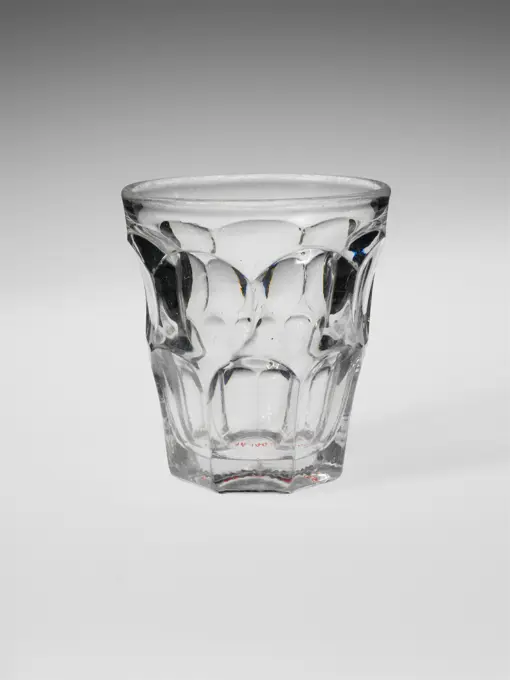
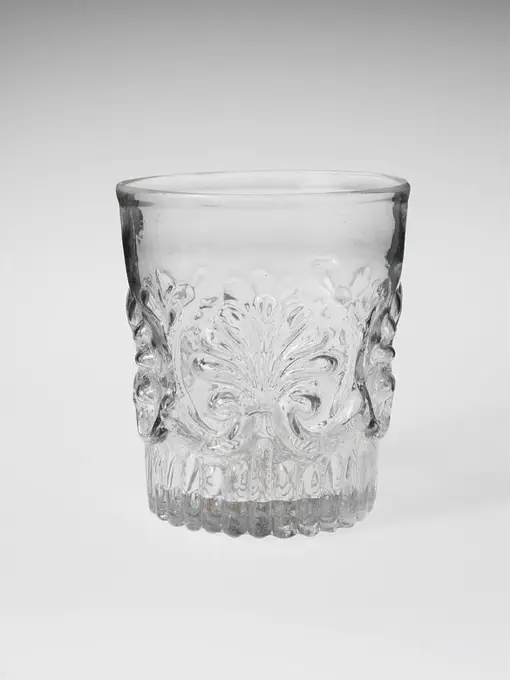
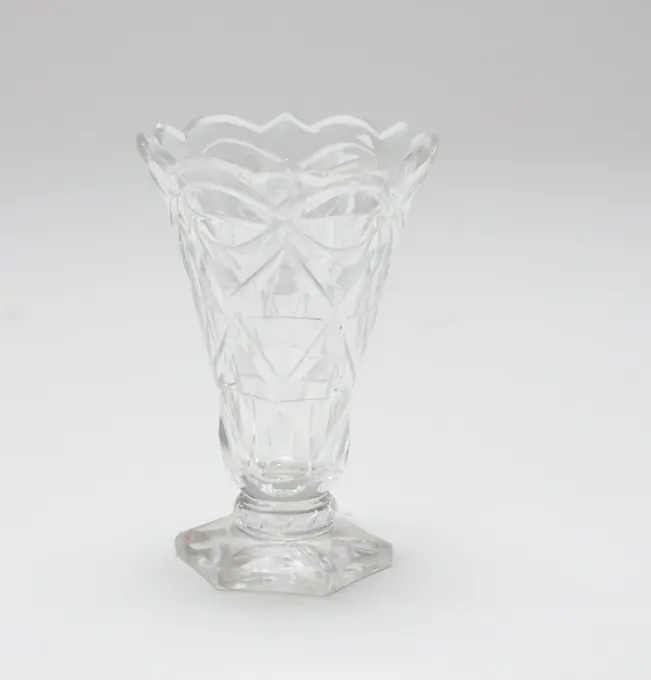
Elegant Historical Glassware

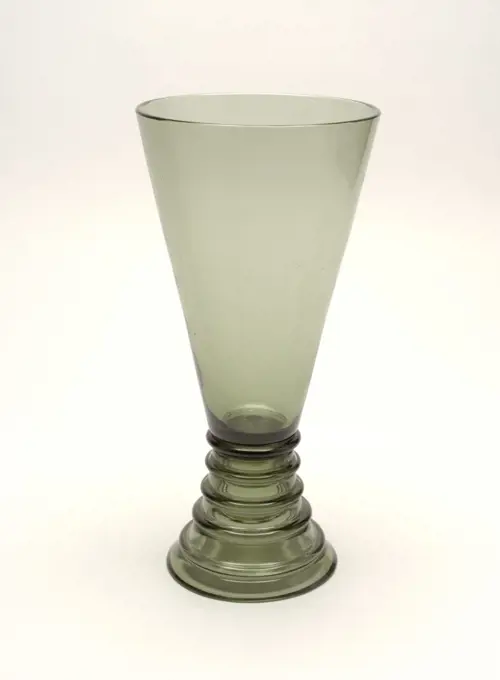
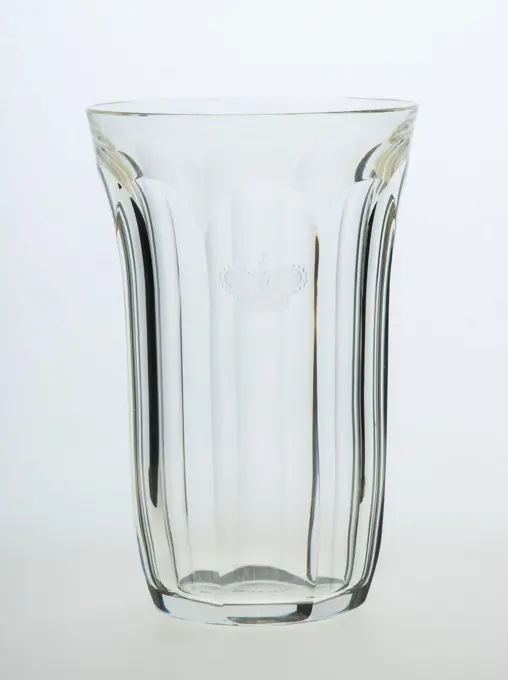
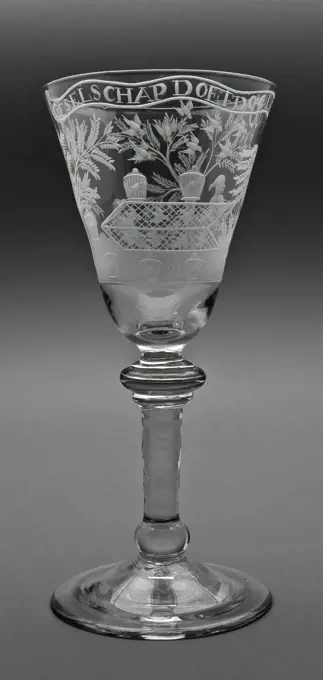
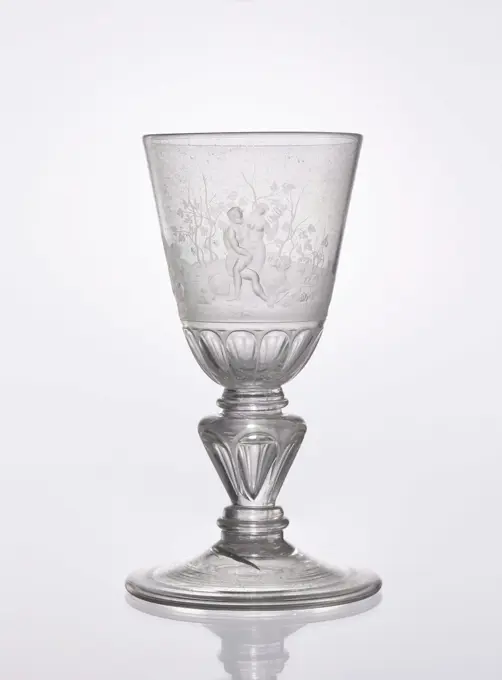
A collection of antique glass chalices and wine glasses, featuring intricate engravings and varied shapes from different historical periods.

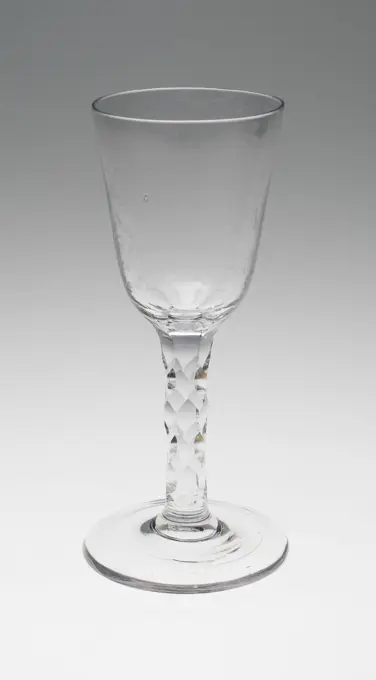
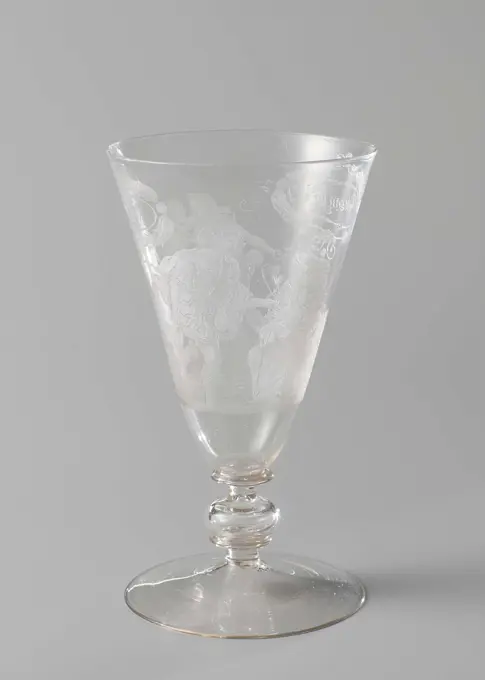
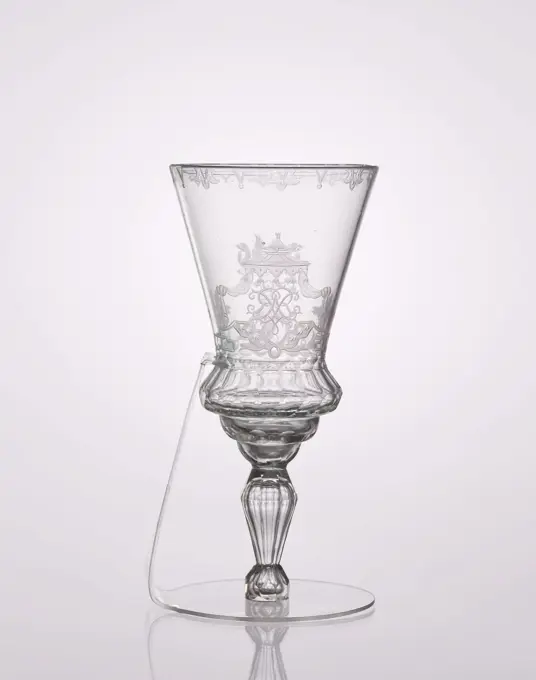
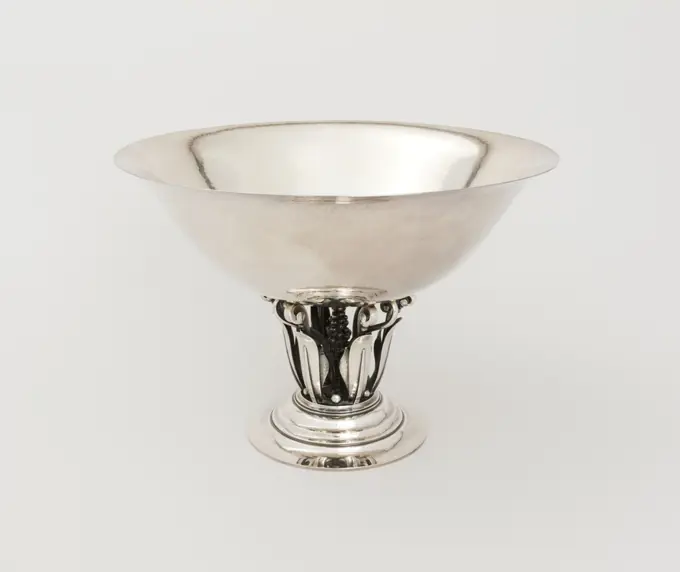
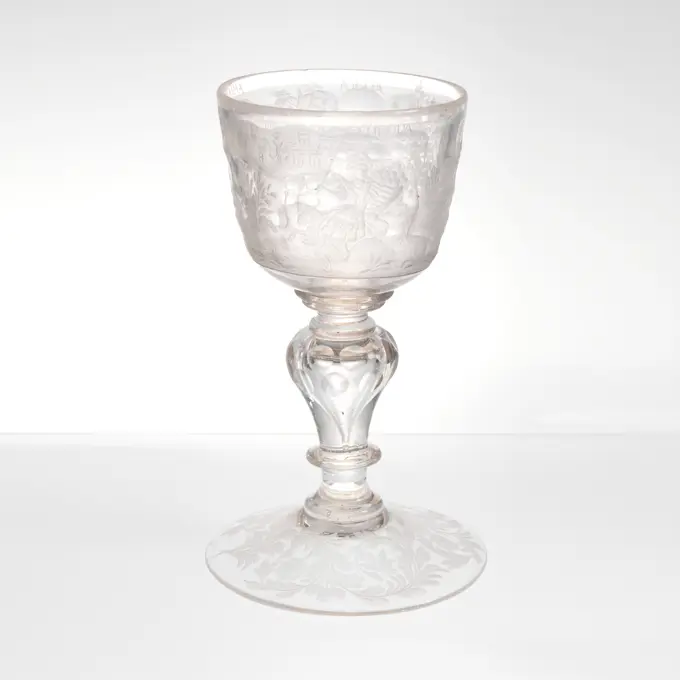
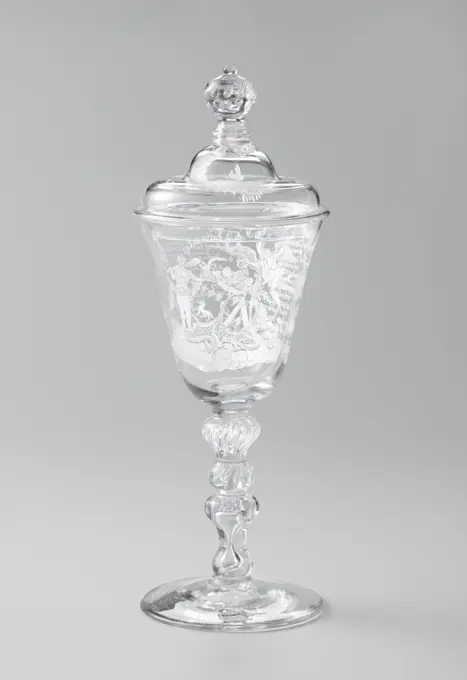
Bokaal with alliance weapon of Anna van Hannover and William IV of Oranje-Nassau, c. 1735 - c. 1750 Vaulted foot with turned around. Solid baluster tribe with a button and a bubble. On the conical chalice the alliance weapons of Anna van Hannover (1709-1759) and Stadholder Willem IV of Oranje-Nassau (1711-1751). glassblower: GermanyNorthern Netherlands glass glassblowing Vaulted foot with turned around. Solid baluster tribe with a button and a bubble. On the conical chalice the alliance weapons of Anna van Hannover (1709-1759) and Stadholder Willem IV of Oranje-Nassau (1711-1751). glassblower: GermanyNorthern Netherlands glass glassblowing
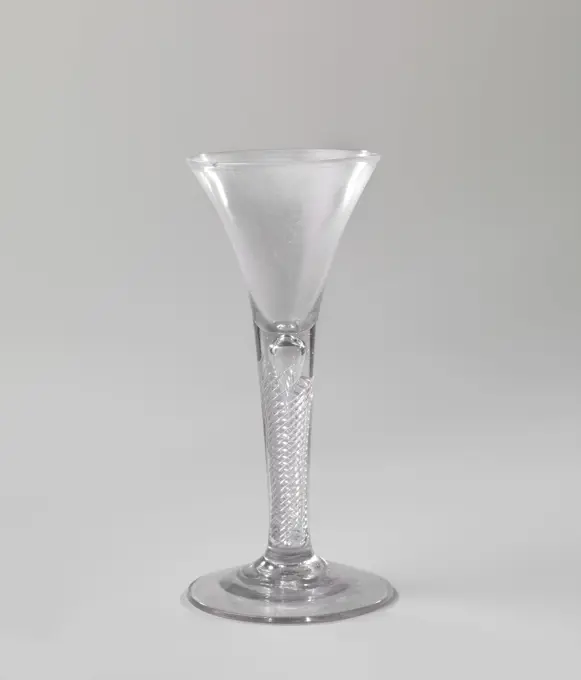
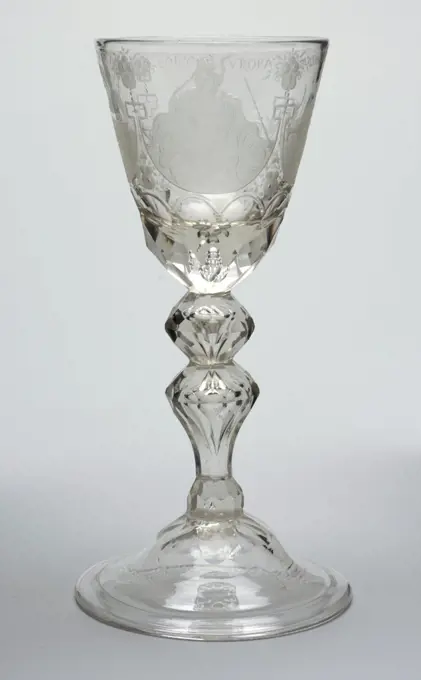
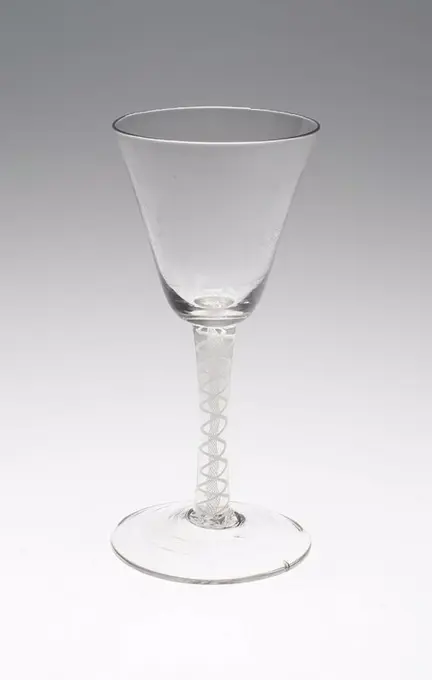
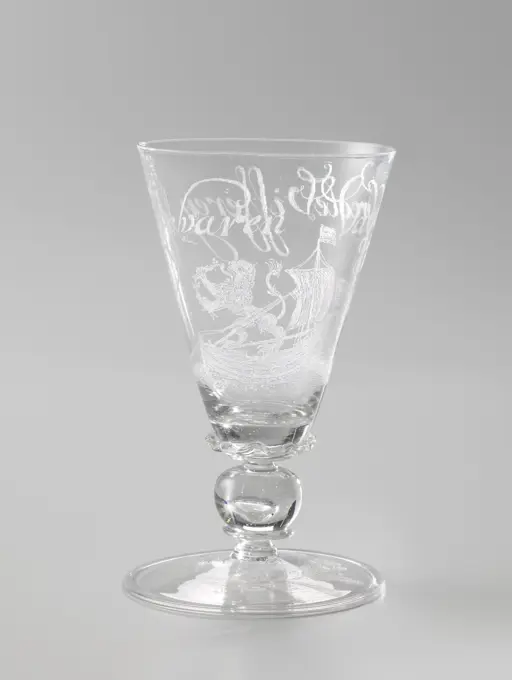
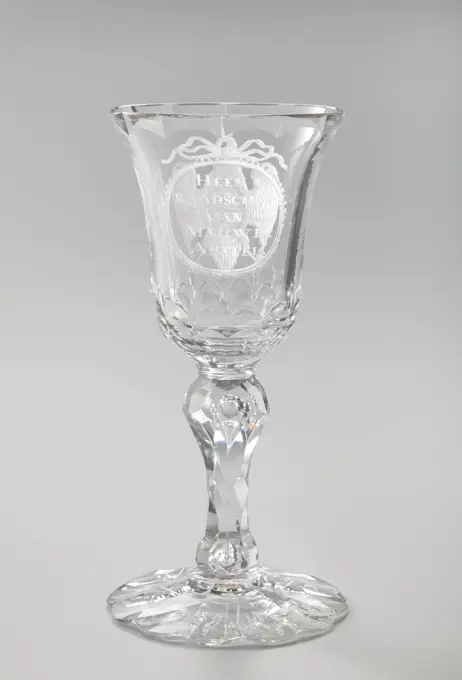
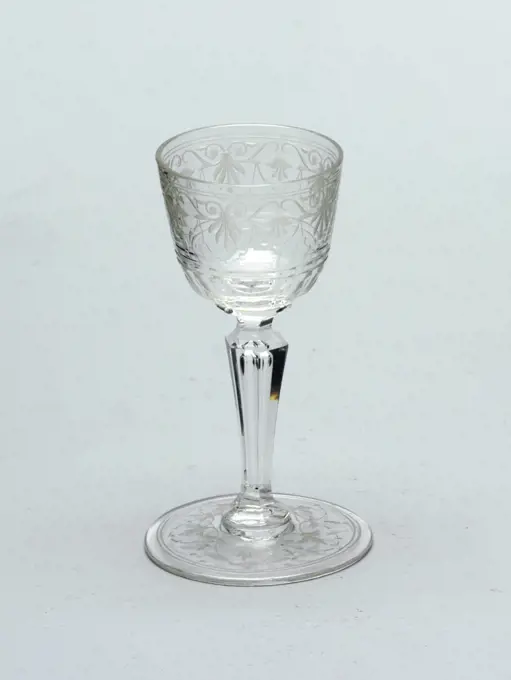
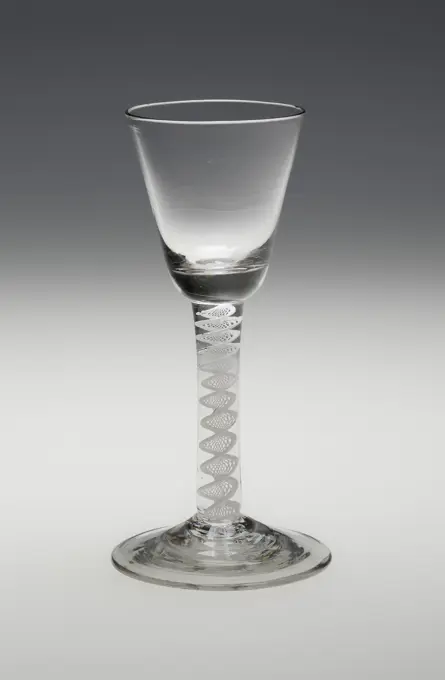
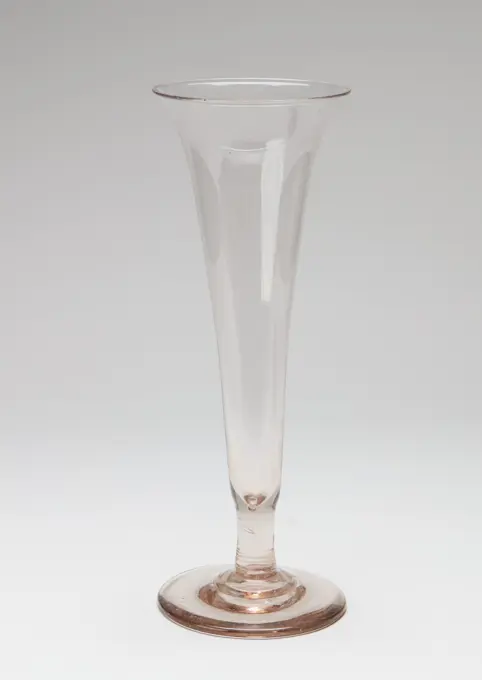
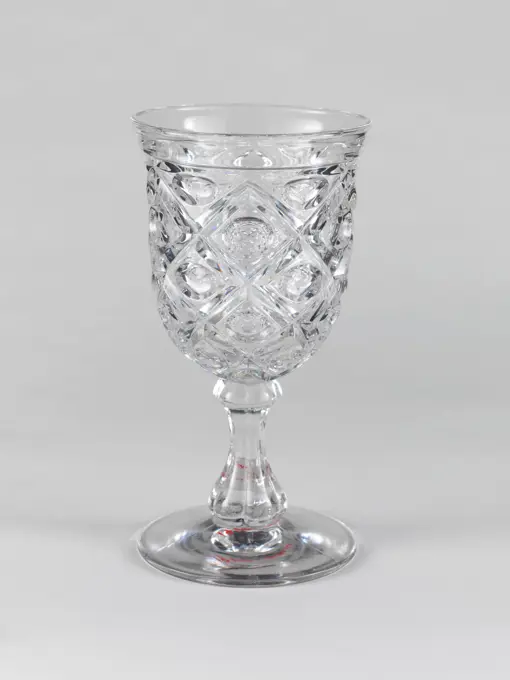
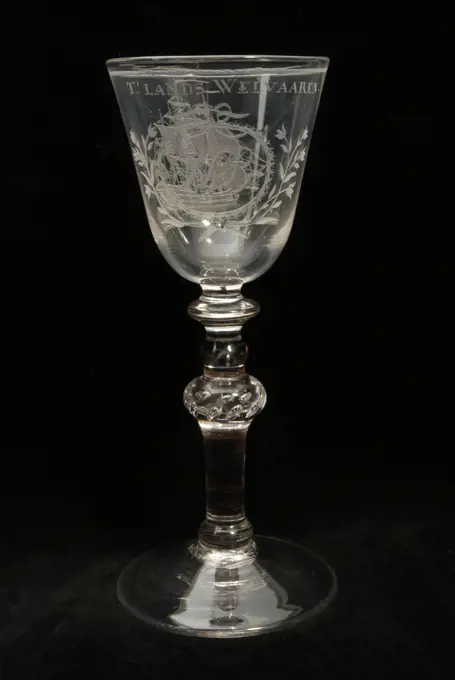
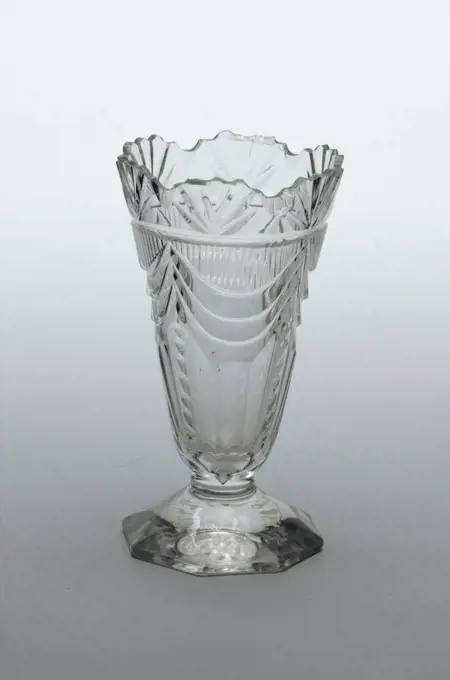
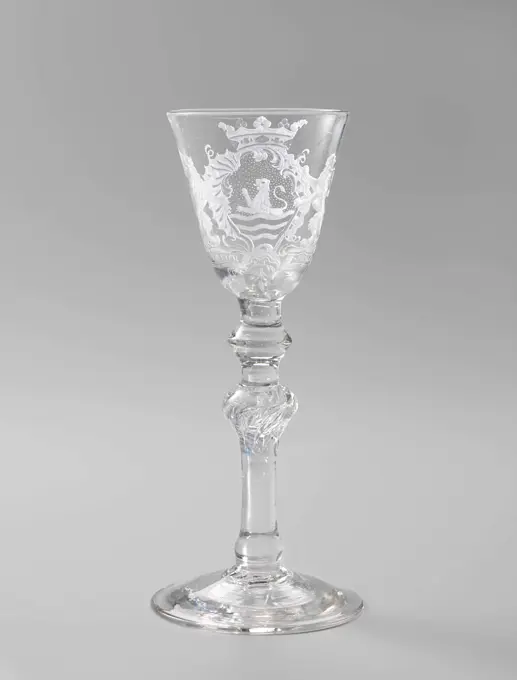
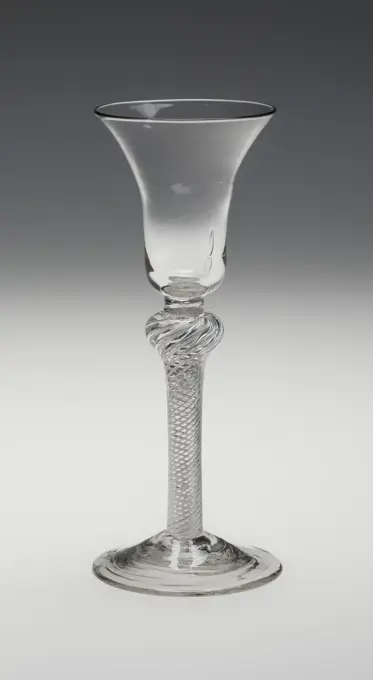
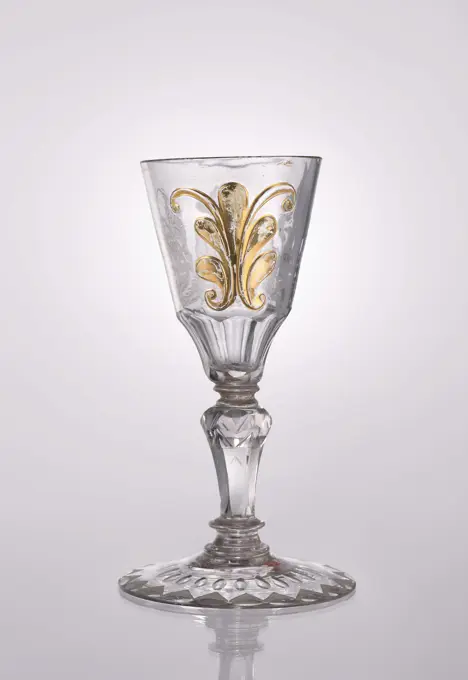
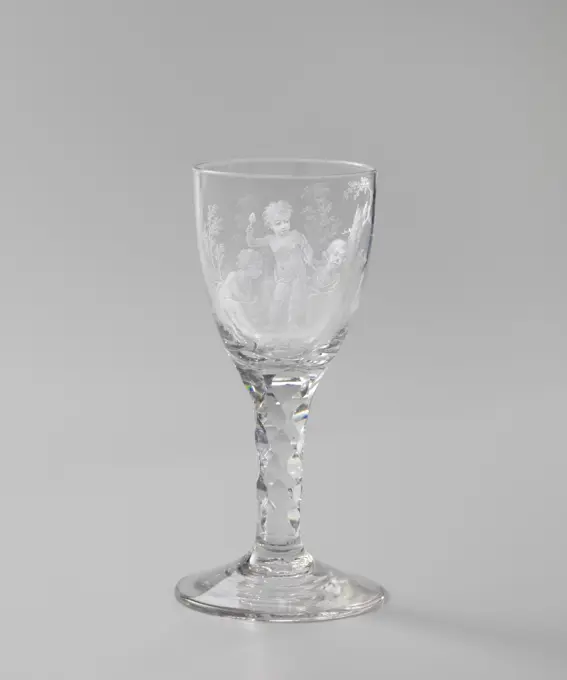
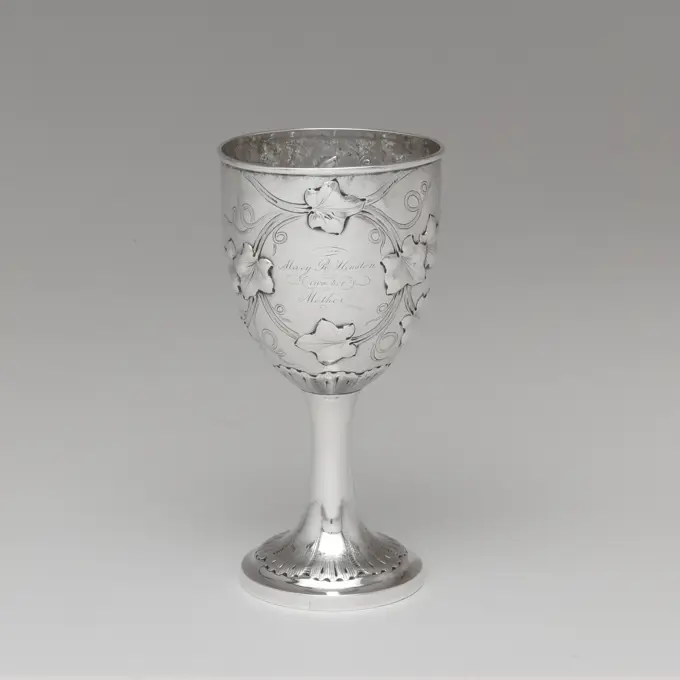
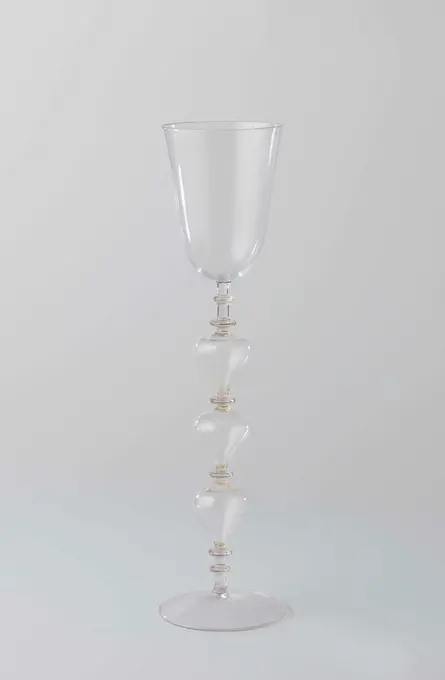
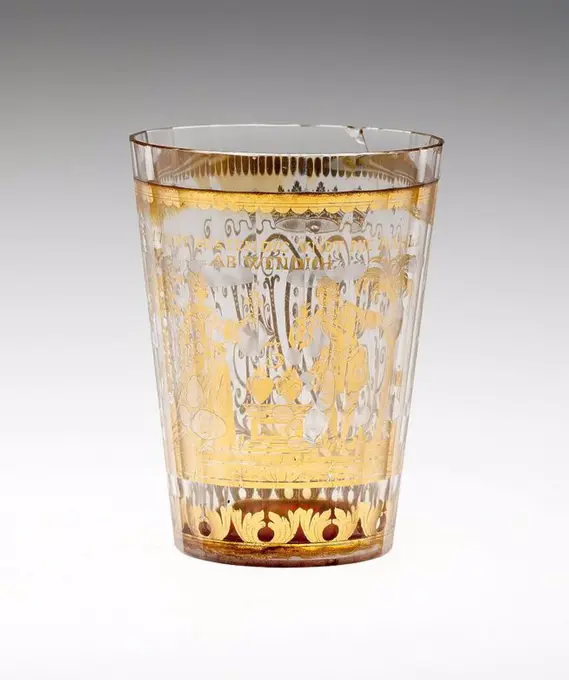
Wine Glass 1755-1785 England. Glass; cut and stipple engraved .Chalip glass with the weapon of Middelburg, Anonymous, c. 1725 - c. 1750  Chalice glass made of clear, colorless glass. With conical foot. The baluster -shaped trunk with five knots, air bubbles and a double tire of air bubbles. Bell -shaped chalice. On the chalice, on two symmetrical leaves held together by a flower chalice, the crowned weapon of Middelburg flanked by two climbing lions. The name of the city is engraved under the weapon. glassblower: Low CountriesNorthern Netherlands glass   MiddelburgKelkglas with performances of the paid and selfless love. Flat foot with pontital brand. Low, hollow, baluster-shaped strain with two discs. Funnel-shaped, rugged on the bottom. Two pairs have been engraved on the chalice. One couple consists of a naked woman sitting on a tree stump and a satyr that offers her a chain. There is an enclosed wine jug to her feet. The second couple consists of a dressed woman, and a warrior who offers her a bouquet of flowers. There are two lambs to her feet. On both sides, a cartouche has been engraved between the two pairs. In one state 'ick to gel' and in the other 'ick to suffer from'. Above the couple with the dressed woman is the signature 'CFM', above the other couple the year 1652.Chalice glass with funnel -shaped chalice, anonymous, c. 1750 - c. 1775 Chalk glass on conical foot. Balustroid trunk with inserted air bubbles. Funnel -shaped chalice rounded at the bottom. England glass glassblowing Chalk glass on conical foot. Balustroid trunk with inserted air bubbles. Funnel -shaped chalice rounded at the bottom. England glass glassblowingGlass;  20th century (1901-00-00-2000-00-00);Wine Glass 1715-1725 England. Glass .Slinger glass with funnel -shaped chalice, anonymous, c. 1750 - c. 1775 Conical foot. Straight, slightly sloping trunk with a multiple air garland and a inserted, tear -shaped bubble, transferring to a trumpet -shaped chalice. England glass glassblowing Conical foot. Straight, slightly sloping trunk with a multiple air garland and a inserted, tear -shaped bubble, transferring to a trumpet -shaped chalice. England glass glassblowingChalice glass with funnel -shaped chalice, optically blown with pinched windows, anonymous, c. 1650 - c. 1700 Chalice glass on a flat base with ribs blown ribs and a changed edge. The trunk made up of a hollow, four -lobby baluster and two discs. Funnel -shaped chalice, optically blown with pinched windows. Low Countries glass glassblowing Chalice glass on a flat base with ribs blown ribs and a changed edge. The trunk made up of a hollow, four -lobby baluster and two discs. Funnel -shaped chalice, optically blown with pinched windows. Low Countries glass glassblowingCup;  1920-39 (1920-00-00-1939-00-00);Bokaal with alliance weapon of Anna van Hannover and William IV of Oranje-Nassau, c. 1735 - c. 1750 Vaulted foot with turned around. Solid baluster tribe with a button and a bubble. On the conical chalice the alliance weapons of Anna van Hannover (1709-1759) and Stadholder Willem IV of Oranje-Nassau (1711-1751). glassblower: GermanyNorthern Netherlands glass glassblowing Vaulted foot with turned around. Solid baluster tribe with a button and a bubble. On the conical chalice the alliance weapons of Anna van Hannover (1709-1759) and Stadholder Willem IV of Oranje-Nassau (1711-1751). glassblower: GermanyNorthern Netherlands glass glassblowingFour Continents, Diamond-cut and engraved glass, Deep flaring chalice, cut at bottom, and engraved with four semi-circles containing the Four Continents enthroned. Asia in turban, with basket of gems; Europe with scepter; Africa with feathered scepter and bird; America with feather cape and headdress, holding bow and arrow. Cut baluster stem and knob; domed foot, with cut top., probably Hesse or Lauenstein, Germany, 18th century, glasswares, Decorative Arts, Standing cup, Standing cupWine Glass. England or Netherlands. Date: 1755-1785. Dimensions: 16.7 × 7.8 cm (6 9/16 × 3 1/16 in.). Glass; stipple engraved. Origin: England. Museum: The Chicago Art Institute, Chicago, USA.Kelkglas with a rooster and a chicken and the inscription: Utinam Sic Semper. Kelkglas of clear, colorless glass. At the chalice an engraved show of a rooster that covers a chicken and inscription: Utinam Sic Semper.Wine Glass 1800-1899 England. Glass .. A ship with the flags of the seven provinces of the Dutch Republic and of the city of Delft is sailing on the water. It carries a lion, with two crowned herrings in his front paw. The inscription ’T Welvaere Vande Groote Vissereij’ (To the Prosperity of the Great Fishery) is a toast to successful catches.Wine glass, anonymous, 1683 Low base with turned around. Stam consisting of a hollow round button between two flat discs. Regularly waving chalice, which is decorated with a corrugated thread on the underside. On the chalice, a lion is engraved on the forecourt of a sailing ship with two crowned pegs in its front legs. The ship carries the flags of Delft and of the Seven Provinces. Above the performance is the inscription '' t Welvaren of the Groote Visserey 1683 '. On the foot flower branches. glassblower: Low CountriesRotterdam glass glassblowing Low base with turned around. Stam consisting of a hollow round button between two flat discs. Regularly waving chalice, which is decorated with a corrugated thread on the underside. On the chalice, a lion is engraved on the forecourt of a sailing ship with two crowned pegs in its front legs. The ship carries the flags of Delft and of the Seven Provinces. Above the performance is the inscription '' t Welvaren of the Groote Visserey 1683 '. OnCup; Non -like Lona Huta; 1730 (1730-00-00-1730-00-00);Flute. England. Date: 1815-1835. Dimensions: 16.5 cm (6 1/2 in.). Glass. Origin: England. Museum: The Chicago Art Institute, Chicago, USA.Saltcellar. Culture: American or British. Dimensions: H. 2 3/4 in. (7 cm). Date: 1780-1825. Museum: Metropolitan Museum of Art, New York, USA.Chalice glass with funnel -shaped chalice, anonymous, c. 1750 - c. 1775 Chalk glass on conical foot. Hollow balustroid trunk with a wreath inserted in the nodus and twisted air bubbles. Funnel -shaped chalice rounded at the bottom England glass glassblowing Chalk glass on conical foot. Hollow balustroid trunk with a wreath inserted in the nodus and twisted air bubbles. Funnel -shaped chalice rounded at the bottom England glass glassblowingSlinger glass with trumpet -shaped chalice, anonymous, c. 1750 - c. 1775 Slinger glass with conical foot and slightly flared trunk. Multiple air spiral in the trunk. Stam continuous in trumpet -shaped chalice. England glass glassblowing Slinger glass with conical foot and slightly flared trunk. Multiple air spiral in the trunk. Stam continuous in trumpet -shaped chalice. England glass glassblowingGoblet 1723 Nuremberg. Glass with metal foot . Georg Friedrich KillingerGoblet and case of the Nieuwer Amstel Dike-reeves Board, c. 1775 - c. 1800 Facetted, curved foot. Facetted baluster tribe with two air bubbles. Klock -shaped chalice with faceted, massive bottom. On the chalice the Wapen van Nieuwer Amstel and on the other side the text: Heemraadschap van Nieuwer Amstel. glassblower: BohemenNetherlands glass Facetted, curved foot. Facetted baluster tribe with two air bubbles. Klock -shaped chalice with faceted, massive bottom. On the chalice the Wapen van Nieuwer Amstel and on the other side the text: Heemraadschap van Nieuwer Amstel. glassblower: BohemenNetherlands glassGlass; Lobmeyr, J. & L. (Vienna; 1823-); 1920-39 (1920-00-00-1939-00-00);King's Glass 1745-1755 EnglandGlassNo. 132, Professor Josef Storck, Austria, 1830 - 1902, J. & L. Lobmeyr GmbH, Vienna, Austria, founded ca. 1935, Meyr's Neffen, Adolf, Mouth-blown crystal, facet-cut and polished, Mouth-blown crystal cordial glass with engraved ornaments, facet-cut and polished., Austria, 1870, glasswares, Decorative Arts, Cordial glass, Cordial glassWine Glass 1700-1799 England. Glass .CupVase, 19th century, 17 x 6 1/2 x 6 1/2in. (43.2 x 16.5 x 16.5cm), Glass, United States, 19th centuryWine Glass 1780-1825 American or British. Wine Glass 9880Goblet 1850-60 American With the development of new formulas and techniques, glass-pressing technology had improved markedly by the late 1840s. By this time, pressed tablewares were being produced in large matching sets and innumerable forms. During the mid-1850s, colorless glass and simple geometric patterns dominated. Catering to the demand for moderately-priced dining wares, the glass industry in the United States expanded widely, and numerous factories supplied less expensive pressed glassware to the growing market. At the Exhibition of the Industry of All Nations at New Yorks Crystal Palace in 1853, for example, the New England Glass Company exhibited 130 pieces of one design, "consisting of bowls, tumblers, champagnes, wines, and jelly glasses." This object belongs to one such service. Although the glass manufactory is not known, the glassware is very typical of the large services that were very popular with Americas middle class in the nineteenth century.. Goblet 4101Wine glass with a portrait of King William III, anonymous, in or after 1690 - c. 1700 Flat base with turned around. Hollow, baluster -shaped trunk with one flat disc. Funnel -shaped chalice, rounded at the bottom. On the chalice the crowned bust of Stadholder-King Willem III and the inscription "Wiliam Rex. glassblower: Low CountriesRotterdam glass glassblowing Flat base with turned around. Hollow, baluster -shaped trunk with one flat disc. Funnel -shaped chalice, rounded at the bottom. On the chalice the crowned bust of Stadholder-King Willem III and the inscription "Wiliam Rex. glassblower: Low CountriesRotterdam glass glassblowingSlinger glass with bell-shaped chalice. Slinger glass with flat foot and straight trunk. In the trunk opask white garlands around white network spiral. Bell-shaped chalice.Kelkglas with a representation that may matter to the prosperity that the Alliance brought in 1795 with the French Republic. Conical foot. Smooth, dredging tribe, undervantage in a curved chalice. On the chalice, in a landscape with trees, is a boy, which is a cornucopia out of faith, from behind which the Batavian lion appears, with a lance in the left blue with a freedom hat.Wine glass with the coat of arms of the Republic of the Seven Provinces. Wine glass of bright, colorless glass with the crowned weapon of the Republic of the Seven United Provisions and the inscription 'Concordia Res Parvae Crescunt'.Goblet engraved with three-master, monogram KLB and T 'lands Welvaren., wineglass drinking glass drinkware tableware holder lead glass glass, gram free blown and formed rad engraving polishing goblet wineglass in clear colorless lead glass Pontil mark under round hollow ascending foot On convex knot massive reverse balustere with two rows of eight each air bubbles in baluster knot to convex knot and sharp knot. Round-shaped funnel-shaped chalice with fire-rounded edge. To chalice engraving: three-masted full-rigged master with rich mirror and Dutch flag Backside: monogram KLB inside medallion surrounded by vines with two polished lenses under text: T'lands Welvaren .. Edge around continuous band engraved in form of ship rope wheel engraving along top edge opposite ship: T'lands Welvaren. shipbuilding yard Lands Welvaren Rotterdam serving drinksChalip glass with the weapons of the seven provinces, Anonymous, c. 1675 - c. 1700 Flat base with turned around and pontil brand. Hollow, baluster -shaped trunk with two discs. Funnel -shaped chalice rounded at the bottom. On the chalice, the weapons of the Seven Provinces are engraved, whereby the coat of arms of the province of Groningen is depicted greater than that of the other provinces. Flower branches are engraved above and below the weapons. glassblower: Low CountriesNorthern Netherlands glass glassblowing Flat base with turned around and pontil brand. Hollow, baluster -shaped trunk with two discs. Funnel -shaped chalice rounded at the bottom. On the chalice, the weapons of the Seven Provinces are engraved, whereby the coat of arms of the province of Groningen is depicted greater than that of the other provinces. Flower branches are engraved above and below the weapons. glassblower: Low CountriesNorthern Netherlands glass glassblowingKelkglas with a company at the table and the inscription: D Gelvkewigje Veriaaardag. Kelkglas on high trunk with two buttons. Behavioral glass. At the chalice a company at the table as well as the inscription: D Gelvkewigje Veriaaardag. The foot is cracked.Chalip glass with the coat of arms of the Van Heemskerk family and the monogram WGM, Anonymous, c. 1761 Chalice glass made of clear, colorless glass. On conical foot. The baluster -shaped trunk has three knots, a flat knot and a tire with air bubbles. The funnel -shaped Cuppe has a rounded bottom. On the chalice a swan is depicted for a richion with a shield with the monogram wgm (Watergraafsmeer) around the neck. On the other side the crowned family crest Van Lennep with a griffin on either side. glassblower: NetherlandsNorthern Netherlands glass glassblowing Chalice glass made of clear, colorless glass. On conical foot. The baluster -shaped trunk has three knots, a flat knot and a tire with air bubbles. The funnel -shaped Cuppe has a rounded bottom. On the chalice a swan is depicted for a richion with a shield with the monogram wgm (Watergraafsmeer) around the neck. On the other side the crowned family crest Van Lennep with a griffin on either side. glassblower: NetherlandsNorthern NChalice glass with optically blown ribs and barley grain pattern. Kelkglas on low, slightly vaulted foot. Hollow, ballustroid tribe. Funnel-shaped, led to the bottom, blown into the form, the lower half in ribs, the upper in a barley grain patternGlass;  1920-39 (1920-00-00-1939-00-00);Goblet 1850-70 Bakewell, Pears and Company. Goblet 4116Goblet 1675-1699 Nuremberg. Glass .Sweetmeat glass, Glass, Deep flute-shpaed bowl, short tapered stem, slightly domed 8-sided foot; lip scalloped with fan cutting, below that cut drapery swags with narrow vertical flutes above and wider flutes below, foot cut with facets at edges, Ireland, ca. 1800-20, glasswares, Decorative Arts, Sweetmeat glassDrinking Glass. Italy, Venice, circa 1550-1650. Furnishings; Serviceware. Colorless, free-blown and pattern-molded cristallo glass.Cup with cover Huta KrysztaGoblet. Naliboki (huta szkła ; 1722-1862), creatorKelkglas with the coat of arms of the province of Zeeland. Lightly vaulted foot. The baluster-shaped strain has a bond with air bubbles and two buttons. The conical chalice has a rounded soil. On the chalice, above a banderle with the text Lucor et emergo is an asymmetrical shield surrounded by seed beads with the crowned weapon of the province of Zeeland, flanked by two climbing lions.German green glass series, Ludwig Lobmeyr, Austrian, 1829 - 1917, J. & L. Lobmeyr GmbH, Vienna, Austria, founded ca. 1935, Mouth-blown green glass, Mouth-blown green glass with glass applications. Tall vase with ring-shaped base., ca. 1890, glasswares, Decorative Arts, Vase, VaseCock from Bokaal, Anonymous, 1800 - 1900 Cup with lid of cut glass. Baluster tribe standing on a foot that served as a lid of a larger cup. Bohemen (possibly) glass Cup with lid of cut glass. Baluster tribe standing on a foot that served as a lid of a larger cup. Bohemen (possibly) glass. The depiction alludes to the alliance that the Batavian Republic and the French Republic entered into in 1795.Glass;  around 1840 (1830-00-00-1850-00-00);Glass;  1920-39 (1920-00-00-1939-00-00);Goblet engraved with finch hunting and companionship, wine glass drinking glass drinking utensils tableware holder lead glass glass, free blown and shaped radgraving diamond engraving goblet wineglass in clear colorless lead glass Pontil mark under round hollow ascending foot On massive convex knot solid straight trunk to two stacked knots flat knot funnel-shaped calyx with fire-wound rim. Chalice around continuous wheel engraved with representation of finch hunting Detail: finches with six cages in which birds nets in which eight birds caught three trees nine birds and hunter with pull rope in their hands. Above that in banderole text: SELECTION DOES DOOLS of which 'and' and 'and' are partly updated with diamond engraving CREATURE DOES DOOLS (wheel engraving top of the calyx) finking hunt serve drinking morality eroticismGoblet. Gondelach, Franz (1663-1723), glass engraver, Altmünden (huta szkła ; 1594-1818), creatorGerman green glass series Vase; Designed by Ludwig Lobmeyr (Austrian, 1829 - 1917); Manufactured by J. & L. Lobmeyr GmbH (Austria); Austria; mouth-blown green glassWine glass in the shape of a post horn, anonymous, c. 1850 - c. 1875 Vaulted foot. Stam in the form of a post horn (the mouth is missing). On the bell -shaped chalice a hunter who is thrown from his hitting horse and ends up in a ditch. The foot decorated for a moment like the mouth of the horn. Germany glass glassblowing Vaulted foot. Stam in the form of a post horn (the mouth is missing). On the bell -shaped chalice a hunter who is thrown from his hitting horse and ends up in a ditch. The foot decorated for a moment like the mouth of the horn. Germany glass glassblowingNo. 196 Centerpiece Bowl; Designed by Johan Rohde (Danish, 1856 - 1935); Manufactured by Georg Jensen Sølvsmedie (Denmark); Denmark; silverWine Glass 1780-1790 England. Glass .Wine glass with a tree with the seven arms of the Republic of the Seven United Netherlands, anonymous, c. 1725 - c. 1750 Klok -like curved foot. Baluster tribe with two knots and an elongated bubble. Klock -shaped chalice with solid, rounded base with air bubbles. On the chalice the weapons of the seven provinces. glassblower: GermanyNorthern Netherlands glass glassblowing  Seven Provinciën Klok -like curved foot. Baluster tribe with two knots and an elongated bubble. Klock -shaped chalice with solid, rounded base with air bubbles. On the chalice the weapons of the seven provinces. glassblower: GermanyNorthern Netherlands glass glassblowing  Seven ProvinciënGlass;  1920-39 (1920-00-00-1939-00-00);wine glass in dark placeChalice glass on foot, with two men at a gaming table and the inscription: Savoir La Marche, Est Chose Très Unie Savoir Le Jeu, C'est Fruit du Genie, Anonymous, c. 1815 - c. 1830 Chalip glass on foot with engraved show of two men at a gaming table and the text: Savoir La Marche, Est Chose Très Unie/ Savoir Le Jeu, C'est Fruit du Genie. glassblower: EnglandNorthern Netherlands glass glassblowing Chalip glass on foot with engraved show of two men at a gaming table and the text: Savoir La Marche, Est Chose Très Unie/ Savoir Le Jeu, C'est Fruit du Genie. glassblower: EnglandNorthern Netherlands glass glassblowingWine glass. Kotlina Jeleniogórska (ośrodek rytownictwa ; ca 1600- ), glass engraver, Karlsthal (huta szkła ; 1754-post 1874), creatorDrinking Glass (USA); glassBeaker 1705-1715 Bohemia. Glass .Cup with three incense; Venetianischer Puffer für Wasser. Flat foot. Funnel shaped chalice with three incense in the lower half. In the soil the Köln Ehrenfeld brand has been etched.Goblet, c. 1725-1750. England, 18th century. Glass; diameter: 7.3 cm (2 7/8 in.); overall: 14 cm (5 1/2 in.).Berkenmeier with three rows of flat studs. Flat, spun base from a thread. Inserted soil. The light concave chalice as a whole blown out with the trunk, which occupies with three rows of flat studs. The transition from the chalice to the trunk indicated by a slightly ribbed wire.Glass; Lobmeyr, J. & L. (Vienna; 1823-); 1920-39 (1920-00-00-1939-00-00);Beaker. Poczdam (huta szkła ; 1674-1736), creatorFour Continents Standing Cup; honeycomb-cut and engraved glassWine Glass 1870-90 Adams and Company. Wine Glass 9933Wine glass with two children making a bust of William V, anonymous, 1794 Conical foot. Broadening, in facet -ground tribe, transferring to a slightly bent chalice. On the chalice, in a landscape, the personifications of drawing and sculpture, proposed by a sitting putto with a sheet of paper on his knee and a drawing marker in his hand and a putto, which works with a hammer and bite to a bust of Stadholder Prins Willem V (1748-1806), which is on a rectangular base. Right below the performance D: Wolff 1794. glassblower: EnglandNorthern Netherlands glass grinding / glassblowing Conical foot. Broadening, in facet -ground tribe, transferring to a slightly bent chalice. On the chalice, in a landscape, the personifications of drawing and sculpture, proposed by a sitting putto with a sheet of paper on his knee and a drawing marker in his hand and a putto, which works with a hammer and bite to a bust of Stadholder Prins Willem V (1748-1806), which is on a rectangular base. Right below the perSmall carafe with a cork. Karlsthal (huta szkła ; 1754-post 1874), creator, Kotlina Jeleniogórska (ośrodek rytownictwa ; ca 1600- ), creator, Weiberberge (huta szkła ; post 1702-ante 1754), creator, Weissbach (huta szkła ; 1617-ante 1754), creatorGoblet ca. 1845 Robert and William Wilson This goblet, one of a pair (1970.200.3), and a matching pitcher (1970.200.2) are decorated with a grapevine motif chased in repoussé and ruffled leaves that recall eighteenth-century rococo ornament. The set originally belonged to the donors grandmother Grizelda Gilchrist Polk, who married Russell Houston, chief attorney for the Louisville-Nashville Railroad. Her monogram, "GGH," is engraved on the front of the pitcher. The goblets are inscribed to two other members of the Polk-Houston family.. Goblet 4096Glass; Lobmeyr, J. & L. (Vienna; 1823-); 1920-39 (1920-00-00-1939-00-00);Kelkglas with strain with hollow balusters and discs. Low foot with beaten edge. High trunk, made up of three hollow balusters, separated by discs. Short connector with one disc. Funnel-shaped chalice with rounded bottom.Pair of marriage goblets with lids, anonymous, 1759 Bokaal with lid with diamond engraved on the occasion of the 50-year marriage of J.J. van Westrenen and J.C. Momochet on August 25, 1759. Klock -shaped chalice with double baluster with air bubbles, on round, slightly curved foot. On the chalice: the weapons of the couple with a crown above it. Shield holders are a wild man and a lion including cloud motifs. Above the weapons a floating, trumpet -blowing angel with one hand with a snake and an L (50) biting in his tail. Above the show a inscription with the names Jani Jacobi van Westreenen and Johannae Catharinae Mamochet van Hoedringen. Further inscriptions in Latin and in Dutch. The lid is decorated with a horn of abundance, flower branches and a bird with a branch. glassblower: EnglandNorthern Netherlands glass glassblowing Bokaal with lid with diamond engraved on the occasion of the 50-year marriage of J.J. van Westrenen and J.C. Momochet on August 25, 1759. Klock -shaped chalice Beaker. Schleswig, Germany. Date: 1715-1725. Dimensions: 9.5 x 7 cm (3 3/4 x 2 3/4 in.). Glass. Origin: Schleswig. Museum: The Chicago Art Institute, Chicago, USA.Scale on foot, with arches and stars. Flat, facet cut foot. Facet cut, baluster-shaped strain with four discs. Wide, oval chalice with facet cut bottom. On the chalice a continuous pattern of arches under a bright, cut bond with stars. This type of glass mainly served for serving sweets.. Flat foot, hollow ballleach-shaped strain, from which two discs and funnel-shaped chalice.Wine Glass, c. 1775. England, 18th century. Glass; diameter: 5 cm (1 15/16 in.); overall: 14.8 x 7.3 cm (5 13/16 x 2 7/8 in.).Egg Cup 1870-80 Adams and Company. Egg Cup 3517Goblet (Pokal) with Herm Stem. Germany, Hesse-Kassel. Date: 1734. Dimensions: 24.9 x 10 cm (9 13/16 x 3 15/16 in.). Glass; blown and molded with wheel-engraved decoration. Origin: Western Germany. Museum: The Chicago Art Institute, Chicago, USA.Wine cup 1618-19 Jeffery Prescott. Wine cup 205046Cup on foot with lid, with the alliance weapon of two German families, Anonymous, c. 1725 - c. 1750 Facetted, conical foot with pontil brand. Conical chalice, rounded and lobed at the bottom. Lid with a wide overhanging edge and button consisting of a disc and a faceted baluster. The chalice is decorated with a seven -lobe palmet with a landscape with a house in three lobes. On the downside, an alliance weapon is engraved, surrounded by foliage and band work. One weapon has a sloping beam with three times six dots and a helmet mark with three times six dots, the other is four -part: in fifteen minutes one and three a lance with a branch around it and in fifteen minutes two and four a climbing lion. As a helmet sign a climbing lion with lance. The lid is decorated with foliage and tire work. Silesia glass grinding / glassblowing Facetted, conical foot with pontil brand. Conical chalice, rounded and lobed at the bottom. Lid with a wide overhanging edge and button consisting of a disc andPassglass with Loops and Glass Rings 1600-1700 Germany. Glass .Beaker. Bohemia, Czech Republic. Date: 1725-1735. Dimensions: 9.2 × 6.8 cm (3 5/8 × 2 11/16 in.). Glass with engraved gold leaf decoration. Origin: Bohemia. Museum: The Chicago Art Institute, Chicago, USA.Tumbler 1830-70 American With the development of new formulas and techniques, glass-pressing technology had improved markedly by the late 1840s. By this time, pressed tablewares were being produced in large matching sets and innumerable forms. During the mid-1850s, colorless glass and simple geometric patterns dominated. Catering to the demand for moderately-priced dining wares, the glass industry in the United States expanded widely, and numerous factories supplied less expensive pressed glassware to the growing market. At the Exhibition of the Industry of All Nations at New Yorks Crystal Palace in 1853, for example, the New England Glass Company exhibited 130 pieces of one design, "consisting of bowls, tumblers, champagnes, wines, and jelly glasses." This object belongs to one such service. Although the glass manufactory is not known, the glassware is very typical of the large services that were very popular with Americas middle class in the nineteenth century.. Tumbler 9103Wine glass, one of a set of ten, c. 1920, 8 1/4 x 3 1/4 in. (20.96 x 8.26 cm), Aventurine glass, Italy, 20th centuryFlip Glass 1830-70 American. Flip Glass. American. 1830-70. Pressed glass. Made in United StatesNo. 238 Rhine Wine Glass; Designed by Josef Hoffmann (Austrian, b. Moravia, 1870-1956); Manufactured by J. & L. Lobmeyr GmbH (Austria); Austria; blown crystalWine Glass 1850-60 American With the development of new formulas and techniques, glass-pressing technology had improved markedly by the late 1840s. By this time, pressed tablewares were being produced in large matching sets and innumerable forms. During the mid-1850s, colorless glass and simple geometric patterns dominated. Catering to the demand for moderately-priced dining wares, the glass industry in the United States expanded widely, and numerous factories supplied less expensive pressed glassware to the growing market. At the Exhibition of the Industry of All Nations at New Yorks Crystal Palace in 1853, for example, the New England Glass Company exhibited 130 pieces of one design, "consisting of bowls, tumblers, champagnes, wines, and jelly glasses." This object belongs to one such service. Although the glass manufactory is not known, the glassware is very typical of the large services that were very popular with Americas middle class in the nineteenth century.. Wine Glass. AmerGlassTumbler. Culture: American or French. Dimensions: H. 3 5/8 in. (9.2 cm); Diam. 3 in. (7.6 cm). Maker: Attributed to Boston & Sandwich Glass Company (American, 1825-1888, Sandwich, Massachusetts). Date: 1825-45. Museum: Metropolitan Museum of Art, New York, USA.Compote 1870-90 Adams and Company. Compote 2233Glass, from a syllabub set, 1750-1780, Unknown Anglo-Irish, 4 x 2 7/8 x 2 7/8 in. (10.16 x 7.3 x 7.3 cm) (approximately), Lead and non-lead glass, England or Ireland, 18th centuryBowl, Glass, Glass with straight, slightly flared sides with two small spouts on opposite sides of rim; engraved decoration with scalloped motif at the top, alternating with hanging asterisks; lower section with vertical consecutive depressions., England, 18th century, glasswares, Decorative Arts, Bowl