Elegant Lace Patterns

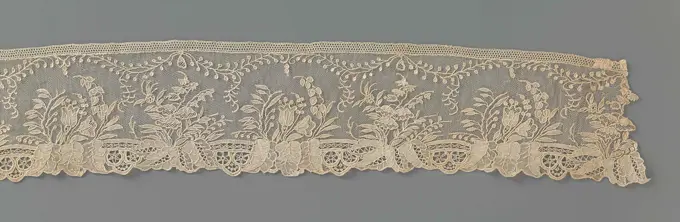
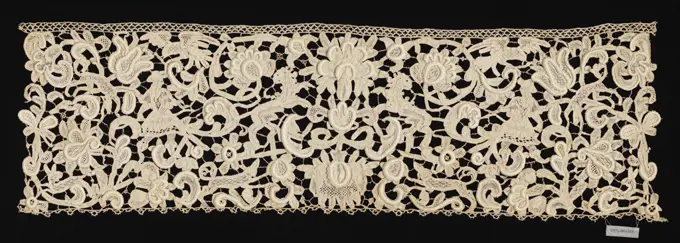
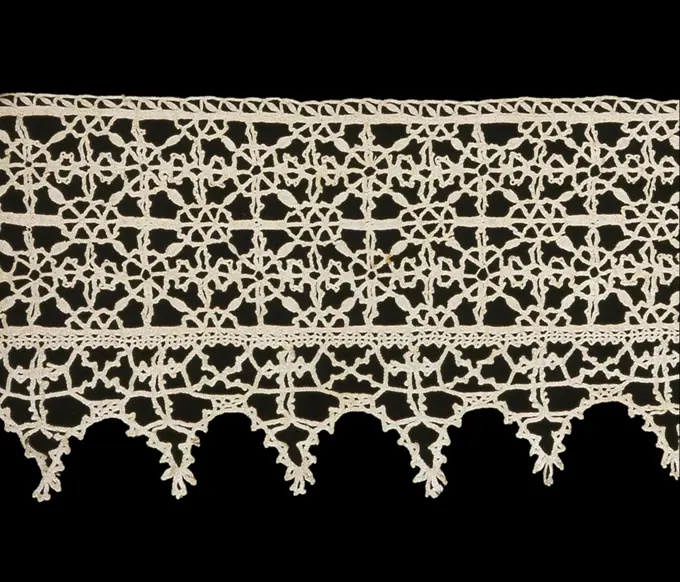
Detailed lace strips and cuffs featuring floral motifs and symmetrical designs, reflecting traditional craftsmanship in various styles.

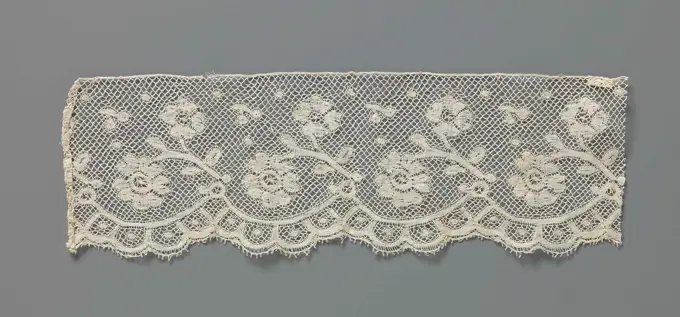
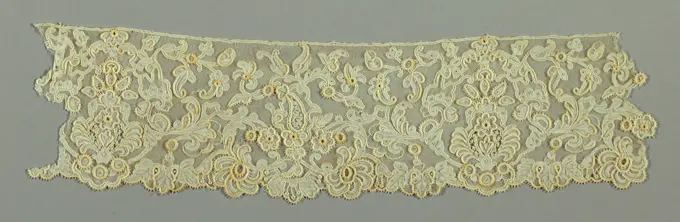
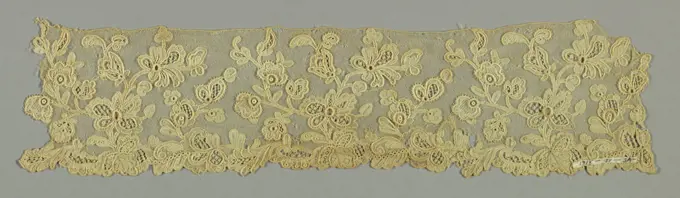
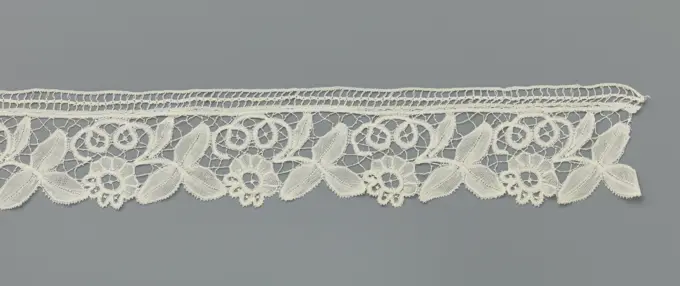
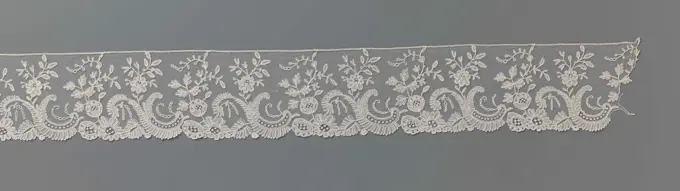
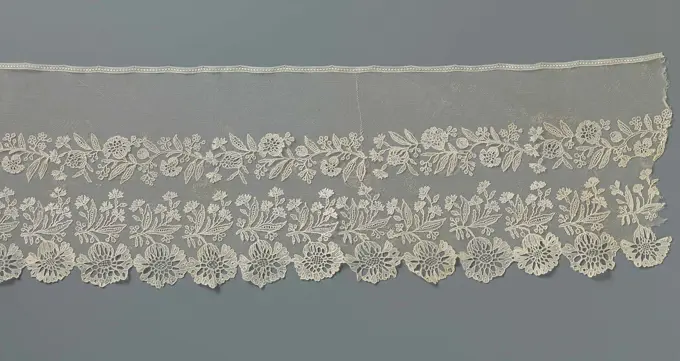
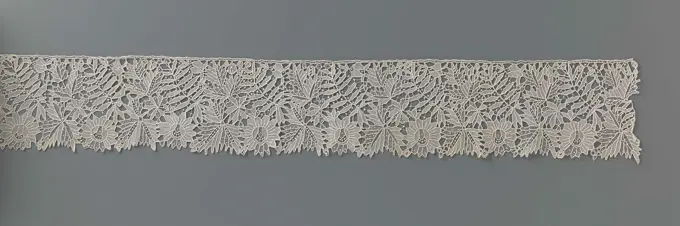
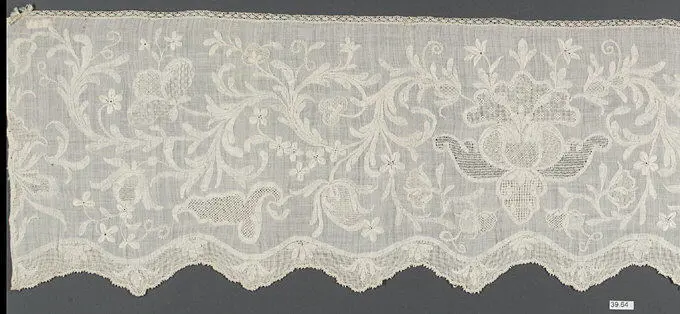
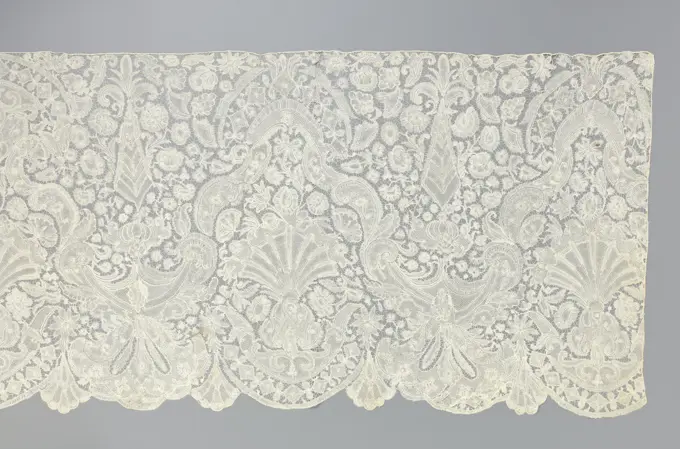
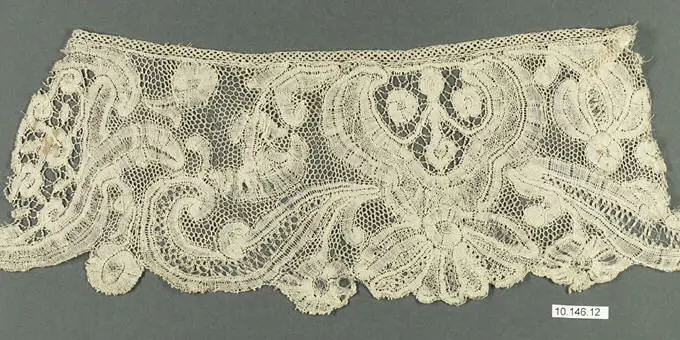
Border, Medium: linen Technique: bobbin lace, Brussels style, Large and small flowers and leaves in close arrangement., Belgium, 19th century, lace, Border
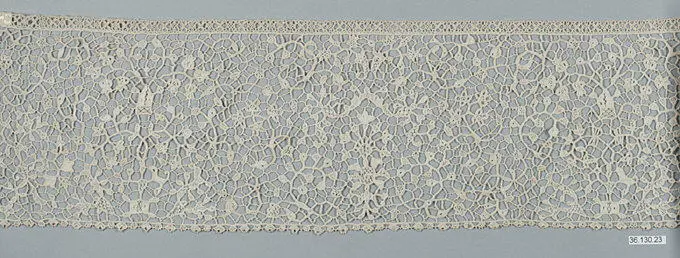
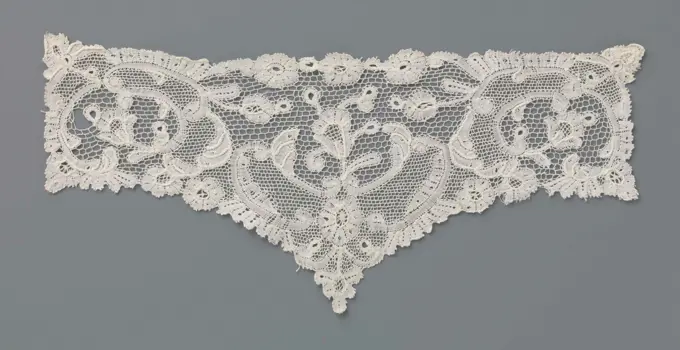
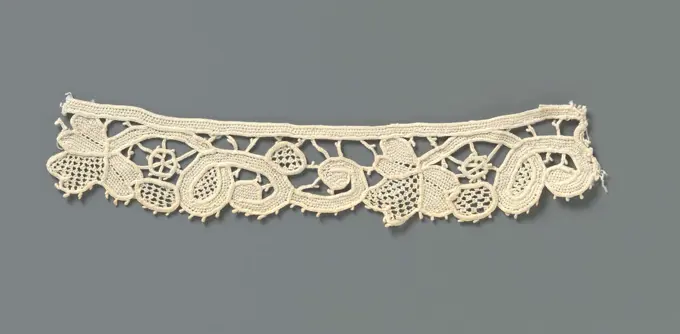
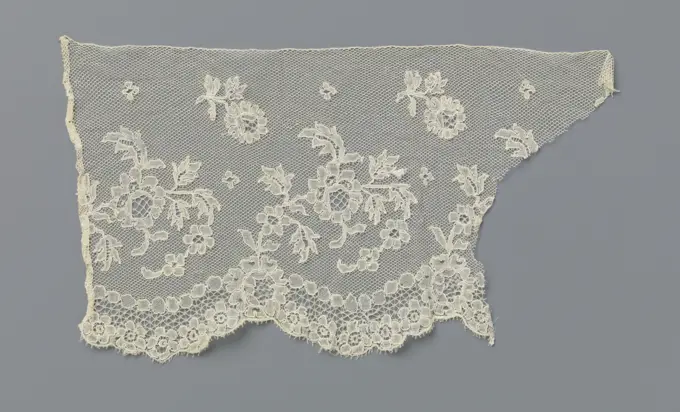
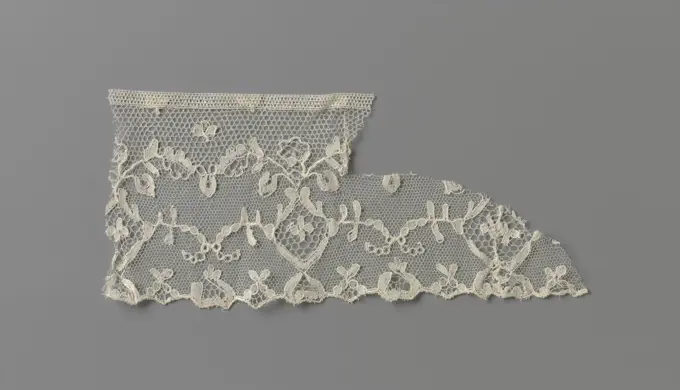
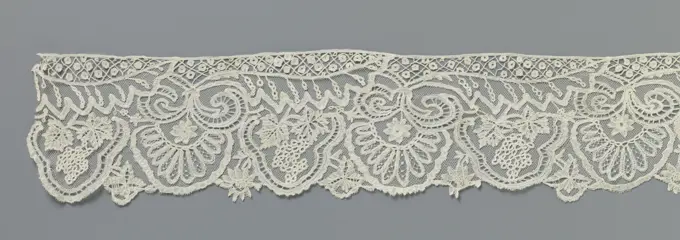
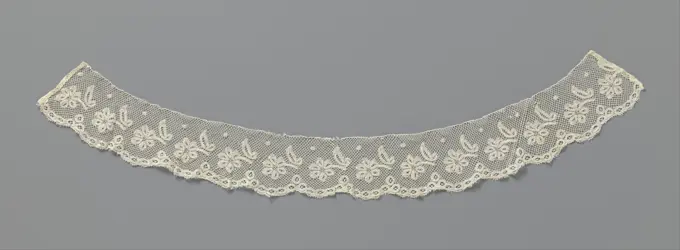
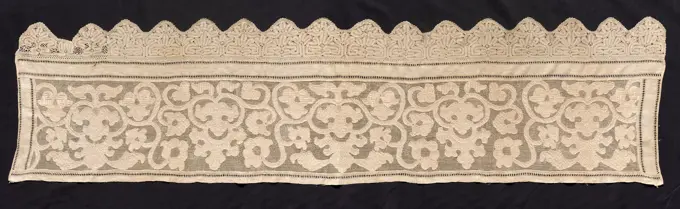
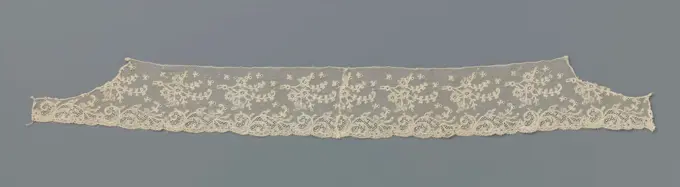
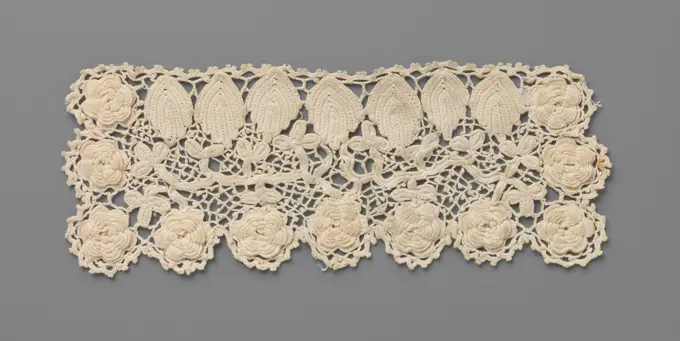
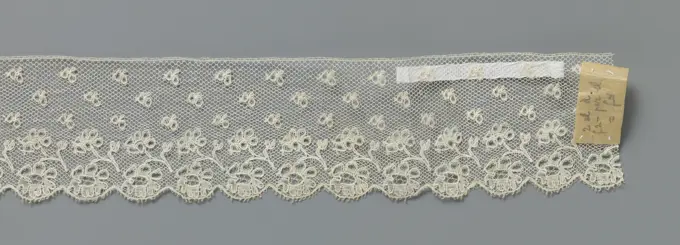
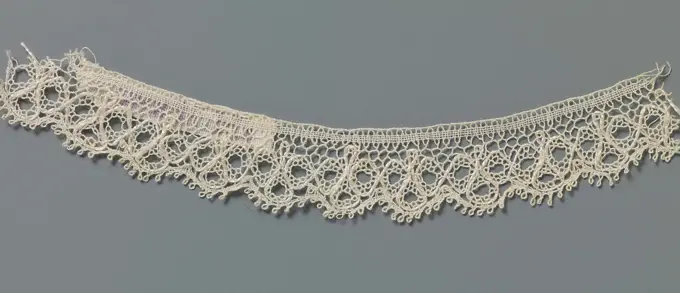
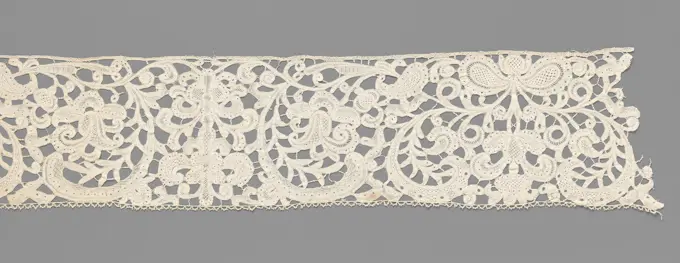
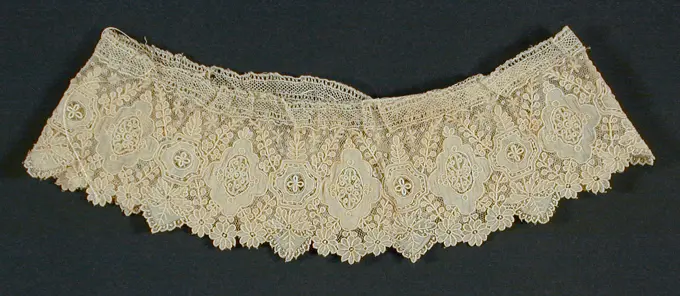
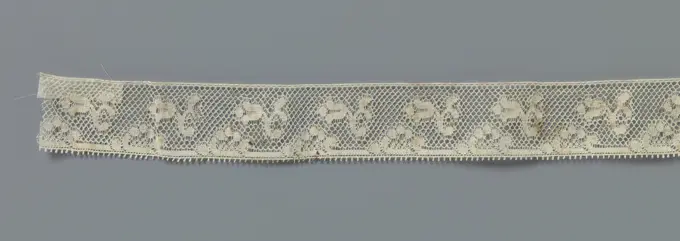
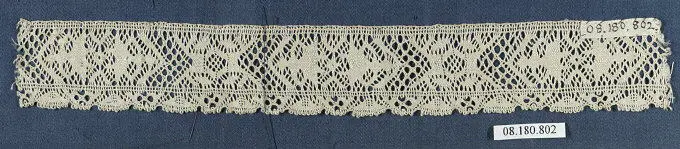
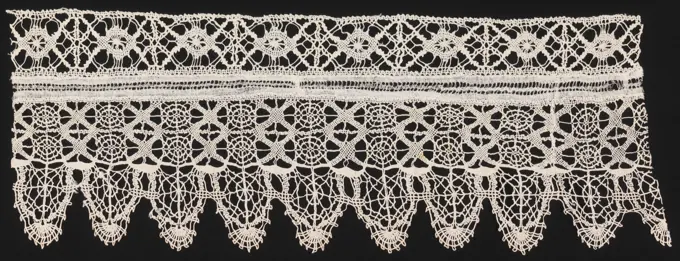
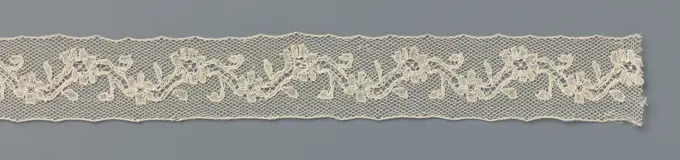
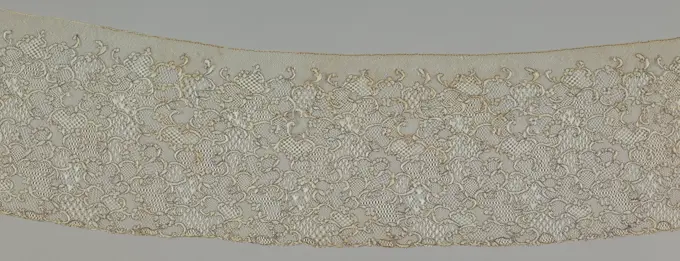
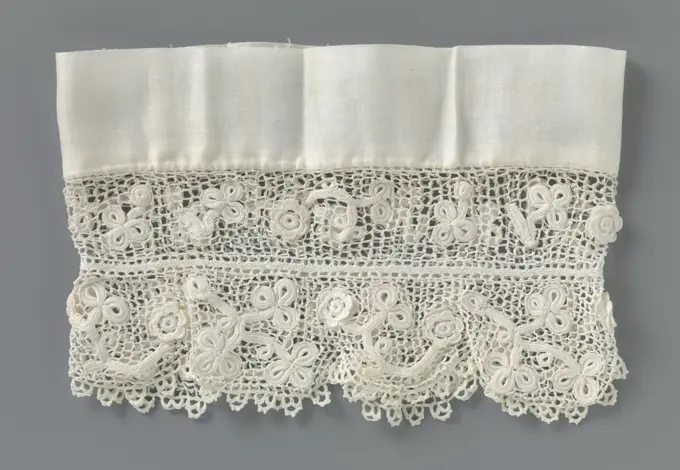
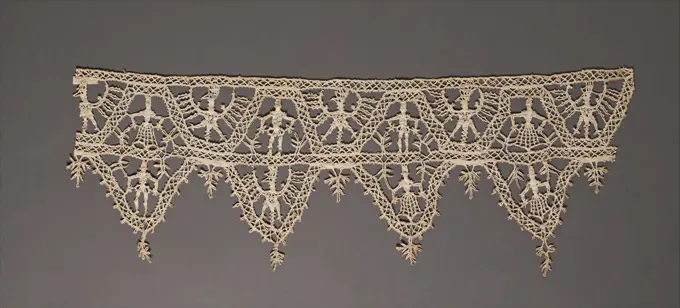
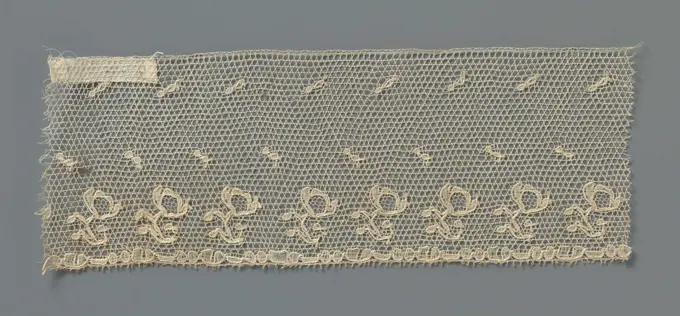
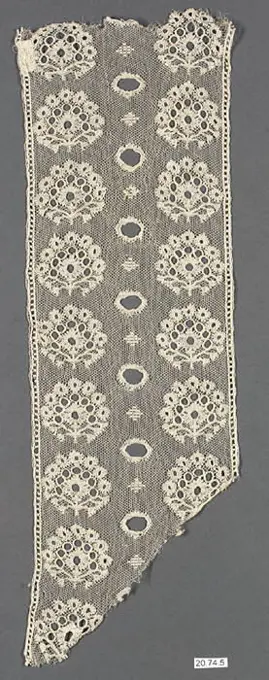
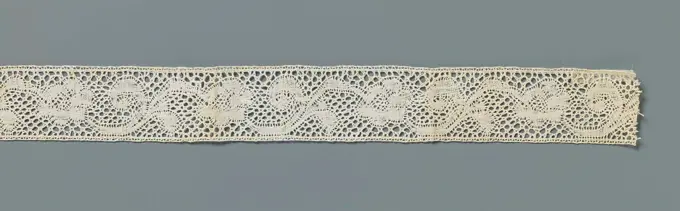
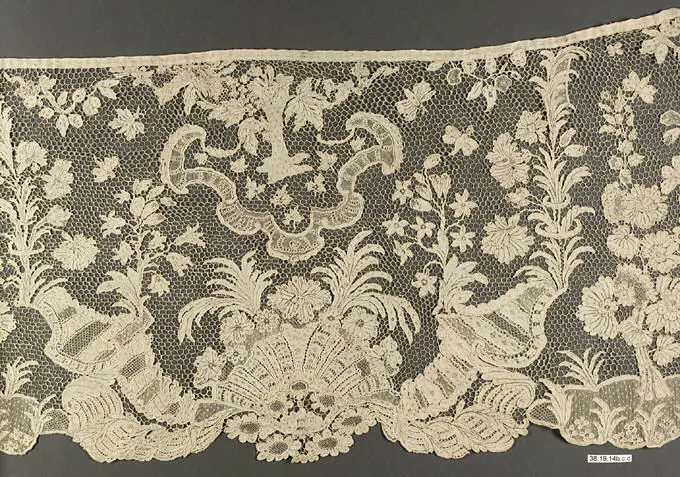
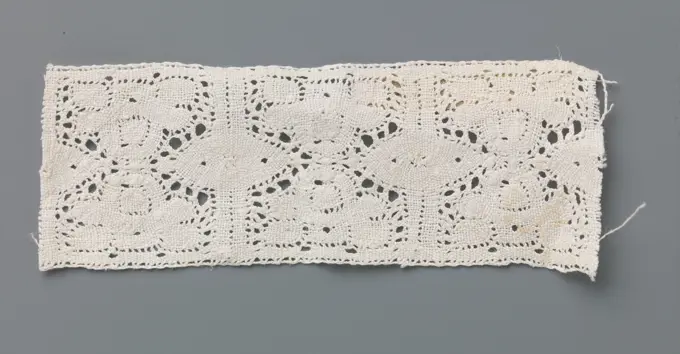
Strip bobbin with volutes, anonymous, c. 1910 Strip natural -colored bobbin, possibly Flemish guipure. Symmetrical pattern with volutes of which three, four and five-leaf flowers spring. Several braided bars of bars with picots around the motifs. A honeycomb land within the motives. The top is finished with a straight edge. The bottom is finished with triangles built from arches. Belgium  bobbin lace / Flemish guipure lace Strip natural -colored bobbin, possibly Flemish guipure. Symmetrical pattern with volutes of which three, four and five-leaf flowers spring. Several braided bars of bars with picots around the motifs. A honeycomb land within the motives. The top is finished with a straight edge. The bottom is finished with triangles built from arches. Belgium  bobbin lace / Flemish guipure laceStrook kloskant met takken waaraan twee rozetbloemen.Natural collate strip: Valenciennes side. Spreading pattern with moes and berry branches on a square valenciennes ground. Above a scalloped edge with godrinks a row of sloping branches to which two rosette flowers. The top is finished with a straight edge.Fragment of the lace;  19th century (1801-00-00-1900-00-00);Cuff of needle side with Acanthusvoluten, Anonymous, c. 1875 - c. 1910 Cuff of natural -colored needle side: Venetian relief side. Narrow rectangular model. S spent and branched acanthus voluten and always varied palm flowers protrude against an open bar soil. A straight pearl list runs along three sides. Venice linen (material) Venetian raised work Cuff of natural -colored needle side: Venetian relief side. Narrow rectangular model. S spent and branched acanthus voluten and always varied palm flowers protrude against an open bar soil. A straight pearl list runs along three sides. Venice linen (material) Venetian raised workBorder, Medium: linen Technique: bobbin lace, Brussels style, Large and small flowers and leaves in close arrangement., Belgium, 19th century, lace, BorderFlounce early 18th century Flemish. Flounce 226043Border, Medium: linen Technique: grid of withdrawn element work with needle lace, reticella style, One wide and two narrow borders in geometric forms., France, 16th century, lace, BorderKraagje van gemengde kant met rocailles.Collar of natural mixed side: Flanders side or point The Milan (dock edge) with a gauze side (coniferous side). The collar is rectangular with a tip in the middle. On a mesh soil (coniferous side) is a symmetrical edge motif (dump edge) of seed beads with a fine Maas soil. Chalical flowers with closted relief contours are in midfield, while acanthus leaves form the oversupply of seed beads.Strook gemengde kant voor een superplie met voluutranken.Strip natural-colored mixed side: Mezzo Punto. The strip is intended for a superplie and has a symmetrical pattern of voluntaries, with rosette flowers, impeller-shaped flowers and acanthus leaves on a hexagonal mesh soil (needle side). The contours of the pattern are formed by a split ribbon with holes. Within the contours different needle lace ornamental grounds. Strip with three seams. The top is finished with a straight edge. The bottom and sides are trimmed with a straight edge climbing side with picoted arcs.Strook naaldkant met bloem of blad aan krullende steel.Natural colored venetian coniferous strip. Repetitive motif of a flower or a three-piece leaf on a curly stem on an irregular bars soil with picots. Full work of feston stitches with recesses along a single leaf grain and some surfaces are filled in with an ornamental ground. Founded contour wires. The top is finished with a straight edge. The edges of the motifs are finished at the bottom with picots.Border (Italy); linen; 1918-31-3-bStrip bobbin with rosette flower between heart -shaped leaves and wine leaves, anonymous, c. 1900 - c. 1915 Strip of natural-colored bobbin, Valenciennes side. The repeating and continuous pattern consists of a rosette flower between heart -shaped leaves and wine leaves. The motifs are connected by a mesh ground, a diamond-shaped Valenciennes-ground, strewn with moesjes. The motifs are made in linen battle with recesses and openwork edges. One half of the heart -shaped leaf is made in netslag. The Bloemhart is decorated with a ring between four braids. The recesses in the petals are decorated with crossing couples. Top and bottom of the strip are straight finished, with the bottom with picots. Belgium cotton (textile) Bobbi Lace / Valenciennes Lace Strip of natural-colored bobbin, Valenciennes side. The repeating and continuous pattern consists of a rosette flower between heart -shaped leaves and wine leaves. The motifs are connected by a mesh ground, a diamond-shaped Valenciennes-grouStrip bobbin with pearl and rosette list, anonymous, c. 1830 - c. 1850 There is a running pattern on the traly land, a Mechelen soil (also known as ice ground), with a few stripped four -pass -shaped mulets. Along the inside there are small hanging rosette branches, a dune rose in the middle on larger volute stems, which spring with the same flower that forms the final piece of the pure circular arch -shaped scallops. The sculptes consist of a pearl and rosette list, which encloses a middle track with gridwork. Mechelen side. Belgium linen (material) bobbin lace / Mechlin (lace) There is a running pattern on the traly land, a Mechelen soil (also known as ice ground), with a few stripped four -pass -shaped mulets. Along the inside there are small hanging rosette branches, a dune rose in the middle on larger volute stems, which spring with the same flower that forms the final piece of the pure circular arch -shaped scallops. The sculptes consist of a pearl and rosette list, which encloseVolant Van Kloskant with diamond -shaped medallions, anonymous, c. 1870 - c. 1920 Volant of natural -colored bobbin: Parisian side. The soil is divided in two in a Paris soil with clovers at the top and a tuler ground underneath. In the latter is a symmetrical pattern of diamond -shaped openwork medallions with side vines crowned by a flower between two leaves. The leaves, the side ranks and a series of flowers and sling in the scallops are loose on the other in three closed garlands. The motifs are made in linen stroke and provided with contour threads. A rose soil has been applied as a decorative land. A part of the top has been cut and then finished with a narrow -sewn -sized tire. A part of the top has also been cut on the left, with a curve up to the bottom. Belgium linen (material) bobbin lace / Paris lace Volant of natural -colored bobbin: Parisian side. The soil is divided in two in a Paris soil with clovers at the top and a tuler ground underneath. In the latter is a symmetricManchet van naaldkant met acanthusvoluten.Cuff of natural needle side: Venetian relief side. Narrow rectangular model. Wanknig and branched acanthus volutes and always varied palm-free floods stitch off against open bars. A straight pearl list runs along three sides.Sample end of lappet, Medium: linen Technique: bobbin lace, Mechlin style, Copied from a lace pattern of the 18th century., N. Europe, 19th century copy of 18th century, lace, Sample end of lappetStrip bobbin with sloping ovals and hearts with a drop, anonymous, c. 1660 - c. 1690 Strip of natural-colored bobbin, binche side. The repeating pattern consists of Wirwar made of small motifs made with different decorative grounds. Narrow decorative straps with rectangles, made in molding, shapes slanted ovals along the top and on the center line, always between two ovals, an inverted heart with a drop between the curves. The motifs are connected by an irregular decorative land, a snowflake land. The underside of the strip is straight finished and provided with picots. The top edge is finished with a linen strap. Southern Netherlands linen (material) Bobbi Lace / Binche Lace Strip of natural-colored bobbin, binche side. The repeating pattern consists of Wirwar made of small motifs made with different decorative grounds. Narrow decorative straps with rectangles, made in molding, shapes slanted ovals along the top and on the center line, always between two ovals, an inverted heart with Border, Medium: linen Technique: needle lace with ground of loop & twist with loop & twist return, Burano, Italy, 19th century, lace, BorderTwo block lace unknownStrip bobbin with pearls in composite rank, anonymous, c. 1740 - c. 1760 Strip of natural -colored Brussels bobbin. The pattern consists of a wavy slender, composed of all kinds of leaves, a pearl necklace and flower clusters. The slender cuts with two larger flowers and leaves partly the pattern along the underside of the strip, which includes connected leaves and rosette flours. The motifs are connected by a fine Maas soil, a drachel soil. The fullwork is largely made in linen battle with openwork edges and partly in netslag. Most motives are provided with burst relief contours. As a decorative land, among other things between the clower flowers, picoted braids applied. The top is finished with a separate stretched strap, to which fragments are attached of a hexagonal mesh ground. The slight and irregularly scalloped underside stems from the edge pattern and is finished with picots. Brussels linen (material) bobbin lace / Brussels bobbin lace Strip of natural -colored Brussels bobbinStrip Application side with grape bunches and halved leaves, anonymous, c. 1850 - c. 1890 Strip of natural -colored application side, bobbin lacquered on mechanical tulle. A narrow part, along the inside, shows a running pattern of halved, lobed leaves, which also accompanies a halved medallion with grid filling. On a wide part with a tulle surface are symmetrical, deep sculptures, which are alternately filled with a grape vice and a fan plant. Belgium (possibly) linen (material) Strip of natural -colored application side, bobbin lacquered on mechanical tulle. A narrow part, along the inside, shows a running pattern of halved, lobed leaves, which also accompanies a halved medallion with grid filling. On a wide part with a tulle surface are symmetrical, deep sculptures, which are alternately filled with a grape vice and a fan plant. Belgium (possibly) linen (material)Fragment of the lace;  18th century (1701-00-00-1800-00-00);Strip bobbin with coarse three -leaf, anonymous, c. 1875 - c. 1899 Strip of natural-colored bobbin: Duchesse side. On a very open braiding soil there are one-sided, targeted serpentine branches with an anemone and a large Drieblad, which alternately form the unequal sculpts. Netherlands cotton (textile) bobbin lace Strip of natural-colored bobbin: Duchesse side. On a very open braiding soil there are one-sided, targeted serpentine branches with an anemone and a large Drieblad, which alternately form the unequal sculpts. Netherlands cotton (textile) bobbin laceCollar of mixed side with rocailles, anonymous, c. 1900 - c. 1924 Collar of natural -colored mixed side: Flanders side or point the Milan (bobbin) with a mesh side (needle side). The collar is rectangular with a dot in the middle. On a mesh ground (needle side) is a symmetrical edge pattern (bobbin) of rocailles with a fine mesh ground. Chalice -shaped flowers with cracked relief contours are in midfield, while acanthus leaves form the outlets of the rocailles. Belgium linen (material) mixed lace / Flanders lace / Milan lace Collar of natural -colored mixed side: Flanders side or point the Milan (bobbin) with a mesh side (needle side). The collar is rectangular with a dot in the middle. On a mesh ground (needle side) is a symmetrical edge pattern (bobbin) of rocailles with a fine mesh ground. Chalice -shaped flowers with cracked relief contours are in midfield, while acanthus leaves form the outlets of the rocailles. Belgium linen (material) mixed lace / Flanders lace / Milan laceFragment late 18th century French, Chantilly. Fragment 212873Strip application side with C-shaped flower branch, anonymous, c. 1850 Strip of natural -colored Brussels Application side: bobbin side with a few needle lace piera applicated on mechanical tulle. The repeating pattern consists of C-shaped flower branches, which spring from a wavy lower edge with zigzag pattern. This edge is trimmed with potente arches, with a rocaille-like motif under each wave top with a dot in the center. The motifs are made in linen battle with openwork edges and equipped with relief contours. The top is trimmed with a separate strap. Brussels cotton (textile) Brussels Applied Strip of natural -colored Brussels Application side: bobbin side with a few needle lace piera applicated on mechanical tulle. The repeating pattern consists of C-shaped flower branches, which spring from a wavy lower edge with zigzag pattern. This edge is trimmed with potente arches, with a rocaille-like motif under each wave top with a dot in the center. The motifs are made in linen battle wBorder (England); linenEdge (France); linenCollar, Medium: cotton Technique: bobbin lace, peasant style, Peasant-style lace., Russia, 19th century, lace, CollarStrip bobbin with daisies, anonymous, c. 1900 - c. 1924 A coarse mesh stock (square Maas) with daisies above scoops of pearls. Valenciennes side. Sluis (Possible) linen (material) Bobbi Lace / Valenciennes Lace A coarse mesh stock (square Maas) with daisies above scoops of pearls. Valenciennes side. Sluis (Possible) linen (material) Bobbi Lace / Valenciennes LaceTussenzetsel van kloskant met roosjes.Between two arches edges, with openings for a ribbon, a web runs with square meshes, on which a row of roses are on curve sprigs. Valenciennes side.Heat slip of the needle side with symmetrical pattern of S-shaped decorative tires and irises, anonymous, c. 1760 - c. 1770 Capslip of natural-colored needle side: Alençon side. Symmetrical pattern with an arc formed in the middle by two mirrored and against each other on false S-shaped decorative tires. To the left and right of this arc, these S-shaped decorative tires repeat three times, with a curved branch of one side with pointed feathered leaves and an iris that cuts the previous S-shaped decorative band. At the ends of the hat-slip, such a branch with iris originates from a rocaille-shaped motif. Similar rocaille motifs come back along both long sides of the hat -slip, interspersed with leaves and rosette flowers. The motifs are made up of feston stitches and equipped with relief contours. Ornamental land with radar picots are mainly used in the decorative tires and rocailles. The silly edge around the hat slip is finished with picots. France linen (material) Alençon Lace CapsliRunner, 19th century. Russia , 19th century. Cutwork and drawnwork: linen: straight (continuous) bobbin lace (tape lace) edging; overall: 187.3 x 48.3 cm (73 3/4 x 19 in.).Hat veil of application side with cornflowers and daisies. Application canned hatred ... Clamping side applicated on machine tulle. Rectangular model. The repeating pattern consists of three rows with a widely spread one chali flower between a few leaf packs. Between the successive chali flowers in the lower row, a flower branch with one daisy and two smaller flowers and leaves hang. Along the bottom of the veil the pattern is closer and consists of a landscape flower branch with two daisies, three cornflowers or carnations and some other and smaller flowers. Most leaves are elongated and more or less oval in form where some leaves are incised and curl. The flowers and a few leaves, which hang down on the branch down shapes along the underside of the veil, which are connected to other leaves that are applicated by the underside to form the slip edge. An adapted sloping edge continues along the short sides of the veil. The motifs are clamped in linen battle with openwork edges and they Strook gemengde kant met s-voluten.Strip natural-colored mixed side: Brussels climbing side in combination with a needle lace ground, a fine mesh side ground. This type of side is also known as the name: Point d'Angleterre. The running pattern is a rough drawing and consists of matching C and S volutes. Large roses, and face and and profil, shapes with a leaf and a c-volute deep slip. Fine leaf branches are turned to the inside.Needlepoint (Point Alençon) Lace Bonnet Veil, late 18th century. France, Alençon, late 18th century. Lace, needlepoint: linen; average: 43.2 x 71.1 cm (17 x 28 in.).Strook naaldkant met gestrekte S-rank.Strip natural needle side: Venetian relief side. A separate pattern of interrupted voluntaries and palmet flowers stands on a very open bars. Straight finish with triangles, alternately large and small.Strook kloskant met liggende bloemtakjes.At a nice ground ground, a mechelen soil (also known as ice soil), are righ-facing lying twigs, to which three small florets; Things of this single scattered bakes. An edge with open grid work fills consists of consecutive spiral drinks, including three florets and edges of Campanes, which form the slot. Mechelen side.Strip bobbin with mosjes and flower branches on a strip of machine tulle with mosjes, anonymous, c. 1800 - c. 1824 Strip of natural -colored bobbin, Mechelse side with a strip of mechanical tulle with a spray pattern of moesjes. The pattern of the burst strip consists of a track stripped mushes with a row of loose horseshoe -shaped flowers on a short twig. Along the straight underside are connected three -lobe leaves. The motifs are connected by a fine Maas soil, the Mechelen soil. The sparing fullwork is made in linen lag and is equipped with thicker and shiny contour threads. A sparingly used decorative land with coarser Maas is used in the flower hearts. The long sides are straight finished, with picots along the underside of the burst strip. One short side is finished with a zoompje. Southern Netherlands linen (material) bobbin lace / Mechlin (lace) Strip of natural -colored bobbin, Mechelse side with a strip of mechanical tulle with a spray pattern of moesjes. The pattern of the bStrook applicatiekant met naar links wuivende blaadjes.Strip natural-colored application side: needle side applicated on machine tulle. This type of side is also known as the name: Point d'Angleterre. Two-thirds part is littered with leaves, a third part consists of a symmetrical sculpture of a rosette and an open medallion, connected by sickle-shaped leaves. From those medallions a to the left grows waving, incised leaves.Japonstrook van applicatiekant met hangende bloemen.Japon strip natural colored application side, needle side applicated on machine tulle, point d'Angleterre. An edge of round shelters is formed by a rigged row of large flowers that depend on the right, from small flower branches. Loose up there is a narrow edge of a wavy branch with smaller similar flowers. The upper part consists of a part of an unmarmed tulle. Two narrower strips have the same, and a reduced pattern.Manchet van gehaakte kant met reliëfrozen als schulpenrand.Cuff of natural colored Irish crochet side. Rectangular model. A sloping edge of co-switched relief roses runs along three sides. A row of diamond-shaped leaves is located along one long side. In the narrow midfield two horizontal stems with three-piece leaves. The motifs are connected by a diamond-shaped network with picots. Along the roses a thongrom runs along the outside, which passes into a picro edge above the diamond-shaped leaves.Strip bobbin with a window between four circles and a heart between six diamonds, anonymous, c. 1800 - c. 1899 Strip of natural -colored bobbin, Swedish side. The strip is attached to a light blue cardboard with pins, with seven other strips. Above the strip is written on the cardboard "Laces from Dalecarlia. (Dalarna)". The repeating pattern is formed by a bundle of wires that has been worked through a mesh soil, a diamond -shaped tuneral. The threads alternately form a heart surrounded by six diamonds and a diamond surrounded by four circles. Along the underside of the strip there is always a trapezoidal motif between these successive motifs, with a small recess in the center. The hearts, diamonds and trapezia are made in linen battle with openwork edges and whose contours are therefore formed by the thick threads. A larger oval -shaped Maas is made between the meshes of the lacquers of the litter (around the windows). Top and bottom of the strip are straight and equipped with picotsStrip bobbin with rose branches, anonymous, c. 1795 - c. 1805 Strip of natural -colored bobbin: Mechelse side. Under a spreading pattern of bows, along the underside of the strip is a repeating pattern of one -sided rose branches with three branches. There is a leaf or a rose button on the top two branches and a rose with five petals. A larger flower hangs down on the lower twig in a semi -circular shell. The motives are made in sparingly applied and loose linen battle, with thicker and shiny contour threads. The motifs are connected by a fine Maas soil, a Mechelen soil. A decorative land has been used in the openwork flower hearts of the larger flowers. The top of the strip is straight finished. The scrap edge along the underside of the strip is finished with picots. Southern Netherlands linen (material) bobbin lace / Mechlin (lace) Strip of natural -colored bobbin: Mechelse side. Under a spreading pattern of bows, along the underside of the strip is a repeating pattern of one -sided Fragment of an Alb Flounce. Belgium, Brussels, 1700-1750. Costumes. Linen bobbin laceStrip of needle side with hanging hearts, anonymous, c. 1880 Strip of natural needle side: Brussels mesh side. The repeating pattern consists of large semicircular sculptes formed by hiding C-Voluten. Above each volute is one loose rose with a jet wreath of short branches with berries. The switching points between the volutes are formed by oval medallions, which are decorated with a leaf crown. From the leaf crown a fine pendulum rises that runs over the rose to the next medallion. The scrap edge is formed by hanging heart -shaped leaves under the volutes interspersed by always three hanging daisies under the medallions. The motifs are made up of feston stitches and equipped with relief contours. The roses have relief leaves. The motifs are connected to each other by a fine Maas soil, a mesh side, on which a few mushes have been applied. Decorative stitches have been used in the roses and medallions. The top of the strip is straight finished. Brussels linen (material) Brussels Gaze PoiCooper Union Museum Lace Study Card, Medium: linen Technique: bobbin lace, Two fragments, each of two rounded points. Tightly-worked design of conventionalized floral motifs. Fragment is mounted on a fabric-covered board and framed behind glass. Frame is natural wood., Belgium, 17th century, lace, Fragment, FragmentStrip application side with bouquets and triple ornament edge, anonymous, c. 1860 Strip natural -colored application side: bobbin with needle side details applied on mechanical tulle. A repetitive motif with two different bouquets stands on a fine hexagonal Maas soil, with a stray pattern of rings. One bouquet consists of one clock flower surrounded by nine smaller rosette flowers and long hanging leaf branches. The other bouquet consists of four large rosette flowers surrounded by branches with leaves. The three ornament edges exist from top to bottom: a straight tire with needle lace -sided stitches, cut over at a regular distance by a leaf on which a vertical arrow of rosettes; a chain of standing rectangles; A scrap edge along the underside through a succession of Margrits. Motives cloated in linen and relief contours with widely fested wire bundles. Different needle lace stitches in recesses, such as in the hearts of flowers and in the tire. The top is trimmed with a border bobbinStrook kloskant met klavertjes drie.Strip natural colosside, Buckingham side. The repeating pattern consists of three-switched clovers three, which stolves down to a stalk. Above the clovers a very narrow job runs with a maas soil, a tulet. This includes the strip from an ornamental ground, a rose ground in which the clovers are made with thick and shiny contour wires. A very narrow band is already wavy, under every clover a hemisphere scalch, which is finished with picots. The top of the strip is straight finished.Cap streamers, Medium: linen Technique: bobbin lace, Brussels style, Cap streamers in a design of a plumed phoenix standing on a pomegranate branch and medallion with the monogram 'MA.', Belgium, 1700-1750, lace, Cap streamersKloskant dress strip with the shield -shaped medallions, anonymous, c. 1850 Black bobbin jelly strip: Chantilly side. Closed motifs are grouped separately on an open mesh stock. On the junctions of the sculptes, three symmetrical shield-shaped medallions rise, which are caught in two pairs of C-volutes. Above the sculpts, a large flower feast is found above the medallions, with cracked petals as a crown. The inner edge is decorated with a chain of heart -shaped leaves. Bayeux (possibly) silk bobbin lace Black bobbin jelly strip: Chantilly side. Closed motifs are grouped separately on an open mesh stock. On the junctions of the sculptes, three symmetrical shield-shaped medallions rise, which are caught in two pairs of C-volutes. Above the sculpts, a large flower feast is found above the medallions, with cracked petals as a crown. The inner edge is decorated with a chain of heart -shaped leaves. Bayeux (possibly) silk bobbin laceStrip bobbin with two symmetrical compositions with curling leaves that flank a candlestick motif and a bow, anonymous, c. 1675 - c. 1699 Strip of natural -colored bobbin: old Milanese side. The repeating pattern consists of two symmetrical compositions with curling leaves that flank a candle -wing motif and a bow. The motifs are made in linen battle with relatively large cut -outs and openwork edges. The motifs are connected by few braids, with picots. Decorative lands have been applied in all motives. Top and bottom of the strip are straight finished, with the underside with a coarser wire braided bow edge with picots. Malib linen (material) bobbin lace / tape lace (bobbin lace) / Milan lace / old Milan lace Strip of natural -colored bobbin: old Milanese side. The repeating pattern consists of two symmetrical compositions with curling leaves that flank a candle -wing motif and a bow. The motifs are made in linen battle with relatively large cut -outs and openwork edges. The motifs arStrook naaldkant met ingesneden blad.Running pattern of incised leaves above a rose and a three-leaf, which together form the sharply toothed outside line. Cross-shaped bars with button (soil of long X-shaped bars with a spider). The REMPLIS consists of buttonhole stitches and a Fond Gazé. German side: 'Carlsbead points'.Cuff (one of a pair) late 17th century Italian, Venice. Cuff (one of a pair) 218106Strip bobbin with half diamond -shaped and lobed circular medallions, anonymous, c. 1730 - c. 1740 Strip of natural -colored bobbin: Mechelse side. The repeating pattern consists of half medallions, diamond -shaped alternated by lobbed circular. The pattern along the silly scallop consists of a closed strap in which with openwork edges the contours are made of stylized flowers and leaves. The motifs are connected by a fine Maas soil. The motifs are made in linen battle with slightly thicker contour threads and partly with openwork edges. Two different decorative grounds have been used in the medallions. The scums along the bottom are finished with picots. The top is straight. A seam was made at the start of the strip. Mechelen linen (material) bobbin lace / Mechlin (lace) Strip of natural -colored bobbin: Mechelse side. The repeating pattern consists of half medallions, diamond -shaped alternated by lobbed circular. The pattern along the silly scallop consists of a closed strap in whicFragment (France); linenPair of Cuffs. Belgium, Brussels, circa 1870. Costumes; ensembles. Cotton point de gaze needle laceStrip Machine with chalice flower on C -shaped twig, anonymous, 1850 - 1899 Strip of natural-colored machine side: machine valenciennes side. The repeating pattern consists of a C-shaped twig from which the convex side of the C a chalice flower originates and a leaf at the top of the C. Along the underside of the strip is a succession of a shorter and longer straight lines that curl up slightly at the ends. Between the curling ends, a kind of semi -circular cartouche has been realized between the flowers with circles, in which a decorative land has been used. The motifs seem to have been made in linen battle with openwork edges. The motifs are connected by a mechanical square Valenciennes ground. Top and bottom of the strip are straight finished with the bottom with picots. France (possibly) cotton (textile) Strip of natural-colored machine side: machine valenciennes side. The repeating pattern consists of a C-shaped twig from which the convex side of the C a chalice flower originates Fragment 18th century Swedish. Fragment 215153Point de Gaze needlelaceBorder (Belgium); linenBand, Medium: linen Technique: needle lace with ground of loop and twist with twist return, Band with stiff scrolling vine with short branches and small sprigs., Italy, ca. 1660, lace, BandHat veil of application side with cornflowers and margrites, anonymous, c. 1825 - c. 1849 Hat veil from Application side: Kloskant Applicated on Machine Tulle. Rectangular model. The repeating pattern consists of three rows with widely spread one chalice of one between a few leaf branches. Between the successive chalice flower in the bottom row there is a flower branch with one daisy and two smaller flowers and leaves. Along the underside of the veil, the pattern is closer and consists of a horizontal flower branch with two daisies, three cornflowers or carnations and some other and smaller flowers. Most leaves are elongated and more or less oval in shape where some leaves are cut and curl. The flowers and a few leaves, which hang down on the branch, form scallops along the underside of the veil, which are connected with other leaves that have been applied along the underside form the scrap edge. A modified edge of the scoop runs along the short sides of the veil. The motifs have been Kloskant intermediate mate with zigzag line, anonymous, c. 1875 - c. 1949 Piles of Natural -colored bobbin side: Mechelse side. In the middle of the fine grid, a Mechelen soil (also known as ice soil), an openwork band runs in Zigzaglijn, cut over by two types of rosettes. Belgium linen (material) bobbin lace / Mechlin (lace) Piles of Natural -colored bobbin side: Mechelse side. In the middle of the fine grid, a Mechelen soil (also known as ice soil), an openwork band runs in Zigzaglijn, cut over by two types of rosettes. Belgium linen (material) bobbin lace / Mechlin (lace)Border 18th century French. Border 226433Border; `cotton, metal foil wrapped around silk (l.commoner)Half Albesto smoke from Kloskant with fan and French lily, anonymous, c. 1710 - c. 1730 Half Albesto smoke of natural -colored Brabant bastard. Rich nuanced light side with a repeating pattern, which consists of two types of symmetrical compositions of flowers, leaves and architectural shapes. One composition consists of a baldijk line under which a fan or palm-shaped vase, with flowers surrounded and standing on a holo-shaped border with diamond filling. The other pattern consists of a bowl from which a pomegranate and an obelisky pointed diamond shape rice, crowned by a French lily. The motifs are connected to each other with a potented braid, here and there the braids walk past the motifs. The motifs are made in loose -chatter linen and mains and is sporadically equipped with burst relief contours. A wide variety of decorative land has been used within the motifs. The scoops along the lower edge stem from the pattern. The upper edge is finished with a straight edge, as well as the sBorder 17th century Italian, Milan. Border 218135Bobbin Lace Insertion with Edging of Points, mid 16th century. Italy, Venice, mid 16th century. Lace, bobbin; average: 19.8 x 24.5 cm (7 13/16 x 9 5/8 in.).Strip of needle side with mirrored S-shapes and arches, anonymous, c. 1785 Strip of natural needle side: Argentan side. Pattern with mirrored S-shapes with bowing in between, on a ground with meshes that are closed with buttonholes. Spread motif with flower branches with oval leaves. The S forms are separate from the edges and are decorated with bows, ovals, flowers. The arches come alternately from the lower and upper edge. Faint scalloped edges on the top and top with, among other things, a double row of ovals between which a finer Maas soil.  linen (material) Argentan Lace Strip of natural needle side: Argentan side. Pattern with mirrored S-shapes with bowing in between, on a ground with meshes that are closed with buttonholes. Spread motif with flower branches with oval leaves. The S forms are separate from the edges and are decorated with bows, ovals, flowers. The arches come alternately from the lower and upper edge. Faint scalloped edges on the top and top with, among other thinFragment, Bobbin Lace 5; cottonStrook naaldkant met klaproosjes en tulpen.Strip natural-colored coniferous lace: Alençon side. Under a nice pendulum suspended on the inside are turning a tuft boom roses and tulips. A wide edge is formed by 'Spoorrails' and three wheels over large leaf roses, which are under the tissues. The leaves are separated through the grain in a bright white and a blurred white section.Border. Italy. Date: 1601-1625. Dimensions: 11.9 × 231.3 cm (4 3/4 × 91 in.)Width repeat: 24.5 cm (9 3/4 in.)Upper border width repeat: 3.2 cm (1 1/4 in.)Upper border height: 3.4 cm (1 1/4 in.)Points width repeat: 3.5 cm (1 3/8 in.)Heading: .6 cm (1/4 in.). Linen, bobbin straight lace. Origin: Italy. Museum: The Chicago Art Institute, Chicago, USA.Fragment; linenFragment, Medium: linen Technique: lace of early premade tape with needle fillings and raised work added, Fragment of a wide band with a design of hunters, lions, eagles, and dogs., France or Italy, late 17th century, lace, FragmentStrip of cotton with lace plunge with four ramps and zigzag debts with openwork Margrants, C.I. Bosch Reitz-Teding van Berkhout, c. 1860 - c. 1880 Strip of natural cotton with lace bobbins: English embroidery. The strip is made up of three strips. The middle one consists of a strip with four horizontal lines formed by ramps and at the bottom a sculpy edge with triangular scales in which a branch with three open worked Margrants hangs. A narrow zigzag track of cotton is sewn along the triangular scallops. On this zigzagbaan a row of close 'berries' of openwork circles with a thick embroidered edge around it. The upper strip has a zigzag pattern of a continuous slender with leaves and daisies and in each triangular field that this creates a triangle is formed by three daisies. Amsterdam cotton (textile) Strip of natural cotton with lace bobbins: English embroidery. The strip is made up of three strips. The middle one consists of a strip with four horizontal lines formed by ramps and at tEdging 18th century Italian, Abruzzi (Pescocostanzo). Edging. Italian, Abruzzi (Pescocostanzo). 18th century. Bobbin lace. Textiles-LacesBorder Made 1601-1625 Italy. Linen, bobbin straight lace .Border, Medium: linen Technique: bobbin lace (Valenciennes diamond ground), Detached ornaments and dots on diamond-shaped mesh; scalloped border., France, 19th century, lace, BorderStrip of needle side with small dense and large open circles, anonymous, c. 1900 - c. 1949 Strip of natural needle side - reticella - between edges open sewing: work with pulled out threads. The repeating and symmetrical pattern consists of one row of squares, which are made up of four small squares. Each large square has been crossed, at every intersection alternating a small closed and a large openwork circle. Demizes along the edges. The top and bottom of the strip are straight finished with open diamonds (work with threads pulled out). unknown cotton (textile) Strip of natural needle side - reticella - between edges open sewing: work with pulled out threads. The repeating and symmetrical pattern consists of one row of squares, which are made up of four small squares. Each large square has been crossed, at every intersection alternating a small closed and a large openwork circle. Demizes along the edges. The top and bottom of the strip are straight finished with open diamonds (work Insertion 16th century Italian, Venice. Insertion. Italian, Venice. 16th century. Bobbin lace. Textiles-LacesCuff from crocheted side with loose stems and layered rosette flowers, anonymous, c. 1890 - c. 1909 Cuff made from two strips of natural -colored Irish crocheted side on a strip of white cotton. The pattern of the strip used as intermediate sinks consists of two separate stems with a three -piece leaf, interspersed with a loose stem with a layered rosette flower. The pattern of the other strip consists of a loose stem with three -part leaves interspersed by a loose stem with a layered rosette flower on either side. The regular semicircular scallops on the underside are trimmed with picoted arches. The soil with square meshes in both strips is reminiscent of the knotted network side network. Ierland (possibly) cotton (textile) Cuff made from two strips of natural -colored Irish crocheted side on a strip of white cotton. The pattern of the strip used as intermediate sinks consists of two separate stems with a three -piece leaf, interspersed with a loose stem with a layered rosette flowerBorder 17th century Italian. Border 222711Fragment 16th century Italian. Fragment 215369Strook kloskant met twee rijen strikjes en een rij bloemen.Strip natural colosside, Paris side. The upper half of the pattern consists of two rows of shaking bows, where the upper half is in the opposite direction of the lower half. The lower half of the pattern consists of a row of flowers, always one flower at a slightly curved stem with a few leaves. Along the bottom, an edge runs from a concatenation of whimsical motifs. The motifs are connected by a Maas soil, a Paris soil. The sparse fullwork is made in loosened linen, with thicker contour wires. In the flower hearts a tuland has been applied as ornamental ground. The top and bottom of the strip are straight finished, the underside with picots.Strip crocheted side with reticella motifs, anonymous, c. 1890 - c. 1909 Strip of natural Irish crocheted side, imitation reticella. The wide strip is made up of two narrower strips, with potente bow edges being put together. The top is finished with a straight edge. The underside is finished with a picoted bow edge. A seam runs from top to bottom in the upper strip. Ireland cotton (textile) Strip of natural Irish crocheted side, imitation reticella. The wide strip is made up of two narrower strips, with potente bow edges being put together. The top is finished with a straight edge. The underside is finished with a picoted bow edge. A seam runs from top to bottom in the upper strip. Ireland cotton (textile)Vierkante jabot van old Brussels Kloskant, Anonymous, c. 1750 Square Jabot van Brusselse Kloskant. The pattern has a palmet surrounded by leaves and flowers, various fillings and a scalloped, picoted leaf edge. Belgium . Brussels bobbin lace Square Jabot van Brusselse Kloskant. The pattern has a palmet surrounded by leaves and flowers, various fillings and a scalloped, picoted leaf edge. Belgium . Brussels bobbin laceBobbin Lace Edging, 17th or 18th century. Spain, Seville, 17th or 18th century. Lace, bobbin; average: 9 x 16.6 cm (3 9/16 x 6 9/16 in.).Rear of a transfer of needle side with peonies. Separate rear piece composed of four narrower strips, the shelters of two turned outwards outwards. Deep bands of bandwalk with grid pattern and hanging campanes exhibit a peony hanging under an asymmetrical rocaille as a lock piece, also filled with grid pattern. In the schulls stand to the right-up stems with anemones and lilacs. The fond is strewn with moes. Point the Gaze de Bruxelles.Fragment; linenPiece early 19th century French, Lille. Piece 220614Strook kloskant met een rij liggende s-vormige bloemstengels.Strip natural-colored Dutch clamping side. The repeating pattern consists of a row of lying S-shaped flower stems, with a curly leaf on either side of each stalk and a round flower heart with five lobes at the end. The successive flower stems touch each other at the beginning and end and form a through wavy pattern. The motifs are worked in linen stroke with openwork edges and are connected by a grille, a five-grade soil. Upper and bottom of the strip are straight finished.Cotton cuff with lace pledger with daisies between feathered S-shaped leaves, C.I. Bosch Reitz-Teding van Berkhout, c. 1860 - c. 1880 Cuff made of natural cotton with lace bobbins: English embroidery. The pattern has sloping, feathered S-leaves between two Margrites, one of which hangs in each shell. Amsterdam cotton (textile) Cuff made of natural cotton with lace bobbins: English embroidery. The pattern has sloping, feathered S-leaves between two Margrites, one of which hangs in each shell. Amsterdam cotton (textile)Fragment 18th century Flemish. Fragment 218901Strip crocheted side with alternating a flower and a leaf, anonymous, c. 1890 - c. 1909 Strip of natural -colored Irish crocheted side. Pattern with a hanging or standing whimsical flour interspersed by a flower or a leaf consisting of C-shapes stacked on top of each other. Crochet irregular mesh soil with picots. The top is finished with a straight edge. The straight underside is trimmed with picoted arches. Ireland cotton (textile) Strip of natural -colored Irish crocheted side. Pattern with a hanging or standing whimsical flour interspersed by a flower or a leaf consisting of C-shapes stacked on top of each other. Crochet irregular mesh soil with picots. The top is finished with a straight edge. The straight underside is trimmed with picoted arches. Ireland cotton (textile)Flounce 1715-24 French. Flounce. French. 1715-24. Needle lace. Textiles-LacesStrip bobbin with two stylized mirrored flowers between vertical lines and oval, anonymous, c. 1600 - c. 1635 Strip of natural -colored Dutch bobbin. The pattern consists of vertical straight lines, between which two stylized flowers are mirrored over the length axis. On the center line, the flowers are flanked left and right by a lying Spitsovaal, who always cuts the vertical line. The motives are made in linen battle with recesses, there is hardly any soil, the motives are connected by very short braids. Up and bottom of the strip are finished with a straight edge. Southern Netherlands linen (material) bobbin lace Strip of natural -colored Dutch bobbin. The pattern consists of vertical straight lines, between which two stylized flowers are mirrored over the length axis. On the center line, the flowers are flanked left and right by a lying Spitsovaal, who always cuts the vertical line. The motives are made in linen battle with recesses, there is hardly any soil, the motives are connecStrip bobbin with horizontal flower branches, anonymous, c. 1830 - c. 1850 On a fine grid, a Mechelen soil (also known as ice soil), there are rich twigs, with three small roses; In between some scattered berry branches. An edge with open grid -work filling consists of contiguous spiral ranks, including three roses and edges of Campanes, which form the sculpes. Mechelen side. Belgium linen (material) bobbin lace / Mechlin (lace) On a fine grid, a Mechelen soil (also known as ice soil), there are rich twigs, with three small roses; In between some scattered berry branches. An edge with open grid -work filling consists of contiguous spiral ranks, including three roses and edges of Campanes, which form the sculpes. Mechelen side. Belgium linen (material) bobbin lace / Mechlin (lace)Strip 16th century Italian. Strip 220829Fragment; linen