Elegant Lace Trimmings

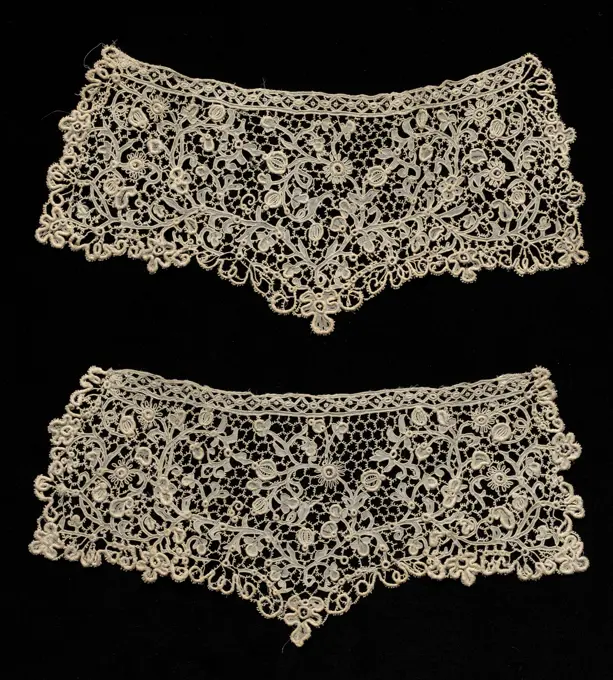
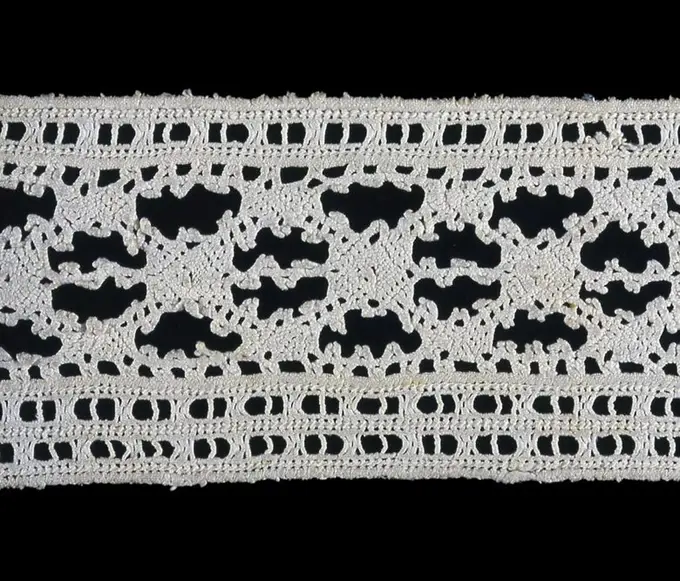
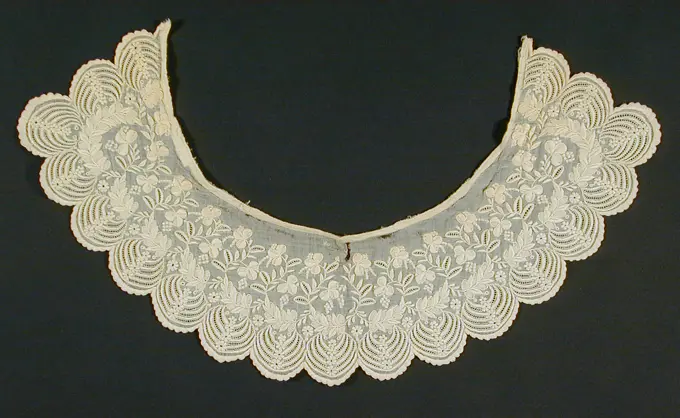
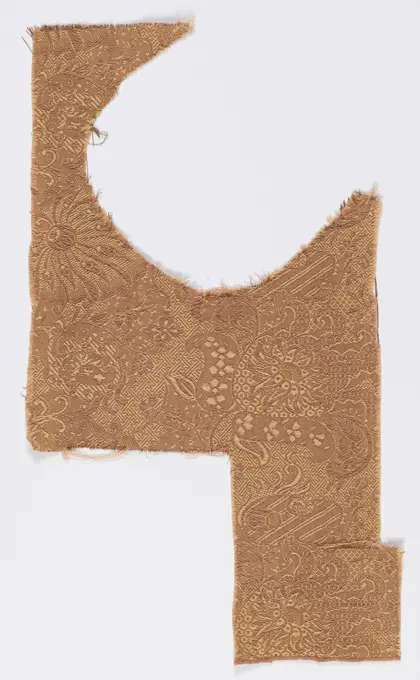
A variety of delicate lace strips with floral and geometric patterns. Features natural tones and fine craftsmanship, highlighting historical textile designs.

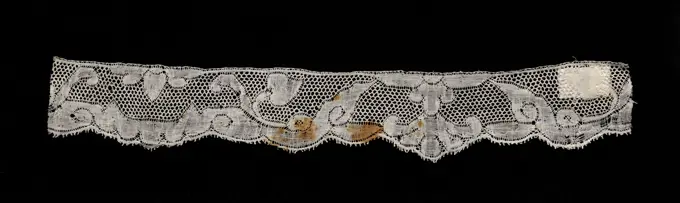
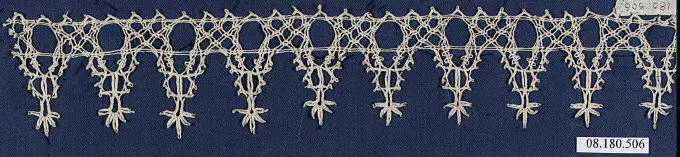
Strip bobbin with wheels and five -lobe sculptes, anonymous, c. 1620 - c. 1630 Strip of natural -colored bobbin: Old Flemish side. In the semicircular scallops there is a repeating and symmetrical motif of two wheels placed one above each other, surrounded by five lobes along the bottom. The pattern is made up of a winding strap in linen and braids. Southern Netherlands (possibly) linen (material) bobbin lace / tape lace (bobbin lace) / old Flemish lace Strip of natural -colored bobbin: Old Flemish side. In the semicircular scallops there is a repeating and symmetrical motif of two wheels placed one above each other, surrounded by five lobes along the bottom. The pattern is made up of a winding strap in linen and braids. Southern Netherlands (possibly) linen (material) bobbin lace / tape lace (bobbin lace) / old Flemish lace
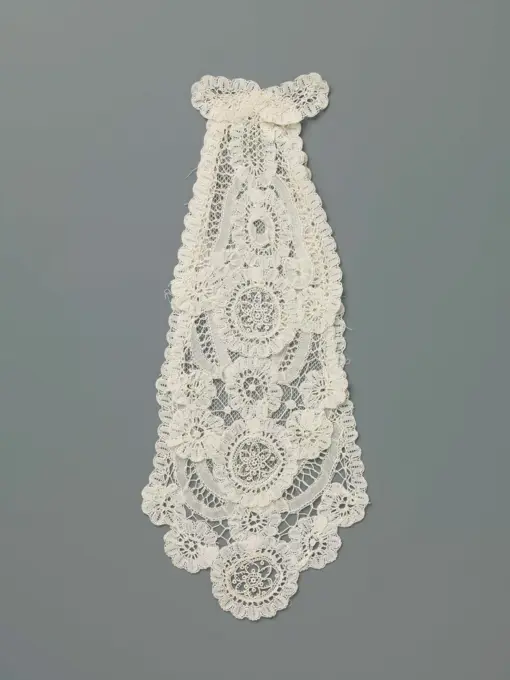
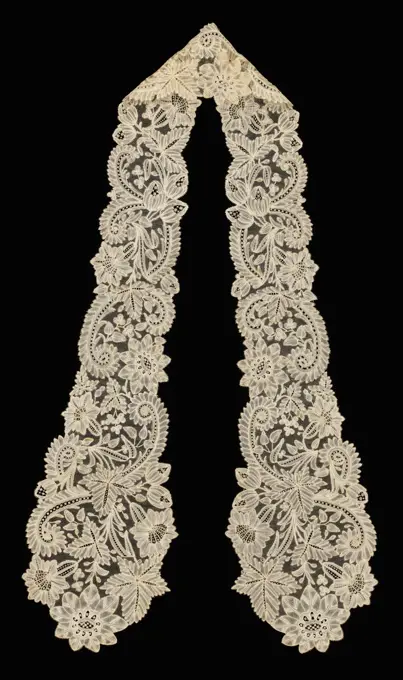
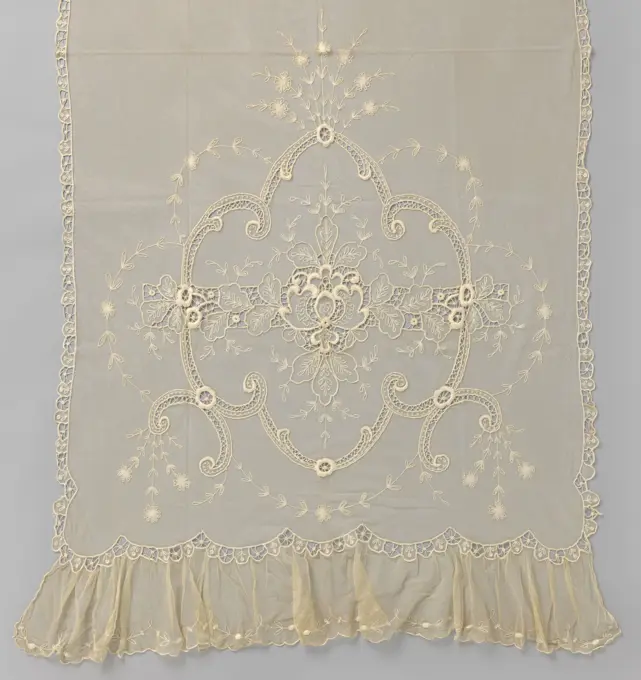
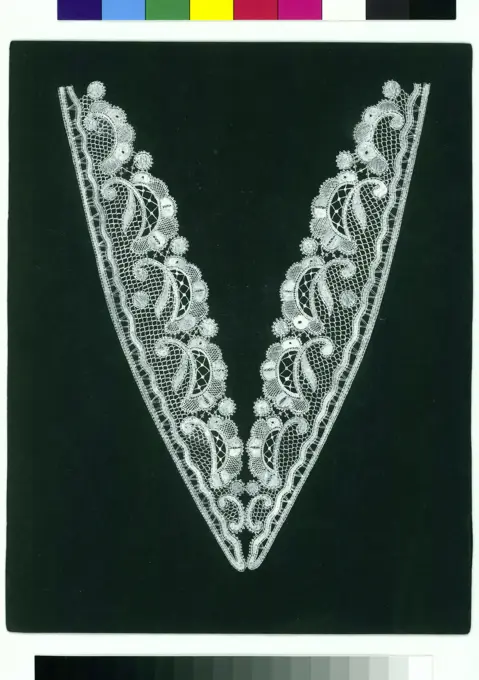
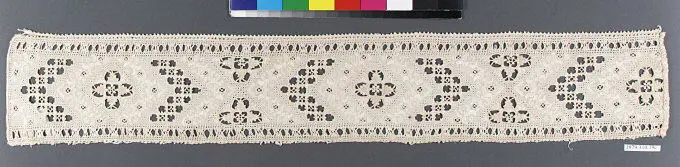
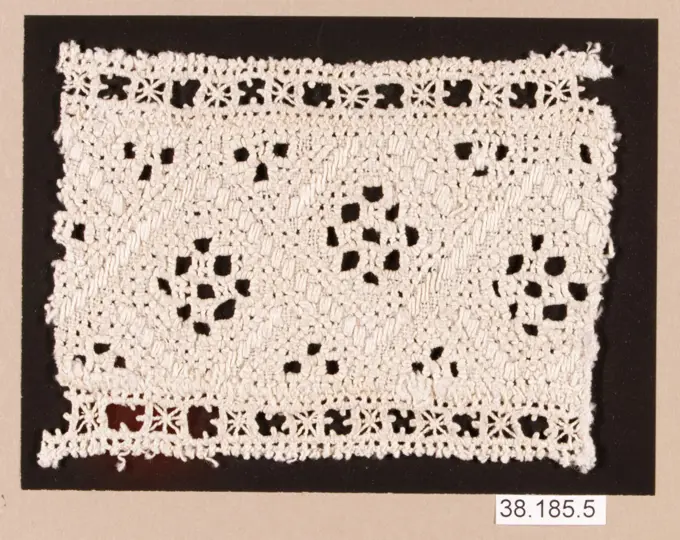
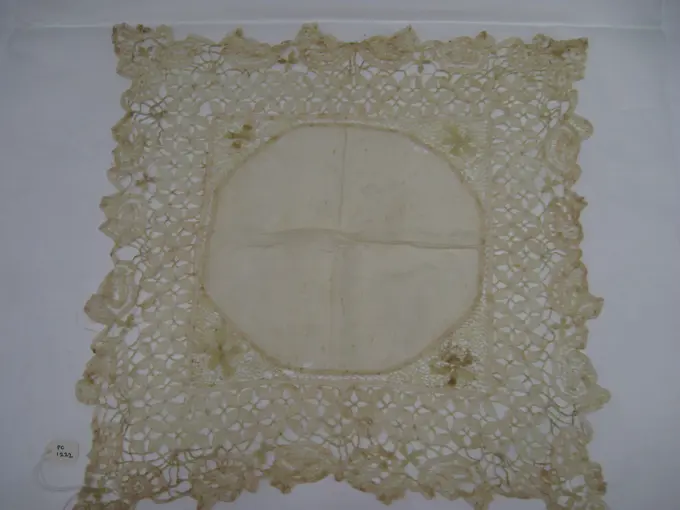
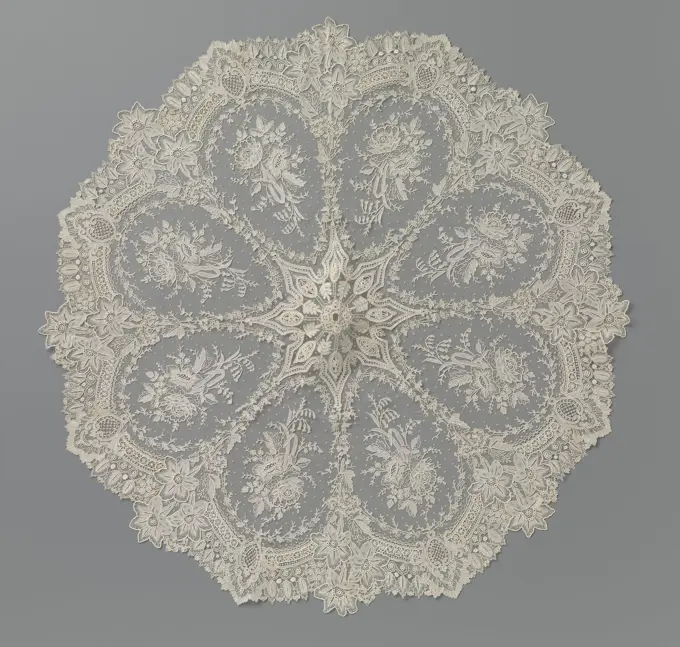
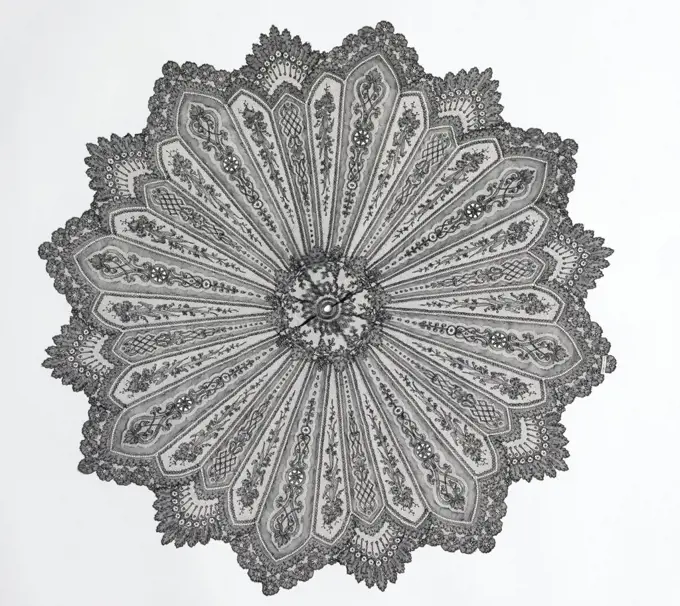
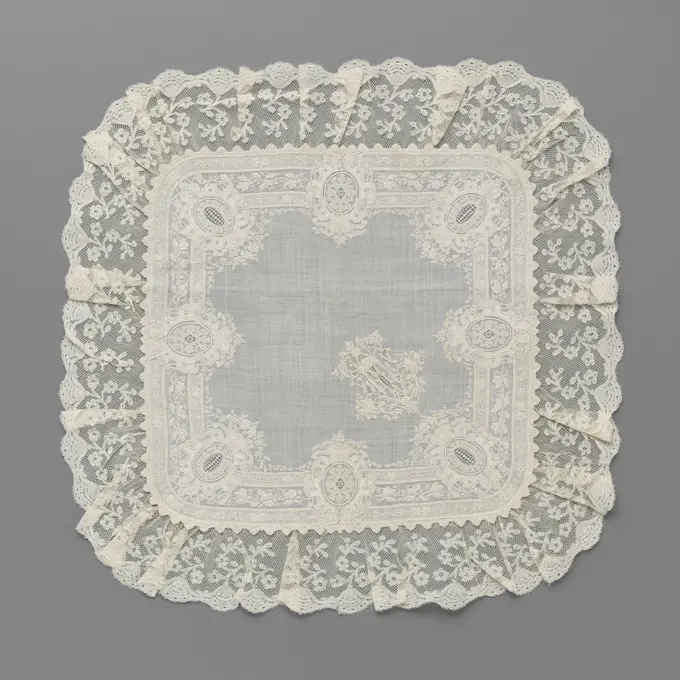
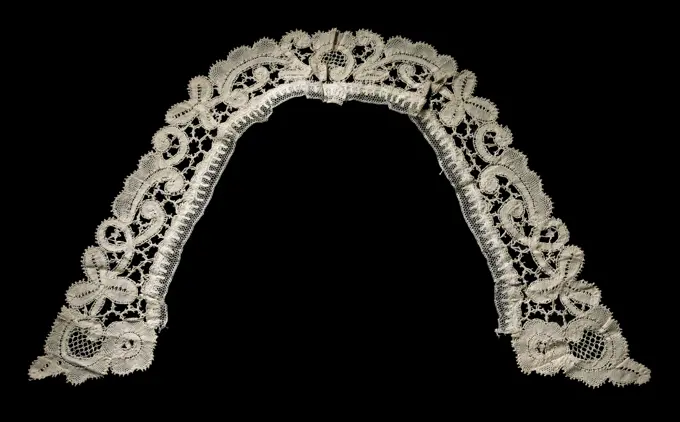
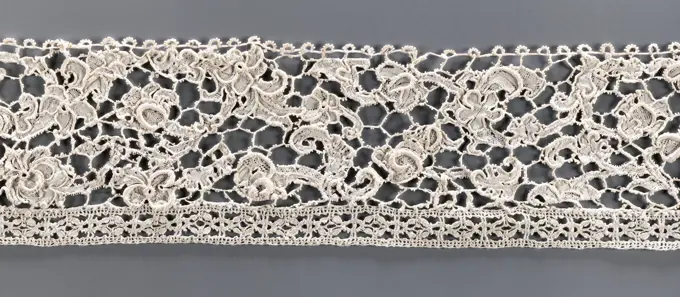
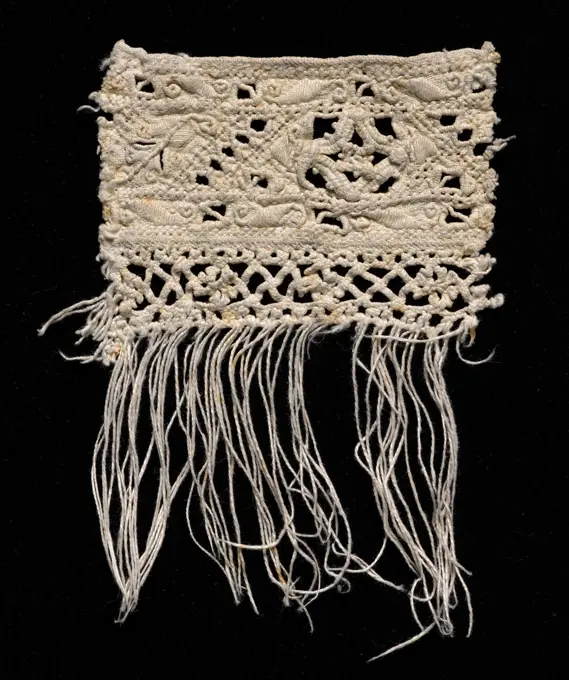
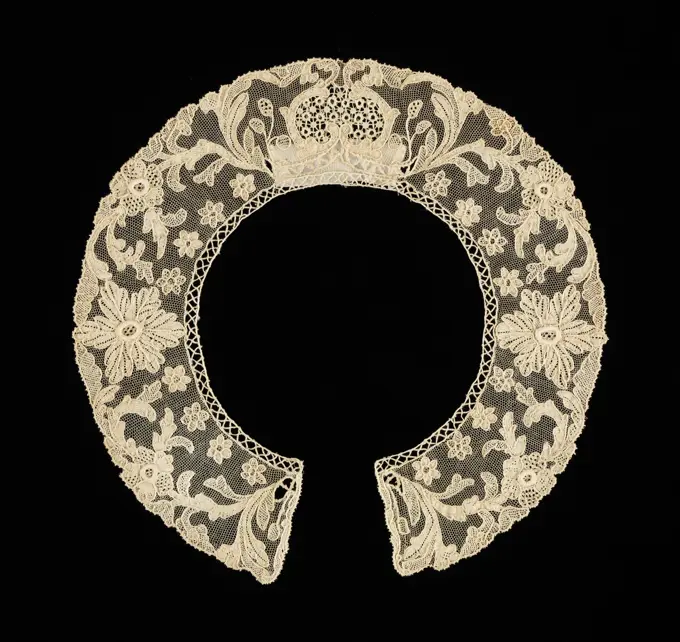
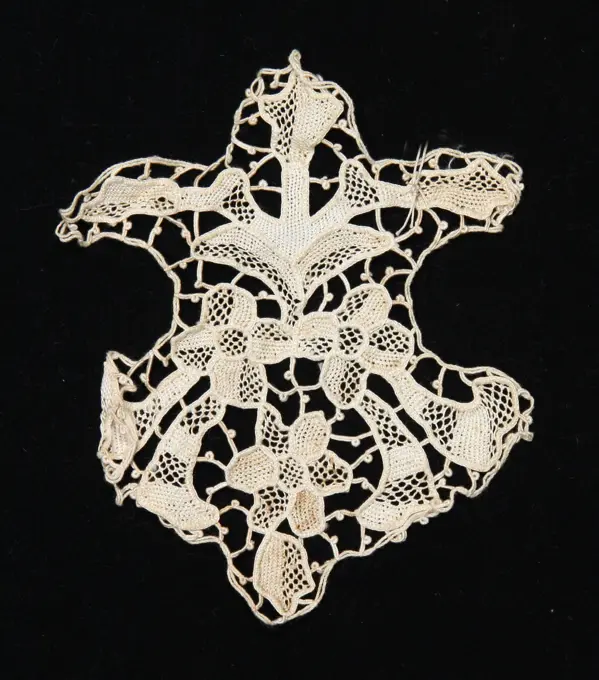
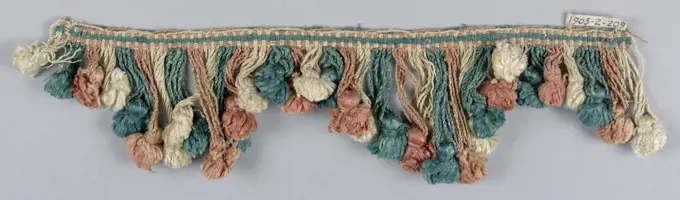
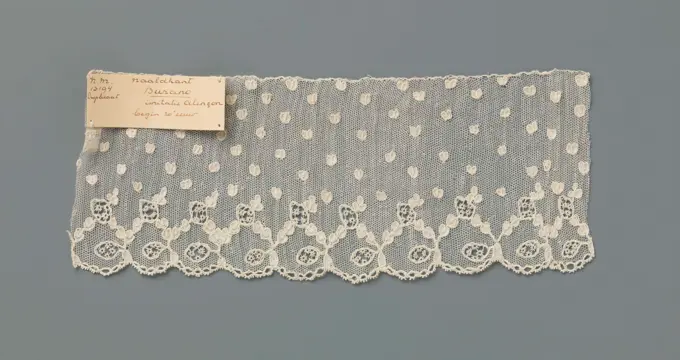
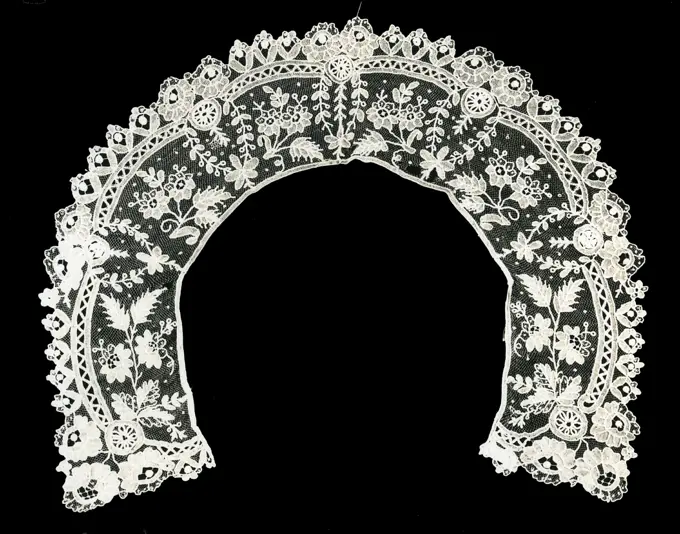
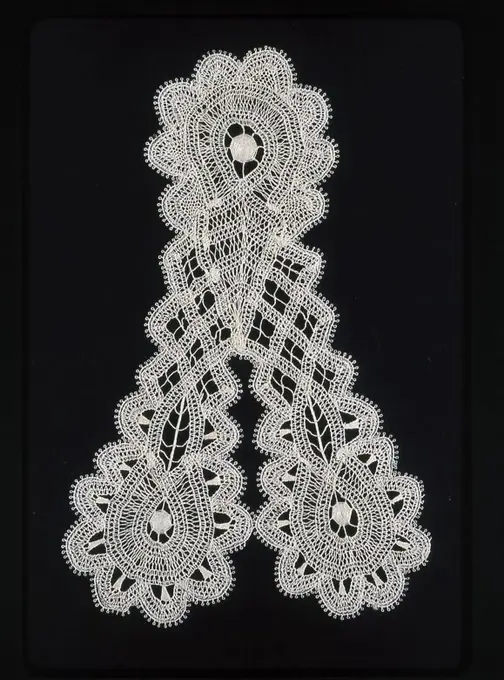
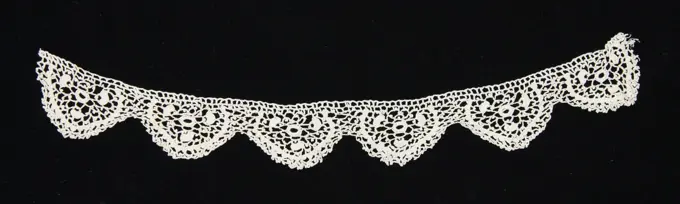
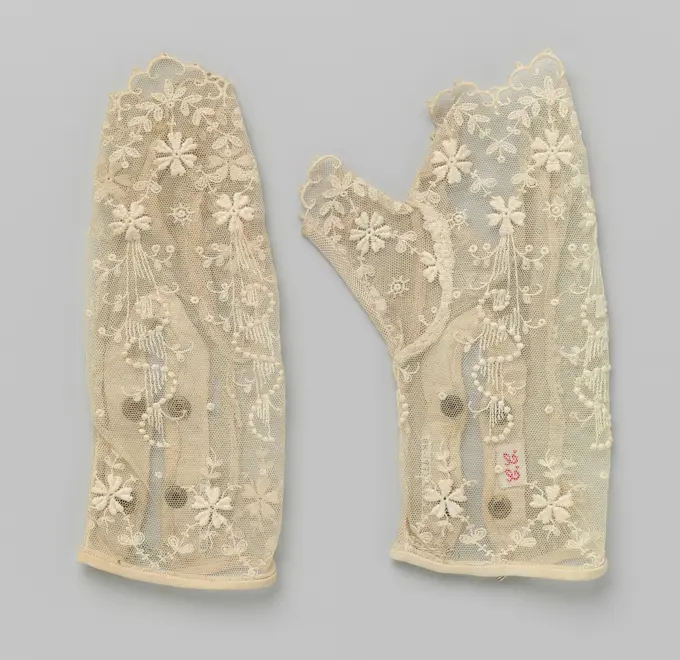
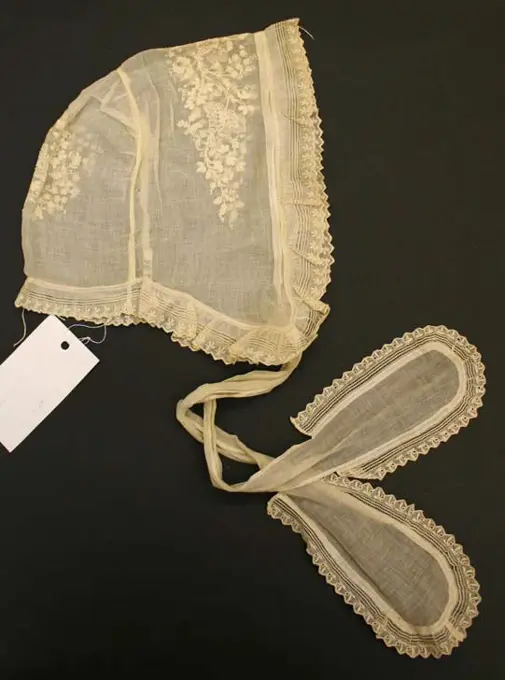
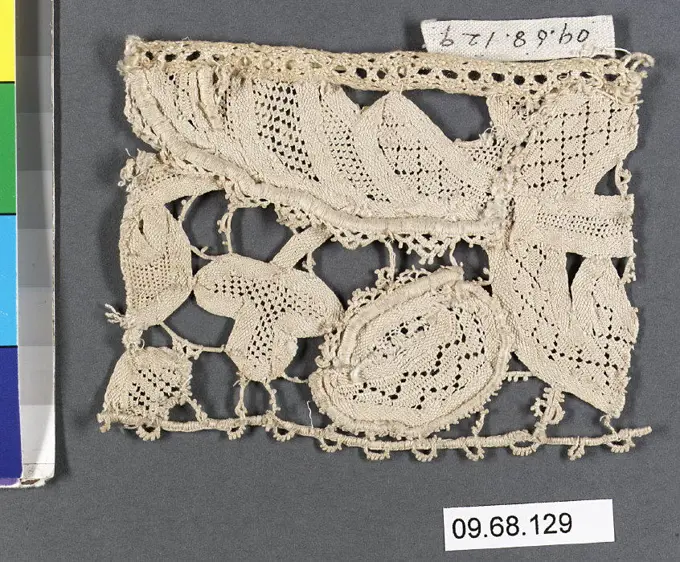
Fragment 17th century Italian. Fragment 212484Strip climbing side with four-leaf in network of braids forming a semicircular shell. Strip natural colosside: Cluny side. The repeating pattern consists of a semicircular shell made with an open network of braids, with a cross of four leaves made in shape stroke in a circle in the center. There are three half lunar-shaped lobes under every shell. The top of the strip is straight finished with a strap with a square grating. A label of paper is sewn on the strip with the handwritten text: 'Kota Gadang No sales price per El F0.50 Loon worker F0.45'.BorderJabot of mixed side with rosette flowers. Jabot of natural-colored mixed side - dick side in combination with needle lace stand and machining tulet - luxury owl. More or more drip-shaped model, made up of three parts. The three parts are adjacent to each other at the top. The upper 'drop' is shortest, then a longer, the wide edge follows below this short and the lower it is the longest. A piece of mechanical tulle is placed under the overlapping parts. The symmetrical pattern consists in the middle under one large rosette flower with a smaller rosette flower. These flowers are flanked by one or two smaller rosettes. The rosette flowers are made with a wreath of many short waves such as petals. There are contours between the flowers with closted ribbons (ribbon side), with pleats where the contours make or curl a bend. The motifs are made in linen stroke with openwork edges and recesses that form the veins of the petals. Contour wires along one side of the closted ribbons and the petalsCapslip from application side with a few flower branches, anonymous, c. 1906 - c. 1918 Barbe of natural -colored application side, bobbin lacquered on mechanical tulle. Some loosely stripped leaf branches are applied to the center of the rectangular field; These are on one piece in bobbin and on the other in tambouring work. At the straight ends there is always a coarse branch with flowers and leaves on a stock -littered stock. Rim of flat scoops, alternately of a switching band and a button with a bonding drink. The Hague (possibly) linen (material) Barbe of natural -colored application side, bobbin lacquered on mechanical tulle. Some loosely stripped leaf branches are applied to the center of the rectangular field; These are on one piece in bobbin and on the other in tambouring work. At the straight ends there is always a coarse branch with flowers and leaves on a stock -littered stock. Rim of flat scoops, alternately of a switching band and a button with a bonding drink. The Hague (Tissue;  19th century (1801-00-00-1900-00-00);Collar ca. 1835 Irish. Collar 156512Towel end, Technique: braided, USA, 19th century, knotted, knitted and crocheted textiles, Towel endEdging (Spain); silkPanel Entitled "Blue Ribbon". Produced by Oberkampf Manufactory, 1738-1815; France, Jouy-en-Josas. Date: 1760-1764. Dimensions: 144.2 × 98.8 cm (56 3/4 × 38 7/8 in.)Repeat: 29.9 × 34.9 cm (11 3/4 × 13 3/4 in.). Linen and cotton, plain weave; block printed. Origin: France. Museum: The Chicago Art Institute, Chicago, USA.Cap Streamers (Belgium); linenCurtain of a heaven bed from Machine Tulle with embroidery, Anonymous, c. 1890 - c. 1910 Curtain of a sky-bed of mechanical tulle in white embroidered with chain and feston stitch with openwork parties in the way of Richelieuboarding. Large flower and leaf motif within a cartouche of C-Voluten, around which flower garlands and branches. Scotland (Possible) . embroidering Curtain of a sky-bed of mechanical tulle in white embroidered with chain and feston stitch with openwork parties in the way of Richelieuboarding. Large flower and leaf motif within a cartouche of C-Voluten, around which flower garlands and branches. Scotland (Possible) . embroideringKant design of a V-shaped collar in white ink on black cardboard, J.H. Preging-Faber, c. 1920 - c. 1935 Kant design of a pointed collar, in V-shape, in white ink on black cardboard. Corning with side designs and a sketch with inventory numbers: BK-1979-33-A-1 to BK-1979-33-A-6-B. Haarlem cardboard. ink painting Kant design of a pointed collar, in V-shape, in white ink on black cardboard. Corning with side designs and a sketch with inventory numbers: BK-1979-33-A-1 to BK-1979-33-A-6-B. Haarlem cardboard. ink paintingStole ca. 1800 British. Stole 123056End;  2. PO. 19th century (1850-00-00-1900-00-00);Round collar with many flowers. Collar of natural needle side: Flat Venetian side. There are coarse tide and flowers on an open bars. Bow edge of equal triangles. Sliced up and naid to a round shape.Kerchief 19th century American or European. Kerchief. American or European. 19th century. cottonPillow Cover (USA); Made by Sybil Carter Indian Mission and Lace Industry Association (United States); linenFlounce, Medium: silk Technique: bobbin lace, Chantilly style, Piece of a flounce in black silk Chantilly style bobbin lace. Pattern of medallions and architectural details interspersed by floral sprays., France, 1860s, lace, FlounceBands 15th-16th century Italian The Metropolitan Museum's great lace collection was started when the Museum became the first among American museums to organize a permanent collection of lace with the acceptance of the McCallum Collection in 1879 and the bequests of Mrs. John Jacob Astor, Mrs. Robert L. Stuart, Mrs. Augustus Cleveland, and Mrs. A. W. Winters shortly thereafter. In 1893 a loan collection of antique laces shown at the World's Columbian Exposition in Chicago was assembled by a committee of New York women headed by Catharine Augusta Newbold. About 1900 Miss Newbold arranged and labeled an exhibition of laces and linenworks lent to the Metropolitan Museum by Mrs. James Boorman Johnstone and the Misses Johnstone. "Her scholarly knowledge of lace technique enabled the Museum for the first time to offer a comprehensive display of lace illustrating its historical development," wrote Miss Frances Morris, then curator of the textile department. Miss Newbold's name occurs again in Insertion 16th century Italian. Insertion 226384Strip bobbin with diamond -shaped field between mirrored fans, anonymous, c. 1840 - c. 1860 Strip of natural -colored bobbin, blonde. The repeating pattern consists of a fan mirrored over the length axis, which forms on the upper and bottom of the strip. In between the mirrored fans, an open -shaped field is formed in which a decorative land is used. The windows are equipped with continuous contour threads that cross each other on the length axis. unknown silk bobbin lace / blonde (lace) Strip of natural -colored bobbin, blonde. The repeating pattern consists of a fan mirrored over the length axis, which forms on the upper and bottom of the strip. In between the mirrored fans, an open -shaped field is formed in which a decorative land is used. The windows are equipped with continuous contour threads that cross each other on the length axis. unknown silk bobbin lace / blonde (lace)Bobbin Lace Insertion with Selvage, mid 16th century. Italy, Venice, mid 16th century. Lace, bobbin; average: 2 x 28 cm (13/16 x 11 in.).Handkerchief, 1800s, maker unknown. Gift of Mrs Phyllis Cousins, 1965.Collar of tulle with application boarding, c. 1650 - c. 1700 Collar of tulle with application board. West-Europa . embroidering Collar of tulle with application board. West-Europa . embroideringBobbin Lace Edging, 18th century. Spain, Cordoba, 18th century. Lace, bobbin; average: 6.1 x 19.1 cm (2 3/8 x 7 1/2 in.).Sampler 19th century German. Sampler 228622Cover of needle side for a small parasol with hanging lilies, anonymous, c. 1870 - c. 1880 In eight sectors there are large egg-shaped medallions with an oval pendulum and a tilt of flowers. Three large, hanging Leliekelken on the ends of the ribs. There is a star shape around the top of the parasol; The circumference consists of large scallops, cut by a heart shape and border by a hanging leaf wreath. The inner drawing of the flowers goes from a closed inner piece to a very open edge. The outlets are extra thick. Point the Gaze de Bruxelles. Brussels linen (material) In eight sectors there are large egg-shaped medallions with an oval pendulum and a tilt of flowers. Three large, hanging Leliekelken on the ends of the ribs. There is a star shape around the top of the parasol; The circumference consists of large scallops, cut by a heart shape and border by a hanging leaf wreath. The inner drawing of the flowers goes from a closed inner piece to a very open edge. The outlets are extra thiBatisten zakdoek met plumetis borduurwerk en een rand Valenciennes-kant.Natural batist handkerchief with embroidery - white work with around a rim climbing side: Valenciennes-side. Square model with rounded corners. The embroidery is located along the edges and consists of bouquets with ivy leaves and forget-me-staples. The twelve bouquets are placed at the same distance from each other and connected by a decorative tire from rosette flowers and dots between two dotted lines. The edge of the batist is finished with small regular scivels, with a rosette flower in every shult. The strip side has been wrinkled to the batist. It has a sloping edge with contiguous scented arcs. In every scallop, the same leaves placed slightly. The motifs are made in linen battle with openwork edges and recesses. They are connected by a square Valenciennes ground. The sloping edge is finished with picots.Fragment late 16th century Italian. Fragment 212553Parasol cover, Medium: silk Technique: bobbin lace, Chantilly style Label: Silk bobbin lace, Black Chantilly lace parasol cover with a radiating floral design and deeply scalloped edge., France, ca. 1880, lace, Parasol coverBobbin Lace Edging, 18th century. France, Valenciennes, 18th century. Lace, bobbin: linen; average: 2.7 x 17.8 cm (1 1/16 x 7 in.).Zakdoek van batist waarop borduurwerk met acht rijk versierde medaillons langs de randen en een rijk versierde letter T.Natural batist's handkerchief with embroidery - whiteware with french embroidery - and finished around with a wrinkled strip of dumplings: Valenciennes side. The embroidery pattern consists of two straight profile lists filled with rose garlands. Between the lists a leaf drink with fucks runs. The rank is overcurred by standing oval medallions, each of the top decorated with a putto and at the bottom with two lion heads. In the open-worked centers in the medallions, fine fills have been made with needle ladder stitches, with small scented picos, starflowers and fine diamonds. Above one corner medallion, a letter T is embroidered, also richly decorated with, among other things, a putto, roses, forget-me-staples and leaf drinks with fucks. This may be a monogram of TLV or TJV (). The strip of clamping has a repeating pattern of a hanging cheries flower to a curved branFragment of the Brussels lace;  around 1850 (1840-00-00-1860-00-00);Potocka, Zofia Róża (Flow. Ca 1973) - collection, Brussels lace, flower ornaments, purchase (provenance)Edging 17th century Italian, Genoa. Edging 220914Collar with square tabs 17th-18th century Italian. Collar with square tabs 212396Fragment 17th century Italian. Fragment 215506Fragment, Medium: linen Technique: bobbin lace (Mechlin-style), Fragment of Mechlin lace with conventionalized floral spray with broad leaves. Variety of 'fond de neige' ground., Belgium, 18th century, lace, FragmentNeedlepoint (Venetian Rose Point) Lace Cuffs, 17th-18th century. Italy, Venice, 17th-18th century. Lace, needlepoint; overall: 15.3 x 29.5 cm (6 x 11 5/8 in.).Insertion. Italy. Date: 1550-1600. Dimensions: 7.8 x 27.3 cm (3 x 10 3/4 in.)Width repeat: 3.3 cm (1 3/8 in.). Linen, plain weave; cut and drawn work embroidered in double and Italian hem stitches; darned and overcast bars; with insertion of bobbin straight lace. Origin: Italy. Museum: The Chicago Art Institute, Chicago, USA.Piece 18th century Flemish, Mechlin. Piece 214496Fragment 18th century French. Fragment 214596Strip of a climbing side with connected cartouches. Strip natural colosside, Buckingham side. The repeating pattern consists of jointed a-symmetrical cartouches, alternately a smaller crowned by a rosette flower and a larger crowned by a triangle made with seven circles. The motifs are connected to each other by a Maas soil, a tulet. The motifs are made in linen stroke and equipped with thick and shiny contour wires. The heart of the rosette flower has been saved. As ornamental ground, a rose soil has been applied in the cartouches, wherein snowflakes are also processed in the small cartouche, these are not equipped with contour wires. The top of the strip is straight finished. The tube edge along the underside arrives the bottom of the cartouches and is finished with picots.Edging, Medium: silk Technique: bobbin lace, blonde style, Edging lace showing a pattern of flowers and leaves that form scallops along one side., Spain, 19th century, lace, EdgingStrip 17th century Italian Punto in arialiterally, "stitches in the air"is one of the earliest styles of needle lace, which is itself developed from cutwork of primarily geometric design. When lacemakers transitioned to using a foundation of threads laid out according to a pattern drawn on parchment, they were able to incorporate more fluid lines and curves into their designs.. Strip 212433Woman's Collar. United States, circa 1840. Costumes; Accessories. Linen plain weave, cotton embroidery, drawn threadworkStole fourth quarter 19th century Maltese. Stole 168726Fragment (Japan); cotton, paper with applied gold gilt wrapped around cotton; Warp x Weft: 29.8 x 51.1 cm (11 3/4 x 20 1/8 in.); 1937-35-11Kant's collar worn by Queen Wilhelmina for a signed portrait of Cor Visser, Anonymous, c. 1939 - c. 1941  Collar of Queen Wilhelmina from the legacy of the artist Cor Visser. She wears this collar on a portrait drawn by Visser. Lace collar, curved shape, with gauze edge, beige, slightly wider at the ends. London . bobbin lace / bobbin lace  LondonBorder (France); silkSilk bobbin early 19th century Spanish. Silk bobbin 218348Fragment of the lace;  2. PO. 19th century (1851-00-00-1900-00-00);Jabot of machining with drop-shaped leaf and around flower. Jabot of natural machine side: machining valenciennes-side. On a standing band, zigzag is sewn a side strip, so that the Jabot falls back and forth seven times. At the top is a slipped embroidery rose. The repeating pattern consists of a hanging drop-shaped leaf with a round flower at a short curved stem. The motifs are connected by a machining valenciennes ground with square mesh. To each blade, a semicircular shutter is formed along the underside of the strip, the mesh soil passing into a strap. The top of the strip is straight finished and then sigged up as described above. The slip edge along the underside is finished with picots.Kloskant parasoldoek with birds and radiant suns, Martha Ferreira, c. 1875 - c. 1895 Parasoldek of natural-colored solar side (needle side): nanduti work. Eight sectors show rows of radiant suns, interrupted three times by a transverse track. One of the suns, on the high line of each sector, shows rays ranked birds. The geometric fillings of the other suns are constantly varied. The you are filled with rosettes, fans and gridwork. The outer thwart track is composed of squares with rosette filling. The deep scoops are filled with half suns. Itagua linen (material) sun lace Parasoldek of natural-colored solar side (needle side): nanduti work. Eight sectors show rows of radiant suns, interrupted three times by a transverse track. One of the suns, on the high line of each sector, shows rays ranked birds. The geometric fillings of the other suns are constantly varied. The you are filled with rosettes, fans and gridwork. The outer thwart track is composed of squares with rosette filling. TheNeedlepoint (Cutwork) Lace Insertion and Bobbin Lace Edging and Fringe, 16th century. Italy, Venice, 16th century. Lace, needlepoint and bobbin: linen; average: 11.5 x 8.3 cm (4 1/2 x 3 1/4 in.).Collar fourth quarter 19th century Italian The cartouche pattern at center back which differs from the overall pattern and the variations in surface texture and fillings are features that define the refined quality of this lace collar.. Collar 156802Lace, 1900s , Devon, maker unknown. Gift of Doris Bennett, 1983.Fringe, Medium: silk Technique: woven, Pink, green and white fringe with a striped heading and skirt loops in graduated lengths forming scallops; each four supporting a tuft of the same color., Spain, 17th century, trimmings, FringeSlab made of white cotton () With a stitched bottom layer and a top layer with an ajour edge with stretched light blue or light green silk ribbon; both trimmed with lace, anonymous  Slab made of white cotton () With a stitched bottom layer and a top layer with an ajour edge with stretched light blue or light green silk ribbon; Both trimmed with lace.  cotton (textile). silk. Valenciennes lacePelerine ca. 1875 American. Pelerine. American. ca. 1875. SilkStrip application side with blossom branches, anonymous, c. 1890 - c. 1909 Strip of natural -colored application side, bobbin lacquered on mechanical tulle. Three -quarters of the long distance are unadorned. An open edge consists of lying blossom branches that are used to the left. Some blossoms and a 'rose' form the shells. Brussels linen (material) Strip of natural -colored application side, bobbin lacquered on mechanical tulle. Three -quarters of the long distance are unadorned. An open edge consists of lying blossom branches that are used to the left. Some blossoms and a 'rose' form the shells. Brussels linen (material)Border; silkBorder, Medium: linen Technique: grid of laid cords with needle lace (reticella style), edge of bobbin lace in discontinuous tape, Border of small squares filled with rosettes and edged on one side by Venetian bobbin lace., Italy, 17th century, lace, BorderPair of Lappets (Joined) Made 1870-1899 Ireland. Cotton, needle lace .Collar 1700-1945 American or European. Collar 119282Collar ca. 1857 probably American. Collar 110189Strook naaldkant met hartvormige moesjes en aaneengeschakelde ovalen langs de onderzijde.Strip natural needle side: Burano side. Pattern with seven rows of heart-shaped meadows and connected oval cartouches along the bottom. The ovals are each crowned by a cut-away oval and with Raderpicots in it. Such a self-worked oval is also in the center of each oval cartouche and always rises with a stalk from the right. The semicircular underside of the cartouches are formed by a row of connected and worked ovals. The motifs are made with feston stitches and are equipped with relief contours. The motifs are connected by a fine Maas soil. The top of the strip is straight finished. The sloping edge with semicircular slot comes from the pattern and is finished with picots.Berthe of needle side with spring motif. Berthe of natural-colored needle side: Venetian relief side. The Berthe is closed and has a closed point in the middle. On an open bars soil there is a single volten and many confused flowers placed, including some with a spring motif stand out in the heart.Bobbin Lace Edging of Points, mid 16th century. Italy, Venice, mid 16th century. Lace, bobbin; average: 5.1 x 16.5 cm (2 x 6 1/2 in.).Fringe Made 1701-1800 Italy. silk .Collar Made 1880-1889 Belgium. Cotton, needle lace of a type known as Point de Gaze .Bulgaria, Nessebur (aka Nessebar or Nesebar). Traditional Bulgarian lace.Cuff with edge of needle tissue or button work, c. 1850 - c. 1920  Cuff with edge of needle tissue or button work. West-Europa linen (material) sewingJabot and Three Border Fragments. United States. Date: 1876-1878. Dimensions: a: 7.4 x 36.9 cm (2 7/8 x 14 1/2 in.)b: 7.3 x 36.4 cm (2 7/8 x 14 1/4 in.)c: 7.4 x 36.6 cm (2 7/8 x 14 3/8 in.)d: 18 x 11.5 cm (7 1/8 x 4 1/2 in.)Width repeat: 5.0-5.4 cm (2-2 1/2 in.). Mixed lace of cotton, bobbin tape lace and linen, needle lace fillings. Origin: United States. Museum: The Chicago Art Institute, Chicago, USA.Vestee 1850s European. Vestee 119092military camouflage net Fragment 16th century Italian. Fragment. Italian. 16th century. Bobbin lace. Textiles-LacesRebato (collar). Culture: possibly French. Dimensions: L. 15 3/4 x W. 18 inches (40.0 x 45.7 cm). Date: early 17th century. Museum: Metropolitan Museum of Art, New York, USA.Steel clamping side with coarse thread as an example of a five-gap soil (grille). Steel natural colosside with coarse wire as an example of a five-gap soil with a fragment side in which this technique has been applied. The date concerns the steel.Knitted hat of white cotton with open circles, zigza edges and an openwork edge, anonymous, c. 1800 - c. 1900 Knitted hat of white cotton with open circles, zigza edges and an openwork edge over the middle. Europe cotton (textile) knitting Knitted hat of white cotton with open circles, zigza edges and an openwork edge over the middle. Europe cotton (textile) knittingFragment; linen; 1897-8-199Fragment (Italy); linenKerchief 1825-35 probably French. Kerchief. probably French. 1825-35. cottonTurkish needle work embroidery Ornamental with lace patterns, details, flowersPelerine ca. 1895 Irish. Pelerine 168691Edging 16th century Italian, Venice. Edging 221031Lace laceFragment, Medium: Linen Technique: bobbin lace (Lille-style with heavy outlining thread), Fragment of Lille type bobbin lace., 19th century, lace, FragmentMitaine of crème-white of machined side, with separate open thumb. Left mitaine from cream-white from machined side with flower and bulbs motif and a separate open thumb. Two cans dust press buttons and a hook at the wrist.Fragment (Germany); linen; Warp x Weft: 26.5 x 19.5 cm (10 7/16 x 7 11/16 in.)Shirt of Mail. European. Date: 1375-1425. Dimensions: . Steel. Origin: Europe. Museum: The Chicago Art Institute, Chicago, USA.Fragment (France); linenLength of LaceKloskant collar with akers on double cords, anonymous, c. 1600 - c. 1699  Collar of natural -colored bobbin. The bobbin pattern is inspired by Venetian needle side. Half -round model, with double cords on the inner edge with Akers at the ends. The symmetrical pattern consists of large flowers between which curly leaves. Relief contours with cords have been applied around the motifs that have been held in linen battle. In and between flowers and leaves, decorative lands with decorations in shape have been used here and there. The collar may have been from Prince William III. England (possibly) linen (material) bobbin laceParasoldek of white machining tulle (from cotton), Decorated with tambouring work in white and green, Gustav Schnitzler, c. 1875 - c. 1900 Parasoldek of white machinery tulle (of cotton), Decorated with tambouring work in white and green. The deck is round and has a set edge. A flower pattern has been applied around the center of the deck; Along the edge a pattern in the shape of a wavy leaf vank. Nijmegenwitzerland whole: Cotton (textile). Parasoldek of white machinery tulle (of cotton), Decorated with tambouring work in white and green. The deck is round and has a set edge. A flower pattern has been applied around the center of the deck; Along the edge a pattern in the shape of a wavy leaf vank. Nijmegenwitzerland whole: Cotton (textile).Cap early 18th century American or European. Cap. American or European. early 18th century. cottonFragment 17th century Italian, Venice. Fragment 218068bunch of grapes in Priest´s phelonion, Rila Monastery, founded in the 10th century, Rilski River valley, Republic of Bulgaria, Europe.Lower sleeve, balloon -shaped, of white work decorated batist, A.G. Nije, c. 1860 - c. 1865 Lower sleeve, balloon -shaped, of embroidered batist. The lower sleeve is wrinkled to the cuff. Both the sleeve and the cuff are decorated with whitework in the form of garlands of pearls with two tied flowers on the junctions and three hanging blossoms as a litter. Matching on the cuff, but fuller decor. Two knots on the cuff. With threader on the top. Amsterdam Batiste. Button: Glass Lower sleeve, balloon -shaped, of embroidered batist. The lower sleeve is wrinkled to the cuff. Both the sleeve and the cuff are decorated with whitework in the form of garlands of pearls with two tied flowers on the junctions and three hanging blossoms as a litter. Matching on the cuff, but fuller decor. Two knots on the cuff. With threader on the top. Amsterdam Batiste. Button: Glass