Elegant Lighting Fixtures

Luxurious wall lights and chandeliers crafted from gilt bronze, embodying classical elegance and intricate design from historical periods.
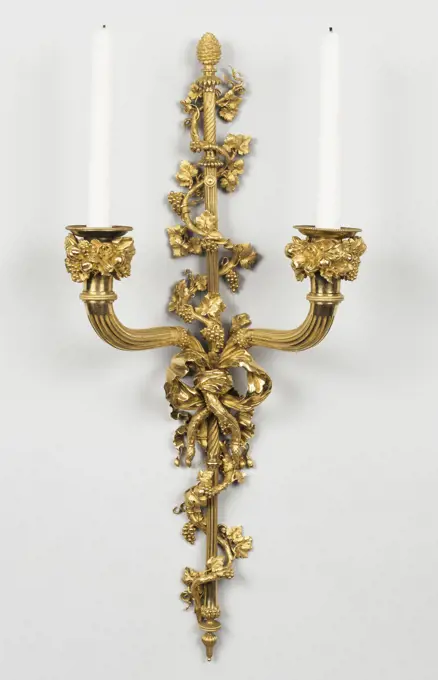
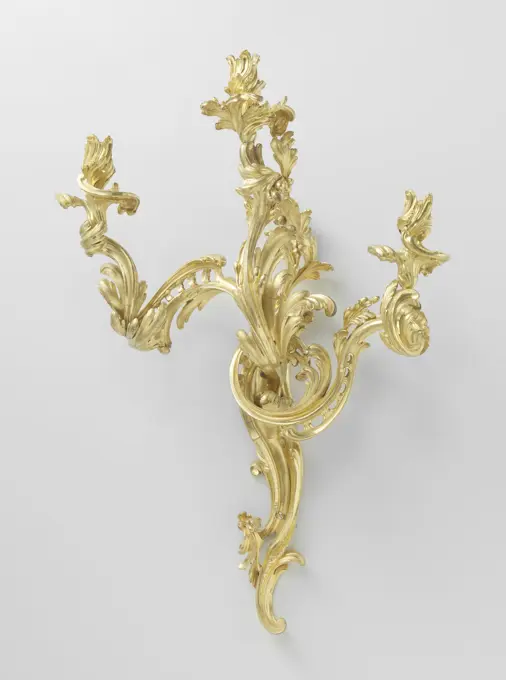
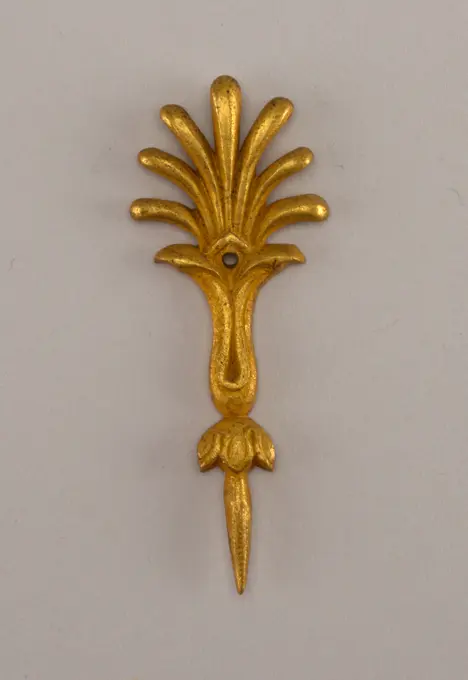
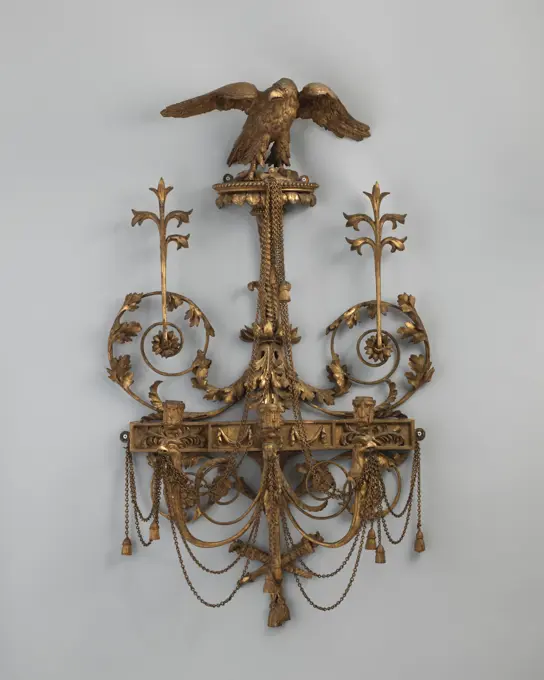
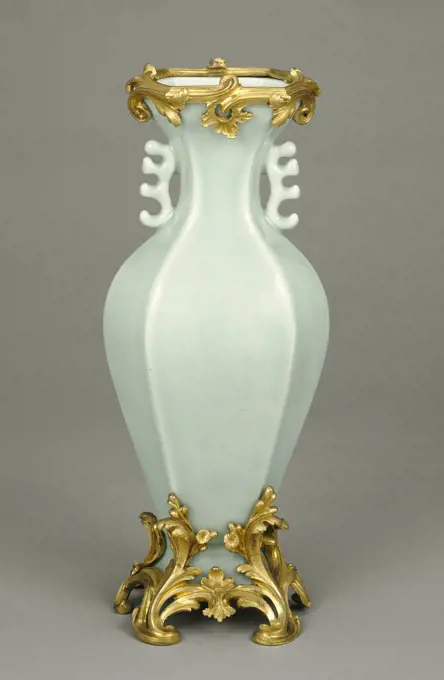
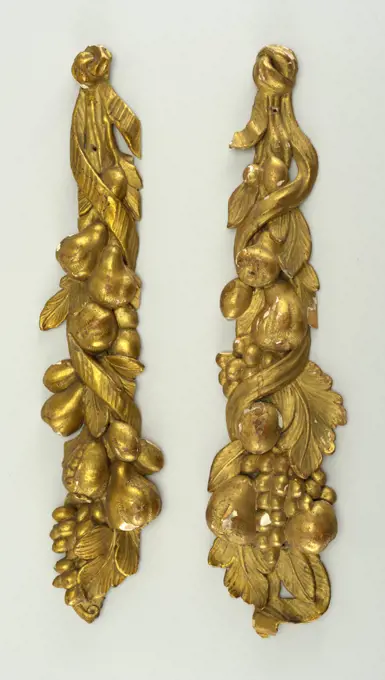
Set of Four Wall Lights; Model by Claude-Jean Pitoin (French, active about 1777 - 1784 (master 1778)), casting and chasing attributed to Louis-Gabriel Féloix (French, 1729 - 1812 (master 1754)); Paris, France; 1781; Gilt bronze;
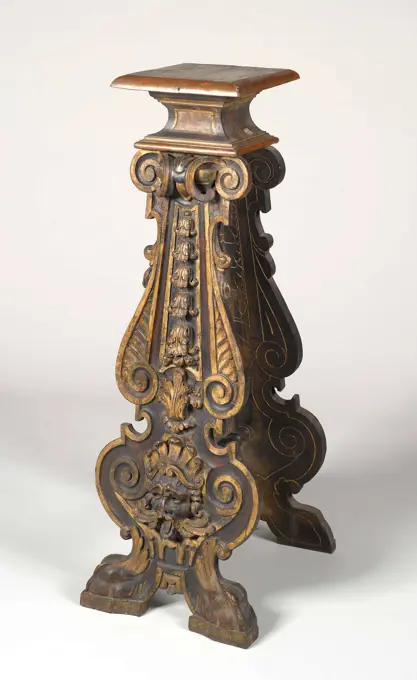
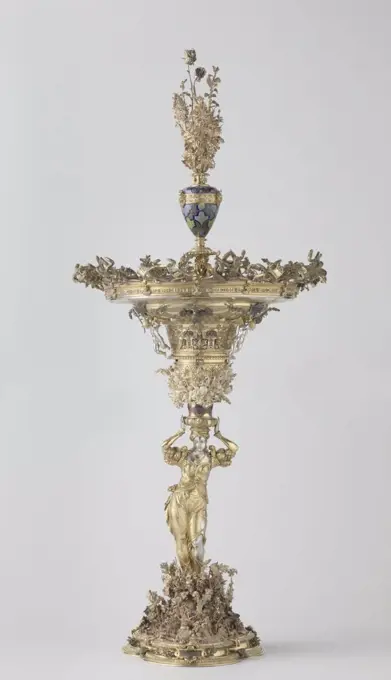
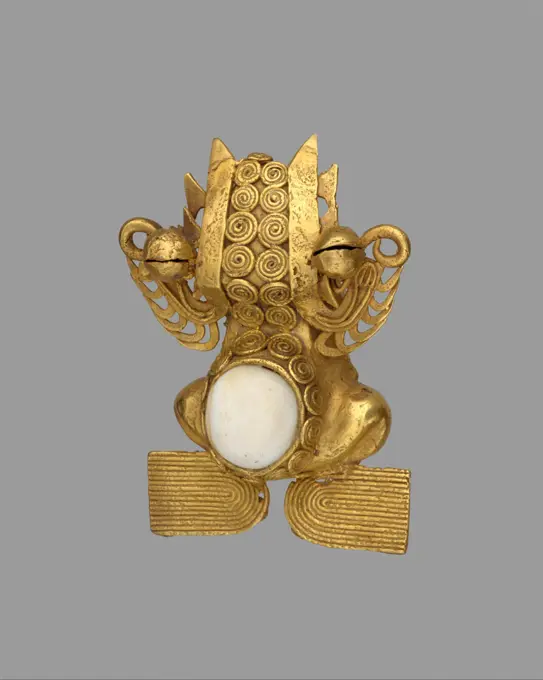
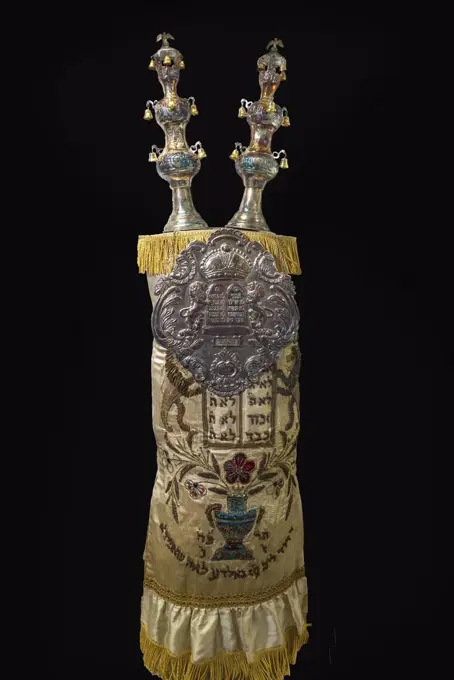
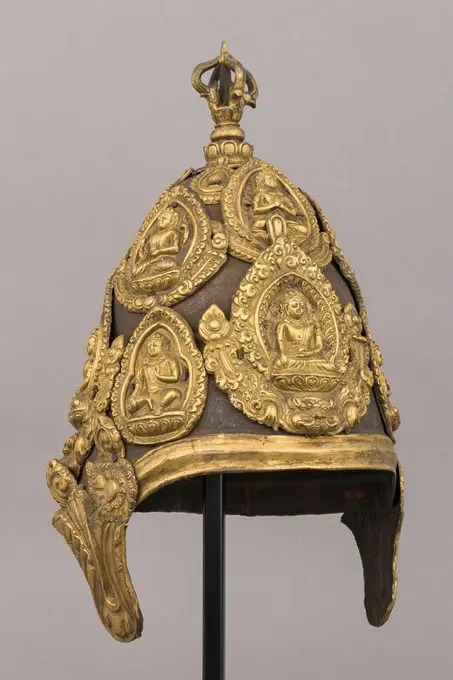
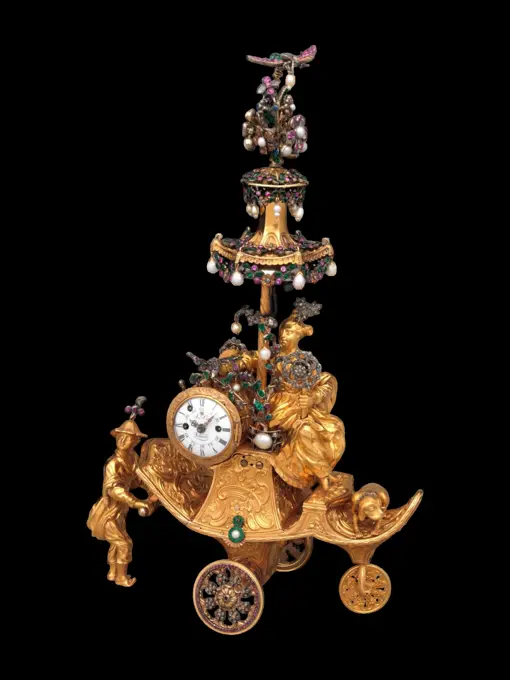
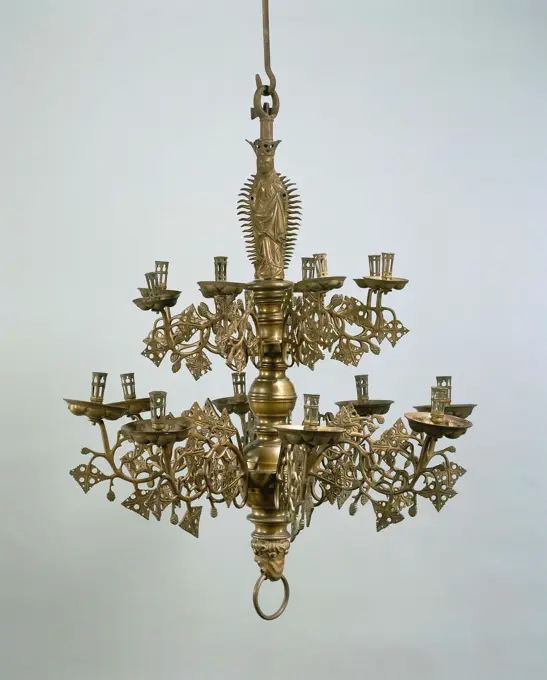
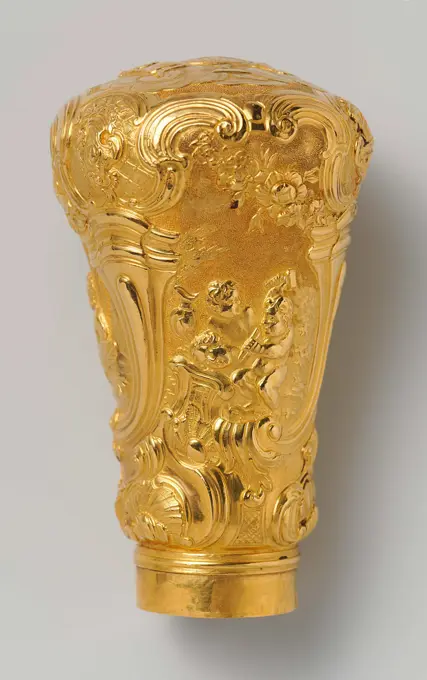
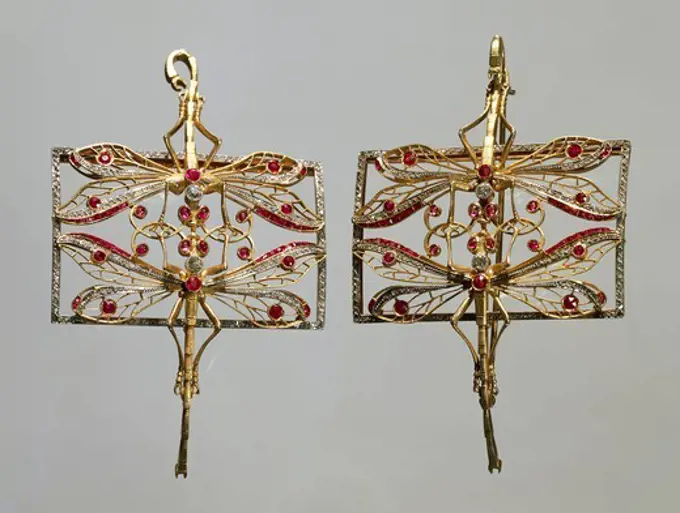
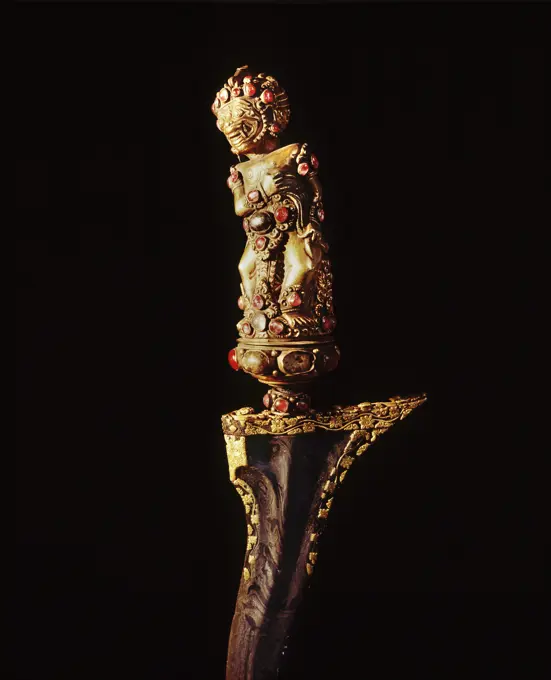
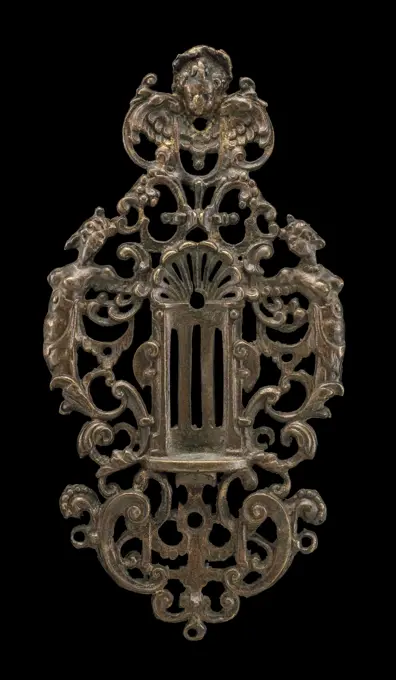
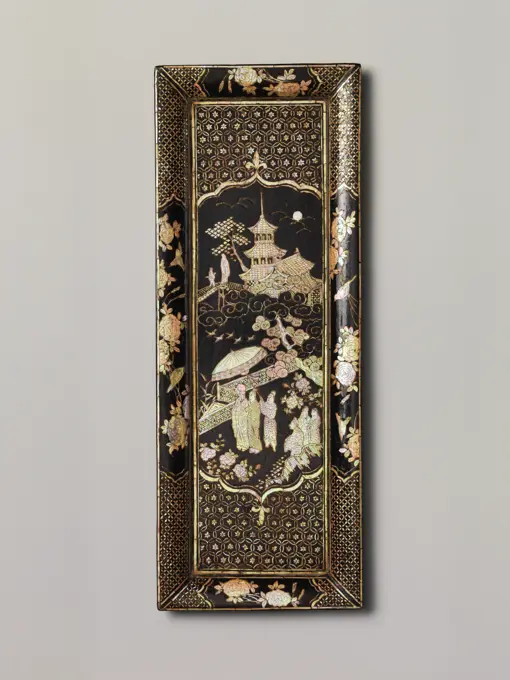
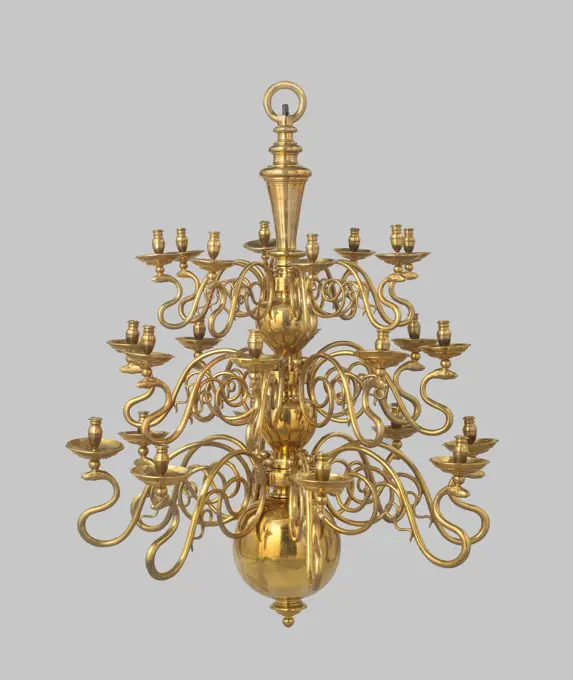
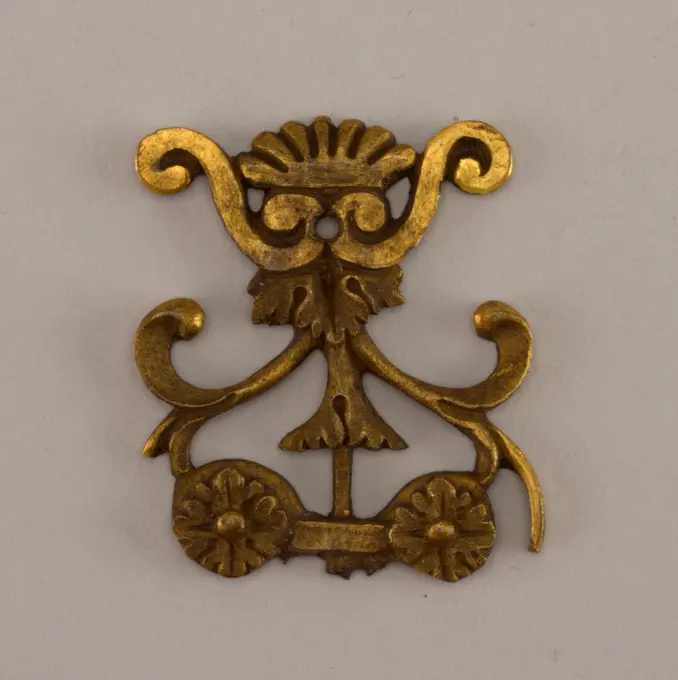
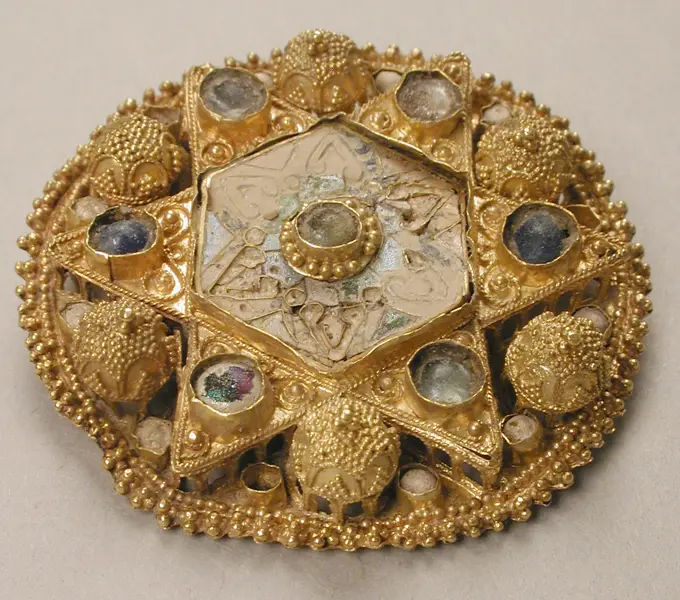
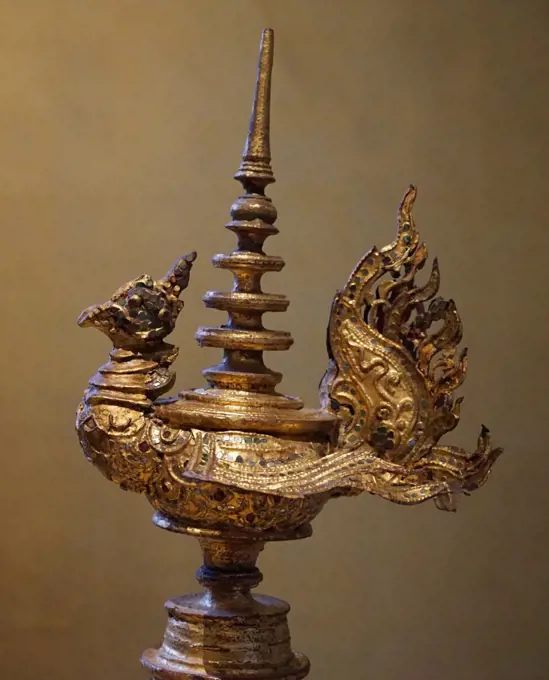
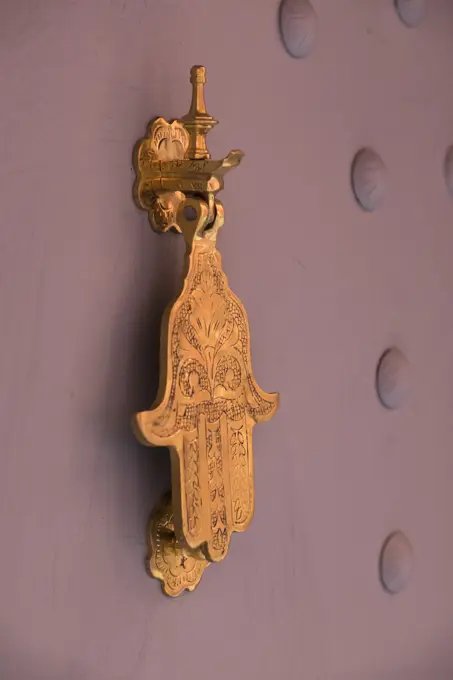
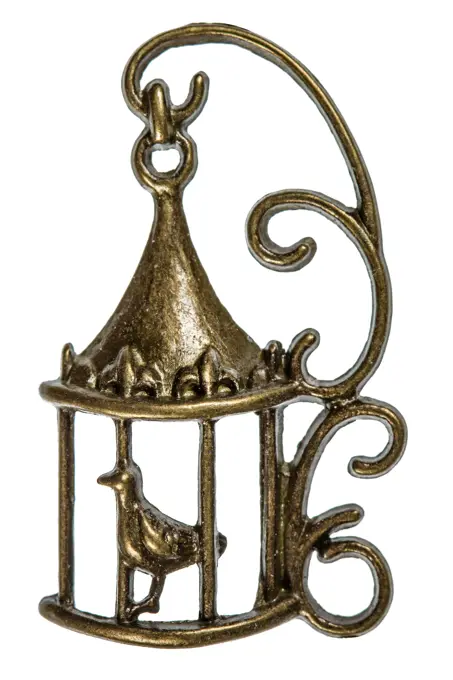
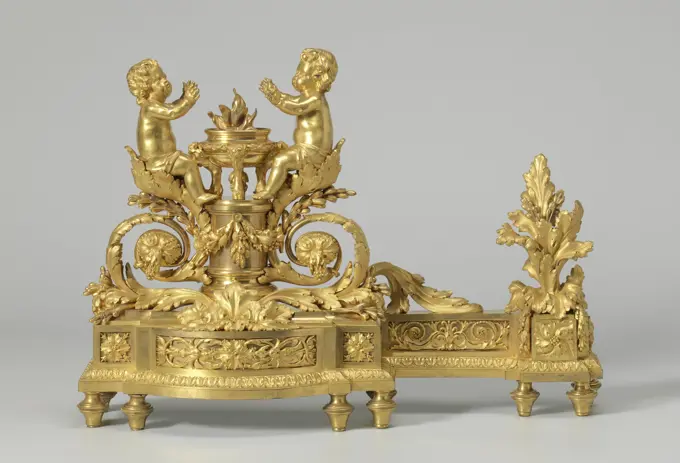
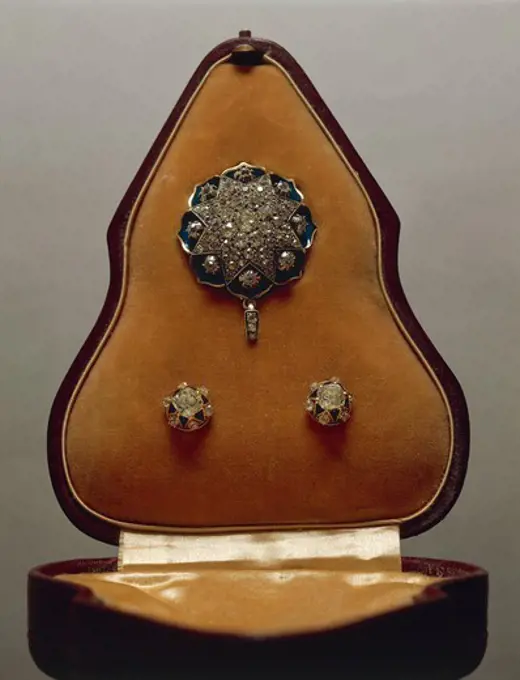
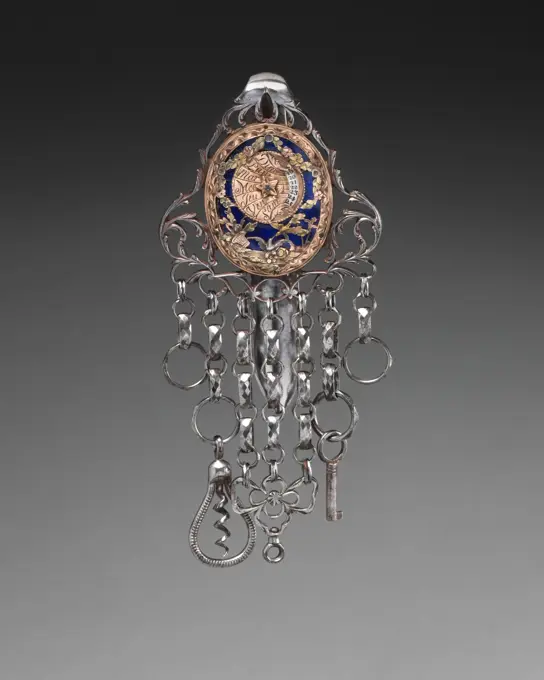
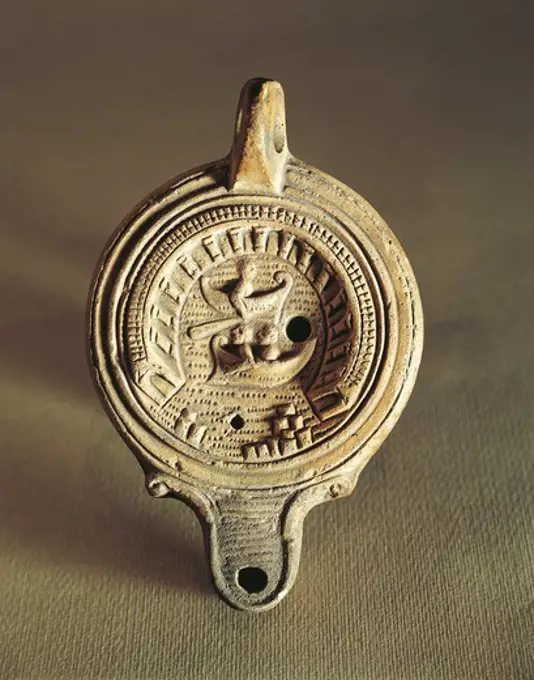
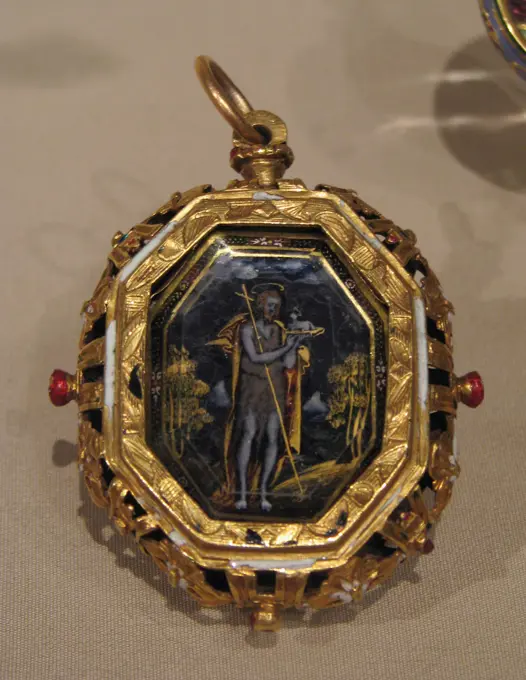
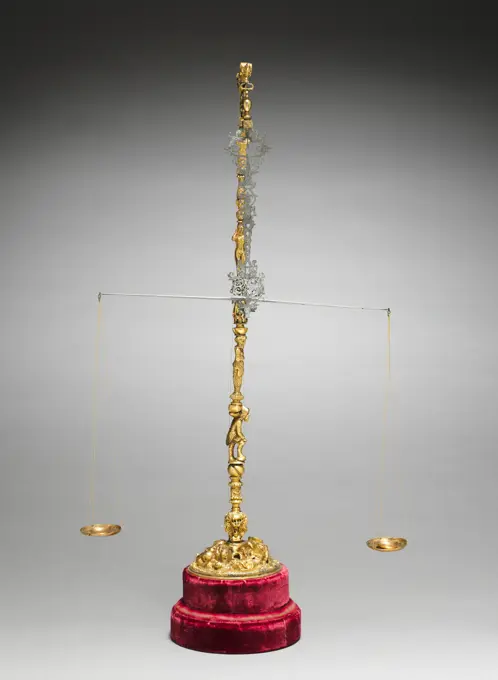
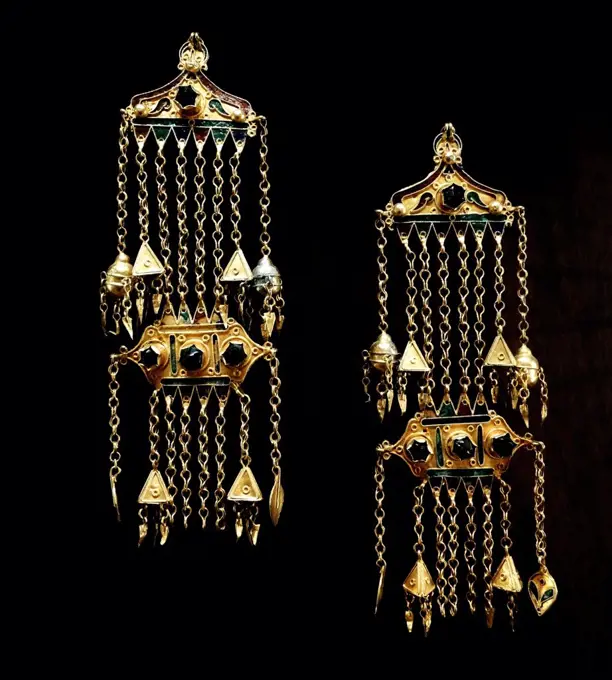
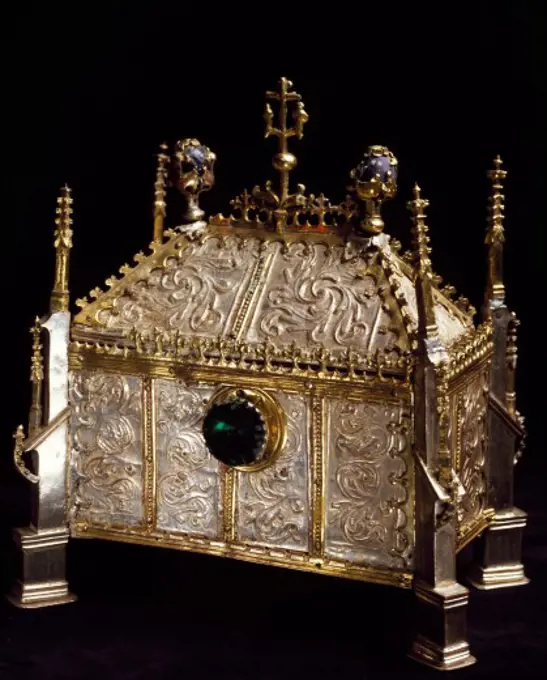
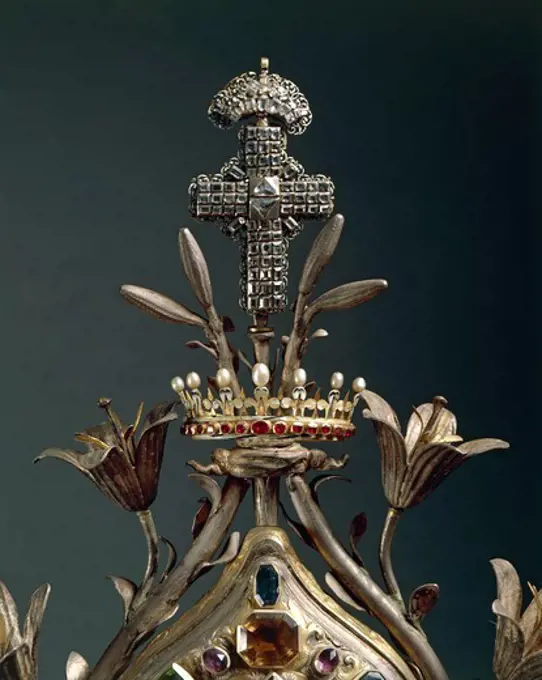
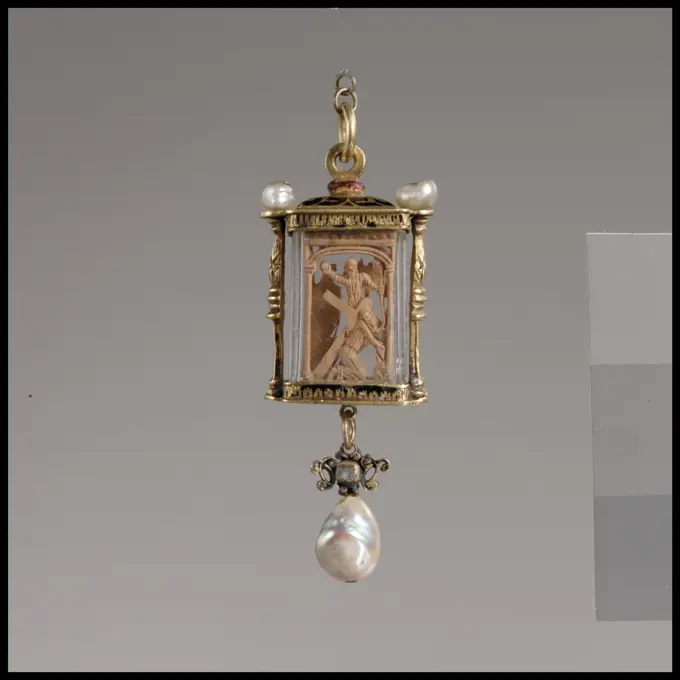
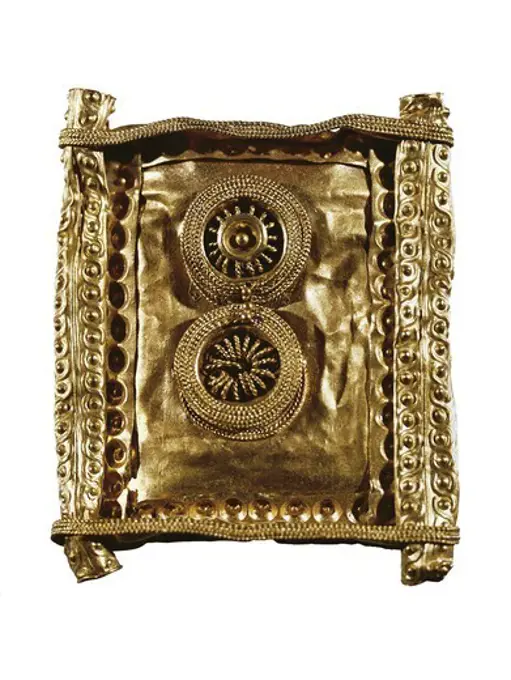
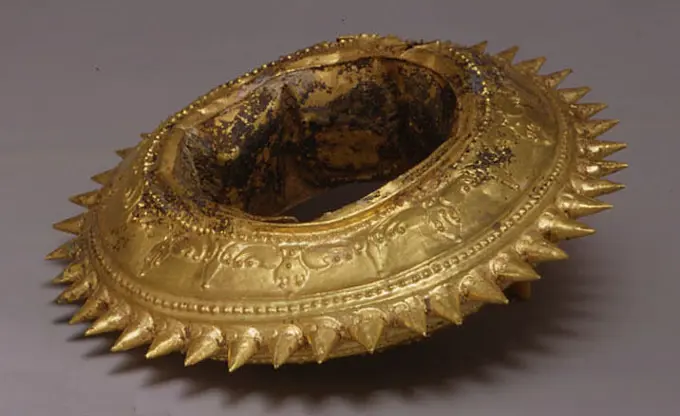
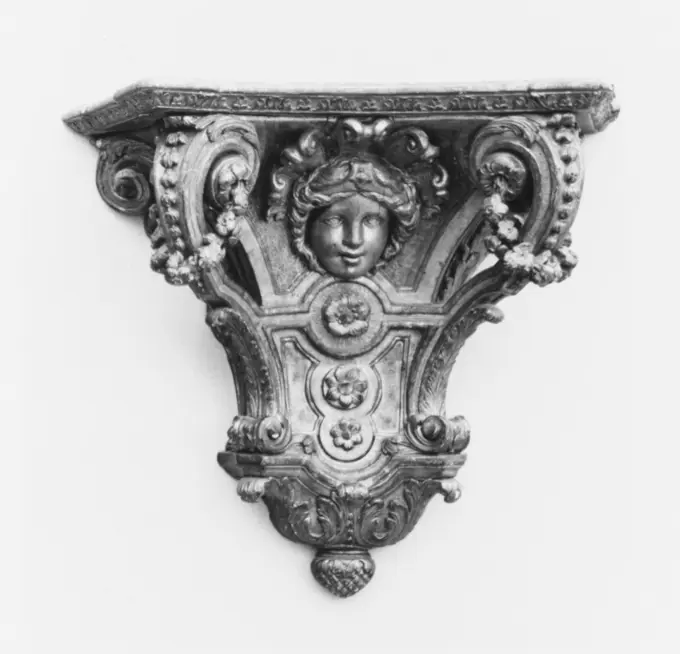
Stam Candle Crown, 1525 - 1550 The object consists of an iron rod and an iron split pin and the following cast parts of yellow copper: the hanging ring, the maria figure with the crown rowed on her head, the trunk, the lion's head with the tensile ring. The hanging ring turns at the bottom into an eight -fold tube. The maria figure placed on the crescent moon is surrounded by a jet wreath. Her rug is decorated with punched star motifs, the hem of the mantle has been punched. The hair reaches the back to the waist. Her crown is composed of five leaves. The trunk is formed in such a way that there are two balls and a few double to be recognized by a rib holy -round profiles. The trunk has two stand rings with eight notches each, which are unnoticed, or are marked with one to seven points. The stand rings are decorated with fine grooves. On the bottom round, narrowing end of the trunk is an iron ring, which is attached with two cams. There are also in the lower end resp. Drilled twice oncSet of Four Wall Lights; Model by Claude-Jean Pitoin (French, active about 1777 - 1784 (master 1778)), casting and chasing attributed to Louis-Gabriel Féloix (French, 1729 - 1812 (master 1754)); Paris, France; 1781; Gilt bronze;Two wall lights, anonymous, c. 1750 - c. 1760 Gilt bronze wall arm, with three arms. The trunk and the arms show asymmetrical C and S-shaped leaf motifs. The left and right arm also show openwork crested pieces. The old inventory number 12 is applied to the wall arm. See also: BK-16896-A. Paris bronze (metal) gilding Gilt bronze wall arm, with three arms. The trunk and the arms show asymmetrical C and S-shaped leaf motifs. The left and right arm also show openwork crested pieces. The old inventory number 12 is applied to the wall arm. See also: BK-16896-A. Paris bronze (metal) gildingTall- case Clock (Regulateur), 1744. Jean-Pierre Latz (French, 1691-1754), Stollewerck (French). Boulle marquetry with gilt bronze mounts; overall: 261.6 x 69.9 x 41.9 cm (103 x 27 1/2 x 16 1/2 in.).Goldsmith's art, Italy, 15th century. Cope clasp.MountCandle Bracket, c. 1765-1775. After a design by Jean Charles Delafosse (French, 1734-1789). Carved and gilded wood; overall: 88.3 x 62.3 x 47.6 cm (34 3/4 x 24 1/2 x 18 3/4 in.).. Pedestal of partially plated walnut. The flat cut-out front and back are placed in spread position and are connected at the bottom through a articulated sport. The front shows a stabbed mascaron in the midst of volutes ending in lion claws; Above a bell cord, also in the middle of volutes. The rear position has a similar decoration on the inside, indicated by deepened gold-plated contours. The base has been nosed and profiled. See: BK-16869-b.Wall arm of gilded lindenhout with three candle holders and decoration of asymmetrical sculpted acanthus leaf work with flowers, anonymous, c. 1755 - c. 1770 Wall of gilded lindenhout with three candle holders and decorated with asymmetrical sculpted acanthus leaf work with flowers. Netherlands linden. gilding (material) cutting / gilding Wall of gilded lindenhout with three candle holders and decorated with asymmetrical sculpted acanthus leaf work with flowers. Netherlands linden. gilding (material) cutting / gildingTable ornament, Wenzel Jamnitzer, 1549Sconce;  And after .Xixw. (1801-00-00-1850-00-00);Frog Pendant 12th-14th century Coclé (Parita). Frog Pendant 313265Arm of a candle crown in two heights, Anonymous, 1890 - 1910 The arm has an S-shape, ending out in a snake head and on the other end in bird heads. The arm is decorated with curls there. Screws have been applied in the protrusion on the candle holder, the arm or at the end of the connecting rod. This is the fourth arm of the upper position ring, numbered with the number 4. Netherlands brass (alloy) casting The arm has an S-shape, ending out in a snake head and on the other end in bird heads. The arm is decorated with curls there. Screws have been applied in the protrusion on the candle holder, the arm or at the end of the connecting rod. This is the fourth arm of the upper position ring, numbered with the number 4. Netherlands brass (alloy) castingChurch candlestick. Large wooden carved church candlestick, standing on three legs, showing women's figures. The knot is decorated with winged angel heads. The sculpture is golden, on a white ground. A pin is available to turn the candle.MountGirandole late 18th century British. Girandole. British. late 18th century. Wood and composition, gilded. Woodwork-FurnitureFibula, 500s. Ostrogothic, Migration period, 6th century. Gilt silver and garnets; overall: 13.4 cm (5 1/4 in.).Furniture mount, Gilt bronze, Foliate srolls with cornucopiae centered by anthemion motif., France, ca. 1800-10, metalwork, Decorative Arts, Furniture mountCachet with women's head and inscription, c. 1875 - c. 1900 A cachet of iron and copper. On the coin surrounded by laurel branches, a female head surrounded by Lotharingse Kruisen is depicted on the one hand and on the other hand a weapon with inscription: the par le roi dv ci. Marked.  iron (metal). copper (metal) A cachet of iron and copper. On the coin surrounded by laurel branches, a female head surrounded by Lotharingse Kruisen is depicted on the one hand and on the other hand a weapon with inscription: the par le roi dv ci. Marked.  iron (metal). copper (metal)Lock signboard;  End of the 17th centuryLeopold (1850-1912) - collection, MéyetArm with candle crown candle crown of two heights, Anonymous, 1650 Candle belonging to a brass candle crown of two heights. The S-shaped arm has a curl at the start, halfway through a dolphin head and turns outside into the flat thickening with a screw hole. The candle holder is secured with the fat catcher. The fat catcher is ribbed at the bottom of the opening and has one down and a slightly excellent edge. The Cylindrian candle holder has a profiled and an excellent edge, two grooved rings, a rib and a profiled narrower bottom piece, which turns into a protrusion with a thread with a center hole. The pin to attach the arm is cone -shaped with a round button on top. The Vetvanger has closed a close one, which indicates that the candle crown has ever been elected. This is the first arm of the upper position ring, numbered with the number 4. Amsterdam (possibly) brass (alloy) casting Candle belonging to a brass candle crown of two heights. The S-shaped arm has a curl at the start, halfTorah mantle with Torah shield around 1920, Franconian, museum, Tüchersfeld, Middle Franconia, Bavaria, Deutachland, Switzerland, Europe. Small arm with the accompanying fat catcher and holder. The labeled arm has a bol and hollow-profiled nodus in the middle and thickened a little on either side. At the trunk she walks out in spiral curls. It goes outwards in the screw ends of iron, on which the candle holder can be attached. The round fat catcher has lowered edges. The round in each other's extended openwork holders have holronde feet, which are screwed on the arms.Haarsieraad, Anonymous, 1400 - 1500 Hair jewelry in the form of a horn shell. Behind the button a rectangular bracket, hinged around one of the sides. Decoration consists of spirals, small balls and a rosette in the middle. Indonesia gold (metal) Hair jewelry in the form of a horn shell. Behind the button a rectangular bracket, hinged around one of the sides. Decoration consists of spirals, small balls and a rosette in the middle. Indonesia gold (metal)Vajracarya Priest's Crown. Culture: Nepalese. Dimensions: H. 13 3/4 in. (34.9 cm); W. 8 in. (20.3 cm); D. 7 1/2 in. (19.1 cm); Wt. 2 lb. 10.3 oz. (1199.2 g). Date: 19th century. Museum: Metropolitan Museum of Art, New York, USA.Bishops crosierCrozier Head with Saint Michael Slaying the Dragon ca. 1220-30 French. Crozier Head with Saint Michael Slaying the Dragon 467497Gold earrings with pendants in the shape of a ship, decorated with sphinxes and acorns, from the Basova burial mound, Plovdiv Region, Bulgaria. Goldsmith art. Thracian Civilization, 4th Century BC.Mummyband, 664-525 B.C., Gold, 3.9 × 22.5 cm (1 9/16 × 8 7/8in.), Egyptian, Late Period, Dynasty26, JewelryExquisite antike juwelenbesetzte Wagenautomatenuhr Exquisite antike juwelenbesetzte Wagenautomatenuhr LicenseRF Copyright: xZoonar.com/GallóxGusztávx 23309041Arm of a candle crown in three heights, Anonymous, 1717 chandelier The S-shaped arm is equipped with a ridge on the tribe side to secure it with a pin in the stand ring. At the trunk, the arm is decorated at the end and to the center with two stylized dolphin heads and with curls, the shape of which is derived from the lobe ornament. To the outside, the arm ends in a thickening, in which a hole provided with a thread is applied to attach the candle holder to the fat catcher. The arm is cast using the same model as the other arms of the wreath. The candle holder is cylinder -shaped with profiled excellent edge and with a baluster foot, which turns into a threaded end, in which the center hole at the bottom. The fat catcher is deepened once at the top to the middle. At the bottom it is profiled around the hole in the somewhat spherical center and the edge is ribbed. The fat catcher has been cast using the same model as the other fat catchers of this wreath. The pin is equipped with a vasDress on the image of the Mother of God with the Child: CrownFurniture mount, Gilt bronze, Wreath between cherubs in the French Empire style., France, 19th century, metalwork, Decorative Arts, Furniture mountGuarrazar Hoard. Votive crown. Visigothic goldsmithing. Dated between 621 and 672 AD. From Guarrazar (Guadamur, province of Toledo, Spain). National Archaeological Museum. Madrid. Spain.Reliquary of St Epine, 12th c. Reims. France.Pomander Bead from a Rosary or Devotional Pendant French 19th century (late 15th or early 16th century style) The English name of this object comes from the French pomme dambre (apple of amber). In the Middle Ages it would have been filled with perfume or musk and functioned as a belt accessory. A spring mechanism allows the three segments to open and display three female saints, although there is no space inside to contain the perfume. View more. Pomander Bead from a Rosary or Devotional Pendant. French. 19th century (late 15th or early 16th century style). Silver gilt, textile and silver thread tassel. Made in France. Metalwork-SilverCurb Bit 1570-1600 Italy. Iron, steel, and brass .. The object consists of an iron rod and and iron split pin and the following cast parts of yellow copper: the hanging ring, the maria figure with the crown riveted on her head, the trunk, the lion's head with the drawing ring, twice eight arms with the one with it Facing fat catchers and candle holders. The hanging ring leaves at the bottom in a severe tube piece. The maria figure placed on the crescent is surrounded by a beams. Her rug is decorated with punched stallist motifs, the zoom of the cloak has been punched. The hair reaches on the back to the agent. Her crown is composed of five leaves. The strain is formed in such a way that there are two dumplings and a few double-separated holrond profiles separated by a rib. The tribe has two standings with eight notches, which are unnoticed, or are noticed with one to seven points. The stand rings are decorated with fine grooves. The lower lap is ignoring end of the trunk an iron ring, which is attached with two cams. Also in the lowerWandelstokknop met drie medaillons waarin symbolen van de muziek, schilder- en beeldhouwkunst.The cast, round button rests on a smooth bond with profiled top edge, with which it was attached to the rotting. It widens itself to the vaulted top and broke down slightly along the lower and top edge. The wall is clayed by three turned, flowed to a leaf greater, upwarded columns. Subsequently, a shell pattern is shown in the midst of volutes; There are small engraved groundwork fields between these motifs. The columns carry a cabochon from C-Volutes built up in the middle; In between, they are each crowned by an increasingly shaped, asymmetrical vase with flour against a engraved fond of railing with rosettes, closed at the top by a C-voltage. One of the vases is decorated with a leaf mask. The three fields between the columns show successively: two boys playing a flute and a bagpipe in a landscape with a lute and a music sheet at the bottom of the bow suspended fets of fruits; A boy who paiDouble candelabrum. unknown, authorGoldsmith's art, 20th century. Insect-shaped gold brooches set with rubies and diamonds.Jewelled Kris ceremonial dagger originated from Java, used in Balinese rituals, Bali, Indonesia, Southeast Asia, AsiaMedallion Venus and Adonis. Commercial medallion with representation of Venus and Adonis in an edge of ornaments, amortjes, animals etc. The relief figures are plated.German 17th Century, Model of an Escutcheon, c 1600 Model of an EscutcheonVase; China; porcelain about 1740; mounts about 1745 - 1750; Hard-paste porcelain; celandon ground color; gilt bronze mounts; 36.8 x 15.2 x 11.4 cm (14 1,2 x 6 x 4 1,2 in.)Torah mantle with Torah shield around 1920, Franconian, museum, Tuechersfeld, Middle Franconia, Bavaria, Deutachland, Switzerland, EuropeEtruscan gold earring with pendant, from Chiusi, Siena Province, Italy, 4th Century B.C.Badge of the dignity of the Head of the Polish Kingdom unknownImplement case on a chtelaine. unknown, authorBit Boss first half 17th century probably Netherlandish Bit bosses were ornamental elements decorating both sides of a horse bit. This circular bit boss is adorned with a ribbed domed center and a rim presenting a succession of grotesque bearded faces. This object belongs to a large group of bosses featuring a series of rims and centers combined in different ways. The exact center of production of these bosses is still unclear. If the motifs used are Italian, the scale of the production and the process of combining a series of rims and center recalls contemporary German practices. Some of them, however, are identical or very similar to bosses seen in several early 17th-century Netherlandish paintings, a likely origin for the manufacture of these objects.. Bit Boss. probably Netherlandish. first half 17th century. Copper alloy. Equestrian Equipment-BitsBook Cover early 20th century (original dated 12th century) Greek. Book Cover 463095Mount, Gilt bronze, Winged figure in chariot pulled by butterflies., France, ca. 1800, metalwork, Decorative Arts, MountBoekslot van Zilver, Albertus Antonius Rooswinkel (Possible), 1779 Book lock of silver. Marked: ar.  silver (metal) Book lock of silver. Marked: ar.  silver (metal)Tray with inlay 1368-1644 China. Tray with inlay. China. 1368-1644. Lacquer with mother-of-pearl inlay. Ming dynasty (1368-1644). LacquerRimmonim (Torah finial) (one of a pair), 18 3/8 x 4 x 4 in. (46.67 x 10.16 x 10.16 cm) (without mount), SilverArm of a candle crown in three heights, Anonymous, 1625 - 1650 The arm is provided with a ridge on the tribe side, in which a hole is applied to secure them with a pin in the stand rings. The S-shaped arm has the shape of a hose with a tail-wrinkled tail and outside a lifted head with a round button on it, in which the hole provided for a thread is applied to confirm the candle holders with the fat catchers. The arm is cast using the same model as the other arms of the wreath. The round candle holder is vase -shaped with a profiled rib. At the top she has two holid profile, and a protruding edge and at the bottom of a foot consisting of two holy -round profiles. The foot runs out in a rejuvenating screw end with a center hole. The convex fat catcher is smooth at the top and has fish bladder -like godrons and a rib at the bottom. The fat catcher is cast using the same model as the other fat catchers of the wreath. The pins are decorated with convex buttons. This is the third arm of the Arm of a candle crown in three heights, Anonymous, 1625 - 1650 The arm is provided with a ridge on the tribe side, in which a hole is applied to secure them with a pin in the stand rings. The S-shaped arm has the shape of a hose with a tail-wrinkled tail and outside a lifted head with a round button on it, in which the hole provided with a thread is applied to confirm the candle holders with the fat catchers. The arm is cast using the same model as the other arms of the wreath. The round candle holder is vase -shaped with a profiled rib. At the top she has two holid profile, and a protruding edge and at the bottom of a foot consisting of two holy -round profiles. The foot runs out in a rejuvenating screw end with a center hole. The convex fat catcher is smooth at the top and has fish bladder -like godrons and a rib at the bottom. The fat catcher is cast using the same model as the other fat catchers of the wreath. The pins are decorated with convex buttons. This is the first arm of the'Or Moulu Clock, Property of His Grace the Duke of Buccleuch. French, 18th century'. Artist: F Bedford.Model for a bracket of a book lock with a medallion with a miner -wrap, anonymous, c. 1750 - c. 1775 The cast model for a mold is equipped with a medallion hung on a garland, a bow and branches with the head of Minerva, the whole surrounded by other ornament. Amsterdam copper (metal) The cast model for a mold is equipped with a medallion hung on a garland, a bow and branches with the head of Minerva, the whole surrounded by other ornament. Amsterdam copper (metal)Manicure set, Gilt and filigreed silver, turquoise, Filigree and modeled disks bordered with half-rings, on filigree form set with three turquoises., India, probably 19th century, jewelry, Decorative Arts, Manicure setMountBrooch ca. 970-1030 Ottonian This brooch in the shape of a star is decorated with miniature architectural forms constructed of fine gold filigree and granulation.It is the kind of adornment worn by high-ranking members of the court of the Ottonian emperors.. Brooch 465119 Ottonian, Brooch, ca. 9701030, Gold, pearls, glass, cloisonn enamel, Overall: 1 1/2 x 1/2 in. (3.8 x 1.2 cm). The Metropolitan Museum of Art, New York. Gift of J. Pierpont Morgan, 1917 (17.191.7)Lidded offering vessels from Burma. Dated 19th CenturyMountMorocco, Marrakech. A traditional door knocker, the hand of Fatima is said to bring good luck.Polish highlanders' decorative claspBird in a cage, decorative element, isolated on white background Bird in a cage, decorative element, isolated on white background Copyright: xZoonar.com/OleksandrxKostiuchenkox 9749936Necklace Beads Moche 2nd-6th centuryCandle of candle crown, c. 1475 - c. 1485 Candle arm belonging to a candle crown of three heights with Maria Chapel in the middle. The arm is bent twice and has five leaves. The fat catcher rests at the end, which has a vertical serrated edge with cruciferous motifs on the underside. The candle holder is six-flagged with a perforated side on the front and back and has a vertical ring-shaped lower piece. This is the fourth arm of the upper ring (the hood), numbered with 4 dots. Southern Netherlands brass (alloy) casting Candle arm belonging to a candle crown of three heights with Maria Chapel in the middle. The arm is bent twice and has five leaves. The fat catcher rests at the end, which has a vertical serrated edge with cruciferous motifs on the underside. The candle holder is six-flagged with a perforated side on the front and back and has a vertical ring-shaped lower piece. This is the fourth arm of the upper ring (the hood), numbered with 4 dots. Southern Netherlands brass (alloy) Firebok of gilded bronze with putti that warms itself on a flame, anonymous, c. 1780 - c. 1790 Gilded bronze Vuurbok. The scalloped part of the basement carries a cylindrical pedestal on which an oil lamp with flame. At the pedestal, two leaf voltuten and bovean two acanthus leaves spring at the bottom, as a seat for putti that warms themselves at the flame. A straight piece with openwork leaf and floral motifs leads to a small square part, decorated with leaf ranks and tendrils, which carries up-up acanthus leaves. Finish with rosettes, egg list and leaf motifs. Paris bronze (metal) gilding Gilded bronze Vuurbok. The scalloped part of the basement carries a cylindrical pedestal on which an oil lamp with flame. At the pedestal, two leaf voltuten and bovean two acanthus leaves spring at the bottom, as a seat for putti that warms themselves at the flame. A straight piece with openwork leaf and floral motifs leads to a small square part, decorated with leaf ranks and tendrils, which carriGoldsmith's art, England, late 18th century. Enamelled gold and diamonds pendant and earrings, with case.Traditional style, Brass, incense dish with a Ganesha motif, Indian 21st centuryPair of two-light wall brackets. Culture: French. Dimensions: Overall (each): 15 1/2 × 12 1/2 × 6 in. (39.4 × 31.8 × 15.2 cm). Date: ca. 1750. Museum: Metropolitan Museum of Art, New York, USA.Book lock with presentation of Moses, Anonymous, c. 1685 - c. 1700 Book lock of silver with a representation of Moses. Two evangelists in the corners. Hoorn (North Holland) silver (metal) Book lock of silver with a representation of Moses. Two evangelists in the corners. Hoorn (North Holland) silver (metal)Gold plaque with Garuda, anonymous, 1300 - 1400 Leaf -shaped ornament with a representation of a flying bird (Garuda), one -eyed Kala above its head. A hook on the back. Indonesia gold (metal) Leaf -shaped ornament with a representation of a flying bird (Garuda), one -eyed Kala above its head. A hook on the back. Indonesia gold (metal)Chatelaine with calendar probably late 18th century French Chatelaines, which hung from the waist, were designed to hold sewing, writing, or toilet implements.. Chatelaine with calendar. French. probably late 18th century. Steel, enameled gold. Metalwork-SteelFrance, Paris, door handle, architecture detail,Baroque golden picture frame isolated on white background. Vintage objectItaly, Terracina, Oil lamp representing the port of the Emperor Antoninus Pius (Titus Aurelius Fulvus Boionius Arrius Antoninus, 86-161 A.D..), imperial age, terracottaPendant 16th century Spanish One of the hinged sides of the unusually deep case shows the Virgin in Glory; the other, Saint John the Baptist. It is believed to have come from the convent of San Pablo in Valladolid and to have belonged to the duke of Lerma.. Pendant. Spanish. 16th century. Gold, rock crystal, enamel, verre églomiséScales, c. 1525. Workshop of Wenzel Jamnitzer I (German, 1508/09-1585). Gilt bronze and silver; overall: 37.5 x 21 cm (14 3/4 x 8 1/4 in.).Shield ca. 1560 German, Landshut or Augsburg The three lions, masterfully embossed in low relief, refer to the heraldic arms of the shield's owner, who unfortunately is not identified. Since the shield is recorded as having come from Spain in the early nineteenth century, its owner was undoubtedly a Spanish nobleman. Cuts across the surface of the lions indicate that the shield saw active use, most likely in a tournament on foot.. Shield 25415Luiermand met een voorstelling van musicerende putti.The rectangular basket with sloping walls rests on a foot edge and is reinforced at the bottom with an iron band. Flat rounded ears are attached to the short sides of the basket. The walls and ears are driven and partially looked off with flowers and tendrils. A floating putto is shown on each of the short sides. In the middle of the long sides, two putti holds a smooth shield within a picture frame. On the shield on the top edge, the name Eefferim V: Weelevelt is engraved. The corners of the walls consist of soft, squares-like ornaments. A cable edge runs around the wall, surrounded by a motif of standing leaves. On the bottom plate, seven musicing putti are driven into a space with stone walls and a floor of tiles, against a background of a hanging cloth behind which the outer sides of three semicircular windows can be seen.Head ornaments made from silver and enamel. From Tunisia, North Africa. Dated 11th CenturyMountCALIZ VINAGERAS Y CAMPANILLAS ROCOCOS-1771. Location: CATEDRAL-MUSEO DIOCESANO. Pamplona. SPAIN.Purse (France); silk, metalBliżej Kultury unknownVotive crown of the Visigoth king Recceswinth, made of gold and precious stones in the 2nd half of the 7th century. Treasure of Guarrazar. National Archaeological Museum. Madrid. Spain.Reliquary from the Church of St Vincent, Challand-Saint-Victor. Italy, 15th century.SPLENDID SILVER FOUNTAIN, FOR THE PASHA OF EGYPT, MOHAMMED ALIBow Of Prince Frederick's barge Greenwich UKGoldsmith's art, Italy, 17th century. Reliquary of Saint Anthony with diamond cross. Detail.Carving, wood, gilded, carved and gilded, festoon, Italy, late 18th century, Decorative Arts, CarvingThe Gilt-bronze Incense Burner of Baekje is the 287th National Treasure of Korea and was designated as such on May 30, 1996. It is currently housed at the Buyeo National Museum. During an excavation of an ancient temple site in Neungsan-ri, Buyeo County in Chungcheongnam-do in 1993, the incense burner was the largest find among 450 artifacts excavated. The incense burner measures 64 centimeters in height, the body is 19 centimeters in diameter, and it weighs 11.8 kilograms. It was probably made in the 6th century.Bracelet, One of a Pair 17th-19th century. Bracelet, One of a Pair. 17th-19th century. Silver. Attributed to India, Chennai (Madras). JewelryPendant 16th century Mexican. Pendant 193673Decorated gold plaque. 6th c. - 5th c. BC. Celtic art. Jewelry. SPAIN. MADRID (AUTONOMOUS COMMUNITY). Madrid. National Museum of Archaeology. Proc: SPAIN. GALICIA. LUGO. Ribadeo.Spiked Bracelet 8th-early 10th century Indonesia (Java). Spiked Bracelet 40138Console late 17th-early 18th century French. Console 189658 French, Console, late 17thearly 18th century, Carved and gilded wood, 17 1/4  19 3/4 in. (43.8  50.2 cm). The Metropolitan Museum of Art, New York. Gift of J. Pierpont Morgan, 1906 (07.225.399)