Elegant Metalwork

Showcases of various antique metal pieces including trays, porringers, and salt cellars highlighting craftsmanship and design.

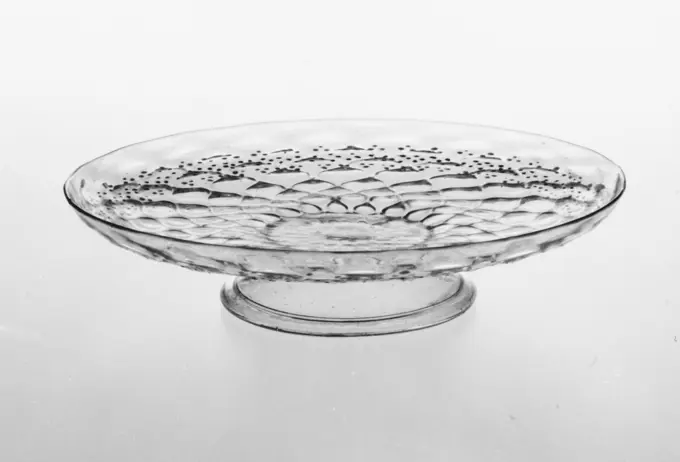
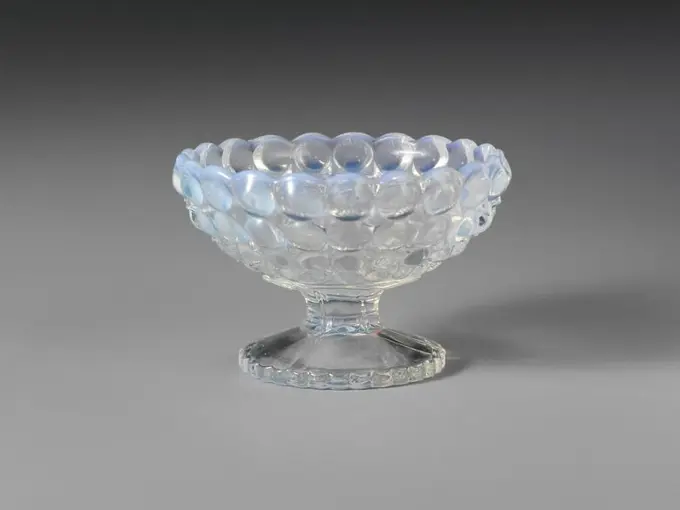
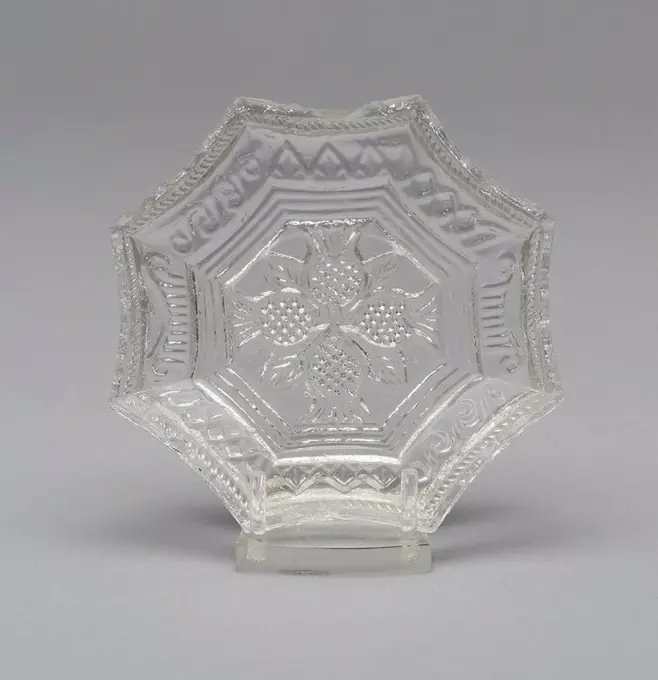
Salt cellar, 18th-19th century, 2 1/4 x 2 7/8 in. (5.7 x 7.3 cm), Blown moulded footed salt, United States, 18th-19th century
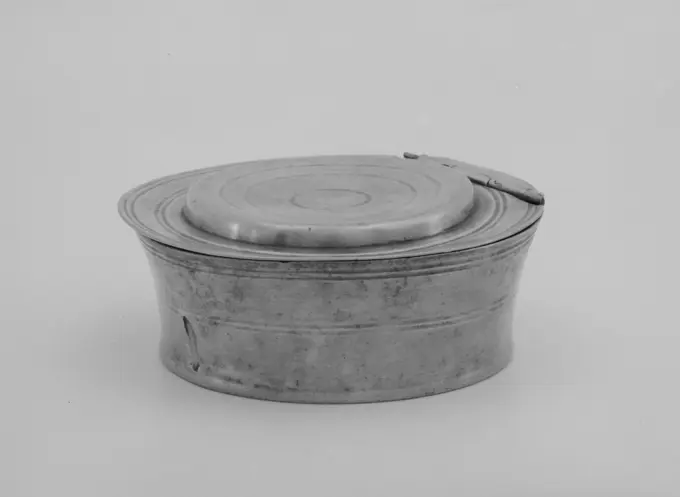
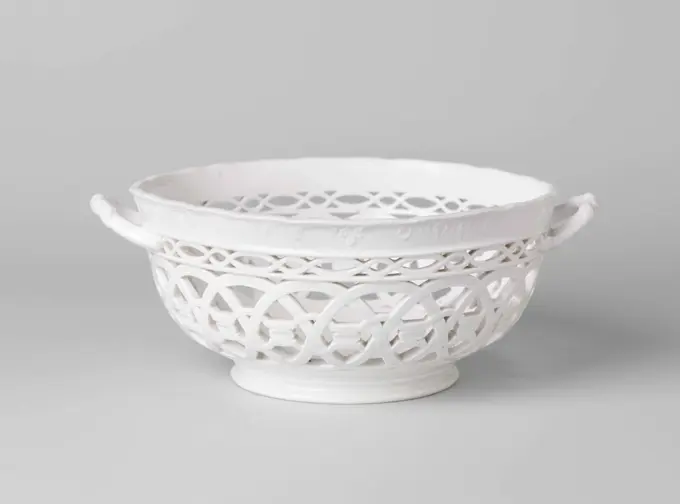
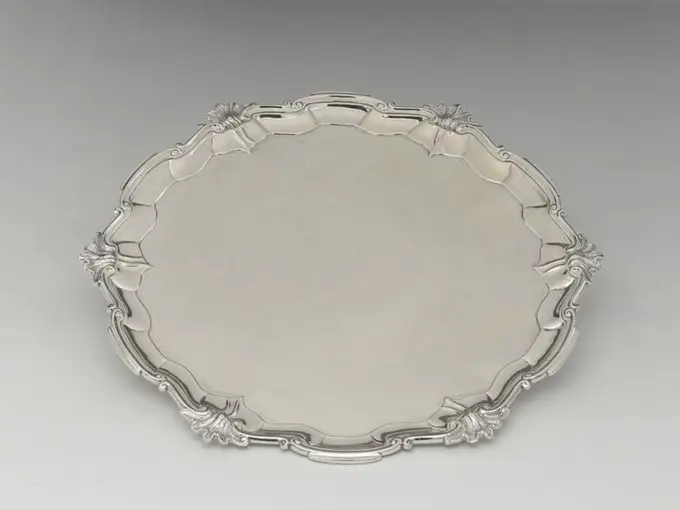
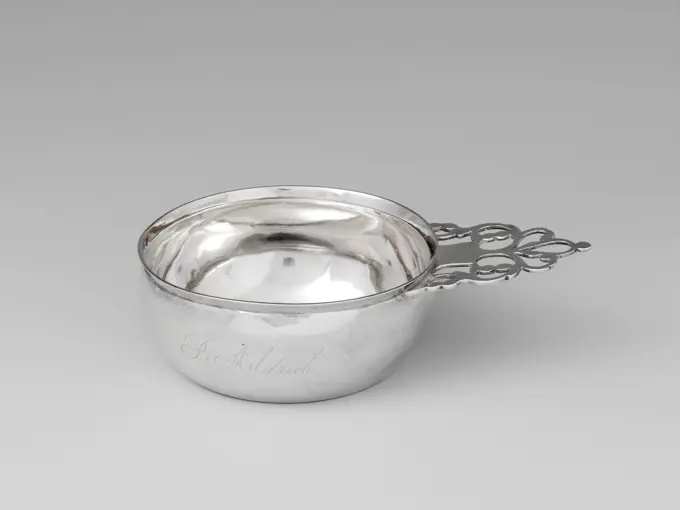
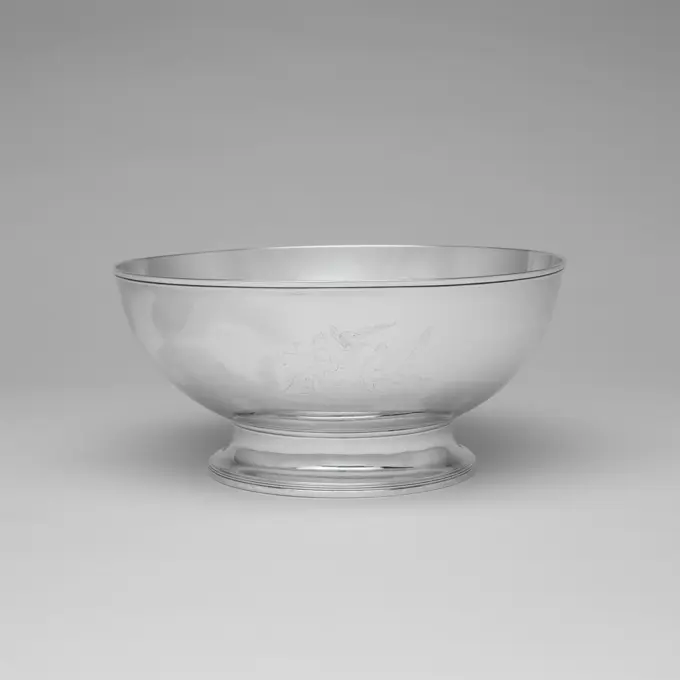
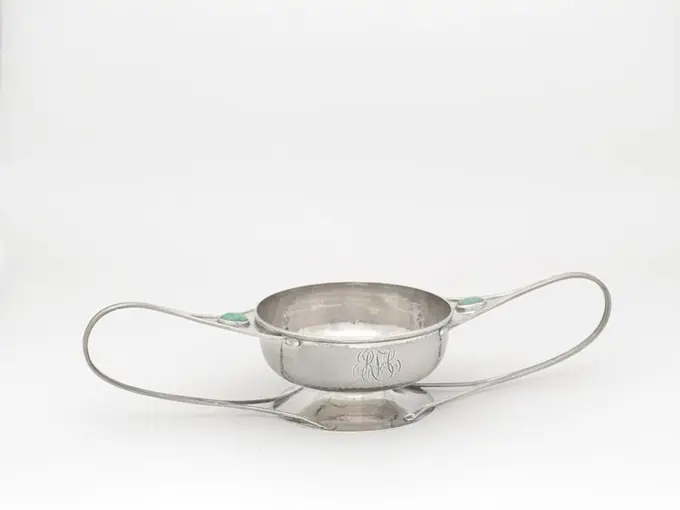
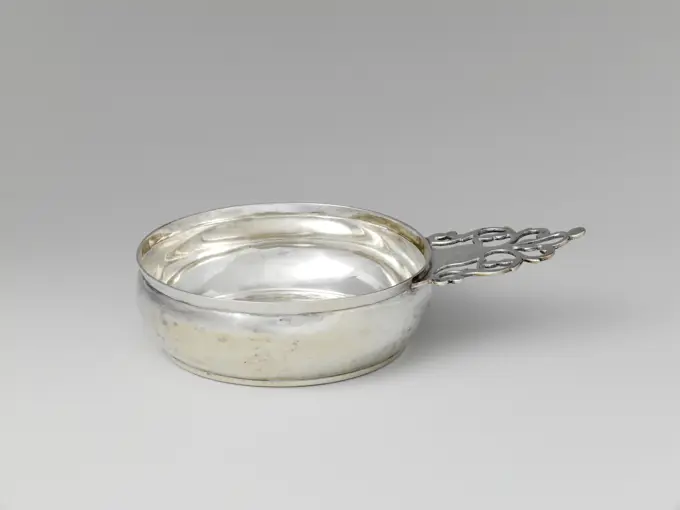
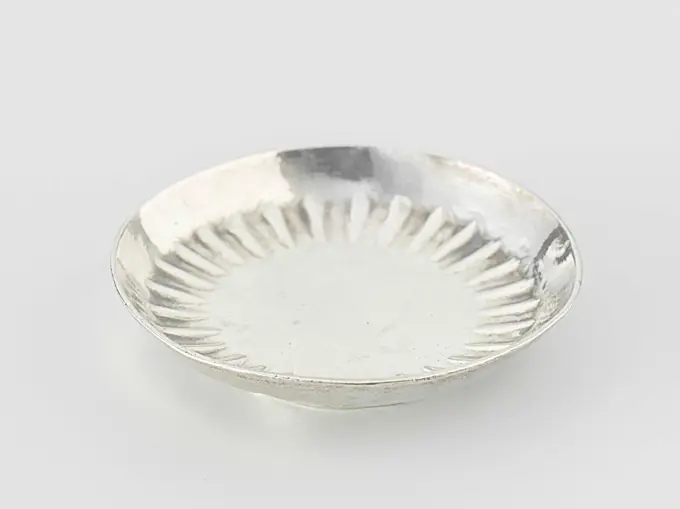
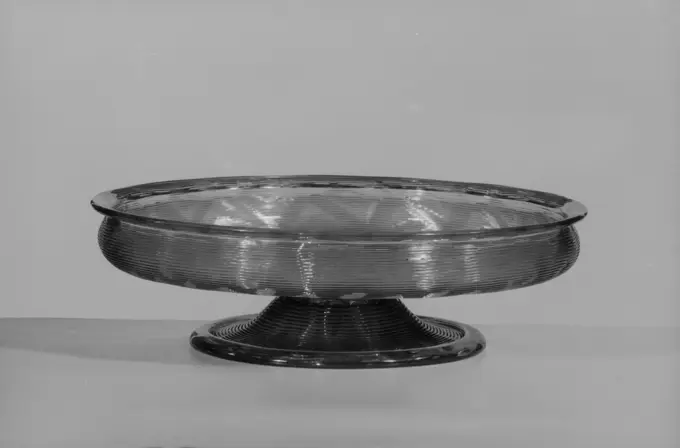
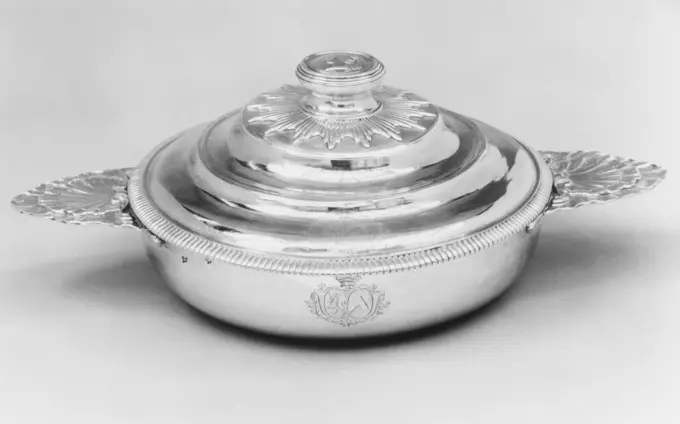
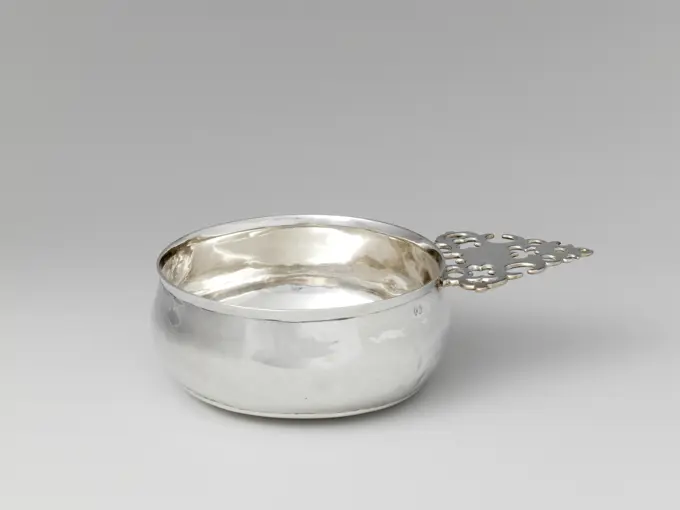
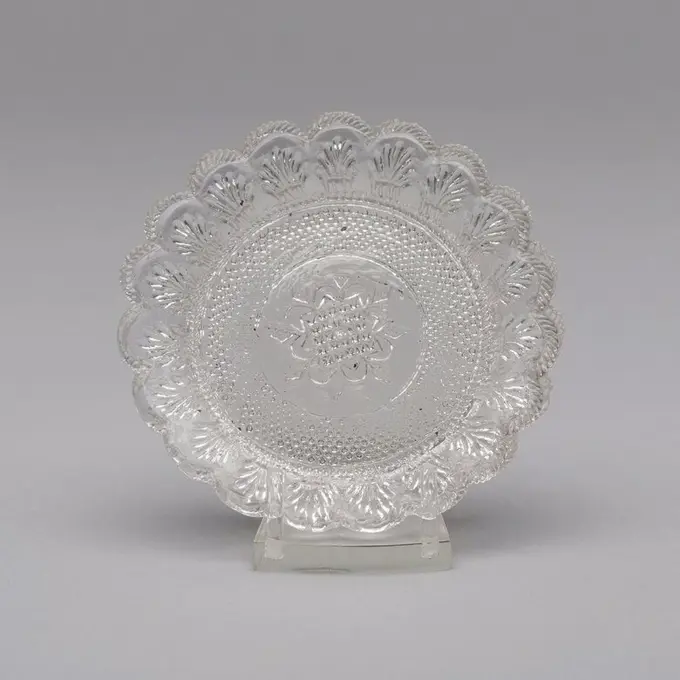
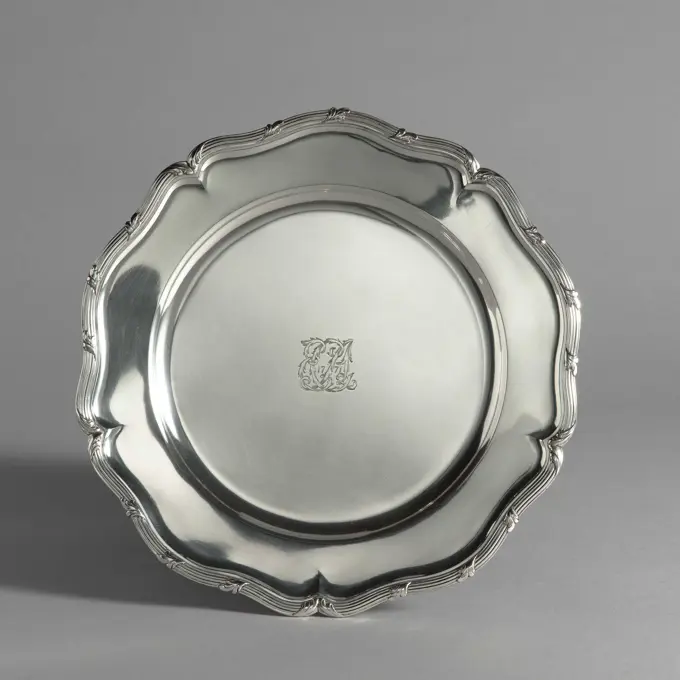
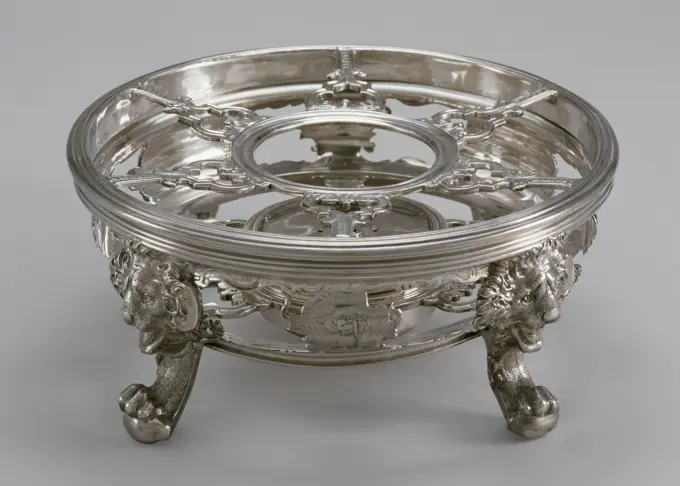
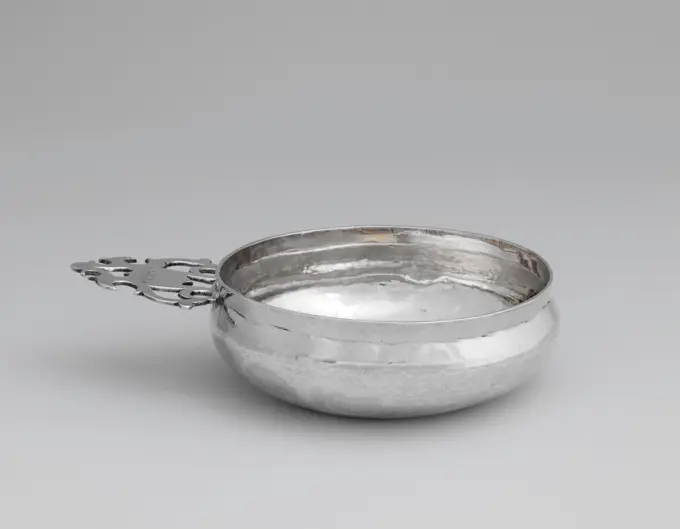
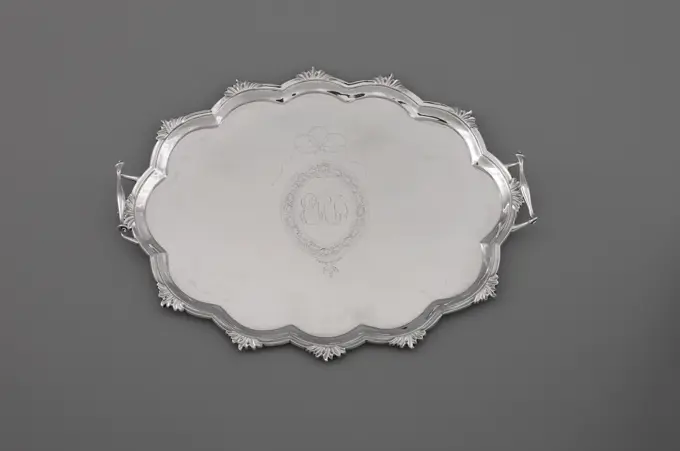
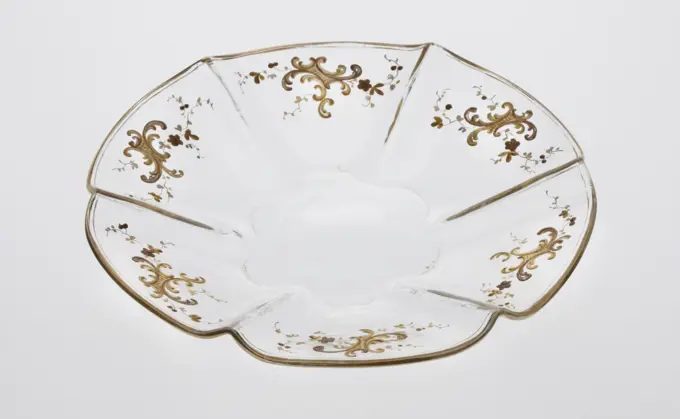
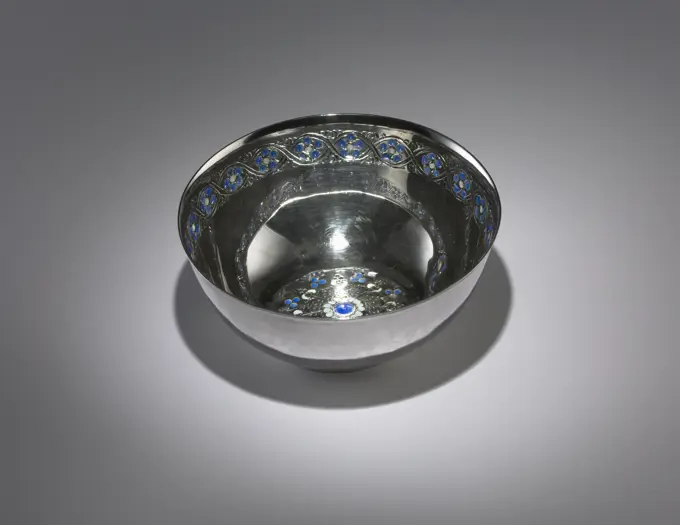
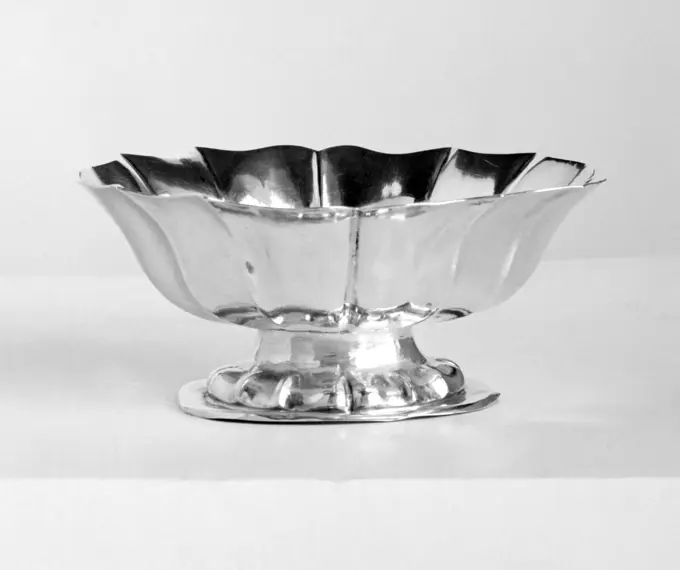
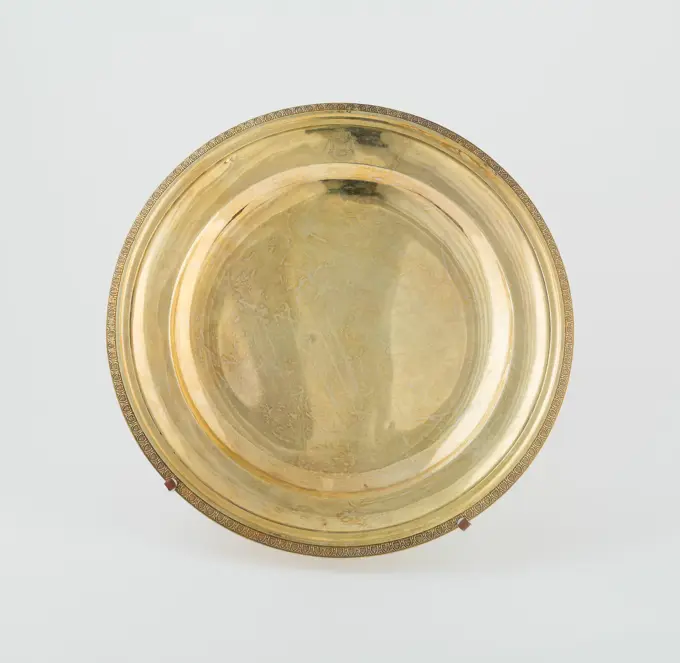
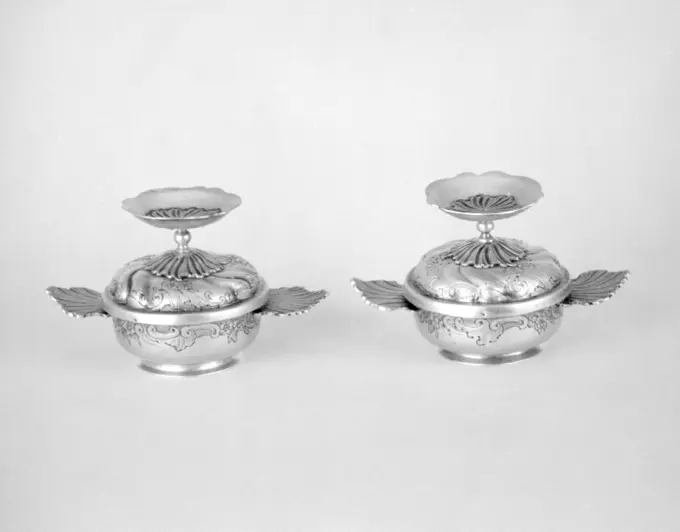
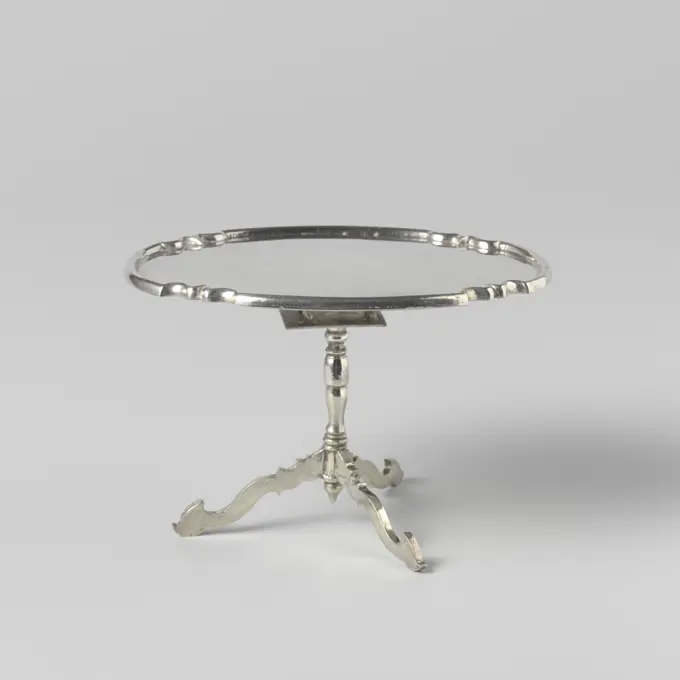
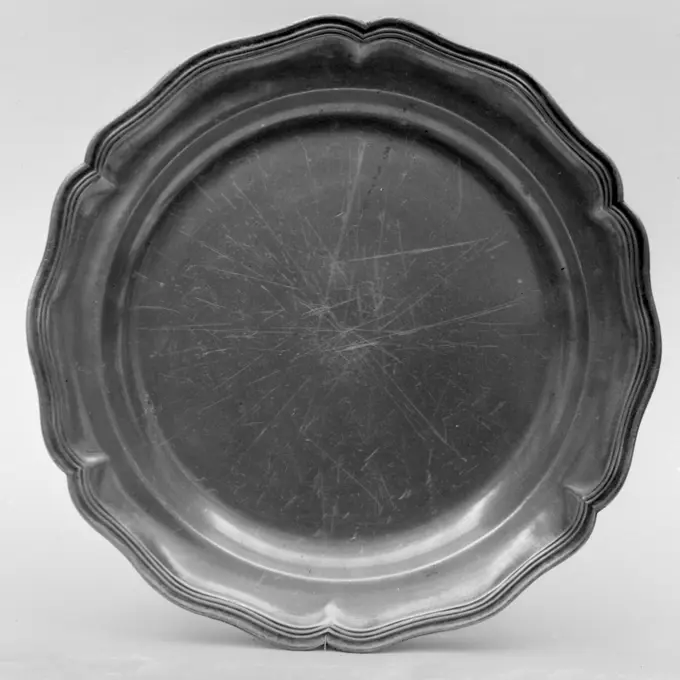
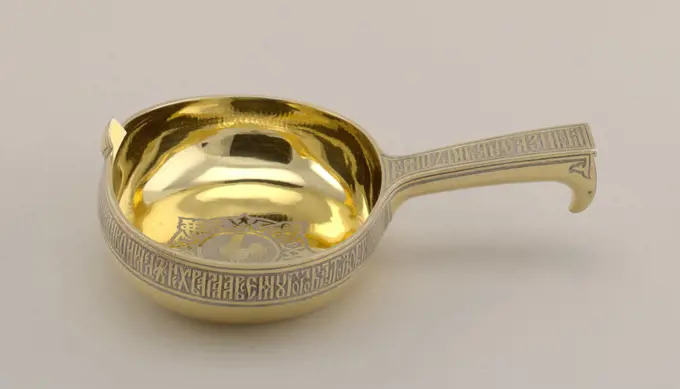
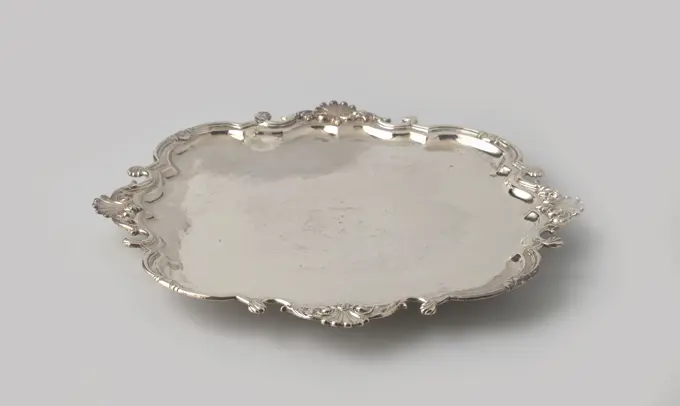
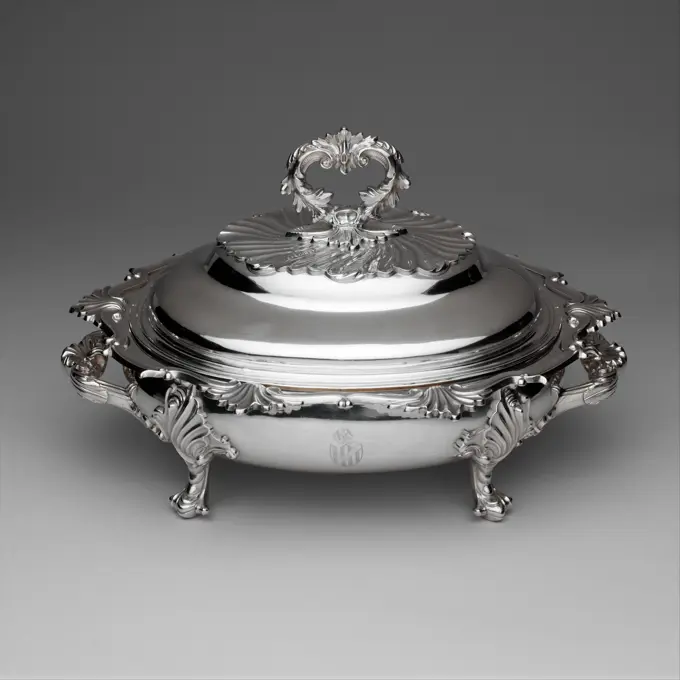
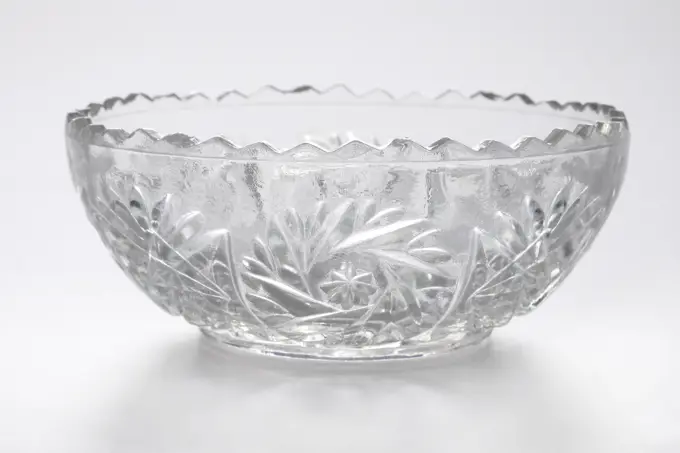
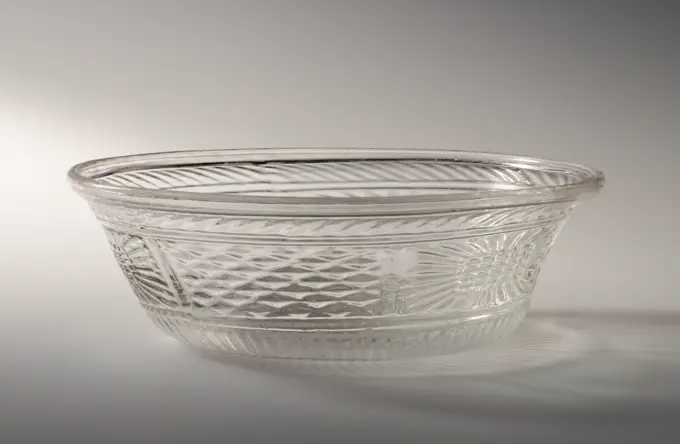
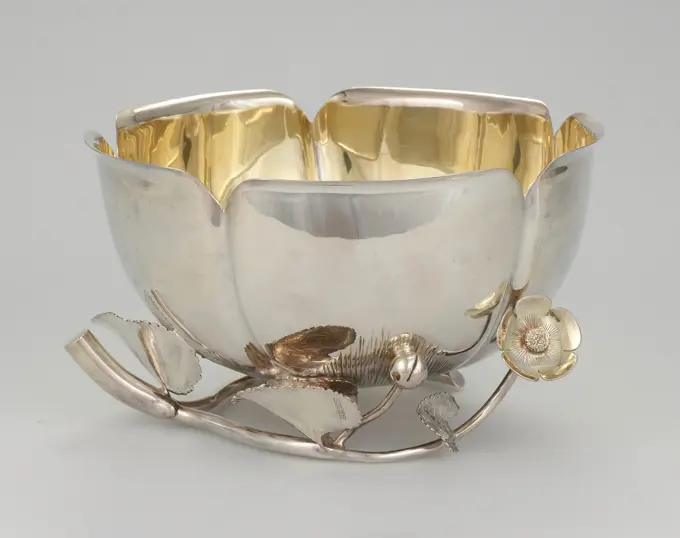
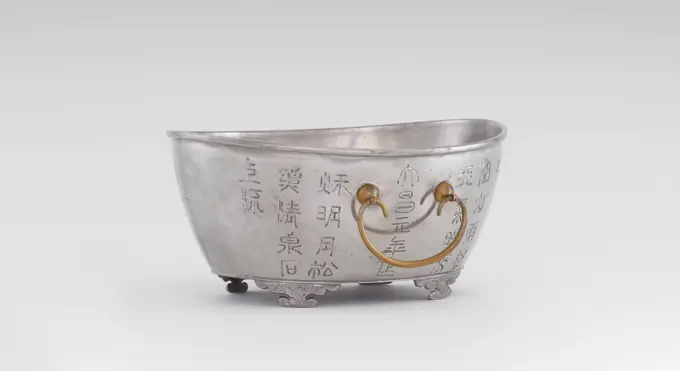
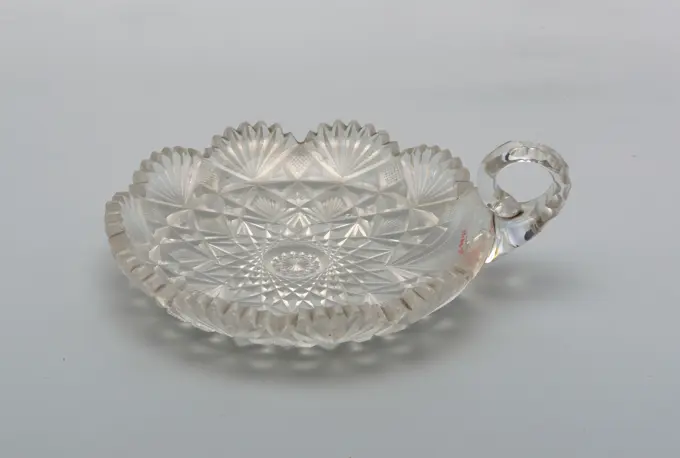
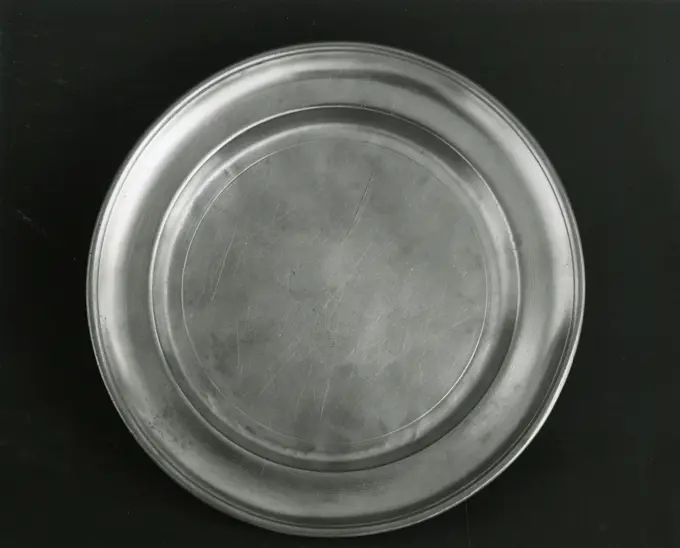
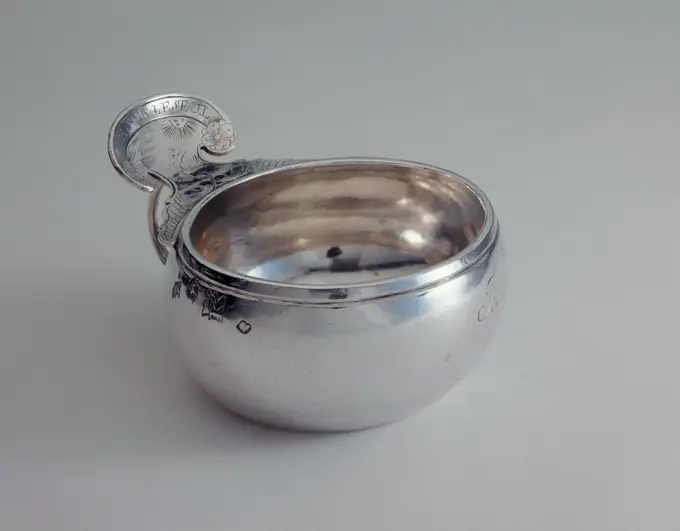
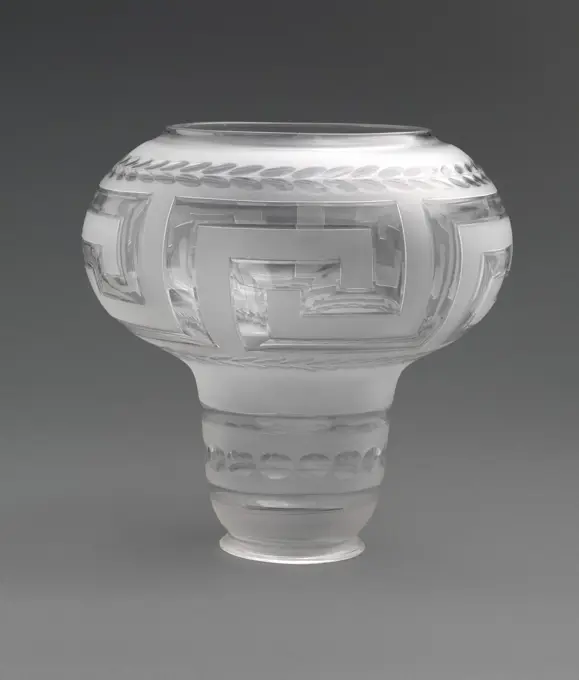
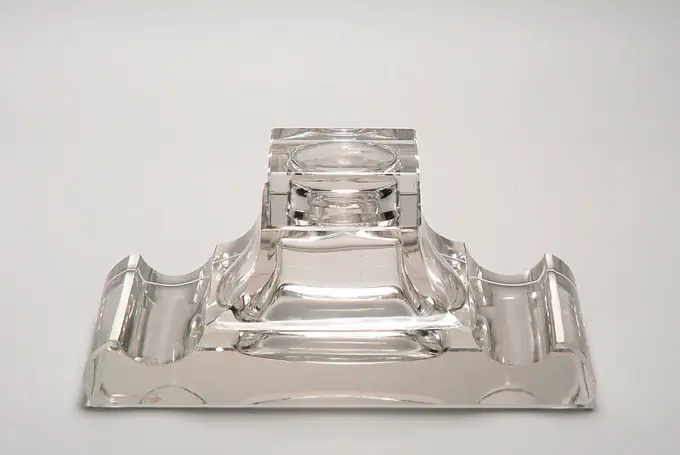
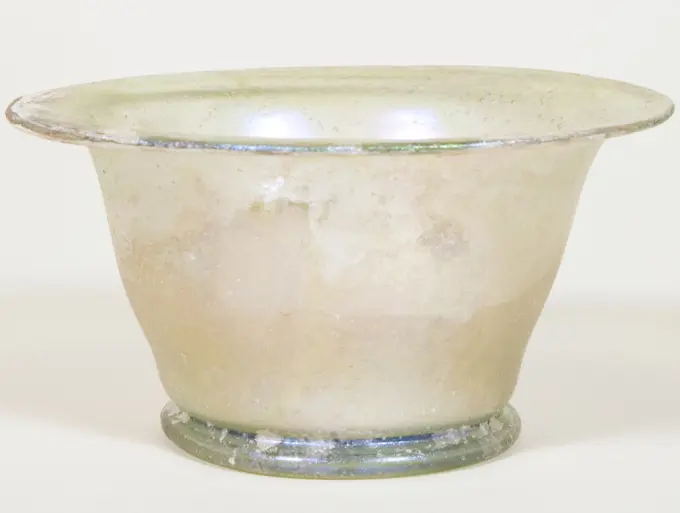
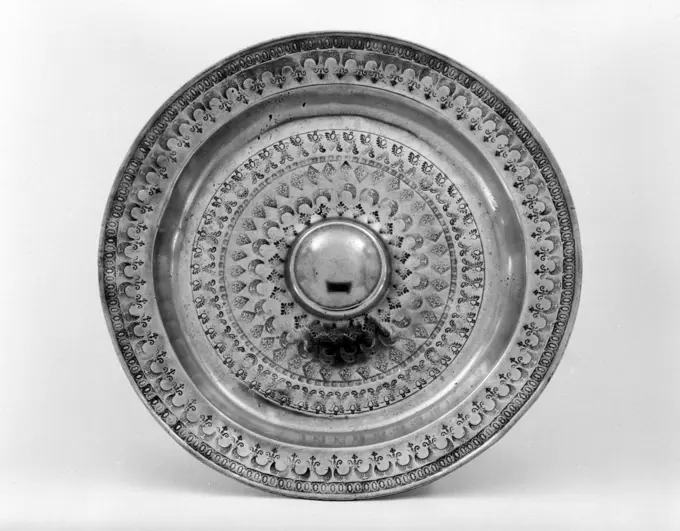
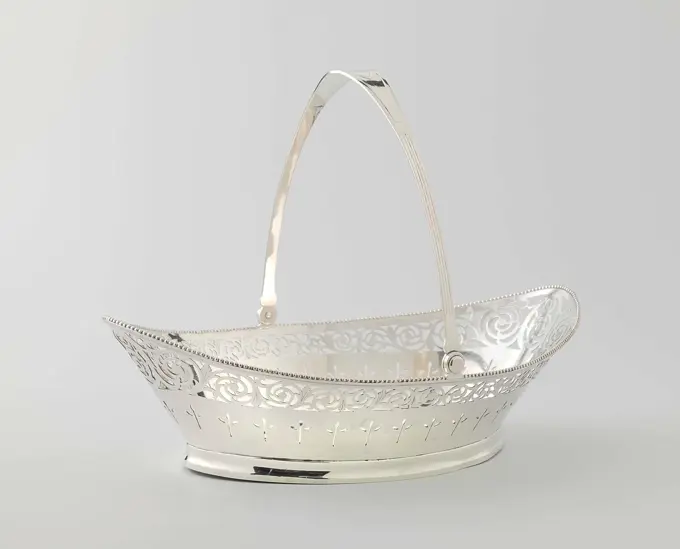
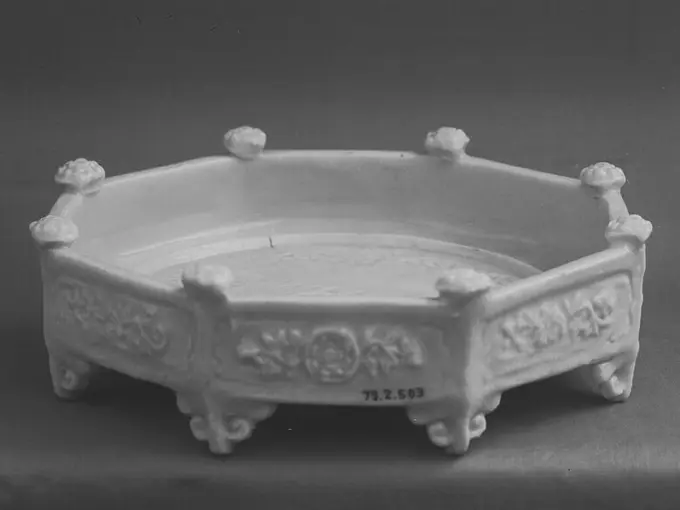
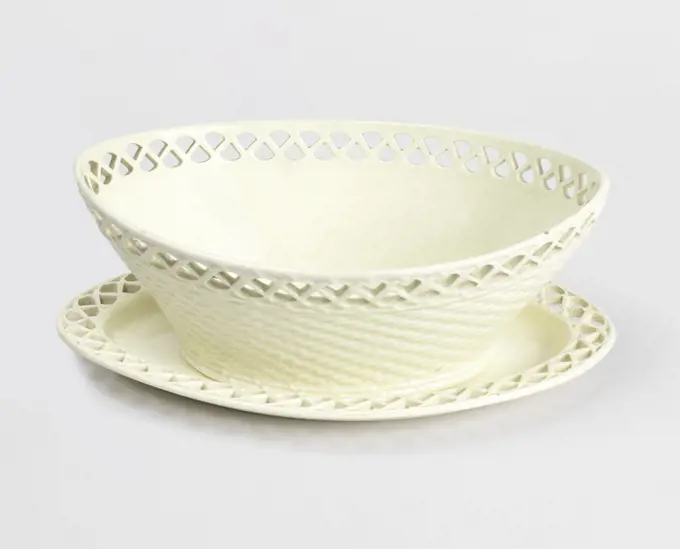
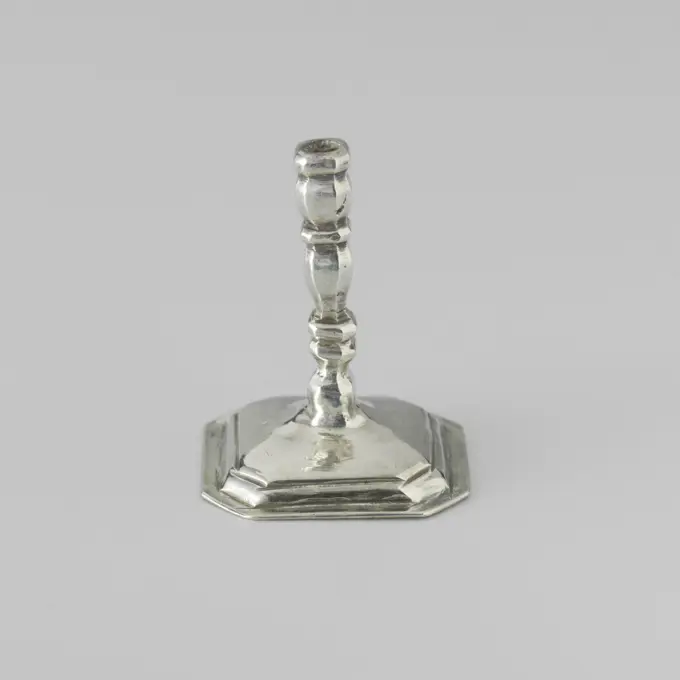
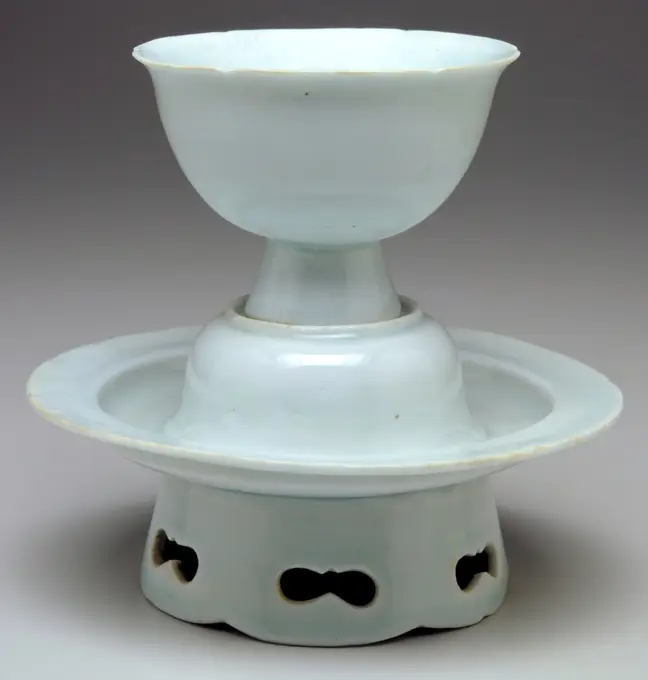
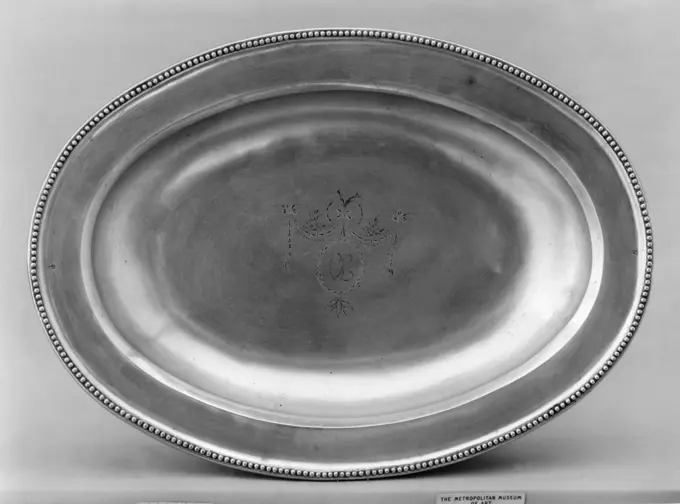
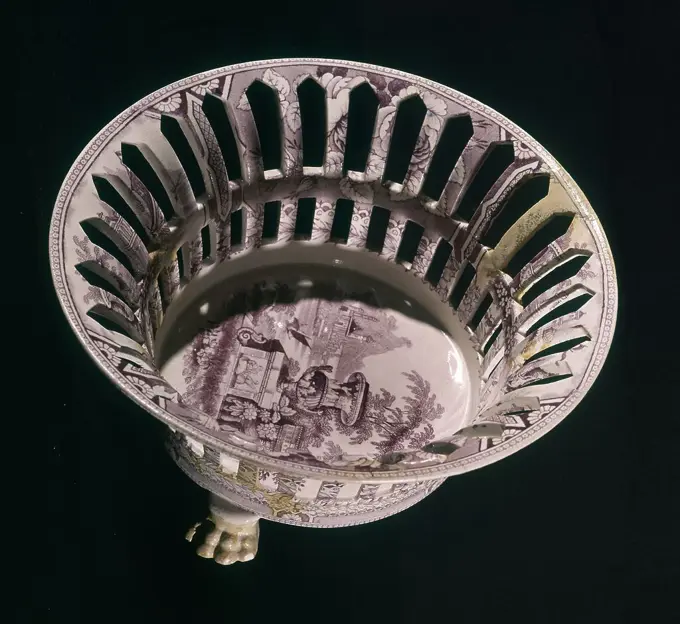
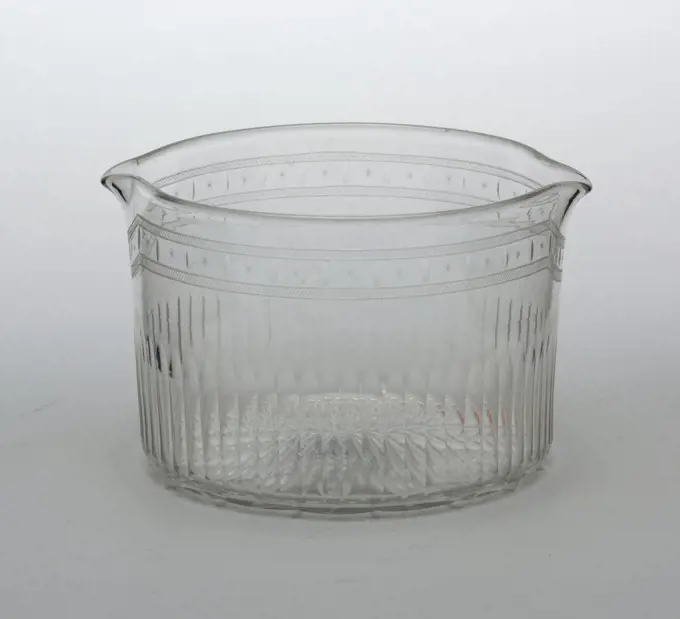
Porringer 1785-1805 Andrew Billings. Porringer 6656Oval classicistic tray. Skalski, Józef (fl. lata 90.XVIII w.-ca 1810), goldsmithSalver. Designed by Myer Myers; American, 1723-1795; New York, New York. Date: 1755-1765. Dimensions: 3.8 × 40.6 cm (1 1/2 × 16 in.). Silver. Origin: New York City. Museum: The Chicago Art Institute, Chicago, USA.Salt cellar, 18th-19th century, 2 1/4 x 2 7/8 in. (5.7 x 7.3 cm), Blown moulded footed salt, United States, 18th-19th centuryArt Nouveau pater;  1908-1917 (1908-00-00-1917-00-00);Partage Plus, geometric-family (ornament), secession (style), purchase (provenance)Porringer ca.1800 Saunders Pitman. Porringer 6711Westward-Ho!/Pioneer pattern footed dish c 1876 Philadelphia. Glass . Gillinder and Sons (Manufacturer)Punch Bowl 1811 Isaac Hutton American. Punch Bowl. American. 1811. Silver. Made in Albany, New York, United StatesTwo-Handled Dish. Shreve, Crump and Low; American, founded 1869; Boston, Massachusetts. Date: 1902-1907. Dimensions: 5.1 × 30.5 × 10.2 cm (2 1/8 × 12 × 4 1/8 in.); 225.12 grams. Silver and turquoise. Origin: Boston. Museum: The Chicago Art Institute, Chicago, USA.Silversmith: Jean George Grebe, Silver tobacco box with separate lid, tobacco box holder metal silver, tobacco snuffboxCooling vessel made of silver, oval, on four legs. Smooth curved wall with convex belly. Two sloping ears., Rutgerus Memeling, 1772 Oval cooling vessel on four legs. The barrel consists of a convex belly, a smooth wall and a vaulted, widening upper part. Two sloping raised ears on the top edge. Marked and dated. The Hague silver (metal) casting / engraving Oval cooling vessel on four legs. The barrel consists of a convex belly, a smooth wall and a vaulted, widening upper part. Two sloping raised ears on the top edge. Marked and dated. The Hague silver (metal) casting / engravingPorringer ca. 1800 Ebenezer Moulton. Porringer 6704Dish.   Maker: William Gale and Son, American, active 1850-58; 1862-67Retailer: Hayden Brothers & Co., American, active ca. 1852 - 1855Silver sick chicken, sickle barrel holder silver, driven cast Oval shallow tray with set cast-in ear (three braided loops in three-sided shape) slightly straight on one short side spout on the other short side. Oval flat vaulted lid standing circular tube as button on top of the middle outside of the top edge of the container, drinking medical treatment. Round porridge bowl on a foot with flat horizontal ears. The bowl is six-spempety in clams. The two ears are flat, horizontal and open. The foot is lobbed and walks wide. The bottom on the inside is decorated with a suspicious star. The bowl is marked with an ax.Porringer 1740-74 William Swan. Porringer 6718Dish. Round, ribbed dish on a stand ring. The dish is marked: STK. = Amsterdam and an unreadable femaline.Bowl, Glass, Wide round bowl, low sides; shallow diamond and cut pattern and broad star cut bottom. Deep, trefoil rim., possibly Cork, Ireland, ca. 1800, glasswares, Decorative Arts, BowlPorringer 1730-50 Paul Revere Sr.. Porringer 6713Plate.   Maker: Black, Starr and Frost, American, founded 1810Tazza 1880-88 Possibly Boston & Sandwich Glass Company. Tazza. American. 1880-88. Blown amber glass with applied threaded decoration. Made in Sandwich, Massachusetts, United StatesSubdated from a butter dish. Subdated from a butter dish in tin. The edge is decorated with three floral motifs and their winding stems, which merge into a profiled tire.Bowl with cover (Écuelle) 1735-36 Antoine Plot. Bowl with cover (Écuelle). French, Paris. 1735-36. Silver. Metalwork-SilverTwo-handled bowl ca. 1725-28 French, Strasbourg. Two-handled bowl 200353Porringer ca. 1720 Possibly John Coddington. Porringer 6721Cup plate. American; New England. Date: 1827. Dimensions: diam. 9.1 cm (3 9/16 in.). Pressed glass. Origin: New England. Museum: The Chicago Art Institute, Chicago, USA.. Supper dish with an engraved monogram ECA and comprehensive engraved inscriptions.Brazier. Paul de Lamerie (Holland, active England, London, 1688-1751). England, London, 1740 - 1741. Tools and Equipment; braziers. SilverPorringer 1685-86 Thomas Cory British With hard currency in short supply, American colonists invested large sums in silver plate. However, since British trade laws stipulated that colonists could only buy silver in a finished form, colonial silversmiths often had to melt down imported silver objects to gain access to the metal.. Porringer 205029Lid of a jar, Anonymous, 1800 - 1900 Lid of a cup, sharpened with a pointed button and decorated with leaf festival.  crystal (lead glass) Lid of a cup, sharpened with a pointed button and decorated with leaf festival.  crystal (lead glass)Waiter.  Maker: Paul Revere, American, 1735-1818Tazza ca. 1500-1525 Italian (Venice). Tazza 460895Ice Cream Plate from Mackay Service Tiffany & Co. 1878 This silver ice cream dish and accompanying plates are part of one of the most renowned and lavish dinner services ever created in America. Commissioned in 1877 by John W. (1831-1902) and Marie Louise Hungerford (1843-1928) Mackay, the dinner service for twenty-four consisted of over 1,250 pieces. A poor Irish immigrant with little education, John W. Mackay became one of the wealthiest men in America when he and three partners, James Fair, James Flood, and William OBrien, struck a silver deposit known as "The Big Bonanza" at Nevadas Comstock Lode in 1873. During a visit to the mine, Marie Louise asked her husband for a silver dinner service "made by the finest silversmith in the country." Her husband responded, "You shall have it. I like the notion of eating off silver brought straight from the Comstock." He proceeded to have a half ton of silver delivered from the mine to Tiffany & Co., where two hundred men worked for almost two Dessert plate -Spoon Tray With a Crowned Double Monogram and a European Ornamental Border. Rectangular, hexagonal pattipan of porcelain with ribbed wall, painted on the glaze in red, black and gold. On the flat a crowned, double monogram with links 'p.s.' and right 'a.j' ?; The crown is worn by two trumpet blowing angels. Under the monogram A worn inscription with '1762'. The inner wall with a decorative band in the Viennese du Paquier style with two peacocks in cartouches. European performance in Encre de Chine.Charger; pewterTray. Germany. Date: 1775-1800. Dimensions: 35 cm (13 3/4 in); with handles: 42.6 cm (16 3/4 in.). Pewter. Origin: Germany. Museum: The Chicago Art Institute, Chicago, USA.Soap Box 1807-35 Ashbil Griswold. Soap Box. American. 1807-35. Pewter. Made in Meriden, Connecticut, United StatesBasket with openwork wall, unpainted. Basket of porcelain. Between the profiled foot and the mouth edge decorated with Rocaille ornament, the body has been opened as a man's work. Plastic ears in the form of branches. On the wall four times a rotten cord motif. Scalloped mouth edge. Not painted.Oval salver (one of a pair) 1743-45 German, Augsburg. Oval salver (one of a pair) 206193Beaker. Culture: German or Swiss. Dimensions: 3 9/16 × 3 5/16 in. (9.1 × 8.4 cm). Date: late 13th-early 14th century. Museum: Metropolitan Museum of Art, New York, USA.Tobacco box 17th-18th century Dutch An oval box. The scenes, inscriptions, and decorations are identical to those on Number II, I. The engraving on this tobacco box is, however, somewhat more refined.Borders and sides are decorated with leaf scrolls.. Tobacco box. Dutch. 17th-18th century. Brass and copper. Metalwork-BrassDishes (four from a set of six) 1739/40 Paul de Lamerie British. Dishes (four from a set of six) 202070Bowl, c. 1903. Mary Catherine Knight (American, 1876-aft 1940). Silver and enamel; overall: 4.9 x 10.7 cm (1 15/16 x 4 3/16 in.).Dish 18th century probably German. Dish 197429Cover for a Tureen, c. 1830-50. England, Sheffield. Silver plated on copper (Old Sheffield Plate); overall: 25.9 x 107 x 40.5 cm (10 3/16 x 42 1/8 x 15 15/16 in.).Pair of Chop Plates 1800-1832 Paris. These chop plates for the dining table are part of a vast service made for Emperor Napoleon Bonaparteís sister Pauline on the occasion of her marriage to the Roman nobleman Camillo Borghese, Sixth Prince of Sulmona.. Silver gilt . Martin-Guillaume BiennaisFooted Dish. Culture: American. Dimensions: H. 2 5/8 in. (6.7 cm); Diam. 3 3/4 in. (9.5 cm). Maker: Richards and Hartley Flint Glass Co. (ca. 1870-1890). Date: ca. 1888. Museum: Metropolitan Museum of Art, New York, USA.Small écuelle with cover (one of a pair) 1749-51 Gottlieb Satzger. Small écuelle with cover (one of a pair) 206217Klaptafel, Arnoldus van Geffen, 1749 Folding table on a baluster -shaped leg that ends in a tripod. The leaf is oval and has an applied, scalloped edge. The folding table is marked: stk. = Amsterdam, Jrl. = P (1749) and Mt. = Arnoldus van Geffen. The table is the same as a table with invnr. BK-NM-11177-158-A. On the folding table is a tray (BK-NM-11177-181-B-I) with a gift jug (BK-NM-11177-181-II) and six drinking glasses (BK-NM-11177-181-III t on it /m BK-NM-11177-181-B-VIII). Amsterdam silver (metal) Folding table on a baluster -shaped leg that ends in a tripod. The leaf is oval and has an applied, scalloped edge. The folding table is marked: stk. = Amsterdam, Jrl. = P (1749) and Mt. = Arnoldus van Geffen. The table is the same as a table with invnr. BK-NM-11177-158-A. On the folding table is a tray (BK-NM-11177-181-B-I) with a gift jug (BK-NM-11177-181-II) and six drinking glasses (BK-NM-11177-181-III t on it /m BK-NM-11177-181-B-VIII). Amsterdam silver (metal)Pair of dishes 18th century French. Pair of dishes 201825Bowl 1656-57 British, London. Bowl 205056Bowl, 18th-19th century, 3 1/2 x 4 3/4 x 4 3/4in. (8.9 x 12.1 x 12.1cm), Glass, United States, 18th-19th centuryLid of a jar. Lid of a jar with pointed button with pseudo facets, engraved with a plant motif with a flower, buttons, leaves and roots. Originally does not belong to NG-NM-10425-A.Kovsh, Gilt silver, Oval bowl with cockerel; engraved inscription around border and handle in Cyrillic lettering in Slovanik., Moscow, Russia, 1856, metalwork, Decorative Arts, KovshCompote or Sugar Bowl, 18th-19th century, 6 1/2in. (16.5cm), Glass, United States, 18th-19th centuryChrysanthemum Dish. China. Date: 1723-1735. Dimensions: H. 3.7 cm (1 7/16 in.); diam. 17.6 cm (6 15/16 in.). Glazed porcelain. Origin: China. Museum: The Chicago Art Institute, Chicago, USA.Leaf, octagonal, with alternating accolade -shaped sides and round bent sides, Hendrik van der Burgh (silversmith) (attributed to), 1729 Silver leaf, octagonal with varied accolade -shaped sides and sides bent around in the middle. The magazine rests on a round, straight -hine base with a wide, flat bottom edge. The raised, flat edge of the leaf has a cast on the outside, imposed, profiled decoration. On the accolade-shaped sides it has decorated the shape of two S-Voluten, with leaves decorated and ending in excellent shell motifier either side of a fan pattern. On the other sides, the edge in the n = middle is interrupted by a curly leaf motif. On the underside of the leaf is engraved: I * M. Amsterdam silver (metal) Silver leaf, octagonal with varied accolade -shaped sides and sides bent around in the middle. The magazine rests on a round, straight -hine base with a wide, flat bottom edge. The raised, flat edge of the leaf has a cast on the outside, imposed, profiled decoration. On Two boxes, Johannis Logerath, 1788 The bunch of drums consists of a round (A-1) and a rectangular (B-1) copy, both with a hinged lid. The straight wall is decorated along top and bottom with a pearl list. The lid has a curved, rejuvenating wall above which a pearl list surrounds the slightly raised top. The body is engraved on the front and back with a laurel garland hung on three rings, with ribbons with an empty oval medallion on the middle ring, and on both sides with a empty medallion hung on a strict ribbon, of which laurelslingers hang on both sides . The top of the lid is decorated along the edge with a ribbons -lined ribbons with rosettes, slaved with dots decorated edges. Engraved on the bottom of the soil: by Mr. Jelle Wildschut,/and Miss Bauwdina Stinstra,/spouses. Received received from/Isabella de Clercq, born stinstra,/and gooitjen s: stinstra,/when this 11 meij 1788, had turned 25. Amsterdam silver (metal) The bunch of drums consists of a round (A-1) and a rectangular (BEntree Dish ca. 1839 Taylor and Lawrie This covered entrée dish, a rare form in American silver, reflects the burgeoning popularity of the dinner service at this date. Bailey and Kitchen, one of the leading silver and jewelry retailers in nineteenth-century Philadelphia, introduced Britains sterling standard to the United States in an effort to compete with English imports. The design of the dish, especially the scroll-and-shell feet, harks back to London silver of the 1760s and 1770s.. Entree Dish 17653Nappy - Spinner Daisy patternMaker Unknown, Bowl, c. 1820-40, colorless lead glass.Dish ca. 1835. Dish. ca. 1835. Lacy pressed glassSilversmith: Jacobus Johannes Dreux, Round wine test trough on legs, bake crockery holder silver, cast Round smooth bowl with flat pied the biche-shaped ear on three curling feet with double bottom under ear (smashed) drinkChamber candlestick 1743-44 George Wickes Engraved with the arms of Ralph Sneyd of Keele Hall, Straffordshire and his wife Barbara Bagot, married 1749.. Chamber candlestick 232279Punch or salad bowl, from a three-piece set, c. 1887, Possibly by Christopher Dresser; Manufacturer: Hukin & Heath, Scottish, 1834-1904, 5 3/4 x 10 1/16 x 10 1/16 in. (14.61 x 25.56 x 25.56 cm), Silverplated metal, gilt, England, 19th centuryBowl on four legs; Yan Yihe; 19th century (1801-00-00-1900-00-00);Candy Dish; glassPlate.   Maker: William Nott, American, 1743-before 1841Vincent Busnel. "Taste-vin". Money. 1769. Museum of Fine Arts of the City of Paris, Petit Palais. 74384-9 Silver, silverware, bottleneck, TastevinPlate (part of a service) 1790-1800 Chinese, probably for British market. Plate (part of a service) 201089Set: plate Glassworks J. Stolle NiemenCut glass shade ca. 1865-75 Possibly New England Glass Company. Cut glass shade. American. ca. 1865-75. Glass, cut. Made in Massachusetts, United StatesCup And Saucer; Manufactured by Sèvres Porcelain Manufactory (France); porcelain with overglaze enameling and gildingBowl ca. 1785 British. Bowl 208992glass bowl isolated on white backgroundBox for sweets or toiletries Satzger, Gottlieb (Ca 1709 1783)PlateSalt 1765-85 Thomas Shields. Salt. American. 1765-85. Silver. Made in Philadelphia, Pennsylvania, United StatesKałamarz z korkiem. unknown, creatorBowl 1 CE-100 CE Syria. Glass . Ancient RomanRosewater dish probably early 17th century Dutch or German. Rosewater dish. Dutch or German. probably early 17th century. Pewter. Metalwork-PewterBasket of silver with hinged handle. Oval shit-shaped basket with standing handle. At a straight bottom edge, a base is rising outwards. The wall is decorated with opened leaf motifs and above it with an open-worked and engraved edge acanthus leaves. The top edge is trimmed with a pearl edge. The hinged curved handle widens upwards, and is decorated with straight lines and a window.Wine coaster, one of a pair, c. 1810-1820, 2 x 6 x 6 in. (5.08 x 15.24 x 15.24 cm), Sheffield plate, England, 19th centuryStand. Culture: China. Dimensions: H. 1 3/4 in. (4.4 cm); W. 5 3/4 in. (14.6 cm). Museum: Metropolitan Museum of Art, New York, USA.Dish ca. 1830 Frederick Marquand. Dish 3303Fruit dish and tray, Lead-glazed earthenware ('cream ware'), Elliptical outline. A) with flaring sides pierced at the rim and decorated with raised basketry pattern. B) has rim pierced with double row of triangular figures., Leeds, England, mid- 18th century, ceramics, Decorative Arts, Fruit dish and trayDish with Lotus Flowers 960 CE-1279 China. Ding ware; porcelain with underglaze carved decoration; metal rim .Candlestick, anonymous, c. 1704 - c. 1734 Candlestick on a square, curved foot with beveled corners. The trunk of the candlestick and the edge of the foot are profiled. The candlestick is marked: stk. = Amsterdam, Mt. = Citroen 1975, no. 970 and an ax. The candlestick is the same as the candlestick with invnr. BK-NM-4336-J. Amsterdam silver (metal) Candlestick on a square, curved foot with beveled corners. The trunk of the candlestick and the edge of the foot are profiled. The candlestick is marked: stk. = Amsterdam, Mt. = Citroen 1975, no. 970 and an ax. The candlestick is the same as the candlestick with invnr. BK-NM-4336-J. Amsterdam silver (metal)Cooling vessel made of silver, oval, on four curved legs. On the vaulted wall on the front and rear engraved weapons., Gregorius van der Toorn, 1768 Oval cooling vessel made of silver on four curved legs. The barrel consists of a convex belly, a smooth wall and a vaulted upper part. Two slanting ears on the top edge. Weapons are engraved on the front and back. The Hague silver (metal) Oval cooling vessel made of silver on four curved legs. The barrel consists of a convex belly, a smooth wall and a vaulted upper part. Two slanting ears on the top edge. Weapons are engraved on the front and back. The Hague silver (metal)Wine Cup and Stand, 11th century, 5 1/2 x 6 in. (13.97 x 15.24 cm), Qingbai ware Porcelain with pale blue glaze, China, 11th century, Qingbai cup stands with pierced trefoil motifs first appeared in the eleventh century. This type of thinly potted porcelain cup and stand can be seen in Song dynasty (960-1279) paintings illustrating banquet scenes. Intended for elegant dining, these vessels should be seen in the context of other Qingbai tableware such as the bowls, ewers, and saucers shown here.Basin last quarter 18th century R. S. J.. Basin 191920Lazio Viterbo Viterbo Museo Civico02. Hutzel, Max 1960-1990 Views of paintings (Middle Ages through 18th c.), frescoes, a tabernacle, coffin, sculpture reliefs, portal fragments, busts, sculpture, tapestry found in the Pinacoteca, Second floor gallery and Second floor cloister sequences. Antiquities: Many views of Etruscan and Roman fragments, sculpture, sarcophagi, pottery, masks, jewelry and other objects found in the Storeroom sequence (inventory numbers on back of prints), and the Cloister, Second floor Cloister, Valle Giulia, Sala Romana and Sala Etrusca sequences. General Notes: There are eight separate numerical sequences for this location. The cloister as an architectural structure, rather than museum site, is documented in the record and file for S. Maria della Verita, Cloister, all views of which are stored in Medieval core collection. Five views from the Museo Civico Second floor cloister sequence are stored in Medieval. German-born photographer and scholar Max Hutzel (1911-Hostie box, Johannes van der Lely, c. 1727 Silver hosty box, on three legs. Engraved on the lid: Christ on the Cross and Mary Magdalena. Leeuwarden silver (metal) Silver hosty box, on three legs. Engraved on the lid: Christ on the Cross and Mary Magdalena. Leeuwarden silver (metal)Segmental dish (part of a service) mid-18th century Chinese, for German market. Segmental dish (part of a service) 201273Campania Salerno Padula Museo Archeologico della Lucania Occidentale2. Hutzel, Max 1960-1990 Antiquities: There are views of Ardean artifacts, including artefixes. German-born photographer and scholar Max Hutzel (1911-1988) photographed in Italy from the early 1960s until his death. The result of this project, referred to by Hutzel as Foto Arte Minore, is thorough documentation of art historical development in Italy up to the 18th century, including objects of the Etruscans and the Romans, as well as early Medieval, Romanesque, Gothic, Renaissance and Baroque monuments. Images are organized by geographic region in Italy, then by province, city, site complex and monument.CERAMICA DE SARGADELOS-FRUTERO VIDRIADO CON DECORACION. Location: MUSEUM OF FINE ARTS. LA CORUNA. A CORUÑA. SPAIN.Cup plate. American; Possibly New England. Date: 1829-1830. Dimensions: diam. 9.8 cm (3 7/8 in.). Pressed glass. Origin: United States. Museum: The Chicago Art Institute, Chicago, USA.Wine rinser, Cut and engraved glass, Basin shaped with vertical impressions along lower half, engraved asterisks near upper rim, with two spouts., England, 18th century, glasswares, Decorative Arts, Wine rinserPlate 1520 German, Nuremberg. Plate 203963