Elegant Metalwork

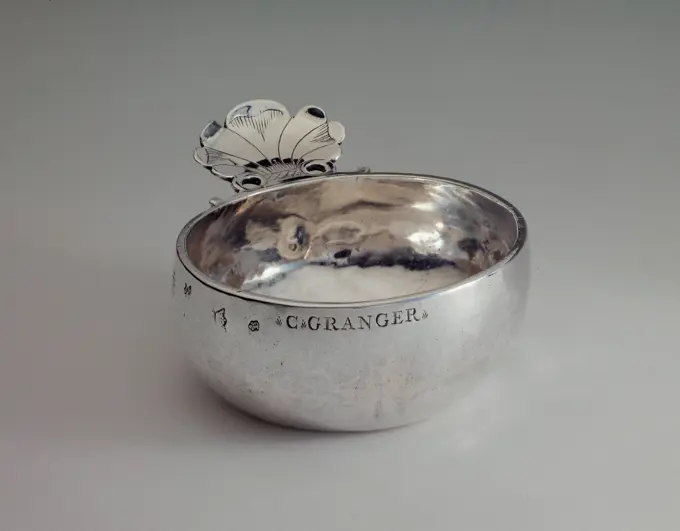
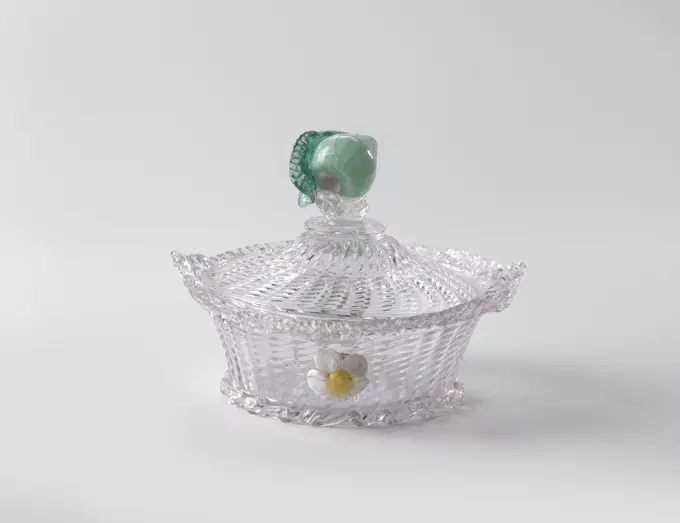
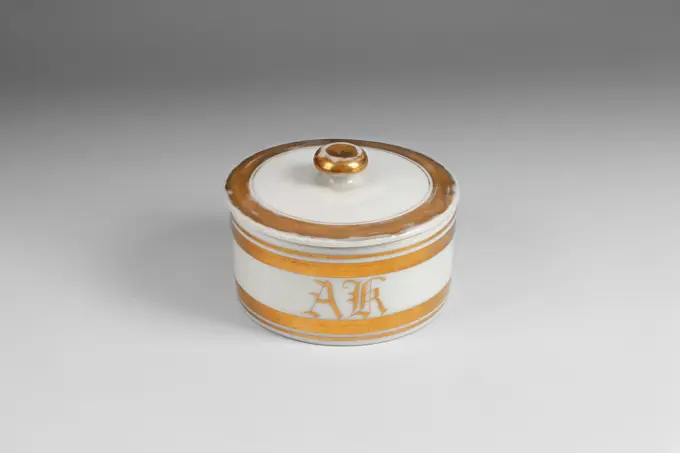
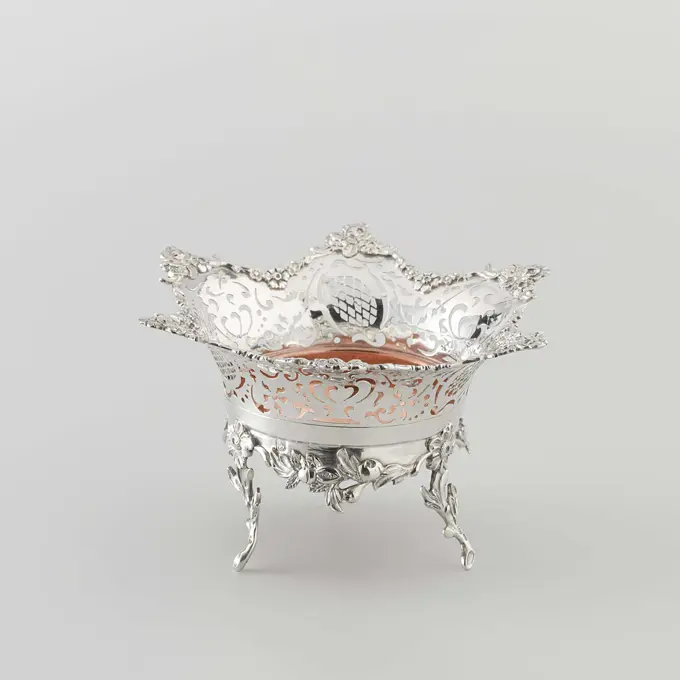
Showcases of various antique metal pieces including trays, porringers, and salt cellars highlighting craftsmanship and design.

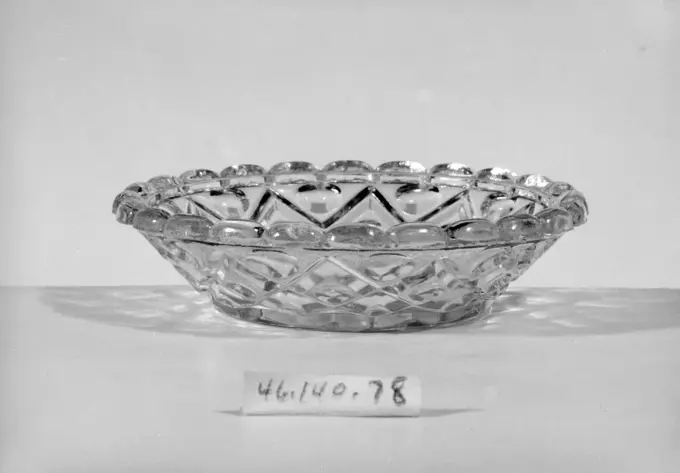
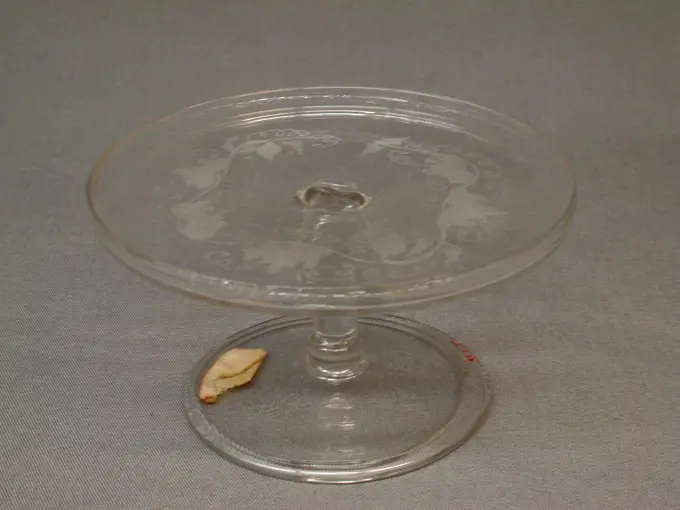
Salt cellar, 18th-19th century, 2 1/4 x 2 7/8 in. (5.7 x 7.3 cm), Blown moulded footed salt, United States, 18th-19th century
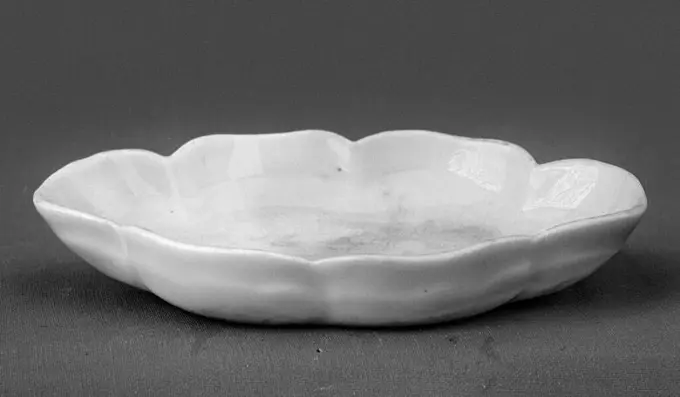
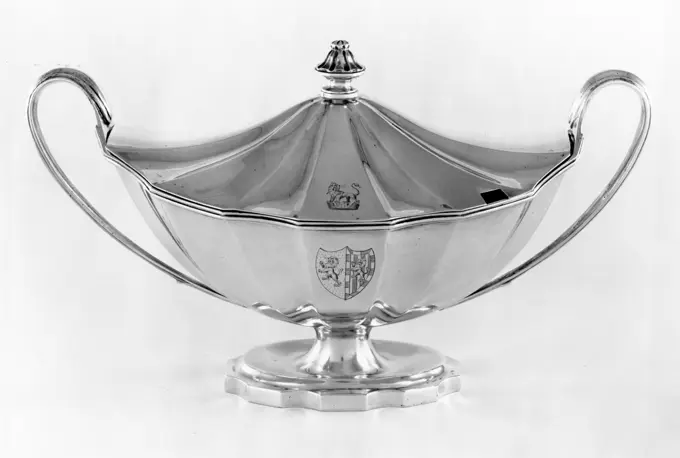
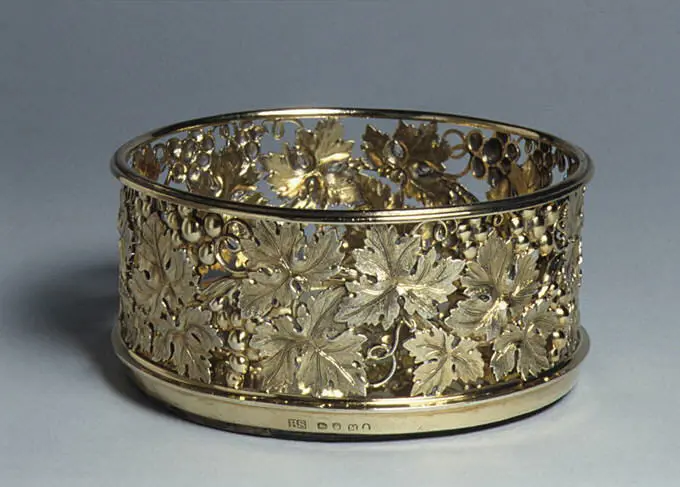
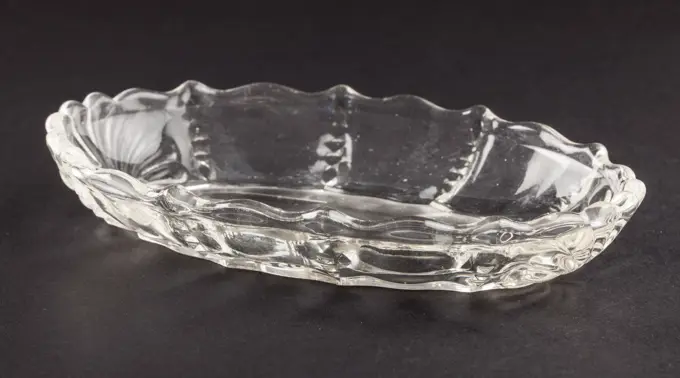
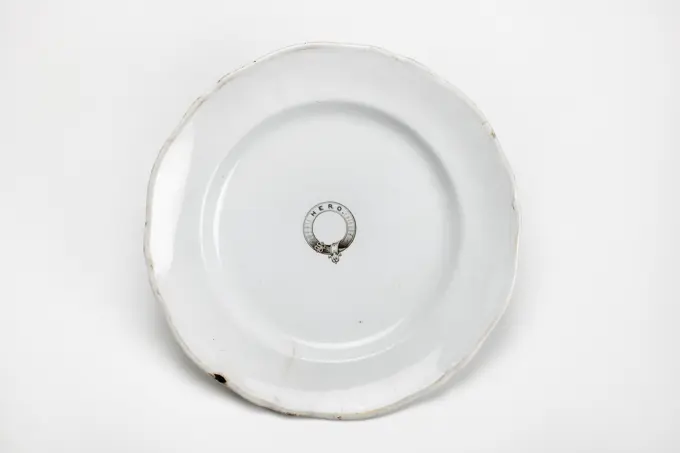
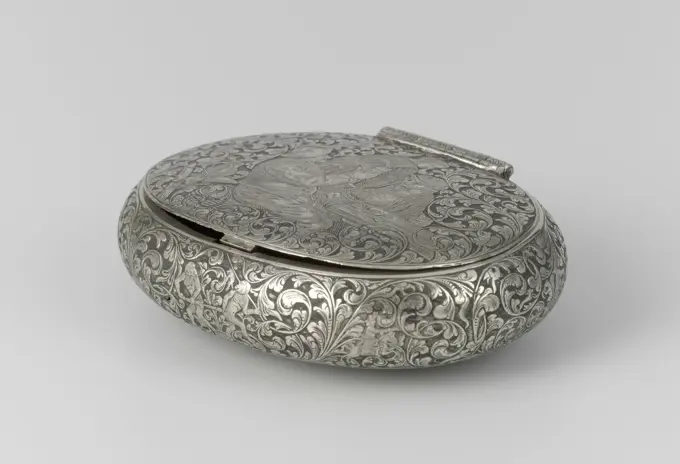
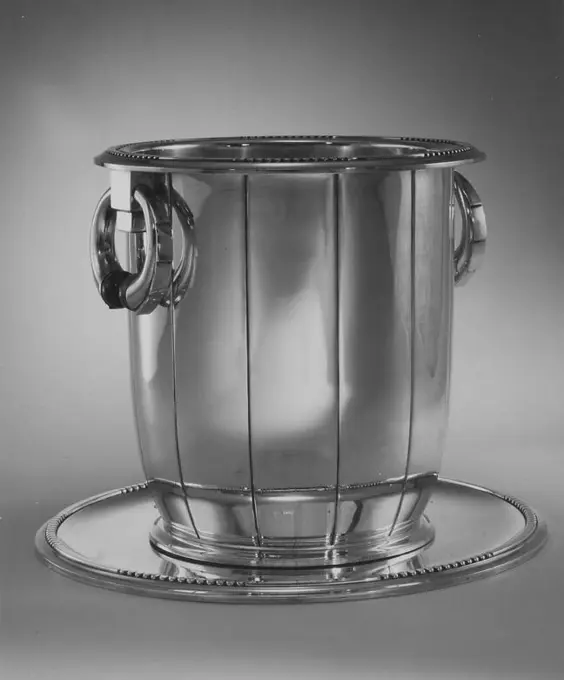
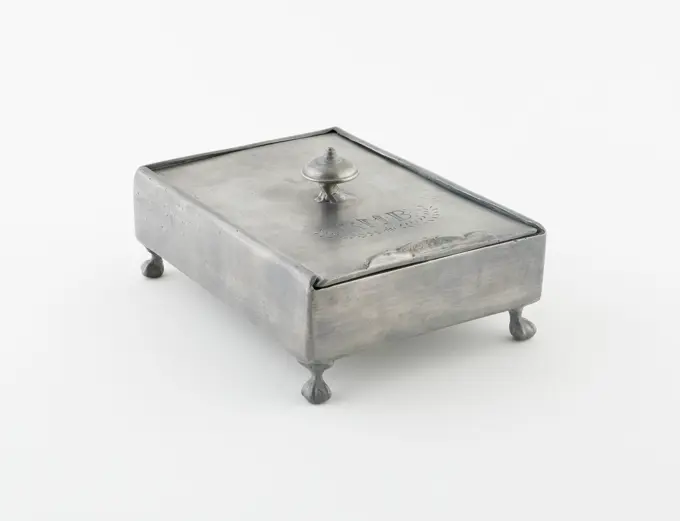
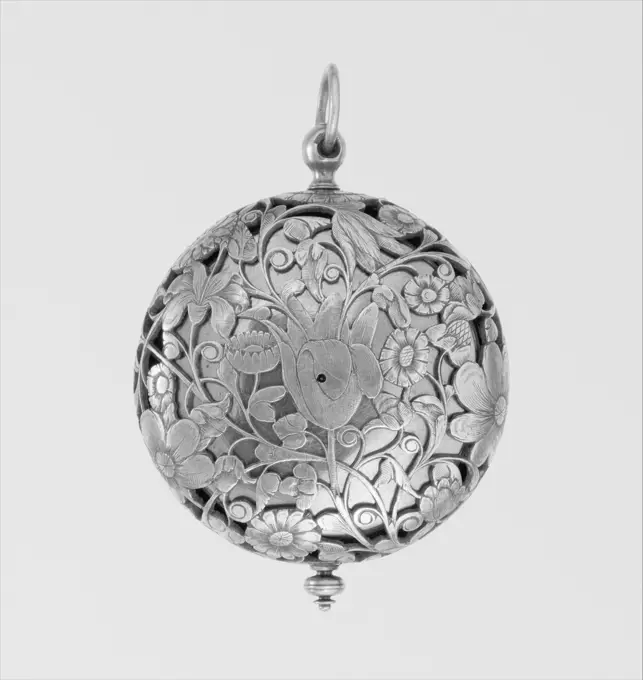
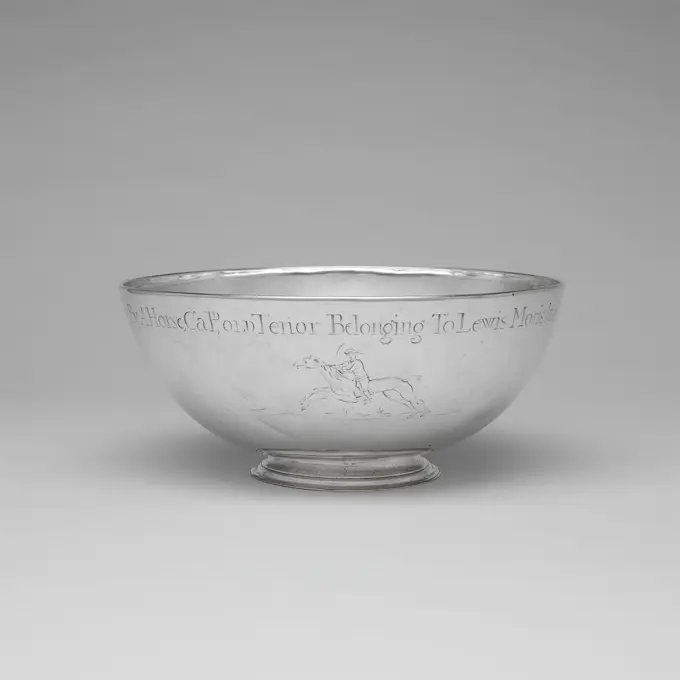
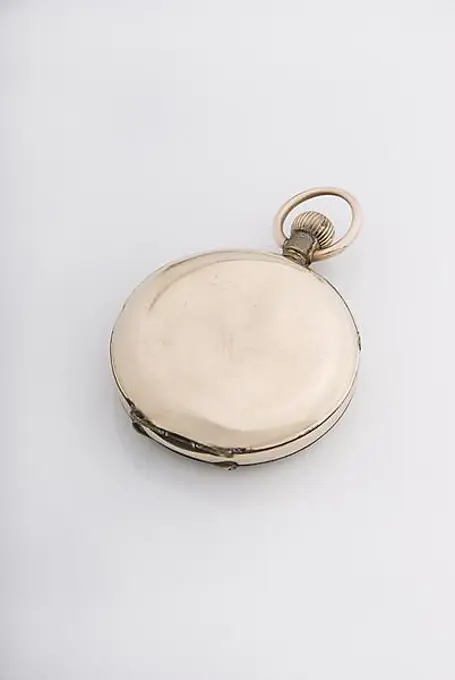
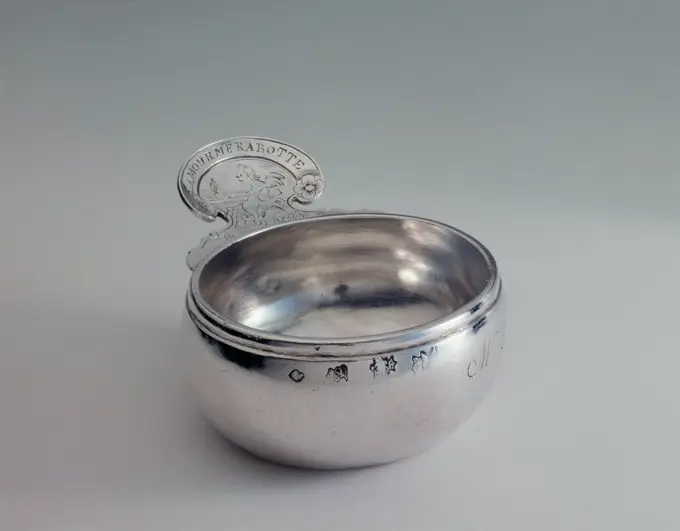
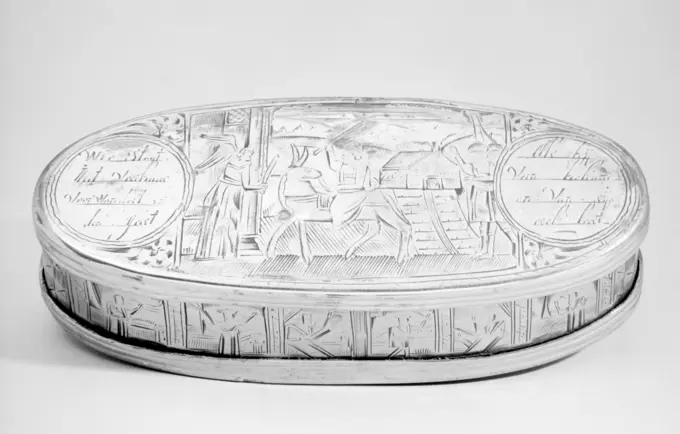
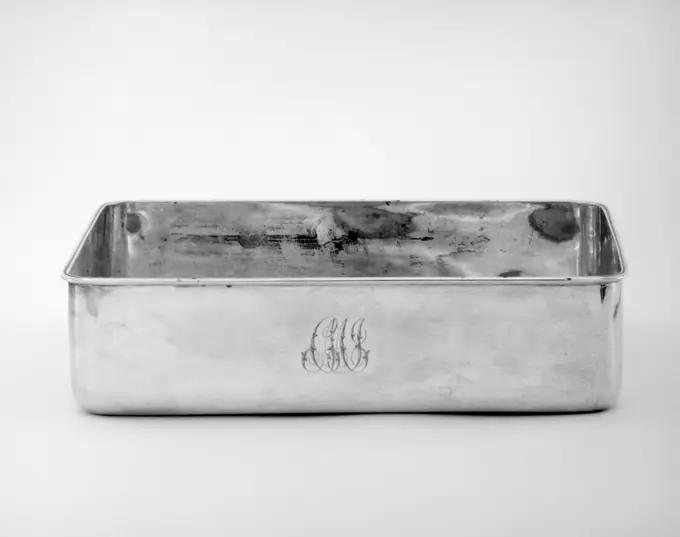
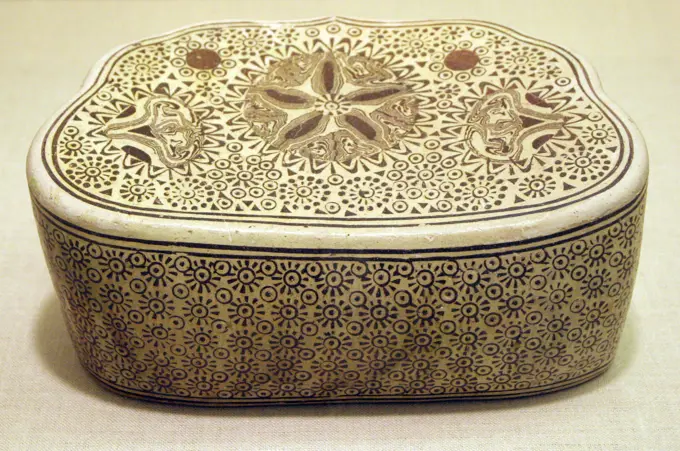
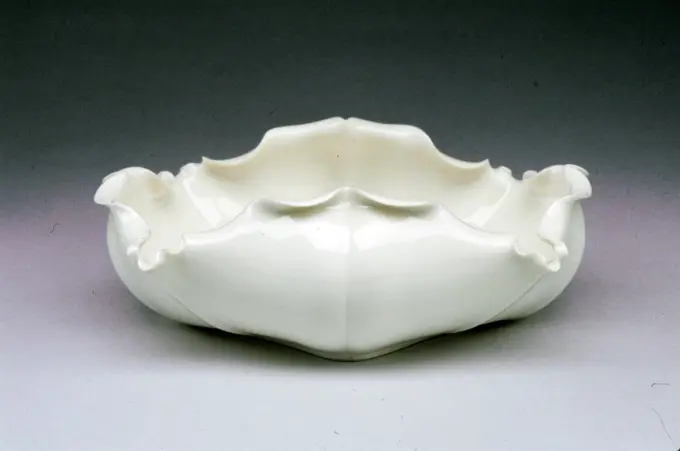
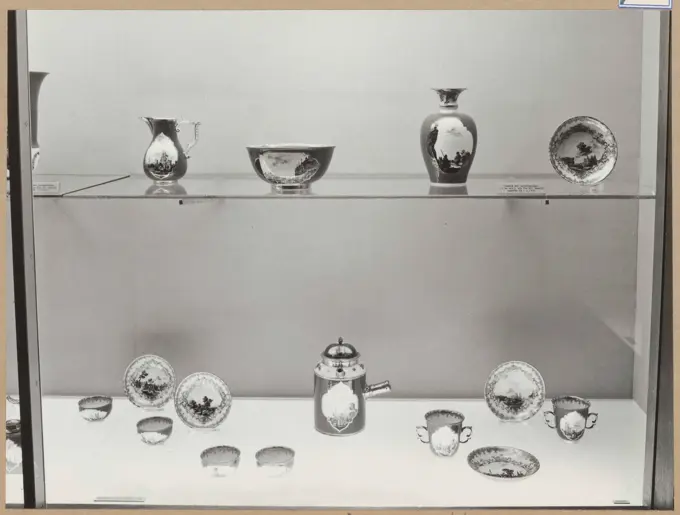
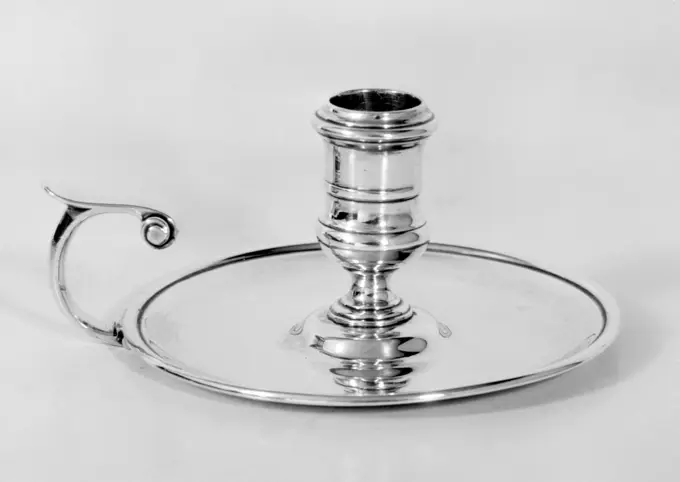
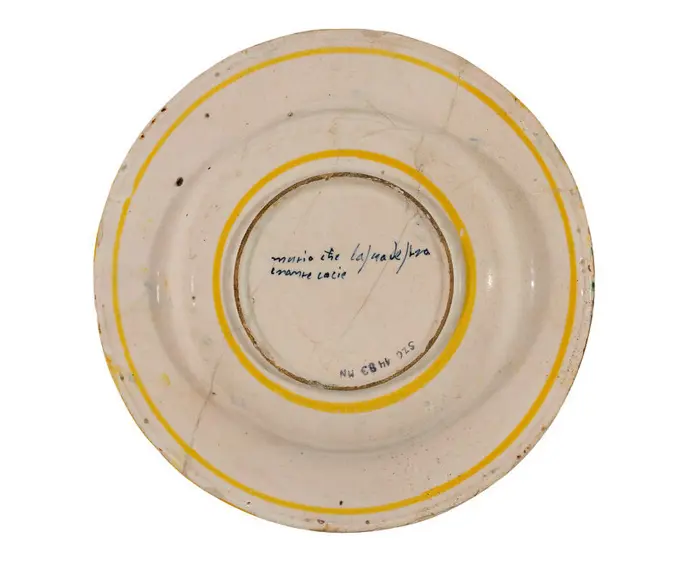
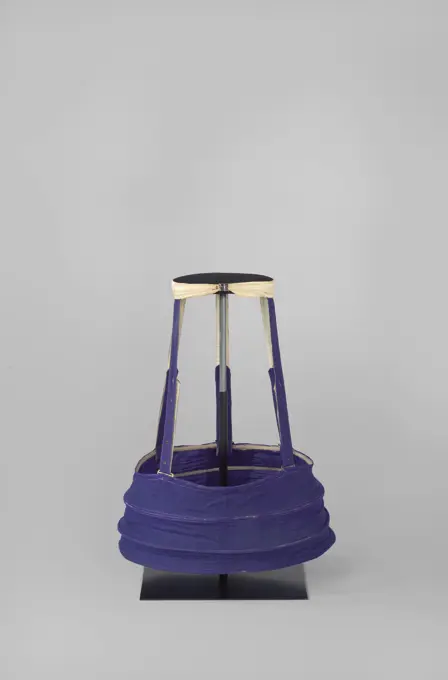
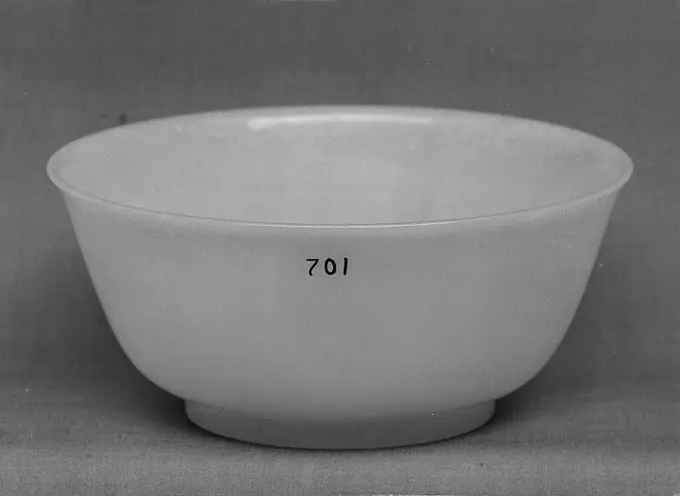
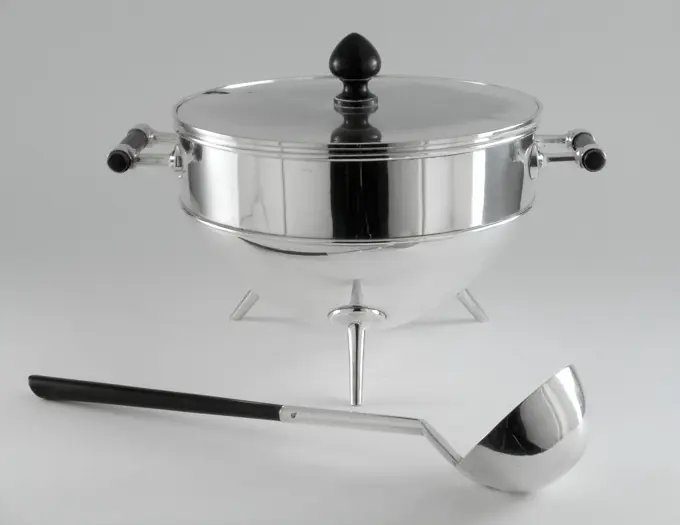
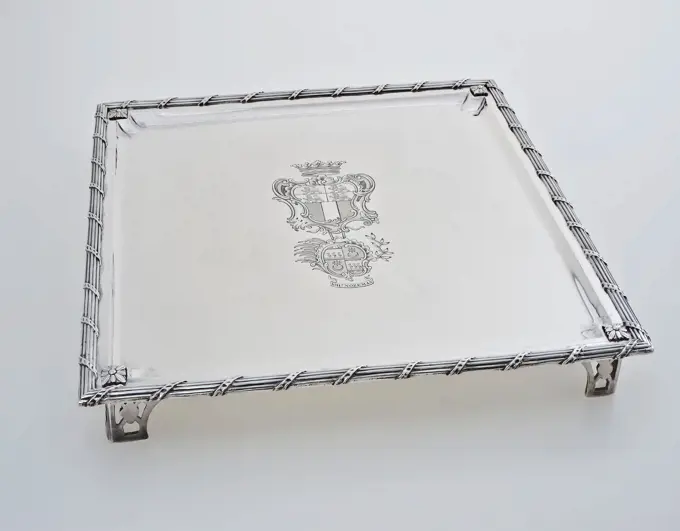
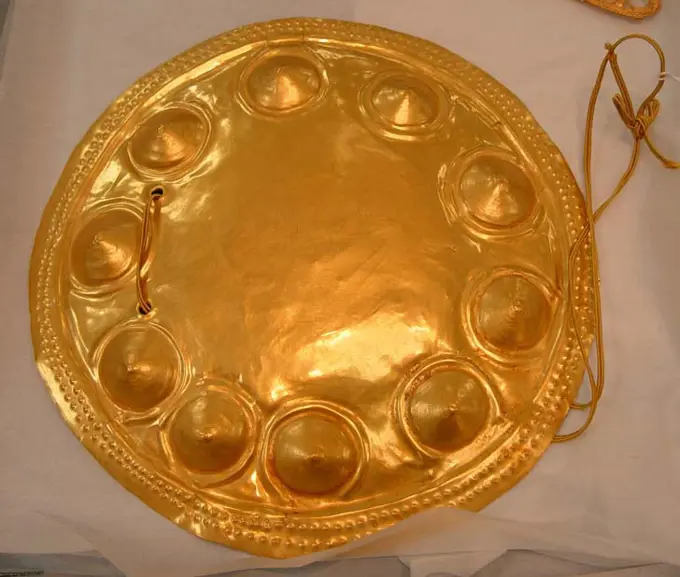
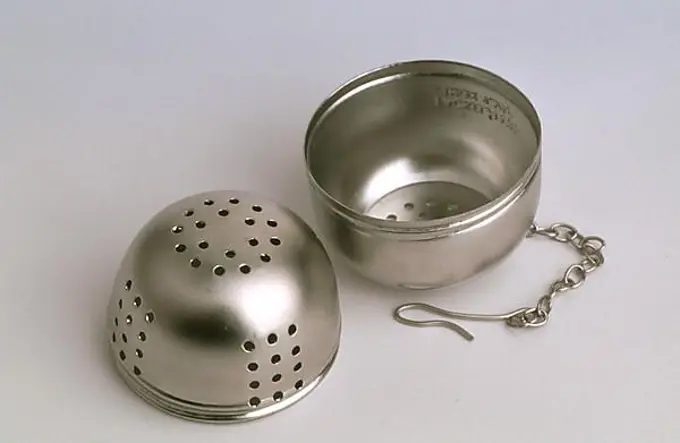
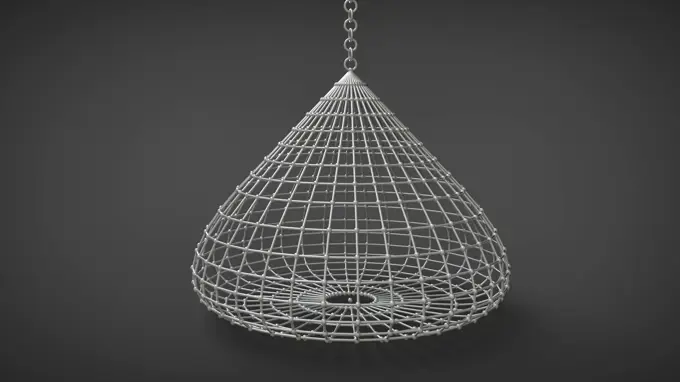
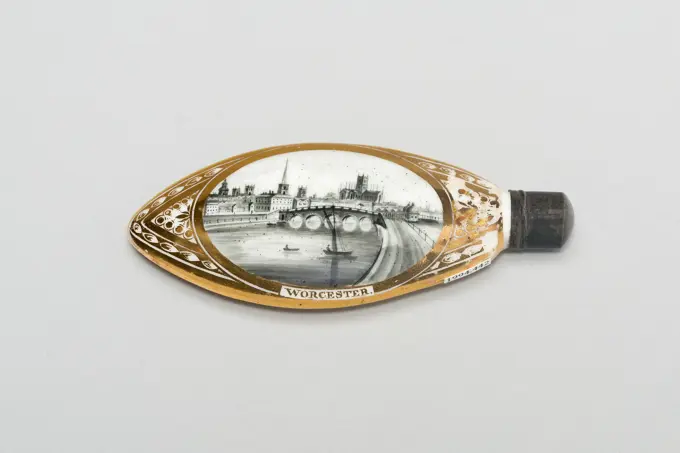
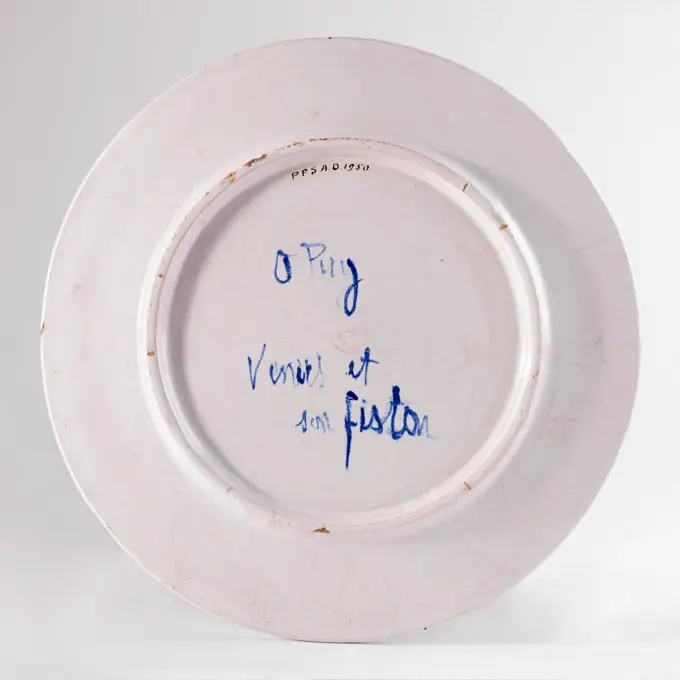
Spice container GiantsAndrew Fogelberg and Stephen Gilbert, Sauce Tureens and Covers (set of four), 1791/92, silver.Tea Set (England); leeds pottery, silver resist; 10.8 x 11.5 x 9.5 cm (4 1/4 x 4 1/2 x 3 3/4 in.); Bequest of Jane M. Epstine; 2006-20-19-a,bToy dessert plate - Inconnu / UnknownPair of coasters 1807 Benjamin Smith II This design of a voided, repoussé, and chased grapevine recalls that of the Jamaica Service (1803) in the royal collection.. Pair of coasters 204935Covered Tureen, c. 1880. Hukin & Heath (British), Christopher Dresser (British, 1834-1904). Silver plated metal, ebony handles and knop; diameter: 23.5 cm (9 1/4 in.); overall: 21.2 x 30.8 cm (8 3/8 x 12 1/8 in.).Hat 1865-1921 Dorflinger Glass Works. Hat 4265Bowl Huta Huta HydrangeaTray 1801-25 Imperial Porcelain Manufactory, St. Petersburg Russian. Tray. Russian, St. Petersburg. 1801-25. Hard-paste porcelain. Ceramics-PorcelainShield Boss. Culture: probably Turkish. Dimensions: Diam. 9 in. (22.9 cm); H. 4 5/8 in. (11.8 cm). Date: 16th-17th century. Museum: Metropolitan Museum of Art, New York, USA.Dinner plate - Inconnu / UnknownTobacco box with farmer's scenes, Anonymous, 1645 - 1665 Silver tobacco box. Oval and flattened spherical. Decorated with engraved tifles. On the lid and on the underside performances of farmers. Master sign: IW in rectangle. Northern Netherlands silver (metal) Niello (technique) Silver tobacco box. Oval and flattened spherical. Decorated with engraved tifles. On the lid and on the underside performances of farmers. Master sign: IW in rectangle. Northern Netherlands silver (metal) Niello (technique)Basket SawskVaulted lid, awarded with articulated lid knob. Vaulted lid, awarded with articulated lid, consisting of two discs, two spherical buttons with air bubbles and one flat button. On the lid, a engraved ornament with flowers, sheets and grapes.Champagne cooler. Culture: French. Designer: Jean E. Puiforcat (French, Paris 1897-1945 Paris). Dimensions: H. 9 1/4, D. 12 1/4 in. (23.5 x 31.1 cm). Date: ca. 1925. Museum: Metropolitan Museum of Art, New York, USA.Glass Fruit Bowl against White BackgroundInkwell 1652-1678 Augsburg. Pewter . Isaac RuprechtInkstand last quarter 18th century Spanish, Salamanca. Inkstand 192343Beaker c 1820-1857 New York City. Silver . Gerardus Boyce (Maker)Sebastià Junyent i Sans/ Portabugia. Alpaca. 9,3 x 24 x 10,5 cm.Old baking pan isolated on white with clipping pathside view of stainless steel saucepan isolated on white backgroundPLATOS DE ABENGIBRE EN PLATA-ARTE IBERICO. Location: MUSEO ARQUEOLOGICO NACIONAL-COLECCION. MADRID. SPAIN.Alarm watch probably 1660-70 Watchmaker: Estienne Hubert. Alarm watch 194185Sauce Dish 1850-60 American With the development of new formulas and techniques, glass-pressing technology had improved markedly by the late 1840s. By this time, pressed tablewares were being produced in large matching sets and innumerable forms. During the mid-1850s, colorless glass and simple geometric patterns dominated. Catering to the demand for moderately-priced dining wares, the glass industry in the United States expanded widely, and numerous factories supplied less expensive pressed glassware to the growing market. At the Exhibition of the Industry of All Nations at New Yorks Crystal Palace in 1853, for example, the New England Glass Company exhibited 130 pieces of one design, "consisting of bowls, tumblers, champagnes, wines, and jelly glasses." This object belongs to one such service. Although the glass manufactory is not known, the glassware is very typical of the large services that were very popular with Americas middle class in the nineteenth century.. Sauce Dish. AmerPlate German 18th century View more. Plate. German. 18th century. Pewter. Metalwork-PewterCAJA DE CORPORALES EN PLATA DORADA. Location: CATEDRAL-INTERIOR. Toledo. SPANIEN.Punch Bowl ca. 1751 American On October 11, 1751, five horses ran in the New York Subscription Plate race at Trinity Church Farm in New York. The race was won by Old Tenor, a horse belonging to Lewis Morris Jr. (1726-1798). This bowl, which was given to the Museum by a descendant of Morris, commemorates that event. The Morris family, one of the wealthiest in Colonial New York, resided on a vast estate, Morrisania, in Westchester County. Lewis Morris Jr., whose father and grandfather were also named Lewis Morris, was a gentleman farmer who was active in colonial politics and a signer of the Declaration of Independence. An avid horseman, he had one of the finest stables in the colonies. The name he chose for his horse, "Old Tenor," refers to eighteenth-century colonial paper currency issued prior to the late 1730s when "new tenor" notes were introduced.. Punch Bowl 744Saucer with gold borders on a red ground, anonymous, c. 1800 - c. 1824 Porcelain saucer, covered on the glaze with red and gold. The wall and edge are covered with tires of red and gold, with a flower drink on the edge. Golden line closely. Empire. France (possibly) porcelain. glaze. gold (metal) painting / gilding / vitrification Porcelain saucer, covered on the glaze with red and gold. The wall and edge are covered with tires of red and gold, with a flower drink on the edge. Golden line closely. Empire. France (possibly) porcelain. glaze. gold (metal) painting / gilding / vitrificationSaucer with translucers Rice-Grain Roundels. Dish of porcelain, covered with a translucent white glaze. The walls are open (Ajourwerk) in five rice work rosettes. White porcelain, monochromes.Antique gold watchCovered dish. Culture: American. Dimensions: 7 1/8 x 11 1/4 in. (18.1 x 28.6 cm). Maker: Tucker and Hemphill (1831-37). Date: 1831-37. Museum: Metropolitan Museum of Art, New York, USA.Mathieu Lamoureux. "Taste-vin". Money. 1769. Museum of Fine Arts of the City of Paris, Petit Palais. 74384-7 Silver, silverware, bottleneck, TastevinDavid Le Mire. "Taste-vin". Money. 1669-1689. Museum of Fine Arts of the City of Paris, Petit Palais. 74384-14 Silver, silverware, bottleneck, TastevinBowl 17th century India. Bowl. India. 17th century. Nephrite. Mughal period. JadeMaker's mark TH crowned, probably for Thomas Harris II, Two-Handled Cup, probably 1669/70, silver gilt.Saucer. Culture: China. Dimensions: W. 5 in. (12.7 cm); D. 3 1/4 in. (8.3 cm). Museum: Metropolitan Museum of Art, New York, USA.Globe, Etched glass, Frosted glass globe etched with figural decoration. Shade for light fixture., USA, 19th century, glasswares, Decorative Arts, GlobeWhite square deep plate  isolated on white backgroundBasket with pierced sides, Etienne Blancheron, c. 1790 - c. 1800 Porcelain basket with openwork wall in the form of braid, painted on the glaze with gold. Ribbed edges. Baking sand on the bottom. Wall damaged. maker: Paris (possibly)Netherlands (possibly) porcelain. glaze. gold (metal) painting / gilding / vitrification Porcelain basket with openwork wall in the form of braid, painted on the glaze with gold. Ribbed edges. Baking sand on the bottom. Wall damaged. maker: Paris (possibly)Netherlands (possibly) porcelain. glaze. gold (metal) painting / gilding / vitrificationScale, round, with green edge and golden Greek band. Scale of pottery, round, scalloped, with green edge and golden Greek band. The scale has two ears.Scale in the form of a basket, anonymous, c. 1700 - c. 1800 Scale on corrugated stand ring. Body blown into a braid pattern. Set, ribbed edge. Two ears of a corrugated thread. On the body two opaque white flowers with a purple heart and green, purple nerved leaves. Venice glass glassblowing Scale on corrugated stand ring. Body blown into a braid pattern. Set, ribbed edge. Two ears of a corrugated thread. On the body two opaque white flowers with a purple heart and green, purple nerved leaves. Venice glass glassblowingCup 17th-early 18th century French or Dutch. Cup. French or Dutch. 17th-early 18th century. Glass. GlassWine Rinser (England); cut and engraved glassButter dish with a lid. Korzec (manufaktura porcelany ; 1790-1832), factory. Komfoor of silver on three legs, with a copper inner bin. The container has a six-pointed openwork edge. Master sign: Ico.David Willaume II, Salver, 1733/34, silver.Cup (one of a pair) ca. 1725-40 Saint-Cloud factory This beaker, with its saucer (1978.418), was one of the types of cups used for drinking hot chocolate. Eighteenth-century paintings, prints, and inventories indicate that tall cups, both with and without handles, were often intended for chocolate, especially those accompanied by a trembleuse saucer, which took various forms. In the du Paquier example in this case, the saucer has been made with a high openwork collar securing the cup. In contrast, this Saint-Cloud saucer has been modeled with a lower, solid raised lip that also stabilizes the beaker it holds.. Cup (one of a pair) 232262Lid, black, decorated with rib edges, Petrus Regout, c. 1860 - c. 1880 Black stone lid. The lid has a flattened button with air hole. Maastricht . Black stone lid. The lid has a flattened button with air hole. Maastricht .Rectangular tobacco box of silver with lid in which a pearly plaque with representation Isaiah 45:22 .. Rectangular tobacco box of silver with beveled corners. In the lid there is a plaque of mother-of-pearl with carved representation of Isaiah 45:22, proposed by an allegory on the four continents. Plaque signed: i.s. Barckhuijsen fecit. Box noticed: Zutphen, annual letter Z = 1750, and master sign PS = Peter Schemkes.Square-Lobed Dish with Decoration of Old Pine Trees early 18th century Japan. Square-Lobed Dish with Decoration of Old Pine Trees 49394New style oil lamps decoration during diwali festival  India Copyright: xVirenxDesai/DinodiaxPhotoxWorkshop of the Miseroni / 'Oval rock crystal salver'. 1600 - 1610. Rock crystal / Hyaline quartz, Silver-gilt. Museum: Museo del Prado, Madrid, España. Author: TALLER DE LOS MISERONI.Tobacco box 18th century Dutch An oval box. The scene on the lid shows the history of Balaam, who rides on his ass and is confronted by the angel with drawn sword. Two of Balaam's servants follow behind the ass. The angel's appearance to Balaam's ass is described in Numbers 22:22-24. The scene is framed at the sides by leaf scrolls and by two roundels which are inscribed: Wie staat niet voorbaas voorwondert in den geest/ als hij van beliam en van sijn esel leest (Who is not surprised and astonished in his mind / when he reads of Balaam and his ass).The underside shows a pastoral scene with a couple outside a farmhouse, a reclining woman in the foreground, an ox, and a lion. Inscribed in the two roundels flanking this scene is: Hij die een aarts bevel sorgvuldig hat geert / en god sijn heer den nek hartnekkig toegekeert (He who had carefully honored an earthly order/ and who had persistently turned his back on God his Lord). The significance of the scene is unclear; perhaps it reflects Bathtub isolated Bathtub with legs isolated included clipping path Copyright: xZoonar.com/Baloncicix 14643357Basin (part of a set) 1848-49 Anders Lång The firm of Nicholls & Plincke was founded by members of the relatively large community of English silversmiths and craftsmen working in Saint Petersburg. After 1840 it was one of the most important retailers of luxury items before Carl Fabergé overshadowed all competitors. Several contemporary Saint Petersburg newspapers praised the high-quality products of the magasin anglais Nicholls & Plincke.According to the donor's family tradition, this rare set with more than fifty items bearing the monogram CMI was "originally made for and used by Colin Macrae Ingersoll 1819-1903, when he accompanied his father, Ralph Isaacs Ingersoll 1788-1872, to the Court of Czar Alexander II of Russia, where the latter served President James Knox Polk 1795-1849 as Minister Plenipotentiary from 1846 to 1848.. The family story has always been that the set and case were made for stagecoach travel in Russia."Plain silver objects—like the ewer and the cup of tCloud-Shaped Pillow 950 CE-999 CE China. Cizhou ware; stoneware, slip-coated with underglaze marbled, inlaid, and impressed decoration .Bowl ca. 1887-1905 Willets Manufacturing Company. Bowl. American. ca. 1887-1905. Belleek porcelain. Made in Trenton, New Jersey, United StatesOval Dish, late 1500s. Circle of Bernard Palissy (French, 1510-1589). Lead-glazed earthenware; overall: 32 x 24 cm (12 5/8 x 9 7/16 in.).Showcase with objects of ceramics, including a vase of Meissen porcelain; Halls of crafts July 1962..Niadamiowe stand;  19th century (1901-00-00-1945-00-00);Bedroom candlestick 1741-42 Paul Crespin. Bedroom candlestick 197708Turquoise plate against a turquoise background.Plate. unknown, authorBread Plate ca. 1880. Bread Plate. ca. 1880. Pressed glassTaditional Turkish metal plates in the viewCrinoline of purple twill cotton, with three ribs and five buckles to which the same number of tires are attached with six nestle holes and a hook, anonymous, c. 1840 - c. 1860 Purple's crinoline, equipped with three ribs and five buckles to which the same number of tires are attached with six nestle holes and a hook.  twill twill Purple's crinoline, equipped with three ribs and five buckles to which the same number of tires are attached with six nestle holes and a hook.  twill twillBowl. Culture: China. Dimensions: H. 2 1/2 in. (6.3 cm); Diam. 5 5/8 in. (14.3 cm). Museum: Metropolitan Museum of Art, New York, USA.Miniature Covered Box with Animal and Cloud Motif. Vietnam, near Hoi An, Offshore. Date: 1401-1500. Dimensions: 4.7 × 6.7 × 6.7 cm (1 13/16 × 2 5/8 in.). Glazed stoneware with cobalt-blue underglaze. Origin: Vietnam. Museum: The Chicago Art Institute, Chicago, USA.Seal box 1783-84 Benjamin Laver. Seal box 197715Tazza first half 18th century possibly German The form of this object is sometimes called a patch stand.. Tazza. possibly German. first half 18th century. Glass. GlassCover for a Tureen, 1735-38. Henry Adnet (French, 1745), Juste-Aurèle Meissonnier (French, 1695-1750). Silver; overall: 36.9 cm (14 1/2 in.); average: 35 x 38.4 x 31.8 cm (13 3/4 x 15 1/8 x 12 1/2 in.). See entry for cover record 1977.182.Soup Tureen and Ladle. Christopher Dresser (Scotland, 1834-1904)Hukin & Heath (England, Birmingham, established 1875). England, circa 1877-1878, design registered 1878. Furnishings; Serviceware. Electroplated silver, ebonized wood, gildingSilversmith: Cornelis Knuijsting, Silver tray on four legs with weapon in the middle, tray leaf holder silver, cast engraved Square leaf on four legs bottom bottom (smashed0 Rotterdam heraldry Johannes Nozeman ornithology servingPlate with green edge and golden Greek band, Petrus Regout, c. 1865 Plate of earthenware, scalloped, with green edge and golden Greek band. Maastricht earthenware Plate of earthenware, scalloped, with green edge and golden Greek band. Maastricht earthenwareStoof, anonymous, c. 1700 Hexagonal stew on three legs and with a round handle. The top and all walls are open. A rose is engraved in the bottom on the outside. The stove is marked with an illegible brand. Netherlands silver (metal) Hexagonal stew on three legs and with a round handle. The top and all walls are open. A rose is engraved in the bottom on the outside. The stove is marked with an illegible brand. Netherlands silver (metal)Watch 19th century Watchmaker: Johann Gottlieb Müller. Watch 193408. Cylindrical head of painted porcelain. The head has a straight ear and is painted with a rectangular blue field with beveled corners and a golden edge. On the field, the alphabet is painted in gold and a circle within which the text: Mon Nom S'y Trouve. A gold band has been painted along the edge of the head. The head is noticed.Doll dinner plate - F. K. Martin Löchner F. K. Martin LöchnerRibbon on roll, striped, red with beige, black, lilac and orange, in or before 1926 Ribbon on roll, striped, red with beige, black, lilac and orange. NijmegenFrance (possibly) textile materials. cardboard. paper Ribbon on roll, striped, red with beige, black, lilac and orange. NijmegenFrance (possibly) textile materials. cardboard. paperPectoral 11th-16th century Indigenous American (Panamanian) This collection of largely ethnographic jewelry includes examples from cultures in South America, North America, Europe, Asia, and Africa and dates from the Pre-Columbian period to the twentieth century. Owned by renowned art collector and fashion enthusiast Muriel Kallis Newman, the collection represents her knowledge and appreciation of a wide range of jewelry design and making traditions. Numerous items in her collection are composite artifacts made from various cultures and time periods reappropriated as modern jewelry creations by or for Muriel. It is important to note that Newman wore many of the pieces in the collection, interpreting them to suit and express her own singular, often avant-garde style.. Pectoral 141754Kitchen utensils, tea egg, tea infuser, kitchen utensils, tea eggMug (England); 6.2 x 9 x 6.5 cm (2 7/16 x 3 9/16 x 2 9/16 in.); Bequest of Jane M. Epstine; 2006-20-9droplike birdcage coop droplike birdcage coop isolated on dark background Copyright: xZoonar.com/DanilxTrapeznikovx 8610510Saucepan iron on a white backgroundPerfume Flask 1796-1806 Worcester. Soft-paste porcelain, black monochrome, gilding, and silver top . Worcester Royal Porcelain Company (Manufacturer)Bowl withCoverJean Puy (1876-1960). "Venus and his son". Ceramics, earthenware. Between 1907-1909. Museum of Fine Arts of the City of Paris, Petit Palais. 101364-4 Art Menager, autograph, blue, ceramic, back, faience, title, dishes, plate