Elegant Porcelain Vases

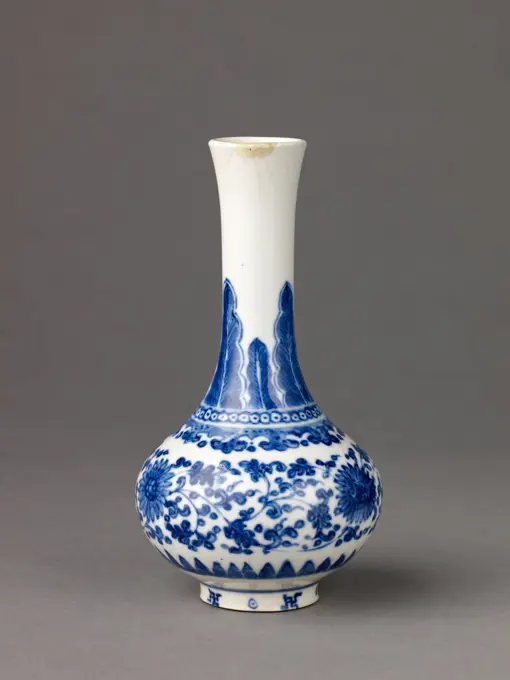
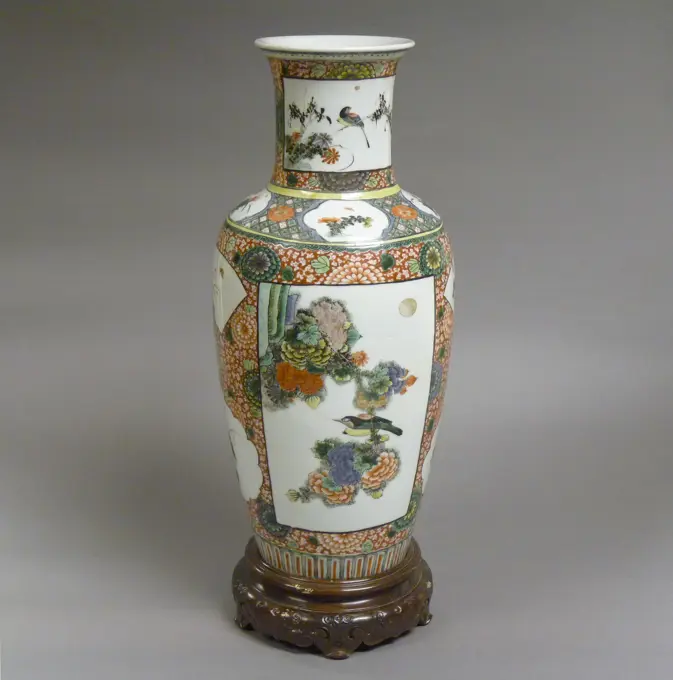
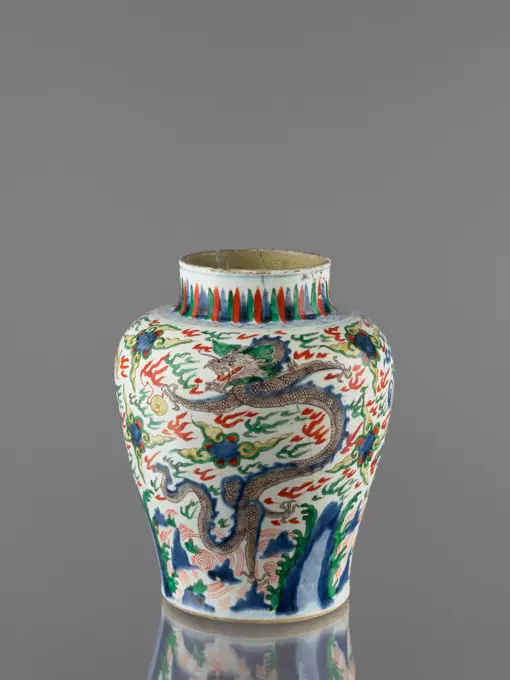
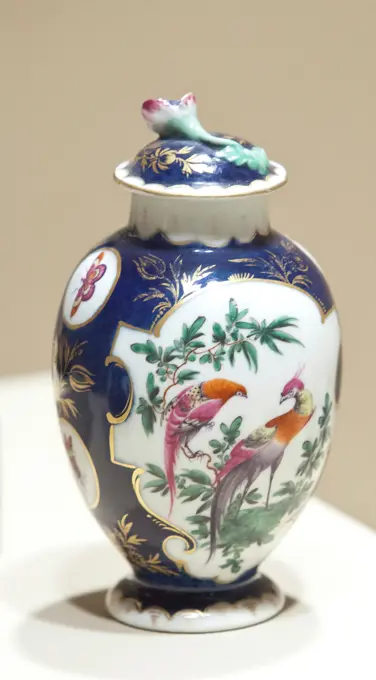
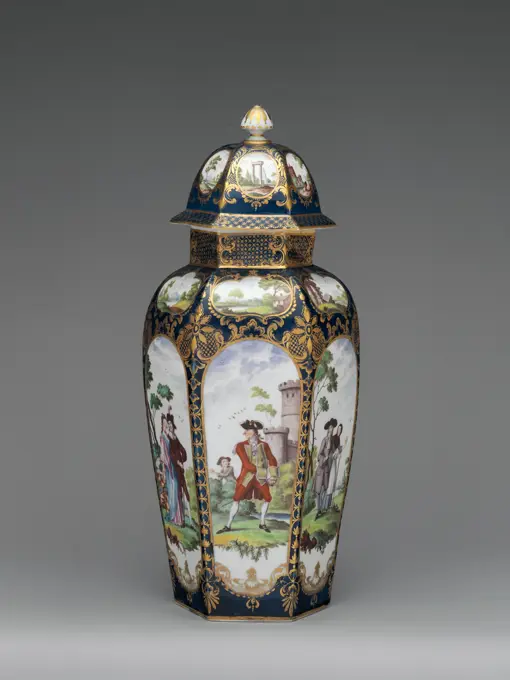
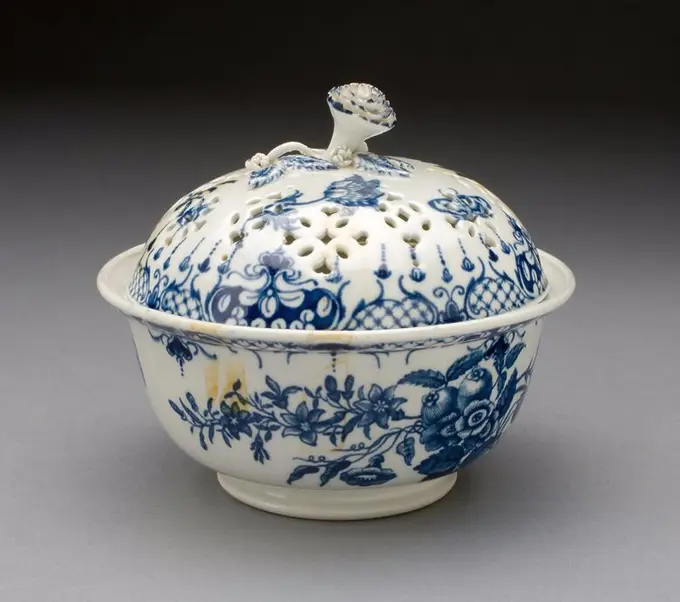
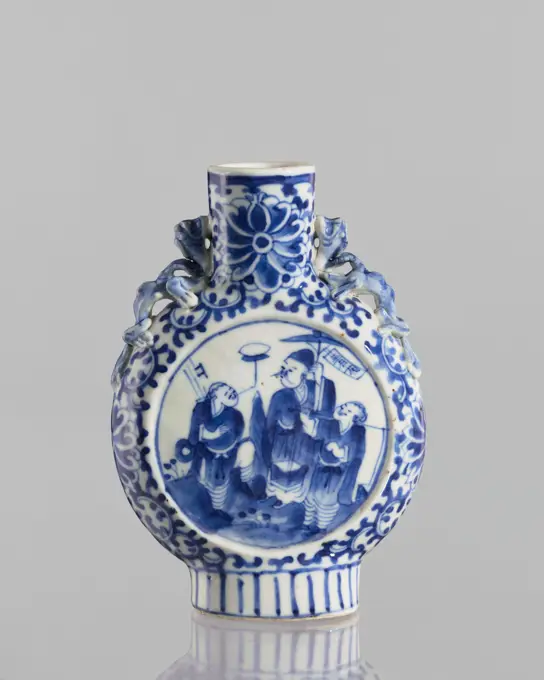
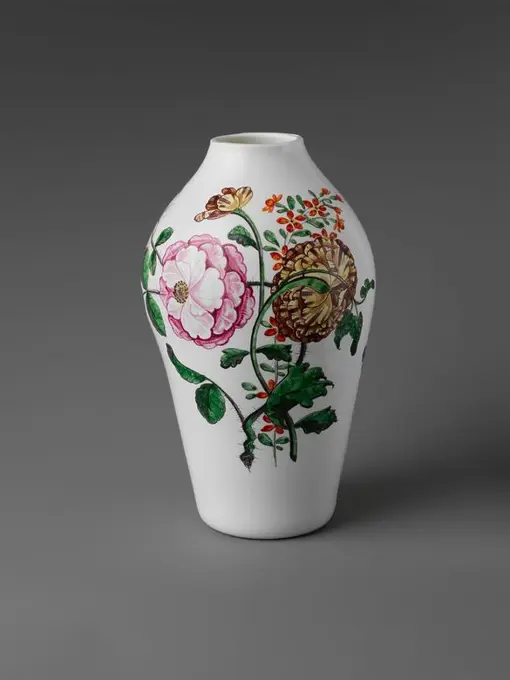
A collection of ornate porcelain vases featuring detailed floral and landscape designs in blue and multicolor, showcasing craftsmanship and elegance.
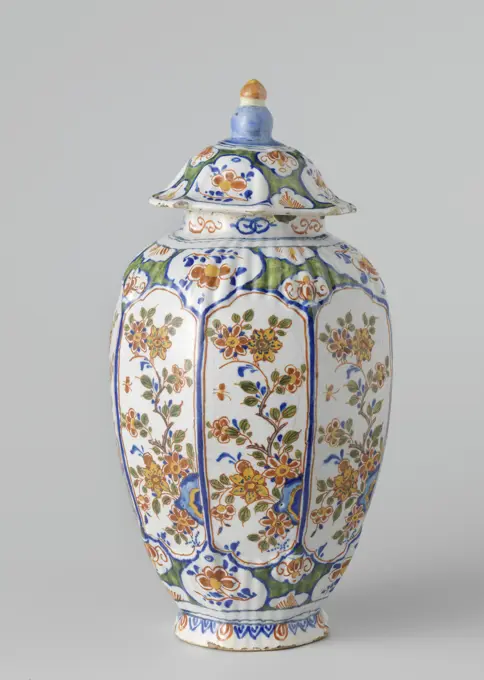
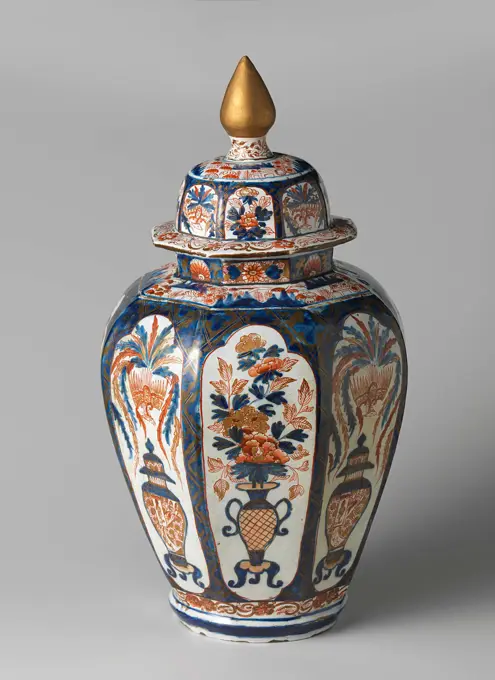
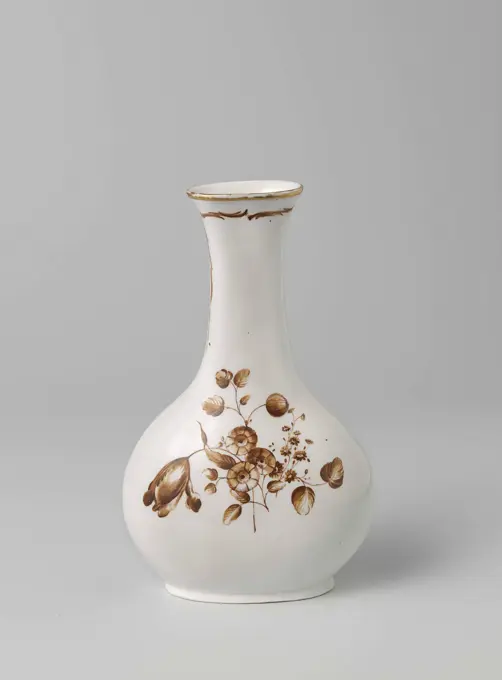
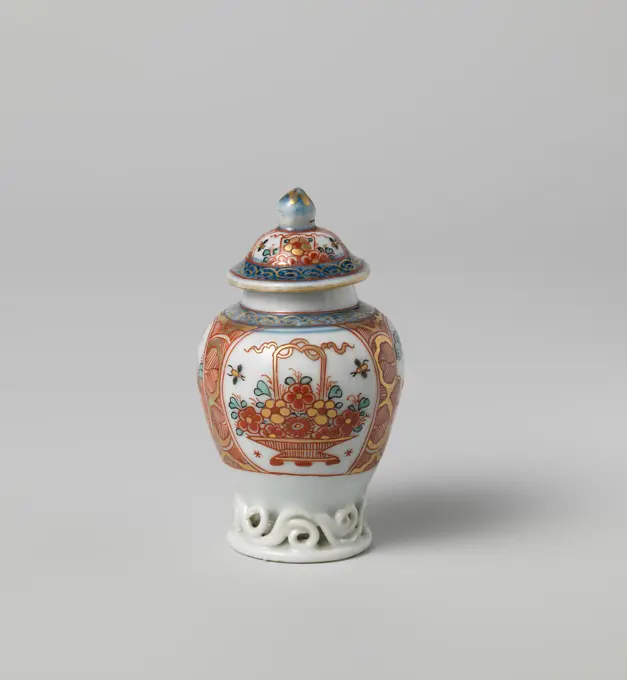
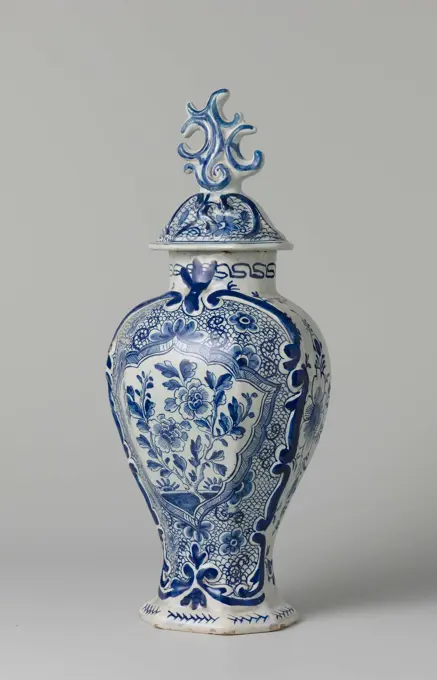
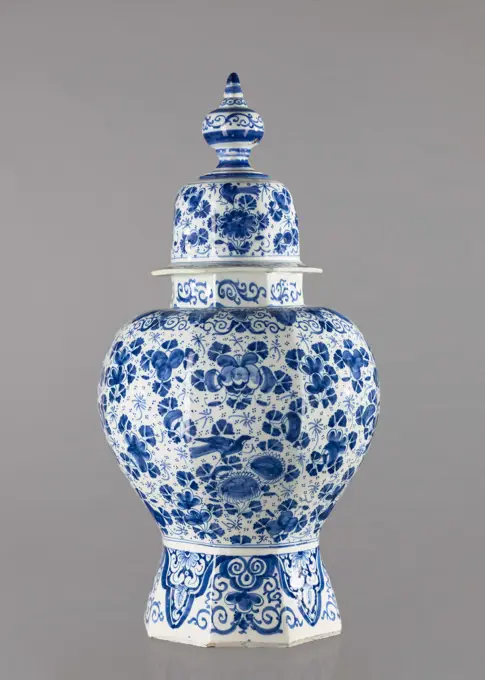
Cover pot, round with octagonal wall and polychrome painted with flower and leaf vines in cartouches, the two Scheepjes, after Jan Gaal, after widow Gaal-van der Plank, 1707- 1727  Delft earthenware  Delft earthenware
Cover pot, round with octagonal wall and polychrome painted with flower and leaf vines in cartouches, the two Scheepjes, after Jan Gaal, after widow Gaal-van der Plank, 1707- 1727 Delft earthenware Delft earthenware
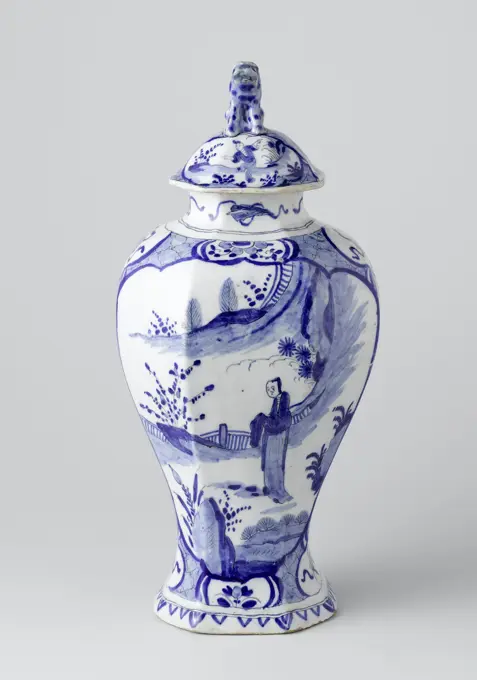
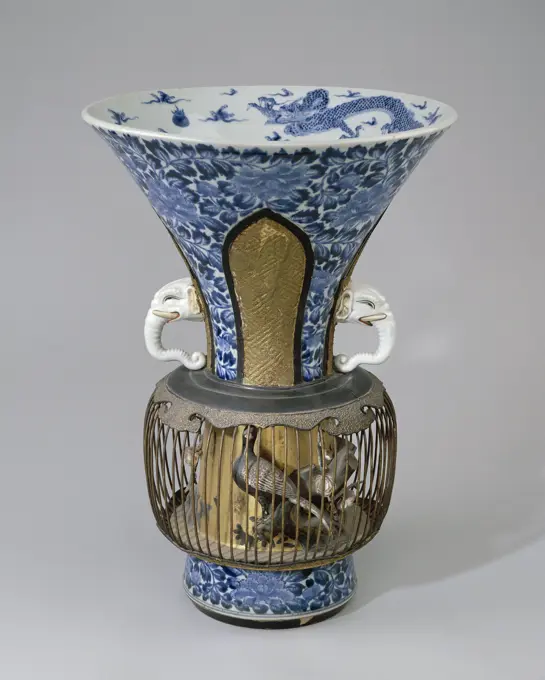
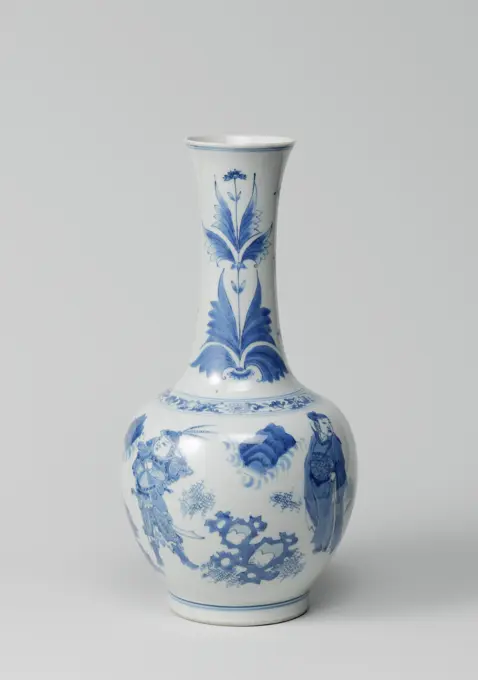
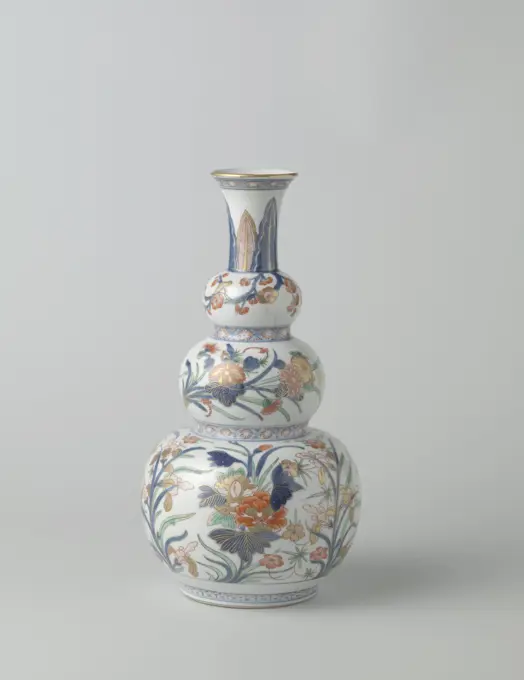
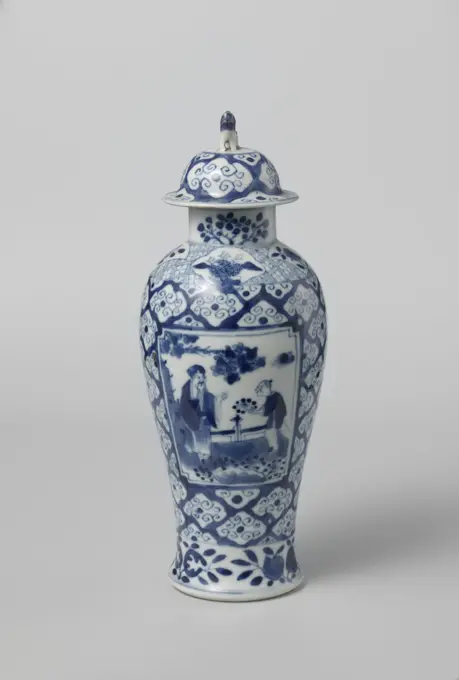
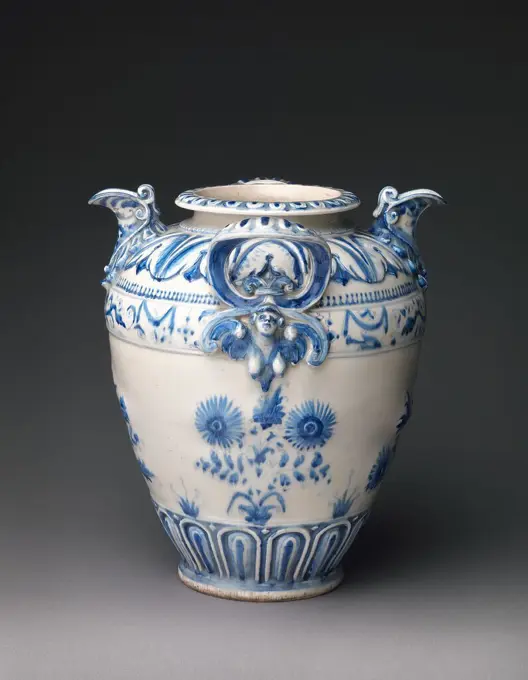
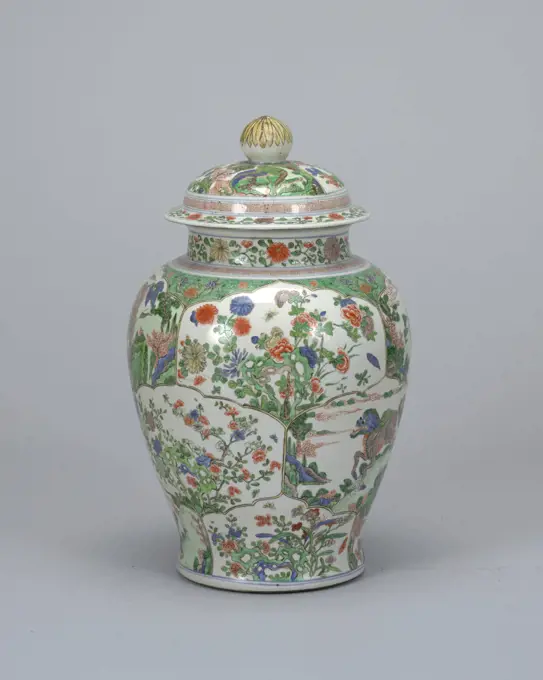
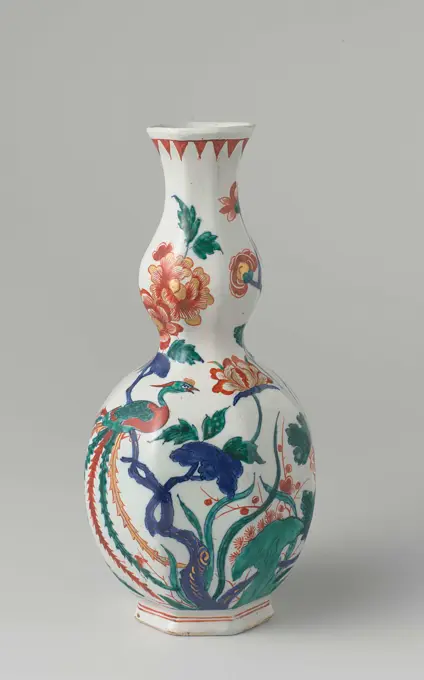
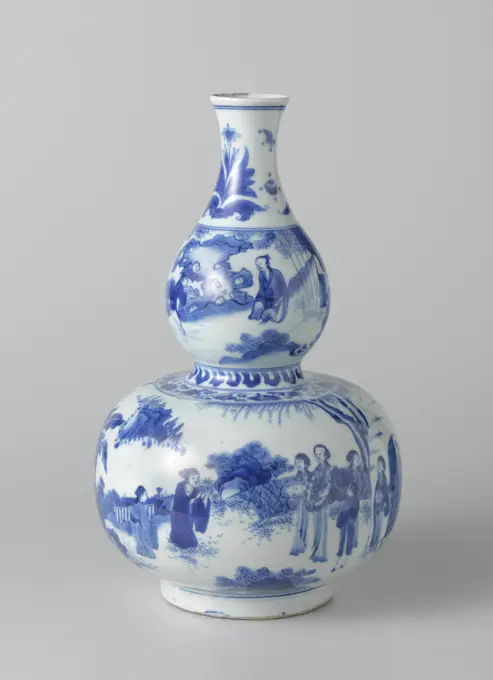
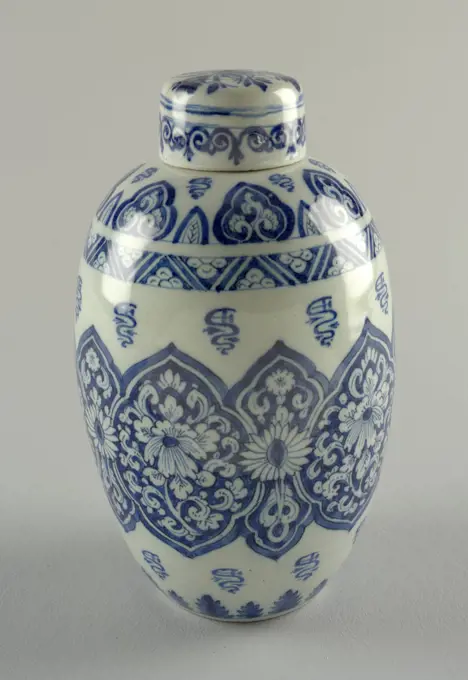
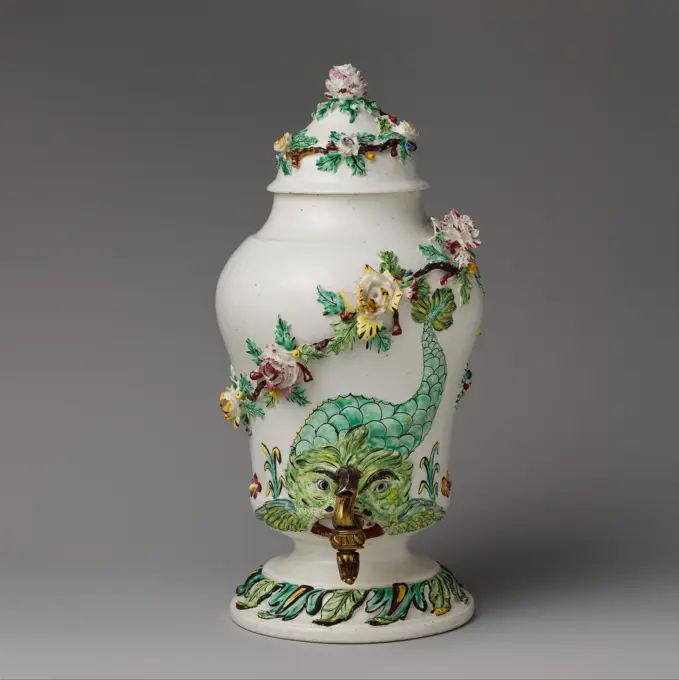
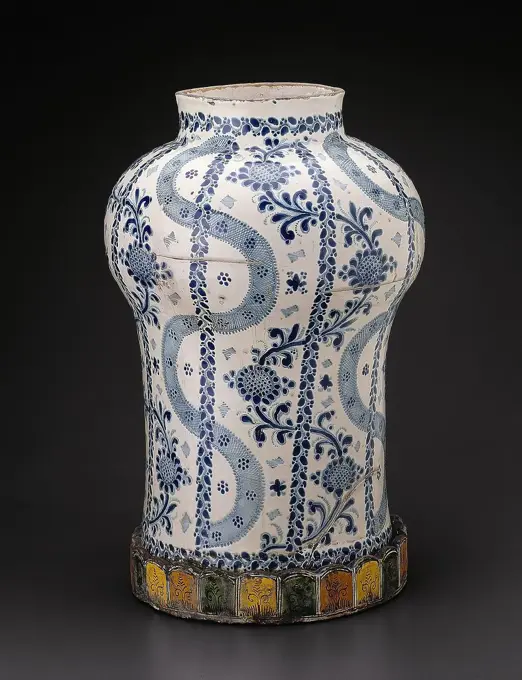
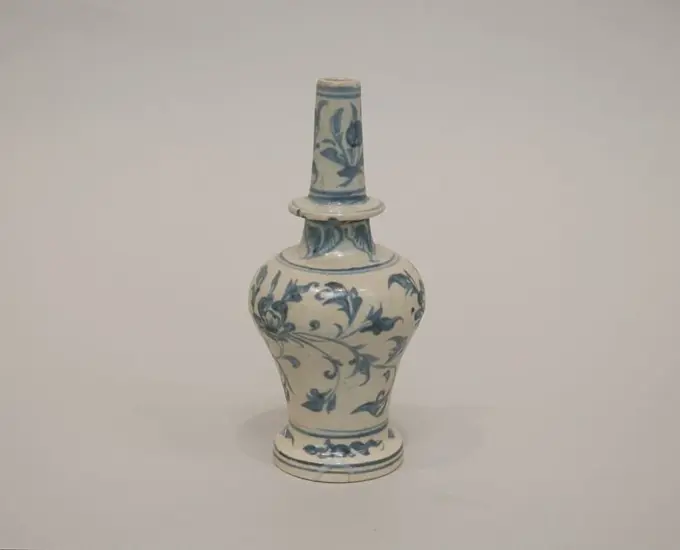
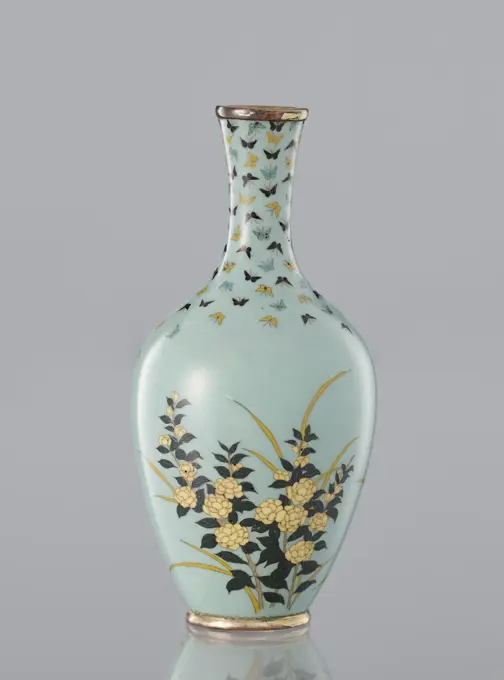
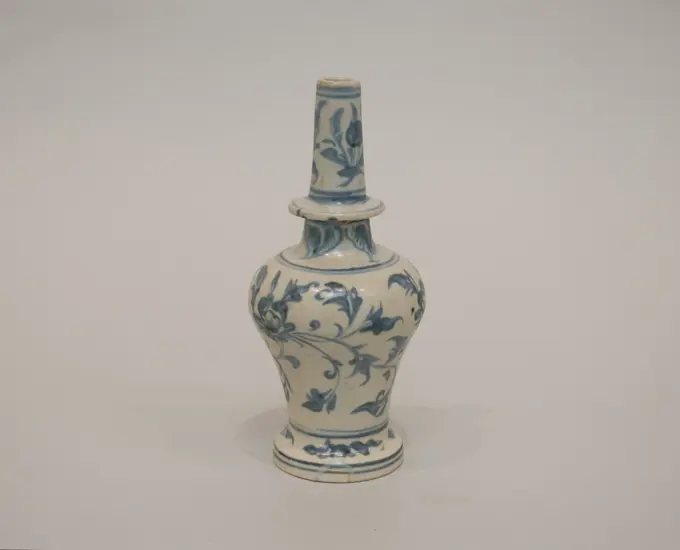
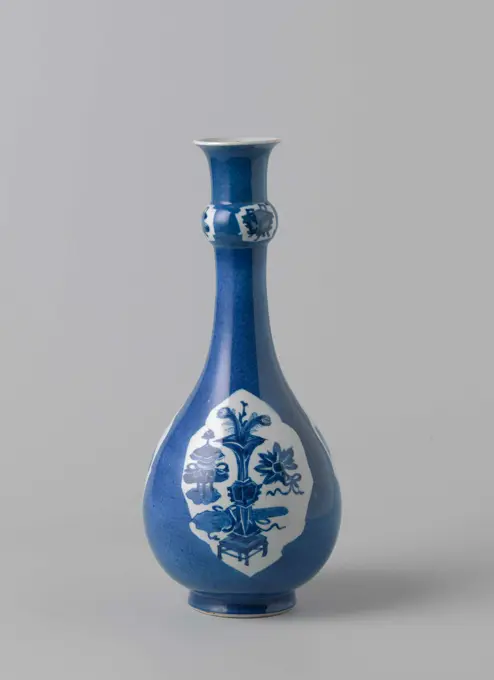
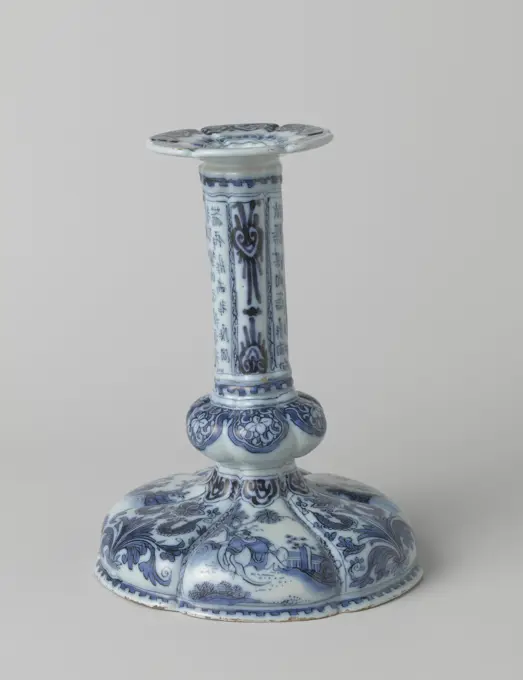
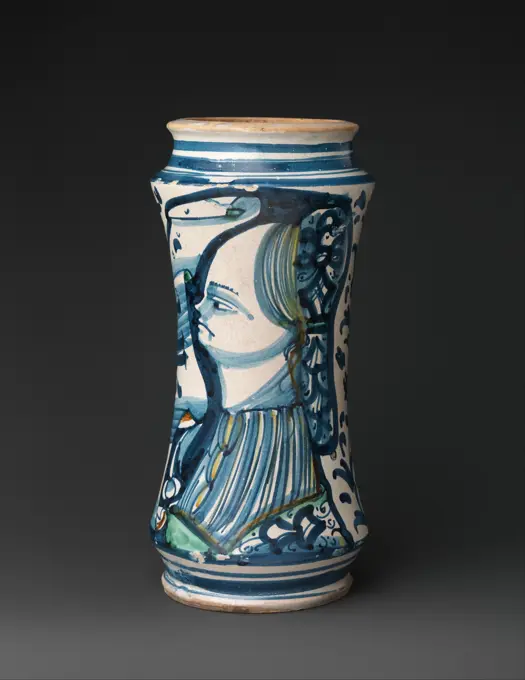
Covered Jar With Hatched Plants in Petal-Shaped Panels. Porcelain lid pot with a stretched, spherical body and a high, spreading foot, painted in underglaze blue. Elongated, flower-leaf-shaped compartments with blooming plants on the wall, turned on with arceing work; Between the boxes along the edge and the foot, half a flower. The edge and the foot with three times a stylized flower. The lid with the same decoration. Blue White.Cover pot, round with octagonal wall and polychrome painted with flower and leaf vines in cartouches, the two Scheepjes, after Jan Gaal, after widow Gaal-van der Plank, 1707- 1727  Delft earthenware  Delft earthenwareGarniture with three vases and two beaker vases, De Drie Posteleyne Astonne (attributed to), c. 1740 - c. 1760 Pot with lid, octagonal, from Faïence and painted in blue. The button of the lid is a sitting lion. Two medallions are painted in the pot within which a landscape with a Chinese figure. The pot is part of a couple, the other parts are: two pots that are equal to the aforementioned pot and and two identical vases. The parts are marked. Delft earthenware. tin glaze. Pot with lid, octagonal, from Faïence and painted in blue. The button of the lid is a sitting lion. Two medallions are painted in the pot within which a landscape with a Chinese figure. The pot is part of a couple, the other parts are: two pots that are equal to the aforementioned pot and and two identical vases. The parts are marked. Delft earthenware. tin glaze.Trumpet-shaped beakervase with a metal birdcage, anonymous, c. 1700 - c. 1720 Trumpet -shaped cup vessel of porcelain, painted in underly glaze blue and on the glaze red, black and gold. On the wall a pattern of peoning drinks interrupted by four saved, leaf-shaped compartments with a swastika or granular pattern in gilded paper-mâché. In two courses an ear in the form of an elephant head. A metal bird cage is applied to the vase under these ears, based on lacquered wooden edges. Below the top edge a band with four Ruyi motifs of gilded paper-mâché. In the cage modeled rocks, branches and a few of a male and a female green pheasant (Phasianus Versicolor) against a golden background with painted plants. Below a bond with peony drinks. On the inner edge twice a pearl hunting, triculous dragon among clouds. Arita, blue and white with email colors. Japan Porcelain. Glaze. Cobalt (Mineral). Gold (Metal). paper mâché. Cage: Wood (Plant Material). Cage: Lacquer (coating). Cage: Metal paintingVase, anonymous, c. 1635 - c. 1650 Bottle -shaped vase of porcelain with an egg -shaped body and a long, slightly spreading neck. Painted in underlaze blue. On the belly two warriors and two scholars in a landscape with mountains, rocks and plants. On the shoulder a band with flower vines. The neck with twice a tulip motif and lucky symbols. Transitional porcelain in blue and white. China porcelain. glaze. cobalt (mineral) painting / vitrification Bottle -shaped vase of porcelain with an egg -shaped body and a long, slightly spreading neck. Painted in underlaze blue. On the belly two warriors and two scholars in a landscape with mountains, rocks and plants. On the shoulder a band with flower vines. The neck with twice a tulip motif and lucky symbols. Transitional porcelain in blue and white. China porcelain. glaze. cobalt (mineral) painting / vitrificationTriple gourd vase painted in Japanese style with large flower sprays, anonymous, c. 1700 - c. 1724 Porcelain lump vase with three nodules and spreading neck, painted in underly glaze blue and on the glaze with red, green and gold. Painted in Japanese style with large flower branches (Prunus, Chrysanthemum, peony, Hibiscus and Iris); On the neck a band with standing leaf motifs; Between the nodules and on the edge a tire with servetwork with flour; A decorative band around the foot. Chinese Imari. China porcelain. glaze. cobalt (mineral). gold (metal) painting / vitrification Porcelain lump vase with three nodules and spreading neck, painted in underly glaze blue and on the glaze with red, green and gold. Painted in Japanese style with large flower branches (Prunus, Chrysanthemum, peony, Hibiscus and Iris); On the neck a band with standing leaf motifs; Between the nodules and on the edge a tire with servetwork with flour; A decorative band around the foot. Chinese Imari. China porcelainBaluster covered jar with figures in panels, anonymous, c. 1875 - c. 1899 Cover button in the form of a lion of baluster -shaped porcelain lid pot, painted in underly glaze blue. Covered with a geometric pattern in which two cartouches with two people are depicted in a fenced garden. A chip in the edge. Blue White. China porcelain. glaze. cobalt (mineral) painting / vitrification Cover button in the form of a lion of baluster -shaped porcelain lid pot, painted in underly glaze blue. Covered with a geometric pattern in which two cartouches with two people are depicted in a fenced garden. A chip in the edge. Blue White. China porcelain. glaze. cobalt (mineral) painting / vitrificationEwer (Brocca). Culture: Italian, Florence. Dimensions: Height: 11 5/8 in. (29.5 cm). Factory: Medici Porcelain Factory (Italian, Florence, ca. 1575-ca. 1587). Date: ca. 1575-80.The porcelain made at the Medici workshops in Florence was the first to be produced in Europe. Francesco I de'Medici (1541-1587) established a ceramic workshop in the 1560s with the intention of imitation Chinese blue-and-white porcelain. It took approximately ten years of experimentation before the workshop could manufacture the type of porcelain known as soft-paste. While so-called Medici porcelain lacks the ingredients that comprise hard-paste porcelain as made by the Chinese the Medici potters were able to craft a fine white ceramic body with cobalt decoration that represented an outstanding technical achievement for its time. Technically difficult and expensive to make, Medici porcelain was produced in very small quantities, and manufacture is believed to have ceased, or at least significantly diminished wCovered Jar With Chinese Ladies And Flower Pots in panels. Baluster-shaped lid pot made of porcelain, painted in underglaze blue. The wall is divided into three rows with hexagonal compartments with alternating a Chinese lady (long lice) in a fenced garden and a flower vase in a landscape. Two flower branches on the shoulder. Marked on the bottom with the character 'Yù', jade, in a double circle. Part of a cabinet set with number AK-RBK-16290. Blue White.Ovoid covered jar with flower scrolls in lappet borders, anonymous, c. 1680 - c. 1720 Egg -shaped lid pot of porcelain, painted in underlaze blue. On the wall flower branches; Around the foot and around the shoulder large leaf -shaped cartouches with flower vines in reserve; The lid with two decorative tires with flower vessels and flowers in reserve, on the top a flower rosette in reserve. A chip from the foot ring of the pot; Lid has been broken. Blue White. China porcelain. glaze. cobalt (mineral) painting / vitrification Egg -shaped lid pot of porcelain, painted in underlaze blue. On the wall flower branches; Around the foot and around the shoulder large leaf -shaped cartouches with flower vines in reserve; The lid with two decorative tires with flower vessels and flowers in reserve, on the top a flower rosette in reserve. A chip from the foot ring of the pot; Lid has been broken. Blue White. China porcelain. glaze. cobalt (mineral) painting / vitrificationVase;  19th century (1801-00-00-1900-00-00);Vase 17th century. Vase 451873. Pot (without lid) of faience with a floral decoration inspired by the Chinese porcelain.Tranged vase;  2. PO. 19th century (1851-00-00-1863-00-00);Paderewski, Ignacy Jan (1860-1941), Paderewski, Ignacy Jan (1860-1941)-collection, qing (style), Chinese (culture), cloisonné, gift (provenance), floral pattern, flowers, meander (ornament), art ChinesePear-shaped bottle vase with auspicious objects. Bottle-shaped vase of porcelain with pear-shaped body, painted in underglaze blue. On the body six lucky symbols (scroll, vase, knot) with ropes with brushes ending in a Ruyi motif; On the shoulder and neck tires with decorative patterns with curlwork and geometric motifs; On the edge a band with lotus drinks. Blue White.Ginger Jar, porcelain, vitreous enamel, Porcelain vase and cover with nature scenes and flowers along the sides and cover., China, 19th century, ceramics, Decorative Arts, jar, jarBottle. Bottle of faience. Multicolor painted with flower branches and a bird.. Faïence lid pot. Painted blue. The lid pot is part of a cupboard set.Pot. Lid of Pot of Faience. Blue painted with floral decorations. The pot is part of a cupboard set.Jar with wooden cover and two large flower groups, anonymous, c. 1800 - c. 1899 Porcelain lid jar, with wooden, openwork lid, painted on the glaze in blue, red, green, yellow, purple, pink, black and gold. On the wall a large flowering plant on a rock with peony and chrysanthemum, on the other side a second flowering plant with balloon bell; Around the foot and shoulder a band with geometric pattern. Famle Verte. China porcelain. glaze. gold (metal) painting / gilding / vitrification Porcelain lid jar, with wooden, openwork lid, painted on the glaze in blue, red, green, yellow, purple, pink, black and gold. On the wall a large flowering plant on a rock with peony and chrysanthemum, on the other side a second flowering plant with balloon bell; Around the foot and shoulder a band with geometric pattern. Famle Verte. China porcelain. glaze. gold (metal) painting / gilding / vitrificationGourd-shaped bottle, anonymous, c. 1635 - c. 1645 Calebas -shaped vase of porcelain with a spreading neck, painted in underlaze blue. On the belly a continuous representation of the encounter of a man, woman and their entourage in a landscape, the man presents a flower to the woman; On the shoulder a band with flower vines and a decorative band; The upper part with a sitting man in a landscape near a rock and bamboo, a servant offers him an object; On the neck twice a tulip motif between which valuables (pearl, horn). Transitional porcelain in blue and white. China porcelain. glaze. cobalt (mineral) painting / vitrification Calebas -shaped vase of porcelain with a spreading neck, painted in underlaze blue. On the belly a continuous representation of the encounter of a man, woman and their entourage in a landscape, the man presents a flower to the woman; On the shoulder a band with flower vines and a decorative band; The upper part with a sitting man in a landscape near a rock and bamboCan with lid of multicolored painted Faïence, the Greek A, c. 1723 - c. 1730 Can with Faïence lid. Multicolored painted with flower branches with birds. Delft . Can with Faïence lid. Multicolored painted with flower branches with birds. Delft .Vase. unknown, craftsmanBottle. Culture: British. Dimensions: H. 4 1/8 in. (10.5 cm). Date: 1760-70. Museum: Metropolitan Museum of Art, New York, USA.Jar and lid, Tin-glazed earthenware, Ovoid body, short straight-sided neck; painted in underglaze blue on white, with Chinese cloud collar band around center, surrounded by stylized leaf border bottom, diaper and leaf border top, pseudo-Chinese squiggles inter- spersed; straight-sided cover, painted with scroll and flowers., Delft, Netherlands, 1675-1725, ceramics, Decorative Arts, Jar and lidFountain with cover and spigot ca. 1745-50 Mennecy In about 1737, a small porcelain manufactory was established in the town of Villeroy by a potter named François Barbin. The factory had few employees and its production was modest, despite the patronage of the duc de Villeroy, and it closed in 1748 due to financial difficulties. Barbin and his wife reestablished the factory two years later in the nearby town of Mennecy.The production of the new factory was more ambitious and technically successful than that of Villeroy, but the bulk of the factory's output was in small utilitarian objects made for domestic use. Like most Mennecy porcelain of the 1750s, the fountain is painted with a limited palette of enamel colors and there is no gilt decoration. The use of gilding was the privilege of the Vincennes factory, of which the king was a major shareholder.This fountain is among the largest pieces produced by the factory. It probably was intended to contain water to be used for hand washing,Pot with lid, part of a cupboard set. Pot with lid, multicolored painted faïence. The pot is octagonal and eight courses are painted on eight sides. In four courses is a vase with two S-shaped handles, portrait on a 3-legged pedestal and filled with flowers, painted in the other four courses a pot with lid on a 3-legged pedestal above which a phoenix. The pot is part of a couple and has been marked.Snuff Bottle with Flowers and Rocks China Snuff, or powdered tobacco, was brought to China by Jesuit missionaries in the late seventeenth or early eighteenth century. Its use spread quickly, as did demand for small containers to hold it. Snuff bottles were produced in large number and an astonishing variety of media, including metal, jade, ivory, bamboo, lacquer, and glass. Not all bottles were functional: many were collected as exoticisms or treasured for their precious materials and exquisite craftsmanship.. Snuff Bottle with Flowers and Rocks 41718Jar with Vertical Flowing Bands and Vines with Sunflowerlike Blossoms. Talavera poblana; Puebla, Mexico. Date: 1700-1750. Dimensions: 62.9 × 50.8 cm (24 3/4 × 20 in.). Tin-glazed earthenware. Origin: Puebla. Museum: The Chicago Art Institute, USA.Ovoid Tea Caddy With European figures in landscapes. Lid of egg-shaped porcelain tea can, painted on the glaze in blue, red, pink, green, yellow, eggplant, black and gold. On the lid two medallions twice and a four-pass with plants in Encre the chine or pink. European performance in email colors and encre de chine.Covered Bowl. China, 17th century. Furnishings; Serviceware. Stoneware with cream slip, underglaze blue painted decoration, and clear glazeSprinkler. Culture: China. Dimensions: H. 7 1/2 in. (19.1 cm); W. 3 3/8 in. (8.6 cm); Diam. of rim 7/8 in. (2.2 cm); Diam. of foot 2 1/2 in. (6.4 cm). Museum: Metropolitan Museum of Art, New York, USA.Vase with lid, Kuan; Bielino (Manufaktura Fajansu; 1779-1800), Wolff, Karol (fl. Ca 1800); 4. W. XVIII (1770-00-00-1800-00-00);Flower Pot. Culture: Mexican. Dimensions: H. 5 7/8 in. (14.9 cm). Date: ca. 1750. Museum: Metropolitan Museum of Art, New York, USA.Vase;  around 1910-1920 (1900-00-00-1920-00-00);Block, Julius Henry (1858-1934) - collection, cloisonné, gift (provenance), Japanese (culture), flowers, butterflies, Japanese art, vasesOvoid Jar With Flowering Plants in Panels. Egg-shaped pot of porcelain, painted in underglaze gray blue and iron red. On the wall three large, scalloped cartouches with planting plants and a cloud; Between the cartouches. A relationship with points around the foot. The shoulder and neck with a decorative band. A chip in the edge. Porcelain with underglaze blue and copper red.Sprinkler China. Sprinkler. China. Porcelain painted with cobalt blue. Ming dynasty (1368-1644). CeramicsSmall vase probably late 18th century Chinese. Small vase 461497Square-Sided Jar with Dragons, Phoenixes, Cranes, and Auspicious Symbols 1573-1620 China. Porcelain painted in underglaze blue .Vessel or ewer with figures and ornamental borders, anonymous, c. 1170 - c. 1200 Jug or can of quartz fritry with a white tin-lood-alkalaplaze on which sitting people and decorative tires in Luster. is the earthenware. glaze. luster (textile) painting / vitrification Jug or can of quartz fritry with a white tin-lood-alkalaplaze on which sitting people and decorative tires in Luster. is the earthenware. glaze. luster (textile) painting / vitrificationVase with Flowers and Birds late 19th-early 20th century China The complex layering of designs, which illustrates the extraordinary technical skill that characterizes Chinese porcelain, also suggests that this vase may represent a later re-creation of an eighteenth-century shape and style. The seal in the small cartouches and the pendants painted under the rim are typical of the decoration of porcelain in the first half of the twentieth century.. Vase with Flowers and Birds. China. late 19th-early 20th century. Porcelain painted with colored enamels over transparent glaze, and colored enamels over "fire-red glaze (Jingdezhen ware). Qing dynasty (1644-1911)-Republic period (1912-49). CeramicsCovered Jar With Figures, Flower Sprays And Auspicious Symbols in Shaped Panels on a Multi-Colored Ground. Porcelain lid pot with baluster-shaped body and ribbed wall, painted on the glaze in blue, red, pink, green, yellow, purple, black and gold. On the wall cartouches against a common background of vertical tires (harlequin pattern); Two cartouches in the shape of open rolls with a lady (long lijs) with boy (ocean) in a fenced garden with flowering plants, including two leaf-shaped cartouches with ponda branch and butterfly, on either side of the large courses a smaller pomegranate and finger lemon-shaped box with lucky symbols; On the neck a bond with flower drinks. The lid with the same decoration. On the underside an old label with '17100/91 ... 003/5'. Lid has been restored. Belonging to a five-part cabinet set. Family Rose.Vase. unknown, craftsmanBottle Vase With Powder Blue, Antiques and Precious Objects. Bottle-shaped vase of porcelain with a pear-shaped belly, annular thickening in the neck and flared edge, painted in underglaze blue. The bottle is covered with bleu poudré (powder blue) with three compartments with a brace-shaped edge on the wall filled with antiques and valuables; Three spotted boxes in the thickening on the neck filled with three different whip burners; A double circle on the bottom. Bleu poudré with blue and white.Garden Seat: Fahua Ware, 1368-1644. China, Jiangxi province, Ming dynasty (1368-1644). Porcelain; overall: 40 cm (15 3/4 in.).Pear-shaped covered jar with precious objects and flower sprays, anonymous, c. 1700 - c. 1724 Cover of pear -shaped lid jar of porcelain, painted in underlaze blue. On the lid valuables (books, window) and lucky symbols and flower branches, separated by a wavy line. Blue White. China porcelain. glaze. cobalt (mineral) painting / vitrification Cover of pear -shaped lid jar of porcelain, painted in underlaze blue. On the lid valuables (books, window) and lucky symbols and flower branches, separated by a wavy line. Blue White. China porcelain. glaze. cobalt (mineral) painting / vitrificationOvoid covered jar with powder blue and flowers and birds in gold, anonymous, c. 1780 - c. 1800 Egg -shaped pot with lid made of porcelain with copper hinges and lock, painted in underly glaze blue and on the glaze gold. The pot is completely covered with bleu poudré (powder blue) with a gold decoration on top; On the wall a flower party behind a fence with Ruyi motif with rocks and two peacocks; A decorative band with geometric motif around the shoulder; The lid with bamboo branches. Bleu Poudré with gold. China porcelain. glaze. cobalt (mineral). gold (metal) painting / gilding / vitrification Egg -shaped pot with lid made of porcelain with copper hinges and lock, painted in underly glaze blue and on the glaze gold. The pot is completely covered with bleu poudré (powder blue) with a gold decoration on top; On the wall a flower party behind a fence with Ruyi motif with rocks and two peacocks; A decorative band with geometric motif around the shoulder; The lid with bamboo branches. BleuAnonymous. "Chinese porcelain porcelain porcelain and flowers". Chinese porcelain. 1701-1800. Paris, Carnavalet museum. 101429-18Vase (tsubo). unknown, craftsmanClove Boiler mid-19th century Japan. Clove Boiler. Japan. mid-19th century. Stoneware with polychrome enamels and gold over finely crackled glaze (Satsuma ware). Meiji period (1868-1912). CeramicsBaluster Covered Vase With A Scholar-Official and His Servants in a Landscape. Lid of baluster-shaped lid vase of porcelain, painted in underglaze blue and on the glaze red, green, yellow, eggplant and black. On the lid rocks and plants. Transition porcelain with email colors.Vase, multi -colored painted with Indianic blums, Meissener Porzellan Manufaktur, c. 1730 Vase of multicolored and underlaze blue painted porcelain. The vase has a profiled base and a neck that has a band in relief in the middle. On the belly of the vase, a square flower box is painted on an underpot in which and in addition to Indianic blums. The same flowers and an insect are painted on the neck. The vase has a golden trim in various places. The vase is marked. Float porcelain Vase of multicolored and underlaze blue painted porcelain. The vase has a profiled base and a neck that has a band in relief in the middle. On the belly of the vase, a square flower box is painted on an underpot in which and in addition to Indianic blums. The same flowers and an insect are painted on the neck. The vase has a golden trim in various places. The vase is marked. Float porcelainVase with two handles, Italian majolica of Montelupo, between the end of the 16th and early 17th centuryVase with lid. unknown, craftsmanBowl, 1662-1722. China, Qing dynasty (1644-1911), Kangxi reign (1661-1722). Porcelain; overall: 26.4 cm (10 3/8 in.).Jar. Porcelain, blue under cover enhanced with enamels. Paris, Cernuschi museum. 78845-21 Asian art, ancient ceramic, containerCovered Jar, 1573-1620. China, Jiangxi province, Jingdezhen kilns, Ming dynasty (1368-1644), Wanli reign (1573-1620). Porcelain with blue underglaze and overglaze in red, green and blue enamels; overall: 10.2 cm (4 in.).Bottle with rocks, flower sprays and scrolls, anonymous, anonymous, c. 1700 Rose water bottle made of porcelain with a spherical body and a narrow neck, painted in underly glaze blue and on the glaze red, green, yellow, eggplant, black and gold. On the abdomen three scalloped cartouches with flower branches (Prunus, peony, chrysanthemum, bamboo) in a rock. Around the cartouches curl with bottom and bottom of half flower straws. On the shoulder a band with flower vines with raised, pointed leaf motifs. The edge with three times hanging tifles. Around the foot a band with pointed leaf motifs. Arita, Imari. Japan porcelain. glaze. cobalt (mineral). gold (metal) painting / gilding / vitrification Rose water bottle made of porcelain with a spherical body and a narrow neck, painted in underly glaze blue and on the glaze red, green, yellow, eggplant, black and gold. On the abdomen three scalloped cartouches with flower branches (Prunus, peony, chrysanthemum, bamboo) in a rock. Around the cartBlue roll vase, golden landscape decor; Kang-Hi period. Carnavalet museum, history of Paris.Can with egg-shaped belly, decorated with vases placed in two rows with flowers. Can be from stoneware. The egg-shaped belly is dotted with vases printed in flat relief in 2 rows with flowers, uncoloured on blue fond. Under the spout a leaf mask.Pharmacy Jar 1450-70 Italian The ivy-leaf pattern is derived from Valencian lusterware, which was imported into Tuscany in large quantities during the 1400s. Italian potters, who at the time had not yet learned how to produce the sheen of lusterware, simulated the effect with paint.. Pharmacy Jar 463707Bottle. Culture: British. Dimensions: H. 3 1/2 in. (8.9 cm). Date: ca. 1760. Museum: Metropolitan Museum of Art, New York, USA.Vase or yacht bottle of painted porcelain. Yacht bottle of porcelain. The bottle has a flattened, elliptical belly, which gradually turns into a high neck. Painted with a flower bouquet in Sepia.. Bottle-shaped vase (nipple bottle) of porcelain with a three-wheel spherical body and spreading mouth, painted in underglaze blue and covered with a celadongin glaze. The bottom sphere is covered with bleu poudré (powder blue) with three saved, scalloped compartments with flowering plants (peekanjer, chrysanthemum, peony) at a rock. The second sphere is covered with a celaze glaze. The third sphere with napkin interrupted by a flower branch in a cartouche. The neck with flowering plants. Monochrows and bleu poudré with blue and white.Baluster Covered Jar With Pheasants on a Rock Near a Fence and Flowering Plants. Porcelain baluster-shaped lid, painted in underglaze blue and on the glaze in blue, red, pink, green, yellow, black and gold. On the wall a pheasant on a rock in blooming plants (peony, prunus) and a fence. A second pheasant, butterflies and birds flies in the air. On the ground other flowers (Aster, Lotus, Prachtanjer), mushrooms (Lingzhi) and a pond with ducks. On the edge in Imii colors with a band with clouds on arrears interrupted by cartouches with lotus drinks. Cover knob in the shape of a shishi. Family Rose.Ovoid Tea Caddy With Flower Basket and Water Landscape in panels. Small porcelain tea bus with egg-shaped body and spreading foot with a modeled tape with curl work, painted in underglaze blue and on the glaze red, green, black and gold. On the shoulder, the edge of the lid and the lid a Japanese decorative tire in underglaze blue. Added a decoration in the Netherlands in email colors. On the abdomen a wide decorative band with arcing with four cartouches in it with alternating a river landscape with a man in a boat and a flower basket with two insects; Around the shoulder curl. The lid with the same decoration. Translated / Amsterdam fur.. Lid of lid pot of blue painted faienceVase with lid (selected in line with SZC 520/b). De Drye Vergulde Astonnekens (wytwórnia fajansu ; 1655-1803), factoryAnonymous, Buire (usual name), 1600. CERUNUSCHI Museum, Asia Museum of Asia in the city of Paris.Vase. Porcelain decorated with "pink family" enamels. Paris, Cernuschi museum. 78838-28 Asian art, Chinese art, porcelain, container, vaseArita (ceramic production center) (n. - d.), Potiche vase with imari decor. Porcelain, polychrome enamels. Petit Palais, Museum of Fine Arts of the City of Paris.Vase with flower decorations, the porceleijne bottle, c. 1880 - c. 1920 Vase of earthenware, round, spherical body -cut neck with nodus above which outstanding mouth edge. Body is decorated with flowers in the colors green, yellow and black. Delft earthenware. glaze Vase of earthenware, round, spherical body -cut neck with nodus above which outstanding mouth edge. Body is decorated with flowers in the colors green, yellow and black. Delft earthenware. glazeArita (ceramic production center), Potiche vase with imari decor. Porcelain, polychrome enamels. Petit Palais, Museum of Fine Arts of the City of Paris.Vase. unknown, craftsmanSauce Boat, c. 1752. Possibly by Bristol Porcelain Factory (British, 1770-82), possibly by Worcester Porcelain Factory (British, established 1751). Porcelain; overall: 10.9 cm (4 5/16 in.).Covered Vase. Culture: British. Dimensions: 9 1/2 × 4 5/16 × 4 5/16 in. (24.1 × 11 × 11 cm). Date: ca. 1760. Museum: Metropolitan Museum of Art, New York, USA.Hexagonal vase with ladies, plants, and landscape late 17th-early 18th century China. Hexagonal vase with ladies, plants, and landscape. China. late 17th-early 18th century. Porcelain painted in underglaze cobalt blue (Jingdezhen ware). Qing dynasty (1644-1911), Kangxi period (1662-1722). CeramicsJug 1892 Rookwood Pottery Company American. Jug 4590Covered Tea Caddy, from a Tea Service, 1765-70, Worcester Porcelain Works (a.k.a. Royal Worcester Porcelain Company), Worcester, England, est. 1751, 5 1/4 x 2 7/8 in. (13.3 x 7.3 cm), Porcelain, England, 18th centuryJar with cover ca. 1770 Worcester factory As the English porcelain factories did not enjoy the aristocratic or princely patronage that supported their Continental counterparts, they needed either to remain at the forefront of fashion or to make their products available to a sufficiently large segment of the population. The Worcester factory was able to do both, excelling at developing new modes of decoration, while also continually expanding the market for its products. In regard to the former, the deep- blue ground colors that were introduced in the 1760s are one of the identifying features of Worcesters production during the late eighteenth century, even though the popularity of these grounds survived less than twenty years.[1 The first of these blue grounds, known as powder blue, was introduced around 1760, and it was followed about six or seven years later by a blue-scale ground that is commonly regarded as one of Worcesters most significant achievements. The rich, dark blue thaCovered Bowl. Worcester Porcelain Factory; Worcester, England, founded 1751. Date: 1765-1775. Dimensions: H. 12.7 cm (5 in.); diam. 14.1 cm (5 9/16 in.). Soft-paste porcelain with underglaze blue decoration. Origin: Worcester. Museum: The Chicago Art Institute, Chicago, USA. Author: Worcester Royal Porcelain Company.Lidded vase. Meissen porcelain manufactory Meissen, c. 1725 Hard Paste PorcelainVase, Joseph Théodore Deck, French, 1823 - 1891, Glazed earthenware, ca. 1870, ceramics, Decorative Arts, VaseDouble gourd-shaped vase with floral scrolls, medallions and ornamental borders, anonymous, c. 1830 - c. 1840 Calebas -shaped vase of porcelain, painted on the glaze in red and gold. The lower part of the body with four scalloped cartouches with flower vines, also flower vines between the cartouches; Above that a bond with medallions with swastika pattern and architecture. A band with flower vines between the two bulges. The upper part of the body with four medallions with flower vines, between the medallions also flower vines; Above that a band servetwork with medallions. The neck with a band with flower ranks and windows with ranks above it. Around the foot a decorative band and a band with architecture. The underside with the inscription "Kasugayama", name; "Tenpo Nensei", "made in the Tenpo period"; "Minzan" name, mark. Rand has been restored. Kasugayama. So porcelain. glaze. painting / vitrification Calebas -shaped vase of porcelain, painted on the glaze in red and gold. The lowerOvoid Covered Jar With Flower Baskets And Auspicious Symbols. Egg-shaped porcelain lid pot, painted in underglaze blue and on the glaze in blue, red, pink, green, black and gold. On the wall twice an openwork handling basket with a chilong (corneless dragon) in a scalloped cartouche. The basket is filled with flower and fruit varieties (peony, chrysanthemum, prunus, finger lemon, magnolia). Also twice a flower vase on a low table. On the vase the head of a shishi (lion dog) with a ring in his mouth. The vase is surrounded by lucky objects (table with rolls, ruyi scepter, impeller, qin, incense burner, bowl with mushrooms (Lingzhi) and rolls). On the shoulder an irregular bond with peony reflections on 'frog, leaf reflections, chrysanthuses, flower rosettes and peach blossom' crackled ice '. A relationship with chrysanthranks around the foot. The neck with piping branches. The lid with the same decoration. Lid pot is part of cabinet set AK-RBK-15919. Family Rose.Ewer. William Adams & Sons Ltd.; English, founded 1657. Date: 1785-1795. Dimensions: 27.6 × 12.4 × 10 cm (10 7/8 × 4 7/8 × 3 15/16 in.). Stoneware (jasperware). Origin: England. Museum: The Chicago Art Institute, Chicago, USA.Mosque lamp 14th century The technique of polychrome enameled glass emerged in the late 12th century, with centers in Syria, Egypt and Northern Mesopotamia. This type of mosque lamp, the somewhat unrefined decoration of which consists of the repetition of the word al-'alim ("the learned") and of the conventional peony design, probably represents objects produced in large number for the market rather than a specific commission. Nonetheless, the market value for enameled glass was certainly high and only affluent individuals could afford it.. Mosque lamp 447007Bottle. Culture: British. Dimensions: H. 4 5/8 in. (11.7 cm). Date: ca. 1760. Museum: Metropolitan Museum of Art, New York, USA.Multiculously painted Fopkan from Faïence, Anonymous, c. 1740 - c. 1765 Fopkan multicolored painted with birds and flower branches. Delft . Fopkan multicolored painted with birds and flower branches. Delft .Vase;  around 1890-1910 (1890-00-00-1910-00-00);Bian Hian (pilgrim) book (pilgrim);  XVII century (1600-00-00-1700-00-00);. Egg-shaped porcelain lid pot with ribbed wall and flat lid, painted in underglaze blue. In the ribbed wall, four medallions have been saved with a Chinese lady (long tales) in a garden with trees and rocks; around the foot and shoulder a bond with flower branches; The edge of the lid with flower branches, the top with a lady and boy (ocean) in a fenced garden. Marked on the underside with the six character mark of Emperor Chengua in a double circle. Some cracks in the soil. Blue White.Octagonal pear-shaped bottle vase with flowering plants and floral scrolls, anonymous, anonymous, c. 1670 - c. 1690 Octagonal, bottle -shaped vase made of porcelain with a pear -shaped body and long, narrow neck, bolted on the glaze in blue, red, green, black and gold. On the abdomen three flowering plants (chrysanthemum, liver, marsh-fet me-not) and butterflies. On the neck -hanging flower vines in elongated, scalloped courses. Arita, Kakiemon. Japan porcelain. glaze. gold (metal) painting / gilding / vitrification Octagonal, bottle -shaped vase made of porcelain with a pear -shaped body and long, narrow neck, bolted on the glaze in blue, red, green, black and gold. On the abdomen three flowering plants (chrysanthemum, liver, marsh-fet me-not) and butterflies. On the neck -hanging flower vines in elongated, scalloped courses. Arita, Kakiemon. Japan porcelain. glaze. gold (metal) painting / gilding / vitrificationCandlestick, the Greek A, c. 1678 - c. 1686 FaiMence candlestick with a chinoiserie decoration inspired by Chinese transition porcelain and with pseudo Chinese characters. Delft . FaiMence candlestick with a chinoiserie decoration inspired by Chinese transition porcelain and with pseudo Chinese characters. Delft .Pot with lid of multicolored painted faïence. Pot with faïence lid. Multicolor painted with flower decorations. The pot is part of a cabinet set.Pharmacy jar (albarello) ca. 1530-60 Italian, probably Naples district or Vietri sul Mare Very similar female profiles are painted on the fronts of these jars (see also 41.100.268), while the backs are decorated with simpler vegetal motifs.. Pharmacy jar (albarello) 198778Poet's Pitcher c 1875-1886 Greenpoint. Union Porcelain Works was known for making doorknobs and other utilitarian objects before expanding into fine tablewares that could compete with imported products. Karl L. H. M¸ller, a German-born sculptor, was hired to design inventive works that went into production around the time of the 1876 Philadelphia Centennial Exhibition. This pitcher, which depicts six poets in profile encircling the body of the vessel, received international acclaim, as did M¸llerís other designs for Union Porcelain. One account of his works on display at the Philadelphia exhibition declared them exemplary of ìwhat can be done in art pottery on this side of the water.î. Parian porcelain . Union Porcelain Works (Manufacturer)Vase. Culture: British. Dimensions: 6 3/16 × 3 5/8 × 3 5/8 in. (15.7 × 9.2 × 9.2 cm). Date: ca. 1760. Museum: Metropolitan Museum of Art, New York, USA.. Clock of a carillon of multicolored porcelain painted. The clock is painted with a lion, a flying dragon and branches with Indian blums. On top of his flowers painted in blue and yellow on a green surface and along the mouth edge and on the shoulder an ornament edge in gold. The clock has been marked.Bottle late 16th-early 17th century China. Bottle. China. late 16th-early 17th century. Porcelain painted in underglaze cobalt blue (Jingdezhen ware). Ming dynasty (1368-1644), Wanli period (1573-1620). Ceramics