Elegant Porcelain Vases

A collection of exquisite porcelain vases featuring various glazes, including greens and blues, with intricate designs and historical significance.
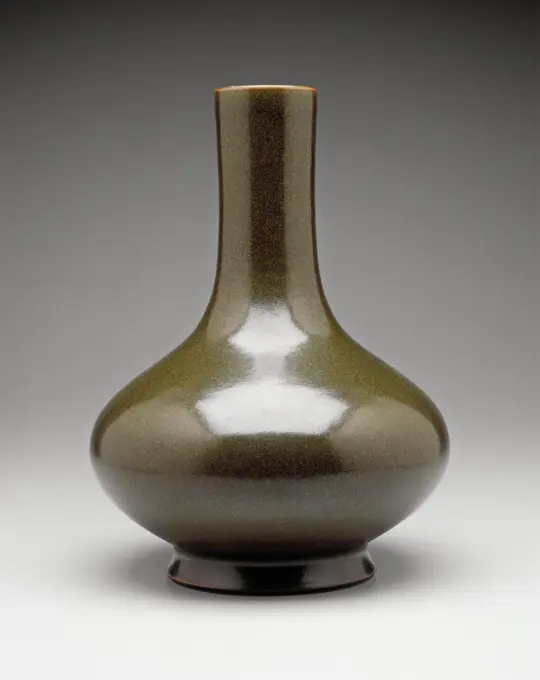
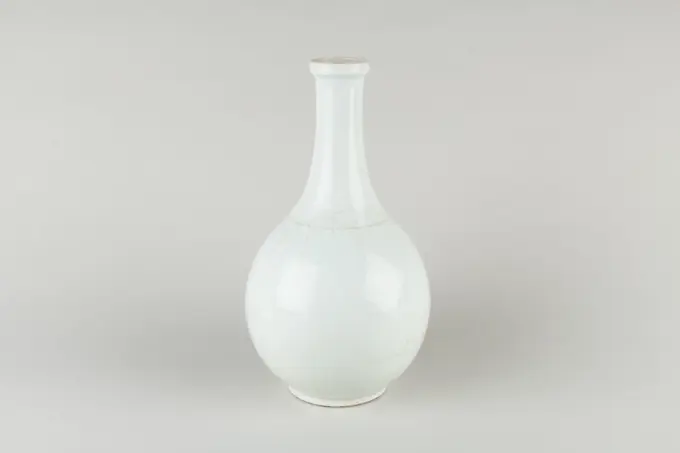
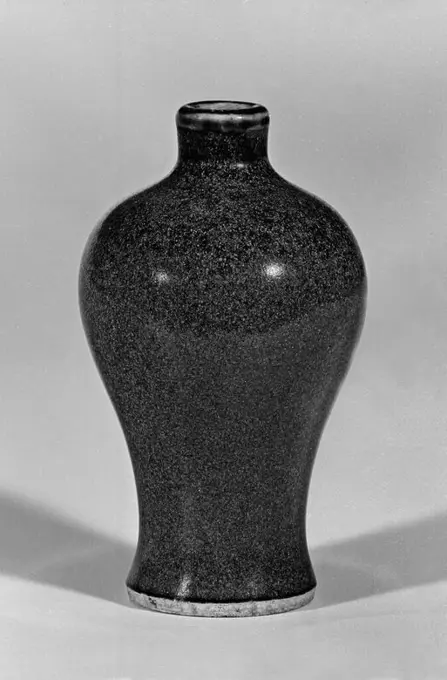
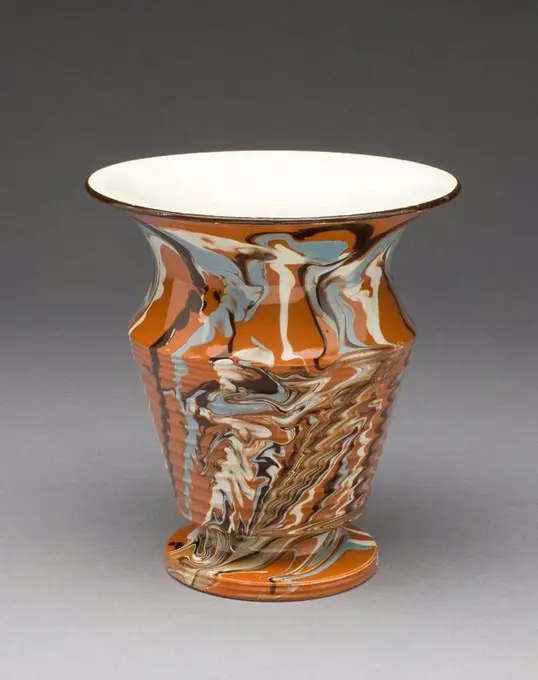
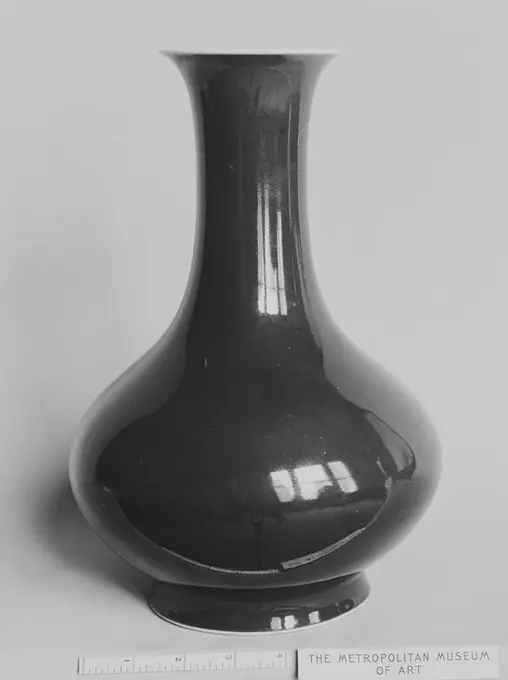
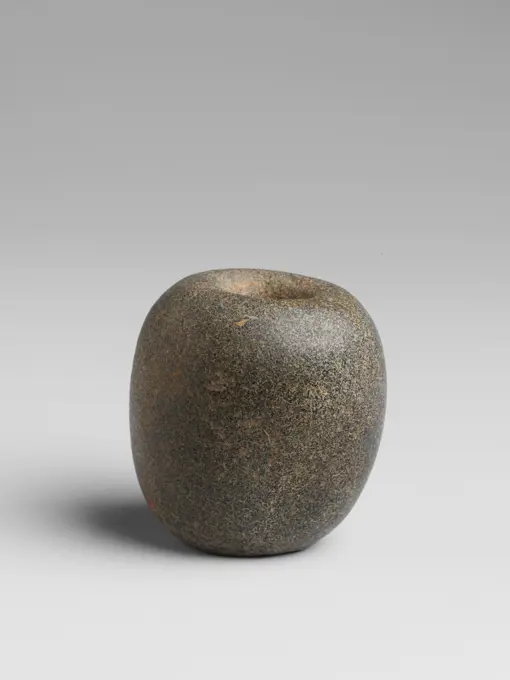
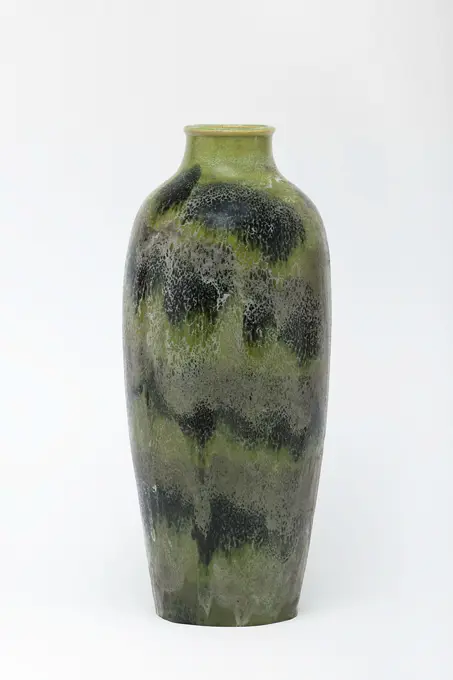
Vase, 18th century, 13 x 9 3/4 in. (33.02 x 24.77 cm), Porcelain with 'teadust' glaze, China, 18th century
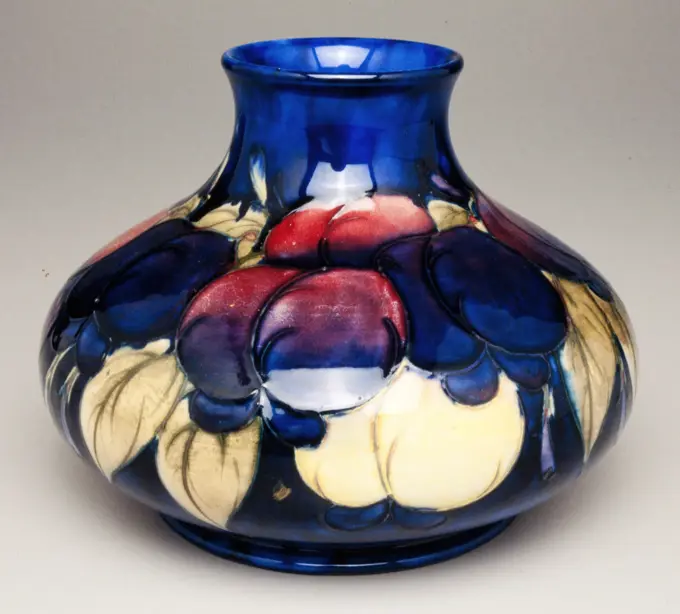
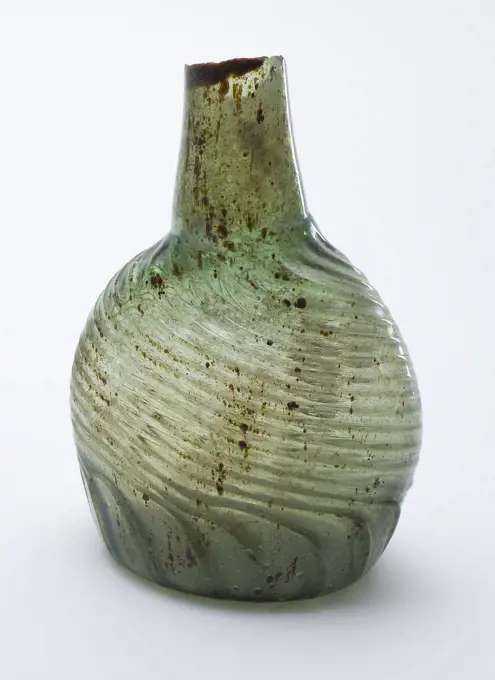
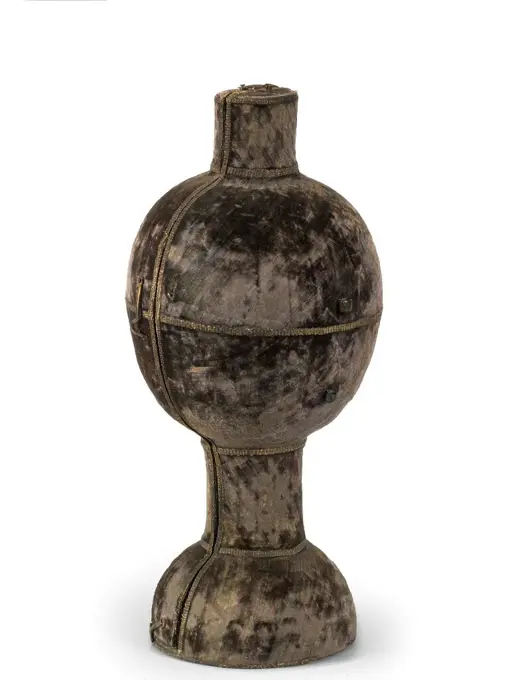
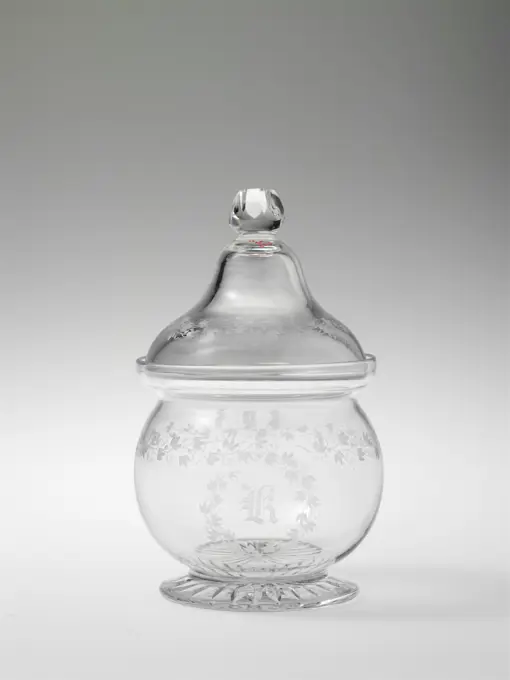
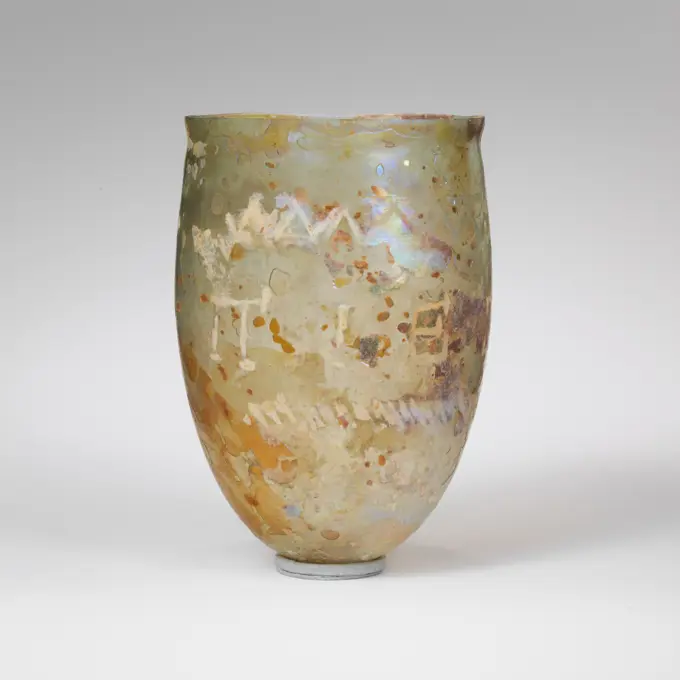
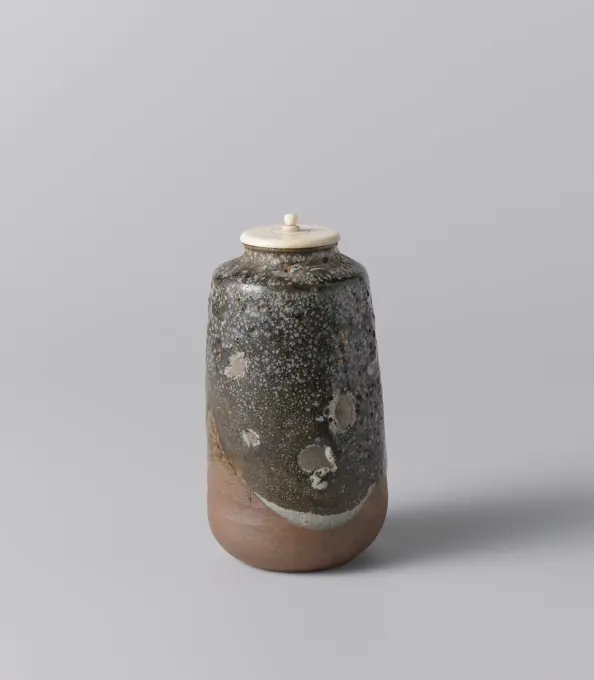
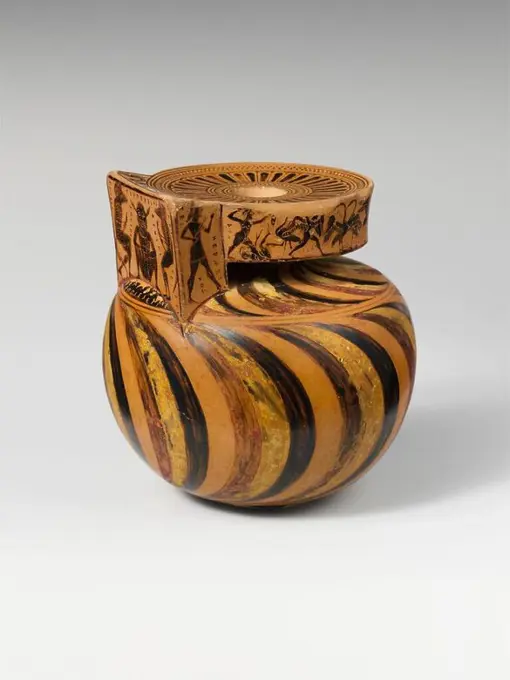
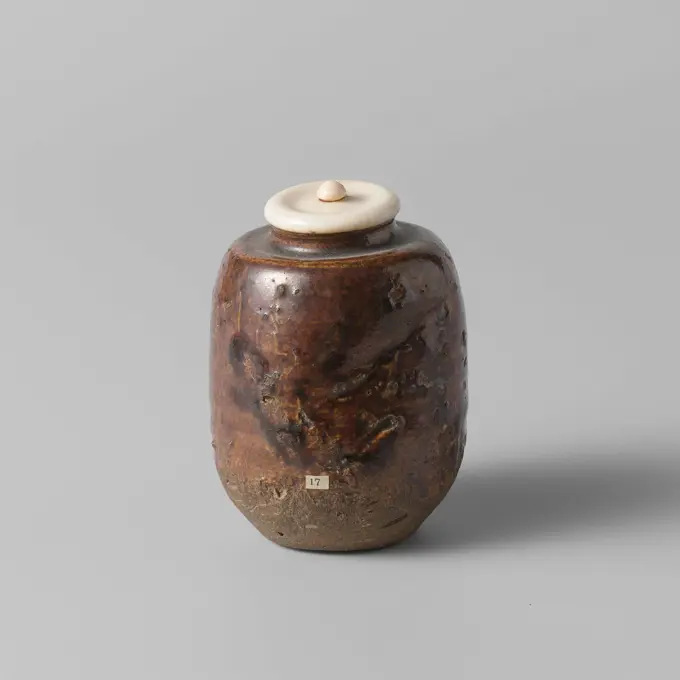
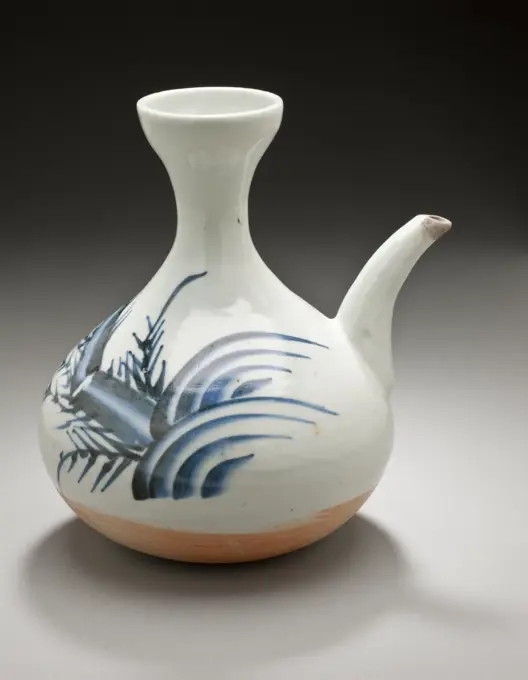
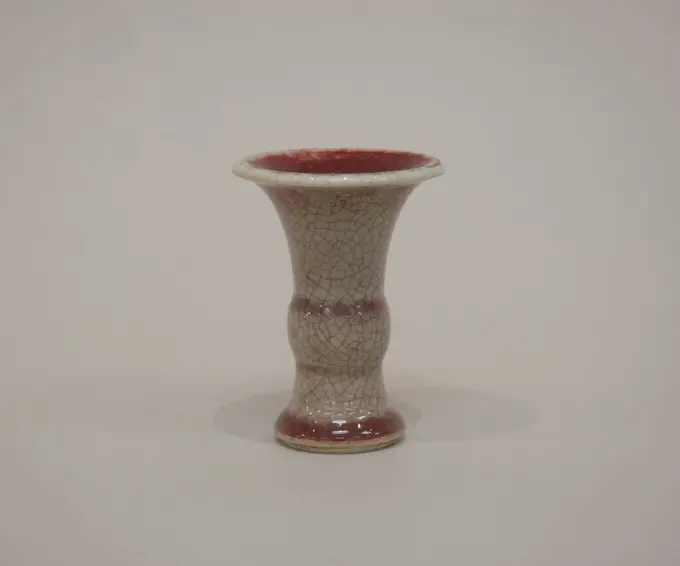
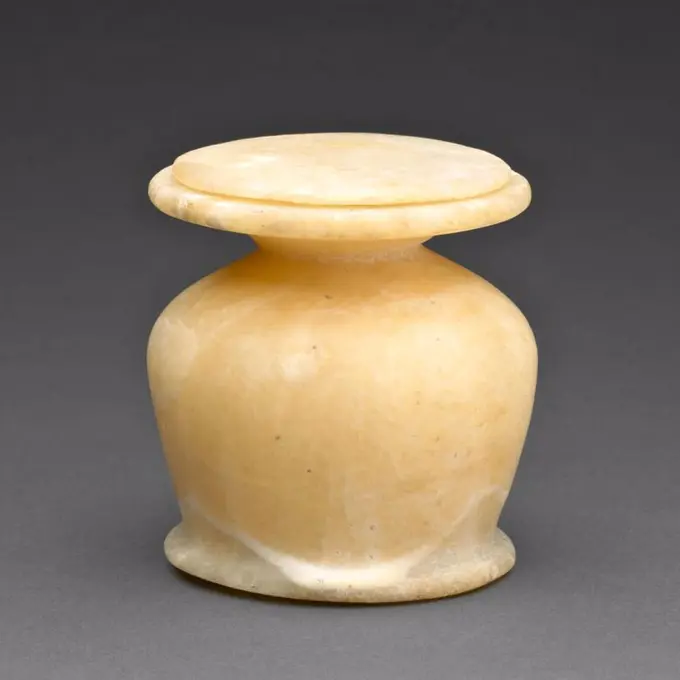
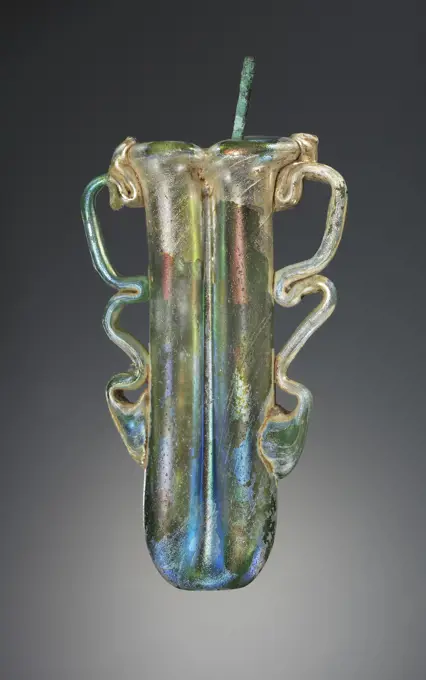
Glass alabastron (perfume bottle). Culture: Greek, Eastern Mediterranean. Dimensions: 5 3/16 × 1 3/8 × 1 3/8 in. (13.1 × 3.5 × 3.4 cm)Diam. of rim: 1 3/16 in. (3.1 cm). Date: late 6th-5th century B.C..Semi-opaque dark blue, with handles in same color; trails in opaque white and opaque yellow.Slightly inward-sloping, broad, coiled rim-disk; short cylindrical neck; uneven shoulder; elongated oval body with upward taper; convex bottom; below shoulder, two vertical ring handles with knobbed tails, applied over trails, one slightly higher than the other.A white trail attached at edge of rim-disk; another applied as a thick line over shoulder and wound down in tight spiral on upper part of body; below this four bands of trails tooled into a zigzag pattern, comprising a broader trail in yellow wound horizontally slightly more than once, followed by a thin white trail wound round four times, then another thicker yellow trail wound once round body, and another thin white trail wound seven tTurned WoodSculpture. Artist: Sophie Taeuber-Arp, Swiss, 1889-1943Ovoid Jar. China, probably Henan province. Date: 701 AD-899 AD. Dimensions: H. 46.3 cm (18 1/8 in.) diam. 35.1 cm (13 13/16 in.). Lushan ware; stoneware with iron-brown and splashed milky-blue ash glazes. Origin: China. Museum: The Chicago Art Institute, Chicago, USA.Bottle Korea. Bottle 57438Vase (base), early 1900s. Japan, Meiji period (1868-1912) or Taishō period (1912-26). Wood; base: 1.7 x 4.9 cm (11/16 x 1 15/16 in.).Vase with Wide and Narrow Borders, royal porcelain manufactory, c. 1925 Vase of porcelain with a pear -shaped body and narrow, slightly sloping neck upwards. Painted on the glaze in red, black and gold. The body is covered with wide and narrow tires. The foot ring is black. Marked on the underside with the scepter, 45 /84 IIII, and the annual letters z. .... Art Nouveau. Berlin porcelain. glaze. painting / vitrification Vase of porcelain with a pear -shaped body and narrow, slightly sloping neck upwards. Painted on the glaze in red, black and gold. The body is covered with wide and narrow tires. The foot ring is black. Marked on the underside with the scepter, 45 /84 IIII, and the annual letters z. .... Art Nouveau. Berlin porcelain. glaze. painting / vitrificationGlass perfume bottle. Culture: Roman. Dimensions: 3 in. (7.6 cm)Diameter: 11/16 x 5/8 in. (1.7 x 1.6 cm). Date: mid-1st-early 2nd century A.D..Translucent yellow green.Rim folded out, round, and in; cylindrical neck, tooled in around base; slender, elongated piriform body; thick, flattened bottom.Intact; many bubbles; deep pitting, brilliant iridescent weathering, and dulling. Museum: Metropolitan Museum of Art, New York, USA.Vase after 1885 American. Vase 9239Vase, 20th century, Moorcroft Factory, 6 3/8 x 7 3/8 x 7 3/8 in. (16.2 x 18.73 x 18.73 cm), Porcelain, England, 20th centuryBottle with floral scrolls late 17th-early 18th century China. Bottle with floral scrolls 48222Small bag bottle (for liquor), bottle holder bottomfound glass, free blown and molded in mold blown Small flat bagged bottle (for liquor) In clear light green glass on both sides. Pontil mark under raised bottom. Round flattened body on both sides, with rounded, rounded, and then freely blown outward leftward glass wires to the neck. Later introduced smooth conical neck (dm 2.5 -1.7 cm) of which part with lip mouth is missing archeologyAnonymous / 'Case for cup with lid, topped by a ball'. s XVI - XVII century. Wood, Metal, Velvet, Suede. Museum: Museo del Prado, Madrid, España.Sugar bowl 1865-75 Boston & Sandwich Glass Company In 1867, after twenty-two years of employment as factory superintendent of the Boston and Sandwich Glass Company, William E. Kern received a retirement gift of more than fifty pieces of glassware including this sugar bowl. (See 67.7.1-.14, .16, .24, .25, .27-.44 for the set of matching glassware.). Sugar bowl 7955Glass beaker with cut inscription 4th century A.D. Roman, Syrian Translucent pale yellow green.Uneven knocked-off rim with slight bulge below; ovoid body with convex side and round bottom.On body, three registers of decoration: at top, a band comprising two thick horizontal wheel-abraded lines between which is a zigzag pattern with twenty-one upward triangles; around middle, a wheel-abraded inscription reading ΠΙΕ ΖΗCΗC; below, a narrower band comprising two thick horizontal wheel-abraded lines between which is a pattern of close-set diagonal lines.Intact; pinprick bubbles; heavy pitting and brilliant iridescent weathering on exterior.Around the cup is engraved a Greek inscription that reads: Drink so that you might live.. Glass beaker with cut inscription 248928. Dust tea bus or chair of stoneware with an ivory lid, partially covered with a white spotted, green glaze. The lower part of the tea can is unglazed. Old labe on the inside with 'W568' and 'satsuma / end 17th'. Satsuma.Gallipot. Culture: China. Dimensions: H. 2 1/2 in. (6.4 cm); Diam. 1 15/16 in. (4.9 cm). Museum: Metropolitan Museum of Art, New York, USA.ceramic vase isolated on whiteWazon. unknown, creatorLeaf Beaker; Eastern Mediterranean, Roman Empire; 1st century; Glass; 7.3 × 6.4 cm (2 7,8 × 2 1,2 in.)Chess Piece, Bishop 8th-10th century. Chess Piece, Bishop 451001One of Ten Nesting Wedding Baskets, c 1900s . Africa, Western Sudan, Burkina Faso, Lobi, 20th century (). Plant fiber and leather; diameter of mouth with rim: 16.6 x 14 cm (6 9/16 x 5 1/2 in.).Urn still bank, late 19th-early 20th century, 3 3/4 x 3 7/8 x 3 7/8 in. (9.53 x 9.84 x 9.84 cm), Wood, pigment, ivory, brass, United States (probably), 19th-20th centuryPottery ointment jar, cylindrical model with constrictions, entirely glazed in white, ointment jar pot holder soil find ceramic earthenware glaze tinglaze, hand-turned baked glazed High form with smooth transitions at the constrictions at foot and shoulder. Gray-white interior and exterior glazed. Cream-colored shard. Stand archaeology health care indigenous pottery packing pharmacy store sell medicine drug craftYatsushiro (ceramic production center) covered pot (Futatsubo) (usual name), 1850. Dark brown sandstone. Covered Céladon green, decor painted in the slip. Cernuschi Museum, Asia Museum of Asia in the city of Paris. On the belly, decor of stylized peonies medallion.Large Ointment Jar with Lid ca. 1479-1425 B.C. New Kingdom This flaring beaker is a type of jar used for ointments from the time of the earliest dynasties. It appears in the decoration and offering lists of Old Kingdom tombs as early as Dynasty 3. This is one of the vessel shapes associated with the seven sacred oils and is found in specially made boxed sets such as the one from the tomb of Princess Sithathoryunet of Dynasty 12 (16.1.33a, b-16.1.44), and in foundation deposits (see 25.3.46a, b; 25.3.47a, b).. Large Ointment Jar with Lid 547626Vase China. Vase 43863Vase with decoration of deer bold to each other, Bert Nienhuis (I), 1905 - 1910 Vase of earthenware, baluster -shaped with small raised neck and thickened mouth edge. The front is painted with two deer bothered to each other in brown with very stylized antlers in black. The shoulder and neck decorated with geometric tires in yellow, black and green. To design by Bert Nienhuis. Brands partially scratched away. Still readable: Monogram of; scratched model no. 249. NOTE: Cracks at the bottom right of Hoofddecor and on the back; burst into mouth rim. Oegstgeest earthenware Vase of earthenware, baluster -shaped with small raised neck and thickened mouth edge. The front is painted with two deer bothered to each other in brown with very stylized antlers in black. The shoulder and neck decorated with geometric tires in yellow, black and green. To design by Bert Nienhuis. Brands partially scratched away. Still readable: Monogram of; scratched model no. 249. NOTE: Cracks at the bottom right of HCachepot And Liner; painted tôle, wireVase, dark blue glass, Cadet blue glass, Iran, 17th-18th century, glasswares, Decorative Arts, VaseVase painted with fish and aquatic plants, St. Lukas, c. 1915 Vase with two ears of earthenware, covered with a glaze and painted in different shades of green and yellow with fish and aquatic plants in a light green stock. Marked: St. Lukas Utrecht Made in Holland in Blauwzwart, including two red dots; Next to it 78. R. in Purple; Ingrift: a triangle, standing on one of the points, with a horizontal line above it. Utrecht earthenware. glaze vitrification Vase with two ears of earthenware, covered with a glaze and painted in different shades of green and yellow with fish and aquatic plants in a light green stock. Marked: St. Lukas Utrecht Made in Holland in Blauwzwart, including two red dots; Next to it 78. R. in Purple; Ingrift: a triangle, standing on one of the points, with a horizontal line above it. Utrecht earthenware. glaze vitrificationMaker Unknown, Carafe, c. 1850-1900, colorless glass.Terracotta aryballos (oil flask). Culture: Greek, Attic. Dimensions: H. 3 1/16 in. (7.8 cm). Date: ca. 570 B.C..Around the lip, pygmies fighting cranesAround the main surface of the handle, three satyrs; on the ends, Hermes and Perseus; on top, two tritonsBoth potter and painter, Nearchos was one of the great artists active about 570 B.C. His son, Tleson, was the major potter of Little Master cups in the succeeding generation. Both were literate; they inscribed their vases. This aryballos is exceptional for the precision and vigor of the figures. Museum: Metropolitan Museum of Art, New York, USA.. Dust tea bus or chair of stoneware with an ivory lid, partially covered with a golden brown glaze. The lower part of the bus is unglazed. Old label on the inside with 'Let Bizen / at the end of the 18th century'. BIZEN.Bottle. Culture: China. Dimensions: H. 6 in. (15.2 cm). Museum: Metropolitan Museum of Art, New York, USA.Wazka with a cover  black shiny enamel (Wu China, Mirror Black) unknownMarble pyxis (box). Culture: Greek, Attic. Dimensions: H. 3 1/2 in. (9 cm)diameter 4 5/8 in. (11.7 cm). Date: late 5th-early 4th century B.C..Greek marble-working of the Classical period is generally associated with architecture and monumental sculpture. This vase is remarkable for its precision and delicacy. It is likely that it was orginally painted. Museum: Metropolitan Museum of Art, New York, USA.PitcherAnanas van faience, anonymous, c. 1740 - c. 1780 Reverse pineapple () On a profiled foot, of multi -colored fowence. There is a brand under the foot. The image is marbled in the colors green and blue. Savona earthenware. tin glaze. Reverse pineapple () On a profiled foot, of multi -colored fowence. There is a brand under the foot. The image is marbled in the colors green and blue. Savona earthenware. tin glaze.Peachbloom-glazed waterdropper (taibaizun). China. Date: 1662-1722. Dimensions: H. 9.5 cm (3 3/4 in.); diam. 11.4 cm (4 1/2 in.). Porcelain with copper-red (peachbloom) glaze. Origin: China. Museum: The Chicago Art Institute, Chicago, USA.Spouted Sake Decanter with Bamboo Design. Japan, Meiji period, 1868-1912, 19th century. Ceramics. Seto ware; stoneware with clear glaze and underglaze cobalt blue decorationLamp Shades (USA); Designed by Louis Comfort Tiffany (American, 1848-1933); Made by Tiffany and Co. (United States); favrile glassVase. Culture: China. Dimensions: H. 3 5/8 in. (9.2 cm); W. 2 11/16 in. (6.8 cm); Diam. of rim: 2 11/16 in. (6.8 cm); Diam. of foot: 1 3/4 in. (4.4 cm). Museum: Metropolitan Museum of Art, New York, USA.Seif Yohei III mined the repertoire of Chinese vessel types, from ceramics modeled after ancient ritual bronzes to shapes developed in the Yuan (1279-1368) and Ming (1368-1644) dynasties. His designs tended to be formal and restrained, often featuring creamy white glazes suggestive of the hue of Ding ware and green glazes resembling Longquan ware. Gu-shaped Vase, 1912-14. Seifū Yohei III (Japanese, 1851-1914). Porcelain with crackled glaze; 27.9 cm (11 in.); diameter of top: 14.6 cm (5 3/4 in.).Vase. England, Staffordshire. Date: 1805-1815. Dimensions: 13.3 x 12.1 cm (5 1/4 x 4 3/4 in.). Lead-glazed earthenware (marble pearlware). Origin: Staffordshire. Museum: The Chicago Art Institute, Chicago, USA. Author: Staffordshire Potteries.Snuff Bottle. Culture: China. Dimensions: H. 2 3/4 in. (7 cm); W. 1 7/8 in. (4.8 cm); D. 1 1/4 in. (3.2 cm). Date: 19th century. Museum: Metropolitan Museum of Art, New York, USA.side view of handcrafted ceramic teapot isolated side view of handcrafted ceramic teapot isolated on white background ,property released Copyright: xZoonar.com/ValeryxVoennyyx 15362747 ,model released, Symbolfoto ,property releasedWine jug Brauner Winkrug on a white backgroundKohl Jar with Lid. Egyptian. Date: 1985 BC-1773 BC. Dimensions: a (jar): 7.1 × 6.8 × 7 cm (2 13/16 × 2 11/16 × 2 3/4 in.)b (lid): .68 × 6 × 6 cm (1/4 × 2 3/8 × 2 3/8 in.). Egyptian alabaster. Origin: Egypt. Museum: The Chicago Art Institute, Chicago, USA. Author: Ancient Egyptian.Jar 11th-12th century. Jar 448353Vase in the shape of bottle with long neck. unknown, craftsmanVase, Tiffany & Company, American, established 1853, Favrile glass, Bulbous base of gold Favrile glass, sprouting long slender clear (greenish) neck culminating in a cream-colored bud with slightly flared mouth. Neck and bud have five slender green stems and leaves., New York, NY, USA, ca. 1903-04, glasswares, Decorative Arts, VaseChessmanBrushpot, 17th century, 6 7/8 x 7 7/16 in. (17.46 x 18.89 cm), Huang hua-li, China, 17th centuryFlask. UnknownContainer for Kohl in the Shape of a Palm Column. Egyptian. Date: 1352 BC-1213 BC. Dimensions: 8.2 × 3.0 × 3.0 cm (3 1/4 × 1 1/8 × 1 1/8 in.). Glass, core-formed technique. Origin: Egypt. Museum: The Chicago Art Institute, Chicago, USA. Author: Ancient Egyptian.Funnel with a Brown Glaze and Ruyi Border. Funnel of porcelain with stage, flared cup, bulb between cup and stem, painted in underglaze blue and brown. The cup with a ruyi motifs band with meander pattern; The handle with brown glaze. Monochrome brown with blue and white.Hookah (Ireland); glassGlass perfume bottle Roman late 1st-3rd century CE Colorless.Outsplayed rim with plain rounded lip; cylindrical neck expanding downwards; bell-shaped body, less than one-third of total height; uneven, slightly concave bottom.Intact; many pinprick and some larger elongated bubbles; some dulling and pitting on exterior, soil encrustation, weathering, and brilliant iridescence covering most of interior. A large lump of dry earth is loose inside the bottle. View more. Glass perfume bottle. Roman. late 1st-3rd century CE. Glass; blown. Mid Imperial. GlassFragment of foot, trunk and chalice of chalice in façon de Venise style, drinking glass drinking utensils tableware holder fragment soil find glass, free blown and formed glass application Fragment of part of foot of trunk and part of chalice of chalice in clear colorless glass in façon de Venise style. Pontil mark under ascending hollow foot continuous to hollow 17-fold ribbed knot closed with flat knot. Half-round chalice archeology Rotterdam IJsselmonde drinking wine beer serve serving Soil discovery: IJsselmonde Castle 1 and 2 Rotterdam 1972.Bastet z tytulaturą Merenre. unknown, authorVase. Culture: China. Dimensions: H. 12 in. (30.5 cm). Museum: Metropolitan Museum of Art, New York, USA.Pocket Bottle. Culture: American. Dimensions: H. 6 1/2 in. (16.5 cm). Date: 1780-1820. Museum: Metropolitan Museum of Art, New York, USA.Ceramic pot of handbalers made of ceramic - free on white background copyright: xzoonar.com/heikexbrauerx 1093171Vase; Jagmin, Stanis AW (1875-1961); beginning of the 15th century (1900-00-00-1920-00-00);Seif Yohei IV’s incense burner has a pale pink glaze named “dawn’s light.” Incense Burner with Peony and Cloud, 1914-46. Seifū Yohei III (Japanese, 1851-1914). Porcelain with molded and incised design, pale pink glaze, and floral openwork silver lid; height with lid: 12.9 cm (5 1/16 in.); diameter: 13.5 cm (5 5/16 in.).Vase; Manufactured by Munden; tin-glazed earthenwareSake Bottle in the Shape of a Gourd late 17th century Japan. Sake Bottle in the Shape of a Gourd 49323PORTAVELAS DE CERAMICA.Lidded Pyxis; perhaps Italy; 1st century; Glass; 5.1 × 5.7 cm (2 × 2 1,4 in.)Flakonik - tabakierka. unknown, craftsmanBipartite Kohl Tube; Roman Empire; 3rd - 4th century; Glass, bronze; 11.5 x 7 cm (4 1,2 x 2 3,4 in.)Small vase. unknown, craftsmanChess Piece, Pawn or Backgammon Piece probably 17th-18th century. Chess Piece, Pawn or Backgammon Piece 452394Nautilus shell of pearl drill cut with flower vines, Cornelis Bellekin, 1650 - 1700 Nautilus shell decorated with flower vines cut from the cloak and dolphins from the navel. Nautilus shell detached from the (separately preserved) not original foot. Northern Netherlands, second half of the 17th century. Signed CBF. Amsterdam mother of pearl Nautilus shell decorated with flower vines cut from the cloak and dolphins from the navel. Nautilus shell detached from the (separately preserved) not original foot. Northern Netherlands, second half of the 17th century. Signed CBF. Amsterdam mother of pearlCricket Container, 6 5/16 x 3 1/16 x 3 1/16 in. (16.03 x 7.78 x 7.78 cm) (overall), Gourd, ivory, ChinaBeaker, Tiffany & Company, American, established 1853, Blown favrile glass, Straight beaker, rounded at bottom. On sides, tooled irregular nubs. Greenish-gold iridescence., New York, New York, USA, ca. 1910, glasswares, Decorative Arts, BeakerOintment jar ca. 1850-1775 B.C. Middle Kingdom. Ointment jar. ca. 1850-1775 B.C.. Travertine (Egyptian alabaster). Middle Kingdom. From Egypt, Northern Upper Egypt, Abydos, Cemetery V, Tomb V21, Egypt Exploration Fund excavations, 1904. late Dynasty 12-early 13Mokkakan from the 'Saxonia' coffee and tea set. Mochaan of porcelain, painted in blue and gray. The can have a sneb and a lid. The can be part of the Saxonia coffee and tea service. The can be noticed.Oinochoe (Pitcher) 450 BCE-350 BCE Eastern Mediterranean Region. Glass, core-formed technique . Ancient Eastern MediterraneanCAPACETE DE ESPARTO PROCEDENTE DE LA CUEVA DE LOS MURCIELAGOS DE ALBUOL (GRANADA) - 3450 AC. Location: MUSEO ARQUEOLOGICO NACIONAL-COLECCION, MADRID.Glass beaker Roman 1st-2nd century CE Translucent yellow green.Plain, knocked-off, and ground rim; tall, conical body with straight side, tapering downwards and curving in at base; slightly concave bottom.On upper half of body, seven bands of horizontal grooves, alternating as four thick and three narrow lines.Broken and repaired, with two holes in rim and one long hole in lower half of body; many pinprick and a few larger bubbles; deep pitting and weathering, and iridescence on exterior, thick weathering and iridescence on interior. View more. Glass beaker. Roman. 1st-2nd century CE. Glass; blown and cut. Imperial. GlassSnuff Bottle, 17th-19th century, 3 1/2 x 1 1/2in. (8.9 x 3.8cm), Amber, jade, China, 17th-19th centuryVase; Gallé, Emile (1846-1904); beginning of the 20th century (1901-00-00-1910-00-00);Leather, transmission (provenance)Bottle, wine bottle of dark green glass, fairly high soul, bottle holder soil find glass, blown in shape Bottle of dark green glass Pretty high raised soul. Pontil mark. Cylindrical sloping shoulder to the neck. Cylindrical neck. Quite bit The opening of the bottle is not in the middle. To transport glass wire around the neck archeology wine packagingGabbro mace head ca. 2500-1900 B.C. Cypriot Spherical with a hole through the center.. Gabbro mace head. Cypriot. ca. 2500-1900 B.C.. Gabbro. Early Bronze Age. Miscellaneous-StonePitcher W Cewicz, Janina, Economic Huta ZawiercieBird - Shaped Flask. UnknownSnuff Bottle, 1736-1795, 2 3/4 x 2in. (7 x 5.1cm), Jade, China, 18th centuryVase. 1899 acquired by the artistVase. Ceramic, celadon covered. Paris, Cernuschi museum. 55867-2 Ceramic, covered Celadon, vasePrunted Beaker (Berkemeyer). UnknownFuddling Cup. England, London, Southwark, circa 1635. Furnishings; Serviceware. Earthenware with tin glaze and enamel (Delftware)Goblet 19th century Italian, Venice (Murano). Goblet. Italian, Venice (Murano). 19th century. Glass. GlassVase, Helen M. Lyons, Glazed earthenware, Dusty olive-green shoulder shading into soft tan and blue with branches of muted pale green leaves and peach and violet-blue berries; lower body violet. Straight sides tapering slightly outward toward base which curves abruptly inward but has no foot. Flat shoulder with suggestion of band where it joins body; large lipless mouth., Cincinnati, Ohio, USA, 1915, ceramics, Decorative Arts, VaseVase. Culture: China. Dimensions: H. 8 in. (20.3 cm). Date: 12th-13th century. Museum: Metropolitan Museum of Art, New York, USA.Shaker; tin-glazed earthenware; 11 x 4.5 cm (4 5/16 x 1 3/4 in.)Small vase. Miwa, Tomisaburô (act. c. late 19th-early 20th c.), craftsmanWine bottle with stopper, mid 20th century, 22 1/4 x 9 x 9 in. (56.52 x 22.86 x 22.86 cm), Gourd, plant fiber, wood, cloth, beads, Cameroon, 20th centuryVase. United States, probably New Jersey, mid-19th century. Furnishings; Accessories. GlassPottery ointment jar, cylindrical model, white glazed, ointment jar pot holder soil find ceramic earthenware glaze tin glaze, hand turned glazed delft white Small straight model smooth transitions for constrictions under edge and bottom Completely white glazed stand archaeology health care indigenous pottery sell preserve medicine medicine craft packing pharmacy