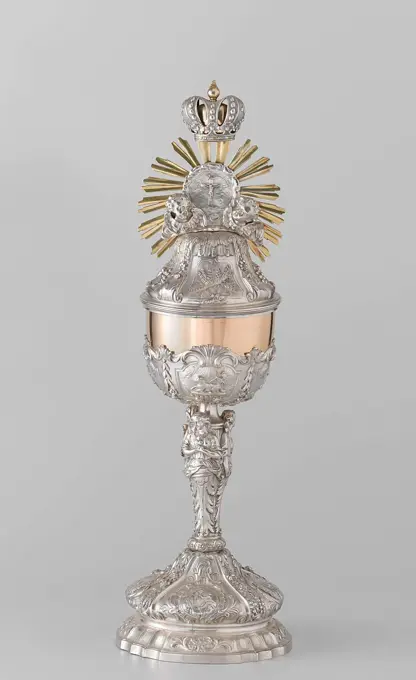
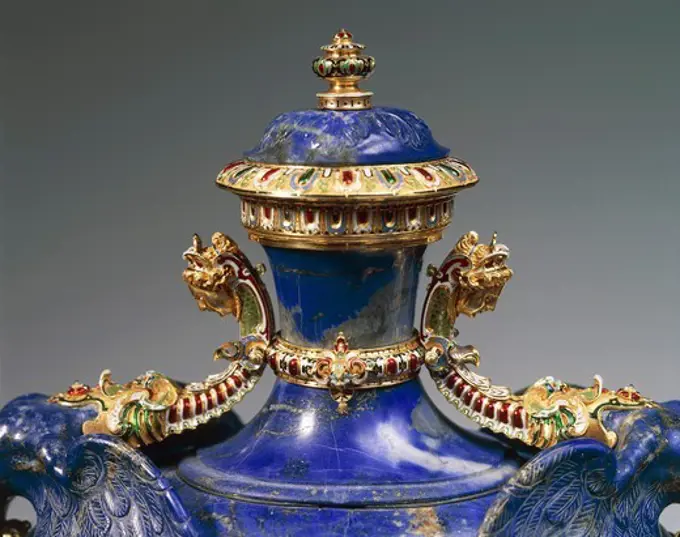
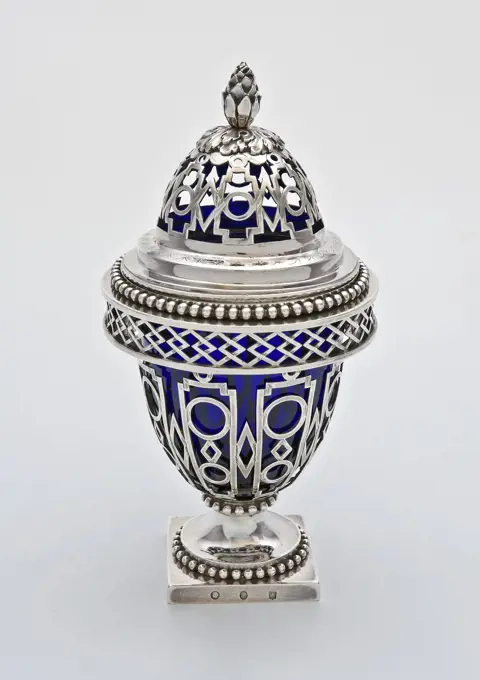
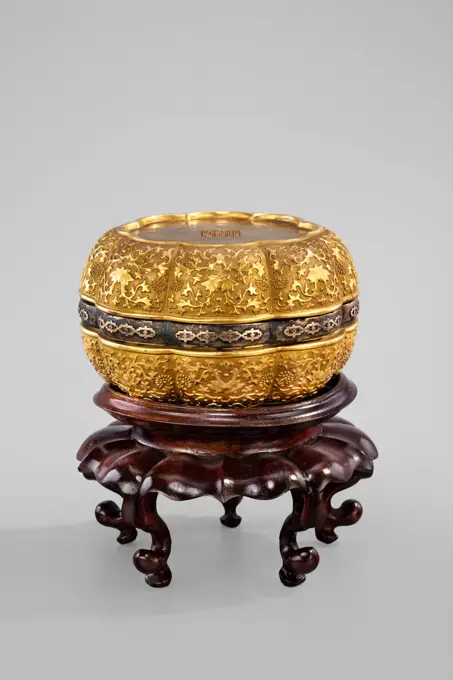
Elegant Silverware and Vases

Fine silver and porcelain pieces, including trays and vases, showcasing intricate decorations and historical craftsmanship.

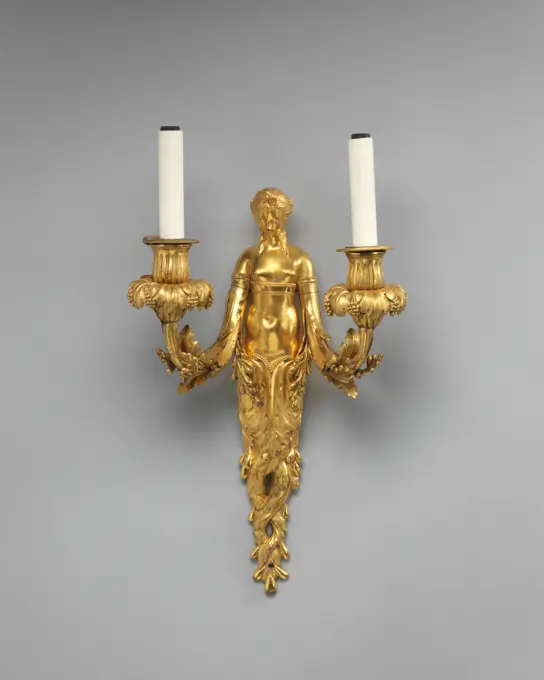
Wall arm of gilded bronze with a bust of a Chinese, Anonymous, c. 1750 - c. 1760 Gilt bronze wall arm, with two arms. The trunk is formed by a bust of a Chinese man or woman, surrounded by C-shaped rocaillem motifs. The arms show C and S-shaped leaf motifs. See also: BK-16898-A/C. Paris bronze (metal) gilding Gilt bronze wall arm, with two arms. The trunk is formed by a bust of a Chinese man or woman, surrounded by C-shaped rocaillem motifs. The arms show C and S-shaped leaf motifs. See also: BK-16898-A/C. Paris bronze (metal) gilding
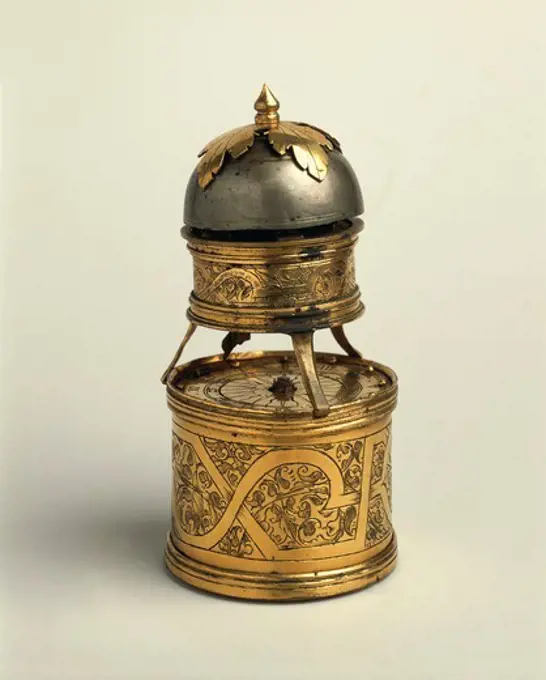
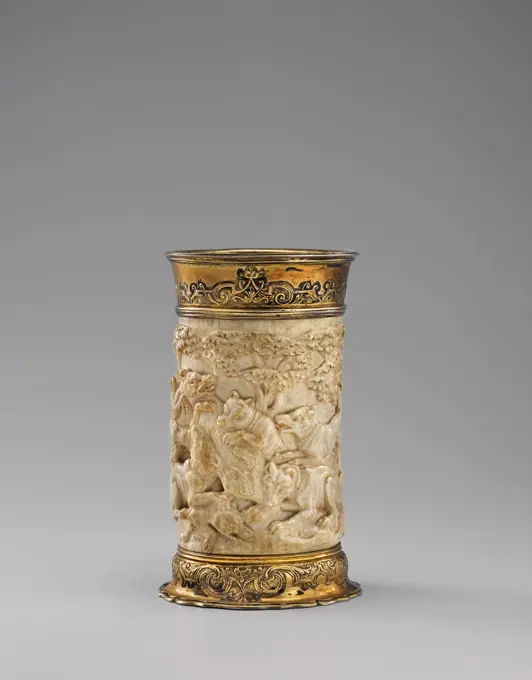
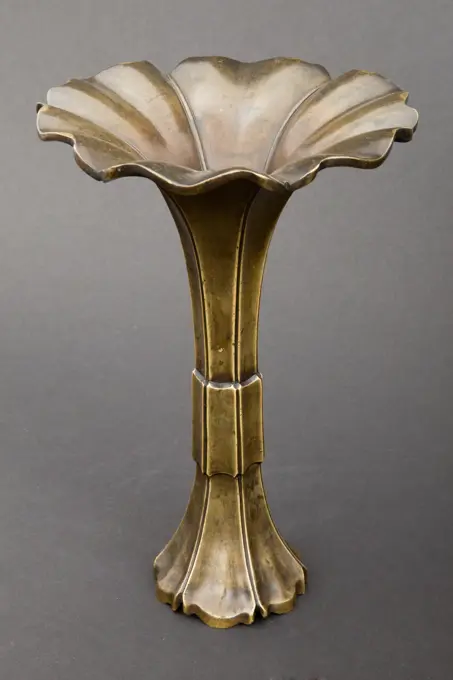
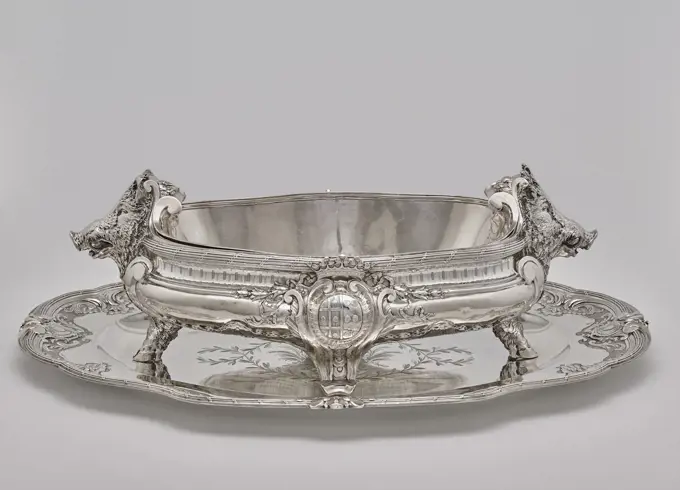
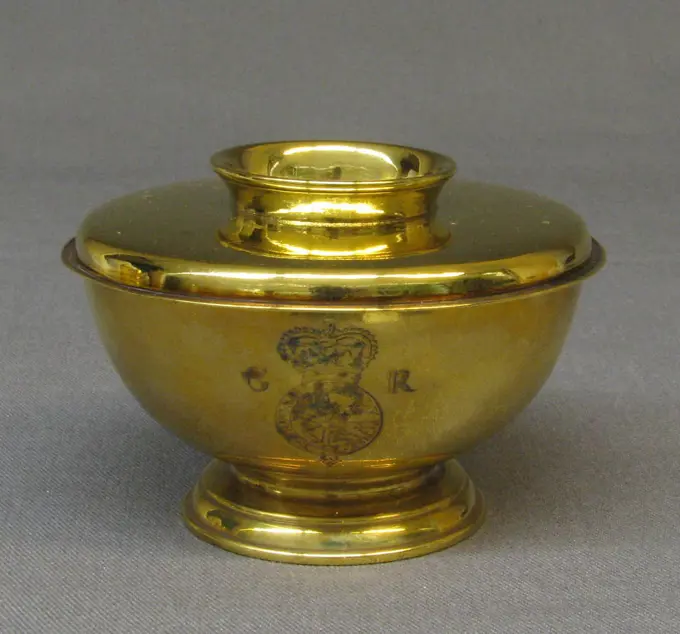
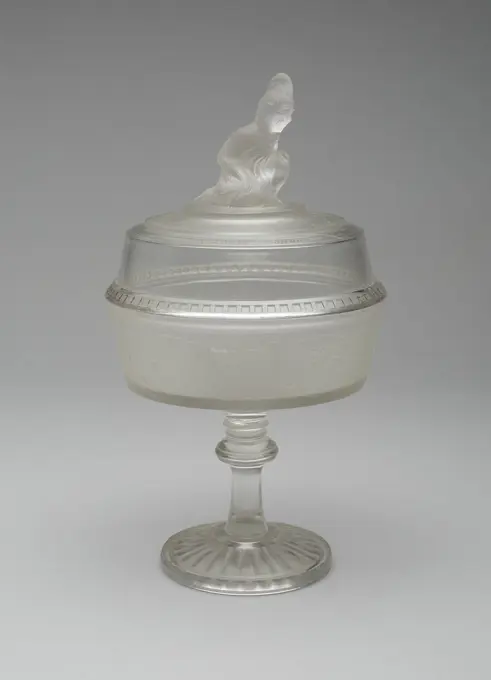
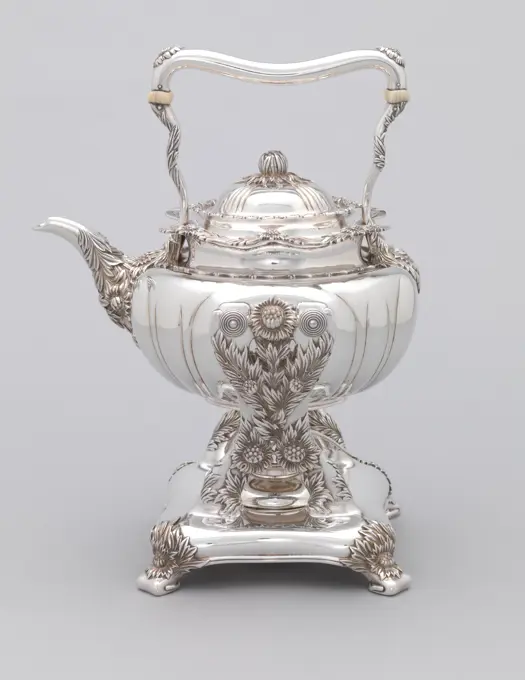
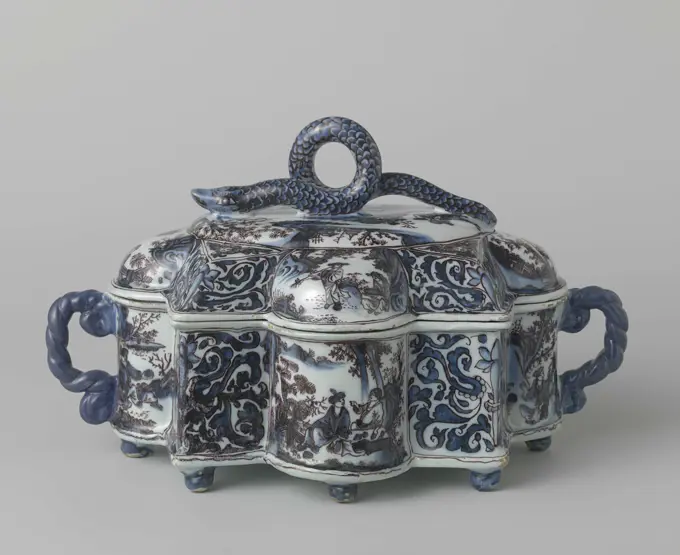
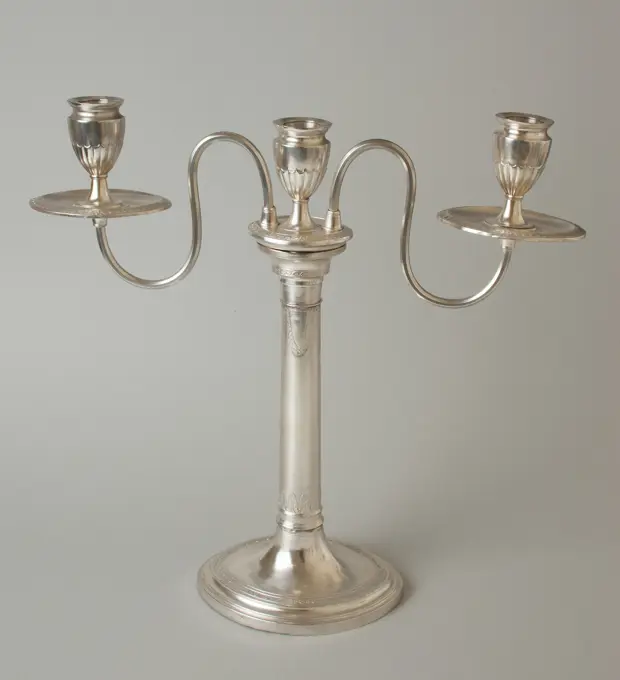
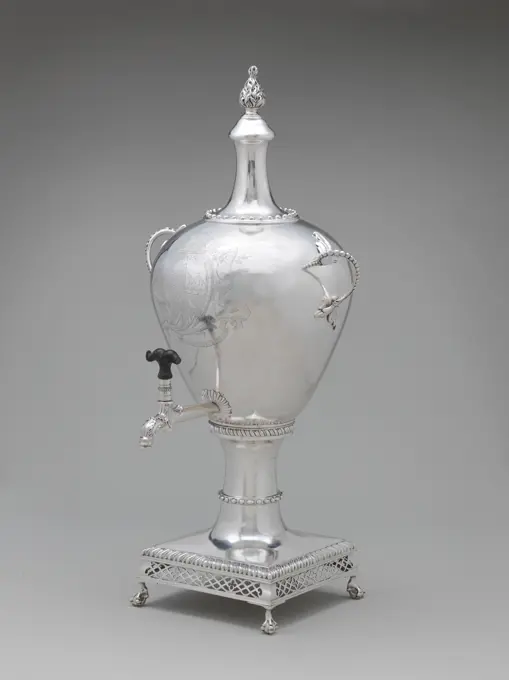
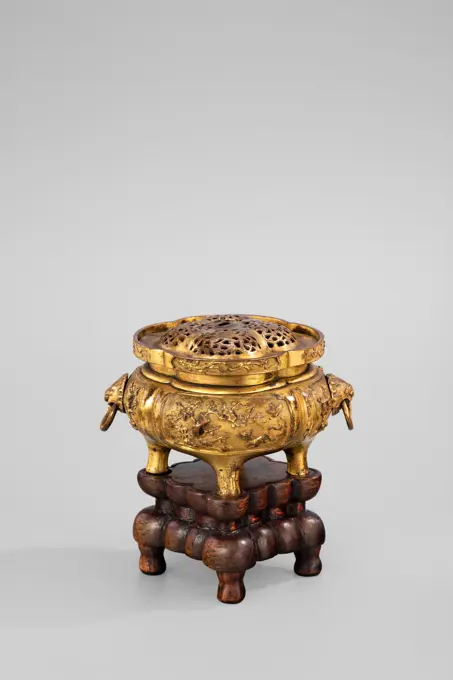
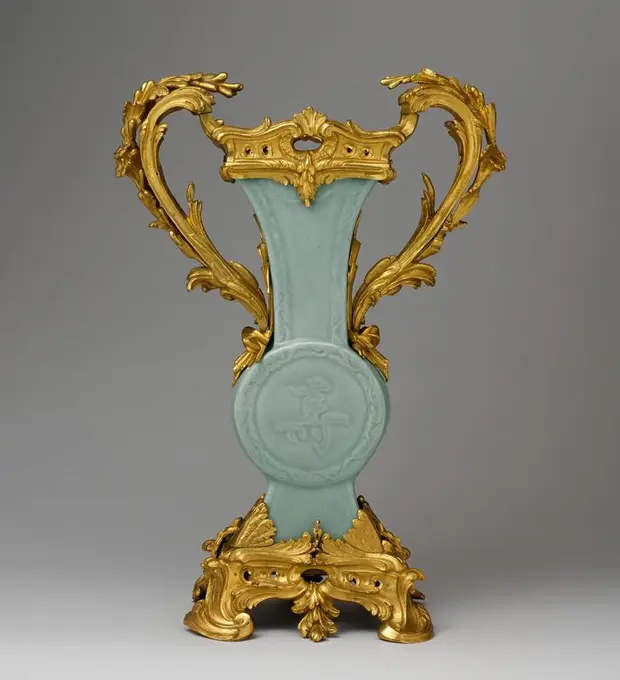
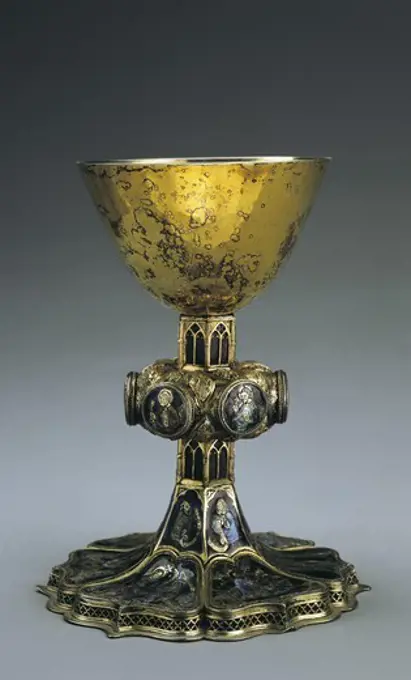
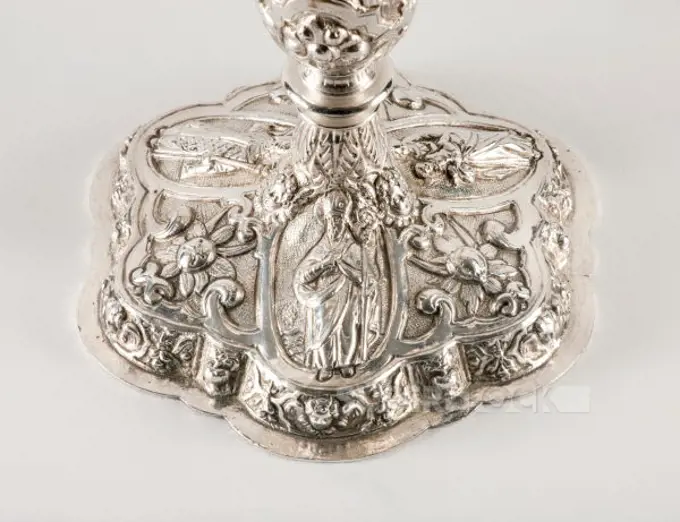
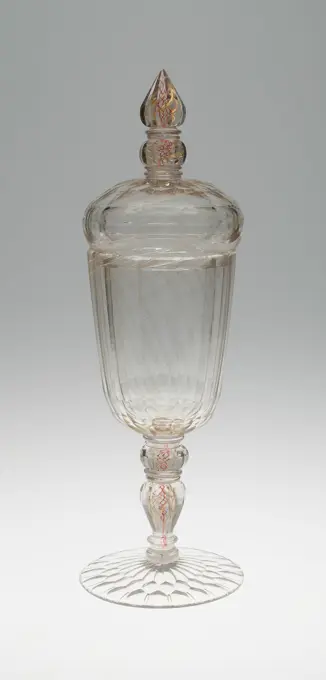
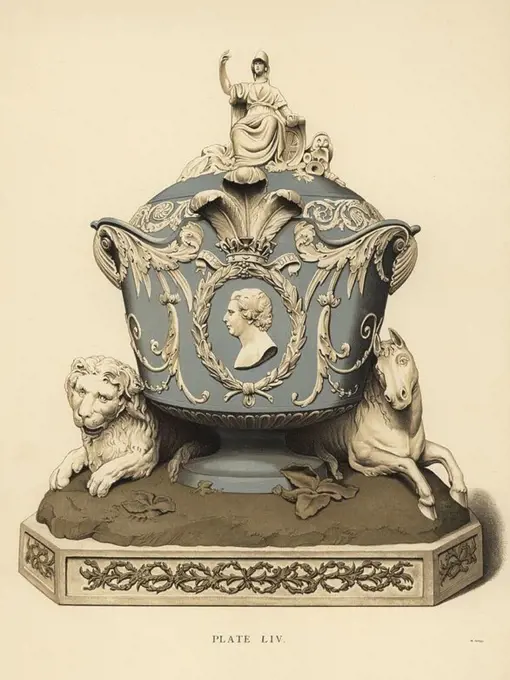
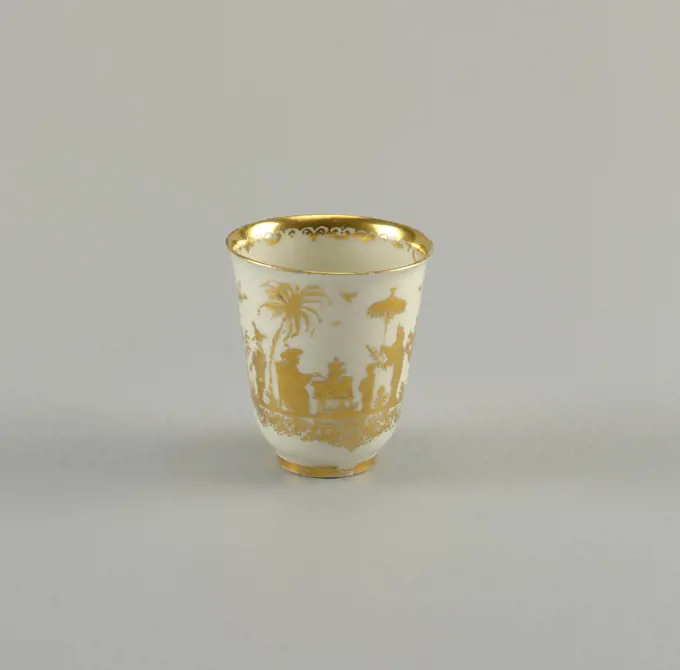
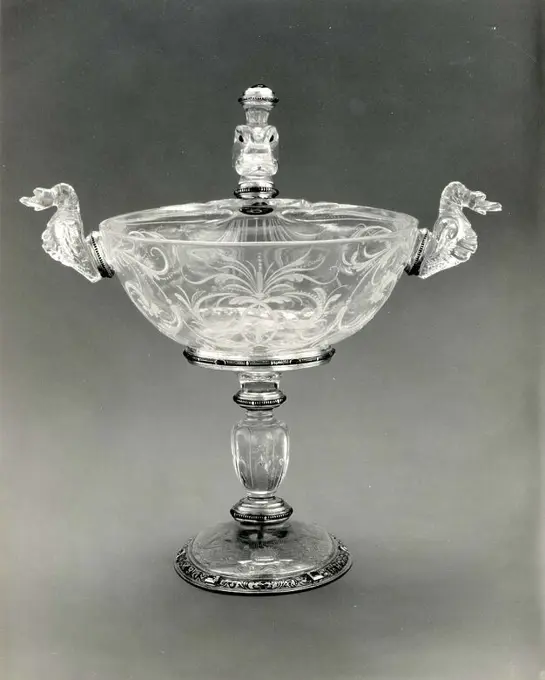
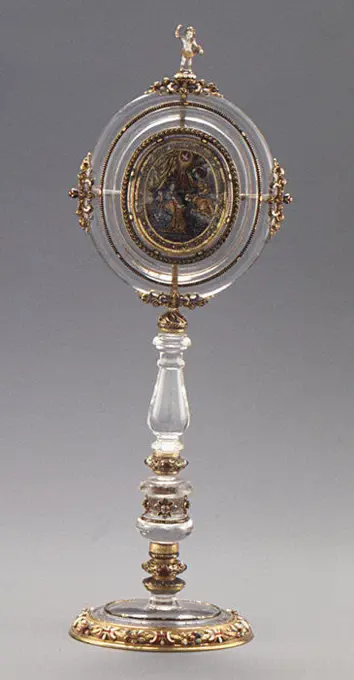
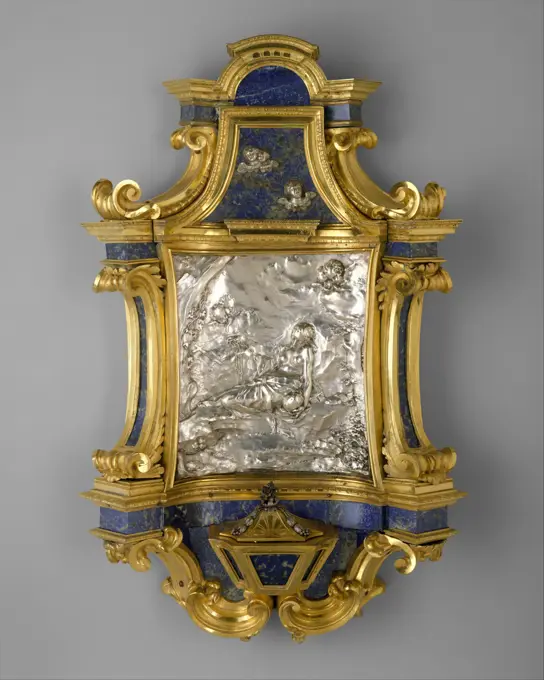
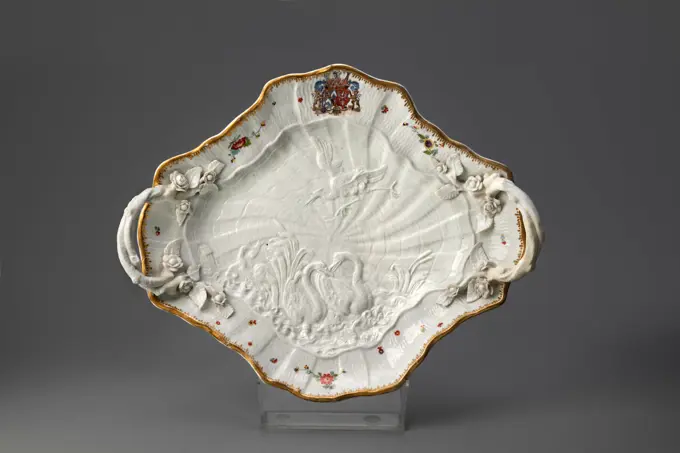
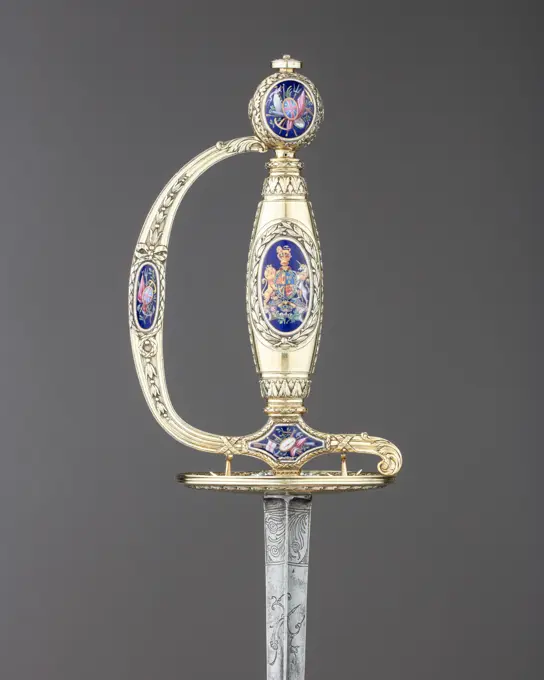
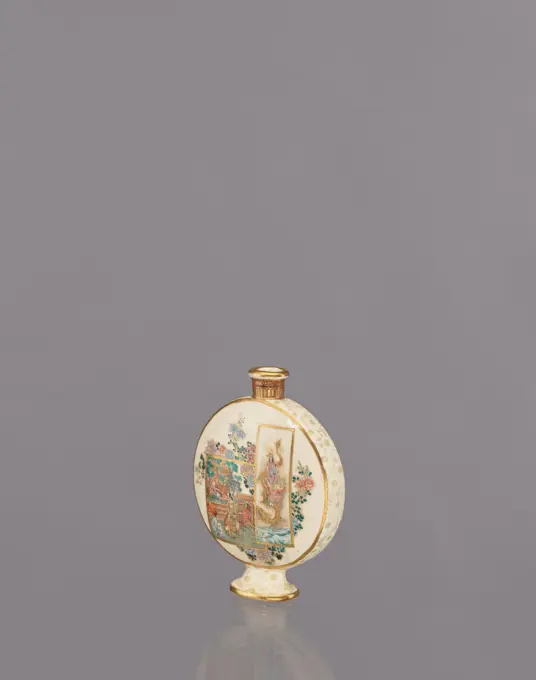
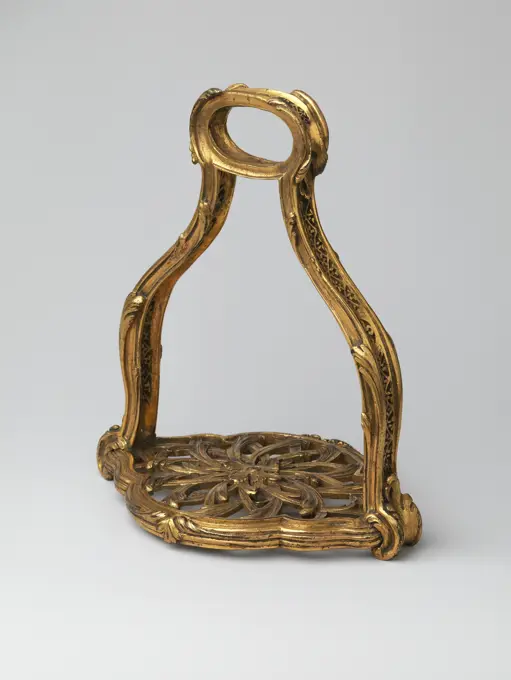
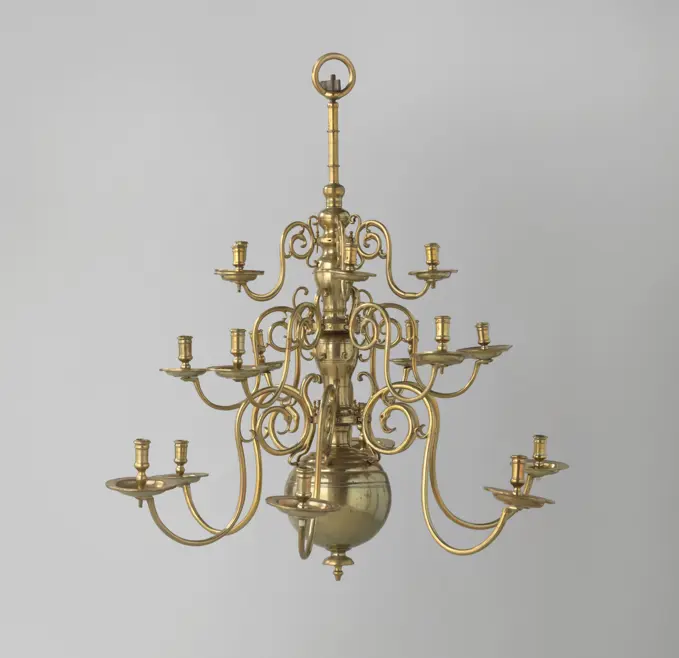
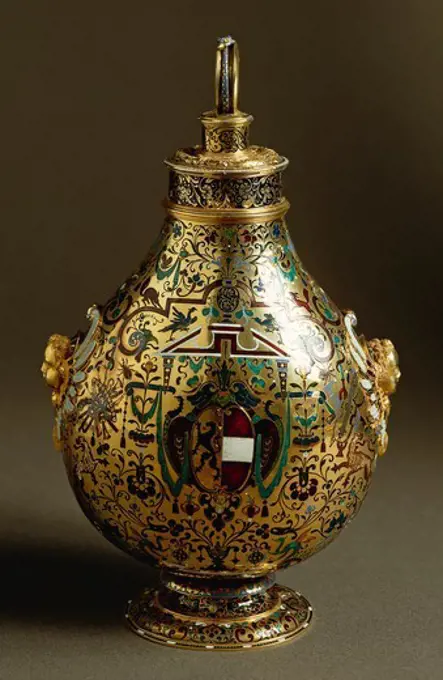
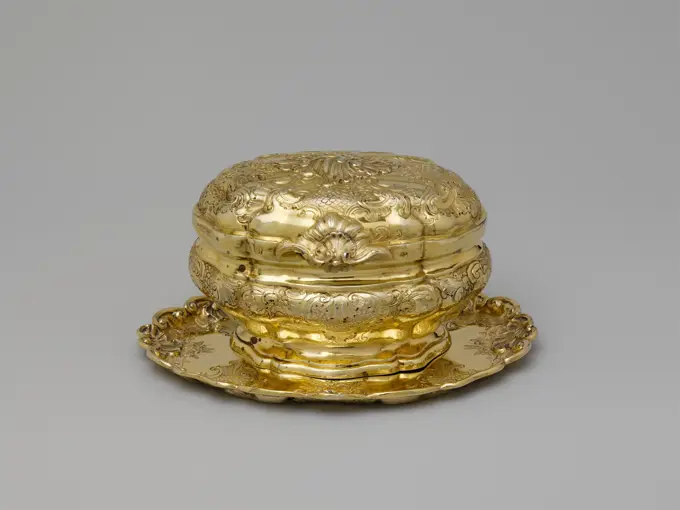
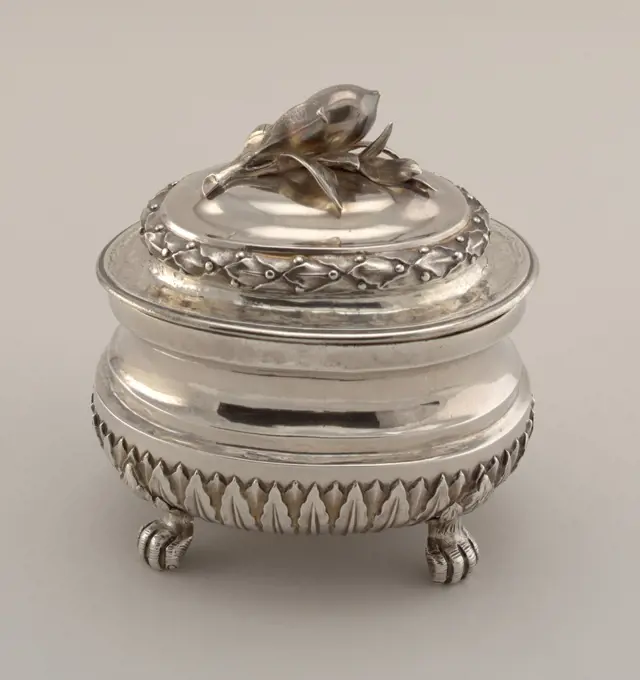
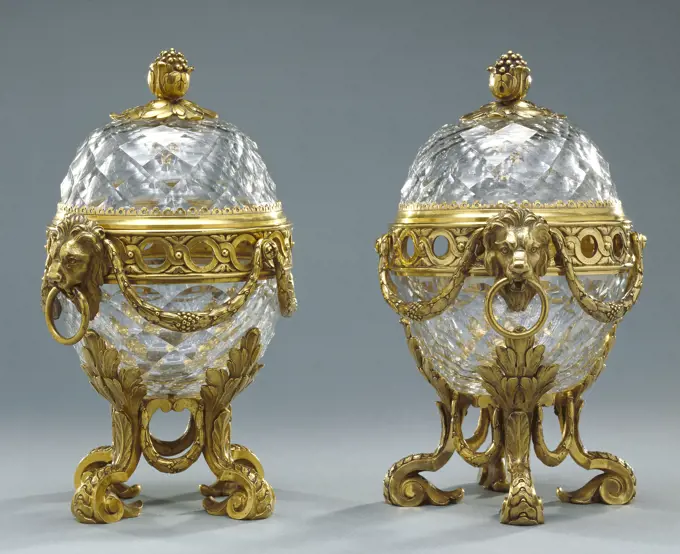
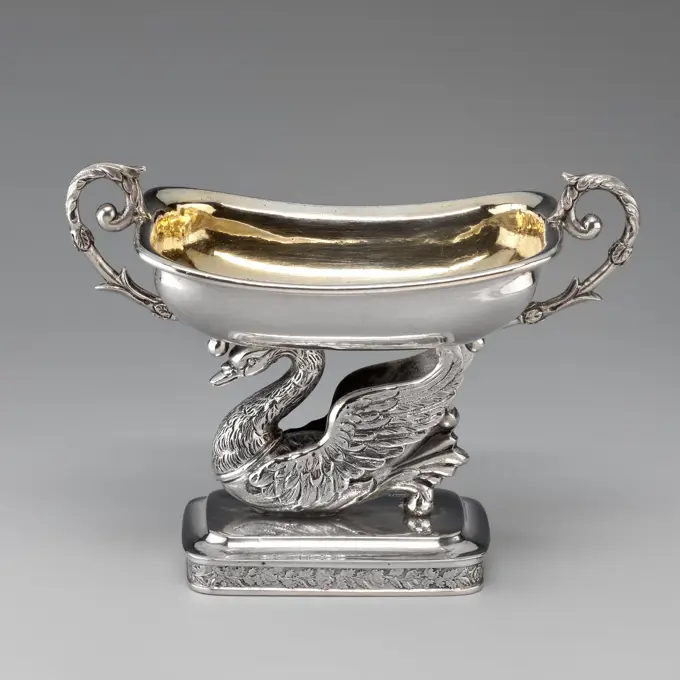
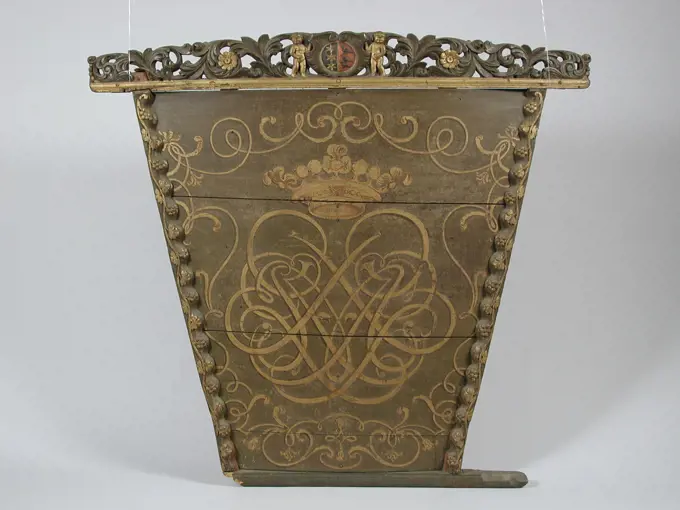
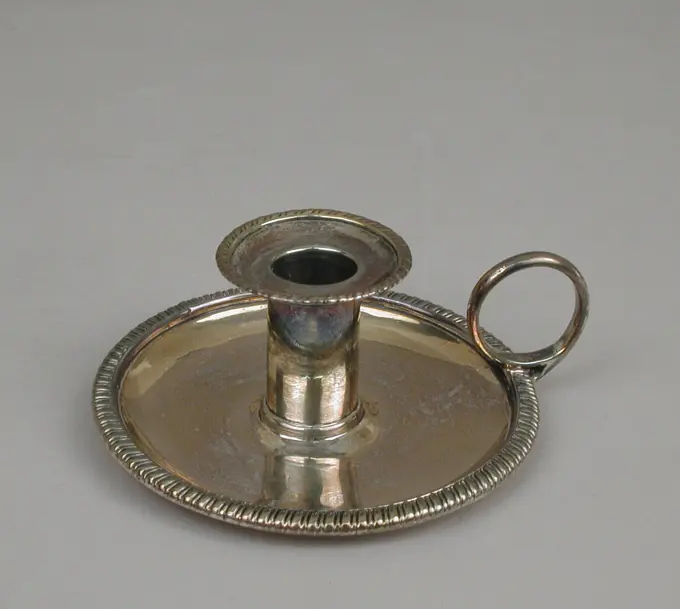
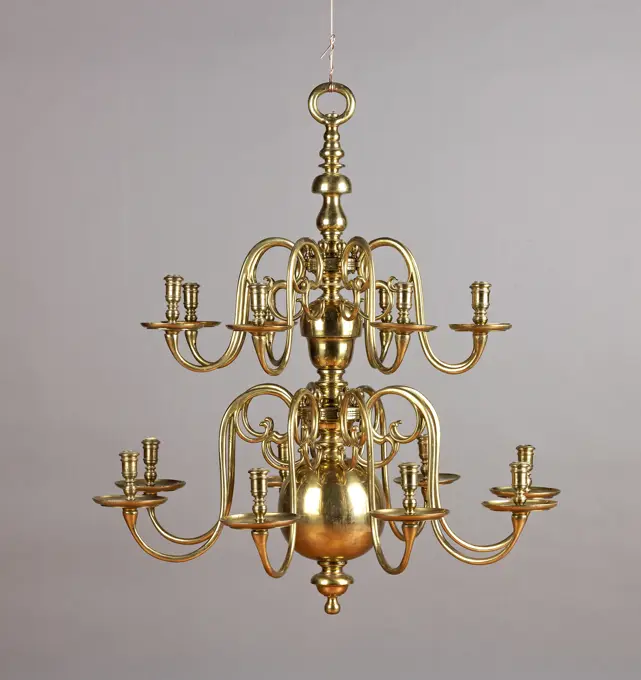
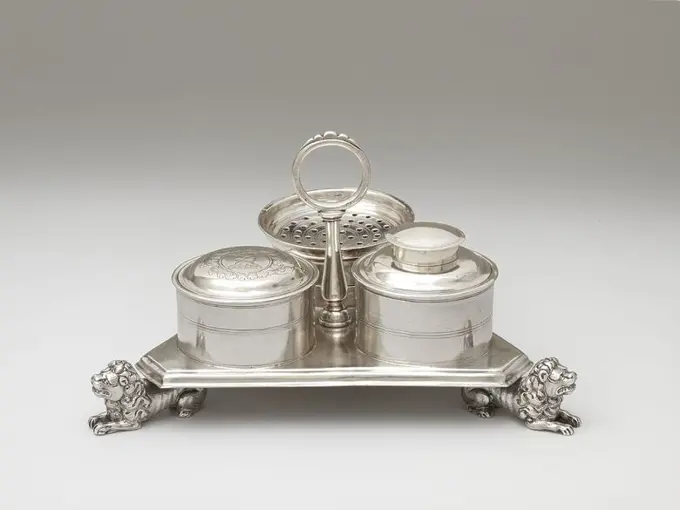
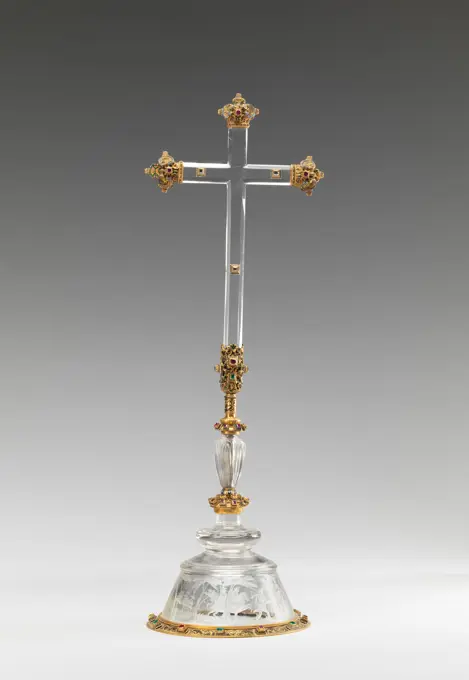
Butterdish.   Maker: Eoff and Shepherd, American, active ca. 1851-1861Retailer: Ball, Black and Company, New York, active ca. 1851-76Table clock with superimposable alarm dialFour Light Candelabrum (one of a pair) 1809-1819 Paris. This object for the dining table is part of a vast service made for Emperor Napoleon Bonaparteís sister Pauline on the occasion of her marriage to the Roman nobleman Camillo Borghese, Sixth Prince of Sulmona.In the years after the French Revolution, architects and designers adopted the visual language of ancient Greece and Rome to express the new imperial order. Napoleon, hoping to promote Parisís luxury trades, commissioned several silver dinner services as gifts to be sent abroad. The slender outlines and smooth surfaces of the objects in the Borghese service contrast with the rich decoration.. Silver-gilt, repoussÈ, cast, applied and chased decoration, gilt bronze . Martin-Guillaume BiennaisSpherical knop. Culture: German. Dimensions: Overall: 5 3/8 x 3 11/16 in. (13.7 x 9.4 cm). Date: late 12th century. Museum: Metropolitan Museum of Art, New York, USA.Incense boat with the Jastrzębiec coat of arms. unknown, authorMasked Figure Pendant 10th-16th century Tolima (). Masked Figure Pendant 312710Bone mug set in silver. unknown, authorA cup shaped dish unknownWatch Chain Fob (USA); gold, stoneTureen, Liner and Stand (one of a pair); Thomas Germain (French, 1673 - 1748 (master 1720)), arms added by François-Thomas Germain (French, 1726 - 1791); Paris, France; 1726 - 1729; Silver; 8620 g (277.139 ozt.);Sugar bowl with cover 1727 Simon Pantin I British. Sugar bowl with cover. British, London. 1727. Silver. Metalwork-SilverWestward Ho!/Pioneer pattern covered compote on pedestal c 1876 Philadelphia. Glass . Gillinder and Sons (Manufacturer)Chrysanthemum Kettle On Stand, 1891-1902; Manufactured by Tiffany and Co. (United States); USA; silver, ivoryCandlestick of brass. The candlestick is composed of two parts: the foot and the trunk with the candle holder. The trunk with the holder are poured into two vertical halves, of which the casting seams can still be seen on both sides. The flat square foot has a hollow beveled corners and is equipped with a slightly raised round edge. Thus, this part can serve as a fat catcher. The trunk has a knot and a baluster to be added to the top, which repeats the profile in cross-section of the foot. The cylindrical candle holder has an excellent upright edge.. The form of this spice box is most likely derived from a silver model. It must have been an extremely stylish object, which, moreover, was painted according to the latest fashion with blue and manganese purple chinoiserie motifs.Covered Sugar Bowl. Attributed to Boston and Sandwich Glass Company; American, 1825-1888; Sandwich, Massachusetts. Date: 1835-1850. Dimensions: 13 × 16.2 × 7.9 cm (5 1/8 × 6 3/8 × 3 1/8 in.). Pressed glass. Origin: Midwest. Museum: The Chicago Art Institute, Chicago, USA.Console Table. UnknownCandlestickGoldsmith's art, Italy, 16th century. Gasparo Miseroni (active about 1550-1575), Cup in rock crystal and enamelled gold. Height 22.5 cm. Openwork gold lid.Chalice 6th century, 20th century restorations Syrian The high foot and large cup of this elegant work are typical features of chalices used in the early church for the distribution of consecrated wine during the Divine Liturgy (Eucharist). The inscription records a familys hope for salvation in the afterlife.. Chalice. Syrian. 6th century, 20th century restorations. Silver, parcel gilt. Made in Antioch, Syria. Metalwork-SilverSilver candleholder Old silver candleholder isolated included clipping path Copyright: xZoonar.com/Baloncicix 14222842Hot water urn 1769-70 John Baxter. Hot water urn. British, London. 1769-70. Silver. Metalwork-SilverLidded censer. unknown, craftsmanStanding cup with cover ca. 1730-50 German, Potsdam or Zechlin. Standing cup with cover. German, Potsdam or Zechlin. ca. 1730-50. Glass. GlassPair of vases. Culture: Chinese with French mounts. Dimensions: Each: H. 15-1/16 x W. 10-7/8 x D. 6-1/4 in. (38.3 x 27.6 x 15.9 cm). Date: porcelain mid-18th century, mounts ca. 1740-50.These blue green celadon vases bear the Chinese character shou ("long life") in low relief. Originally taller, the vases were cut down and mounted in Paris with scrolled and pierced handles, lip, and base. The mounts have been compared to work by Jean-Claude Duplessis père (ca. 1695-1774), a talented goldsmith, gilt-bronze worker, and porcelain designer. Duplessis's name occurs regularly in the livre-journal (account book) of the dealer Lazare Duvaux from 1748 to 1758. In September 1750, for instance, Duvaux sold the marquis de Voyer d'Argenson a pair of large celadon-porcelain vases mounted by Duplessis in gilt bronze for three thousand livres. This exceptionally high price indicates that the vases must have been of great importance, just like the Museum's pair. Museum: Metropolitan Museum of Art, NewArchaistic tripod censer (ding) 17th century China This tripod incense burner represents an aesthetic revolution in its creative reinterpretation of a Shang dynasty (ca. 1600-1046 B.C.) ritual food-serving vessel. Although its décor and form follow archaic models, its heavily gilded surface enriches its appearance and sets it apart from being simply a replica of an ancient bronze prototype. The finely patterned ground on its body and feet, which is not found on ancient bronzes, further demonstrates the creative innovation and sophisticated craftsmanship of the bronze artist who created it.. Archaistic tripod censer (ding). China. 17th century. Parcel-gilt bronze. Ming dynasty (1368-1644). MetalworkSilver gilded chalice with enamels. French school (14th - 15th c.). Gothic art. Jewelry. SPAIN. MADRID (AUTONOMOUS COMMUNITY). Madrid. National Museum of Archaeology. Proc: FRANCE. ALSACE. BAS-RHIN. Strasbourg.Bell 19th century European. Bell. European. 19th century. Metal. Idiophone-Struck-bell-clapperSilver chiselded liturgical object, detail from the base depicting a bishop, Lombardy, Italy.Covered Goblet (Pokal) 1700-1750 Bohemia. Glass .Prince of Wales Vase in jasper. With figure of Britannia and a lion, medallion of George, crown and feathers, with lion and horse at base. Chromolithograph by W. Griggs from Frederick Rathbone's Old Wedgwood, the Decorative or Artistic Ceramic Work Produced by Josiah Wedgwood, Quaritch, London, 1898.Ciborium, goldsmithing and textile art from the 16th to the 20th century, St., Sankt, SaintInside of sugar bait with lid, fa. Diemont, 1807 The vase -shaped inner box is made of blue glass. Amsterdam Inner box: Glass The vase -shaped inner box is made of blue glass. Amsterdam Inner box: GlassTwo toilet caskets, c. 1685 - c. 1690 Suitcase on chassis with sculptural, antique and Renaissance examples remembering form, decoration with contre party Boulle-Marqueterie of copper and turtle and gilded bronze fitted. Part of a few. Paris Blindhout chassis: softwood. Blindhout chassis: Oak (Wood). Blindhout suitcase: softwood. Blindhout suitcase: Oak (Wood). Blindhout drawer: Walnut (Hardwood). Profiles of the upper cupboard: Ebony (Wood). veneer: Pear (Wood). veneer:. veneer: Brass (Alloy). veneer: tin (metal). Batter: Bronze (Metal). Screws: Iron (Metal). Spijkers: Brass (Alloy). Gilding (Material) gilding Suitcase on chassis with sculptural, antique and Renaissance examples remembering form, decoration with contre party Boulle-Marqueterie of copper and turtle and gilded bronze fitted. Part of a few. Paris Blindhout chassis: softwood. Blindhout chassis: Oak (Wood). Blindhout suitcase: softwood. Blindhout suitcase: Oak (Wood). Blindhout drawer: Walnut (Hardwood). Profiles of the upTea caddy ca. 1766 British. Tea caddy 204527Cup, purple red with golden edges and ear. Cup of porcelain, part of a coffee set. Body purple red with golden edges and ear. On top of the broad golden trim in which an engraved leaf drink. No brand.Galvanoplastic reproduction of a round salt barrel decorated with tire work and maskerons, fa. Elkington & Co., after 1865 - Before 1878 Galvanoplastic reproduction of a round salt barrel of which the edge is decorated with driven and gahamerd band work and maskerons. The salt vessel is worn by three masks. Gilded. London copper (metal). silver (metal) gilding Galvanoplastic reproduction of a round salt barrel of which the edge is decorated with driven and gahamerd band work and maskerons. The salt vessel is worn by three masks. Gilded. London copper (metal). silver (metal) gildingRussian Traditional Water Boiler Russian traditional water boiler on isolated background Copyright: xZoonar.com/AndreyxSkatx 9861278Snuff Bottle, Early 1900s, 2 5/8in. (6.7cm), Gold, China, Early 1900sCommemorative glass of shooting competitions in Nyon, Canton VaudInk-well. Nieborów (manufaktura majoliki ; 1881-1899), factoryBeaker 1825-1835 Bohemia. Glass; colorless, blown, cut, stained, enameled and gilding .Robert Peaston, Cruet Set, 1770/71, silver.Beaker with 'Hausmaler' Decor, Meissen Porcelain Manufactory, German, active from 1710 to the present, hard paste porcelain, gold, Bell shaped with ring foot. Engraved gilt chinoiserie decoration of figure, trees, birds and scrolls., Germany, 1725-1730, ceramics, Decorative Arts, beaker, beakerCup with Three Dragon Heads. Artist: Reinhold Vasters (German, Erkelenz 1827-1909 Aachen); possibly Alfred André (French, 1839-1919). Dimensions: H. 17.6 cm, w. of cup 13.4 cm, w. of foot 10 cm. Date: ca. 1865-95 and 1902-7. Museum: Metropolitan Museum of Art, New York, USA.Reliquary second half 19th century After a design by Reinhold Vasters German The cult of relics was an integral part of Catholic devotion from early in the Christian era. Relics of the Passion of Christ (the events leading up to the Crucifixion), as well as those associated with numerous saints and martyrs, were prized by churches and pious individuals throughout western Europe and Byzantium. Believers in the miraculous power of relics promoted a sumptuous form of artwork by commissioning resplendent cases to surround the often miniscule fragments. Sometimes the framework would echo the source of the relic (an arm, a foot, a head). In other instances, relics were preserved in containers of more traditional form. Jewels containing relics served as gestures of piety as well as displays of personal wealth. Such devotional ornaments became especially popular in early-seventeenth-century Spain, where sumptuary laws restricted most nonreligious personal adornment. Many of the most elaborate Arm of a candle crown in three heights, Anonymous, 1625 - 1650 The arm is provided with a ridge on the tribe side, in which a hole is applied to secure them with a pin in the stand rings. The S-shaped arm has the shape of a hose with a tail-wrinkled tail and outside a lifted head with a round button on it, in which the hole provided with a thread is applied to confirm the candle holders with the fat catchers. The arm is cast using the same model as the other arms of the wreath. The round candle holder is vase -shaped with a profiled rib. At the top she has two holid profile, and a protruding edge and at the bottom of a foot consisting of two holy -round profiles. The foot runs out in a rejuvenating screw end with a center hole. The convex fat catcher is smooth at the top and has fish bladder -like godrons and a rib at the bottom. The fat catcher is cast using the same model as the other fat catchers of the wreath. The pins are decorated with convex buttons. This is the first arm of theArm of a candle crown in three heights, Anonymous, 1625 - 1650 The arm is provided with a ridge on the tribe side, in which a hole is applied to secure them with a pin in the stand rings. The S-shaped arm has the shape of a hose with a tail-wrinkled tail and outside a lifted head with a round button on it, in which the hole provided with a thread is applied to confirm the candle holders with the fat catchers. The arm is cast using the same model as the other arms of the wreath. The round candle holder is vase -shaped with a profiled rib. At the top she has two holid profile, and a protruding edge and at the bottom of a foot consisting of two holy -round profiles. The foot runs out in a rejuvenating screw end with a center hole. The convex fat catcher is smooth at the top and has fish bladder -like godrons and a rib at the bottom. The fat catcher is cast using the same model as the other fat catchers of the wreath. The pins are decorated with convex buttons. This is the third arm of theBowl third quarter 16th century and ca. 1865-95 Italian. Bowl. Italian , Milan, third quarter of the 16th century, and. third quarter 16th century and ca. 1865-95. Rock crystal, cut on the wheel, enameled gold and diamonds.Vase; Kinzan; 19th/20th century (1890-00-00-1900-00-00);Holy-water stoup with relief of Mary of Egypt ca. 1702 Giovanni Giardini Italian The goldsmith and designer Giovanni Giardini made this object for Pope Clement XI (r. 1700-1712), who presented it to Giovanni Battista Borghese, King Philip V of Spain's ambassador to the Holy See. Later, it was part of the collection of the Princes of Thurn and Taxis in Sankt Emmeram Castle in Regensburg, Germany. Giardini's prized devotional objects were intended for private use or for small, intimate chapels. Their technical perfection is such that they outshine many fine works made in Rome during the same period. The combination of the light catching gilded metal and the lapis lazuli with its myriad flecks of sparkling golden pyrites has a mesmerizing effect. Lapis lazuli symbolizes the choir of saints in heaven, and the attention of the person using this stoup would be directed toward heaven, a treasury of everlasting joy. Set around the silver relief of Mary of Egypt in ecstacy, the lapis plaques alCiborie.CIBORIOR of silver, with gold-plated cuppa and beams. Decorated with gear.Goldsmith's art, Italy, 16th century. Bernardo Buontalenti (1531-1608), Jacques Bylivelt (1550-1603), Lapis lazuli flask with cover, gold chain and enamelled gold and gilded copper strips, 1583. Height cm. 40.5. Detail.Silversmith: Johannes Petrus Sondag, Silver potpourri pot, with ovoid open body with cap in the form of pine cone and blue, glass inner container (C), pot crockery holder silver glass, sawn cast engraved Egg-shaped body with protruding band along the top edge round constricted foot on square smooth base, bell-shaped lid with ascending profile edges pine apple as button, blue glass inner box (C) inside edge foot (debossed) interiorVase with four carte-de-visite portraits, c. 1400 - c. 1950 photograph. object. vase   porcelainVase; Korzec (Porcelain and faience manufacture; 1790-1832); around 1820 (1810-00-00-1820-00-00);Flowers, landscapes, vase-crater, purchase (provenance)Pitcher, spherical, conical upward ahead with scalloped edge, with hammered seed beadsChalice. Silver; gilding, chasing. Saint Petersburg. 1726. The State Hermitage Museum. Saint Petersburg. Russia.Arm of a candle crown, anonymous, 1700 - 1800 The S-shaped arm runs towards the trunk in a stylized dolphin head and outside in a thickening, in which the screw hole is applied. The round -profiled and grooved -rings -decorated candle holder was screwed with the fat -lined fat catcher with grooved rings. The arm, the fat catcher and the candle holder are cast using the same models as the other arms, fat catchers and candle holders. This is the fourth arm of the middle stand ring, marked on the ridge with four points. Northern Netherlands brass (alloy) casting The S-shaped arm runs towards the trunk in a stylized dolphin head and outside in a thickening, in which the screw hole is applied. The round -profiled and grooved -rings -decorated candle holder was screwed with the fat -lined fat catcher with grooved rings. The arm, the fat catcher and the candle holder are cast using the same models as the other arms, fat catchers and candle holders. This is the fourth arm of the middle stand rCasket with a stand. unknown, craftsmanDiamond-shaped platter. Eberlein, Johann Friedrich (1695-1749), sculptor, Koenigliche Porcellain Fabrique, Meissen (1710-1763), factoryThe past of the future unknownFangding crane with cover on the pedestal;  18th century (1691-00-00-1710-00-00);Standing cup 1615-16 British, London. Standing cup. British, London. 1615-16. Silver gilt. Metalwork-SilverPresentation Smallsword with Scabbard hallmarked for 1797-98 James Morisset British English smallsword hilts in gold or silver-gilt, set with colored enamels, were the specialty of the London goldsmith James Morisset. The majority were created for presentation to British naval officers during the Napoleonic wars. This example is inscribed on the underside of the shell: "The Committee of Merchants of London presented this sword to Lieuten John Burn for his active and spirited conduct on board His M.S. the Beaulieu during the late mutiny at the Nore in 1797. Hugh Inglish Esq., Chairman.". Presentation Smallsword with Scabbard. British, London. hallmarked for 1797-98. Silver, enamel, steel, paste brilliants, wood, fish skin. London. SwordsMoon flask. unknown, ceramistStirrup 18th century French. Stirrup 189786 French, Stirrup, 18th century, Gilt bronze, Overall (confirmed): 6 3/4 x 6 x 4 3/8 in. (17.1 x 15.2 x 11.1 cm). The Metropolitan Museum of Art, New York. Gift of J. Pierpont Morgan, 1906 (07.225.510.31)Pedestone of gilded bronze, belonging to the Muze Urania, Anonymous, c. 1775 - c. 1800 Gilt bronze pedestal in Louis XVI style, belonging to 'De Muze Urania' by painted Meissen Porcelain (BK-1964-21-A). The pedestal is oval and hollow. The top contains three holes. The middle part is a concave and broadens downwards. One of the sides is open. The pedestal has four round feet, above which volutes, which are decorated on both sides with an acanthus leaf. The feet are attached to the pedestal with cement. unknown Pedest: Bronze (Metal) casting / gilding Gilt bronze pedestal in Louis XVI style, belonging to 'De Muze Urania' by painted Meissen Porcelain (BK-1964-21-A). The pedestal is oval and hollow. The top contains three holes. The middle part is a concave and broadens downwards. One of the sides is open. The pedestal has four round feet, above which volutes, which are decorated on both sides with an acanthus leaf. The feet are attached to the pedestal with cement. unknown Pedest: BronzeArm with candle holder of candle crown of three heights, c. 1675 - c. 1725 Candle belonging to a brass candle crown of three heights. The S-shaped arm has a curl and turns outside into the flat thickening with a screw hole. The candle holder is secured with the fat catcher. The fat catcher is ribbed at the bottom of the opening and also has twice two grooved rings. The cylindrical candle holder, who has a profiled excellent edge, two grooved rings and a thickening, turns into a baluster with the end of threads at the bottom and a button in which the center hole can be seen. This is the third arm of the lower position ring, unnumbered. The pin, to attach the arm to the stand ring, has a baluster shape. Southern Netherlands (possibly) brass (alloy) casting Candle belonging to a brass candle crown of three heights. The S-shaped arm has a curl and turns outside into the flat thickening with a screw hole. The candle holder is secured with the fat catcher. The fat catcher is ribbed at the boArm with candle holder of candle crown of three heights, c. 1675 - c. 1725 Candle belonging to a brass candle crown of three heights. The S-shaped arm has a curl and turns outside into the flat thickening with a screw hole. The candle holder is secured with the fat catcher. The fat catcher is ribbed at the bottom of the opening and has a grooved ring. The cylindrical candle holder, who has a profiled excellent edge, two grooved rings and a thickening at the bottom, turns into a baluster with thread at the bottom. This is the second arm of the middle stand ring, numbered with 2 round points. The pin, to attach the arm to the stand ring, has a round button on top. Southern Netherlands (possibly) brass (alloy) casting Candle belonging to a brass candle crown of three heights. The S-shaped arm has a curl and turns outside into the flat thickening with a screw hole. The candle holder is secured with the fat catcher. The fat catcher is ribbed at the bottom of the opening and has a grooved riToilet box of gilded silver, oval, with vertical and hollow sections on the corners and convex ends and a flat front and back. Vaulted lid with representation of Olympic gods in Émail, Johann Erhard Heuglin, 1717 - 1757 Box of gilded silver with an enamelled lid. The box is oval with vertical, hollow sections on the corners and convex ends and a flat front and back. The vaulted lid is completely enamelled with golden Olympic gods in relief. Marked. With key. Augsburg silver (metal). gold (metal) gilding Box of gilded silver with an enamelled lid. The box is oval with vertical, hollow sections on the corners and convex ends and a flat front and back. The vaulted lid is completely enamelled with golden Olympic gods in relief. Marked. With key. Augsburg silver (metal). gold (metal) gildingAntoine Louis Barye, Card Receiver with Inverted Border on High Stem, model nd, cast c 1845 1874 Card Receiver with Inverted Border on High StemCup with Portrait of Empress Elizabeth Alexeevna, Imperial Ceramic Works in St. Petersburg, Antique Decorative Arts, Russia, Moscow, State Historical MuseumARQUETA EUCARISTICA-PLATA CINCELADA-REPUJADA. Location: IGLESIA DE SANTA MARIA DEL CAMPO. Coruña. SPAIN.Gourd with his cap: busts of men in medallion, Italian majolica of Urbino, between 1570 and 1580 (old bearded man)Bokaal van Bloedjespis in enamelled gold frame, anonymous, c. 1600 Bokaal of Bloodjespis in enamelled gold frame. The cup is three -lobe on one side, on the other a shell shape is cut. Godrons henging the balluster -shaped shaft, the foot is five lumpy. Enamelled frame with rocks. Italy jasper. gold (metal). Bokaal of Bloodjespis in enamelled gold frame. The cup is three -lobe on one side, on the other a shell shape is cut. Godrons henging the balluster -shaped shaft, the foot is five lumpy. Enamelled frame with rocks. Italy jasper. gold (metal).Cup with cashmere pattern. Cup of porcelain, with high-up ear and decorated with multicolor cashmere pattern.Goldsmith's art, Austria, 17th century. Hans Karl, enamelled gold flask with Salzburg coat of arms and archbishop Wolf Dietrich von Raitenau's emblem, 1602.Oval box with cover 1749-51 Gottlieb Satzger. Oval box with cover 236153Zoutvat, Spitsovaal, with openwork wall and pearl lists, Christiaan Mensink, 1803 The striker ovale, curved vessels, who have slightly raised walls on the sides, rest on a striker ovale, also rising on the sides, upwards strongly rejuvenating foot on a straight -walled base. The body is opened with cracks and circles built from two C-volutes. Pearl lists run around the foot and along the top of the body. The highly rising, curved ears are grooved on the outside. Inner trays fit in the vessels, those of blue glass. Amsterdam silver (metal). glass The striker ovale, curved vessels, who have slightly raised walls on the sides, rest on a striker ovale, also rising on the sides, upwards strongly rejuvenating foot on a straight -walled base. The body is opened with cracks and circles built from two C-volutes. Pearl lists run around the foot and along the top of the body. The highly rising, curved ears are grooved on the outside. Inner trays fit in the vessels, those of blue glass. Amsterdam Sugar Bowl with Lemon Finial, silver, repousse, Bowl has lancet leaves on lower half, on four animal feet. Domed cover with repousse laurel wreath and lemon finial., Italy, ca. 1768, metalwork, Decorative Arts, sugar bowl, sugar bowlPair of Lidded Bowls; Paris, France; about 1775; Glass; gilt bronze mounts;Beaker 1741 Johan Mansson Wennerwall. Beaker 197431Salt shaker on Radke, Emil (Fl. 1830-Ca 1867); 1930s (1830-00-00-1839-00-00);Banking Foundation Leopolda Kroneneberg (Warsaw - 1996-) - collection, gift (provenance), spices, spices (vessel), roses, salt (vessel), swansCarriage, wooden back crate of car, with painted crowned monogram and carved motifs, including coat of arms with three stars and three black birds, rear crate part wood carving sculpture sculpture wood paint, trapezoidal curved rear crate of car painted with crowned monogram above calligraphy Cornice with beautiful carvings of acanthus leaves and flowers in which shared weapon flanked by putti, I in green three six-pointed stars above each other II in red three birds above each other. Probably from the family Opmeer vehicle carriage carriage adorn show off calligraphy heraldry horse. A soldier in Roman dress holding a bow and a coat of arms crowns the cover of this severely designed goblet with Renaissance-style decoration. This showpiece was made in s Hertogenbosch, probably commissioned by an important local organization.Wall light (bras de lumière) (one of a pair) ca. 1775 Possibly by Robert Joseph Auguste. Wall light (bras de lumière) (one of a pair). French, Paris. ca. 1775. Gilded bronze. Metalwork-Gilt BronzeCáliz, siglo XV, Iglesia parroquial de Ulldecona. Museo de Historia de Barcelona.Bowl 1767-1833 Sèvres. Hard-paste porcelain with dark blue ground and gilding . Manufacture nationale de Sèvres (Manufacturer)Drinking Vessel(Bernegal)Chamber candlestick 1808-9 William Fountain. Chamber candlestick. British, London. 1808-9. Silver. Metalwork-SilverInkstand with Bound Satyrs and Three Labors of Hercules. Dated: c. 1530/1540. Dimensions: overall: 24.9 x 19 x 16 cm (9 13/16 x 7 1/2 x 6 5/16 in.). Medium: bronze. Museum: National Gallery of Art, Washington DC. Author: North Italian 16th Century.Chandelier early 18th century Netherlandish This chandelier has two series of eight S-shaped branches around a baluster shaft resting on a massive globe. The branches and baluster shaft have been correspondingly numbered from one to eight with a system of small drill holes arranged in three horizontal rows around the two disks of the baluster.. Chandelier 460463Egg cups and stand, Mahogany, probable pear beech (), Circular stand with turned molded edge. Stand supported on three bun feet. Center of stand fitted with turned post, tapered toward globular finial. Finial pierced with hole to accomodate double grip in the form of two extended arms. Stand fitted with three wooden posts, which fit into drilled holes in bottoms of individual egg cups. Curved, vase-shaped cups with molded circular bases, knop stem and molded lip., England, early 19th century, tableware designs, Decorative Arts, Egg cups and standInkstand, the two Scheepjes (Possible), c. 1750 - c. 1782 Combined watch position, ink set and candle holder on OnderoTel. On a rectangular lower piece, a watch holder is flanked in the middle by candle holders in rocaill forms. The ink set is painted with a water landscape and the underpotel with a writing figure surrounded by classicist buildings. On the lid a Chinese (), Dressed in dressing gown. Delft . Combined watch position, ink set and candle holder on OnderoTel. On a rectangular lower piece, a watch holder is flanked in the middle by candle holders in rocaill forms. The ink set is painted with a water landscape and the underpotel with a writing figure surrounded by classicist buildings. On the lid a Chinese (), Dressed in dressing gown. Delft .Inkstand. Culture: American. Dimensions: Overall: 4 1/8 x 6 1/2 in. (10.5 x 16.5 cm); 23 oz. 14 dwt. (736.7 g)Glass ink pot with silver cover: 1 3/4 x 2 1/4 in. (4.4 x 5.7 cm); 4 oz. 12 dwt. (143.3 g)Pounce pot: 1 1/8 x 2 5/8 in. (2.9 x 6.7 cm); 2 oz. 10 dwt. (78.2 g)Wafer pot cover: 9/16 x 2 5/16 in. (1.4 x 5.9 cm); 1 oz. 2 dwt. (34.5 g)Stand and attached parts: 15 oz. 9 dwt. (480.7 g). Maker: John Coney (1655/56-1722). Date: 1710-20.This rare triangular inkstand on cast lion's feet belonged to the colonial governor Jonathan Belcher. Museum: Metropolitan Museum of Art, New York, USA.wall fountain, Tin-glazed earthenware, Flat at back, the bowed front tapering toward the top. Dolphin head spout with figures of infants in relief surmounted by Poseidon brandishing a trident and a wreath. Molded geometric and floral forms., France, 1774-1793, ceramics, Decorative Arts, wall fountainAttributed to Saracchi Workshop (foot); Western European 19th Century (cross and its mounts), Altar Cross, c 1590 (foot); mid to late 19th century (cross and its mounts) Attributed to Saracchi Workshop (foot); Western European 19th Century (cross and its mounts) (Italian, active 16th century), Altar Cross, c. 1590 (foot); mid to late 19th century (cross and its mounts), rock crystal, enameled gold, 3 beryls, 46 spinels, and 11 emeralds, Widener Collection 1942.9.294Lapis Covered Dish on Stand 1719-1769 Flanders. Gouache, heightened with touches of gold paint, over black chalk, on ivory laid paper . Giuseppe GrisoniCandelabrum, c. 1750. Probably by Jean Joseph de Saint-Germain (French, 1720-1791). Gilt bronze; overall: 72.4 x 49.3 x 39.7 cm (28 1/2 x 19 7/16 x 15 5/8 in.).