Elegant Silverware and Vases

Fine silver and porcelain pieces, including trays and vases, showcasing intricate decorations and historical craftsmanship.

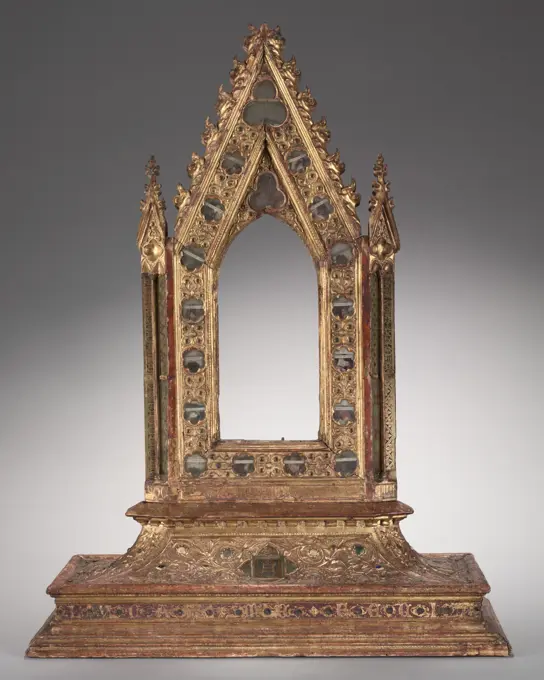
Wall arm of gilded bronze with a bust of a Chinese, Anonymous, c. 1750 - c. 1760 Gilt bronze wall arm, with two arms. The trunk is formed by a bust of a Chinese man or woman, surrounded by C-shaped rocaillem motifs. The arms show C and S-shaped leaf motifs. See also: BK-16898-A/C. Paris bronze (metal) gilding Gilt bronze wall arm, with two arms. The trunk is formed by a bust of a Chinese man or woman, surrounded by C-shaped rocaillem motifs. The arms show C and S-shaped leaf motifs. See also: BK-16898-A/C. Paris bronze (metal) gilding
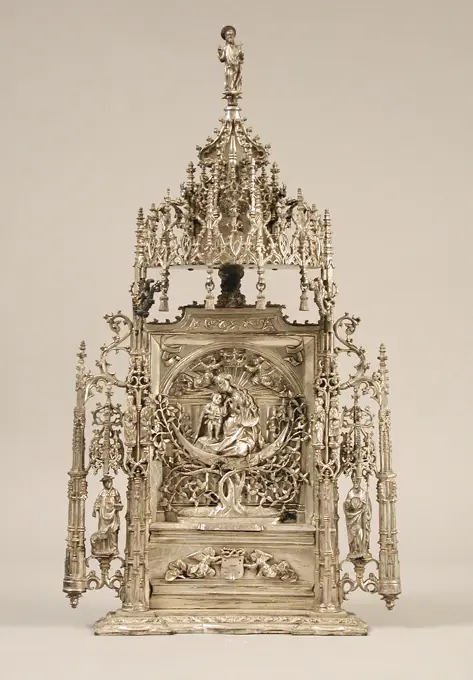
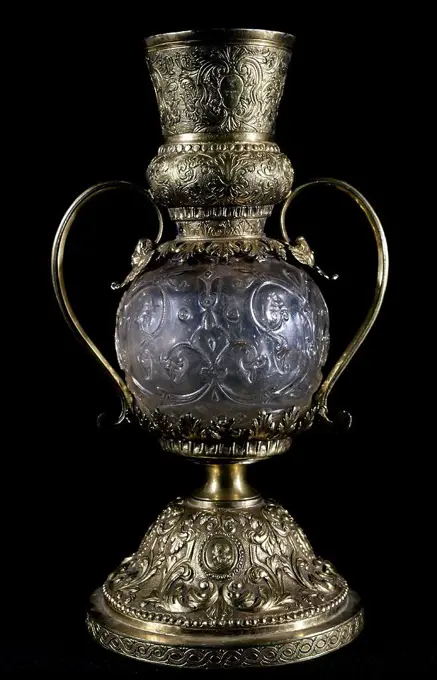
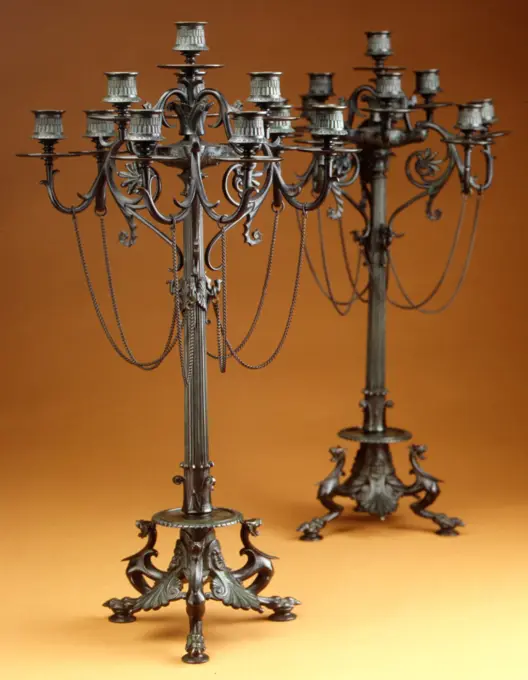
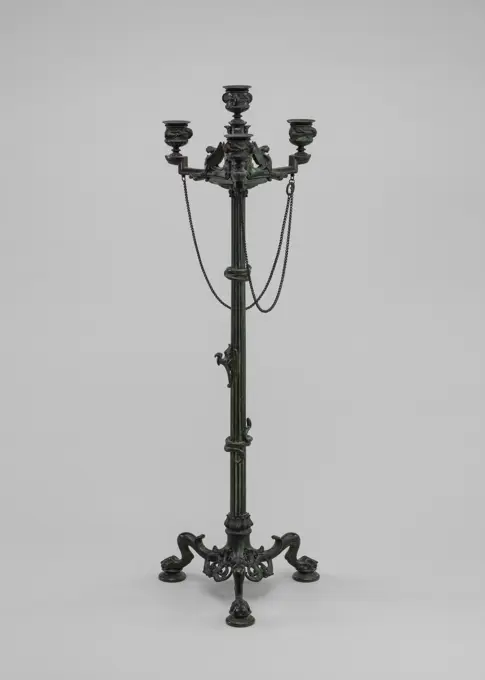
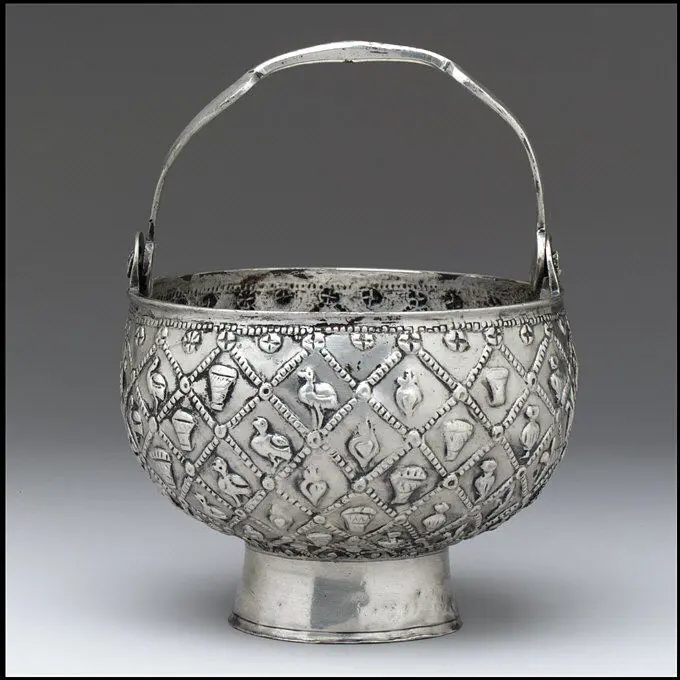
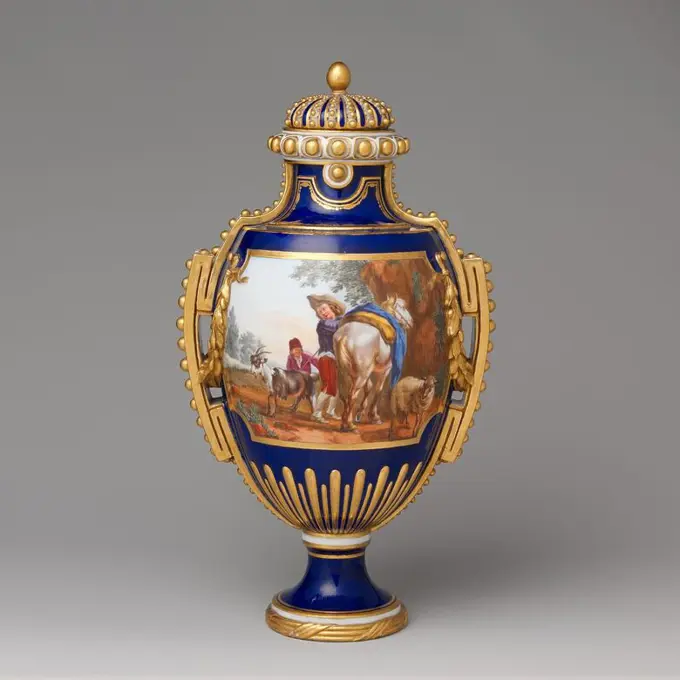
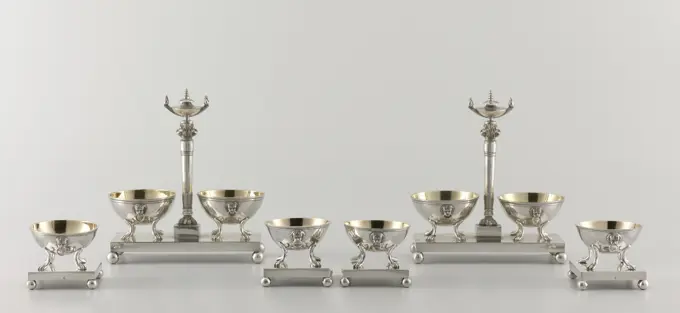
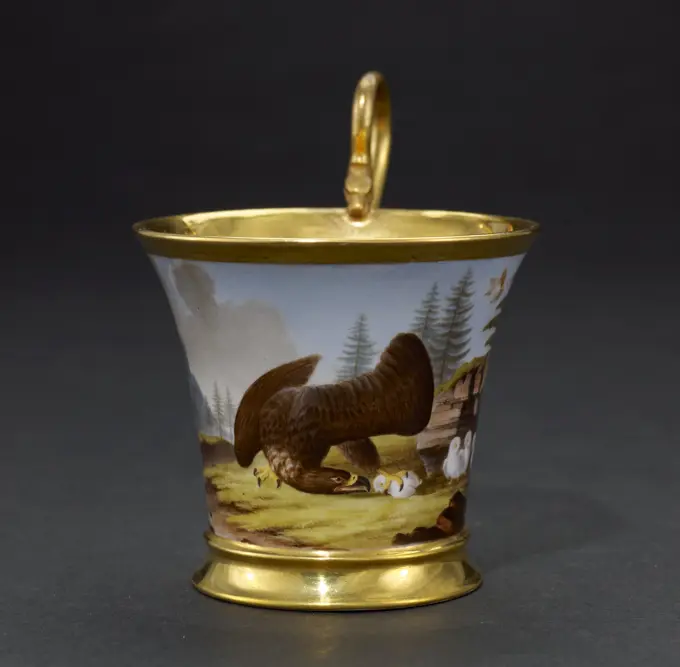
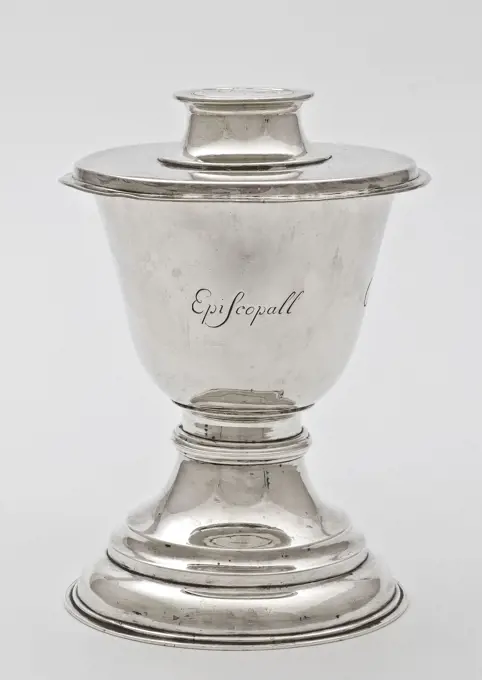
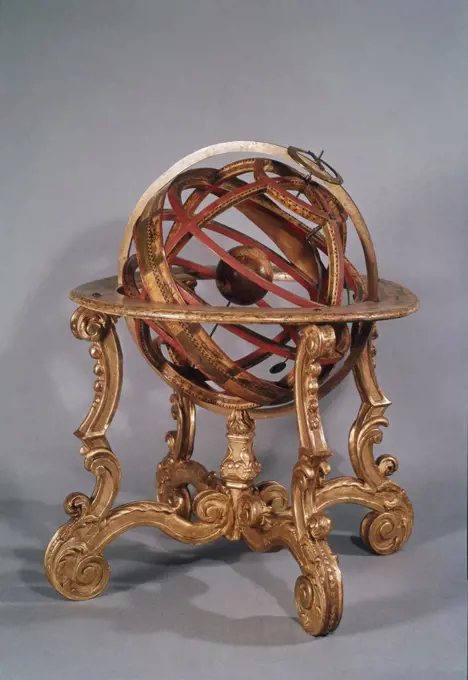
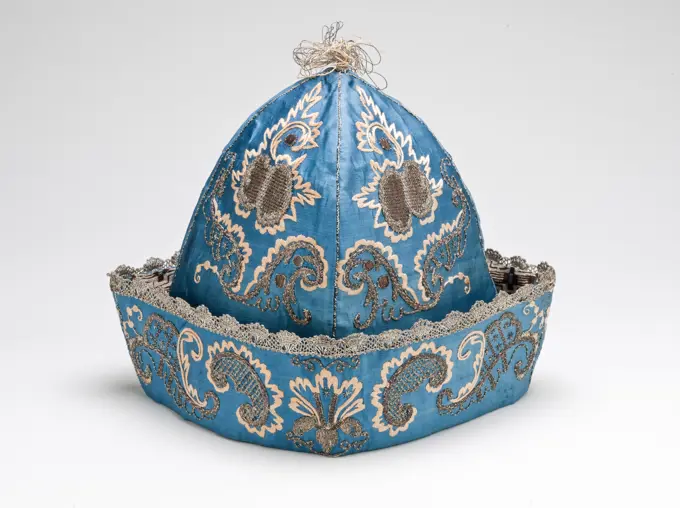
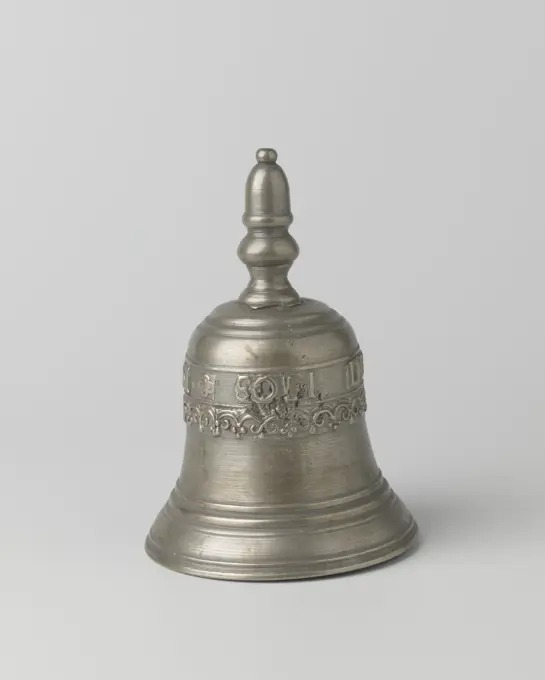
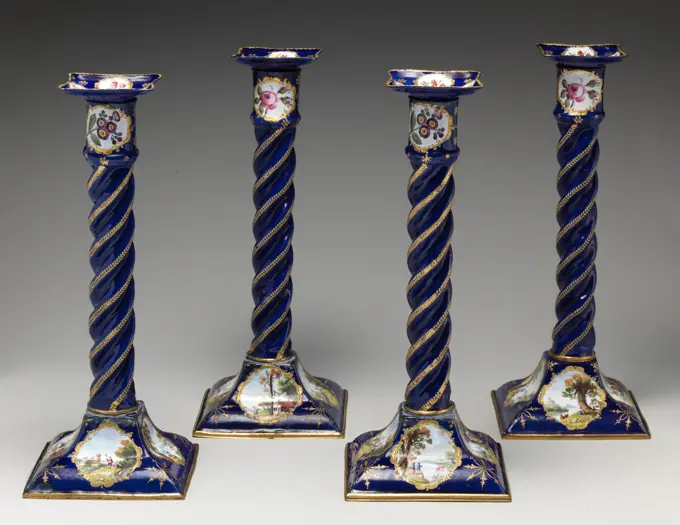
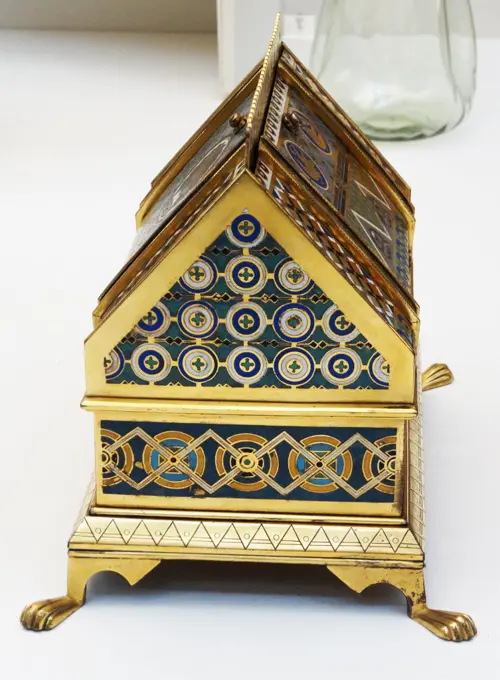
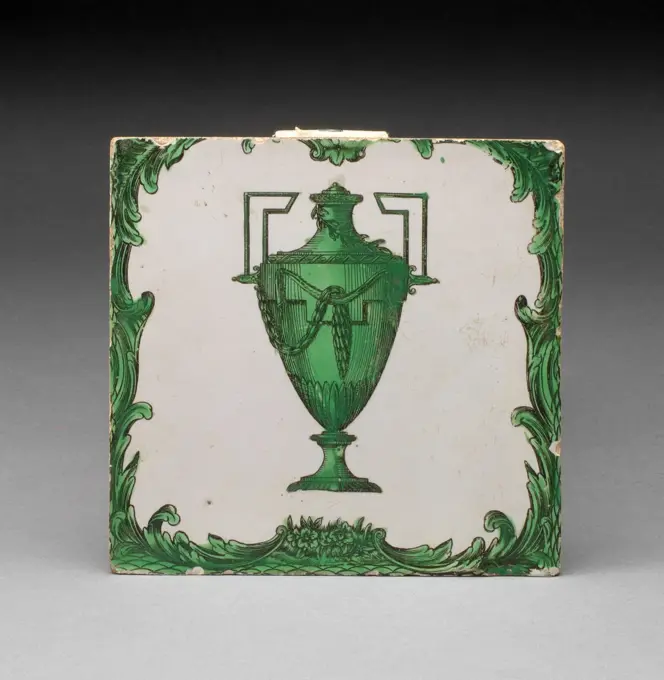
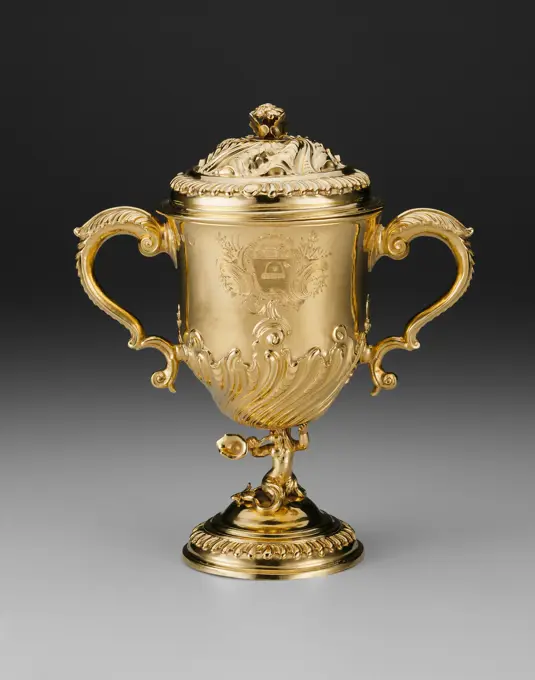
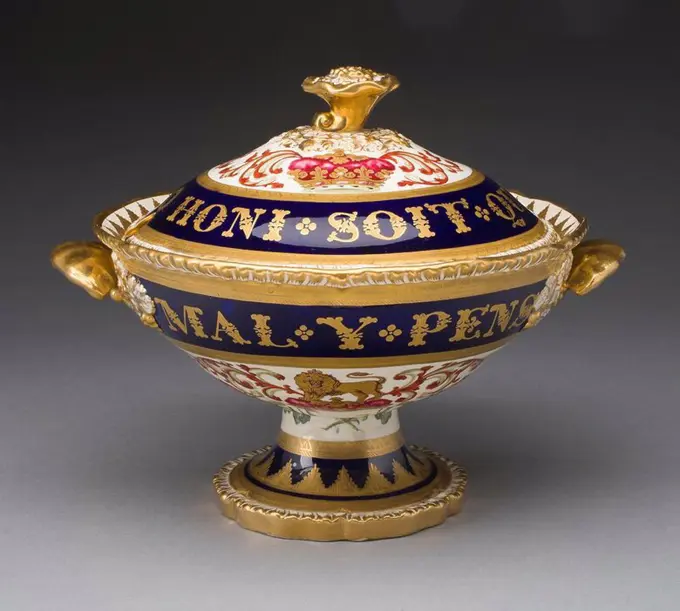
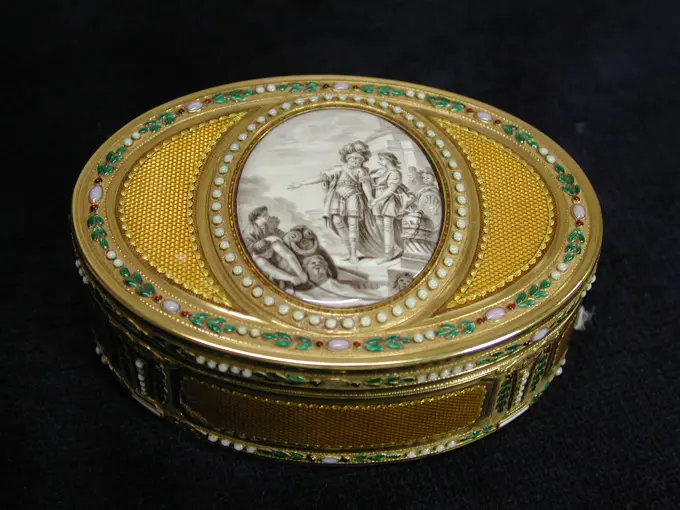
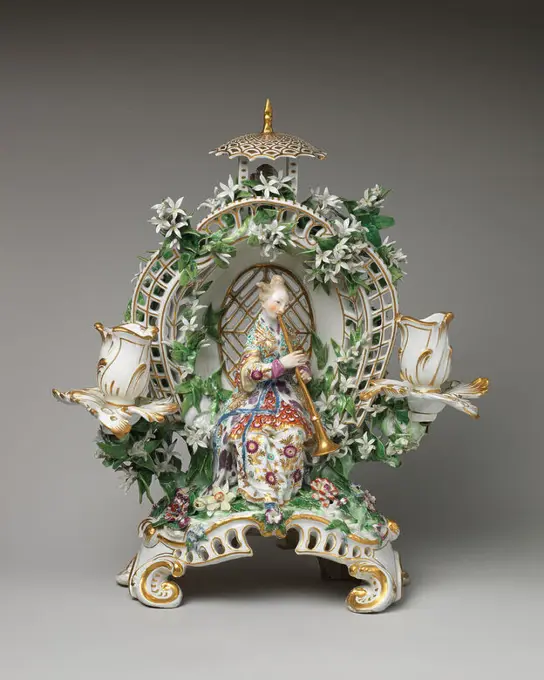
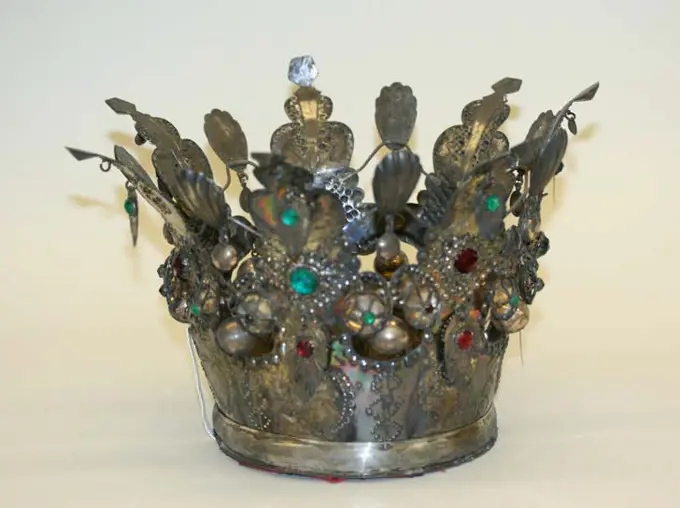
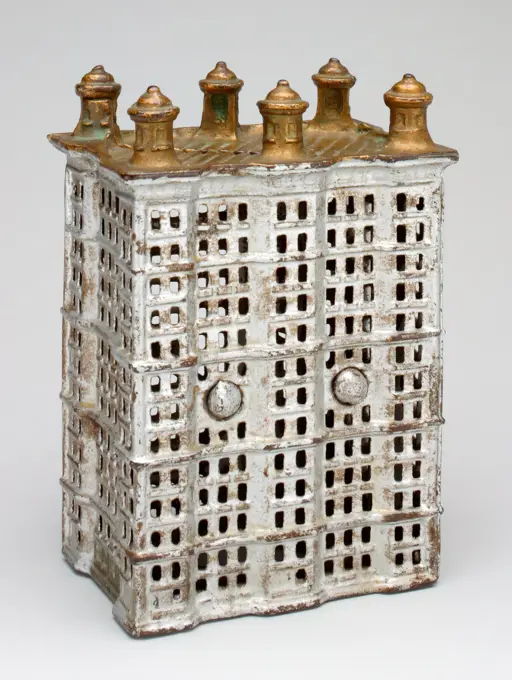
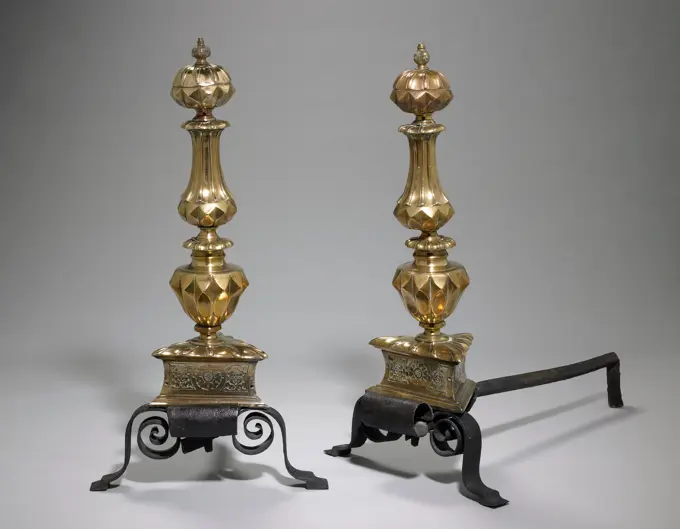
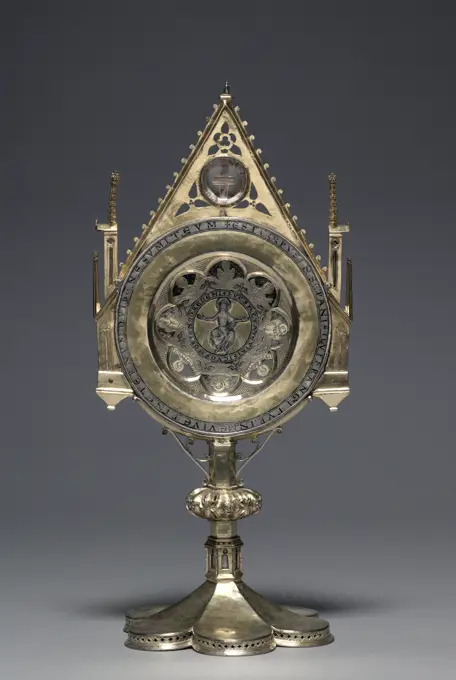
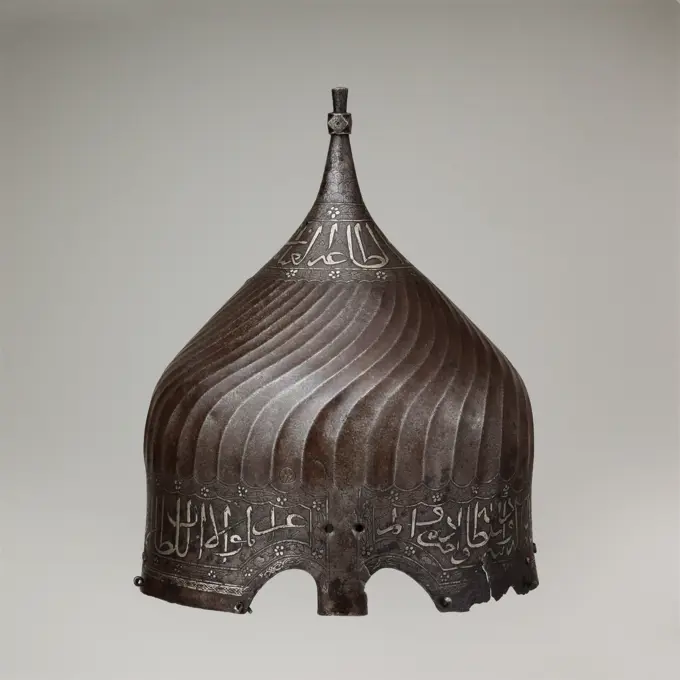
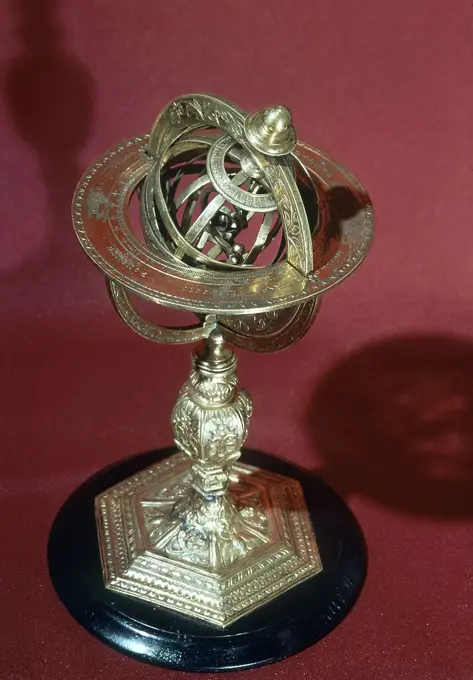
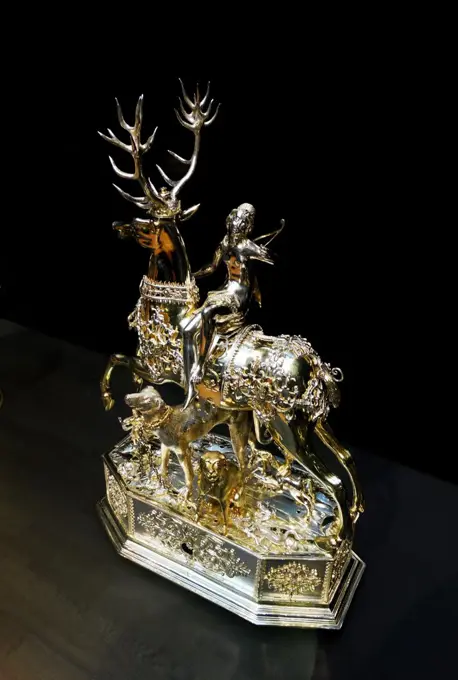
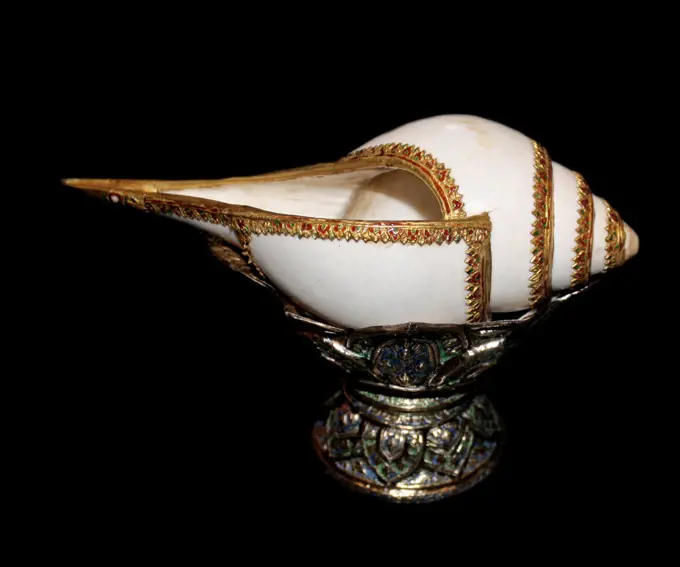
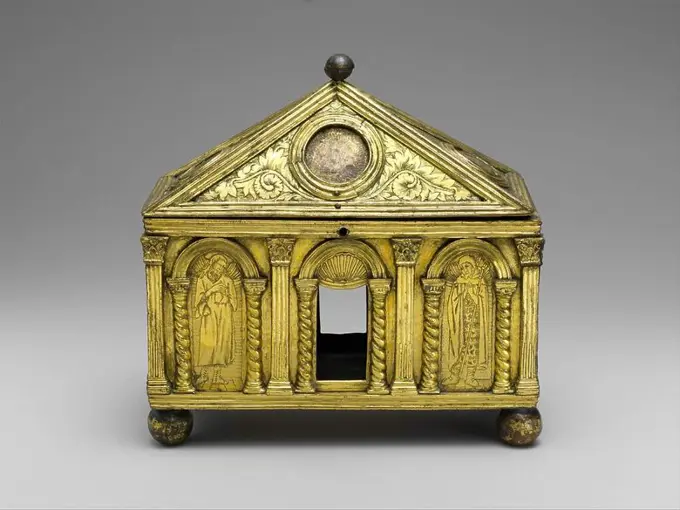
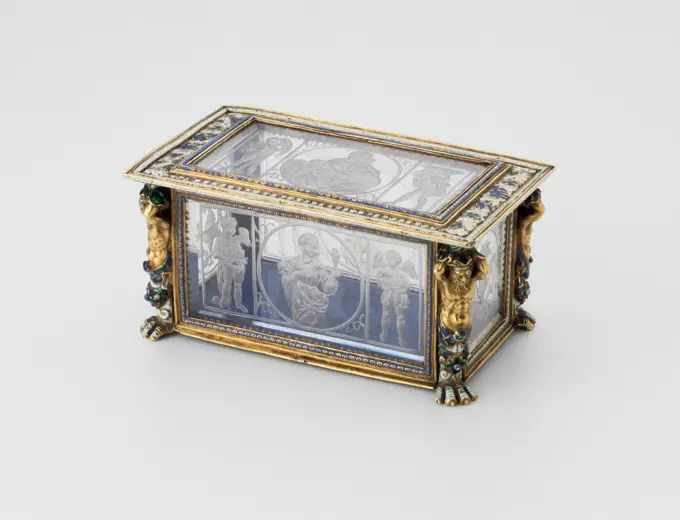
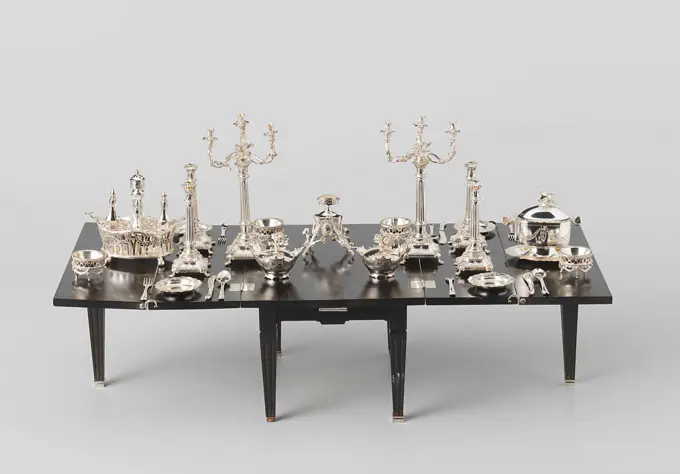
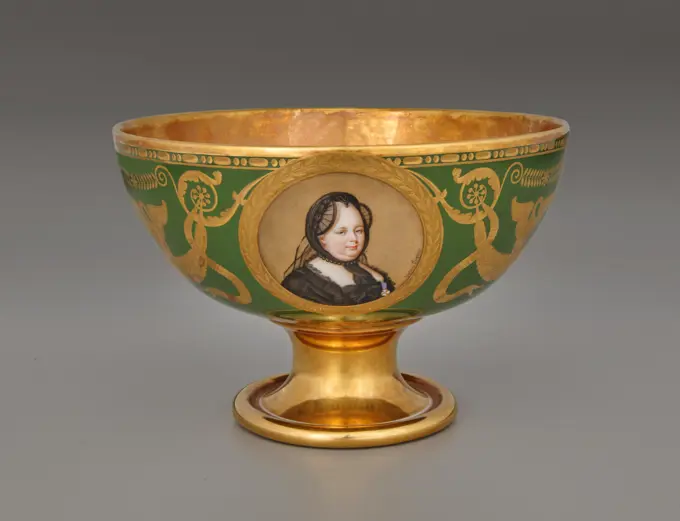
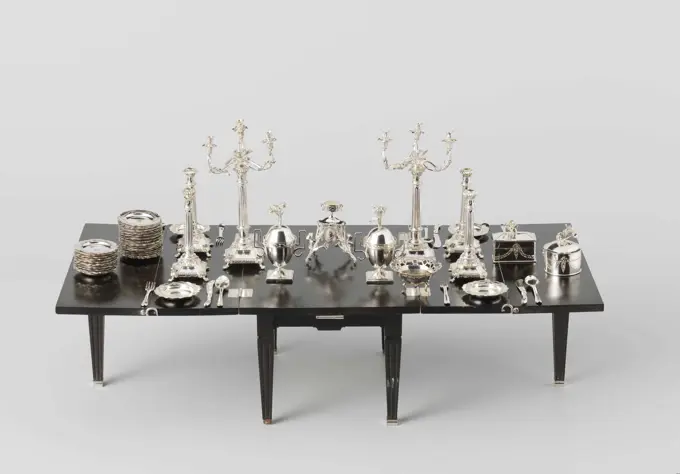
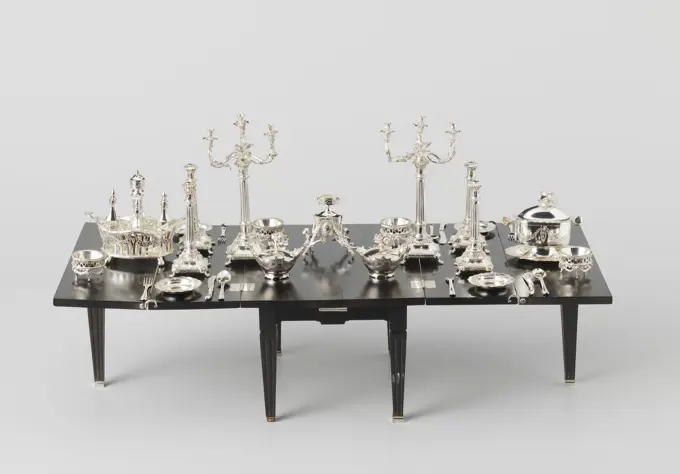
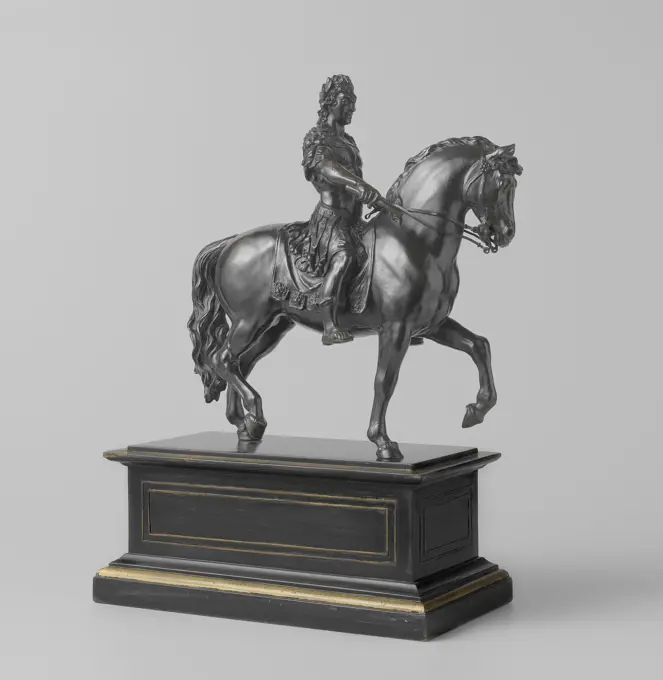
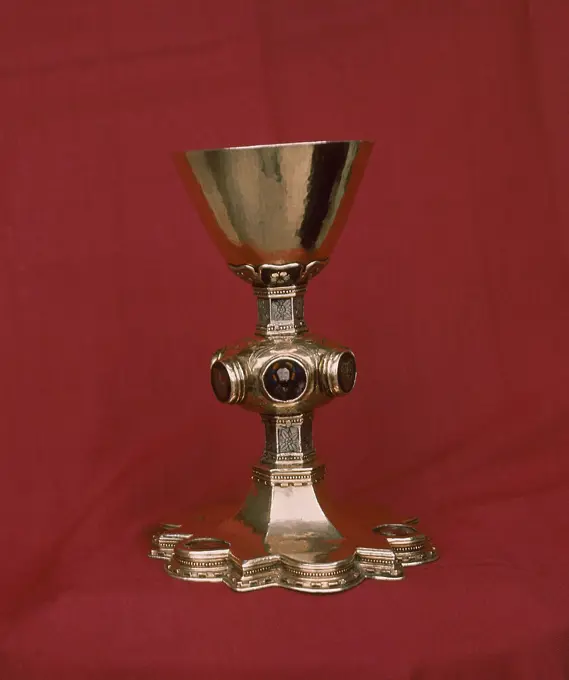
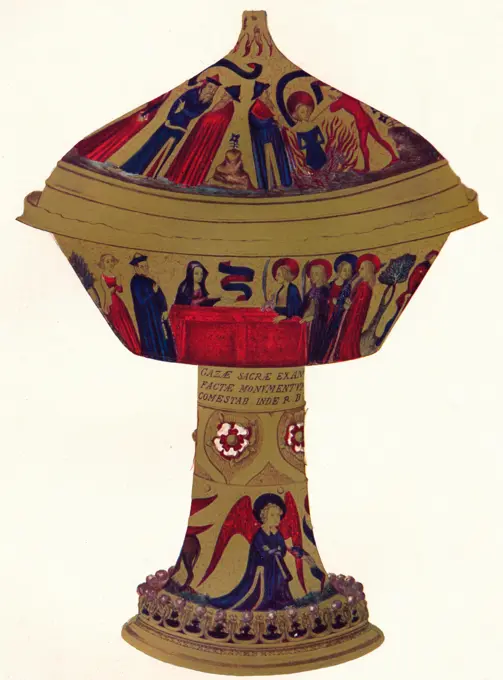
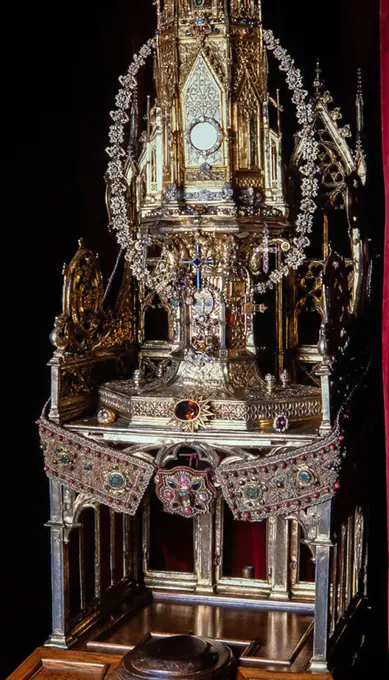
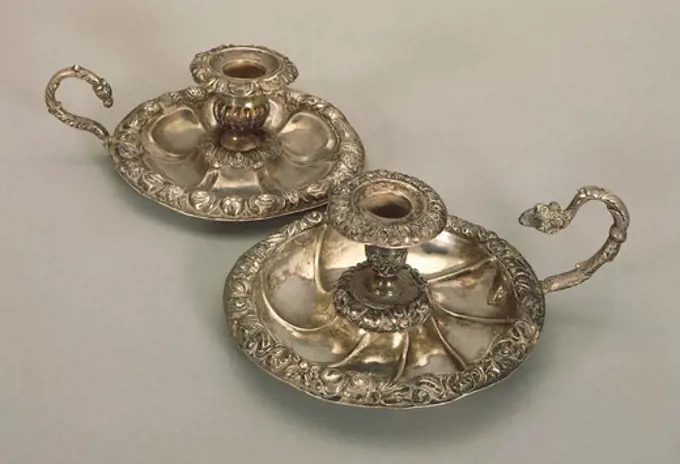
Silversmith's Art, Italy 19th century. Silver candlesticks with embossed borders with floral motifs.Box, late 1700s. Switzerland, late 18th century. Gold and enamel; overall: 2.4 x 5.8 cm (15/16 x 2 5/16 in.).Two half-spherical trays on four claws, standing on a rectangular plate, which rests on four spherical feet. The whole is crowned by a Kylix-shaped oil lamp. Signature and dated.Fragment of drinking glass with ribbed node in the stem, pontilemark, folded foot edge, drinking glass drinking utensils tableware holder fragment soil find glass gold, free blown and shaped glass application Fragment of foot and stem of drinking glass in clear colorless glass in façon de Venise style. Pontil mark under slightly ascending hollow base with rim folded down. Flat knot with short massive trunk to hollow 11-fold ribbed knot (with traces of gilding) closed with flat knot archeology Rotterdam IJsselmonde drinking wine serve beer Soil discovery: IJsselmonde Castle 1 and 2 Rotterdam 1972.Pax early 20th century (original dated late 15th century) Portuguese. Pax 463211CALIZ DE SAN SEGUNDO. Location: CATEDRAL DE SANTA MARIA. ASTORGA. LEON. SPANIEN.Zoutvat, Spitsovaal, with openwork wall with pearl lists, Nathanael Teuter, 1805 The striker ovale, vaulted barrels (A, B, C and D), who have slightly raised walls on the sides, rest on an oval, strongly rejuvenating foot with a straight -walled base. The body is open with alternating knots and rosettes. Pearl lists run around the foot, around the top edge of the body and over the high rising ears. Amsterdam silver (metal) The striker ovale, vaulted barrels (A, B, C and D), who have slightly raised walls on the sides, rest on an oval, strongly rejuvenating foot with a straight -walled base. The body is open with alternating knots and rosettes. Pearl lists run around the foot, around the top edge of the body and over the high rising ears. Amsterdam silver (metal)Ten-light Grecian-style candelabrum (one of a pair) probably ca. 1857-75 Antoine-Louis Barye French. Ten-light Grecian-style candelabrum (one of a pair). French. probably ca. 1857-75. Bronze. Metalwork-Bronze. Wall blender of porcelain. The wall plate, a standing oval, is scalloped and has been awarded with a range, consisting of acanthus and lambrequins. At the bottom of a loose with a screw and nut fixed arm with candle holder and fat catcher. The blakers are painted multi-colored with flower branches around a medallion placed in the middle of the wall plate with a landscape with houses in Chinese style. Arms decorated with the same branches. The fat catchers and candle holders with piping in red, purple and gold. Acanthus of the crown alternate in purple and blue, the lambrequins in blue, red and purple or green, red and purple. The edge of the wall plate has a trim in red. Around the medallion a golden trim. Note: Rear wall plate unglazed. NOTE: Both wall blakers (A, B) have a lot of frying cracks. The wall plate from A is broken and restored to a boundary burst in two. The turns on the arms on the wall plates have been restored. The first two and the last three lambrequins were restorIncense tank with driven leaf decorations, Jan Luyting, 1754 Cinstarch of silver with high, vaulted vaulted lid. Driven leaf decorations on the foot and on the sections. Sun -shaped chain plate. Engraved on the lid edge: Kruislam, Maria with Kind and St. Bavo (). Marked. Haarlem silver (metal) Cinstarch of silver with high, vaulted vaulted lid. Driven leaf decorations on the foot and on the sections. Sun -shaped chain plate. Engraved on the lid edge: Kruislam, Maria with Kind and St. Bavo (). Marked. Haarlem silver (metal)Antoine Louis Barye, Three Light Candelabra Antique Style with Chains, model nd, cast c 1845 1874 Three Light Candelabra Antique Style with ChainsSilver Bucket 600s Byzantine Silver stamps on the bottom identify this bucket as a Byzantine product, likely of a much earlier date than the rest of the treasure.The AvarsThe Avars were a nomadic tribe of mounted warriors from the Eurasian steppe. The Byzantine emperor Justinian negotiated with them in the sixth century to protect the Empires northern border along the Black Sea. Emboldened by their subjugation of numerous tribes, they unsuccessfully attempted to seize the Empires capital, Constantinople. They remained a scourge of both Byzantium and the Western kingdoms until Charlemagne defeated them through a series of campaigns in the 790s and early 800s.All the money and treasure that the Avars had been years amassing was seized, and no war in which the Franks have ever engaged.. brought them such riches and such booty. Up to that time the Avars had passed for a poor people, but so much gold and silver was found.. that one may well think that the Franks took justly from the Avars. The object consists of an iron rod and an iron split pen and the next cast parts of yellow copper: the hanging ring, the maria figure with the crown and her riveted on her head with the Christ child, the trunk, at the top to cover a bolron round plate Is roasted, and at the bottom of an iron eye with two cams is riveted (so that the rod should be inserted), the lion's head with the drawing ring, the collar, twice eight arms with the corresponding fat catchers and candle holders. The more or less octistic round hanging ring leaves at the bottom in a severe hollow pipe. The maria figure placed on the crescent is surrounded by a beams. Her dress and cloak are decorated with punched stars. The hair reaches on the back to the agent. The crown is composed of five fleurons. The hollow and bol rounded stem has between the two stand rings a bantled shape decorated with a rib. The two standings always have eight notches, which are unnoticed, or are noticed with one to seven points. Above the lTable for formal tickets;  after 1860 (1860-00-00-1875-00-00);Vase with cover (vase à panneaux or à perles) (one of a pair). Culture: French, Sèvres. Decorator: Pastoral scenes attributed to Charles Nicolas Dodin (French, Versailles 1734-1803 Sèvres); Wreaths attributed to Jean-Baptiste Tandart (French, active 1754-1800). Dimensions: Height: 13 1/8 in. (33.3 cm). Manufactory: Sèvres Manufactory (French, 1740-present). Date: ca. 1766.The French names for these vases (see also 58.75.83a-c) "à panneaux" and "à perles" refer to the paneled reserves, here with painted pastoral scenes after compositions by the Dutch painter Nicholaes Berchem, and to the three-dimensional pearl motives on the lid and running down the sides. The plaster model for this type of vase, which was available in two different sizes, has been preserved in the archives of the Sèvres manufactory. The Museum's pair is an example of the smaller size.Jeffrey H. Munger, 2006. Museum: Metropolitan Museum of Art, New York, USA.One of two Bouts de Table, Francois Marcus Simons, 1803 Two half-sphere containers on four claw legs, standing on a rectangular plate, which rest on four spherical feet. The whole is crowned by a Kylix-shaped oil lamp. Marked and dated. The Hague silver (metal) casting Two half-sphere containers on four claw legs, standing on a rectangular plate, which rest on four spherical feet. The whole is crowned by a Kylix-shaped oil lamp. Marked and dated. The Hague silver (metal) castingCup from a tea service for twelve, 1807-08, Christophe-Ferdinand Caron; Manufacturer: Sèvres Porcelain Factory, French (Sèvres), French, 1774-1831, 4 5/16 x 4 1/2 x 3 3/8 in. (10.95 x 11.43 x 8.57 cm), Hardpaste porcelain, gilt, France, 19th centuryAdrianus Stratenus, Silver cup with The English Episcopal Church, cup liturgical vessel holder silver, grams, 389 grams (ab) Silver cup with profiled round base above which bell-shaped stem provided with profiled ribbed ring Engraved on the chalice: The Englisch Episcopall Church Rotterdam Delfshaven Pieter de Hoochweg St. Mary's Church religion church religious ceremonyGlobe (Sphere Armillaire) 1800's  Antiques Palace of Versailles, France   Subdates of ink set; Subdecast of ink set to which lying Chinese in the dressing gown. Subdamer from combined watch sander, ink set and candle holder. Painted.Tureen with Cover c 1787-1790 China. Porcelain with enamel and gilding .Joke Glass (Scherzgefäss). UnknownGold jug with dragon handle, emeralds and rubies, 16th cent. Suleyman the Magnificent Ottoman Treasure from the Topkapi palace, Istanbul. TURKEY.Table lamp. Culture: American. Dimensions: 21 1/8 in. (53.7 cm)Body diameter: 18 1/4 in. (46.4 cm). Maker: Tiffany Studios (1902-32). Date: ca. 1895-98.This lamp is among the earliest produced by Tiffany studios, made before Tiffany embarked on the predominantly floral leaded-glass lampshades for which the firm is known. Especially unusual is the use of blown Favrile glass for the oil font, as he had only begun experimenting with blown glass a few years earlier. Typical of his inventiveness, the lamp combines materials and exotic patterns (the bronze collar includes an Islamic-inspired design) to produce an object of exquisite richness. The paisley-shape glaze jewels that ornament the scroll feet are elements found in the decorative program Tiffany executed for Louisine and Henry O. Havemeyer's house in the early 1890s. Museum: Metropolitan Museum of Art, New York, USA.Mans At-home Cap. Europe, first half of 18th century. Costumes; Accessories. Silk plain weave with silk and metallic-thread embroidery, and metallic-thread lace trim. .Handbell, anonymous, 1661 The object is composed of four parts: the bronze Schel and the bronze handle, the iron ear and the wrought iron clapper. The shell is clock -shaped and has a profiled edge. At the top of the inscription Soli Deo Gloria 1661 and a Frisian of Boogjes. The handle is button -shaped with a glans on top. Netherlands bronze (metal). iron (metal) casting The object is composed of four parts: the bronze Schel and the bronze handle, the iron ear and the wrought iron clapper. The shell is clock -shaped and has a profiled edge. At the top of the inscription Soli Deo Gloria 1661 and a Frisian of Boogjes. The handle is button -shaped with a glans on top. Netherlands bronze (metal). iron (metal) casting35mm originalSugar bowl and creamerset.  Maker: Fletcher and Gardiner, American, 1808-1836Candlesticks (4) ca. 1770 British, South Staffordshire. Candlesticks (4). British, South Staffordshire. ca. 1770. Enamel on copper. Enamels-PaintedJewel casket; c.1870 England; Birmingham. Attributed to John Hardman & Co.; Gilt; brass and enamel.Tile Made 1775-1780 Liverpool. Tin-glazed earthenware, transfer-printed . John SadlerCovered Cup 1757-1758 London. Gold . Richard GurneyPair of Lamps c 1822-1850 United States. Pewter . Roswell GleasonCovered Cream Bowl. Worcester Porcelain Factory (Flight, Barr & Barr Period); English, founded 1751; Retailed by Mortlock China Co.; English, 1746-1896. Date: 1815-1825. Dimensions: 23 x 20.3 cm (9 1/16 x 8 in.). Soft-paste porcelain, polychrome enamels and gilding. Origin: London. Museum: The Chicago Art Institute, Chicago, USA. Author: H. & R. Daniel (Firm).Covered Cup. England, London; Richard Gurney and Thomas Cook (English, active 1727-1773). Date: 1757-1758. Dimensions: H. 20.3 cm (8 in.)Weight: 18 oz. 16 dwts. Gold. Origin: London. Museum: The Chicago Art Institute, Chicago, USA. Author: Richard Gurney.Compote - Marquis & Marchioness of Lorne Landed at Halifax, N.S. 25th Novr 1878Snuffbox with miniature depicting departure of Telemachus from Egypt 1780-81 Charles Ouizille In eighteenth-century Europe, Paris led the production of high-quality luxury goods. Parisian goldsmiths made a wide range of small, personal articles such as snuffboxes; étuis to hold sealing wax, tweezers, or utensils for sewing; souvenirs, which contained thin ivory tablets for note taking; and shuttles for knotting lace. Gold snuffboxes and boxes decorated with portrait miniatures were prized and frequently given as royal gifts, often to ambassadors or members of the court in lieu of cash payments for their services. Coveted and admired, these boxes were produced from a variety of materials. The best were skillfully made of gold and embellished with diamonds, enameled decoration, lacquer, and other luxurious materials. By the middle of the century, the taking of snuff had become an entrenched social ritual, and the snuffbox, too, had become an important social prop. Snuffboxes were consideCandelabrum (one of a pair). Culture: British, Chelsea. Dimensions: Height: 13 5/8 in. (34.6 cm). Factory: Chelsea Porcelain Manufactory (British, 1745-1784, Gold Anchor Period, 1759-69). Date: ca. 1765. Museum: Metropolitan Museum of Art, New York, USA.Wedding crown 19th century Norwegian. Wedding crown 89571Caster. Culture: American. Dimensions: 4 5/16 x 2 3/4 in. (11 x 7 cm). Maker: Goodnow & Jenks (1893-ca. 1905). Retailer: Bigelow, Kennard & Co. (1830-1922). Date: ca. 1900. Museum: Metropolitan Museum of Art, New York, USA.Skyscraper, Six Posts' still bank, c. 1900-1909, A.C. Williams Company, American, Ravenna, Ohio, est. 1886, 6 1/2 x 4 x 3', Iron, pigment, 19th-20th centuryAndiron, one of a pair, 16th century, 31 1/2 x 16 1/2 in. (80.01 x 41.91 cm), Brass and wrought iron, Italy, 16th centuryPair of Candlesticks. Etienne Martincourt (French, died after 1791, master 1762)Monstrance with the "Paten of Saint Bernward", c. 1180-1190. Saint Oswald Reliquary Workshop (German). Silver, gilded silver, niello, rock crystal; overall: 34.5 x 15.9 x 14 cm (13 9/16 x 6 1/4 x 5 1/2 in.); part 1: 13.5 cm (5 5/16 in.); part 2: 34.3 cm (13 1/2 in.).Turban Helmet late 15th century Iranian Helmets of this type are usually called turban helmets becuase of their large bulbous shape and the flutings that imitate the folds of a turban. Because certain dervish groups wore turbans wound with a prescribed number of folds to represent an important mystical number, it is likely that turban helmets were regarded not merely as armor but also as a kind of religious insignia, their very shape marking the wearer as a fighter in a Holy War.Turban helmets, together with mail-and-plate armor of matching decoration, were intended for the heavy cavalry and are recorded as early as the fourteenth century. The examples exhibited here appear to have belonged to the dynasty of Aq Quyunlu (White Sheep Turkoman), which ruled northwestern Iran and Anatolia in the fifteenth century. The inscriptions, damascened with gold and silver, glorify temporal rulers, wish the owner well, or give advice on how to attain virtue.. Turban Helmet 25380Relica-ostensorium in the form of heavenly Jerusalem. The suffering tools of Christ are engraved on the heavy sixloby foot with around raised middle part. Trunk and Nodus are coarse. On the tilted base, against which two hangers are applied to each side of the trunk, in which a transparent orange glass bead and a light blue opaque bead are caught, a castle-like structure is attached with two round defense towers on either side of a gate input, with In the middle in the middle, a tower consisting of a hexagonal lantern and a cast-off top part, flanked by two structures with roofs and tower towers. On the round defense towers on either side of the gate and on the three other towers, blue glass beads are arranged with an opening, making the pins to be put on which Saints were placed: a saint with a hammer (H. Eligius), a saint with a saint with a saint Kelk (the apostle John) and a praying saint. The praying saint is an addition from the 19th century.Bust of Frederika Louise Wilhelmina Princess of Prussia. Bust of Frederika Louise Wilhelmina Princess of Prussia, wife of Willem Prins of Oranje-Nassau, the later king Willem I. labeled in blue f / 2 and rebel 2 and F.Candlestick of multi-colored painted faïence. Candlestick of Faïence. Painted multi-colored.Pair of tea cans. Nash, Bowles (fl. 1720-ca 1725), goldsmithArm of a candle crown in two heights, Anonymous, 1630 The S-shaped arm is provided with a ridge on the trunk side with an opening to secure it with a pin in the stand rings. At the trunk the arm is decorated on the end and to the center with two stylized dolphin heads and with three pairs of curls or leaves executed in lobe style. To the outside, the arm ends in a lip, in which a hole provided with a thread is applied, to confirm the candle holder and the fat catcher. The arm is cast using the same model as the other arms of the wreath. The cylindrical candle holder has two profiled ribs, two grooved rings and profiled excellent edge. The fat catcher is deepened twice at the top towards the center. At the bottom it is profiled around the hole on the somewhat spherical middle and ribbed on the edge and with two grooved rings. The fat catcher has been cast using the same model as the other fat catchers of this wreath. The pin is equipped with a vase -shaped button. This is the fifth arm Shields of a candle crown in two heights, Anonymous, 1630 The shields are modeled in quabstyle and provided with the following inscription, show, letters and signs: AO1630 / Has / Het.linne / Wevers / Gilde.dese / Crone.inde / brother / kercke / honors; At the top left a crowned coil and left and right the initials of the overs of the guild: WCL / private label and ID / CI / HS. Northern Netherlands brass (alloy) casting The shields are modeled in quabstyle and provided with the following inscription, show, letters and signs: AO1630 / Has / Het.linne / Wevers / Gilde.dese / Crone.inde / brother / kercke / honors; At the top left a crowned coil and left and right the initials of the overs of the guild: WCL / private label and ID / CI / HS. Northern Netherlands brass (alloy) castingESFERA ARMILAR ITALIANA EN BRONCE DORADO - 1650. Location: PRIVATE COLLECTION. MADRID. SPAIN.Table automaton in the form of Diana on a stag. Created by Jacob Miller (1550-1618). Dated 17th CenturyMirror Female Harlequin 1740-1760 Italy. Tin-glazed earthenware (faience) and mirror glass .Conch Shell water vessel 1800-94 Conches are used to pour sanctified water in a number of Brahmanic ceremonies including the cutting of a prince or princess's top-knot to mark the reaching of puberty. They are also used during Thai marriage ceremonies where water is poured over the hands of the bride and groom. In ancient Indian Hinduism the conch was a symbol of sovereignty and power.Reliquary casket. Artist: Circle of Lorenzo Ghiberti (Italian, Florence 1378-1455 Florence). Culture: Italian, Florence. Dimensions: Overall: 7 1/2 × 7 3/4 × 3 1/4 in. (19.1 × 19.7 × 8.3 cm). Date: 1446.The strongly architectural nature of the design suggests that it may have been based on a late antique sarcophagus. The inscription (on the two end panels) may be translated, "Domina Mattea, wife of Renzo, had this work made for the sake of her soul and those of her family, 1446.". Museum: Metropolitan Museum of Art, New York, USA.Frame for a Portable Reliquary Icon, 1347. Italy, Siena, 14th century. Gilded wood, modeled gesso, verre églomisé, glass cabochons, and relics; overall: 66.7 x 51.3 x 25.3 cm (26 1/4 x 20 3/16 x 9 15/16 in.).Casket with the Three Theological Virtues 1500-1550 Northern Italy. Miniature caskets might have been used in the Renaissance to house jewels or possibly saintly relics. This example features panels of engraved rock crystal, an extremely hard material of great clarity and polish that is carved only with patience and skill. The emblematic figures depicted here are modeled after the work of the sixteenth-century Italian painter Raphael.. Gold, enamel, rock crystal, and lapis lazuli .Table clock with calendar Various artists/makers 1881 This clock was made for the great English collector Alfred Morrison; the designer, Lucien Falize, later proudly displayed it in the 1889 Paris Exposition Universelle. The historical revival case has the form of a late Gothic tower, decorated elaborately with sculptural and architectural motifs. Its craftsmanship confirmed Falizes reputation as an enameler and a jeweler. The clocks movement is by Le Roy et Fils, a Paris firm with a London branch that held a Royal Warrant from Queen Victoria. View more. Table clock with calendar. Sculpture by Léon Chédeville (died 1883). French, Paris. 1881. Silver, partly enameled gold, hardstones, rock crystal, amethysts, and diamonds. HorologyCandle holder. Candlestick on square feet. The foot has beveled corners and stands on four claw legs. The tribe has the form of a fluted column with a capital. The candlestick is labeled: STK. = Amsterdam, jrl. = X (1782) and an unknown master sign. The foot and tribe are equal to those of the candlesticks with Invnrs. BK-NM-11177-183 and BK-NM-11177-184 ..Tobacco cup. Around Tabakskomfoor on three legs and a starter for a handle. The handle is missing. The bin is widely clock-shaped and has a wide openwork edge. There is a copper inner bin in the container. The tobacco bombing has been labeled: STK. = Amsterdam, JRL. = V (1780) and an unreadable master sign. The Komfoor is equal to a komfoor with Invnr. BK-NM-11177-129.The Chamberlain Casket, 1903 - View 1. Designer: Henry Wilson (d. 1934).. Commissioned by Members of the Constitutional Club to express admiration and gratitude to the Rt Hon Joseph Chamberlain MP in 1903 for his services at home and abroad. It was made at the Central School of Arts & Crafts, London.Jacob-Desmalter and Company, Guéridon, 1803-13, mahogany veneer and gilt bronze with marble top.Arm with candle crown candle holder, 1825 - 1875 Candle belonging to a brass candle crown. The S-shaped arm is decorated with nine vine leaves of wingerd leaves, partly to entangled tenders, and ends in the flat thickening with a screw hole. The round Vetvanger is equipped with ajour processed serrated decorations on the underside. This is attached with an eight -fold front and rear perforated candle holder on a vertical ring -shaped base, which are screwed onto the arms. This is the fourth arm, numbered with 4 triangles. West-Europa brass (alloy) casting Candle belonging to a brass candle crown. The S-shaped arm is decorated with nine vine leaves of wingerd leaves, partly to entangled tenders, and ends in the flat thickening with a screw hole. The round Vetvanger is equipped with ajour processed serrated decorations on the underside. This is attached with an eight -fold front and rear perforated candle holder on a vertical ring -shaped base, which are screwed onto the arms. This is thSèvres Porcelain Manufactory, Bowl (jatte à fruits hémisphérique) with portraits of Catherine the Great of Russia (1729-1796), Maria Theresa of Austria (1717-1780), and Blanche of Castille (1188-1252), 1812, Hard-paste porcelain.Snuff Box 1800-1825 Austria. Gold, enamel, pearl . Jacob FrisardEtruscan revival pendant. Culture: French. Dimensions: Overall (confirmed): 2 3/16 × 1 1/4 × 7/16 in. (5.5 × 3.1 × 1.1 cm). Maker: Probably Eugêne Fontenay (French, 1823-1887). Date: mid-late 19th century.While the pendant is not marked by Eugène Fontenay (1824-1887), it exhibits many of stylistic features closely associated with his work, including the matte enamel decoration, and the use of rose-cut diamonds, fine granulation, and beading. Fontenay was one of the leading jewelers working in France in the third quarter of the nineteenth century, and his jewelry was considered among the most technically refined of the work produced at this time. Much of Fontenay's jewelry was influenced by the antique jewelry of the Campana collection, purchased by the French state in 1861. This Etruscan revival pendant is a reflection of Fontenay's keen interest in classical prototypes. It is only the second work by Fontenay to enter the Museum's collection. The pendant belongs to a distinguished gro. Round eating sign with scalloped edge. Guird builds are engraved on the edge. A flower is engraved in the middle of the board. The sign has been labeled: stk. = Amsterdam, jrl. = X (1782) and mt. = Foot 430. The plate is a copy from a set consisting of 36 identical plates (BK-NM-11177-189 up to / m. NM-11177-224).Fles, Hendrik Duller, 1784 Bottle belonging to an oil and vinegar (BK-NM-11177-122). The bottle is octagonal and has a long, narrow neck. The bottle has a pour and a button -shaped lid. The bottle is together with three identical bottles (BK-NM-1177-122-D, BK-NM-1177-122-E, BK-NM-11177-122-F) on a plateau (BK-NM-11177-122 -B) in a basket (BK-NM-11177-122-A). Amsterdam silver (metal) Bottle belonging to an oil and vinegar (BK-NM-11177-122). The bottle is octagonal and has a long, narrow neck. The bottle has a pour and a button -shaped lid. The bottle is together with three identical bottles (BK-NM-1177-122-D, BK-NM-1177-122-E, BK-NM-11177-122-F) on a plateau (BK-NM-11177-122 -B) in a basket (BK-NM-11177-122-A). Amsterdam silver (metal)Fles, Hendrik Duller, 1784 Bottle belonging to an oil and vinegar (BK-NM-11177-122). The bottle is octagonal and has a long, narrow neck. The bottle has a pour and a button -shaped lid. The bottle is together with three identical bottles (BK-NM-1177-122-C, BK-NM-1177-122-D, BK-NM-11177-122-E) on a plateau (BK-NM-11177-122 -B) in a basket (BK-NM-11177-122-A). Amsterdam silver (metal) Bottle belonging to an oil and vinegar (BK-NM-11177-122). The bottle is octagonal and has a long, narrow neck. The bottle has a pour and a button -shaped lid. The bottle is together with three identical bottles (BK-NM-1177-122-C, BK-NM-1177-122-D, BK-NM-11177-122-E) on a plateau (BK-NM-11177-122 -B) in a basket (BK-NM-11177-122-A). Amsterdam silver (metal)Knife with gun -shaped handle, anonymous, c. 1775 - c. 1800 Knife with gun -shaped blade and gun -shaped handle. The knife is not marked. The knife is equal to five knives with the invnrs. BK-NM-11177-237, BK-NM-1177-238, BK-NM-11177-240, BK-NM-11177-241 and BK-NM-11177-242. Netherlands silver (metal) Knife with gun -shaped blade and gun -shaped handle. The knife is not marked. The knife is equal to five knives with the invnrs. BK-NM-11177-237, BK-NM-1177-238, BK-NM-11177-240, BK-NM-11177-241 and BK-NM-11177-242. Netherlands silver (metal)Kastanjevaas, Hendrik Duller, 1789 Egg -shaped chestnut cheese on a square foot. The two handles are rectangular at the top and bent around at the bottom. The vase is grooved vertically. The highly skinned lid is not grooved. The button of the lid is formed by a bunch of flowers. Shiringes are engraved on the foot. The Kastanjevaas is marked: stk. = Amsterdam, Jrl. = G (1791) and Mt. = Hendrik Duller. The Kastanjevaas belongs to an identical vase (BK-NM-11177-246). Amsterdam silver (metal) Egg -shaped chestnut cheese on a square foot. The two handles are rectangular at the top and bent around at the bottom. The vase is grooved vertically. The highly skinned lid is not grooved. The button of the lid is formed by a bunch of flowers. Shiringes are engraved on the foot. The Kastanjevaas is marked: stk. = Amsterdam, Jrl. = G (1791) and Mt. = Hendrik Duller. The Kastanjevaas belongs to an identical vase (BK-NM-11177-246). Amsterdam silver (metal)FANAL DE LA NAVE DE DON ALVARO DE BAZAN EN LA BATALLA DE LEPANTO - H.1570. Location: PALACIO DE LA MARQUESA DE SANTA CRUZ. MADRID. SPAIN.Pair of Firedogs. UnknownEquestrian statue of Stadtholder-King William III, William Low (possibly), c. 1827 figure. sculpture Man dressed as Roman general, on horseback. He has the left hand on the rein and has a scepter in the right hand. The horse keeps its head a little to the left. It has raised the left front leg and the right hindleg. The whole stands on a rectangular pedestal with a decoration of double lines. Dublin bronze (metal). wood (plant material) casting equestrian state-portrait EnglandCALIZ DEL COMPROMISO DE CASPE - SIGLO XV. Location: COLEGIATA. Caspe. Saragossa Zaragoza. SPAIN.Cáliz de Galcera de Vilanova, 1390. Museu Diocesà d'Urgell.Germany, Bavaria, Munich, Bavarian National Museum, 18th century Silver Table Service from AugsburgThe Royal Gold Cup, c1370, (1904). Creator: Unknown.Incense burner - Inconnu / UnknownSkeleton Clock in the Form of the Scott Memorial, Edinburgh. 1851. Made by W F Evans. The Scott Memorial in Edinburgh is a tribute to Scottish author Sir Walter Scott.Silla de Martín I el Humano, base de una custodia orlada con el Toisón de Oro, siglo XV. Museo Diocesano, Catedral de Barcelona.FLOREROS CON FLORES DE PLATA - SIGLO XVIII. Location: MONASTERIO DE SANTO DOMINGO EL ANTIGUO. Toledo. SPAIN.Porcelain greyhound, kitsch decor in a European style for Arab home furnishings, Deira, Dubai, UAE, Middle East, Asia