Elegant Silverware Collection

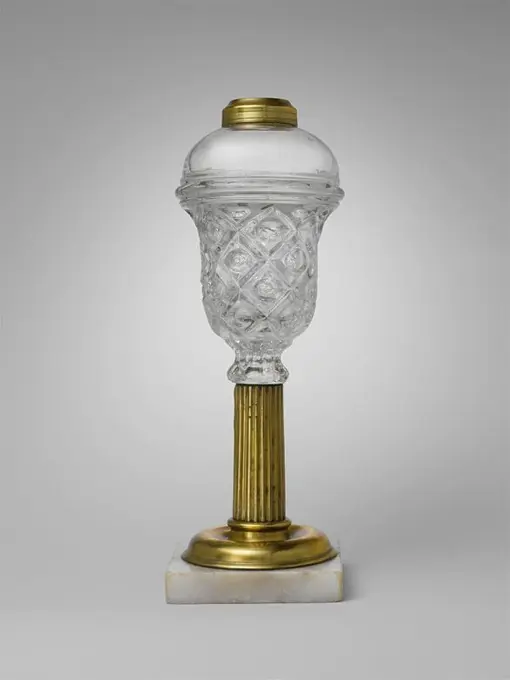
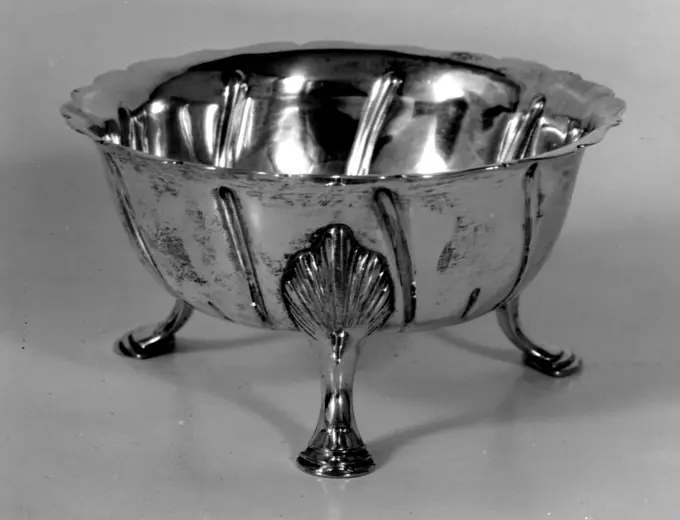
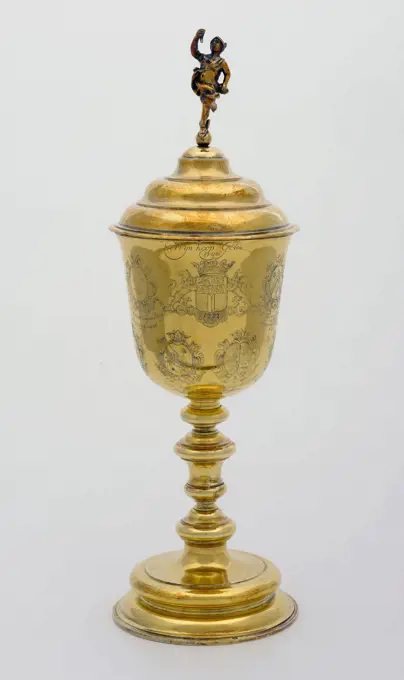
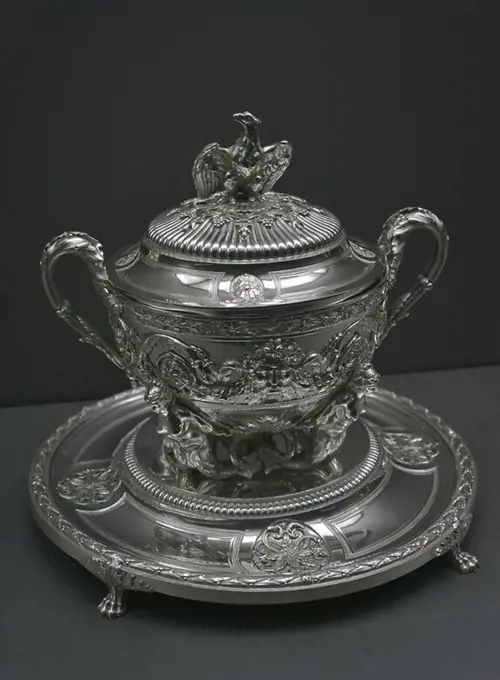
A variety of historical silver items including salt cellars and sugar bowls, showcasing intricate designs and craftsmanship from different centuries.
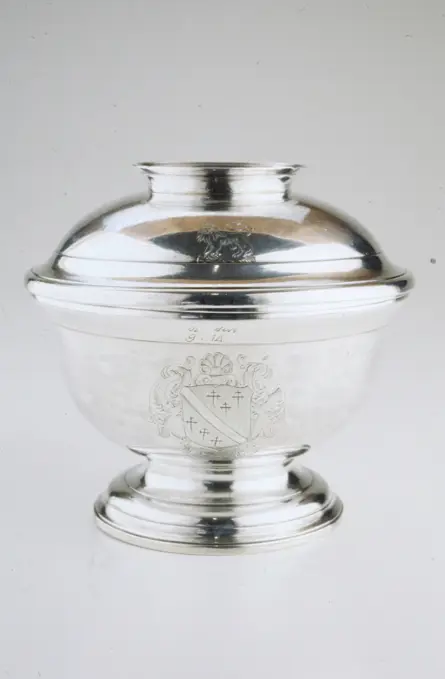
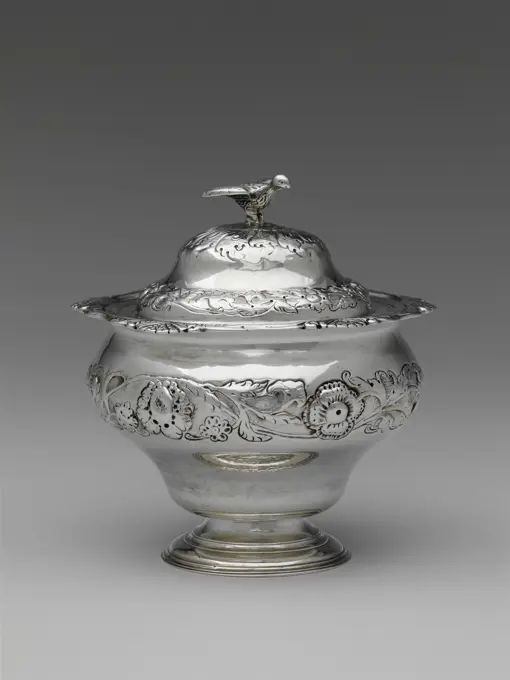
Covered sugar bowl, c. 1730-1740, Jacob Hurd, American, 1703-1758, 4 in. (10.16 cm), Silver, United States, 18th century
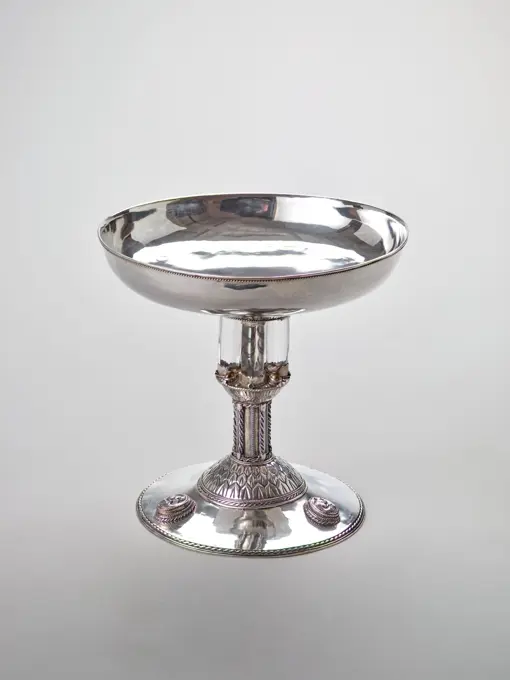
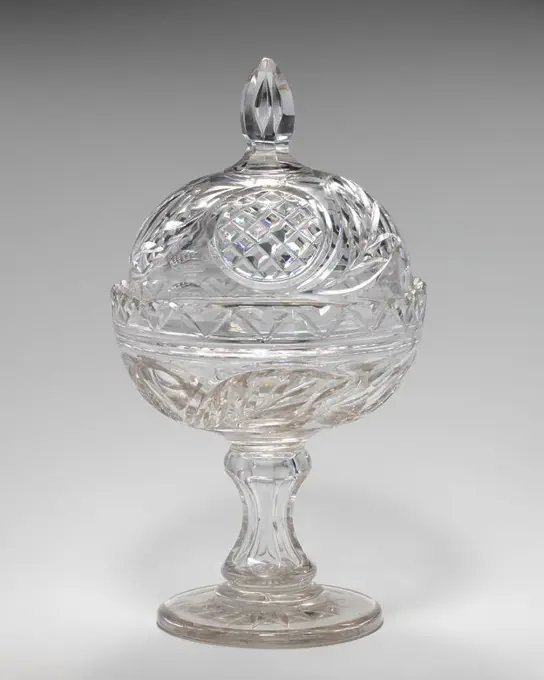
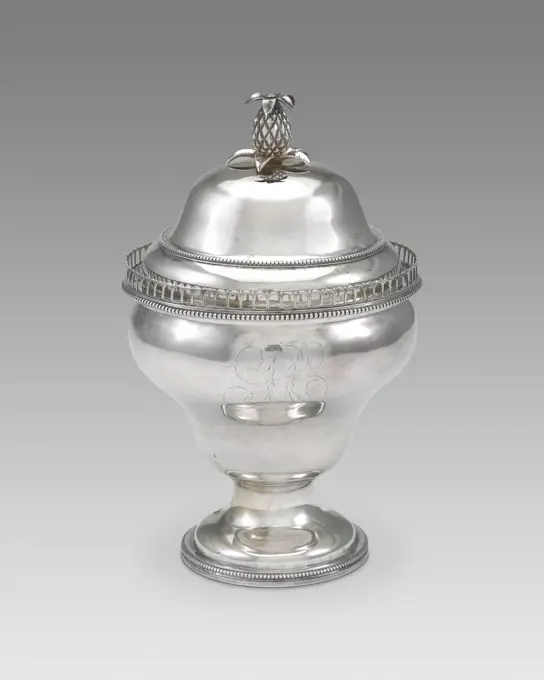
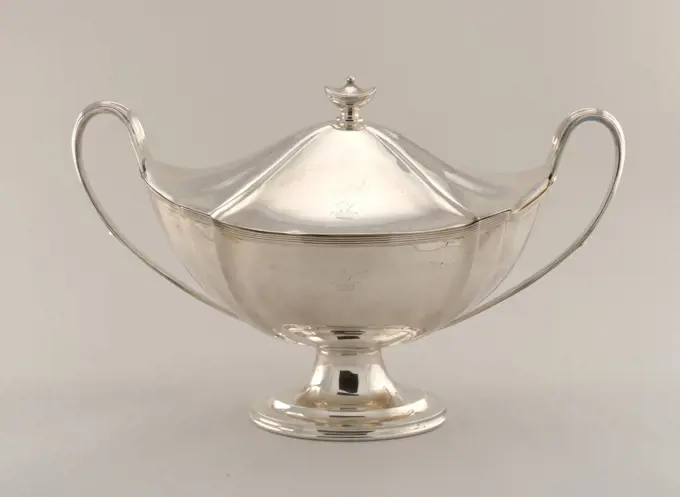
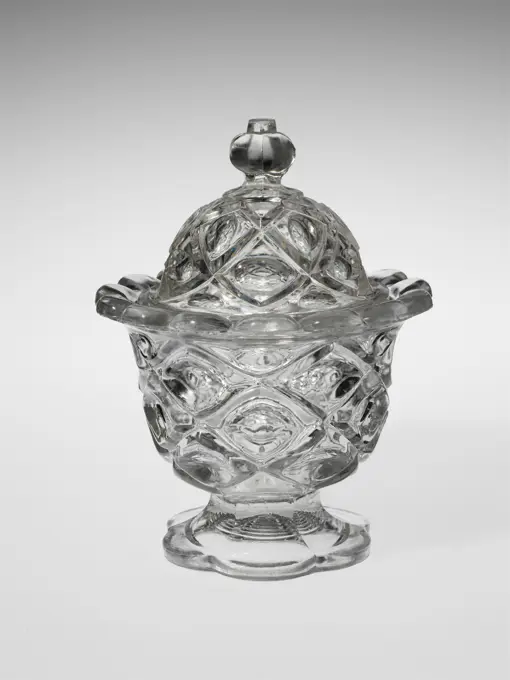
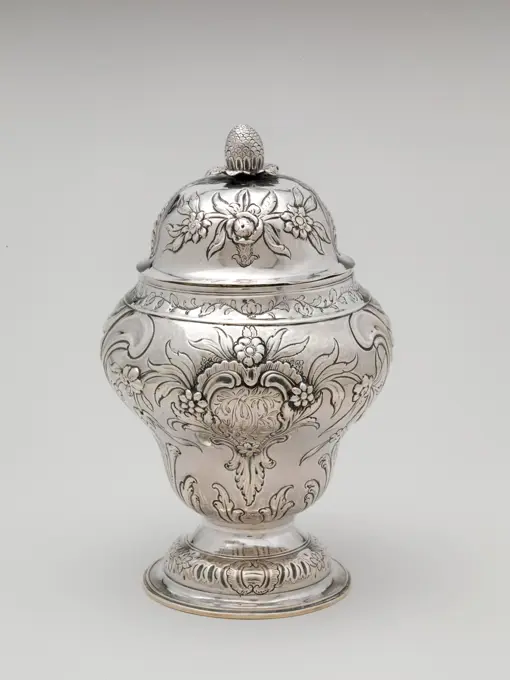
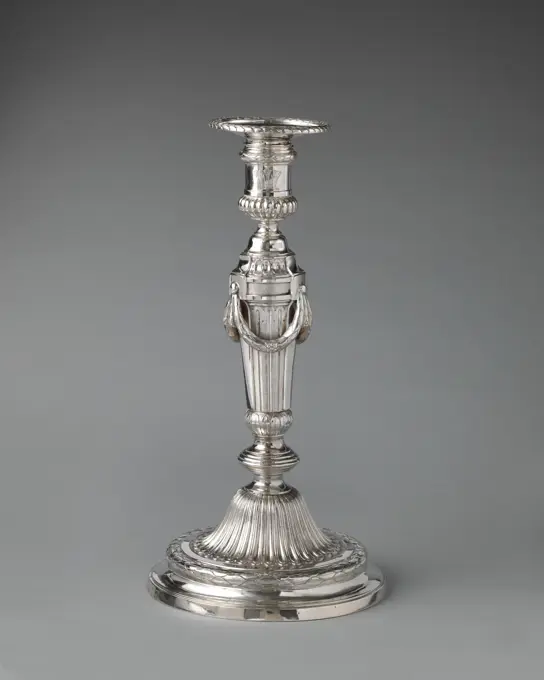
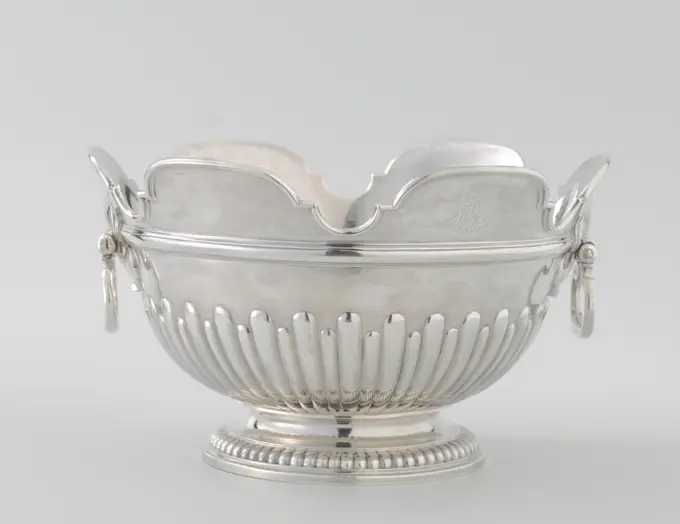
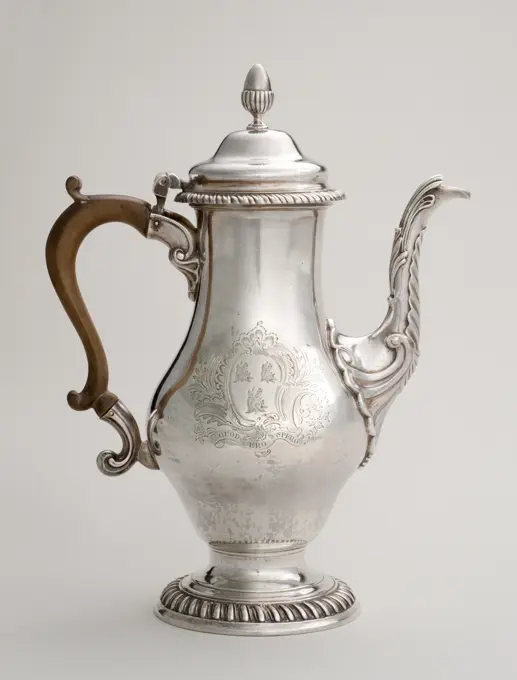
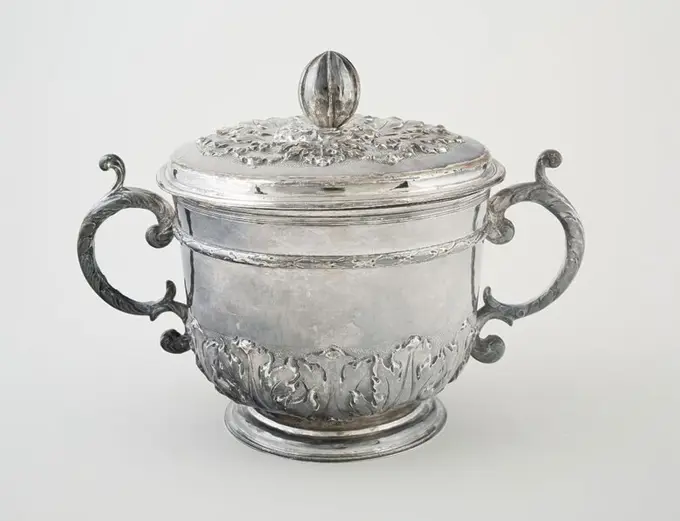
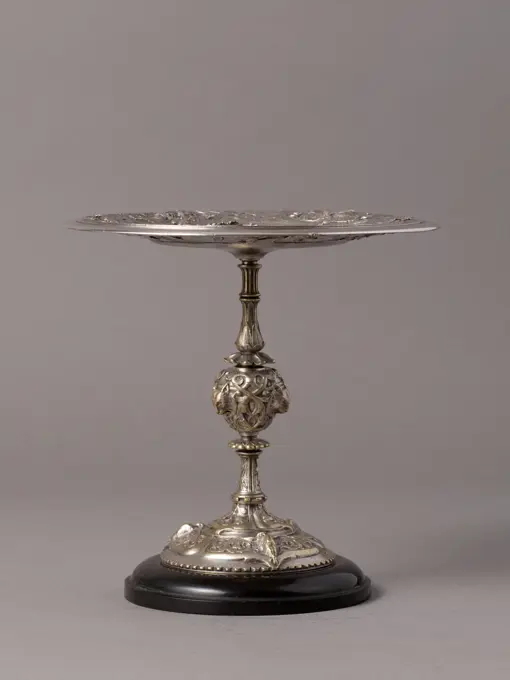
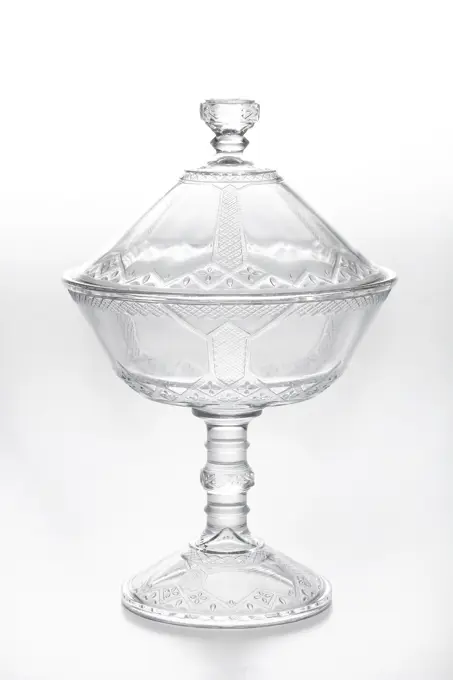
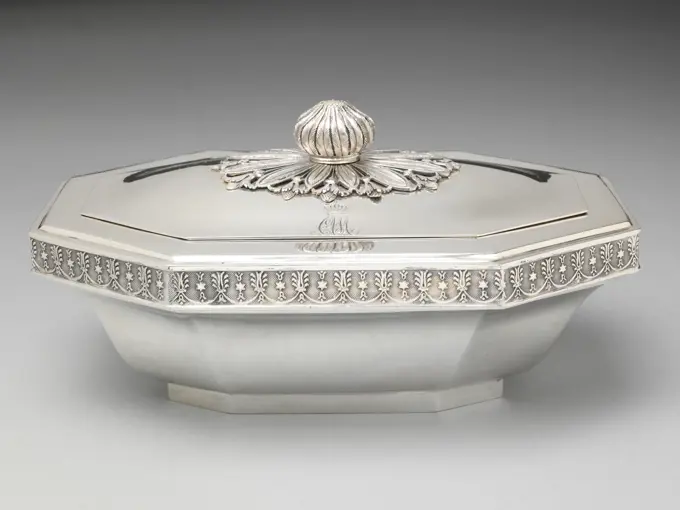
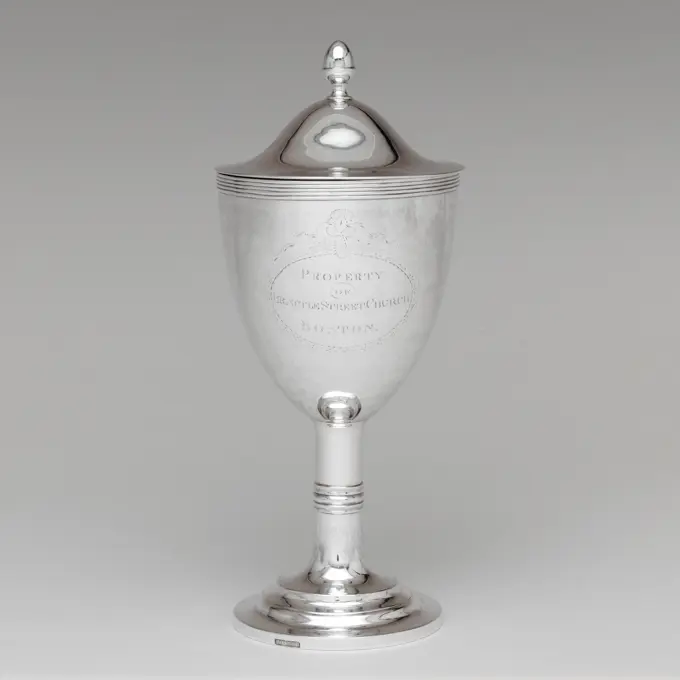
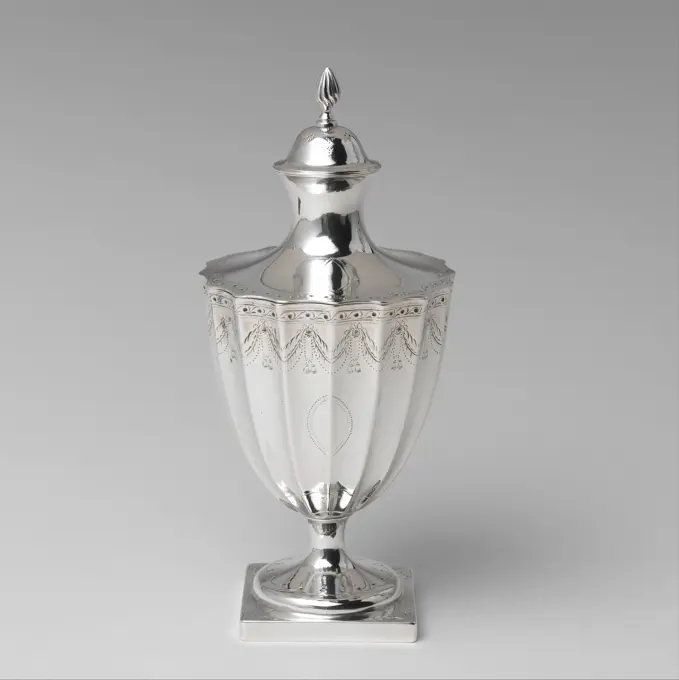
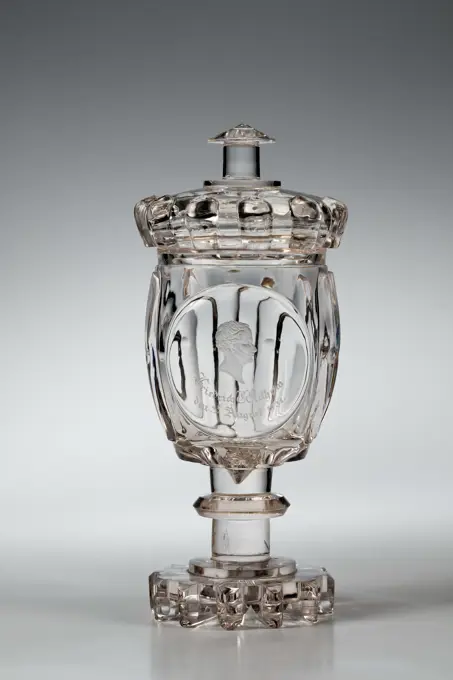
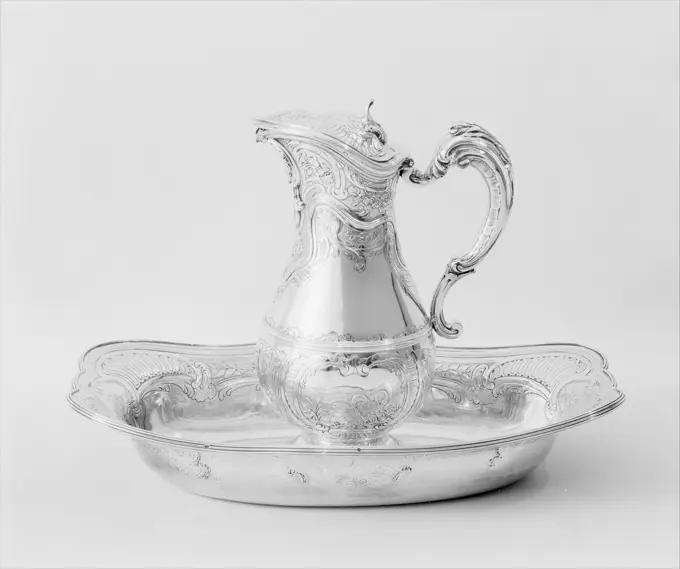
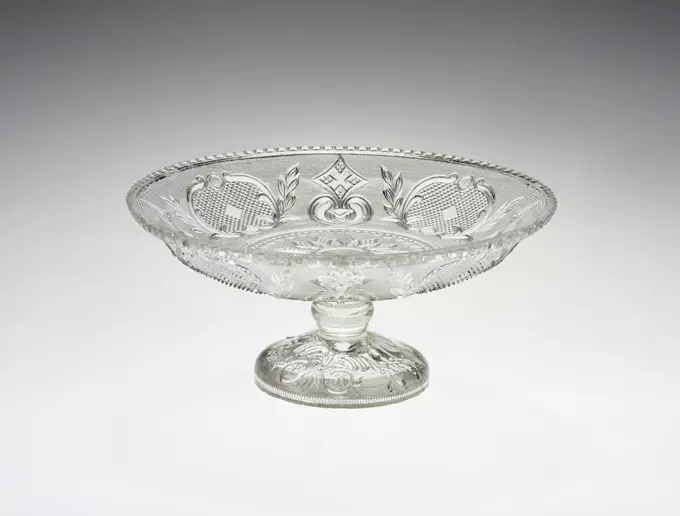
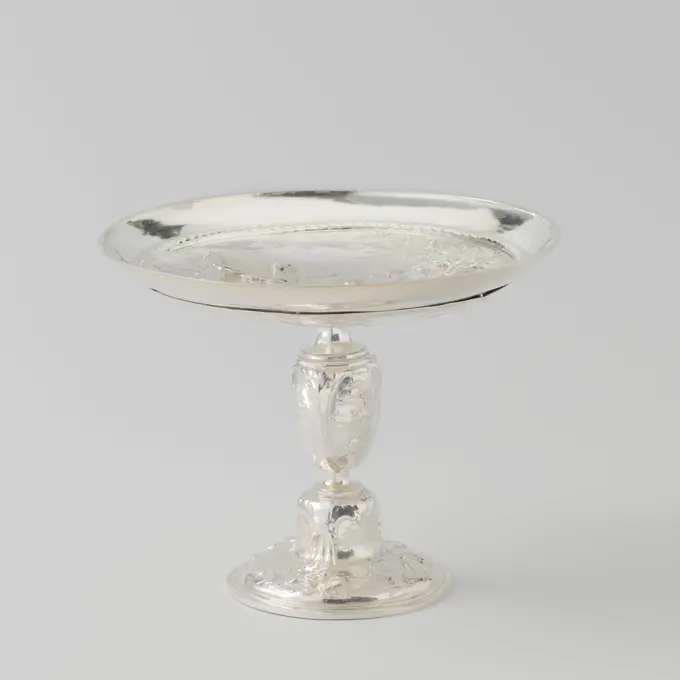
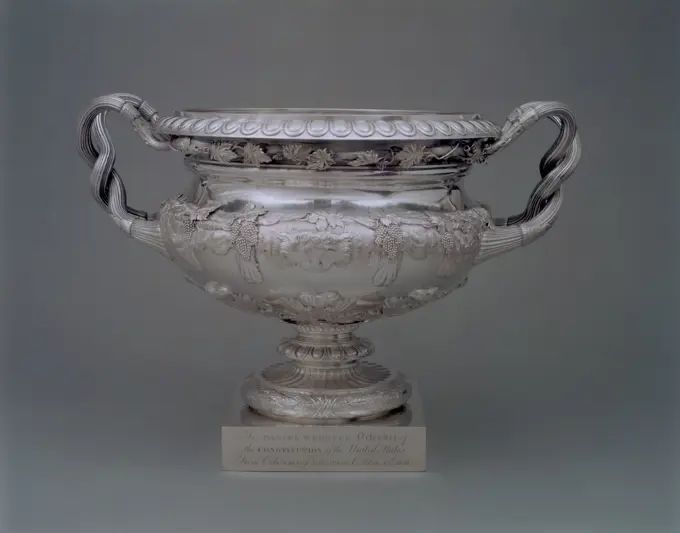
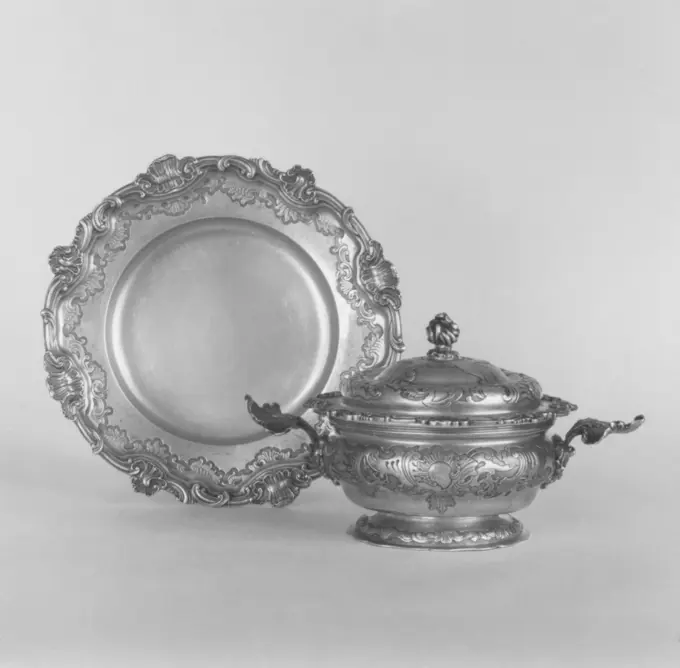
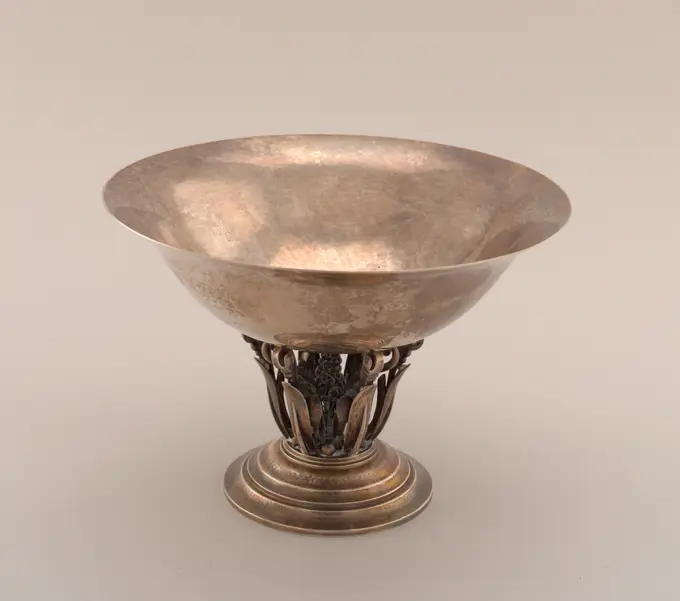
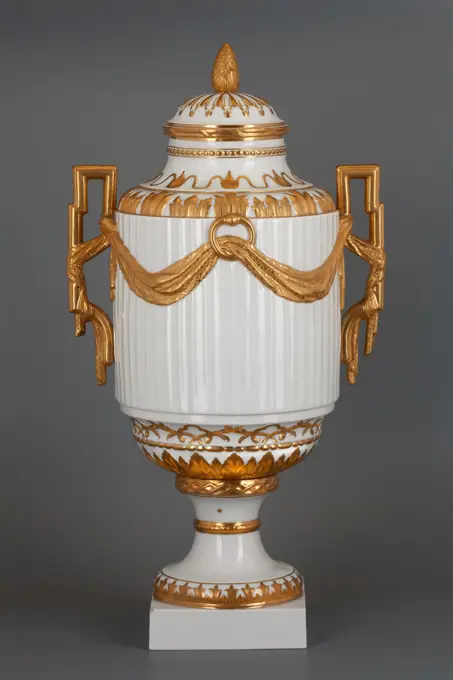
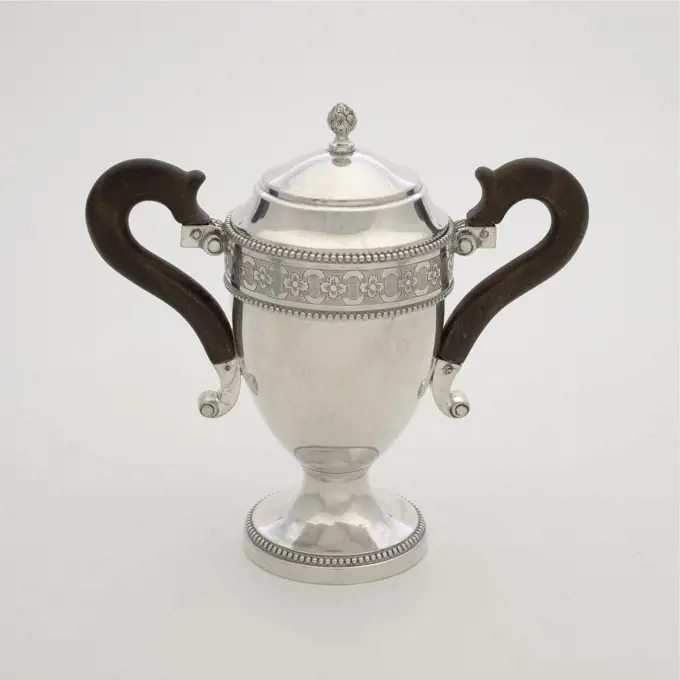
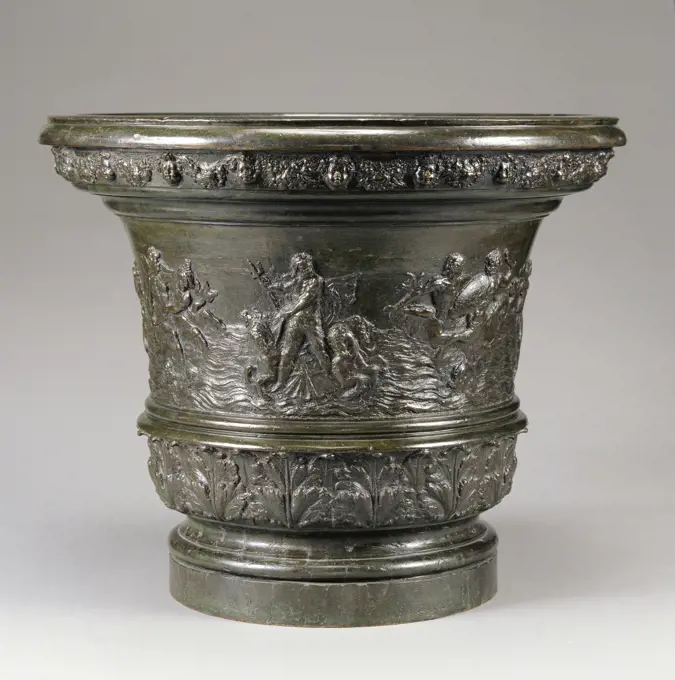
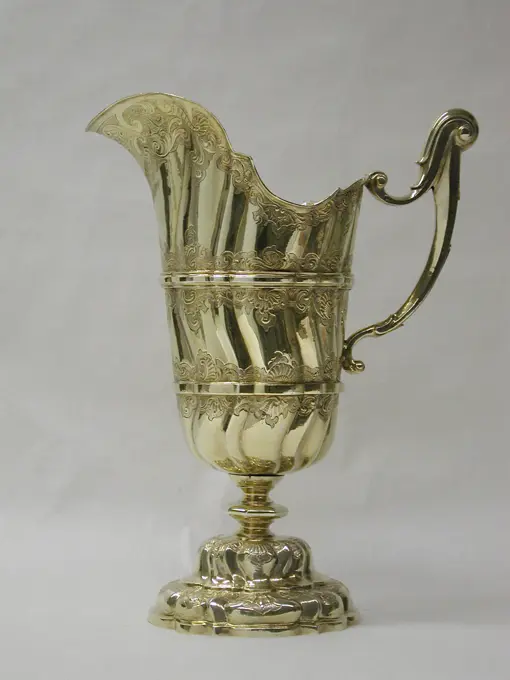
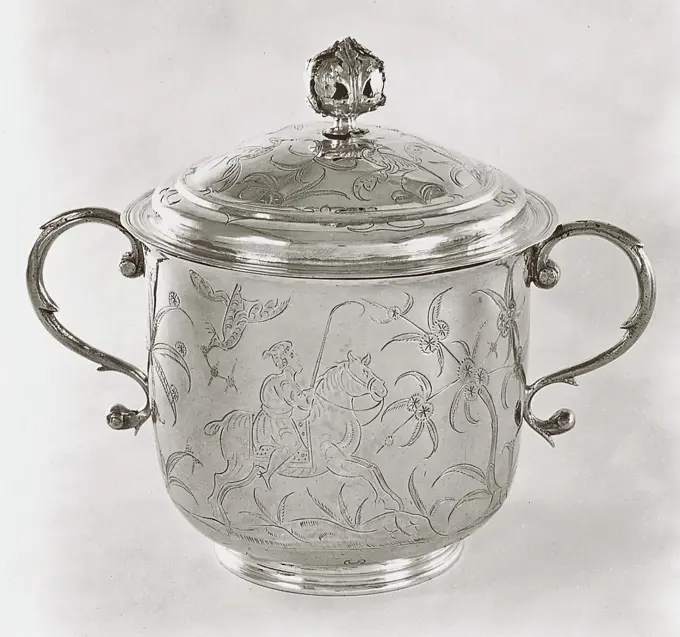
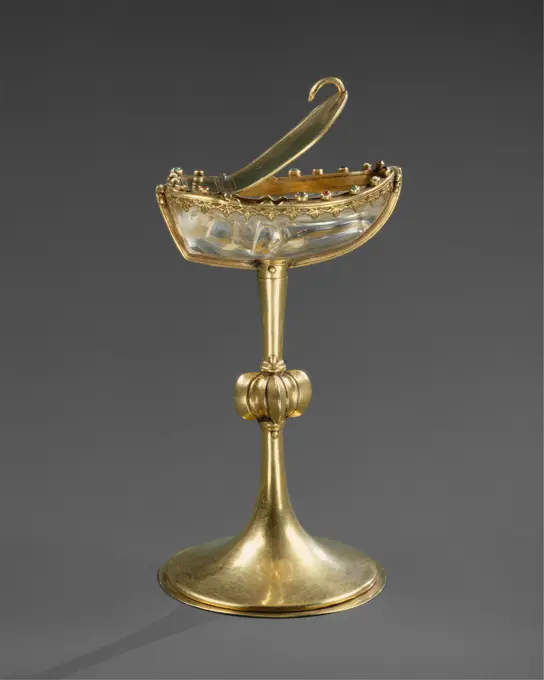
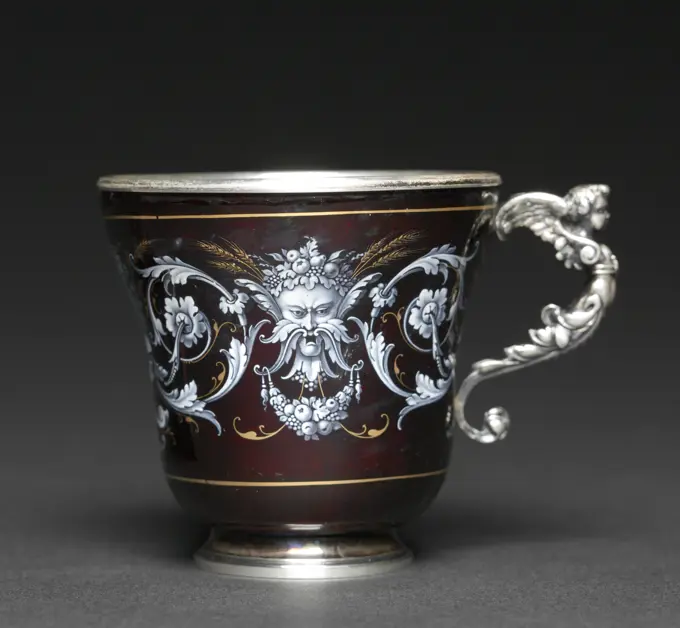
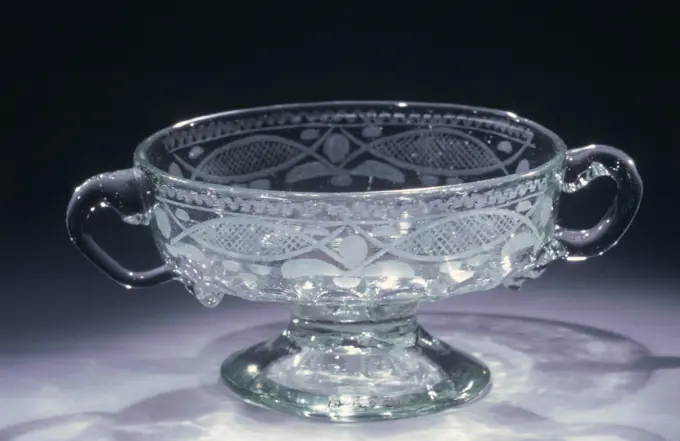
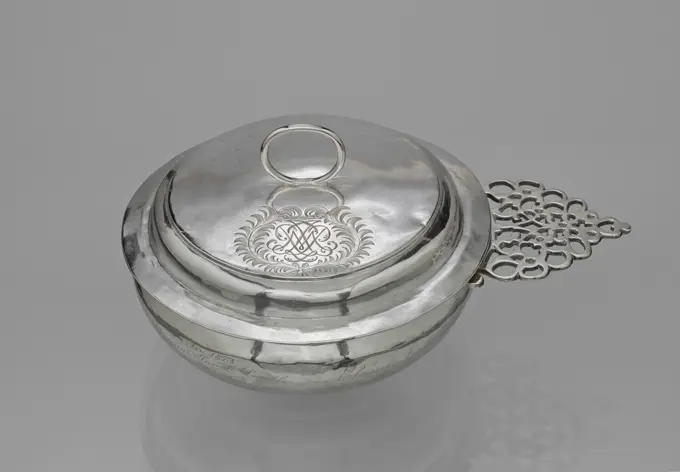
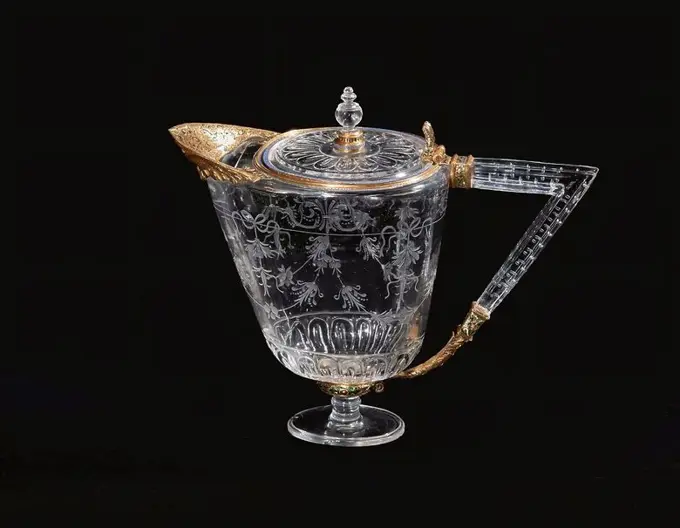
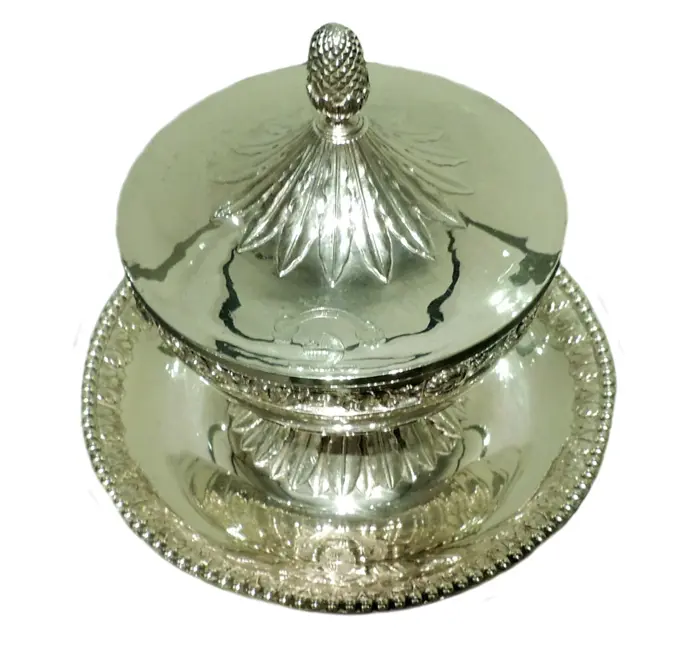
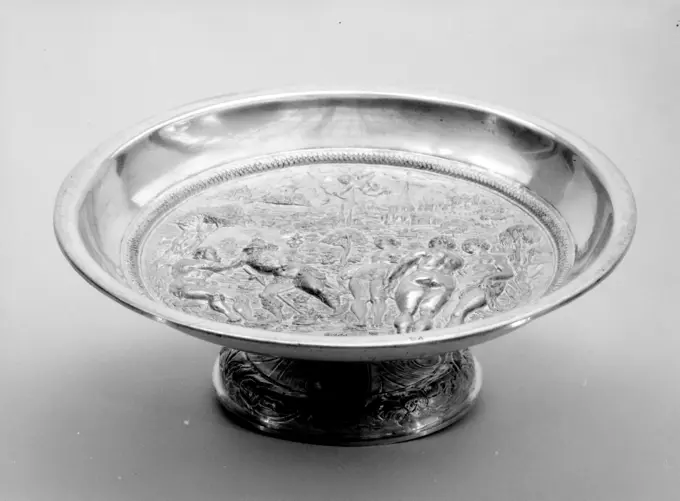
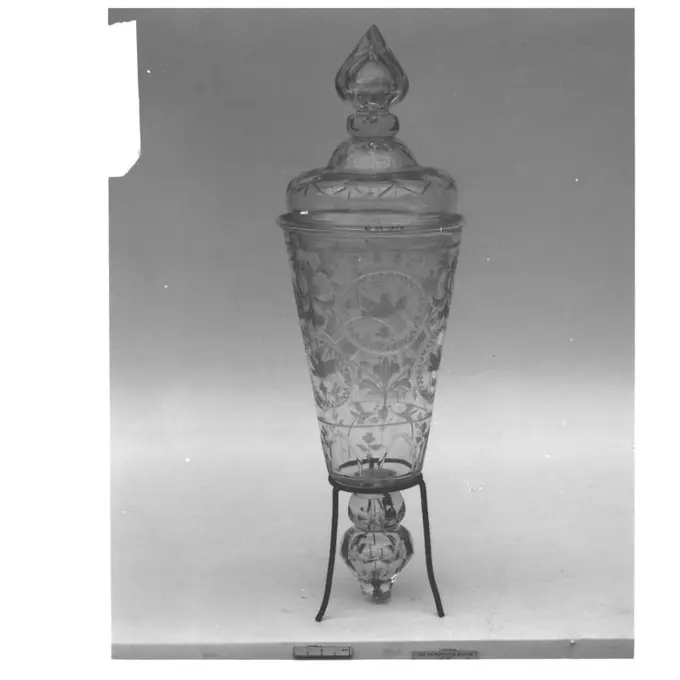
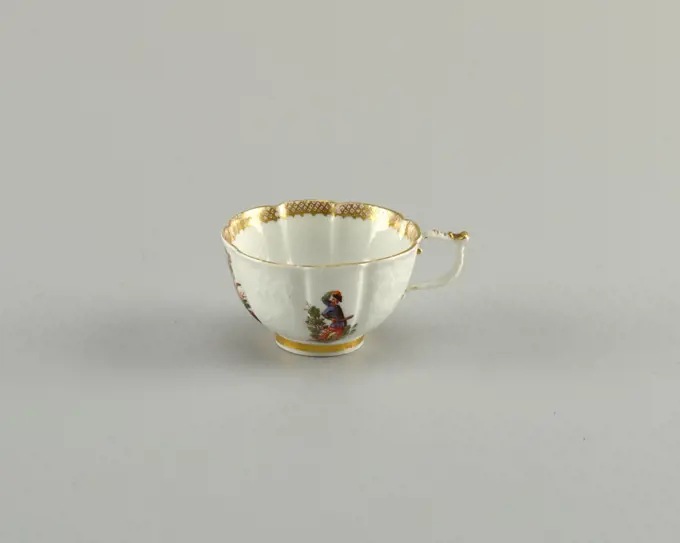
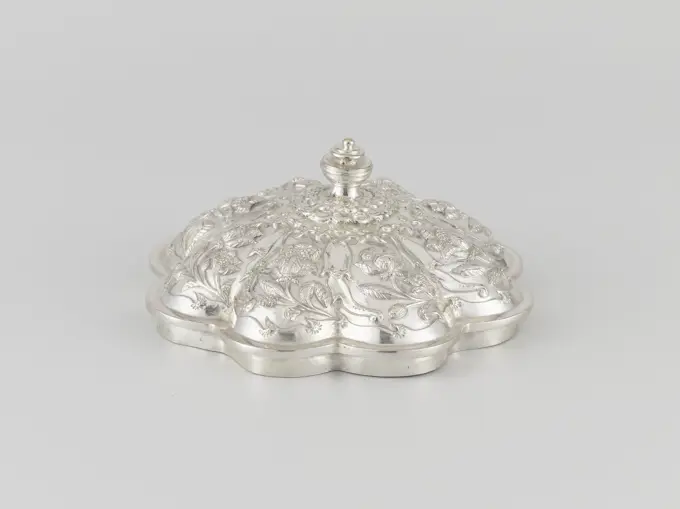
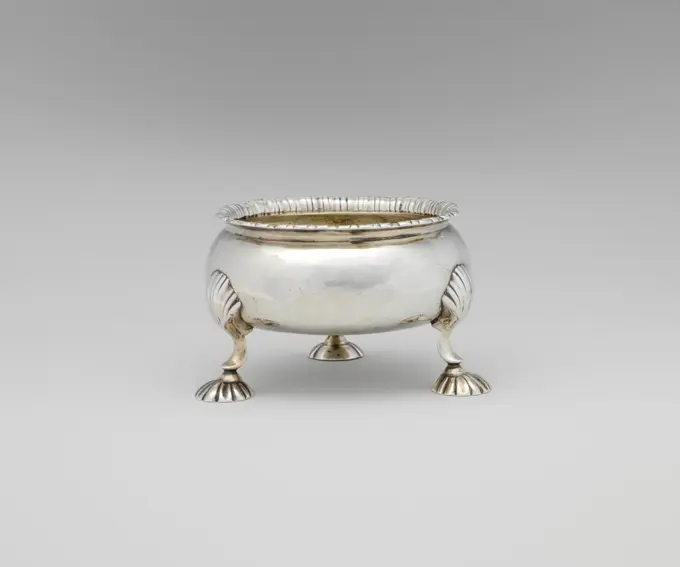
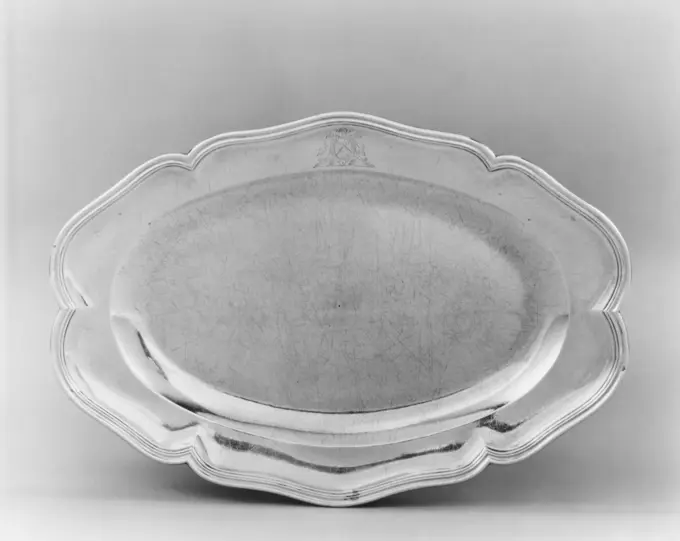
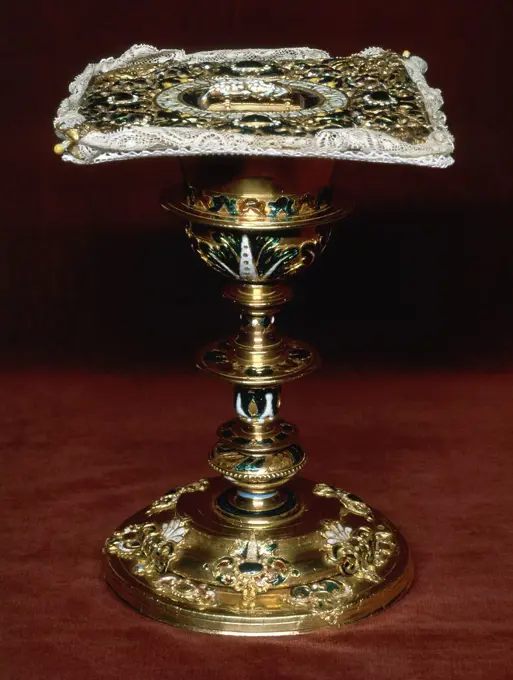
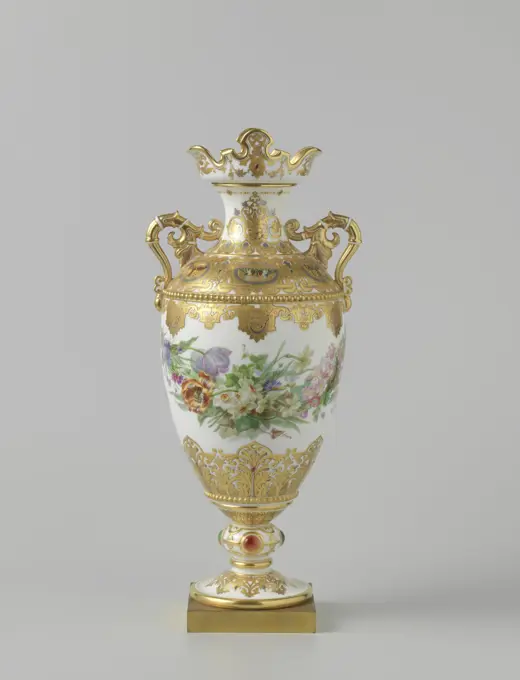
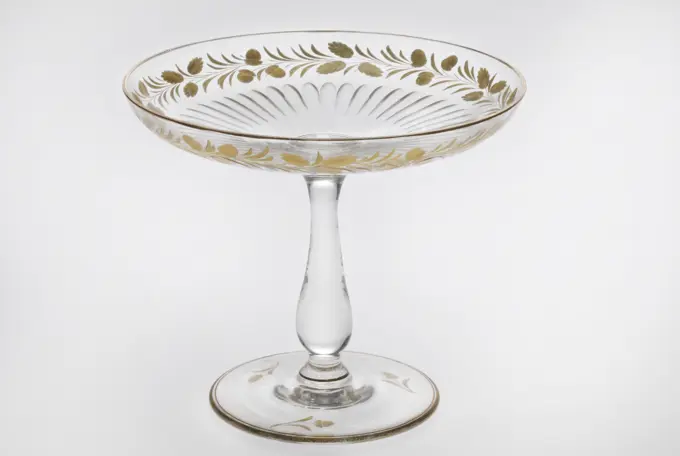
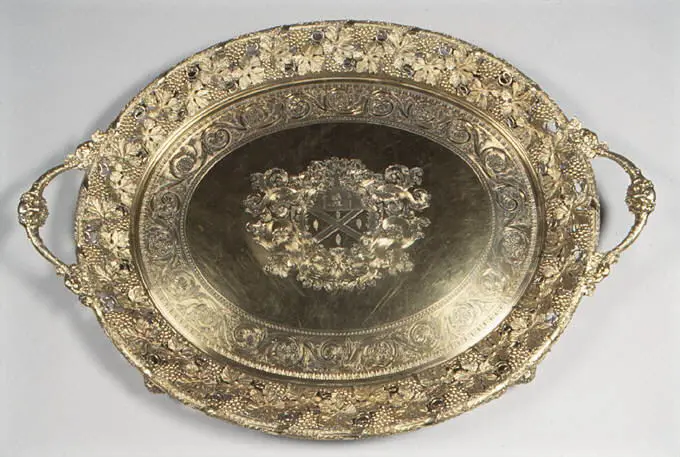
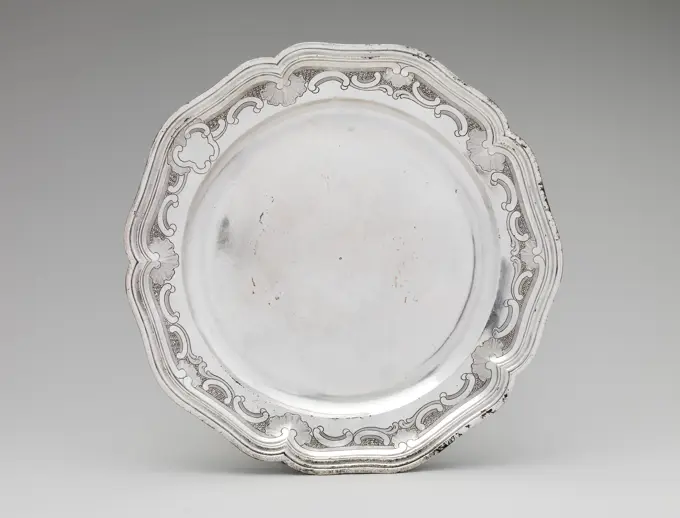
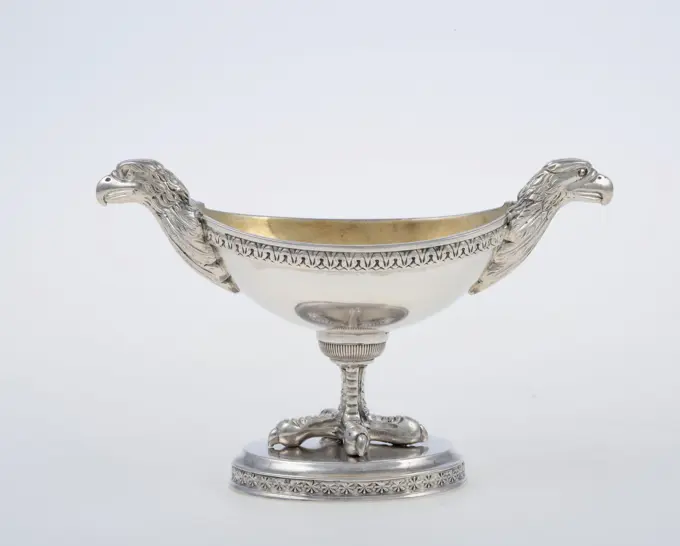
Salt cellar; Silver Products Factory K.F. Malcza (Warsaw; Sreber label; 1828-1864), Malcz, Karol (1797-1867); 1815-50 (1815-00-00-1850-00-00);Covered sugar bowl, c. 1730-1740, Jacob Hurd, American, 1703-1758, 4 in. (10.16 cm), Silver, United States, 18th centurySugar Bowl and Cover ca. 1765 John Bayly As sugar became more readily available in the eighteenth century, sugar bowls, usually with covers, became an essential part of tea equipage. Horizontal bands of naturalistic flowers and foliage chased in high relief transform this classic double­bellied sugar bowl into a fully developed expression of the rococo style. Rather than encasing the entire body and cover in an overall decorative scheme, however, the designer created compact bands of exuberant ornament that offset the smooth plain surfaces of the curvilinear forms. Relatively rare in American silver, cast finials in the form of birds, as seen here, date mainly from the mid­eighteenth century and possibly derive from English prototypes. When first acquired by the Metropolitan Museum in 1939 this sugar bowl was attributed to the New York silversmith Jacob Boelen II (1733-1786). More recent research, however, has determined that the mark IB in a rounded rectangle is that of the PhiladelphLid box on the prosperity of herring fishing, anonymous, c. 1725 - c. 1750 goblet Cover box of lead glass (crystal) consisting of a cup (chastal, trunk and foot with turned edge and pontil brand and with image and text engraving) and a engraved lid with pinacle. The engraved text is "the prosperity of great fishing and the hunter". Bokaal as used by the College van de Grote (Haring) Fisheries in Delft during the regular meetings of the college members. On the glass, next to the text, a solitary fishing ship (type Hoeker) can be seen and there is also a corner on the plain (with the nets outstanding, 'standing because'). The term hunter does not refer to the (wild) yacht, but at the Haringjaagerij: at the start of the herring season (from St Jan/mid-June) with a ship sailing to the market/mainland of the first catches of The herring fleet. The first keg ("lace") traditionally went from the late Middle Ages to De Graaf, later Stadholder and King/Queen. Netherlands crystal (lead glass) blWine glass with a lying-in chamber, anonymous, c. 1750 Facetted, slightly curved foot. Stam consists of a faceted knot with air bubbles. Conically bell -shaped chalice with rounded, faceted bottom. On the chalice an engraved representation of a maternity room within a cartouche and the inscription: the Welvaaren/ Vande maternity woman/ and kintie. glassblower: GermanyNorthern Netherlands glass grinding / glassblowing Facetted, slightly curved foot. Stam consists of a faceted knot with air bubbles. Conically bell -shaped chalice with rounded, faceted bottom. On the chalice an engraved representation of a maternity room within a cartouche and the inscription: the Welvaaren/ Vande maternity woman/ and kintie. glassblower: GermanyNorthern Netherlands glass grinding / glassblowingSalt cellar, Parcel-gilt silver, Boat-shaped salt on spreading oval foot. Two tall loop handles at points. Repousse rinceau on stippled band below rim. Inside gilded., Augsburg, Germany, 1811, metalwork, Decorative Arts, Salt cellarCovered Goblet (Pokal) 1715-1725 Germany. Blown and molded glass with engraved decoration and gilding .Richard Humphreys, Sugar Bowl and Cover, c. 1785, silver.Silver Fruit Dish/Tazza, 1915. Silversmith: John Paul CooperSweetmeat glass with cover. Culture: British or Irish. Dimensions: Overall: 14 1/4 × 8 in. (36.2 × 20.3 cm). Date: early 19th century. Museum: Metropolitan Museum of Art, New York, USA.Sugar Bowl c 1790-1794 Philadelphia. Silver . Abraham CarlileCup; Non -like Lona Huta; End of the 17th century (1680-00-00-1700-00-00);Tureen and cover, Thomas Bradbury and Son, Fused silver plating over copper, Boat-shaped with stepped oval base; bowl and cover with four raised segmented divisions; urn-shaped finial; high looped handles; threaded upper edge on bowl; bright-cut crest of lion and crown on bowl and cover, Sheffield, England, 1858-63, metalwork, Decorative Arts, Tureen and coverBowl (Ireland); glassSalt Cellar (Germany); parcel-gilt silverSugar Bowl 1850-70 American With the development of new formulas and techniques, glass-pressing technology had improved markedly by the late 1840s. By this time, pressed tablewares were being produced in large matching sets and innumerable forms. During the mid-1850s, colorless glass and simple geometric patterns dominated. Catering to the demand for moderately-priced dining wares, the glass industry in the United States expanded widely, and numerous factories supplied less expensive pressed glassware to the growing market. At the Exhibition of the Industry of All Nations at New Yorks Crystal Palace in 1853, for example, the New England Glass Company exhibited 130 pieces of one design, "consisting of bowls, tumblers, champagnes, wines, and jelly glasses." This object belongs to one such service. Although the glass manufactory is not known, the glassware is very typical of the large services that were very popular with Americas middle class in the nineteenth century.. Sugar Bowl 7946"Jumbo"/Elephant covered dish. Attributed to Canton Glass Company; Canton, Ohio. Date: 1883-1885. Dimensions: 15.2 × 22.2 cm (6 × 8 3/4 in.). Glass. Origin: United States. Museum: The Chicago Art Institute, Chicago, USA.Sugar bowl 1772-76 Myer Myers American. Sugar bowl 7965Candlestick (one of a set of eight) 1774/75 Andrew Fogelberg British. Candlestick (one of a set of eight). British, London. 1774/75. Silver. Metalwork-SilverCooling vessel with the crowned alliance weapon of Van Bylandt and Van der Duyn, Tielman Sluyter, 1713 Round cooling vessel made of silver on a straight -boundary base. The ball -walled barrel has a scalloped upper edge with six swiveled parts in which glasses can be hung. On the wall the crowned alliance weapon of Van Bijlandt-van der Duyn. The Hague silver (metal) casting / engraving Round cooling vessel made of silver on a straight -boundary base. The ball -walled barrel has a scalloped upper edge with six swiveled parts in which glasses can be hung. On the wall the crowned alliance weapon of Van Bijlandt-van der Duyn. The Hague silver (metal) casting / engravingThe Netherlands, Stevensweert, Silver cup found in the Meuse riverMaker's mark IM with star between, possibly Jacob Marsh or John Moore, Coffeepot (altered), 1768/69, silver.Kraantjeskan in the form of a garden vase, Andele Andeles, 1729 Tap of driven silver, in the shape of a garden vase with tap and two handles. The printed tribe galvanizes somewhat in a bowl -shaped floor of the foot. The flattened, smooth nodus is open. Around foot, underside of the abdomen, the wide upper edge and the two curves of the profiled, incorporated lodewijk XIV motifs on poned or scaly soil. As a pinch a pineal in leafkelk. The hinged handles are hanging on brackets, which are attached at the top of the slippery, constricted center of the barrel. The tap of the crane is from Ebony. Leeuwarden silver (metal) casting Tap of driven silver, in the shape of a garden vase with tap and two handles. The printed tribe galvanizes somewhat in a bowl -shaped floor of the foot. The flattened, smooth nodus is open. Around foot, underside of the abdomen, the wide upper edge and the two curves of the profiled, incorporated lodewijk XIV motifs on poned or scaly soil. As a pinch a pineal in lTwo-Handled Cup with Cover. London, England. Date: 1684-1685. Dimensions: 17.8 x 24.5 x 16.5 cm (7 x 9 5/8 x 6 1/2 in.). Silver. Origin: London. Museum: The Chicago Art Institute, Chicago, USA.Standing Cup with Cover, c. 1725. Germany, Silesia, 18th century. Glass; overall: 27.3 x 7 cm (10 3/4 x 2 3/4 in.); base: 9.3 x 9.8 cm (3 11/16 x 3 7/8 in.).Tap jug, spherical, upwards conically ending with scalloped edge, with ciseled rocailles, Dirk Westrik (attributed to), 1752 Kraantjeskan of silver. The vessel has been widened spher -shaped from below and has a conical upwards upper with scalloped edge. Decorated with ciseled rocailles. Amsterdam silver (metal). ebony (wood) Kraantjeskan of silver. The vessel has been widened spher -shaped from below and has a conical upwards upper with scalloped edge. Decorated with ciseled rocailles. Amsterdam silver (metal). ebony (wood)Ignaz Joseph Würth, Soup Tureen and Stand, 1779-81, silver.Saltcellar 19th century, after 15th century original British, after Italian original This electrotype is after a fifteenth-century original in the Victoria and Albert Museum, London, at the time of reproduction.. Saltcellar. British, after Italian original. 19th century, after 15th century original. Silver, gilt. Metalwork-ElectrotypeFrançois-Désirée Froment-Meurice (1801-1855). Cut. Silver metal cut mounted on a marble base. Nineteenth century. Paris, house of Victor Hugo. 51264-5 Cut, marble, silver metal, montee, sculpted, baseCompote - Latticed PatternBox ca. 1800 Johann Christian Sick German (Stuttgart) These silver boxes, part of larger silver, presumably were used to keep sweets and other delicacies, as the handy form and tightly closing lids suggest. The ciphers below closed crowns belong to Charlotte Augusta Mathilde, queen of Wurttemberg (1766-1828). The form mirrors the Neoclassical principles of German silver design towards a formal reduction of the shape and geometry. The daring juxtaposition of plain polished areas with matted ornamental applications has an astonishingly modern aesthetic.. Box 231240Wine Cup ca. 1800 Joseph Foster By the end of the eighteenth century the traditional bell-shaped wine cup on baluster stem had evolved into an even more restrained model. Here, the ovoid body, horizontal ribbed ornament, and bright-cut engraving reflect the neoclassical idiom. Tall, cylindrical stems on stepped, circular bases and domed covers with acorn finials accentuate the verticality and dignity of this vessel and its mate (33.120.231a, b), which were made around 1800 for Bostons Brattle Street Church. The mark of Joseph Foster, the pair's maker, appears on a considerable quantity of Boston-area church plate.. Wine Cup 7890Sugar Bowl ca. 1795 Paul Revere Jr. American This matched set of covered sugar bowl and creamer is fashioned in the fluted Neoclassical style so popular with Revere's postwar clients. Urn-shaped sugar bowls, both plain and fluted, appear repeatedly in Revere's ledgers as "sugar urns" or "fluted sugar vases." The helmet-shaped creampot with high looped handle and square plinth also epitomizes Neoclassical taste. Each piece is engraved with bright-cut bands of tasseled swags and wavescroll ornament. According to family tradition, these objects were made as a gift for a Virginia bride.. Sugar Bowl 7994FateGoblet and cover. Huta szkła (Zechlin ; 1736- ), glass worksHot Water Kettle with Stand and Burner c 1900 Providence. Silver . Gorham Manufacturing CompanyEwer and basin 1761-62 Joseph-Pierre-Jacques Duguay. Ewer and basin 200373Candlestick (set of a four) Antoine Dutry French 1781 View more. Candlestick (set of a four). French. 1781. Silver. Metalwork-SilverGalvanoplastic reproduction of a Tazza with the representation of the main virtues, Fa. Elkington & Co., after 1875 - Before 1880 Galvanoplastic reproduction of a Tazza. The trunk is formed by three semi -figures separated from each other by maskerons; The scale with driven representations of the main virtues, maskerons and band work. Gilded. London copper (metal). silver (metal) gilding Galvanoplastic reproduction of a Tazza. The trunk is formed by three semi -figures separated from each other by maskerons; The scale with driven representations of the main virtues, maskerons and band work. Gilded. London copper (metal). silver (metal) gildingCompote. Maker, probably by: Boston and Sandwich Glass Works, American, 1826-88Tazza (Footed Drinking Cup), Paulus Willemsz. Van Vianen, 1607 Drinking scale on the foot of silver. The paris judgment is presented in the scale. On the cover plate, landscapes with farm houses are driven, separated by lobe ornament.  silver (metal) Drinking scale on the foot of silver. The paris judgment is presented in the scale. On the cover plate, landscapes with farm houses are driven, separated by lobe ornament.  silver (metal)Butter dish - Rayed Heart PatternCandlestick. Dimensions: 11 3/8 x 4 x 4 in. (28.9 x 10.2 x 10.2 cm)Body diameter: 4 in. (10.2 cm). Date: 1850-60.With the development of new formulas and techniques, glass-pressing technology had improved markedly by the late 1840s. By this time, pressed tablewares were being produced in large matching sets and innumerable forms. During the mid-1850s, colorless glass and simple geometric patterns dominated. Catering to the demand for moderately-priced dining wares, the glass industry in the United States expanded widely, and numerous factories supplied less expensive pressed glassware to the growing market. At the Exhibition of the Industry of All Nations at New York's Crystal Palace in 1853, for example, the New England Glass Company exhibited 130 pieces of one design, "consisting of bowls, tumblers, champagnes, wines, and jelly glasses." This object belongs to one such service. Although the glass manufactory is not known, the glassware is very typical of the large services that werBowl ca. 1770-85 Charles Townsend. Bowl. Irish, Dublin. ca. 1770-85. Silver. Metalwork-SilverSilversmith:, Gilded silver cup from the wine buyers' guild, goblet cup drinking utensils tableware holder silver gold, hammered cast engraved gilded Completely gilded silver: hollow round base with ascending convex, strongly constricted profiles Balusterstam with four annular nodes and profile edges, removable cuppa, arched bell-shaped lid (C) with ascending profile edges crowned by screw-on Mercurius (D) standing on ball (after Giovanni da Bologna Giambologna) Foot bottom edge (debossed): Rotterdam heraldry Giovanni da Bologna Adriaan Sleght Jacques de Superville Jan van der Heij Gerrit Colonel Theodore François de Mey Jacob Ebervelt Jan Huygelbos Simon Reijn Jacob Vosmaer Nicolas Montauban Gerard Houthoff wine buyers guildTureen and stand, ca. 1783-1789. By Jacques-Charles Mongenot (Master in 1775). Silver. France. Calouste Gulbenkian Museum. Lisbon, Portugal.Cup 19th century, after 1585 original British, after German original This electrotype is after a sixteenth-century original (1585) in the collection of the Victoria and Albert Museum, London, at the time of reproduction.. Cup 185879Emick Romer, Sugar Bowl and Cover, 1761/62, silver.Compote - Diamond Flint Glass Company, 1903-1913 Diamond Flint Glass Company, 1903-1913Presentation vase in silver honoring Daniel Webster ,Cup with scenes from the New Testament (one of a pair) early 17th century Franz Fischer. Cup with scenes from the New Testament (one of a pair). German, Nuremberg. early 17th century. Silver gilt. Metalwork-SilverCreamer ca. 1795 Possibly James Adam. Creamer 2651Stand for covered bowl (écuelle) 1743 Emanuel Drentwett. Stand for covered bowl (écuelle) 206197Model #242 Bowl; Designed by Georg Arthur Jensen (Danish, 1866-1935); Manufactured by Georg Jensen Sølvsmedie (Denmark); Denmark; silverSweetmeat glass ca. 1720 Bohemian. Sweetmeat glass 186256Maker Unknown, Salt, c. 1820-40, colorless lead glass.Decorative flower vase with a lid. Koenigliche Porzellan Manufaktur - KPM (Berlin ; 1763-1918), factoryCoffee Service for Alice Belin duPont. Manufacturer: Tiffany and Company, American, founded 1837Silver sugar bowl, sugar bowl holder silver wood, molded engraved Egg-shaped body on round constricted foot protruding band along top edge on both sides two wooden ears in the shape of question mark, flat curved and constricted lid with small pineapple as bud no serve sugarCovered bowl with floral pattern late 19th century China. Covered bowl with floral pattern. China. late 19th century. Porcelain painted in overglaze polychrome enamels (Bencharong ware for Thai market). Qing dynasty (1644-1911), Tongzhi period (1862-74). CeramicsSilver Tureen (a), lid (b) and liner (c) pair with 1975.1.2561a,b 1749 Etienne-Jacques Marcq French. Silver Tureen (a), lid (b) and liner (c) pair with 1975.1.2561a,b. Etienne-Jacques Marcq (French, born ca. 1705-1781). French, Paris. 1749. Silver, cast in several parts and soldered together.. Metalwork-SilverPair of casters, Dirk Evert Grave (attributed to), 1778 The round spreading bus rests on a square, straight -walled plinth. The vaulted, slightly tackled foot is closed on the underside by a wide laurel -bound laurel. A pearl edge runs along the body on the body. The high bowl -shaped body is crowned by another laurel wreath bound with ribbons, with a wide straight band on which three equal bay leaves are nailed. A border of horizontally placed Godrons runs over the top edge of the body, which, when the bus is closed, occurs like a pearl edge. The Concave Dop, which is open between Canelures with points, commas and clocks, has a bell -shaped crown of grille. An edge of phaces has been applied to the separation between the two parts. This is bound on three points with ribbons, including a leaf garland on the lid and above which a large acanthus leaf has been imposed on the crown. A pine cone serves as a lid button. Amsterdam silver (metal) The round spreading bus rests on a square, straMortar; Italian; Venice (probably), Italy; about 1550; Bronze; 48.9 x 59.7 cm (19 1,4 x 23 1,2 in.)Ewer ca. 1743-45 Friedrich Schwestermuller II German. Ewer 231566Maker's mark RG, star above, probably Roger Grange, Two-Handled Cup and Cover, 1686/87, silver.Ciborium 16th century South Netherlandish. Ciborium 466345Skyphos. UnknownSalt. Maker, attributed to: William Will, American, 1742-1798Saltcellar mid-13th century French Refined design, exquisite craftsmanship, and costly materials make this a rare and unusually precious object. The rock crystal, cut in the shape of a boat, may have served as a container for salt. Such table objects are described in several French royal inventories. The attribution is supported by the similarity of design to other mid-thirteenth century objects ascribed to Paris, a preeminent center of goldsmithing and carved crystal work.. Saltcellar. French. mid-13th century. Gold, rock crystal, emeralds, pearls, spinel or balas rubies. Made in Paris, France. Metalwork-GoldChafingDish.   Maker: Nathaniel Morse, American, 1685-1748Wing glass with six-spectable chalice. Wing glass on flat foot. Hollow, ribbed and twisted baluster-shaped strain with three nodi. On both sides a wing in the shape of a sea horse from blue and colorless glass. Sixly chalice with ribs and a tiled wire on the undefined.Fruit bowl on foot. Fruit bowl on foot of pottery with blue continuous floral decor, belonging to a children's service. The scale has the shape of an opened flower. The round trunk is on a square plinth.Mass cup; Schweswermüller, David I (fl. 1628-1678); CA 1630-1635 (1630-00-00-1635-00-00);ARMA Christi (iconogr.), DESA (Warsaw - Auction House - 1950-), Ecce Homo (iconogr.), Jesus Christ, Prayer in Ogrójiec (iconogr.), Mystical compressor (iconogr.), Passion performances, purchase (provenance)Cup, c.1880-1900. France, 19th century. Silver, enamel ; overall: 6.5 x 8.5 x 6.5 cm (2 9/16 x 3 3/8 x 2 9/16 in.).Jarra de agua del siglo XVI. Museum: Museo de las artes decorativas de Barcelona.Centerpiece with cover and eight accessory dishes 1733-34 Paul de Lamerie British. Centerpiece with cover and eight accessory dishes 202049Bowl 1775-1820. Bowl 885Compote c 1830-1845 Massachusetts. Known as the ìprincess featherî pattern, the design of this dish illustrates the ornate effects that can be achieved by pressing glass into a mold. In the mid-19th century, the German porcelain manufacturer Meissen produced a line of porcelain with similar decoration of naturalistic fruits and flowers. The porcelain was inspired by the archival collection of American pressed glass amassed by the firm.. Pressed lead glass . Boston and Sandwich Glass Company (Manufacturer)Coveredporringer.   Maker: Peter Van Dyck, American, 1684-1751Bowl 1880-88 Possibly Boston & Sandwich Glass Company. Bowl. American. 1880-88. Blown glass with applied threaded decoration. Possibly made in Sandwich, Massachusetts, United StatesWorkshop of the Miseroni / 'Rock crystal jug'. 1550 - 1600. Rock crystal / Hyaline quartz, Enamel, Gold. Museum: Museo del Prado, Madrid, España. Author: TALLER DE LOS MISERONI.Lidded terrine and stand. Johannes Schiotling (1730-1799) Amsterdam, 1780. Silver, gilt inside. This unusually small terrine was probably made for John Hope, an Amsterdam merchant and banker, who was one of Schiotlings main clients.Soup tureen base SZM 10326. Stanecki, Szymon (fl. ca 1783-1809), creatorCup with cover 17th century probably Dutch. Cup with cover 199697Egg glass; Chamberlain & Co (England; Porcelain Factory; 1788-1852); 1811-40 (1840-00-00-1845-00-00);Sugar bowl withcover.  Maker: Nicholas J. Bogert, American, 1776-1843Ewer ca. 1700-1720 French. Ewer 209417Chamberstick (one of a pair) 1816-17 William Elliott. Chamberstick (one of a pair). British, London. 1816-17. Silver. Metalwork-SilverTazza 19th century, after 17th century original British, after Italian original This electrotype is after a seventeenth-century original in the Victoria and Albert Museum, London, at the time of reproduction.. Tazza. British, after Italian original. 19th century, after 17th century original. Silver on base metal. Metalwork-ElectrotypeWineglass with cover. Culture: possibly Bohemian. Dimensions: Height (with cover): 13 3/8 in. (34 cm). Date: late 17th-early 18th century. Museum: Metropolitan Museum of Art, New York, USA.Cup (and Saucer) with Raised 'Gotzkowsky' Pattern, Meissen Porcelain Manufactory, German, active from 1710 to the present, hard paste porcelain, vitreous enamel, gold, Lobed cup with round foot and slim handle. Indistinct molded floral decorations. Diaper pattern gilding interior rim and solid gold band at foot. Unmolded panels painted with figures including the Commedia dellarte zannie Harlequin, who has a slapstick in his belt., Germany, ca. 1740, ceramics, Decorative Arts, cup (and saucer), cup (and saucer)Water bowl, anonymous, 1680 Silver lid, belonging to a water bowl, on which flowers are driven in relief, omboard and separated by dry and hard lobe ornament. In the middle of the lid a triple rosette and a vase -shaped button. Batavia silver (metal) Silver lid, belonging to a water bowl, on which flowers are driven in relief, omboard and separated by dry and hard lobe ornament. In the middle of the lid a triple rosette and a vase -shaped button. Batavia silver (metal)Salt ca. 1760-80 Benjamin Halsted. Salt 7066Platter 1768-75 Jacques-Claude Pourcelle. Platter 200189CALIZ Y PALIA DEL S XVII EN ORO Y ESMALTES. Location: IGLESIA DE SAN MATEO. TARIFA. Cadiz. SPAIN.Cream Pot (part of a set) Made 1900 Providence. Silver . Gorham Manufacturing CompanyPair of Vases (Adelaide Vases), Manufacture de Sèvres, 1848 Vase of porcelain with high-set, small, an ears-end ears, on square gilt base, painted in gold and platinum with Renaissance-like ornament edges with multi-colored butterflies and three-dimensional "stones", a wide white zone between the edges on which multi-color flowerblingers . Sèvres porcelain. gold (metal). platinum (metal). bronze (metal) gilding Vase of porcelain with high-set, small, an ears-end ears, on square gilt base, painted in gold and platinum with Renaissance-like ornament edges with multi-colored butterflies and three-dimensional "stones", a wide white zone between the edges on which multi-color flowerblingers . Sèvres porcelain. gold (metal). platinum (metal). bronze (metal) gildingCompote -Tray with arms of William Burrell (1791-1847) 1806/7 Digby Scott This great oval tray is an example of the work done by the partnership of Digby Scott and Benjamin Smith working in Greenwich, on the Thames downriver from London, for the firm Rundell & Bridge. At the time London's most prestigious firm, since 1797 Rundell & Bridge had been personal goldsmith to King George III and also the official ""Jeweller, Gold and Silversmiths to the Crown,"" supplying the official plate ordered by the Lord Chamberlain's office. During their partnership from 1802 to 1807, Scott and Smith worked almost exclusively for Rundell & Bridge and their work demonstrates the highest level of design and craftsmanship required by the firm's numerous, wealthy clientele. The tray, with its robust handles and broad rim of vine leaves and grapes naturalistically represented was part of a dessert service. Baskets and coasters in the same design are known. The fauns who crouch to make the four bracket feet evoke thePlate 1774 Louis Landes Covered bowls such as this were known in France as ecuelles, and were intended for the serving of hot broth or soup. Broth was commonly served in the morning in the bedroom during the toilette, the elaborate washing and dressing ritual. The bowl's cover kept the contents warm, and the broth could be sipped from the bowl by using the two handles, while bread rested on the stand.This basin and stand are decorated with the most common of all Rococo motifs, scrolls in the form of the letter C, and with abstract shell and vegetal forms. The handles are formed of looping bands entwined with laurel branches. The design of this ecuelle is masterful; little is known about the Toulouse silversmith Louis Landes, but the Rococo silver produced in Toulouse in the third quarter of the eighteenth century is among the finest French silver made in this style.. Plate 237245