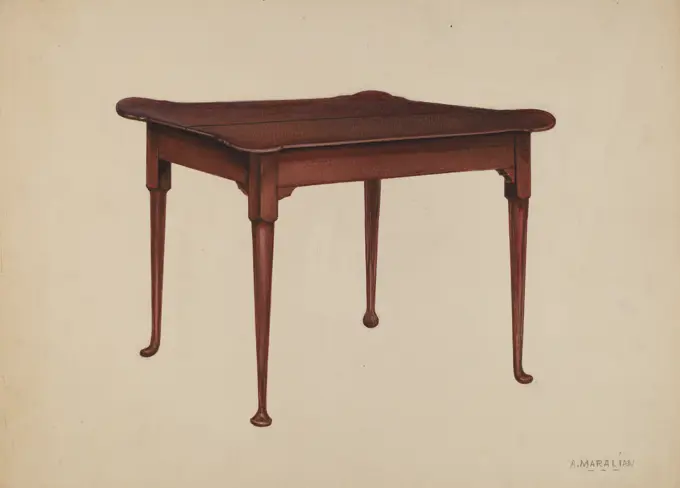
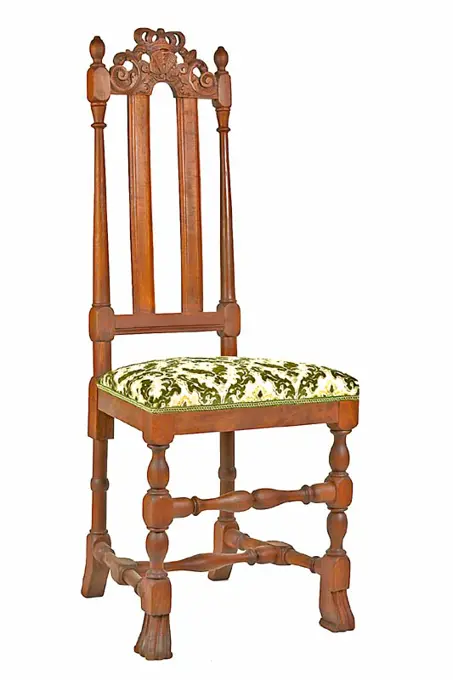
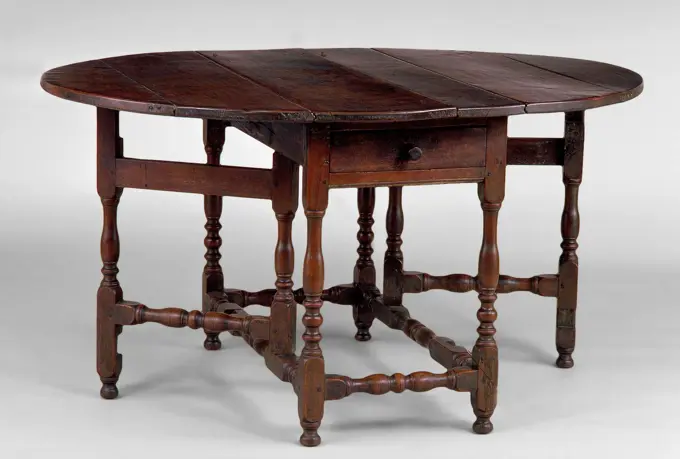
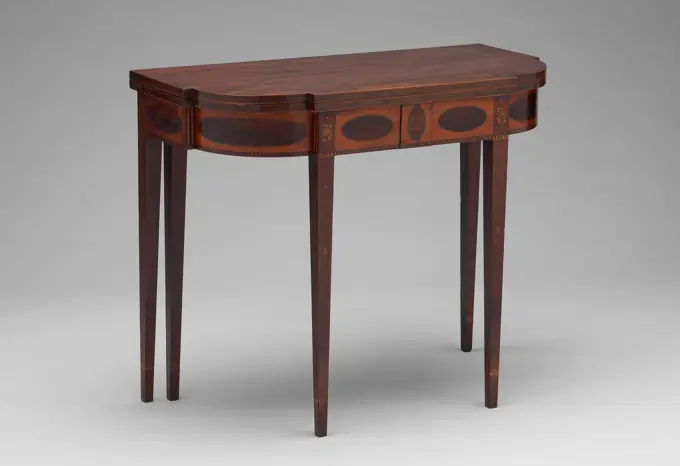
Elegant Wooden Chairs

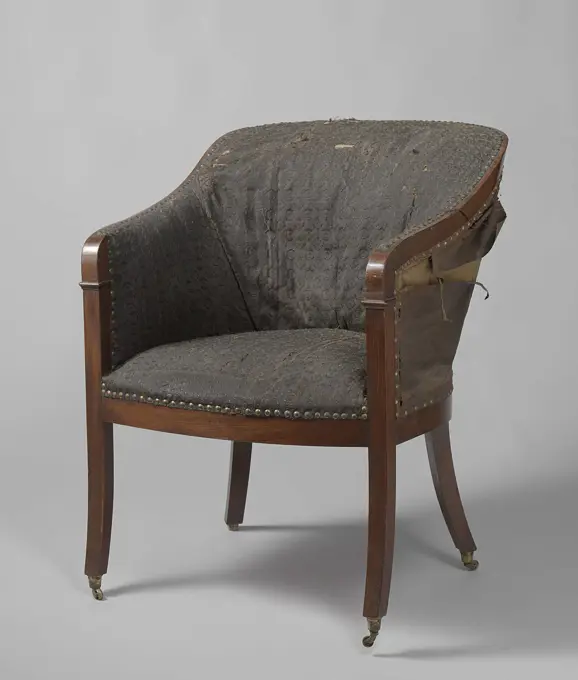
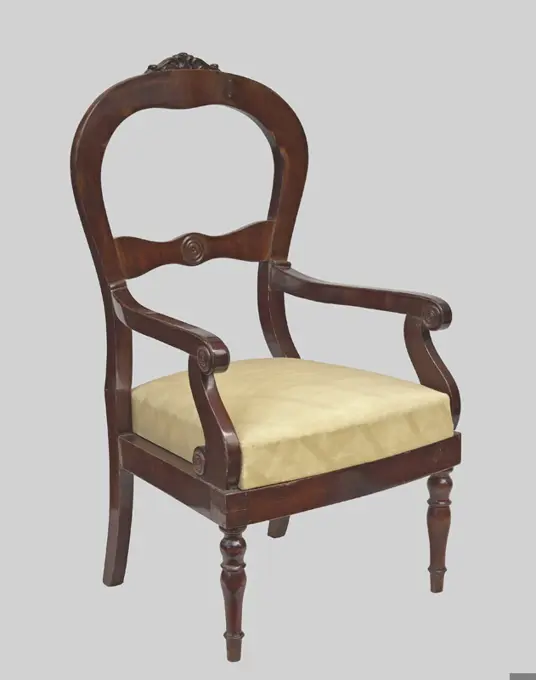
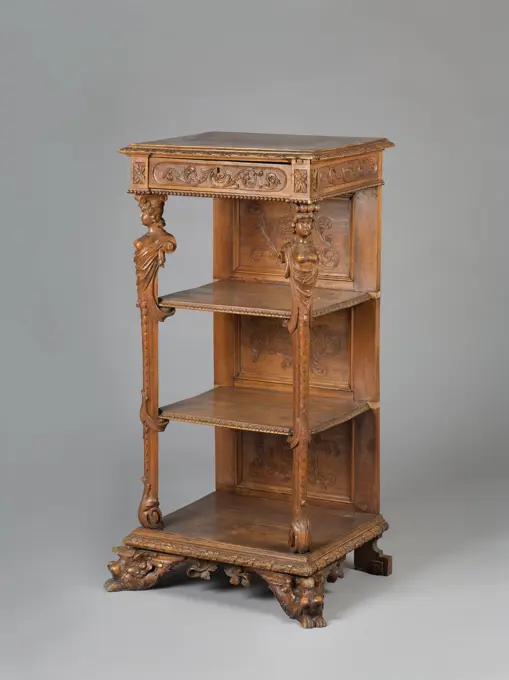
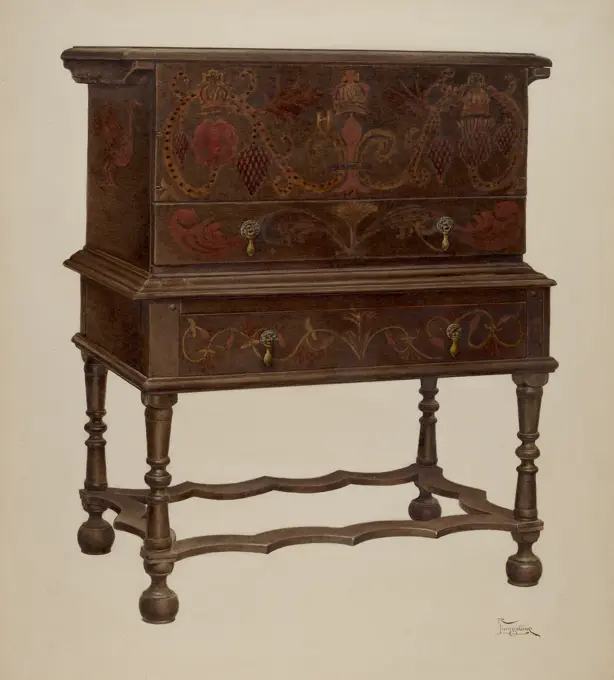
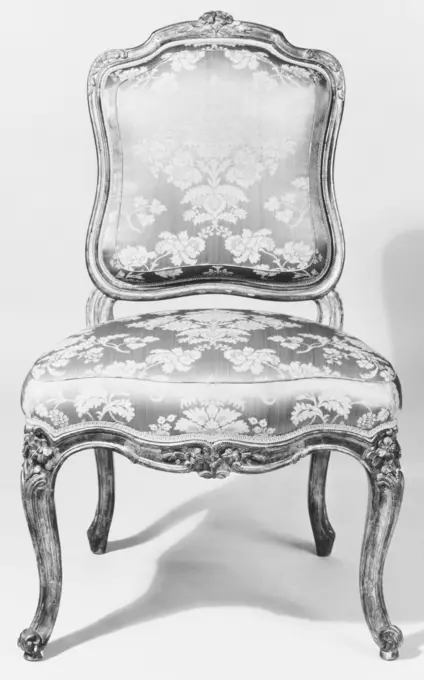
A series of ornate wooden chairs from different eras, featuring intricate designs and upholstery, capturing classic craftsmanship and historical charm.

Chair with a brown leather upholstery, Hendrik Petrus Berlage, c. 1902 Eikhout chair. The front and hind legs are interconnected by means of an H-shaped cross with pen and hole connections, the pens of which stick through the legs. The slanted billioned backstyles end in bird heads and rest on the cross. The handrail rests on Stutten near the seat and these also serve as hind legs. The backrest is connected both above and below by an intermediate rule. The top line contains a sliced star shape in the middle. There is a panel between the lines that is covered with leather and is secured with copper nails. The seat is also covered with leather and secured with copper nails. designer: Netherlandsmaker: Amsterdam oak (wood). leather Eikhout chair. The front and hind legs are interconnected by means of an H-shaped cross with pen and hole connections, the pens of which stick through the legs. The slanted billioned backstyles end in bird heads and rest on the cross. The handrail rests on Stut
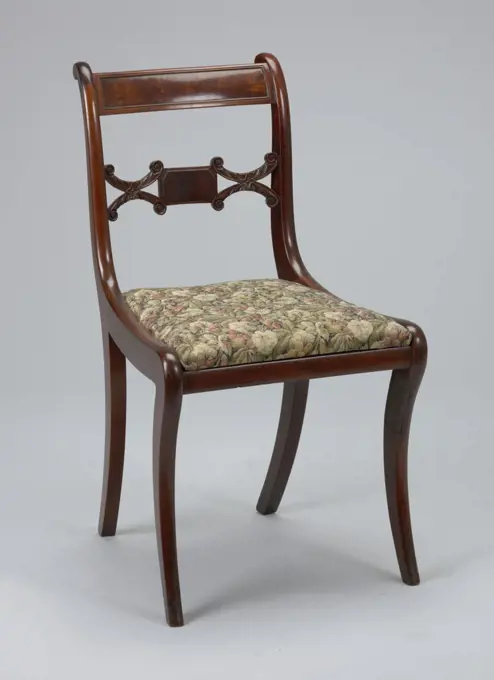
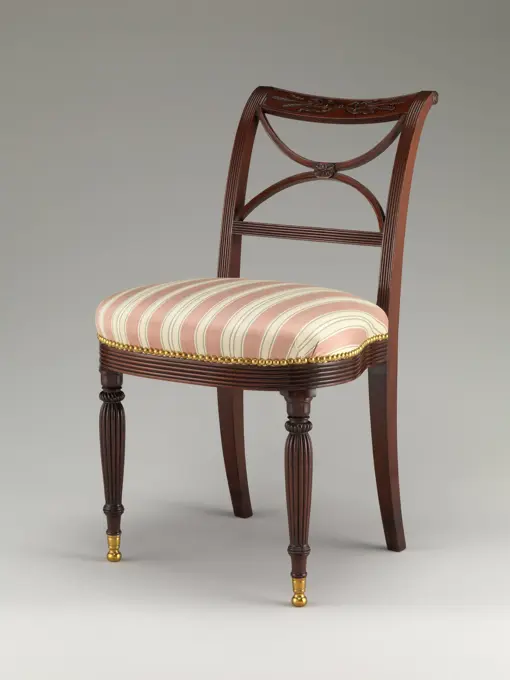
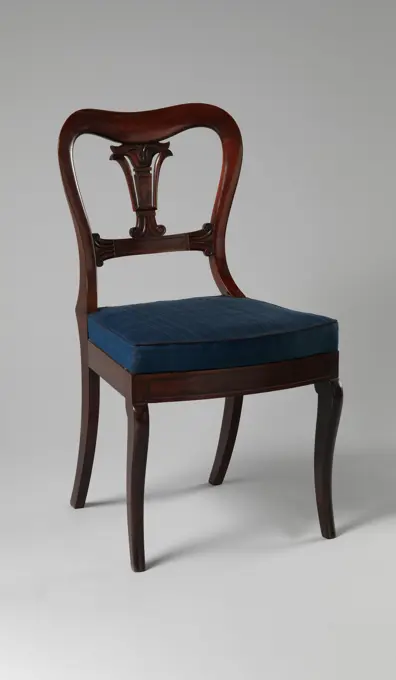
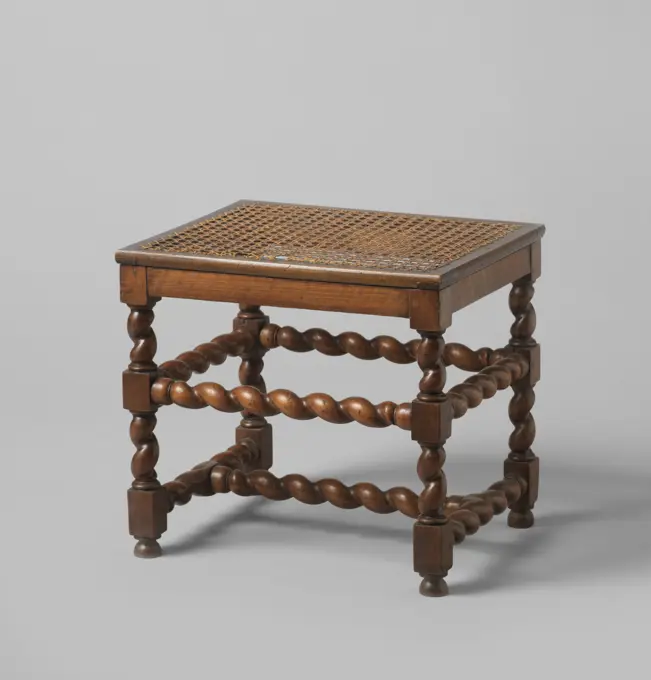
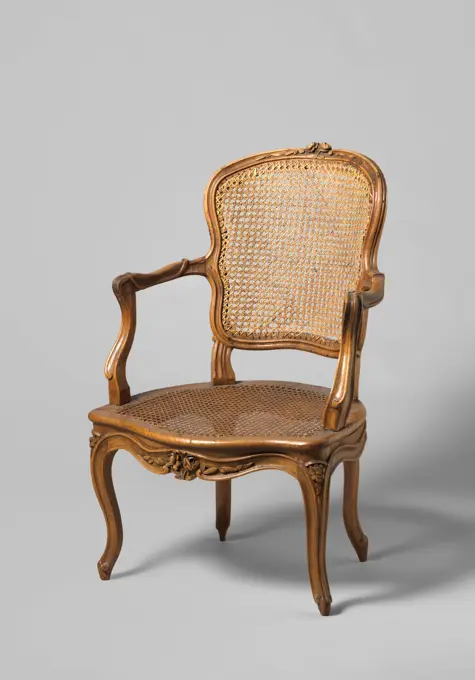
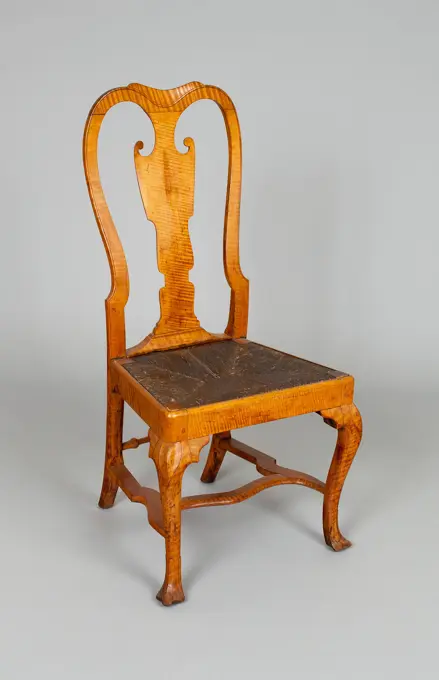
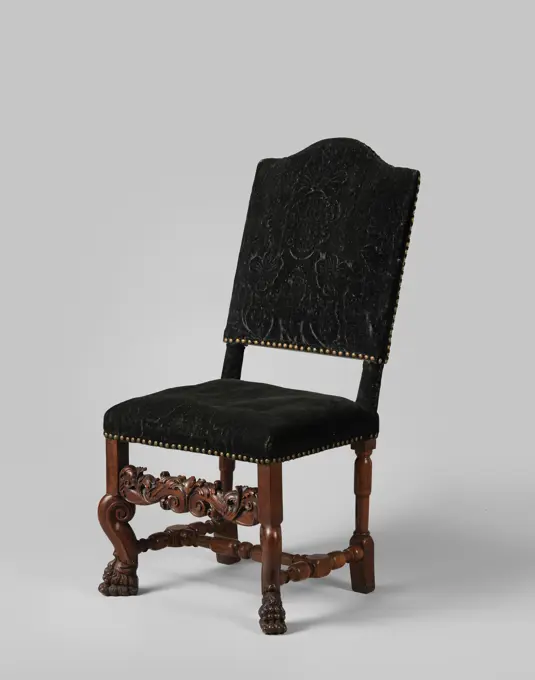
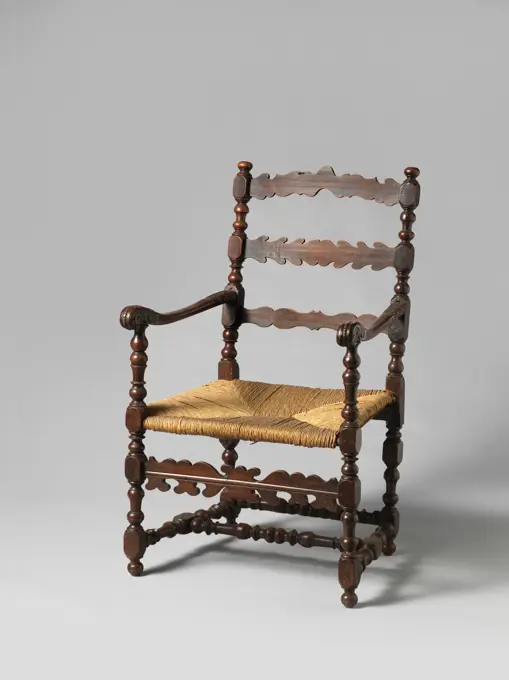
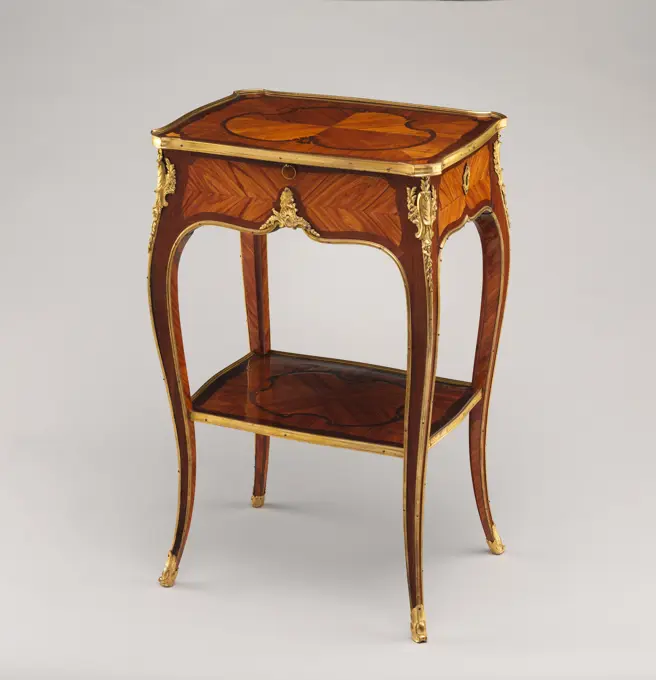
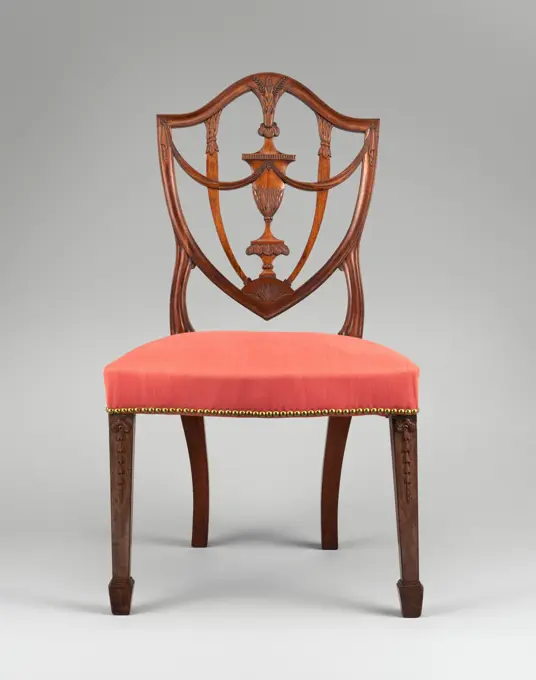
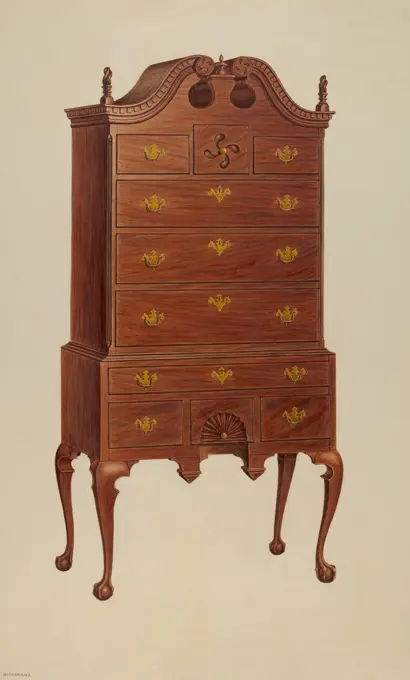
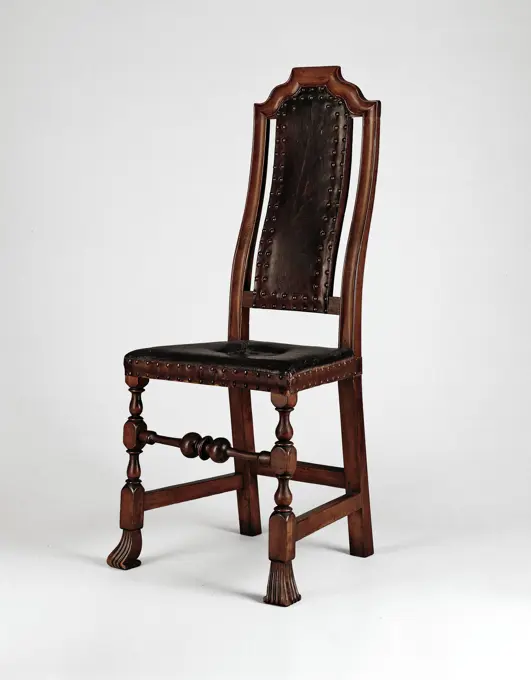
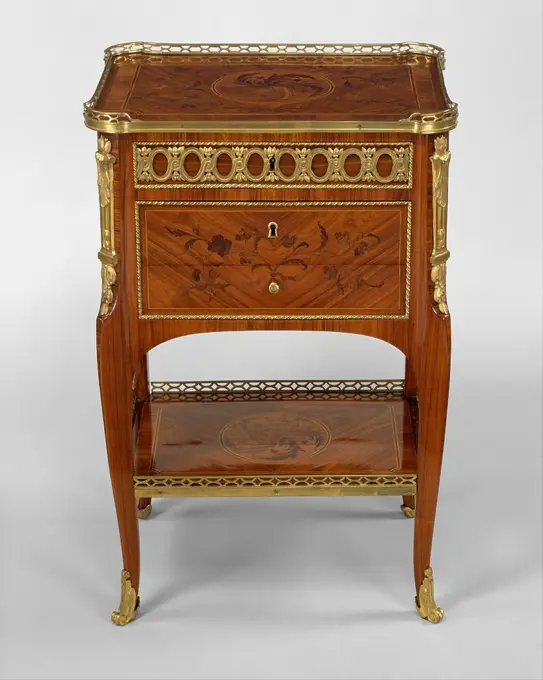
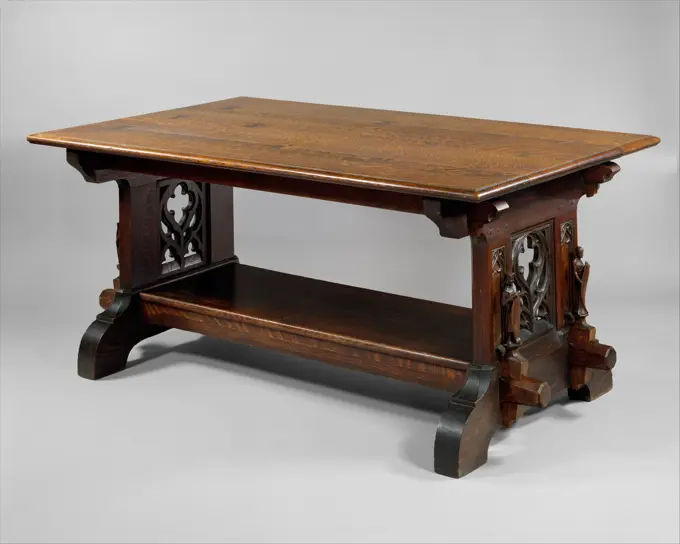
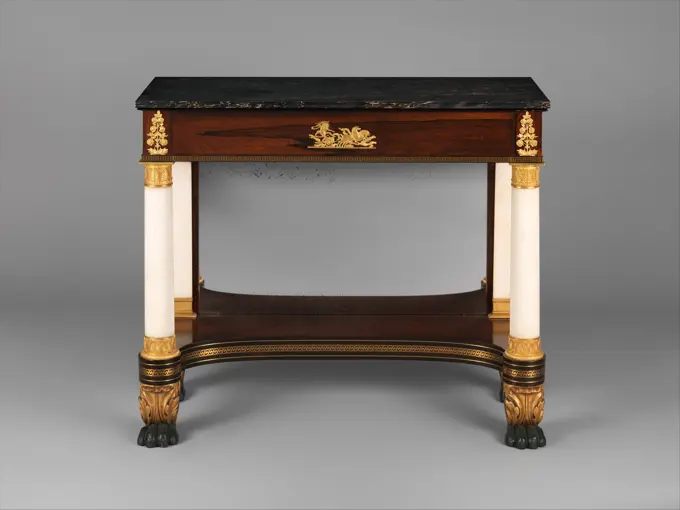
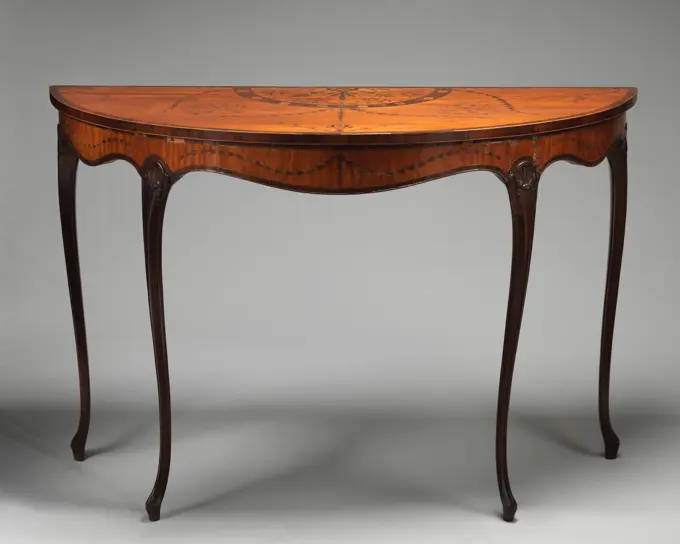
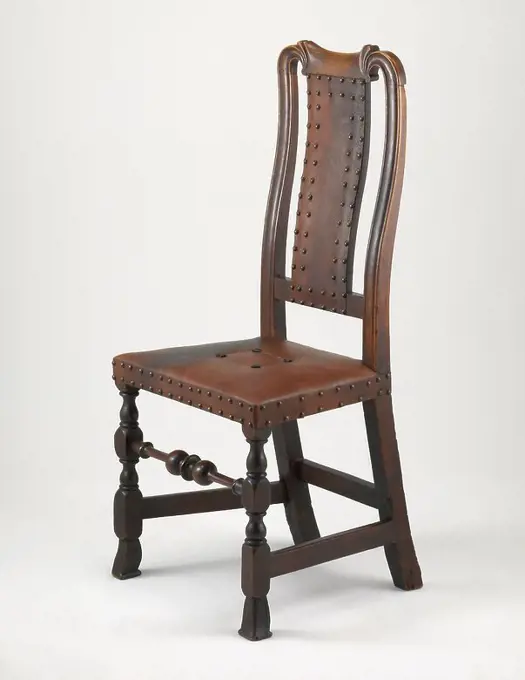
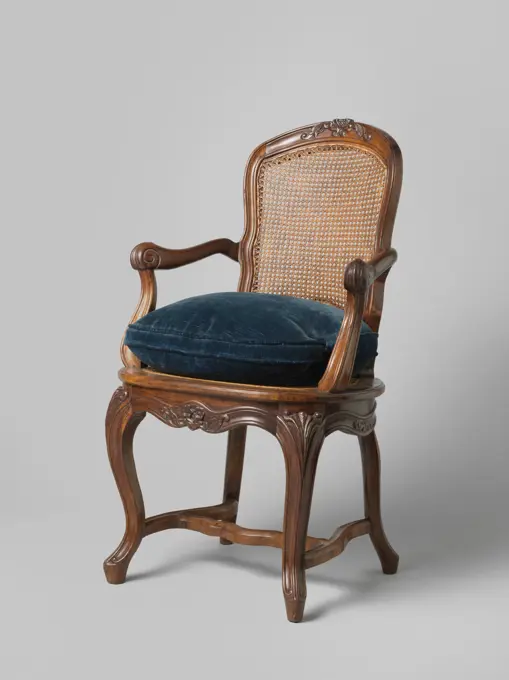
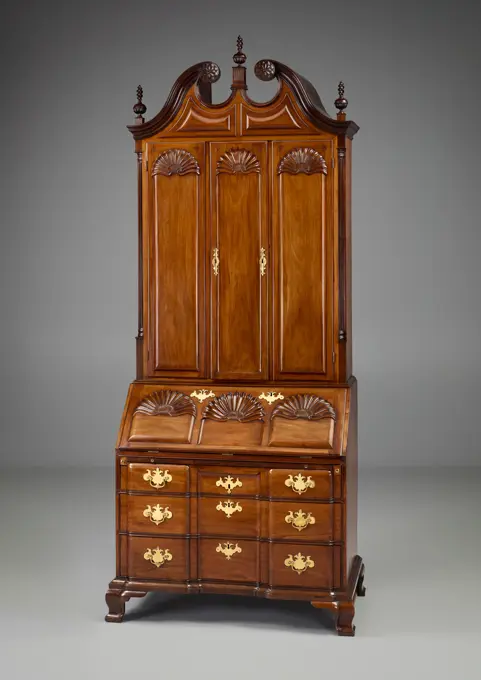
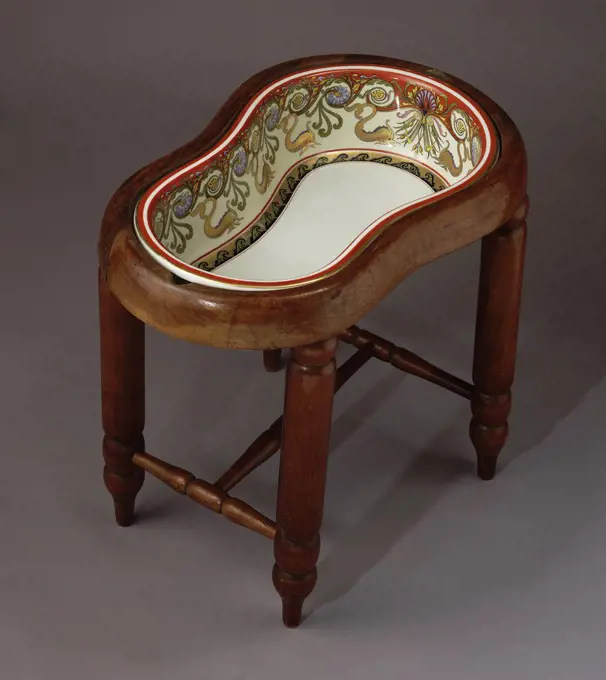
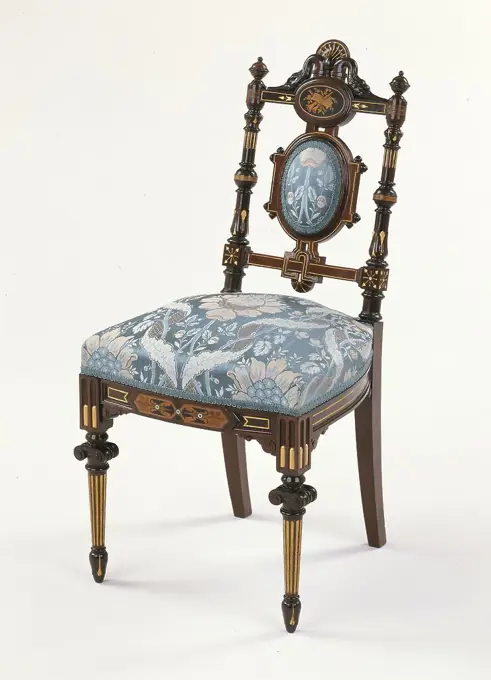
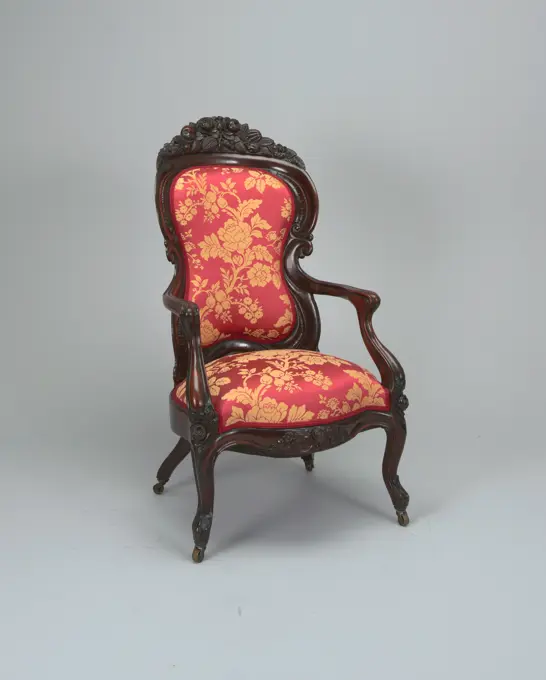
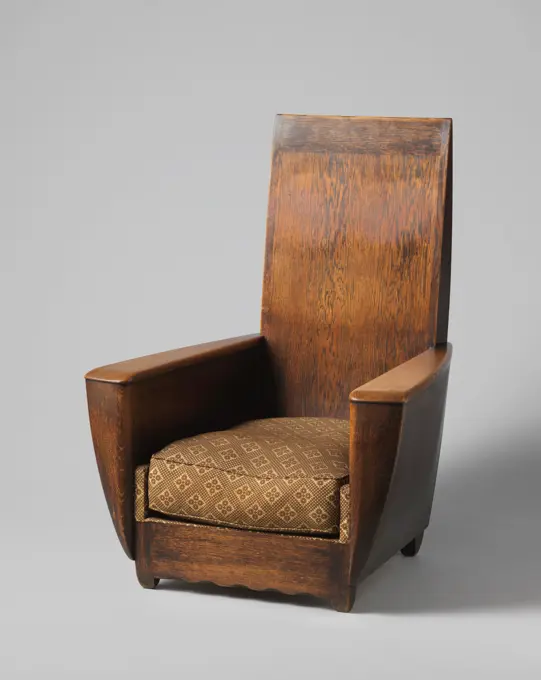
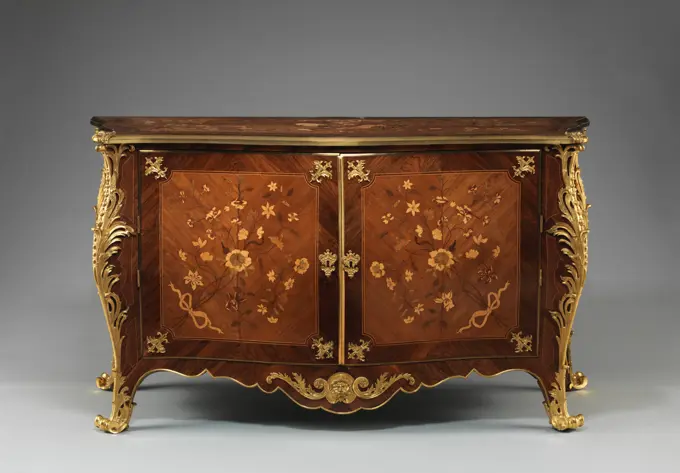
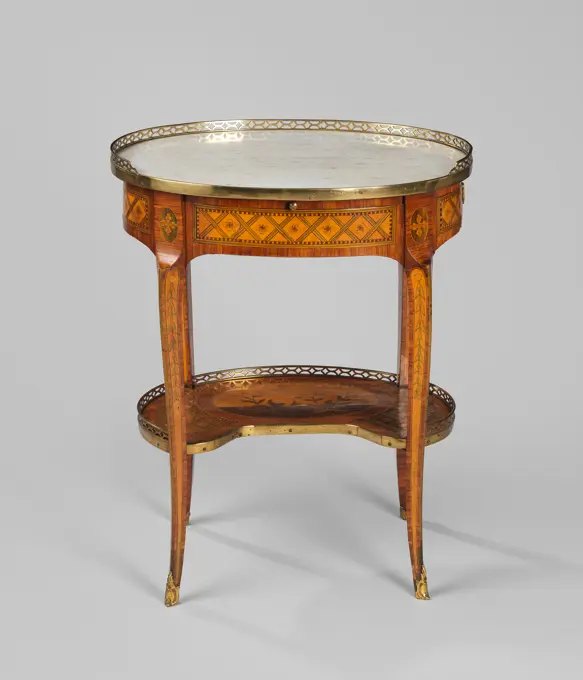
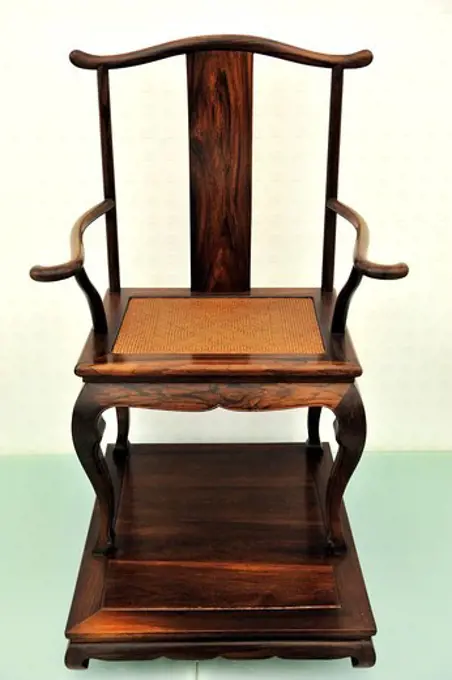
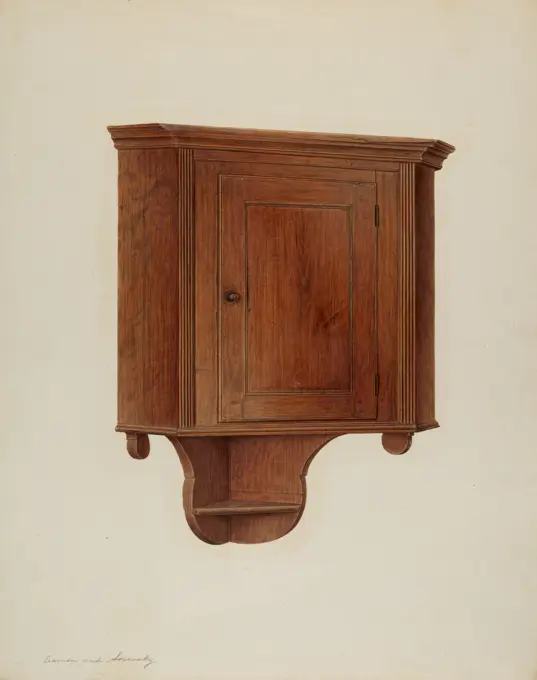
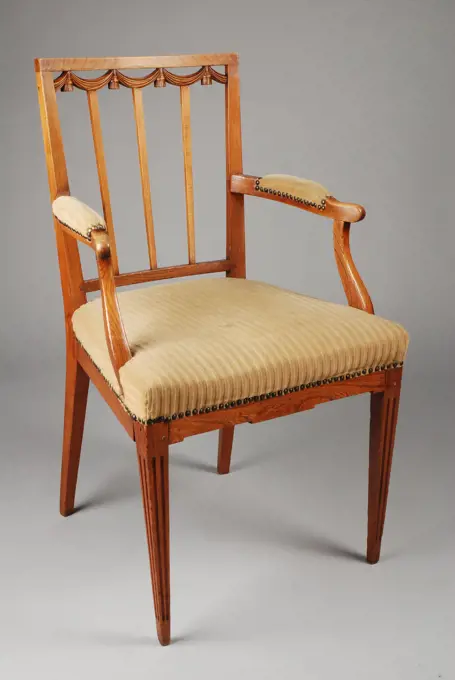
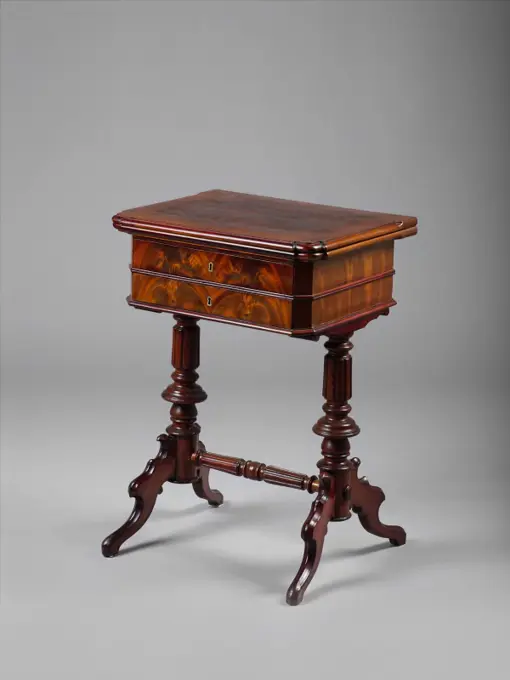
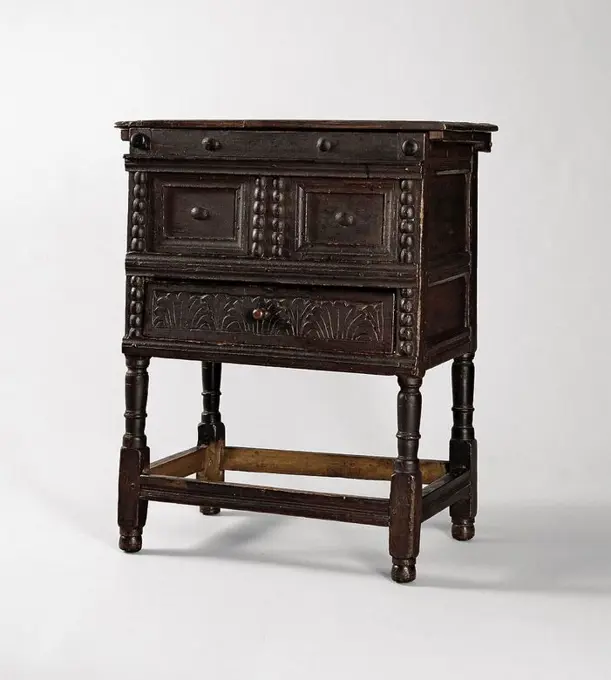
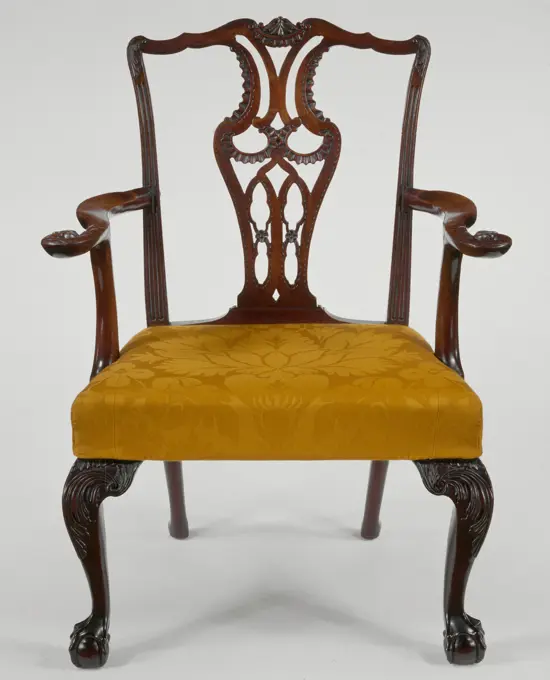
Armchair 1770-90 American Like much New York furniture, this armchair follows English precedents in having a low back and tapering rear legs that end in oval spade feet. It descended in the family of Samuel and Judith Verplanck, whose complete parlor furnishings are displayed in the Verplanck Room (gallery 718).. Armchair. American. 1770-90. Mahogany, red oak, sweet gum, ash. Made in New York, United StatesChair. unknown, creatorSide Chair (USA); Style of Duncan Phyfe (American, 1768-1854); mahogany caned seat covered with upholsteryChair, wood (mahogany and poplar), horse hair, Back legs flat-sided, front legs flat excepting rounded front face; legs curve outward toward bottom, and back legs incline toward each other at bottom. The chair's back corner posts terminate in a volute-like form at the top of the chair. The chair's top rail, slightly arched, is bowed towards the back. A rectangular panel of inset veneer is surrounded by beading. The chair's splat is horizontal, composed of a small oblong-shaped rectangle faced with veneer, flanked on either side by horizontal coupled C-scrolls covered with foliage. The C-scrolls terminate in volutes. The seat flares from back to front, with straight edges., USA, ca. 1820, furniture, Decorative Arts, ChairScroll back side chair 1810-15 Attributed to Duncan Phyfe Scottish. Scroll back side chair 20486Side Chair ca. 1830 Possibly from the Workshop of Duncan Phyfe Scottish As craftsmen transitioned from the Early to the Late Grecian style (the latter is also referred to as the Grecian Plain Style), they began to incorporate more curvilinear shapes and new motifs. With a scrolled stay rail and an inverted lotus-shaped splat, this design is more abstract than the clearly delineated lyre-back chair attributed to Phyfe (65.188.2). This example is thought to come from Phyfe's shop based on the quality of the workmanship and a close stylistic connection to a set of chairs manufactured for Phyfe's daughter, Eliza Phyfe Vail (1801-1890).. Side Chair 1679Taboo with sitting of reeds, on lined legs with H-shaped cross. Taboo of walnut, stretched with reeds and resting on sliced legs with H-shaped cross and four sports; The houses are smooth.Side chair ca. 1740 British. Side chair. British. ca. 1740. Walnut. Woodwork-FurnitureChair. unknown, authorChair with a brown leather upholstery, Hendrik Petrus Berlage, c. 1902 Eikhout chair. The front and hind legs are interconnected by means of an H-shaped cross with pen and hole connections, the pens of which stick through the legs. The slanted billioned backstyles end in bird heads and rest on the cross. The handrail rests on Stutten near the seat and these also serve as hind legs. The backrest is connected both above and below by an intermediate rule. The top line contains a sliced star shape in the middle. There is a panel between the lines that is covered with leather and is secured with copper nails. The seat is also covered with leather and secured with copper nails. designer: Netherlandsmaker: Amsterdam oak (wood). leather Eikhout chair. The front and hind legs are interconnected by means of an H-shaped cross with pen and hole connections, the pens of which stick through the legs. The slanted billioned backstyles end in bird heads and rest on the cross. The handrail rests on StutAnonymous. "Houbigant perfume chair". Charm and rosewood; Garnish: Damascus. 1855. Paris, Carnavalet museum. 100080-3 FURNITUREArm chair of walnut with S-shaped overhoeks placed legs with cutting of flowers and leaves. Back and seat of braided reeds. With loose pillow., Anonymous, 1750 - 1775 Arm chair of nuthout (ameblement) with back and seat of braided reeds. The stretched S-shaped overhoeks placed legs with profiling pass into the sitting window without interruption and are decorated with stuck flowers. Scalloped by line with flower and leaf work. Placed backwards army stars S-shaped; Holded armrests ending in Voluten. Upper line window with scalloped volutes. With loose pillow. See also: BK-16851-A to H. France wood (plant material). walnut (hardwood). Arm chair of nuthout (ameblement) with back and seat of braided reeds. The stretched S-shaped overhoeks placed legs with profiling pass into the sitting window without interruption and are decorated with stuck flowers. Scalloped by line with flower and leaf work. Placed backwards army stars S-shaped; Holded armrests ending in Voluten. Upper line window withSide Chair c 1746-1760 Philadelphia. Maple . Artist unknownChippendal chair (subtitle). Carved wood. House of Victor Hugo - Hauteville House.Furniture. Chair of walnut. The furniture is covered and tranquils placed on overhoek, full-shaped front legs with high houses at the top, stabbed lion jaws at the foot and articulated hind legs. The legs are connected by a also led, H-shaped cross; The preliminary sport shows openwork, lying s vultuts with symmetrical acanthus sheet. The back is scalloped at the top.Armchair from kerke or plum wood. Armchair from kerke or plum wood. The furniture has a matt seat and rest on legs that show home and articulation and are connected by an H-shaped cross and a back sport. The upper front sport is flat and along a symmetrical wave line. The arm struts and back styles are decorated as the legs. Three back sports are looked out. The lightly healed armrests end in a volute that is decorated with an acanthus sheet. The back sports are made of walnuts.Small writing table ca. 1755-60 Antoine-Mathieu Criaerd Small convenient tables provided with a writing slide and a drawer for writing implements were found in nearly every room of the mid eighteenth-century home. This elegant piece by Criaerd is entirely framed by gilt-bronze moldings and has kept its gilt-bronze receptacles for ink and sand needed for letter writing. Books or papers could be placed on the shelf underneath as can be seen on a related table in the well-known portrait of Madame de Pompadour by François Boucher of 1756 (Bayerische Staatsgemäldesammlung, Munich).. Small writing table 205793Side Chair 1794-99 Attributed to Samuel McIntire This chair and another in the collection (37.81.1) belong to a large group of seating furniture with carved ornament attributed to Samuel McIntire, a highly skilled architect and carver in Salem, Massachusetts. The bellflowers on the front legs and the urn with draped fabric on the backstandard motifs of the neoclassical style in the United Statewere borrowed from decoration found on ancient Greek and Roman ceramics. The design for this vase-back chair was based on plate IId in Hepplewhite and Company's "The Cabinet-Maker and Upholsterer's Guide" (London, 1788).. Side Chair. American. 1794-99. Mahogany. Made in Salem, Massachusetts, United StatesMahogany oval Queen Anne hanging table, hanging table folding table table furniture interior design wood mahogany metal, folded w 106.0 Swaying cabbage legs Queen AnneChair of nut and beech wood with s-shaped overhoeks places placed; X-shaped cross with rosette; Sliced flower and leafwork, back and seat of reeds, with loose cushion. Loose from note and beech wood (amublement) with s-shaped overhoeks places placed, connected by a swapped X-shaped cross with rosette. Rules and sills and legs are decorated with sliced flower and leaf motifs. Back and seat of braided reeds. Loose kisses from green shaved tripe (modern). See also: BK-16852-e up to P.TableChair. Cherry of cherry wood with mats seat. The legs, the five sports and the H-shaped cross have been rotated. The corner styles of the back are column-hungry with thickenings at the bottom; The houses have been completed. The lower and upper spray are symmetrically cut off, as well as the center web, which is flanked by two profiled styles and has a lily in an oval in the middle piece. Vaarjes are arranged if award of the corner styles.Lorenz Rothkranz, Highboy, c 1939 HighboyLeather chair 1723-45 American When the Boston upholsterer Thomas Fitch described chairs he was selling as crook’d back” in early 1723, he was probably referring to side chairs similar to the one displayed here, which is still upholstered in its original, locally tanned leather. Promoted as the newest fashiond,” the chair has a back panel with a shallow, serpentine curve that conformed to the sitter’s back and must have been a significant advance in seating comfort. Throughout the second quarter of the eighteenth century, the Boston chairmaking industry exported large numbers of these comfortable, practical chairs.. Leather chair 4769Mahogany straight Empire armchair, armchair seat furniture furniture interior design wood mahogany oak brass velvet, veneered panel in the back rimmed with brass profiled frame black velvet upholstery on backrest seat and armrests EmpireChair; unknown, Jansen (Fl. Ca 1880); around 1880 (1870-00-00-1890-00-00);Office of the Council of Ministers (Warsaw - 1945-) - collection, plant decorations, transmission (provenance), Rocaille (ornament), Rococo (style)Writing table. Culture: French, Paris. Dimensions: 28 3/4 x 18 1/4 x 13 1/2 in. (73 x 46.4 x 34.3cm). Maker: Roger Vandercruse, called Lacroix (French, 1727-1799). Date: ca. 1760-70.The writing drawer contains a slide covered with modern tooled green leather and fitted with three gilt-metal containers for pens, sand, and an inkwell. The two lower drawers are treated as though they were a single panel, veneered with continuous floral marquetry and framed by a gilt-bronze molding of entwined-rope design chased with beading. The overall shape of this table and the style of floral marquetry with endcut kingwood suggests a date early in Lacroix's career when he was still working under the influence of Oeben. The marquetry and cabriole legs in combination with fully neoclassical mounts denote a transitional table. The mounts and marquetry are found on other pieces by Lacroix, particularly the central ornamental motif of the foliated wheel inlaid on both top and lower shelf, a motif that he Chair. unknown, authorLibrary Table 1904 Rose Valley Shops Rose Valley, a utopian Arts and Crafts colony, was founded in 1901 near Moylan, Pennsylvania, by William Lightfoot Price, a Philadelphia architect, with a coterie of his politically liberal colleagues, clients, and friends. Inspired by the advocates of the British Arts and Crafts movement, John Ruskin and William Morris, the community was established for the "manufacture of  materials and products involving artistic handicraft as are used in the finishing, decorating and furnishing of houses," according to its incorporation papers, dated July 17, 1901. Within a year, the Rose Valley Shops were producing furniture designed by Price as well as pottery, metalwork, and bookbindings. Rose Valley furniture is considered rare. At most, a few hundred pieces, each with significantly varying details, were made by a small team of craftsmen before the furniture shop closed in 1906. This trestle-type library table represents the best of Rose Valley production. Pier Table in the Neo-Classical Taste 1815-25 Attributed to Duncan Phyfe Scottish. Pier Table in the Neo-Classical Taste 21582TableSide table ca. 1788 British. Side table. British. ca. 1788. Satinwood and mahogany veneer. Woodwork-FurnitureCupboard. Culture: American. Dimensions: 58 x 49 3/4 x 22 3/4 in. (147.3 x 126.4 x 57.8 cm). Date: 1675-1700. Museum: Metropolitan Museum of Art, New York, USA.Elmwood doll chair with black velvet seat and tulip shape as bar in the backrest, doll chair chair seat furniture miniature toy relaxing device model wood velvet, sawn glued brown open backrest. Loose seat with black fabric. Square downwardly narrowing legs play home interiorSide Chair. American; Newport, Rhode Island or Boston, Massachusetts. Date: 1722-1744. Dimensions: 106.8 × 48.2 × 36.8 cm (42 × 19 × 14 1/2 in.). Maple and reupholstered with 18th century leather. Origin: Newport. Museum: The Chicago Art Institute, Chicago, USA.Oak chair with sitting and back of leather. Eight oak chairs with leather sitting and back. The legs show home and suffered and are connected by an H-shaped cross. There is a wide advance at the front, between two houses. The hind legs neighborhood. The back rests high on the struts and is bent from above.Rosalie Side Chairs; Attributed to John Henry Belter (American, b. Germany, 1804 - 1863); USA; laminated rosewood, hardwood, cotton upholstery, metalColonial armchair. Armchair with H between legs. Seat covered with dust, back with rattan. One from a set of 6Chair. unknown, authorTable with fallingleavesRectangular Table. Dated: c. 1939. Dimensions: overall: 23 x 29 cm (9 1/16 x 11 7/16 in.) Original IAD Object: none given. Medium: colored pencil, watercolor, and graphite on paper. Museum: National Gallery of Art, Washington DC. Author: Ruth Bialostosky.Chair. unknown, authorSecretary, decorated in Marqueterie including a tulip bouquet, Anonymous, 1750 Secretary decorated with marquetery of pink, rosewood and other types of wood on oak core. The overhoeks placed legs, the front with S-shaped corner styles, turn into the scalloped pre-line and side rules. The Front used shows a heart -shaped shield formed by leaf voles in which a tulip bouquet. The upper half serves as a writing sheet for one, partly shared upper cabinet; The lower half has two doors. Rocaille fittings at the bottom of the legs, at the top of the styles and on the front line. France wood (plant material). oak (wood). rosewood (wood). rosewood (wood). pine (wood). satinwood (wood). leather. bronze (metal). marble (rock) gilding Secretary decorated with marquetery of pink, rosewood and other types of wood on oak core. The overhoeks placed legs, the front with S-shaped corner styles, turn into the scalloped pre-line and side rules. The Front used shows a heart -shaped shield formed by leaf volChair of walnut with coated seat, on overhoeks. Strached s-shaped legs on boxing hooves passing into the seating window. Equipped with carving .. chair belonging to Ameublement consisting of six coated walnut chairs and one armchair, resting on overhoeks placed stretched S-shaped legs on boxing hooves, which pass into the seating. It was rounded at the front, sitting room wears decorations in floral pattern; As well as the upper spray of the elongated coated back window that is slightly scalloped from below and from the side. The stretched S-shaped armrests are supported by backwards stated S-shaped struts with volute and acanthus blade decoration.Desk andBookcase. Maker, attributed to: Daniel Spencer, 1741-1796Toilet of empress Elisabeth of Austria by Anonymous artist, Pocelain, wood, 1887-1890, Kammerhofmuseen der Stadt GmundenChest with Drawers. Culture: American. Dimensions: 39 1/4 x 47 1/2 x 22 in. (99.7 x 120.7 x 55.9 cm). Maker: Workshop of Peter Blin (ca. 1675-1725). Date: 1675-1705. Museum: Metropolitan Museum of Art, New York, USA.Side Chair. Herter Brothers; American, 1864-1906; New York, NY. Date: 1864-1874. Dimensions: 90.5 × 45.8 × 42 cm (35 5/8 × 18 × 16 1/2 in.). Rosewood with marquetry of various woods, and ivory. Origin: New York City. Museum: The Chicago Art Institute, USA.SideChairRococo console or penant table, console table penant table table furniture interior design wood lime wood oak marble stone paint iron, Olive green painted with green marble top rococoGingle with top of white marble and rear wall with mirror. Moving table glued with satin wood on oak core and decorated with gold-plated bronze. The rectangular furniture has rounded corners at the front. A connecting sheet is equipped with a white marble and a gallery on four conical scanned legs. There are two Tuscan colonnets on this leaf; At the back pilasters, all with cannelures. The rule bears a gold-plated bronze opened fries on the front and sides on ebony soil. White marble top; On the back wall mirror.Sofa Table. John and Joseph W. Meeks Company; American, active 1836-59; New York, New York. Date: 1836-1846. Dimensions: 74.9 × 120.7 × 62.2 cm (29 1/2 × 47 1/2 × 24 1/2 in.) when open. Rosewood, ash and pine. Origin: New York City. Museum: The Chicago Art Institute, Chicago, USA.Hallaga table, decorated with marquetery, o.A. with a trophy with musical instruments. Halublema table decorated with marquetery of pink, satin and other types of wood on oak core, on three, rejuvenating, legs with rose wood and rosette. As a rule, including a healed tooth list, there are two quarterly loading quarters. The rule is decorated with a trophy with musical instruments and on the drawers with medallions with heads in profile, hanging on a bow and worn by flower branches. The blade has a centrifugal veneered frame.Windsor Armchair c 1752-1787 Kingston. Tulip, maple, oak, and ash . J. M. HasbrouckAnonymous (n. - d.), Gondole chair, 1801. mahogany wood, textiles. Museum of Romantic Life.Bernard Krieger, Tea Table, c 1936 Tea TableRosalie Armchair; Attributed to John Henry Belter (American, b. Germany, 1804 - 1863); USA; laminated rosewood, cotton upholstery, metalAnonymous, the queen's armchair (main title). Wood, green velvet. Petit Palais, Museum of Fine Arts of the City of Paris.. Armchair from mahogany lined with dust that shows a pattern of wreaths and windows. The legs are saber-shaped and at the top, before they pass in the handrail, profiled. The back is connected to the armrests in a sloping movement (the Z.G. Gondole model) and coated around. The coating is deposited with nails. The paws rest on, later applied, wheels. From General Baron Chassé.Armchair. unknown, creatorArm chair in Neo-Rococo style of Djatihout with Riet's seat, Anonymous, 1875-1900 Djatihout arm chair, the seat and the pear -shaped backrest stretched with reeds. In Neo-Rococo style, with S-shaped front legs and scallops, all cut with floral patterns, strongly bent out, arms built from two volutes, an openwork back with loose side styles and a crowning of a large flower in the midst of leaf fillets . Indonesia wood (plant material). rattan Djatihout arm chair, the seat and the pear -shaped backrest stretched with reeds. In Neo-Rococo style, with S-shaped front legs and scallops, all cut with floral patterns, strongly bent out, arms built from two volutes, an openwork back with loose side styles and a crowning of a large flower in the midst of leaf fillets . Indonesia wood (plant material). rattanETA  4. W. 19th century (1876-00-00-1900-00-00);baroque (style), herms, plant decoration, fantastic animalsRolland Livingstone, Chest, 1935 1942 ChestPlaying table, Carel Breijtspraak, c. 1820 Mahoniehouten, folding gaming table on cut foot. Amsterdam mahogany (wood) Mahoniehouten, folding gaming table on cut foot. Amsterdam mahogany (wood)Furniture, Anonymous, c. 1800 - c. 1899 Partly glued four -door cabinet made of oak, resting on two bol legs at the front. The two glued drawers in the basement are placed between consoles with lion heads. The middle and corner styles of the lower and upper cabinet consist of half-columns with, partly inserted, cannelures, a basement and ionic capital. The center panels of the underneath show warriors and those of the upper doors weapon trophies; frames with veneer and leaf vines. Frisian with leaf vines and three cherub heads. Northern Netherlands oak (wood) Partly glued four -door cabinet made of oak, resting on two bol legs at the front. The two glued drawers in the basement are placed between consoles with lion heads. The middle and corner styles of the lower and upper cabinet consist of half-columns with, partly inserted, cannelures, a basement and ionic capital. The center panels of the underneath show warriors and those of the upper doors weapon trophies; frames with veneer and Chair with round, open backrests with middle style, the seat with flower and leaf motifs, anonymous, c. 1750 - c. 1800 Seat of Vurenhout, brown varnished, round open backrests with middle style; Round pre-line, backward hind legs and overhoeks placed S-shaped front legs; seat covered with silk with flower and leaf motifs: color scheme with green, yellow, pink or red flowers or leaves; Staff over hard filling tense with many threads on the bottom visible under thick layer of varnish. Amsterdam (possibly) spruce (wood). silk Seat of Vurenhout, brown varnished, round open backrests with middle style; Round pre-line, backward hind legs and overhoeks placed S-shaped front legs; seat covered with silk with flower and leaf motifs: color scheme with green, yellow, pink or red flowers or leaves; Staff over hard filling tense with many threads on the bottom visible under thick layer of varnish. Amsterdam (possibly) spruce (wood). silkHalf Table (Austria); woodHigh chair, Anonymous, 1707 High chair of Notenhout. The furniture is stretched with reeds and has over -corner front legs, which are adorned with acanthus leaves, between which naked armorets wearing fruit dives. The open -worked pre -sport shows a shield with AB 1707 in the middle and on either side of this amorettes that wear acanthus drinks and a fruit basket above the shield. The back window shows openwork Acanthus vranks and has a semi -circular crown, consisting of a female bust and two mermaids. Netherlands (possibly) wood (plant material). walnut (hardwood). High chair of Notenhout. The furniture is stretched with reeds and has over -corner front legs, which are adorned with acanthus leaves, between which naked armorets wearing fruit dives. The open -worked pre -sport shows a shield with AB 1707 in the middle and on either side of this amorettes that wear acanthus drinks and a fruit basket above the shield. The back window shows openwork Acanthus vranks and has a semi -circulaArsen Maralian, Card Table, 1937 Card TableTea table, black, with leaf with marquetery. Tea table from black-dyed mahogany and oak. The four across placement, frequently curved profiled legs are connected at the second swelling by a plateau with curved sides opened in geometric shape. The legs carry a scalloped deck with raised edge above a wall, which contains an extension blade on the short sides. The scalloped tea leaf has two handles, decorated with acanthus leaf and in the middle shows birds and flowers in Marqueteria. Brass piping.Chair. unknown, authorOval Table with FallingLeavesStool 15th century French or South Netherlandish. Stool 471301CardTableArmchair with highly raised backrest and covered with a beige fabric with a brown diamond pattern, Wim Schuhmacher, c. 1921 Dark tinted oak armchair resting on four low legs. The legs are interconnected both at the front and rear by means of a wide rule with a wavy edge at the bottom. The armchair has wide cheeks on which the armrests lie. The armrests broaden to the front. The cheeks bent on the outside to the front and top. The armchair has a high backrest. The seat and a loose pillow are covered with a beige fabric with a brown diamond pattern. Netherlands oak (wood) Dark tinted oak armchair resting on four low legs. The legs are interconnected both at the front and rear by means of a wide rule with a wavy edge at the bottom. The armchair has wide cheeks on which the armrests lie. The armrests broaden to the front. The cheeks bent on the outside to the front and top. The armchair has a high backrest. The seat and a loose pillow are covered with a beige fabric with a brown diamond paDutch mahogany metamorphic wing-backed folding bed chair Bed Chair; Netherlands; mahogany, solid and veneered, inlaid with other woods, textileCommode from Croome Court, Worcestershire 1764 Peter Langlois French This commode was supplied to the sixth Earl of Coventry for a bedroom at Croome Court, Worcestershire, in 1764. The bill, dated July 20, 1764, gives the price of the commode as fifty-five pounds and specifies that it was intended for storing clothing. Trained in Paris, Langlois was a leading cabinetmaker in London in the 1750s and 1760s. He specialized in commodes in the French manner, decorated with floral marquetry and gilt-bronze mounts. Listen to experts illuminate this artwork's story Listen Play or pause #2148. Commode Supported by Bloomberg Philanthropies We're sorry, the transcript for this audio track is not available at this time. We are working to make it available as soon as possible.. Commode from Croome Court, Worcestershire. British. 1764. Pine and oak with marquetry of satinwood, kingwood, and other woods on a mahogany ground; gilded bronze. Woodwork-FurnitureArmchair;  2. PO. 19th century (1851-00-00-1900-00-00);Beech wood chair, painted with chinoiseries in gold on a black surface .. Chair of beech wood, painted with chinoiseries in gold on a black surface. High openwork backrest; The front legs are curved and endly. Loose leather seat, also decorated with ornament in gold.ChairSide Chair, from the Dining Room of the Hôtel Guimard, Paris, France Chair; Designed by Hector Guimard ((French, 1867-1942)); France; pearwood, leather, brassOval table with leaf of marble. .Leather, or Cromwellian,chairArmchair;  4 W.XVIIIW. (1775-00-00-1795-00-00);Set of four side chairs ca. 1760-65 Jean-Baptiste Gourdin. Set of four side chairs 205803Masonic Armchair. Culture: American. Dimensions: 50 1/2 x 25 5/8 x 24 3/4 in. (128.3 x 65.1 x 62.9 cm). Date: 1775-90.The seat and legs of this example are typical of the best Boston Rococo chairs, but the back is unusual. It is made up of Masonic symbols: fluted columns (referring to King Solomon's temple), a rusticated arch (arch of heaven), a compass and square (faith and reason), a mason's level (equality), a serpent swallowing its tail (rebirth), and a trowel (cement of brotherly love). The chair was probably made for the senior warden of an as-yet-unidentified Massachusetts lodge. Museum: Metropolitan Museum of Art, New York, USA.Close-up of an old Chinese traditional chairHarry Eisman and Isidore Sovensky, Hanging Corner Cupboard, 1941 Hanging Corner CupboardScissor chair. unknown, creatorCard Table. Dated: c. 1939. Dimensions: overall: 36.7 x 45.2 cm (14 7/16 x 17 13/16 in.) Original IAD Object: 29 7/8"high; 35 7/8"long; 17 7/8"wide. Medium: watercolor, colored pencil, and graphite on paperboard. Museum: National Gallery of Art, Washington DC. Author: Leo Drozdoff.Taboo of gold-plated Iepenhout with crosses. Taboo of gold-plated Iepenhout with crosses (form of folding chair) and a loose pillow.Eggshade Louis Seize armchair, armchair chair furniture furniture interior design wood elm wood velvet, Three bars in the back above garlands with tassels light green striped velvet upholstery Louis XVI Louis XVI Louis SeizeGame and work table. unknown, authorUnknown, Tea Table, last quarter 18th century, mahogany.Sewing Table. Dated: c. 1939. Dimensions: overall: 35.3 x 24.4 cm (13 7/8 x 9 5/8 in.) Original IAD Object: 27 1/2" x 16 1/2" x 22"deep. Medium: watercolor, colored pencil, and graphite on paper. Museum: National Gallery of Art, Washington DC. Author: Esther Williams and Claude Marshall.Console;  1810-1825 (1810-00-00-1825-00-00);Armchair. Dated: c. 1939. Dimensions: overall: 44.4 x 35.7 cm (17 1/2 x 14 1/16 in.) Original IAD Object: 32"high, 22"wide, 19"deep. Medium: watercolor, colored pencil and some heightening onpaperboard. Museum: National Gallery of Art, Washington DC. Author: M. Rosenshield-von-Paulin.Table c 1750-1800 New Hampshire. Tiger maple and maple . Artist unknownChamber Table. Culture: American. Dimensions: 34 1/4 x 28 x 15 3/4 in. (87 x 71.1 x 40 cm). Date: 1650-1700. Museum: Metropolitan Museum of Art, New York, USA.Chair;  Kon. XVIII century (1791-00-00-1800-00-00);