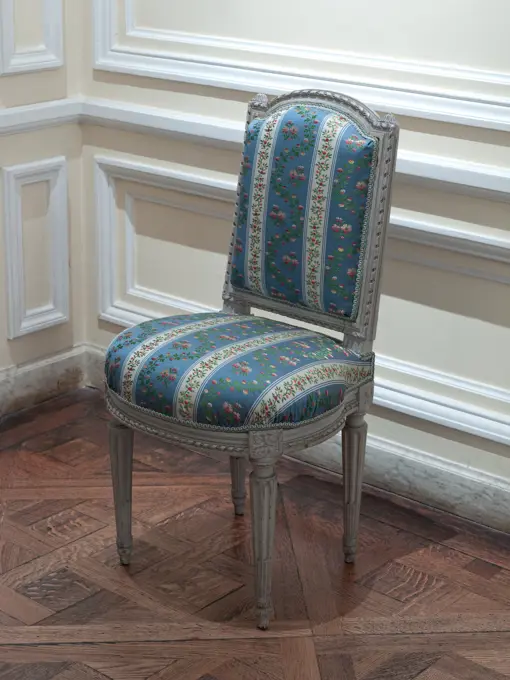
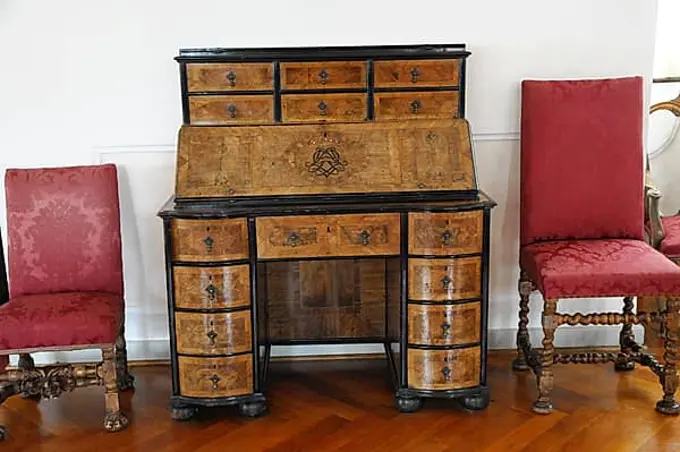
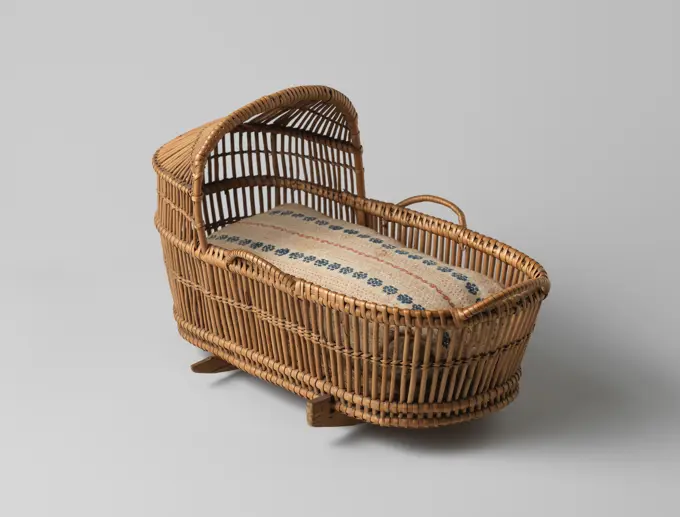
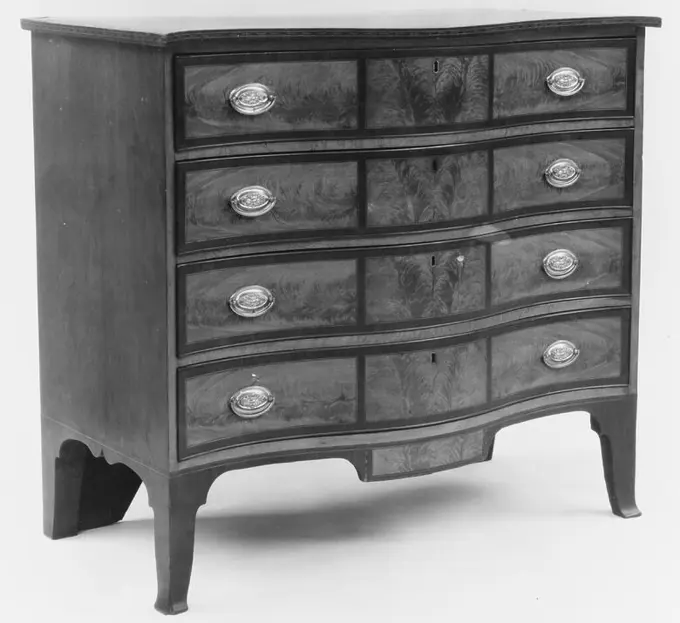
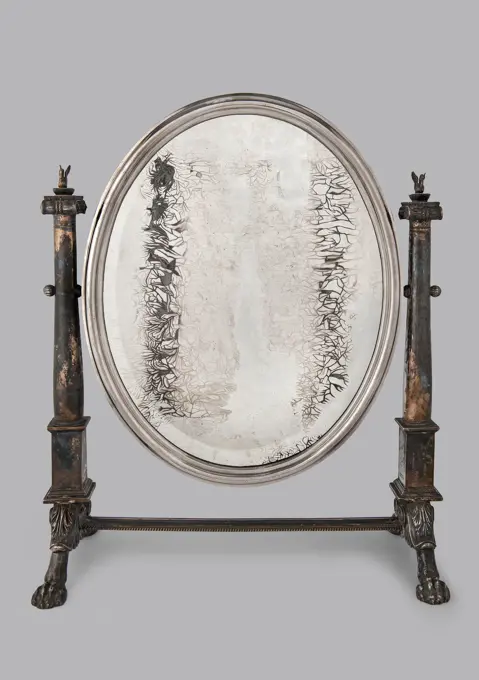
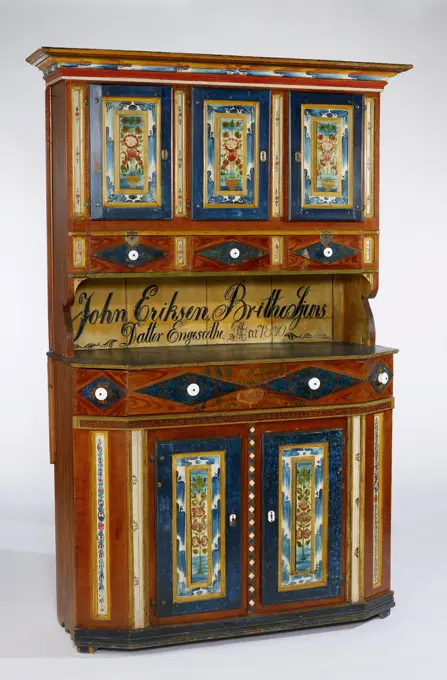
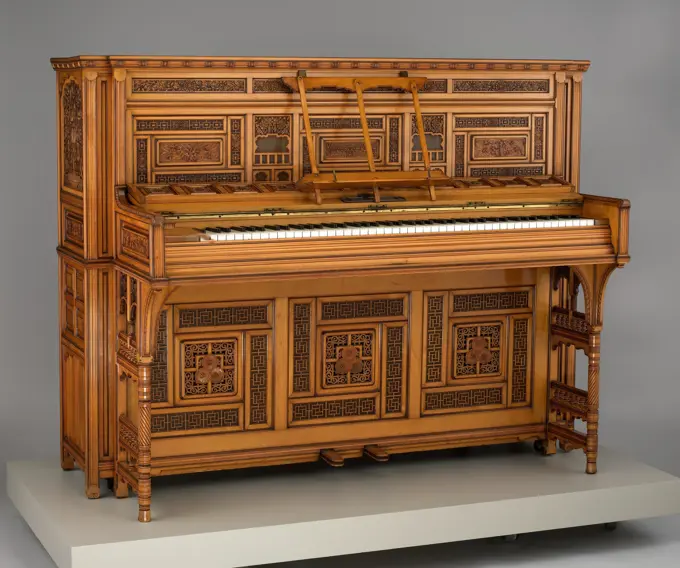
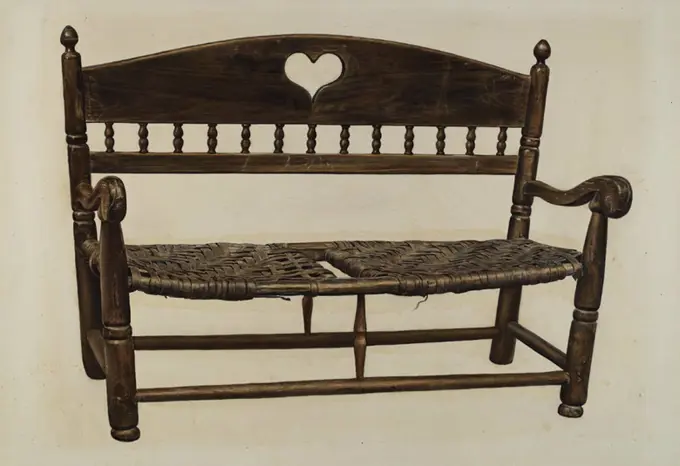
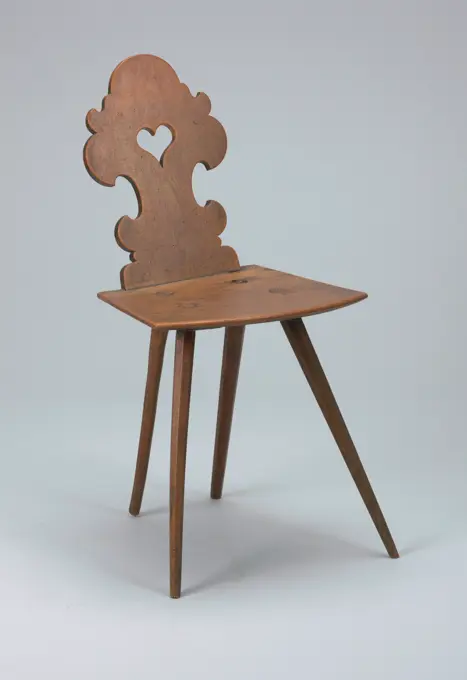
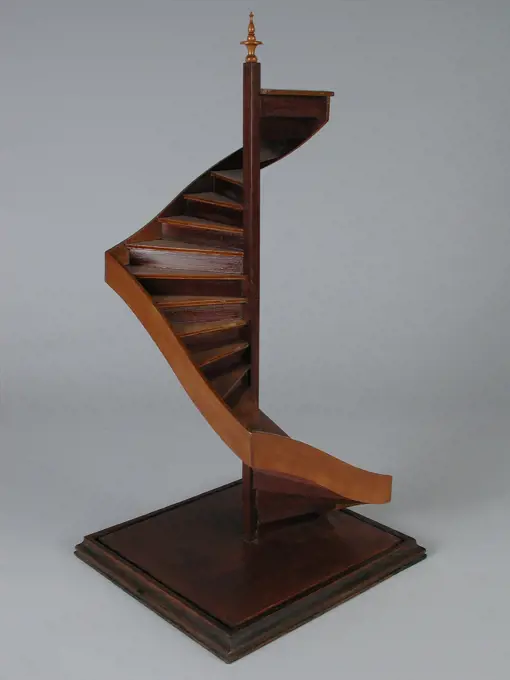
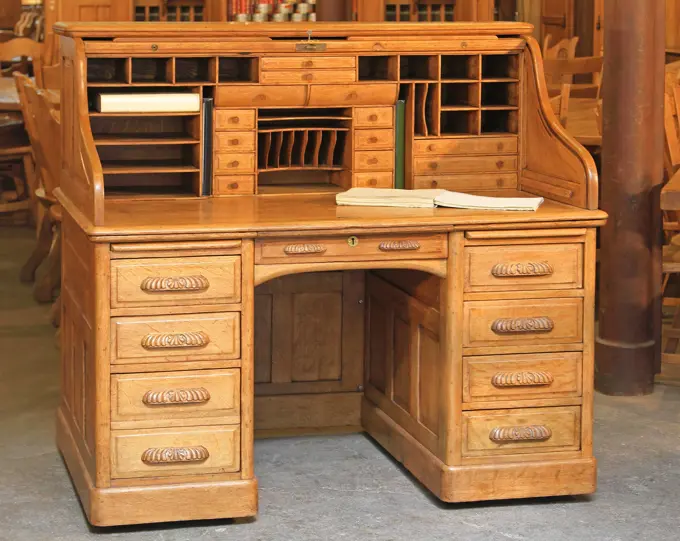
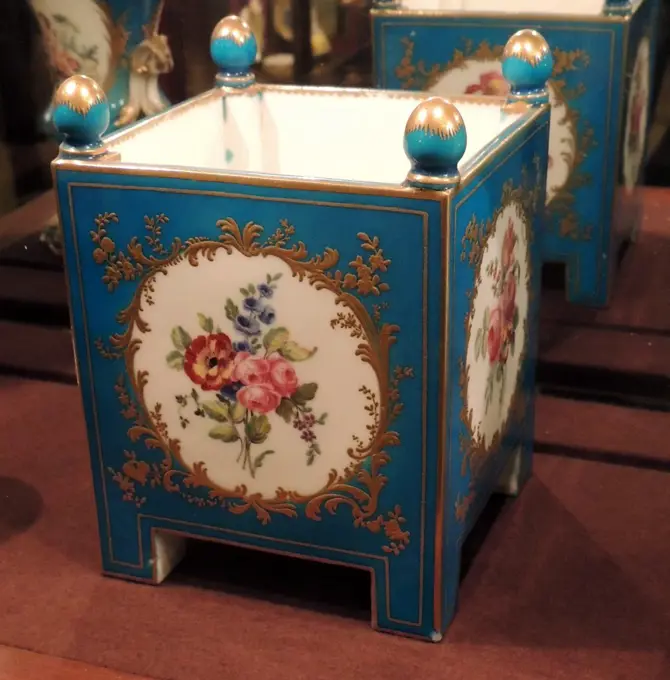
Elegant Wooden Chairs

A series of ornate wooden chairs from different eras, featuring intricate designs and upholstery, capturing classic craftsmanship and historical charm.

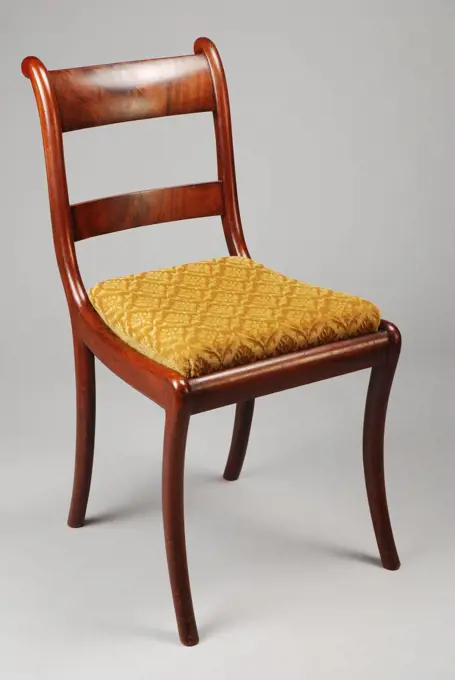
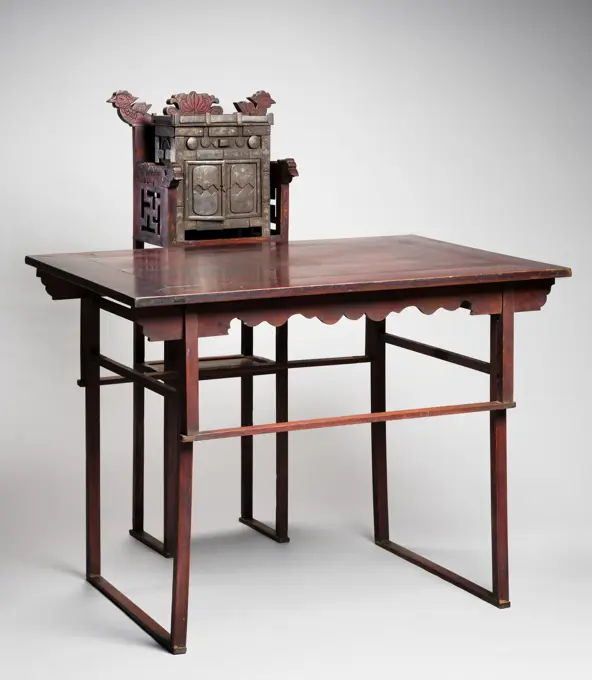
Chair with a brown leather upholstery, Hendrik Petrus Berlage, c. 1902 Eikhout chair. The front and hind legs are interconnected by means of an H-shaped cross with pen and hole connections, the pens of which stick through the legs. The slanted billioned backstyles end in bird heads and rest on the cross. The handrail rests on Stutten near the seat and these also serve as hind legs. The backrest is connected both above and below by an intermediate rule. The top line contains a sliced star shape in the middle. There is a panel between the lines that is covered with leather and is secured with copper nails. The seat is also covered with leather and secured with copper nails. designer: Netherlandsmaker: Amsterdam oak (wood). leather Eikhout chair. The front and hind legs are interconnected by means of an H-shaped cross with pen and hole connections, the pens of which stick through the legs. The slanted billioned backstyles end in bird heads and rest on the cross. The handrail rests on Stut
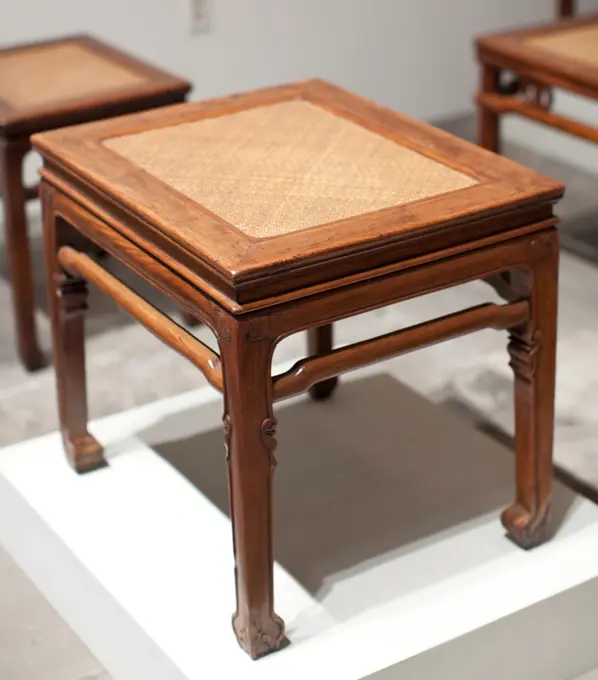
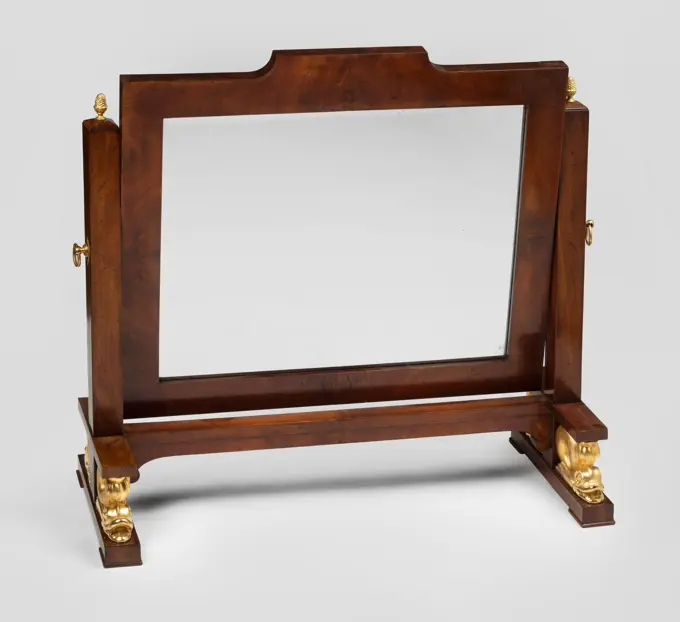
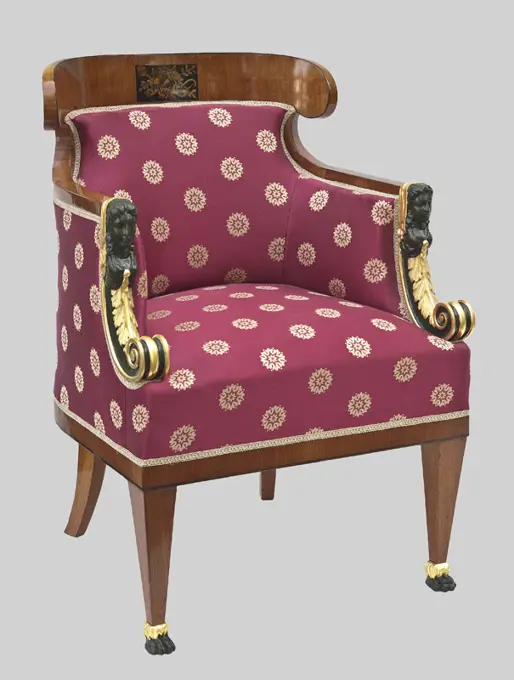
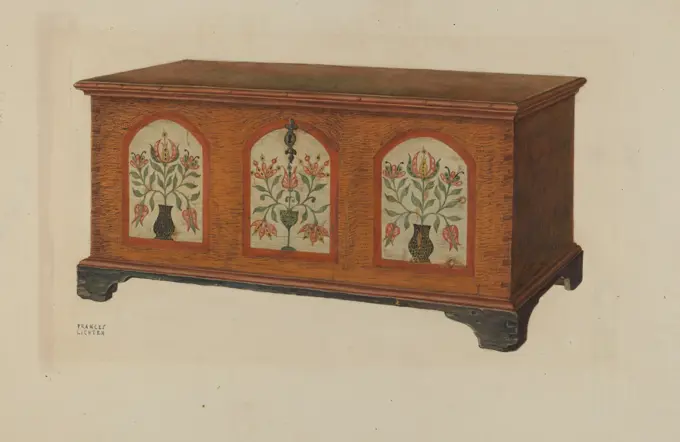
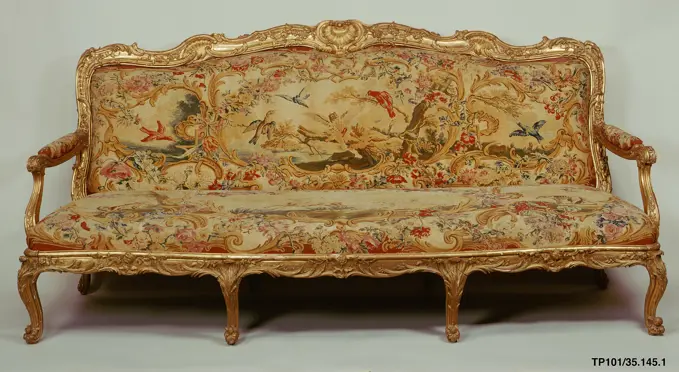
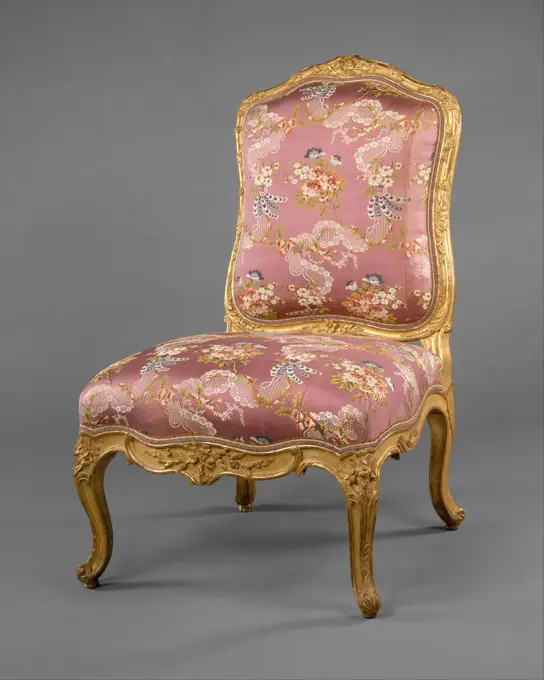
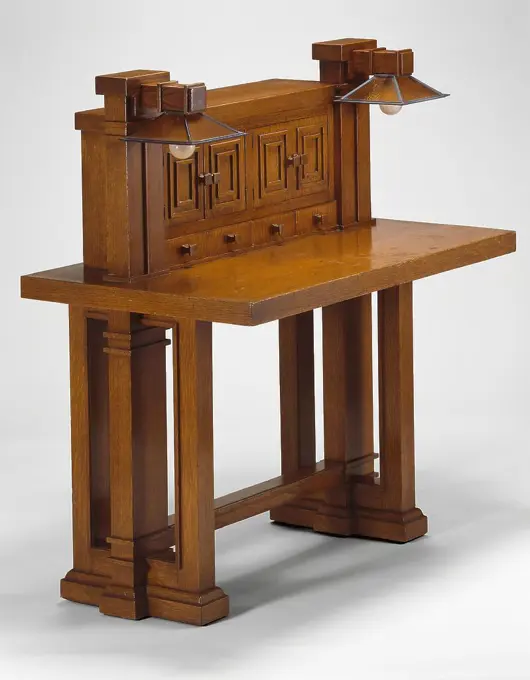
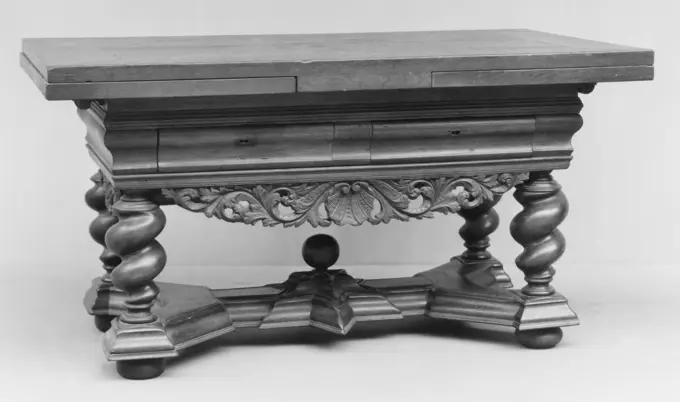
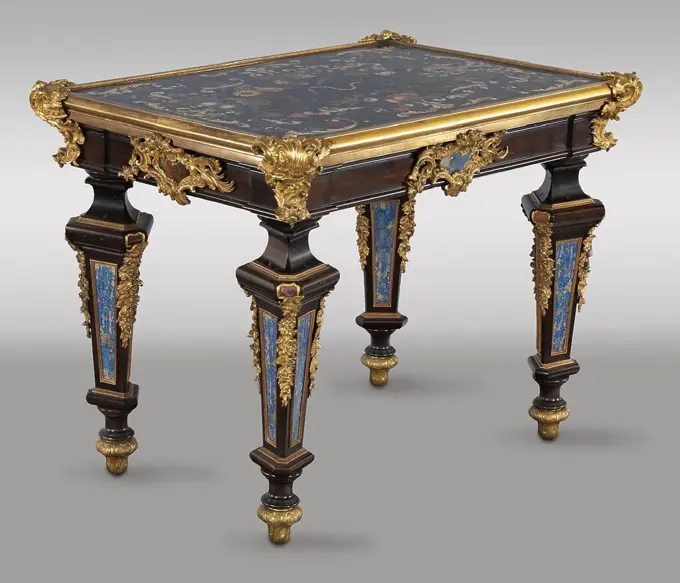
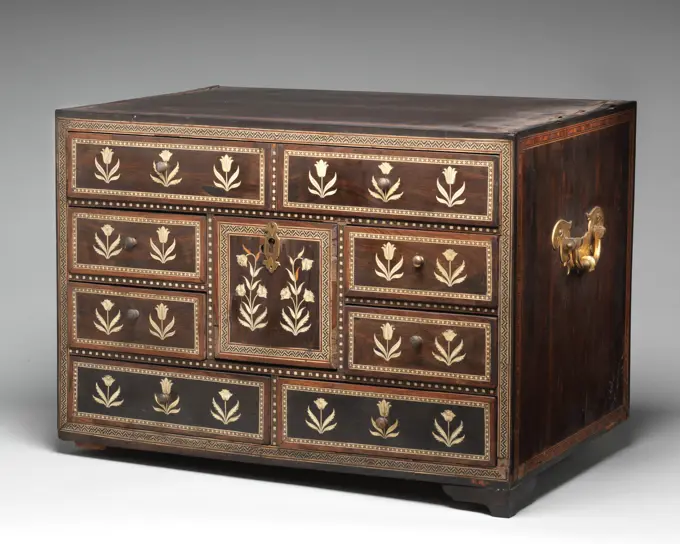
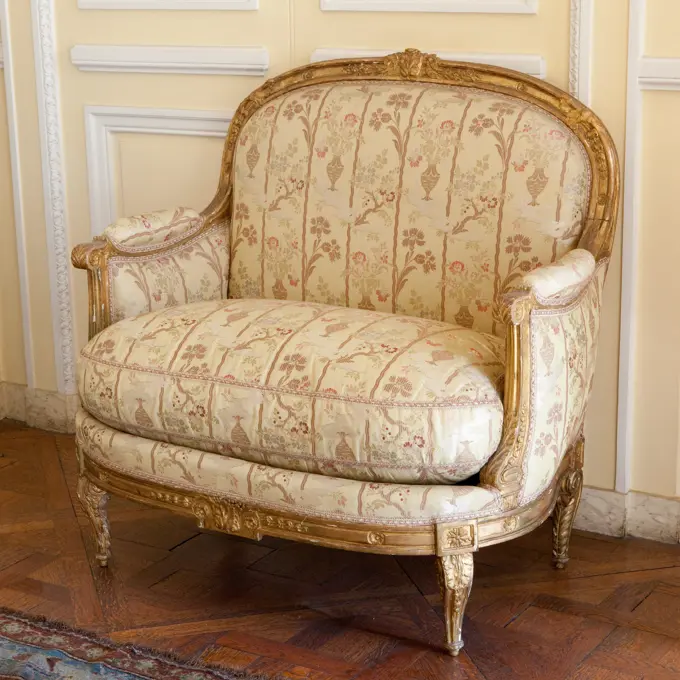
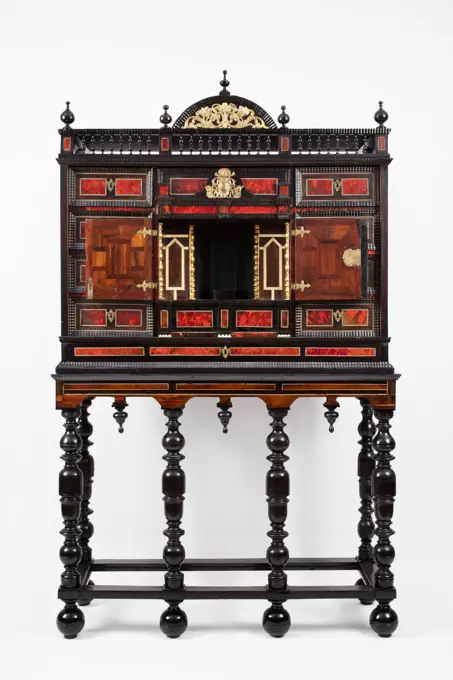
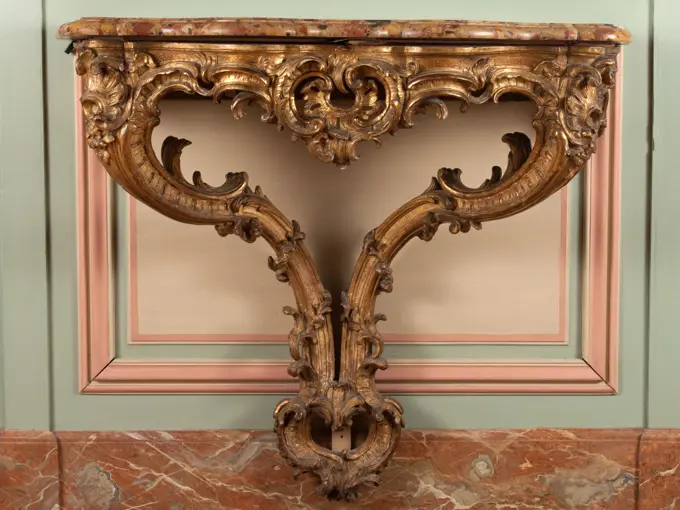
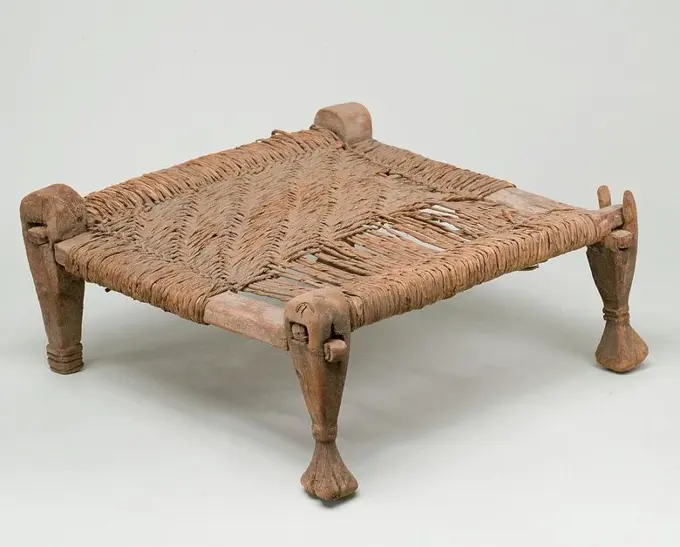
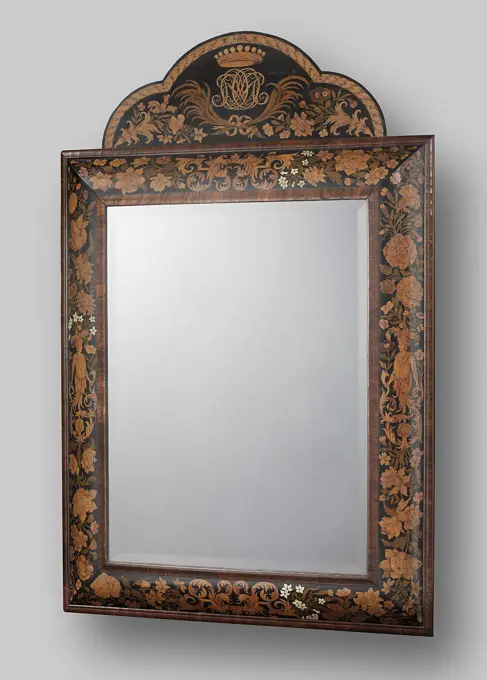
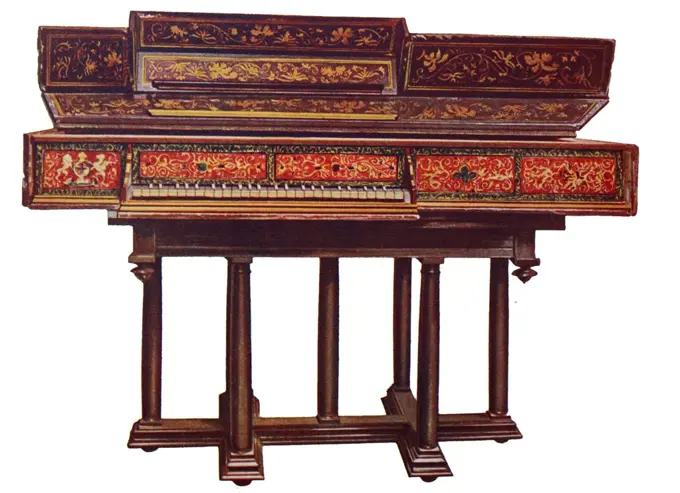
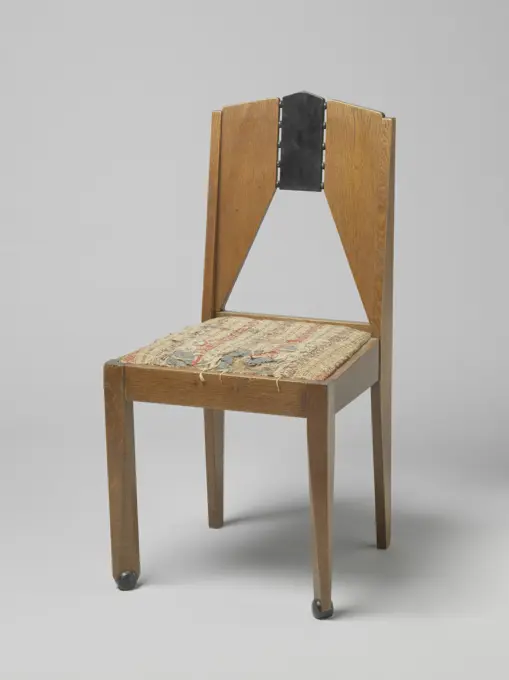
Chair with trapezoidal open space in the backrest, fa. J.J. Side & Co., c. 1920 - c. 1930 Eikhout chair resting on four legs. The front legs are chamfered and rest on black -stained discs with convex sides. The hind legs continue in the backstyles and broaden from below, after which they narrow up at the height of the center. The backrest is composed of three panels. These are formed in such a way that a triangular shape has been created on the top and an open trapezoidal shape has been created on the bottom. The two outer panels are connected to the black -stained center panel by means of five beads on each side. The seat is covered with striped fabric in beige, red and purple. Amsterdam wood (plant material). oak (wood). textile materials. wool Eikhout chair resting on four legs. The front legs are chamfered and rest on black -stained discs with convex sides. The hind legs continue in the backstyles and broaden from below, after which they narrow up at the height of the center. The bTable, round, design Jan de Meijer, Jan de Meijer, 1925 - 1929 Table, round, design Jan de Meijer. On the table is a loose glass plate with a white underneath, in star shape, crocheted dress. Netherlands walnut (hardwood). elm (wood). glass. yarn Table, round, design Jan de Meijer. On the table is a loose glass plate with a white underneath, in star shape, crocheted dress. Netherlands walnut (hardwood). elm (wood). glass. yarnStool, 17th century, 20 3/8 x 22 13/16 x 18 1/2 in. (51.75 x 57.94 x 46.99 cm), Huang huali hardwood, China, 17th century, This richly carved waisted stool, because of its relatively elaborate detailing, would have been reserved for a person of high social standing. The legs, for instance, are carved with a continuous corner bead terminating in a stylized leaf motif in each of the feet. There is an elegant lip carved with a motif on two sides of each leg just below the humpback stretchers. A raised ruyi head lappet design is also carved into the shoulder of each leg and the waist itself is set off with a bead course along the rail and a continuous step-back molding around the four rails of the seat frame. The overall effect is one more sumptuous than that of a standard corner-leg stool. It is also possible that a rectangular shape, because of its more formal directional aspect (versus round or square) may have been considered more prestigious.Mirror (Psyché). unknown, creatorManufactureration with Bedstede, O.A. Sky, Wall shot, side shot and panels. Manufacturing of oak, consisting of a bedstead and wall shot. The bedstead has corner styles with a plinth, on the left a hermatant, on the right a hermcaryatide. The shaft rejuvenated to the bottom shows Schubsteek. The figures appear halfwayed naked, an arm on the back, with the other their drug-beaten robe loving. On the heads resting ionic capitals, which bear the main gear. This has a frieze, divided into courses, divided into courses, within which a Moresk cartouche with ebony caps to oak pillows. The consoles were treated with shell decoration as lion's heads. The frieze is closed above with a flat edge list, which is crocked over the consoles. The ogief-shaped crown table rests on small consoles. In the porch, the upper spray (bottom of the architraph) has a healed tooth list with support pieces in the corners. The side shot has styles and head frame on the outside as at the front and two panels placed Close-up of old brown leather armchairCabinet (Fassadenschrank). Culture: German, Nuremberg. Dimensions: Overall: H. 104 x W. 84 x D. 30 1/4 in. (264.2 x 213.4 x 76.8 cm); Field measurement: H. 102 5/8 x W. 89 1/4 x D. 28 1/2 in. at mid-height (cornice wider). Date: early 17th century.During the sixteenth and seventeenth centuries in Central Europe, the term "woodworker" did not define a single trade. Instead, there were cabinetmakers and chairmakers, each represented by their own guild. The lathe-turned parts of wooden furniture could not be made in the shop but had to be bought from members of an independent turners' guild and the hardware ordered from a master blacksmith. This complex system had been developed to protect guild members from outside competition and to guarantee them a minimum wage. Each master--that is, each qualified member of a guild--was allowed to employ only two journeymen and one or sometimes two apprentices. Only the artisans who worked for one of the many courts of the scattered German territoriArmchair (Bergere). unknown, creatorFrances Lichten, Pa German Chest, c 1938 Pa. German ChestPembroketable.   Maker: Matthew Egerton Jr., American, active 1785-1837, died 1839Desk and bookcase 1765-90 American Among the most impressive forms of American furniture, the desk and bookcase was a symbol of its owners mercantile and intellectual achievements. On this example, a carved finial bust of a young woman, likely a literary figure, emerges from the broken-scroll pediment at the top.. Desk and bookcase 3143Settee (canapé) (part of a set) ca. 1754-56 Frame by Nicolas-Quinibert Foliot The Danish statesman of German origin Baron Johann Hartwig Ernst Bernstorff (1712-1772) remarked about King Frederick V of Denmark (1723-1766) that he "loved France with a passion."¹ The same could be said of Bernstorff, who was a true Francophile and was credited with speaking the language better than many French people.² During his tenure as Danish ambassador at the court of Versailles, from 1744 until 1751, Bernstorff developed a marked preference for the arts of France and lived in a beautifully furnished hôtel in the rue Bourbon in Paris.³ In 1752, not long after he was recalled to Copenhagen to assume the post of minister of foreign affairs, Bernstorff began building a grand town house in a new part of the city named Frederiksstaden, after the king. Although the exterior of the house, designed by Johann Gottfried Rosenberg (ca. 1709-1776), betrays German influence, the interior decoration was according Bow-back WindsorArmchair.  Maker: Ebenezer Tracy, American, 1744-1803Pair of side chairs (chaises à la reine) ca. 1752-60 Michel Gourdin The top rail of the back and front rail of the seat are carved with three flowers flanked by branches of flowers and leaves. Both Michel and Jean-Baptiste Gourdin used the motif of a flower at each front corner above a split stem running down the fore edge of the front leg with an acanthus leaf on the foot. Other chairs by Michel Gourdin are in the Louvre, the Bouvier Collection in the Musée Carnavalet, Paris; the Wallace Collection, London; Windsor Castle; and the collection of Mr. and Mrs. Charles Wrightsman, New York.Bill Rieder, 1984. Pair of side chairs (chaises à la reine) 206986Desk. Frank Lloyd Wright; American, 1867-1959; George Mann Neidecken; American, 1878-1945. Date: 1908. Dimensions: 144.9 × 102 × 60.6 cm (57 × 40 1/8 × 23 7/8 in.). Oak. Origin: Chicago. Museum: The Chicago Art Institute, USA.. This cupboard is made of oak, yet this is entirely concealed beneath an expensive ebony veneer embellished with ivory. Even the interior of this painstakingly crafted cupboard is finished with exotic types of wood. Only the very wealthy could afford such sumptuously decorated furniture.SidechairDraw-top table 1675-1700 German, Danzig (Gdansk) The solid turned legs and heavy stretcher of this table are typical of the region of Gdansk (formerly Danzig) in Poland.. Draw-top table 192360Nápoles Real Laboratorio Delle Pietre Dure; Francesco Ghinghi (Director); Giacomo Ceci / 'Semiprecious-stone table'. 1738 - 1749. Agate, Amethyst, Gilt-bronze, Chalcedony, Ebony, Jasper, Lapis lazuli, Paragone; 1738 - 1749. Agate, Amethyst, Gilt-bronze, Chalcedony, Ebony, Jasper, Lapis lazuli, Paragone. Museum: Museo del Prado, Madrid, España.Bliżej Kultury unknownCorner Windsor Chair. Dated: c. 1939. Dimensions: overall: 35 x 24.4 cm (13 3/4 x 9 5/8 in.) Original IAD Object: 49"high overall, 20"wide. See data sheet for dets.. Medium: watercolor, gouache, colored pencil, and graphite on paperboard. Museum: National Gallery of Art, Washington DC. Author: Jr. Ernest A. Towers.Sofa with yellow textile covered and resting on two conical and two horn -shaped legs on claw, including wheels., Anonymous, 1840 Mahoniehouten sofa covered with yellow textiles and resting on two conical side legs and on two side legs in the form of a horn, on a claw. Wheels are applied under the legs. The rectangular sitting window is completed on one side. The front line, which shows an elongated field above the legs, runs over in the side railing, ending in a volute. The back has a large volute shape, on the one hand resting on the side railing; Strut on the other on an inside. See: BK-1959-113-A. Northern Netherlands (possibly) wood (plant material). mahogany (wood). pine (wood). elm (wood). textile materials Mahoniehouten sofa covered with yellow textiles and resting on two conical side legs and on two side legs in the form of a horn, on a claw. Wheels are applied under the legs. The rectangular sitting window is completed on one side. The front line, which shows an elongated fieCabinet on Stand. Possibly Netherlands. Date: 1675-1699. Dimensions: Overall: 180.3 x 109.2 x 54 cm (71 x 43 x 21 1/4 in.). Cabinet: wood, tortoiseshell, verre eglomise, and brass; Stand: gilded wood. Origin: Netherlands. Museum: The Chicago Art Institute, Chicago, USA.Cabinet late 17th-early 18th century British or Indian. Cabinet. British or Indian. late 17th-early 18th century. Wood, ivory. Woodwork-FurnitureChest ofDrawers.   Maker: Jonathan Gostelowe, American, 1745-1795Mahogany neo baroque toilet mirror, interior mirror furniture wood mahogany glass metal, On high table with drawer entirely on twisted column with four legs neo baroqueWainscotChairTea table, decorated with marquetery of satin, rosewood, violet wood and mahogany on oak core. Oval leaf with upright openwork edge and square rejuvenating legs on copper dop feet, anonymous, c. 1780 - c. 1795 Tea table, decorated with marquetery of satin, rosewood and violet wood and mahogany on oak core. Oval leaf, upright openwork edge and square rejuvenating legs on copper dop feet. The Marqueterie decorations consists of geometric patterns on the legs and on the houses above and on the rules, on contrasting fields, from flower skins with a rosette in the middle. On the leaf there is a border with windows, inlaid rosettes. Netherlands wood (plant material). oak (wood). satinwood (wood). rosewood (wood). kingwood (wood). mahogany (wood). copper (metal) Tea table, decorated with marquetery of satin, rosewood and violet wood and mahogany on oak core. Oval leaf, upright openwork edge and square rejuvenating legs on copper dop feet. The Marqueterie decorations consists of geometric pattDaybed orcouchJacob Georges (1739-1814). Confidant. Sculpted and golden beech. Garnish: Modern silk. 1770. Paris, Carnavalet museum. Dore, gilding, armchair, confident armchair, stuck in sculpt, furniture, modern silk, fabric, 18th 18th 18th 18th 18th 18th 18th century, furnitureChair. unknown, authorMahogany Biedermeier chair, chair furniture furniture interior design wood mahogany velvet, Two mahogany Biedermeier chairs model round legs broader rows of wood is redder in color slightly different dimensions. Veneered hood and sparse saber legs and ocher yellow velor upholstery on the seat backrests ending in voluten BiedermeierMirror ca. 1720-25 Attributed to John Belchier This mirror is similar to two that Belchier made for Erddig House, Wales, between 1722 and 1726.. Mirror. British. ca. 1720-25. Mirror plate, gilded pine and gesso. Woodwork-FurnitureArmchair seat 1754-56 Beauvais This tapestry panel is part of a set of twelve armchairs and two settees ordered in Paris in 1753 by Baron Johann Ernst Bernstorff, Danish ambassador to the court of Versailles between 1744 and 1751. After returning to Denmark, Bernstorff commissioned this seat furniture for the tapestry room of his new residence in Copenhagen that was hung with four wall tapestries of the Amours des Dieux series woven at the Beauvais Manufactory. The tapestry covers are woven with animal and bird subjects after designs by the painter Jean-Baptiste Oudry (1686-1755). For a fuller description of the entire set, see, e.g., MMA 35.145.1.. Armchair seat. French, Beauvais. 1754-56. Wool and silk. Textiles-TapestriesEva Fox, Lowboy, c 1938 LowboySofa ca. 1730-35 French. Sofa 205081Chair with upholstery of black striped browned Trijp, Jacob Pieter van den Bosch, c. 1900 - c. 1915 Chair of mahogany resting on four legs. The slanted, rejuvenating and profiled front legs protrude with their heads slightly above the seat rules. The hind legs continue in the backstyles. The partly profiled backstyles are narrower and contain collected dots on the top and bottom. Both the seat and the backrest are covered with black striped browned trijp trimmed with a beige piping. Amsterdam mahogany (wood). wool. Chair of mahogany resting on four legs. The slanted, rejuvenating and profiled front legs protrude with their heads slightly above the seat rules. The hind legs continue in the backstyles. The partly profiled backstyles are narrower and contain collected dots on the top and bottom. Both the seat and the backrest are covered with black striped browned trijp trimmed with a beige piping. Amsterdam mahogany (wood). wool.Commode ca. 1765 German, Franconia The undulating lines of the front and sides suggest that its creator had seen the swell-fronted painted or lacquered commodes made in Venice in the mid-eighteenth century. The carved motifs are thought to have been carried out in the studio of Ferdinand Tietz (1708-1777). He is known to have provided large stone figures for the gardens of Seehof Castle, whence came this piece.. Commode 205743White painted, partly gilded Louis Seize canapé, bench furniture interior furniture wood beech lacquer gold leaf silk dam, Backrest continuous in the armrests brown silk damask cover with passement on seat and back and armrests crest with laurel branches and rosette Louis XVI Louis XVI Louis Seize Kralingen-Crooswijk Rubroek Rotterdam Van Rijckevorsel From the estate Rubroec (Rubroek) of the Van Rijckevorsel family.Meyer Goldbaum, Cupboard, c 1937 CupboardSide Chair 1815-20 Attributed to John Finlay This brilliantly conceived and handsomely executed chair derives its broad, deeply curved crest tablet from the ancient Greek klismos form, and its turned front legs from Roman prototypes. During the James Madison administration (1809-17), the architect Benjamin Latrobe designed a suite of painted furniture for the White House in the latest Grecian style. Although the suite was destroyed in a fire in 1814, drawings for it bearing Latrobes instructions to the Baltimore fancy chair makers John and Hugh Finlay still exist and provide the basis for this chair's attribution. Originally part of a larger set, this chair was once used by Arunah S. Abell, founder of the "Baltimore Sun," in his country house "Wood bourne." The Metropolitan owns four chairs (65.167.5, .6, .8, .9) from the set. Others are in the collections of the High Museum, Atlanta; the Baltimore Museum of Art; and the Munson Williams Proctor Institute, Utica, New York.. Side Chair Grenenhout's heaven, wallpapered with plain and quoted velvet; supposedly Rosendaelbed, Anonymous, c. 1700 Grenenhout heaven, wallpapered with plain and citized velvet. The four curtains cover the twisted styles. Rules have been installed for the lightaam, which are deposited with brown velvet and passion. Sculpted lambs hang under the rules and along the edges of the sky. Heaven has a main frame with a hollow bent Frisian and a cornice with volutes. The back has a sculpted center piece and attachment with a seven -pointed crown. Coming from Rosendael Castle (Gelderland). An embroidered bedspread belongs to the heaven bed. Northern Netherlands wood (plant material). pine (wood). velvet (fabric weave). silk. taffeta   Castle Rosendael Grenenhout heaven, wallpapered with plain and citized velvet. The four curtains cover the twisted styles. Rules have been installed for the lightaam, which are deposited with brown velvet and passion. Sculpted lambs hang under the rules and along the edges. Table of walnut with four overhoeks placed s-shaped legs decorated with lobby ornament and festans. The flat connecting rule on the front shows a double coat of arms with helmet sign; The lines on the sides mascarons with lobe ornament. Mixed wooden leaf inside profiled tables (this sheet is missing).Auxiliary table;  1770-1790 (1770-00-00-1790-00-00);Console. Otto Eckmann (Germany, Hamburg, 1865-1902)Keller & Reiner (Germany, Berlin). circa 1900. Furnishings; Furniture. Mahogany, maple, lemon wood, oak, spruce, mirror glass, brassCabinet. unknown, contractorDrop-front desk on chest (Vargueño) 17th century Spanish The intricate geometric patterning of this distinctively Spanish type of traveling desk shows the fondness for Islamic design that survived long after the Reconquest.. Drop-front desk on chest (Vargueño). Spanish. 17th century. Carved, gilded, and partly gilded painted bone; wrought iron. Woodwork-FurnitureAnonymous. Console. Beech, marble, around 1740. Paris, Carnavalet museum. 50574-8 Baroque, console, stretch, marble, furniture, furnitureMirrorTable to  1815-1830 (1815-00-00-1830-00-00);Biedermeier (style), columnsHemelbed of Roser wood, decorated with insert of ivory, anonymous, c. 1685 - c. 1699 Cot of rosewood, decorated with Ivory inlay. The bed rests on vase -shaped legs. The rule is classified by panels at the front and the sides. At the front, between the corner styles that rest on vase -shaped sections, an arc ball. The rear shot is crowned by an attachment with a main frame, decorated with moresken in ivory. The claw pieces have inlaying with double eagles. The bed has a heaven and curtains from Zijddamast. Coming from home in Buren (Gld) Northern Netherlands (possibly) wood (plant material). rosewood (wood). spruce (wood). ivory. silk damask Cot of rosewood, decorated with Ivory inlay. The bed rests on vase -shaped legs. The rule is classified by panels at the front and the sides. At the front, between the corner styles that rest on vase -shaped sections, an arc ball. The rear shot is crowned by an attachment with a main frame, decorated with moresken in ivory. The claw pieces have inlChippendal chair (lined seat) (dummy title). Carved and textile wood. House of Victor Hugo - Hauteville House.Pair of Side Chairs, 1700s. Jean Baptiste fils Lelarge (French, 1743-1802). Gilded wood; each: 90.2 x 51.5 x 54 cm (35 1/2 x 20 1/4 x 21 1/4 in.).Patent model of a childs chair. Inventor: Jerome Francis Downing, American, 1827-1913Commode ca. 1710-20 André Charles Boulle French In 1708, the prototypes for this commode, then called a pair of bureaux, were delivered to the Grand Trianon by André-Charles Boulle. The duc d'Antin, director of the king's buildings, wrote to Louis XIV: "I was at the Trianon inspecting the second writing desk by Boulle; it is as beautiful as the other and suits the room perfectly."1 Not until the Trianon inventory of 1729 were the pieces described as "commodes." (They are often called commodes Mazarines because they stood during the nineteenth century and the first third of the twentieth in the Bibliothèque Mazarine in Paris.)2 From the beginning, the design proved to be immensely popular, although it has also been criticized for an "awkward treatment of forms," meaning, in particular, the four extra spiral legs that were required to support the weight of the bronze mounts and marble top.3 Nevertheless, the Boulle workshop made at least five other examples of this expensive model,Henri Jacob. "Chair with hat to hat". Holded and sculpted wood, Taffeta. 18th century. Paris, Carnavalet museum. 72593-32 Blue, chair, hat back, furniture, flower motif, mill, sculpt, taffeta, 18th century, wood, furnitureLangenburg Castle, Antique wooden secretary with marquetry, opened up next to elegant chairs, Langenburg Castle, Langenburg, Baden-Wuerttemberg, Germany, EuropeCommode (Secrétaire à abattant). Culture: French, Paris. Dimensions: H. 36-3/4 x W. 56-1/2 x D. 23-1/2 in. (93.3 x 143.5 x 59.7 cm). Maker: Jean Henri Riesener (French, Gladbeck, North Rhine-Westphalia 1734-1806 Paris). Date: 1783.Jean-Henri Riesener created this splendid commode and its companion secretary (20.155.11) for Marie-Antoinette in 1783. They were commissioned for the queen's Grand Cabinet Intérieur at Versailles, where she kept the collection of Japanese lacquer boxes she had inherited from her mother, Empress Maria Theresa (1717-1780) of Austria. So that their surface decoration would harmonize with that of the boxes, choice fragments of seventeenth-century Japanese lacquer were reused as veneer for these pieces of royal furniture. The shiny black and gold lacquer and lustrous ebony form a striking background for the exceptionally beautiful gilt-bronze mounts. Consisting of swags and interlaced garlands of naturalistic flowers, these jewel-like mounts incorporate the queeConsole table late 17th century French. Console table. French. late 17th century. Carved and gilded oak, marble top. Woodwork-FurnitureCrib in the shape of a basket, with mattress. Crib in the shape of a basket, with mattress.. Writing cabinet with mirrors, glued with carrot nut wood on an oak core. The furniture consists of a lower and upper cupboard. The lower case has three front drawers. A tilt sheet above, behind which a door with mirror, drawers and an open box. The upper cupboard has two doors with mirrors. The corner styles wear corintic pilasters with a thermometer on the left and a barometer on the right. Under the crested a mirror in which an etched alliance weapon. On the writing sheet in Marketerie the Monogram P V A.Armario, 1784. Castell de Peralada.Chest of drawers. Culture: American. Dimensions: 38 x 40 1/2 x 21 1/2 in. (96.5 x 102.9 x 54.6 cm). Date: 1795-1805.New England cabinetmakers often used birch veneer as a less expensive substitute for imported satinwood. The crotch-veneer panels on the drawers of this chest were carefully book-matched. The drop-panel in the center of the base is characteristic of Portsmouth, New Hampshire-style case furniture in the Federal period. Museum: Metropolitan Museum of Art, New York, USA.Michael Riccitelli, Table, 1935 1942 TableArm chair inlaid with circles, Jacob Pieter van den Bosch, c. 1920 - c. 1925 Arm chair of mahogany resting on four legs. The rejuvenating front legs on wheels continue in the army tits and are inlaid at the top with circles of ebony. The bang -stated hind legs support the armresters and the hired backstyles that are inlaid at the top with circles of ebony. The seat, the backrest and the cheeks are covered with tripe in green, red, purple, yellow and brown. designer: NetherlandsAmsterdam wool. velvet (fabric weave) Arm chair of mahogany resting on four legs. The rejuvenating front legs on wheels continue in the army tits and are inlaid at the top with circles of ebony. The bang -stated hind legs support the armresters and the hired backstyles that are inlaid at the top with circles of ebony. The seat, the backrest and the cheeks are covered with tripe in green, red, purple, yellow and brown. designer: NetherlandsAmsterdam wool. velvet (fabric weave)Armchair from or Unknown, Zug, Szymon Bogumi (1733-1807); around 1797 (1795-00-00-1805-00-00);Gilded table, Daniël Marot, after design of, c. 1709Two chairswooden  column made in 3 D graphicsCardtable. Maker, attributed to: Anthony Hay, died 1770Wainscot Armchair American, probably 19th centuryAnonymous. Chair. Cherry for the straps of the belt, sculpted and waxed maple; Garnish: Jouy canvas. 1790. Paris, Carnavalet museum. Mobilier, seat, 18th 18th 18th 18th 18th 18th 18 century, furnitureSpirit House, 1700s. Korea, Joseon dynasty (1392-1910). Iron inlaid with silver and copper decoration; This table, chair, and spirit house form a partial recreation of a memorial altar from the Joseon period. The spirit house and chair both include a number of auspicious symbols, including lotuses, conch shells, and chakra wheels. The spirit house would have been placed on the altar chair, and offerings would have been set out on the table for the memorial service. In ancestor veneration rituals, deceased parents or ancestors are sanctified as spirits who are believed to oversee their descendents. Three times a year, once at the lunar new year, once at the persons death date, and once at the time of the mid-autumn festival, food would be placed on the table for the ancestors, including fruits, rice, meat, and rice wine. During these ceremonies the worshippers attitude was as reverential toward the objects meant to embody the ancestors spirits as that toward a living parent.Cupboard with a upper cupboard with a folding panel decorated with naked Venus in Schelp, Anonymous, 1600 Cabinet of oak. The upper cabinet has two doors, on either side of an open center panel, on which a naked Venus is in shell. The doors have cornises with a mask in the middle part. The three half columns of the base cabinet have Corinthian capitals. The shaft foot is decorated with grotesks. Shell arches have been applied above the doors. Ebbenhouten Biezen form a decoration along half the columns, the consoles and the bobbins. Southern Netherlands (Possible) wood (plant material). oak (wood). ebony (wood) Cabinet of oak. The upper cabinet has two doors, on either side of an open center panel, on which a naked Venus is in shell. The doors have cornises with a mask in the middle part. The three half columns of the base cabinet have Corinthian capitals. The shaft foot is decorated with grotesks. Shell arches have been applied above the doors. Ebbenhouten Biezen form a decoration alonSide Chair ca. 1800 American. Side Chair. American. ca. 1800. Ash, cherry, white pine. Made in New York, New York, United StatesFolding armchair 16th century Spanish. Folding armchair 198807Console table. Culture: French. Dimensions: Overall: 35 1/2 × 53 1/8 × 19 3/4 in. (90.2 × 134.9 × 50.2 cm). Date: 18th century. Museum: Metropolitan Museum of Art, New York, USA.Étagère ca. 1885-90 A. Kimbel and Sons American. Étagère 14297Martin Partyka, Guilford Painted Chest, c 1936 Guilford Painted ChestOrville Cline, Doll Cradle, c 1938 Doll CradleStool with woven seat. Dimensions: L. 30 × H. 13.3 × W. 31 cm (11 13/16 × 5 1/4 × 12 3/16 in.). Dynasty: Dynasty 12-Early Dynasty 18. Date: ca. 1991-1450 B.C.. Museum: Metropolitan Museum of Art, New York, USA.detail of vintage wooden bedside table with three drawers on rug. Very few mirror frames were ornamented with marquetry in the Netherlands around 1700, when gilt or plain wooden frames were far more common. This rare pair seems to constitute an exception to the rule. However, they could also have been made in England, for at this time the work of English and Dutch cabinetmakers was very similar.Queen Elizabeth's Virginal. This musical instrument is sitting on a stand and is believed to have belonged to Queen Elizabeth due to her Royal Arms appearing on one side of the keyboard.John Sullivan, Chair, c 1937 ChairCabinet. Attributed to Bernard II van Risenburgh (French, after 1696 - about 1766, master before 1730)Toilet mirror; Wallnöfer, Karl (Fl. 1820-1857); 1821 (1821-00-00-1821-00-00);Bronisław Krystall. Testament (Warsaw - exhibition - 2015/2016), Krystall, Bronisław (1887-1983) - collection, acanthus (ornament), columns, psyche (mirror type), rosette (ornament), purchase (provenance), swanSweden, Blekinge, Blekinge, Karlskrona, Karlskrona, external marina (depicted, town).Sweden, Blekinge, Blekinge, Karlskrona, Karlskrona, External War Gogs (depicted, City)Cupboard, 1870, Aslak Lie; Sponsor: John Eriksen Engesaethe, American (born Norway), American (born Norway), 1798-1886, 77 1/2 x 59 1/8 x 21 in. (196.85 x 150.18 x 53.34 cm), Painted pine, bronze, porcelain, United States, 19th century, This cupboard was made to commemorate the marriage of John Eriksen Engesaethe to Brithe Grinde. It would have been a highly prized possession and likely had a prime spot in their parlor. The Norwegian inscription reads John Eriksen, Brithe Sjurs Datter Engesaethe, Aar 1870 (John son of Erik, Brithe daughter of Sjur, Engesaethe, year 1870).Piano, c. 1878, Henry William Batley; Manufacturer: James Shoolbred & Co. (case); Manufacturer: Collard & Collard (movement), British, 1846 - 1932, 47 11/16 x 62 15/16 x 30 1/8 in. (121.13 x 159.86 x 76.52 cm), Satinwood, ivory, ebony, metal, and cloth, England, 19th century, H. W. Batley, one of the great freelance designers of the 19th century, captured the exotic Anglo-Japanese aesthetic in his use of linear and naturalistic design elements. Shoolbred & Co. may have employed Japanese craftsmen to execute the exquisite carving. An attached music stand that ingeniously folds up into the cabinet and a commemorative silver plaque engraved with the piano's floral motifs, complete Batley, Shoolbred, and Collard & Collard's masterpiece, which has come to be a viewed as an icon of the Aesthetic Movement (1860-1880) in England.Pembroke Table 1795-1805 American. Pembroke Table 5572. Canapé, part of an ameublement, made of white with gold painted beech wood and covered on a loose window with tapestry, which has a red damask ground bouquets, tied together by ribbons with bows. The front legs, front seat, upper shell and styles of the back window wearing inserted leaf and floral motifs. The armrests with cushions end in a volute; The overhoeks placed S-shaped legs in an acanthus sheet. Signature: I. Gourdin. See: BK-16655-A / F.Wagon Seat. Dated: c. 1940. Dimensions: overall: 37.3 x 51 cm (14 11/16 x 20 1/16 in.). Medium: watercolor and graphite on paperboard. Museum: National Gallery of Art, Washington DC. Author: American 20th Century.CAJONERA CARLES IV. SIGLO XVIII.. COLECCIÓN PRIVADA.Side Chair (possibly Germany); fruitwood; 84.5 x 46 x 47.5 cm (33 1/4 x 18 1/8 x 18 11/16 in. )Chair of Sitamun, Amenhotep IIIs daughter , Tutankhamun's Treasure, EGYPT.Caja, siglo XVII. M.A.D.B con incrustaciones de Os i Filet de Boix. M.A.D.B.joiner, timmerman: J.J. Kesting (1842 - 1931), Wooden model of spiral staircase, spiral staircase spiral staircase staircase model timber, sawn planed rotated glued Model of spiral staircase that goes round rectangular spindle 360 ° in imaginary rectangular space 21 overhanging steps with profile edge; on spilled top composite ornament with concave funnel-shaped underside and gourd-shaped top; the whole stands on rectangular base plate with profiled frame business craft carpentry build housing documentary riseRolltop desk Vintage style secretary wooden desk with rolltop Copyright: xZoonar.com/MarkoxBericx 688110518th century French Sevres porcelain at Upton House in the English county of Warwickshire. Sir Rushout Cullen purchased the estate and built the house for himself in about 1695. In 1927 the estate was acquired by Walter Samuel, 2nd Viscount Bearsted, who owed his fortune to the fact that his father Marcus Samuel was the founder of the oil company Shell. Lord Bearsted donated the house, gardens and art collection to the National Trust in 1948.