Embroidered Textile Art

A collection of intricately crafted embroidered blankets and textiles, featuring floral designs and historical patterns in soft hues.
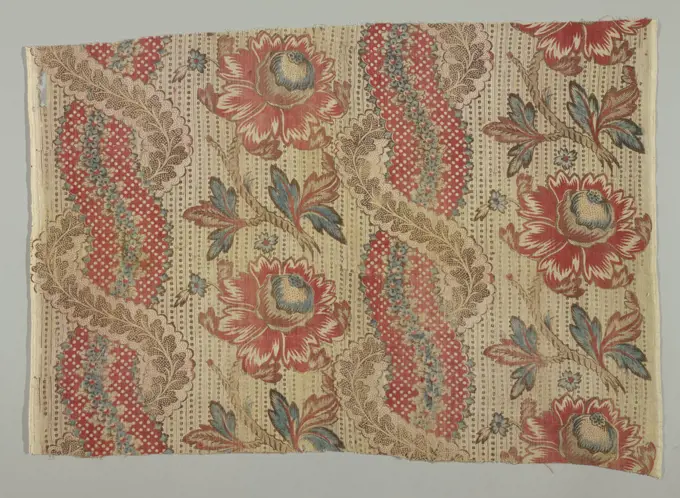
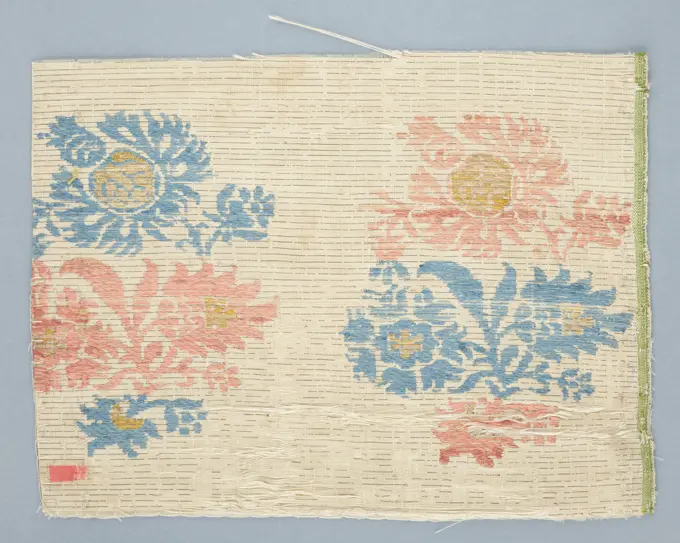
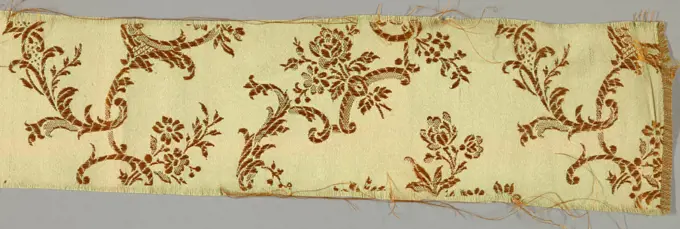
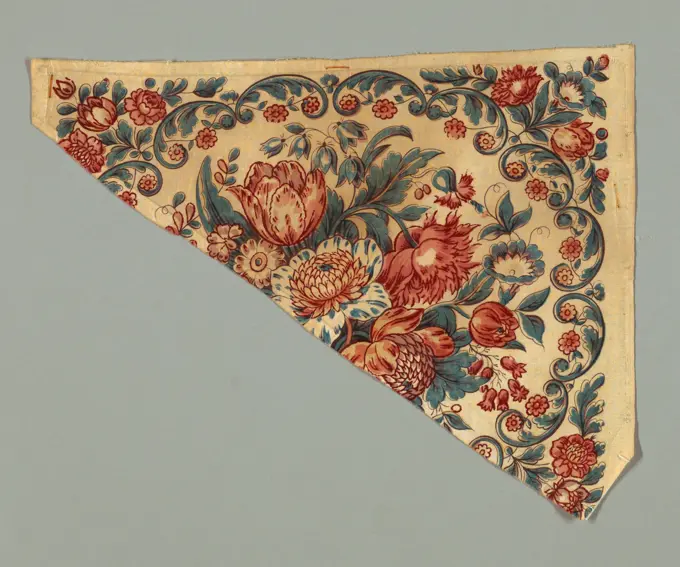
Textile, Medium: cotton Technique: block printed on plain weave with blue applied by brush, Printed length has half drop repeats of twined garlands and large flowers on short leafy stems., France, 18th century, printed, dyed & painted textiles, Textile
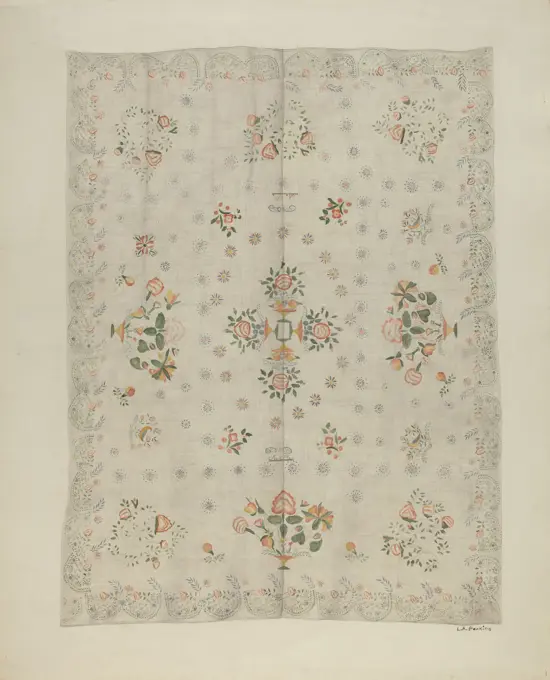
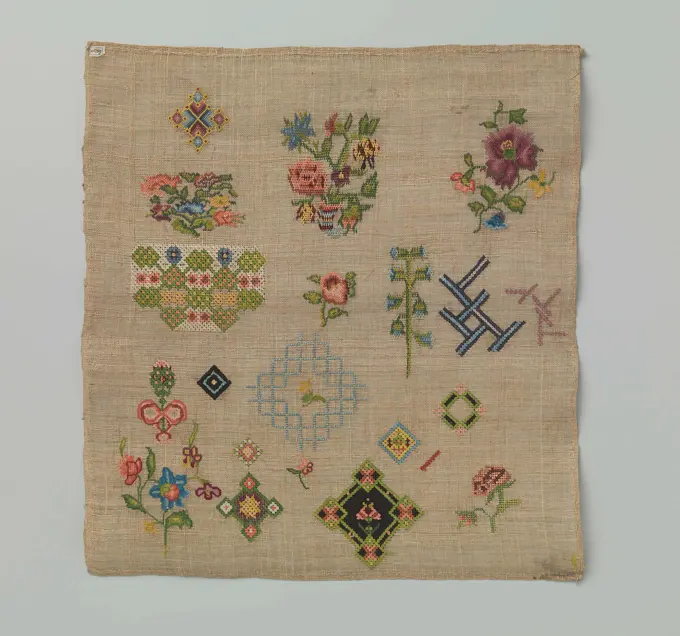
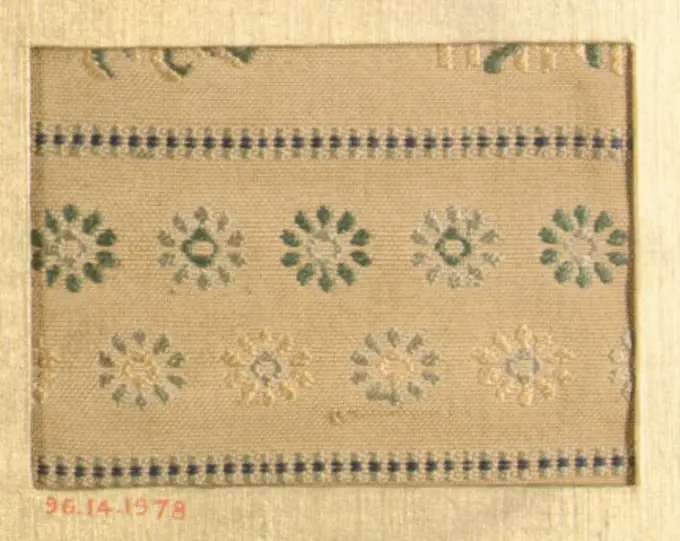
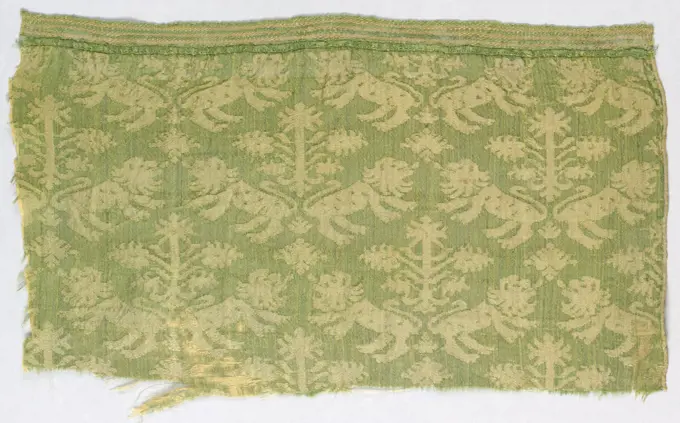
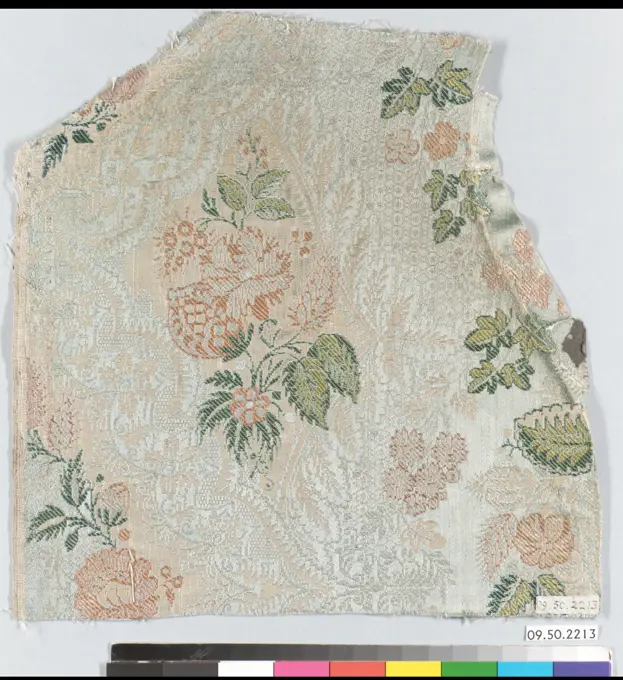
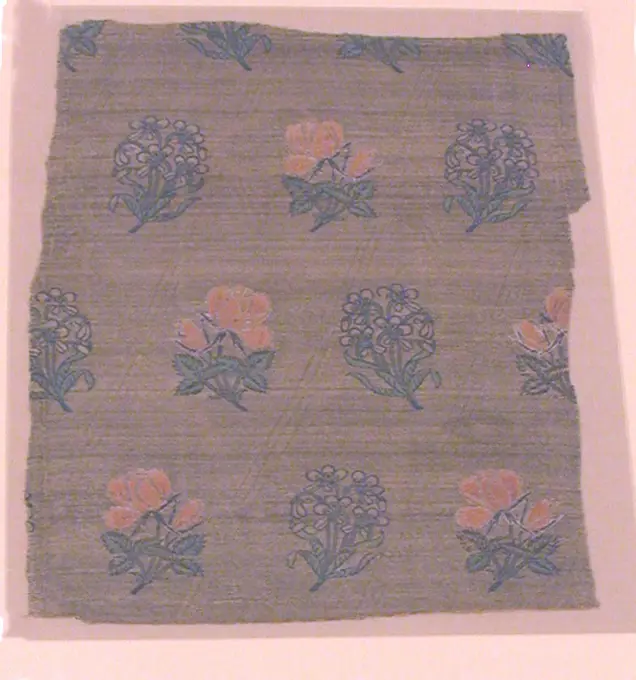
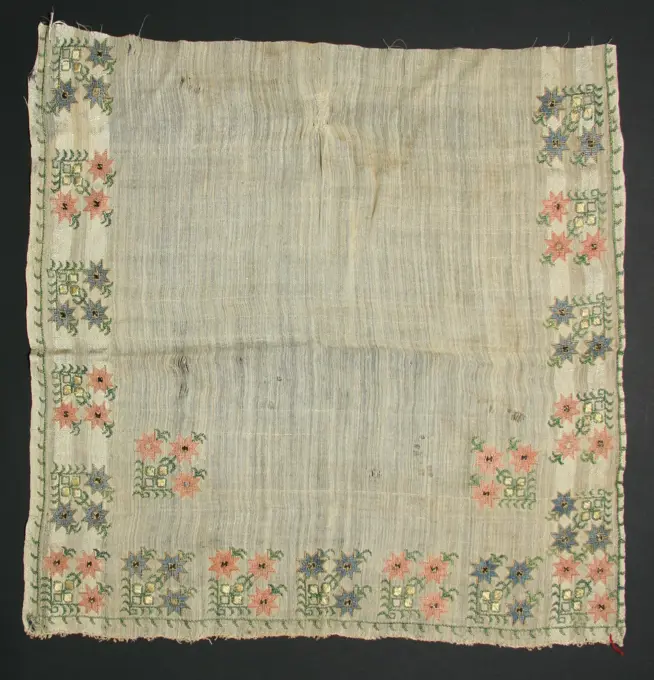
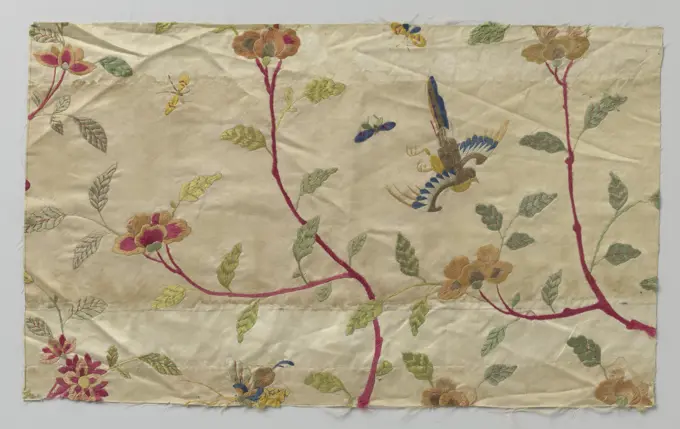
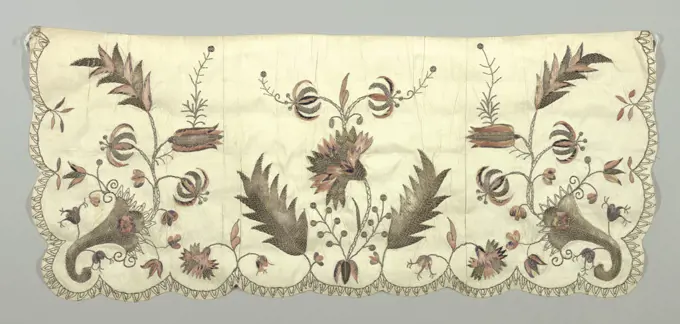
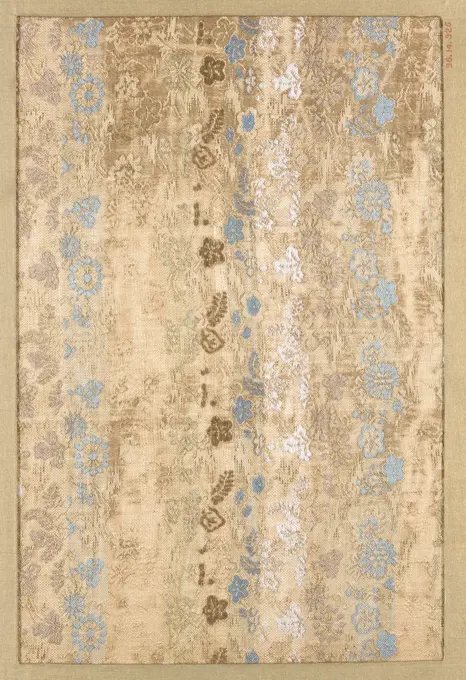
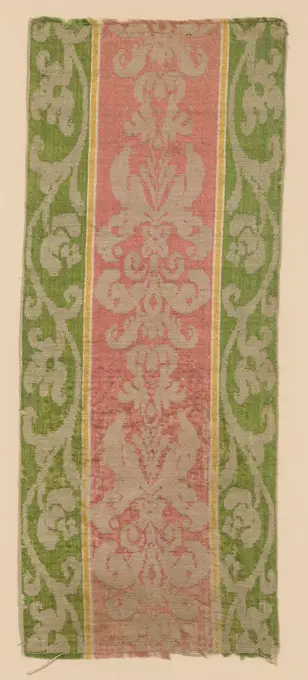
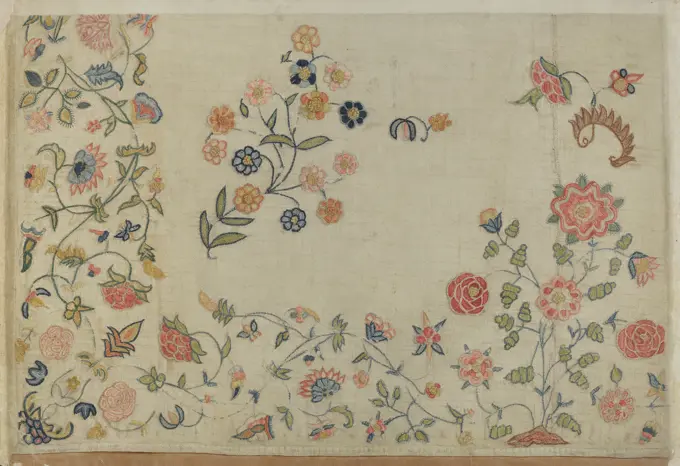
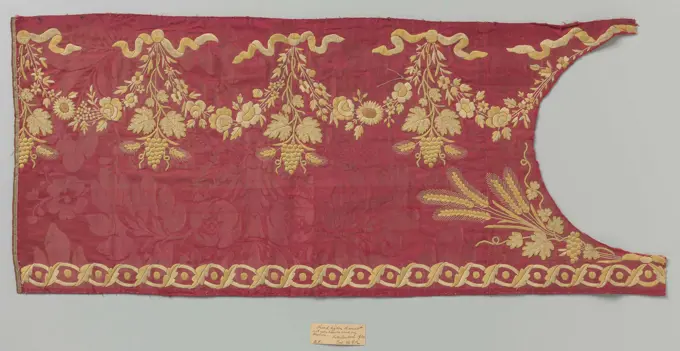
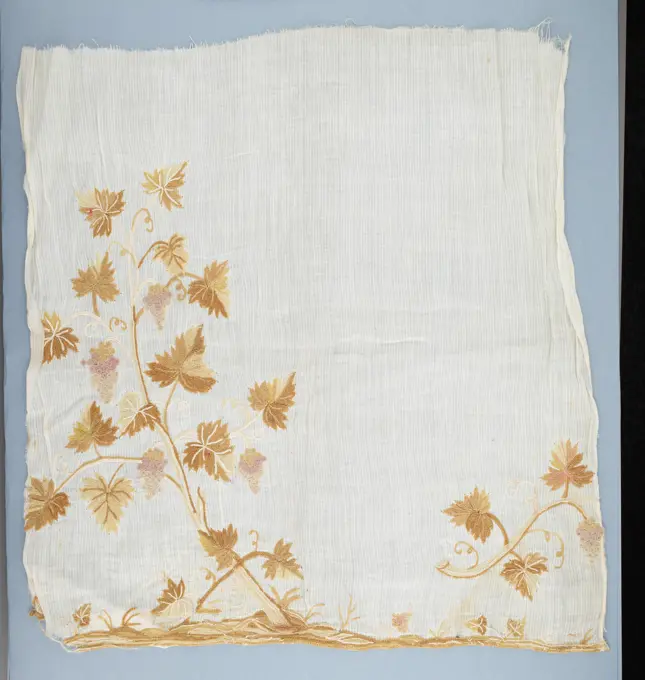
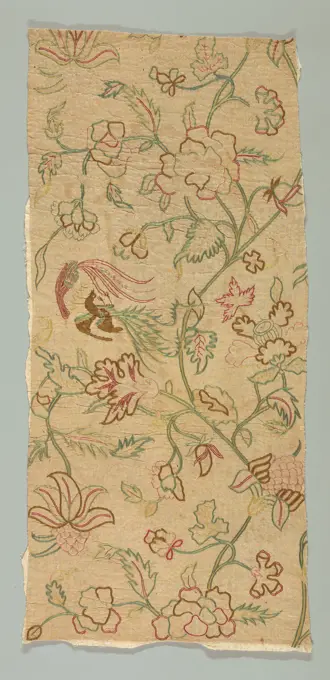
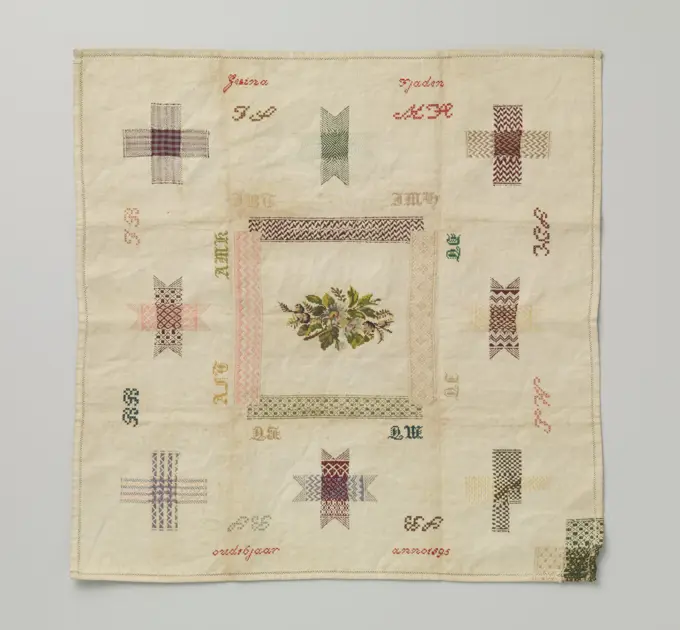
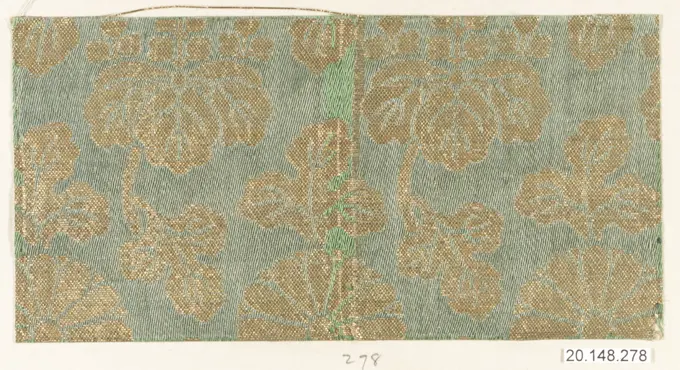
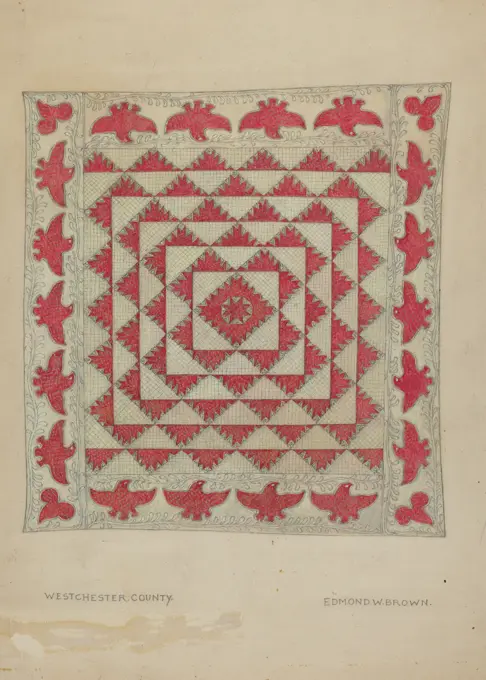
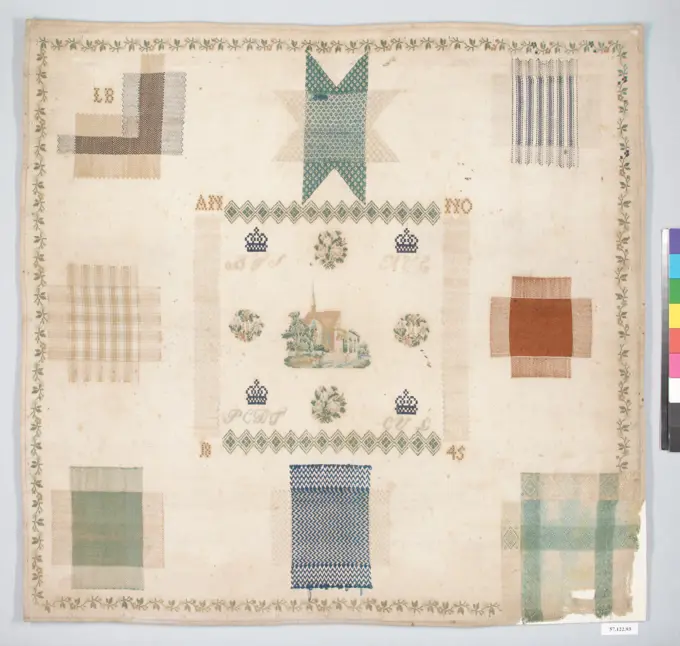
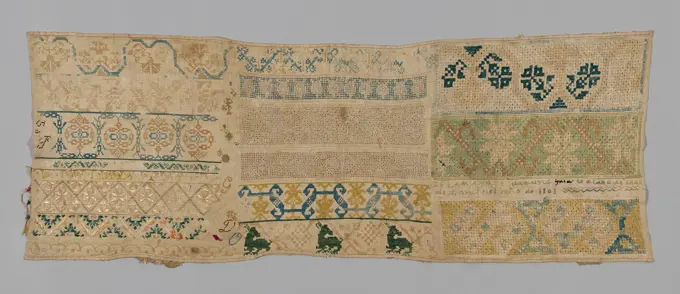
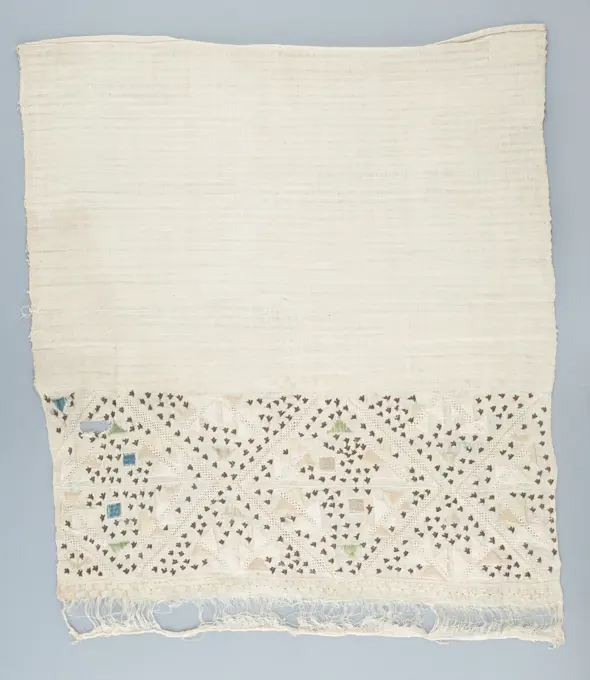
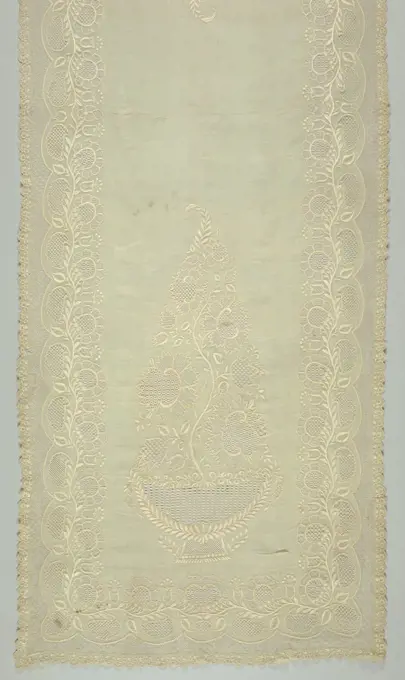
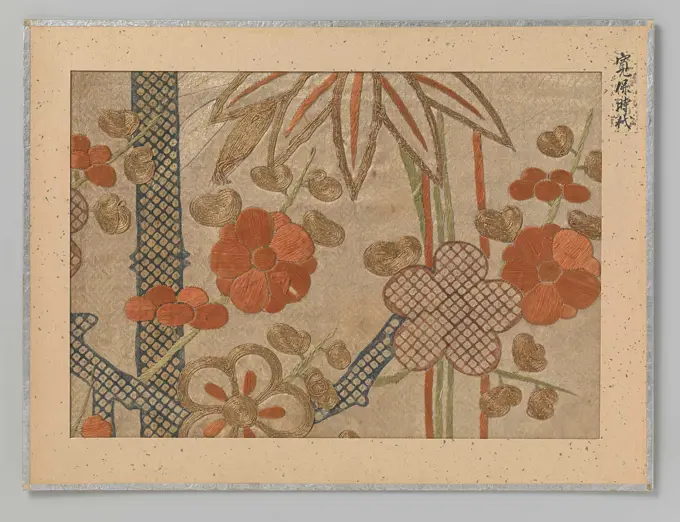
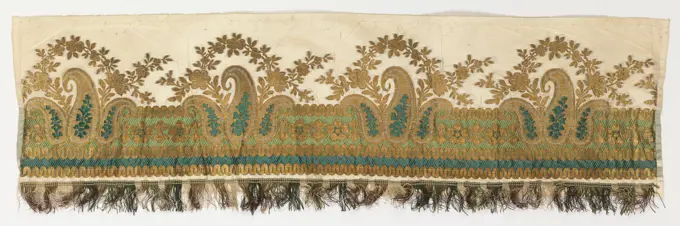
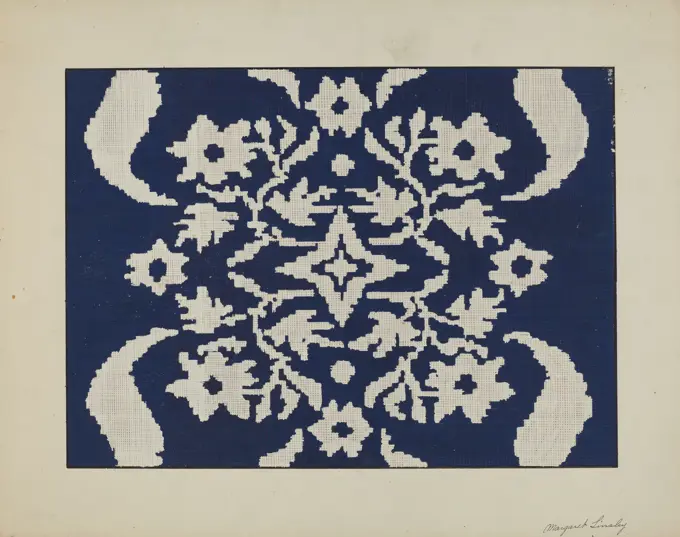
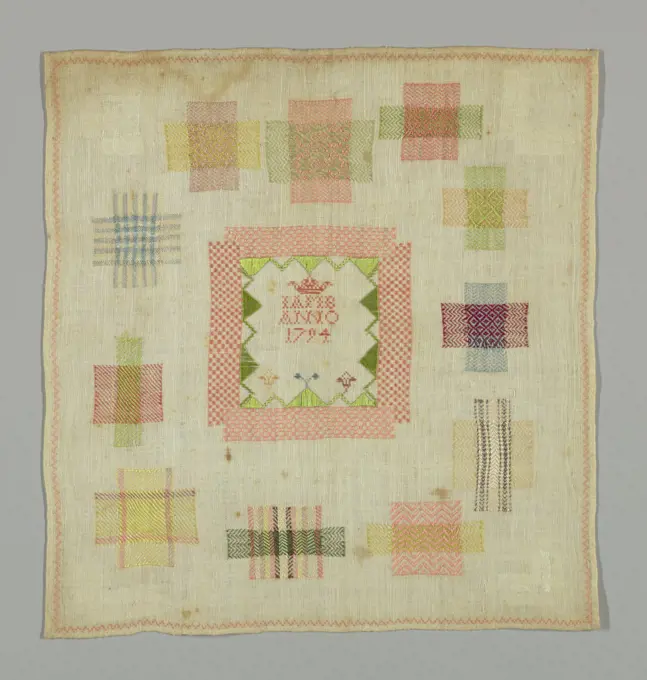
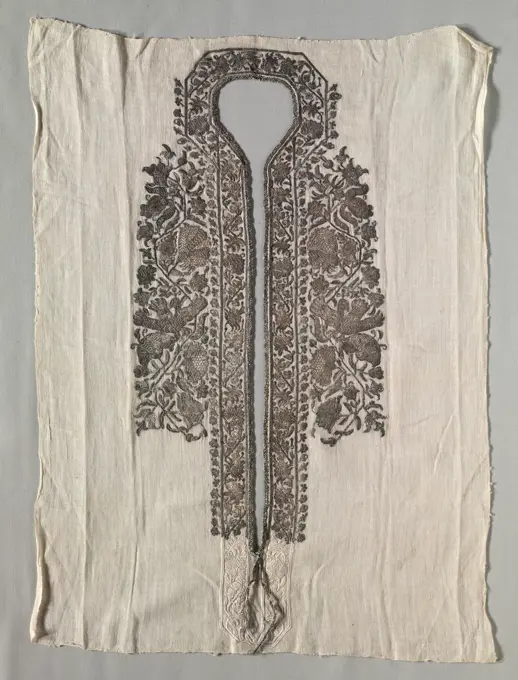
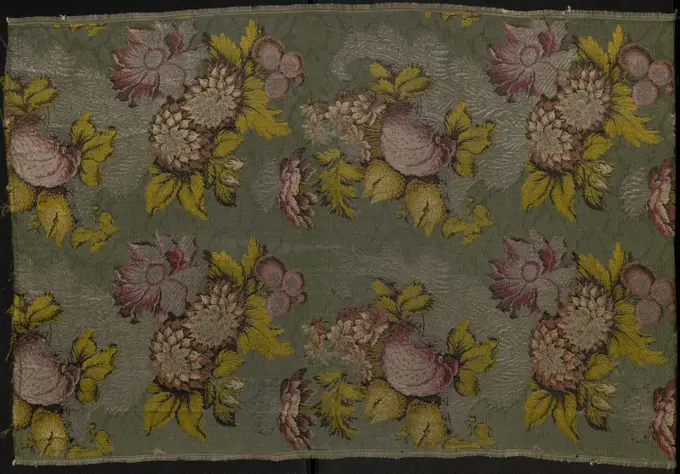
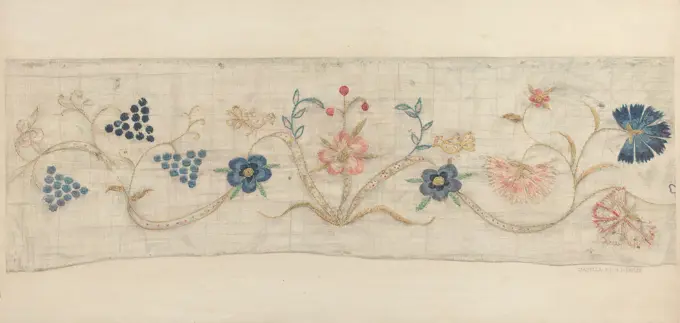
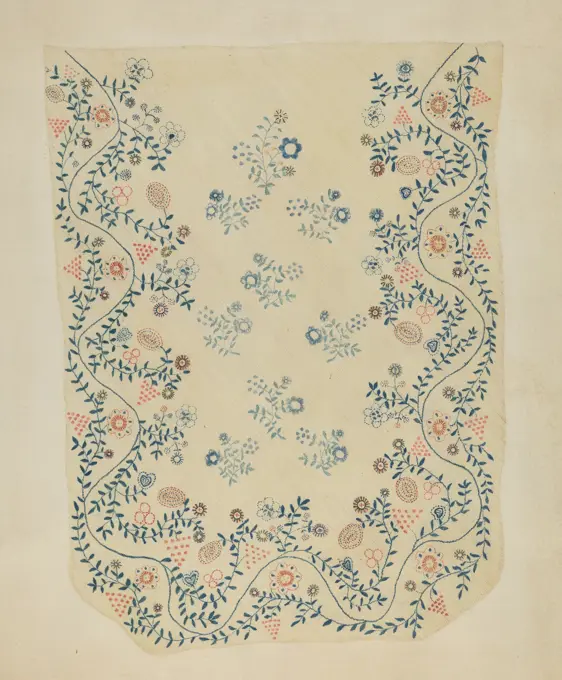
Dorothy Lacey, Embroidered Blanket, c 1937 Embroidered BlanketCover Made 1801-1900 Greece. Linen, plain weave; embroidered with silk in satin and stem filling stitches .Fragment multicolored silk Pekin. A fragment of blue and white striped silk, on which colored bouquets, bows and garlands. Note: Self side; 0.4 cm, plain bond.Merklap van Woolen mousseline on which with silk is embroidered Sara van der Heide and Anno 1682, flowers and fruits. Layout: In horizontal rows but not completed. Striking is the use of salmon pink side, a color that was also in fashion for substances. The large mid-motif exhibits four large violet-colored pomegranates, placed against the square. The ripe pomegranate shows many seeds and the fruit therefore became the symbol of fertility.Arlene Perkins, Bedspread, c 1941 BedspreadCover or Handkerchief. Turkey. Date: 1801-1850. Dimensions: 85.7 x 86.6 cm (33 3/4 x 34 1/8 in.). Embroidered in design of trees and tents. Origin: Turkey. Museum: The Chicago Art Institute, Chicago, USA.Fragment of silk fabric  scattered flowers unknownTextile, Medium: cotton Technique: block printed on plain weave with blue applied by brush, Printed length has half drop repeats of twined garlands and large flowers on short leafy stems., France, 18th century, printed, dyed & painted textiles, TextileEmbroidery patch of beige tinted linen. The embroidery has Petit Point with Rococo stitch. The brand flap is part of nine brand flaps of different sizes. Embroidery patch of beige tinted linen. The embroidery has Petit Point with Rococo stitch. The brand flap is part of nine brand flaps of different sizes (BK-NM-10759-A to BK-NM-10759-I).Fragment (From a Karaori). Japan. Date: 1601-1700. Dimensions: 29.8x 34.6 cm (11 3/4 x 13 5/8 in.). Brocaded plain simple twill silk and gilt paper wound on silk core (kara ori). Origin: Japan. Museum: The Chicago Art Institute, Chicago, USA.Chasuble with Appiiqué unknownPiece 18th-19th century Japan. Piece 67690Table Mat (USA); Manufactured by Deerfield Society of Blue and White Needlework (American, 1896-1926) (United States); linenMerklap on which embroidered Adam and Eve and the year 1749 .. Merklap with colored embroidery. On the Lap, the year 1749 is embroidered and the initials HKT, MD, GVD, LDT and in a Kt KT and 1749 held by angels. There is also a Dutch virgin in a garden on the lap, the tree of life with Adam and Eva , flower pots, a lantern and candlesticks with candles embroidered. Silk on linen mesh.Textile (Greece); silk and metal embroidery on linen foundationFragments, Medium: silk Technique: 4&1 satin damask, Silhouetted lions forming a grid in green and gold, 17th century, woven textiles, FragmentsTextile (Japan); ramieTextile (England); cottonPiece 18th-19th century Japan. Piece. Japan. 18th-19th century. Silk. Edo period (1615-1868). Textiles-WovenTextile Fragment 18th century. Textile Fragment. 18th century. Silk and metallic thread; brocaded. Made in India. Textiles-BrocadesFragment, Medium: silk Technique: cut and uncut supplementary warp in a satin foundation (velvet), Plant forms and scrolls in dull pink., 17th century, woven textiles, FragmentSampler; wool embroidery on cotton foundationPiece 18th-19th century Japan. Piece 65951Fragment; silk, metallic threadFragment (France); cottonSample, Orinoka Mills, (Philadelphia, Pennsylvania, USA), Orange/brown weft with tan warp forming floral pattern., USA, ca. 1910, woven textiles, SampleFragment veelkleurig zijdedamast.A fragment of pink and greenish striped silk tissue with darker pink and green flowers. NOTE: Lategated inserts.Piece ca. 1725 French. Piece. French. ca. 1725. Silk. Textiles-WovenTextile Fragment 16th-17th century Safavid textiles are praised as the pinnacle of Iranian loom weaving. When the Safavids came to power at the turn of the sixteenth century and set up their capital cities of Tabriz, Qazvin, and Isfahan, the textile industry became centralized, and the production of silk textiles and rugs, as well as raw silk for export, became part of a lucrative revenue stream. This square textile fragment is decorated with violets and roses with green stems and leaves outlined in dark blue or white. The metal-wrapped threads would have contributed to a sumptuous shimmering effect.. Textile Fragment 447099Sampler (Scotland); Embroidered by Emelie Husband (Scottish); silk embroidery on wool foundation; linen edgingTowel towelsFragments (Portugal); silkFragment silk with multi -colored embroidery in silk, anonymous, c. 1760 Fragment white silk with multi -colored embroidery. The pattern has flower branches between which birds and insects. China silk. satin embroidering Fragment white silk with multi -colored embroidery. The pattern has flower branches between which birds and insects. China silk. satin embroideringFragment 18th century Italian, Venice. Fragment 230054Apron (England); linen; Warp x Weft: 85 x 4 cm (33 7/16 x 1 9/16 in.); Bequest of Mrs. Henry E. Coe; 1941-69-8Apron, Medium: silk on silk foundation, silver metallic thread Technique: satin, couching and three variations of padded couching stitches on taffeta, Short wide apron of white embroidered in silver thread, rose, violet and white. Design is a large central flower spray of carnation and lily with leaves in silver thread. Corner design of cornucopia with sprays of tulips and lilies. Bottom and sides have a subtle scallops bordered in a sawtooth pattern in silver thread., France, early 18th century, embroidery & stitching, ApronTextile Fragment, 1760-1780. Italy, 18th century. Brocade (); silk and metal; overall: 48.2 x 25.4 cm (19 x 10 in.).Piece 18th-19th century Japan. Piece 67184Fragment multicolor silk satin. Two fragments of multicolor silk tissue. The pattern has white leaf raft with heart-shaped leaves and multicolored flower branches.Sampler (Netherlands); silk embroidery on cotton foundationFragment; silk, cotton, metallicPiece 18th-19th century Japan. Piece 66050Fragment Made 1725-1775 France. Silk, cut, uncut, voided velvet against satin weave foundation .Fragment Made 1601-1700 Netherlands. Silk and linen; brocaded .Textural oosterse fragment; Mexican ,, c. 1800 - c. 1850 Stripes with light salmon-colored rosettes between blue flower branches, or red rosettes between light-green branches separated by white stripes with a blue central line. In the silk. cotton (textile) Stripes with light salmon-colored rosettes between blue flower branches, or red rosettes between light-green branches separated by white stripes with a blue central line. In the silk. cotton (textile)Panel Made 1800-1825 England. Cotton, plain weave; block and roller printed .Textile (France); silkPanel (Philippines); piña (pineapple) fiberFragment of embroideryValence (Greece); silk embroidery on linen foundationDress of Eastern textile with multi -colored embroidery ,, c. 1800 - c. 1899 Dress of multi -colored tambourized cotton, decorated with flower vines and ornament, lined with cotton. India cotton (textile). silk embroidering Dress of multi -colored tambourized cotton, decorated with flower vines and ornament, lined with cotton. India cotton (textile). silk embroideringTowel, 19th century, L.26 x W.18 in., linen, silk; needlework, Turkey, 19th centuryPhyllis Dorr, Embroidered Christening Blanket, c 1937 Embroidered Christening BlanketLetter bag in rectangular model of ivory -colored satin, on which flowers embroidered flowers in multi -colored Vloszijde, with the year 1713, Anonymous, 1713 at the back Letter bag in rectangular envelope model of ivory -colored satin, on which two flowers and four animals embroidered at the front in multi -colored Vloszijde. On the valve three applications of multicolored stylized flowers in thick satin wire. At the back, 'ISVS' or 'Isus' and '1713' are embroidered. Between this inscription, two men are embroidered in a red costume in each hand in one hand. The lower man is placed in a shield shape, border with curls in purple, red and gray. The bag is omboard with gold side. On the valve a gold loop loop that can be made to close the bag to a button, wounded with gold thread. The inside is lined with unadorned pink linen. Southern Europe (Possible) whole: Silk. Decoration: Silk. board:. Lining: Linen (Material) embroidering Letter bag in rectangular envelope model of ivory -colored Towel or Napkin Made 1801-1900 Turkey. Embroidered .Tablecloth, printed with a piquet game, play showers and chips, anonymous, 1725 - 1750 Linen gaming tablecloth printed in red and purple with a piquet game, a play fair and tokens. The Heer-, Vrouw and Boer cards are of the Parisian type (Caesar, Argine, Horgier) Alsace (possibly) linen (material) block printing (relief printing process) Linen gaming tablecloth printed in red and purple with a piquet game, a play fair and tokens. The Heer-, Vrouw and Boer cards are of the Parisian type (Caesar, Argine, Horgier) Alsace (possibly) linen (material) block printing (relief printing process)Fragment Made 1860-1880 France. Cotton .Fragment; silkFragment rood zijdeweefsel met borduurwerk in geel en lichtgroen.Fragment red silk tissue, damask, with embroidery. The damask has a symmetrical pattern of large flowers and leaves. A chain is embroidered along a long side and a garland showing from grape drinks along the other long side. A short side is closed around and has a corners with a vine walk along the round. The fragment consists of two consistent fragments.Fragment of tambour stitch embroidery unknownPurse (France); linen, metalFragment (England); silk on linenStop patch of multicolored silk on linen., Gesina Tjaden, 1895 Silk stop patch on linen. The embroidery has a bouquet in the middle and is signed and dated: Gesina Tjaden old 1 year in 1895. Netherlands linen (material) embroidering Silk stop patch on linen. The embroidery has a bouquet in the middle and is signed and dated: Gesina Tjaden old 1 year in 1895. Netherlands linen (material) embroideringPiece 18th century Japan. Piece 71268Pillow Cover (England); silk on cotton; Warp x Weft: 45.7 x 61 cm (18 x 24 in.); 1953-21-1Fragments of silk fabric  a pattern of floral motifs in the rows passing unknownFragment of silk fabric  symmetrical and axial pattern made of flower bunches unknownSidewall Sample; machine-printed on paper; 22.5 x 22.5 cm (8 7/8 x 8 7/8 in.)Welum;  18th century (1701-00-00-1800-00-00);Sash Made 1720-1800 Turkey. Cotton, plain weave; embroidered with silk and metal-strip-wrapped silk .Fragment (France); cottonEdmond W Brown, Patchwork Quilt, 1935 1942 Patchwork QuiltBand, Medium: silk on linen Technique: embroidered, Band fragment showing a geometric flowering vine in red silk on linen., Italy, 17th century, embroidery & stitching, BandEdith Towner, Crazy Quilt (Detail), c 1940 Crazy Quilt (Detail)Embroidered darning sampler 1845 Dutch. Embroidered darning sampler 228021Sampler (England); Made by Anna Maria Blagg (English); silk, linen; 53.3 x 35.6 cm (21 x 14 in.) framedDoily (USA); linen, silkZakdoek van batist rondom afgewerkt met een brede rand applicatiekant met c-voluut en veervormig blad.Batist's handkerchief around finished with a wide edge of natural colored Brussels application side: dick side applicated on machine tulle with a stroke pattern from Moesjes. Square model with cross-shaped batters center piece. Repetitive motif with a rosette flower including a large veer-shaped sheet and a branch with small leaves. At the bottom of the magazine a landscape C volunt with which five lovers hang. Motifs in linen stroke with thicker contour wires. Decorative stitches (needle seating) in the C-volt, among others. The scalloped lower edge stems from the pattern with the leaf and lobes.Kantha Cloth (Nakshi), 20th century, Unknown Bengali, 32 1/4 x 18 13/16 in. (81.92 x 47.78 cm), Cotton; needlework, Bangladesh, 20th centurySidewall, stamped leather, silvered, varnished, and painted, Diapered field, varnished silver; foliage in green, flowers in green and blue (Louis XV painted leather), Holland, ca. 1750, Wallcoverings, SidewallSampler Made 1800-1900 México. linen, tabby weave, embroidered in silk .Trimming of embroidered shawl unknownFragment (Japan)Shawl, Medium: piña (pineapple) fiber, cotton Technique: embroidered, Long rectangular whitework shawl with a bowl of flowers on each end surrounded a vine and flower border., Philippines, 1850-1900, embroidery & stitching, ShawlTextile fragment. Textile fragment, embroidery and print of flowers and plants on beige background.Textile; silk and metallic threads; Overall: 57.8 x 16 cm (22 3/4 x 6 5/16 in.)Margaret Linsley, Coverlet Section, c 1940 Coverlet SectionFragment Made 1650-1700 Italy. Silk, silvered-metal strip, and gilt-metal-strip-wrapped silk, plain weave with supplementary facing and brocading wefts .Box belonging to the letter bag from M.A. de Ruyter ,, 1875 box Box with red velvet. The lid with ornaments in gilding. Inside covered with purple side. Opening loop from purple side almost disappeared; Fixing ribbon lid-bottom broken. On the inside lid inscription in gilding: letter bag of the Admiraal de Ruyter / to Z. K. H. Prince Hendrik of the Netherlands / Out of gratitude .... by A. F. de Bruge / Receiver Nederl. Pilotage in Vlissingen 19 Julij 1875. Netherlands cardboard. velvet (fabric weave). silk. gilding (material) cutting / printing / gildingSampler Made 1775-1825 France. Linen, plain weave; embroidered with silk in cross stitch; all edges finished in feathered hem stitch .Sampler, Medium: linen and silk embroidery on linen foundation Technique: darning and satin stitches on plain weave, Fifteen samples of darning arranged around central square with initials 'L A M B' 'ANNO' and the date '1794'., Netherlands, 1794, embroidery & stitching, SamplerTaffeta Fragment, late 1700s. France, late 18th century, Period of Louis XVI (1774-1793). Taffeta, warp-patterned and brocaded; silk; overall: 52.7 x 40 cm (20 3/4 x 15 3/4 in.).Fragment of a Shirt Front, 19th century. Turkey, 19th century. Metal thread embroidery on cotton(); overall: 54 x 38.5 cm (21 1/4 x 15 3/16 in.).Piece of fabric. unknown, authorIsabella Ruth Doerfler, Bed Hanging, c 1942 Bed HangingQuilt (England); cotton; Warp x Weft (a): 26.5 × 33.5 cm (10 7/16 × 13 3/16 in.) Warp x Weft (b): 31.5 × 30 cm (12 3/8 × 11 13/16 in.); Bequest of Elinor Merrell; 1995-50-269-a,bSidewall Sample; machine-printed on paper; 22.5 x 22.5 cm (8 7/8 x 8 7/8 in.)Child's Stomacher (France); silkShawl Made 1825-1850 England. Cotton and wool, twill weave; block printed; attached knotted fringe .Textile fragment. Textile fragment, embroidery and print of flowers and fruits on purple damask background.