Embroidered Textile Fragments

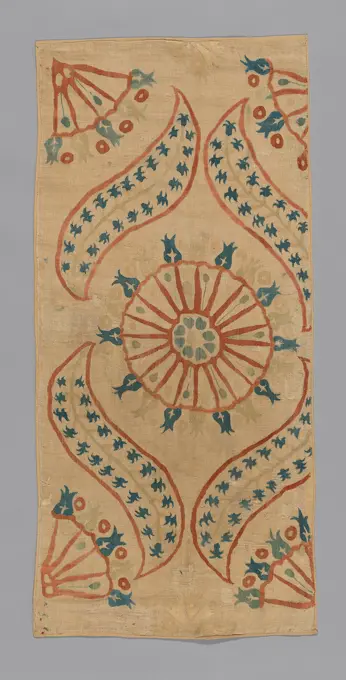
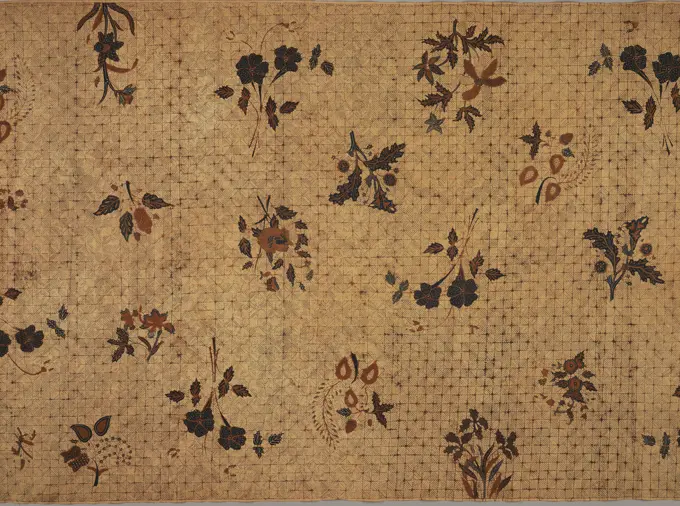
Intricate textile fragments featuring embroidered floral patterns, showcasing historical craftsmanship from various regions including Japan and Turkey.

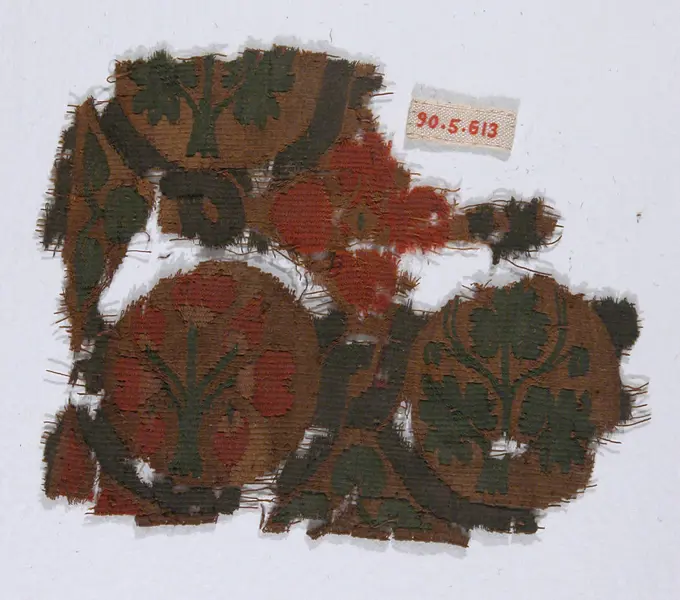
Fragment, Medium: silk Technique: supplementary warp pile (velvet), Three fragments of cut and uncut silk velvet in small scale stylized patterns., Italy, 16th-early 17th century, woven textiles, Fragment
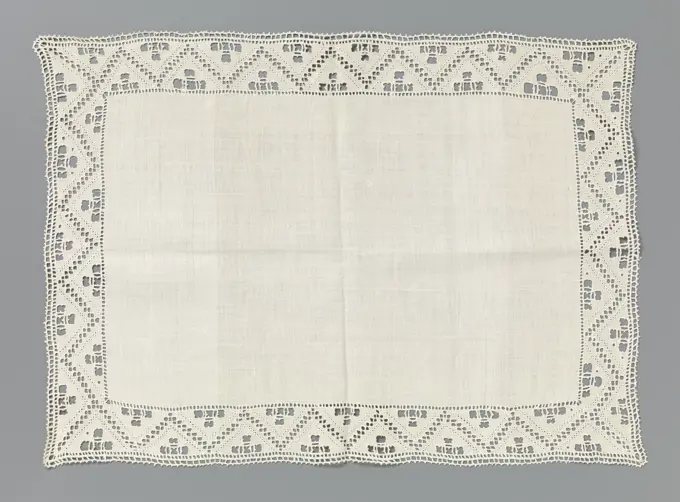
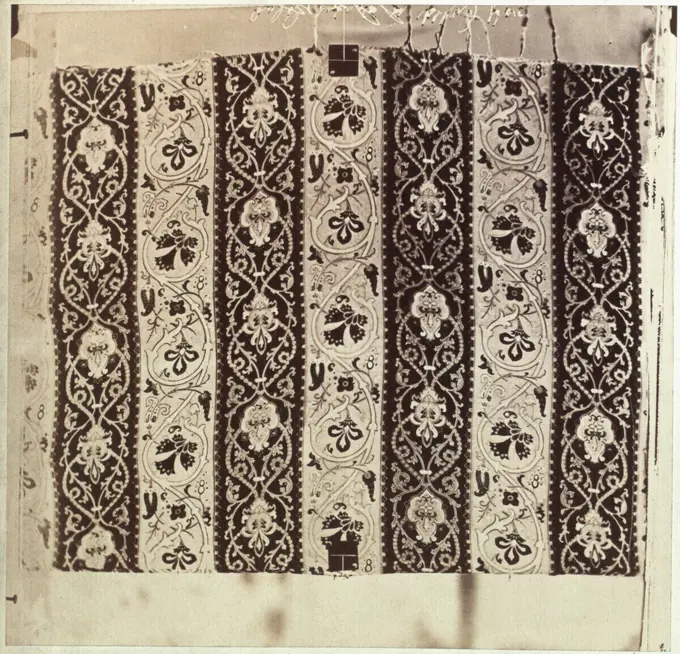
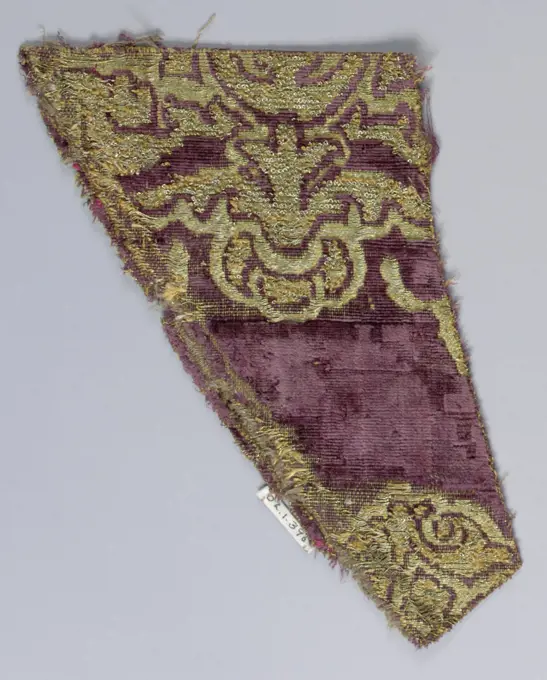
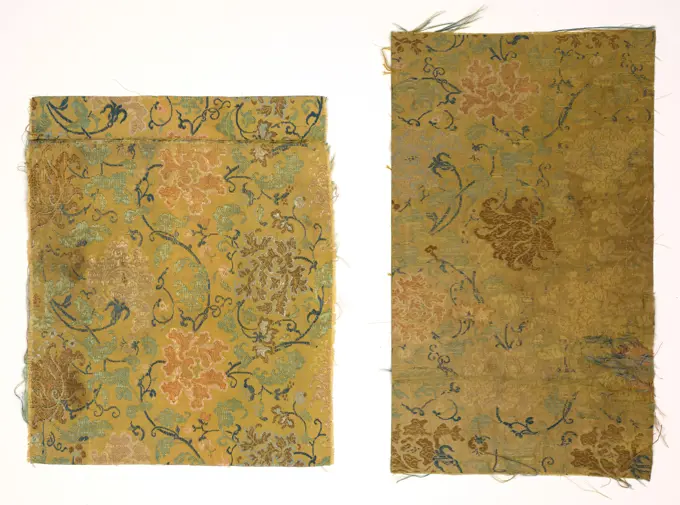
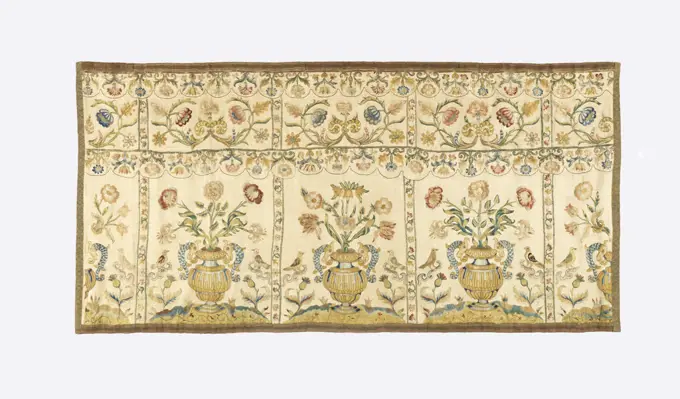
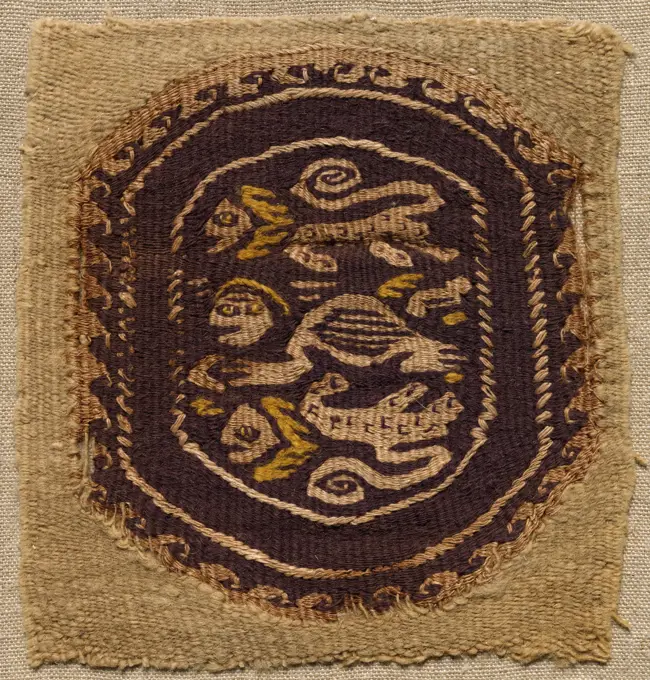
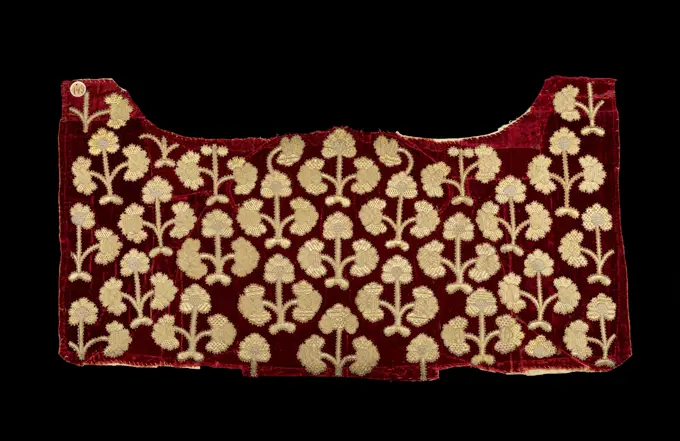
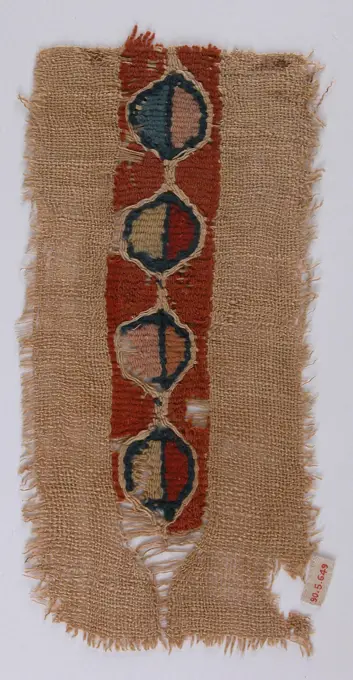
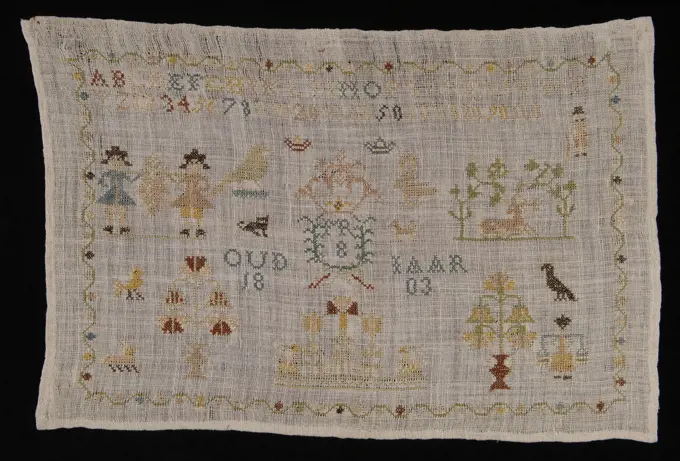
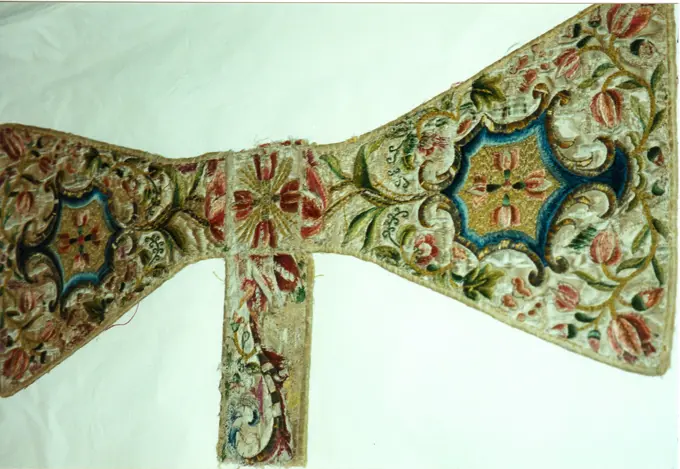
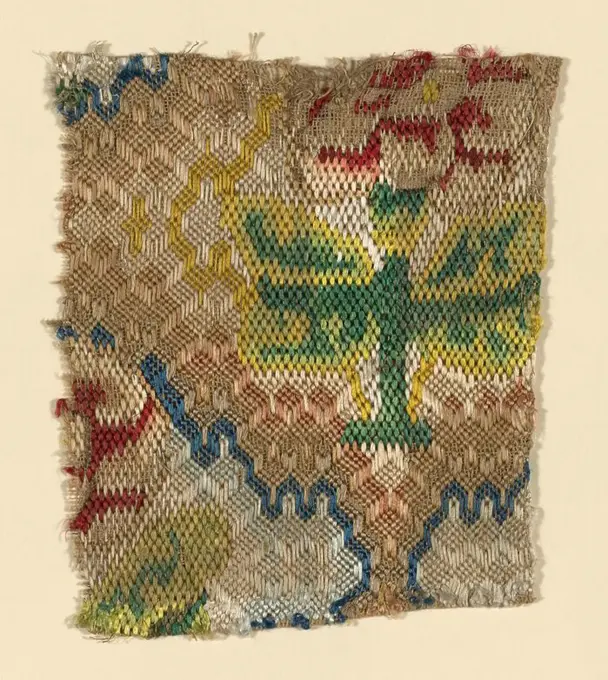
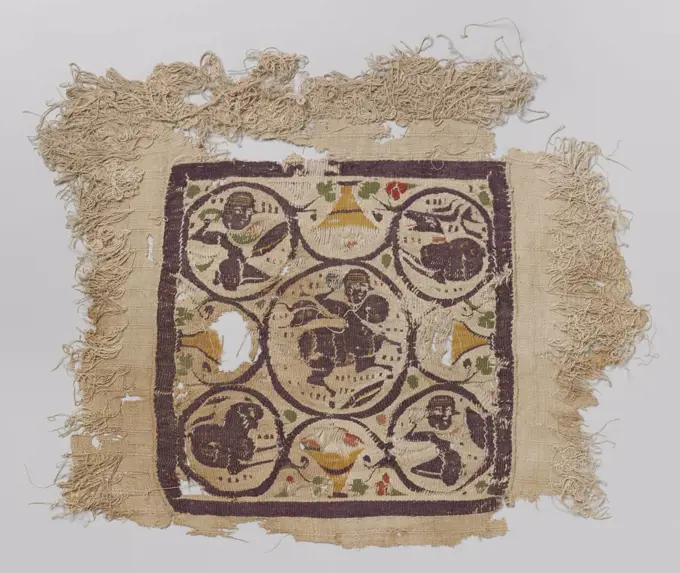
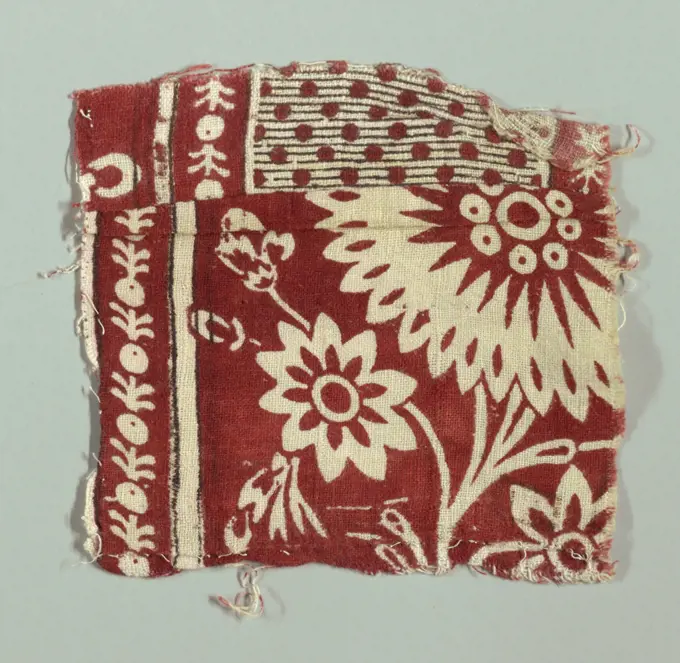
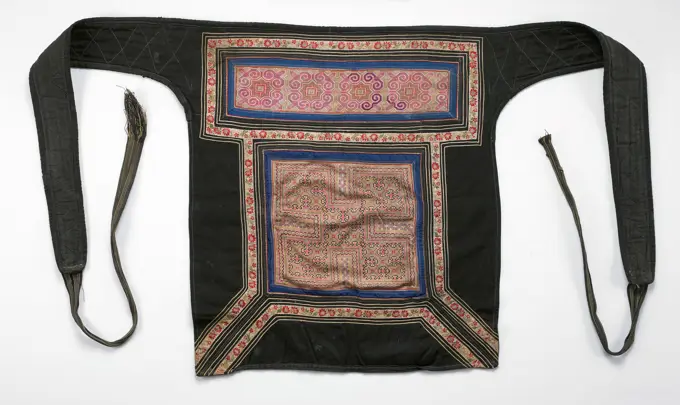
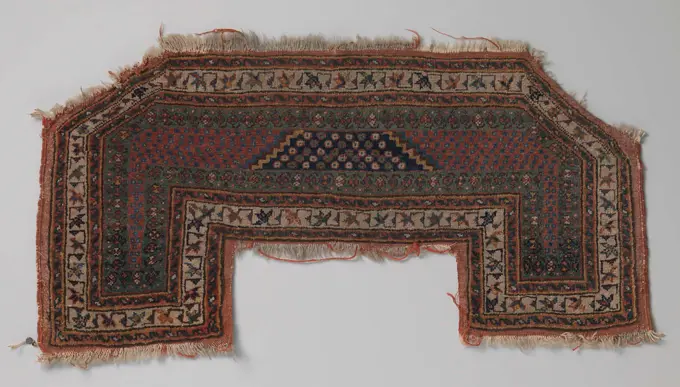
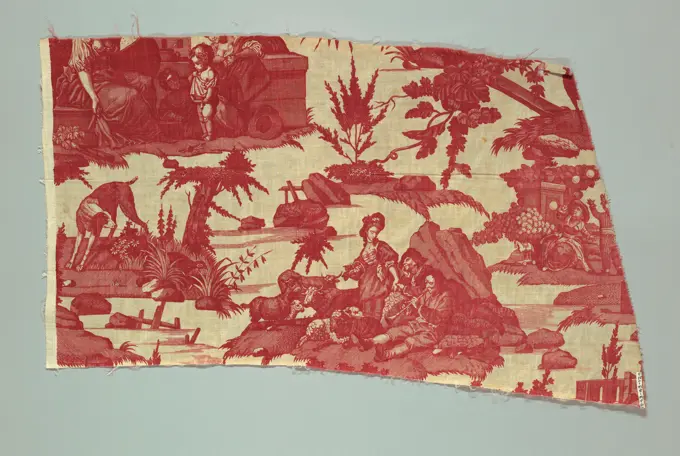
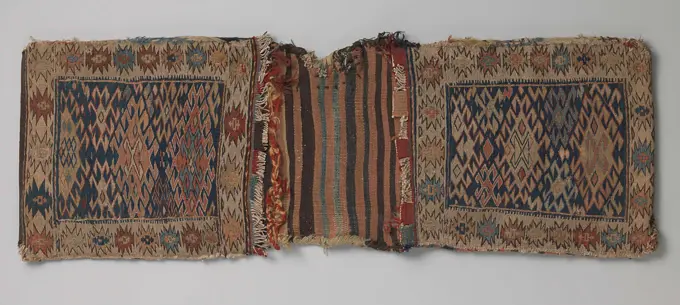
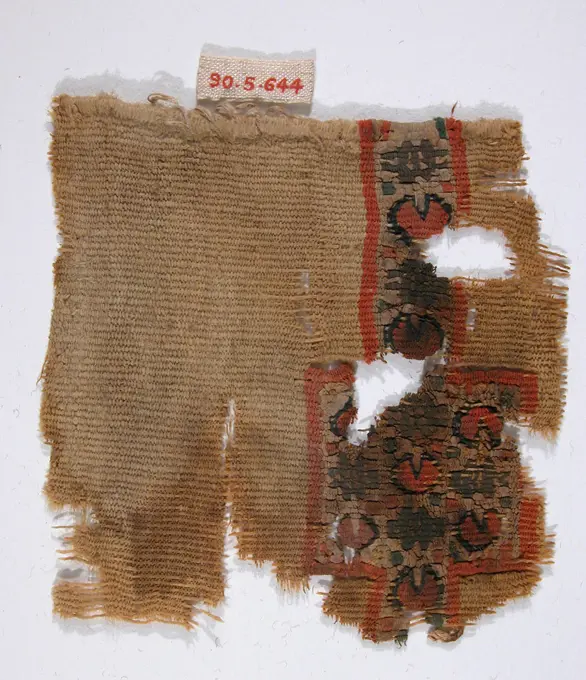
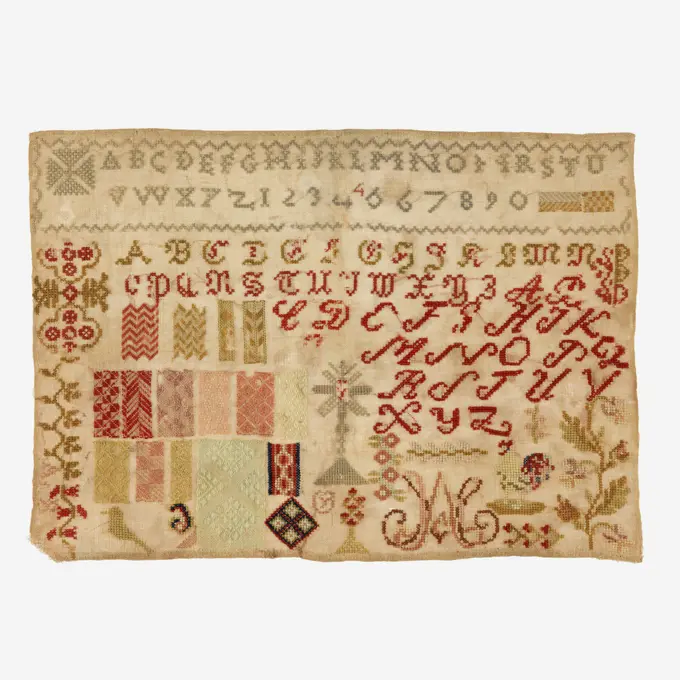
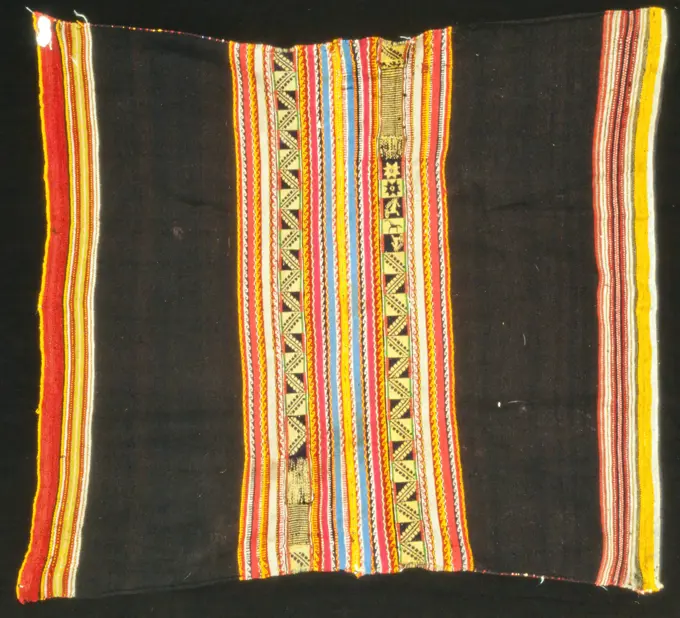
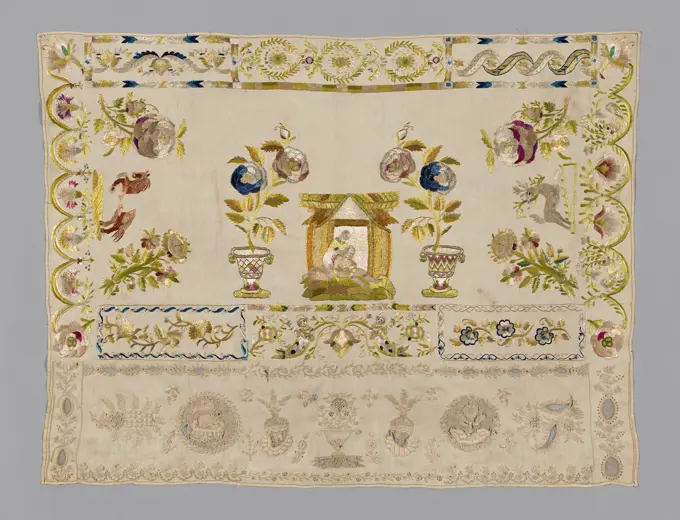
Textile Fragment 4th century. Textile Fragment 444092Dress of linen with a border of lace border, anonymous, c. 1930 - c. 1950 Dress of natural -colored linen where the edge is equipped with lace pledger: open sewing. The repeating pattern consists of a zigzag band with stacked on top of each other in the triangular fields above and below that four openwork cubes are stacked on top of each other, three below and one in the middle on top. The Zigzag band consists of a double row of openwork cubes between two narrower lines of each triple row of finer openwork dots. The rug is finished all around with a founded bow edge, with a picot on each bow. Europe linen (material) Dress of natural -colored linen where the edge is equipped with lace pledger: open sewing. The repeating pattern consists of a zigzag band with stacked on top of each other in the triangular fields above and below that four openwork cubes are stacked on top of each other, three below and one in the middle on top. The Zigzag band consists of a double row of openwork cubes beAn albumin paper photograph by Eugen Albert testing a yellow-sensitive orthochromatic emulsion, showing tonal range, detail, and lighting for photographic experimentation between 1882 and 1888.Textile (Egypt); cottonFragments, Medium: silk, metallic Technique: supplementary warp pile in a plain weave foundation (velvet) with metallic brocading., Three strips with a pomegranate motif. Red velvet with metallic brocading., Italy, 16th century, woven textiles, FragmentsSampler (England); silk and linen embroidery on linen foundationVeil. unknown, authorFragment, Medium: silk, metallic Technique: supplementary warp in plain weave foundation (velvet) with supplementary weft, Incomplete pomegranate motif in dark mauve and gold on irregularly shaped piece., Italy, 15th century, woven textiles, FragmentFragments, 1700s. China, 18th century. Twill ground; silk diasper weave; overall: 19 x 23 cm (7 1/2 x 9 1/16 in.).Darning Sampler; silk embroidery on cotton foundationEmbroidered napkins unknownPanel, Medium: silk on silk, metallic thread trim Technique: embroidered, Three complete panels and two half-panels in an embroidered design showing a border of scrolling stems and flowers above birds and flower sprays placed at either side of a vase with flowers. Two cross borders show pendant flowers set in scallops. Bordered with gold thread trimming., Spain, 17th century, embroidery & stitching, PanelFragment, with a Segmentum, from a Tunic, 400s - 600s. Egypt, Byzantine period, 5th - 7th century. Tabby weave with interwoven tapestry ornament, linen and wool; overall: 12.8 x 12.1 cm (5 1/16 x 4 3/4 in.).Vestment 1775-1825 Russian This object is from the collection of Natalia de Shabelsky (1841-1905), a Russian noblewoman compelled to preserve what she perceived as the vanishing folk art traditions of her native country. Traveling extensively throughout Great Russia, she collected many fine examples of textile art of the wealthy peasant class. From the 1870s until moving to France in 1902, Shabelsky amassed a large collection of intricately embroidered hand-woven household textiles and opulent festival garments with rich decoration and elaborate motifs. The Brooklyn Museum holdings include many fine examples including the majority of the garments. Portions of Shabelsky's collection are also housed at the Museum of Fine Arts, Boston, the Cleveland Art Museum, and the Russian Museum of Ethnography in St. Petersburg.. Vestment 157549Band (Italy); linen silk, metal-wrapped silk, wireTrimming (France); silkTextile Fragment 6th-7th century. Textile Fragment 449515Bliżej Kultury unknownShirtSampler (Germany); cottonFragment Made 1625-1675 Italy. Silk, plain weave with supplementary binding wefts and two-color supplementary pile warps forming cut, uncut, and voided velvet .Border Made 1101-1200 Egypt. Linen and wool, slit tapestry weave . CopticKontusz sash/belt. Manufaktura Paschalisa Jakubowicza (Warszawa ; wytwórnia pasów ; 1788-1794), manufactureSleeve Fragment with a Band Decorated with an Animal. Dimensions: Textile: H. 12 in. (30.5 cm)W. 12 3/8 in. (31.5 cm). Date: 9th-10th century.This simple band of linear design, part of a tunic sleeve, recalls the monochrome purple Late Antique style that was so popular in interlace designs. Museum: Metropolitan Museum of Art, New York, USA.Sidewall (USA); machine printed on machine-made paper; 21.5 x 51 cm (8 7/16 x 20 1/16 in.)Fragment (France); linenKontusz sash/belt. Manufaktura Szczepana Filsjeana (Kobyłka ; wytwórnia pasów ; 1787-1794), manufactureSampler (Mexico); silk embroidery on linen foundationSash Made 1801-1900 Turkey. Linen, plain weave; embroidered with gilt-metal-strip-wrapped silk in double running, fishbone, and overcast stitches .Textile Fragment 5th-6th century. Textile Fragment 444128Textile Fragment 6th-7th century. Textile Fragment 443994Charlotte Winter, Coverlet, c 1940 CoverletFragment zijdedamast, anonymous, 1475 - 1525 Fragment of 14 on pattern on each other -put together pieces of green silk with repeating pattern of flower vase inside with accolade -shaped circumference. In between, leaves and flowers. Italy (possibly) silk damask / twill Fragment of 14 on pattern on each other -put together pieces of green silk with repeating pattern of flower vase inside with accolade -shaped circumference. In between, leaves and flowers. Italy (possibly) silk damask / twillMarie Rodenburg, Sampler or lettercloth worked in cross stitch in colored silk on bleached loosely woven linen, marked MR 1803, lettercloth sampler embroidery needlework images silk linen, textile embroidery cross stitch Very clean (of washing) And loosely woven linen The cloth has selvedge on the top and on the other sides hem edge of 0.5 cm wide. The piece is embroided in cross stitch with silk in the colors green gray blue light pink salmon pink yellow carmine red black light green and beige. The piece is symmetrically arranged but the motifs on the left and right differ from each other embroided letter series and series of numbers and: MR OLD 8 IAAR 1803 needlework bible religion spy CanaanFragment, Medium: silk, metallic thread Technique: plain weave with complementary wefts and inner warps; binding on the front is 1/3 twill; four dark green, salmon, and yellow wefts; the other colors are bound on the front in 1/3 twill and free floating on the back; the silver is continuous and the silks discontinuous, Fragment of a woven textile patterned by a vertically symmetrical pattern of two different offset and dovetailed rows of flowering plants. This fragment isolates on plants. Multi colors on a silver background., India, 18th century, woven textiles, FragmentFragment of a maniple or stole early-mid-18th century Italian. Fragment of a maniple or stole 461600Fragment. Italy. Date: 1601-1700. Dimensions: 19.5 x 17 cm (7 5/8 x 6 3/4 in.). Linen, plain weave; embroidered with silk floss in threadcounted technique. Origin: Italy. Museum: The Chicago Art Institute, Chicago, USA.Fragment of silk fabric unknownFragment Made 1625-1675 Italy. Silk, plain compound cloth; brocaded .Sash Made 1801-1900 Turkey. Embroidered with basket design; colors and gold .Fragment 18th century Italian, Burano. Fragment 214844Piece 18th-19th century Japan. Piece. Japan. 18th-19th century. Silk. Textiles-WovenSampler, Medium: silk, cotton, and wool on plain weave cotton, knitted cotton, and machine-made cotton Technique: embroidered, sewn and knitted, Sampler divided into three vertical panels. Panel at left: bands of withdrawn element work with overcasting, cross, herringbone and running stitches; insertion of woven tape; looping and buttonhole stitch (placket); insertion of woven rick-rack and tape; insertion of embroidery (looping and running stitches) and cutwork with needle-made fillings; insertion of crochet and woven tape; looping and buttonhole stitch (placket): insertion of folded woven tape: panel of embroidery (buttonhole, back feather stitches): insertion of gathers: bands of withdrawn element work with overcasting and running stitches alternate with fether and herringbone stitches: fringe., Cenral panel (from top): panel of mended knitting (squares cut out and discarded): knitting patterns: embroidery on machine-made net (running, satin, and looping stitches) plus patch cut outSaddle bag, consisting of a number of bags, anonymous, c. 1800 - c. 1900 A few saddlebags that are sewn together. The midfield is decorated with a medallion with hooks on a dark blue stock. A border with a slender of blocks and arrows runs around it. Top and bottom gaps. Southern Persia Necklace and impact: Wool A few saddlebags that are sewn together. The midfield is decorated with a medallion with hooks on a dark blue stock. A border with a slender of blocks and arrows runs around it. Top and bottom gaps. Southern Persia Necklace and impact: WoolPillow Sham. England. Date: 1710-1730. Dimensions: 35.2 × 51 cm (13 7/8 × 20 1/8 in.). Cotton, plain weave, underlaid with linen, plain weave; embroidered with silk floss and silk yarns in back, herringbone, individual satin, and satin stitches; laid work, couching, and French knots. Origin: England. Museum: The Chicago Art Institute, Chicago, USA.Tissue Fragment with tabula, Anonymous, c. 300 - c. 699Kontusz sash/belt. unknown, authorBolster Cover Made 1701-1800 Greece. Linen, plain weave; embroidered with silk yarns in closed herringbone and stem stitches .Embroidery, Medium: silk on cotton Technique: embroidery, Fragment of cotton, embroidered in colored silks, showing floral sprays freely placed., late 18th century, embroidery & stitching, EmbroideryTextile, Medium: cotton Technique: relief printed, colored ground, Coarsely woven curtain panel in wide stripes of red and black. Broad vertical band of red with a large open flower and foliage reserved in white alternates with a broad ban printed in horizontal black lines and overprinted with red dots. Guard borders between wider bands of red with white pattern edged with black line., England, late 18th-early 19th century, printed, dyed & painted textiles, TextileSampler (Mexico); silk on cotton; 1976-100-17Fragment, Medium: compound cloth,cotton, wool Technique: complementary wefts, inner warps, plain weave foundation, Band of very fine brown wool tapestry with broad band below of weft-surfaced rectangles in red, brown, yellow, with overlaying diamond framework (stylized snakes) in these colors on contrasting fields. Groups of small narrow rectangles in red, brown, yellow, are grouped wihtin the diamonds., Peru, 1450-1535, woven textiles, FragmentStomacher, Medium: silk, metallic, paperboard Technique: embroidered Label: silk embroidered with metallic yarns, Stomacher with a trefoil point at the bottom, solidly embroidered in silver metallic yarns with a symmetrical design of flowers and leaves, framed by two spiralling ribbons., France or Italy, mid-18th century, costume & accessories, StomacherCushion Cover (Yastik) late 18th century. Cushion Cover (Yastik) 450473Baby Carrier, 18 x 24 13/16 in. (45.72 x 63.02 cm) (without ties), Cotton, silk, ChinaVoorzijde van een zadeltas... Midfield is sprinkled with flowers against a red background and in the middle is a truncated dark blue triangle with flowers. At the bottom of a beard.Sampler (USA); wool embroidery on linen foundationTextile, Dites Merci; France; cottonPiece 18th-19th century Japan. Piece. Japan. 18th-19th century. Silk. Textiles-WovenWoven Coverlet. Dated: 1935/1942. Dimensions: overall: 35.1 x 25 cm (13 13/16 x 9 13/16 in.). Medium: watercolor and graphite on paper. Museum: National Gallery of Art, Washington DC. Author: Sarah F. Williams.Textile Sample from Sample Book 19th century Japan. Textile Sample from Sample Book 68209Kontusz sash/belt. unknown, authorBand, Medium: Warp; s-spun linen. Wefts; S-spun linen, S-spun wool Technique: slit tapestry and plain weave, Inwoven tapestry band between areas of plain weave. leafy serpentine band with bird at one end., Egypt, 3rd-4th century, woven textiles, BandFragment fabric with embroidery., Anonymous, c. 1500 - c. 1899 Fragment white tissue with embroidery in red and green and metal wire. The pattern has an ornament edge along the lower edge with a stylized flower and leaf garland. Above the edge is a leaf and a plant embroidered. Netherlands (possibly) silk. cotton (textile). metal thread embroidering Fragment white tissue with embroidery in red and green and metal wire. The pattern has an ornament edge along the lower edge with a stylized flower and leaf garland. Above the edge is a leaf and a plant embroidered. Netherlands (possibly) silk. cotton (textile). metal thread embroideringSampler (England); Embroidered by Mary Dormer; silk embroidery, wool foundationHeadcloth, 1800's. Albania, 19th century. Linen, embroidered with silk; overall: 104.2 x 101.7 cm (41 x 40 1/16 in.).Fragment (Cushion Cover) Made 1675-1700 Turkey. Embroidered .Kain Panjang (long Sarong) (Indonesia); cottonGerman hat of Tulle Doorstop and a Rand Pottekant, Anonymous, c. 1800 - c. 1825 Hat van Tulle Doorstop, with a pattern of stripped leaf branches. On the hat, a border is put in front with a pattern of flower pots. The hat can be worn under a Frisian sun hat. Friesland . bobbin lace / pot lace Hat van Tulle Doorstop, with a pattern of stripped leaf branches. On the hat, a border is put in front with a pattern of flower pots. The hat can be worn under a Frisian sun hat. Friesland . bobbin lace / pot lacePanel, Medium: silk, metallic thread Technique: appliqué, Horizontal panel, possibly part of a valance, of red velvet heavily worked in gold thread and colored silks. Graceful flowering vines curve through asymmetrical arrangement of joining S-curves. Flowers in shaded effects, in blues, yellows, greens, and soft rose and outlined with gold thread. The S-curves and bands in gold couched to give a block design. Wide border of gold couched over cord to give raised effect., Italy or Spain, 16th-17th century, embroidery & stitching, PanelBliżej Kultury unknownFragment bordered silk with pattern of flowers in windows. Fragment in the shape of a rectangle with decoration of 5 flowers, one in the middle and 4 in the corners. The corner flowers are not complete.Stomacher. Culture: German. Date: third quarter 18th century.Stomachers of regional ensembles were worn on the outside of the bodice and held in place with crisscrossing ribbon lacing, unlike fashionable stomachers. Though the brocade is typical of fashionable fabrics from the 1860s and 1870s, the heart motif flanked by confronting birds identifies this as a regional piece. Birds are a common motif in regional designs, usually flanking a goddess, tree of life, or other plant. Birds are representative of the spirit world as messengers from the heavens. They can be generally symbolic of luck or of the individual attributes of the species. This piece is evidence of how regional costumes evolved over time, incorporating aspects of fashionable dress. Museum: Metropolitan Museum of Art, New York, USA.Galloon 18th century German. Galloon 215669Dubbele zadeltas.Double saddle bag, front and rear rights. The front dark blue field with windows. White border. The rear position fabric with stripes in light and dark brown and blue.Fragment blue satin room with double-headed eagle. Fragment blue silk with pattern of rows of double crowned eagles.Textile (India); silk, metalSampler Made 1799 England. Linen, plain weave; embroidered with silk in cross, satin, algerian eye or star stitches, detached buttonhole insertions . Elizabeth DudleyPiece 19th century Japan. Piece 72203Embroidered pall unknownFragment Made 201 CE-1000 Egypt. . Ancient EgyptianHandkerchief ca. 1760 American. Handkerchief 121843Fragment, Medium: silk, metallic thread Technique: appliqué on velvet, Dark red velvet embroidered in metallic thread, green, blue and yellow silk in a design of a pomegranate with tendrils. On two seamed pieces of velvet., Italy, 17th century, embroidery & stitching, FragmentCoptic fabric; Egyptian workshop; IV-V century (301-00-00-500-00-00);Cover, Medium: wool on linen Technique: embroidery, Panel with geometrical floral border and bands with spirals at both ends., Spain, 18th-19th century, embroidery & stitching, CoverFragment early 17th century Spanish or Italian. Fragment 230061Textile Fragment 5th-6th century. Textile Fragment 444123Band Fragment (Egypt); warp; s-spun linen. wefts; s-spun linen, s-spun woolsSampler, Medium: wool embroidery on linen foundation Technique: embroidered in cross and darning stitches on plain weave foundation, Alphabets, numerals, and a number of designs for darning and floral patterns worked in colored wools on brown canvas., USA, 1840, embroidery & stitching, SamplerOrnamental and physical tapiser;  18th century (1701-00-00-1800-00-00);Ribbon of side brokat, in silver, black, green and yellow, anonymous, c. 1700 - c. 1750 Ribbon of side brokaat. On a silver surface, a repeating pattern has been applied that consists of two yellow flowers or fruits surrounded by green leaves. The edges are trimmed with decorative band, which is damaged. West-Europa geheel: silk. brocade (textile). silver thread Ribbon of side brokaat. On a silver surface, a repeating pattern has been applied that consists of two yellow flowers or fruits surrounded by green leaves. The edges are trimmed with decorative band, which is damaged. West-Europa geheel: silk. brocade (textile). silver threadCap 19th century probably French. Cap 98314Napkin with London, the Thames, English weapons, horsemen and conquered cities, anonymous, after 1695 - c. 1699 Linnamast napkin with London, the Thames, English weapons, riders and conquered cities. Midfield: The symmetrically doubled pattern shows four scenes from bottom to top: 1 river Thames. A yacht with hereding sails. Rowing boats in the background. Caption: The River Thames. 2 A city with the cathedral of St. Paul in the middle and the tower on either side. Caption: London. 3 A horse who is used to the middle with rider dressed in Just-au-Corps with Jabot of 1670, low wig and hat with ostrich feather. Aside half a laurel wreath with crowned initial j () Or g (). 4 Between two crowned weapons of Willem III (heart shield of Nassau) a round shield, in Rolwerkkartouche, with the Joriskruis and two swords, behind which two strings, one weather with Joriskruis, the other with two crossed swords and a crown. Standing and lying edges: weapon trophies, interspersed by cityscapes: above Shawl (Llklla), 1960-1970, 30 x 34 in. (76.2 x 86.4 cm), Wool, Bolivia, 20th centurySampler, Medium: silk embroidery, linen foundation Technique: crewel, double running, satin, stem and drawnwork stitches on plain weave, Twenty-five squares with embroidery. Twenty in geometric patterns, two with butterflies, one with roses, one with flowers, and center one with thistle., England, 18th century, embroidery & stitching, SamplerFragment; cotton on bast fiber; 1947-84-3Fragment. Italy. Date: 1650-1700. Dimensions: . Plain compound cloth. Origin: Italy. Museum: The Chicago Art Institute, Chicago, USA.Piece 18th century Japan. Piece 71285Fragment; linen, woolSampler Made 1801-1900 France. Linen, plain weave; embroidered .