Embroidered Textile Fragments

Intricate textile fragments featuring embroidered floral patterns, showcasing historical craftsmanship from various regions including Japan and Turkey.

Fragment, Medium: silk Technique: supplementary warp pile (velvet), Three fragments of cut and uncut silk velvet in small scale stylized patterns., Italy, 16th-early 17th century, woven textiles, Fragment
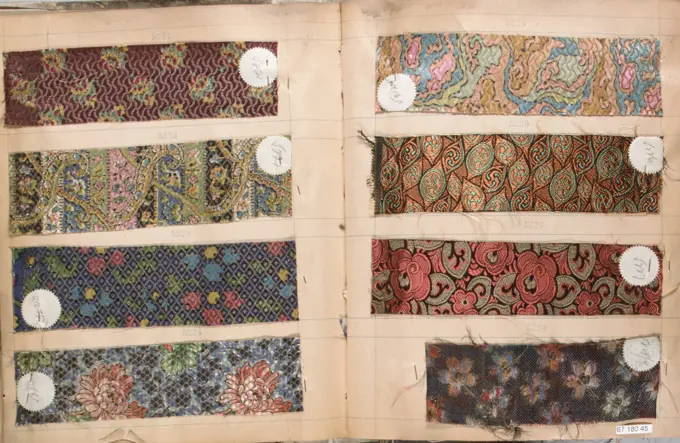
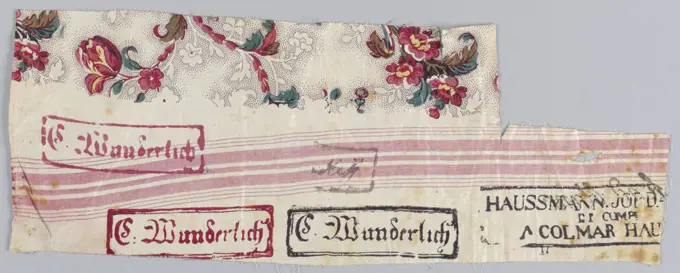
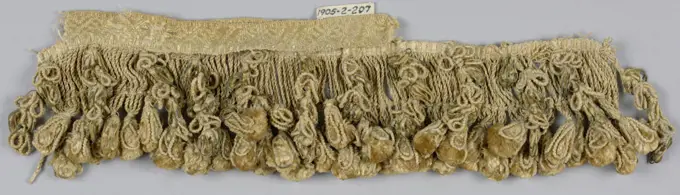
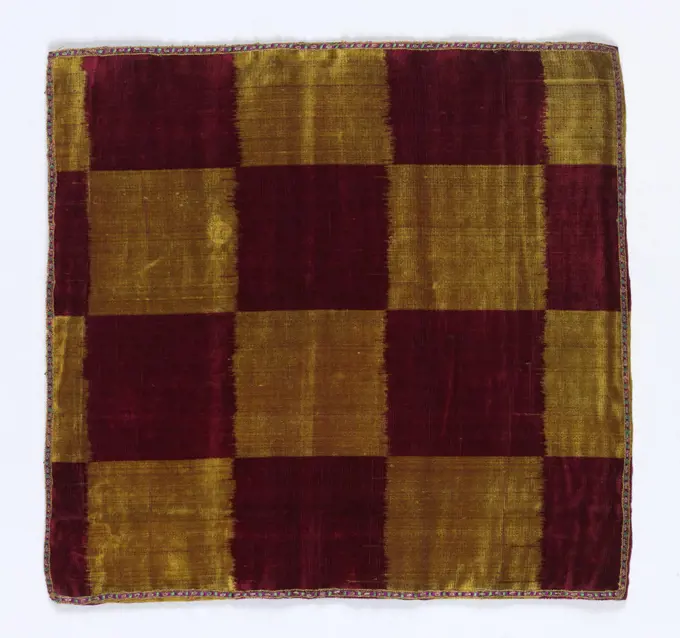
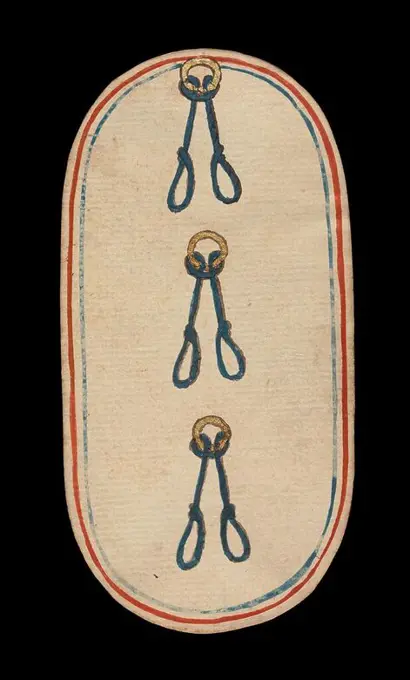
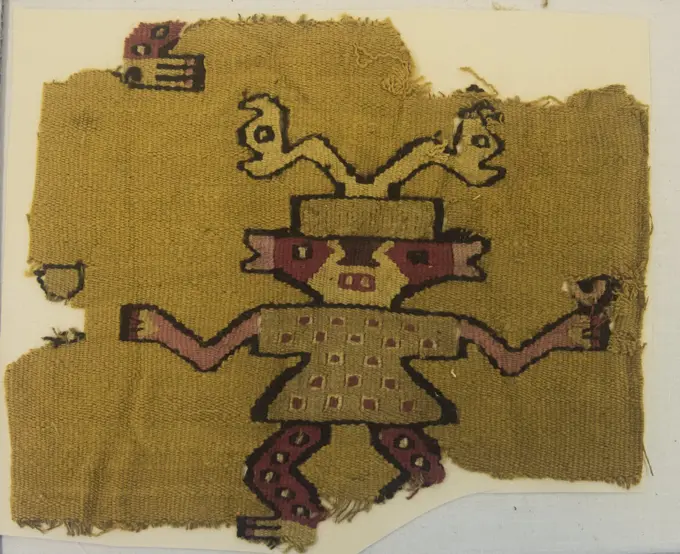
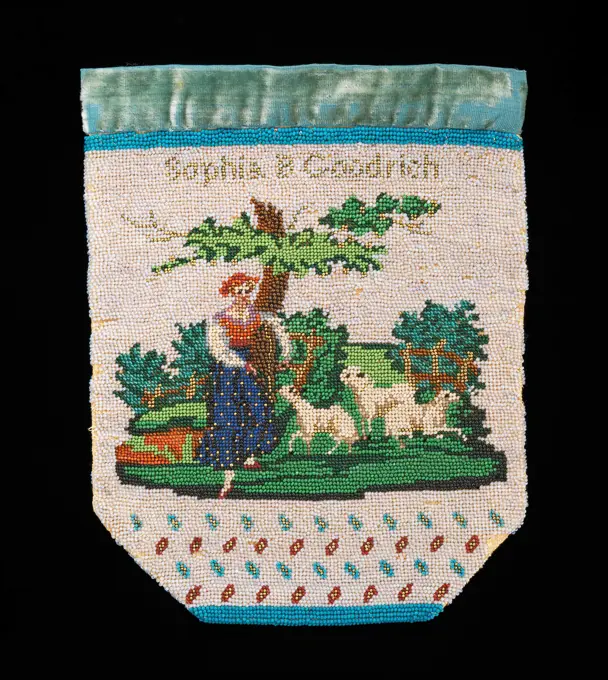
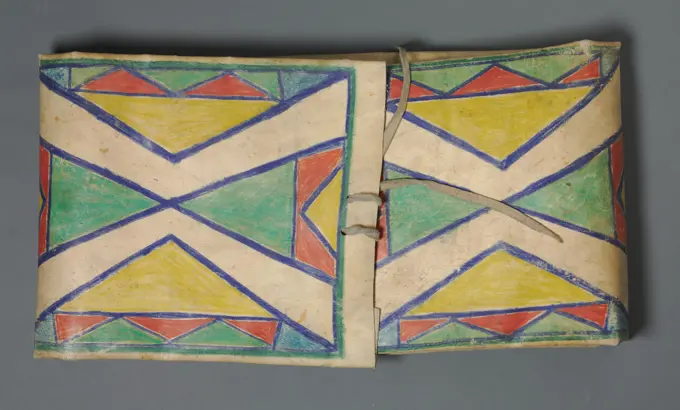
Parfleche, c. 1900. America, Native North American, Plains, Apsaalooke (Crow), Post-Contact. Painted leather; overall: 7.6 x 63.5 x 33 cm (3 x 25 x 13 in.).Sample (France)Textile Sample Book 1881 () possibly William Openhym & Sons. Textile Sample Book. French, Lyons. 1881 (). Textiles-Sample BooksFragment, Haussmann, Medium: cotton Technique: block printed on plain weave foundation, Part of a polychrome floral pattern on a white ground and factory marks. Bands of red weft have been woven into the cloth., France, mid-19th century, printed, dyed & painted textiles, FragmentSampler, Mary Ann Walton, American, Medium: silk embroidery on linen foundation Technique: embroidered in cross, tent and rococo stitches on plain weave foundation, Multiple bands of alphabets separated by narrow borders, with a wide floral border of carnations and tulips, embroidered in colored silks on a coarse natural linen ground., USA, 1818, embroidery & stitching, SamplerTrimming, Medium: silk, copper wire Technique: woven, Galloon with attached fringe. Galloon has a design of diagonally placed ornaments. Fringe has a heading and skirts threads that are twisted, looped and tied with a running thread to support flower-like ornaments. Decorated with pendants., Spain, 17th century, trimmings, TrimmingPiece 17th century Japan. Piece 71348Inrō with Flowering Peonies first half of the19th century Japan. Inrō with Flowering Peonies 58674Piece 18th-19th century Japan. Piece 67603Steel bobbin with coarse wire as an example of mosques in form with a fragment Lille side in which this technique has been applied, anonymous, c. 1900 - c. 1930 sample Steel natural -colored bobbin with coarse wire as an example of moes in shape with a fragment Lille side in which this technique has been applied. In the steel a tie -grid has been used, a tuler floor in the fragment. The date concerns the steel. West-Europa cotton (textile) bobbin lace / tally (or jewel) / Lille laceTextile, Medium: silk Technique: cut loops of supplementary warp pile (velvet) in a plain weave foundation; tied-resist dyeing in the warp (ikat) Label: silk cut velvet, warp-dyed (ikat), Small piece of woven velvet with a checkerboard pattern of alternating deep red and gold squares., Central Asia, 19th century, printed, dyed & painted textiles, TextileTriangular piece ca. 1600 Italian. Triangular piece 217939Fragment of silk fabric, Eastern unknownHandkerchief (England); cotton; Frame H x W: 41.9 x 45.7 cm (16 1/2 x 18 in.) Textile H x W: 33.7 x 36.5 cm (13 1/4 x 14 3/8 in.)Frank C Barks, Beaded Bag, c 1937 Beaded BagSeat Cover (France); silk, woolSteel clamping side with coarse wire as an example of leaf-shaped shape stroke with a fragment side in which this technique has been applied. Steel natural colosside with coarse thread as an example of leaf-shaped shape stroke with a fragment of an exclamation side in which this technique has been applied. The date concerns the steel.Sample early 19th century French. Sample 224789TAPIZ DE PLUMAS. Location: UAM / MUSEO ARTES POPULARES. CANTOBLANCO. MADRID. SPAIN.Manuel G Runyan, Star & Ring Quilt, c 1938 Star & Ring QuiltBanner (Hata) and Staff 18th-19th century Japanese. Banner (Hata) and Staff 22677A deck of cards for a whist. National Card Factory J.C. du PortaSteel clamping side with coarse thread as an example of a ribbon in linen stroke with ornamental thread that is used in Russian ribbon side, a fragment is added. Steel natural colosside with coarse thread as an example of a ribbon in linen stroke with ornamental thread that is used in Russian ribbon side, a fragment belongs to the steel in which this can be seen. The date concerns the steel.Sidewall (USA); block-printed; 32 x 15 cm (12 5/8 x 5 7/8 in.)Darning sampler. Date/Period: 1876. Darning sampler. Medium: linen, wool, cotton. Technique: embroidered in running (pattern darning) and cross stitches on plain weave foundation. Height: 310 mm (12.20 in); Width: 330 mm (12.99 in). Author: UNKNOWN.Scapular () (one of a pair) 18th century German. Scapular () (one of a pair). German. 18th century. Silk and metal thread. Textiles-EmbroideredFragment (Egypt); warp; s-spun linen. wefts; s-apun linen, s-spun wool, z-spun woolSampler 1779 British. Sampler. British. 1779. Silk and wool on wool canvas. Textiles-Embroidered3 of Nooses, from The Cloisters Playing Cards. Culture: South Netherlandish. Dimensions: 5 3/16 × 2 3/4 in. (13.2 × 7 cm). Date: ca. 1475-80.The Cloisters set of fifty-two cards constitutes the only known complete deck of illuminated ordinary playing cards (as opposed to tarot cards) from the fifteenth century. There are four suits, each consisting of a king, queen, knave, and ten pip cards. The suit symbols, based on equipment associated with the hunt, are hunting horns, dog collars, hound tethers, and game nooses. The value of the pip cards is indicated by appropriate repetitions of the suit symbol. The figures, which appear to be based on Franco-Flemish models, were drawn in a bold, free, and engaging, if somewhat unrefined, hand. Their exaggerated and sometimes anachronistic costumes suggest a lampoon of extravagant Burgundian court fashions. Although some period card games are named, it is not known how they were played. Almost all card games did, however, involve some form of gaTextile Fragment, undetermined Chancay. , 1000-1532. Cotton, camelid fiber, (18.5 x 22.0 cm).   Arts of the Americas 1000-1532Sample early 19th century French. Sample 224678Jessie M Youngs, Bandbox or Hat Box, c 1940 Bandbox or Hat BoxBand. Date/Period: 16th-18th century. Band. Medium: silk, linen. Technique: embroidery on plain weave; needle lace. Author: UNKNOWN.Bellpull 1804-14 French. Bellpull 221208One of Eight Mortuary Tablets of So Yukyo (1755-1812). Seo Yongbo (Korea). Korea, Joseon (1392-1910), dated 1812. Furnishings; Serviceware. Slab-built porcelain with underglaze blue painted decoration and clear glazeFragment of a Ship Flag, anonymous, 1606 - 1700 ship flag Left half of a ship's flag, blue with a red in a white cross on a white Andries cross. This is an English Univlag of the period 1606-1700. England wool  flag, colours (as symbol of the state, etc.) EnglandPouch 1836 American. Pouch 156395Embroidery, 19th century. Pillow, embroidered in woollen small stitch. Detail: hunting trophy inspired to a 19th century drawing.Traditional textile souvenir handicrafts, Funchal, Madeira Island, Portugal