Exquisite Asian Artifacts

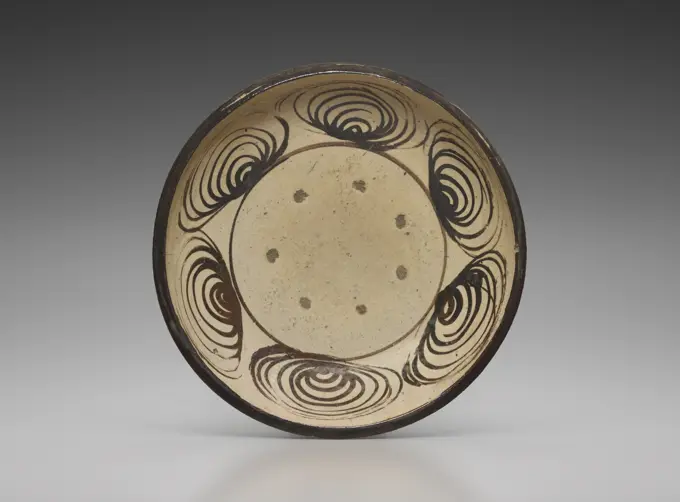
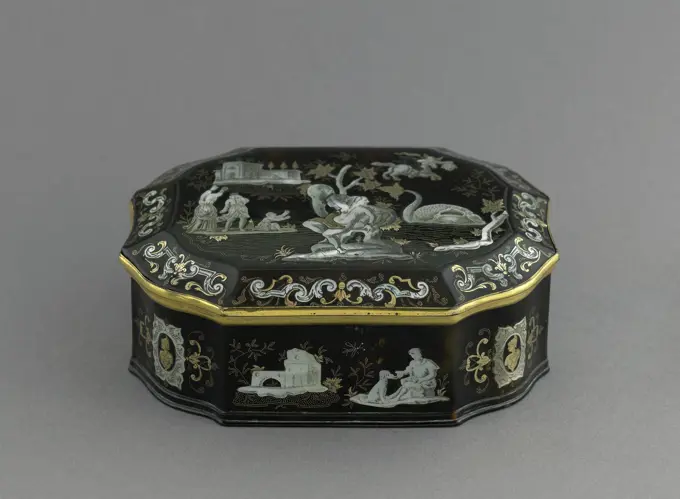
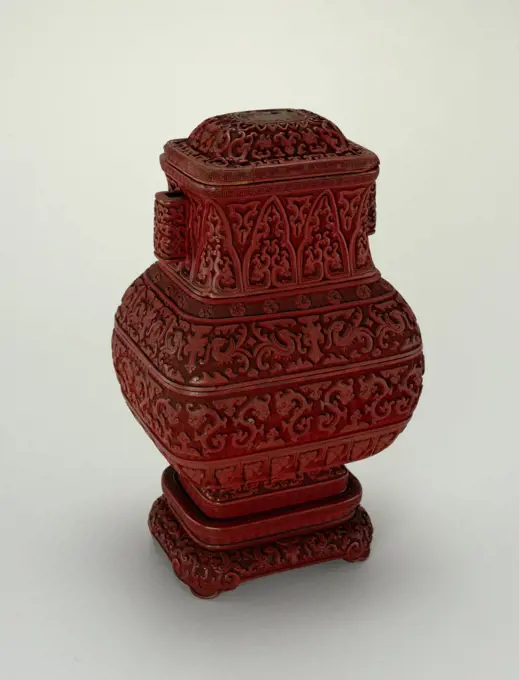
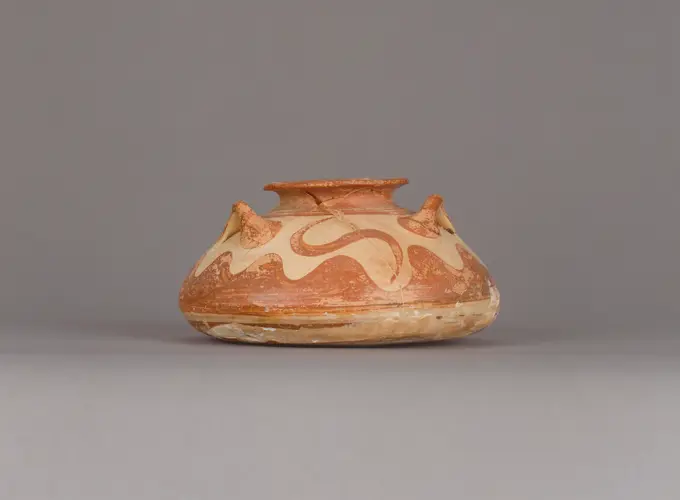
Delicate and intricately designed Asian pieces, including incense burners and pottery, highlighting cultural craftsmanship and historical significance.
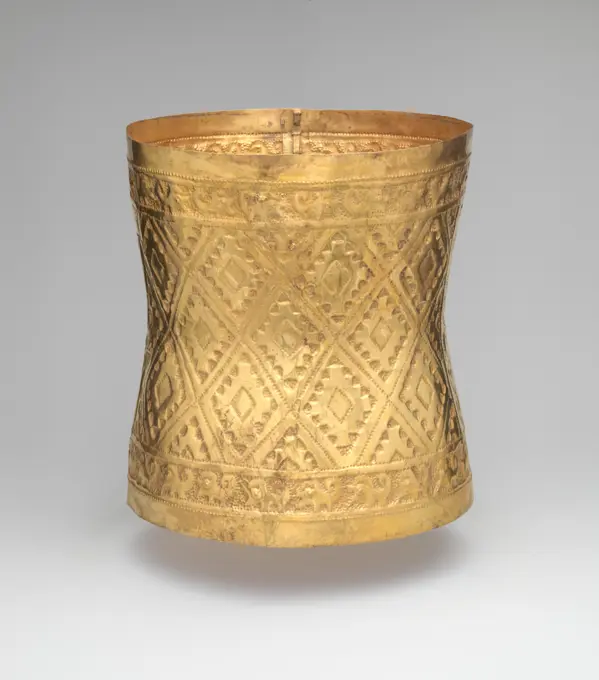
Crown A.D. 900-1100 Lambayeque (Sicán) Cylindrical crowns that taper gently in the middle were common in high-status tombs at Batán Grande, a site now called the Sicán Archaeological Precinct, in the Santuario Histórico Bosque de Pómac, about 40 kilometers northeast of the modern city of Chiclayo on Perus North Coast. Made of sheet metal—in this case, an alloy of 44 percent gold, 32 percent silver, and 24 percent copper—it was worked from behind (repoussé) and from the front into a textile-like stepped-diamond pattern contained within an upper and lower border of animals in profile. The ends of the sheet were joined by metal lacing, as if it were a cloth. The Sicán tombs, located deep in monumental mudbrick platforms, held nearly unimaginable quantities of objects made of precious metal, shell, and cloth. A single tomb could contain as many as five such crowns, some featuring delicate openwork, and others, such as the present example, displaying repoussé designs. The repoussé stepped-
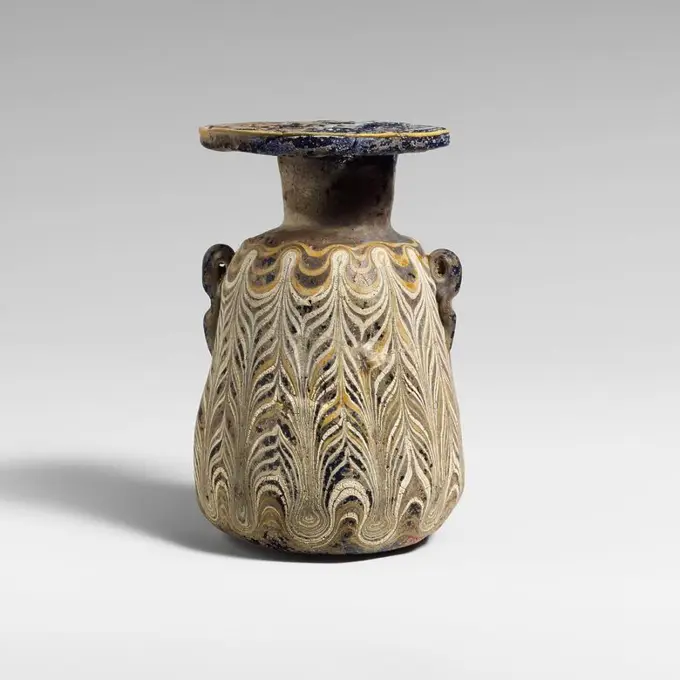
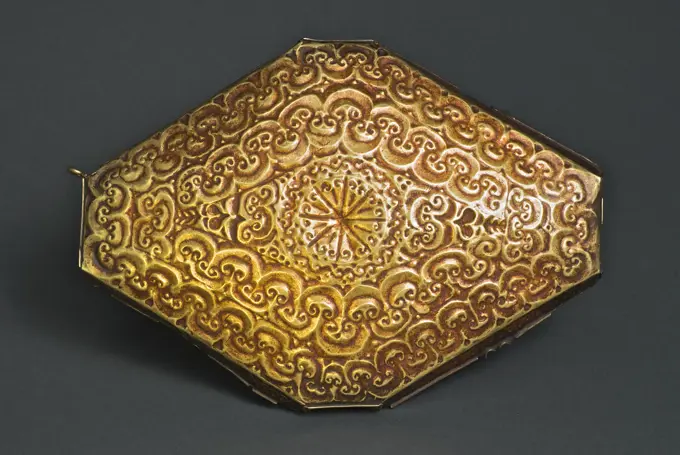
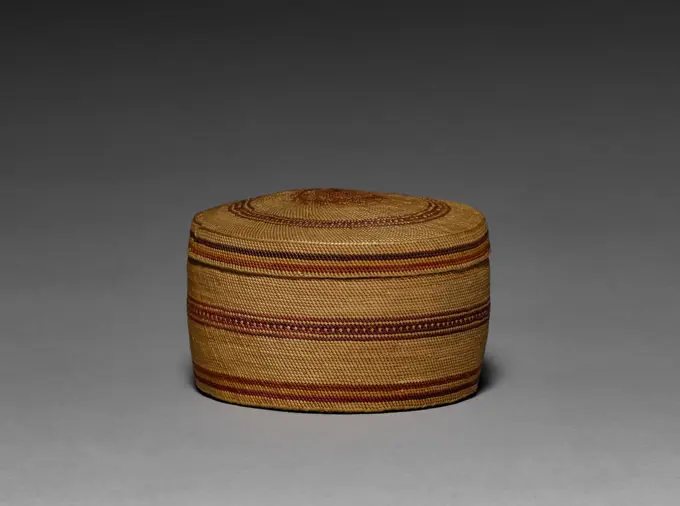
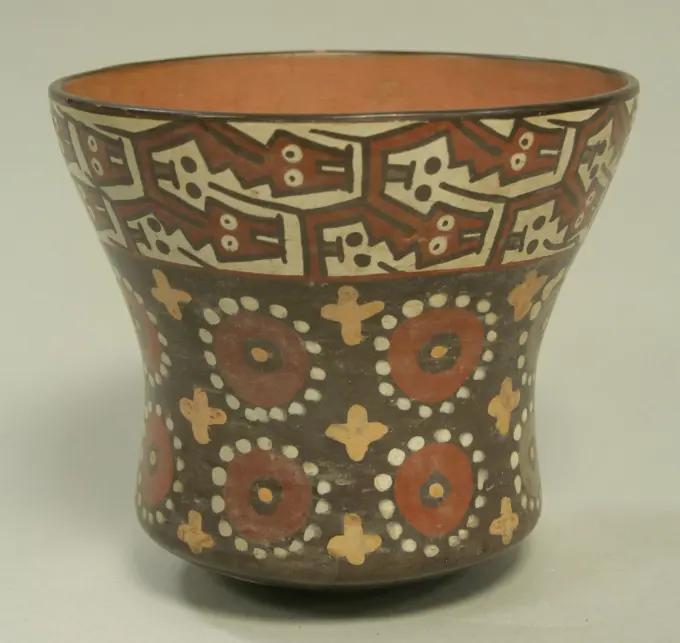
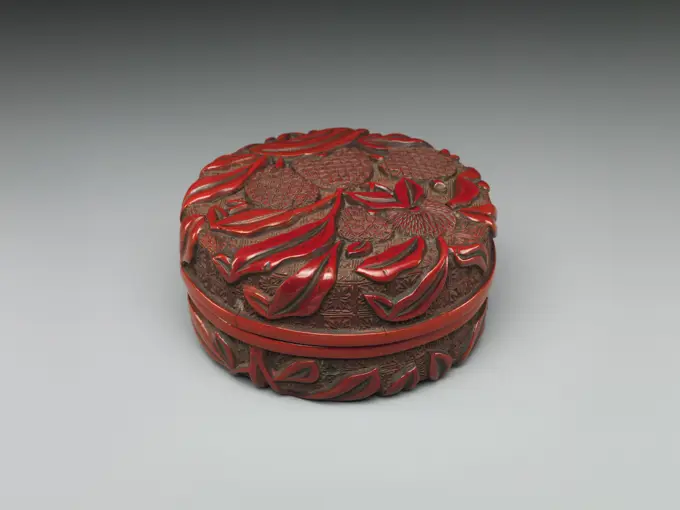
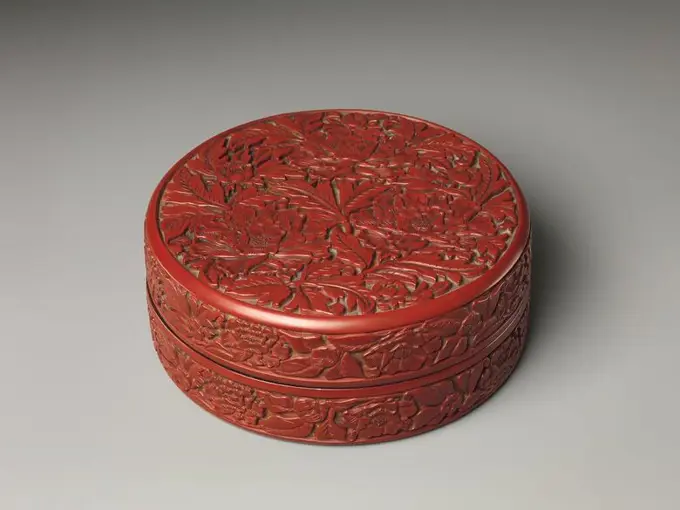
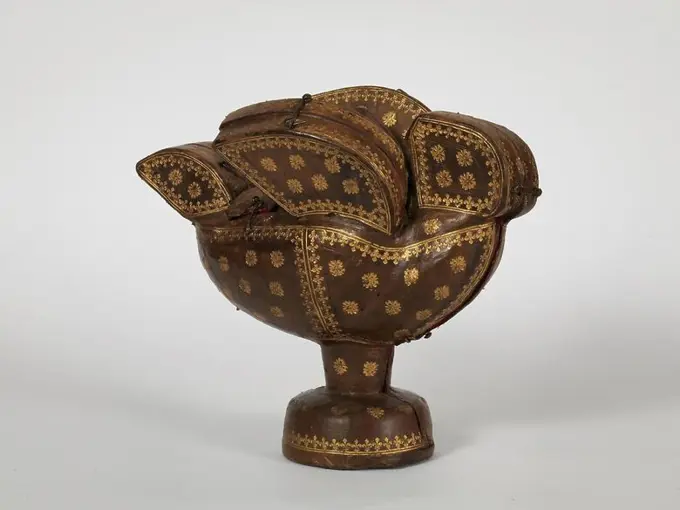
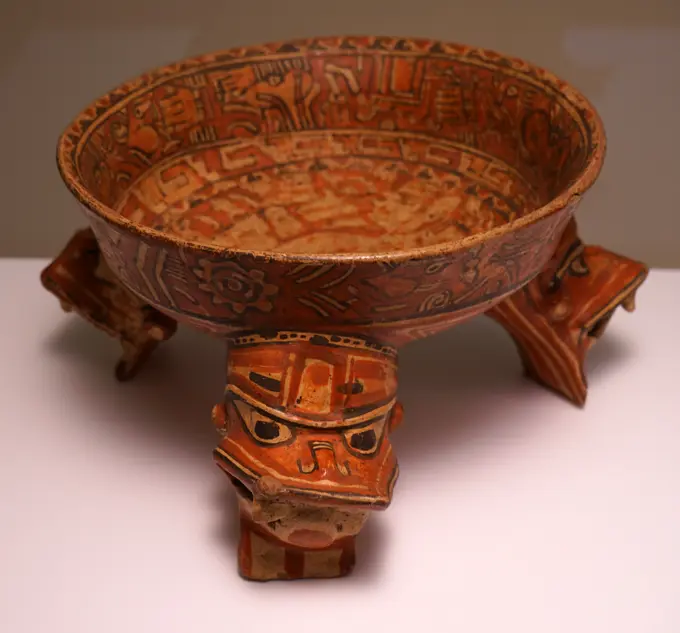
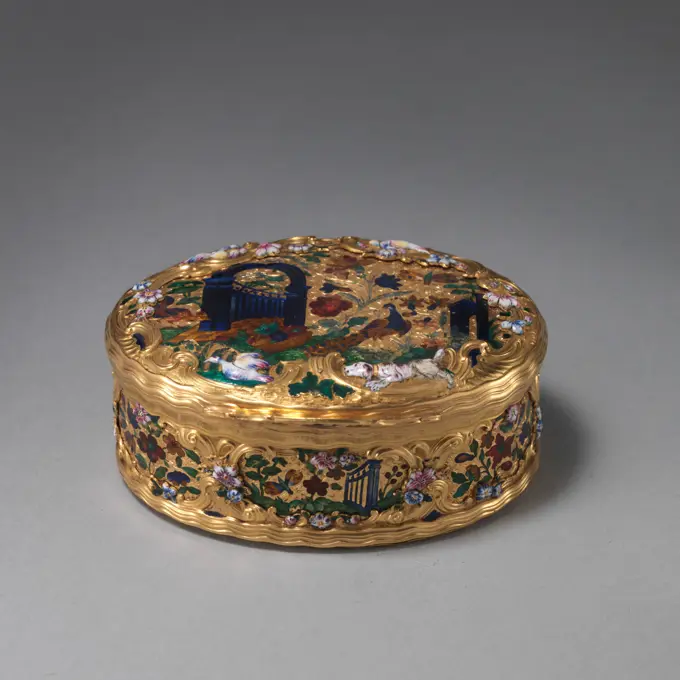
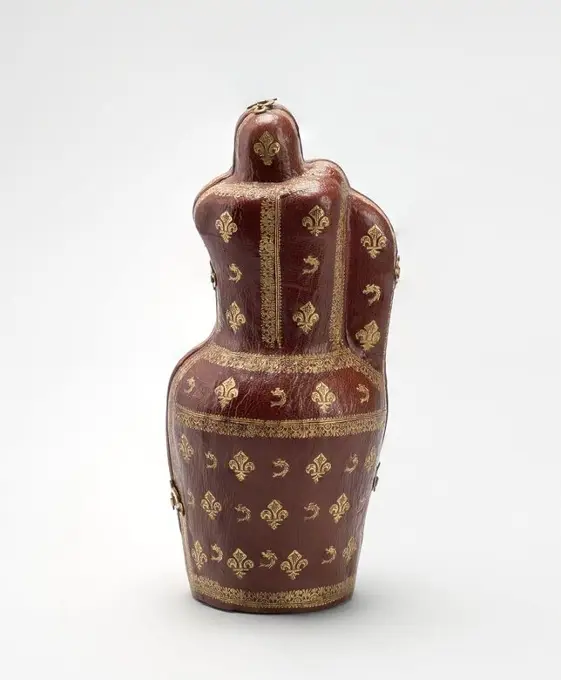
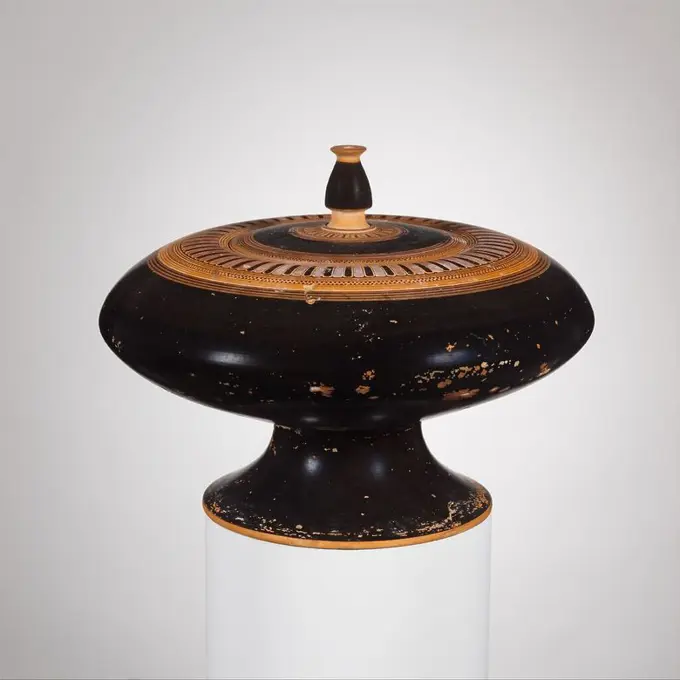
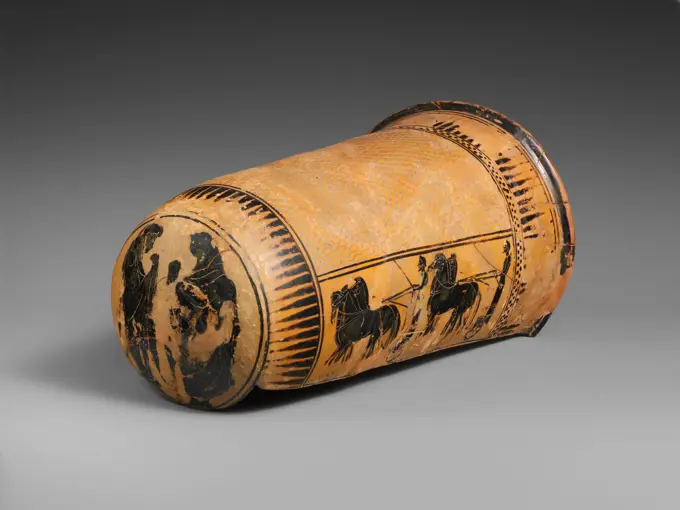
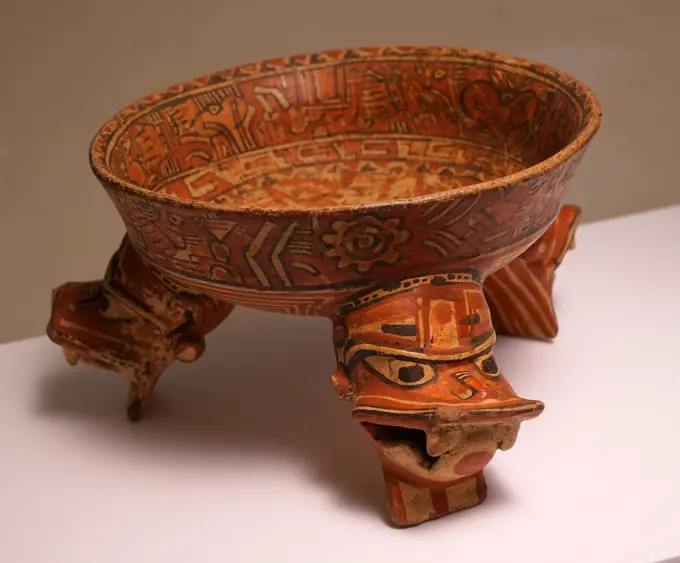
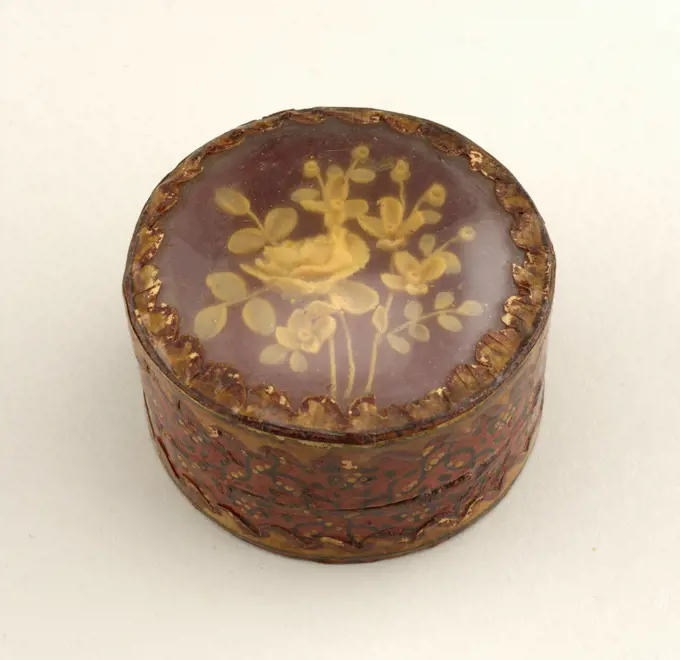
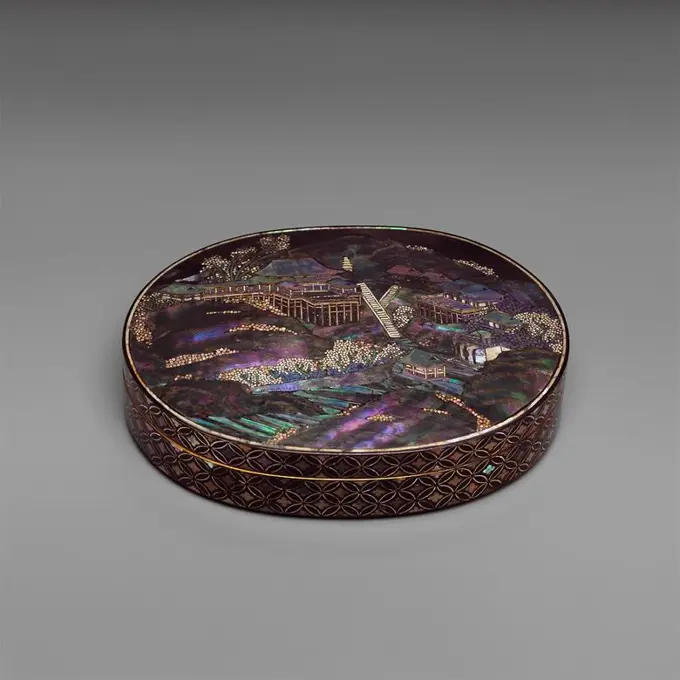
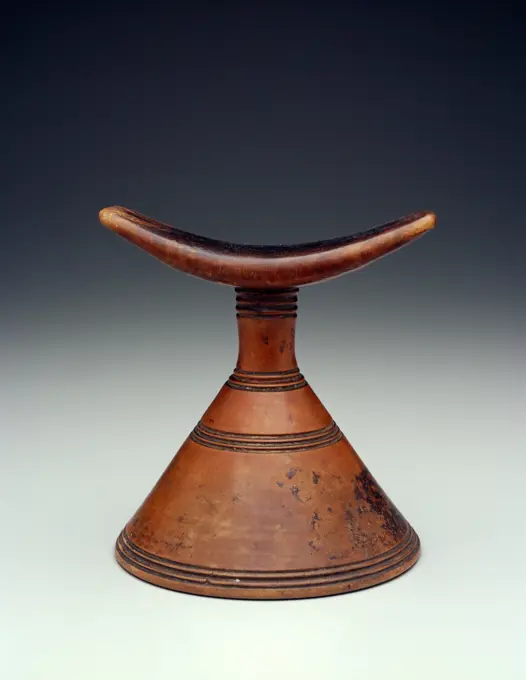
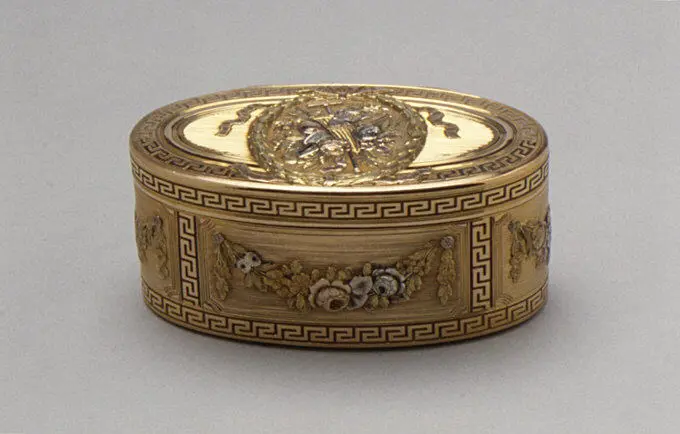
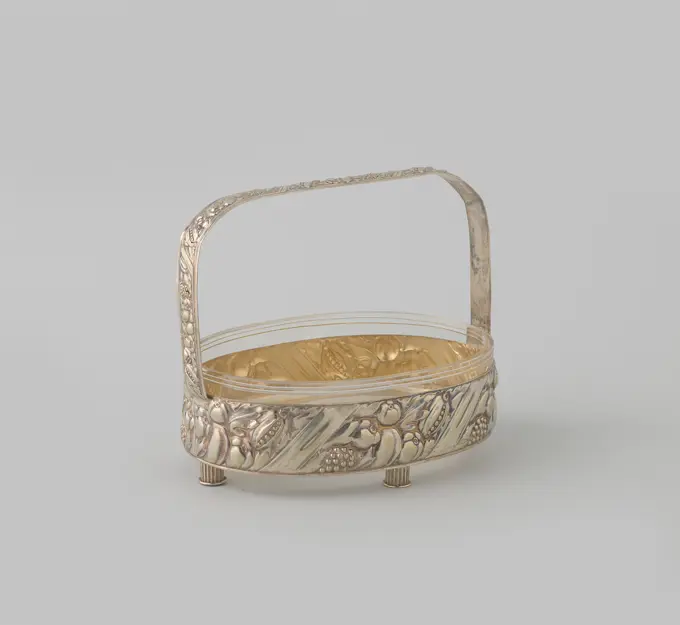
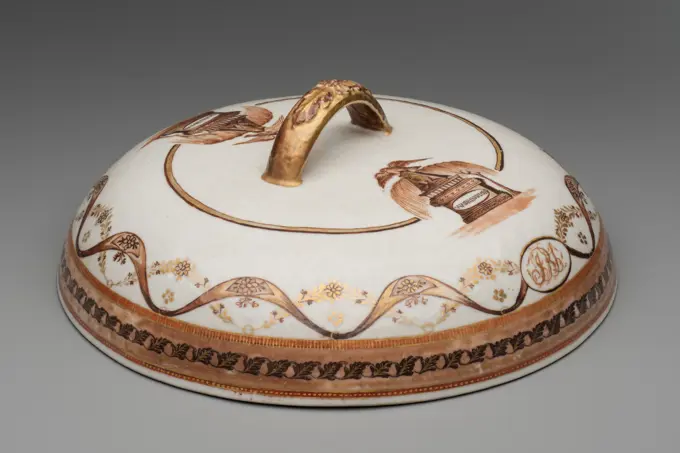
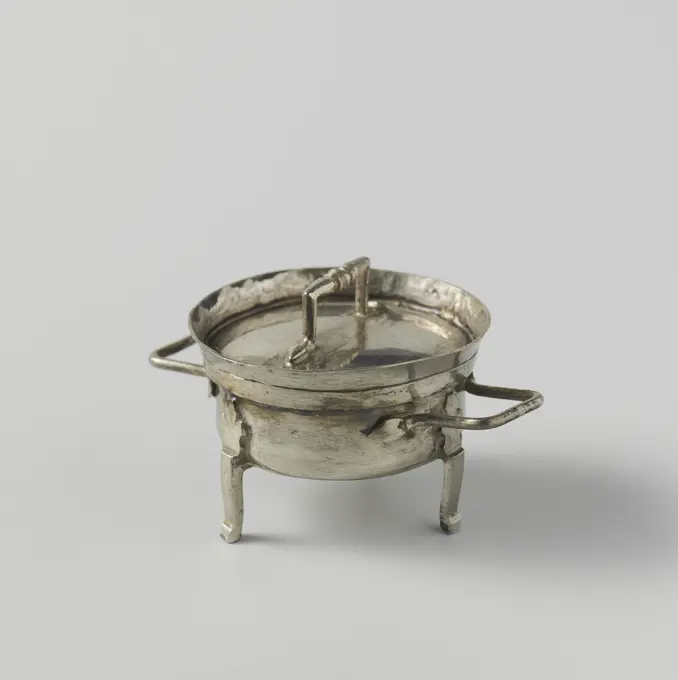
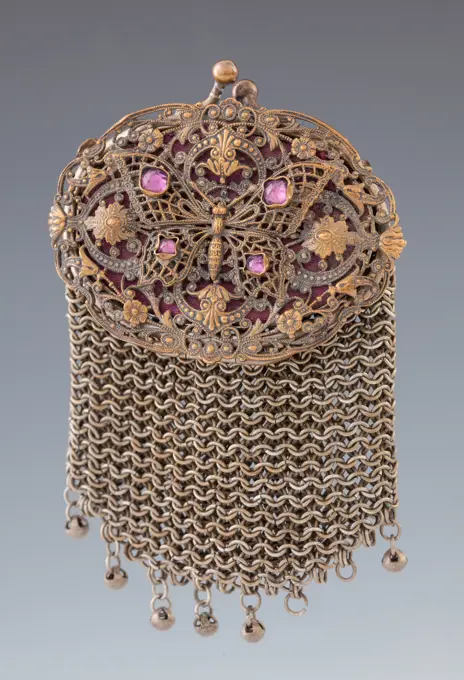
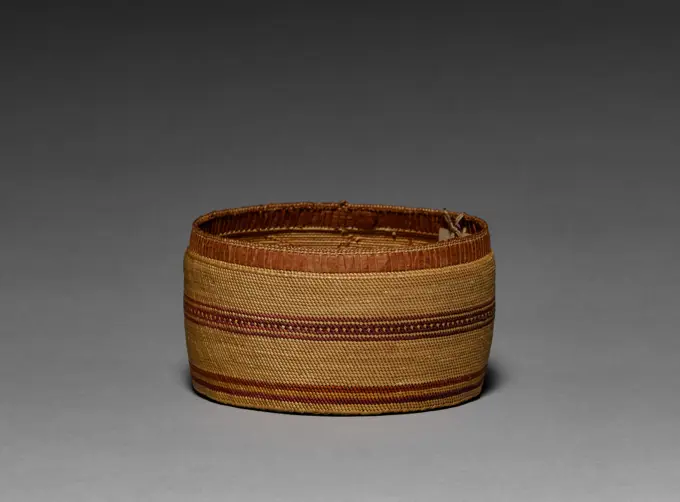
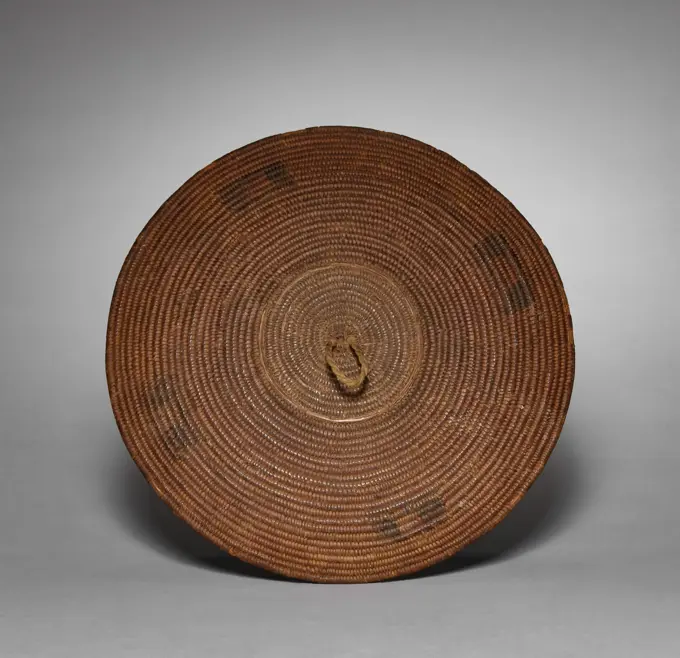
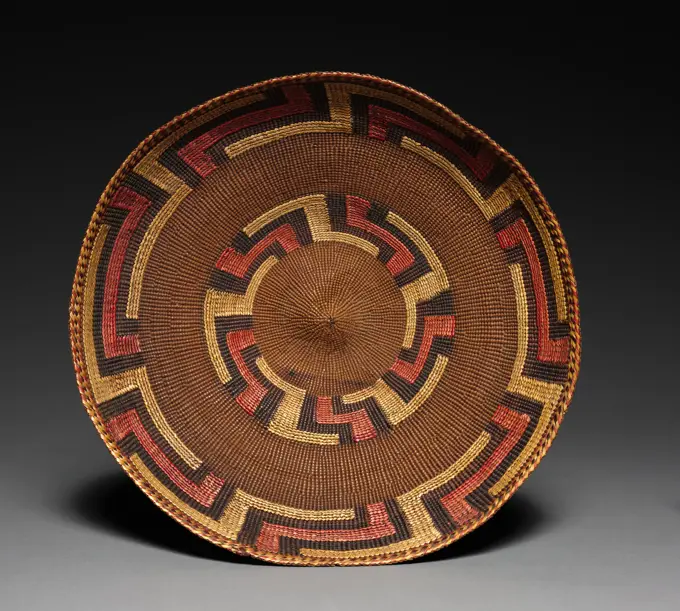
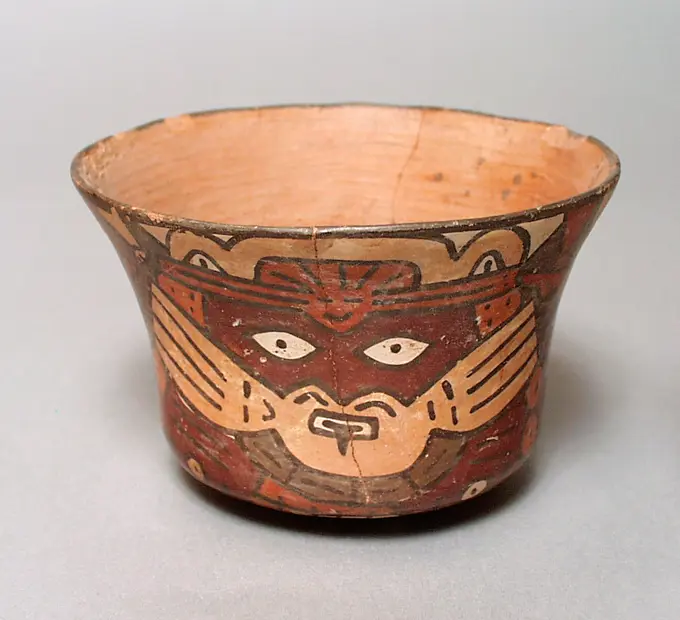
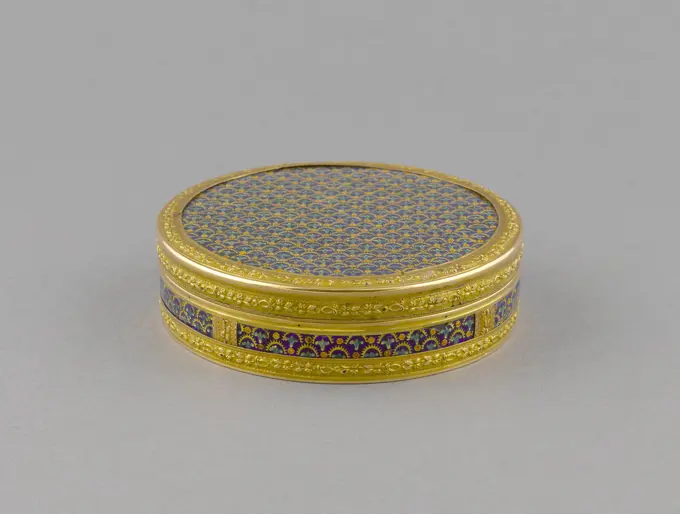
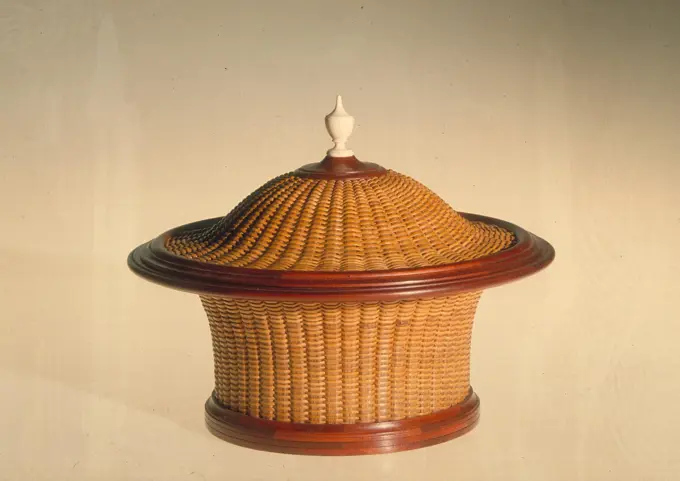
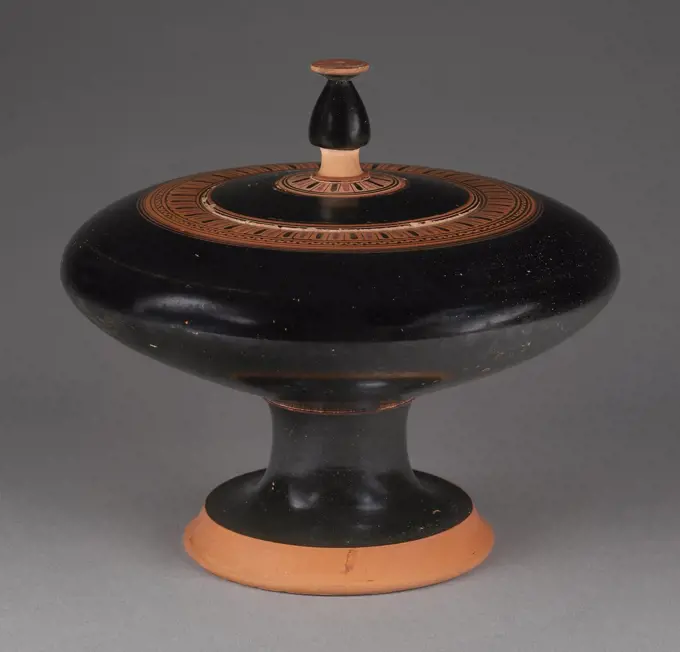
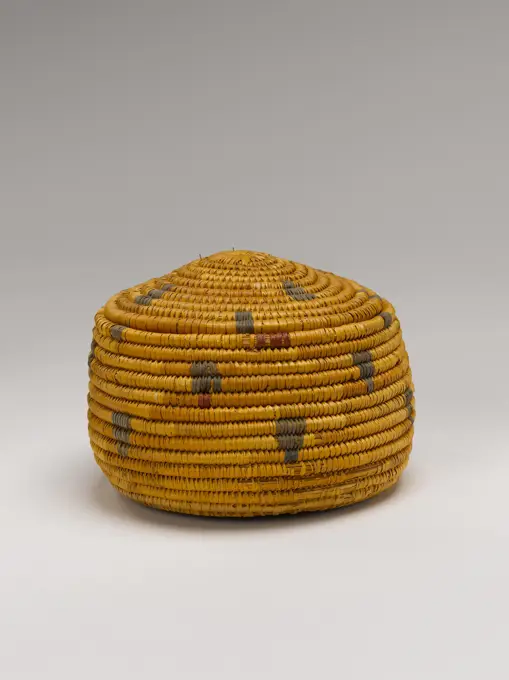
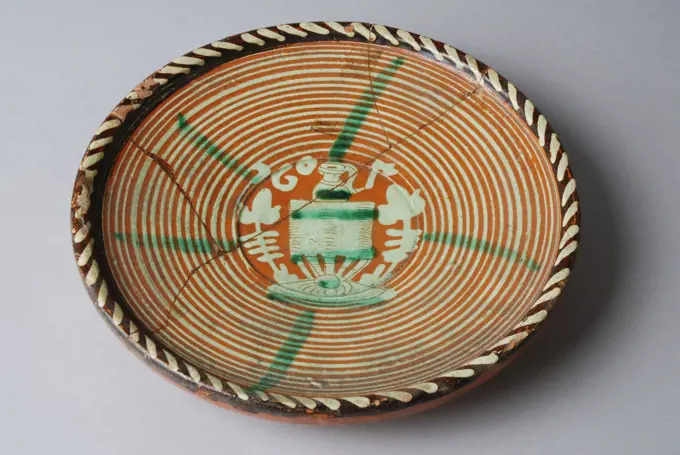
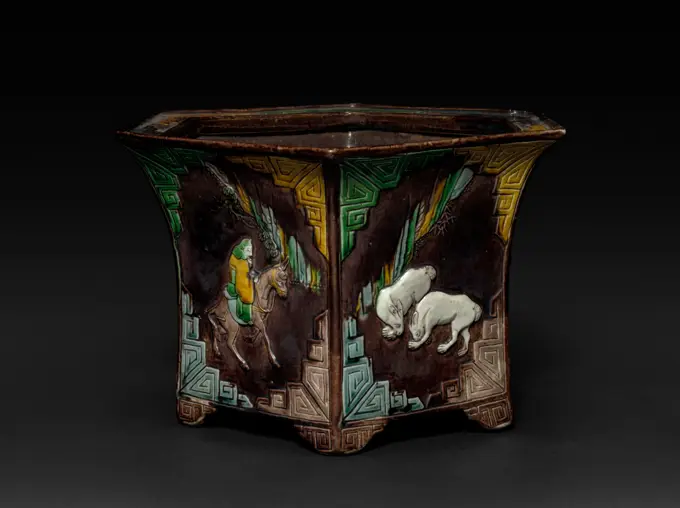
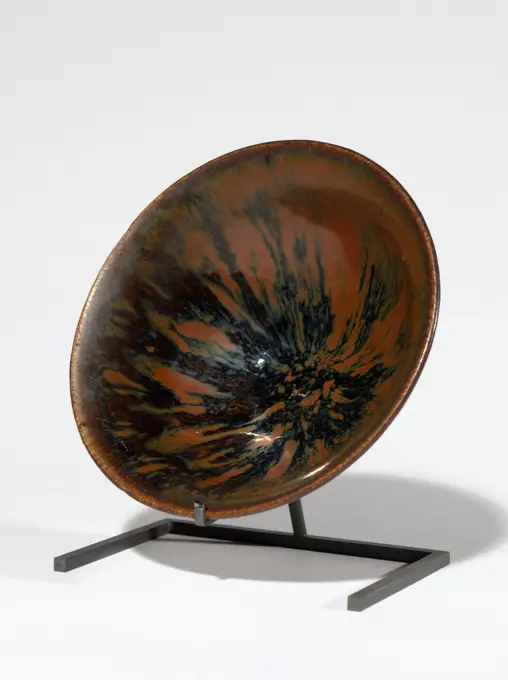
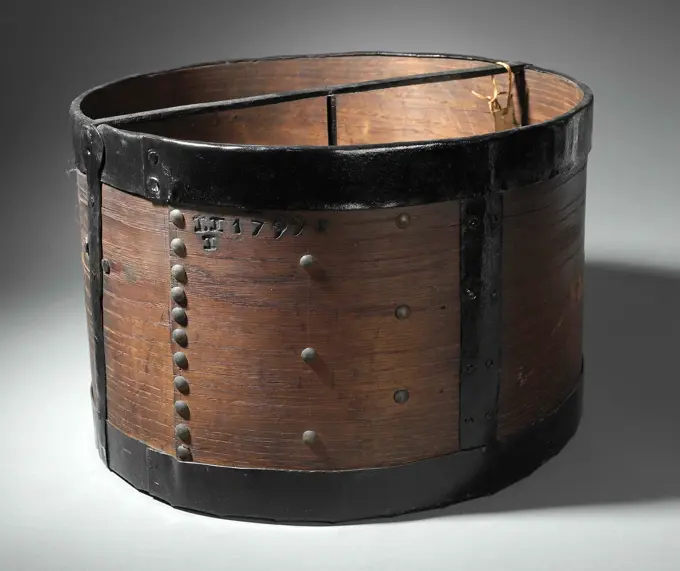
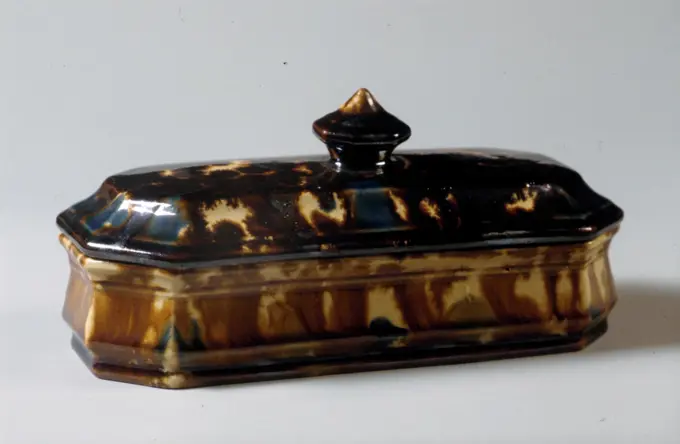
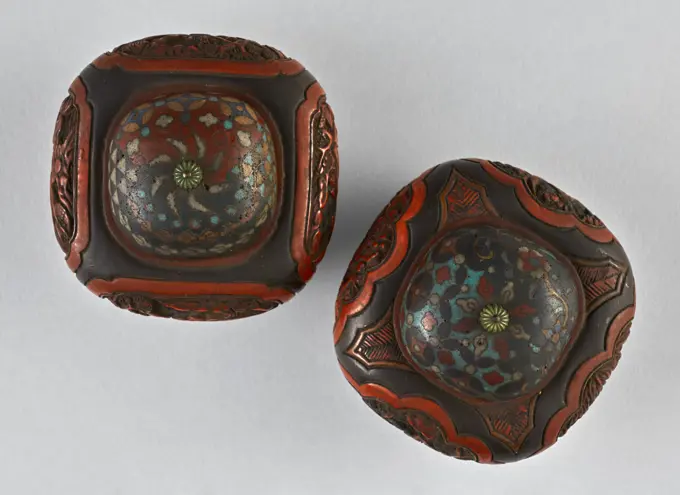
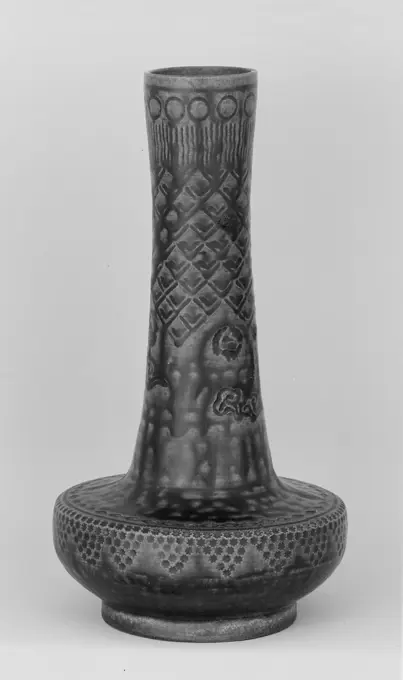
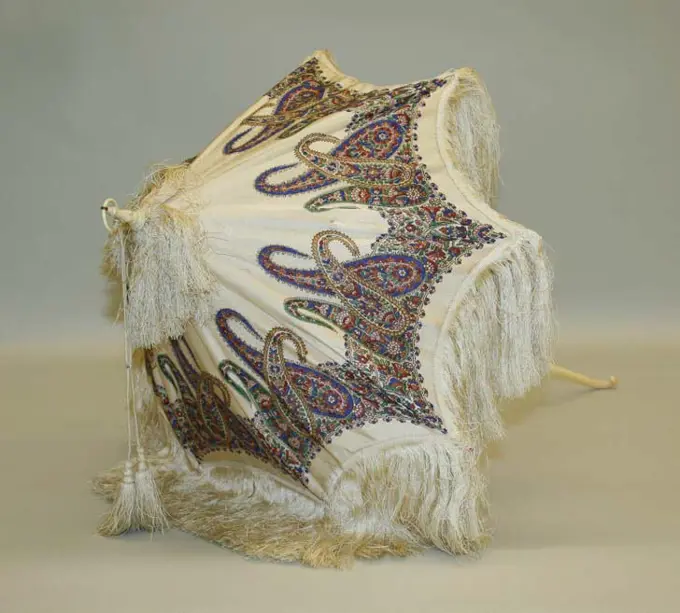
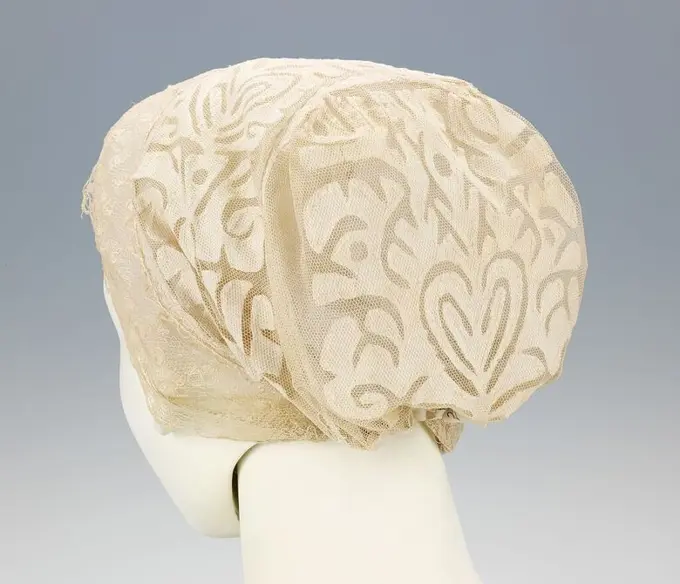
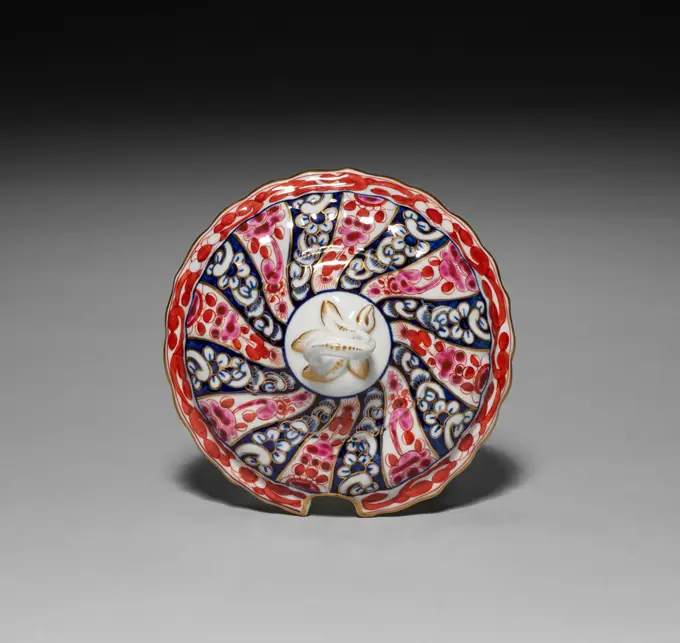
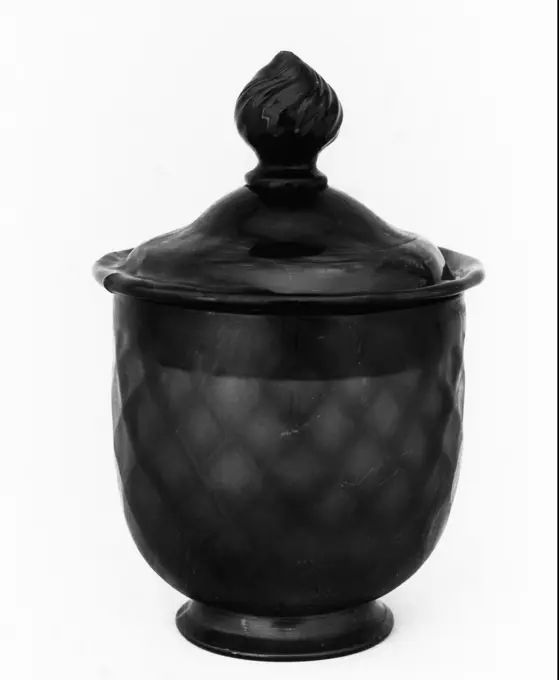
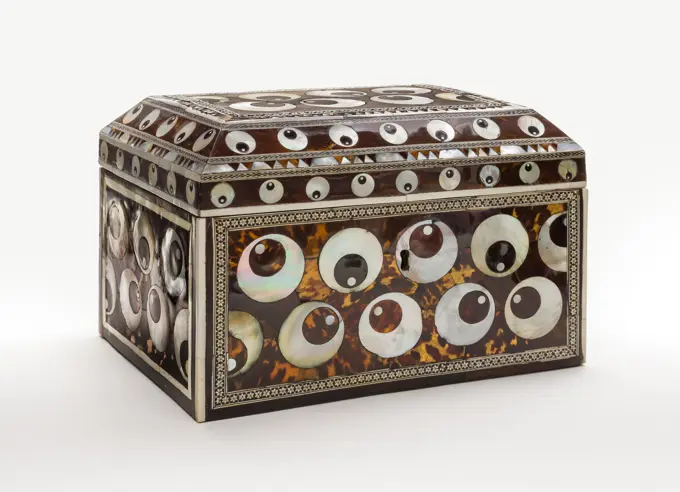
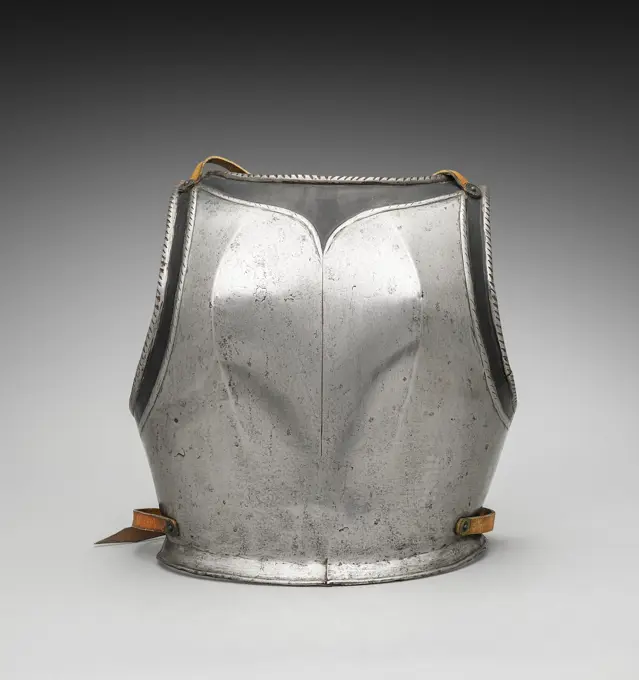
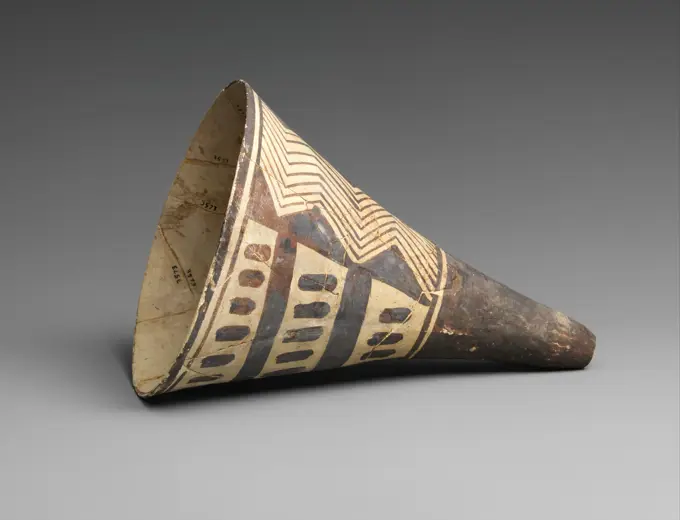
Incense Burner in the Shape of a Melon with Autumn Flowers and Grasses early 17th century Japan Although the naturalistic depiction of profuse autumn flowers and grasses is based on the Kdai-ji style, the meticulous quality of the technique of sprinkled gold on the black lacquer ground is characteristic of the craftsmanship of the early Edo period.. Incense Burner in the Shape of a Melon with Autumn Flowers and Grasses. Japan. early 17th century. Lacquer with sprinkled gold decoration in Kdaiji style; gilt-bronze cover. Edo period (1615-1868). LacquerGlass squat alabastron (perfume bottle). Culture: Greek, Eastern Mediterranean or Italian. Dimensions: H.: 4 1/8 in. (10.6 cm). Date: late 4th-early 3rd century B.C..Translucent cobalt blue, with handles in same color; trails in opaque yellow and opaque white.Very broad, thick rim-disk, made as a spiral coil around top of neck; cylindrical neck, tapering downwards; sloping shoulder; slightly elongated bell-shaped cylindrical body; almost flat bottom; on upper body, two vertical ring handles, with long tapering tails, applied over trail pattern.A yellow trail attached at upper edge of rim-disk; on body, alternating bands of yellow and white, tooled from top of body to undercurve at bottom into a regular feather pattern in twelve vertical panels with alternating upward and downward strokes, forming vertical indents in sides and large round loops at bottom and bottom.Body complete, but rim-disk broken and repaired, with part missing; dulling, pitting, and creamy iridescent weathering.Hexagonal charcoal burner with diaper patterns, anonymous, anonymous, c. 1700 - c. 1799 Hexagonal charcoal burner (hiire) of stoneware, partially covered with a crackled, gray glaze and painted in underly glaze blue. On the outer wall a wide band with servetwork with a narrower band with curl work underneath. Three notches in the foot ring. The inside and bottom are unglazed. Shino. Japan stoneware. glaze. cobalt (mineral) painting / vitrification Hexagonal charcoal burner (hiire) of stoneware, partially covered with a crackled, gray glaze and painted in underly glaze blue. On the outer wall a wide band with servetwork with a narrower band with curl work underneath. Three notches in the foot ring. The inside and bottom are unglazed. Shino. Japan stoneware. glaze. cobalt (mineral) painting / vitrificationDishTubular Fitting. China. Date: 399 BC-200 BC. Dimensions: H. 7.3 cm (2 7/8 in.); diam. 3.3 cm (1 5/16 in.). Bronze inlaid with silver. Origin: China. Museum: The Chicago Art Institute, Chicago, USA.Lidded Bowl, c 1900. Northwest Coast, Makah, late 19th century. Cedar bark, deer grass; wrapped twining; overall: 5.8 x 9 cm (2 5/16 x 3 9/16 in.).Crown A.D. 900-1100 Lambayeque (Sicán) Cylindrical crowns that taper gently in the middle were common in high-status tombs at Batán Grande, a site now called the Sicán Archaeological Precinct, in the Santuario Histórico Bosque de Pómac, about 40 kilometers northeast of the modern city of Chiclayo on Perus North Coast. Made of sheet metal—in this case, an alloy of 44 percent gold, 32 percent silver, and 24 percent copper—it was worked from behind (repoussé) and from the front into a textile-like stepped-diamond pattern contained within an upper and lower border of animals in profile. The ends of the sheet were joined by metal lacing, as if it were a cloth. The Sicán tombs, located deep in monumental mudbrick platforms, held nearly unimaginable quantities of objects made of precious metal, shell, and cloth. A single tomb could contain as many as five such crowns, some featuring delicate openwork, and others, such as the present example, displaying repoussé designs. The repoussé stepped-Bowl 1st-6th century Nasca. Bowl 309758Box with lychees 16th century China The English name for this sweet tropical fruit is derived from the Chinese lizhi. Lychees are understood to represent fertility and are also symbolic of love and romance. Small boxes of this type, used to hold incense, were also produced in metal and porcelain. Box with lychees 40232Brushpot (bitong) 1700-1799 China. Rootwood .Box with peonies. Culture: China. Dimensions: H. 2 3/4 in. (6.4 cm); Diam. 6 1/4 in. (15.9 cm). Date: 15th century.Frequently depicted in carved lacquer, peonies are an important symbol for honor, rank, royalty, and wealth. This box bears additional flowers along the sides: camellias, chrysanthemums, pomegranates, and tree peonies. It is one of several pieces in The Met collection with a six-character mark carved on the bottom reading "Made during the reign of the Yongle emperor" (Da Ming Yongle nian zhi). The use of marks like this, seen more commonly on ceramics, began in the early fifteenth century and continued in all media into the twentieth. Works so marked were likely produced for the court. Museum: Metropolitan Museum of Art, New York, USA.Anonymous / 'Case for the Vessel in the form of an Eagle'. 1650 - 1711. Leather, Wood, Metal, Cloth. Museum: Museo del Prado, Madrid, España.Dobachi (鉢) 19th century Japanese This type of bell is technically known as a resting bell, because it is supported on a stand, rather than being suspended. A bell differs from a gong because it vibrates most strongly at the edges; whereas a gong vibrates most strongly at the center.. Dobachi (鉢) 502115Covered Cosmetic Box with Chrysanthemum Flower Heads 1265-1299 Korea. Celadon-glazed stoneware with underglaze inlaid decoration of black and white clays .Stave Tankard 1746 Germany. Pewter and wood .Ceramic tripod vessel with feline representations, from Nicaragua. Dated 14th CenturySnuffbox ca. 1750-60 British Listen to experts illuminate this artwork's story Listen Play or pause #413. Retail Value. High and Low Supported by Bloomberg Philanthropies We're sorry, the transcript for this audio track is not available at this time. We are working to make it available as soon as possible.. Snuffbox. British. ca. 1750-60. Gold, enamel. Metalwork-Gold and PlatinumAnonymous / 'Case for sardonyx ewer'. 1650 - 1711. Leather, Wood, Metal, Cloth. Museum: Museo del Prado, Madrid, España.Terracotta plemochoe (vase for perfume). Culture: Greek, Attic. Dimensions: H. 6 3/4 in. (17.2 cm). Date: late 6th century B.C..The deeply incurving rim prevents liquid from spilling when the vase is carried. Containers of this type frequently appear in representations of women bathing, receiving gifts, or bringing offerings to a grave. Museum: Metropolitan Museum of Art, New York, USA.Cilidrical covered box in The Shape of a Cricket's Cage. Cylindrical box of porcelain, ending in a raised button as a lid knob. Painted in underglaze blue and on the glaze red, green, yellow and black. On the lid railing with loose flowers. Imari.Night cap late 16th-early 17th century British. Night cap 221706LimeContainerRocking crawling from gold-painted walnut. Rocking crawling from gold-painted walnut. A coat of arms with helmet sign, in the middle of flower branches, is embossed on the ripble shield. Internally the crib is covered with zinc to serve as a flower box.Terracotta onos (leg guard used in carding wool) last quarter of 6th century B.C. Greek, Attic On each side, two quadrigae (four-horse chariots)On the end, two draped figuresThis implement connected with wool-working is also known as an epinetron. Although most of the preserved examples date to the late sixth and early fifth centuries B.C., their popularity returned during the last quarter of the fifth century B.C. The decoration usually refers to the activities of women.. Terracotta onos (leg guard used in carding wool) 247224Ceramic tripod vessel with feline representations, from Nicaragua. Dated 14th CenturyBox, paper, glazed, Victorian painted cardboard box with carved ivory flowers under glass top., USA, 19th century, containers, Decorative Arts, BoxToilet set. The principal piece of this toilet set is a small chest of drawers with an attached mirror. This example was made in China, though its mirror follows an English design. It was commissioned by the Canton-based Dutch merchant Andreas Everardus van Braam Houckgeest as a gift for his daughter in the Netherlands; her initials are found on the accompanying toilet boxes.Crown. Culture: Lambayeque (Sicán). Dimensions: H. 8 1/4 in. (20.96 cm). Date: A.D. 900-1100. Museum: Metropolitan Museum of Art, New York, USA.Box with Pommel Scroll Design 14th century China The lush spirals carved into the lacquer illustrate a design commonly known as pommel scroll” because the bracket-like shapes resemble the pommel of a Chinese sword. This motif was popular in lacquer, ceramics, and metalwork in the thirteenth and fourteenth centuries and remained so in carved lacquer, as both a primary subject and as a decorative embellishment, for centuries.. Box with Pommel Scroll Design 40189Box with Design of Kiyomizudera. Culture: Japan. Dimensions: H. 1 1/16 in. (2.7 cm); W. 3 1/2 (8.9 cm); L. 5 in. (12.7 cm). Date: early 19th century.The temple and surrounding areas depicted on the lid of this box represent Kiyomizudera, or the Temple of Pure Water, a celebrated complex in the eastern part of Kyoto. As the name implies, the temple is located near a spring famed for the healing properties of its water. Kiyomizudera, which was founded in the late eighth century, has been a popular destination for centuries and was often visited in the spring, when the nearby cherry trees were in full bloom. Museum: Metropolitan Museum of Art, New York, USA.Ninsei-style Serving Container (Mukōzuke) 19th century Japan. Ninsei-style Serving Container (Mukōzuke) 63034Lobed Vase with Stylized Floral Scrolls. Korea. Date: 1101-1200. Dimensions: H. 11 3/8 in. Stoneware with celadon glaze and underglaze painted decoration. Origin: Korea. Museum: The Chicago Art Institute, Chicago, USA.Jar with Chrysanthemum Decoration: Fahua Ware (base), 1368-1644. China, Ming dynasty (1368-1644). Porcelain; overall: 33.4 cm (13 1/8 in.).Box, 19th Century. China, Qing dynasty (1644-1911). Silver gilt; diameter: 6.1 cm (2 3/8 in.).Anonymous / 'Case for heliotrope drinking vessel with cover and gold handles'. Ca. 1610. Leather, Wood, Metal, Velvet. Museum: Museo del Prado, Madrid, España.Cloud-Shaped Pillow with Fish. China. Date: 1100-1234. Dimensions: . Cizhou ware; stoneware, slip-coated, with underglaze painting in iron brown slip. Origin: China. Museum: The Chicago Art Institute, USA.Terracotta kylix (drinking cup) ca. 540-520 B.C. Attributed to the Group of the Phineus Painter Obverse and reverse, large eyes and animal ears.. Terracotta kylix (drinking cup) 246583Headrest, 20th century, 6 x 6 1/8 x 5 9/16 in. (15.2 x 15.6 x 14.1 cm), Wood, Ethiopia, 20th centuryHorse EyePlateLarge box of singing shape, in a scales encrusted with gold and mother -of -pearl with, on the Persée and Andromède cover. Italy (probably at the Sarao workshop in Naples), 1720-1740. Paris, Cognacq-Jay museum. The decor of the cover of this box represents perseus delivering Andromède. On the left, we can see the parents of it in the grip of their despair. In the center, the heroine is attached to a tree, on a rock emerging from the waves that the monster split. At the top right, Persée mounted on Pegasus and brandishing the mask of the Gorgon, is about to release Andromède. On the board alternate landscape elements, characters and medallions with busts that it is difficult to relate to the main scene. Garten, Chantournee shape, large box, Greek mythological hero, gold encrusted, mother -of -pearlBox and stand, Wood, cinnabar, Stacking box, China, 19th century, containers, Decorative Arts, Box and standSquat Alabastron. UnknownSnuffbox 1762-63 Jean Georges (or George) In eighteenth-century Europe, Paris led the production of high-quality luxury goods. Parisian goldsmiths made a wide range of small, personal articles such as snuffboxes; étuis to hold sealing wax, tweezers, or utensils for sewing; souvenirs, which contained thin ivory tablets for note taking; and shuttles for knotting lace. Gold snuffboxes and boxes decorated with portrait miniatures were prized and frequently given as royal gifts, often to ambassadors or members of the court in lieu of cash payments for their services. Coveted and admired, these boxes were produced from a variety of materials. The best were skillfully made of gold and embellished with diamonds, enameled decoration, lacquer, and other luxurious materials. By the middle of the century, the taking of snuff had become an entrenched social ritual, and the snuffbox, too, had become an important social prop. Snuffboxes were considered highly fashionable accessories, with some merchaBase of Lidded Vessel 16th-19th century Edo peoples At its origins, the centralized city-state of Benin was founded by Edo-speaking peoples. The accounts by official court historians and descriptions provided by visitors evoke a vibrant cultural center continually redefined by its leadership through shifting internal and external power dynamics. According to oral tradition, circa 1300, Edo chiefs are reputed to have reached out to the leader of neighboring Ife, Oranmiyan, to establish a new divinely sanctioned royal dynasty. Since then, the investiture of Benins rulers to the title of obas has conferred upon them at once a role of chief priest officiating in important religious ceremonies and presiding over an elaborate structure of palace officials. During the fifteenth century reign of Oba Ewuare, Benins armies were formed and the fortification of its capital with a massive wall undertaken. In parallel, delegations of Portuguese traders assiduously sought to secure exclusive commer1 Schepel from Groenlo. Wooden and iron content sizes for dry goods with bridge and style of 1 Schepel, v.z.v. stamp and labels.Czarka; unpredictable Lona Manufaktura; 16th century (1500-00-00-1600-00-00);Square shaped vessel with spout and upturnedlid.  Artist: UnknownInner box of glass, anonymous, c. 1920 Inner box of glass, hiring with a handle basket of silver. Vienna glass Inner box of glass, hiring with a handle basket of silver. Vienna glassTortoise octagonal box. Right-sided box of turtle mounted with copper. With copper button on the lid.Maker Unknown, Cover with Arched Handle from the George Washington Memorial Service, c. 1800, porcelain, enamel, and gilding.Cooking pot with lid, anonymous, c. 1675 - c. 1700 Cook pot on three legs and with two handles with lid. The pan has a lid for an upper fire. The rectangular handle of the lid is profiled in the middle. The pan has a high raised edge with an engraved line in the middle. The pan is marked: twice an eight -pointed star or flower. Amsterdam silver (metal) Cook pot on three legs and with two handles with lid. The pan has a lid for an upper fire. The rectangular handle of the lid is profiled in the middle. The pan has a high raised edge with an engraved line in the middle. The pan is marked: twice an eight -pointed star or flower. Amsterdam silver (metal)BagNutmeg grater ca. 1690 British. Nutmeg grater 205040Roller Seal 800 BCE-400 BCE México. Ceramic and pigment . OlmecBowl, c 1900. Northwest Coast, Makah, late 19th century. Cedar bark, deer grass; wrapped twining; overall: 5.8 x 9 cm (2 5/16 x 3 9/16 in.).Pot Lid, 1900s. Southern Africa, South Africa, Zulu, mid-20th century. Plant fiber; diameter: 45.7 cm (18 in.); overall: 33 cm (13 in.). This large, beautifully shaped vessel was used for the serving of beer, an essential component of Zulu hospitality. Undecorated vessels were for private household use, and ornamented examples were reserved for guests. Zulu pottery is produced by women, and is typically thin-walled, with a burnished black surface. Decoration may be incised around the shoulder, as in this example, or may consist of raised bumps that resemble body scarification. The basketry lid protects the vessel's contents from flies or debris; contemporary pot lids are often woven of telephone wire with a colorful plastic coatingTerracotta stemmed plate. Culture: Greek, South Italian, Campanian, Teano. Dimensions: Other: 2 1/8 x 4 3/8 in. (5.4 x 11.1 cm). Date: ca. 330-300 B.C..Shallow dish with tall foot, decorated with ivy vine and stamped pattern. Museum: Metropolitan Museum of Art, New York, USA.Brass design fitting on antique wooden box, Jodhpur, Rajasthan, India Copyright: xSafatxAli/DinodiaxPhotoxJoseph Etienne Blerzy (master in 1768). Candy. Now chiseled and guilloche and enamelled innen colored with translucent enamel ornaments. 1777-1778. Paris, Cognacq-Jay museum. 36974-2 Candy box, candy, eggplant color, translucent email, guilloche, art, gold object, gold chisel, orfevrery, ornamentMajolica dish, polychrome, rosette in the middle, one large flower over the entire plate, plate crockery holder soil find ceramic earthenware glaze, baked underside covered with green tinted and rather gritty lead glaze. Polychrome. Italian Dutch decor. Pink red shard scraped pottery archeology decorate serving food ItalyMACETA VIDRIADA Y DECORADACION DE DIGITACION - FORMA TRONCOCONICA. Location: ALFARERIA. TAJUECO. Soria. SPAIN.Brush pot with poem 1716 Attributed to Wang Shihong. Brush pot with poem 666568Pillow, 10th-13th century, 4 9/16 x 11 3/4 x 9 in. (11.59 x 29.85 x 22.86 cm), Cizhou ware Stoneware with painted and incised black slip on white slip under clear glaze, China, 10th-13th centuryCylindrical Coil Basket and Lid. Dimensions: Basket: H. 10.6 cm (4 6/16 in.); Diam. 11 cm (4 5/16 in.)Lid: H. 3.2 cm (1 1/4 in.); Diam. 13 cm (5 1/8 in.). Dynasty: Dynasty 11. Date: ca. 2124-2000 B.C..This cylindrical basket with a matching lid was found to the right of the door of an Eleventh Dynasty tomb. Nested inside the basket was another smaller basket of similar shape. When the excavators opened the two containers, they were surprised to find a small collection of personal objects, including bits of malachite wrapped in a piece of linen cloth, a lump of wax, raisins, several pieces of aromatic wood, and a bundle of plant fiber. To the left of the tomb entrance two "wands" made of hippopotamus tusks had been deposited, one plain and one carved with apotropaic figures. The presence of these rare implements may indicate that they and the curious set of items in the baskets were used in a ritual performed in front of the tomb.The basket was made using the coiling technique, the m. Octagonal elongated box with both above and under flattened sides.Volute-krater fragment ca. 360-340 B.C. Greek, South Italian, Apulian. Volute-krater fragment. Greek, South Italian, Apulian. ca. 360-340 B.C.. Terracotta; red-figure. Late Classical. VasesKobako 17th century Japan. Kobako 57945Tray, late 1800's. Northwest Coast, Tlingit, late 19th century. Spruce root, Beach grass; twined; overall: 6 x 24.5 cm (2 3/8 x 9 5/8 in.).Flower Basket second half of the 19th century Japan. Flower Basket. Japan. second half of the 19th century. Bamboo. Meiji period (1868-1912). BasketryWash basin with legs, 1353 or 1413, Unknown Japanese, 6 5/16 × 12 13/16 × 13 in. (16.03 × 32.54 × 33.02 cm), Negoro ware; red and black lacquer on zelkova (keyaki) wood, Japan, 15th century, The underside of this ceremonial wash basin (tarai), used for rinsing ones hands in preparation for Buddhist ritual, is inscribed with the name Sanshitsubō (perhaps indicating the location at which it was used) and a cyclical date that corresponds to either 1353 or 1413 making this one of the oldest Negoro wash basins of its type in existence todayNapkin Ring with Flowers, early 1900s. Japan, Meiji period (1868-1912) or Taishō period (1912-26). Cloisonne enamel; diameter: 2.7 x 5.2 cm (1 1/16 x 2 1/16 in.).Nazca BowlBox. Now enamelled with patterns imitating peacock feathers. France, 1784-1789. Paris, Cognacq-Jay museum. 36968-5 Box, pattern, object art, gold emaille, goldenry, peacock featherCharm Bag ca. 1875 Ojibwa. Charm Bag 319103Coveredbasket.   Maker: Harry A. Hilbert, American, 1917-2010Exaleiptron; Unknown; Athens, Greece, Europe; about 500 B.C.; Terracotta; Various, see extensionsCircular Basket with Lid ca. 1525-1504 B.C. New Kingdom. Circular Basket with Lid. ca. 1525-1504 B.C.. Grass, palm leaf. New Kingdom. From Egypt, Upper Egypt, Thebes, Deir el-Bahri, Tomb of Meritamun (TT 358, MMA 65), corridor, MMA excavations, 1928-29. Dynasty 18Snuff Bottle. Culture: China. Dimensions: H. 3 1/2 in. (8.9 cm). Museum: Metropolitan Museum of Art, New York, USA.Earthenware plate with white mud decoration and green stripes, sgraffito, dated 1607, plate dish crockery holder soil find ceramic earthenware glaze lead glaze clay, hand turned decorated ringed sgraffito glazed fried Layer plate on stand. Red shard glazed only on the top Decorated in sludge and sgraffito technique Decoration consists of rope motif along the saucer edge yellow circles across the entire flag in the mirror jug on table flanked by plants and year of year in the mirror: 1607 sloppily written archeology City Triangle Rotterdam Town Hall of Amsterdam indigenous import import serving food decorate table Many Werra earthenware has been found at the Council House in Rotterdam.Cachepot, 1662-1722. China, Qing dynasty (1644-1911), Kangxi reign (1661-1722). Porcelain; overall: 16 x 26.8 cm (6 5/16 x 10 9/16 in.).Snuffbox ca. 1775 D.M.C., Switzerland. Snuffbox. Swiss. ca. 1775. Gold. Metalwork-Gold and PlatinumFragment of a jug with masks, chip carving and stylized floral scrolls, anonymous, c. 1600 - c. 1749 Fragment of a jug of stoneware. The shard is unglazed and includes the neck and part of the shoulder. The shoulder is divided into courses with alternating notch cuts and a narrow compartment with a stamped flower drink. Above that a band with stylized flower vines. The neck is also divided into courses with alternating in relief a printed and imposed mask and a stamped flower drink. Profiles on the neck and shoulder. Westerwald . Westerwald (possibly) stoneware Fragment of a jug of stoneware. The shard is unglazed and includes the neck and part of the shoulder. The shoulder is divided into courses with alternating notch cuts and a narrow compartment with a stamped flower drink. Above that a band with stylized flower vines. The neck is also divided into courses with alternating in relief a printed and imposed mask and a stamped flower drink. Profiles on the neck and shoulder. WesterwaldJar, 1895. Butterbread Family. Sumac, Yucca root; coiled, skip- stich; overall: 10 x 12.8 cm (3 15/16 x 5 1/16 in.).Vase (hanaire), 18th century, Style of Nonomura Ninsei, Japanese, act. c. 1646-1694, 8 1/8 x 4 1/2 in. (20.6 x 11.43 cm), Kyoto ware; stoneware with iron glaze, Japan, 18th century, Nonomura Ninsei produced refined pottery decorated with colorful enamels and his style exerted enormous influence on other ceramists active in Kyoto during the seventeenth and eighteenth centuries. In addition to this highly decorative style, Ninsei also created a number of works that more closely reflected the subtle styles traditionally associated with the tea ceremony. This tall flower vase reflects his interest in earlier ceramics produced in Seto, near Nagoya. The thick application of iron rich glaze resulted in a deep brown surface and the interesting 'accidental' drip effect.Drom, old model of the arches. Groom of the militia. The brass boiler is provided with a veal sheet on both sides, held by a hoop and tense by means of a tensioner with tractors and screws. Both hoops are decorated with a motif of triangles in the colors red, white and blue. With engraved numbers: 1846-34.Tea bowl. Terracotta with brown covered with metal reflection. China, Song Dynasty. Paris, Cernuschi museum. 72776-20 Asian art, Bol A The, Ancient Ceramic, Covered, Song Dynasty, Email, glacide, Chinese object, Chinese pottery, Terracotta, Xeme X 10th 10th 10th century, Xieme Xie 11th 11th 11th 11th century XII 12th 12th 12 CENTURYBox -1 Schepel from Vianen. Chips and iron content sizes for dry goods with bridge and style of 1 Schepel, v.z.v. stamp and labels.Covered Toilet Box 1849-58 United States Pottery Company. Covered Toilet Box. American. 1849-58. Mottled brown earthenware. Made in Bennington, Vermont, United StatesAnonymous. Petit Palais, Museum of Fine Arts of the City of Paris.Vase 18th century Japan. Vase. Japan. 18th century. Pottery incised and covered with glaze (Shidoro ware). Edo period (1615-1868). CeramicsParasol 1860s American. Parasol. American. 1860s. silk, ivory, metalCap. Culture: Slovak. Date: 1850-80. Museum: Metropolitan Museum of Art, New York, USA.Cover for a Bowl, c. 1770. Worcester Porcelain Factory (British, established 1751). Porcelain; overall: 12.7 x 14.6 cm (5 x 5 3/4 in.).Nightcap; silk, metallic yarn (metal foil wound around silk core) and flat foil stripsCovered Sugar Bowl 1780-1820 American or British. Covered Sugar Bowl 2478Box. Turkey, Ottoman, circa 1640. Wood. Tortoiseshell, mother-of-pearl, wood, ivory and bone inlaySoap boxBackplate, c.1550-1570. Germany, 16th century. Iron, steel, leather and brass rivets; overall: 34.5 x 20 x 31.2 cm (13 9/16 x 7 7/8 x 12 5/16 in.).Cone-shaped vase with geometric decoration ca. 4500-4100 B.C. Iran This cone-shaped pot comes from a site near Persepolis called Tall-i Bakun A. Excavations conducted at the site in 1932 uncovered large amounts of prehistoric pottery, much of it in the form of complete, undamaged vessels still in place in storerooms, suggesting that the village was hastily abandoned in the ancient past. Like much of the pottery from Iran in the Chalcolithic Period (ca. 5500-3000 B.C.), ceramics from Tall-i Bakun A are remarkably varied in both form and decoration, attesting to the skill and creativity of the artisans in this early period. Conical vessels such as this one are among the most finely made, with almost eggshell-thin walls and crisply painted geometric decoration. A group of conical cups was stored in one room at the site with some nested in each other, suggesting they were used as a set. The sharply tapered end would not allow it to stand and hold liquid at the same time, so it must have be