Exquisite Asian Artifacts

Delicate and intricately designed Asian pieces, including incense burners and pottery, highlighting cultural craftsmanship and historical significance.
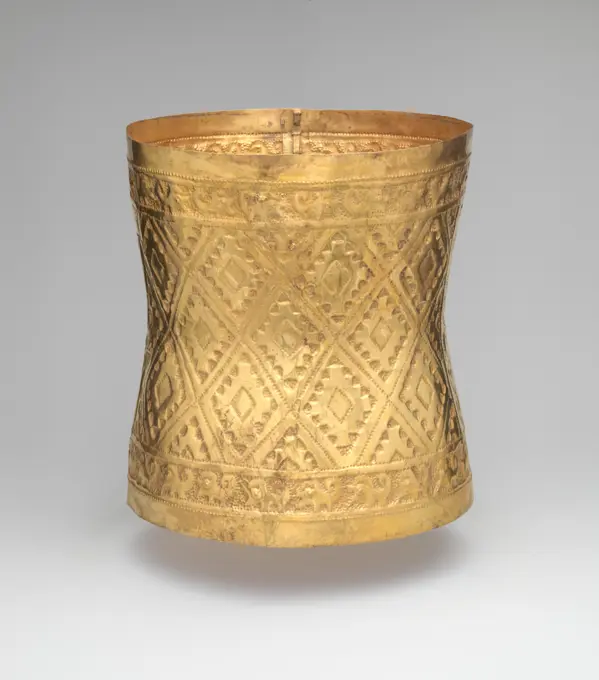
Crown A.D. 900-1100 Lambayeque (Sicán) Cylindrical crowns that taper gently in the middle were common in high-status tombs at Batán Grande, a site now called the Sicán Archaeological Precinct, in the Santuario Histórico Bosque de Pómac, about 40 kilometers northeast of the modern city of Chiclayo on Perus North Coast. Made of sheet metal—in this case, an alloy of 44 percent gold, 32 percent silver, and 24 percent copper—it was worked from behind (repoussé) and from the front into a textile-like stepped-diamond pattern contained within an upper and lower border of animals in profile. The ends of the sheet were joined by metal lacing, as if it were a cloth. The Sicán tombs, located deep in monumental mudbrick platforms, held nearly unimaginable quantities of objects made of precious metal, shell, and cloth. A single tomb could contain as many as five such crowns, some featuring delicate openwork, and others, such as the present example, displaying repoussé designs. The repoussé stepped-
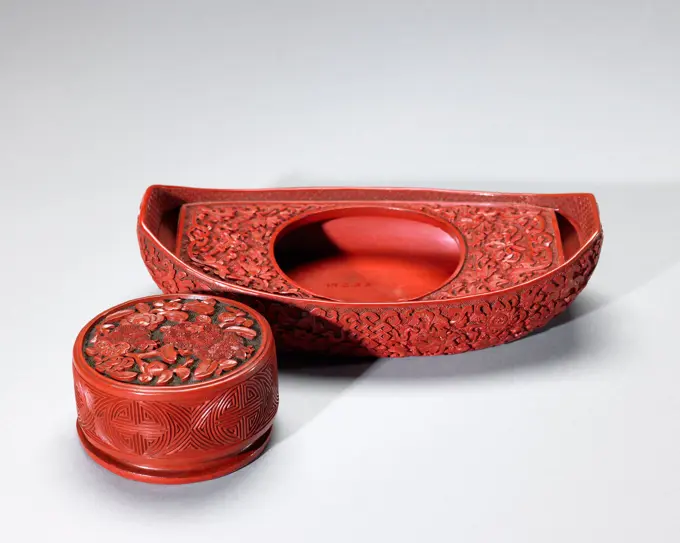
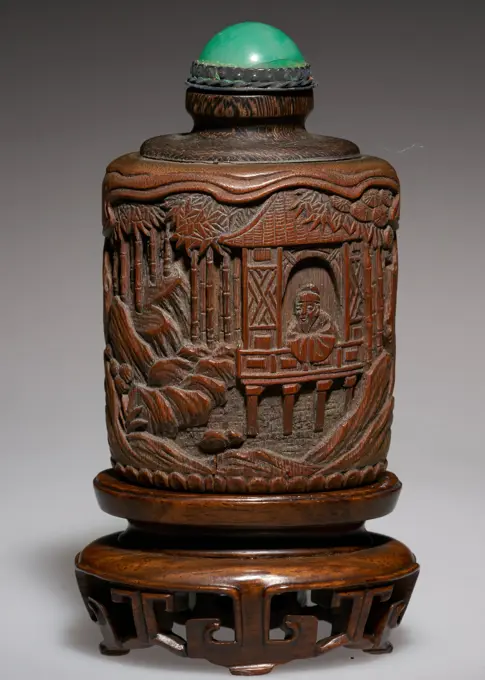
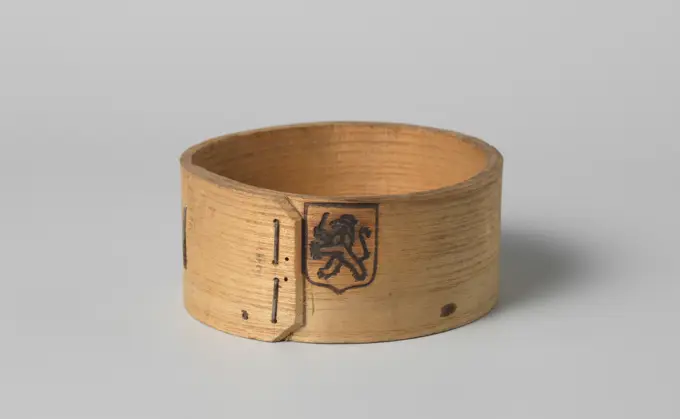
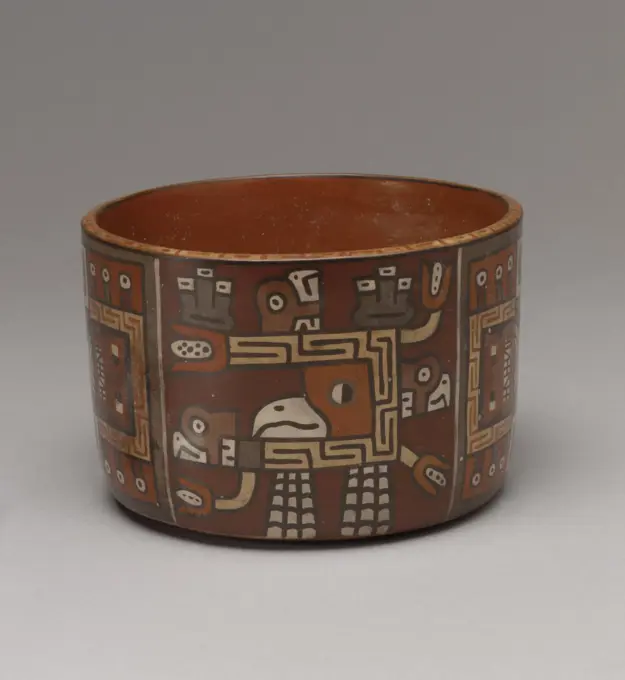
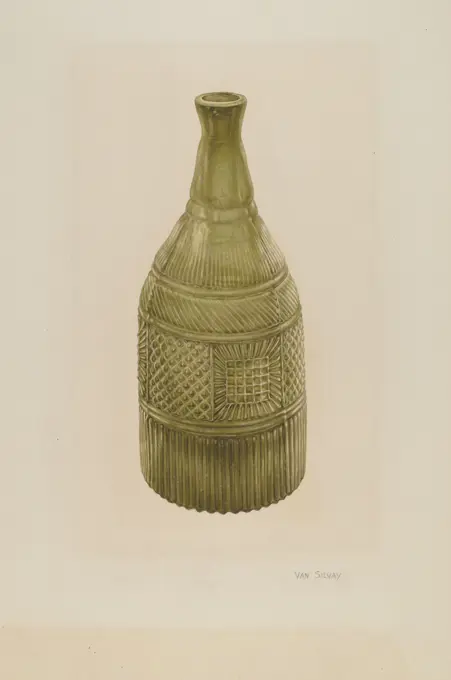
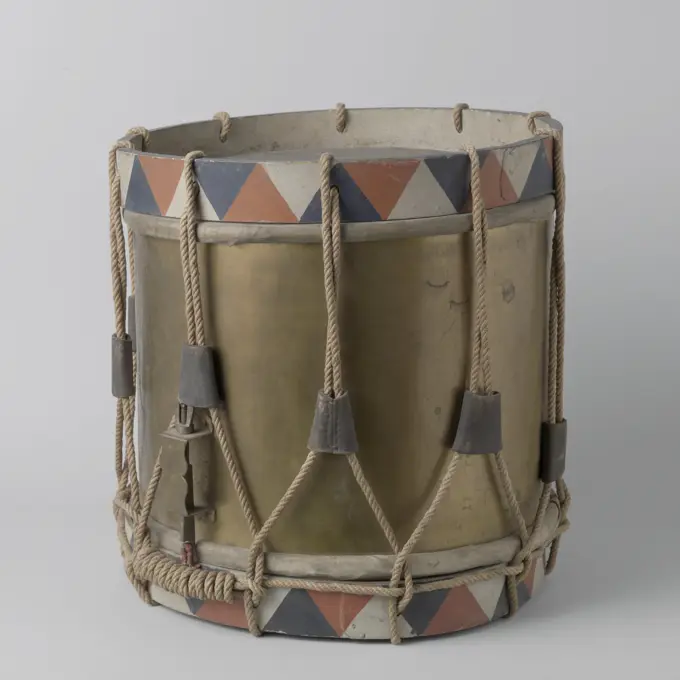
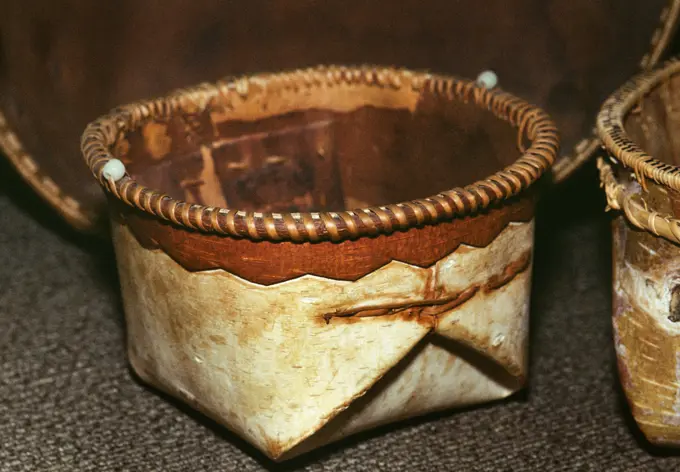
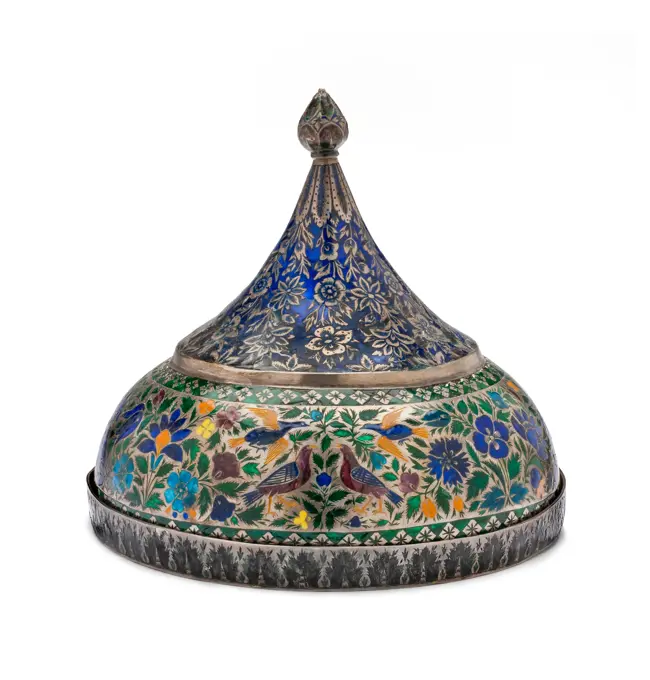
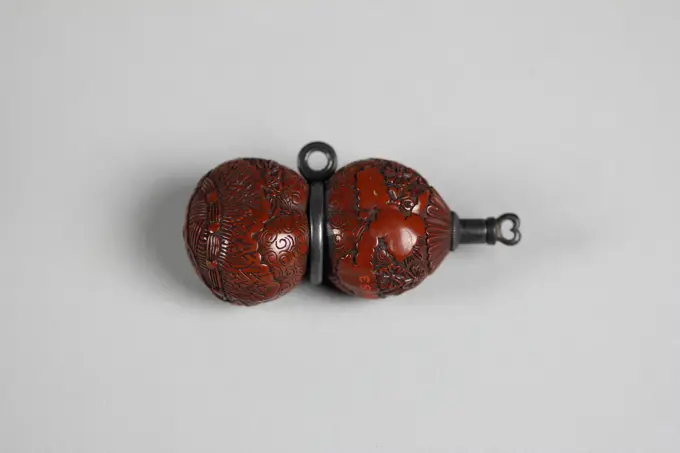
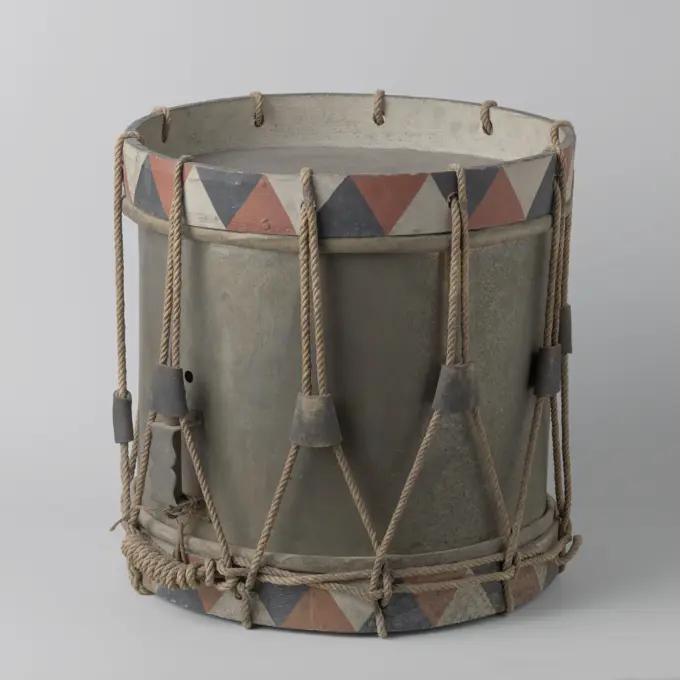
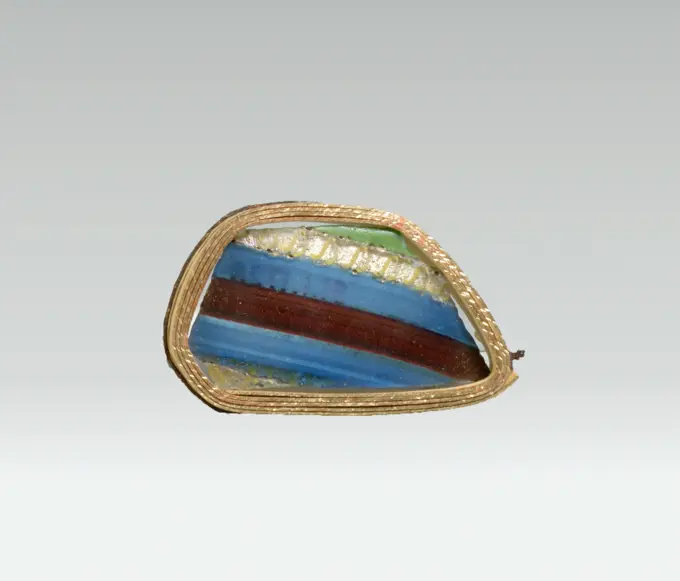
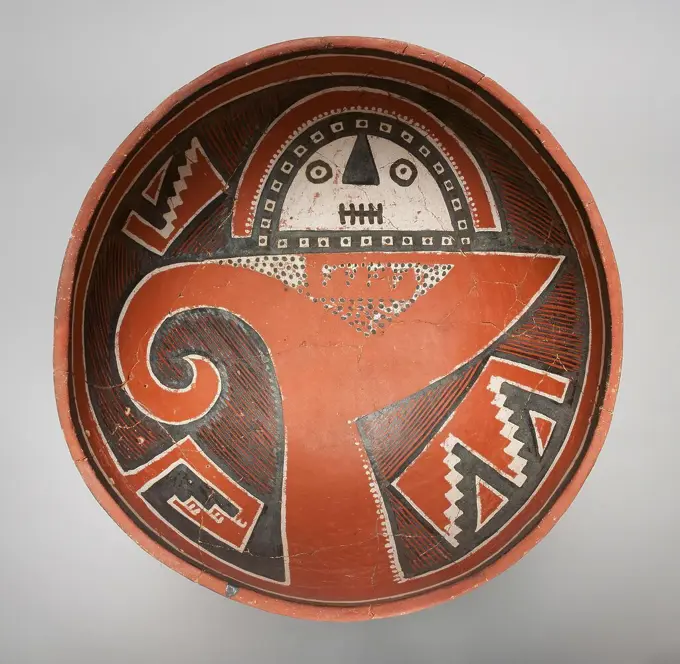
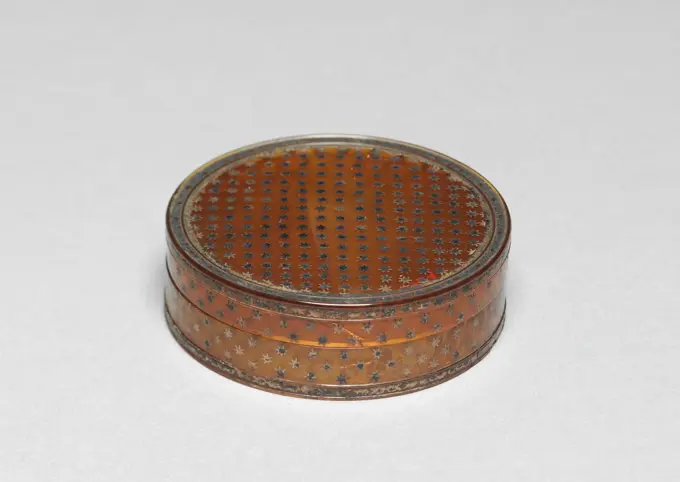
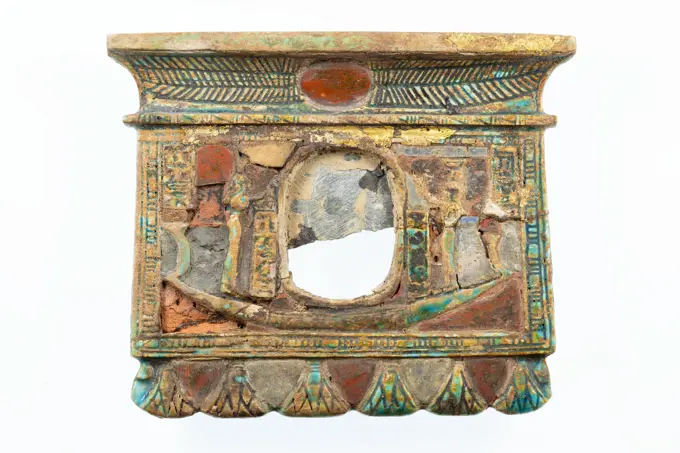
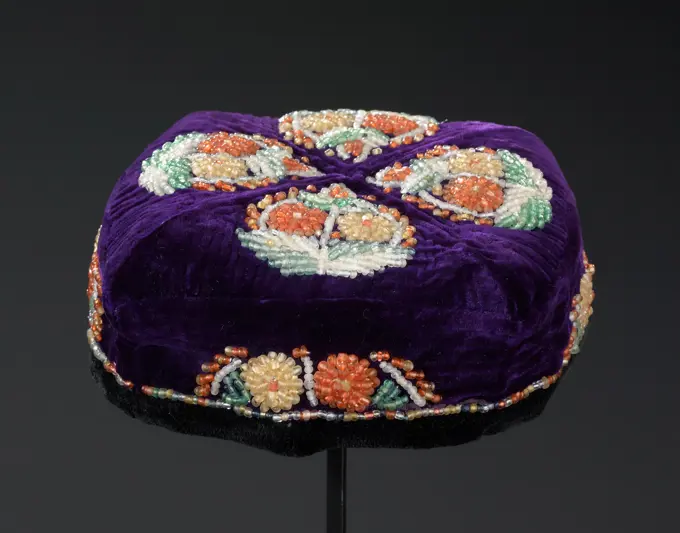
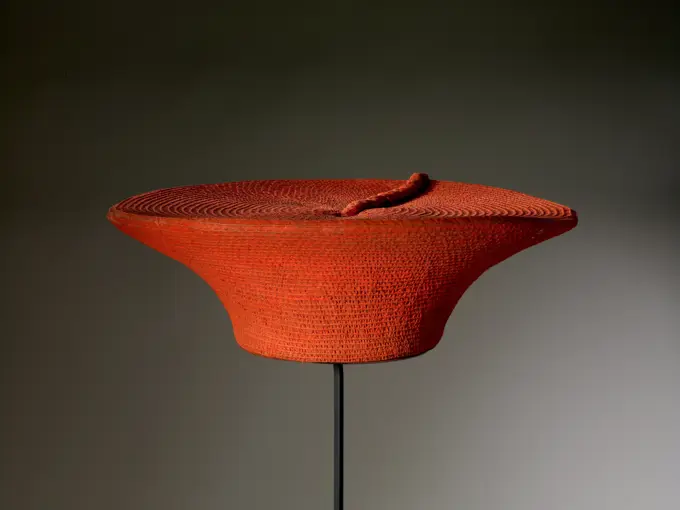
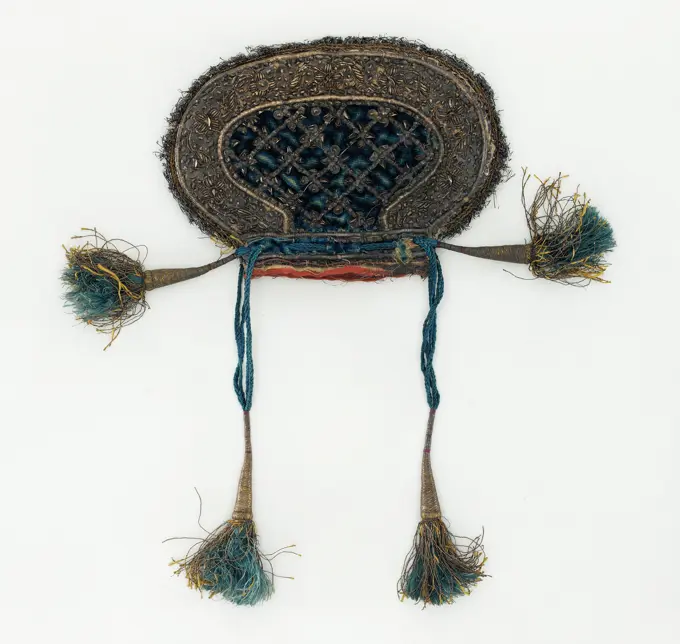
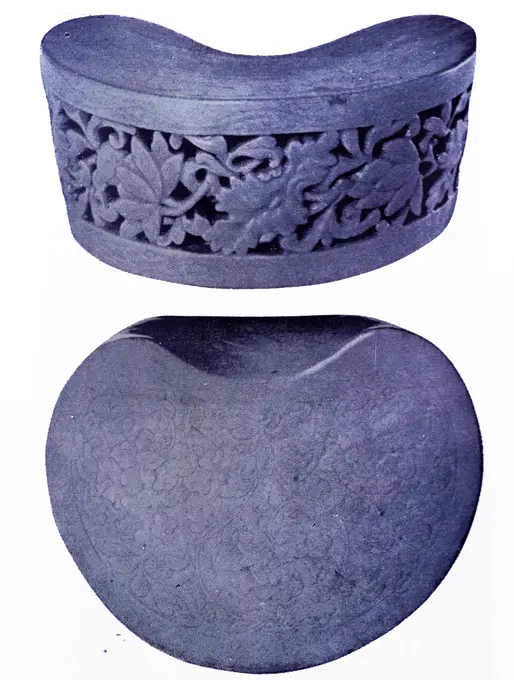
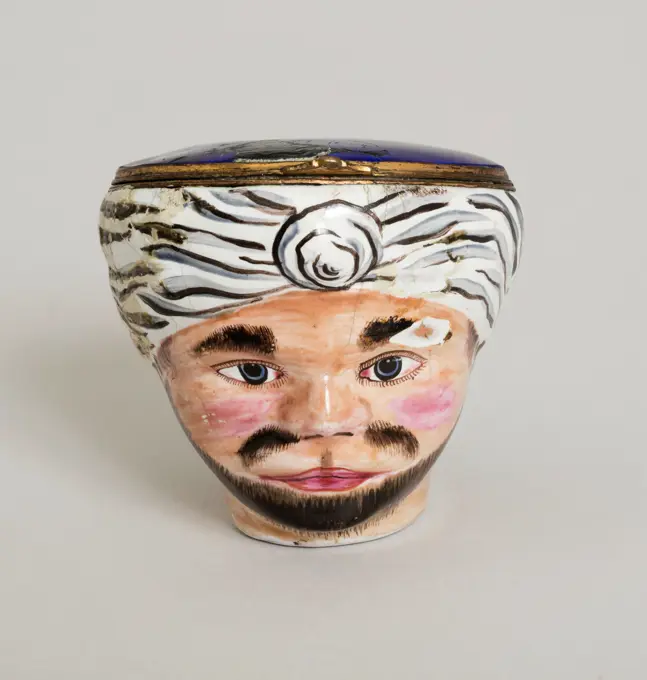
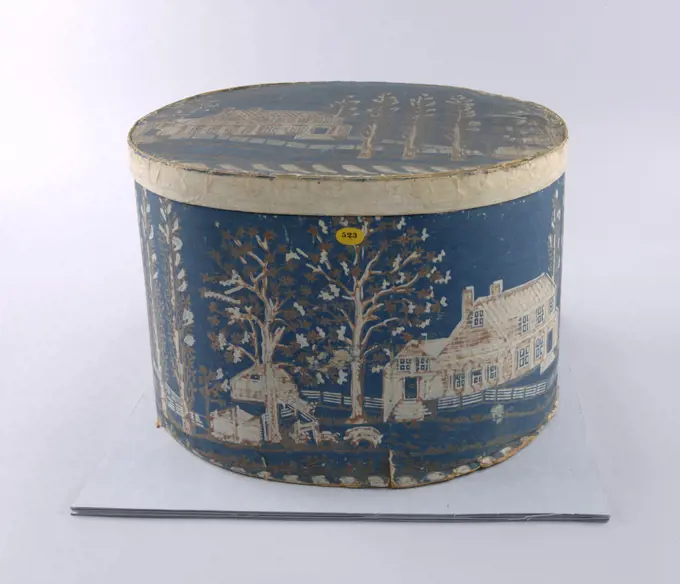
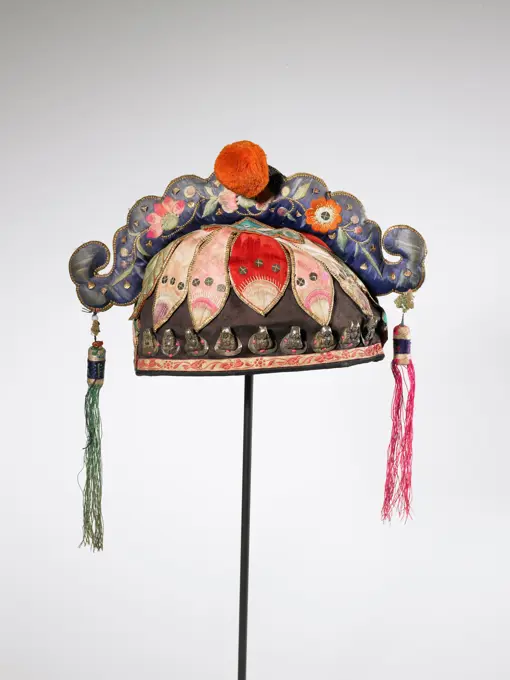
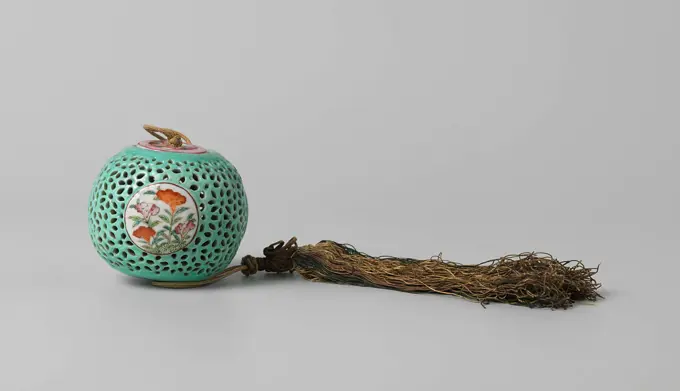
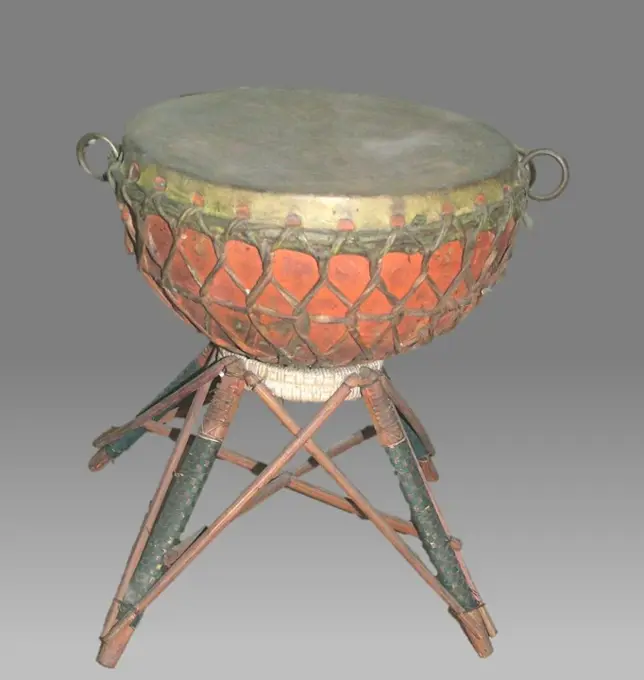
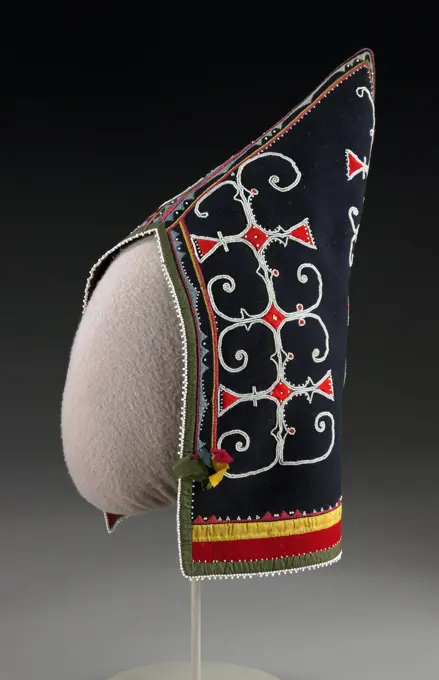
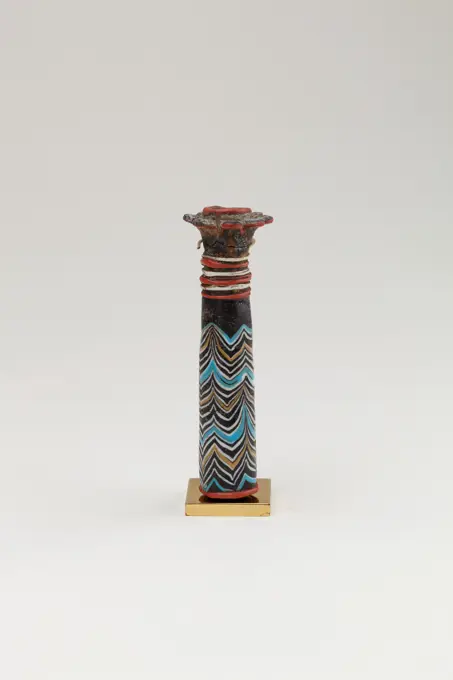
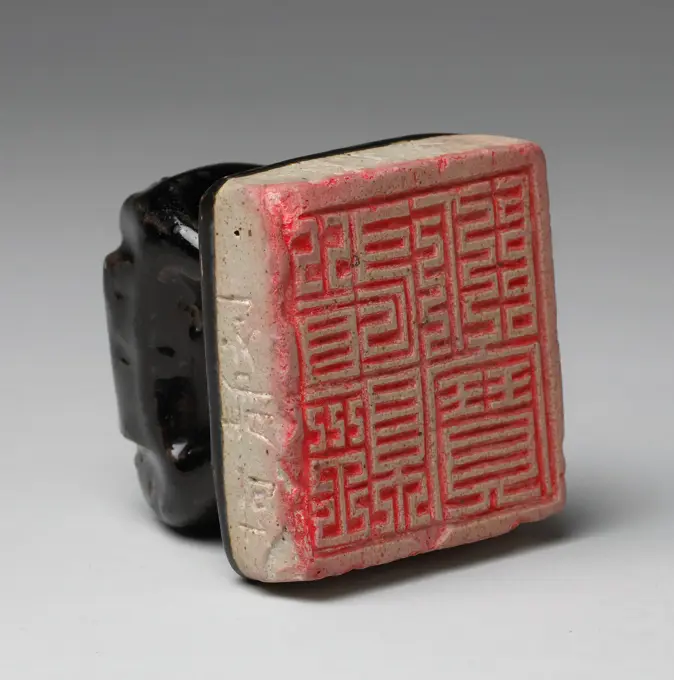
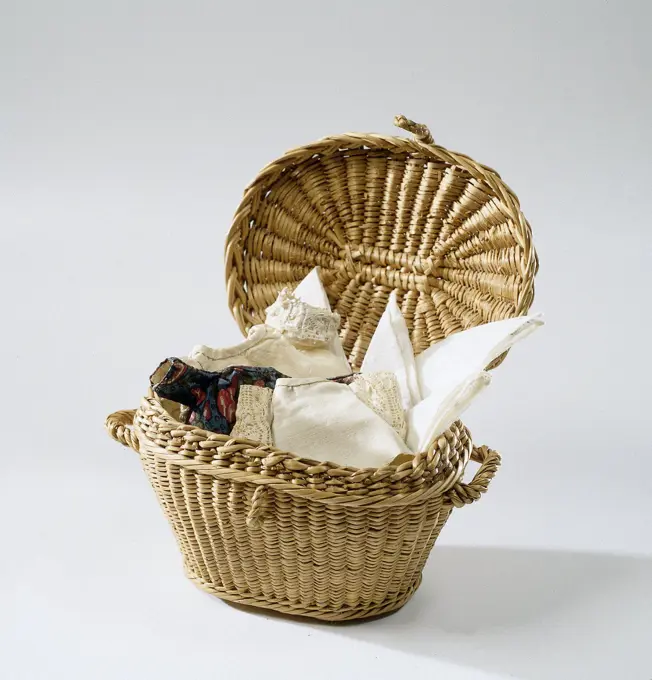
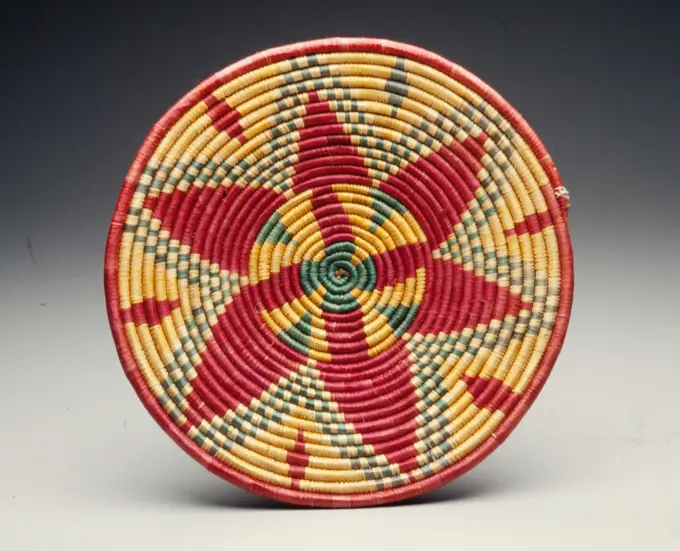
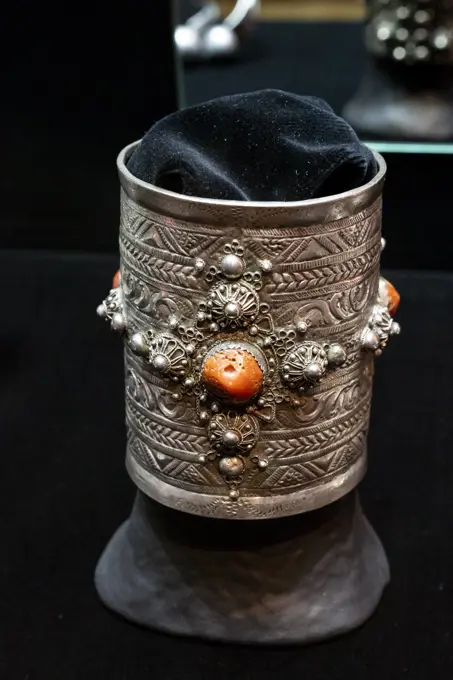
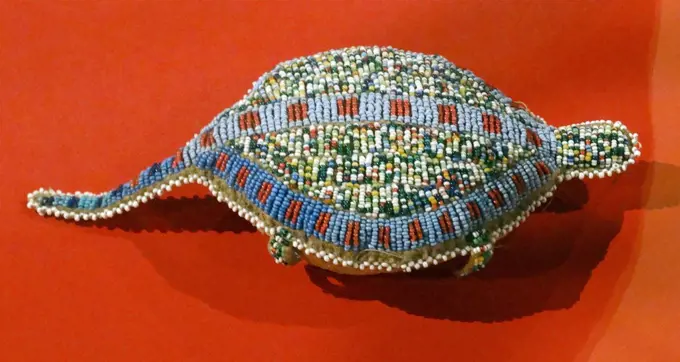
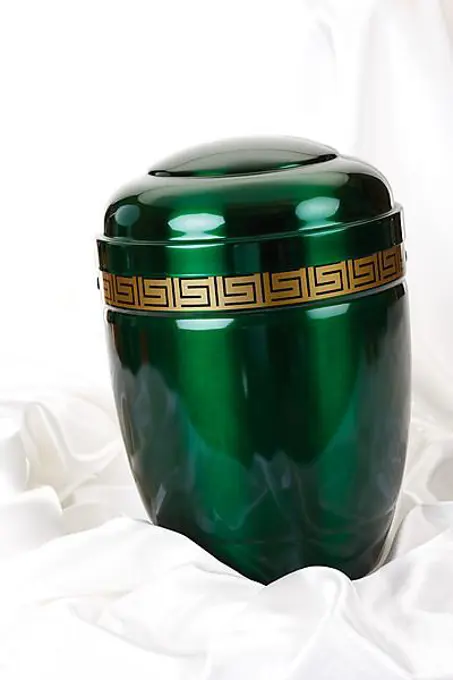
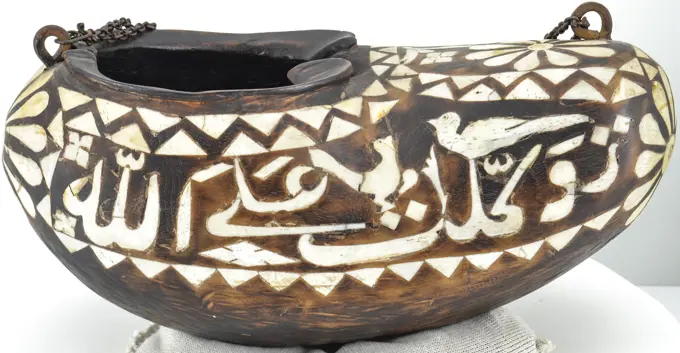
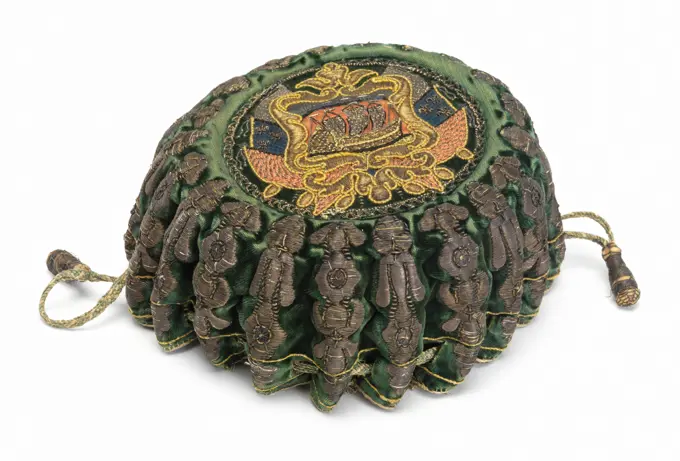
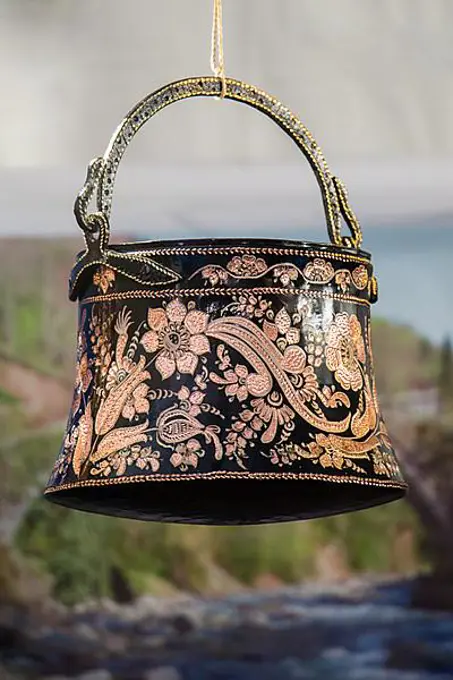
Stacking box, anonymous, 1700 - 1800 Stack box, Vierlobbig, consisting of three trays and a lid. Probably an incense box (Ju-Kogo). Nashiji inside and outside with plants flowering on the outside at a fence in Makie and with insert of silver buttons. On a silver foot ring. Japan whole: Wood (plant material). whole: Lacquer (coating). Silver (Metal). Gold (Metal) lacquering Stack box, Vierlobbig, consisting of three trays and a lid. Probably an incense box (Ju-Kogo). Nashiji inside and outside with plants flowering on the outside at a fence in Makie and with insert of silver buttons. On a silver foot ring. Japan whole: Wood (plant material). whole: Lacquer (coating). Silver (Metal). Gold (Metal) lacqueringIncense Box and Stand, 1820-1851, 1 3/4 x 3 7/8 x 7 1/8 in. (4.45 x 9.84 x 18.1 cm) (a)1 3/8 x 2 7/8 x 2 7/8 in. (3.49 x 7.3 x 7.3 cm) (b,c), Carved two-tone lacquer, China, 19th century, The boat shape of the incense stand is reminiscent of the great pleasure gardens of the Qing dynasty, such as the Summer Palace in Beijing. These gardens included extensive planted water courses that accommodated the boating parties of the aristocracy.Snuff Bottle, 1850-1900, 3 1/4 x 2 1/8in. (8.3 x 5.4cm), Bamboo, jade, silver, ChinaTiles with Checkered Pattern 1475-1500 Spanish Tiles such as these three examples might have been used to create a geometric frame, perhaps a star shape, that could enclose other decorated tiles. Tiles with Checkered Pattern 467572Engraved Scarab with a Warrior Holding a Head. UnknownNautilus shell with sliced vines, with accompanying holder., Cornelis Bellekin, 1650 - 1700 A nautilus shell decorated with vines cut from the cloak around the walls and four concentric ovals on the bottom. From the thickness around the navel, two women's heads resting in a rosette were saved. Signed CBF (Cornelis Bellekin Fecit). Northern Netherlands, second half of the 17th century. With accompanying holder. Amsterdam mother of pearl A nautilus shell decorated with vines cut from the cloak around the walls and four concentric ovals on the bottom. From the thickness around the navel, two women's heads resting in a rosette were saved. Signed CBF (Cornelis Bellekin Fecit). Northern Netherlands, second half of the 17th century. With accompanying holder. Amsterdam mother of pearlTlingit woven grass basket and lid decorated with designsWooden grain size..wood round object with flat bottom. The outside has been placed over each other and crimmed. On the outside, next to the seam, the stamp (standing lion) is applied. The bottom is mounted in the object with nails.Grain size of 1 deciliter. Chips grain size of 1 deciliter, v.zv. label. Wide chips under tape (width 25 mm), also foot edge. Label with number disappeared (presumably no. 30).Vase, 250-900. Mexico, Maya, Campeche. Earthenware with colored slips; diameter: 17.2 cm (6 3/4 in.); overall: 23.5 x 17.5 cm (9 1/4 x 6 7/8 in.).Bowl, Mythic Figures 6th-9th century Wari During the second half of the first millennium A.D., the Wari peoples, centered in the Ayacucho region, dominated the south-central Andes. They interacted with contemporary peoples in far-flung areas such as the powerful city of Tiwanaku in present-day Bolivia and the peoples of the Nazca region on the southern coast of Peru. The nature of Wari's relationship with these and other peoples is still unclear, but their influence on Wari art is undisputed. While the shape of this vessel and the painting stylevivid slip paints of red, purple, yellow, gray, and white and the use of thick black outlinefollows a long-standing southern coast tradition, its religious imagery is found on major stone monuments at Tiwanaku. The outer surface of the straight-sided bowl is divided into four panels; two are decorated with the square face of an abstract supernatural. It has a rayed headdress resembling Tiwanaku's principal deity. The fangs and split white and Basket for Peonies second half of the 19th century Japan The first collection of bamboo art given to The Met was a group of nearly eighty baskets bequeathed in 1891 by Edward C. Moore (1827-1891), the longtime artistic director and chief designer of silver manufacturing for Tiffany & Co., along with his extensive holdings of Japanese textiles, ceramics, and metalwork. This elegant early Meiji-period peony basket is one of the standout pieces of the collection.. Basket for Peonies 62170Van Silvay, Decanter, 1939 DecanterDouble Spout Bottle. Culture: Nasca. Dimensions: Height: 6 1/8in. (15.6cm)Diameter: 5 1/8in. (13cm). Date: 1st-6th century.Although no ceramic workshop has been discovered yet in the Nazca territory, the high technical quality of the pottery and the complexity of the iconography indicate that polychrome vessels were likely made by craft specialists. Archaeologists discovered scattered evidence of ceramic production (pigments, paint brushes, and polishers) at Cahuachi, the main Nazca monumental site. Finely painted polychrome vessels are well known as the principal vehicle of Nazca ideology. Double-spout bottles such as this one were used as funerary offerings. They were also an integral part of the ritual consumption of food and corn beer carried out at Cahuachi. The use of bottles with elaborate decoration was related to feasts, processions, and other prestige building activities carried out by high-status individuals and households. Nazca iconography includes a great variety of pla. Lid of box of porcelain, covered with underglaze brown and blue. Irregularly shaped to a shell with smaller shells.Drum, 1800 - before 1865 musical instrument. percussion instrument. drum Trom of the militia. The brass kettle is equipped with a veal sheet on both sides, held by a hoop and tense by means of a tension with tractors and screws. Both hoops are decorated with a motif of triangles in the colors red, white and blue. With engraved numbers: 1855-15. Netherlands Kettle: Brass (Alloy). Hoop: Wood (Plant Material). Team resort: RopePedestal Bowl Depicting Bicephalic Footed Serpent with Headcrest 700 CE-1100 Los Santos, Provincia de. Ceramic and pigment . CocléBowl with Geometric Design 10th-15th century Mexican. Bowl with Geometric Design 315729Storage basket made from birch bark used by the Athabaskan Indians of AlaskaSalt 1830-40 Probably Boston & Sandwich Glass Company. Salt. American. 1830-40. Pressed glass. Made in Sandwich, Massachusetts, United StatesServing Box for Betel Leaf Quids. India, Uttar Pradesh, Awadh, Lucknow, circa 1780. Furnishings; Accessories. Enameled gilded silverNetsuke of Double-Gourd Shape 19th century Japan. Netsuke of Double-Gourd Shape. Japan. 19th century. Wood. Edo (1615-1868) or Meiji period (1868-1912). NetsukeDrum, 1800 - before 1865 musical instrument. percussion instrument. drum Trom of the militia. The brass kettle is equipped with a veal sheet on both sides, held by a hoop and tense by means of a tension with tractors and screws. Both hoops are decorated with a motif of triangles in the colors red, white and blue. With engraved numbers: 1855-16. Netherlands Kettle: Brass (Alloy). Hoop: Wood (Plant Material). Team resort: RopeGlass striped mosaic bowl fragment late 1st century B.C.-early 1st century A.D. Roman Body fragment.Translucent blue, purple appearing opaque brick red, blue and yellow layered together appearing dull green, yellow, and white, with colorless glass.Convex curving side. Body decorated with almost vertical bands, forming a regular pattern: colorless with spiral yellow thread, blue layered with white, purple layered with white, blue layered with white, colorless with spiral yellow thread, and green. A few pinprick bubbles; exterior polished, with pitting of surface bubbles; dulling and iridescent weathering on interior and iridescent weathering on edges.. Glass striped mosaic bowl fragment. Roman. late 1st century B.C.-early 1st century A.D.. Glass. Early Imperial. GlassBowl Depicting a Mask (Possibly a Kachina), above an Abstract Bighorn-Sheep Head. Four Mile Polychrome, White Mountain Redware; Cibola region, east-central Arizona, United States. Date: 1300-1400. Dimensions: 13.3 × 28.9 cm (5 1/4 × 11 3/8 in.). Ceramic and pigment. Origin: Arizona. Museum: The Chicago Art Institute, USA.Box, late 1700s. France, late 18th century. Horn with gilded piqué decoration; overall: 2 x 6.8 cm (13/16 x 2 11/16 in.).Pectoral of Wedjahor Third Intermediate Period or later ca. 1070-664 B.C. View more. Pectoral of Wedjahor. ca. 1070-664 B.C.. Steatite, glass, gold leaf. Third Intermediate Period or later. From Egypt. Dynasty 21-25Hat, 1975, 2 1/2 x 6 3/4 x 6 3/4 in. (6.35 x 17.15 x 17.15 cm), Velvet, cotton, beads; needlework, Uzbekistan, 20th centurySpittoon -Standing Cup and Cover, 1600-1700. Pinto Collection - Purchased from Edward H Pinto, 1965.. Boxwood standing cup and cover, northern Europe, 17th century. This beautifully made rose engine-turned cup is similar to lignum vitae wassail bowls made in England in the 17th century.Helmet 17th-18th century Turkish. Helmet 32059Cartridge Box ca. 1575 German. Cartridge Box 33688Big vase Big copper vase with engravings and clipping path Copyright: xZoonar.com/Baloncicix 7285656Tassel; silk, metal thread on linen core, linenWoman's Hat, 20th century, 5 1/4 x 16 in. (13.34 x 40.64 cm), Raffia, hair, pigment, South Africa, 20th century, In the early nineteenth century, married Zulu women commonly styled their hair by shaving their heads to leave only a cone-shaped topknot at the crown and coloring it red. A wide circular headdress, known as isicholo, replaced this hairstyle in the late nineteenth century. In many areas, Zulu women continue to wear it as a sign of their married status at special events and ceremonies.Pi Kajikawa; 19th century (1846-00-00-1855-00-00);Cage crinoline -Black Basalt Bulb Pot, John Flaxman, English, 1755 - 1826, stoneware, enamel slip ('encaustic') decoration, Four-sided, serpentine sides, front longer than back; shaped edges, scrolled feet. Cover set on angle, with five cups for bulbs and two piercings. Relief panels in front and two sides, with putti bearing garland, against orange field; borders filled with floral forms in pink and white, inside glazed., Staffordshire (Etruria), England, 1780-1800, ceramics, Decorative Arts, bulb pot, bulb potMan's Coin Purse. Italy or Spain, 17th century. Costumes; Accessories. Silk velvet, sequins, metallic thread, silkPillow. Celadon glaze; reticulated, modelled and incised decoration, Koryo (Goreyo) (Goreyo) Dynasty, 11th-12th centuryWood and leather drumBox Box; England; enamel, copper, brassBandbox, Stencilled paper, distemper colors, pasteboard support, All-over flowing floral design, probably inspired from printed chintz from India. Pink flowers, Indian in feeling, and green leaves on mustard gold background. Cover matches., USA, 1830-40, Wallcoverings, BandboxBandbox, Block-printed paper on pasteboard support, Blue field. Red house, surrounded by rail fence and poplar trees in red and white., USA, ca. 1830, Wallcoverings, BandboxBaby's hat, 5 1/4 x 10 1/2 x 7 1/4 in. (13.34 x 26.67 x 18.42 cm) (without pompon or tassels), Cotton, sequins, metal, beads, cardboard, ChinaBoss and Nail 15th-16th century European. Boss and Nail. European. 15th-16th century. Iron. Metalwork-Iron. Flat, oval soil, the body with gold and a brown bronze decor, consisting of geometric motifs and stylized leaf refines on a matte etched surface.Ball bun comb (late 19th century). 9 scales discs, progressive size, curved on the place and dishes on the back, overcome the teeth and exceed them on each side.Pierced fragrance ball with silk tassel.Openwork porcelain smells ball with silk brush, painted on the glaze in turquoise, blue, red, pink, green, yellow, eggplant and black. The wall of the globe with ajour work with three medallions with flower branches. The brush is attached to a loose lid with a cord. Email sur biscuit with famille rose colors.Trinket Box 1830-70 American. Trinket Box 2545Tabl Šamī late 19th century Moroccan This ceramic drum rests on a stand and is struck by sticks. Tabl is a generic term for drums in the Near East and North Africa.. Tabl Šamī 501944Cup with the motif of a yellow dragon on a blue background unknownWoman's hood, c. 1800-1850, 13 5/8 x 8 9/16 in. (34.61 x 21.75 cm) (flat), Wool, beads, silk, dye, Canada, 19th century, English explorers first described women's Micmac hoods of this type in the 17th century, yet few have survived because they were made of fragile materials. Decorative silk ribbons, highlighted with white beads, can be found along the edging and down the center of the hood. The exact meaning of the double-curved motif that decorates the surface of the hood is not certain; it may be a protective element, or refer to flowers or vines.Container with Deity Head and Winged Attendants, 600-1000 (Thermoluminescence date, 730-1190). Central Andes, central coast, coastal Wari style. Ceramic and slip; overall: 16.6 x 16.9 x 21.8 cm (6 9/16 x 6 5/8 x 8 9/16 in.).Latin America,  Panama,  Panamanian arts & crafts.Traditional Embera Indian baskets.Jean Carriès (1855-1894). "Floor covering, pilaster fragment". Museum of Fine Arts of the City of Paris, Petit Palais. 24193-17 Ceramic, fragment, pilaster, reverse, soilBox; shell; Bequest of Katherine Strong Welman; 1908-23-17-a,bFour-Cornered Hat 7th-9th century Wari Finely woven, brightly colored hats, customarily featuring a square crown, four sides, and four pointed tips, are most frequently associated with two ancient cultures of the Andes: the Wari and the Tiwanaku. The Wari Empire dominated the south-central highlands and the west coastal regions of what is now Peru from 500-1000 A.D. The Tiwanaku occupied the altiplano (high plain) directly south of Wari-populated areas around the same time, including territory now part of the modern country of Bolivia. The cultures not only developed and flourished as contemporaries, but also occupied adjacent lands for nearly four centuries. A Wari ceremonial center called Cerro Baúl was located a mere five miles from Tiwanaku-settled fields in the Moquegua Valley of Peru. The two cultures likely encountered each other at Cerro Baúl and elsewhere, but the nature of these interactions remains largely unknown. Four-cornered hats from both the Wari and the Tiwanaku were Ethiopian, African drum, Ethiopia, AfricaBowl with geometric decorations engraved and painted, from PeruWater pot 18th century China. Water pot. China. 18th century. Porcelain with copper red glaze (Jingdezhen ware). Qing dynasty (1644-1911). CeramicsHatboxAlpaca wool hat, Peru 7th to 9th century. Huari People.Can  packet for candiesKohl Tube ca. 1295-1070 B.C. New Kingdom, Ramesside Egyptian glassmaking, which had reached a high level of virtuosity in late Dynasty 18, continued to be practiced in the Ramesside Period; however, the quality, as well as quantity, of it production dropped off sharply in Dynasty 20. The "feathered" decoration of this kohl tube was achieved by winding thin colored glass rods around the vessel and pressing them onto the surface of the vessel while it was still soft, and then drawing the rods up or down with a metal instrument.. Kohl Tube 558850Aztec calendar stone, or Stone of the Sun, its proper name is ""Cuauhxicalli""Daoist Seal, 960-1279, Liu Ching K'o, 3 x 2 5/8 x 2 3/8 in. (7.62 x 6.67 x 6.03 cm), Brown glazed stoneware with engraved characters., China, 10th-13th century, The inscriptions of this large stoneware seal can be read as tao ching shih pao, which may be translated as 'seal of the master of Daoist classics.' The right side of the seal block is inscribed with the name of the seal maker or its owner Liu Ching-k'o. The top side of the seal is inscribed 'tian shan tsun' which may be translated as 'respected in the heavens.' The other two sides were each inscribed with the character hsia and tsuo (down and left) indicating the correct orientation when using the seal. The oddly shaped knob probably represents the standard hat of a Daoist deity.Terracotta pyxis (box). Culture: Greek, Attic. Dimensions: H. 1 3/4 in. (4.5 cm)diameter 2 1/2 in. (6.4 cm). Date: late 5th century B.C..On cover, head of a horse. Museum: Metropolitan Museum of Art, New York, USA.Lock basket made of unpleasant willow, anonymous, c. 1676 Closing basket, oval in shape, of fine, unpleasant willow tents. The lid to hinges, on either side with a loop closure over an arc, two handles are attached to the sides. Halle . Closing basket, oval in shape, of fine, unpleasant willow tents. The lid to hinges, on either side with a loop closure over an arc, two handles are attached to the sides. Halle .Sjako of the Hussars Regiment No. 8, Anonymous, 1800 - 1854  Sjako van Blauw Laeken with copper 8; Stormband and Pompon, Oranje Kokarde: from the Hussars No. 8 Regiment.  cloth. copper (metal)Basket, 20th century, 3 3/4 x 12 7/8 in. (9.53 x 32.7 cm), Plant fibers, Ethiopia, 20th centuryThe museum of Sens. Ivory box . Sens. France. (Sens, Yonne, France)Amazigh bracelet from Aures Amazigh bracelet from Aures, Algeria, Corral del Carbón , al-fundaq al-yadida, 14th century, Granada, Andalusia, Spain Copyright: xZoonar.com/TOLOxBALAGUERx 21956860Box (Jubako) 18th century Japan. Box (Jubako) 58347A child's amulet. From the Sioux people of the Northern Plains, USA, 1880-1920.Green urnMexico, Mexican traditional ethnic arts: baskets made of reed, bamboo, and other plant fibers.Beggar's Bowl (Kashkul) late 19th-early 20th century The kashkul, or beggars bowl, is perhaps the most emblematic accoutrement of the wandering dervish. These typically boat-shaped vessels were made from a variety of media, including coco-de-mer shell, wood, metal, and ceramic. Dervishes used them primarily to collect and store alms (their main source of sustenance) and occasionally as drinking vessels. In later centuries many were marketed as decorative objects. This example is made of coco-de-mer shell inlaid with camel bone and likely functioned as a beggar's bowl rather than a decorative object. The kashkul has a number of metaphorical associations. It represents the cleansing of a Sufis soul of all extraneous earthly desires in preparation for the acceptance of Divine love and a dervishs life of poverty.. Beggar's Bowl (Kashkul). late 19th-early 20th century. Coco-de-mer shell; inlaid with camel bone. Probably fro. WoodGaming Purse (France); silk, metalContent of 1 liter, Anonymous, 1824  Spans contents of 1 liter (litre) with wooden bottom edge. On the bottom of Orange paint stamp with inscription. V.z.v. brands and stamps. Netherlands wood (plant material)   NetherlandsCase (Inrō) with Design of Blossoming Cherry Tree 19th century Japan. Case (Inrō) with Design of Blossoming Cherry Tree 58631Ink Cake with Architectural Design, 1736-95. China, Qing dynasty (1644-1911), Qianlong inscription, mark, and reign (1736-95). Molded ink; overall: 2.4 x 13.4 cm (15/16 x 5 1/4 in.).Old style metal buckets made of metalCase (Inrō) with Design of Chrysanthemums Beneath Bamboo Blinds 19th century Japan. Case (Inrō) with Design of Chrysanthemums Beneath Bamboo Blinds 58885Indian currency notes in glass bowl against gray background Copyright: xVirenxDesai/DinodiaxPhotoxClose up of leather skin top of so called traditional Japanese Nagado drum percussion music instrumentPainted wood tableware isolated on a white background