Exquisite Porcelain Dishes

A collection of beautifully painted porcelain dishes and saucers, featuring floral motifs and intricate designs in blue and white tones.
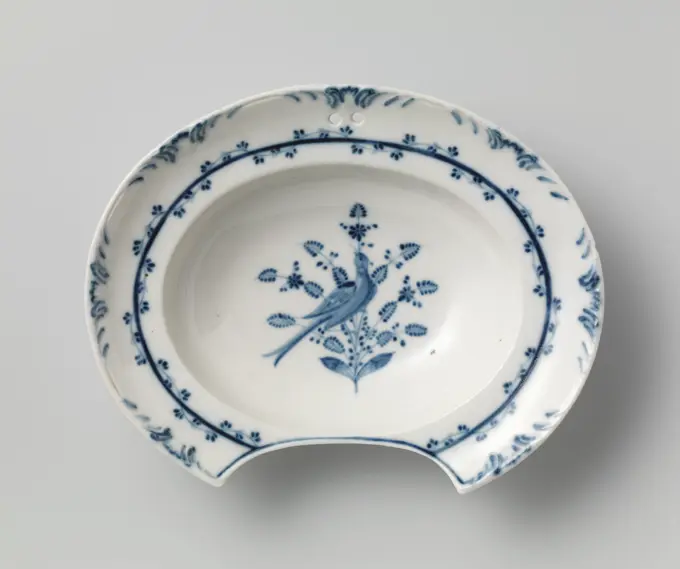
Shaving basin, Manufactuur Oud-Loosdrecht, c. 1778 - c. 1782 Porcelain shaving basin. The edge is decorated with rocaille ornament in relief, which is painted in underlaze blue. On the edge a trim, around which a leaf garland winds, a bird on the flat on a branch with flowers and leaves. The entire painting is in underlaze blue. Two hanging holes in the edge. Loosdrecht porcelain Porcelain shaving basin. The edge is decorated with rocaille ornament in relief, which is painted in underlaze blue. On the edge a trim, around which a leaf garland winds, a bird on the flat on a branch with flowers and leaves. The entire painting is in underlaze blue. Two hanging holes in the edge. Loosdrecht porcelain
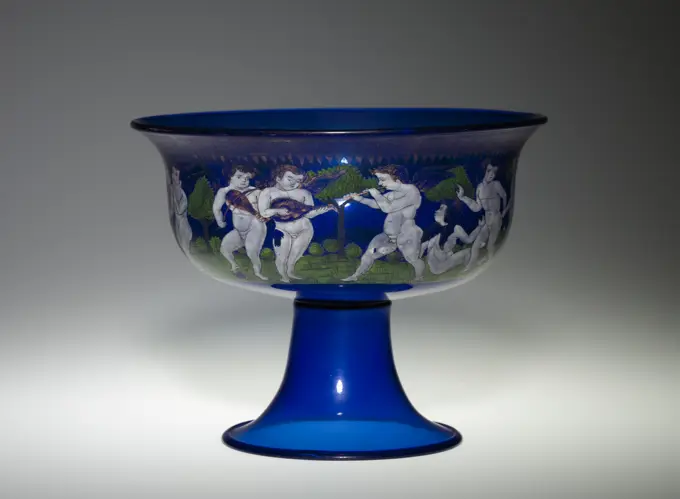
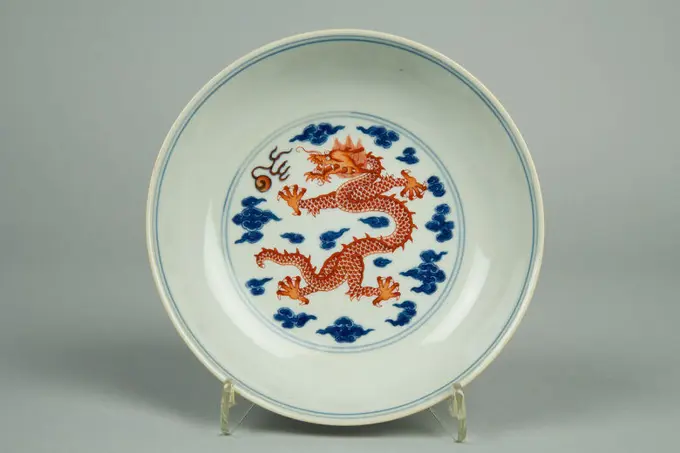
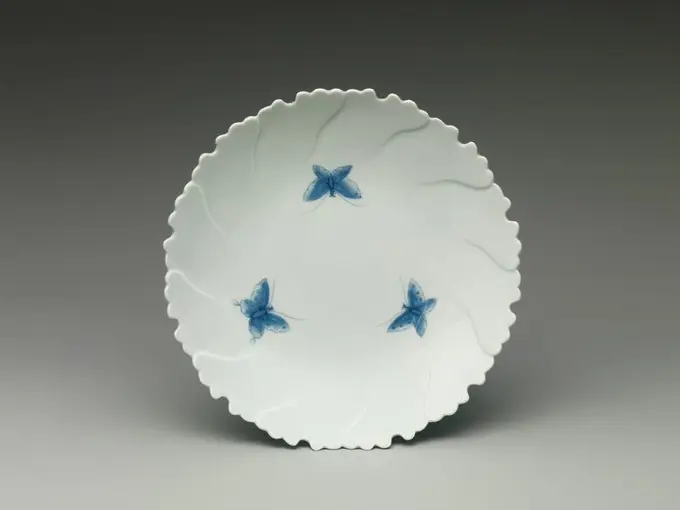
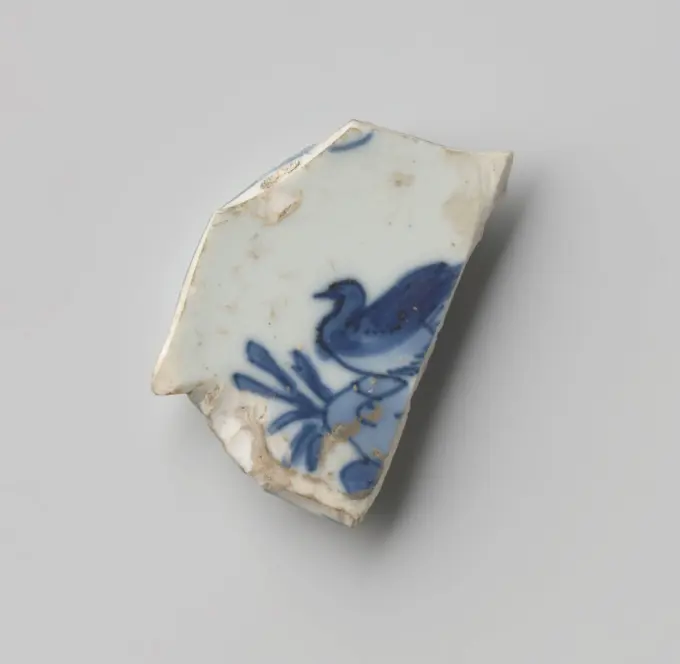
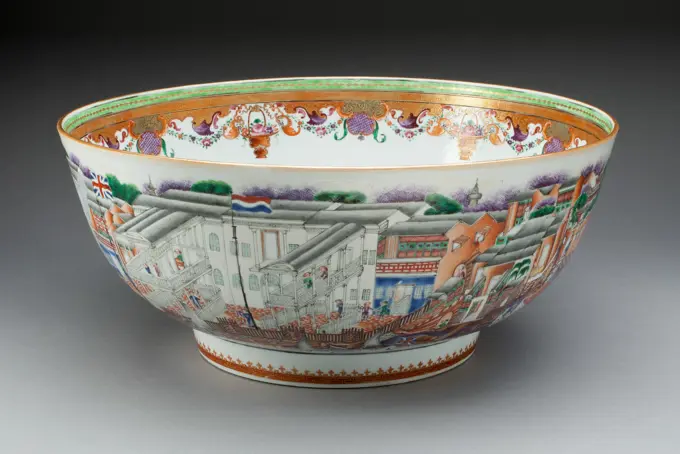
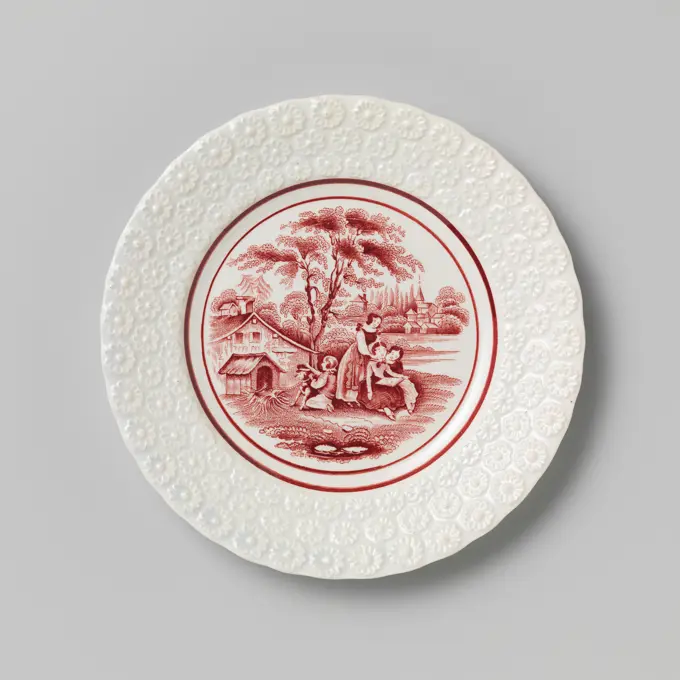
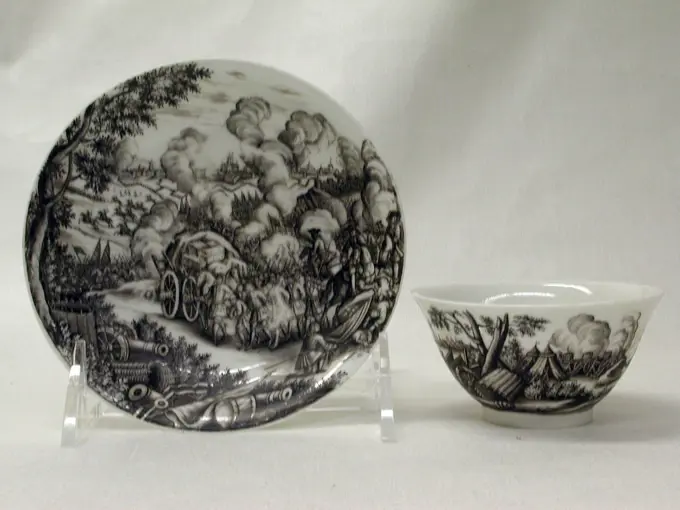
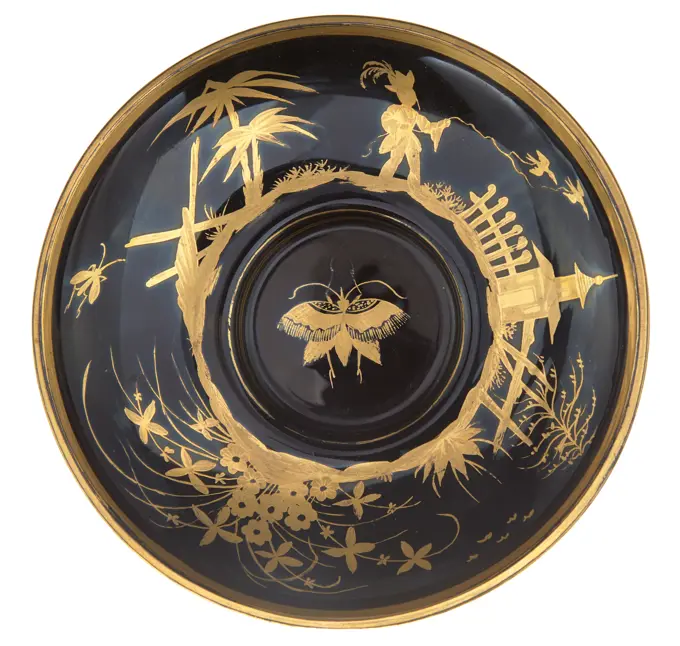
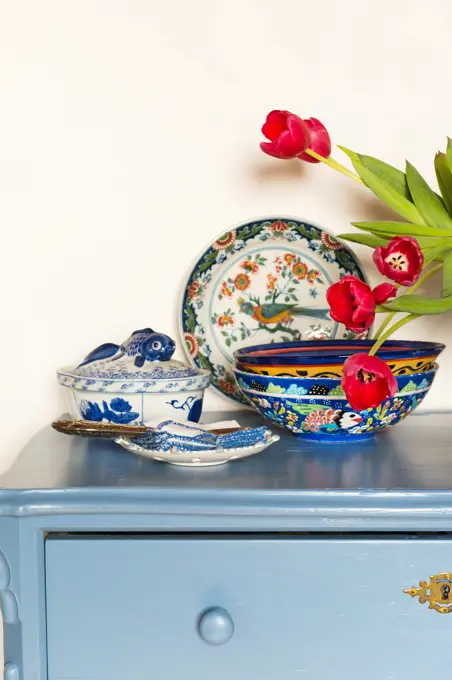
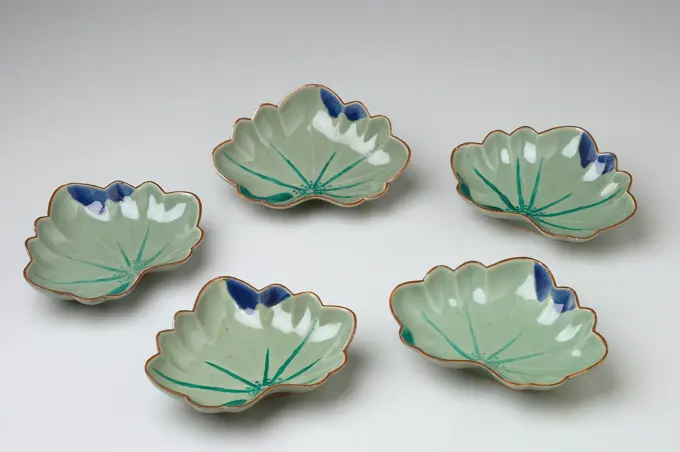
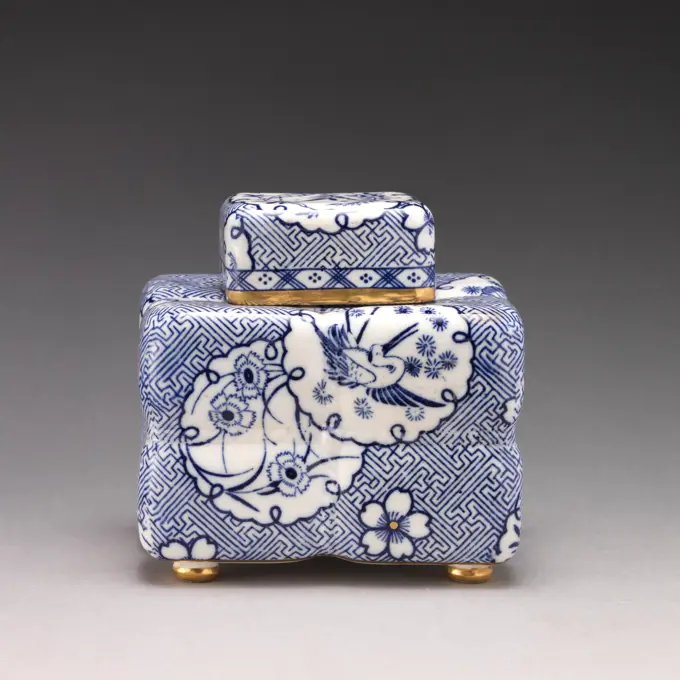
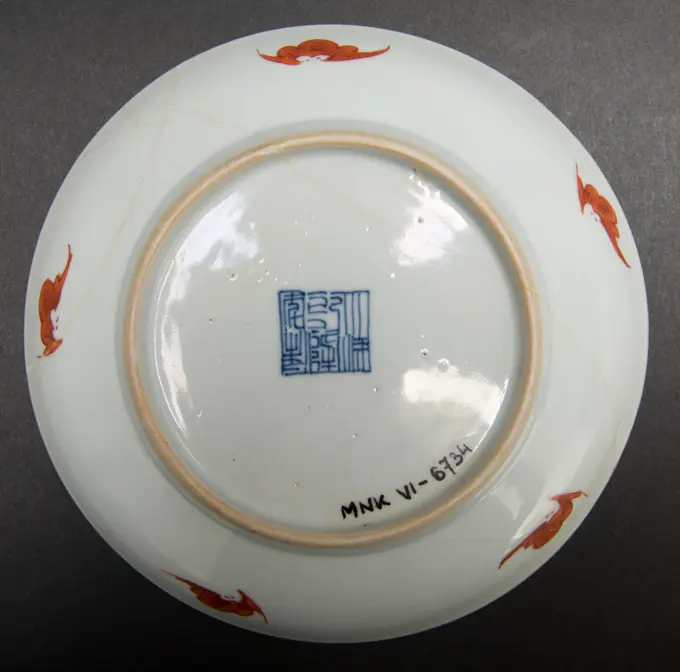
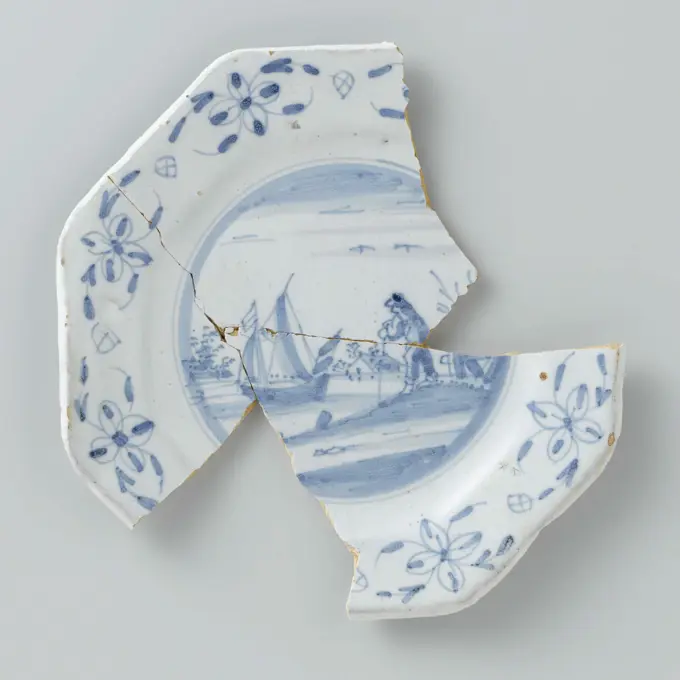
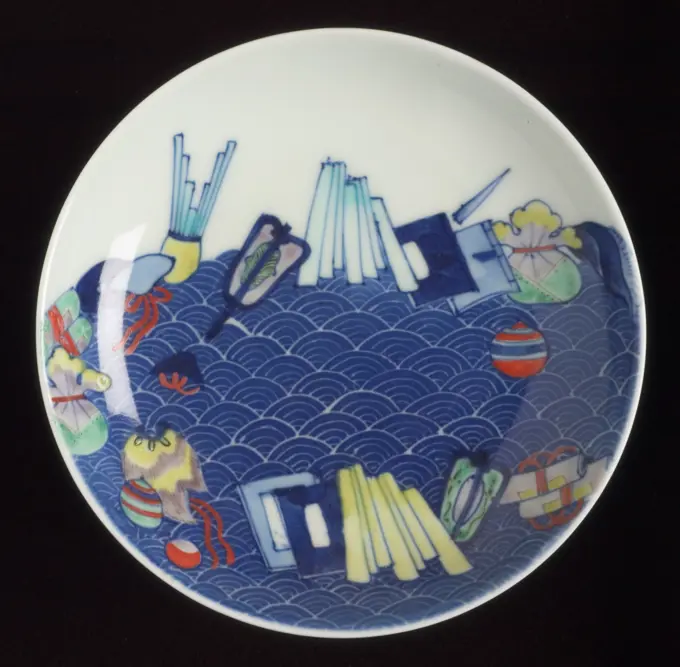
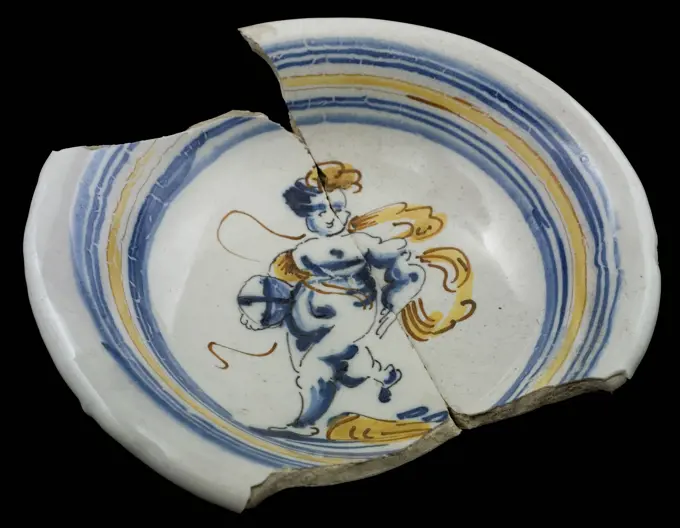
Fragments of faience plate, polychrome putto with ball, on the edge concentric circles, plate dish crockery holder soil find ceramic earthenware glaze tin glaze , bowl 17.0 In case baked archeology Rotterdam archaeological find in the soil Rotterdam 1942.Bord, anonymous, c. 1680 - c. 1710 Round plate of blue painted faience, with four sailing ships on the flat. The board includes three identical signs with the invnrs. BK-NM-11168-A, BK-NM-11168-B and BK-NM-11168-C. Delft earthenware. tin glaze. Round plate of blue painted faience, with four sailing ships on the flat. The board includes three identical signs with the invnrs. BK-NM-11168-A, BK-NM-11168-B and BK-NM-11168-C. Delft earthenware. tin glaze.Plate, painted with the Oskamp family crest (), The Porceleyne Byl, 1787 FaaMence board, painted in blue with a weapon with three cows or oxheads, possibly the Oskamp family crest. Delft . FaaMence board, painted in blue with a weapon with three cows or oxheads, possibly the Oskamp family crest. Delft .Dish. Culture: China. Dimensions: H. 1 1/4 in. (3.2 cm); Diam. 6 3/8 in. (16.2 cm). Museum: Metropolitan Museum of Art, New York, USA.Peony-Shaped Dish with Butterflies. Culture: Japan. Dimensions: Diam. 7 3/8 in (18.7 cm). Date: ca. 1840-60. Museum: Metropolitan Museum of Art, New York, USA.Fragment Come from V.O.C. ship De 'Witte Leeuw', Before 1613 bowl Fragment come from V.O.C. ship De 'Witte Leeuw'. Jingdezhen porcelain   Sint-HelenaSharf of rossy baking earthenware, with light gray glaze, with a decorative edge in blue, anonymous, 1600 - 1650  Northern Netherlands earthenware. glaze majolica  Northern Netherlands earthenware. glaze majolicaToy soup plate - Inconnu / UnknownA plate;  18th century (1701-00-00-1800-00-00);Fragment Come from V.O.C. ship De 'Witte Leeuw', Anonymous, Before 1613 bowl Fragment come from V.O.C. ship De 'Witte Leeuw', 10 present. Jingdezhen bone china (material)   Sint-Helena. Size in small format, painted in blueDish Japan. Dish 52255Saucer With Cock and Three Fans With Flower Sprays. Dish of porcelain with sloping wall, painted on the glaze in blue, red, pink, green, yellow, black and gold. On the platter of the dish a medallion with a rooster; to medallion three fans with flowering plants against a pink soil; Three elongated compartments with napkin work between the ranges. Family Rose.Sharf of a plate or scale scale from the wreck of the East Indies' t Vliegend Hart ,, 1700 - 1735 dish. plate (dishes) Sharf from the edge of a Delft blue plate or dish, the outside is smooth dark brown. Porcelain. Netherlands porcelainShards of a bowl from V.O.C. ship De 'Witte Leeuw', Before 1613 dish Shards Kraakporcelain from V.O.C. ship De 'Witte Leeuw'. Jingdezhen bone china (material)   Sint-Helena. Flat, oval bottom. Egg-shaped body covered with thin flamed pink-red glass, ground and radgraver; On the bottom a sunflower, on the side eight putti between foliage and birds, holding wreaths, grapes and roses.Covered Jar With Three Ladies in A Garden and Playing Boys. Lid with ring-shaped button of porcelain lid pot, painted in underglaze blue. On the lid with five playing boys in a landscape with rocks and plants called, in the annular button an artemisia leaf. Blue White.Punch Bowl Made 1780-1790 Jingdezhen. Hard-paste porcelain with polychrome enamels and gilding .Halley-Lebon, Cup and Saucer, 1800-1805, hard-paste porcelain.Shards of signs from V.O.C. ship De 'Witte Leeuw', Before 1613 plate (dishes) Shards of plates, three consisting of two glued fragments, from V.O.C. ship the 'Witte Leeuw'. Jingdezhen bone china (material)   Sint-HelenaBoard with a company with dog in a landscape. Plate of pottery with red transfer decor, round, it's flat decorated with a company with dog in a landscape. To the show two red piping. The edge with a floral decor in relief.Set of Four Saucers China. Set of Four Saucers 60936Ancient Crockery older than 200 yearsDish 19th century Japan. Dish. Japan. 19th century. Porcelain decorated with blue under the glaze. Edo (1615-1868) or Meiji period (1868-1912). CeramicsTeabowl and saucer ca. 1720-25 Meissen Manufactory German. Teabowl and saucer. German, Meissen possibly with German, Breslau (Wrocaw) decoration. ca. 1720-25. Hard-paste porcelain. Ceramics-PorcelainSaucerLavender colored cabinet with antique Lavender colored cabinet with old crockery and glass bowl cookies Copyright: xZoonar.com/IvonnexWierinkx 7865812Shards of a bowl from V.O.C. ship De 'Witte Leeuw', Before 1613 bowl Shards of a bowl from V.O.C. ship the 'Witte Leeuw'.  porcelain   Sint-HelenaSet of leaf-shaped food dishes (mukōzuke), 1660s, Unknown Japanese, 1 5/8 x 6 9/16 in. (4.1 x 16.7 cm), Ko-imari ware; porcelain with overglaze enamels, Japan, 17th century, The Chinese porcelain industry began to collapse in the early 1600s. In response, Japanese potters started creating porcelain wares, decorated in the Chinese manner, for the European market. By the 1660s and 70s, however, Japanese-style shapes and designs, like leaves and folding fans, became popular among both foreign and domestic buyers. Tea masters of the time prized elegant plates such as these for use in kaiseki, meals served in conjunction with a tea gathering.Tea caddy with cover 1878 Minton(s) Minton was the most important ceramics factory during the Victorian period and began exhibiting products at the first Great Exhibition of 1851. Founded in 1793 by Thomas Minton at Stoke-on-Trent, the firm initially specialized in transferware pottery before expanding under the ownership of Thomass son Herbert Minton, beginning in 1836. Under the ownership of Colin Minton Campbell, who succeeded his uncle in 1858, the factory became recognized as a specialist producer of Aesthetics movement porcelain, which were inspired by a rich array of exotic and eclectic decorative motifs. Listen to experts illuminate this artwork's story Listen Play or pause #418. Christopher Dresser and the Birth of Industrial Design Supported by Bloomberg Philanthropies We're sorry, the transcript for this audio track is not available at this time. We are working to make it available as soon as possible.. Tea caddy with cover. British, Stoke-on-Trent, Staffordshire. 1878. BonA bowl  flowers on a dark red background unknownSlovakia, Bratislava. Historic downtown Main Square, traditional Slovakian souvenir pottery.Square tiered box with cover with medallions, anonymous, c. 1775 - c. 1824 Upper box of square stacking box (Jubako) with lid of porcelain consisting of four layers with openwork walls in various shapes, painted in underlaze blue. On the walls, medallions formed from different flower vines (Prunus, Chrysanthemum, peony, orchid, lily, etc.). A meander pattern on the edge of the lid. Blue White. Japan porcelain. glaze. cobalt (mineral) painting / vitrification Upper box of square stacking box (Jubako) with lid of porcelain consisting of four layers with openwork walls in various shapes, painted in underlaze blue. On the walls, medallions formed from different flower vines (Prunus, Chrysanthemum, peony, orchid, lily, etc.). A meander pattern on the edge of the lid. Blue White. Japan porcelain. glaze. cobalt (mineral) painting / vitrification. Fragmentary octagonal plate of blue painted faience. On the flat is a landscape with a man on a shore and a ship painted and four-leaved rosettes on the edge. The plate is a soil find out of Leiden and consists of three pieces.Bowl with Treasures amid Waves Design. Japan, circa 1910-1920. Ceramics. Hizen ware; porcelain with underglaze blue and overglaze enamelsGlass paper-weights with flowerets, butterflies, fruits or animal motifs c1846Close-up of hand-made decorated bowlsTazza with a Frieze of Putti, 1800s. Italy, Venice (Murano), 19th century. Enameled blue glass; overall: 18.3 x 22.9 cm (7 3/16 x 9 in.).Paperweight 1840-1865 France. The colorful geometric clusters embedded in this paperweight reflect the nineteenth-century European fascination with optical effects. Sir David Brewster invented the kaleidoscope in 1815, and its colorful and changing patterns brought great visual entertainment. Paperweights such as this example reformed this childlike pastime for a sophisticated adult audience. Depicted in glass were tiny glittering flowers, small black and blue cameos of figures, and even miniature bottlecaps. These were delicately arranged within the orb for the observant eye to discover.From the late 1840s to early 1860s, French manufacturers of fine glass and crystalósuch as Baccarat (Alsace), Clichy (Paris), and Saint-Louis (Lorraine)ócatered to the vast public enthusiasm for beautiful yet functional desk accessories. Paperweights, which were designed to secure loose papers against drafts, were among their most popular products.. Glass . Compagnie de Saint LouisBord, de porceleyne was, 1750 - 1780 Fixence board, from the series the 12 months. Representing the month of July. It is shown: the farm, with the text: Julij. Delft . Fixence board, from the series the 12 months. Representing the month of July. It is shown: the farm, with the text: Julij. Delft .Small bowlBox  a rooster with a hen, flowers, butterflies and masks unknownDish, painted multi-colored with a kakiemon decor. Dish of painted porcelain. The dish is ribbed and painted with a seated boy with impeller and a standing boy with a basket with flowers on the back. The dish has been marked.Tile, painted multi-colored with a soldier or a standard bearer. Tile, painted multi-colored with a soldier or a standard bearer.Ceramic plates at shopIllustration white plate with russian national ornament in gzhel style, empty ceramic plate - vectorPlate 1792 Staffordshire. Earthenware (creamware) .