Exquisite Textile Patterns

Textiles featuring intricate patterns such as embroidered pillow covers and sarongs, showcasing traditional craftsmanship with vibrant colors.

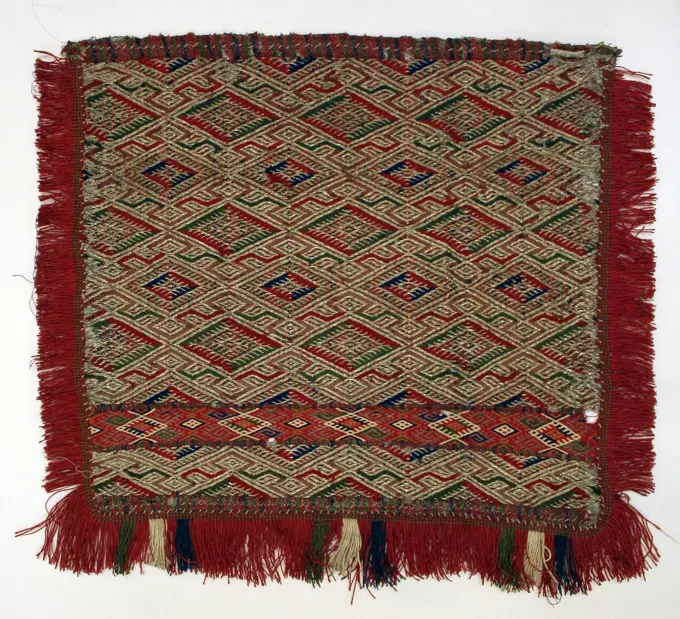
Pillow cover, Medium: silk embroidery on linen foundation Technique: embroidered in counted running stitch on plain weave foundation, Diagonal rows of lozenges with saw-toothed edges embroidered in red, white, buff and yellow silk on a blue ground., Thasos, Greece, 18th century, embroidery & stitching, Pillow cover
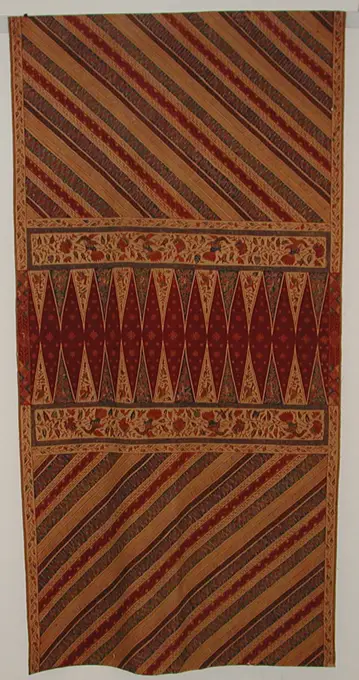
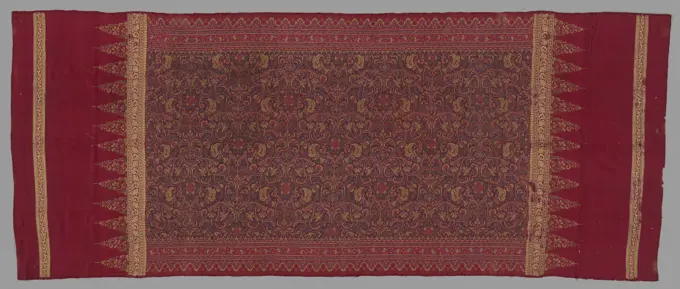
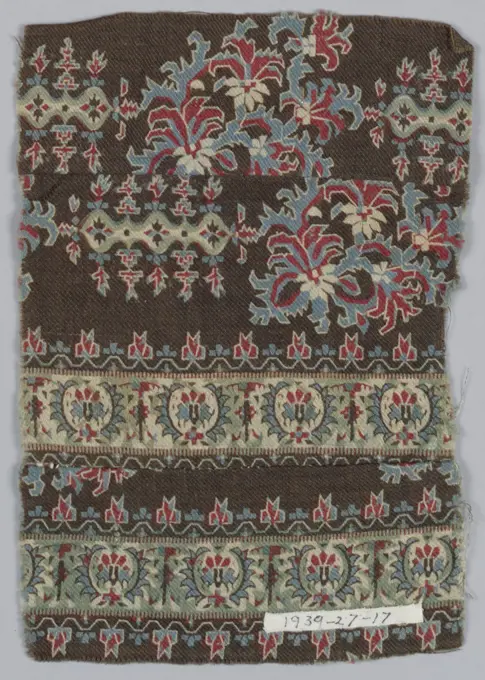
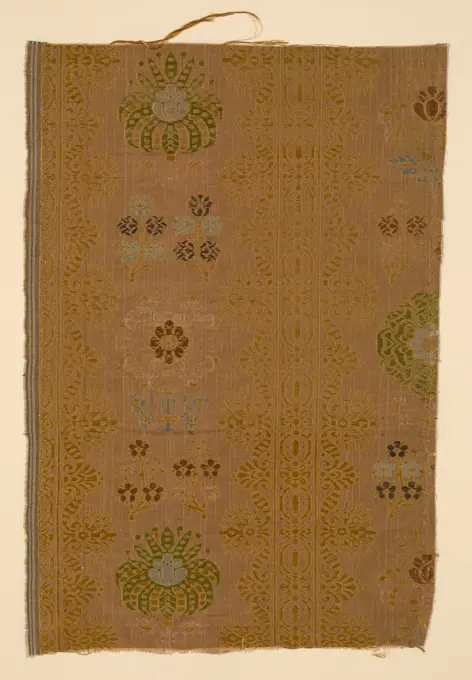
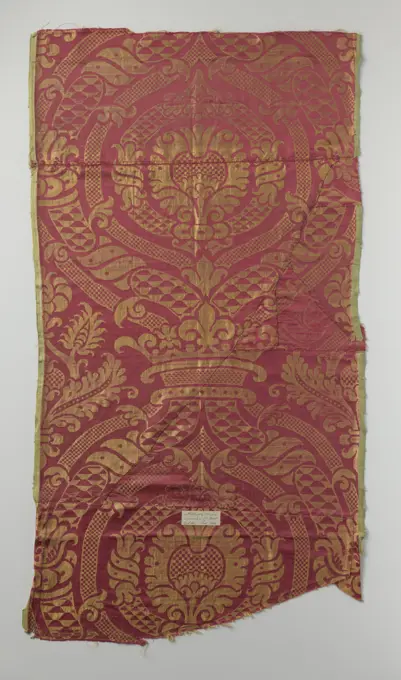
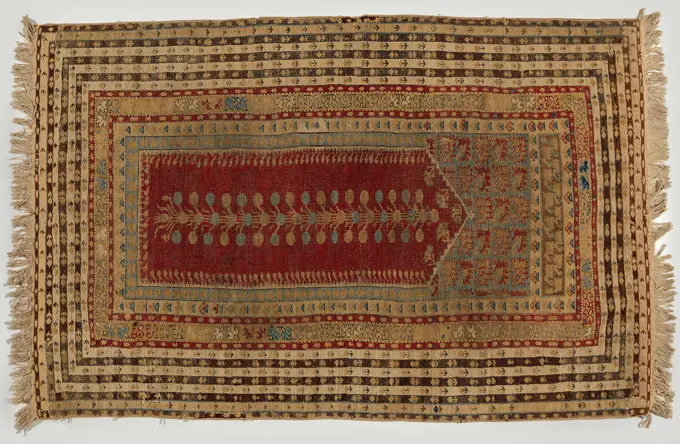
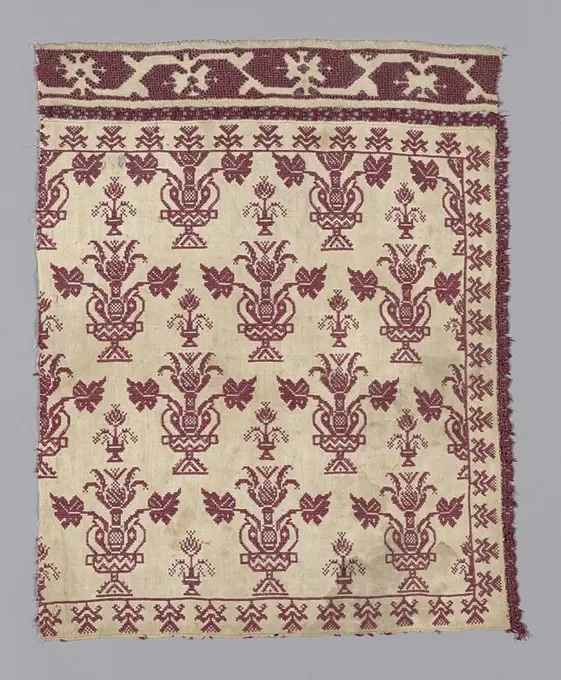
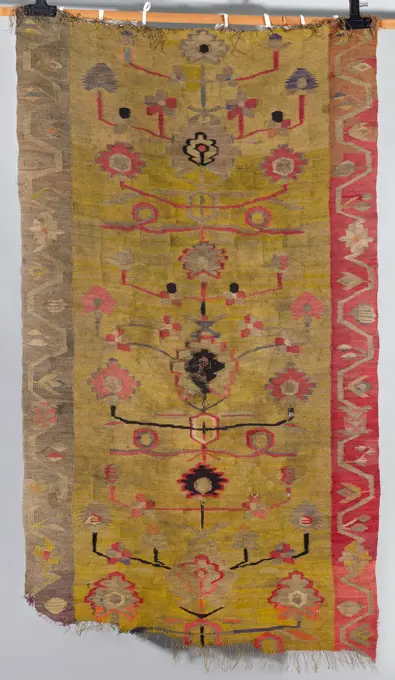
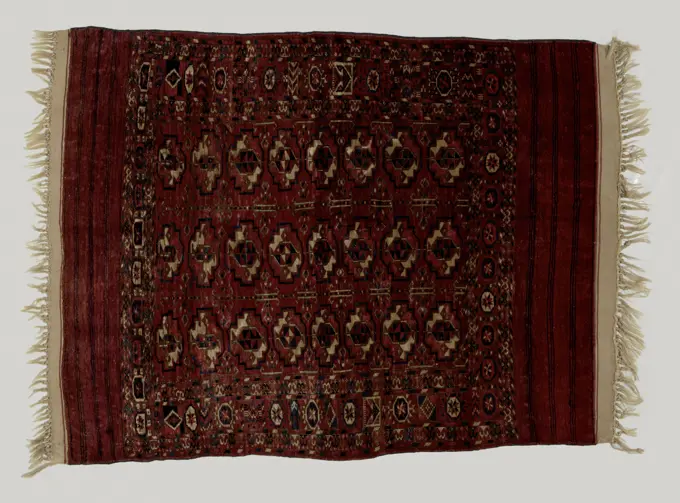
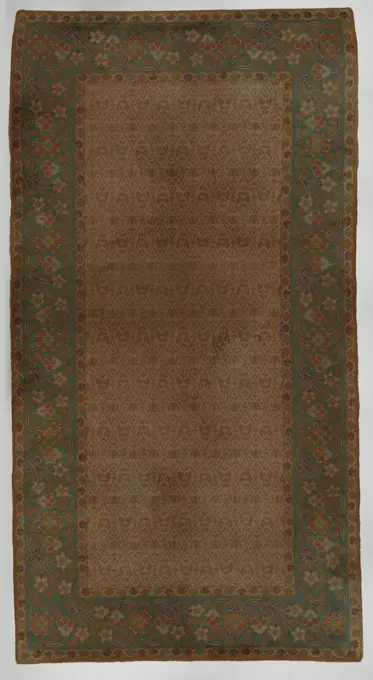
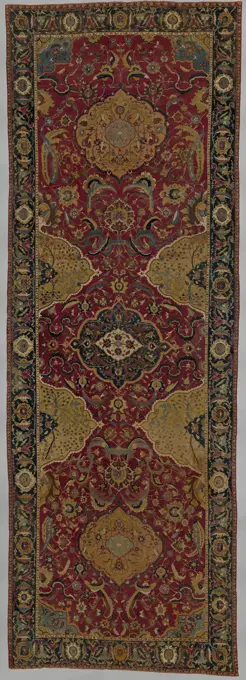
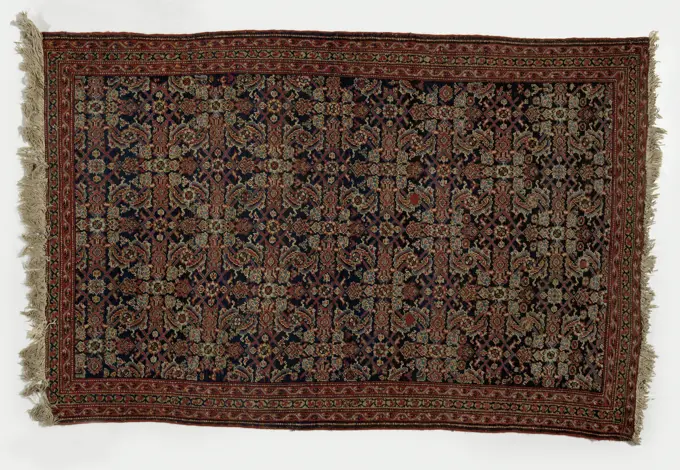
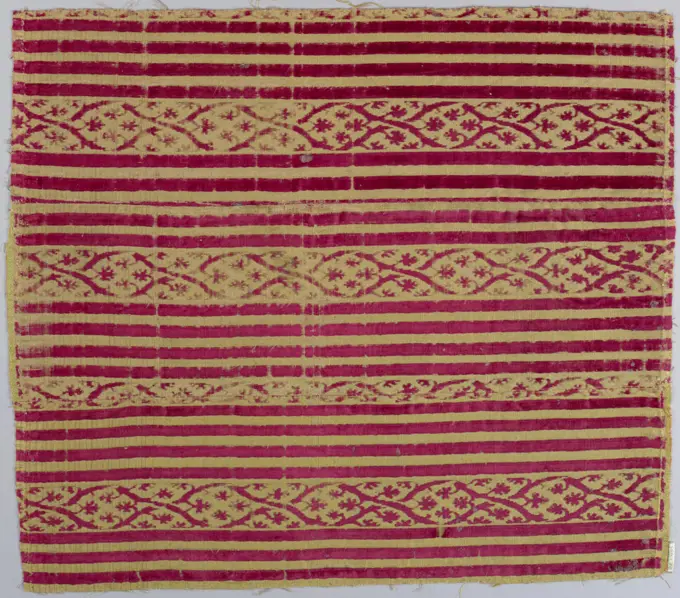
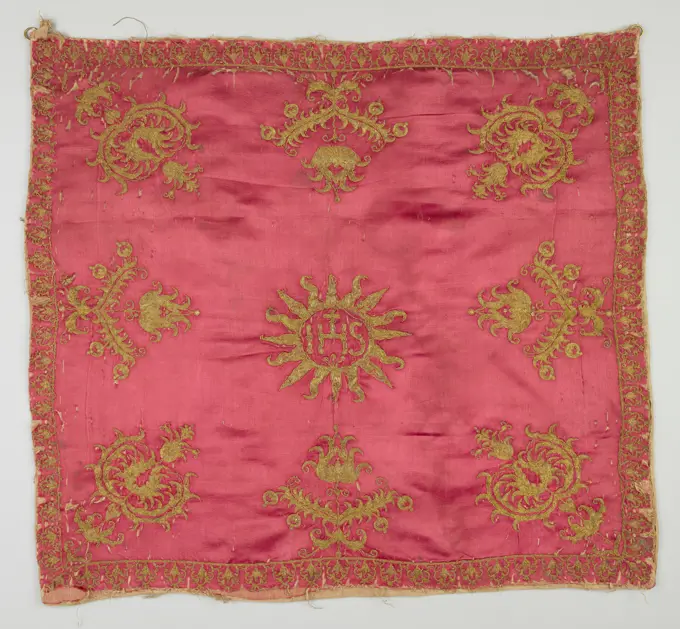
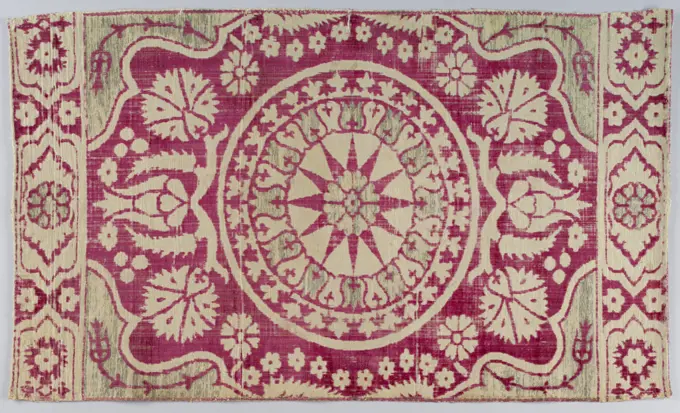
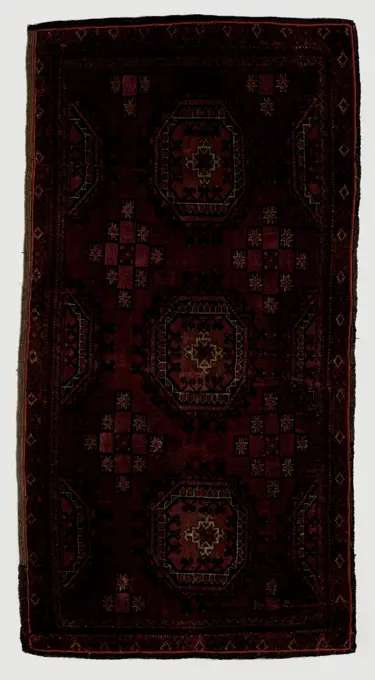
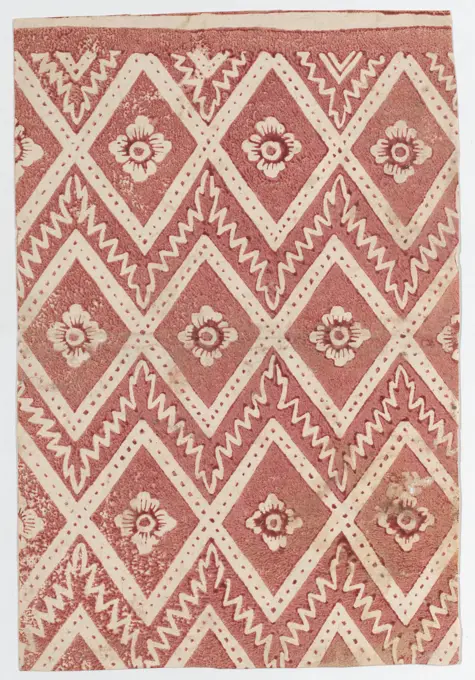
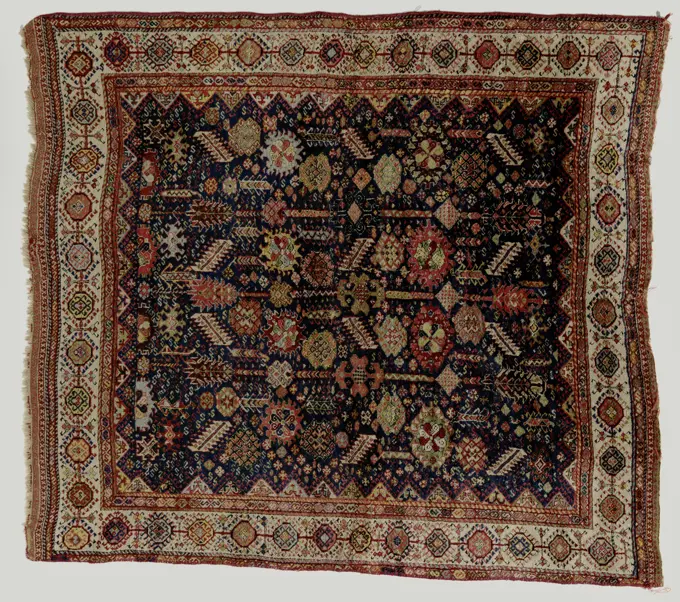
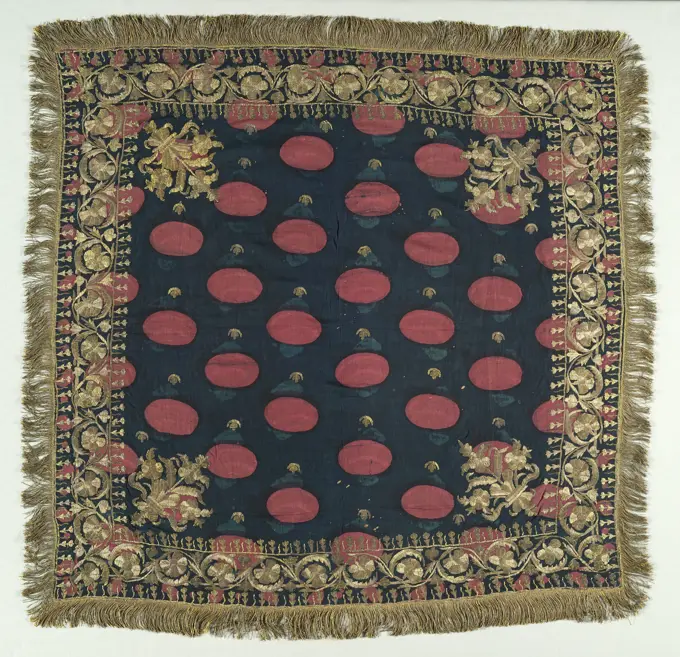
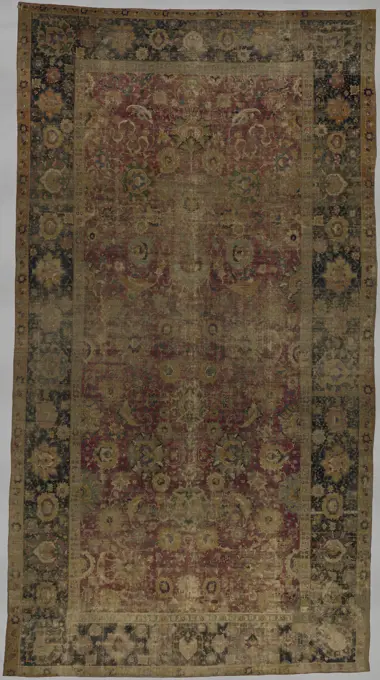
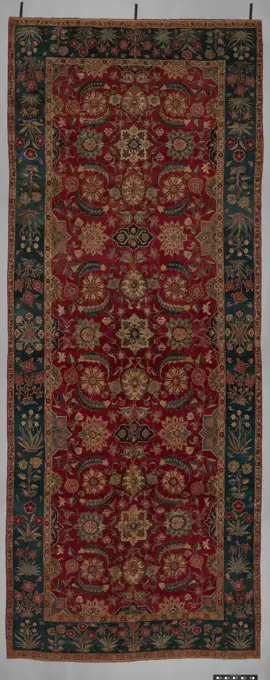
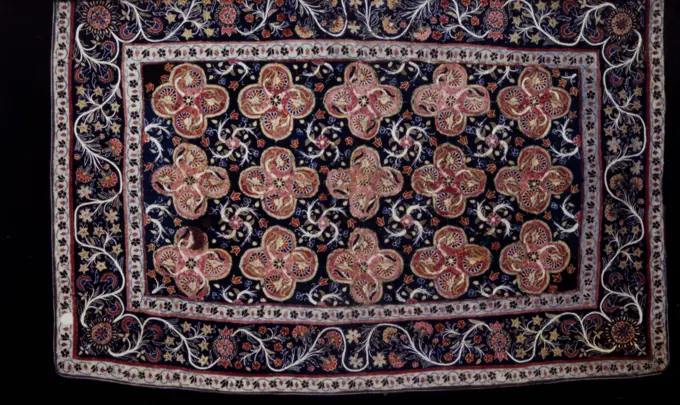
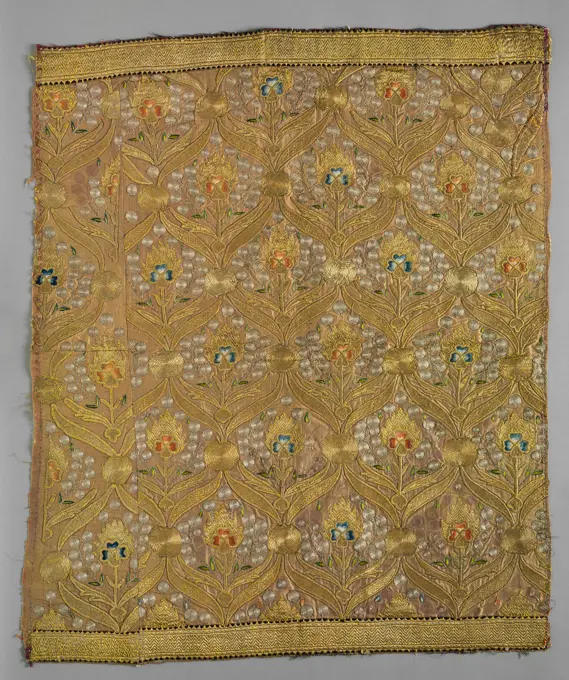
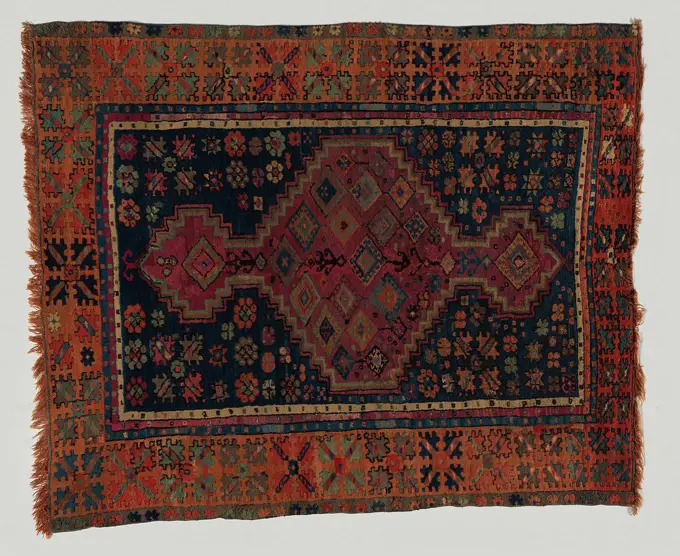
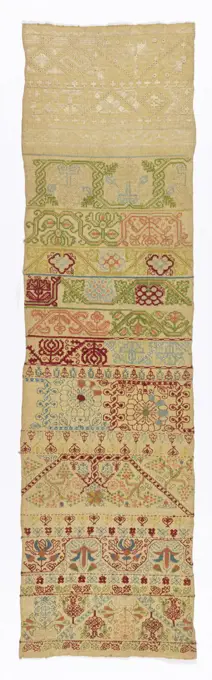
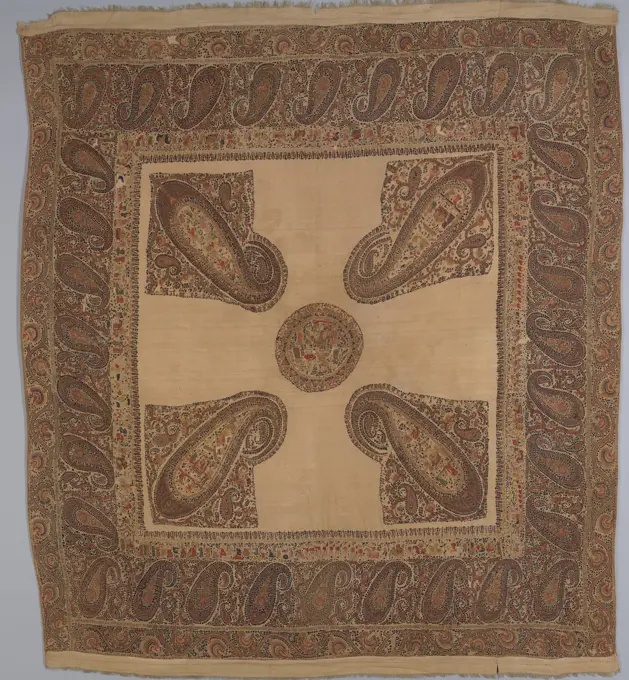
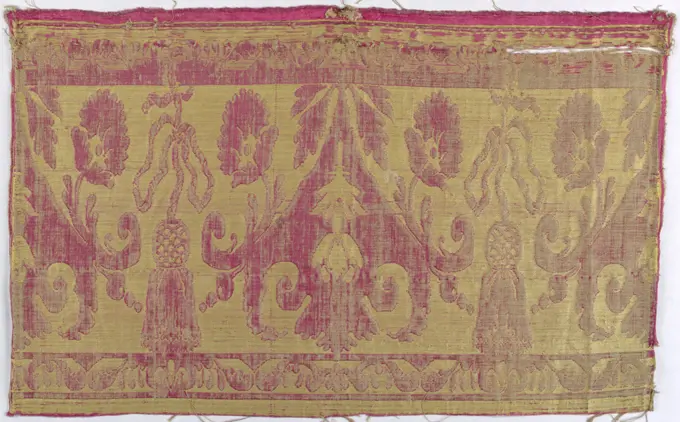
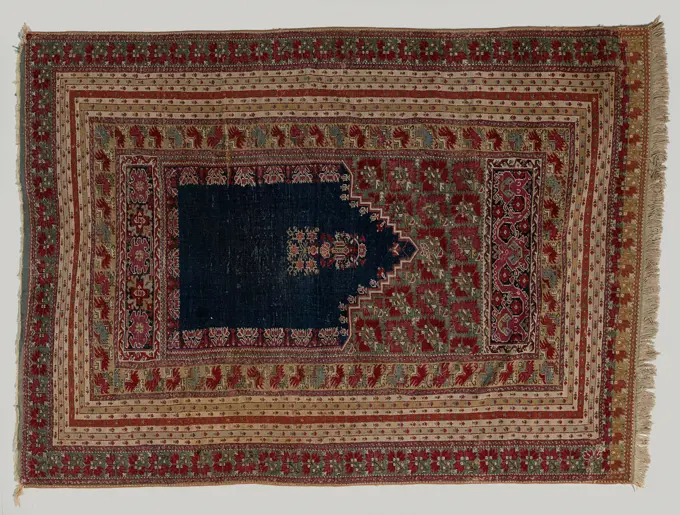
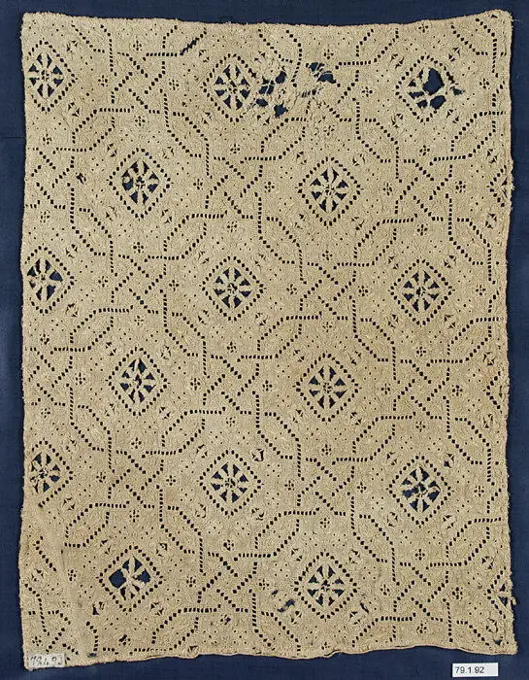
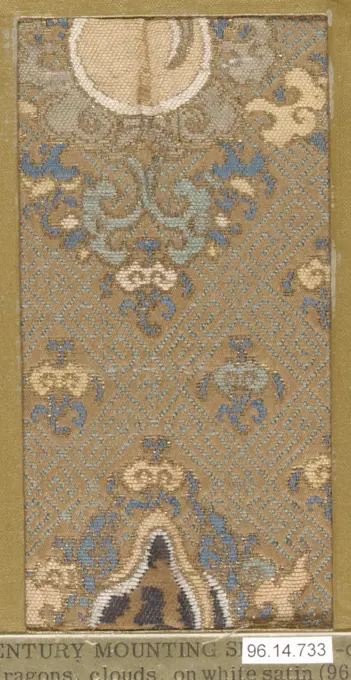
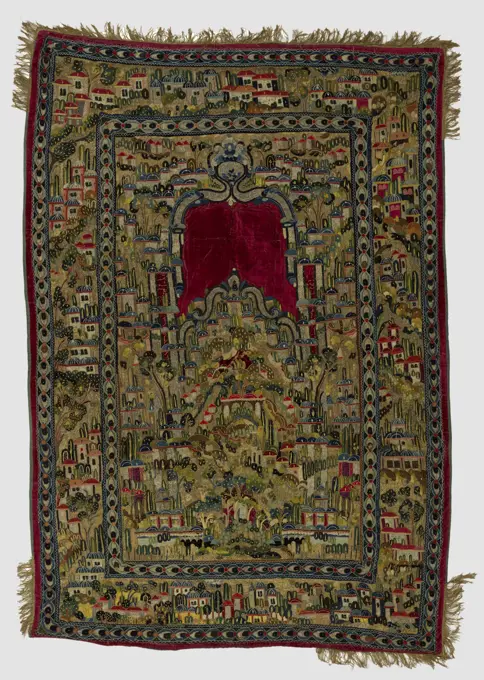
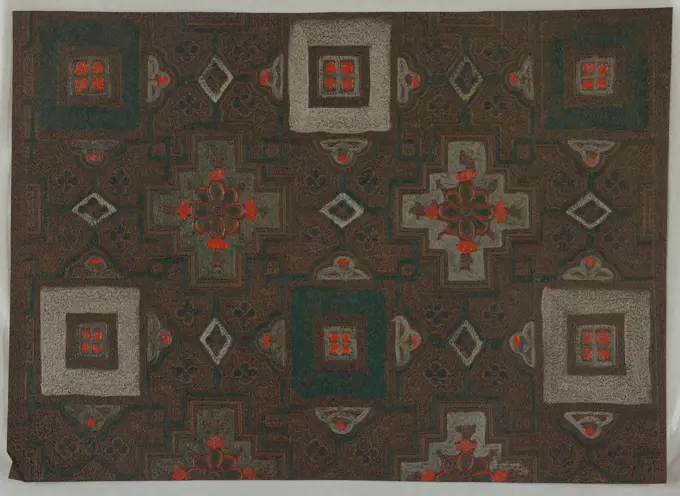
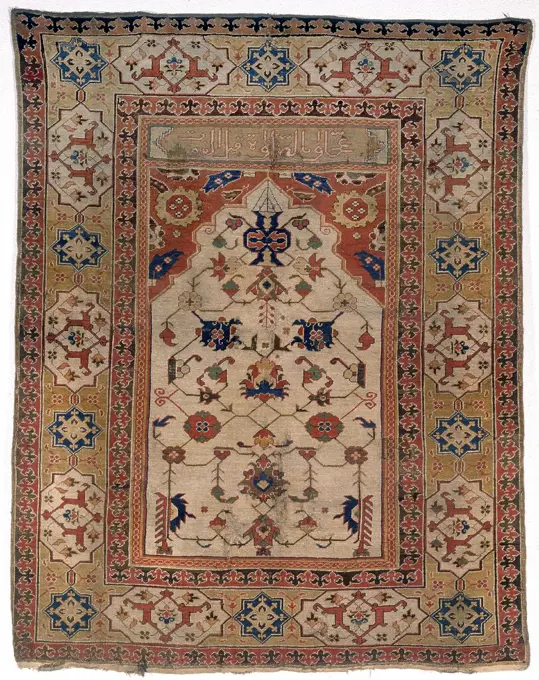
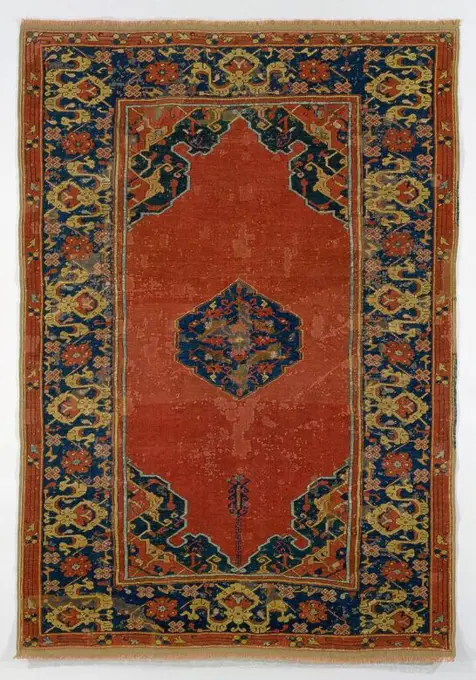
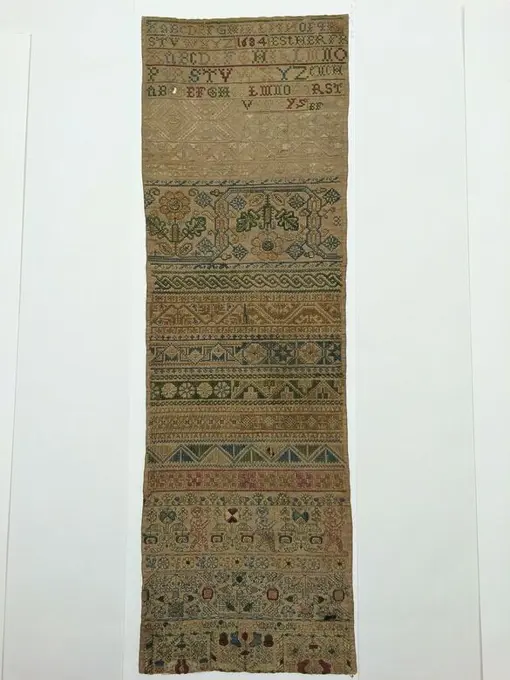
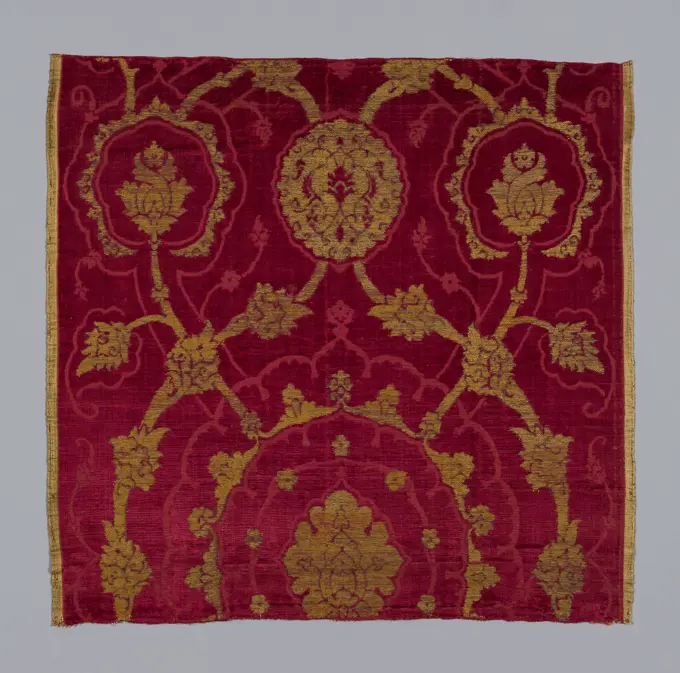
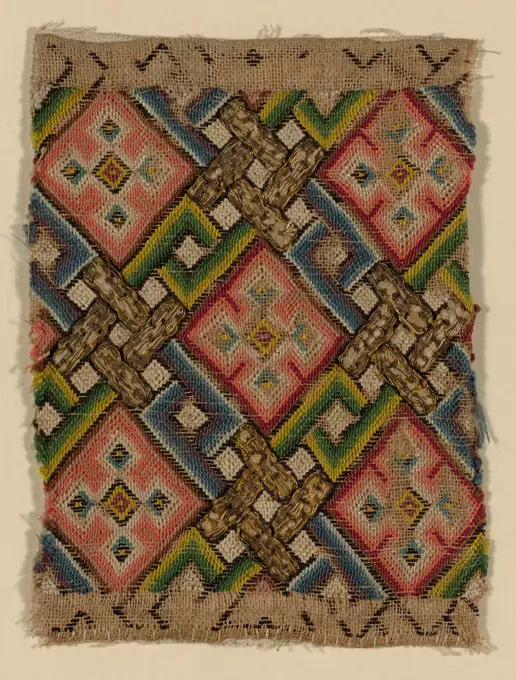
Pillow cover, Medium: silk embroidery on linen foundation Technique: embroidered in counted running stitch on plain weave foundation, Diagonal rows of lozenges with saw-toothed edges embroidered in red, white, buff and yellow silk on a blue ground., Thasos, Greece, 18th century, embroidery & stitching, Pillow coverCarpet Fragment; wool, bast fiberEmbroideredHangingSarong (Kain Lepas) mid to late 19th century Javanese or Sumatra. Sarong (Kain Lepas) 308246Shoulder Cloth(Limar)Waist Wrapper (Sarung,Lereng)Oriental carpet. Oriental carpet, arabic rug, lottery carpet. Midfield with yellow arabic motifs against a brick red background. Lotto pattern running in the Kelim style. Double edge, whose wide is decorated with uniform cartouches. Button: Ghiledes knot.Fragment, Medium: silk on linen Technique: appliqué and embroidery, Fragment with a multicolored pattern of interlocking diamond shapes with buttonhole details., 13th century, embroidery & stitching, FragmentHeadscarf 19th century. Headscarf 86251Fragment, Medium: cotton Technique: printed, Fragment with conventionalized floral ornament on a brown ground with border; in red, blue, green and white., England or USA, ca. 1850, printed, dyed & painted textiles, FragmentBliżej Kultury unknownFragment Made 1601-1700 Italy. Silk, warp-faced plain weave with supplementary patterning wefts and supplementary brocading wefts .Fragment red with yellow sides of the Anonymous, 1550 - 1599 Fragment, composed of 9 pieces, from red silk with pattern in yellow of crowned medallions with pomegranate. Italy (possibly) silk Fragment, composed of 9 pieces, from red silk with pattern in yellow of crowned medallions with pomegranate. Italy (possibly) silkPrayer cloth with one transverse panel, kula. Prayer cloth with one transverse panel, kula. Midfield: red mihrab with flat triangle facade, in which a branched flower stalk in blue and yellow hangs. The swing is sky blue with straight rows of anjelieren. A narrow upper resource panel is in brown with anjelieren. Edges: Multiple. The widest consists of seven dashes in white, purple, black and beige. The first inner zoom is white, the second valley yellow and is caught in piping. Only one runs such a piping.Heirloom Textile Made 1600-1800 India. Cotton, plain weave, block printed and resist-dyed .Pillow Cover (Incomplete). Italy. Date: 1601-1650. Dimensions: 54.1 x 43.8 cm (21 1/4 x 17 1/4 in.)Inner panel: 20.3 x 13.3 cm (8 x 5 1/4 in.)Band of inner panel: 47.3 x 42.3 cm (18 5/8 x 16 5/8 in.)Lace width: 1.3 cm (1/2 in.)Upper band: 6.2 x 42.1 cm (2 3/8 x 16 1/2 in.)16 1/2 in. is warp direction. Linen, plain weave; embroidered with silk in cross and long armed cross stitches; upper border of linen, plain weave; cut and drawn thread work; embroidered with silk in Russian overcast stitches; insertion of silk, needle lace. Origin: Italy. Museum: The Chicago Art Institute, Chicago, USA.Skoutari” carpet unknownRug;  19th century (1801-00-00-1900-00-00);Plant ornaments, Poland (culture), decorative fabrics, equipment and home equipment, purchase (provenance)Eastern carpet, Tekke Volk, c. 1875 - c. 1900 Eastern carpet, huge dressing. In midfield Chuval Guls interspersed with cross -shaped motifs, so -called chemche generous. Rand subdivided into rectangular compartments with octagonal ornaments. Midden-Turkestan Necklace/impact/pole: Wool Eastern carpet, huge dressing. In midfield Chuval Guls interspersed with cross -shaped motifs, so -called chemche generous. Rand subdivided into rectangular compartments with octagonal ornaments. Midden-Turkestan Necklace/impact/pole: WoolPanel; wool, linenSarape, c. 1820-1860. America, Native North American, Southwest, Mexico, Saltillo, Post-Contact, Classic Period. Tapestry weave: cotton and wool; overall: 210.9 x 124.5 cm (83 1/16 x 49 in.).Panel Made 1871 England. Wool and silk, two color complementary weft, weft-float faced 1 11 satin weave with supplementary patterning wefts bound in 1 11 warp chevron twill interlacings . Christopher Dresser (Designer)Rug with a grid pattern with leaf work, Koninklijke Kinheim, 1930 in midfield Wool rug in beige and turquoise of hand -knotted wool. Midfield: Raster pattern with branches with leaves in light brown on a beige stock. Rand with S-Ranken in Turquoise Fond. Beverwijk wool Wool rug in beige and turquoise of hand -knotted wool. Midfield: Raster pattern with branches with leaves in light brown on a beige stock. Rand with S-Ranken in Turquoise Fond. Beverwijk woolCover 15th century Italian, possibly Perugia. Cover 222602Indo-Persian carpet with medallions ca. 1680 Indo-Persian. Indo-Persian carpet with medallions 461320Eastern carpet, anonymous, c. 1875 - c. 1900 Oriental carpet, flower rug. In midfield a Herati pattern against a dark blue stock. Triple edge of which the middle one with flower vines. Middle Persia ketting: cotton (textile). inslag: wool Oriental carpet, flower rug. In midfield a Herati pattern against a dark blue stock. Triple edge of which the middle one with flower vines. Middle Persia ketting: cotton (textile). inslag: woolArmenian sash unknownCarpet 15th-16th century. Carpet. 15th-16th century. Wool; symmetrically knotted pile. Country of Origin Turkey, Central Anatolia. Textiles-RugsSkirt, 20th century, 22 1/2 x 43 13/16 in. (57.15 x 111.28 cm), Cotton, China, 20th centuryFragment, Medium: silk Technique: supplementary warp forming pile (velvet), Bands of red velvet on yellow background., 17th century, woven textiles, FragmentConciliate belt;  2. PO. 18th century (1750-00-00-1799-00-00);Krzeszowice, collection, index beltsStripes rug, Kirshihir. Stripes rug, Kirshihir. Field in red, yellow, light blue, purple, green and white. Oknergele edge.Kilim, 18th century, 165 11/16 x 55 1/8 in. (420.85 x 140.01 cm) (approximate), Wool; woven fabric, Turkey, 18th centuryEastern carpet decorated with lotuses, palmets, rosette flowers and birds ,, 1800 Eastern carpet, carpet format, made of knotted wool. Midfield: broken zigzag belts are nine and a half a window in a dark blue stock. The stock shows a very finely scattered pattern of small lotuses and palmets, rosette flowers and purple-wise and deviated birds in white, red, rose, light blue and yellow. Three edges: The middle and widest is red with lotus flowers in Rose, Lila and Bleu, connected by a broken winding band of green. The inner and outer edges are the same: narrow white with running slender with turns in and out facing chalice flower. At one end there is about 35 cm from the surface light blue in color. Here and there the Pole is worn down to the knot, furthermore the rug is in a fairly good condition. Senneh wool Eastern carpet, carpet format, made of knotted wool. Midfield: broken zigzag belts are nine and a half a window in a dark blue stock. The stock shows a very finely scattered patteCHAICE VEIL unknownCoverlet Made 1840 Pennsylvania. Cotton and wool, plain weave double cloth with main warp and extended ground weft fringe; two loom widths joined .Oriental carpet. Barred in Kelim technology. A cardinal saving mihrab in midfield. There are alternately crossed branches on the center alas. Hexagons located on the right. Further rows.Coverlet fragment, Medium: wool, cotton Technique: plain compound cloth (overshot), Traditional, geometric design showing combinations of small triangles in dark blue on a white, undyed cotton ground. Reversible., USA, early 19th century, woven textiles, Coverlet fragmentFragment Made 1700-1750 China. Brocaded fancy compound satin, silk and gilt paper; 2 1/2 strips to m.m. .Panel, Medium: silk, metallic Technique: supplementarty warp pile (velvet), cut, in satin foundation Label: silk and metallic cut velvet in satin foundation, Rectangular piece of velvet with a large circular ornament in the center surrounded by carnations and tulips. Borders on the two short sides only., Turkey, 18th century, woven textiles, PanelCarpet, Medium: wool, linen or hemp, cotton Technique: cut pile on plain weave (moquette or velours d'Arras), Cut pile in a plain weave foundation showing a design of large-scale, somewhat stylized pomegranate, foliage and flowers in multicolored wool pile with white cotton pile accents. Ground warp and weft are coarse linen or hemp, as is broad selvage of warp-face plain weave. Colors are faded; were formerly very bright orange, red, two shades of green, and white., France, late 17th-18th century, woven textiles, CarpetTent fitting front, Salor Volk, 1800 - 1900 Tent fitting front, Salor Chuval. There are three whole and six sections in midfield. Edges with geometric motif, interspersed by diamond -shaped figure. Edges are cut. South Turkestan Pool: Silk. Ketting: Cotton (Textile). Pool an element: wool Tent fitting front, Salor Chuval. There are three whole and six sections in midfield. Edges with geometric motif, interspersed by diamond -shaped figure. Edges are cut. South Turkestan Pool: Silk. Ketting: Cotton (Textile). Pool an element: woolSheet with red diamond and zigzag pattern 18th century Anonymous. Sheet with red diamond and zigzag pattern. Anonymous , Italian, 18th century. 18th century. Relief print (wood or metal). PrintsEastern carpet ,, 1800 - 1949 Oriental flower rug of knotted wool with palmets, rosettes, windows with hooks on a dark blue stock. Rand decorated with huge corners. Shiraz wool Oriental flower rug of knotted wool with palmets, rosettes, windows with hooks on a dark blue stock. Rand decorated with huge corners. Shiraz woolEmbroidered Cover, 19th century. Turkey, 19th century. Embroidery: gold filé, twisted around silk core, on cotton tabby ground; overall: 114 x 111 cm (44 7/8 x 43 11/16 in.).Eastern carpet ,, c. 1850 Oriental carpet, carpet format, with diamond -shaped tendrils, filled with rosette flowers interspersed by small diamond -shaped medallions with palmets. Three edges of which the inner is decorated with a flower livel and the outer with a bilt edge. Hamadan (possibly) wool Oriental carpet, carpet format, with diamond -shaped tendrils, filled with rosette flowers interspersed by small diamond -shaped medallions with palmets. Three edges of which the inner is decorated with a flower livel and the outer with a bilt edge. Hamadan (possibly) woolCover. Turkey. Date: 1601-1700. Dimensions: 101.5 x 110.6 cm (40 x 43 3/8 in.). Square, linen, embroidered in a repeated ogival device imitating weaving with a palmette border. Origin: Turkey. Museum: The Chicago Art Institute, Chicago, USA.Indo-Persian carpet with vine scroll and palmette pattern ca. 1625 (or earlier) Indo-Persian. Indo-Persian carpet with vine scroll and palmette pattern. Indo-Persian. ca. 1625 (or earlier). Wool pile on cotton foundation.. Textiles-RugsCarpet with Scrolling Vines and Blossoms ca. 1650 The finest Indian carpets were made with a pile of pashmina wool and a foundation of silk, which allowed for hundreds of knots to be tied per square inch. Increasing the suppleness and softness of the carpet, the greater number of knots also increased the subtlety of the patterns that could be made on the carpet; here, a scrolling vine from which bloom palmettes, poppies, irises and serrated lancet leaves. Pashmina wool, the undercoat of the Himalayan mountain goat, was obtained from Kashmir (in northern India) and from western Tibet, from which imports were strictly regulated.. Carpet with Scrolling Vines and Blossoms. ca. 1650. Silk (warp and weft), pashmina wool (pile); asymmetrically knotted pile. Made in Northern India or Pakistan, Kashmir or Lahore. Textiles-RugsHeupdoek, anonymous, before 1940 Rectangular stiff cloth of Abaca, consisting of two halves sewn in length. The colors of the cloth are deep dark brown red, dark brown and natural. The motives are by means of Ikat technology saved. They are ranked in length courts on dark brown -red or dark brown background. They are geometric motifs (spiral motifs) and stylized people and animal figures. (The canvas is meant to be sewn into a tube to form a (women's) sarong) Philippines cotton (textile) ikat Rectangular stiff cloth of Abaca, consisting of two halves sewn in length. The colors of the cloth are deep dark brown red, dark brown and natural. The motives are by means of Ikat technology saved. They are ranked in length courts on dark brown -red or dark brown background. They are geometric motifs (spiral motifs) and stylized people and animal figures. (The canvas is meant to be sewn into a tube to form a (women's) sarong) Philippines cotton (textile) ikatVeil late 18th century. Veil 444423Mosaic Hanging, 19th century, L.56 x W.37 in., India, 19th centuryTextile; silk, cottonSash or band, Medium: silk, linen, metallic Technique: brocaded tablet woven (warp twining), Polychrome geometric patterns on a deep red background that is patterned by the diagonal lines of the warp twining., Spain, possibly 16th century, woven textiles, Sash or bandFloorspread. India, Mughal, 18th century. Textiles; carpets. Cotton plain weave with silk chain stitch embroidery, wrapped metal thread with silk core, and silk quiltingALFOMBRA DE CUENCA S XVIII. Location: PRIVATE COLLECTION, MADRID, SPAIN.CoasterCover (Furnishing Fabric) Made 1875-1900 China. Floral design on yellow ground. .Gene Luedke, Homespun Bedspread, c 1938 Homespun BedspreadSquare Shawl ( "amli"), 1800s. India, Kashmir, 19th century. Embroidery, large pieced areas: wool ; overall: 182.9 x 177.8 cm (72 x 70 in.).Brocade, 1600-1650. Turkey, Bursa, first half of 17th Century. Brocade, silk; average: 45.8 x 62.3 cm (18 1/16 x 24 1/2 in.).Kira, 20th century, 91 x 49 1/2 in. (231.14 x 125.7 cm), Silk, cotton, Bhutan, 20th centuryEmbroidered Square, 19th century. Turkey, 19th century. Embroidery, silk and metallic threads, on silk tabby ground; average: 63.5 x 54 cm (25 x 21 1/4 in.).Baby Carrier, 29 3/4 x 16 7/8 in. (75.57 x 42.86 cm), Cotton, silk, metallic threads, ChinaMedalleled, Yuruk of Sultan. Medalleled, Yuruk or "Sultan". Midfield: Dark blue fond with a cardinal savings medallion with foothills to head and tail and filled with windows in many muted colors. Folding four large flowers in kaleidoskopic color boxes divided and many small rosettes. Edge: Multiple. The widest is orange, on which cross flowers are located. Three plain indoor frames in white, cerise and blue. The outside zoom is brown.Head covering, Second quarter of the 20th century, 87 7/16 x 68 13/16 in. (222.09 x 174.78 cm), Cotton, metallic threads, sequins; dyed, India, 20th centurySampler, Medium: silk and linen embroidery on linen foundation Technique: embroidered in running, double running, stem, satin, chain, cross, montenegrin cross, buttonhole, overcasting, eyelet, herringbone (both sides), four-sided stitch and detached looping (buttonhole) stitches on plain weave foundation, Bands of brightly colored pattern followed by white work., England, 17th century, embroidery & stitching, SamplerPiece 18th century Japan. Piece 71933Shawl mid-19th century. Shawl 453288Border, Medium: silk and linen Technique: brocatelle, Horizontal border with a tassel motif. In red and yellow., 17th century, woven textiles, BorderCarpet Made 1875-1900 Iran. Cotton and wool, slit tapestry weave .Sash. Morocco, 16th-17th century. Costumes; Accessories. Silk plain weave with silk and metallic-thread supplementary weft patterning bound in twill (lampas)Panel Made 1601-1700 Turkey. Silk and gilt-metal strip, warp-float faced broken warp chevron twill weave with supplementary facing wefts and two-color supplementary pile warps forming cut and uncut voided velvet .Rug Made 1801-1900 United States. Jute, plain weave with cotton and wool yarns, felted, knitted and woven strips forming hooked pile; edged with cotton and wool, oblique interlacing .Sampler (Spain); silk embroidery on linen foundationOriental carpet. Oriental carpet, GhioDes prayer rug with transverse panels. In the midfield a cornificuer mihrab with a hanging oil can and a flower branch in a vase the upper and resire panels are dark blue. Multiple edge. The middle consists of seven stripes. Button: Ghiledes knot.Section of a Floor Cover. China, Qing dynasty, late 17th - early 18th century. Textiles; covers. Cut and voided silk velvetTextile Fragment 17th century. Textile Fragment. 17th century. Silk and metalllic thread; brocaded. Country of Origin Iran. Textiles-BrocadesCeremonial Headcloth, 18 x 18 in. (45.72 x 45.72 cm), Cotton, silk; needlework, ChinaSquare 16th century possibly Greek. Square. possibly Greek. 16th century. Linen, cutwork. Textiles-LacesCurtain of aubergine-colored velor, finished with wide galon of beige and multicolored velor with gold thread. Curtain of aubergine-colored velor, finished with wide galon of beige and multicolored velor with gold thread. Model: Velcro façade from two courses with full width and one narrower job. Vertical tangled decorative edge with longitudinal reep velor. Along the bottom of decorative edge in the width. Lining: Dark purple-red satinet, finished with wine red ornament. Pattern: decorative edges with motifs such as Caucasian tap beach, all figures with gold thread. Marked on white band: Front salon and Bok for L.Sampler, Medium: silk embroidery on linen foundation Technique: embroidered on plain weave, Seven horizontal bands of varying heights each with a stylized wavy floral vine. Embroidery for pattern only., Mexico, 18th-19th century, embroidery & stitching, SamplerPiece 18th-19th century Japan. Piece 66457Baby Carrier, 19 3/4 x 16 1/8 in. (50.17 x 40.96 cm), Cotton, silk and/or rayon, yellow metal; needlework, ChinaShawl. unknown, authorPrayer rug (), Multicolored applied and embroidered, with a pattern of a hilly landscape with buildings with domes and trees in midfield., C. 1840 - c. 1900 Prayer rug () Of natural cotton () With applique and embroidery in various colors, all around with golden -yellow fringe - with gaps - and lined with blue cotton. The central performance is caught in a wide edge with a narrow edge on either side with a pattern of connected ellipsen. The performance in midfield comprises a hilly landscape upholstered with buildings with domes and trees. Along both slopes of the hill and the center of buildings with domes that are placed parallel on the rising scumpled arching. Above it a piece of red velvet, which is caught in a continuation of the scalloped arch that has a bulge at the top. The wide edges are decorated with similar hills with buildings with domes and trees. With the exception of the narrow intermediate edges, the stock is largely covered with small embroidery stitches in gold and sSampler, 1821. England, early 19th century. Embroidery; silk on woolen canvas; overall: 34.3 x 33.4 cm (13 1/2 x 13 1/8 in.).Sarong (Kain Lepas) 19th century Balinese. Sarong (Kain Lepas) 315940Hanging. Dimensions: H. 85 1/2 in. (217.2 cm)W. 68 1/4 in. (173.4 cm). Date: 18th century.Furnishings for the home, subjected to rough use, were usually woven in wool or camel and goat hair, so this fine curtain in silk must have been made for a special occasion or an aristocratic home. Curtains were composed of a number of panels-usually at least six-joined together by silk ribbons or fine lace. The geometric patterns on traditional Tunisian textiles are similar to those used on pottery, jewelry, and designs painted on women. Museum: Metropolitan Museum of Art, New York, USA.Apron probably 19th century Romanian. Apron 98426Square scarf, with a small, black mirror in the middle, which is red on the other side through double tissue, around which a motif of flowers, botas and arabesken, anonymous, c. 1875 - c. 1900 Square scarf of a woolen and cotton double tissue in red, black and green, shot from two sides with frills. In the middle a small black mirror, which is red on the other side. In the four corners a composite motif of botas, floral motifs and arabesken. West-Europa whole: Wool. whole: Cotton (textile) Square scarf of a woolen and cotton double tissue in red, black and green, shot from two sides with frills. In the middle a small black mirror, which is red on the other side. In the four corners a composite motif of botas, floral motifs and arabesken. West-Europa whole: Wool. whole: Cotton (textile)Sidewall (Japan); fiber composition, tung oil, embossed; 50 x 36 cm (19 11/16 x 14 3/16 in.)ALFOMBRA TIPO ALMIRANTE. Location: INSTITUTO VALENCIA DE DON JUAN-COLECCION. MADRID. SPAIN.Carpet. Dimensions: H. 60 1/2 in. (153.67 cm)W. 42 in. (106.68 cm). Date: 17th century. Museum: Metropolitan Museum of Art, New York, USA.Embroidered band sampler. Culture: British. Dimensions: 24 1/4 × 7 5/8 in. (61.6 × 19.4 cm). Maker: Esther French (British, born 1670) , Warminster, Wiltshire, England. Date: 1684.Band samplers are composed of horizontal rows ("bands") of embroidered patterns stitched along the linen foundation fabric. Many of the patterns stitched onto band samplers can be traced to sixteenth-century pattern books, and often include depictions of fruit, flowers, and geometric patterns. The sampler includes bands of floral and geometric patterns, in addition to a band that includes "boxers," male figures who flank a floral motif and hold a "trophy," in this case a flower. The figure of the boxer is derived from the motif of a lover offering a flower to his beloved, which is found in a number of sixteenth-century pattern books.Included on the sampler is the name Esther French and the year 1684, presumably the name of the maker and the year in which she completed her work. She may have been Esther FrenConcussion belt Manufaktura Szczepan Filsjean (1787 1794)Banner with Shaft 17th century Flemish. Banner with Shaft 26928Fragment Made 1475-1525 Italy. Silk, warp-float faced 4 1 satin weave with gilt-metal-strip-wrapped silk, discontinuous supplementary facing wefts and supplementary pile warps forming cut voided velvet .Fragment Made 1601-1700 Italy. Linen, plain weave; embroidered with silk floss, and gilt- and silvered-metal-strip-wrapped silk in tent stitches; padded couching .Embroidery Sample, 19 x 14 in. (48.26 x 35.56 cm), Cotton, silk; needlework, China