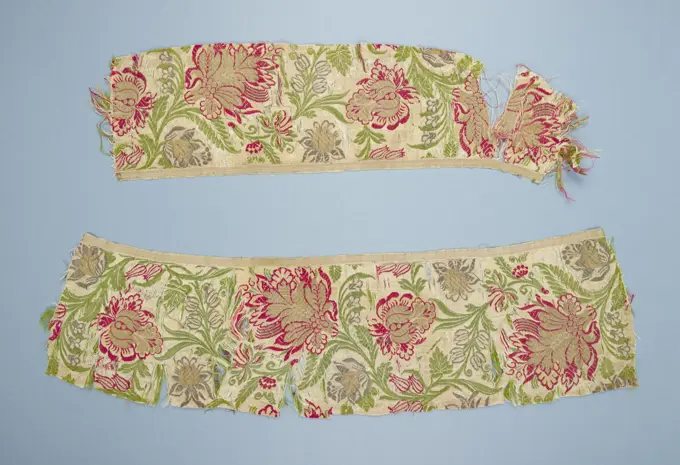
Floral Silk Fragments

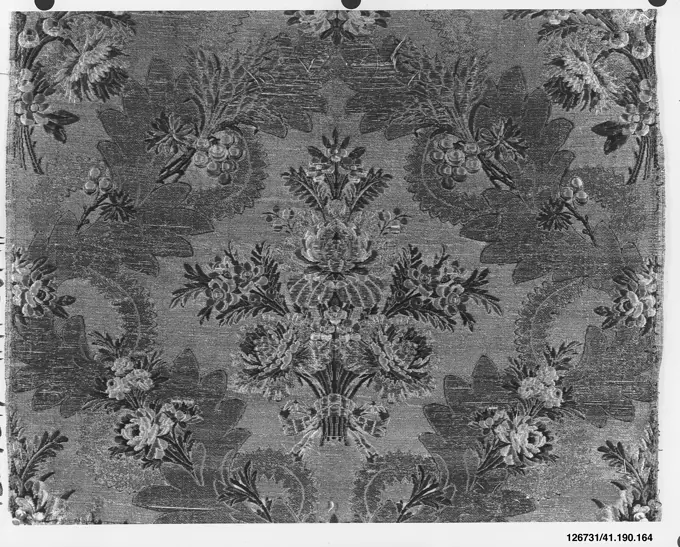
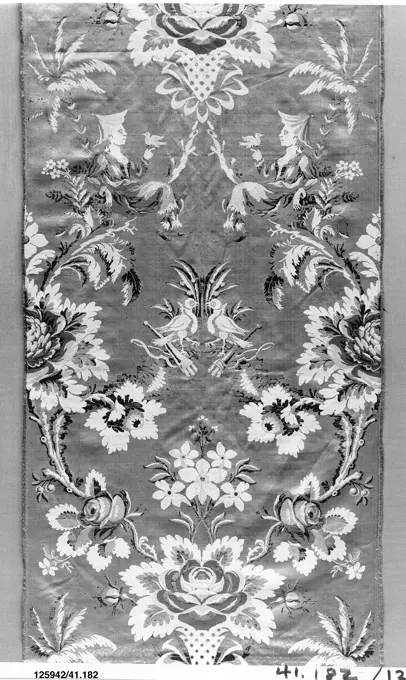
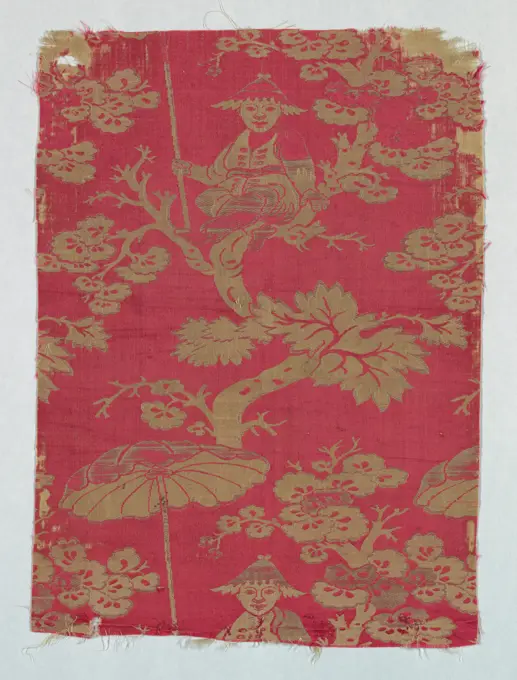
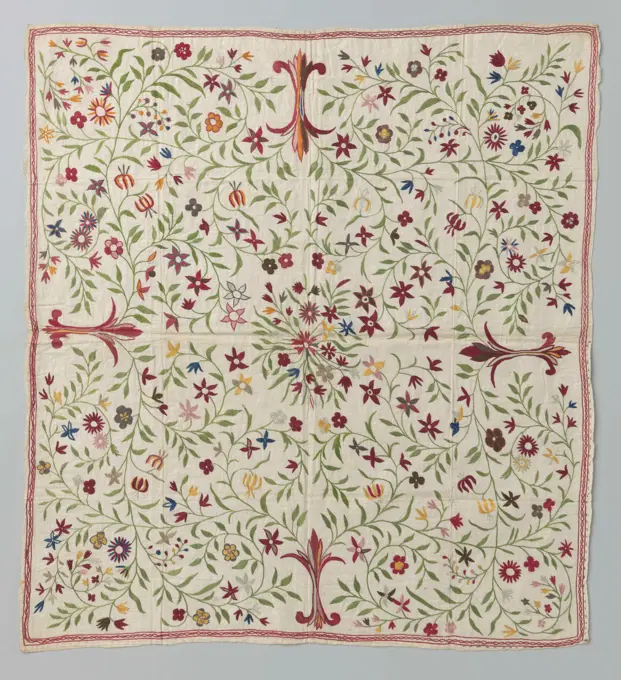
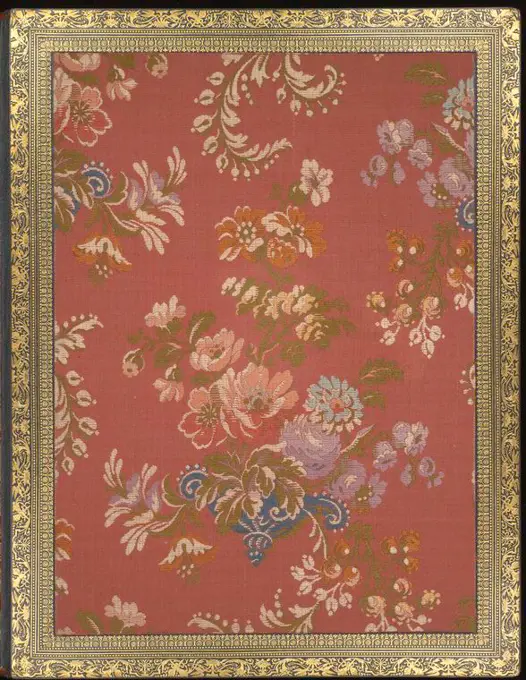
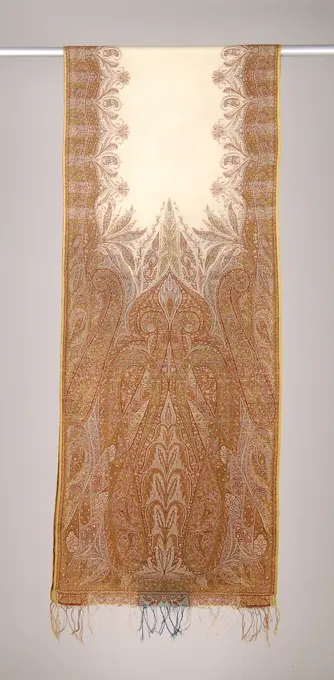
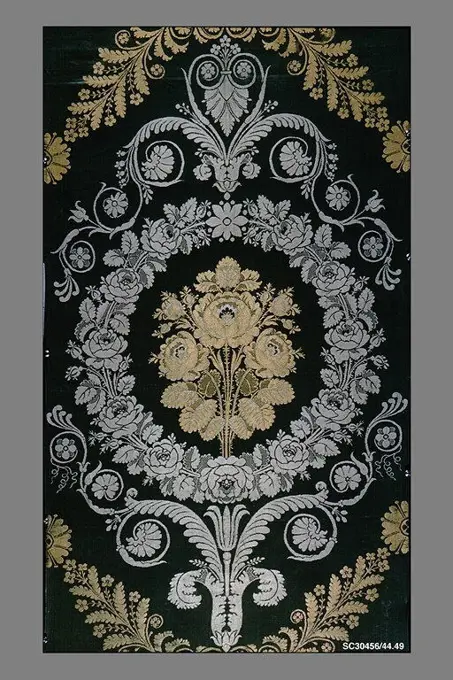
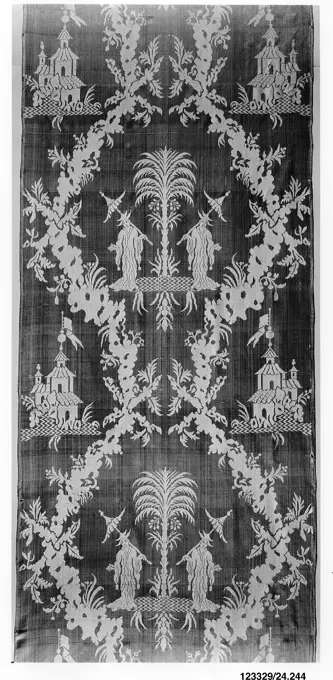
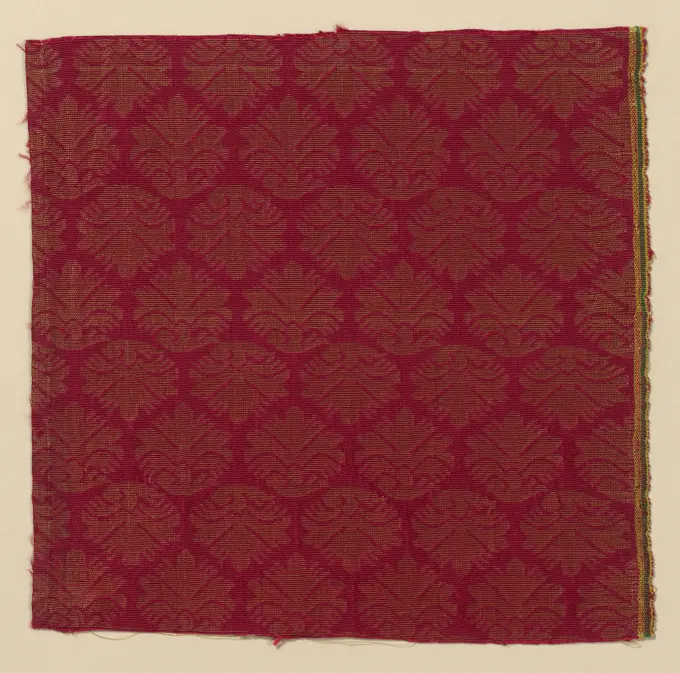
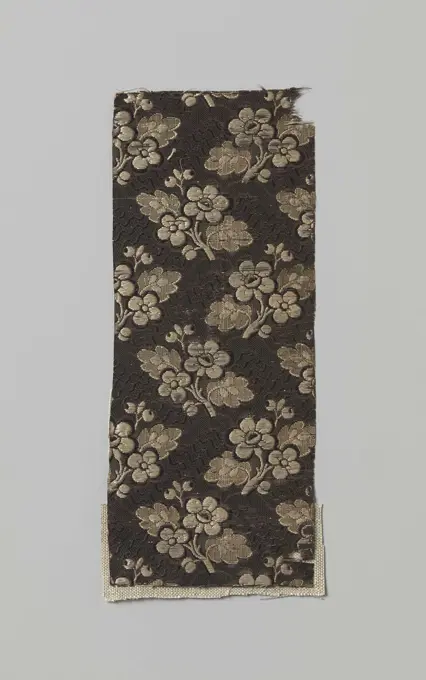
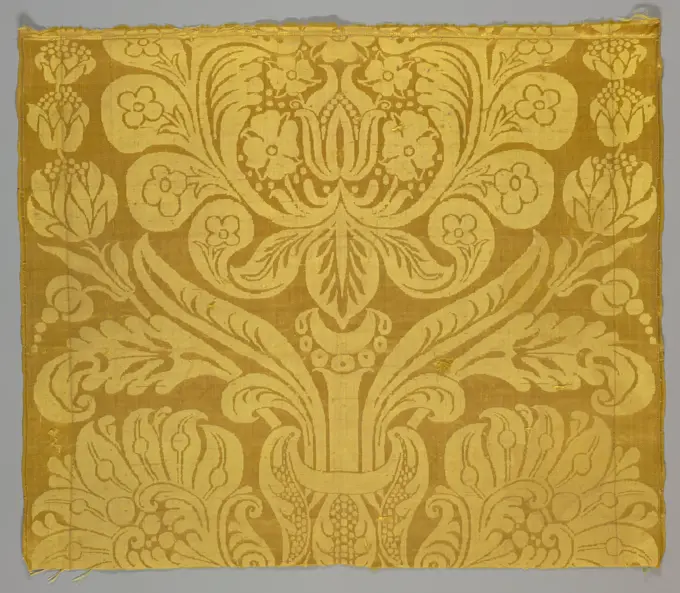
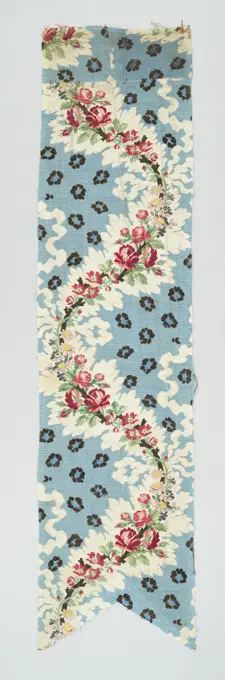
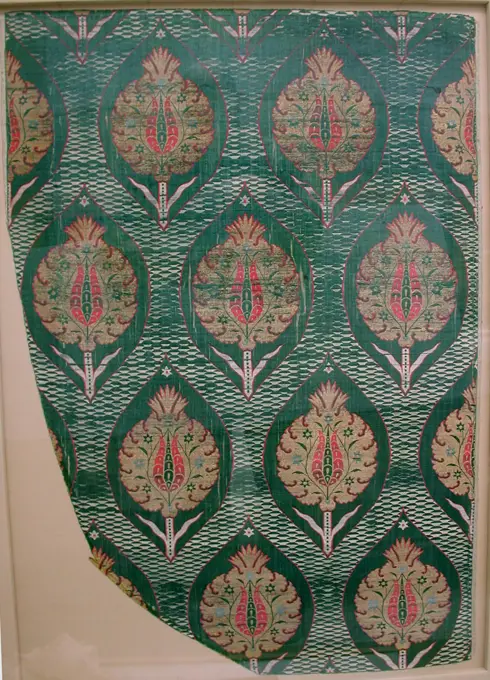
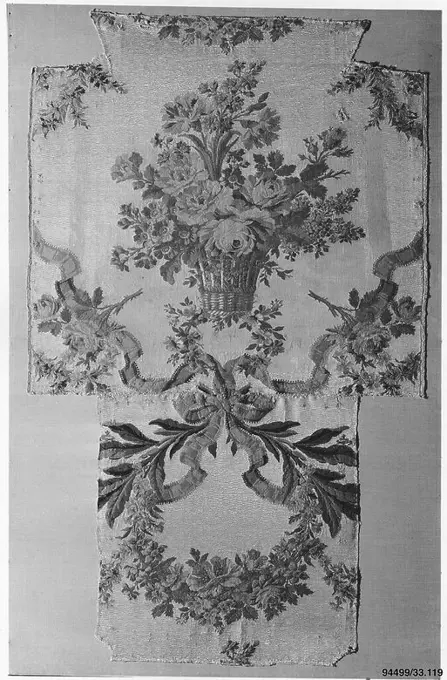
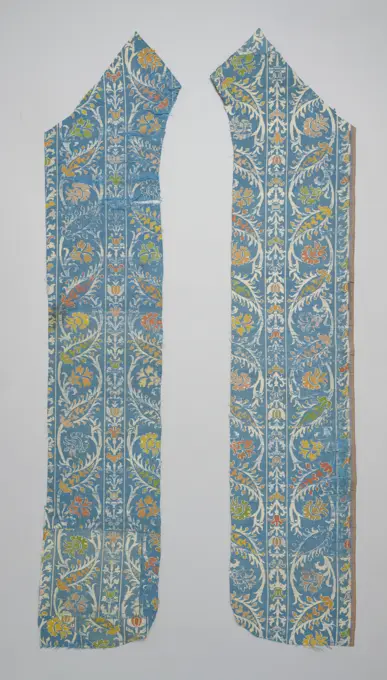
Fragments of elaborate floral brocade and silk textiles from the 18th century featuring detailed floral motifs on rich backgrounds.
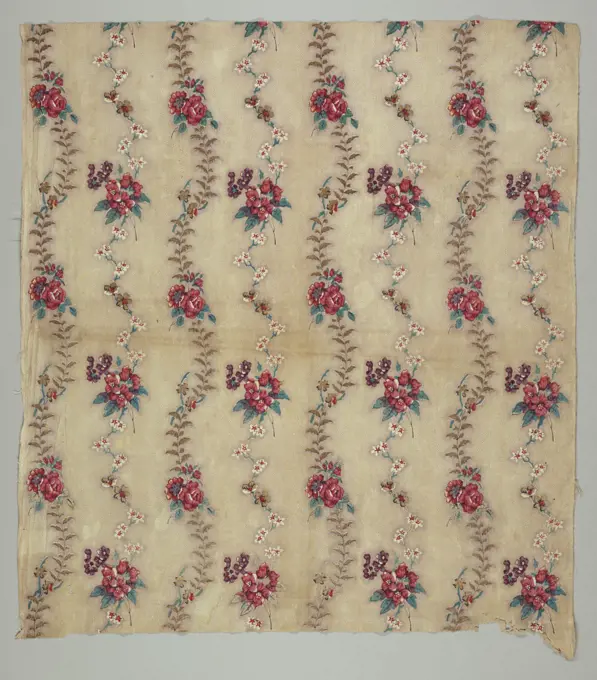
Textile, Medium: cotton Technique: block printed on plain weave printed by engraved roller on plain weave, Panel of cream white cotton, with block-printed design in perpendicular arrangement. Delicate ascending vine with clusters of small flowers, naturalistically drawn in shades of red, violet, blue and yellow drab; small flowers in pure white probably by discharge. Fine picotage in dark brown around the vines and blossoms. Left selvages present., early 19th century, printed, dyed & painted textiles, Textile
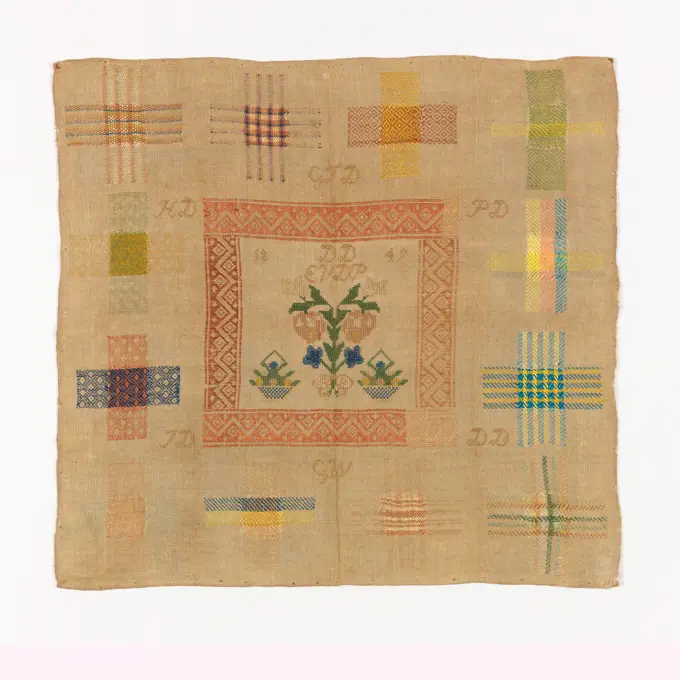
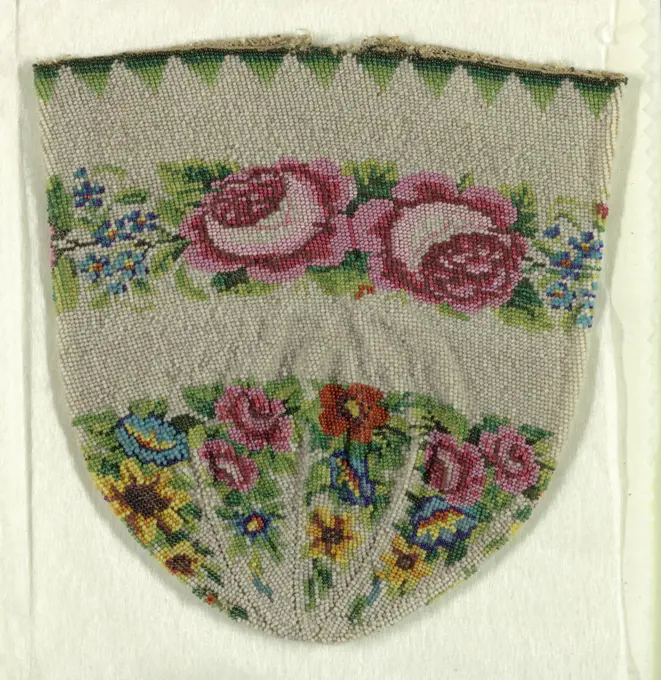
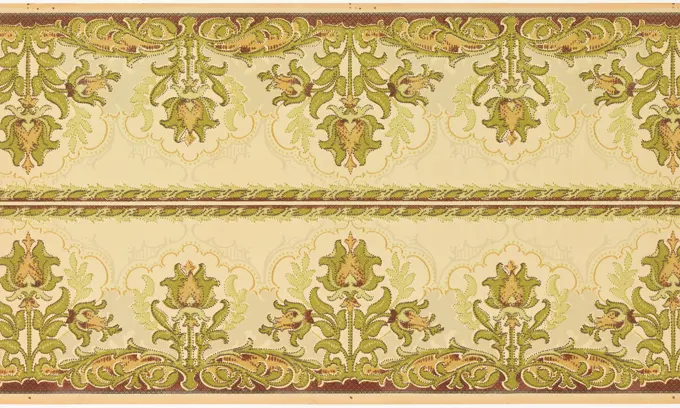
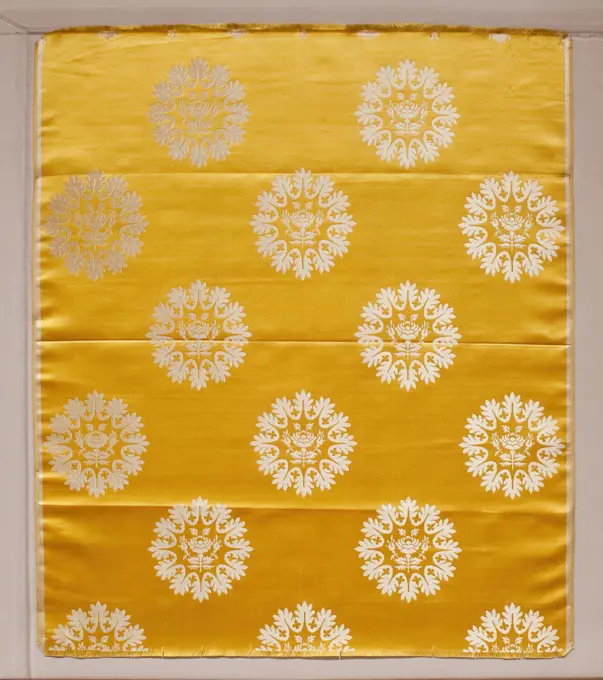
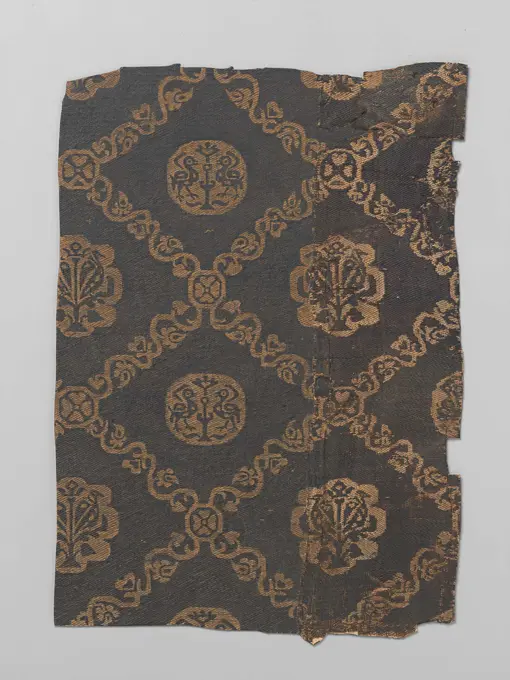
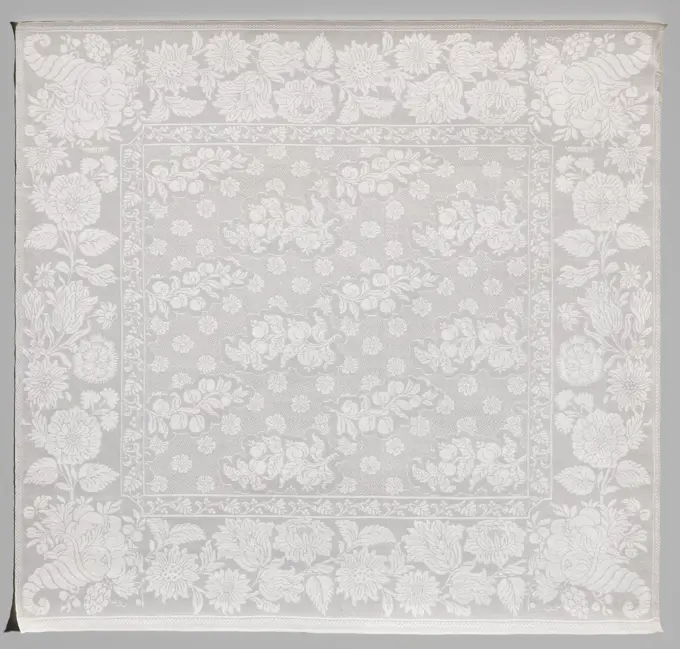
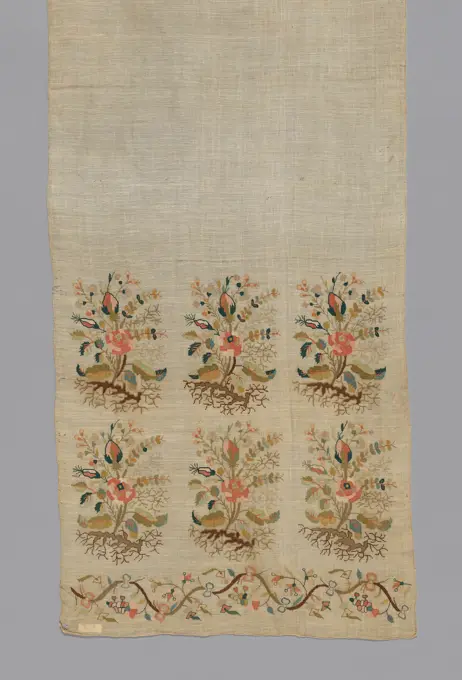
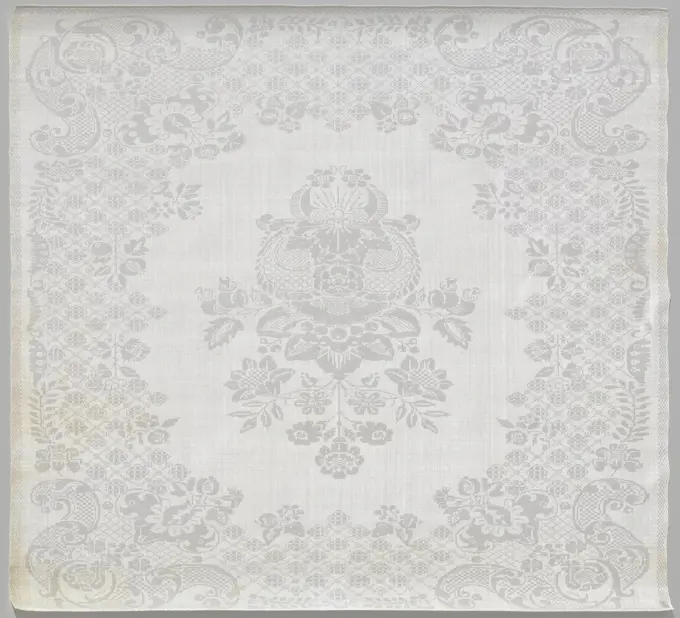
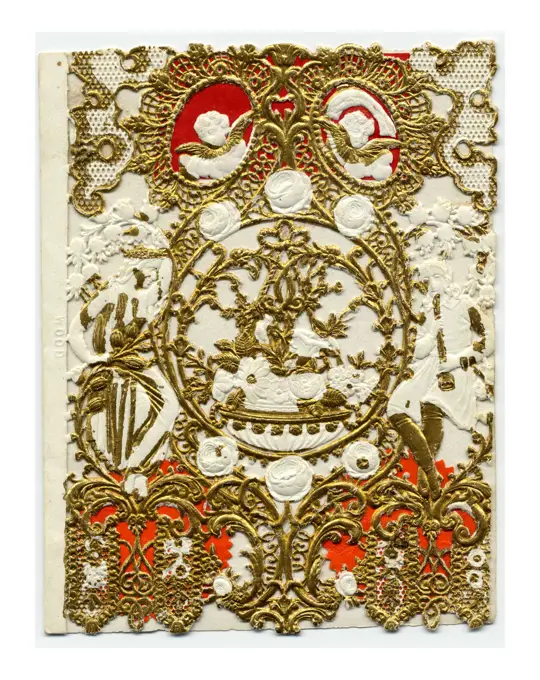
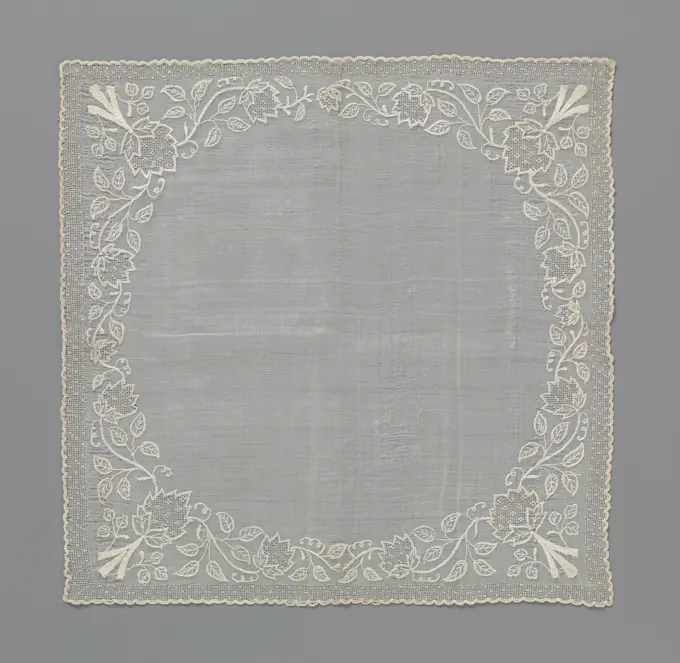
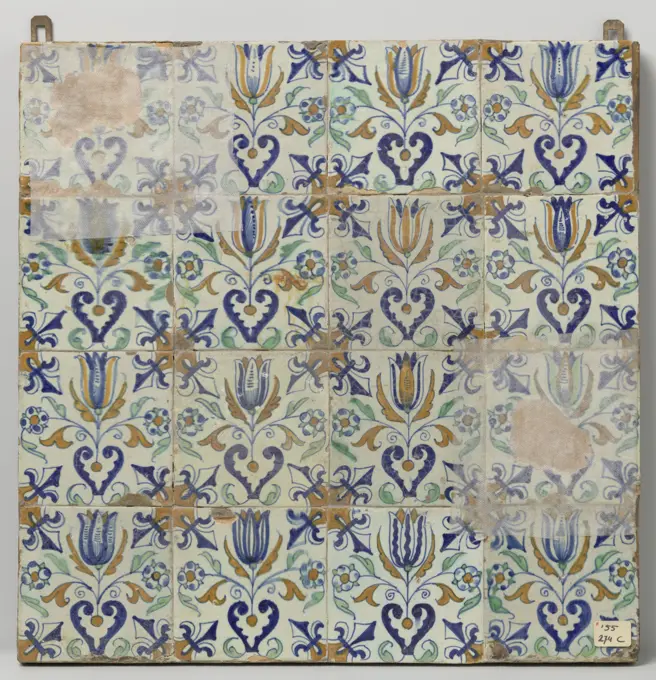
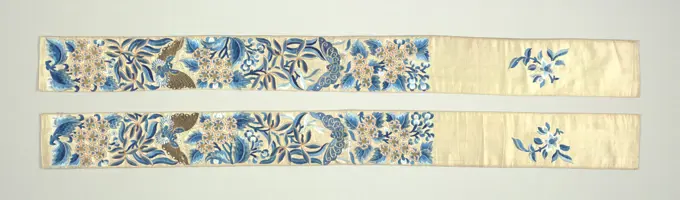
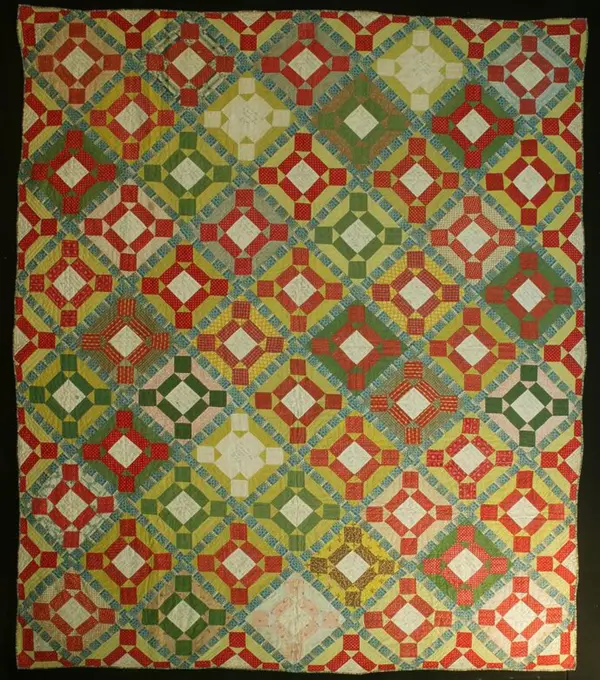
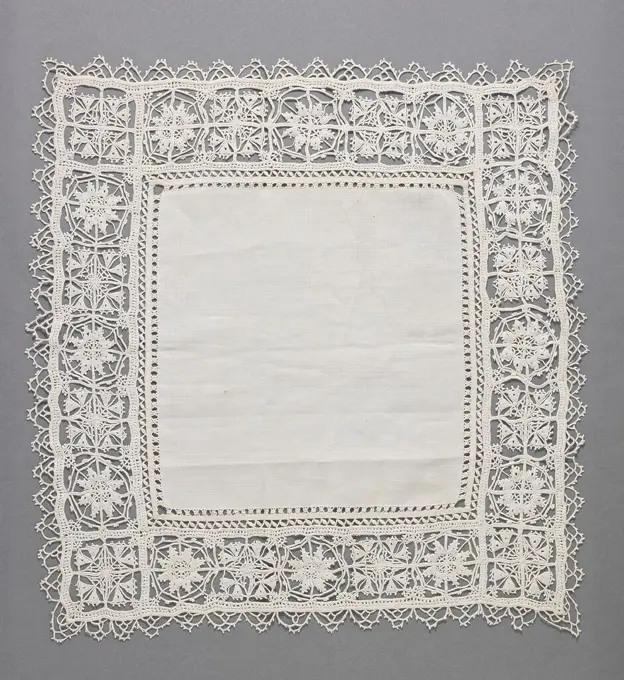
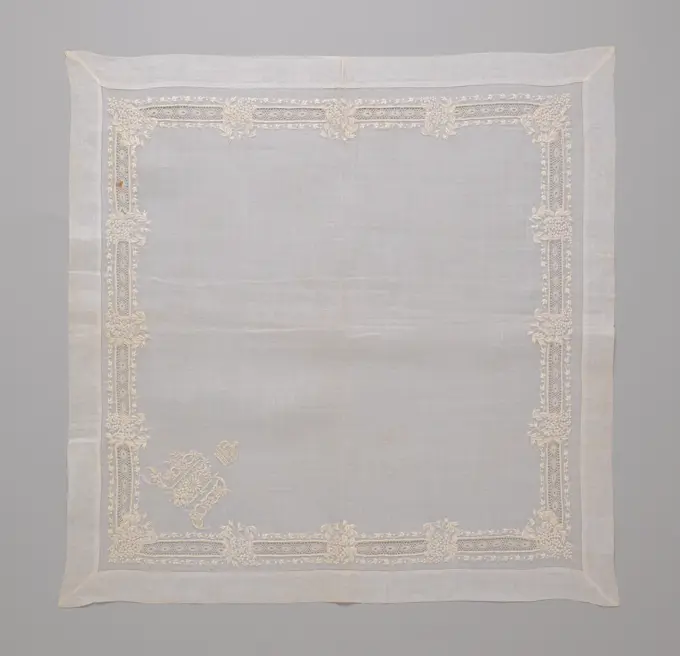
Paste paper with purple, yellow, and green patterns 18th century Anonymous. Paste paper with purple, yellow, and green patterns. Anonymous , 18th century. 18th century. Paste paper. PrintsKosode (Kimono) Fragment with Chrysanthemums and Bamboo Lattice. Japan, Edo period (1615-1865), first half of 18th century. Textiles. Silk figured satin (rinzu), stenciled imitation tie-dyed (kata kanoko shibori) and stitch-resist dyed (nuishime shibori), with silk- and gilt-paper-wrapped-silk-thread embroideryPiece 1760-70 French, Lyons. Piece 226735Piece ca. 1740 () French, Lyons. Piece 226669Piece 19th century Japan. Piece 67466Machine-made Openwork Samples (USA); cardboard, linen, silk, metallic; 1971-26-2-26Fragment; silkFragment red brochet side with a multicolor pattern with bouquet and flower garlands and so-called edge edge.fragment of Red Silk Soil With Ditto Darker Figures, Interwoven With Multicolored Bouquets and Flower Garlands and So-Called Lace Edge.Farm scenes 1820s French. Farm scenes 236780Fragment; silkHandkerchief with a rim of needle with wheel edges, anonymous, c. 1870 - c. 1890 Handkerchief with a border of natural -colored needle side, Brussels mesh side. A wide lobed lace edge runs around a cross -shaped batist. Along the outside, a fine mesh stock is budgeted by hollow C-volutes with wheel edges, interspersed by relief prozen. The inner edge is formed from Holle and Bolle C-Voluten. In the corners there are tufts of forget mine beers on the mesh network Brussels linen (material) Brussels Gaze Point Handkerchief with a border of natural -colored needle side, Brussels mesh side. A wide lobed lace edge runs around a cross -shaped batist. Along the outside, a fine mesh stock is budgeted by hollow C-volutes with wheel edges, interspersed by relief prozen. The inner edge is formed from Holle and Bolle C-Voluten. In the corners there are tufts of forget mine beers on the mesh network Brussels linen (material) Brussels Gaze PointStencil Japan. Stencil 70003Dress of oriental textile with multicolored embroidery. Dress of multicolored chewy cotton, decorated with flower drinks and ornament, lined with cotton.Frieze (USA); machine-printed paper, ungrounded; 91 x 49 cm (35 13/16 x 19 5/16 in.)Panel, 19th century, 25 x 22 in. (63.5 x 55.88 cm), Silk; brocade, France, 19th centuryTissue fragment of Samiet. Flewed on cardboard and signed tissue fragment, so that the entire pattern becomes visible. Soil in dark pureper with pattern of diamond-shaped braided gold colored leaf raft. In between, serrated medallions with two birds-deviated birds in a tree and round medallions with donated birds next to a trunk.Linnamast napkin with a flower pattern, c. 1750 - c. 1775 White Linnamasten Napkin with a pattern of miscoel branch, flower edges and horn of abundance, brand Ig 2 Wh. Southern Netherlands (possibly) linen (material) damask White Linnamasten Napkin with a pattern of miscoel branch, flower edges and horn of abundance, brand Ig 2 Wh. Southern Netherlands (possibly) linen (material) damaskSash Made 1701-1900 Turkey. With ends embroidered in colored silks .Batist handkerchief all around with needle side, c. 1850 - c. 1855 Batist handkerchief that is finished all around with a natural needle side: Brussels mesh side. The batist is eight -lobbig in shape where the lobes are angular. The lace has a pattern of C-volutes, flowers and flower branches with berries. The largest flowers are the roses on the corners along the edge: one large rose per corner, placed over -corner and left and right flanked by three simple roses. In the U-shaped field above it is a rose branch with one rose from which branches spring with berries on it. This field is crowned by a cornflower or carnation between two volutes. A more or less similar but smaller pattern is in midfield that is caught between two large C-Voluten. The motifs are made with differently executed feston stitches and provided with relief contours. The motifs are connected to each other by a mesh cantar, decorated with a few moses. Needle lace bars and decorative lands have been used in the floweLace, 19th century. Italy, Abruzzi, Pescocostanzo, l'Aquila, 19th century. Bobbin lace with embroidery; overall: 26.7 x 26.7 cm (10 1/2 x 10 1/2 in.).Fragment (India); cottonNapkin with lace pattern, anonymous, c. 1730 - c. 1740 White Linnamasten Napkin with a so -called edge pattern, brand W 18. Southern Netherlands (possibly) linen (material) damask White Linnamasten Napkin with a so -called edge pattern, brand W 18. Southern Netherlands (possibly) linen (material) damaskBorder; medium:Band (Italy); silk on linen; Bequest of Marian Hague; 1971-50-97Border (USA); machine-printed on paper; 40 x 23 cm (15 3/4 x 9 1/16 in.)Border; silkSidewall Sample; machine-printed on paper; 22.5 x 22.5 cm (8 7/8 x 8 7/8 in.)Fragment; silk; Bequest of Richard Cranch Greenleaf in memory of his mother, Adeline Emma Greenleaf; 1962-56-132Valentine - WoodTextile Fragment 18th century. Textile Fragment. 18th century. Silk. Made in Iran. TextilesDress or Furnishing TextileFragment of silk fabric, Eastern unknownKleed of zakdoek van batist met borduurwerk en open naaiwerk met vierkante mazen in vlamvormige bloemen.Dress or native handkerchief (Ramie) Batist with embroidery - White work and edge embroidery: Work with merged wires. Square model. Along the edges, wires have been pulled out and fixed with thicker wires, making it a straight list of square meshes around the rug. Inside the list is embroidered along the edges: a symmetrical pattern with wavy tendrils with leaves and a few large and smaller flowers in the shape of a flame. The same open sewing has been applied in these flowers as in the list around the rug. There is one large flame flower in every corner that is placed overhoeks and there are three embroidered ribbons below. Midfield is round.Sheet with overall floral and dot pattern 19th century Anonymous. Sheet with overall floral and dot pattern. Anonymous , 19th century. 19th century. Relief print (wood or metal). PrintsBack doublure.. Halévy, Ludovic (1834-1908). bindings (gathered matter components), Book covers. 1887. Spencer Collection. BookbindingFrieze, Gledhill Wall Paper Co., New York, New York, founded 1900, Machine-printed paper, Tall floral bouquets of poppies alternate with floral arch tied with ribbon, with each of the motifs conected by this same ribbon. Foliate swags with floral pendants suspend from top edge., USA, 1905-1915, Wallcoverings, FriezePiece 1800-1830 Chinese. Piece 13817Sampler (Netherlands); silk embroidery on cotton foundationStole 1837 probably Scottish. Stole 169710Piece 1804-14 French, Lyons. Piece 227016Piece ca. 1765-75 French. Piece 221627Fragment Made 1625-1675 Italy. Plain compound cloth .Sidewall (USA); Manufactured by Maxwell & Co., S.A. (United States); machine-printed paper, liquid mica; 93 x 49 cm (36 5/8 x 19 5/16 in.)Fragment black silk dryuet with white and beige flower branches. Fragment Black Silk Tissue with a Pattern of White and Beige Flower branches.Pouch or reticle. Recto. GAL2003.30.1_1Textile, Medium: silk, wool, England, 1860-80, woven textiles, TextileFragment, Medium: silk, linen Technique: plain weave with supplementary weft patterning, Textile fragment with a tone-on-tone diamond lattice pattern in the ground; each diamond is filled with a colored silk spot motif. In blue, green, yellow, red and pink silk on natural colored linen ground. Blue and yellow zigzag border on one side., Spain, 17th century, woven textiles, FragmentFragment; silk; Warp x Weft: 77 x 67.5 cm (30 5/16 x 26 9/16 in.)Kerchief made of fragments of embroidery and fabrics unknownFragment multicolored silk mexicaine ,, 1765 Two fragments multicolored silk tissue. A purple soil has purple stripes on which a white side garland and scattered multicolored flower bouquets. France silk Two fragments multicolored silk tissue. A purple soil has purple stripes on which a white side garland and scattered multicolored flower bouquets. France silkFragment 16th century Italian. Fragment 230190Quilt - Tulip Pattern. Dated: c. 1941. Dimensions: overall: 50.1 x 49.8 cm (19 3/4 x 19 5/8 in.) Original IAD Object: 90" square. Medium: watercolor and graphite on paper. Museum: National Gallery of Art, Washington DC. Author: Alice Cosgrove.Fragment of silk fabric  white vertical stripes and sprays of colourful and white flowers unknownPiece 1730-35 French. Piece 220139Fragment (Japan)Textile (France); silk, metallic threadFragments of silk fabric  the motives of the river filled with floral wing unknownTextile; cottonPanel Made 1804-1814 France. Silk and cotton, warp-float faced satin weave with supplementary pile warps forming cut and uncut, voided velvet .Textile Fragment 16th century. Textile Fragment 446869Woven silk upholstery for a chair. Culture: French, Lyons. Designer: Philippe de Lasalle (French, 1723-1804). Dimensions: L. 50 x W. 30 1/2 inches (127.0 x 77.5 cm) (loom width). Manufacturer: Maison Pernon. Date: ca. 1770. Museum: Metropolitan Museum of Art, New York, USA.Indian ornamentAltar Cloth Japan. Altar Cloth. Japan. Silk, metallic thread. Edo period (1615-1868). Textiles-WovenScarf third quarter 19th century French, Chantilly. Scarf 227349Cornelius Christoffels, Handwoven Coverlet, c 1937 Handwoven CoverletFrieze (USA); Manufactured by Janeway & Co. Inc.; machine-printed paper; 91.5 x 49 cm (36 x 19 5/16 in.)Renaissance ornamentChintz Fragments (India); cotton; Warp x Weft (a): 11.5 x 83 cm (4 1/2 x 32 11/16 in.) Warp x Weft (b): 11 x 74.5 cm (4 5/16 x 29 5/16 in.) Warp x Weft (c): 10 x 22 cm (3 15/16 x 8 11/16 in.)Untitled Valentine (Red and White Flowers) 1845-1855 England. Collaged elements and watercolor on gold accented and embossed ivory wove paper .Unfinished sampler worked in fine cross stitch in colored silk on finely woven unbleached cotton, sampler embroidery needlework imagery silk cotton, textile embroidery cross stitch Mark of unbleached finely woven cotton with 21 threads on 1 cm. The cloth has selvedge on the left and narrow hem edge of 0.4 cm on the other sides. The rag is symmetrically arranged but not all motifs correspond to left and right. Moreover, the cloth is not completely completed. number of motifs are missing on the left. The cloth is embroided in fine cross stitch with silk in the colors black dark pink middle golden brown light brown light beige medium beige light yellow green light green green mustard yellow lilac dark blue blue old pink light pink satin white and gray blue. The color impression of the rag is mainly yellow-green Dutch Garden Dutch LionLeaf with spreading pattern of flour with three fruits, Anonymous, 1700 - 1850  Leaf with spreading pattern of flour with three fruits between tips of points. Used as a cover.  paper. block printing (relief printing process) ornament derived from plant formsPall, embroidered unknownTextile Sample Book 1840-60 French. Textile Sample Book 229336Piece 17th century Spanish or Italian. Piece 229474Field of sixteen tiles with tulips, anonymous, c. 1610 - c. 1630 Field of sixteen tiles (4 x 4) each with a multicolored (blue, green and orange) tulip in a flower pot or bulb. In the corners, a lily. Netherlands earthenware. tin glaze majolica Field of sixteen tiles (4 x 4) each with a multicolored (blue, green and orange) tulip in a flower pot or bulb. In the corners, a lily. Netherlands earthenware. tin glaze majolicaChintz Fragment (India); cotton; Warp x Weft: 56 x 22 cm (22 1/16 x 8 11/16 in.)Textile, Schwartz-Huguenin, Madium: cotton Technique: printed by engraved roller and block printed; glazed, Two samples with same ground design, printed in different color patterns. Ground, broad grey stripe of minute wavy lines alternating with white stripe with foliage edge. A) Sprays of lilac, azalea and asters in violet. B) Same flowers in grey. Glazed., mid-19th century, printed, dyed & painted textiles, TextileSamples, Orinoka Mills, (Philadelphia, Pennsylvania, USA), a. Rust color ground with pink and white floral pattern., b. Rust color ground with gold color and white floral pattern., USA, ca. 1910, woven textiles, SamplesTextile; silkCushion Made 1875-1900 China. Silk, warp-float faced 5 1 satin weave with weft-float faced 1 2 'S' twill interlacings of secondary binding warps and supplementary patterning and self-patterning ground wefts .Pair of Sleeve Bands, 1800s. China, Qing dynasty (1644-1911). Silk, satin weave, embroidery; overall: 94.9 x 9.2 cm (37 3/8 x 3 5/8 in.).Sampler, 1800s. Mexico, 19th century. Embroidery; average: 38.1 x 41.9 cm (15 x 16 1/2 in.).Fragment multicolored brochure side. A fragment of pink silk with stripes in white and silver. In the tracks the pattern has been sprinkled silver flowers. A flower branch swings around a white stripe and the pattern has multicolored flower bouquets and flower branches on the silver stripes.Fragments of silk fabric  a vegetable flap pattern unknownBedcover ("Album Patch" or "Signature" Quilt). United States, Pennsylvania, Berks, Lebanon and Montgomery County. Date: 1847-1848. Dimensions: 261.6 x 224.5 cm (103 x 88 3/8 in.). Cotton, various plain weaves; most printed; pieced; quilted; inscribed; backed with cotton, plain weave; pieced; printed; edged with cotton, plain weave; printed. Origin: United States. Museum: The Chicago Art Institute, Chicago, USA.Cover. Culture: Italian. Dimensions: L. 17 x W. 17 inches43.2 x 43.2 cm. Date: 17th century. Museum: Metropolitan Museum of Art, New York, USA.Hals Neus cloth or handkerchief trimmed with a strip of Dutch side, anonymous, c. 1650 - c. 1699 Hals-Neus cloth or handkerchief all around with a strip of bobbin: Dutch side. The repeating and symmetrical edge pattern consists of a hanging flower on a straight handle with two side branches with curling leaves and some smaller flowers on either side. The silly scrap edge is finished with picots. In the corners a seam can be seen at the front (45 degrees compared to the direction of the strip), at the rear the strip in each corner has one fold. Southern Netherlands whole: Linen (Material) bobbin lace Hals-Neus cloth or handkerchief all around with a strip of bobbin: Dutch side. The repeating and symmetrical edge pattern consists of a hanging flower on a straight handle with two side branches with curling leaves and some smaller flowers on either side. The silly scrap edge is finished with picots. In the corners a seam can be seen at the front (45 degrees compared to the direction of theFragments of fabric unknownTray with design of grape leaf 17th century Japan (Ryūkyū Islands). Tray with design of grape leaf. Japan (Ryūkyū Islands). 17th century. Lacquer with mother-of-pearl inlay. LacquerFrivolitétas in a flat, almost square model, of blue striped silk with rose and other flower branches, anonymous, c. 1825 Bag in a flat and almost square model, made of blue striped silk with rose and other flower branches. The fabric is folded at the bottom and sewn to the side. A little below the top hem can be put in with a narrow lilac ribbons. A small bow of the same ribbon on the bottom corners. Cotton lining with small stripped white daisies on a black stock. Haarlem (possibly) whole: Silk. Lining: Cotton (textile) printing Bag in a flat and almost square model, made of blue striped silk with rose and other flower branches. The fabric is folded at the bottom and sewn to the side. A little below the top hem can be put in with a narrow lilac ribbons. A small bow of the same ribbon on the bottom corners. Cotton lining with small stripped white daisies on a black stock. Haarlem (possibly) whole: Silk. Lining: Cotton (textile) printingSidewall (possibly USA); block-printed on satin ground ; 33 x 27.5 cm (13 x 10 13/16 in.)Valentine - Ever the Same WoodCotton fabric on sale to tourists, Fiji, Pacific Islands, PacificValance With Chef (France); Company: Wetter Freres (France); plain weave cotton, lined with plain weave linen, trimmed with plain weave silk; Warp: 48cm (19in.). Weft:109cm (43in.) Shaped valance is made us of 3 pieces. No selvedges in seams. Pattern: Not present.Machine-made Openwork Samples (USA); cardboard, linen, silk, metallic; 1971-26-2-24Cover For Card Case (Italy); silk, paper, paillettesBag, Medium: glass beads, steel frame, White ground with a band of roses at the top and smaller, naturalistic flowers at the point., France, early 19th century, costume & accessories, BagDresser cloth 1840-80 French or Swiss. Dresser cloth 236965Lace. William Henry Fox Talbot (English, 1800 - 1877)Floral Paisley Border Pattern.