Floral Table Covers and Patterns

Elegant textile fragments and patterns featuring intricate floral designs in soft colors, highlighting embroidery and historic fabric techniques from different cultures.

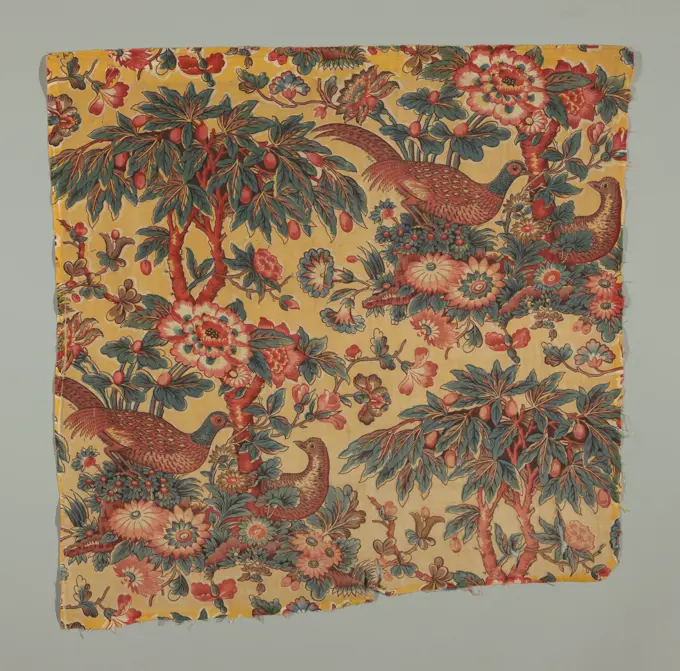
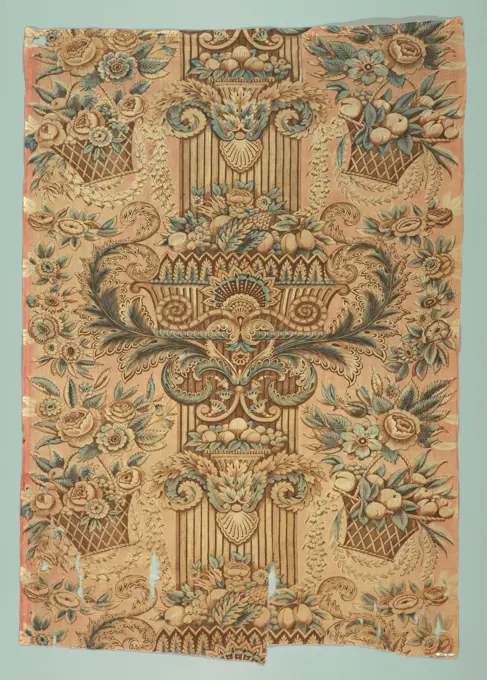
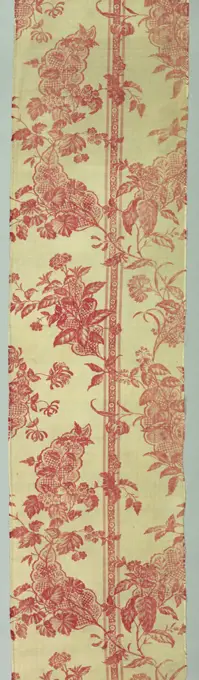
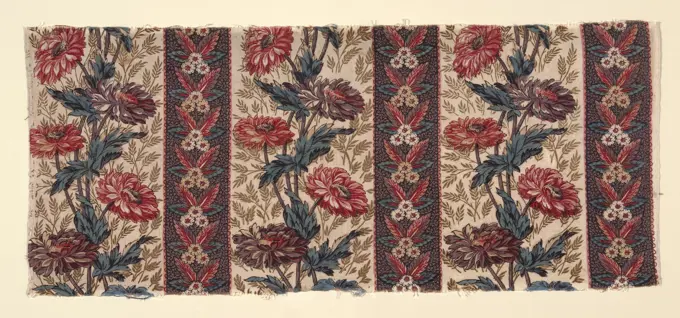
Textile (France); cotton
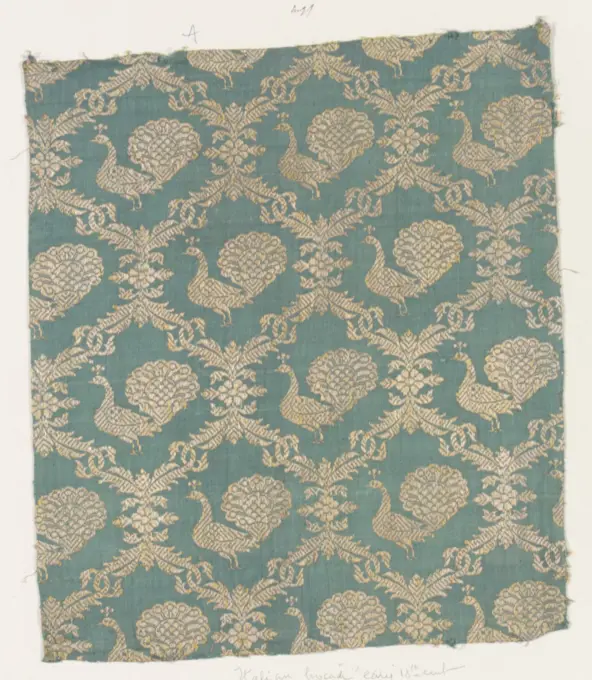
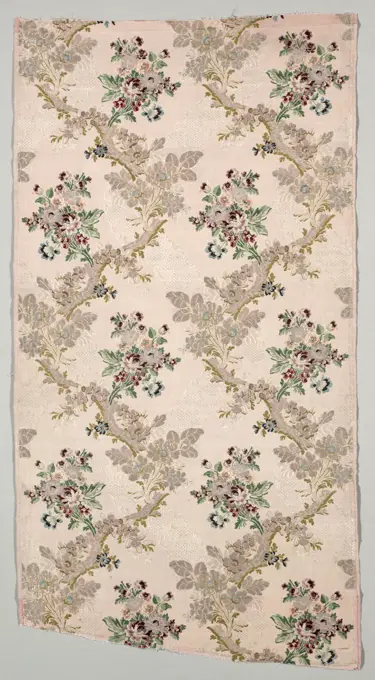
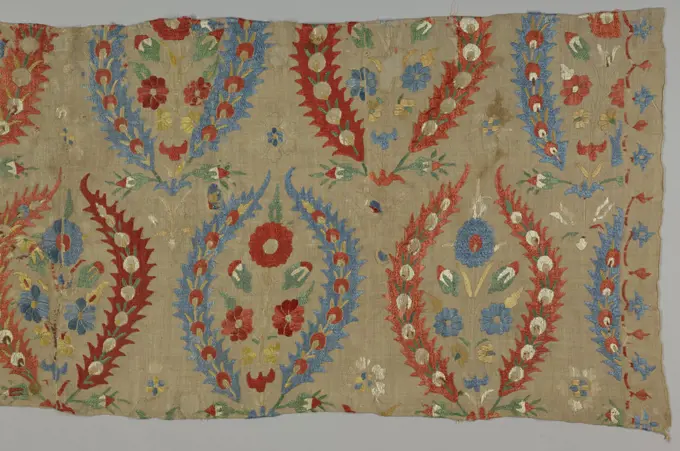
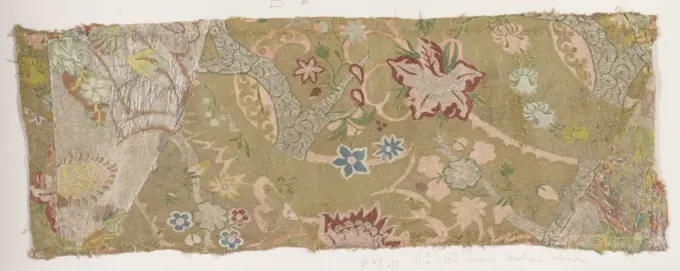
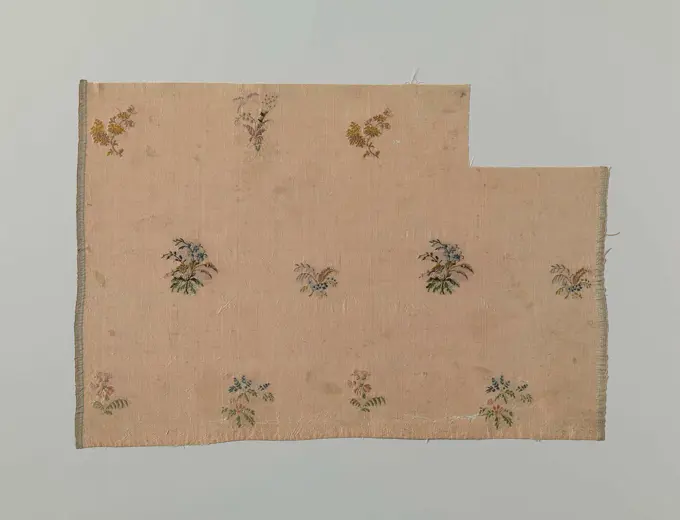
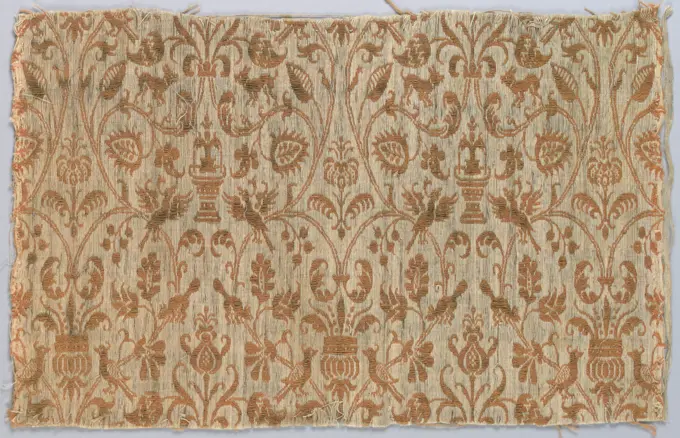
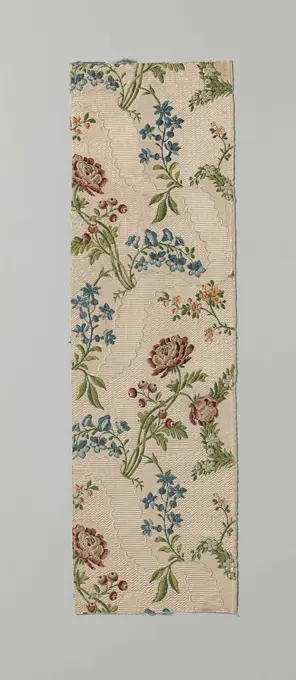
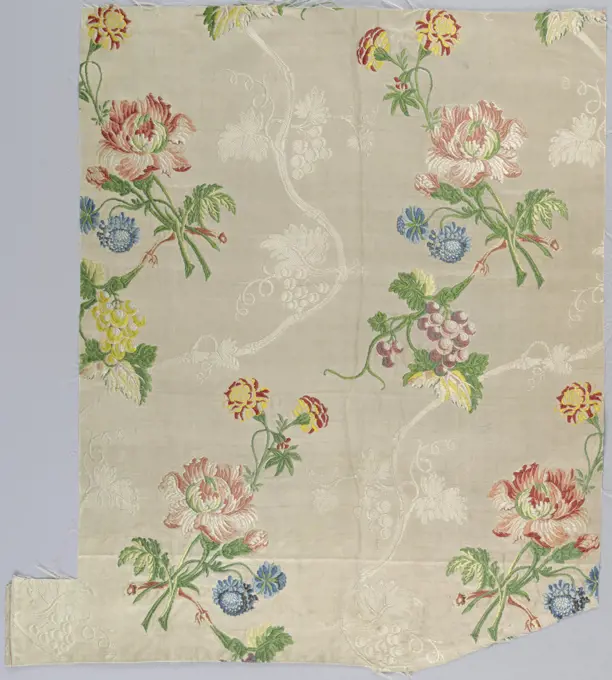
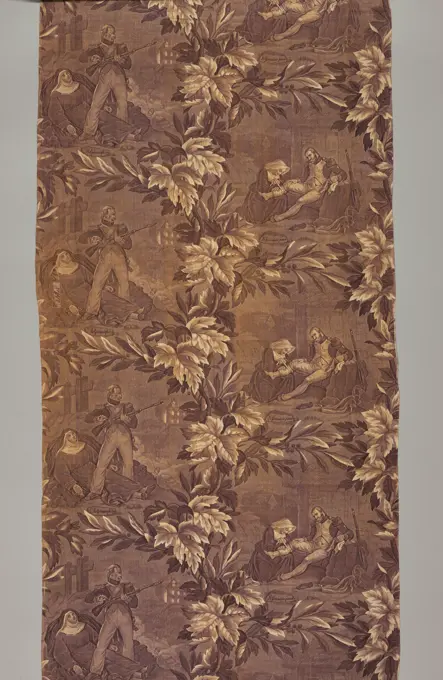
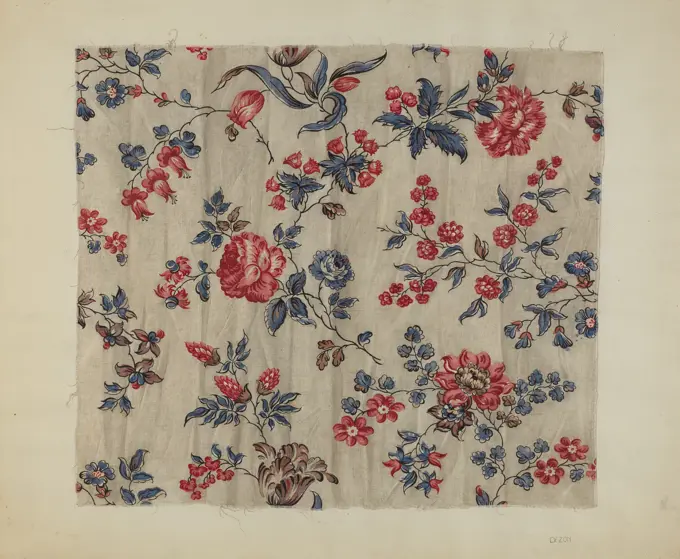
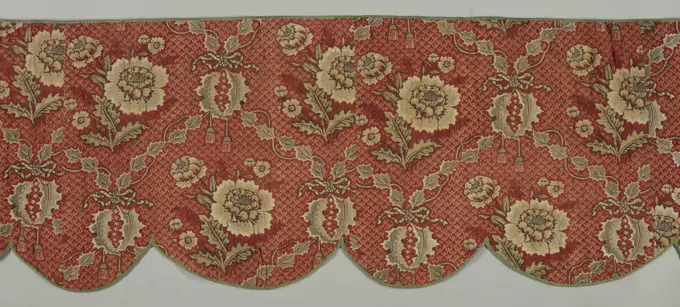
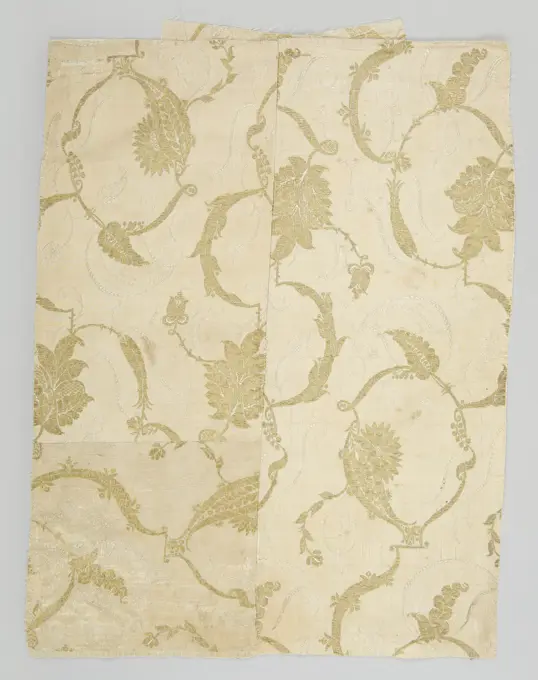
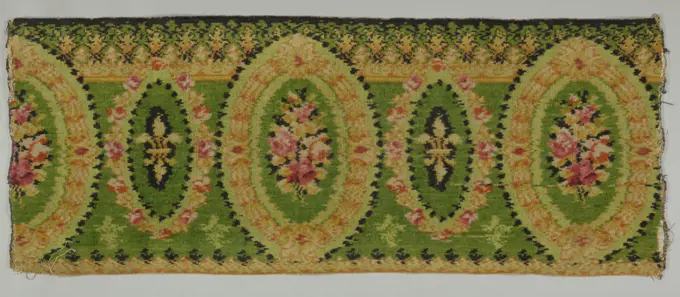
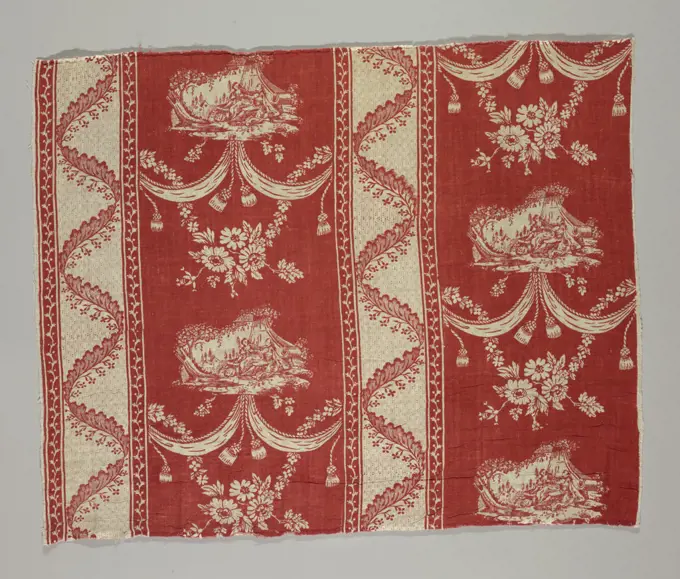
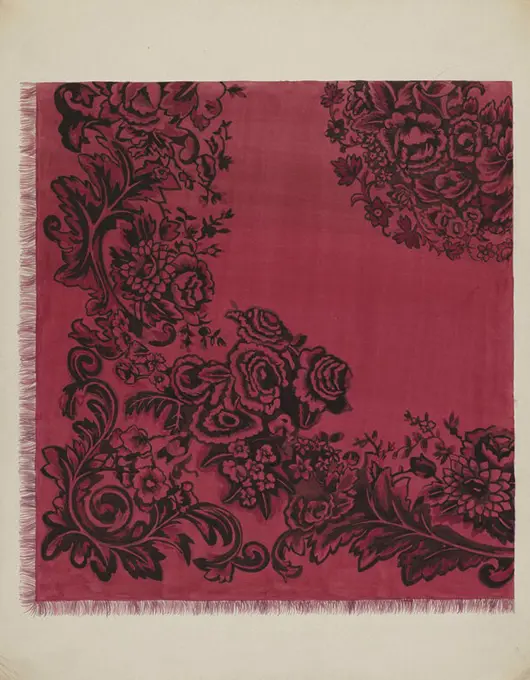
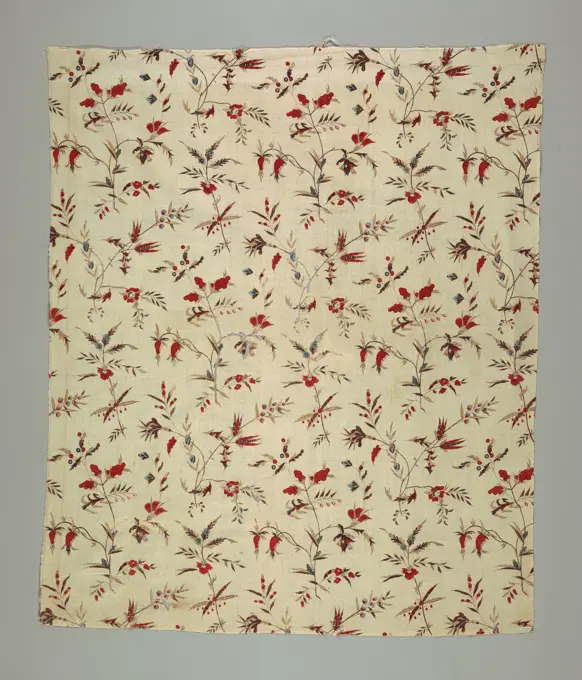
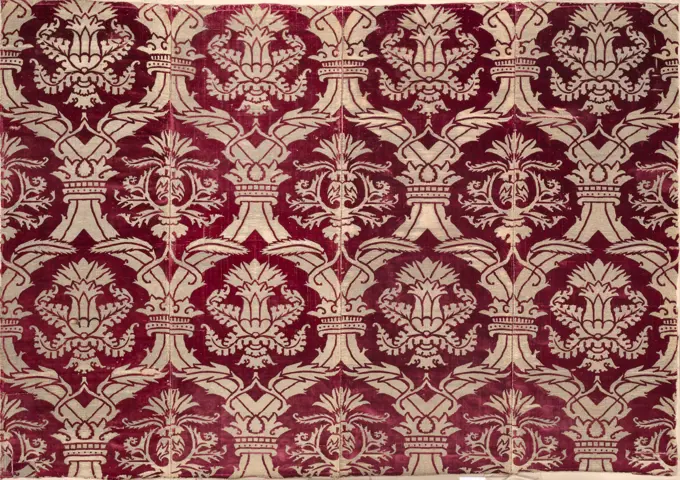
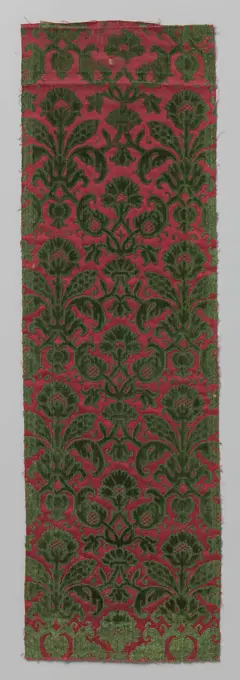
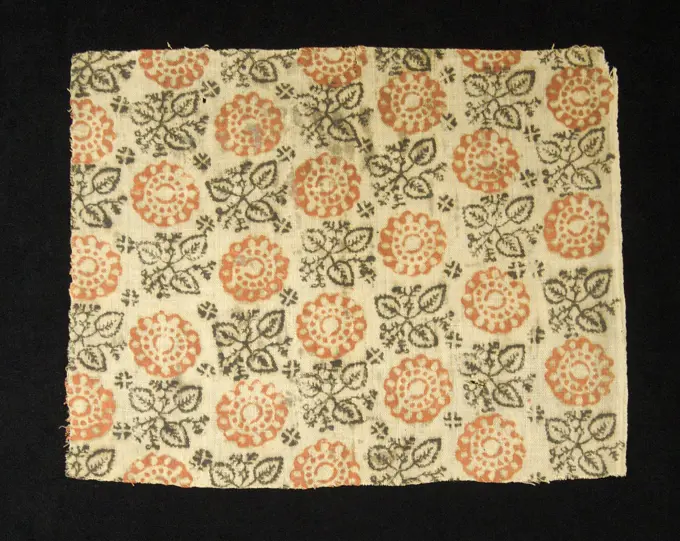
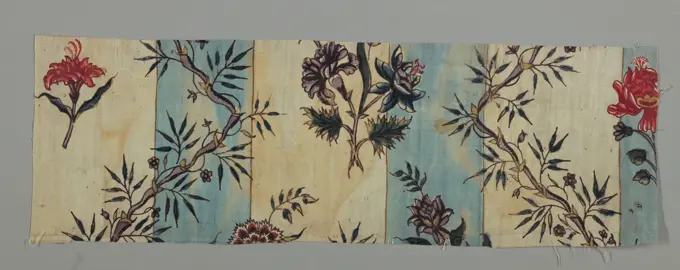
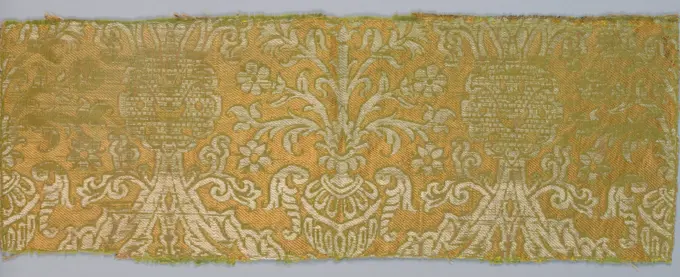
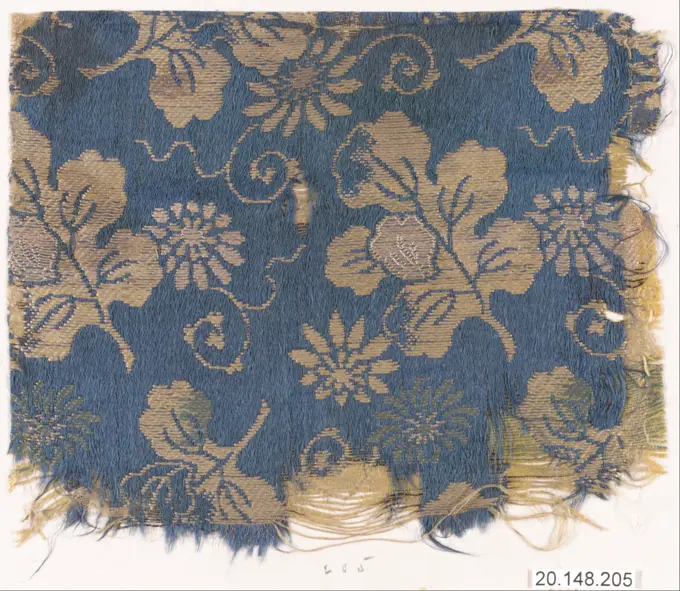
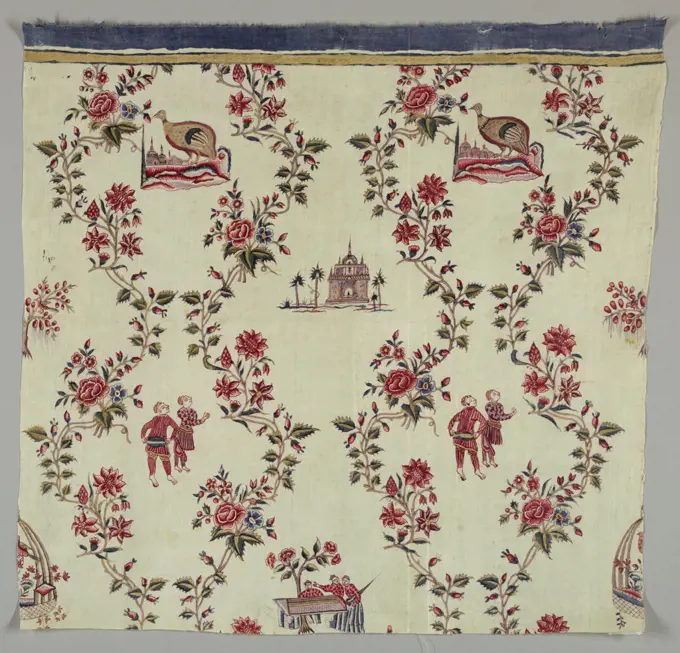
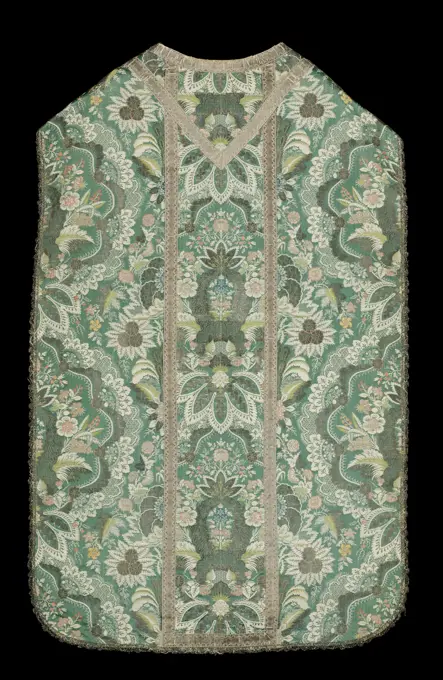
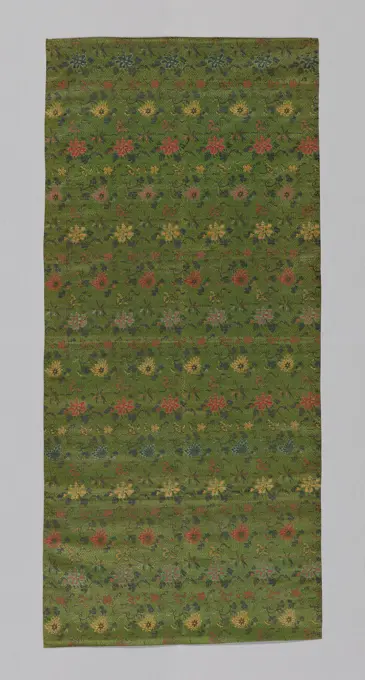
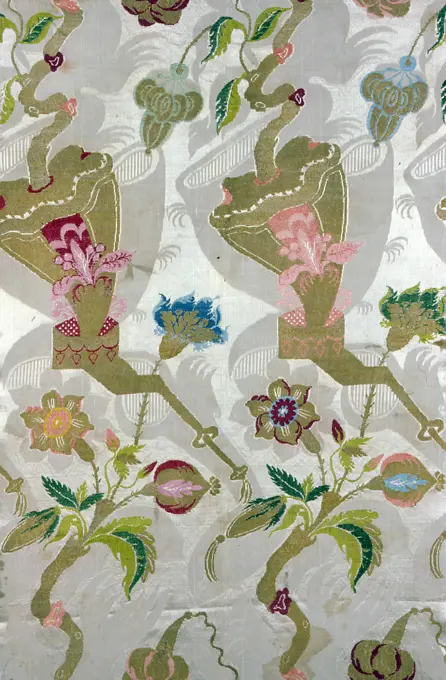
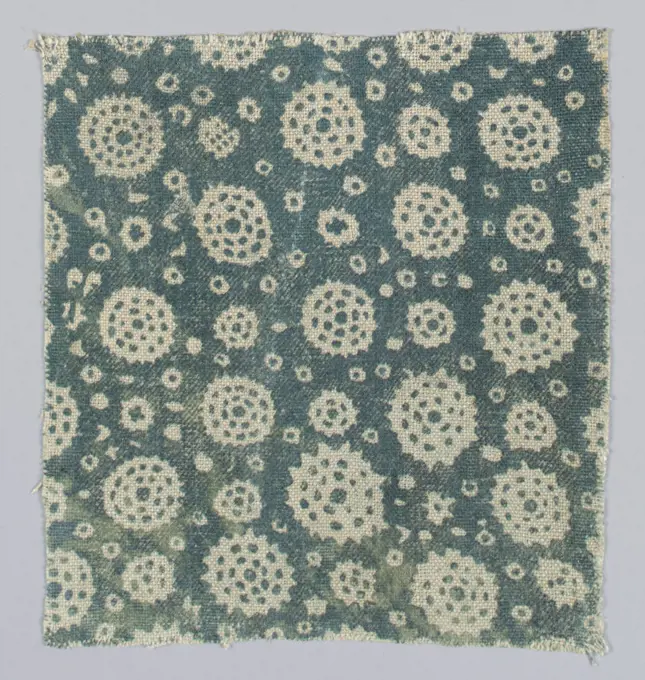
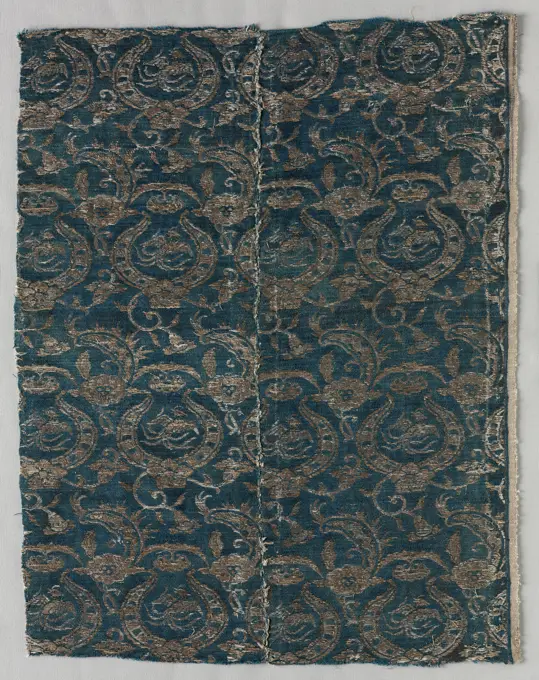
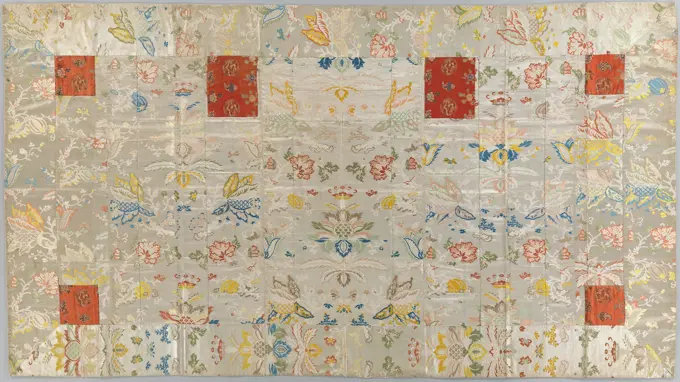
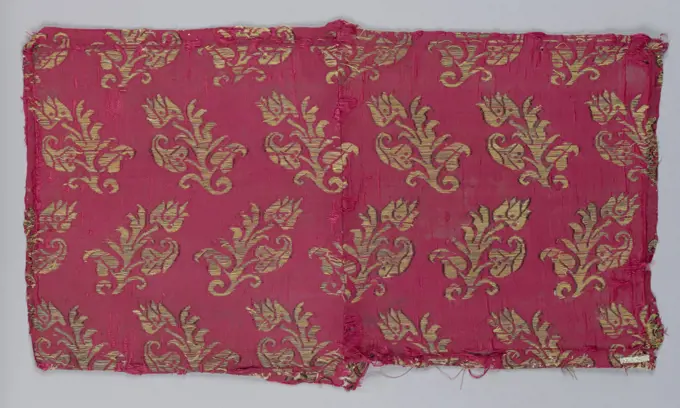
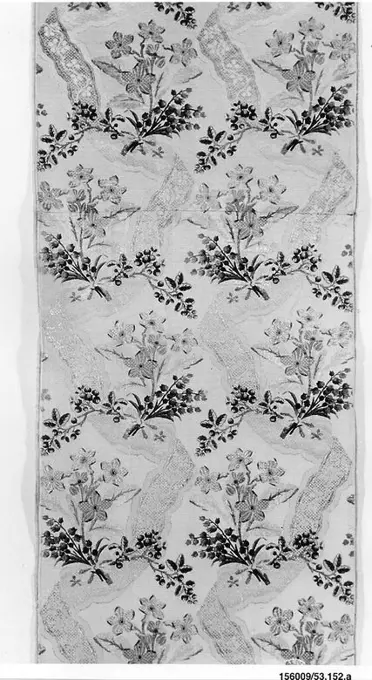
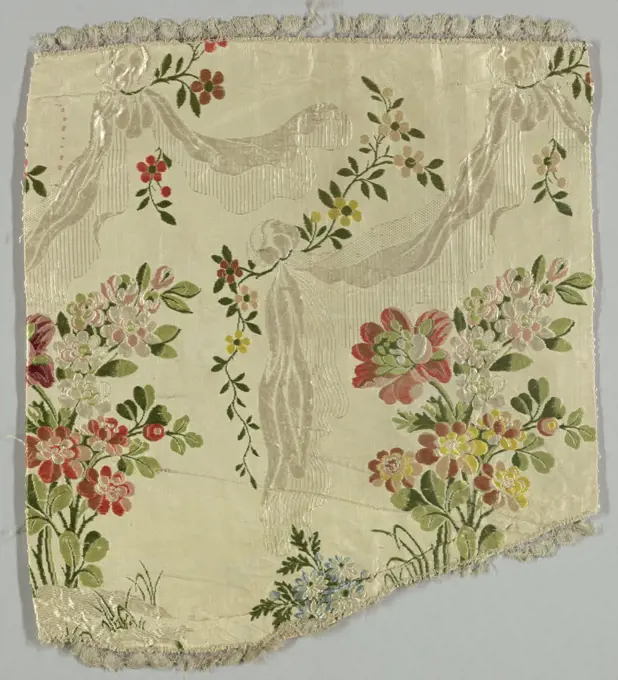
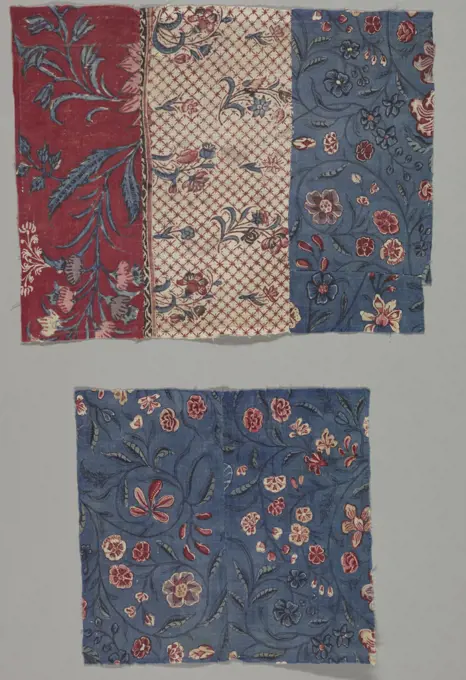
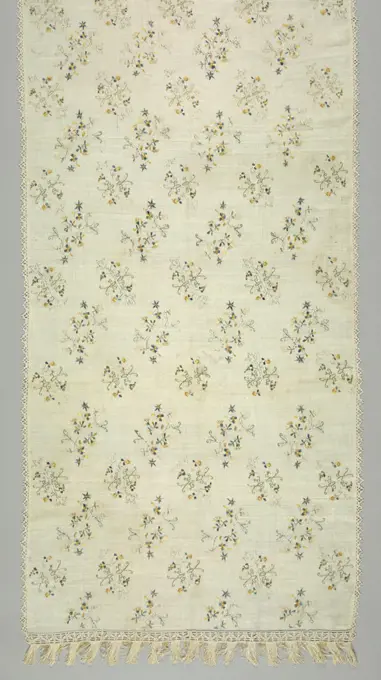
Tablecover, Medium: silk on linen Technique: satin and outline stitches on plain weave; cardwoven fringe; bobbin lace, Delicate multicolored flower clusters form intersecting diagonal bands across the surface of the tablecover. Bobbin lace edging decorates longest edges while fringe decorates shortest edges., Italy or Spain, 17th century, embroidery & stitching, TablecoverBorder, uncut, J. & Comp'y., Machine-printed, Sample of two widths of border printed on one length of paper. On greenish-cream ground, brown geometric ornament, central banding of red, blue, pink and pale apricot flowers., USA, 1880-98, Wallcoverings, Border, uncutPiece 18th-19th century Japan. Piece 65979Fragment silk tissue. Two fragment of two patterned pieces of green silk on pattern on which decoration in yellow, green, red and brown surrounded by lace garlands. Stylized flowers and leaves.Fragment Made 1601-1700 Turkey. Embroidered .Fragment (China); silk; Warp x Weft: 124 x 30 cm (48 13/16 x 11 13/16 in.); 1953-162-70Embroidered Covers, 1700s. France, 18th century. Embroidery, silk; overall: 119.4 x 133.4 cm (47 x 52 1/2 in.).Fragment (England); linenTextile (France); cottonLengths of Silk Textile, 1700s. Italy, 18th century. Damask, brocaded; silk and metal; overall: 80 x 55.7 cm (31 1/2 x 21 15/16 in.).Fragment (France); silk; Warp x Weft: 116 x 55 cm (45 11/16 x 21 5/8 in.); 1955-34-4Fragment early 18th century Italian. Fragment 230477Fragment, 18th century; silk and metal; Warp x Weft: 15.8 x 11.5 cm (6 1/4 x 4 1/2 in.)Textile Fragment 18th century. Textile Fragment. 18th century. Silk and metallic thread; brocaded. Made in India. Textiles-BrocadesLength of Silk Brocade, 1723-1774. France, Lyon, 18th century, period of Louis XV (1723-1774). Brocade; silk and metal; overall: 104.8 x 54.6 cm (41 1/4 x 21 1/2 in.).Panel, Medium: silk embroidery on linen foundation Technique: embroidered in satin, stem and couching stitches on plain weave, Oblong panel, possibly part of a bed cover, of dark cream linen sheer plain weave embroidered in polychrome silks in red, blue, yellow, white and green, with red and blue predominating. Design consists of one element, a wreath, formed of a long serrated leaf at eath side, open at the top, framing a floral spray., Turkey, 18th-19th century, embroidery & stitching, PanelTextile (Italy); silk, gilt parchment wrapped around silk core; Warp x Weft (a): 35.3 x 32.3 cm (13 7/8 x 12 11/16 in.) Warp x Weft (b): 29.5 x 37.3 cm (11 5/8 x 14 11/16 in.) Warp x Weft (c): 26.5 x 34 cm (10 7/16 x 13 3/8 in.) Warp x Weft (d): 44.8 x 19.7 cm (17 5/8 x 7 3/4 in.) Warp x Weft (e): 4.8 x 19.5 cm (1 7/8 x 7 11/16 in.)Textile (France); Produced by Oberkampf & Cie. (France); cotton; Warp: 84cm (33 1/2in.) Weft: 78.5cm (30 3/4in.) Both selvedges present. Height of full repeat: 50 cm (19 3/4in.) Width of full repeat: 38.5cm (15 1/4in.); Bequest of Elinor Merrell; 1995-50-212Leaf with flowers and fruits, Johann Michael Munck, 1730 - 1760 brocade paper Leaf with flowers and fruits, at the top right three pomegranates, bottom left two pomegranates. Augsburg paper. paint (coating) relief printing ornament derived from plant formsTextile; silk ()Textile, Medium: silk Technique: damask with twill (), Stylized symmetrical repeat of floral palmette in continuous ogival framework of flowers and leaves in white on a green twill ground. Two striped green and yellow selvages., Spain, 17th-mid-18th century, woven textiles, TextileBorder, Block-printed on paper, Alternating oak leaf and carnation, printed in deep red and green on vermiculated background., 1880-1900, Wallcoverings, BorderFragment 16th-17th century Italian. Fragment 230090Buffet runner of écru cotton, decorated with woven relief motifs with a bird on a stool and narrow stripes. ,, 1885 - 1915  Romania cotton (textile)  Romania cotton (textile)Fragment 18th century Italian. Fragment. Italian. 18th century. Silk, metal thread. Textiles-WovenFragment multicolored brochure side. A fragment of pink silk with white tendrils, between which multicolored sprinkled flower branches.Panel Made 1675-1725 Spain. Silk, damask weave; fringe and lining .Cover early 19th century. Cover 443077Textile (France); cottonFragment; linenPanel Made 1700-1720 France. Silk, gilt-and-silvered-metal-strip-wrapped silk, warp-float faced 7 1 satin weave with supplementary brocading wefts bound in weft-float faced 3 1 twill interlacings and self-patterned by areas of plain weave .Textile, Medium: silk, metallic yarns Technique: plain weave with discontinuous supplementary weft patterning (brocade), Woven textile showing a yellow floral pattern on a metallic ground., Spain, 17th-mid- 18th century, woven textiles, TextileFragment veelkleurige gebrocheerde zijde.Fragment multicolor silk tissue. The white ground has wavy, lobed tires and fields with a fine striped or a zig-saw pattern. On the white pattern, the pattern has multicolored flower branches with small blue, pink and white flowers and large red flowers.Textile, Medium: silk Technique: plain weave with discontinuous supplementary warp patterning (brocade), Silk textile with brocaded pattern showing a cream-colored meandering grapevines, and polychrome bouquets of flowers and grapes that form lines which follow the curves of the grapevines., England, France, early 18th-late 18th century, woven textiles, TextileTextile, The Grenadier and the Nun; France; cotton; Warp x Weft: 184 x 75 cm (6 ft. 7/16 in. x 29 1/2 in.) Repeat H: 38 cm (14 15/16 in.); Bequest of Elinor Merrell; 1995-50-169Textile (France); silk; Warp x Weft: 60.5 x 27 cm (23 13/16 x 10 5/8 in.); 1971-91-6Textile; cottonSylvia De Zon, Chintz, c 1939 ChintzFragment, Medium: silk, metallics Technique: woven, Stars in red, white and metallic on blue groun, Iran, 17th century, woven textiles, FragmentChef de piece, LeLievre Heutte Vimeux & Comp., Medium: linen warp, cotton weft Technique: block printed on plain weave, Stripes with floral sprigs and curving bands with delicate flowers in black, two reds, lilac, blue and dull yellow., Rouen, France, 1777-90, printed, dyed & painted textiles, Chef de pieceValance, Medium: cotton Technique: block printed, colored ground, Valance in a floral design consisting of a red ground with imbricated pattern in white. Large flowers clusters in white, red and dark brown with garlands of leaves in dark brown and red. With cords and tassels. Variety of picotage used in flower leaves. Leaf garlands printed with dark brown horizontal lines. Much detail outlined in black and dark brown. Faced with fragments of block printed cotton in tulip and leaf pattern in reds and dark brown., France, 1751-1800, printed, dyed & painted textiles, ValanceFragments of silk fabric  a vegetable flap pattern unknownTextile, Medium: silk, 18th century, woven textiles, TextileBand, Medium: linen Technique: bobbin lace, discontinuous tape, Band of curving vines radiate from a symmetrical central vase and flower arrangement., Italy, late 17th-early 18th century, lace, BandCarpet fragment, Medium: wool, bast fiber Technique: printed supplementary warp-cut pile, Repeat of floral wreaths in two sizes: the larger containing a bunch of flowers and the smaller a fleur-de-lis, bordered on each side by narrow floral bands. The background is green, the pattern colors: black, ivory, light green, and shades of red, yellow, and dark orange., USA, 1850-1900, woven textiles, Carpet fragmentWiegled rug with embroidery; Point the Dresd and Fils Tirés. Wiegled rug made of cotton with embroidery. The pattern has a cartouche from C-shaped band work in which a jar on a foot. The jar is filled with pears, pomegranates and flower branches. Above the jar floating two putti and at the foot of the jar, two winged putti supports. The field around the cartouche is filled with flower branches.Textile, Medium: cotton Technique: block printed on plain weave, Alternation of two stripes, one in straight repeat, the other in half-drop offset. The straight repeat is a curving vine, the offset a scene of lovers., France, ca. 1800, printed, dyed & painted textiles, TextileTextile (France); cottonSample 1883-1900 Associated Artists. Sample 13997Textile, Medium: silk Technique: damask, 7&1 satin, Symmetrical design of flowers and large curving leaves in bright red., USA, ca. 1907, woven textiles, TextileBorder Italian 19th centuryMezzaro (shawl Or Headcovering) (Italy); cottonTable Cover. Dated: c. 1937. Dimensions: overall: 35.6 x 28 cm (14 x 11 in.). Medium: watercolor and graphite on paperboard. Museum: National Gallery of Art, Washington DC. Author: Dorothy Posten.Textile (France); cotton; L x W: 100.4 x 28.3 cm (39 1/2 x 11 1/8 in.); 1951-133-1Brocaded velvet panel with Italianate pattern, 1575-1625. Turkey, Istanbul or Bursa. Velvet, brocaded: silk, gilt-metal thread, and cotton; overall: 173 x 241.5 cm (68 1/8 x 95 1/16 in.); mounted: 175.3 x 245.7 x 8.9 cm (69 x 96 3/4 x 3 1/2 in.).Fragment zijde fluweel..A fragment of a velvet. On a cherry red soil in green velvet, horizontal row palmets, leaves and grenades drawn.Sampler Made 1825-1875 México. Cotton, plain weave; embroidered with silk in cross and long-armed cross stitches .Textile fragment 1700-1899 Russian. Textile fragment 173391Chintz Fragment (India); cotton; Warp x Weft: 13.5 x 39.5 cm (5 5/16 x 15 9/16 in.)Textile (England); cottonTextile (France); cottonFragment, late 1600s. Iran, late 17th century. Brocade; overall: 12.4 x 24.8 cm (4 7/8 x 9 3/4 in.).Fragment; silk, linen; Warp x Weft: 19.5 x 55 cm (7 11/16 x 21 5/8 in.)Silk Panel, 1700s. Italy, 18th century. Plain compound satin weave; silk; overall: 51.3 x 50.8 cm (20 3/16 x 20 in.).Fragment of silk fabric  silver stripes and patterns of colourful flowers unknownPiece 16th century Japan. Piece 71194Fragment, Medium: silk Technique: cut voided supplementary warp pile in a cloth foundation (velvet), Small-patterned or 'miniature' velvet fragment with a vertically striped ground. Ivory cut pile stripes have multicolored design of rose vine alternating with minute floral serpentines. Between the broader ivory stripes, groups of narrow stripes, in pale blue, alternately cut pile and silk weft floats., France, 1750-1800, woven textiles, FragmentPiece 18th century French. Piece 223358Fragment 17th century Italian. Fragment 230320Cover, early 1700s. Italy, early 18th century (period of Louis XIV, 1643-1715). Brocade; silk and metal; overall: 103 x 106.7 cm (40 9/16 x 42 in.).Mildred E Bent, Bedroom Stencil, 1935 1942 Bedroom StencilTextile (Russia); silk, metallic threadFragment 18th century Italian, Venice. Fragment 230241Textile (Japan); cottonChintz, Medium: cotton Technique: mordants (black, brown, 2 reds, 2 purples) and dye (yellow) applied by pen or brush; blue applied by brush; chintz on plain weave, Curving vines enclosing motifs of people, buildings and a quail-like bird. Blue band at top., India, 18th century, printed, dyed & painted textiles, ChintzFragment multicolored brochure side. Fragment multicolor silk tissue with an orange ground. The pattern has flower bouquets, leaves and renaissance vases in the colors green, white, yellow and gold.Piece 18th-19th century Japan. Piece 67574Fragment lamp shaft trimmed with twill band. Fragment with only a part of the pattern visible: tape work with the end of a wing. Fragment is trimmed with twill.Sidewall (USA); Manufactured by Carey Bros. W.P. Mfg. Co.; machine-printed paper, liquid mica; 92 x 49.5 cm (36 1/4 x 19 1/2 in.)Chasuble, c. 1720s. France, Louis 14th style, 18th century. Diasper, tabby weave; silk; overall: 115.6 x 73.1 cm (45 1/2 x 28 3/4 in.).Fragment (Furnishing) Made 1875-1900 China. satin weave with gold foil on paper strips .Fragment, Medium; silk Technique: 4&1 satin damask, Scrolling pattern of leaves and cartouches in red damask., 17th century, woven textiles, FragmentPanel (Dress Fabric) Made 1703-1705 France. Silk and gilt-metal-strip-wrapped silk, satin weave with brocading wefts and self-patterned by areas of plain weave .Fragment, Meidum: linen Technique: block printed on plain weave, Small fragment of heavy hand-woven natural color linen block printed in blue-green. Design of simple flower heads and smaller dots reserved in natural linen color, details in blue-green., Russia, 18th century, printed, dyed & painted textiles, FragmentPiece 18th-19th century Japan. Piece 67176Textile, 1800s. China. Lampas weave with small areas of compound tabby, silk and metallic thread; overall: 43.2 x 33.3 cm (17 x 13 1/8 in.).Textile; cottonBuddhist Vestment (Kesa) 18th century Japan This patchwork-patterned Japanese Buddhist vestment (kesa) was made from Chinese cloth intended for the European market. The primary textile attempts to emulate European lace-patterned woven silks, but the composition is somewhat awkward compared to actual European examples. The six red squareswith their dragon roundels, clouds, and flowersare more characteristically Chinese in style. While the European style of the cloth is unexpected, the Japanese had been using exotic Chinese textiles for kesa for centuries.cat. no. 62. Buddhist Vestment (Kesa) 68411Textile (Japan); silk, metallic thread, cotton (lining)Piece 18th century French. Piece 229407Textile, Medium: cotton Technique: copperplate printed, Red and white in a stripe pattern with small foliage decoration crossed by a branching leaf and flower. A large leaf, pointed and with scalloped edge and interior decoration forms part of the pattern., England, late 18th-early 19th century, printed, dyed & painted textiles, TextileFragment Made 1775-1800 England. Cotton, plain weave; probably roller printed .Napkin with flowers, anonymous, 1640 - 1660 White Linnamasten Napkin with a pattern of stripped flowers and insects, brand TG 24. Northern Netherlands (Possible) linen (material) damask White Linnamasten Napkin with a pattern of stripped flowers and insects, brand TG 24. Northern Netherlands (Possible) linen (material) damaskFragment, Medoim: silk, metallic Technique: supplementary wefts on plain weave foundation, Gold floral forms in alternate diagonal directions on red. fragment pieced in center., 17th century, woven textiles, FragmentPieces (2). Culture: French. Dimensions: a) L. 83 1/2 x W. 21 1/2 in. (212.1 x 54.6 cm) (3 pieces joined)b) L. 44 1/2 x W. top, 15 1/2 (113.0 x 39.4 cm) bottom 21 1/2 in. (54.6 cm). Date: 1750-60. Museum: Metropolitan Museum of Art, New York, USA.Napkin, The Senses; Company: John Wilson & Sons (United Kingdom); Designed by Walter Crane ((English, 1845-1915)); England; linen warp, silk weft; Warp x Weft: 76 x 68.5 cm (29 15/16 x 26 15/16 in.) Pattern: Left and right side are a point repeat.; Pauline Cooper Noyes Fund; 1988-80-1Fragments, Silk, Ribbed cloth, brocade, Pieced fragment shaped as for sleeve, white with selfsic pattern of swags of drapery and brocaded in polychrome pattern of spaced bouquets and tendrils, 1750-99, woven textiles, FragmentsChintz fragments, Medium: cotton Technique: mordants for red, purple and black applied by pen or brush; blue applied over resist; on blue background chintz blue applied by immersion (chintz) on plain weave., Component A is fragments sewn together as in French flag; red background, white background and blue background chintz. Direction of pattern changes. Component B is two pieces of blue background chintz sewn together., India, 18th century, printed, dyed & painted textiles, Chintz fragmentsCravat end, Medium: linen Technique: needle lace with ground of loop and twist with twist return, Symmetrical lace pattern with scrolling floral and foliage motifs and scalloped edges., France, early 18th century, lace, Cravat endFragment of a carpet, from nineteen parts composed. Fragment of a carpet, composed or nineteen parts. Floral Motif.