Floral Table Covers and Patterns

Elegant textile fragments and patterns featuring intricate floral designs in soft colors, highlighting embroidery and historic fabric techniques from different cultures.

Textile (France); cotton
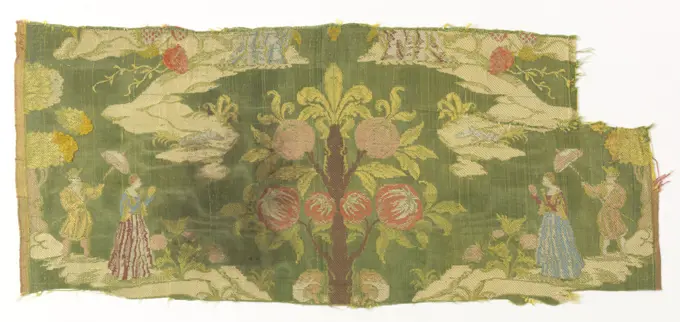
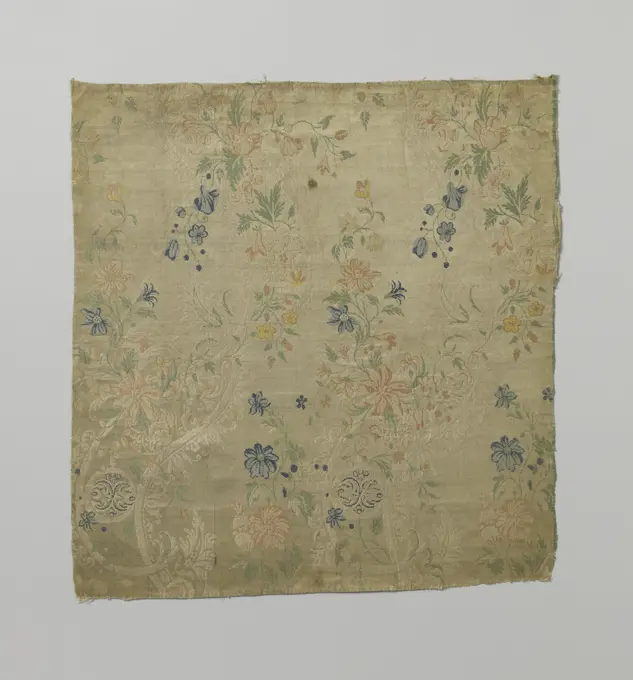
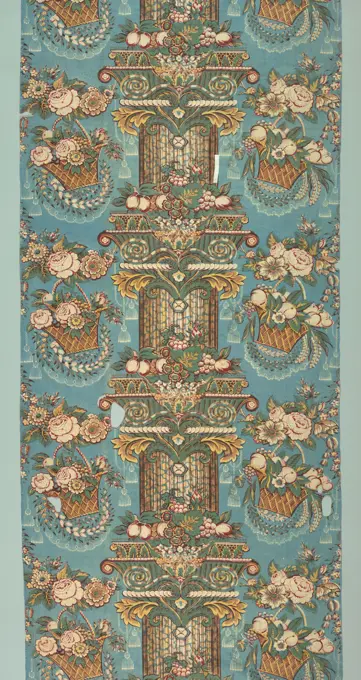
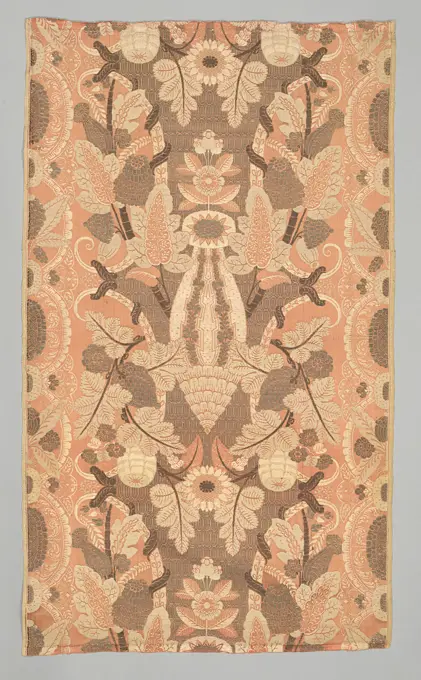
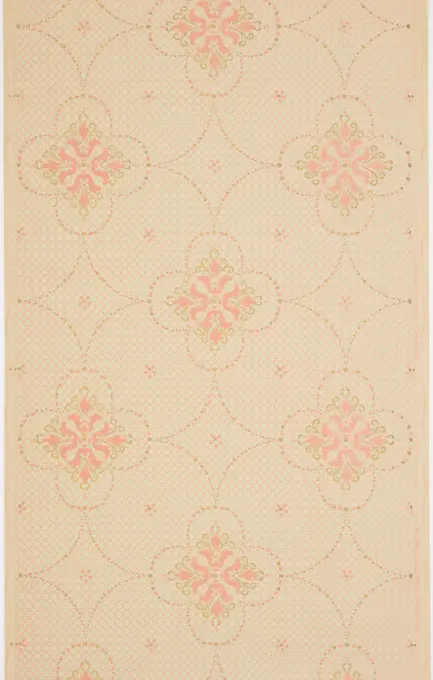
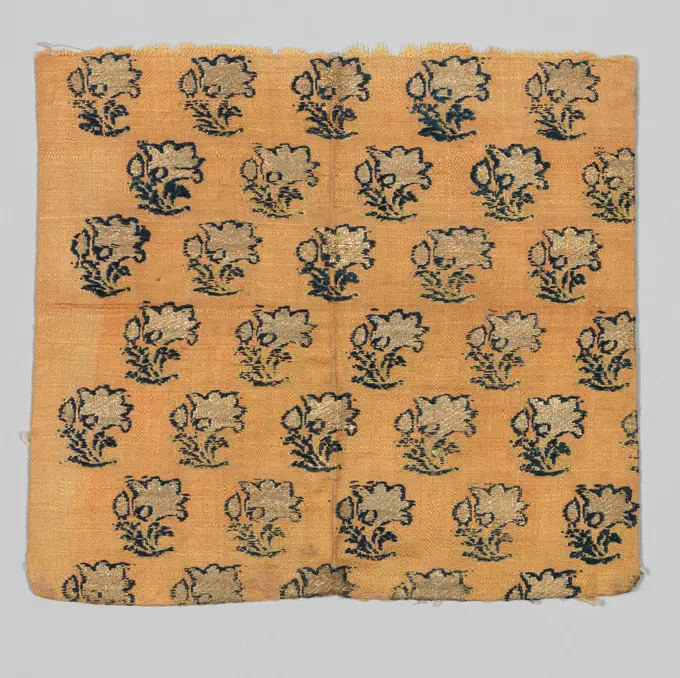
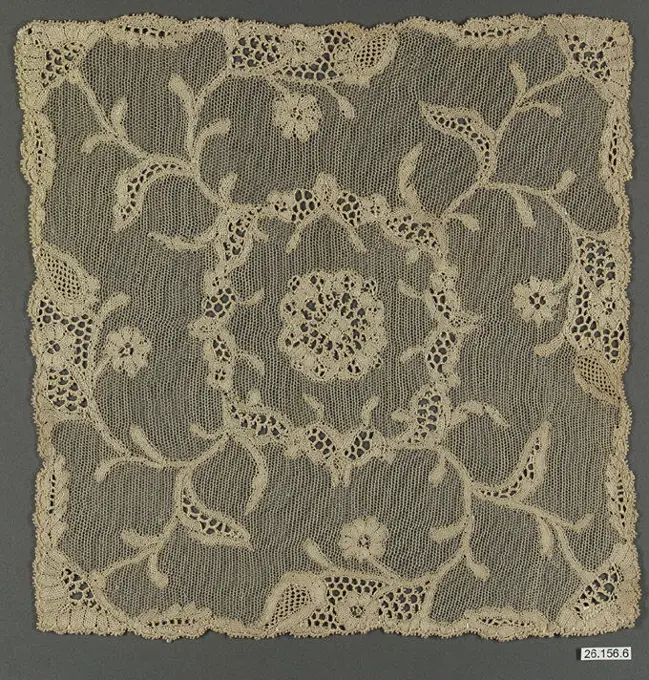
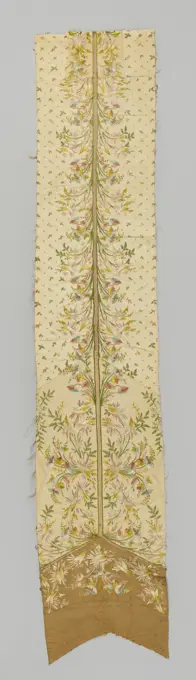
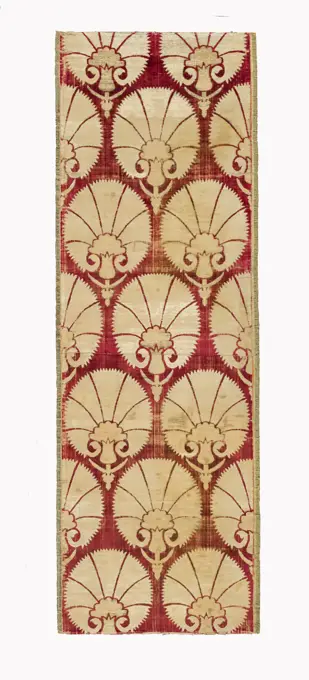
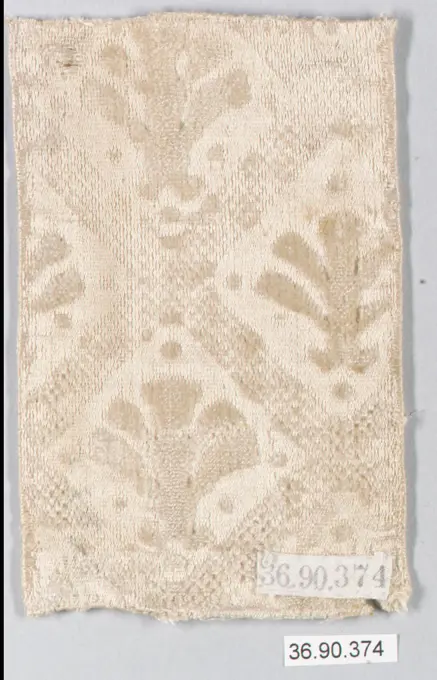
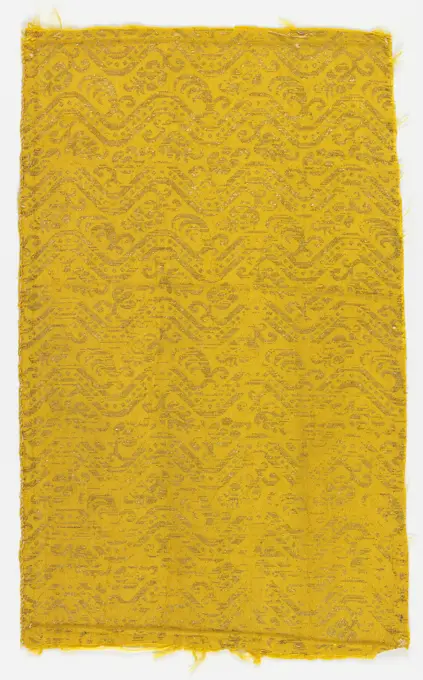
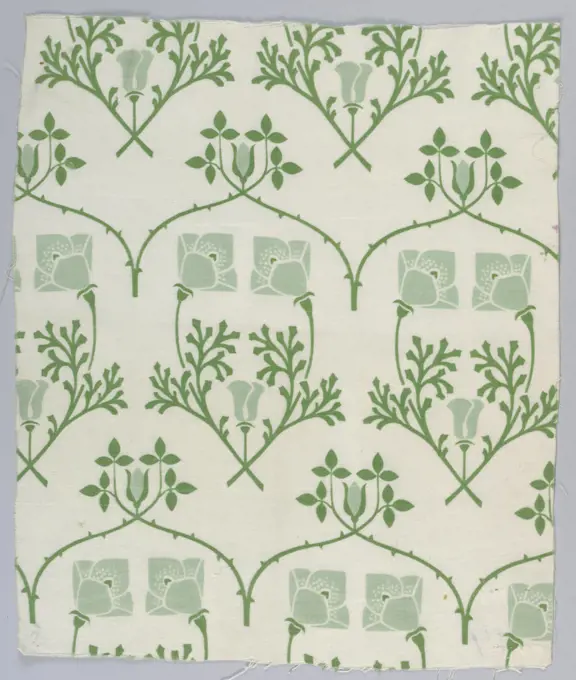
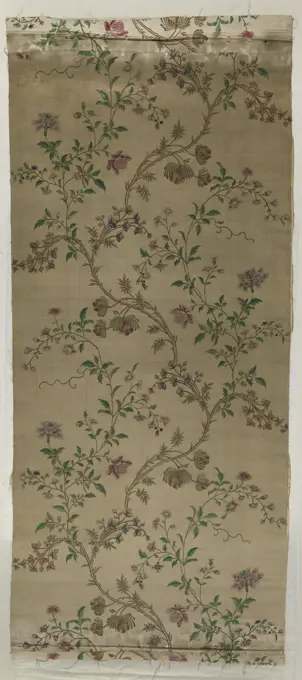
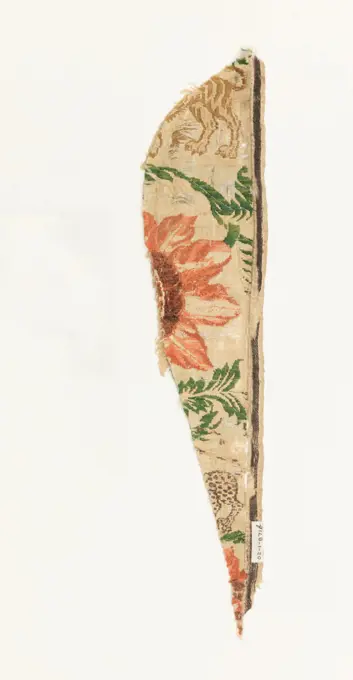
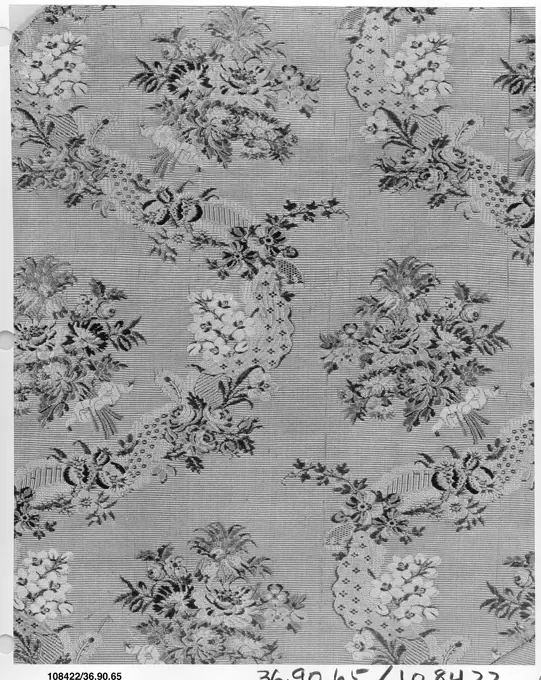
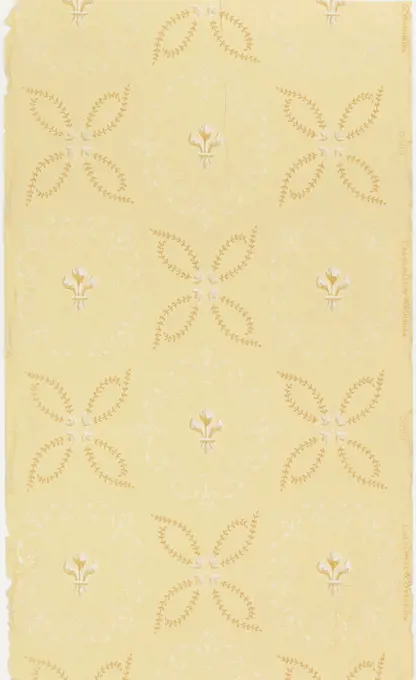
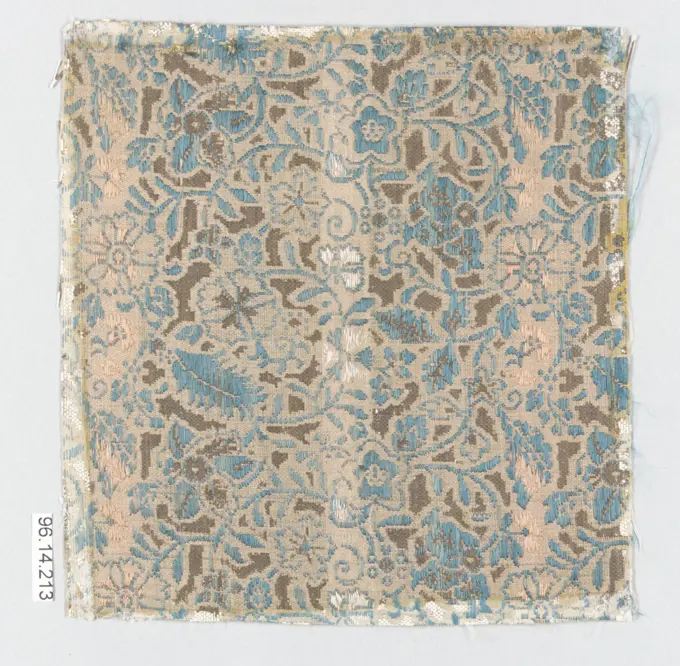
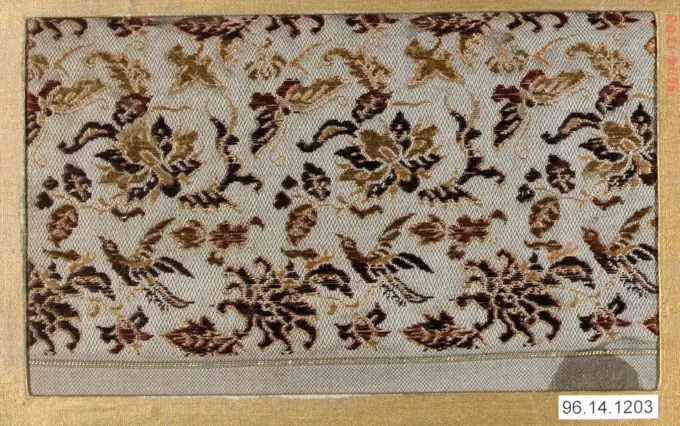
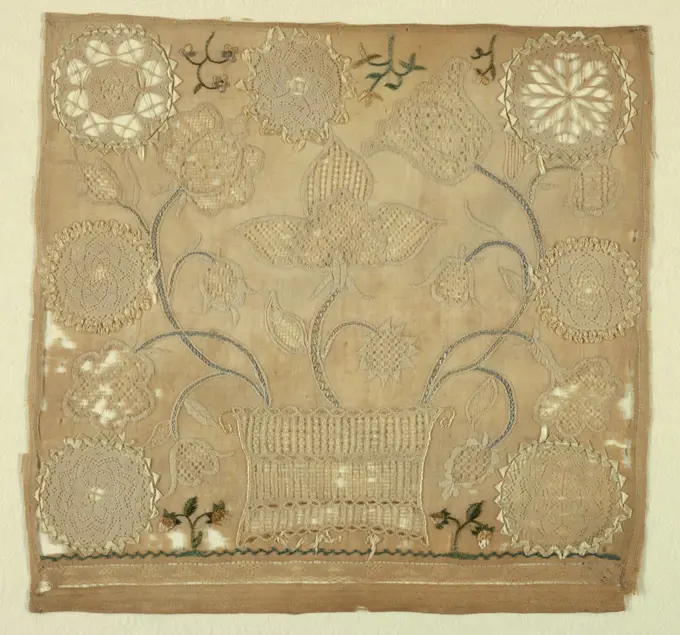
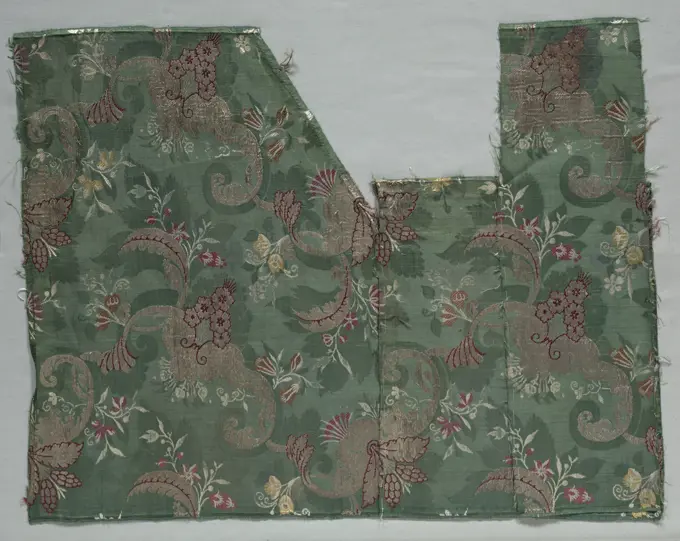
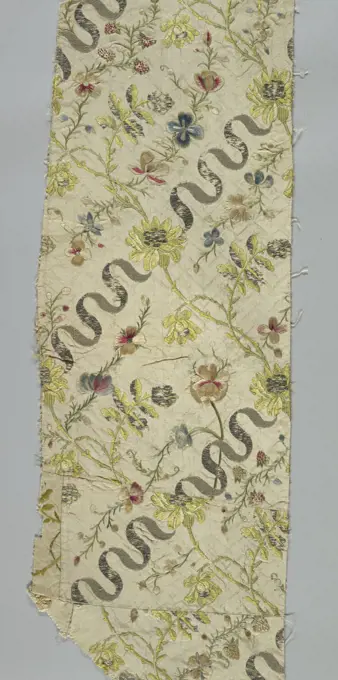
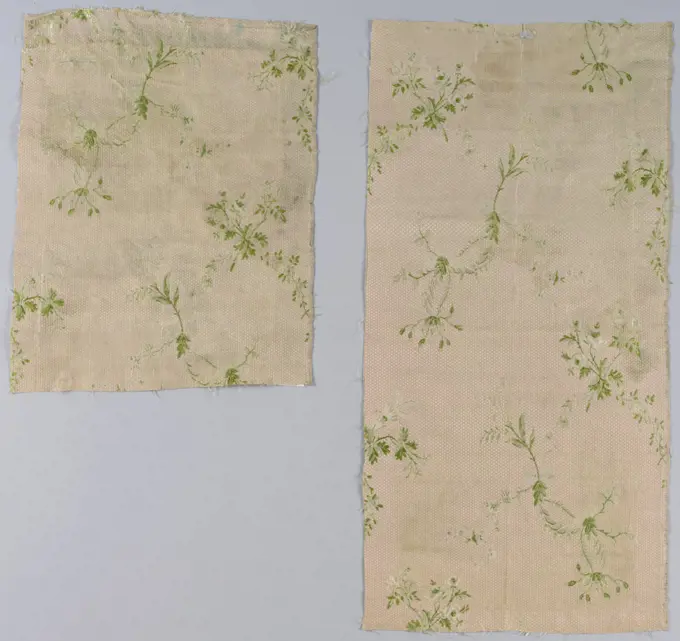
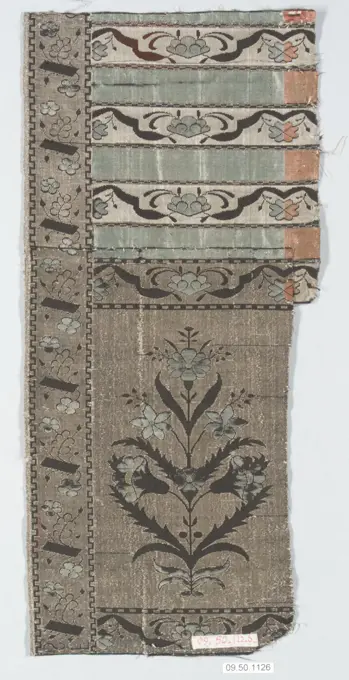
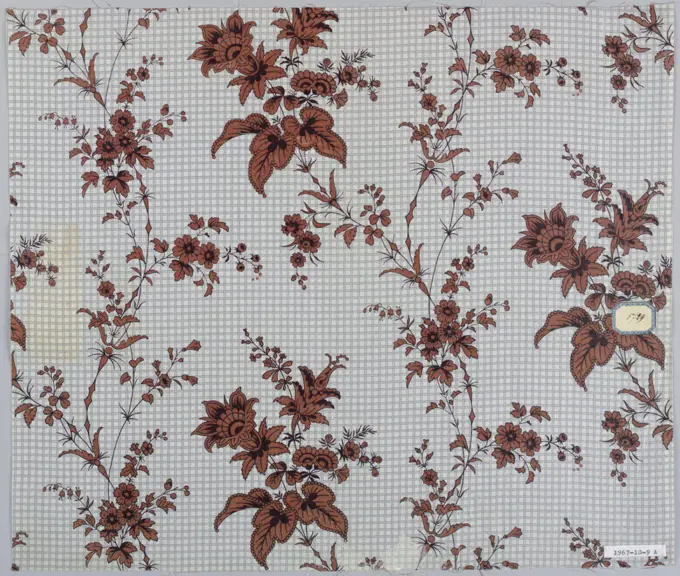
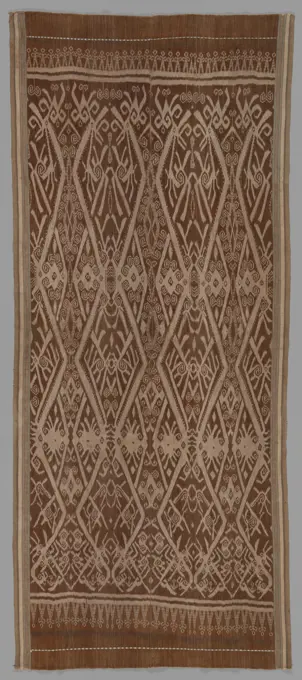
Ingrain carpet piece. Culture: American. Dimensions: 45 x 36 in. (114.3 x 91.4 cm). Date: ca. 1870. Museum: Metropolitan Museum of Art, New York, USA.Fragment, Medium: silk, wool Technique: plain weave with discontinuous supplementary weft patterning (brocade), Fragment of brocaded silk with a symmetrical scene of a man holding an parasol over a woman, flanking a tree with large fruits. In pale green, blue, orange, pink and off-white on a green ground., England, Spain, mid- 18th century, woven textiles, FragmentFragment multicolored silk with a pattern of curl work and stylized leaf motifs on a white stock (brown) With flowers and flower branches, anonymous, c. 1700 - c. 1725 Fragment multicolored silk tissue with a pattern of swinging lanes consisting of white curly and stylized leaf motifs on a white stock (brown). The pattern has multicolored flowers and flower branches on and between the winding lanes. France silk twill Fragment multicolored silk tissue with a pattern of swinging lanes consisting of white curly and stylized leaf motifs on a white stock (brown). The pattern has multicolored flowers and flower branches on and between the winding lanes. France silk twillTextile (England); cottonSample (USA); Manufactured by Orinoka Mills (United States); 1989-80-68Panel (Furnishing Fabric) Made 1875-1900 China. Rose-tan brocaded ground with allover pattern of flowers and diamond shapes in blue, rose, yellow and green .Zijden brocaat met een 'kantpatroon'.Silk broccate with an 'lace pattern'. Natural and light brown silk and silver colored metal wire (partly Frisé).Fragment, Medium: silk Technique: plain weave with discontinuous supplementary weft; moire, Two fragments of white silk moire with brocaded design in shades of green, red, pink, and yellow. Symmetrical arrangement of floral sprays reversed on either side of central line., Italy or Spain, 19th century, woven textiles, FragmentTextile (France); linen, cottonCeiling Paper (USA); Manufactured by Wallace Wall-Paper Co.; machine-printed paper, liquid mica; 81 x 49 cm (31 7/8 x 19 5/16 in.)Samples (USA); Manufactured by Orinoka Mills (United States); Warp x Weft (a): 17.1 × 63.2 cm (6 3/4 × 24 7/8 in.) Warp x Weft (b): 24.1 cm (9 1/2 in.)Textile Fragment 18th century. Textile Fragment. 18th century. Silk and metallic thread; brocaded. Made in India or Iran. Textiles-BrocadesPiece 18th-19th century Japan. Piece 66460Fragment; silkSquare (one of three) 18th century French. Square (one of three). French. 18th century. Needle lace, point dAlençon, silk. Textiles-LacesPocket (USA); cottonFragment of embroidery  posy motifs unknownTextile Length. Turkey, 16th-17th century. Textiles; textile lengths. Silk cut and voided velvet on silk satin ground faced with metallic-thread bound in twillPiece 1760-70 French. Piece 223340Piece 16th-17th century Italian. Piece. Italian. 16th-17th century. Silk. Textiles-VelvetsLeaf with spreading pattern of flowers and fruits with point stock, anonymous, 1750 - 1900  Leaf with spreading pattern of flowers and fruits with point stock. With label with inscription: 'Ports ... Testato'. Half of a cover.  paper. block printing (relief printing process) ornament derived from plant formsWhite embroidery project for a napkin Grą BSKA, StefaniaFragment; silk, metallicTextile, Arthur Wilcock, Medium: cotton Technique: roller printed, duplex, Stylized flat pattern in two shades of green on a plain white ground; confronted poppies enclose thistle and are topped by arch of thorny rose-branches ending in leaves and rosebud., England, ca. 1890, printed, dyed & painted textiles, TextileFragment from a length of wall-covering fabric, anonymous, c. 1750 - c. 1790 Robbery: lane cream -colored silk with scenery of multicolored branches, leaves, flowers and fruits in bright colors in printed contours. China silk Robbery: lane cream -colored silk with scenery of multicolored branches, leaves, flowers and fruits in bright colors in printed contours. China silkTextile; cottonCuff with Floral Vines, 19th century. Unassigned, 19th century. Needle lace, filet/lacis (knotted ground and darned in one direction); bleached linen (est.); overall: 17.9 x 21.8 cm (7 1/16 x 8 9/16 in.). In this lace cuff (one of a set, see 1936.225), scrolling vines with budding flowers emerge from a tied bow, creating a stylized bouquet. A scrolling vine with budding vegetation or a tendril motif is a recurring pattern in needle lace. The frequent use of the motif, adapted in lace from different centuries and regions, suggests that it was found in a pattern book.Shawl, Medium: wool Technique: tapestry weave, Shawl made of two pieces joined together and finished on the long sides with narrow green braid, and on the short sides, with yellow embroidered and fringed fabric. Pattern is red, pink, blue and green upright flowers and vines on a yellow ground., India, 18th century, costume & accessories, ShawlHandkerchief made of needle side with flowers and an interior of Batist. Drawer from Batist with an edge natural-colored coniferous lace: Venetian relief side. The inner piece of linen batist is scalloped. On a bars soil, tendrils with large flowers, such as fan-shaped palm-shaped flowers, paisley motifs, and so on, which are asymmetrical are grouped.Sample, Orinoka Mills, (Philadelphia, Pennsylvania, USA), Red tone on tone floral and arabesque pattern., USA, ca. 1910, woven textiles, SampleFragment (Italy); slik; Warp x Weft: 25.8 x 24.7 cm (10 3/16 x 9 3/4 in.); 1914-26-1Fragment multicolored brochure silk, c. 1730 - c. 1800 A fragment of white silk, soil with green tires, on which flowers of purple green, black yellow silk, figures of gold thread. NOTE: MEERSHIP; Curious chain yarns (6). Netherlands silk A fragment of white silk, soil with green tires, on which flowers of purple green, black yellow silk, figures of gold thread. NOTE: MEERSHIP; Curious chain yarns (6). Netherlands silkFragment multicolored silk tissue with pattern cutting ovals, multicolored flowers and so -called edges with ditto flowers, anonymous, c. 1690 - c. 1710 Fragment multicolored silk tissue, composed of four pieces set together. White "lace tires" cut each other on a green-blue soil. The created spaces are filled with multicolored flowers. Multicolored flowers are incorporated here and there in the lace tires. Netherlands (possibly)France (possibly) silk. lampas (textile material) Fragment multicolored silk tissue, composed of four pieces set together. White "lace tires" cut each other on a green-blue soil. The created spaces are filled with multicolored flowers. Multicolored flowers are incorporated here and there in the lace tires. Netherlands (possibly)France (possibly) silk. lampas (textile material)Fragment. Japan. Date: 1775-1800. Dimensions: 24.5 x 29 cm (9 5/8 x 11 3/8 in.). Plain compound twill, silk & gilt paper; 2 strips to m.m. Origin: Japan. Museum: The Chicago Art Institute, Chicago, USA.Panel. Italy. Date: 1501-1600. Dimensions: 69.2 x 58.4 cm (27 1/4 x 23 in.)Repeat: 36.5 x 28.3 cm (14 3/8 x 11 1/8 in.). Silk and linen, satin damask weave. Origin: Italy. Museum: The Chicago Art Institute, Chicago, USA.Textile (England); cottonLength ca. 1830 British. Length 229755Sutra Cover. China. Date: 1590-1599. Dimensions: 34.5 × 13.6 cm (13 5/8 × 5 3/8 in.)Repeat: 12 × 9.2 cm (4 3/4 × 3 5/8 in.). Silk, plain weave double cloth with band of 1:3 'S' twill weave and of plain weave. Origin: China. Museum: The Chicago Art Institute, Chicago, USA.Fragment, Medium: silk Technique: 7&1 satin with discontinuous supplementary wefts (brocade), Very large flowers with small birds and animals. both selvages present. Some wefts are chenille., 17th century, woven textiles, FragmentPiece mid-18th century French. Piece 223171Chintz fragments, Medium: cotton Technique: mordants for 3 reds and 2 purples applied over resist by pen and brush; madder dyed; blue applied over resist by immersion; yellow applied by brush over blue; chintz on plain weave, Three fragments of a floral spray on a speckled red ground. Component C may come from a different piece., India, 18th century, printed, dyed & painted textiles, Chintz fragmentsFragment multicolored brochure silk, c. 1750 - c. 1800 Fragment multicolored silk tissue. A white soil has a pattern of winding stylized flower vines in white, between which multi -colored flower bouquets and flower branches. France silk Fragment multicolored silk tissue. A white soil has a pattern of winding stylized flower vines in white, between which multi -colored flower bouquets and flower branches. France silkCeiling paper, Cresswell & Washburn Ltd, Philadelphia, Pennsylvania, 1880 - 1900, Machine-printed paper, liquid mica, Small fleur de lis enclosed within a wreath composed of stylized scroling foliage. Four quatrefoil shapes surround the wreath. Printed on a tan ground., Philadelphia, Pennsylvania, USA, 1905-1915, Wallcoverings, Ceiling paperPiece 1715-20 Italian, Venice Panels such as thiswith its extraordinary patterns in long repeatswere called "bizarre" by the Danish scholar Slomann, who believed they were made in India. Most scholars consider them an exotic phase in the history of European silk weaving.. Piece 227834Frieze, York Card & Paper Co., 1891, Machine-printed paper, On gray ground, with horizontal stripes. White vases holding white bouquet, garlands connecting to other vases., York, Pennsylvania, USA, 1905-1915, Wallcoverings, FriezeFragments, Medium: silk Technique: combination of two structures; satin plu twill, Bands of white foliage forming lozenges which contain plant forms, 17th century, woven textiles, FragmentsPiece 18th-19th century Japan. Piece 65938Square, Medium: linen Technique: grid of withdrawn element work with needle lace, reticella style, and edge of bobbin lace, Square with bobbin lace edging has cross-shapes filled with needle lace fillings. These are inside a fine diamond lattice with small squares where lines intersect., Italy or Spain, 16th-17th century, lace, SquareFragment Made 1625-1675 Italy. Silk and gold gilt strips, plain weave with supplementary patterning wefts .Excerpt Eastern textile, c. 1800 - c. 1850 A fragment Eastern textile. A red surface has a pattern of sloping golden windows of yellow side and gold thread. In the silk. cotton (textile). A fragment Eastern textile. A red surface has a pattern of sloping golden windows of yellow side and gold thread. In the silk. cotton (textile).Sidewall - Sample, Sunflower, 1887; Designed by Morris & Co. (United Kingdom); Manufactured by Jeffrey & Company (United Kingdom); block-printed paperPiece 18th-19th century Japan. Piece. Japan. 18th-19th century. Silk. Textiles-WovenFragments, Medium: silk Technique: plain weave patterned by floats of alternate wefts; floats of discontinuous supplementary wefts, and a set of supplementary warps to create a textured background, Very fine blue vertically curving branch and ribbon enclosing small multi-color sprigs of flowers on a blue textured background. Four repeats across width of fabric. Length of fabric placed side-by-side continue repeat., possibly Spain, 19th century, woven textiles, FragmentsMarie Lutrell, Calico, 1940 CalicoSilk Fragment, late 1600s. Italy or Spain, late 17th century. Damask, silk; average: 70.2 x 51.3 cm (27 5/8 x 20 3/16 in.).Sampler, Mary Babb, American, Medium: silk, linen, and cotton embroidery on linen foundation Technique: counted and uncounted stitches; withdrawn element work; cutwork filled with hollie point; herringbone, chain, buttonhole and satin stitches on plain weave foundation, quilled ribbon, A basket of large flowers, with the flowers executed in drawn work, cut work, and hollie point in white embroidery on a white ground. The basket trimmings, stems of flowers, and isolated sprigs of flowers at bottom are worked in colored silks. With the inscription: Mary Babb 1783., Philadelphia, Pennsylvania, USA, 1783, embroidery & stitching, SamplerFrieze (USA); Manufactured by Cresswell & Washburn Ltd; machine-printed paper; 91.5 x 49.5 cm (36 x 19 1/2 in.)Fragment, silk woven, umbrella shaped flowers and leaves in greens, blues, reds and browns on a patterned white background, 1750-1800, woven textiles, FragmentLength of Silk Damask, 1700s. Italy, 18th century. Damask, brocaded; silk and metal; average: 69.3 x 53.7 cm (27 5/16 x 21 1/8 in.).Textile (England); cotton; Warp x Weft: 44.5 x 34.5 cm (17 1/2 x 13 9/16 in.)Sidewall (USA); Manufactured by Carey Bros. W.P. Mfg. Co.; machine-printed paper, liquid mica; 91 x 49 cm (35 13/16 x 19 5/16 in.)Fragment tkaniny. unknown, authorFragment, Medium: silk Technique: continuous ivory and discontinuous polychrome suplementary wefts plus supplementary warps ivory in a plain weave foundation ivory., Fragments of an all-over pattern made up of a bunch of roses with trailing floral vine and a fine detached flowering vine arranged in a group. The groups are placed side by side and reversed end to end to counter balance movements. Polychrome pattern on an 'ivory on ivory' geometric-patterned background., France, late 19th century, woven textiles, FragmentPiece 1851-72 British. Piece 226220Fragment Multicolor striped silk Mexicainian. Fragment multicolor silk tissue. The white ground has yellow and black stripes between which leaf refrences with stripes and dots and bouquets and butterflies.Fragment. Italy. Date: 1601-1650. Dimensions: 22.5 x 25 cm (8 1/2 x 9 7/8 in.). Silk damask. Origin: Italy. Museum: The Chicago Art Institute, Chicago, USA.Ernest Capaldo, Printed Textile, c 1941 Printed TextileSilk Textile, 17th century. Italy, 17th century. Silk; average: 105.5 x 91.5 cm (41 9/16 x 36 in.).Textile (England); cotton; Warp x Weft: 236 x 63 cm (7 ft. 8 15/16 in. x 24 13/16 in.)Piece 16th-17th century China. Piece. China. 16th-17th century. Silk, metallic thread. Textiles-WovenSample Book Page (USA); cardboard, linen, silk, metallic; 1971-26-2-5Textile Swatches Onondaga Silk Company, Inc. (1925-1981). Textile Swatches, 1948-1959. 81 silk; 19 metal, (a) - (c): 8 1/2 x 4 1/4 in. (21.6 x 10.8 cm).    1948-1959Fragment of a bed of oriental textile with embroidery. Fragment of a multi-colored belt, indo-perzische bedspread, decorated with volutes and flowers. Entertained into a trapezoidal chair cover. With a sewn linen strap on the center of four sides.Textile 19th century Japan. Textile 68058Ceiling Paper (USA); Manufactured by Maxwell & Co., S.A. (United States); machine-printed paper, liquid mica; 93 x 49 cm (36 5/8 x 19 5/16 in.)Fragment Made 1700-1900 Japan. Plain compound satin, silk & gilt paper; 2 1/2 strips to m.m. .Textile (USA); Manufactured by Cheney Brothers (United States); silkTextile, Medium: cotton Technique: block printed on plain weave, Half-drop repeat of a fruit tree growing in a flowering mound with two pheasants. Multicolored on a yellow background., England, ca. 1815, printed, dyed & painted textiles, TextileSample (USA); Manufactured by Orinoka Mills (United States); 1989-80-47Fragment (Italy); Bequest of Marian Hague; 1971-50-214Bag in a flat, rectangular model, of red velvet on which embroidery in gold and silver thread The inscription 'Francois Louis Vander Wielen' and 'Constantinopoli 1696', Anonymous, 1696  Letter bag in a flat, rectangular model of red velvet. Front and back are almost completely decorated with embroidery in gold and silver thread with small details in the blue side. Under the front valve, the inscription 'Francois Louis Vander Wielen' is embroidered. On the back is in curly letters 'Constantinopoli 1696'. The lining of the bag is made of linen. Constantinopel (possibly) whole: velvet (fabric weave). Chamois (Animal Material). Decoration:. Decoration: Silver thread. Decoration: Silk. Lining: Linen (Material) cutting / embroidering  Constantinople. IstanbulTextile (USA); cottonTextile (France); linen, cotton; Warp x Weft: 171.5 x 59 cm (5 ft. 7 1/2 in. x 23 1/4 in.) Repeat H: 101 cm (39 3/4 in.); Musum purchase through gift of Mrs. Florence Matthews; 1994-23-2Pillow Sham (Unfinished). Made by the great-great grandmother, Jane Bolas Vaughan, or great-great-great grandmother, Elizabeth Ottiwell Vaughan, of Edward Goldisborough Chambre Vaughan, 1834-1914; England, Shropshire, Lobbington, Ellesmere, Burlton Hall. Date: 1675-1725. Dimensions: .1: 20.5 × 26.7 cm (8 1/8 × 10 1/2 in.).2: 14.5 × 51.5 cm (5 3/4 × 20 1/4 in.).3: 20.6 × 12.2 cm (8 1/8 × 4 3/4 in.).4: 20.6 × 12.3 cm (8 1/8 × 4 7/8 in.). Linen, plain weave; underlaid with cotton, plain weave; embroidered with silk. Origin: England, southern. Museum: The Chicago Art Institute, Chicago, USA.Panel Made 1850-1870 England. Silk, warp-float faced 7 1 satin weave with supplementary pile warps forming cut and uncut, voided velvet .Furnishing textile. Culture: French. Dimensions: 72.5 x 21.5 in. (184.2 x 54.6 cm). Date: 1880s.The Renaissance Revival style was particularly strong in France through much of the nineteenth century. This furnishing textile displays a typical combination of Renaissance-inspired strapwork allied with unmistakably nineteenth-century floral designs. The naturalistically rendered flowers and leaves meander in and around the deep red strapwork support, which is accented with small jewel-like medallions. Museum: Metropolitan Museum of Art, New York, USA.Panel Made 1720-1730 France. Silk, plain weave with supplementary brocading wefts and self-patterned by two-color complementary ground wefts .Textile (France); silk; Warp x Weft: 117.3 x 64.4 cm (46 3/16 x 25 3/8 in.); 1944-72-5Fragment green with yellow silk lampas. Fragment silk tissue. The symmetrical pattern has vertical garlands with large poppy flowers that cross each other in a flower, completely left and right surrounded by volute ornaments flowered tires.Textile, medium: silk Technique: plain weaave with supplementary warp floats and discontinuous supplementary weft floats., Flowers and sprays on pale ground., 18th century, woven textiles, TextilePiece ca. 1780 British. Piece 228835Fragment of cotton with multicolored tambouring work in silk with flower pattern, c. 1400 - c. 1650 Fragment of cotton, with multi -colored tambouring work in silk with flower pattern. Note: Object not found in 1997.  cotton (textile). silk Fragment of cotton, with multi -colored tambouring work in silk with flower pattern. Note: Object not found in 1997.  cotton (textile). silkFragment, Medium: cotton Technique: relief printed on plain weave, Stylistic flowers in purple, light blue and black on an off-white ground, France, 18th century, printed, dyed & painted textiles, FragmentFragment 18th century Polish. Fragment. Polish. 18th century. Silk, metal thread, no fringe. Textiles-WovenPiece 18th century Japan. Piece 71977Sidewall, Zuber & Cie, Rixheim, Alsace, France, founded 1797, Block-printed and embossed on machine-made paper, Paper with aqua and mica ground has textile-inspired floral design printed in pale cream and embossed. Bouquet of flowers in vase framed by a wreath-like flower garland with lacy ribbons intertwined in upper half which are tied in bowknots having tasseled ends. Background embossed with fine horizontal ribs and pressed for moire texture., Rixheim, Alsace, France, 1875-99, Wallcoverings, SidewallTextile, Schwartz-Huguenin, Medium: cotton Technique: printed by engraved roller on plain weave; glazed, Three pieces, same design, different colors. A) Ground printed, possibly by 'molette,' in grey, small check pattern. Design of long sprays of bell-shaped and accented in darker brown, printed over ground design, possibly by surface roller. B) Same design, flowers in dark blue. C) Same with flowers in red with very dark green shadows and accents. Glazed., 1851-63, printed, dyed & painted textiles, TextileRitual Textile (PuaKumbu)Fragment of fabric unknownFragment of chasuble orphrey, embroidered unknown