Floral Table Covers and Patterns

Elegant textile fragments and patterns featuring intricate floral designs in soft colors, highlighting embroidery and historic fabric techniques from different cultures.

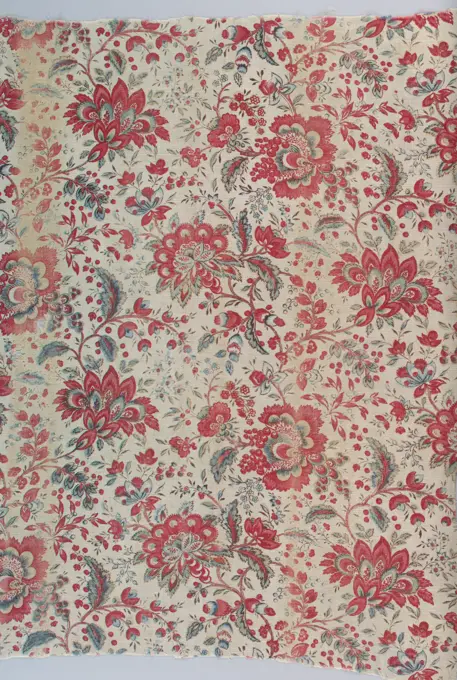
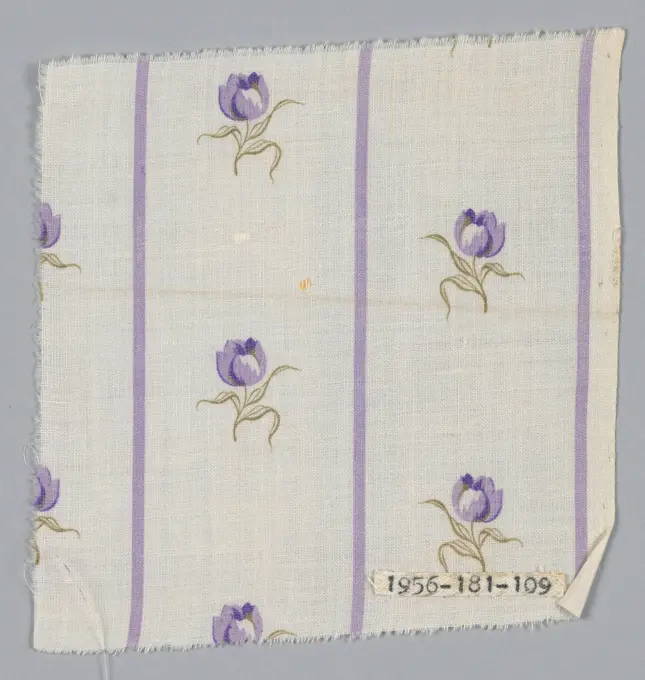
Textile (France); cotton
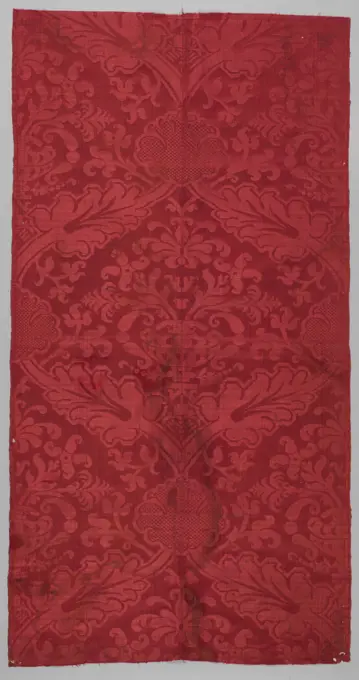
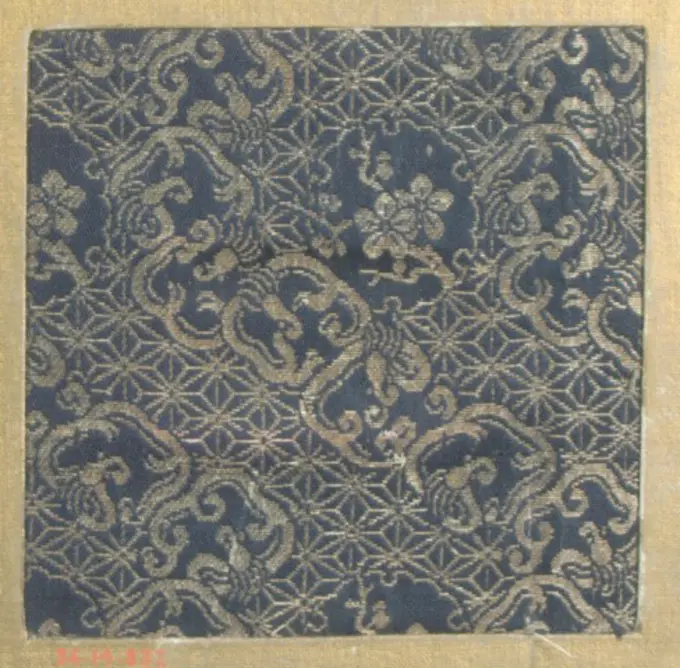
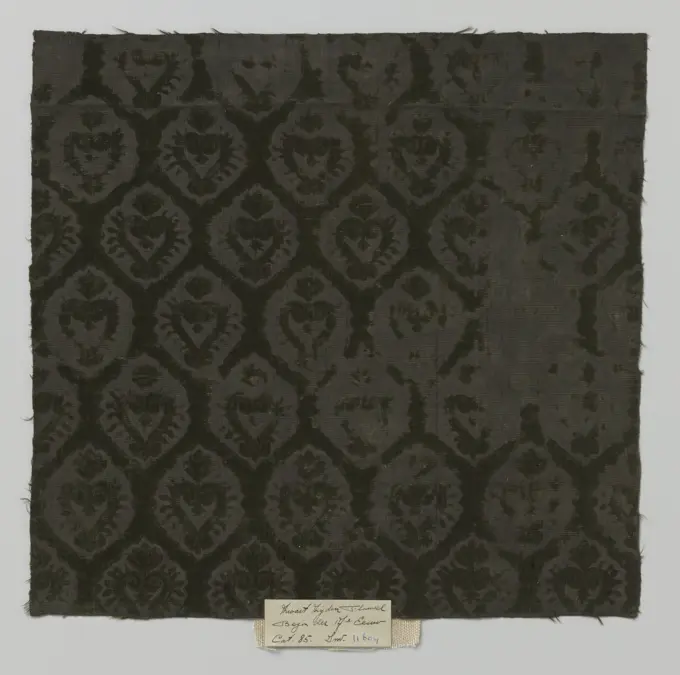
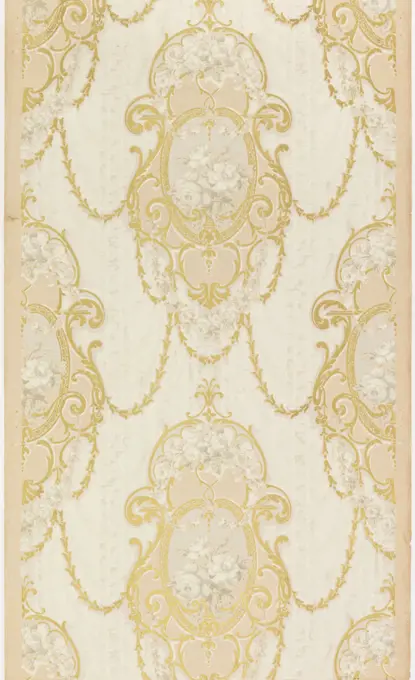
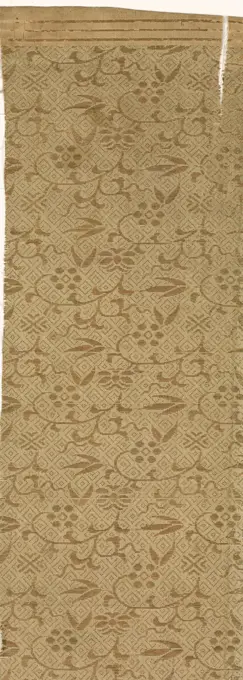
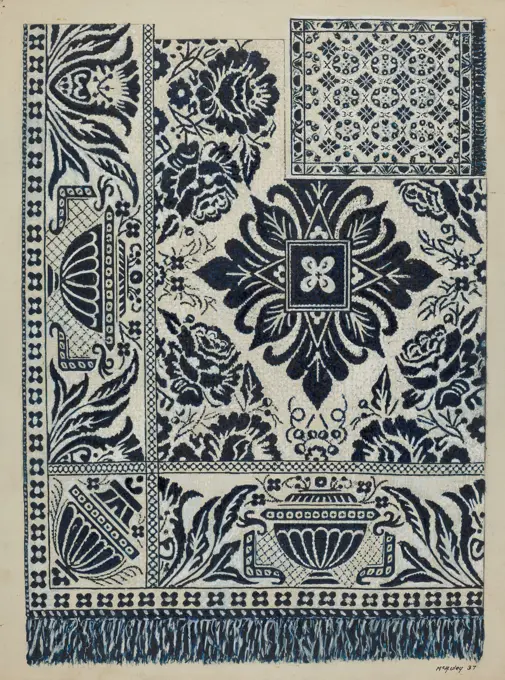
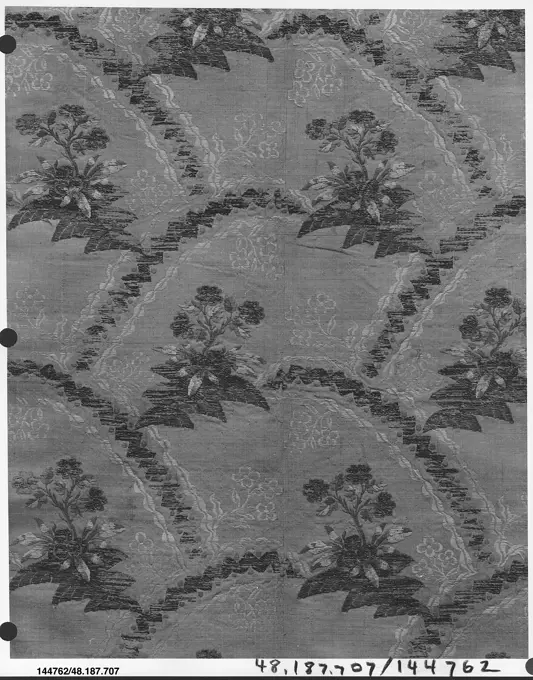
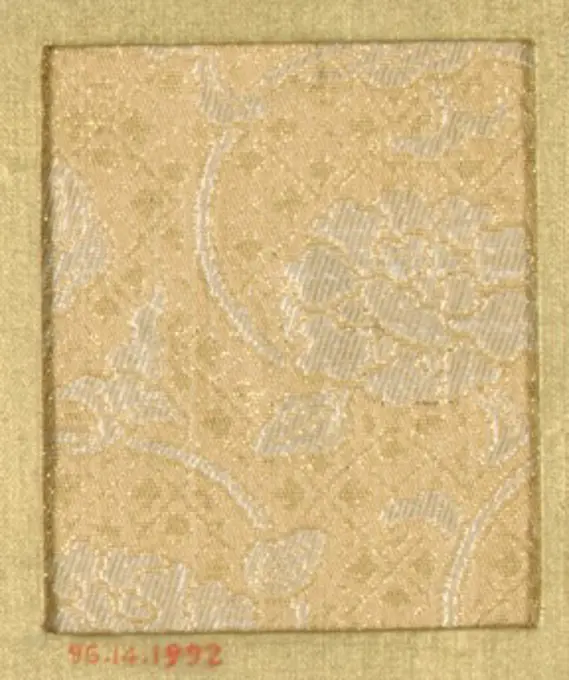
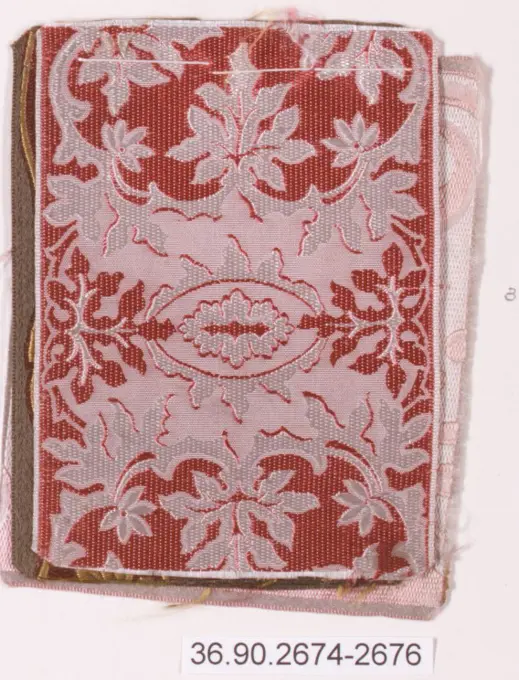
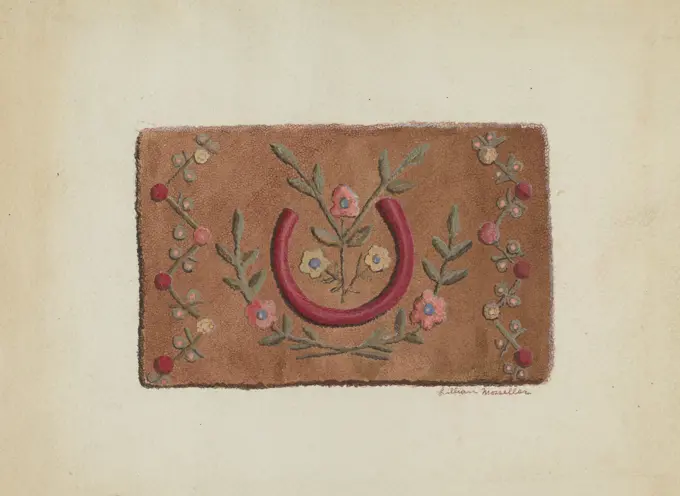
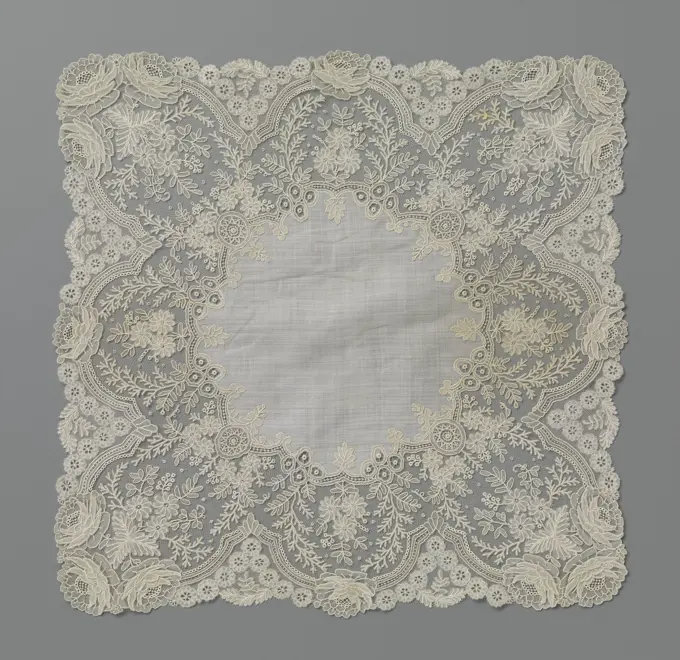
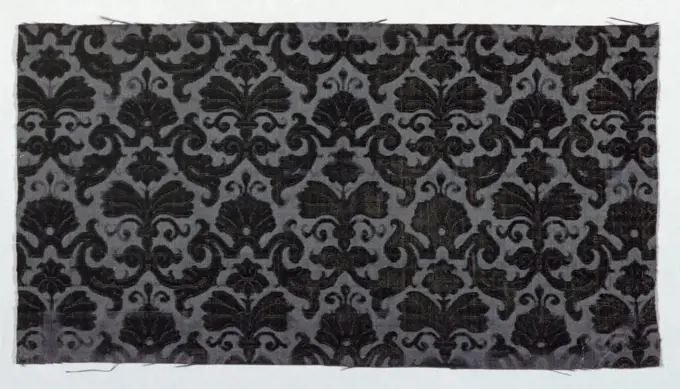
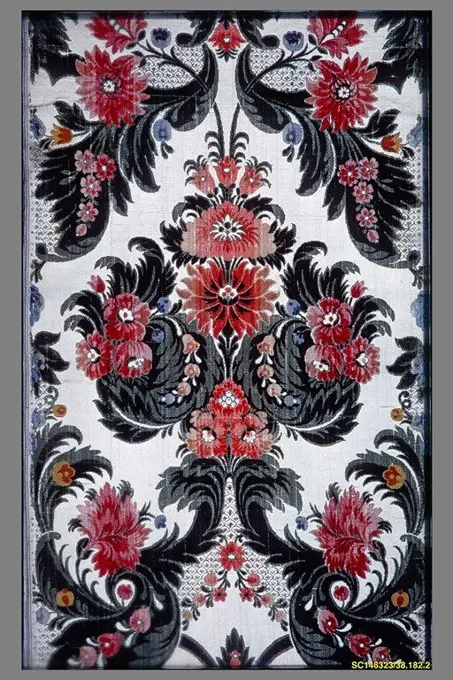
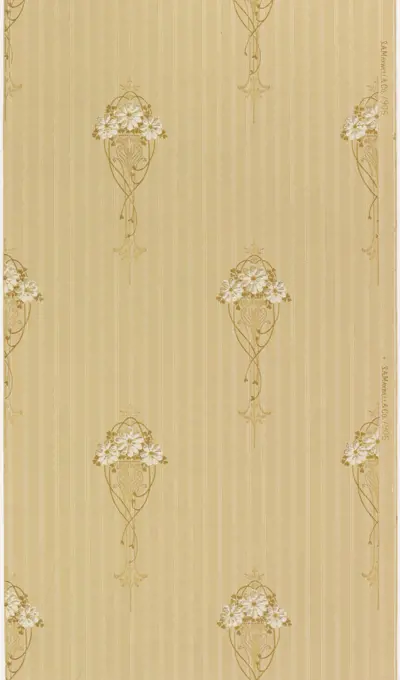
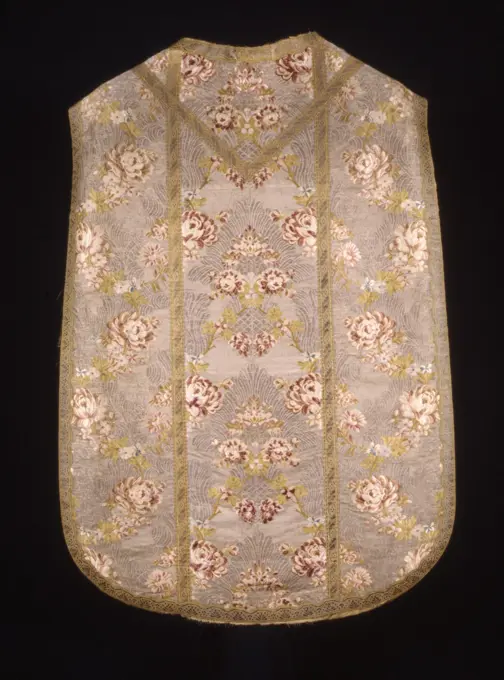
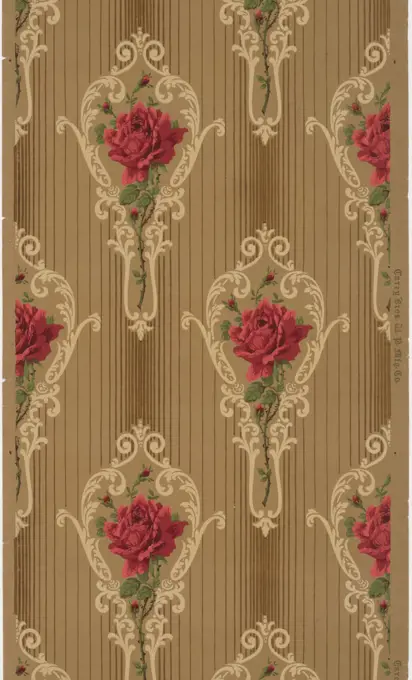
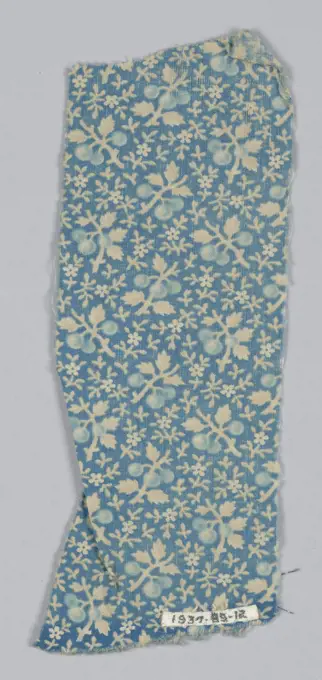
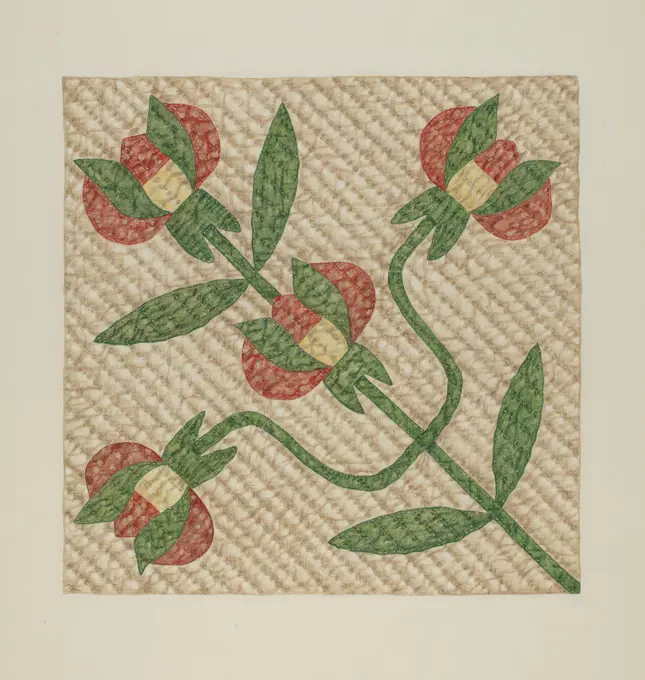
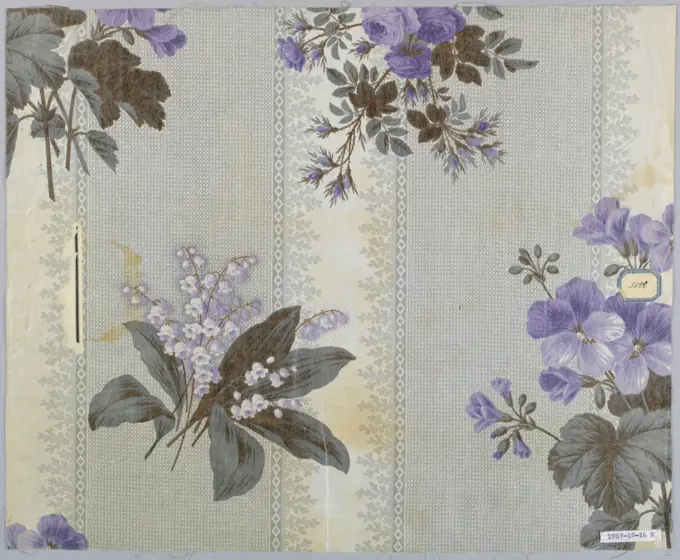
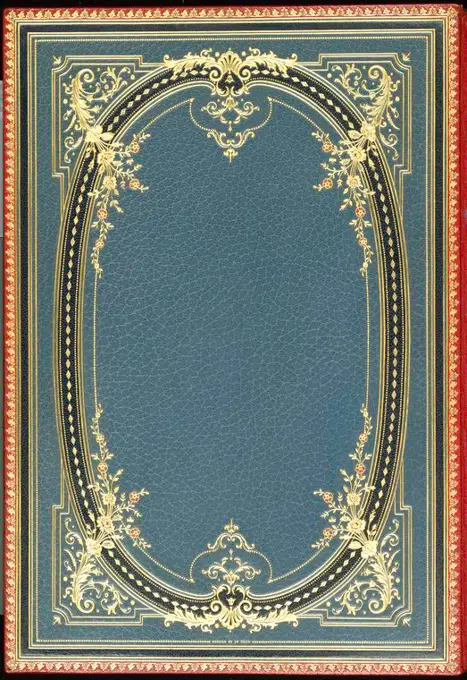
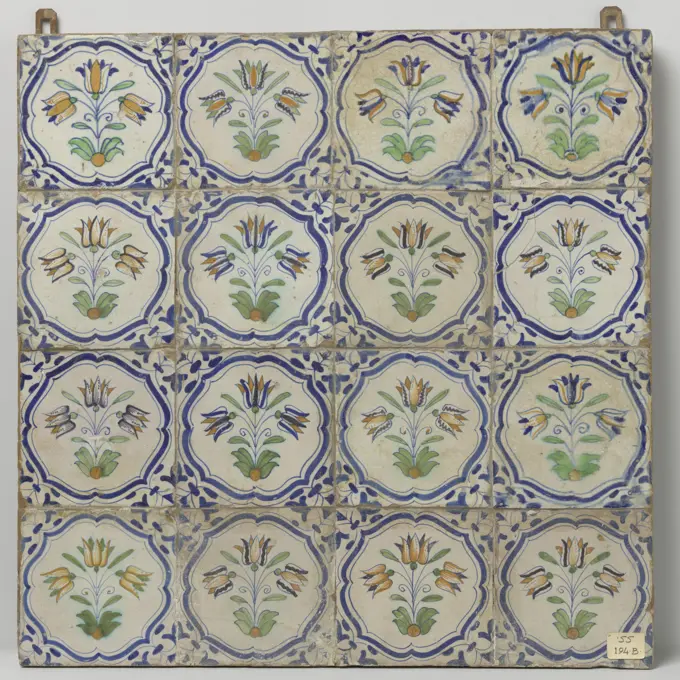
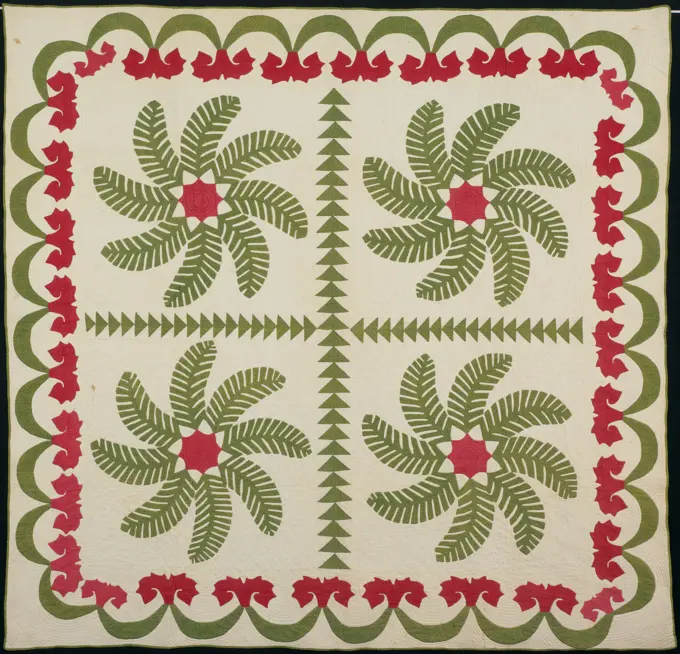
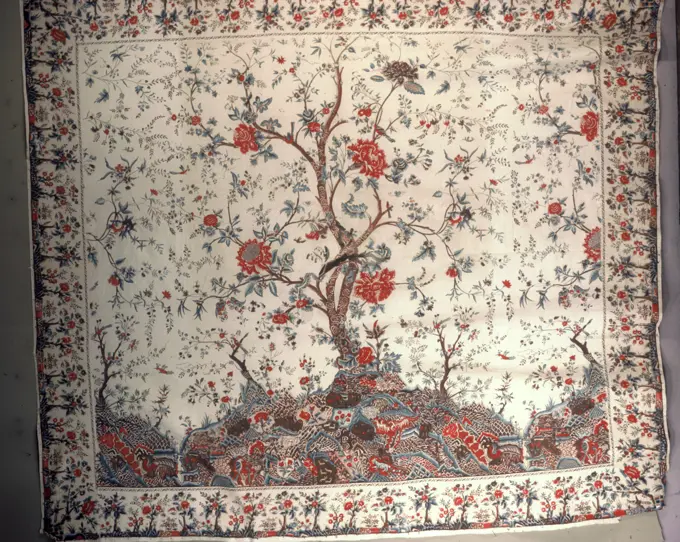
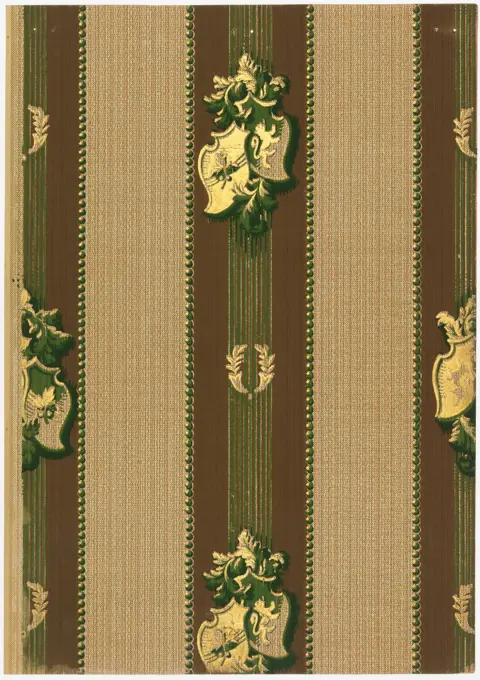
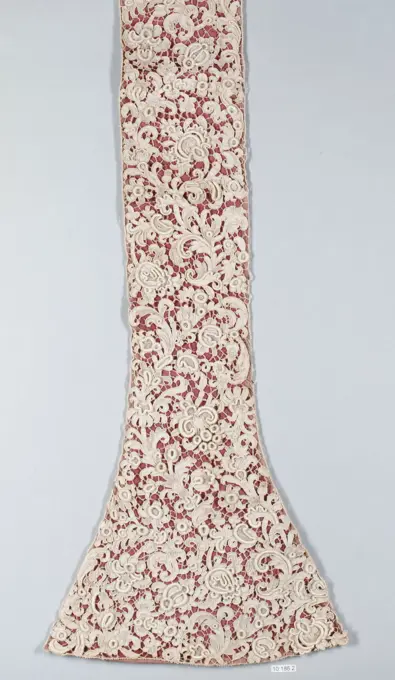
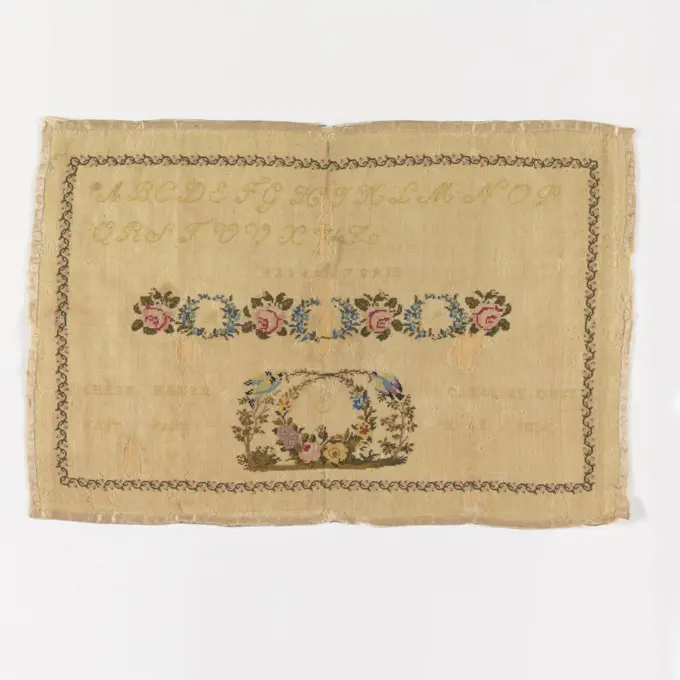
Piece 18th-19th century Japan. Piece 67646Fragment of fabric unknownPiece 17th century Japan. Piece 71596Ralph N Morgan, Quilt Pattern Square, 1941 Quilt Pattern SquarePiece. Culture: Spanish or Portuguese. Dimensions: 23 (loom width) x 19 inches (58.4 x 48.3 cm). Date: possibly ca. 1735. Museum: Metropolitan Museum of Art, New York, USA.Sidewall (USA); Manufactured by Maxwell & Co., S.A. (United States); machine-printed paper, liquid mica; 92 x 49 cm (36 1/4 x 19 5/16 in.)Piece. Culture: Italian. Dimensions: L. 108 x W. 22 1/2 inches (loom width) (274.3 x 57.2 cm). Date: mid-17th century. Museum: Metropolitan Museum of Art, New York, USA.Crimson Silk Damask ca. 1600 Spanish or Italian Beginning in the twelfth century, the Tuscan town of Lucca and the Adriatic port of Venice dominated European silk weaving, which subsequently spread to Genoa, Florence, and Milan. Spanish silk weavers, long established in Granada and Valencia, were, by the 1500s, emulating their Italian counterparts. Raw silk, imported from the Near East or cultivated locally, was spun, dyed, spooled, and woven within family workshops under the patronage of wealthy, sometimes noble, silk manufacturers. This crimson silk damask was displayed in Arms, Armor, and Textiles: 1492-1776, on view at the George Bruce branch, New York Public Library (visible at far right in the photograph of 1934), and later in European Textiles and Costume Figures, at Walton High School (visible at far right in the photograph of February 16, 1939).Elizabeth Cleland, 2020. Crimson Silk Damask. Spanish or Italian. ca. 1600. Silk. Textiles-WovenFragment of silk fabric  symmetrical bouquets in winged vases unknownTextile, Medium: silk on silk Technique: embroidered in chain stitch on satin weave, Cream satin ground with vertical pencil stripes of weft floats, embroidered in bright pastels with bouquets tied with ribbon bow in four corners. Holy monogram surrounded by rays and flower sprays, lower center. Piped with bright pink ribbed silk lined with strie silk cloth of period., France, 18th century, embroidery & stitching, TextileTextile (France); cottonFragments, 1600s. Italy, 17th century. Brocade, silk; overall: 74.9 x 20.3 cm (29 1/2 x 8 in.).Lawrence Peterson, Crewel Embroidery for Chair Seat, c 1937 Crewel Embroidery for Chair SeatPiece 18th-19th century Japan. Piece. Japan. 18th-19th century. Silk, metallic thread. Textiles-WovenSample, Daffodil; Made by Morris & Co. (United Kingdom); England; cottonFragment silk ciselé velvet., Anonymous, c. 1600 - c. 1625 A fragment of a black silk velvet, based on rips, in velvet with harp -shaped figures in it.  silk. velvet (fabric weave). ciselé velvet A fragment of a black silk velvet, based on rips, in velvet with harp -shaped figures in it.  silk. velvet (fabric weave). ciselé velvetTwo sewing fragments Eastern textile with embroidery ,, 1700 - 1800 Two sewing fragments Eastern textile with embroidery; Tamboering work. Flower branches sprinkled in silk are embroidered on white cotton. India cotton (textile). silk embroidering Two sewing fragments Eastern textile with embroidery; Tamboering work. Flower branches sprinkled in silk are embroidered on white cotton. India cotton (textile). silk embroideringTrimming fragment, Medium: silk Technique: woven, Scrolling leaf in yellows on plum ground., France, ca. 1830, woven textiles, Trimming fragmentSidewall, Hobbs, Benton & Heath, Hoboken, New Jersey, Machine-printed paper, textured, liquid mica, Floral bouquet in medallion. Medallions are connected by swags. Printed in metallic gold and grisaille on a ribbon-stripe or moire blue-gray background., Hoboken, New Jersey, USA, 1905-1915, Wallcoverings, SidewallPiece 18th-19th century Japan. Piece. Japan. 18th-19th century. Silk. Textiles-WovenPiece 17th century probably Italian. Piece 222182Fragment, 1800s. China, 19th century. Silk; overall: 30.5 x 11.5 cm (12 x 4 1/2 in.).William McAuley, Handwoven Coverlet, c 1937 Handwoven CoverletPiece third quarter 18th century French, Lyons. Piece 227401Piece 18th-19th century Japan. Piece 67704Indian ornamentFragment with Birds and Floral Motif, 1600s. Italy or Spain , 17th century. Damask, silk; overall: 25 x 31 cm (9 13/16 x 12 3/16 in.).Piece 18th-19th century Japan. Piece 65961Textile (England); cotton; Warp x Weft: 77 x 70 cm (30 5/16 x 27 9/16 in.); Bequest of Elinor Merrell; 1995-50-133Interior decorative detail, Amber Fort, one of the great Rajput forts, Amber, near Jaipur, Rajasthan state, India, AsiaFragment, Medium: silk Technique: 4&1 satin damask, Bands of checkerboard form of ogives containing blossoms and leaves in red and yellow silk., Spain, 17th century, woven textiles, FragmentHandkerchief, Technique: needle lace with ground of loop & twist with loop & twist return, France, late 19th century, lace, HandkerchiefPattern Pattern of Various Fruits, Anonymous, 1800 - 1900 Linnamast napkin with pattern of various fruits and flowers in midfield.  linen (material) damask Linnamast napkin with pattern of various fruits and flowers in midfield.  linen (material) damaskPiece 18th-19th century Japan. Piece. Japan. 18th-19th century. Silk. Edo period (1615-1868). Textiles-WovenBlack pattern leaf pattern on points stock, Anonymous, 1750 - 1900  Leaf with spreading pattern made of flower branch on points stock. With label with inscription: 'G.A. Jenichen ... Callistato '. Half of a cover.  paper. block printing (relief printing process) ornament derived from plant formsRibbon French 19th centuryTextile, Medium: cotton Technique: roller printed on plain weave, glazed, Repeat of the same horizontal band with two large peacocks and other smaller birds among flowers. The background is deep red-purple - the overall color effect is heavy and dark., England, ca. 1825, printed, dyed & painted textiles, TextileFragment Made 1701-1800 France. Silk and linen; velvet cut, uncut, voided; against satin weave foundation .Piece 19th century Japan. Piece 72120Lillian M Mosseller, Hooked Rug, c 1936 Hooked RugHandkerchief with a border of mixed side with rail rails and pearl cord, anonymous, c. 1880 Handkerchief with a border of natural -colored mixed side: Brussels bobbin side in combination with a needle side and with a needle -sided soil, a fine mesh side. This type of lace is also called Point d'Angleterre. A round Batist's center piece is trimmed with a lace edge with eight deep scoops, formed by 'Spoor rails', a pearl cord and a chain of daisies. In the sculpts there are tufts of three daisies between fine willow branches. The arches of the sculptes are cut in the middle by a large reliaphros, in the corners by three roses. Brussels linen (material) mixed lace / Brussels bobbin lace Handkerchief with a border of natural -colored mixed side: Brussels bobbin side in combination with a needle side and with a needle -sided soil, a fine mesh side. This type of lace is also called Point d'Angleterre. A round Batist's center piece is trimmed with a lace edge with eight deep scoops, formed byTextile Fragment 16th-17th century. Textile Fragment 445251Textile Swatches Onondaga Silk Company, Inc. (1925-1981). , 1948-1959. 72 acetate; 16 rayon; 12 metal, 26 x 18 in. (66 x 45.7 cm).    1948-1959Fragment, Medium: silk Technique: cut and uncut supplementary warp pile (velvet) in a woven foundation, Fragment of dark blue cut and uncut velvet in a small-scale symmetrical pattern of plants and foliage., Italy, 16th-17th century, woven textiles, FragmentPiece 18th century British. Piece. British. 18th century. Cotton. Textiles-PrintedBorder (USA); Manufactured by Maxwell & Co., S.A. (United States); machine-printed paper; 94.5 x 49.5 cm (37 3/16 x 19 1/2 in.)Embroidered pocket, 18th century, 16 3/16 × 10 in. (41.12 × 25.4 cm)20 1/2 × 14 1/4 × 1 1/4 in. (52.07 × 36.2 × 3.18 cm) (outer frame), Linen plain weave, silk embroidery, England, 18th century, In the 1700s, European women wore pockets as a separate accessory attached to their waists, beneath voluminous skirts and petticoats. These accessories were generously sized - large enough to stash a container of smelling salts, a small bottle of perfume, a clutch of love letters, a portable almanac, perhaps even a pocket microscope.Piece ca. 1700 Italian, Genoa Floral velvets like this one are often referred to as jardinière velvets, using the French word for garden in reference to their bold, symmetrical floral patterns, or Genoa velvets, referring to the city where they were first produced. It is difficult to date this type of velvet precisely, as it was fashionable for formal interiors over a period of many years. The same type of design-large flowers and scrolling leaves symmetrically arranged to cover the entire width of a textile-also appears in monochrome damasks of the period.Velvet is distinguished from other flat textiles by its pile weave. This texture was created by an extra warp, in addition to the warp necessary for the background of the fabric. The pile warps were passed over small rods to create the loops of the pile. A polychrome velvet required as many extra sets of warps as it had colors in the pile, in this case four colors of velvet pile on a white satin background. Jardinière velvets usuallyRibbon 18th century French. Ribbon 215690Sample early 19th century French. Sample 224693Textile (France); silk and chenille; Overall: 30.8 x 26.2 cm (12 1/8 x 10 5/16 in.)Quilt Pattern Square. Dated: 1941. Dimensions: overall: 44.3 x 30.2 cm (17 7/16 x 11 7/8 in.). Medium: watercolor and graphite on paper. Museum: National Gallery of Art, Washington DC. Author: Ralph N. Morgan.Sidewall, Maxwell & Co., S.A., Chicago, Illinois, USA, Machine-printed paper, liquid mica, Floral bouquets, with a daisy-like flower, printed on a striped background., USA, 1905-1915, Wallcoverings, SidewallChasuble late 17th or early 18th century Italian or French. Chasuble 461436Textile, Medium: cotton Technique: block printed on plain weave, Rows of images of the Sun and the Moon on a field of stars. In black brown and red on off-white., England or USA, ca. 1800, printed, dyed & painted textiles, TextileFragment, Medium: silk on silk Technique: embroidery on plain weave, irregular shape with polychrome floral spray; white ground with yellow blossoms and shoots., 18th century, embroidery & stitching, FragmentFragment (USA)Moiré chiné piece, late 19th-early 20th century, 23 x 17 1/4 in. (58.42 x 43.82 cm), Silk; printed, France, 19th-20th centuryWoman's ShawlSidewall, Carey Bros. W.P. Mfg. Co., Philadelphia, Pennsylvania, founded 1882, Machine-printed paper, On a vertically striped ground in tan and brown, pattern of red roses and stems inside shape of hand mirror, scroll-like decoration. Medallion stripe pattern., Philadelphia, Pennsylvania, USA, 1905-1915, Wallcoverings, SidewallTextile (France); cotton; Warp x Weft: 12 x 61 cm (4 3/4 x 24 in.)Textile, Medium: cotton Technique: relief printed on plain weave, Closely-set pattern of a thorn bush with leaves and berries. Pattern outlined in black, thorn branches in violet, leaves and berries in yellow, red, and blue. Natural cotton ground., France, late 18th century, printed, dyed & painted textiles, TextileTejido otomano, siglo XVIII, MTIB88008. Museu Textil i d'Indumentaria de Barcelona.Fragment, Medium: cotton Technique printed on plain weave, Fragment with a blue ground and tiny sprigs and blossoms in white and light blue., Normandy, France, ca. 1850, printed, dyed & painted textiles, FragmentPiece 16th-17th century Italian. Piece 223494Textile; silk, metallic threadTextile Length, 'Rose and Lily'. William Morris (England, London, 1834-1896)John Henry Dearle (England, 1860-1932)Morris & Co. (England, London and Merton Abbey, 1861-1940). England, 1893. Textiles; textile lengths. Compound wool and silk twillPiece 18th century Japan. Piece 71447Randornament, Carel Adolph Lion Cachet, 1874 - 1945 drawing   paper. pencil brush ornaments ~ artSample, Orinoka Mills, (Philadelphia, Pennsylvania, USA), Bright green warp with bright pink and white wefts forming a vertical floral pattern with areas of dots., USA, ca. 1910, woven textiles, SampleTablecloth Made 1490-1510 Nuremberg. Linen, compound weave with insertions of brocaded linen .Fragment 18th century Italian. Fragment 230674Frieze, Maxwell & Co., S.A., Chicago, Illinois, USA, Machine-printed paper, A repeating floral candelabra design connected by swirling stems to a complementary smaller candelabra on a hatched background within a stem bordered design. Printed in white, olive green, taupe and dark brown., USA, 1905-1915, Wallcoverings, FriezeFred Hassebrock, Tulip Pattern Quilt, 1935 1942 Tulip Pattern Quilt. Fragment of a Mille-Fleurs carpet. A blue-black fond is hungry littered with plants growing in rosette form with fanning flower stems. Recognizable are the cuckoo flower, violet, periwinkle, daisy and different bells flowers. In between, small animals hide, like a pigeon, hill, pheasant, rooster, heron and half cut off, a Lynx.Textile (France); silk, metallic threadTextile, Schwartz-Huguenin, Medium: cotton Technique: printed by engraved roller and possibly block printed on plain weave; highly glazed, Group having same ground, roller-printed, of a broad grey stripe formed of minute white dots alternating with white stripe edged with fancy foliage pattern. Different floral patterns printed over this ground, probably by block. A) Large Iris pattern, purple and green.B) Garden flowers. C) Sprays of blue flowers with grey-green foliage D) Small flower sprays, brown and green. E) Lillies of the Valley , pansies and roses in violet. F) Bright pink, all-over floral sprays. G) Same flower sprays as F in reds and browns. All highly glazed., 1851-63, printed, dyed & painted textiles, TextileHeupdoek, anonymous, 1900 - 1949 Hip cloth with millwiek motif and bird figures. Bali silk. Hip cloth with millwiek motif and bird figures. Bali silk.Front doublure.. 1899 - 1902. bindings (gathered matter components), Book covers. Spencer Collection. BookbindingFragment, Medium: silk, metallics Technique: woven, Design of foliate forms in red and light blue on red background., Broussa, Turkey, 16th-17th century, woven textiles, FragmentField of sixteen tiles with three -peaks, anonymous, c. 1640 - c. 1670 Field of sixteen tiles (4 x 4) each with a multicolored (blue, orange, green and purple) painted three -line within an accolade with in the corners, a wing leaf, so -called triple tiles. Netherlands earthenware. tin glaze majolica Field of sixteen tiles (4 x 4) each with a multicolored (blue, orange, green and purple) painted three -line within an accolade with in the corners, a wing leaf, so -called triple tiles. Netherlands earthenware. tin glaze majolicaSpanning fabric with backdrop of branches, leaves, flowers and fruits, anonymous, c. 1750 - c. 1790 A lane multicolored painted cream spancing material from silk. Description See A. China silk printing / painting A lane multicolored painted cream spancing material from silk. Description See A. China silk printing / paintingTextile (France); Company: Oberkampf & Cie. (France); cotton; Warp x Weft (selvedge on left): 31 x 54.5 cm (12 3/16 x 21 7/16 in.) Repeat (offset) H: 22.5 cm (8 7/8 in.)Bedcover (Princess Feather or Ostrich Plume Quilt) Made 1840-1860 United States. Cotton, plain weave; appliquÈd with cotton, plain weave and cotton, plain weave roller printed; quilted with cotton; edged with cotton, plain weave roller printed; Backing cotton, plain weave; padding cotton .Textile (USA); Manufactured by Duplan Silk Corporation; silkFragments; silk; Warp x Weft: 230 x 106 cm (7 ft. 6 9/16 in. x 41 3/4 in.)Textile; Manufactured by Schwartz-Huguenin; cottonFragment of silk fabric unknownAltar Frontal with Doves. Date/Period: 1450 - 1461. Silk, silver, silver gilt. Height: 90 mm (3.54 in); Width: 240 mm (9.44 in). Author: UNKNOWN.Sidewall Sample; machine-printed on paper; 22.5 x 22.5 cm (8 7/8 x 8 7/8 in.)Greek OrnamentSample, Orinoka Mills, (Philadelphia, Pennsylvania, USA), Green with swags and flowers. The wefts are used in stripes of color, green, pink, red and orange., USA, ca. 1910, woven textiles, SampleTextile (Italy); cottonTextile Swatches Onondaga Silk Company, Inc. (1925-1981). , 1948-1959. Silk, a-d: 27 x 6 3/4 in. (68.6 x 17.1 cm).    1948-1959Textile (France); Manufactured by Schwartz-Huguenin; cottonSidewall - Sample (USA); machine-printed; 67 x 48 cm (26 3/8 x 18 7/8 in.)Textile sample, American Print Works, founded 1835, Medium: cotton Technique: printed on plain weave, White fabric in a printed design showing a belt and a riding crop in black., USA, 1870s, printed, dyed & painted textiles, Textile sampleManiple second half of 17th century Italian Venetian gros point lace was prized for its refined beauty long after its heyday. This maniple repurposes seventeenth-century needle lace, which has been cut up and reassembled into a new shape. This is part of the set 10.186.1, .2, .3, .5 that comprises a chasuble, maniple, stole, and chalice veil.. Maniple 218986Ribbon (USA); silkSampler, Caroline Dunn, Medium: silk embroidery, wool foundation Technique:, Inscription: 'Chere maman fait par Caroline Dunn l'an 1828.' Alphabets, numbers, wreaths of flowers, medallions with birds, trees and flowers, all in a floral border. Bound in pink ribbon., Europe, 1828, embroidery & stitching, Sampler