Floral Table Covers and Patterns

Elegant textile fragments and patterns featuring intricate floral designs in soft colors, highlighting embroidery and historic fabric techniques from different cultures.

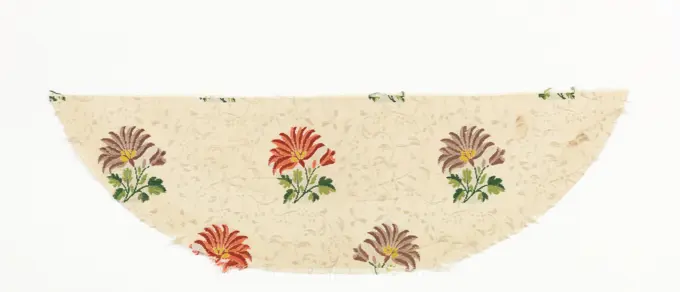
Textile (France); cotton
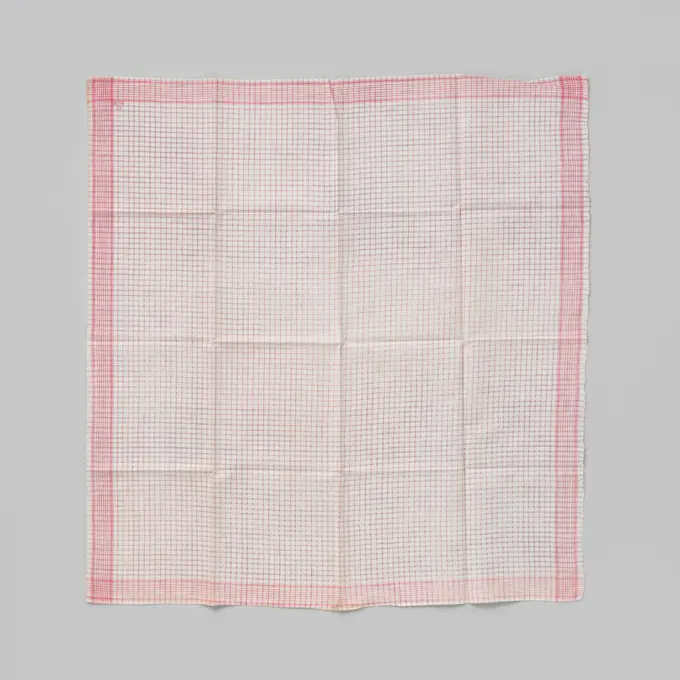
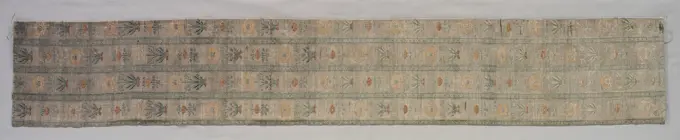
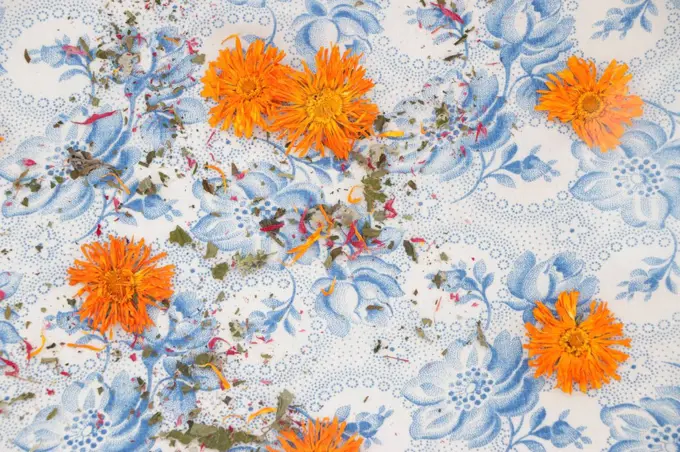
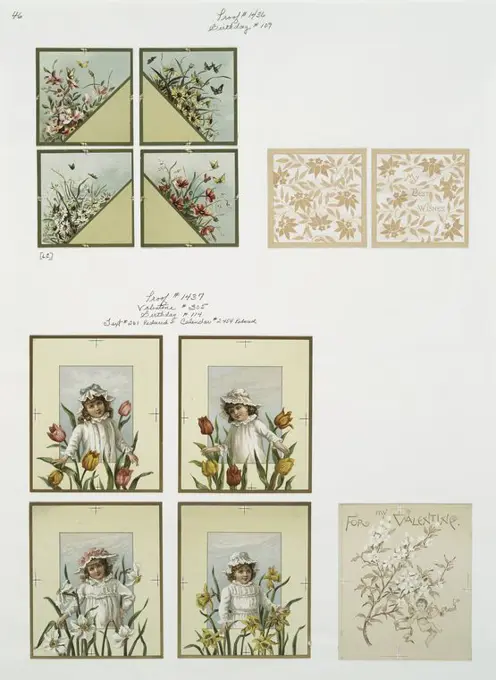
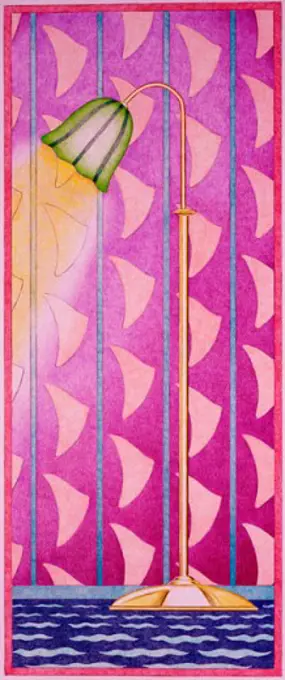
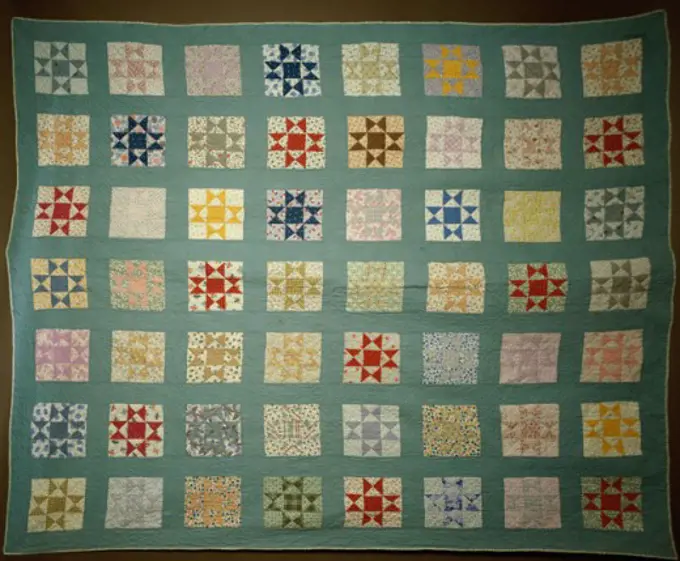
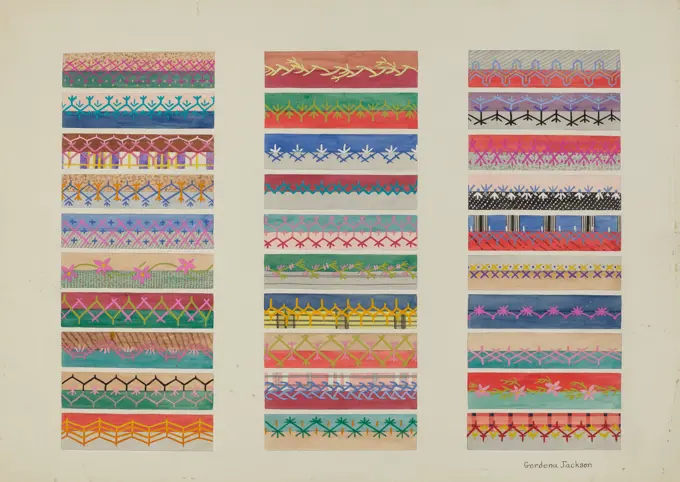
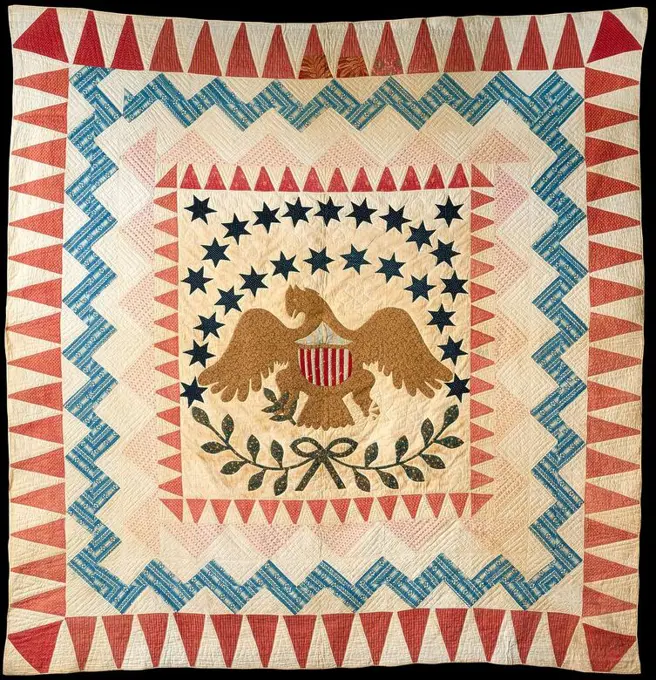
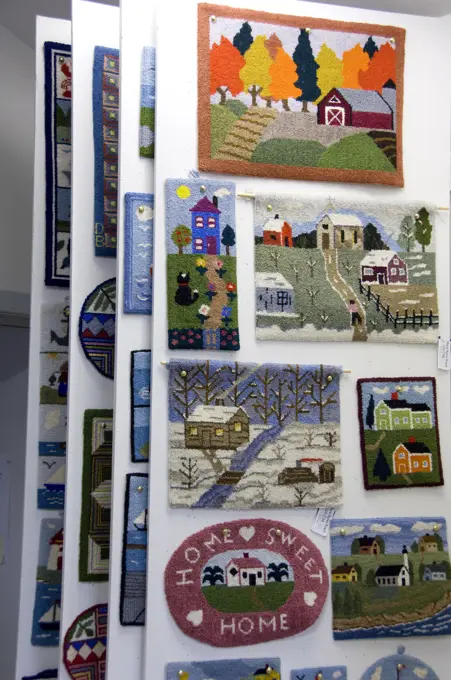
Textile Swatches Onondaga Silk Company, Inc. (1925-1981). , 1948-1959. Wool blend, a: 22 x 17 in. (55.9 x 43.2 cm).    1948-1959Fragment ca. 1800 French. Fragment 222112Textile Swatches Onondaga Silk Company, Inc. (1925-1981). , 1948-1959. Silk, 24 x 16 in. (61 x 40.6 cm).    1948-1959Sample, Medium: cotton Technique: printed on plain weave, Printed cotton with red and black plaid on a white ground., USA, late 19th century, printed, dyed & painted textiles, SampleVintage invitation card with ornate elegant retro abstract floral design, gray and brown flowers and leaves on beige background with plaque text label. Vector illustration.Back shield of a choral cover, side. Back shield of a choral hat, made of silk tissue. The pattern has silver tendrils and bouquets with silver and green leaves on a beige worked ground. Note: Identical to BK-NM-1234, CAT 206.Orphrey band fragment, Medium: silk, linen, metallic Technique: complementary weft twill, Rosetees and the word 'Ihesus' on a gold background., Germany, 15th century, woven textiles, Orphrey band fragmentTea towel ,, 1831 - 1850 Tea towel of linen, red window, blue shadowed with red edges. Brand HW12 Netherlands linen (material) Tea towel of linen, red window, blue shadowed with red edges. Brand HW12 Netherlands linen (material)Surround for Turkish Silk Cushion Cover, early 1600s. Iran, Safavid period, late 17th - 18th c.. Plain weave with inner warps and with continuous and discontinuous supplementary wefts bound in plain and 1/3 Z twill order; silk, silver-metal thread; overall: 139.7 x 22.9 cm (55 x 9 in.).Dry marigolds on old materialNoh Costume (Karaori) with Pattern of Cypress Fans and Yugao Blossoms. Culture: Japan. Dimensions: Overall: 67 x 56 in. (170.2 x 142.2 cm). Date: 18th-early 19th century.This pattern of open cypress fans and blossoms from a yugao gourd vine unmistakably evokes an episode from chapter 4 of The Tale of Genji--Prince Genji's tragic affair with a mysterious young woman who responds to his poem by presenting a spray of yugao blossoms on a fan and later dies at the hands of the jealous spirit of Genji's neglected lover Lady Rokujo. The episode inspired a noh play called Yugao, attributed to Zeami (ca. 1364-ca. 1443). In the play, the young woman appears as a ghost who achieves peace and enlightenment through the power of the Lotus Sutra. Museum: Metropolitan Museum of Art, New York, USA.Fragment; silkSquare decorative pillow, bedroom accessory decorated seamless pattern with white leaves and tendrils. Vector ornament for design of posters and printing on textileDetail throw pillow with floral patternRenaissance ornamentNasturtuims #3.. Proofs, Cards. 1865 - 1899. The Miriam and Ira D. Wallach Division of Art, Prints and Photographs: Print Collection. Decoration and ornament, FlowersBirthday and Christmas cards depicting flowers in an assortment of colors.. Proofs, Greeting cards. 1876. The Miriam and Ira D. Wallach Division of Art, Prints and Photographs: Print Collection. FlowersEmbroidery, Italy 19th century. Purple velvet dance card holder, embroidered with silk and golden threads,  with a floral motif and the inscription Ricordo.Fragment of wall covering. Culture: Chinese, for French or British market. Dimensions: H. 22 x W. 28 3/4 inches55.9 x 73.0 cm. Date: ca. 1788-90. Museum: Metropolitan Museum of Art, New York, USA.Birthday cards and Valentines depicting young girl and flowers.. Proofs, Greeting cards. 1865 - 1899. The Miriam and Ira D. Wallach Division of Art, Prints and Photographs: Print Collection. GirlsClose-up of a floor lamp in a roomTwo textile fragments. Textile fragments, two, decorations of flowers and leaves on red-brown fond.Sampler (Ireland); silk embroidery, wool foundation; 21.5 x 17 cm (8 7/16 x 6 11/16 in.); Bequest of Mrs. Henry E. Coe; 1941-69-192Kesa Made 1801-1825 Japan. .Sidewall (England); block-printed and flocked; 31.5 x 27 cm (12 3/8 x 10 5/8 in.)Gordena Jackson, Feather Stitching, c 1937 Feather StitchingSamples (USA); Manufactured by Orinoka Mills (United States); Warp x Weft (a): 14 × 50 cm (5 1/2 × 19 11/16 in.) Warp x Weft (b): 14 cm (5 1/2 in.)Fragment silk tissue .. Fragment silk tissue. A blue ground has a pattern of rows of double leaves in white and in red on a white handle, between a small white branch.Salesman's Sample Card (France); cotton, papercardsQuilt, Eagle pattern. Culture: American. Dimensions: 103 x 97 in. (261.6 x 246.4 cm). Date: ca. 1837-50.Many quilts that featured eagle motifs were made in the years surrounding the nation's Centennial in 1876; however, this quilt with the single central eagle stylistically seems to have been made a few decades earlier. The twenty-six stars above the eagle's head may provide a clue to the date of this quilt. In 1837, Michigan was admitted to the Union as the twenty-sixth state; given that quilt makers often commemorated national events, this piece may well have been made in celebration of that occasion. The printed cottons pieced and appliquéd into the quilt appear to date from the 1830s and 1840s. Museum: Metropolitan Museum of Art, New York, USA.Easter cards depicting plants, butterflies and flowers.. Proofs, Greeting cards. 1881. The Miriam and Ira D. Wallach Division of Art, Prints and Photographs: Print Collection. Butterflies, Plants, FlowersOrnate vintage labels set of 10 (vector)Field of forty -eight tiles with animals and hunters, anonymous, c. 1630 - c. 1650 Field of forty -eight tiles (8 x 6) each with a blue painted animal or hunter on a ground within a circle with scalloped edge. In the corners, meander ornament. Netherlands earthenware. tin glaze majolica Field of forty -eight tiles (8 x 6) each with a blue painted animal or hunter on a ground within a circle with scalloped edge. In the corners, meander ornament. Netherlands earthenware. tin glaze majolicaSampler, 1823, by Maria Pocock. Gift of Mrs A R Tosswill, 1967.Canada, Nova Scotia, Cape Breton Island, Cheticamp, Acadien Museum and Artist workshop (aka Co-op Artisanale Musee Acadien) Acadien hookrug handicrafts. (Editorial Usage Only)