Floral Textile Fragments

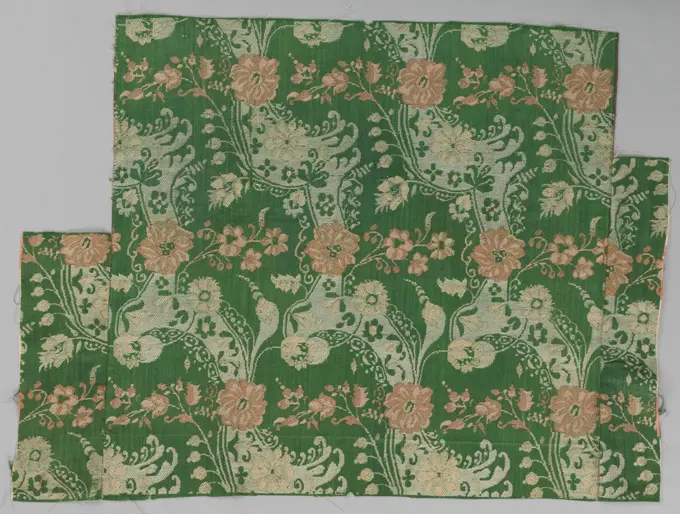
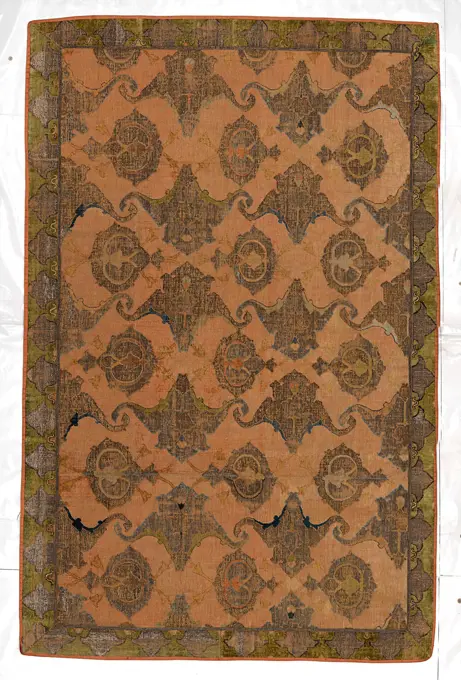
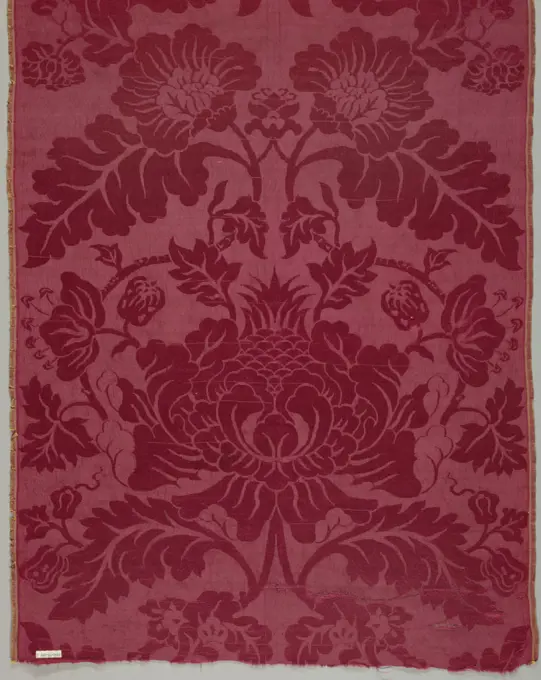
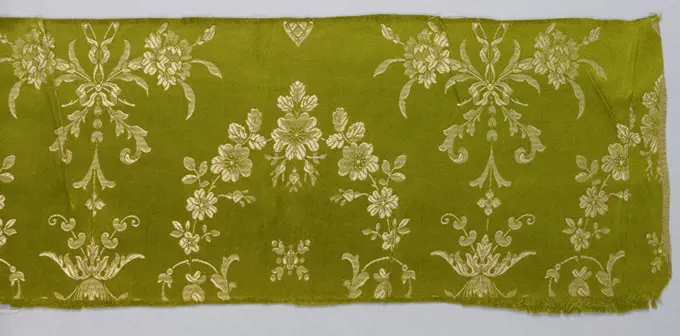
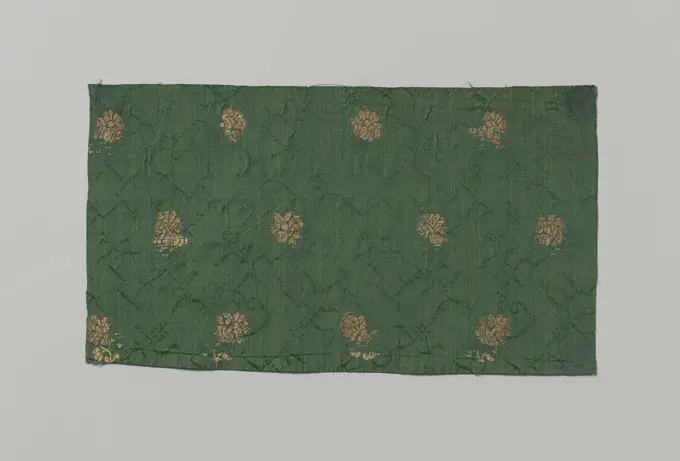
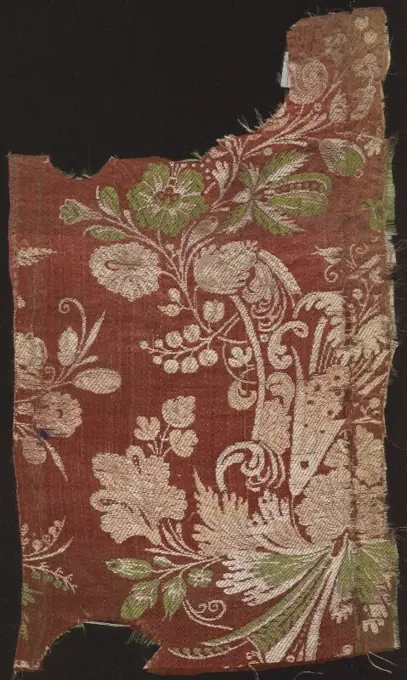
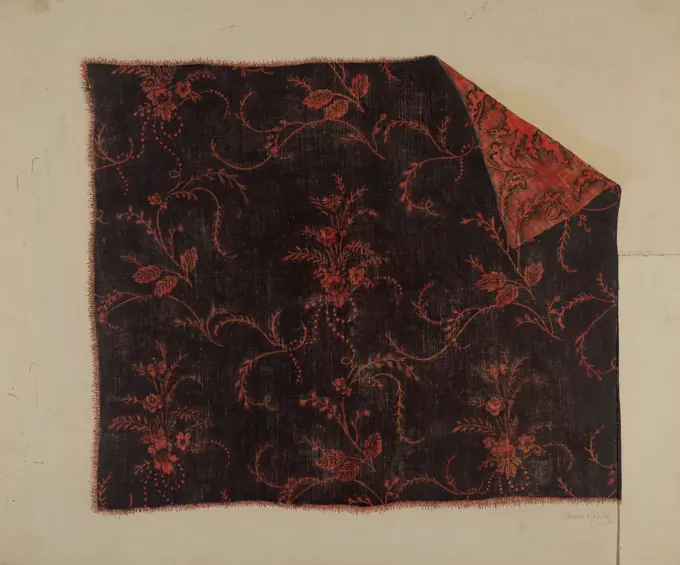
Historic textile fragments showcasing intricate floral patterns woven in silk and metallic yarns. Designs hail from 17th to 19th century Europe.
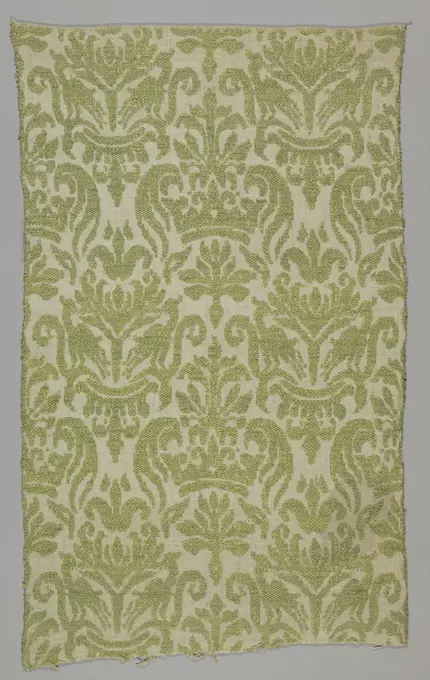
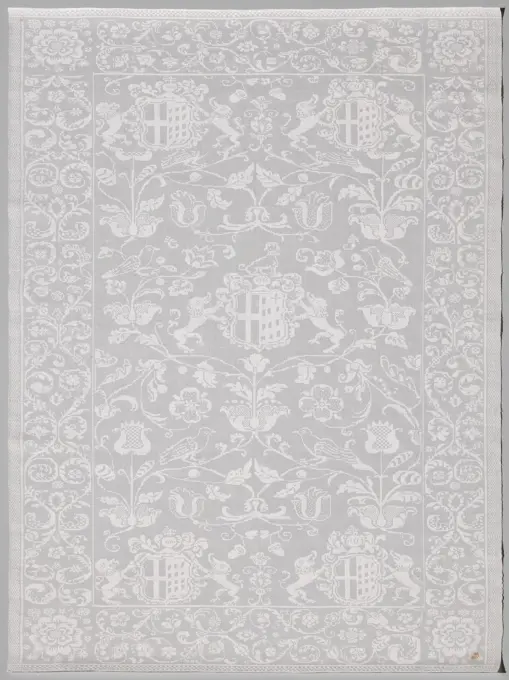
Textile, Medium: linen, cotton Technique: two interconnected structures, Large allover design with French royal crown and heraldic lilies in light green on off-white ground., France, 17th century, woven textiles, Textile
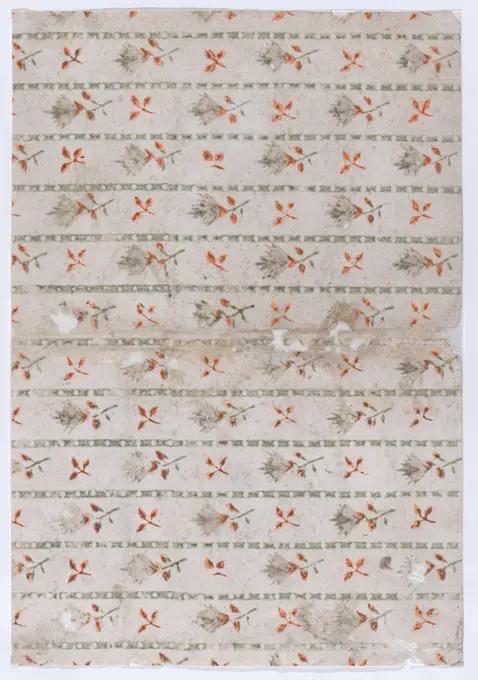
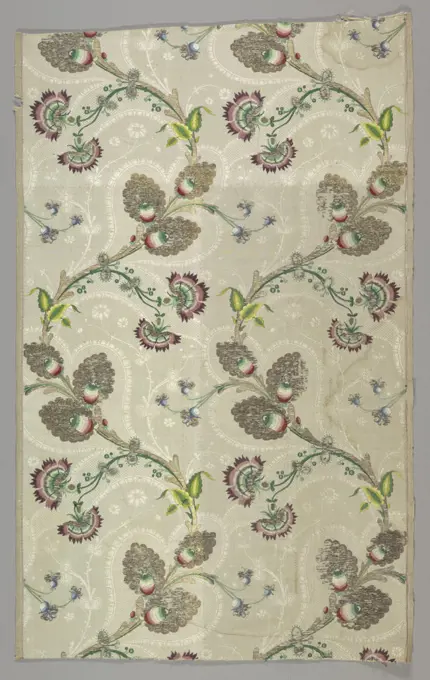
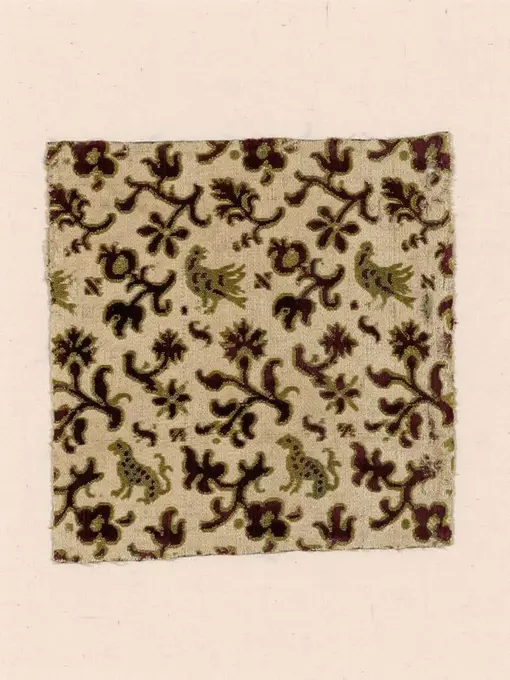
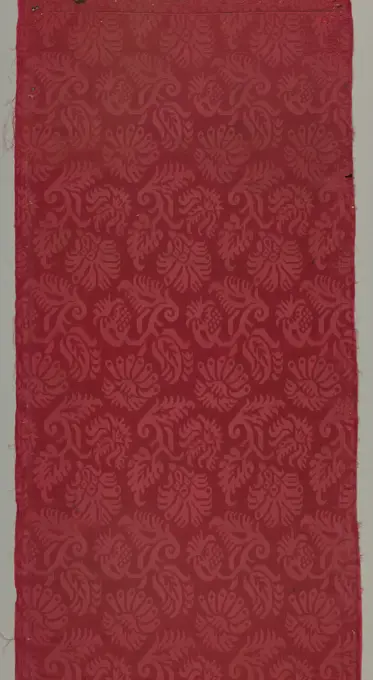
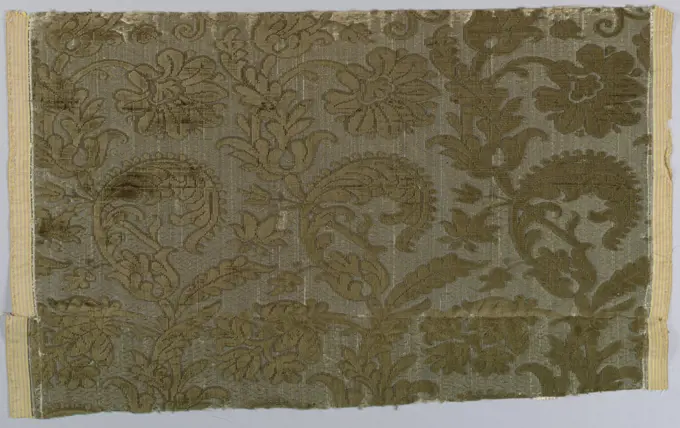
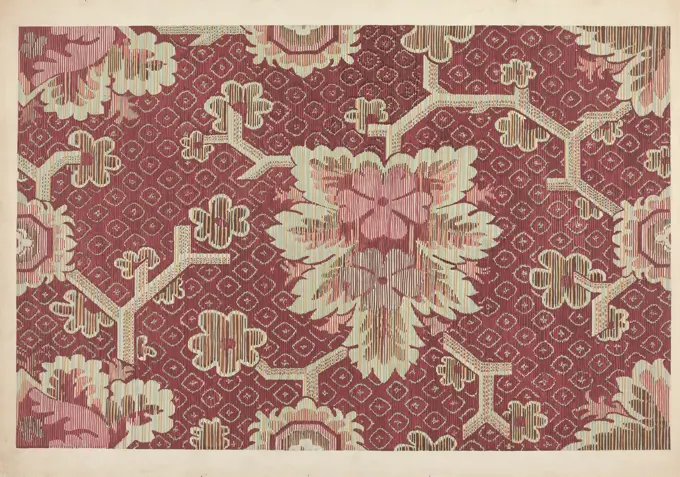
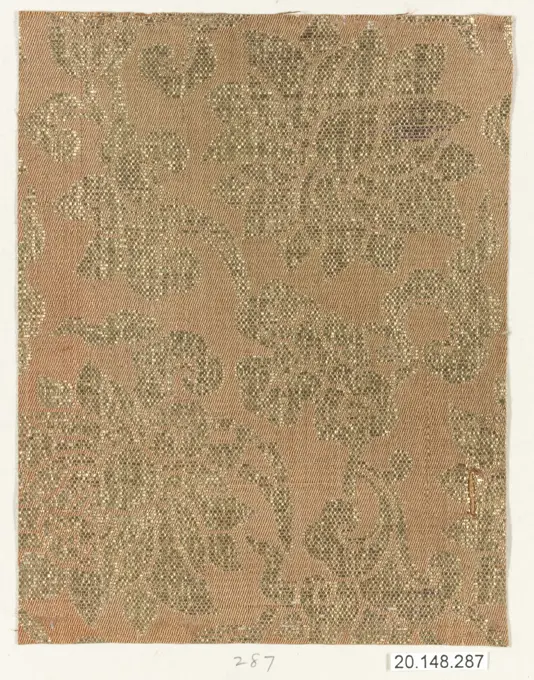
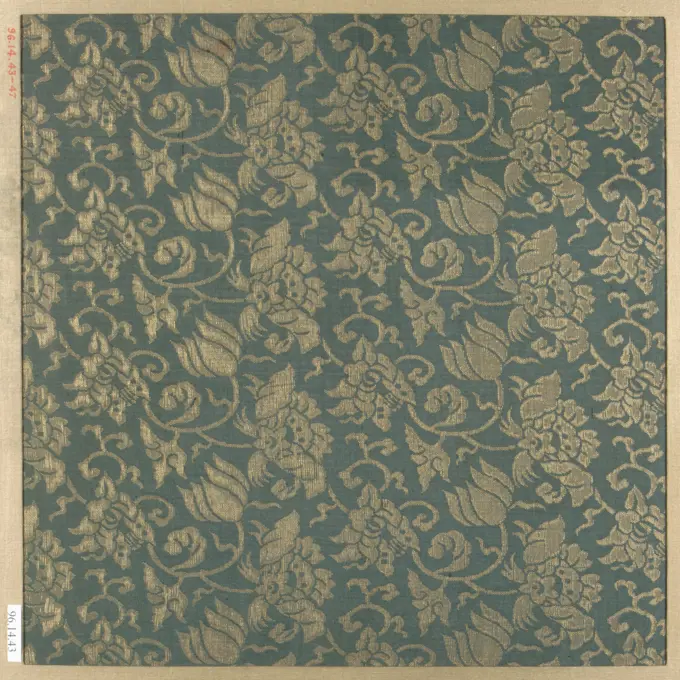
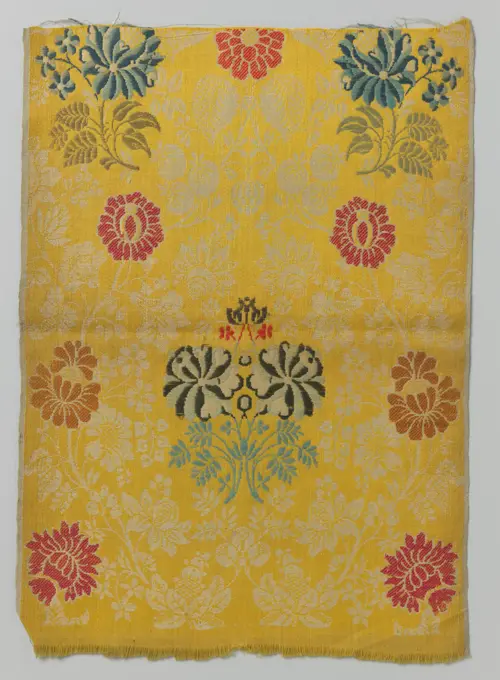
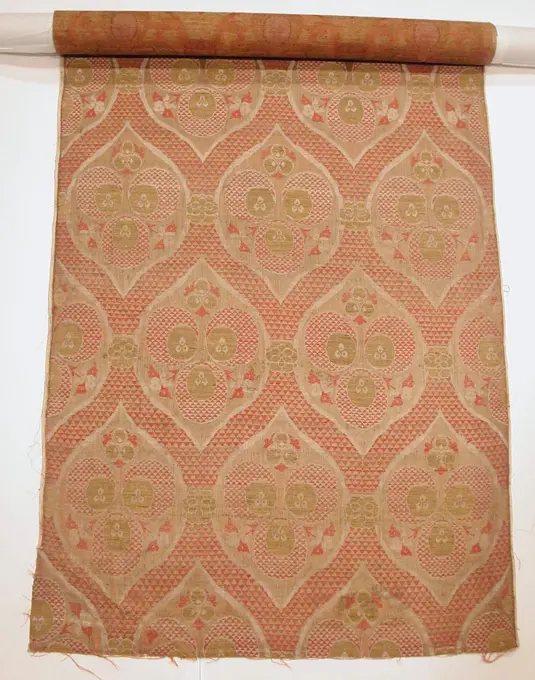
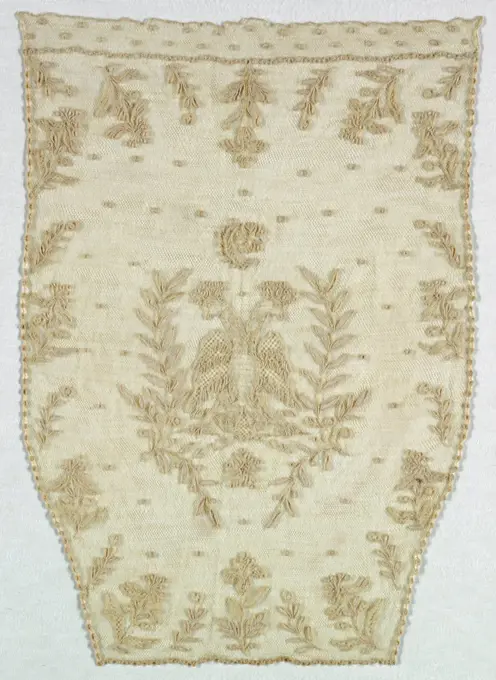
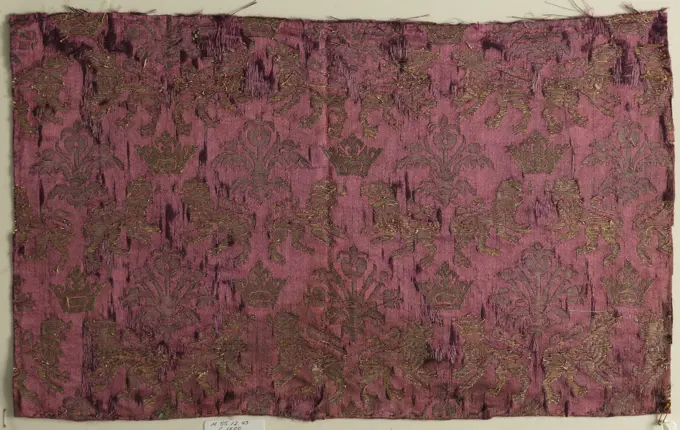
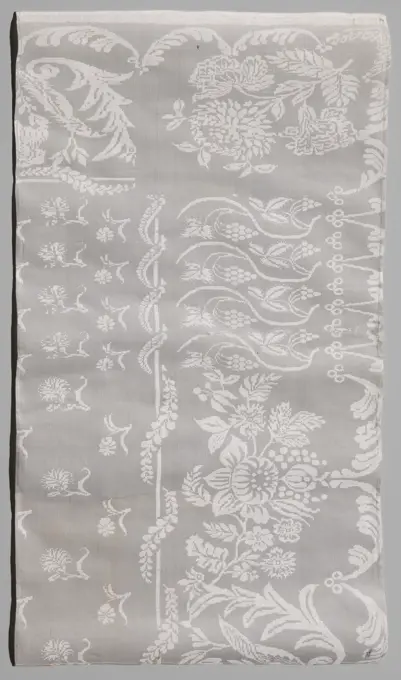
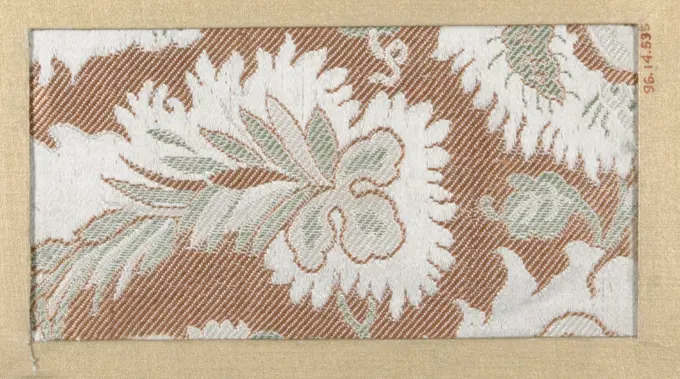
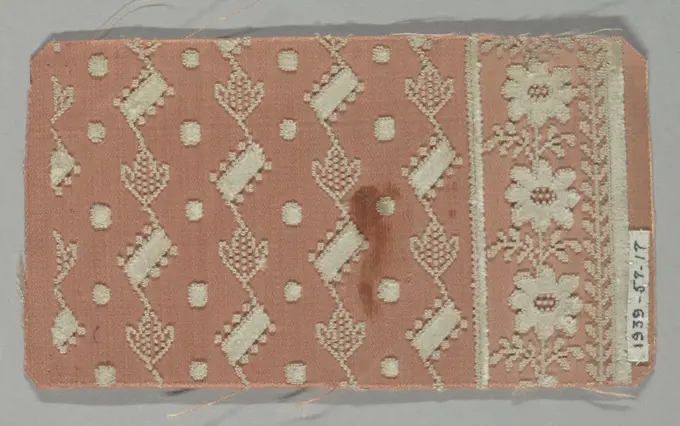
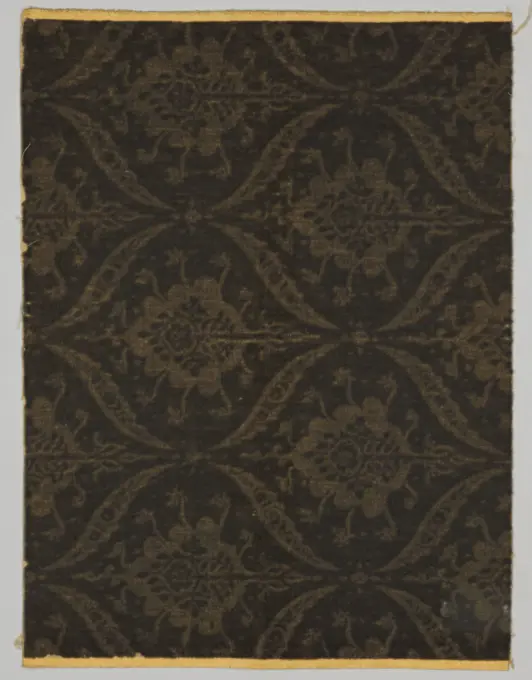
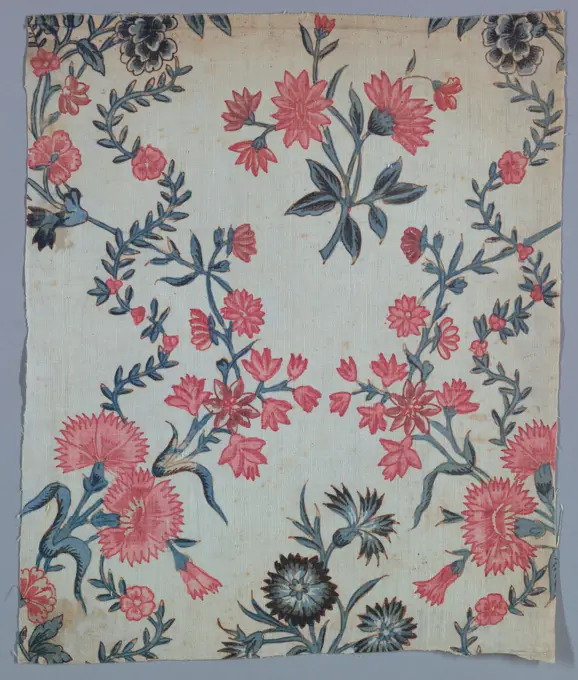
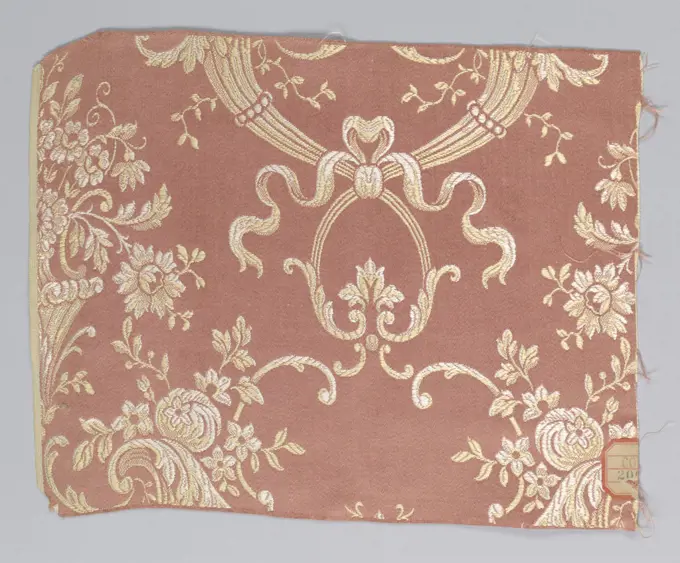
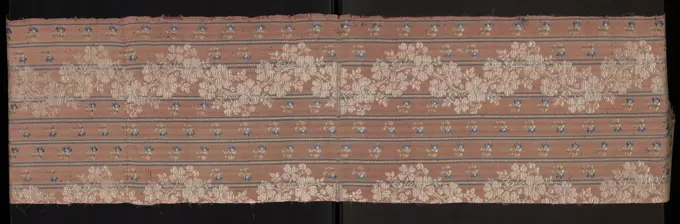
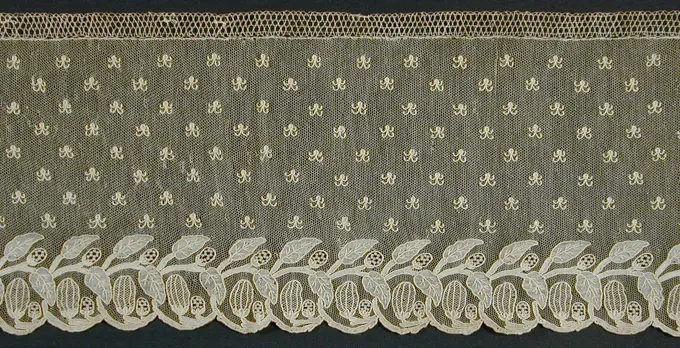
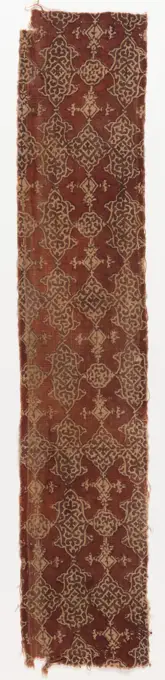
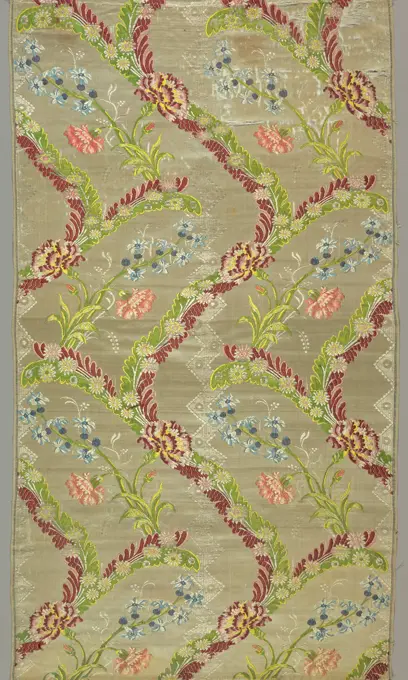
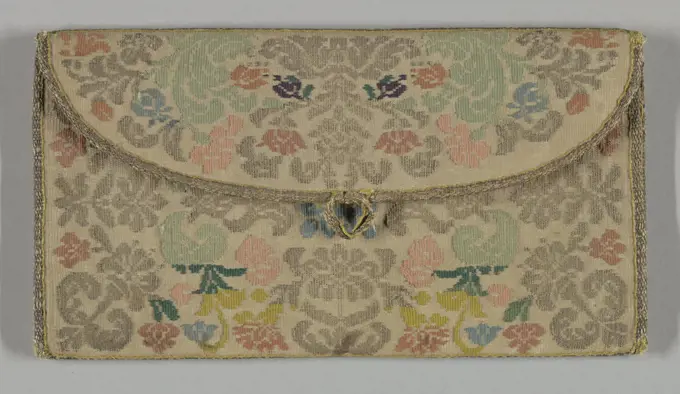
Fragment, Medium: silk, metallic yarns Technique: damask weave with supplementary weft patterning (brocade), Fragment of white silk damask showing floral diaper pattern, with supplementary weft patterning (brocade) in polychrome silk and metallic yarns showing symmetrical design of pomegranates, florals and scrolls., France, 18th century, woven textiles, FragmentBook cover with overall leaf and stripe pattern 19th century Anonymous. Book cover with overall leaf and stripe pattern. Anonymous , 19th century. 19th century. Relief print (wood or metal). PrintsTextile, Medium: silk, metallic threads Technique: plain weave with continuous and discontinuous supplementary weft patterning (brocade), Woven silk with serpentine vine with exotic leaves and flowers brocaded in colored silks and silver and gold metallic threads. Secondary design of meandering vines in white on white ground., Spitalfields, England, 1750-59, woven textiles, TextileFragment 17th century Italian. Fragment 230202Fragment brochure silk, c. 1740 - c. 1760 A fragment silk tissue. A light blue soil has a pattern of thrown flower branches in purple and yellow, from which light blue wavy leaf vessels sprouts. Netherlands silk A fragment silk tissue. A light blue soil has a pattern of thrown flower branches in purple and yellow, from which light blue wavy leaf vessels sprouts. Netherlands silkWoven silk damask. Culture: Italian, Lucca or Genoa. Dimensions: Overall: 19 3/4 x 22 1/4 in. (50.2 x 56.5 cm). Date: second half 17th century. Museum: Metropolitan Museum of Art, New York, USA.Fragment. Italy, Florence. Date: 1601-1625. Dimensions: 20.2 × 19.4 cm (7 7/8 × 7 5/8 in.). Silk, cut, uncut, and voided velvet against satin weave foundation. Origin: Florence. Museum: The Chicago Art Institute, Chicago, USA.Textile; silk, metallic yarnsFragment (Italy); silk; Warp x Weft: 111 x 51 cm (43 11/16 x 20 1/16 in.)Textile, Medium: linen, cotton Technique: two interconnected structures, Large allover design with French royal crown and heraldic lilies in light green on off-white ground., France, 17th century, woven textiles, TextileTextile, Medium: cotton Technique: relief printed, Fragments, Switzerland, 18th century, printed, dyed & painted textiles, TextileNapkin from white Linnamast, anonymous, c. 1650 - c. 1675 White Linnamasten napkin with a pattern of flower branches and birds with family weapons, brand IH and 11 (). Southern Netherlands (possibly) linen (material) damask White Linnamasten napkin with a pattern of flower branches and birds with family weapons, brand IH and 11 (). Southern Netherlands (possibly) linen (material) damaskPiece 18th-19th century Japan. Piece. Japan. 18th-19th century. Silk. Edo (1615-1868). Textiles-WovenFragment, Medium: cotton Technique: relief printed on plain weave, colored ground, Two repeats of the left portion of a design composed of alternating leaf clusters and floral sprays with a border of a meandering strip of lace and serpentine ribbon tied about repeating bunches of flowers., Beautiran (near Bordeaux), France, 1770s, printed, dyed & painted textiles, FragmentFragment, Medium: silk Technique: woven, Polychrome flowers on white ground., 18th century, woven textiles, FragmentTextile; silk; Warp x Weft: 115 × 42 cm (45 1/4 × 16 9/16 in.) Repeat H: 41 cm (16 1/8 in.); Purchase, General Funds; 1984-85-2Fragment, Medium: silk Technique: velvet, Selvage to selvage width with a design of dark brown scrolling leaves and flowers facing in alternate directions., 17th century, woven textiles, FragmentFragment (France); silkTextile Fragment. Dimensions: L: 7.5 in (19.1 cm) x W: 6 in (15.2 cm). Date: 18th century. Museum: Metropolitan Museum of Art, New York, USA.Fragment of the fabric;  18th century (1701-00-00-1800-00-00);clothDorothy Posten, Ingrain Carpet, c 1936 Ingrain CarpetLength of Woven Silk Made 1720-1729 Netherlands (Object Probably made in), England (Object Probably made in). Many of the woven silk textiles of the 1720s contain lace-like details such as those on this example, in which delicate patterns fill the petals and leaves, which surround stylized flowers. The colors employed reflect a knowledge of Persian textiles, subtle to modern eyes but apparent to 18th-century viewers.. Silk, plain weave with plain interlacings of secondary binding warps and supplementary patterning wefts and 1 3 'Z' twill interlacings of secondary binding warps and supplementary brocading wefts .Textile, Medium: silk Technique: 5-harness satin damask, Blue damask with a large scale symmetrical pattern, the vertical center-line is middle of fabric in light blue; large oval frame in the form of a ribbon from the top of which is suspended a basket of flowers from a ribbon. The ribbon frame is the full width of the fabric, and is repeated one on top of the other., France, mid-late 18th century, woven textiles, TextilePiece 18th century Italian. Piece. Italian. 18th century. Silk. Textiles-WovenPiece 18th century Japan. Piece 71278Piece 18th-19th century Japan. Piece 67683Robbery with hyacinths, green impact on beige chain, Theo Nieuwenhuis, c. 1909 - c. 1924 Robberdeweven cotton with a pattern of hyacinths in rush -in forms. Green impact on beige necklace. Bottom left a corner of 19 x 13 cm cut out. Paper label on the back mentions "1876", possibly the design number. Netherlandsmaker: Helmond cotton (textile) jacquard Robberdeweven cotton with a pattern of hyacinths in rush -in forms. Green impact on beige necklace. Bottom left a corner of 19 x 13 cm cut out. Paper label on the back mentions "1876", possibly the design number. Netherlandsmaker: Helmond cotton (textile) jacquardTextile Fragment 19th century. Textile Fragment 445701Fragment of five set yellow sides Taf with pattern of a bouquet surrounded by flower garlands and loose flowers around which a wide tire, anonymous, c. 1720 - c. 1730 Fragment of five patterns attached to each other attached pieces of yellow taf side with a pattern of a bouquet surrounded by flower garlands and loose flowers Why again a wide tire waves with large flowers and leaves: imitation side. Netherlands (possibly) Ketting an element: Silk. Fragment of five patterns attached to each other attached pieces of yellow taf side with a pattern of a bouquet surrounded by flower garlands and loose flowers Why again a wide tire waves with large flowers and leaves: imitation side. Netherlands (possibly) Ketting an element: Silk.Fragment 17th century Italian. Fragment 230106Piece 18th-19th century Japan. Piece 66550Fragment multi-colored side lamps. Fragment multicolor silk tissue. On a white ground, acanthus leaves, fine leaves and flower branches of medallions.Fragment of silk fabric unknownCover late 17th or early 18th century Italian. Cover 461422Piece 18th century Japan. Piece 65781Textile, Technique: printed by engraved roller, 19th century, printed, dyed & painted textiles, TextileFragment, Medium: cotton Technique: double running stitch embroidery (the second stitch sometimes twists around the first instead of aligned with it on plain weave (three narrow strips sewn together), Part of a white-on-white embroidered panel. Joining of three pieces needle made edge, the loops of which form two bands placed edge to edge are whipped together. Linen bobbin lace sewn to three edges., Sicily, Italy, early-mid-16th century, embroidery & stitching, FragmentFragment, Medium: wool, silk, linen Technique: two integrated structures, plain weave plus plain weave, Flower betwen two large curving leaves., 17th century, woven textiles, FragmentFragment, Medium: silk, metallic thread Technique: cut and uncut supplementary warp pile (velvet) in a plain weave foundation, Fragment of green-blue cut and uncut velvet on a white ground shot with metallic thread in a leafy palmette and artichoke pattern., Italy, 16th-17th century, woven textiles, FragmentFragment, Medium: silk Technique: cut and uncut supplementary warp pile (velvet) in a plain weave foundation, Yellow-green cut and uncut velvet in stylized foliage and flower pattern against a dark yellow ground., Italy, 16th-17th century, woven textiles, FragmentTissue of woolen grein, multicolored flowers on a yellow stock with a patoon of branches, leaves and flowers in white, anonymous, c. 1750 - c. 1760 Multicolored flowers on a yellow stock with a patoon of branches, leaves and flowers in white. Kam yarn broché, wool. GREIN. Norwich whole: Wool. whole: Multicolored flowers on a yellow stock with a patoon of branches, leaves and flowers in white. Kam yarn broché, wool. GREIN. Norwich whole: Wool. whole:Piece 18th-19th century Japan. Piece 66612Textile Fragment 16th century This long, rectangular silk fragment features two distinct designs popular in Ottoman artthe ogival pattern and the chintamani motif. Though seen across a wide range of media in Ottoman Turkey, these patterns were especially popular in textile weaving. In this example, the chintamani is repeated in two different sizes as a grouping of three pearl, or closed-crescent, motifs. The chintamani was considered an auspicious symbol, bringing good luck to its wearer. The symbol also became associated with virility and power because of its resemblance to leopard spots and tiger stripes.. Textile Fragment 450517Textile (France)Fragment of a silk carpet. Fragment of a carpet, a so-called polent carpet, side and brocheted gold and silver thread. Simple repeating lily pattern on an original red background. Edge of stylized lilies.Fragment Eastern textile, silk tissue, anonymous, c. 1800 - c. 1850 A fragment of brown side and cotton, with a diamond pattern in gold. The diamond pattern is formed by flour and leaves, in which a stylized flower. In the Ketting an element: Silk. Elements: Cotton (Textile). A fragment of brown side and cotton, with a diamond pattern in gold. The diamond pattern is formed by flour and leaves, in which a stylized flower. In the Ketting an element: Silk. Elements: Cotton (Textile).Cover 18th or 19th century Spanish or French. Cover 461420Fragment, Medium: silk Technique: 4 and 1 satin damask, Formal pattern of pomegranate shapes and leaf sprigs in red and green., 17th century, woven textiles, FragmentTextile, Medium: silk Technique: damask, Short length of red damask in a symmetrical arrangement of oversized flowers and leaves., China, 17th-18th century, woven textiles, TextileTextile Sample from Sample Book 19th century Japan. Textile Sample from Sample Book 67980Sample, Orinoka Mills, (Philadelphia, Pennsylvania, USA), Green warp and gold color weft forming floral pattern., USA, ca. 1910, woven textiles, SampleLaces, 19th-20th century. Burano stitch (Punto Burano) lace scarf with iris, Michelangelo Jesurum Manufacture, 1890-1915.Fragment oriental textile; Silk tissue. A fragment of oriental textiles, from a green silk with gold thread. A green soil with green branches has a spreading pattern of golden flowers.Bag face, Medium: linen Technique: needle lace with a ground of loop & twist with a twist return, Shield-shaped face of a bag, with a central figure of a double headed eagle flanked by olive branches and a border of floral branches., Alençon, France, ca. 1810, lace, Bag facePiece 16th century Spanish. Piece 223491Textile FragmentTablecloth, fragment, with pattern of grape and flower branches and stroked flowers, c. 1760 - c. 1780 Tablecloth, fragment of white Linnamast with pattern of lying border with grape branches and flower branches. Stripped flowers in the middle. Scotland (Possible) linen (material) damask Tablecloth, fragment of white Linnamast with pattern of lying border with grape branches and flower branches. Stripped flowers in the middle. Scotland (Possible) linen (material) damaskPiece 18th-19th century Japan. Piece 66259Fragment, Medium: silk, linen Technique: 8-harness satin plus 14 twill, Simple symmetrical pomegranate repeat in a leafy framework. Two single cord selvages., Italy or Spain, 17th century, woven textiles, FragmentPiece 18th-19th century Japan. Piece 66467Fragment; silkFragment green silk tissue with pattern in gold thread. Fragment green silk with pattern in gold from large heart-shaped leaf characters. Since French lilies. Two parts assigned.Fragment. Europe. Date: 1601-1625. Dimensions: 12.7 x 25.4 cm (5 x 10 in.). Silk and linen, compound weave. Origin: Europe. Museum: The Chicago Art Institute, Chicago, USA.Cap Crown (Belgium); linenFragment, Medium: silk Technique: cut and uncut voided (ciselé) supplementary warp pile in a satin foundation (velvet), Small-patterned or 'miniature' velvet fragment of pink satin ground with vertically-arranged design of continuous alternating rectangles and three-lobed leaf. Border design of vertical line of rosettes and foliage. Design in white cut and uncut pile. Vertical line of dots in same technique between other parts of the design., France, 1750-1800, woven textiles, FragmentSpray Trijp, design "Duinroos", in soft purple on Geel, Theo Nieuwenhuis (Possible), c. 1920 - c. 1930 Confirmation or spancing material, sinking trijp, with design "Duinroos", in soft purple on yellow. Designer: Netherlandsmaker: Hengelo Pool layer: mohair. Ground tissue: Cotton (textile) Confirmation or spancing material, sinking trijp, with design "Duinroos", in soft purple on yellow. Designer: Netherlandsmaker: Hengelo Pool layer: mohair. Ground tissue: Cotton (textile)Panel (Furnishing Fabric) Made 1875-1900 China. .Blades with flowers, anonymous, 1700 - 1850 brocade paper Leaf with flowers. With label with inscription: 'J. Vermasen ... articulus'. Used as a cover.  paper. relief printing ornament derived from plant formsTextile (India); cotton; Warp x Weft: 27.6 x 22.5 cm (10 7/8 x 8 7/8 in.)Textile (England); cottonTextile (France); cotton; Warp: 64.5cm (25 3/8in.). Weft: 83 cm (32 1/2in.) Edges cut.; Bequest of Elinor Merrell; 1995-50-224Fragment, Medium: silk Technique: cut voided supplementary warp pile in a satin foundation (velvet) with supplementary weft, Small-patterned or 'miniature' velvet fragment with a rose cut pile ground and white cut pile medallions, each enclosing a spray of roses in pink, rose, and green, arranged in vertical stripes. Palmettes in white cut pile between medallions outlined by voided ground which is covered by a secondary yellow weft., France, 1750-1800, woven textiles, FragmentSamples, Orinoka Mills, (Philadelphia, Pennsylvania, USA), a. Rust color ground with white and lighter rust/orange flowers and ribbons., b. Pink/orange ground with white and yellow flowers and ribbons., USA, ca. 1910, woven textiles, SamplesFragment white silk damask, with pattern of marigolds surrounded by bulbs with flowers and leaves. Fragment white silk damask with a pattern of marigolds surrounded by bullying flowers and leaves.Fragment (Spain); silk, cotton; Warp x Weft (a): 73.5 x 49 cm (28 15/16 x 19 5/16 in.)Textile, Medium: cotton Technique: printed on plain weave, Green, grey and white stripes with conventionalized ornament in ogival frames., England, 19th century, printed, dyed & painted textiles, TextileFragment of the fabric;  End of the 18th century (1791-00-00-1800-00-00);fabricsTextile (Spain); silk, metallic yarnsLength of Lace. France, 1850-1900. Textiles; textile lengths. Cotton point d'Alençon needle laceTapestry. unknown, contractorSample (USA); Manufactured by Orinoka Mills (United States); 1989-80-62Textile (Egypt); cottonTextile (France); silkFragment. Culture: British. Dimensions: L. 15 x W. 25 1/2 inches38.1 x 64.8 cm. Date: ca. 1830. Museum: Metropolitan Museum of Art, New York, USA.Piece 18th-19th century Japan. Piece 66274Cover 18th century Italian or French. Cover 461651Tissue of woolen grein, multicolored flowers on a yellow stock with a patoon of branches, leaves and flowers in white, anonymous, c. 1750 - c. 1760 Multicolored flowers on a yellow stock with a paton of branches, leaves and flowers in white. Cam yarn broché, wool, grein Norwich whole: Wool. whole: Multicolored flowers on a yellow stock with a paton of branches, leaves and flowers in white. Cam yarn broché, wool, grein Norwich whole: Wool. whole:Ceiling Paper (USA); Manufactured by Maxwell & Co., S.A. (United States); machine-printed paper, liquid mica; 92 x 49 cm (36 1/4 x 19 5/16 in.)Piece of fabric. unknown, authorSidewall (USA); Manufactured by Maxwell & Co., S.A. (United States); machine-printed paper, ribbed, liquid mica; 91.5 x 47 cm (36 x 18 1/2 in.)Ceiling Paper (USA); Manufactured by Carey Bros. W.P. Mfg. Co.; machine-printed paper; 92.5 x 49 cm (36 7/16 x 19 5/16 in.)Carpet (USA); wool, hempFragment Made 1501-1600 Italy. Silk, plain weave with plain interlacings of secondary binding warps and supplementary patterning wefts .Linnamast napkin with a flower pattern, anonymous, c. 1732 - c. 1735 Linnamast napkin with a branch with large flowers and fruits. The napkin belongs to a napkin (BK-1977-291-B). Flanders (Possible) linen (material) damask Linnamast napkin with a branch with large flowers and fruits. The napkin belongs to a napkin (BK-1977-291-B). Flanders (Possible) linen (material) damaskPurse, Medium: silk, gold-wrapped silk Technique: tapestry woven with continuous and discontinuous wefts, Flat envelope-shaped pocketbook woven in cream-colored silk with pattern in light-colored silk and metallic thread. Symmetrical arrangement of stylized floral sprays. Bound on edges with narrow gold braid. Loop of the same for fastening flap, but button is missing. Lined in bright coral taffeta. Same pattern on both sides., France, 1640-1700, costume & accessories, PurseGrace Halpin, Textile, 1938 TextileFragment of silk fabric  motifs of a bouquet in a winged vase unknownFragment Printed Cretonne with pattern of Klaver with butterfly within Spitsovalen, Theo Nieuwenhuis, 1900 - 1925 Fragment printed cretonne with pattern of clover with butterfly within Spitsovalen in the colors blue -green, lilac and light blue on natural stock. Helmond linen (material) Fragment printed cretonne with pattern of clover with butterfly within Spitsovalen in the colors blue -green, lilac and light blue on natural stock. Helmond linen (material)Piece 17th or early 18th century Japan. Piece 66501Curtain panel, c. 1900-1910, Alexander Morton; Producer: Alexander Morton & Co., Scottish, 84 1/2 x 51 in. (214.63 x 129.54 cm), Cotton; clipped supplementary patterning on a leno ground weave, Scotland, 19th-20th century, Using the skills of local cotton weavers, Alexander Morton developed a distinctive patterned gauze fabric which he called Madras Muslin . The name was probably chosen because Asian associations were popular with customers at the end of the last century, and historically India was particularly famous for its fine cotton fabrics.