Floral Textile Fragments

Historic textile fragments showcasing intricate floral patterns woven in silk and metallic yarns. Designs hail from 17th to 19th century Europe.
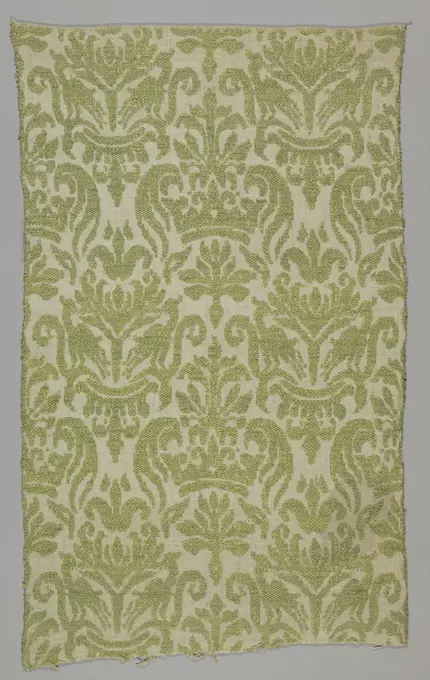
Textile, Medium: linen, cotton Technique: two interconnected structures, Large allover design with French royal crown and heraldic lilies in light green on off-white ground., France, 17th century, woven textiles, Textile
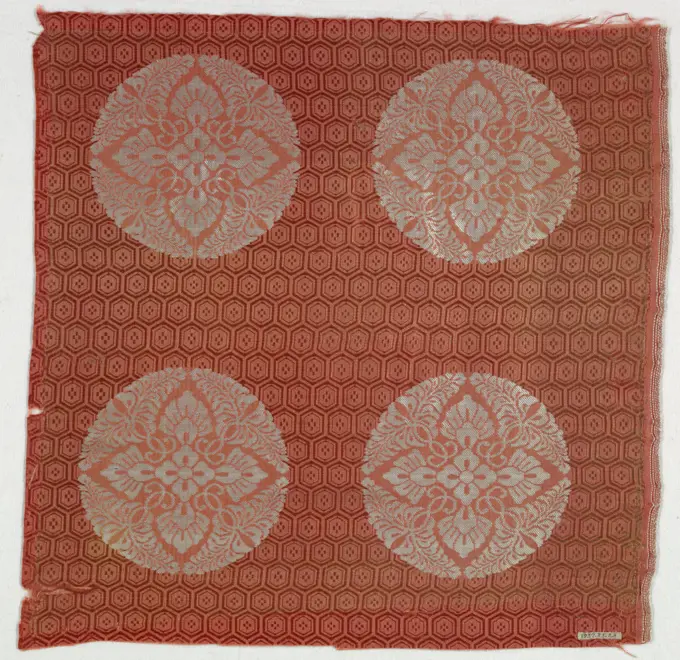
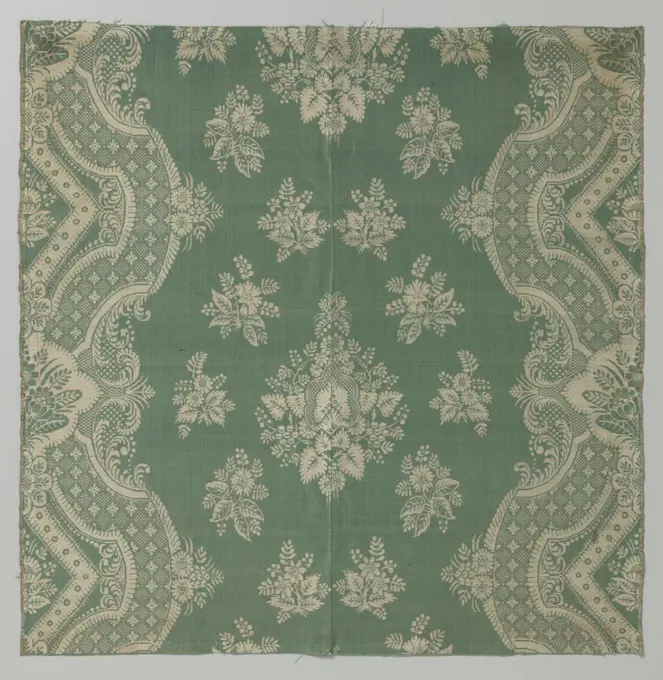
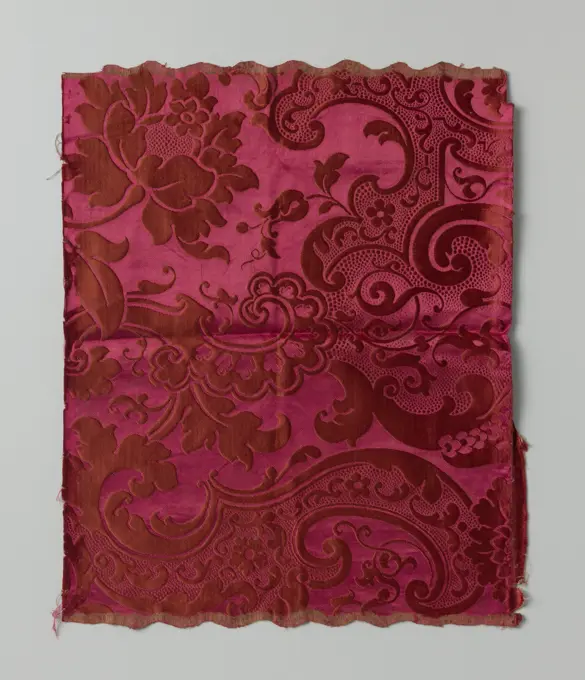
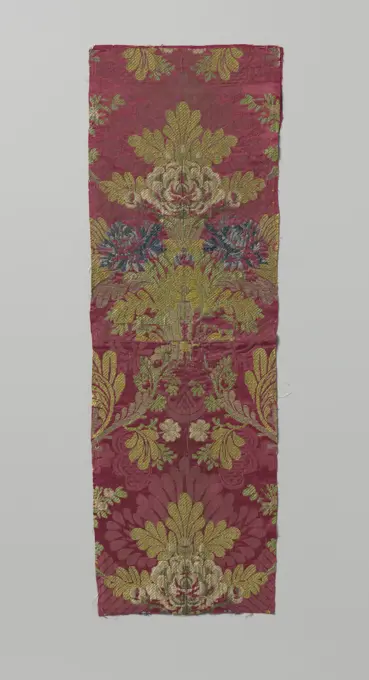
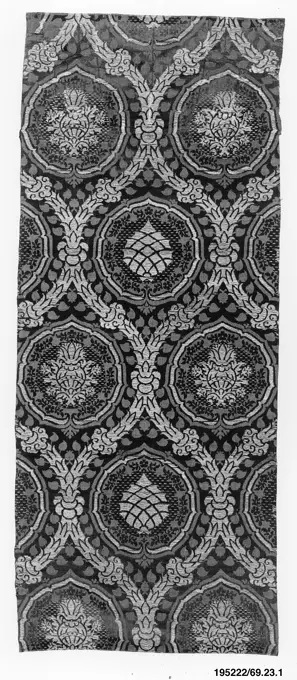
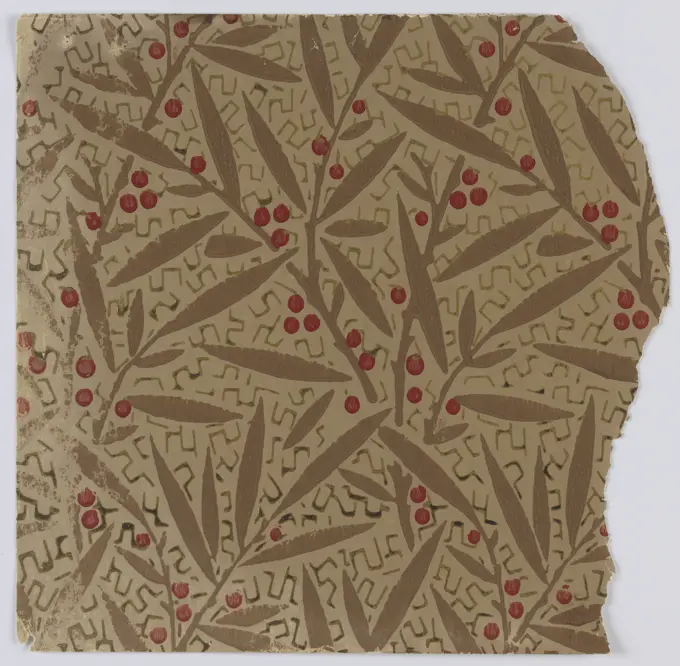
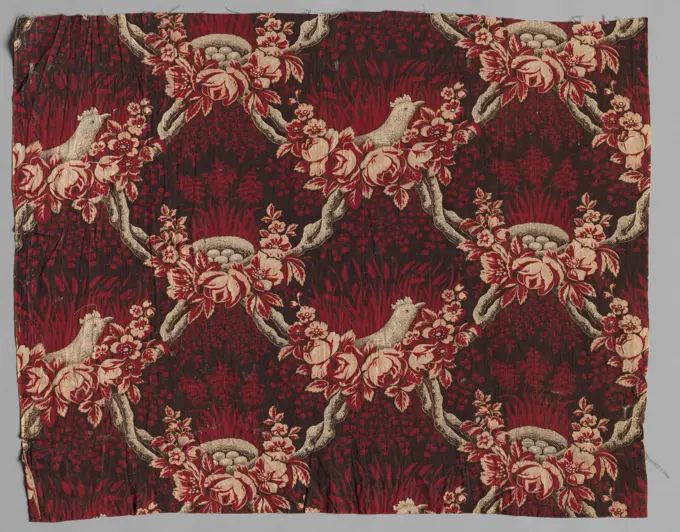
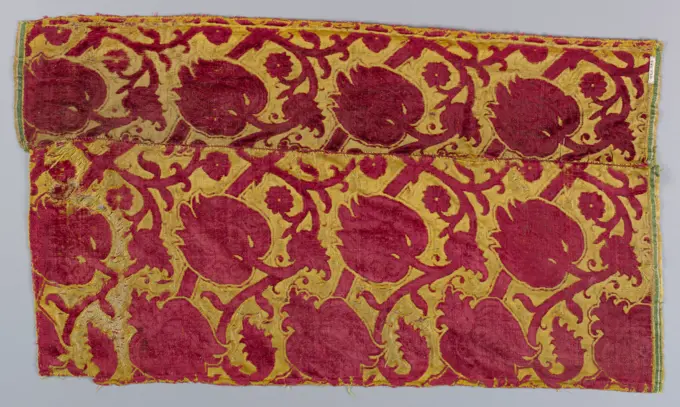
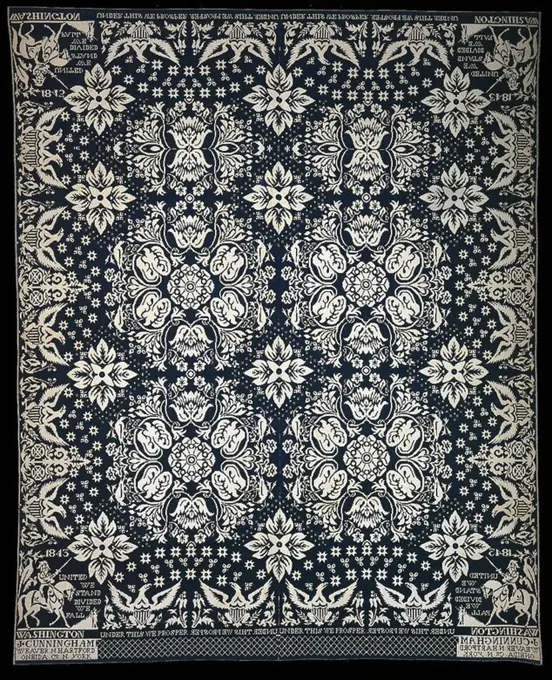
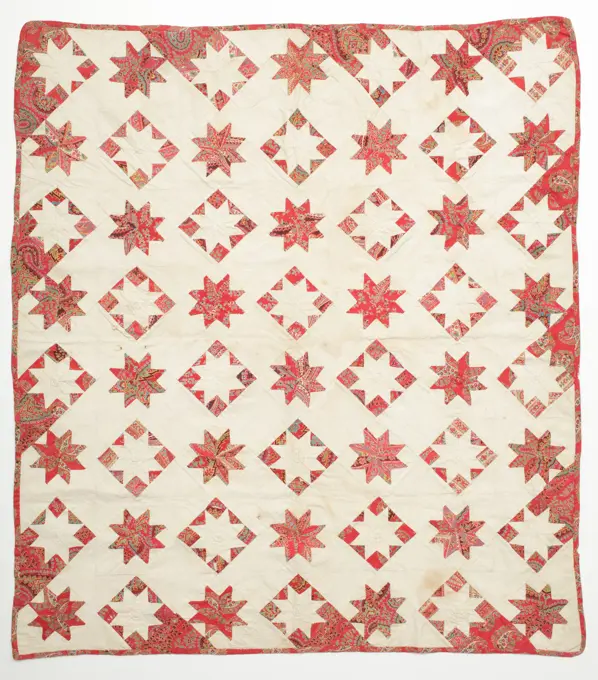
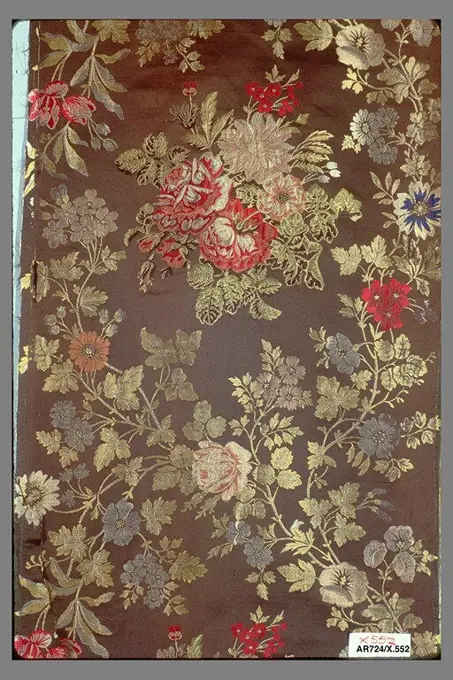
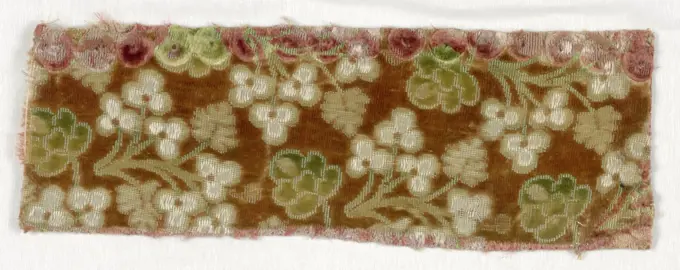
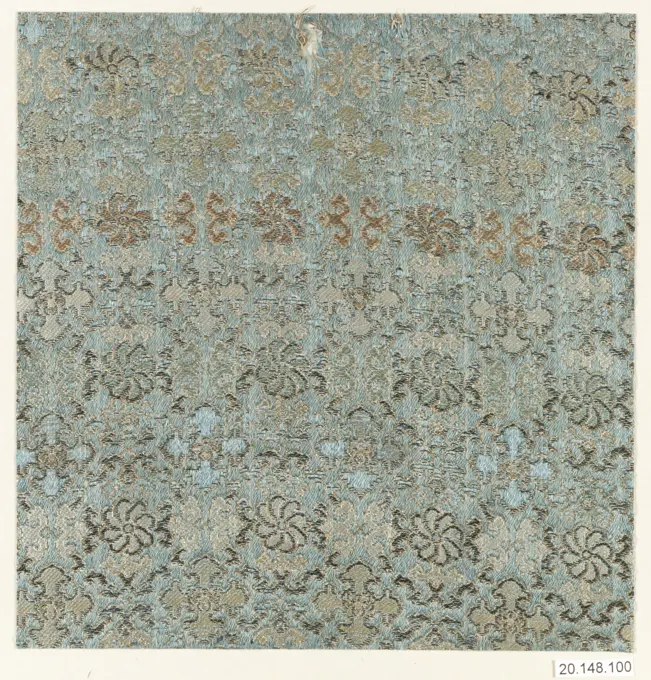
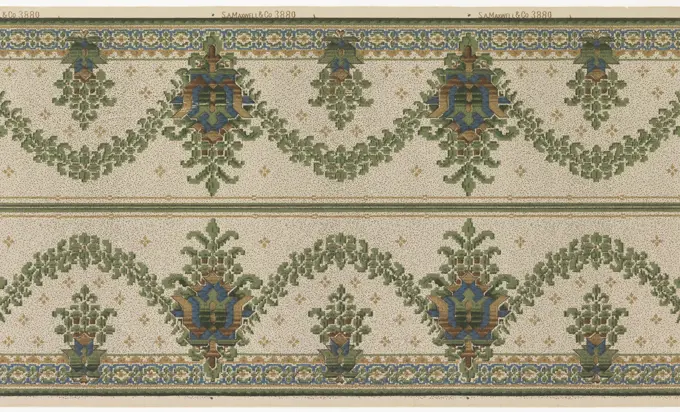
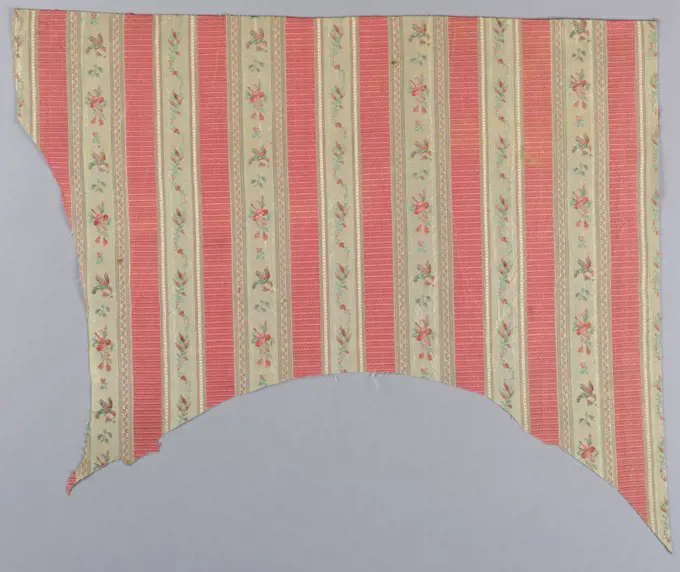
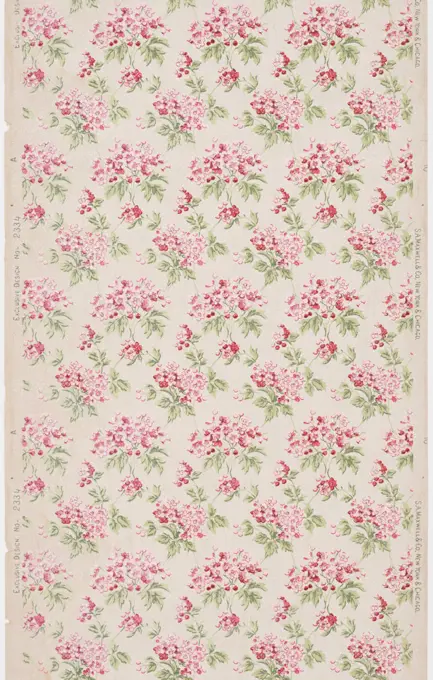
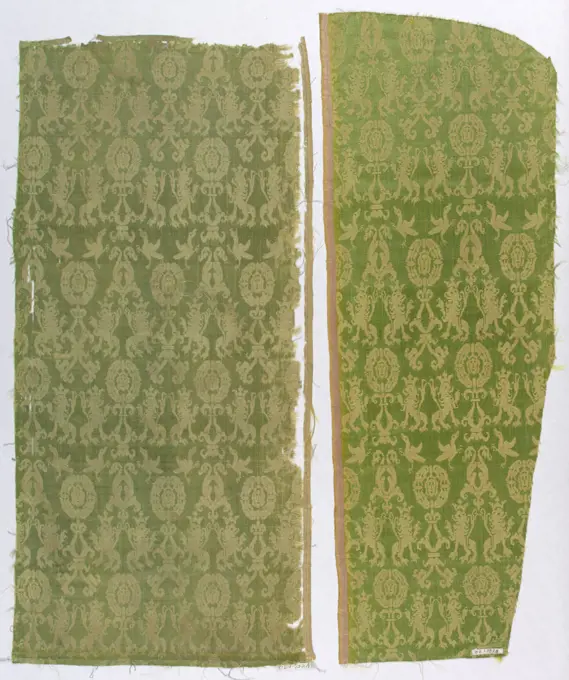
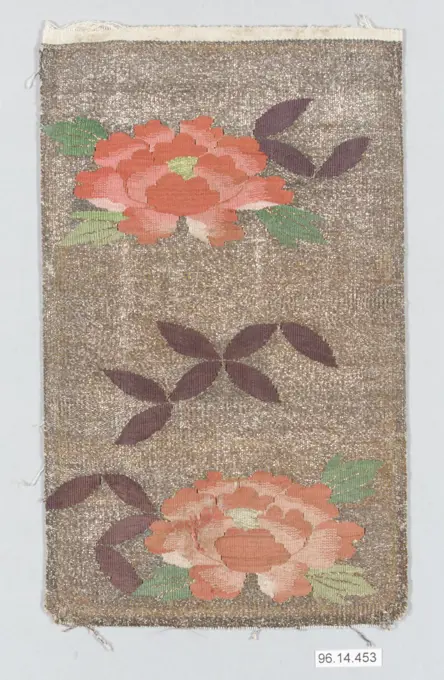
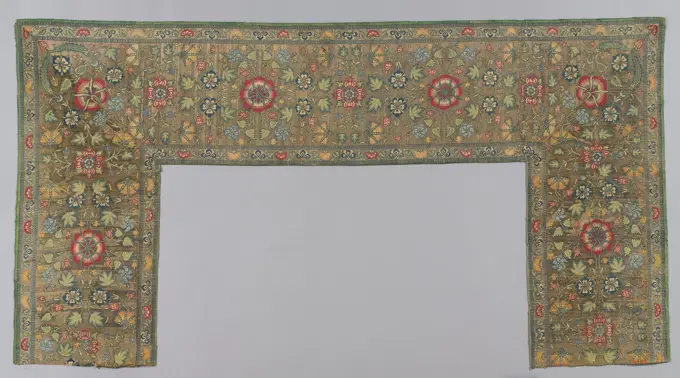
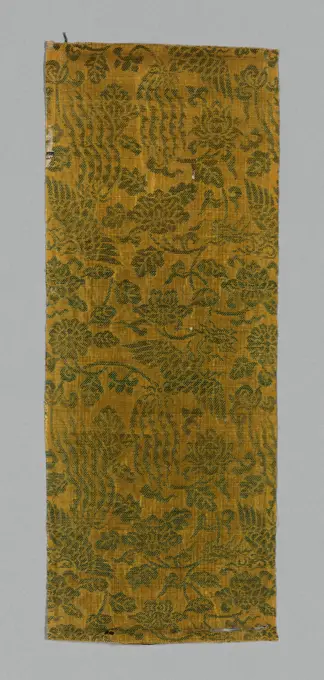
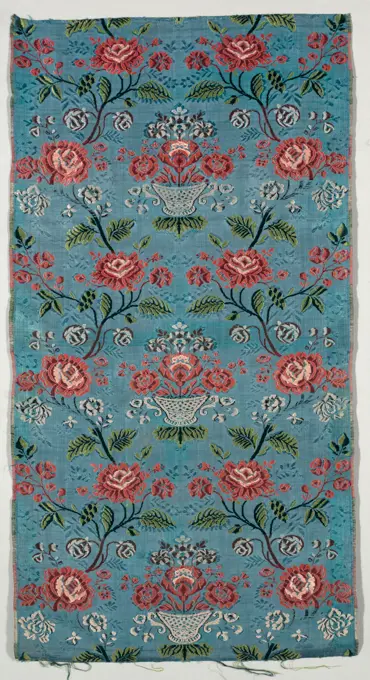
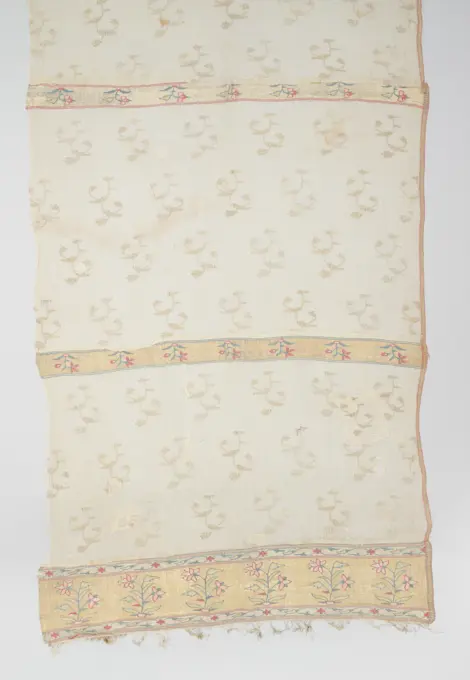
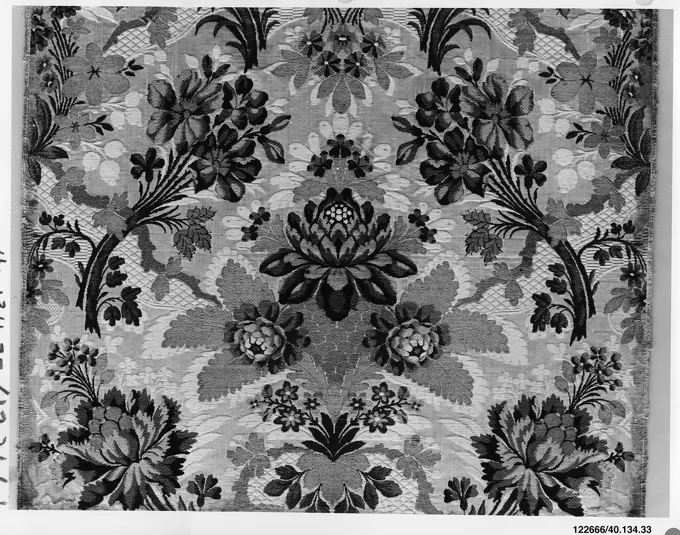
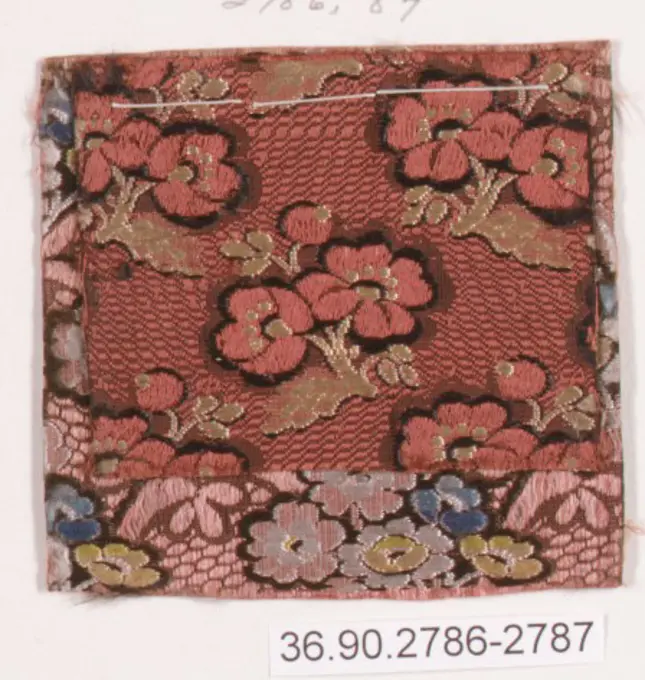
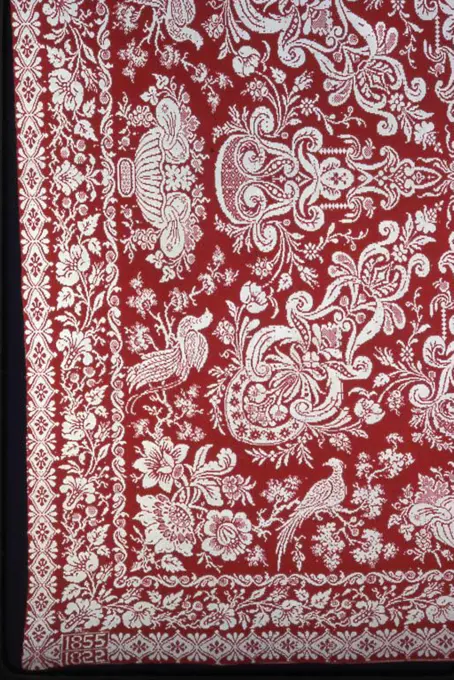
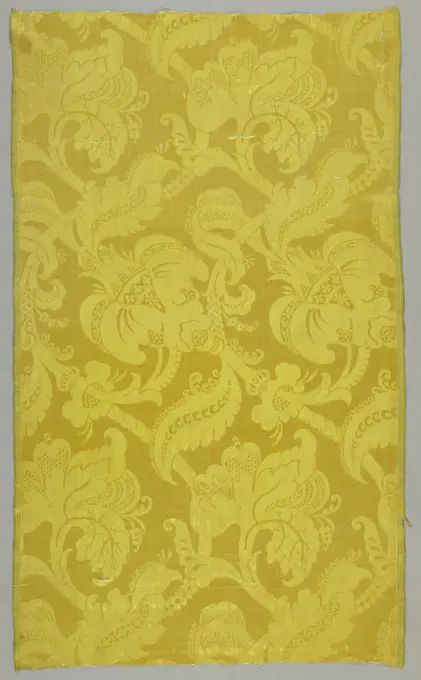
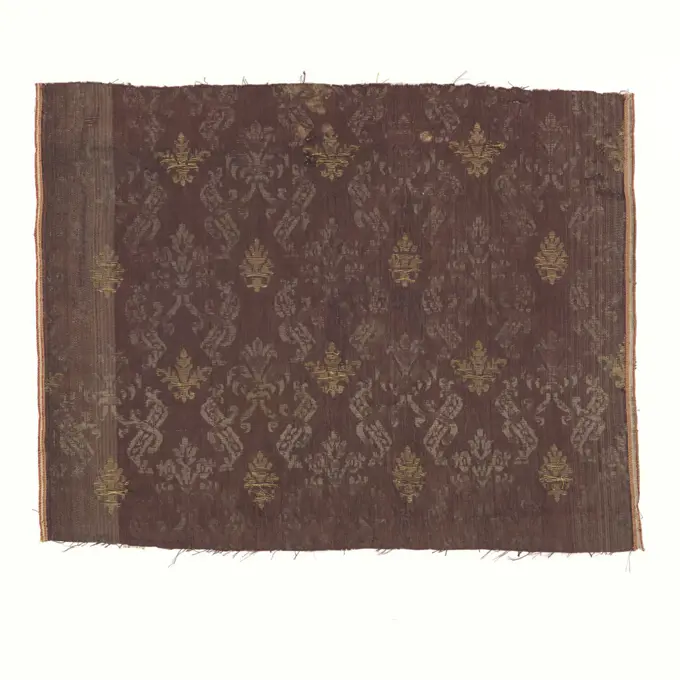
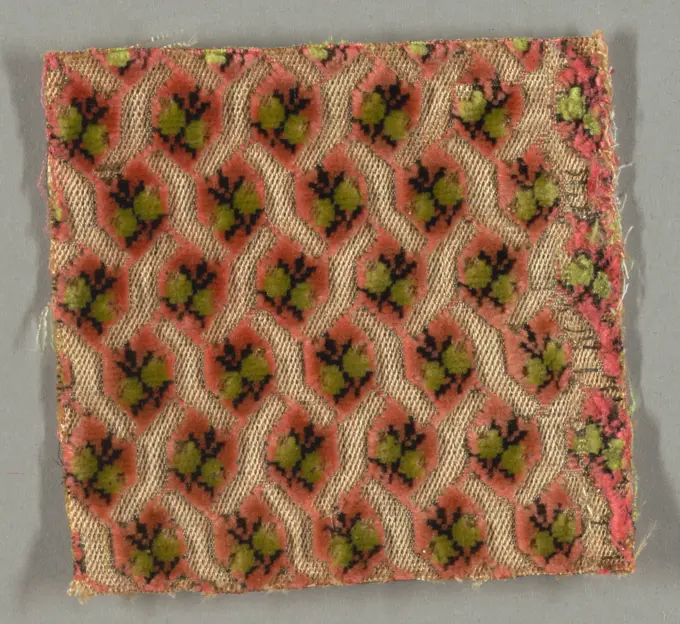
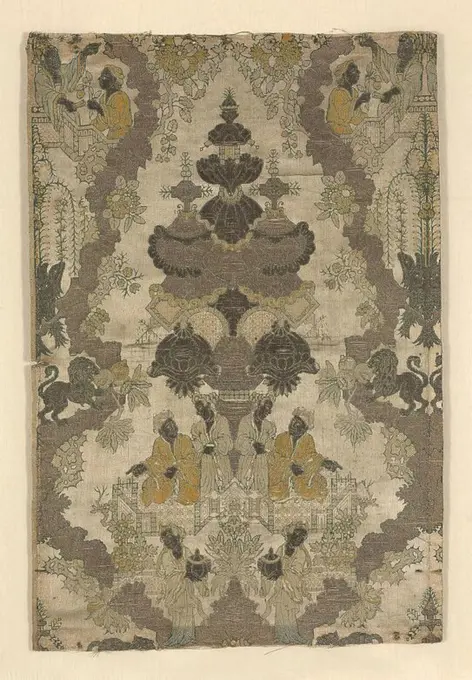
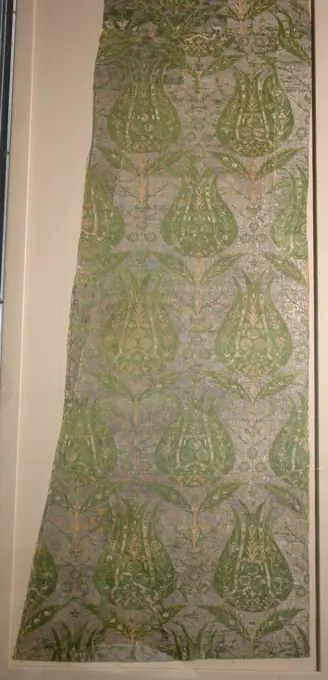
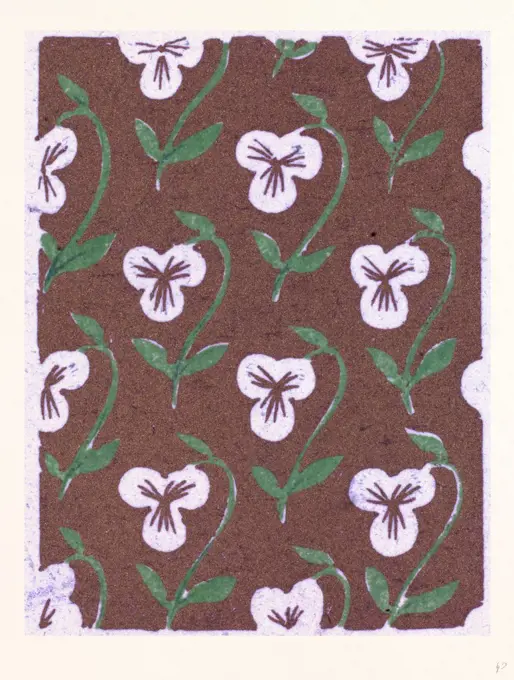
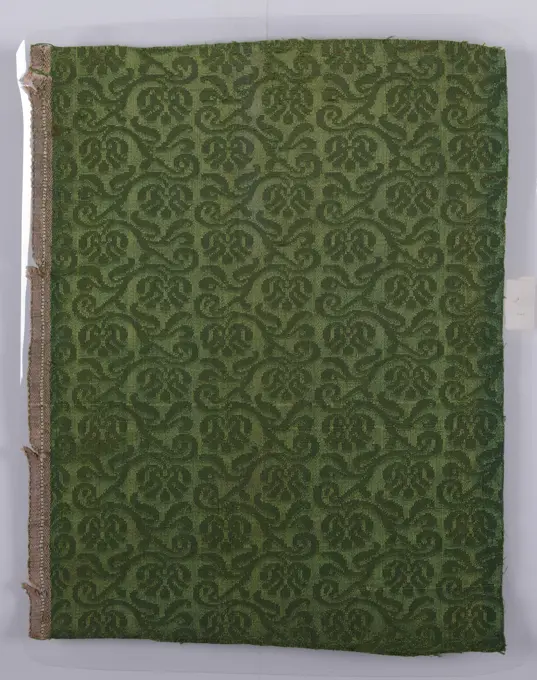
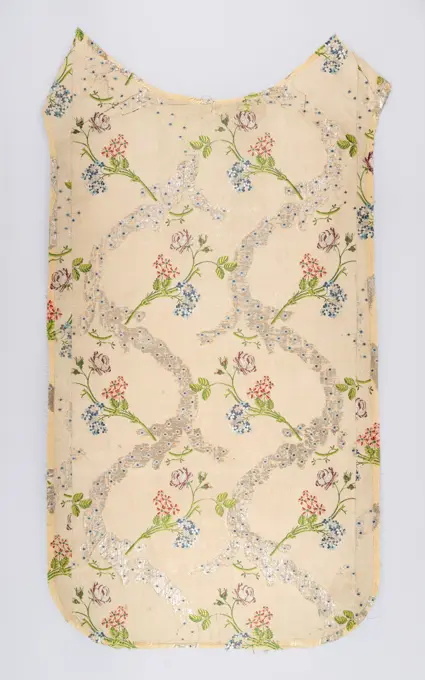
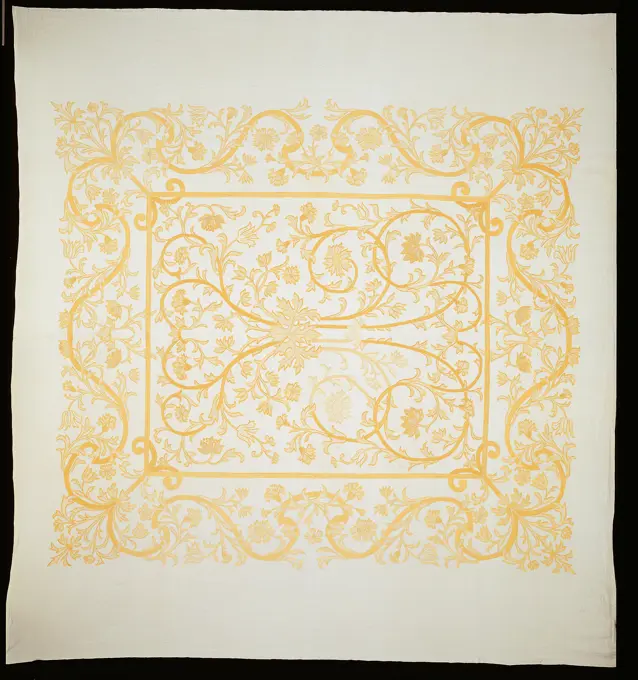
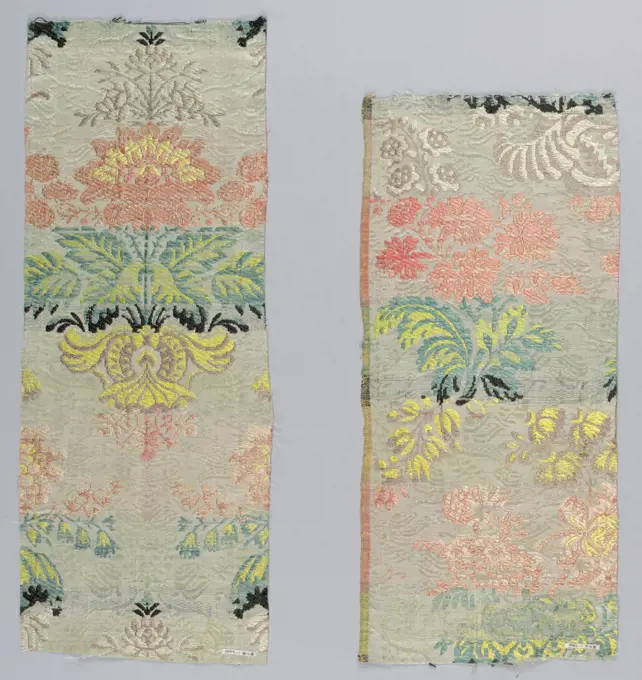
Fragments, Medium: silk Technique: woven, Polychrome flowers on a white background. very worn., 18th century, woven textiles, FragmentsFragment of fabric unknownFragment, Medium: silk Technique: compound weave with supplementary weft, Orange ground with a hexagonal diaper pattern. Four quatrefoil foliate design forming circles and brocaded in white silk., Japan, late 19th century, woven textiles, FragmentPiece 18th century French. Piece. French. 18th century. Textiles-PrintedFragment, Medium: silk Technique: cut and uncut supplementary warp pile (velvet) in a plain weave foundation, Fragment of green cut and uncut velvet in a pattern of foliated S-curves and barrettes in a perpendicular arrangement., Italy, 16th-17th century, woven textiles, FragmentBed Hanging (France); silk, metal-wrapped silk-core yarnsPiece 18th-19th century Japan. Piece 67108Textile, Medium: silk, metal Technique: plain weave with continuous supplementary weft patterning, Red ribbed silk ground with a large-scale symmetrical palmette surrounded by four serrated leaves connected by a crown. The pattern is formed by one horizontal rib having an extra white silk weft and the alternating rib having a narrow strip of flat silver., Italy, 17th century, woven textiles, TextileTextile (Italy); silk, metallic thread; Overall: 64 x 16.3 cm (25 3/16 x 6 7/16 in.)Two consistent silk tissue fragments. Fragment of two sewn-sewed parts with pattern of scattered bouquets with tires swing along the edges with lace pattern.Fragment multicolored brochure silk, c. 1740 - c. 1760 Three fragments of white silk tissue with a pattern of multicolored flowers. Netherlands silk Three fragments of white silk tissue with a pattern of multicolored flowers. Netherlands silkFragment rood zijdeweefsel, anonymous, c. 1840 - c. 1874 Excerpt interior textiles; Red silk with red-orange brochure in Jaquard tissue. The pattern has leaf vines and volutes. France silk. cotton (textile). brocatelle twill Excerpt interior textiles; Red silk with red-orange brochure in Jaquard tissue. The pattern has leaf vines and volutes. France silk. cotton (textile). brocatelle twillFragment of a multi -colored Zijddamast, 1740 - 1760 On a red satin soil a symmetrical branch gold or silver woven leaves, two blue carnations and a light-salmon-colored rose. Two pieces sewn together.  silk damask On a red satin soil a symmetrical branch gold or silver woven leaves, two blue carnations and a light-salmon-colored rose. Two pieces sewn together.  silk damaskNapkin with flower vase, anonymous, c. 1700 - c. 1749 Linnamast napkin with a flower vase. The symmetrical pattern, which covers the full width and height of midfield, consists of a striker, serrated and staster -filled band, which encloses a large grid -filled vase shape or flower bulb, from which a bouquet originates from large vulner leaves, a fruit thos and flowers . In the edges lobed diamond -shaped medallions, in a stock of diamonds; A medallion in the corners. Round: Blocking edge. West-Europa linen (material) damask Linnamast napkin with a flower vase. The symmetrical pattern, which covers the full width and height of midfield, consists of a striker, serrated and staster -filled band, which encloses a large grid -filled vase shape or flower bulb, from which a bouquet originates from large vulner leaves, a fruit thos and flowers . In the edges lobed diamond -shaped medallions, in a stock of diamonds; A medallion in the corners. Round: Blocking edge. West-Europa linen (material)Piece 16th century Italian. Piece 229282Piece probably 17th century Italian. Piece 226506Fragment multicolored silk brocatel, anonymous, 1400 - 1599 Fragment silk tissue. A white soil has a symmetrical pattern with lancet -shaped leaves that derive peaky fields with flowers, while on the junctions are blocked palmets, from the sword lily. The pattern is colored yellow and green. Italy (possibly)Spain (possibly) silk. linen (material) broach Fragment silk tissue. A white soil has a symmetrical pattern with lancet -shaped leaves that derive peaky fields with flowers, while on the junctions are blocked palmets, from the sword lily. The pattern is colored yellow and green. Italy (possibly)Spain (possibly) silk. linen (material) broachSidewall Sample; machine-printed on paper; 22.5 x 22.5 cm (8 7/8 x 8 7/8 in.)Roller Printed Cotton Textile, 19th century. America, 19th century. Plain cloth, roller printed: cotton; average: 57.5 x 61.9 cm (22 5/8 x 24 3/8 in.).Textile, Herman A. Elsberg, (American, 1869-1938), Medium: silk Technique: complex woven, Silk textile with crepe woven, purple ground has a staggered repeat of satin woven, large purple roses., Lyon, France, ca. 1915, woven textiles, TextileSidewall, Machine-printed paper, On light brown textured ground, tall vase-like motifs in white with clusters of flowers., USA, 1905-1915, Wallcoverings, SidewallFragment of a Quilted Skirt, c. 1785. England, late 18th century. Woodblock print on cotton; overall: 103 x 88.5 cm (40 9/16 x 34 13/16 in.).Fragment (Spain); silkCoverlet. James Cunningham (American, born Scottish, c. 1797-after 1865); United States, New York, Oneida County, New Hartford. Date: 1843. Dimensions: 228.8 × 184.9 cm (90 × 72 3/4 in.). Cotton and wool, plain weave double cloth; woven on loom with Jacquard attachment; two loom widths joined. Origin: New York. Museum: The Chicago Art Institute, Chicago, USA.Red side fragment with pattern in gold and silver wire, anonymous, c. 1600 - c. 1699 Fragment of red silk with a pattern in a twill of browned gold and silver thread, probably in the form of cartouches, filled with feather plume-shaped figures, and surrounded by wide ornament tires. Netherlands silk.. lampas (textile material) Fragment of red silk with a pattern in a twill of browned gold and silver thread, probably in the form of cartouches, filled with feather plume-shaped figures, and surrounded by wide ornament tires. Netherlands silk.. lampas (textile material)Piece 18th-19th century Japan. Piece. Japan. 18th-19th century. Silk. Textiles-WovenPiece 18th-19th century Japan. Piece 67404Kosode (Kimono) Fragment with Bamboo Trellis and Clematis Blossums. Japan, 18th century. Textiles. Silk figured satin (rinzu), stenciled imitation tie-dye (kata kanoko shibori) with silk and gilt paper wrapped silk thread embroideryChild's Bedcover, 'Le Moyne Star' on point. United States, circa 1840. Textiles; quilts. Cotton plain weave, printed, hand pieced and quiltedTextile (France); silk, metallic thread; Anonymous bequest in memory of Albert and Rebecca Elsberg; 1938-82-42-bSlashed Silk Satin; silk; Warp x Weft: 21 x 26.5 cm (8 1/4 x 10 7/16 in.) Warp x Weft: 10 x 24 cm (3 15/16 x 9 7/16 in.); 1961-119-3-aPiece French or British 19th centuryFragment, Medium: silk Technique: cut and uncut supplementary warp pile (velvet) in a satin foundation, Fragment of cut and uncut velvet in a design of white flowers and green leaves against dark red cut velvet ground., France, 18th century, woven textiles, FragmentTextile, Medium: linen, cotton Technique: lampas - foundation weave - 3&1 twill weave; supplementary weave - plain weave no interlaced connection., The pattern is white on a blue background and has a symmetrical design of flowers between lattice-like bands on either side., France, 17th century, woven textiles, TextilePiece ca. 1730-1733 Italian, Venice. Piece 227870Card White Paper Cut Flower Card white paper cut flower on rough paper texture Copyright: xalexmakarovaxPiece 18th century Japan. Piece 71799Mise-en-carte (Point-paper) Made 1760-1790 FranceTextile 1700-1899 Russian. Textile 173398Textile, Medium: crewel wool on cotton Technique: chain stitch embroidery on plain weave, Fragment, very fine white cotton, plain cloth, probably Indian, embroidered in detached flower designs, natural size, in wool. Yellow, red, orange, rose, white. Chain stitch. Selvage at left side., France, late 18th century, embroidery & stitching, TextileFragment 16th-17th century Italian. Fragment 230537Piece 17th century Japan. Piece. Japan. 17th century. Silk / Compound weave. Textiles-WovenSix Panels Made 1750-1770 Spitalfields. Silk, plain weave with supplementary patterning wefts and supplementary brocading weftsFrieze, Maxwell & Co., S.A., Chicago, Illinois, USA, Machine-printed paper, Pendant medallions, alternating large and small. Foliate swags connect large medallions. Printed on spotted ground., USA, 1905-1915, Wallcoverings, FriezeCeiling paper, York Card & Paper Co., 1891, Machine-printed paper, liquid mica, Cross-like medallion alternating with small dotted square., York, Pennsylvania, USA, 1905-1915, Wallcoverings, Ceiling paperCoverlet first half 18th century Italian. Coverlet 227808Fragment; silk, linenFragments, Medium: silk Technique: plain compound weave with supplementary weft, Fragments of vertically-striped pink and white taffeta. White stripes have narrow pink and green guard borders with pink and green birds, flowers, sprigs, and tassels. White stripes have moire effect., France, 1750-1800, woven textiles, FragmentsSidewall, Maxwell & Co., S.A., Chicago, Illinois, USA, Machine-printed paper, liquid mica, On gray ground, bunches of small pink flowers and red berries on green stems with leaves., USA, 1905-1915, Wallcoverings, SidewallSamples, Orinoka Mills, (Philadelphia, Pennsylvania, USA), Technique: woven, a. pink ground with floral motif, b. dark red ground with floral motif, c. rust color ground with floral motif, USA, ca. 1910, woven textiles, SamplesPiece 19th century Japan. Piece 66189Fragments, Medium: silk Technique: woven, Crowned lions on either side of a monstrance with birds,, late 16th-early 17th century, woven textiles, FragmentsPiece 18th-19th century Japan. Piece 67003Hatvoile of lace plaque on tulle with a large Margriet, anonymous, c. 1820 - c. 1840 Hatvoile of natural -colored lace border gland on mechanical tulle, tuledoor stop work. Along three sides there is always one big Margriet in the semicircular scraps, without a stem. Above that, a pendulum of finer half star -shaped flowers and toothed leaves runs. In all flowers and in particular in the large ones, a variety of filling patterns has been applied in stopping technology. In the two lower corners of the Voile are bouquets with five different flowers. The sides with scoops are finished with feston stitches. Along the top edge a trench has been made for canceling a ribbon. Netherlands  embroidering Hatvoile of natural -colored lace border gland on mechanical tulle, tuledoor stop work. Along three sides there is always one big Margriet in the semicircular scraps, without a stem. Above that, a pendulum of finer half star -shaped flowers and toothed leaves runs. In all flowers and in particulaSteel pressed Trijp with abstract motifs in the style of Art Deco, Anton Hamaker (Possible), Eindhovensche Trijp factories Schellens and Marto, H.P. Mutters, c. 1920 - c. 1925 sample Steel brown pressed Trijp with abstract motifs in the style of Art Deco. A Velcro is attached to the top of the back. NetherlandsNetherlandsmaker: EindhovenThe Hague Pool layer: mohair. Ground tissue: Cotton (textile)Piece 18th-19th century Japan. Piece 66178Textile, Medium: cotton Technique: printed by engraved copper plate on plain weave, All over small scale floral pattern printed in red on a white ground., England, ca. 1785-95, printed, dyed & painted textiles, TextileSidewall - Sample, Diaper; Designed by Morris & Co. (United Kingdom); Manufactured by Jeffrey & Company (United Kingdom); block-printed paperPiece 18th-19th century Japan. Piece 66407Ceiling paper, W. Campbell & Co., Machine-printed, ingrain paper, mica, Scroll design in cream on ingrain paper. Mica finish. No 3442. No. 2285., USA, 1890-1900, Wallcoverings, Ceiling paperBorder of a Luxurious Floor Covering ca. 1600 This U-shaped fragment was once part of the border of a larger textile. The border contains naturalistic renderings of flowers, including roses in crimson, pink, and silver, carnations in orange and yellow, and other flowers in blue and pink, all on a gold ground. The delicacy of the design is achieved through the high number of threads used to translate this design from paper cartoon to finished textile. The silver- and gold-covered threads used copiously throughout the border are a testament to the wealth and taste of the patron.. Border of a Luxurious Floor Covering 448239Textile; Manufactured by Schwartz-Huguenin; cottonSutra Cover Made 1590-1599 China. Silk, plain weave with supplementary patterning wefts bound in weft-float faced 1 3 'Z' twill interlacings .Textile (England); cottonLength of Brocaded Silk, 1700s. Italy, 18th century. Lampas weave, brocaded; silk; average: 101 x 53.4 cm (39 3/4 x 21 in.).Fragment Made 1575-1600 Italy. Silk, warp-faced satin weave self-patterned by plain weave .Turban unknownCeiling Paper (USA); Manufactured by Robert Graves Co. (United States); machine-printed paper, liquid mica; 85 x 47 cm (33 7/16 x 18 1/2 in.)Piece probably early 19th century French, Lyons. Piece 226527Piece French 19th centuryPiece French 19th centuryFragment (Spain); silk; Warp x Weft: 31 x 75.2 cm (12 3/16 x 29 5/8 in.)Gigerl-Tarock, Treff Coverlet Made 1855 New York. Cotton and wool, plain weave double cloth; woven on loom with Jacquard attachment; full loom width; seamless .Textile, Medium: silk Technique: 5-harness satin damask, Serpentine branches with big decorated flower heads inspired by Indian design. Broad warp twill selvage with narrow green and yellow stripes., France or Italy, ca. 1715, woven textiles, TextileFragment, Medium: silk, metallic Technique: brocaded satin, Metallic gold and silver leaves and palmettes on brownish purple., Selvage on both sides., 17th century, woven textiles, FragmentFragment; silk; Bequest of Richard Cranch Greenleaf in memory of his mother, Adeline Emma Greenleaf; 1962-56-184-cFragment. Probably France. Date: 1698-1719. Dimensions: 61.8 × 41.2 cm (24 3/8 × 16 1/4 in.). Silk, gilt-and-silvered-metal-strip-wrapped silk, warp-float faced 7:1 satin weave with supplementary brocading wefts and self-patterned by three-color complementary ground wefts. Origin: France. Museum: The Chicago Art Institute, Chicago, USA.Tablecloth made of linen with a wide edge fillet side with arabesk leaves and lilies, anonymous, c. 1900 - c. 1980 Linen tablecloth with a wide edge of natural -colored lace, fillet side. Rectangular model with a rant edge of straight tracks with a symmetrical pattern, without a corner pattern. The pattern in the cross jobs continues, the pattern of the length courts ends there. In both lanes there are wavy tifles with arabesk leaves, with standing in every golf valley and hanging in each golf top a vertical leaf stem with a lily in the top. Halfway through the Gulf line, sloping branches go out, with a bending palm flower and a composite leaf branch. On the knotted soil with square meshes, the motifs are embroidered with tropics. Along the outer edge of the side is a narrow edge of linen that is finished with a border of bobbin with dots. Italy linen (material) Linen tablecloth with a wide edge of natural -colored lace, fillet side. Rectangular model with a rant edge of straight trackGreeting letter with a flower wreath and a bow.Fragment (Possibly Chausable) Made 1775-1800 France. .Chinese ornamentTextile Fragment 16th century. Textile Fragment 451096Sidewall (possibly USA); 55 x 52 cm (21 5/8 x 20 1/2 in.)Fragment blue and silver -colored silk tissue with chinoiseris motif of temples and bouquets in vases and bowls, anonymous, c. 1700 - c. 1750 Fragment silk tissue, square, blue and white, with rounded down corners. The fabric has a blue soil with chinoiseris motif of temples and bouquets in vases and bowls. France silk. satin Fragment silk tissue, square, blue and white, with rounded down corners. The fabric has a blue soil with chinoiseris motif of temples and bouquets in vases and bowls. France silk. satinMedieval ornamentPiece 18th-19th century Japan. Piece 66488Textile FragmentFragments of silk fabric at the back of the chasuble  a pattern of wavy ribbons crossing with plant flakes unknownLinnamast napkin with a flower pattern, anonymous, 1670 - 1680 White Linnamasten napkin with stripped flowers. Marked with binding hocks "OD" and "24", in Red Cross stitch "12" and "BB". Flanders (Possible) linen (material) White Linnamasten napkin with stripped flowers. Marked with binding hocks "OD" and "24", in Red Cross stitch "12" and "BB". Flanders (Possible) linen (material)Fragments, Medium: silk Technique: woven, Large-scale flowers and saw-toothed edged foliage on dark green background., 18th century, woven textiles, FragmentsPiece ca. 1815 British. Piece 229366Dress of Batist embroidered with white roses. Dress of Batist embroidered with white roses. Along a smooth hem runs a wavy, very thin branch with thick wild roses, cross-cut by loose leaves. A fuller rose roof in the corners. In the middle such a branch in a wreath.Bedcover in the Arts and Crafts Style Made 1900-1925 England. Linen, plain weave; embroidered with silk in back, satin, and stem stitches; French knots; two loom widths joined .Textile, Medium: cotton Technique: block printed on plain weave (black, two reds, two purples, two blues, and dark yellow), Ribbon-like stripes in yellow and red alternate with intersecting s-curves of lace and floral chains., Netherlands, 1750-1800, printed, dyed & painted textiles, TextilePiece 1735-40 Spanish. Piece. Spanish. 1735-40. Silk and metal thread. Textiles-WovenD Davin, Historical Printed Cotton, 1940 Historical Printed CottonFragment Printed Cretonne with pattern of Klaver with butterfly within Spitsovalen, Theo Nieuwenhuis, 1900 - 1925 Fragment printed cretonne with pattern of clover with butterfly within Spitsoval in the colors green, purple, moss green and gray on natural stock. Helmond linen (material) Fragment printed cretonne with pattern of clover with butterfly within Spitsoval in the colors green, purple, moss green and gray on natural stock. Helmond linen (material)Panel from a Skirt Made 1701-1800 England. Silk, plain weave; warp-painted (chinÈ) .Le Romain (The Roman) (Furnishing Fabric) Made 1821 Jouy-en-Josas (Object made in), France (Object made in). Cotton, plain weave; engraved roller printed . Jean Baptiste Huet (Designer) , Oberkampf et Widmer (Producer) , Bartolomeo Pinelli (Etcher) , Jules Mallet (Engraver)