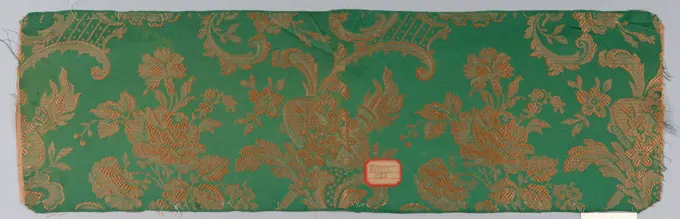
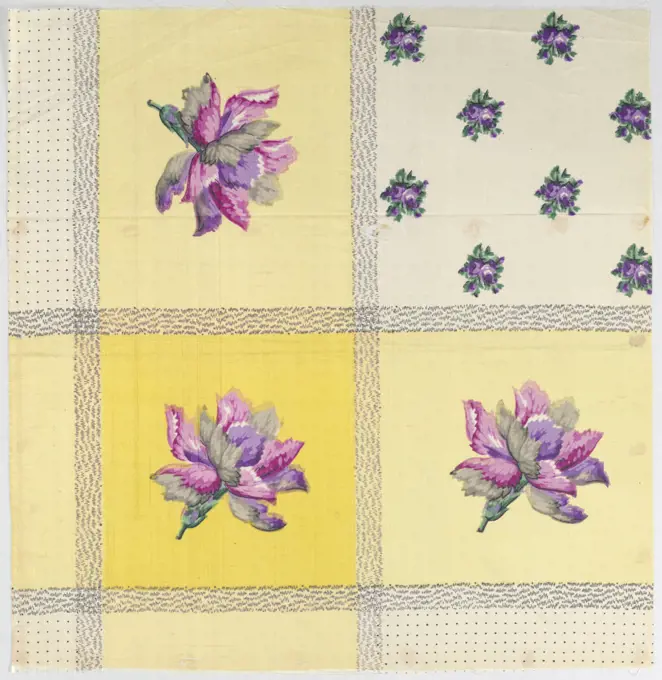
Floral Textile Fragments

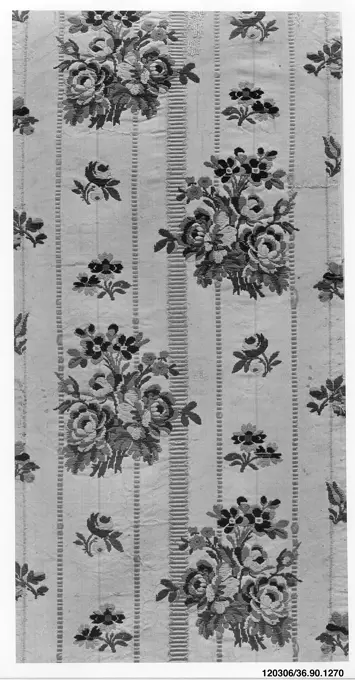
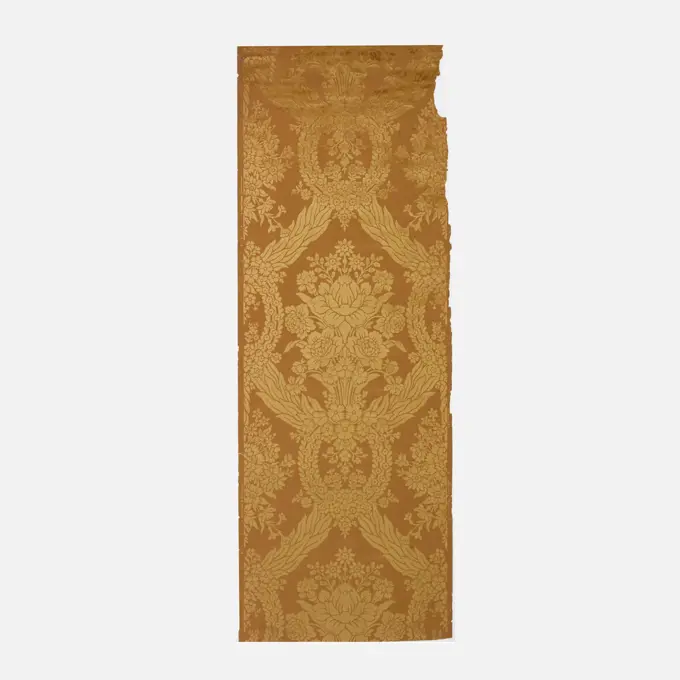
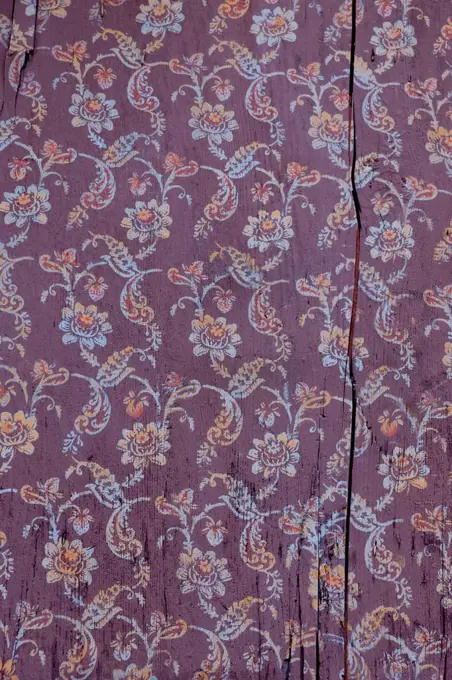
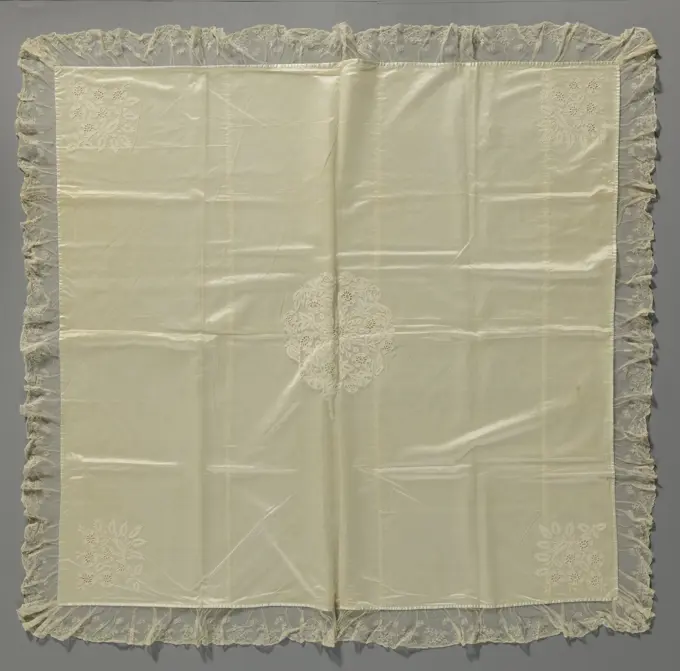
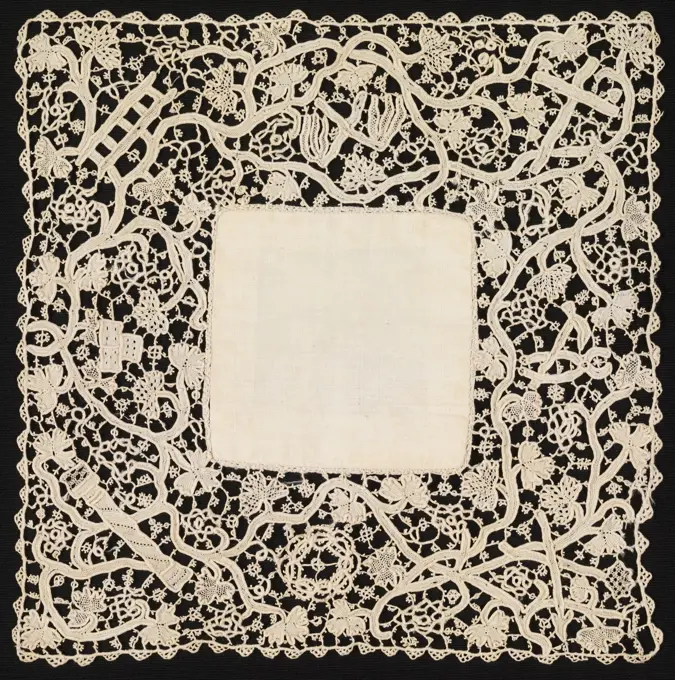
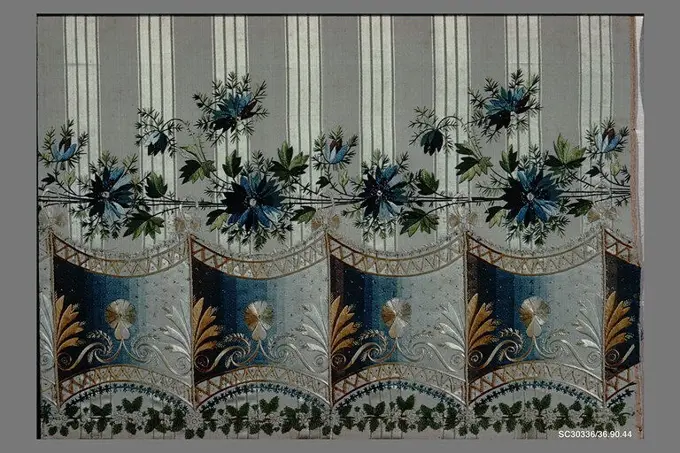
Historic textile fragments showcasing intricate floral patterns woven in silk and metallic yarns. Designs hail from 17th to 19th century Europe.
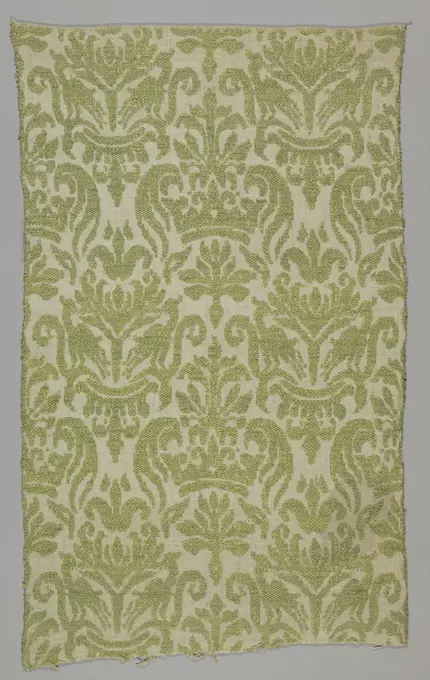
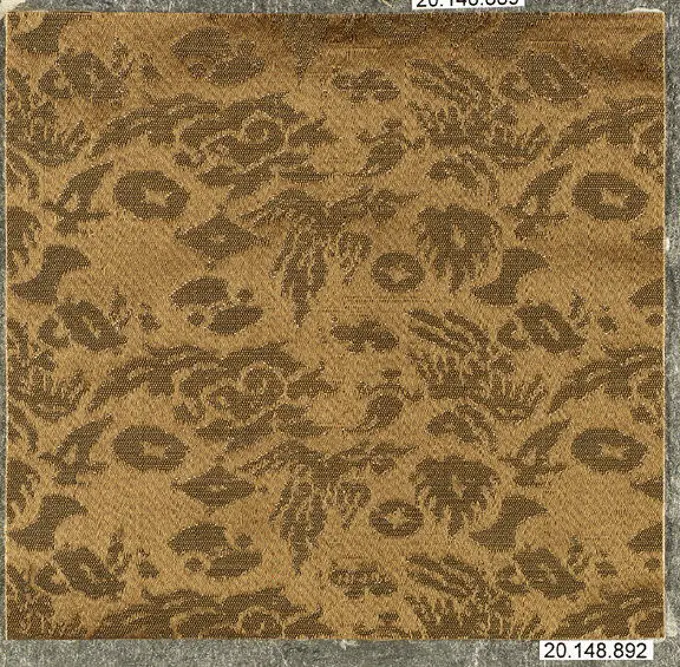
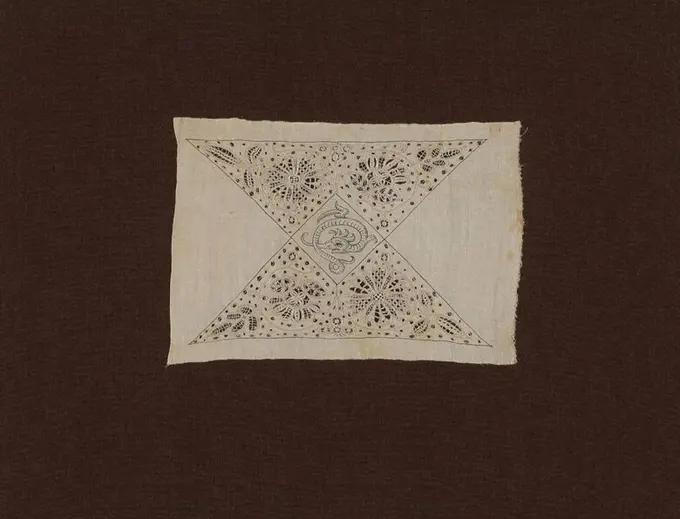
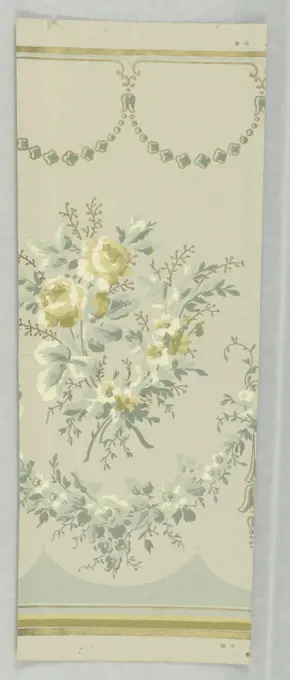
Textile, Medium: linen, cotton Technique: two interconnected structures, Large allover design with French royal crown and heraldic lilies in light green on off-white ground., France, 17th century, woven textiles, Textile
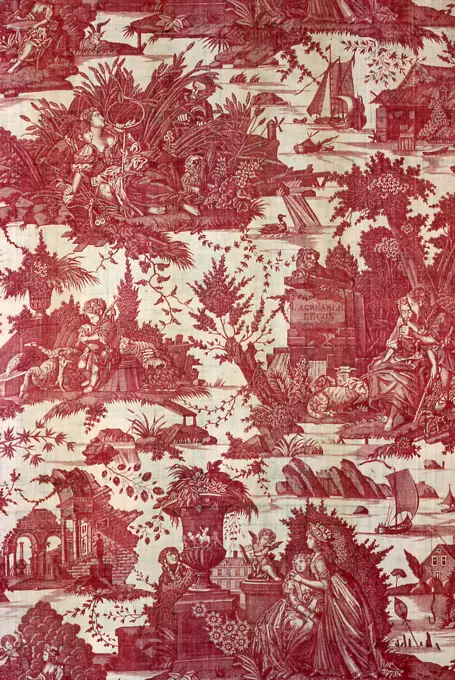
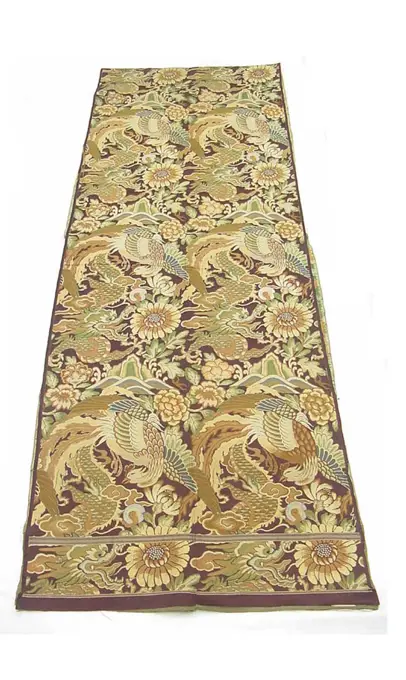
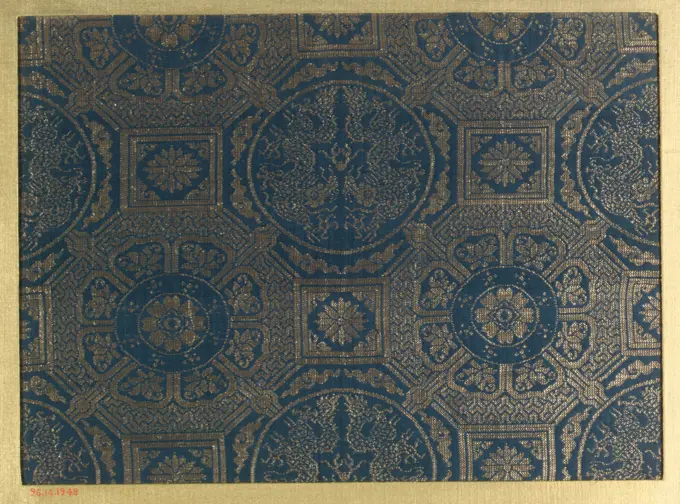
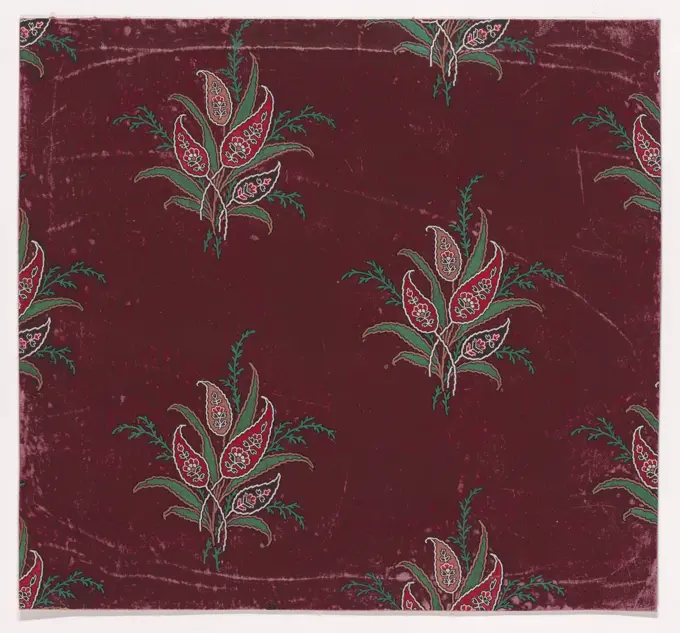
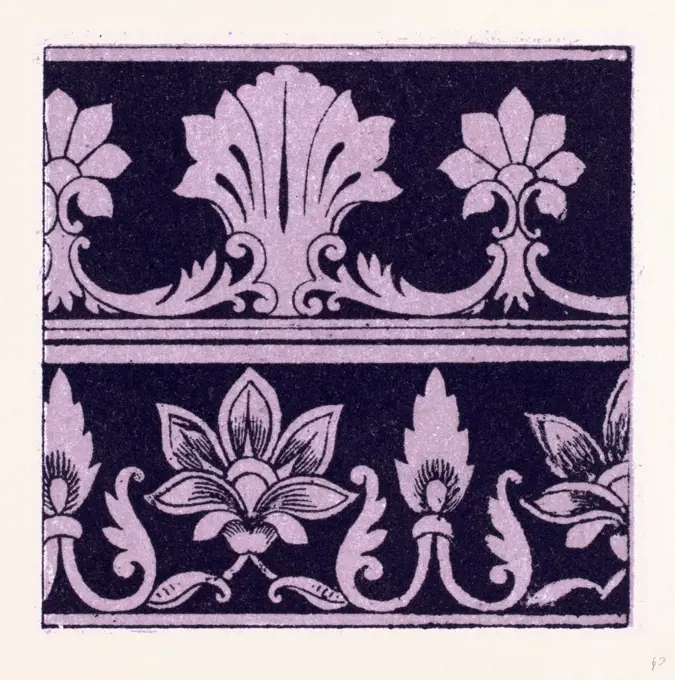
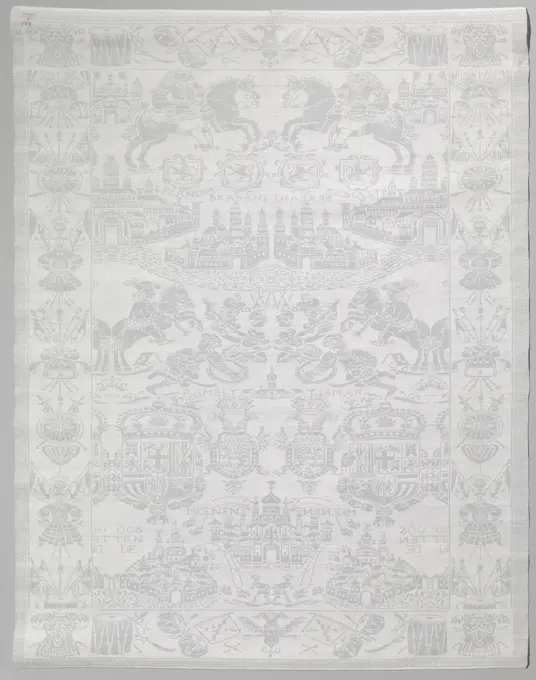
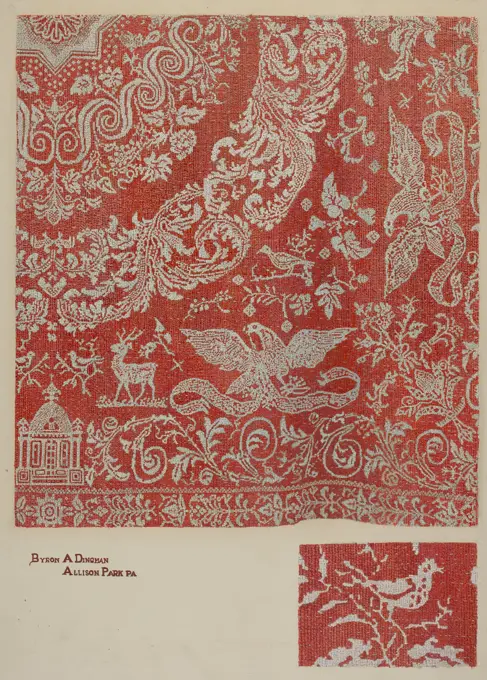
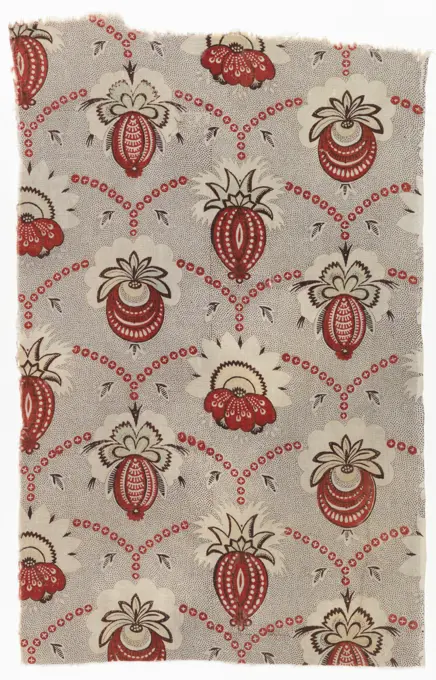
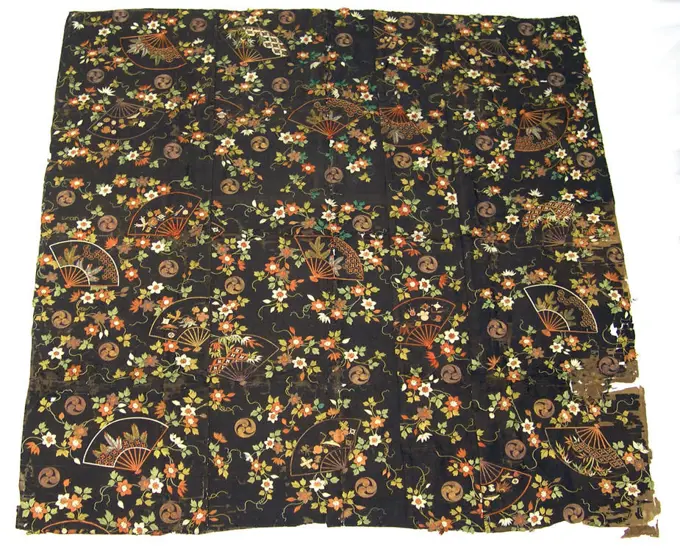
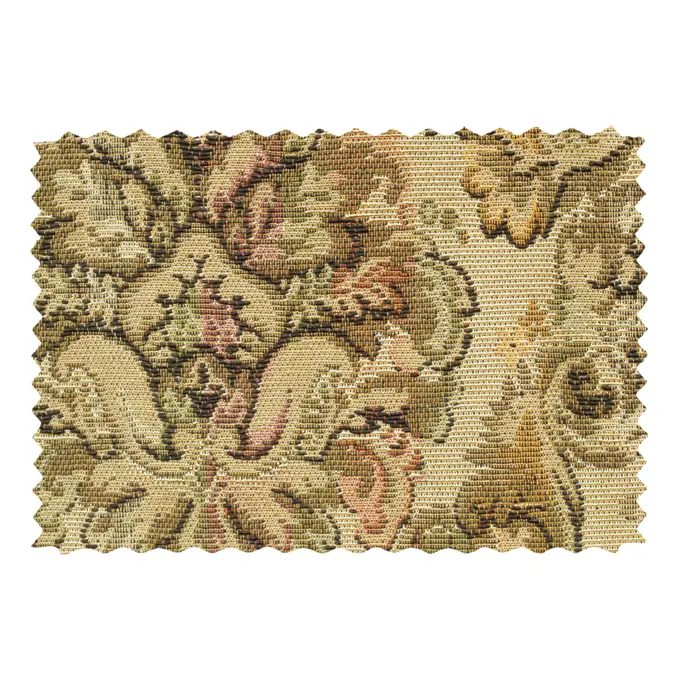
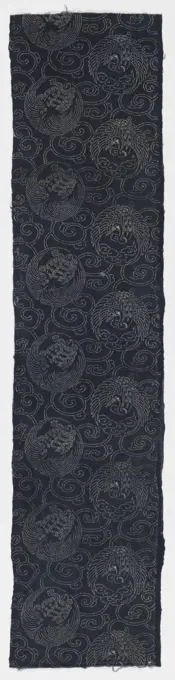
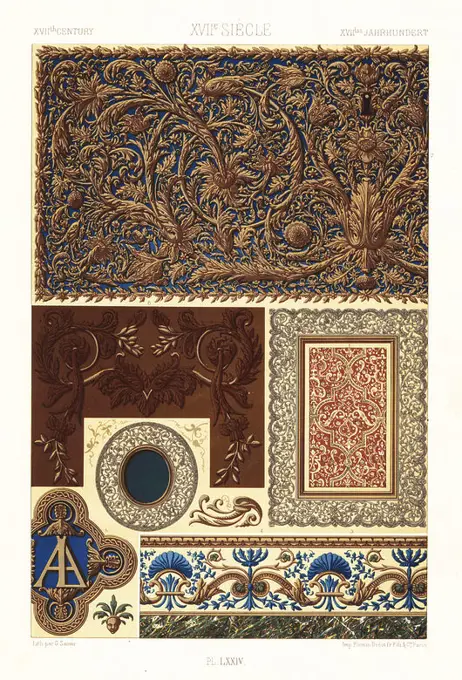
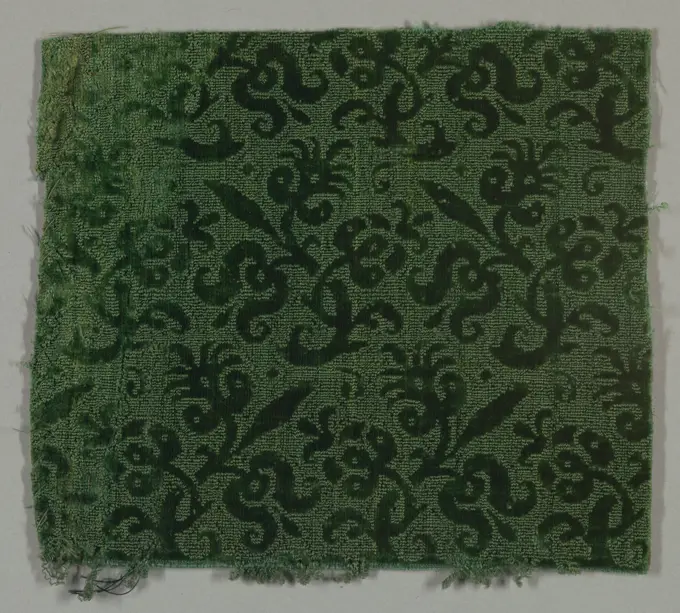
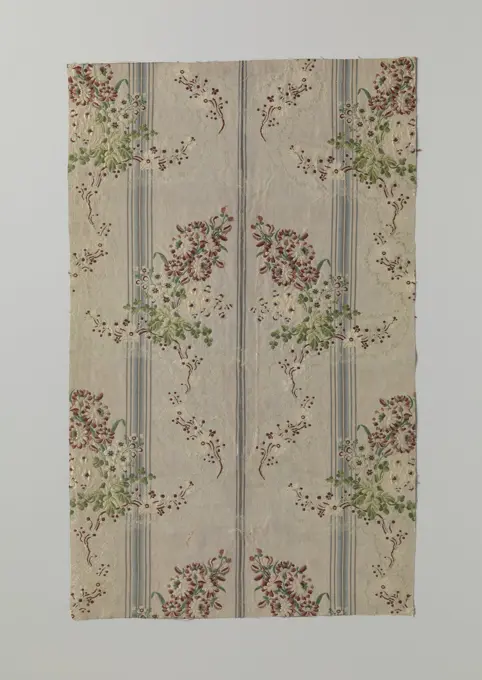
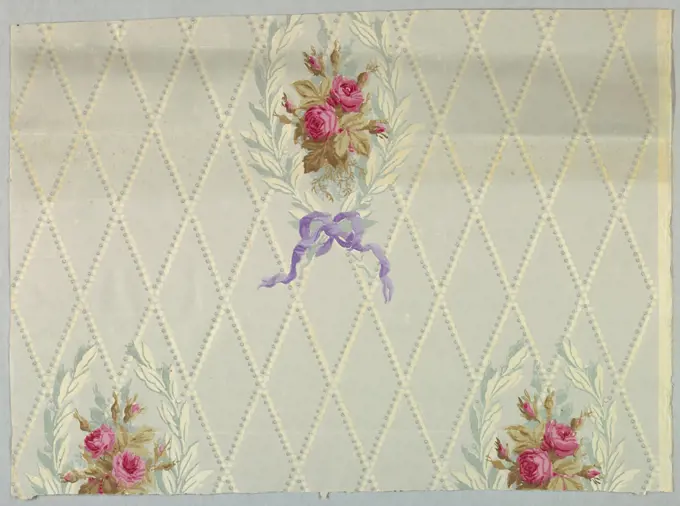
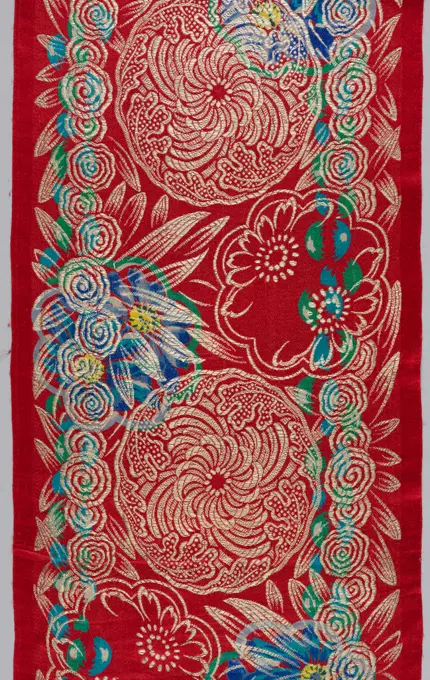
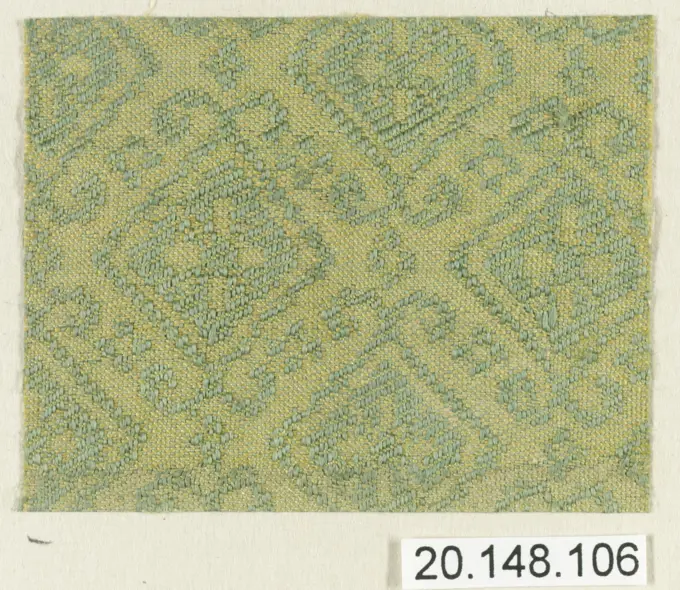
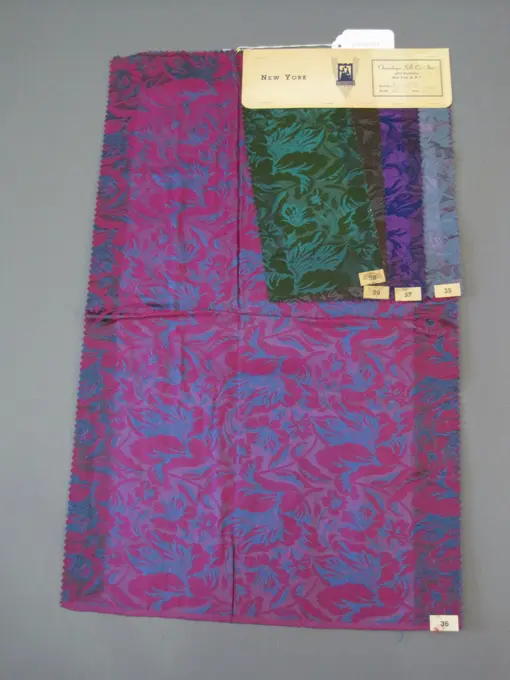
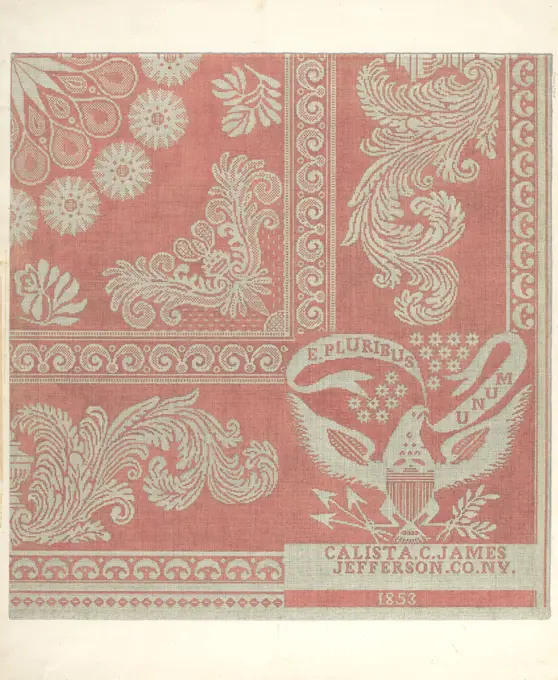
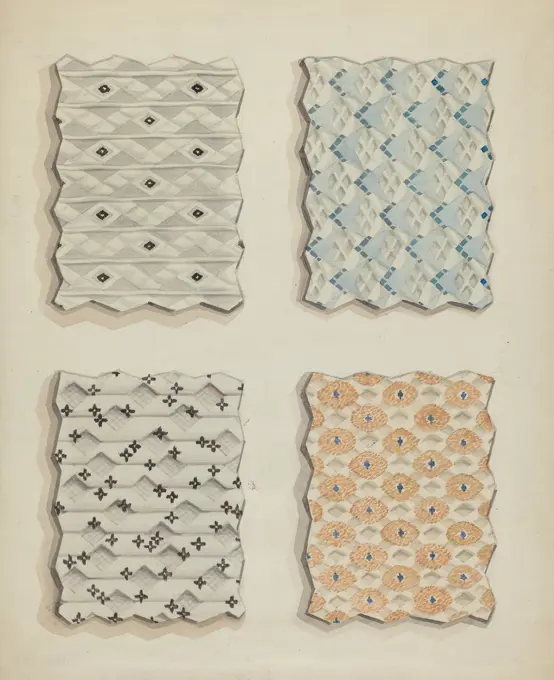
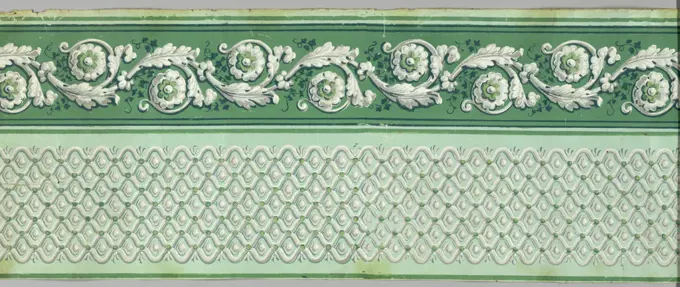
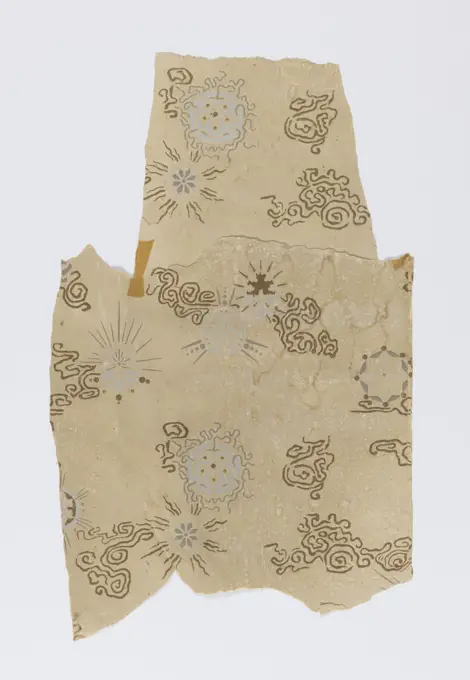
Piece 18th century China. Piece. China. 18th century. Silk / Compound weave. Qing dynasty (1644-1911). Textiles-WovenFragment, Medium: silk Technique: compound satin weave, Closely-spaced, conventionalized floral design in gray warp satin with green and white silk wefts., France, early 18th century, woven textiles, FragmentPiece Japan 18th-19th centuryPiece 18th century French. Piece. French. 18th century. Silk. Textiles-WovenL'Agréable leçon (The Pleasant Lesson) (Furnishing Fabric) Made 1785-1790 France. Cotton, plain weave; copperplate printed . Petitpierre Frères & Cie. (Manufacturer)Textile (France); silkTextile; Manufactured by Schwartz-Huguenin; cottonTextile; cottonObi with Dragon and Phoenix 19th century Japan A dragon and a phoenix, fantastic creatures of Chinese origin, are shown here in a Japanese obi against a background crowded with peonies and chrysanthemums. The dragon is seen in its usual Qing dynasty Chinese milieu, which includes stylized motifs of a mountain, waves, and flaming jewel.. Obi with Dragon and Phoenix. Japan. 19th century. Silk satin with supplementary weft patterning in silk and metallic threads. CostumesFragment, Meduim: silk and metallic, Green silk ground with an extra weft of silver. Design in rows of two units alternating and changing directions in each row. One motif is an 'S' form; the other a 'C'. The 'S' is in yellow with metal thread; the 'C is alternately white and peach., 17th century, woven textiles, FragmentTextile; cottonPiece 19th century Japan. Piece. Japan. 19th century. Silk / Compound weave. Textiles-WovenLinnamast napkin with a flower pattern, anonymous, 1670 - 1680 White Linnamasten napkin with stripped flowers. Marked with binding hocks "OD" and "24", in Red Cross stitch "12" and "BB". Flanders (Possible) linen (material) damask White Linnamasten napkin with stripped flowers. Marked with binding hocks "OD" and "24", in Red Cross stitch "12" and "BB". Flanders (Possible) linen (material) damaskLampas with a pattern of lobed leaves, peonies and pomegranates, with fillings of fine gridwork, in cream and white on cérise soil, anonymous, c. 1725 - c. 1730 Fragment silk with a pattern of a row of lobed leaves with inner leaf that is repeated straight up and is interspersed with a staggered row of peonies. Wavy branches with smaller double leaf and pomegranate from both main motifs. Fillings of fine gridwork. Edges in white from wide Z-keeper. A lisière parlante, white with two blue stripes. France silk lampas (textile material) / twill Fragment silk with a pattern of a row of lobed leaves with inner leaf that is repeated straight up and is interspersed with a staggered row of peonies. Wavy branches with smaller double leaf and pomegranate from both main motifs. Fillings of fine gridwork. Edges in white from wide Z-keeper. A lisière parlante, white with two blue stripes. France silk lampas (textile material) / twillPiece 18th-19th century Japan. Piece 67660Textile; Manufactured by Schwartz-Huguenin; cottonRenaissance ornamentFragment of silk fabric  motifs of flower bunches and so called treillage checkers unknownSample Book (France); silk; 1896-27-9Textile Design with Bundles of Paisley Motifs, Stylized Leaves and Stylized Branches with Leaves 1840 Anonymous, Alsatian, 19th century Rectangular sheet of paper with a textile design from a group, dated 1840, made in Mulhouse, Alsace, which was an important nineteenth-century center for textile production in the Haut-Rhin region of France. The design is made up of alternating vertical rows of bundles of six large stylized leaves and four stylized branches with leaves colored with green, and four paisley motifs decorated with rosettes and stylized leaves of red, black and white color, over a ground of burgundy color. The paisley motifs are colored: two with red, one with light tan, and one with black.. Textile Design with Bundles of Paisley Motifs, Stylized Leaves and Stylized Branches with Leaves. Anonymous, Alsatian, 19th century. 1840. GouacheFragment, Medium: silk Technique: 8-harness satin patterned by floats of alternate wefts, Fragment of woven fabric. Offset rows of a flowering plant or bulb on a dish alternate rows counterfaced in multi-colors on a green-yellow background., 1750-99, woven textiles, FragmentPiece 1856-75 French or British. Piece 229362Linnamast napkin with weapons of Limburg Stirum and Van Tuyll van Serooskerken, Gebroeders Rath (firm), 1890 - 1910 White Linnamasten Napkin with weapons from Limburg Stirum and Van Tuyll van Serooskerken, brand: Wh. Veghel linen (material) damask White Linnamasten Napkin with weapons from Limburg Stirum and Van Tuyll van Serooskerken, brand: Wh. Veghel linen (material) damaskIndian ornamentRibbon, Medium: silk Technique: warp printed compound weave, Double-faced broad ribbon with white silk horizontally ribbed plain cloth ground. Narrow stripes of pink, green, yellow, and light blue along edges, formed by extra warp. Central design of sprays of yellow and red roses, and small blue flowers, all chiné dyed., France, late 19th century, printed, dyed & painted textiles, RibbonTextile Swatches Onondaga Silk Company, Inc. (1925-1981). , 1948-1959. Silk, metal, 22 x 9 3/4 in. (55.9 x 24.8 cm).    1948-1959Servet met Arma Christi, anonymous, c. 1550 - c. 1599 White Linnamasten napkin with circles with Arma Christi. Flanders linen (material) damask White Linnamasten napkin with circles with Arma Christi. Flanders linen (material) damaskNapkin van Wit Linnamast ,, 1890 - 1914 White Linen Damas napkin with Korenaren-Pattern, Brand Kroon H. Bielefeld linen (material) damask White Linen Damas napkin with Korenaren-Pattern, Brand Kroon H. Bielefeld linen (material) damaskIndian ornamentTextile, Medium: silk, paper with applied gold foil Technique: plain compound twill, Only fragment of design remains. Large conventional rosettes in extra wefts of broad paper gold strips on dark blue ground., Japan, 19th century, woven textiles, TextilePiece 18th-19th century Japan. Piece 66700Piece 18th century Japan. Piece 71148Fragment, Medium: silk, metallic yarns Technique: damask weave with supplementary weft patterning (brocade), Fragment of brocaded silk damask in the 'bizarre' style showing a pink and red ground with florals and irregular scrolls brocaded in metallic yarns and colored silks., France, late 17th-early 18th century, woven textiles, FragmentLinnamast napkin with a historical scene, anonymous, c. 1706 - c. 1725 Napkin from Linnamast with the glorification of Charles III as king of Spain after the Battle of Ruamies. The napkin is marked in red with a cross stitch: MVM 12 FVB and belongs to a napkin with invnr. BK-1977-305-A. Flanders (Possible) linen (material) damask Napkin from Linnamast with the glorification of Charles III as king of Spain after the Battle of Ruamies. The napkin is marked in red with a cross stitch: MVM 12 FVB and belongs to a napkin with invnr. BK-1977-305-A. Flanders (Possible) linen (material) damaskHandkerchief with embroidered weapons of Bosch Reitz and Teding van Berkhout and a border around midfield with rosette flowers, Anonymous, 1859 Natural Batist handkerchief with woven stripes along the edges and slanted in one corner placed a motif in embroidery: whitework. The embroidered motive concerns the alliance weapons of Bosch Reitz and Teding van Berkhout. Embroidery technology: satin stitch, steel stitch, stitch stitch, sandstick, and flannel stitch. Weapons: The weapons are leaning diagonally against each other and are crowned jointly by a helmet sign with Blaker, which is flanked by Acanthus leaves. On the coat of arms of Bosch Reitz there are two stars above a French lily. On the weapon of Teding van Berkhout are kepers and a swan. Around midfield with rosette flowers Netherlands (possibly) linen (material). batiste embroidering Natural Batist handkerchief with woven stripes along the edges and slanted in one corner placed a motif in embroidery: whitework. The embroidered mSample first half 19th century French. Sample. French. first half 19th century. Silk. Textiles-WovenRibbon (France); silkByron Dingman, Coverlet, c 1941 CoverletFragment (France); cottonPanel ca. 1600 Japan. Panel. Japan. ca. 1600. Silk, metallic thread. Momoyama period (1573-1615). Textiles-EmbroideredFabric swatch Fabric swatch sample isolated over white background Copyright: xZoonar.com/ClaudioxDiviziax 6585556Insertion from a Table Cloth. England. Date: 1601-1625. Dimensions: 16.3 x 23.2 cm (6 3/8 x 9 1/8 in.). Linen, plain weave; ink drawing; embroidered with silk and linen in chain and running stitches; cut and drawn work embroidered with linen in buttonhole, overcast, and Russian overcast stitches; with needle lace filling stitches. Origin: England. Museum: The Chicago Art Institute, Chicago, USA.Piece 18th-19th century China. Piece 66046Textile (Japan); cotton; Warp x Weft: 156.5 x 36 cm (5 ft. 1 5/8 in. x 14 3/16 in.) Repeat H: 19.5 cm (7 11/16 in.); Bequest of Elinor Merrell; 1995-50-326Napkin with thrown flower branches and monogram in the corners, anonymous, 1680 - 1690 Napkin with thrown flower brackets in midfield, symmetrical pattern. Unknown monogram (m) in the corners. Along the edges a strip with also stripped flower branches, separated by a narrow strip with garlands. Dambrandrand. Marked: Kroon IC and 24.  linen (material) damask Napkin with thrown flower brackets in midfield, symmetrical pattern. Unknown monogram (m) in the corners. Along the edges a strip with also stripped flower branches, separated by a narrow strip with garlands. Dambrandrand. Marked: Kroon IC and 24.  linen (material) damaskPiece Japan 18th-19th centurySample (USA); Manufactured by Duplan Silk Corporation; silk; Warp x Weft: 30.3 x 67.5 cm (11 15/16 x 26 9/16 in.)Paintings, carvings and open work, 17th century. Louis XIII style. Wood inlaid with carved ivory and mother of pearl 1, silver frames 2,3, frieze from Fontainebleau 4, cipher of Louis XIII and Anne of Austria 5, gilded door at Fontainebleau 6, casket of Anne of Austria in chased gold on velvet ground 7. XVIIme Siecle. Hand-finished chromolithograph by G. Sanier from Albert-Charles-Auguste Racinets LOrnement Polychrome, (Polychromatic Ornament), Firmin-Didot, Paris, 1869-73.Sidewall (possibly France); block printed and flocked paper; 147 x 49.5 cm (57 7/8 x 19 1/2 in.)Piece 18th-19th century Japan. Piece 65825Fragment (France); silk, metal threadPrincess Maria van Pruisen with embroidery, Anonymous, c. 1880 Handkerchief with natural embroidery on natural -colored batist, plumetis. The open hem and edge with zigzag and bead list is decorated in a corner with a large M, above which a crown. The lower half of the letters is thickly embroidered, the upper half with an open grain. The whole is surrounded with fine spiral ranks. Netherlands linen (material). batiste embroidering Handkerchief with natural embroidery on natural -colored batist, plumetis. The open hem and edge with zigzag and bead list is decorated in a corner with a large M, above which a crown. The lower half of the letters is thickly embroidered, the upper half with an open grain. The whole is surrounded with fine spiral ranks. Netherlands linen (material). batiste embroideringTextile, Medium: cotton Technique: printed by engraved roller on plain weave, White cotton, printed by roller, small scale all-over design or roses, morning glories, etc. in reds, blues, yellow, green (blue and yellow, now turned blue), brown for stems and picotage. Glazed; selvages present., England, 1800-1850, printed, dyed & painted textiles, TextileFragment (Italy); silkExcerpt multi -colored silk tissue, anonymous, c. 1740 - c. 1760 Fragment multicolored silk tissue with a gray soil on which blue stripes. A white side pendulum runs over the stripes in which a red with white colored flower libel and between which flower branches in red, green and white. France silk Fragment multicolored silk tissue with a gray soil on which blue stripes. A white side pendulum runs over the stripes in which a red with white colored flower libel and between which flower branches in red, green and white. France silkFragment, Medium: Technique: printed, USA, 19th century, printed, dyed & painted textiles, FragmentSidewall, Machine-printed on machine-made paper, ungrounded, Bouquet of red roses, set within wreath, tied with lavender ribbon at bottom. Printed on a gray background with diamond trellis design of beading. On white ground., possibly USA, 1845-70, Wallcoverings, SidewallPiece 18th-19th century Japan. Piece 67015Fragment (Japan)40 tiles, anonymous, 1620 - 1650 40 tiles with a blue painted figure with an oak magazine in the corners. Netherlands earthenware. tin glaze majolica 40 tiles with a blue painted figure with an oak magazine in the corners. Netherlands earthenware. tin glaze majolicaTraditional Provencal patterns on cotton at a local marketKatherine Hastings, Quilt Patches, c 1938 Quilt PatchesPiece French 19th centurySidewall - Sample (USA); machine-printed on paper; 70 x 48 cm (27 9/16 x 18 7/8 in.)Ribbon Samples (France); silk, metallic threadDamask napkin with Dessin Fuchsia, 1900 - 1935 Damboasts napkin with design fuchsia, with monogram 'vd' from the linen weaving mill of Dissel and in white embroidered monogram 'GW', owner's brand of the Gogh-Wibaut couple. Eindhoven linen (material) damask Damboasts napkin with design fuchsia, with monogram 'vd' from the linen weaving mill of Dissel and in white embroidered monogram 'GW', owner's brand of the Gogh-Wibaut couple. Eindhoven linen (material) damaskPiece 17th century Japan. Piece 71100Sample early 19th century French. Sample 224750Lace, Made Within the Circle of Talbot - Most Likely by Calvert R. Jones. William Henry Fox Talbot (English, 1800 - 1877)Textile, Medium: silk Technique: compound satin, Incomplete repeat showing symmetrical design of swags of fringed ribbon with floral festoon at bottom, enclosing array of trophies on column with trumpeter on either side in small fenced enclosure. In white twill and cloth tie on sky blue strie satin ground., France, 18th century, woven textiles, TextileFloral designTuch mit Blumendekor - Cloth with flowers Tuch mit Blumendekor - Cloth with flowers Copyright: xZoonar.com/lantapixx 6677485Baptism veil of tulleboarding, anonymous, c. 1840 - c. 1849 Baptismal veil of natural -colored tulle with tulleboarding: along the edges with tambouring work on mechanical tulle and above the lining in the corners and in the middle applications. Rectangular model with a lining of very light blue silk. There is a branch with six flowers in each corner, possibly marigolds. In the middle are similar flowers in a circle together. The applications were made by embroidering flowers on a piece of batist with feston stitches and cordon stitches. Possibly a whole piece of batist has always been attached to the tulle and only then parts of batist are cut away, the shape following the embroidered motifs. The edge of the veil is finished with a strip of coarser tulle with a pattern of smaller and other flowers that are made with tabooring. The strip is fixed with few fine pleats, strongly pleated in the corners. Netherlands silk embroidering Baptismal veil of natural -colored tulle with tulleboardSidewall (USA); Manufactured by Maxwell & Co., S.A. (United States); machine-printed paper, liquid mica; 93 x 47.5 cm (36 5/8 x 18 11/16 in.)Textile (France); cottonChalice Cover (Italy); linenDress border early 19th century French. Dress border. French. early 19th century. Silk on silk. Textiles-EmbroideredSidewall (USA); machine-printed; 44 x 24 cm (17 5/16 x 9 7/16 in.); 1973-42-30-a,bFrieze, W.N. Peak, Brooklyn, New York, 1880 - 1900, Machine-printed paper, Floral bouquet and swags printed on the bottom half. Across the top edge are bead swags and pendents. Printed in shades of yellow, green and blue., New York, New York, USA, 1905-1915, Wallcoverings, FriezePiece early 19th century French. Piece 223234Textile Swatches Onondaga Silk Company, Inc. (1925-1981). , 1948-1959. Silk, 23 3/4 x 14 3/4 in. (60.3 x 37.5 cm).    1948-1959Arthur G Merkley, Tyler Coverlet, c 1941 Tyler CoverletRobert Stewart, Fabric Swatches, 1935 1942 Fabric SwatchesTextile (France); Manufactured by Schwartz-Huguenin; cottonThree-leaf screen with baskets of flowers. unknown c. 1760-1780 Tapestry Dimensions: H 5'11" x W 21" Tapestry Materials/Techniques: unknown Culture: French Weaving Center: Aubusson Ownership History: French & Co. purchased from Benjamin Souhami, invoiced 3/31/1930; sold to Mrs. Mary Duke Biddle 10/9/1931. Tree trunks & flowering plants flanking ribbon-suspended baskets of flowers, trailing floral garlands This object was originally not designed as screen panels & the 3 sections may be from one or more hangings. French & Co. stock sheet in archive, 36243Back doublure, 1879 - 1885., Paris. Publisher, Hachette et Cie. BookbindingBorder (Spain); silk, metal, linenFragment 1802 Irish, Carrickmacross. Fragment 218488Textile Fragment probably 17th century. Textile Fragment 454534Piece 17th century Japan. Piece 72059Tile wall facing, Tin-glazed earthenware, underglaze, Horizontal rectangle. Thirty tiles wide and twenty-three tiles high with opening for fireplace eleven tiles wide and ten high. Foliage arabesques disposed about three vertical axes from which are emphazised by urns at center and right, and at left by the figure of a standing woman carrying an infant on her arm and accompanied by two children., Possibly Rotterdam, Holland, Possibly Delft, Netherlands, ca. 1725, tiles, Decorative Arts, Tile wall facingBorder, Block-printed on handmade paper, Design consists of two bands of varied patterns. The upper band a rinceau with floral medallions and vine tendrils; stripes mark the upper and lower boundaries. The lower band contains a lattice-like pattern of undulating lines with three petals in each outer bay; printed in greens, grays, and white on a polished pastel green ground., H# 206, France, 1805-25, Wallcoverings, BorderCeiling paper, Machine-printed, Stylized floral or sunburst design, with small areas of curly lines. Printed in white and brown on tan ground., 1850-1900, Wallcoverings, Ceiling paperSamples (USA); Manufactured by Orinoka Mills (United States); Warp x Weft (a): 20.5 × 64 cm (8 1/16 × 25 3/16 in.) Warp x Weft (b): 20.5 × 64 cm (8 1/16 × 25 3/16 in.) Warp x Weft (c): 16.5 × 20 cm (6 1/2 × 7 7/8 in.)Scarf sample, Medium: silk Technique: printed on plain weave, Quarter of a printed scarf in three magentas, three purples, three greys, two greens, two yellows, and black. Field of small-scale pattern of roses and border shows carnation in a square., France, mid-19th century, printed, dyed & painted textiles, Scarf sampleBraid work with flowers., Lambertus Hardenberg (1744), 1754 - 1819 drawing An edge of braid with leaf and floral motifs. On the right a vase with a snake. Design for a carriage decoration.  paper. watercolor (paint). pencil brush interlace ~ ornament. flowers ~ ornamentTextile Swatches Onondaga Silk Company, Inc. (1925-1981). , 1948-1959. Wool blend, a: 21 1/2 x 17 1/2 in. (54.6 x 44.5 cm).    1948-1959Fragments, Medium: silk, linen Technique: woven, Green, yellow and white ogival pattern., 17th century, woven textiles, FragmentsCeiling Paper (USA); Manufactured by Wilson and Fenimore; machine-printed; 18.5 x 16.5 cm (7 5/16 x 6 1/2 in.)Vintage floral invitation card