Floral Textiles of the 18th-19th Century

A collection of floral-patterned textiles featuring intricate designs in soft colors. Textiles include silk and paper prints with nature-inspired motifs.
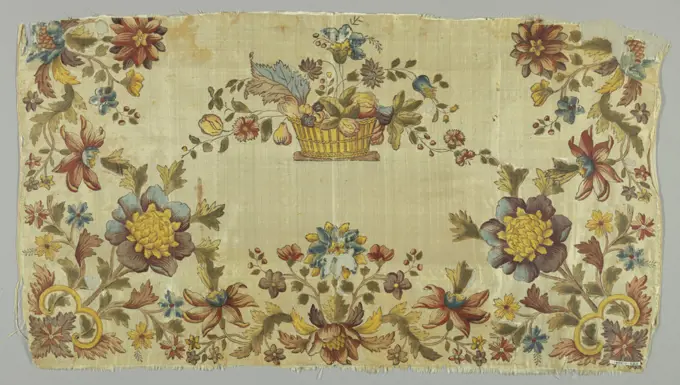
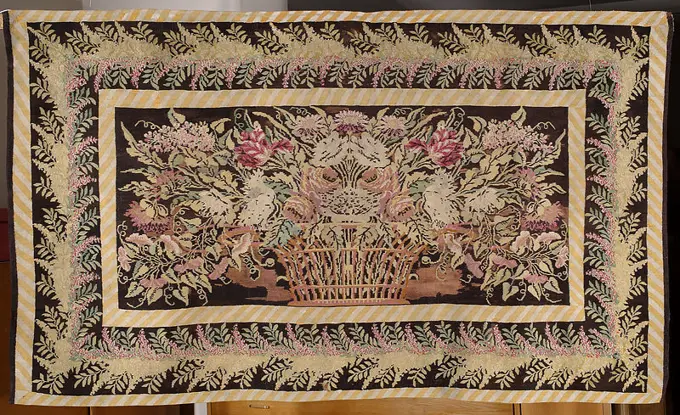
Panel, Medium: silk Technique: printed and painted on twill weave, Polychrome floral border on three sides and a basket of flowers in the center., France, 18th century, printed, dyed & painted textiles, Panel
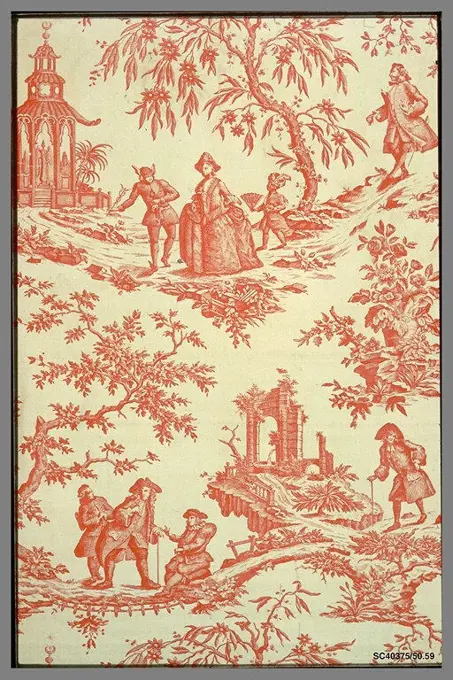
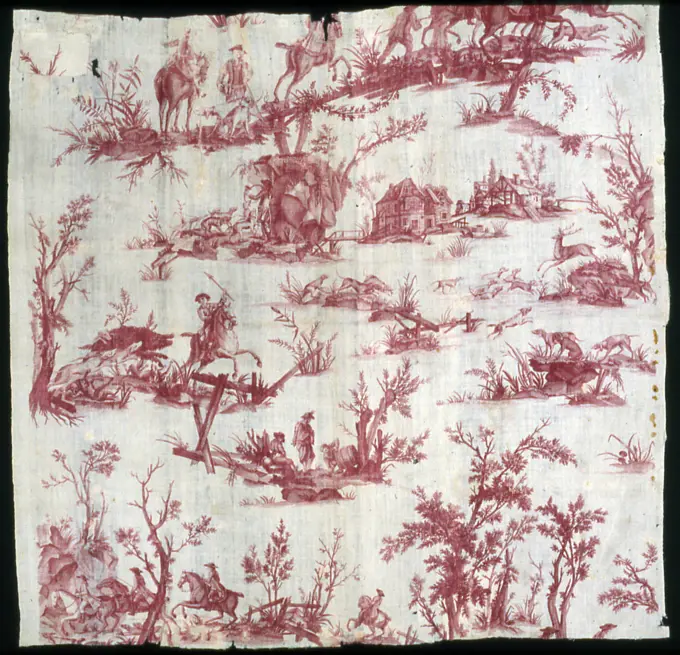
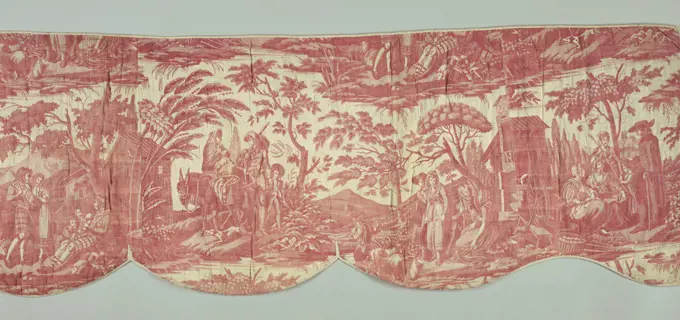
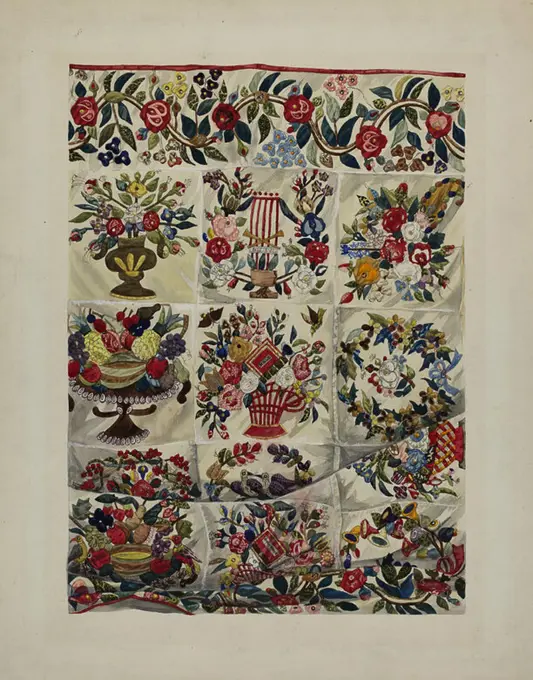
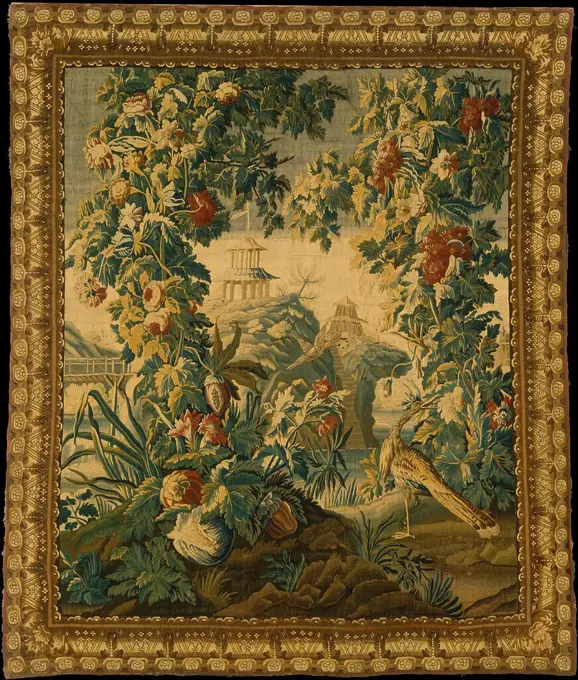
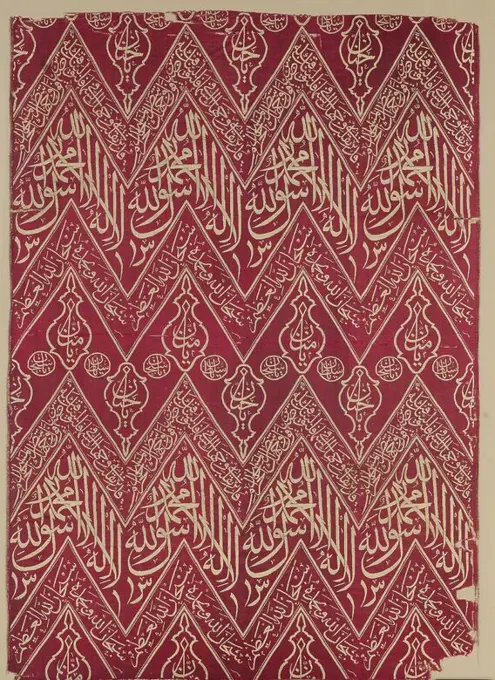
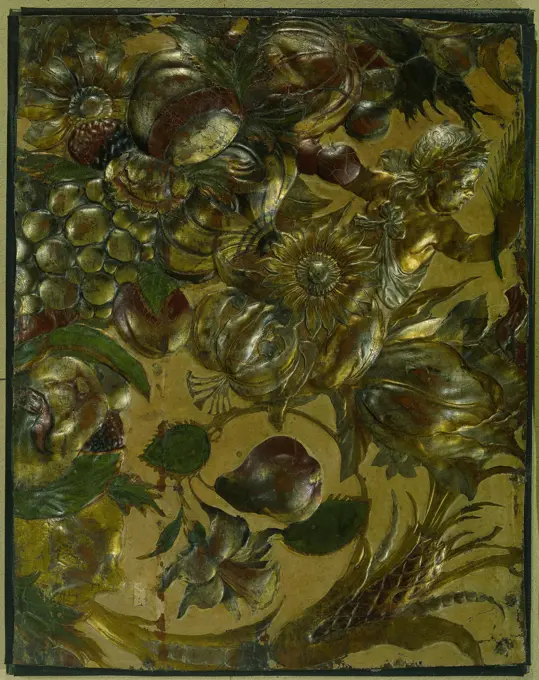
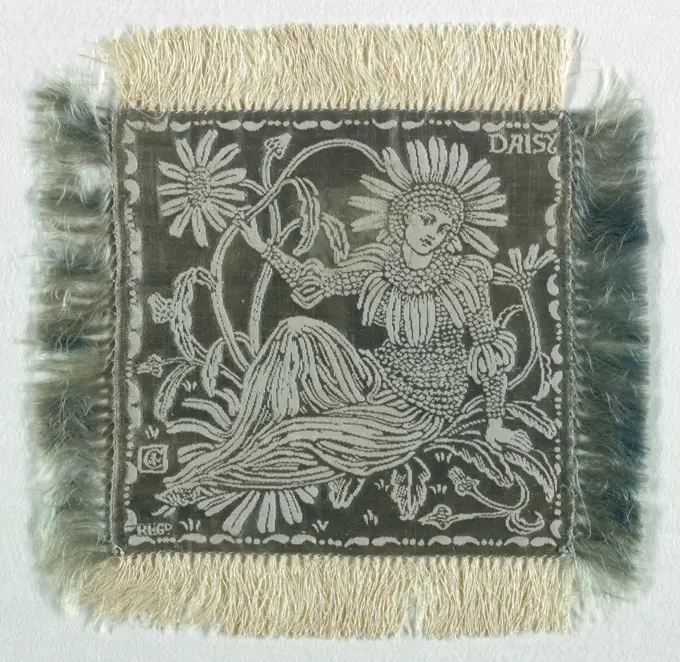
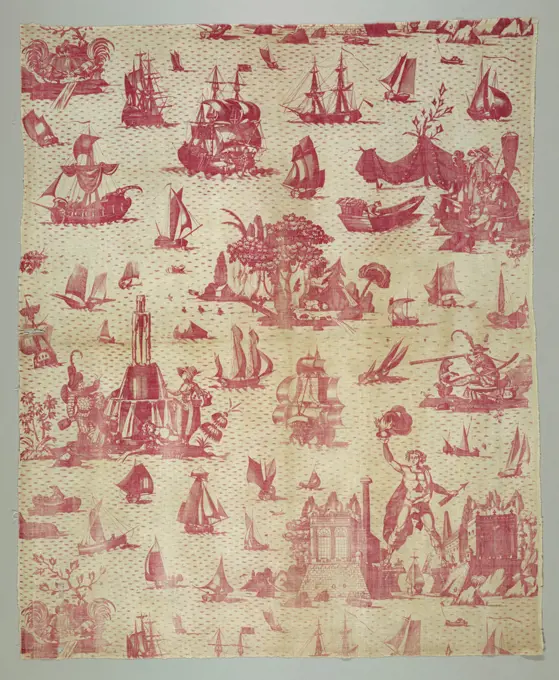
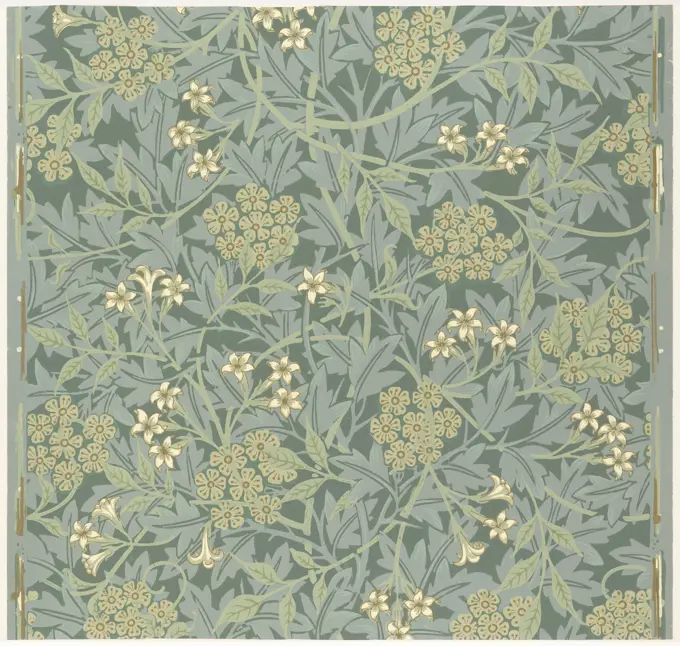
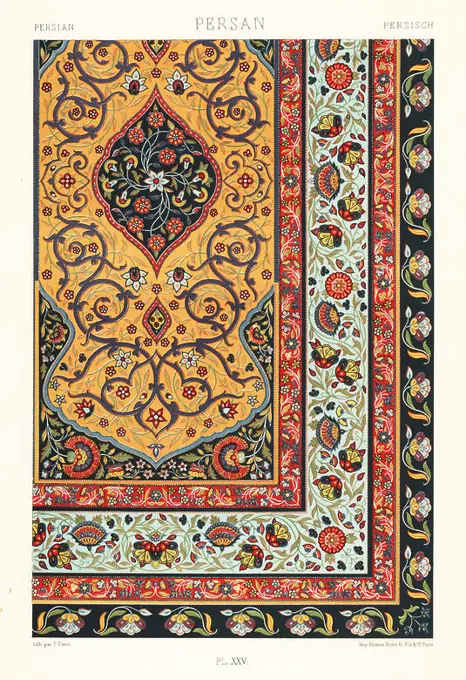
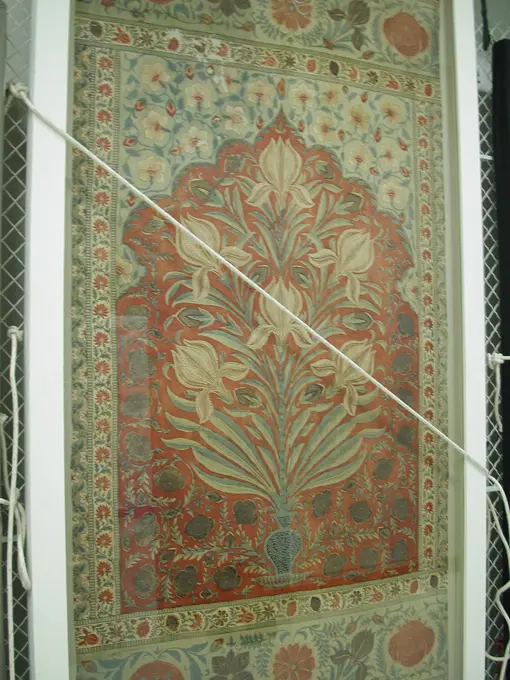
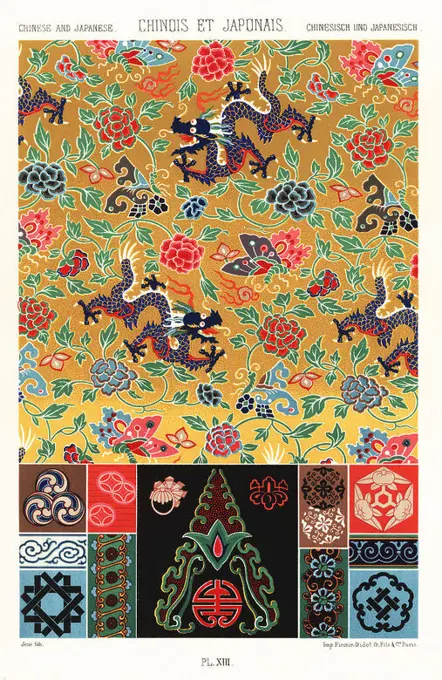
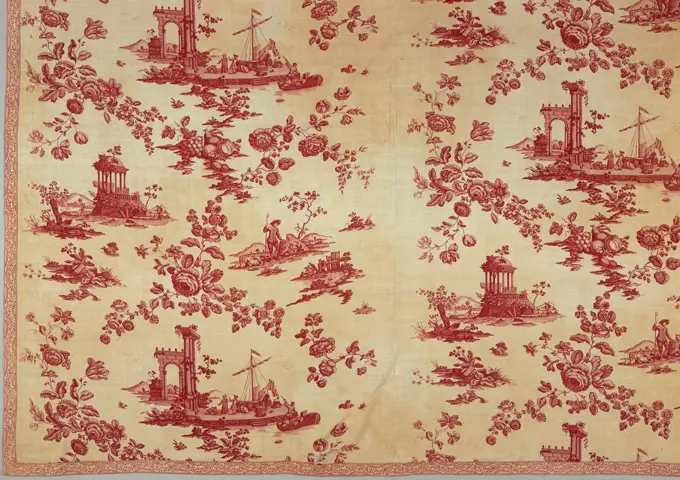
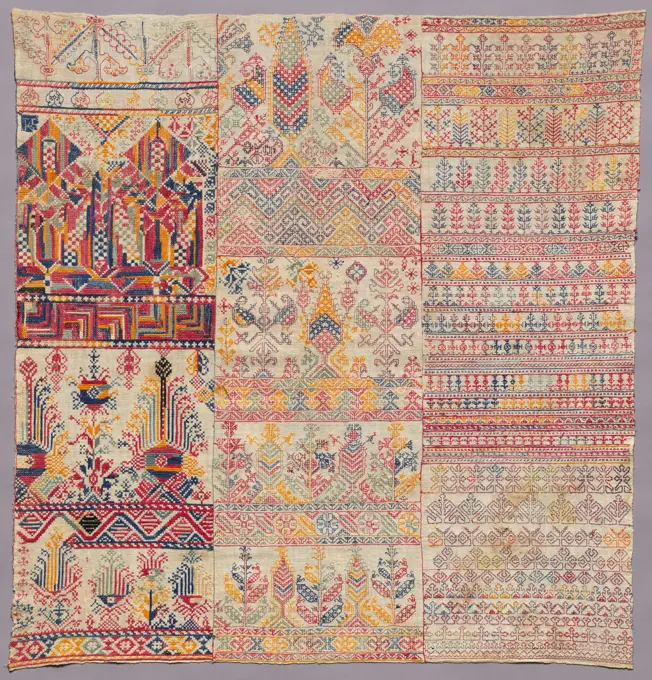
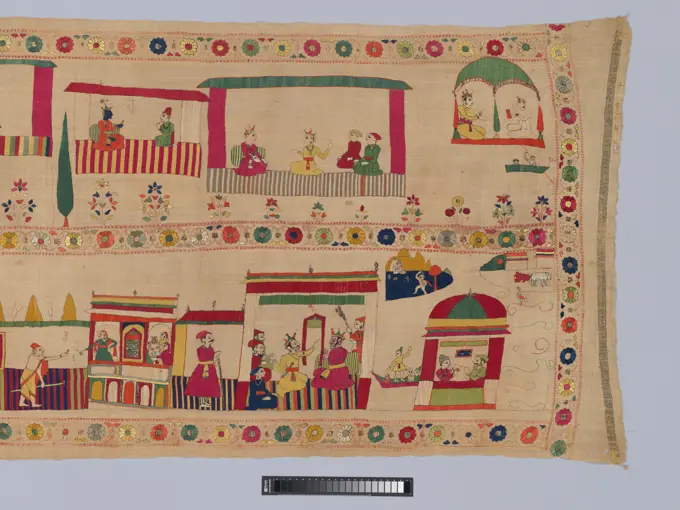
Fragment of Woodblock Print on Cotton, c. 1770. France, 18th century. Woodblock print on cotton; overall: 49 x 59.7 cm (19 5/16 x 23 1/2 in.).Textile (France); cotton; Warp x Weft: 154 x 85 cm (60 5/8 x 33 7/16 in.) Repeat H: 102.5 cm (40 3/8 in.); Bequest of Elinor Merrell; 1995-50-44Sample fragment with four different stenciled motifs, 19th century, Unknown Ryukyuan, 39 1/8 × 13 7/8 in. (99.38 × 35.24 cm) (overall), Cloth: cotton; bingata (stencil resist with applied pigments), Japan, 19th centuryScenes from "Lethe" ca. 1775 British. Scenes from "Lethe" 227492La Chasse au cerf et au sanglier (Furnishing Fabric) Made 1780-1782 France. Cotton, plain weave; copperplate printed . Christophe Phillipe Oberkampf (Manufacturer)The Seasons and the Ages of Man (Furnishing Fabric) Made 1820-1840 Rouen. Cotton, plain weave; engraved roller printed . Frédéric Etienne Joseph Feldtrappe (Designer)Les bergers Ecossais (The Scottish Shepherds), Medium: cotton front, linen back, with cotton wadding between Technique: printed by engraved copper plate on plain weave, Valance (cut edge at left) made of pieces printed fabric and quilted., Some pieces also mounted on the back., Front faded, back less so., Scenes of Scottish peasant life., Nantes, France, ca. 1815, printed, dyed & painted textiles, Valance, ValanceApplique Quilt (Friendship Quilt). Dated: c. 1937. Dimensions: overall: 35.6 x 28 cm (14 x 11 in.) Original IAD Object: Approximately 114"x96". Medium: watercolor, colored pencil, pen and ink, and graphite on paper. Museum: National Gallery of Art, Washington DC. Author: Verna Tallman.Fantastic Landscape. Culture: French, Aubusson. Dimensions: H. 105 1/2 x W. 91 inches268 x 231.1 cm (as measured by Textile Conservation in 1984). Maker: Probably woven by Jacques Dorliac (French, active 1715-42). Manufactory: Woven at Aubusson (Manufacture Royale, est. 1665: Manufacture, ca. 1812-present day). Date: ca. 1725. Museum: Metropolitan Museum of Art, New York, USA.Fragmentary Cenotaph Cover with Qur'anic Calligraphy. Dimensions: Textile: H. 38 1/4 in. (97.2 cm)W. 26 3/4 in. (67.9 cm)Mount: H. 42 1/16 in. (106.8 cm)W. 30 5/8 in. (77.8 cm)D. 1 3/8 in. (3.5 cm). Date: 17th-18th century.This rectangular silk textile shows a design of chevron bands containing calligraphic inscriptions comprising verses of the Qur'an, invocations to God, and the shahada, or Muslim profession of faith ("There is no God but God, and Muhammad is his Messenger"). This type of textile covered important Ottoman tombs, and recalls the kiswa fabrics woven in similar designs, but of much larger scale, annually sent by the Ottoman sultans to adorn the Ka'ba in Mecca. Museum: Metropolitan Museum of Art, New York, USA.Fragment gold leather with a relief pressed ornament with tendrils, flowers, fruits and a putto, anonymous, c. 1650 - c. 1675 An excerpt in relief pressed gold leather. Ranks, flowers, fruits and a putto in gold and colors have been applied to a cream. The pattern is identical to BK-BR-381 and BK-18243. This is a detail from a sheet; The entire pattern consists of volute -shaped tendrils, flowers, fruits, butterflies, two putti and a parrot. Northern NetherlandsNetherlands leather. An excerpt in relief pressed gold leather. Ranks, flowers, fruits and a putto in gold and colors have been applied to a cream. The pattern is identical to BK-BR-381 and BK-18243. This is a detail from a sheet; The entire pattern consists of volute -shaped tendrils, flowers, fruits, butterflies, two putti and a parrot. Northern NetherlandsNetherlands leather.Fragment early 19th century French. Fragment 216285Textile (France); cottonTextile, Medium: cotton Technique: printed by two plates printed sequentially on plain weave, Large rectangular panel printed in red on white showing pastoral scenes and birds among ruins., Northern France, late 18th century, printed, dyed & painted textiles, TextileSampler (Germany); silk, metal-wrapped silk, and flat metal embroidery with paint on silk foundationFlora's Retinue: Daisy, Walter Crane, (English, 1845-1915), John Wilson & Sons, (England, 1778-1816), Medium: linen warp, silk weft Technique: 4 & 1 satin damask, Small square doily, fringed on all sides, with an ivory linen warp and a gray-green silk weft. A figure of a woman dressed as a daisy with daisies surrounding her, and the word DAISY in the upper right corner, all appearing in ivory on a gray-green ground. A set of six, the doilies would have been used on the table as part of a dessert service., Great Britain, ca. 1891, woven textiles, Doily, DoilySampler (Germany); silk embroidery on linen foundationCock Pheasant, Tapestry, 1916. Manufacturer: Morris & Co. Designer: John Henry Dearle. Workshop of: William MorrisTejido estampado, siglo XVIII. Museu de l'Estampació de Premià de Mar.Textile, Medium: cotton Technique: printed by engraved copper plate on plain weave, A repeat of various scattered scenes in red including, - a colossus holding a lighted torch stradling a drawbridge on both sides of which are large buildings; Punchinell, Baccus, a demure well dressed woman, and reclining man enjoying an over-flowing fountain of wine; A peaceful landscape with a large tree and grazing sheep; fishermen smoking pipes surrounded by hanging fish nets before a small boat containing a basket of fish and a cat; harlequin preening through a telescope attended by his dog; a mound with chickens under a tree. The scenes surrounded by a variety of large and small boats - water indicated by short horizontal dashes., Nantes, France, ca. 1785, printed, dyed & painted textiles, TextileJasmine Designer William Morris British Manufacturer Morris & Company Printer Jeffrey & Co. British 1872Sampler, Ann Cathrina Seiler, Medium: silk embroidery on linen foundation Technique: embroidered on plain weave, Flowers, trees, animals, birds, a ship and a scene showing Adam and Eve. Arms of the city of Hamburg., Hamburg, Germany, 1723, embroidery & stitching, SamplerGobelin chair cover; Andersen, Robin Christian (1890-1969), Wiener Gobelin-Manufaktur (Vienna; Gobelin Manufaktura; 1921-1987); 1. PO. 20th century (1901-00-00-1950-00-00);Modernism (style), decorative fabrics, verdiorsTile Bachmi Ski, Alexander (1820 1882)Four designs for carpets, Anonymous, Deventer carpet factory, c. 1854 - c. 1864 The drawings are numbered: N 2, N 3, N 380 C and N 380 D. Manufacturer: Deventeramsterdam paper. gouache (paint) brush The drawings are numbered: N 2, N 3, N 380 C and N 380 D. Manufacturer: Deventeramsterdam paper. gouache (paint) brushPersian art: embroidered carpet. Carpet with arabesques and flowers showing the influence of Indian art. Persan. Hand-finished chromolithograph by F. Durin from Albert-Charles-Auguste Racinets LOrnement Polychrome, (Polychromatic Ornament), Firmin-Didot, Paris, 1869-73.Fragment With Chef (France); Company: Gayet et Montgirod; Manufactured by Manufacture Anglaise du Chateau de Sevres; plain weave linen warp, cotton weft; 1994-80-1Panel from a Tent Lining 17th century This panel was probably one of a series of identical panels used to line the tent of the temporary camps set up along the caravan routes of the Mughal emperors. Writing about Aurangzebs camp in 1665, the French physician François Bernier described linings with representations of large vases of flowers, much like this example.. Panel from a Tent Lining 448241Chinese and Japanese art: silk designs. Chinese silk book binding with four-clawed dragons on a yellow ground for a Prince. Chinese (black ground) and Japanese patterns (sides). Hand-finished chromolithograph by Jetot from Albert-Charles-Auguste Racinets LOrnement Polychrome, (Polychromatic Ornament), Firmin-Didot, Paris, 1869-73.Tapestry. unknown, authorTextile, Le char de l'aurore (The Chariot of Dawn); Made by J.P.Meiller et Cie.; cotton; Warp x Weft: 210 x 135 cm (6 ft. 10 11/16 in. x 53 1/8 in.); Bequest of Elinor Merrell; 1995-50-95Panel (England); Made by John Munns; cottonEmbroidery sampler, 1800s. Morocco, Salé. Plain weave: cotton; embroidery, reversible cross-stitch: silk; average: 81.9 x 79.4 cm (32 1/4 x 31 1/4 in.).Sampler, Medium: silk embroidery on linen foundation Technique: embroidered in double-sided cross, satin, double running, and stem stitches on plain weave foundation, Adam and Eve at upper left and other motifs from Sibmacher and others., Germany, ca. 1780, embroidery & stitching, SamplerSidewall, Machine-printed, Incomplete unit of a forest scene. Printed in shades of green and red., USA, 1900-10, Wallcoverings, SidewallFestival Banner Showing Krishna Rescuing and Marrying Rukmini ca. 1800 India, Punjab Hills, kingdom of Chamba This banner was likely used in an annual festival commemorating Krishnas marriage to his first wife, Rukmini, that is still celebrated today in parts of the Himalayan foothills. As the work was shown only periodically, the colors remain vivid. The brilliant hues were produced from vegetable dyes: red derived from cochineal and lac insects, blue and green from indigo plants, and orange from safflower. In contrast, the silk threads, which were bleached white or etched with mordant to enable black coloring to bond to the fibers, have disintegrated, making it possible to see the underdrawing. Painted in henna with details created in carbon black, the preparatory sketch served as the guide for the final embroidery. This technique is similar to that used to make preliminary sketches for paintings, which are also produced in red and black.. Festival Banner Showing Krishna Rescuing anTextile (USA); cotton warp and linen weft; Warp x Weft (both selvedges): 163.5 x 82 cm (5 ft. 4 3/8 in. x 32 5/16 in.)