Geometric Textile Fragments

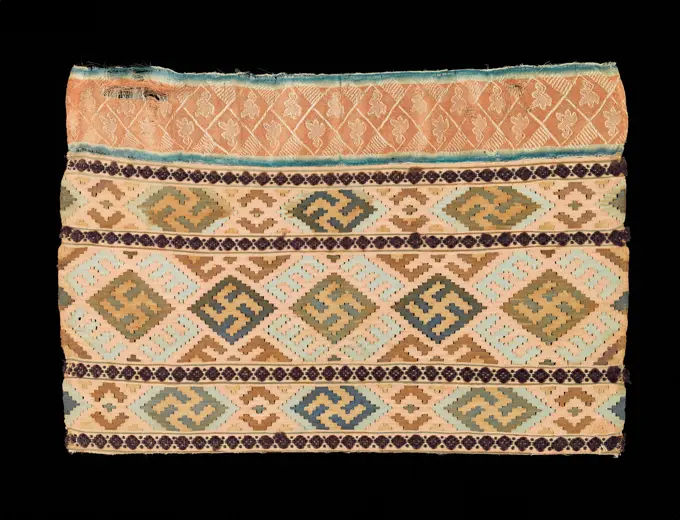
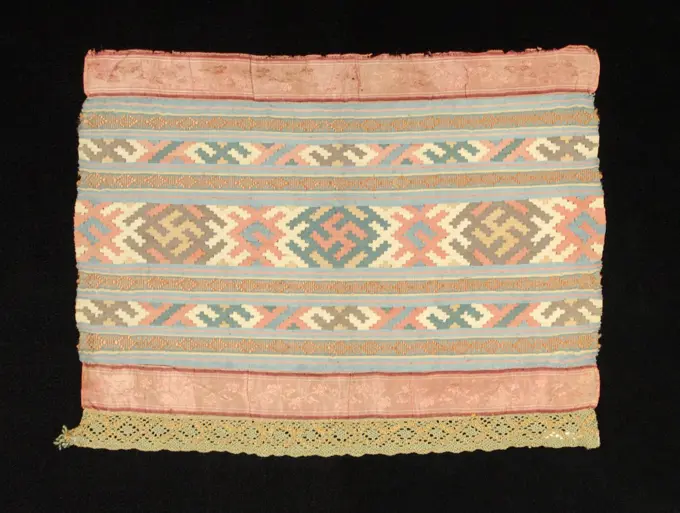
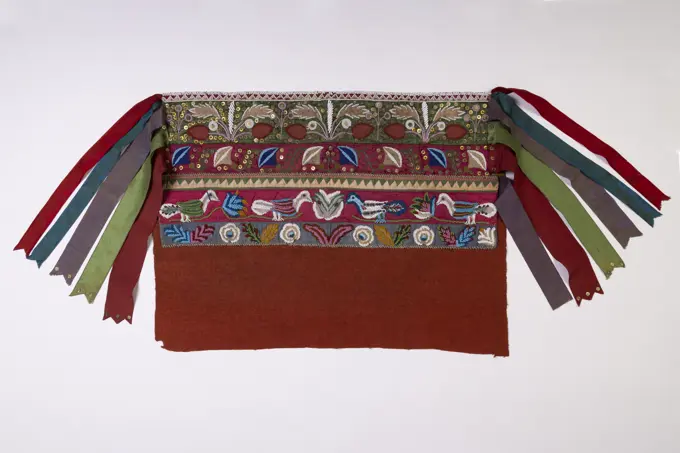
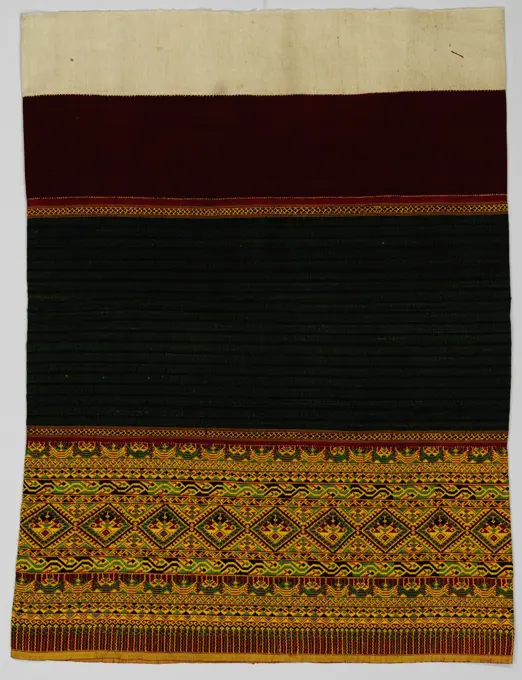
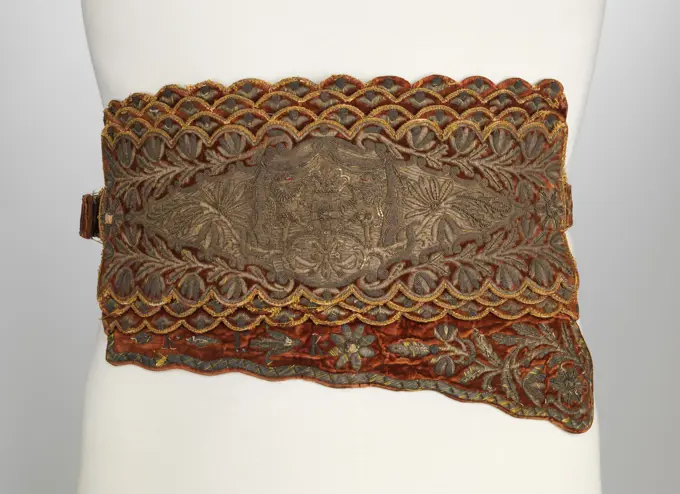
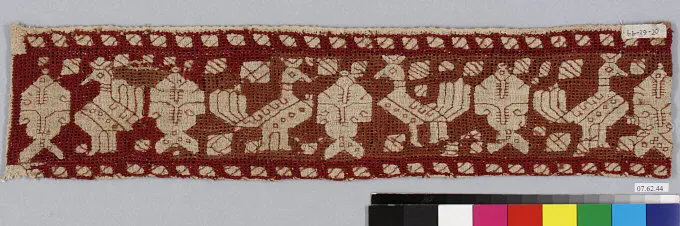
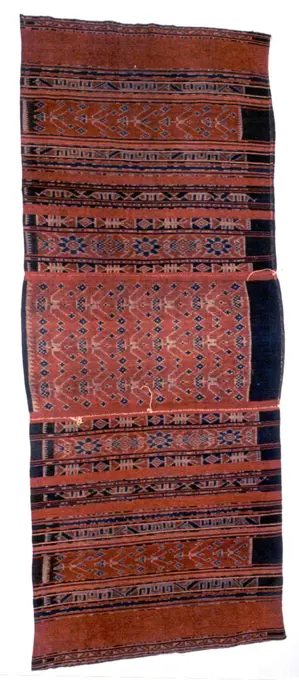
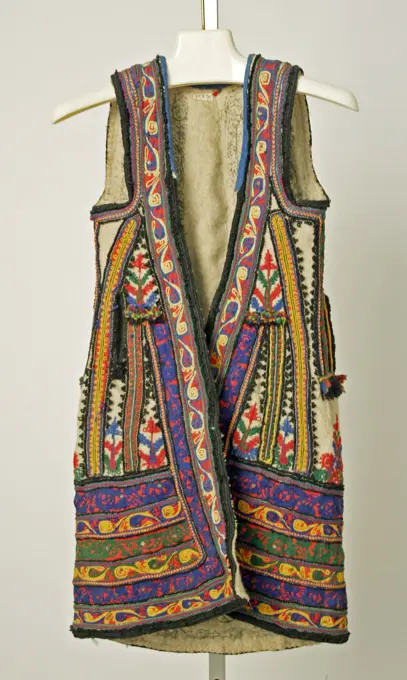
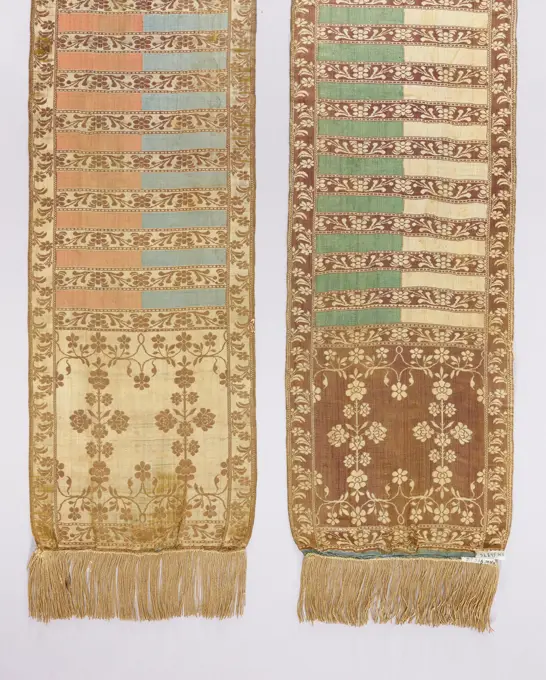
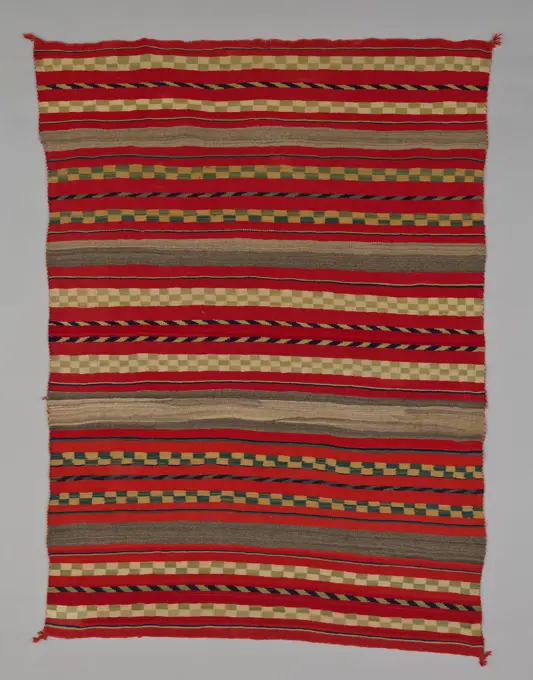
A collection of colorful textile fragments featuring intricate geometric designs and patterns, showcasing various weaving techniques and historical styles.

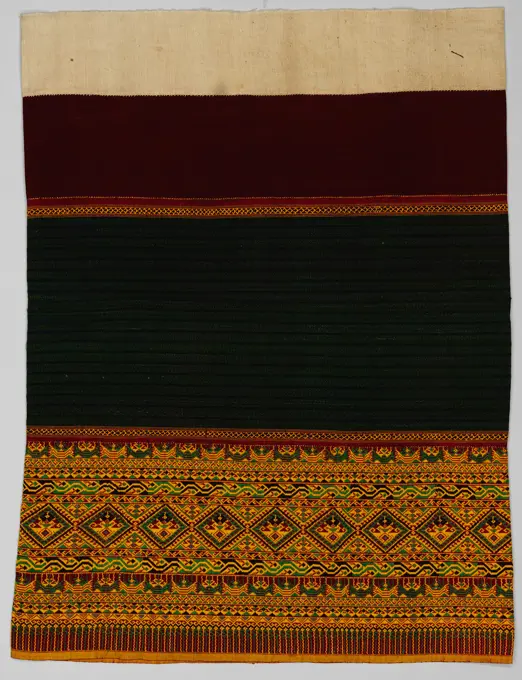
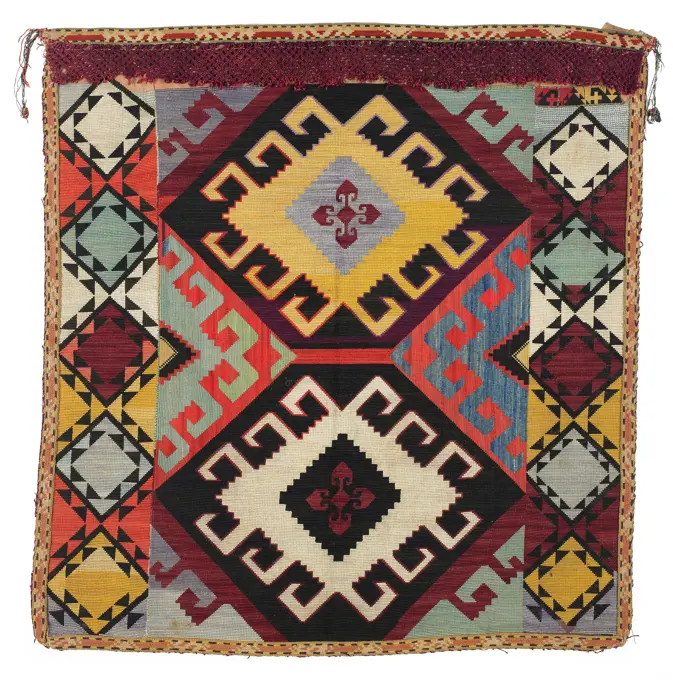
Luntaya hanging (Ichat), mid 20th century, 40 x 39 1/2 in. (101.6 x 100.33 cm), Silk, Myanmar (Burma), 20th century
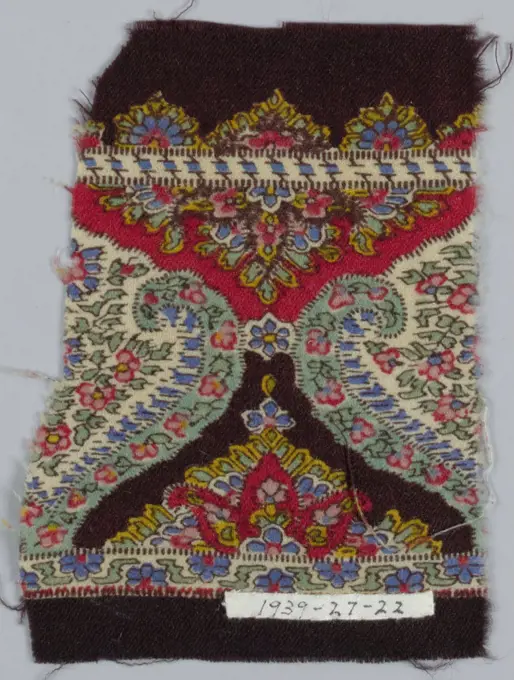
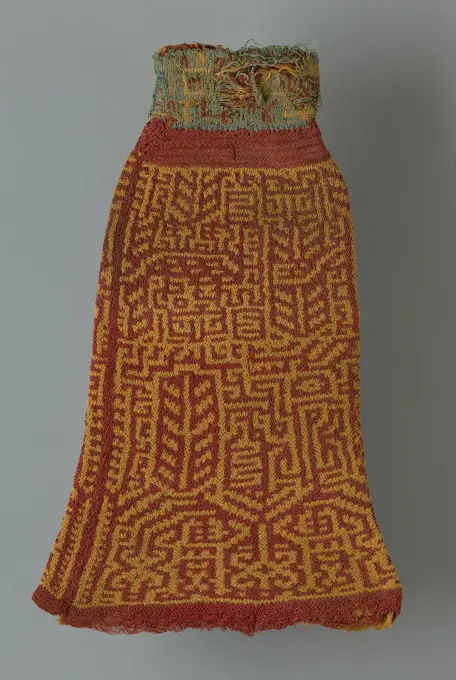
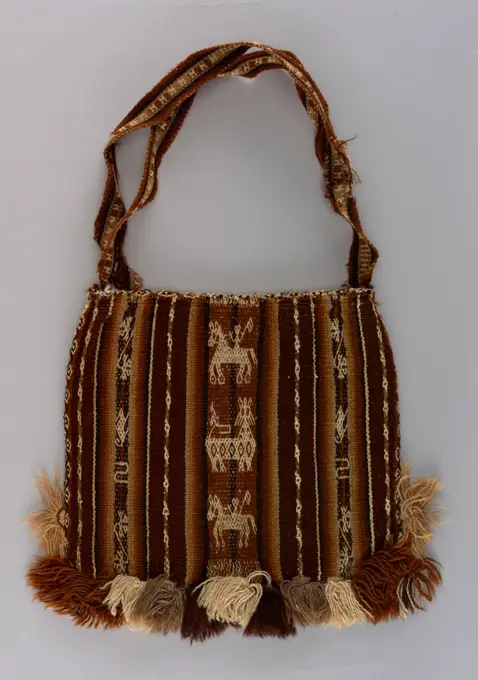
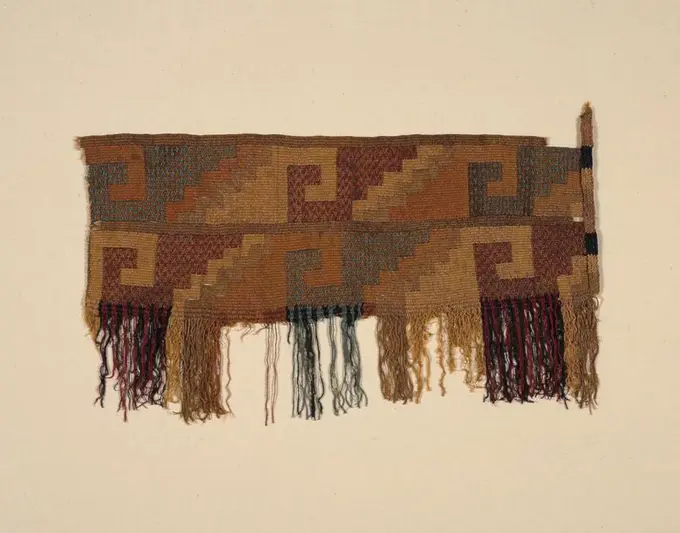
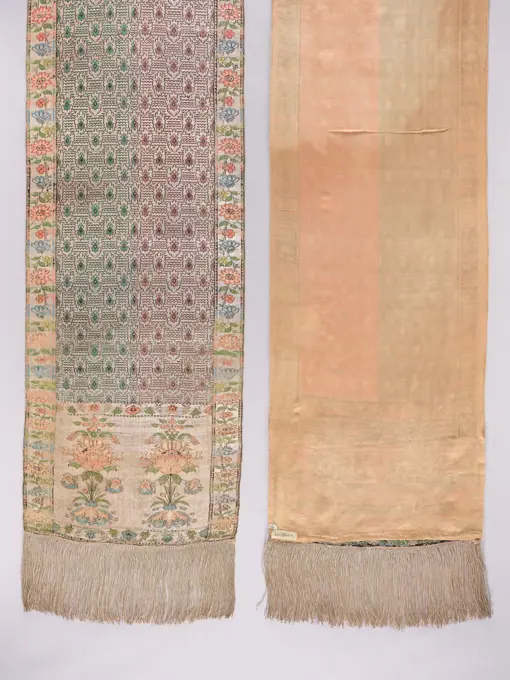
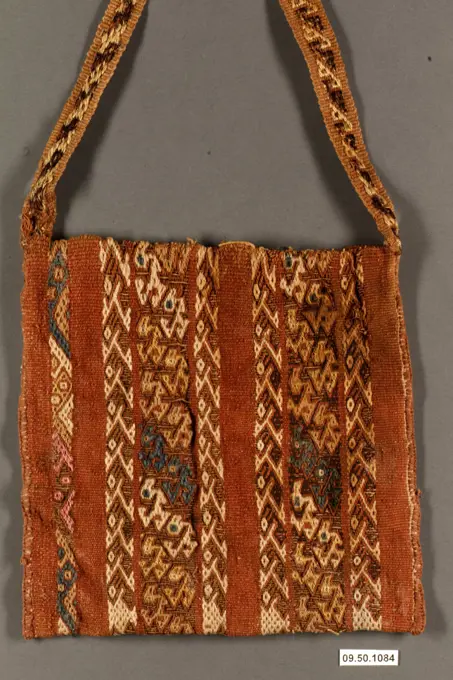
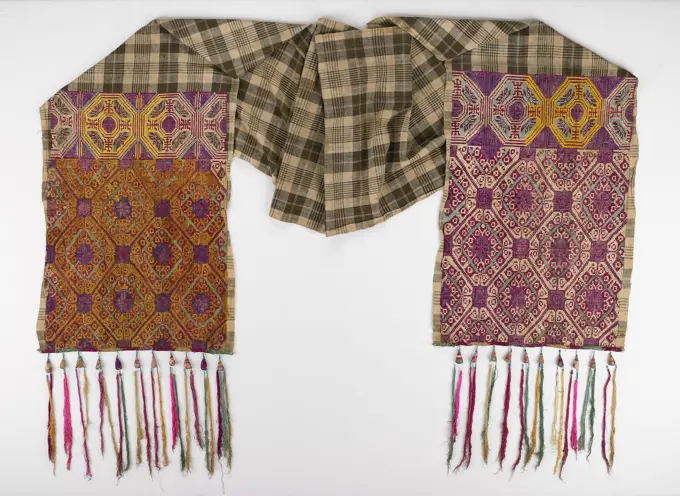
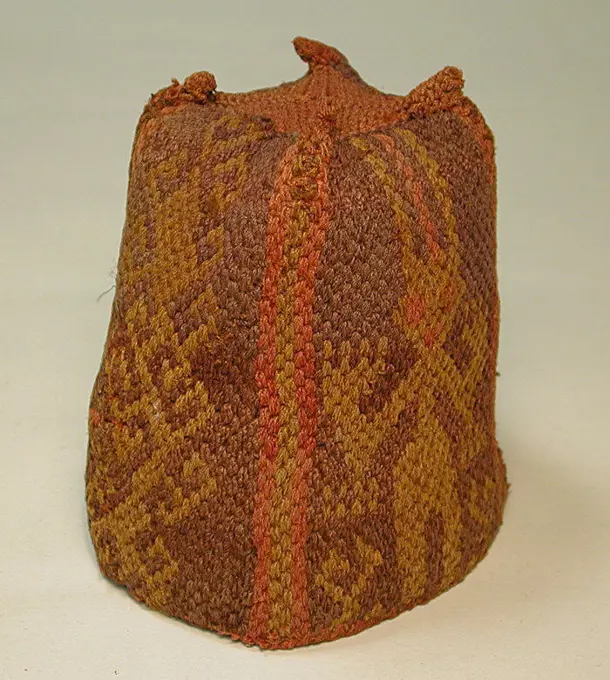
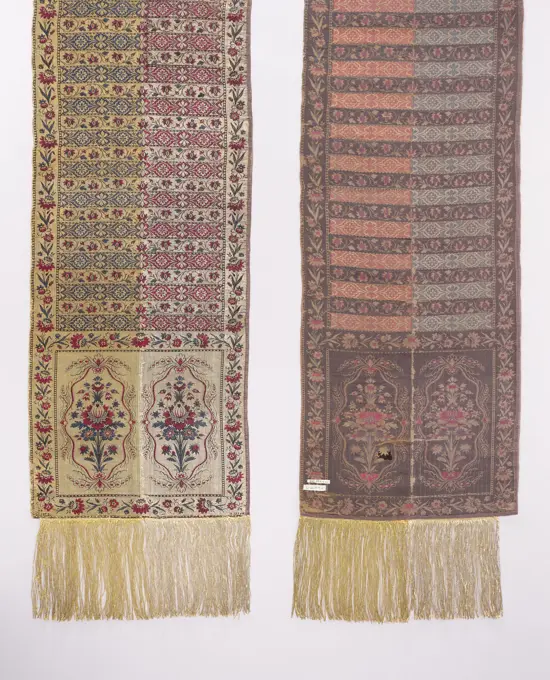
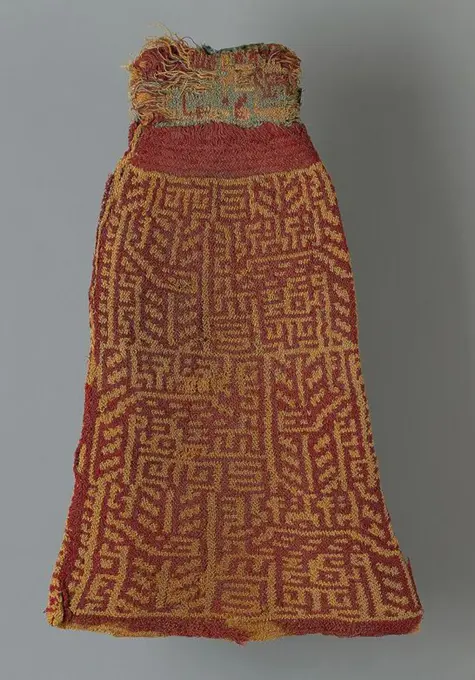
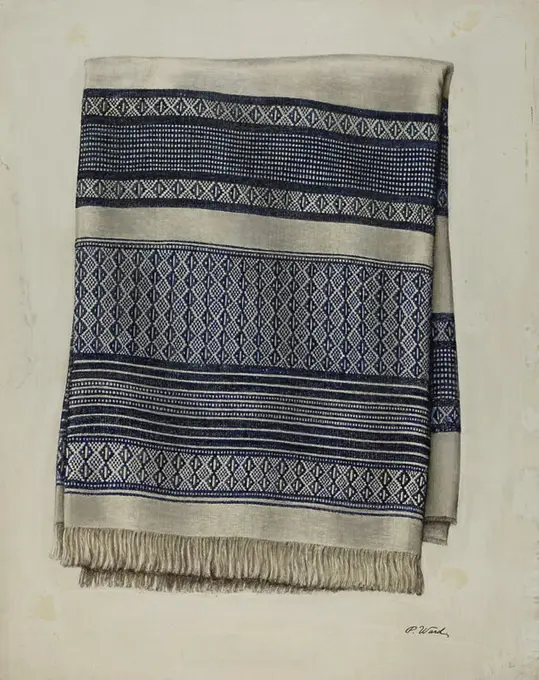
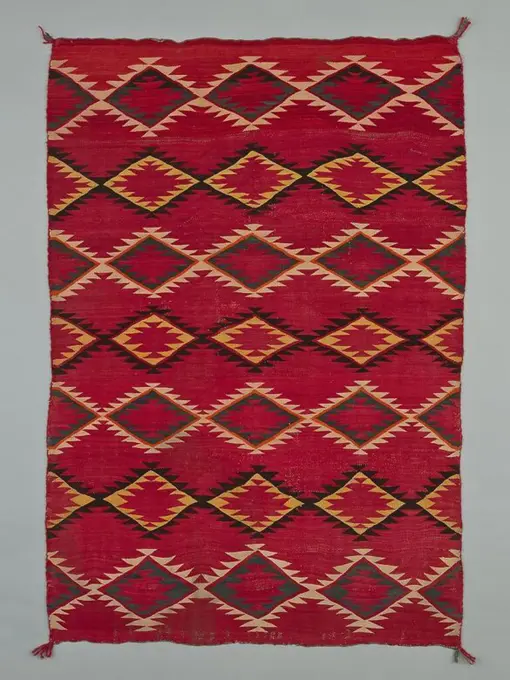
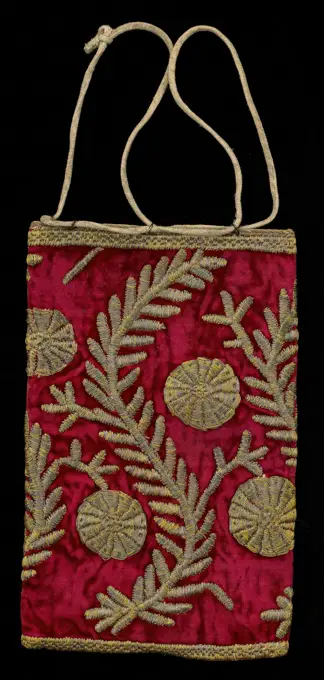
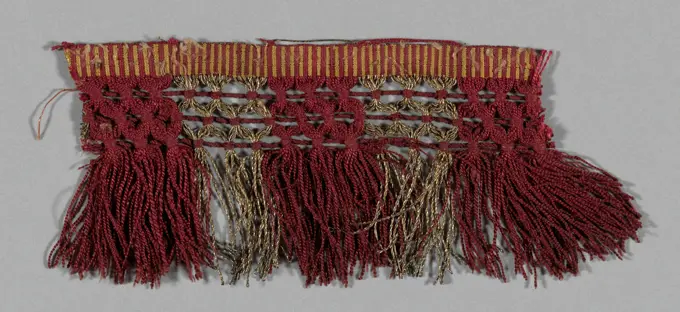
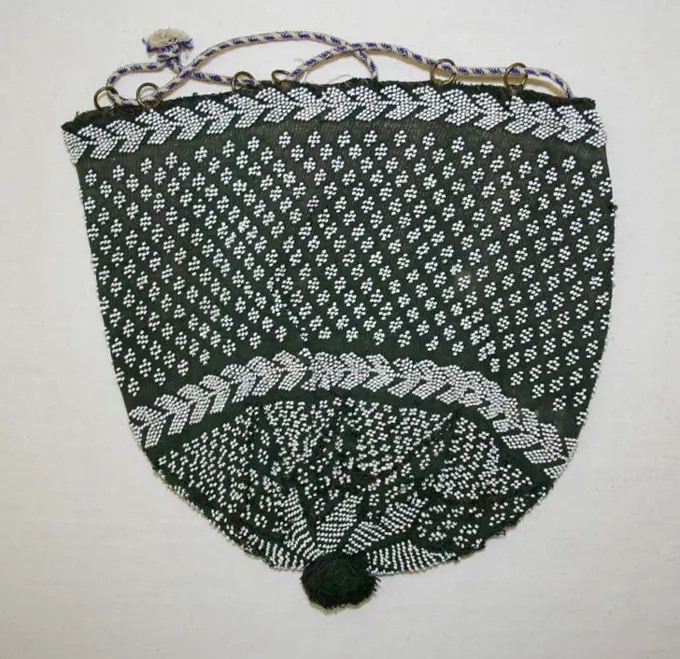
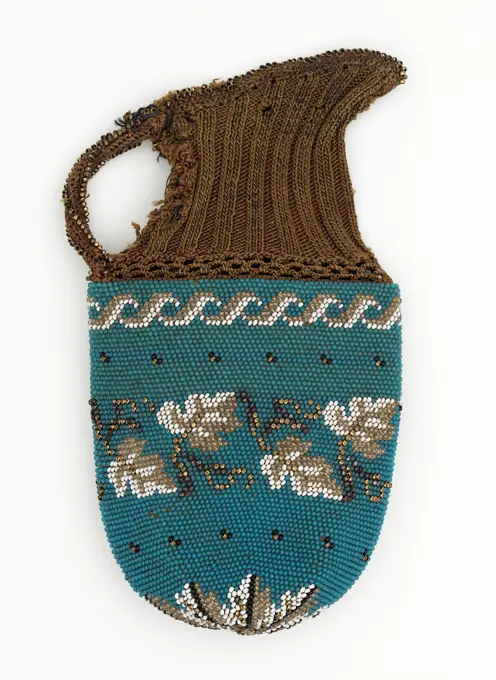
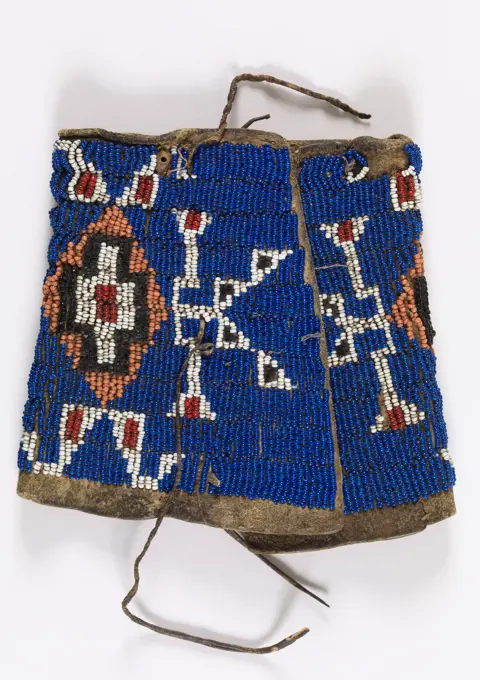
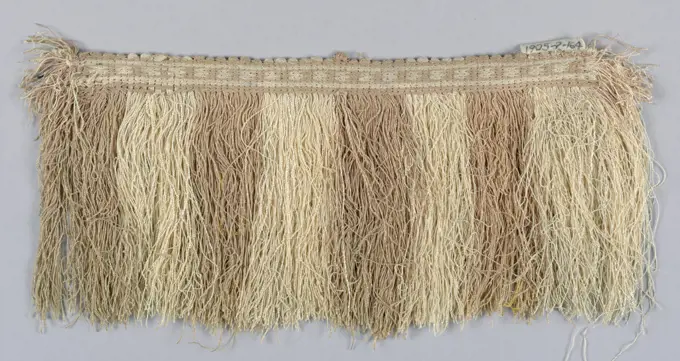
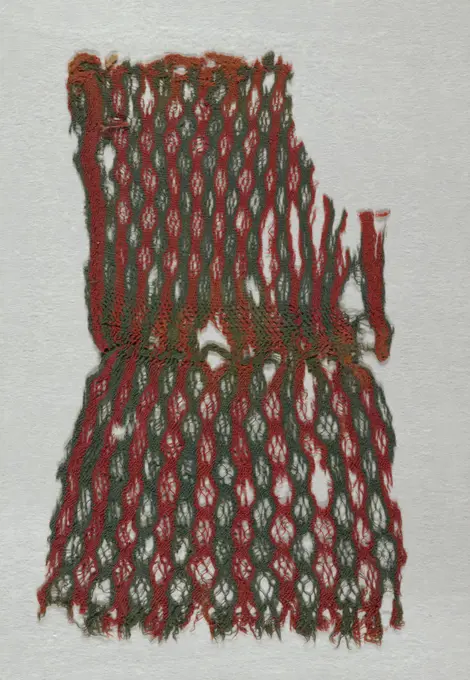
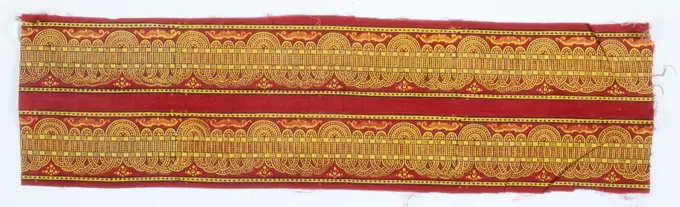
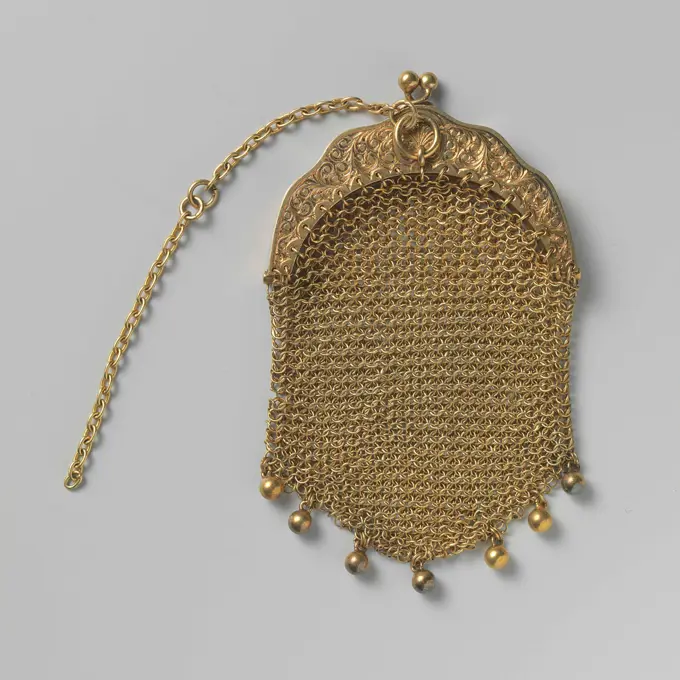
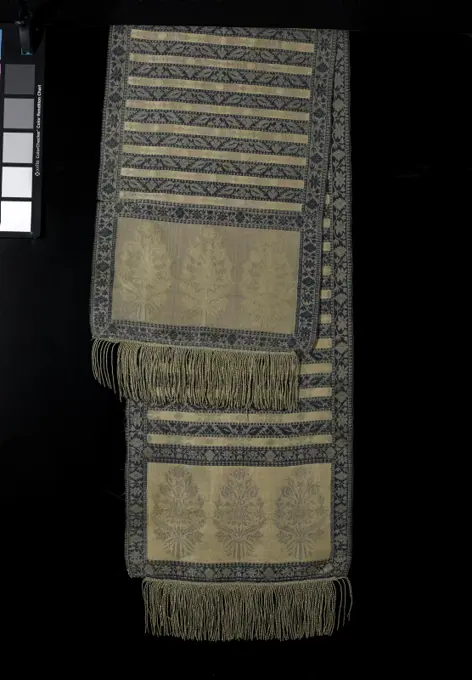
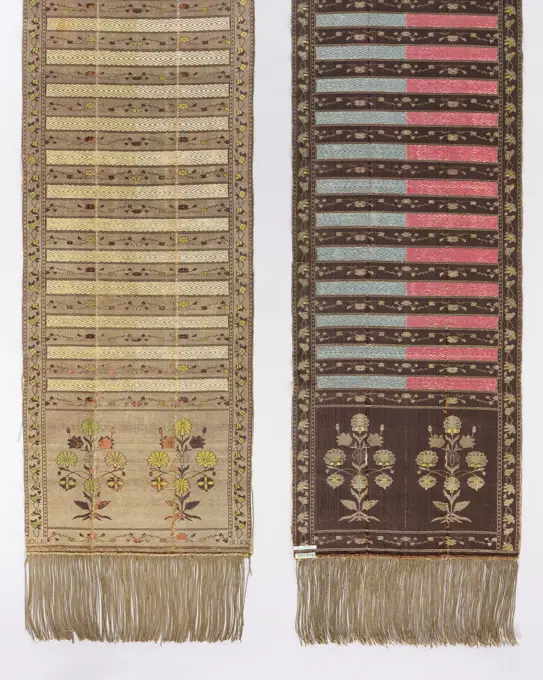
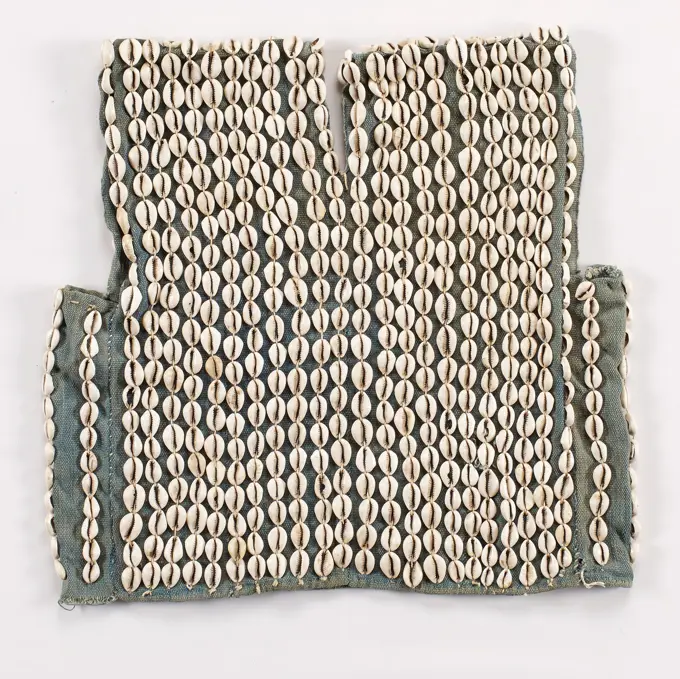
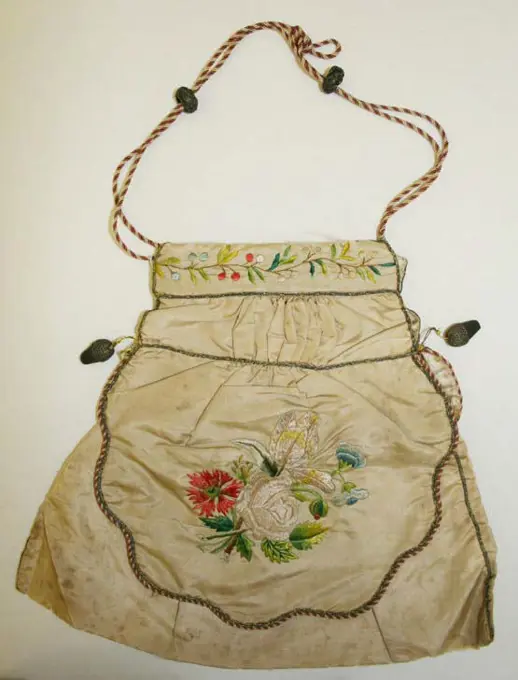
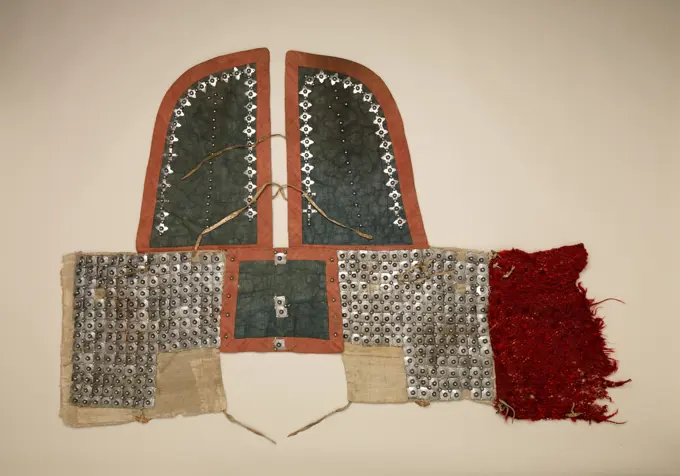
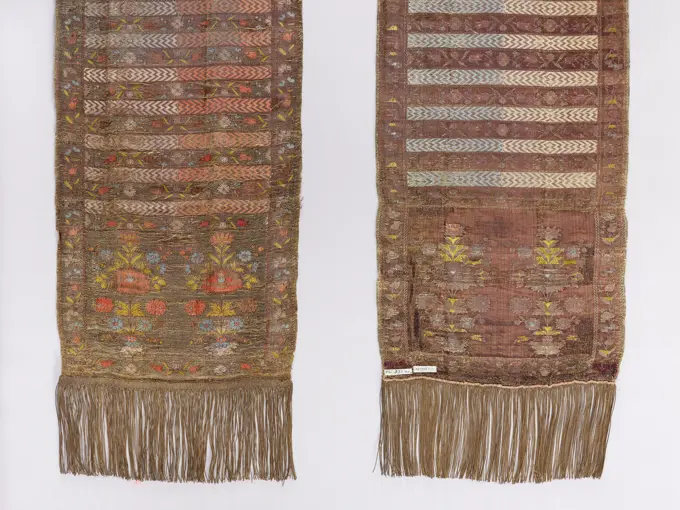
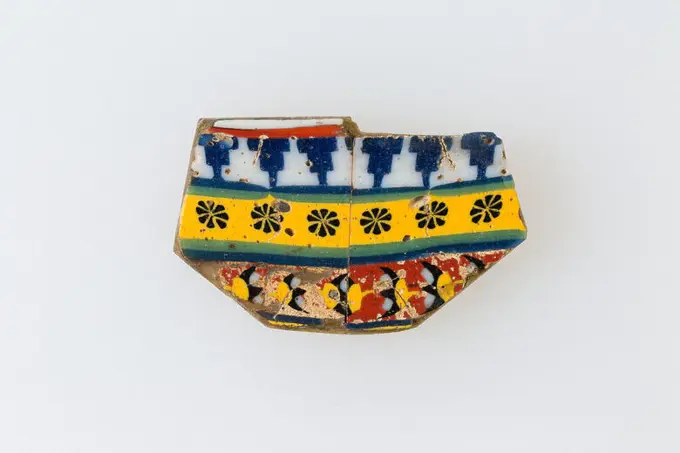
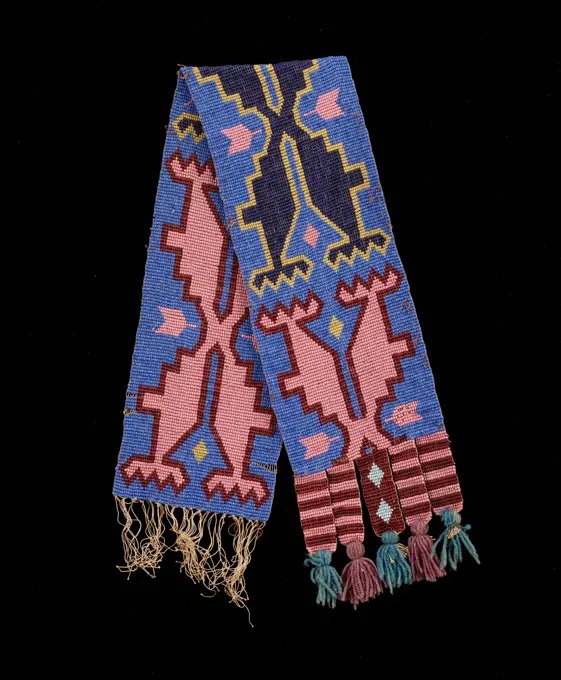
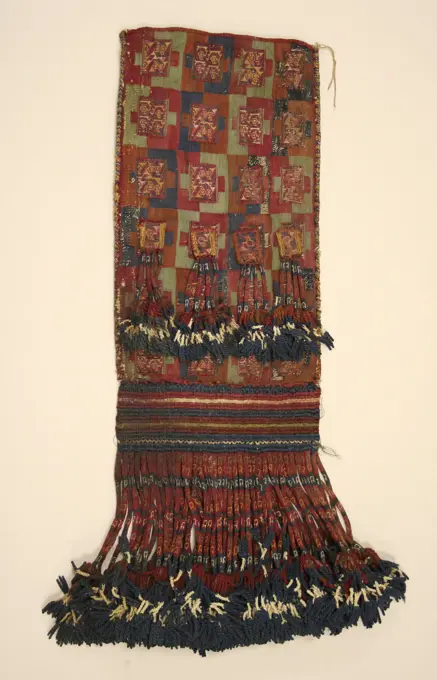
Fringed Bag 12th-16th century Chuquibamba. Fringed Bag 318771Carpet fragment, Medium: wool Technique: double cloth, Geometric design with squares in roundels and stars in red and shades of brown on a cream ground., USA, mid-19th century, woven textiles, Carpet fragmentTowel border 1840-70 Russian This object is from the collection of Natalia de Shabelsky (1841-1905), a Russian noblewoman compelled to preserve what she perceived as the vanishing folk art traditions of her native country. Traveling extensively throughout Great Russia, she collected many fine examples of textile art of the wealthy peasant class. From the 1870s until moving to France in 1902, Shabelsky amassed a large collection of intricately embroidered hand-woven household textiles and opulent festival garments with rich decoration and elaborate motifs. The Brooklyn Museum holdings include many fine examples including the majority of the garments. Portions of Shabelsky's collection are also housed at the Museum of Fine Arts, Boston, the Cleveland Art Museum, and the Russian Museum of Ethnography in St. Petersburg.Kilim or split tapestry is a hand weaving technique most usually used to produce heavyweight rugs. Kilim weaves produce no pile and have a characteristic geometric pattern..Fragment, Medium: wool Technique: printed, Border fragment showing cenventionalized designs in red, green, blue, yellow, on brown ground., USA, 19th century, printed, dyed & painted textiles, FragmentTextile 1840-70 Russian. Textile 173423Cradleboard wrapper -Baby carrier panel, ChinaLuntaya hanging (Ichat), mid 20th century, 40 x 39 1/2 in. (101.6 x 100.33 cm), Silk, Myanmar (Burma), 20th centuryApron, early 20th century, 10 1/4 x 8 1/2 in. (26.04 x 21.59 cm), Cotton, silk; needlework, Thailand, 20th centuryDoek, Anonymous, 1900 - 1949 Cloth with geometric motifs. Thailand cotton (textile) Cloth with geometric motifs. Thailand cotton (textile)Trimming Fragment (France); silkBelt early 18th century European Although the culture associated with this belt has yet to be identified, the details suggest it is European, possibly Russian. The embroidery work in the central motif is quite fine and whimsical, especially in the depiction of lions' tails and legs. The heraldic device is specific to the origin of the object.. Belt 157429Fringe early 19th century French. Fringe 224929Woman's Frontal Apron, 15 x 53 in. (38.1 x 134.62 cm) (including ties), ChinaBorder 17th century Italian. Border 213082Woman's Skirt Lamaholot people late 19th-early 20th centuryHide Shirt, c. 1890. America, Native North American, Central Plains, Lakota Sioux, 19th century. Hide, pigment, glass beads, human hair; overall: 97.8 x 150 cm (38 1/2 x 59 1/16 in.).Half of Double Saddle Bag (Khorjin) ca. 1870-1900. Half of Double Saddle Bag (Khorjin). ca. 1870-1900. Wool and cotton; sumak brocaded, tapestry weave. From probably Northwestern Iran. Textiles-Woven-BrocadeTassel Made 500 CE-900 CE Peru. Woven tassels were worn in pairs, attached to a long cord that wrapped around a personís head, with one tassel falling to each side. Several dozen of these large and elaborately patterned tassels are known, all with the same shape and structure. The tassels were made via a complex technique that produced multiple interconnected layers and mirror-image symmetry. The complexity of Nazca textiles like these far exceeds functional or representational requirements, suggesting that there is symbolic meaning embedded in the structure itself.. Wool (camelid), oblique interlinked and interlaced warp (sprang); crossknit looping over folded unworked warps; sides joined with wool (camelid) in overcast stitch . NazcaBag (Bolivia); woolShawl, c. 1950, 27 x 47 in. (68.58 x 119.38 cm), Silk, cotton (), polyester; needlework, Egypt, 20th centuryStrip bobbin with stylized red trees, anonymous, c. 1875 - c. 1899  Strip -colored bobbin: straw side. The colors used are red, natural and blue. The repeating pattern consists of a stylized red tree, which hangs down from the top of the strip with a straight trunk. The successive trees touch each other at the widest point of the fan -shaped leaf crowns. The leaf crowns form the scrap edge along the bottom. A wide edge along the top of the strip, as wide as the tree trunks are long, consists of a natural -colored base that runs with red and blue horizontal lines. Between the leaf crowns in the trees are connected to each other by a natural wastage ground: a tie. The top of the strip is straight finished. Volvic linen (material) Bobbi lace / lace clothBaby carrier, ChinaBag 15th-16th century Inca. Bag. Inca. 15th-16th century. Camelid hair, cotton. Peru. Textiles-WovenCombFragment. Possibly central or south coast, Peru. Date: 1000-1476. Dimensions: 52.7 x 30.5 cm (20 3/4 x 12 in.). Cotton and wool (camelid), areas of single dovetailed tapestry weave and two-color complementary weft weave; extended ground weft cut fringe; border of cross-knit loop stitches. Origin: Peru. Museum: The Chicago Art Institute, Chicago, USA.Sleeve or legging (), ChinaKontusz sash/belt. Pracownia Daniela Chmielewskiego (Kraków ; wytwórnia pasów ; 1796-1825), atelierCap 11th-early 14th century Peruvian. Cap 316954Cloth; Not until. Cloth with geometric motifs.Baby Carrier, 18 3/4 x 23 1/2 in. (47.63 x 59.69 cm), Cotton; needlework, ChinaSquare Kajsmiersjaal, with a scatter motif of red and yellow flowers on a crém -colored stock, in the middle a round medallion, within a list of fantasy pattern, Charles Swaisland (Possibly), c. 1825 - c. 1840 Square palm shell of printed wool with a white stock and colorful spreading motif. In the middle a round medallion in wine red, lilac, dark moss green and gold poker. In the corners of quarter medallions and a narrow edge. The thrown botas on the field are upright and in staggered rows. Various intermediate motifs are smaller than the Botas. The medallion and the corners are symmetrical, even on eight rays. In the middle an eight -pointed star saved in the white stock. Around it concentric, circle formed by wine red carnations, first of sixteen pieces, and the outer of forty pieces. Busy intermediate filling of smaller, lilac flowers with yellow petals here and there. The circle contours are fine pointed in wine red and dark moss green, with yellow points from behind. In the crosWoman's Purse. France, circa 1595. Costumes; Accessories. Silk velvet with metallic-thread embroidery and seed pearls; braided and knotted trimRug, c. 1915, 59 1/2 x 41 1/2 in. (151.1 x 105.4 cm), Wool, United States, 20th centuryBag 10th-15th century Peru; central coast (). Bag. Peru; central coast (). 10th-15th century. Camelid hair, cotton. Peru, Lima province. Textiles-WovenWoven Panel Fragment 7th-10th century Peruvian. Woven Panel Fragment. Peruvian. 7th-10th century. Cotton, camelid hair. Peru. Textiles-WovenBag Tassel Inca 15th-16th century View more. Bag Tassel. Inca. 15th-16th century. Camelid hair, cotton. Peru. Textiles-WovenTurban, 133 x 18 3/4 in. (337.82 x 47.63 cm), Cotton, silk, glass beads, ChinaFour-Cornered Hat 4th-8th century Tiwanaku Finely woven, brightly colored hats, customarily featuring a square crown, four sides, and four pointed tips, are most frequently associated with two ancient cultures of the Andes: the Wari and the Tiwanaku. The Wari Empire dominated the south-central highlands and the west coastal regions of what is now Peru from 500-1000 A.D. The Tiwanaku occupied the altiplano (high plain) directly south of Wari-populated areas around the same time, including territory now part of the modern country of Bolivia. The cultures not only developed and flourished as contemporaries, but also occupied adjacent lands for nearly four centuries. A Wari ceremonial center called Cerro Baúl was located a mere five miles from Tiwanaku-settled fields in the Moquegua Valley of Peru. The two cultures likely encountered each other at Cerro Baúl and elsewhere, but the nature of these interactions remains largely unknown. Four-cornered hats from both the Wari and the Tiwanaku wMan's () shawl, c. 1950, 95 7/16 x 49 9/16 in. (242.41 x 125.89 cm) (without fringe), Cotton, silk, metallic threads, Pakistan, 20th centuryConciliate belt;  2nd half 18th century (1751-00-00-1800-00-00);Sleeve (), 1800s. Greece, Thrace, Sarakatsani People, 19th century. Embroidery: silk on cotton tabby ground; overall: 35.3 x 54 cm (13 7/8 x 21 1/4 in.).Tassels. Nazca; Peru, south coast, Possibly Nazca Valley. Date: 500 AD-900 AD. Dimensions: 36.8 x 24.1 cm (14 1/2 x 9 1/2 in.). Origin: Peru. Museum: The Chicago Art Institute, Chicago, USA.Homespun Tablecloth. Dated: 1935/1942. Dimensions: overall: 44.5 x 34.1 cm (17 1/2 x 13 7/16 in.). Medium: watercolor, graphite, and pen and ink on paper. Museum: National Gallery of Art, Washington DC. Author: Paul Ward.Textile (Italy); silk and metallic threadSarape with Serrated Diamond Pattern. Navajo (Diné); Northern New Mexico or Arizona, United States. Date: 1880-1900. Dimensions: 195.6 x 134.6 cm (77 x 53 in.). Wool, plain weave with "lazy lines" and dovetail tapestry weave; twined warp ends and selvages; looped and knotted corner tassels. Origin: New Mexico. Museum: The Chicago Art Institute, Chicago, USA.Ensemble 19th century-early 20th century Greek (Corinthian). Ensemble 85883Stock Exchange bag.Conciliate belt;  1781-1794 (1781-00-00-1794-00-00);Bag, 19th century, 9 3/8 x 5 7/8 x 3/8 in. (23.81 x 14.92 x 0.95 cm) (without drawstring), Cotton, silk, metallic threads, sequin, metal rings; needlework, 19th centuryChild's blanket, c. 1860, 29 1/8 × 43 in. (73.98 × 109.22 cm), Wool, pigments, United States, 19th centuryCarpet Fragment (France); wool, linenPurse (Austria); linen, silk, metal, paste stones, and hair (trimming)Bag, 6 11/16 x 6 5/8 x 7/8 in. (16.99 x 16.83 x 2.22 cm) (without strap), Velvet, beads, ribbon, cotton, cardboard, United StatesSarape with Compound Banded Design 1870-1895 New Mexico. Wool, plain weave and single interlocking tapestry weave; twined warp ends and selvages; looped and knotted augmented corner tassels . Navajo (Diné)USA, New Mexico, Madrid. Detail in colorful woven rug.Fringe Made 1701-1800 Italy. silk .Pocket first quarter 19th century American. Pocket 169881Robe (Bakmahl Chapan), 19th century, 47 x 61 in. (119.38 x 154.94 cm), Silk; ikat, Uzbekistan, 19th centurySash, 1930, 36 x 34 7/8 in. (91.44 x 88.6 cm) (without fringe)73 1/4 x 75 in. (186.06 x 190.5 cm) (with fringe), Silk, metallic thread, Syria, 20th centuryBag 1800-1820 European. Bag 116950Rebozo (Mexico); cottonTraditional Indian Bag A handmade traditional Indian bag Copyright: xZoonar.com/NikhilxGangavanex 12994544Woman's Coin Purse. Russia, circa 1817. Costumes; Accessories. Cotton, gold beadsLoincloth, Tie, Fragment Chimú. Loincloth, Tie, Fragment, 1000-1700. Cotton, camelid fiber, opened: 27 15/16 x 7 1/16 in. (71.0 x 18.0 cm).   Arts of the Americas 1000-1700Arm Band (USA); glass, leather; A/H x W: 30.5 × 12 cm (12 in. × 4 3/4 in.) B/H x W: 30.5 × 12.5 cm (12 in. × 4 15/16 in.)Hexagons, Medium: linen, metallic thread Technique: needle lace, interlacing technique, Two hexagons in linen and gold, pointed at either end and enclosing a centered double-tailed siren., Italy, late 16th-early 17th century, lace, HexagonsFringe, Medium: silk Technique: soumak weave, Pink and white fringe with a soumak heading and skirt threads arranged to form stripes., Spain, 16th century, trimmings, FringeBag or head covering, Medium: wool Technique: sprang, Fragment of headcovering or bag striped alternately red and green, with pattern of decorative holes., 5th century, knotted, knitted and crocheted textiles, Bag or head coveringTrim, printed cotton border, 18th-19th century, 8 x 5 in. (20.32 x 12.7 cm), Cotton; passementerie, 18th-19th centuryIlgich, late 19th-early 20th century, 23 1/2 x 22 in. (59.69 x 55.88 cm), Silk, cotton; cross-stitch, chain stitch, Uzbekistan, 19th-20th centuryUte beadwork on a small bag also decorated with tin jingle cones.carpetHeaddress fourth quarter 18th century Russian This object is from the collection of Natalia de Shabelsky (1841-1905), a Russian noblewoman compelled to preserve what she perceived as the vanishing folk art traditions of her native country. Traveling extensively throughout Great Russia, she collected many fine examples of textile art of the wealthy peasant class. From the 1870s until moving to France in 1902, Shabelsky amassed a large collection of intricately embroidered hand-woven household textiles and opulent festival garments with rich decoration and elaborate motifs. The Brooklyn Museum holdings include many fine examples including the majority of the garments. Portions of Shabelsky's collection are also housed at the Museum of Fine Arts, Boston, the Cleveland Art Museum, and the Russian Museum of Ethnography in St. Petersburg.In addition to many dress reformations, Peter I established workshops in Moscow and St. Petersburg employing master craftsmen from Flanders and Paris to tea. Reticule of finely knitted red linen with knocked beads decoration. At the bottom a star, a frieze with roses and forget-me-staples over the middle. Lined on the inside.Kontusz sash/belt. unknown, authorCanada, Nunavut, western shore of Hudson Bay, Kivalliq Region, Arviat. Margaret Aniksak Visitors Centre. Native Inuit hand made beadwork. (Large format sizes available)Golden exhibition of links and a bracket with engraving. Seven golden balls hang down at the bottom of the fair.Garment For Religious Statue (France); silk, metallic yarnsCooking Basket, late 1800s. Northwest Coast, Tlingit, late 19th Century. Spruce root; twined, false embroidery; overall: 30.8 x 30.5 cm (12 1/8 x 12 in.).Armband (USA), 19th century; glass, hideKontusz sash/belt. Warsztat Ewana Mikonowicza (Konstantynopol ; wytwórnia pasów ; ca 1700-1750), manufactureSalt Bag, Second quarter of the 20th century, 13 1/2 x 24 1/4 in. (34.29 x 61.6 cm), Wool, glass beads, shells, animal hair, Turkey, 20th centuryConciliate belt; Manufaktura Karol Stanisław Radziwiłł (Słuck; Pasów label; Ca 1767-1790), Madżarski, Jan (Tkacz; Słuck, -A 1800); 1767-1780 (1761-00-00-1780-00-00);Ceremonial top, 19 3/4 x 20 in. (50.17 x 50.8 cm), Cotton, shells, Mali or Burkina FasoBowcase-Quiver. Culture: Nez Perce. Dimensions: Overall: H. 45 in. (114.3 cm)Other (quiver): H. 32 1/4 x W. 6 1/4 in. (81.9 x 15.9 cm)Other (bowcase): H. 38 1/2 x W. 3 5/8 in. (97.8 x 9.2 cm). Date: ca. 1870. Museum: Metropolitan Museum of Art, New York, USA.Coin purse 1790-1810 Mexican The charming iconography on this coin purse includes animated lions, each with one foot up and mouth open. While the design of urn and grape clusters on the reverse is fairly conventional, it has been individualized with pendant clusters. The purse is part of the Mexican beadwork collection of over 600 pieces assembled by Elizabeth Morrow (1873-1955), mother of writer Anne Morrow Lindbergh, the wife of renowned aviator Charles Lindbergh. Morrow collected the objects between 1927 and 1930, when her husband, Dwight Morrow, Sr., served as U.S. ambassador to Mexico. She lent the collection to the Brooklyn Museum in 1938 and upon her death, her children donated it. A collection of 155 pieces of Mexican ceramics and other decorative arts were given to Amherst College, her husband's alma mater. Mrs. Morrow collected Mexican beadwork, along with other examples of colonial and native arts, to decorate their country home in Cuernavaca in order to promote a more peacePurse early 19th century American or European. Purse 117283Pocketbook. Dimensions: 3 3/4 x 6 3/8 in. (9.5 x 16.2 cm). Maker: Mary White. Date: ca. 1760. Museum: Metropolitan Museum of Art, New York, USA.Sector of a parasoldek of dark blue cotton, with a border of Batist embroidered with wold wire, c. 1885 - c. 1900 Sector of a parasold deck of dark blue cotton, with a border of Batist embroidered with wold wire. Nijmegenfrance whole: Cotton (textile). Rand: Cotton (textile). Embroidery Rand: Wool embroidering Sector of a parasold deck of dark blue cotton, with a border of Batist embroidered with wold wire. Nijmegenfrance whole: Cotton (textile). Rand: Cotton (textile). Embroidery Rand: Wool embroideringCoffer c 1725-1775 Lima. This coffer, or box, reflects a blending of designs octagonal spice boxes from India; inlay techniques of mother-of-pearl from Japan; and in the interior, gold-painted scenesóa hut, figures, and birds in an imaginary landscapeófrom Chinese lacquer screens. Lima craftsmen absorbed all of these influences from the traffic of Asian goods through the Philippines and other Spanish Pacific colonies. This piece served as a receptacle for jewelry, combs, and other materials for a member of colonial Peruís wealthy class to prepare at their toilet, a European aristocratic morning custom of formally donning dress, cosmetics, and jewelry that found its way to the Americas.. Wood, tortoiseshell, mother-of-pearl, silver, glass, and paint . Artist unknownCrinet and Shoulder Defense for a Horse 17th century Western Tibetan. Crinet and Shoulder Defense for a Horse 35174Laos, Home woven cotton cloth with colorful embroideryConciliate belt; Manufaktura Paschalis Jakubowicz (Warsaw; label Pasów; 1788-1794); 2nd half 18th century (1788-00-00-1790-00-00);Woman's cloth, 20th century, 72 1/2 x 45 1/2 in. (184.15 x 115.57 cm), Cotton; strip woven, supplementary weft patterning, weft face patterning, Ghana, 20th centuryInlay, row of stepped forms, row of rosettes, unclear pattern. Dimensions: H. 2.1 × W. 3.4 cm (2.1 × 3.4 cm). Date: 100 BC-100 AD.A mosaic glass technique allowed multiples of an image to be created: a figural or design composition was made by bundling colored glass canes, which were then drawn out into a long bar. The bar was then sectioned at right angles, probably by striking the bar with appropriate tools, to produce small inlay tiles. The tile would then be smoothed and polished on the face intended to appear outwards.Such elements could also be used side by side to create repeating patterns. Or if the rod presented one half of an element that was symmetrical, such as a face, a tile and a reversed tile from the same rod could be put together to form a complete whole. Museum: Metropolitan Museum of Art, New York, USA.Sash, one of a pair, from a three-piece set, 26 1/4 × 4 3/16 in. (66.68 × 10.64 cm) (including bottom fringe; without top threads), Beads, wool, cotton thread, United StatesBaby carrier, ChinaFringe mid-18th century Italian. Fringe 224930Fragment 15th century Italian. Fragment 230284