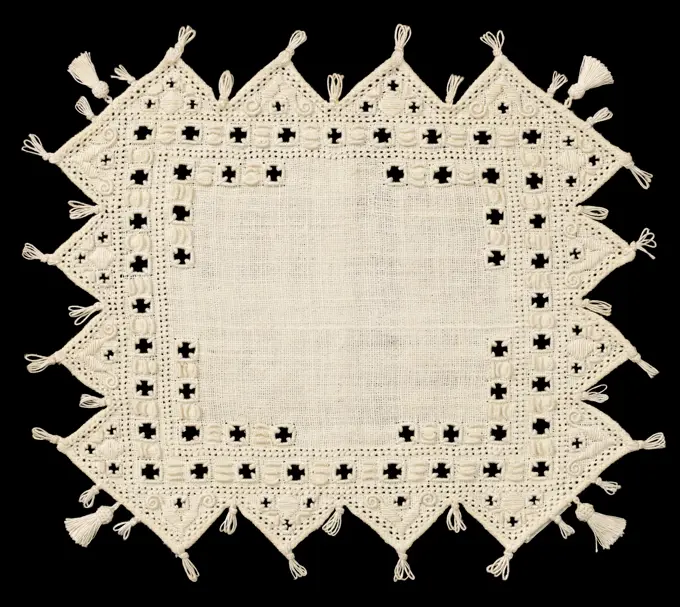
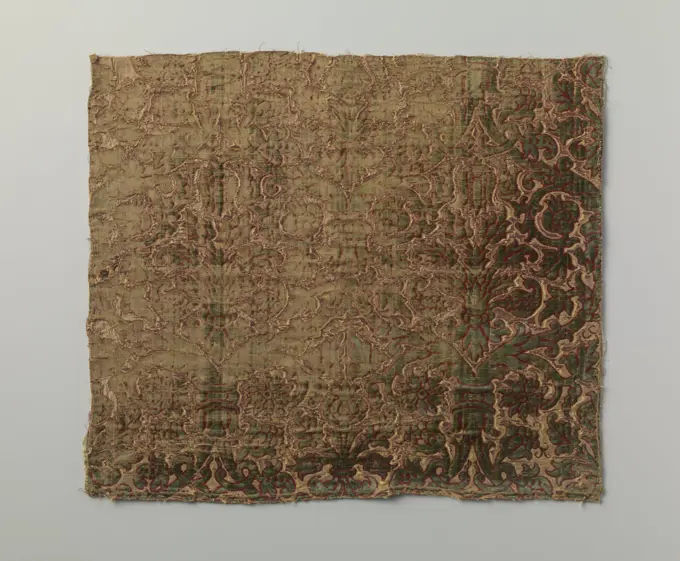
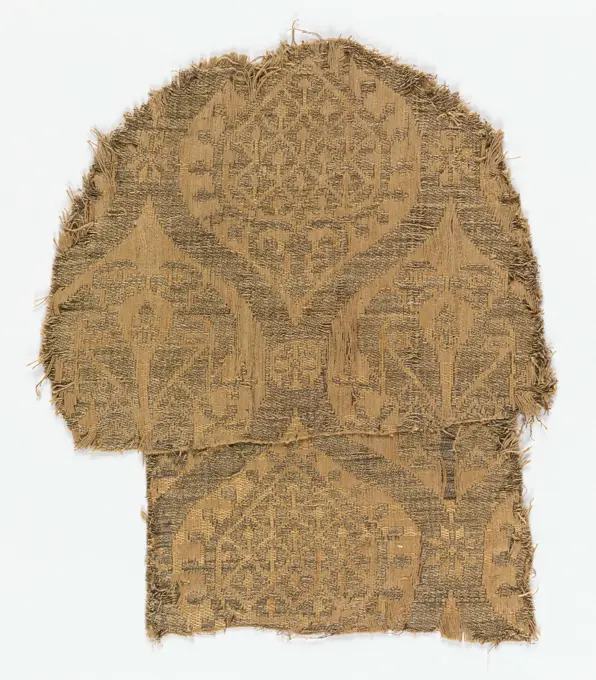
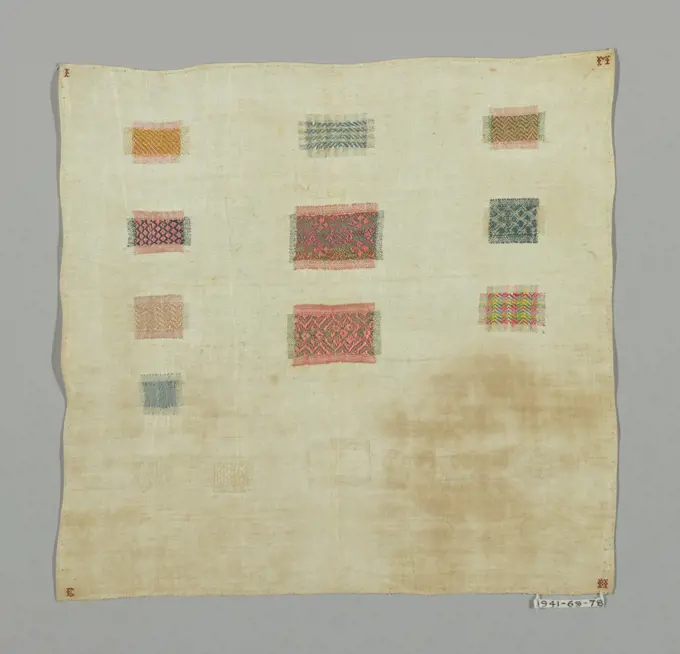
Geometric Textile Patterns

Textile fragments featuring geometric designs, showcasing diverse weaving techniques and historical significance from different cultural contexts.

Fragment, Medium: wool, linen Technique: plain weave with warp and weft floats, Geometric lozenge design in salmon pink and white., Spain, 17th century, woven textiles, Fragment
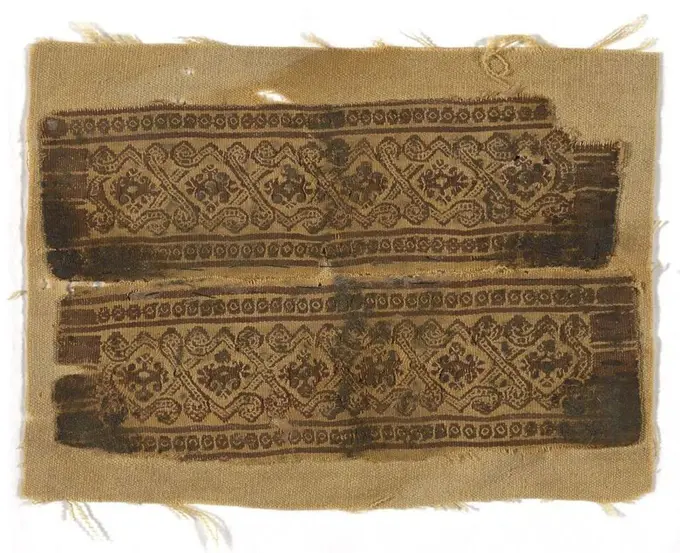
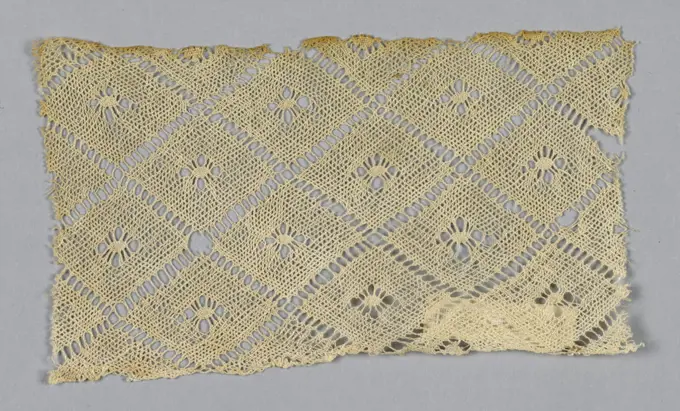
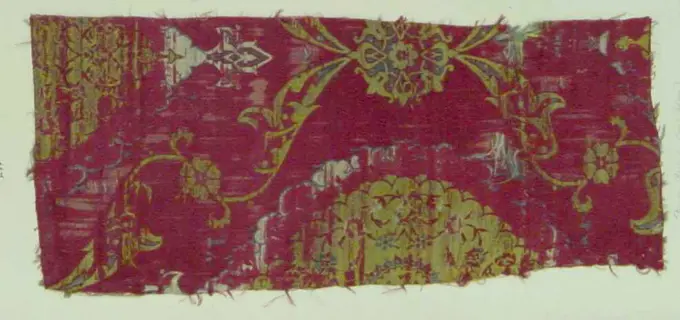
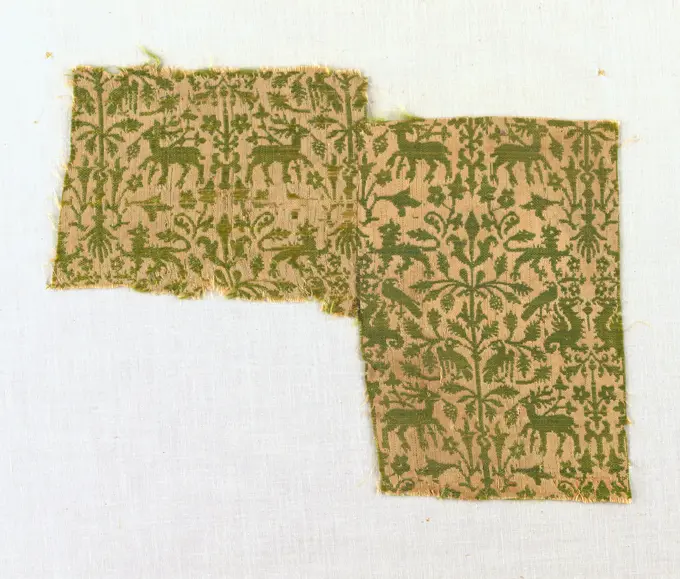
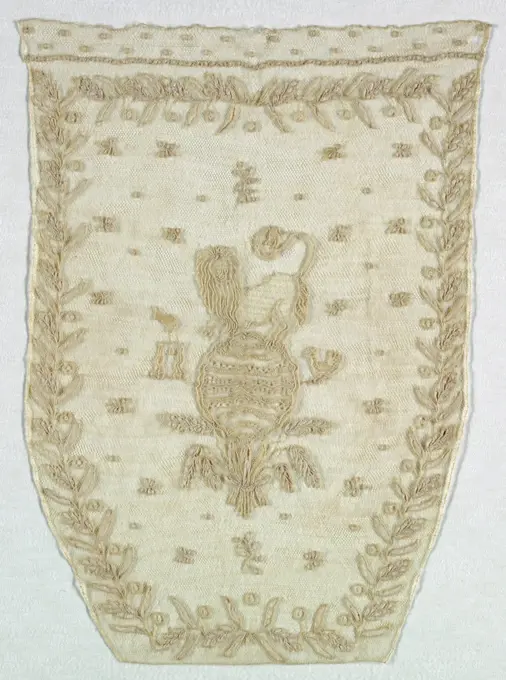
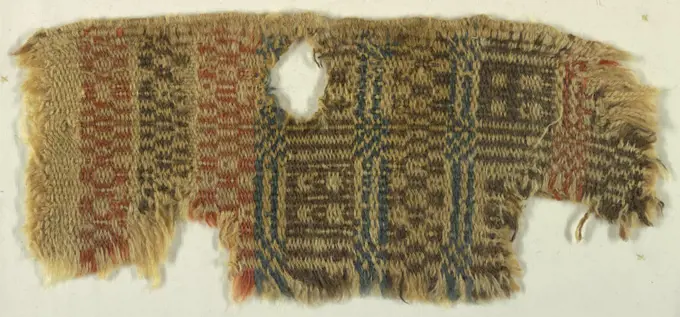
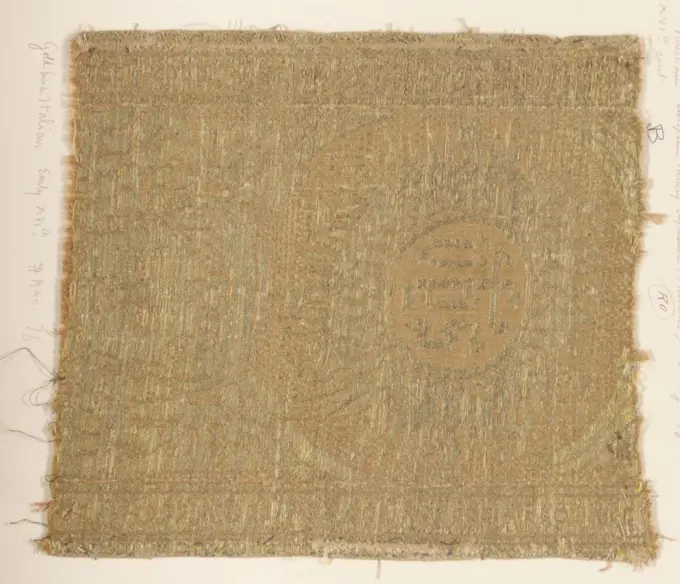
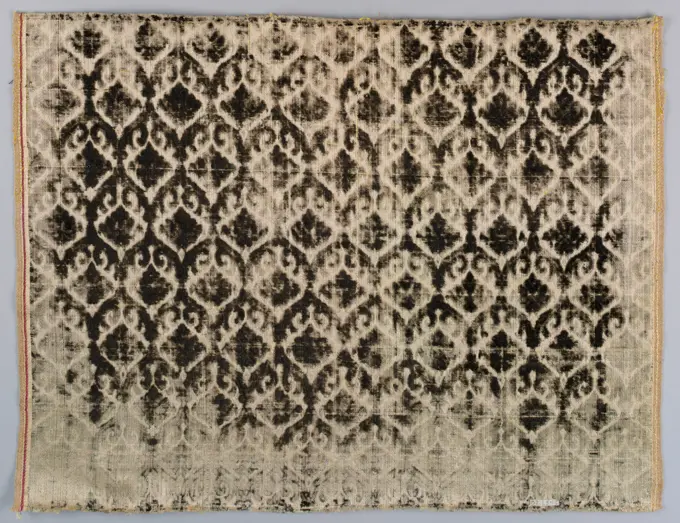
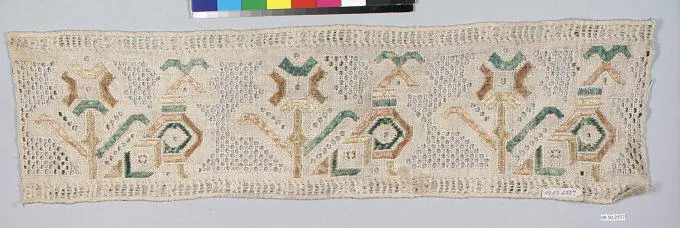
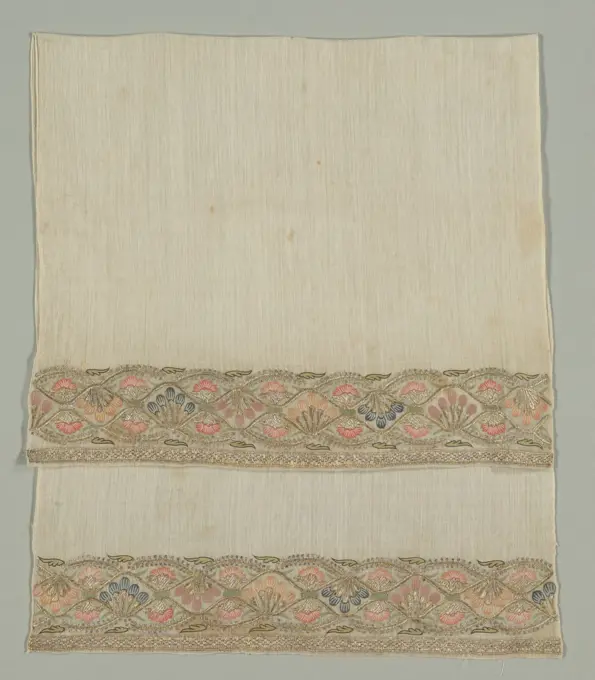
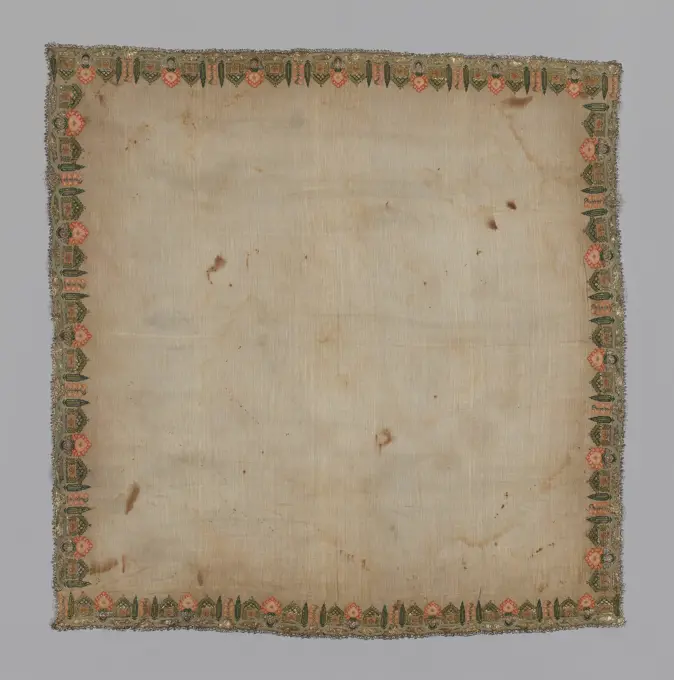
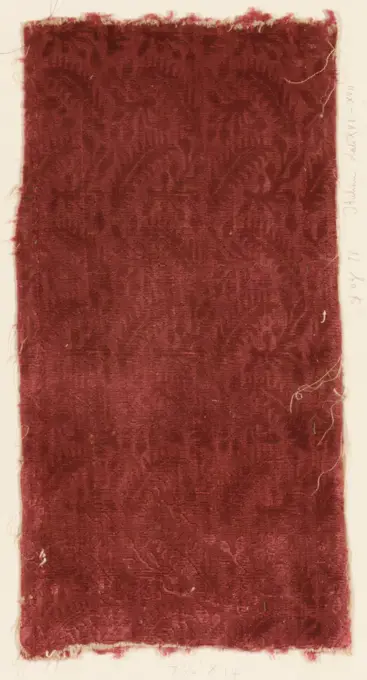
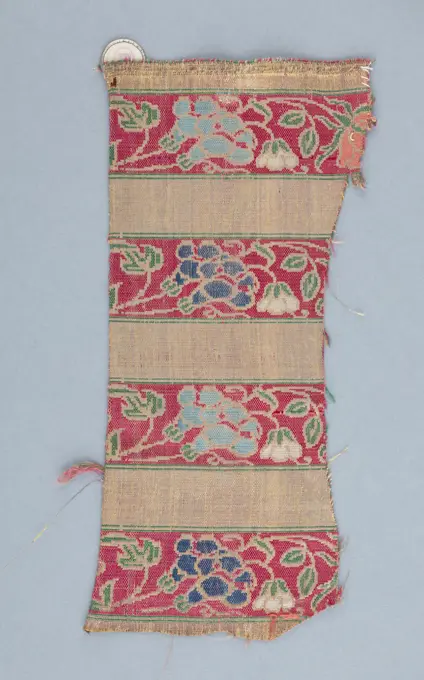
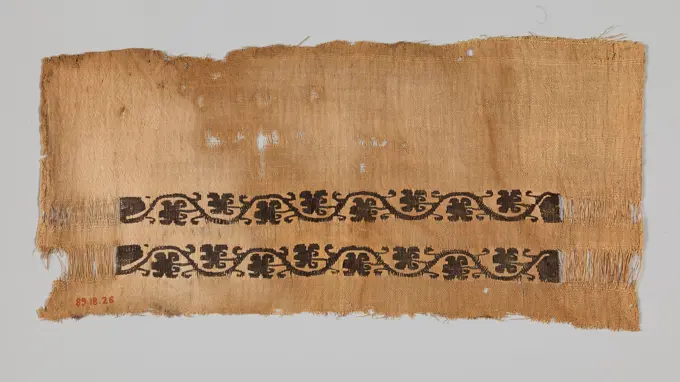
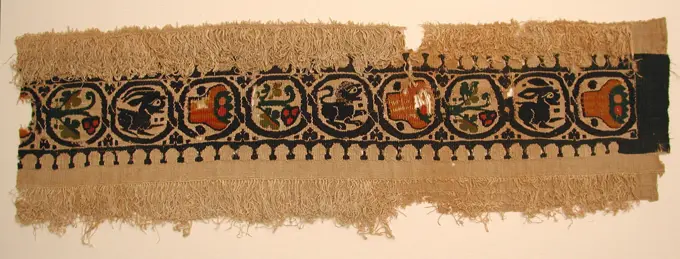
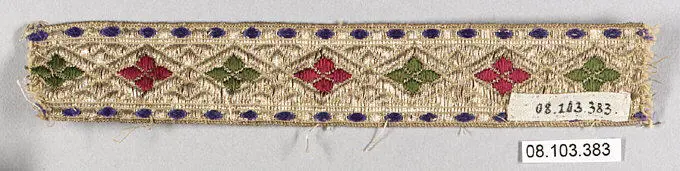
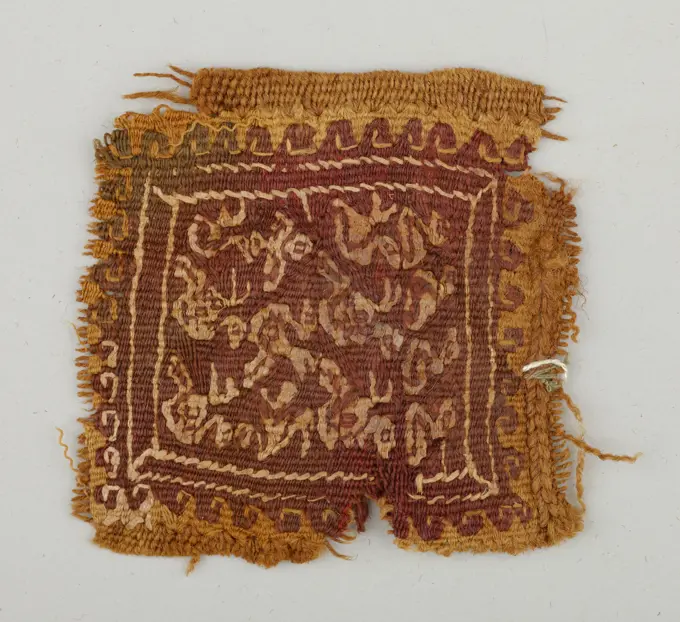
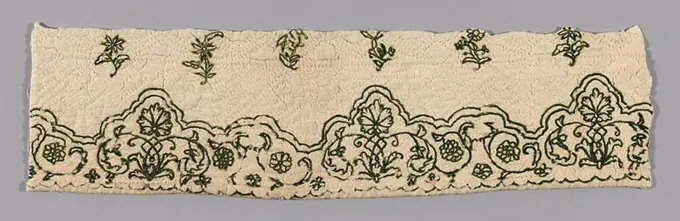
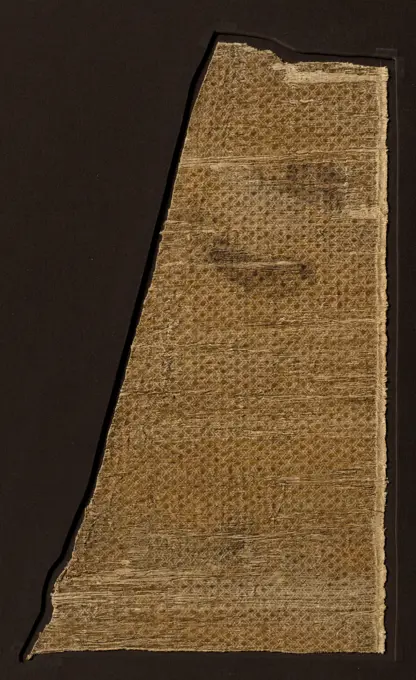
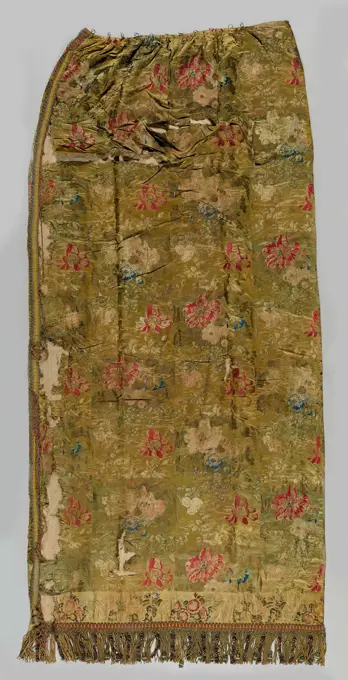
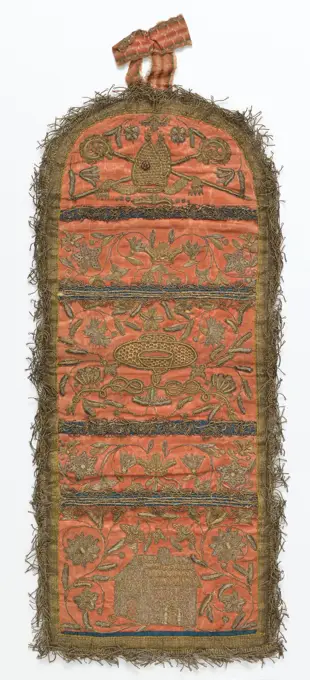
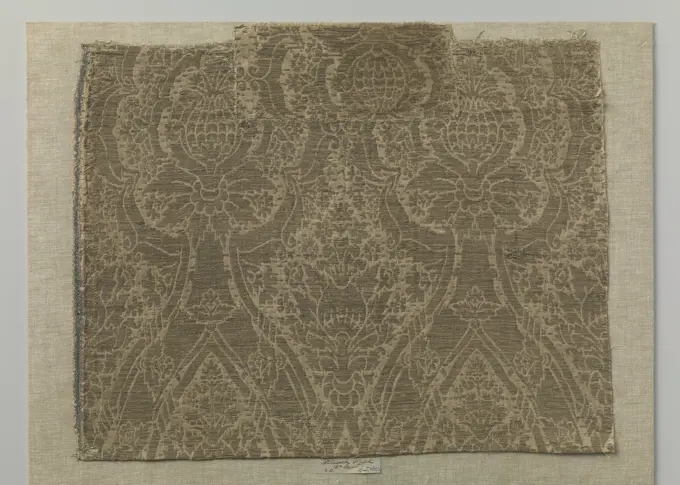
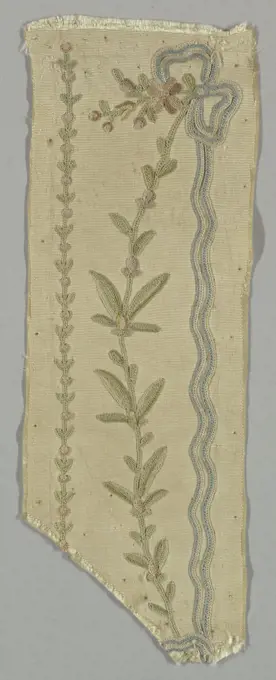
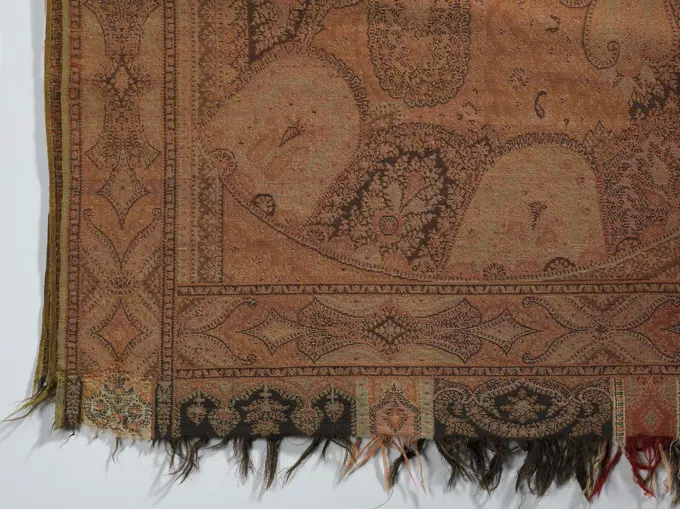
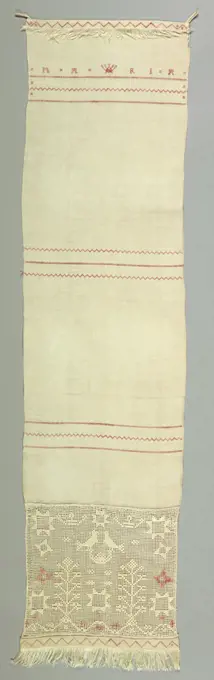
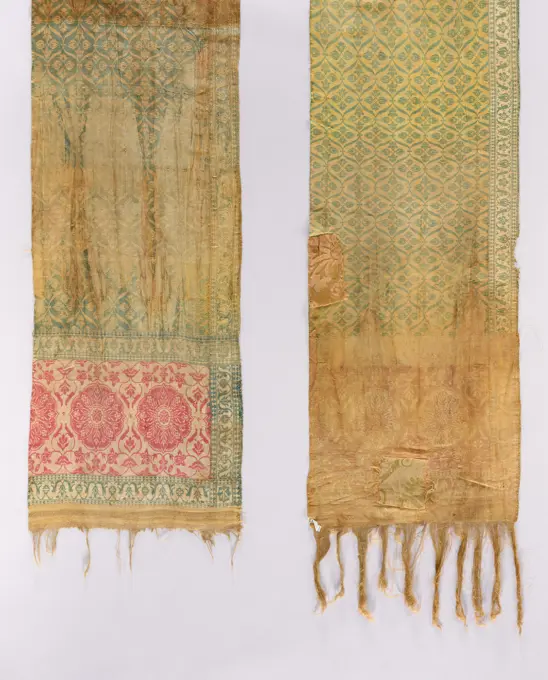
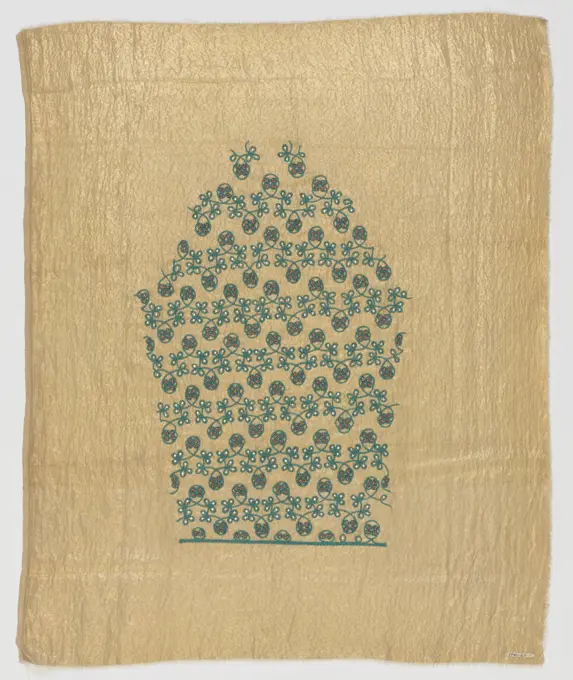
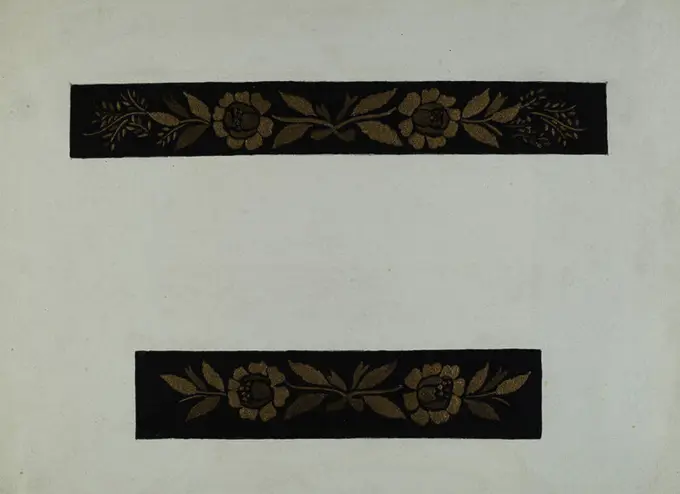
Fragment, Medium: wool, linen Technique: plain weave with warp and weft floats, Geometric lozenge design in salmon pink and white., Spain, 17th century, woven textiles, FragmentTextile; linen, silkFragment Made 1601-1625 Netherlands. Linen and wool, compound weave (ie. Beiderwand or Lampas 2 1) .Fragment; silk, metallic, cottonPair of Cuff Bands. Coptic; Egypt. Date: 201 AD-500 AD. Dimensions: 7 × 23 cm (2 3/4 × 9 in.)7.5 × 23.3 cm (3 × 9 1/8 in.). Wool, tapestry weave. Origin: Egypt. Museum: The Chicago Art Institute, Chicago, USA.Fragment (Russia); linenFragment, Medium: linen Technique: Bobbin lace, peasant style, England, 19th century, lace, FragmentTextile Fragment 16th-17th century. Textile Fragment 454589Fragments, Medium: silk and metal Technique: Combination of two stuctures: 4 harness irregular twill foundation plus 3/1 twill \ supplementary facing and pattern. Foundation fabric has an integrated set of supplementary wefts free floating on the front to pattern. The supplementary fabric has a set of two complementary weft faces the pattern background covering the 4 harness twill, and the other backs the discontinuous wefts. The discontinuous supplementary wefts pattern and are bound by the interlaces with the foundation wefts in 2/2 twill., Fragments cut from a continuous pattern of gold or silver diamond-shaped floral forms set in a loose diamond lattice made of green, salmon, and ivory blossoms. The background would have been gold or silver. Each fragment has one selvage intact., possibly Spain, 17th century, woven textiles, FragmentsTextile Fragment 16th-17th century. Textile Fragment 454470Fragment multicolor silk satin. A silk tissue, on a goudzer-colored ground in white, blue and green, a pattern of flower branches with birds (twill on satin).Fragment, Medium: silk and metallic Technique: supplementary wefts in green and white on a silver faced fabric, Fragment with one curved edge. Pattern of flowers arranged in rows facing in alternate directions., 17th century, woven textiles, FragmentFragment (Dress Fabric) Made 1650-1700 Italy. Brocaded fancy simple satin .Band; embroidery using silk threads on plain weave linen.Fragment side lampas with pattern of cherubies, anonymous, c. 1300 - c. 1499 Fragment of three pieces of beige-yellow side with pattern in green, gold, red () And white of cherubins. Italy silk. silver thread Fragment of three pieces of beige-yellow side with pattern in green, gold, red () And white of cherubins. Italy silk. silver threadFragment, Medium: silk, metallic thread Technique: 3-1 twill weave, Fragment with a cone or butah pattern in gold on a dark red ground., India or Iran, 19th century, woven textiles, FragmentTextile, Medium: linen, silk Technique: embroidered, Rectangle of undyed linen cloth with two crossing bands of black silk cross-stitch with angular running scroll within guard strips, in reserve., Middle East, 12th-13th century, embroidery & stitching, TextileFragment (Italy); silkExcerpt red lampas with in blue, white, yellow and gold a pattern of geometric braid, anonymous, c. 1300 - c. 1499 Fragment Red Sijdelampas with in blue, white, yellow and gold a pattern of geometric braiding. Spain (possibly) silk. lampas (textile material) Fragment Red Sijdelampas with in blue, white, yellow and gold a pattern of geometric braiding. Spain (possibly) silk. lampas (textile material)Fragment (India); cottonBag face, Medium: linen Technique: needle lace with ground of loop and twist with twist return, Shield-shaped face of a bag. A central figure of a lion standing atop a globe supported by sheaves of wheat, with a pair of scales to the left and a bird to the right. Border of wheat stalks., France, ca. 1810, lace, Bag faceTextile Sample from Sample Book 19th century Japan. Textile Sample from Sample Book 68245Piece 16th-17th century Italian. Piece 223435Sampler, Medium: linen, silk Technique: counted-stitch embroidery on plain weave foundation, A sampler of the type commonly called a 'random spot sampler' with patterns scattered at random. Multi-color silk embroidery of counted stitches on plain weave foundation fabric. Selvedge on left side., England, early 17th century, embroidery & stitching, SamplerFragment, Medium: wool Technique: woven compound, complementary wefts, 1&2 twill, Ground is divided into squares each of which encloses groups of smaller squares. In tan, blue, brown and red. One selvage present., Egypt, 6th-10th century, woven textiles, FragmentBatist voile with one edge bobbin with zigzag line and clover four, anonymous, c. 1840 - c. 1860 Batist voile on one long side finished with a strip of natural -colored bobbin: blonde. Rectangular model. The repeating side pattern consists of a continuous wide zigzag line, with one clover in the triangular fields under this line. The strip is finished along top and bottom with a succession of fan-shaped motifs. The motives are made in linen battle. A contour wire runs around the rosettes. The motifs are connected by a fantasy round with form strokes. West-Europa silk bobbin lace / blonde (lace) Batist voile on one long side finished with a strip of natural -colored bobbin: blonde. Rectangular model. The repeating side pattern consists of a continuous wide zigzag line, with one clover in the triangular fields under this line. The strip is finished along top and bottom with a succession of fan-shaped motifs. The motives are made in linen battle. A contour wire runs around the rosettes. TFragment, Medium: silk on linen Technique: embroidered, Valance fragment with triangular points and a geometrical floral vine pattern. In green silk on linen., Greece, 19th century, embroidery & stitching, FragmentFragment rode lampas met cirkels en rozetten in goud en verschillende kleuren.Elongated Fragment Red Lampas with a pattern in gold. Concentric circles and four passes form a framework on a ground with arabesque and floral motifs. In the circles, green rosettes are inside a foam, between every four circles a four-leaven blue rosette with white cheries.Coverlet (USA); wool, cottonPanel (Furnishing Fabric) 1867-1899 Iran. Cut velvet panel, brocade border. .Fragment early 17th century Italian. Fragment 230207Fragment, 1800s. China, 19th century. Silk; overall: 22.3 x 19.7 cm (8 3/4 x 7 3/4 in.).Fragment; silkTrimming, Medium: silk, Design of red flowers and scrolling green stem with borders of brown. Very worn., Spain, 18th century, trimmings, TrimmingEmbroidery, Medium: linen, silk Technique: plain weave, interlacing stitch, Tan linen embroidered with two shades of blue silk. Rectangular panel with S-shaped border design. Central motif is almost entirely gone. Rosette in each corner with light blue center. Pointed tabs added to each end., Egypt, 10th-12th century, embroidery & stitching, EmbroideryTextile (Albania); cottonFragment, Medium: silk Technique supplementary warp forming cut and uncut raised pile in plain weave foundation, Trellis pattern with starts in red., 19th century, woven textiles, FragmentPiece 18th century Japan. Piece 71659Piece 18th-19th century Japan. Piece. Japan. 18th-19th century. Silk. Textiles-WovenFragment late 16th century Italian. Fragment 230143Fragment of a Patolu Border(Kabakil)Strip first quarter 19th century Hungarian or Slovakian. Strip 217223Sampler 19th century German. Sampler 228652Embroidered Towel, 19th century. Turkey, 19th century. Embroidery: silk, gold and silver filé on linen tabby ground; average: 109.2 x 54.7 cm (43 x 21 9/16 in.).Sampler(Limar)Fragment 16th century Italian. Fragment 230184Square (Egypt); warp; s-spun linen. wefts; s-spun linen, s-spun wools; Warp x Weft: 60 x 39.4 cm (23 5/8 x 15 1/2 in.)Elongated cashmere scarf with a partially white and partially natural mirror, with a wide pattern with purple -colored palm motifs on the short side, c. 1850 - c. 1860 Elongated cashmere scarf with a partially white and partially natural -colored mirror, with a wide pattern with purple -colored palm motifs on the short side. Long loose frills in purple and natural on the short side. West-Europa whole: Wool Elongated cashmere scarf with a partially white and partially natural -colored mirror, with a wide pattern with purple -colored palm motifs on the short side. Long loose frills in purple and natural on the short side. West-Europa whole: WoolTrimmings, Medium: silk Technique: velvet, Narrow bands of trimming with crisscrossing leaf and flower design with guard borders of half-circles in cut pile of red, green, and yellow on a white foundation., possibly France, late 18th-early 19th century, trimmings, TrimmingsBelt -Woven Fragment 9th-13th century Lambayeque (Sicán). Woven Fragment 307923Cover or Handkerchief Made 1701-1800 Turkey. Silk and metal-strips; drawnwork .Fragment (Egypt); cottonFragment late 16th-17th century Italian. Fragment 230218Fragment of silk fabric unknownTextile Fragment 3rd-4th century. Textile Fragment 443231Textile Fragment 4th-5th century. Textile Fragment 443221Fragment. Peru, Probably central coast. Date: 500 AD-800 AD. Dimensions: 11.7 x 17 cm (4 5/8 x 6 5/8 in.). Cotton, plain weave double cloth; edged with cotton, plain weave. Origin: Peru. Museum: The Chicago Art Institute, Chicago, USA.Galloon 17th-18th century probably European. Galloon 213880Textile Fragment 6th-7th century. Textile Fragment 443336Fragment; silkFragment of Coptic fabric unknownValance, Medium: silk Technique: silk and velvet appliqué, Horizontal panel with scallops at the lower edge. Green velvet with appliquéd ornament in the design of conventionalized flowers in blue, red, yellow and white., Spain, late 17th century, embroidery & stitching, ValanceFragment from Funeral Garment or Pall, before 1966. Iran , Seljuq period (1037-1194). Silk: compound tabby; overall: 27.6 x 13.6 cm (10 7/8 x 5 3/8 in.).Fragments from a Bedcover made of Petticoat Borders. France. Date: 1775-1800. Dimensions: 22.5 × 84 cm (8 7/8 × 33 in.). Cotton, plain weave; embroidered with wool threads in chain stitch; quilted. Origin: France. Museum: The Chicago Art Institute, Chicago, USA.Textile with Diamonds, 1000s. Central Asia, 11th century. Tabby with supplementary weft; silk, cotton and silver thread; overall: 51.5 x 30.3 cm (20 1/4 x 11 15/16 in.). Few Central Asian luxury silks dating from the 10th-11th centuries have survived. Here the cotton wefts, together with thin, widely spaced silk warps, identify this example as Central Asian. Its date has been determined by comparing it with two related textiles that are securely dated. At this time Chinese silks with small-scale diamond patterns were usually reserved for undergarments or linings. The use of silver thread for the tiny diamonds in this example, however, may indicate that in Central Asia the design had greater importance. Over time, this textile made its way to Europe, where it was preserved in a church treasury. Because such textiles were expensive, rare, and sometimes associated with saints, they were highly valued regardless of their condition.Silk dress, composed of three jobs that are constructed from twenty fragments, anonymous, c. 1730 - c. 1740 Silk rug, composed of three jobs that are constructed from twenty fragments. The rug is trimmed with gold threaded band and is fed with yellow side in plain binding. Dessin rug: horizontal rows, alternating to the left and right-loving large flowers with chinoiserie-like shapes in between, in a variety of three rows of yellow, light blue and silver thread on a pink long distance, independent vegetative design. On label: number and price tag with text "Louis XIII Brocade Hanging 3 Widtheach 79"; "L and J 235X"; "19" and "965". Painted paper on which the letters AE. France silk Silk rug, composed of three jobs that are constructed from twenty fragments. The rug is trimmed with gold threaded band and is fed with yellow side in plain binding. Dessin rug: horizontal rows, alternating to the left and right-loving large flowers with chinoiserie-like shapes in between, in a variety of thCurtain with floral design on yellow fond. Silk curtain with floral design on a yellow fond, from the small dance hall of Palace Noordeinde.Fragment 16th century Italian. Fragment 230122Textile, Medium: undyed linen warp (Z2S), Z-spun wool weft with S-spun undyed linen Technique: weft-faced plain weave; slit tapestry with non-horizontal wefts, Tapestry band in Sassanian style shows two pelicans on either side of a conventionalized tree of life. Pearl roundel above encloses an eight-pointed star., Egypt, 9th-12th century, woven textiles, TextileCover (USA); Made by Scuola d'Industrie Italiane; linenFragment Silk flows with recesses with pattern of flower and leaf stalks in green with in red, anonymous, c. 1540 - 1560 Fragment silk velvet with pattern of flower and leaf stems in green with red in red. Italy (possibly) Velvet: Silk. Lining: Cotton (textile) twill Fragment silk velvet with pattern of flower and leaf stems in green with red in red. Italy (possibly) Velvet: Silk. Lining: Cotton (textile) twillFragment (Spain); silk, linen, metallicSampler (England); Embroidered by Mary Milner (English); silk and linen embroidery on linen foundationShoulder Band Fragment 6th-7th century. Shoulder Band Fragment 445678Sampler, Medium: silks and metallic embroidery, linen foundation Technique: embroidered, Fifteen samples of darning in different patterns; in each corner an initial 'L M E M.', Netherlands, late 18th century, embroidery & stitching, SamplerWall Pocket; silk, metalGalloon 17th-18th century probably European. Galloon 213878Strook passement met gouddraad.Strip passing of gold thread.Fragment printed cotton, c. 1800 - c. 1899 Fragment printed cotton. Flower branches are printed on a brown ground in the colors light brown, yellow and white.  cotton (textile) printing Fragment printed cotton. Flower branches are printed on a brown ground in the colors light brown, yellow and white.  cotton (textile) printingPiece 18th-19th century Japan. Piece 67100Excerpt brocatel with pomegranate moths, anonymous, c. 1400 - c. 1599 Fragment, composed of two glued (not pattern) pieces of brown side with pattern in gold from stylized flower and leaf work surrounded by rosettes composed and more stretched shapes. Italy Ketting: Silk. Elements: Linen (material). element: broach Fragment, composed of two glued (not pattern) pieces of brown side with pattern in gold from stylized flower and leaf work surrounded by rosettes composed and more stretched shapes. Italy Ketting: Silk. Elements: Linen (material). element: broachTextile, Medium: silk on silk Technique: embroidered in chain stitch on plain weave, Fragment of finely-ribbed white silk embroidered in multicolored silks in a design of a flowering vine tied with a bowknot of blue ribbon., France, ca. 1780, embroidery & stitching, Textile. Elongated scarf with black mirror, around one full of ornamental patternFragment zijdeweefsel.Fragment of predominantly blue silk with large pattern of flower and leaf garland.Towel cover, Medium: cotton on linen Technique: withdrawn element with darned motifs, Towel cover ornamented with the 'Maria,' crowns and cross borders of a straight line set between zigzags worked in cross stitch. Above is a band of drawnwork with birds, crowns, stars, and flowers in darning and overcasting. Fringe at top and bottom., Pennsylvania, USA, ca. 1830, lace, Towel coverWallet. unknown, authorSampler (England); silk and metal-wrapped silk-core embroidery, linen foundationOne half of a Kontusz sash/belt. unknown, authorEmbroidery Sample (USA); Made by S.L. Klein, Inc. (New York, NY, USA); silk, gold thread, rhinestones, gilt beadsFragment 17th century Italian, Venice. Fragment. Italian, Venice. 17th century. Silk. Textiles-WovenPiece 18th-19th century Japan. Piece 67289Fragment Of Band; linen, silkTowel Made 1875-1900 Turkey. embroidered .Fragment, Medium: silk Technique: supplementary warp pile (velvet), Fragment of dark magenta cut velvet against white background in rows of repeated 'S-shaped' pattern forming columns., Italy, 16th century, woven textiles, FragmentShirt Front (Egypt); silk on linen; Bequest of Marian Hague; 1971-50-13Sidewall - Fragment; machine-printed on paper; 46 x 23 cm (18 1/8 x 9 1/16 in.)Sampler (Germany); cottonGalloon late 18th-early 19th century European. Galloon 224993Detail of Hitchcock Chair. Dated: 1935/1942. Dimensions: overall: 30.6 x 40.6 cm (12 1/16 x 16 in.) Original IAD Object: none given. Medium: watercolor, gold ink, and graphite on paper. Museum: National Gallery of Art, Washington DC. Author: Genevieve Sherlock.