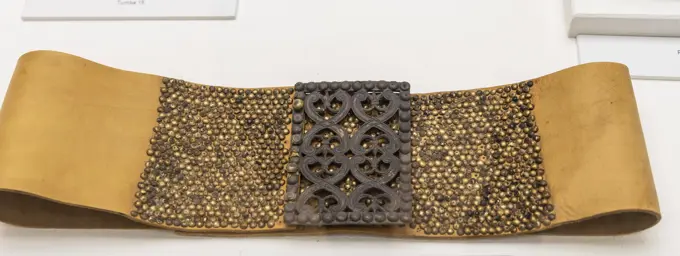
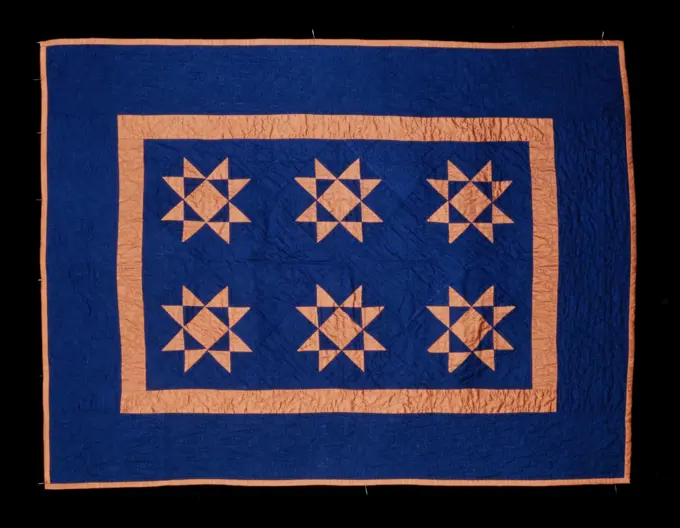
Geometric Textile Patterns

Textile fragments featuring geometric designs, showcasing diverse weaving techniques and historical significance from different cultural contexts.

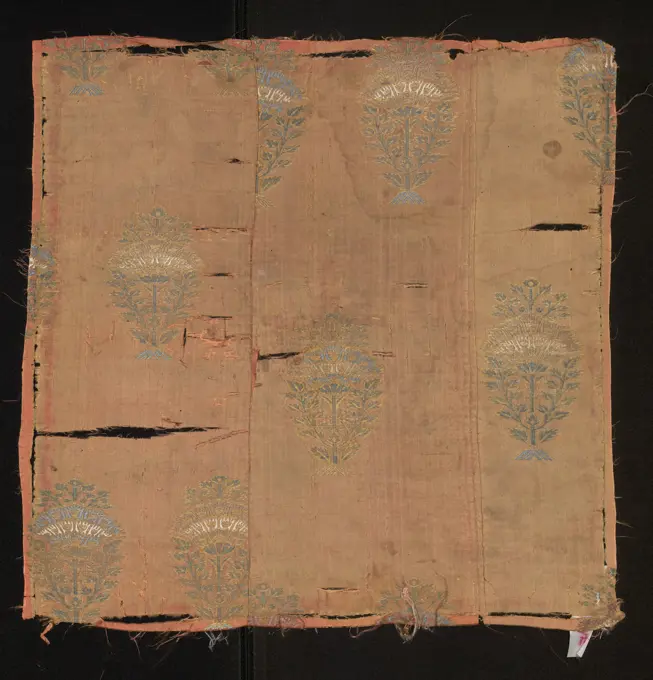
Fragment, Medium: wool, linen Technique: plain weave with warp and weft floats, Geometric lozenge design in salmon pink and white., Spain, 17th century, woven textiles, Fragment
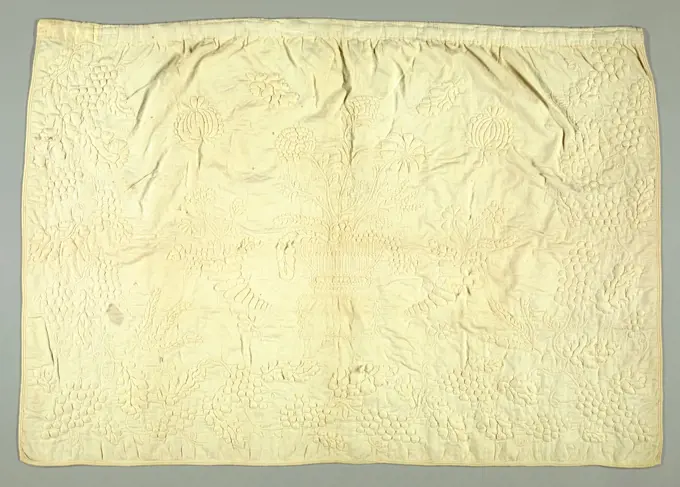
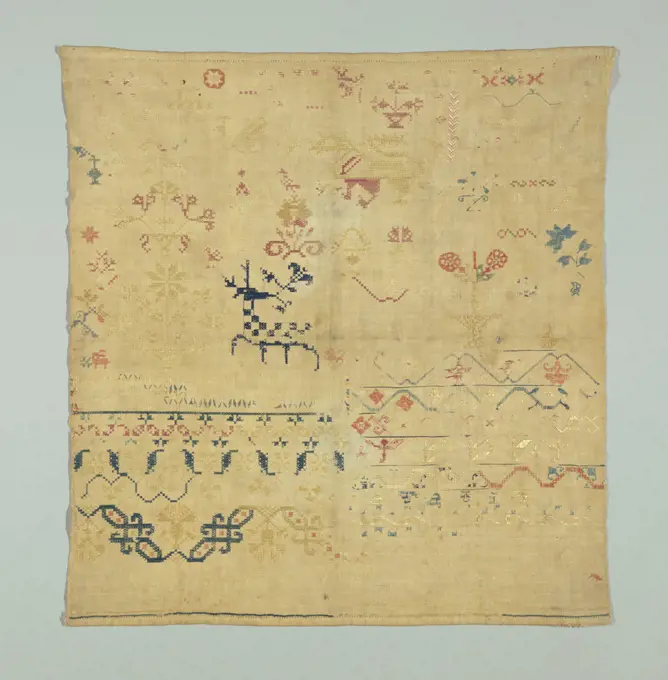
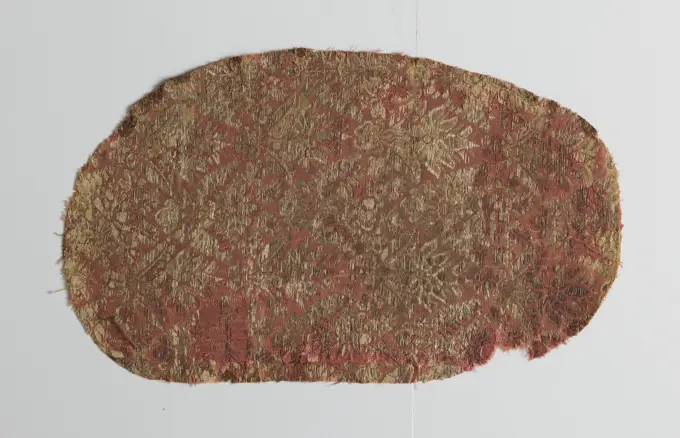
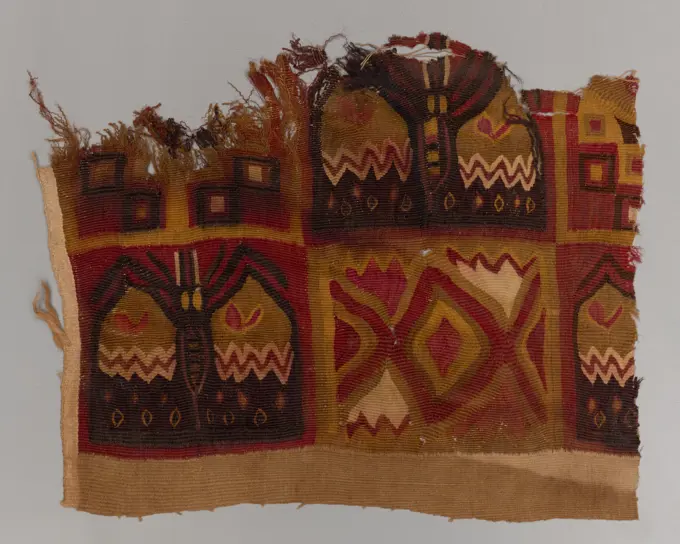
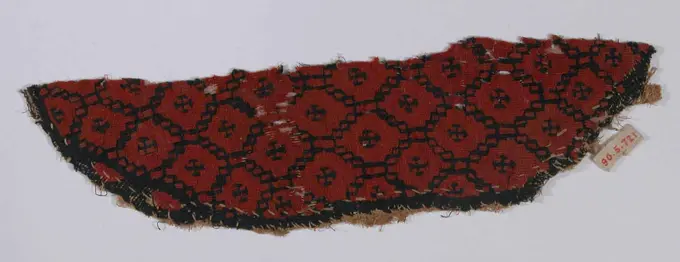
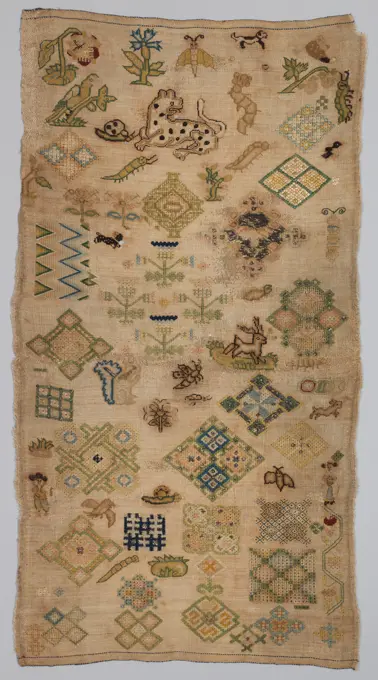
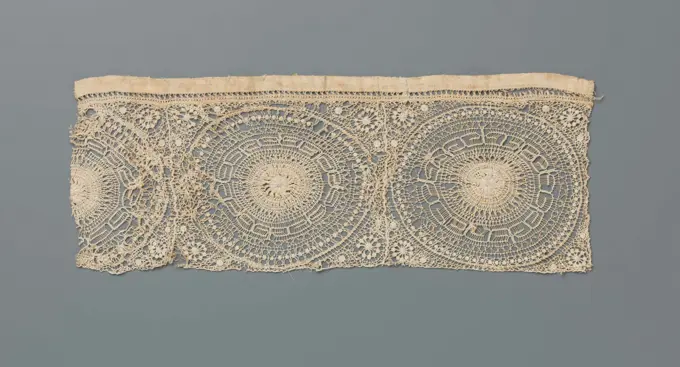
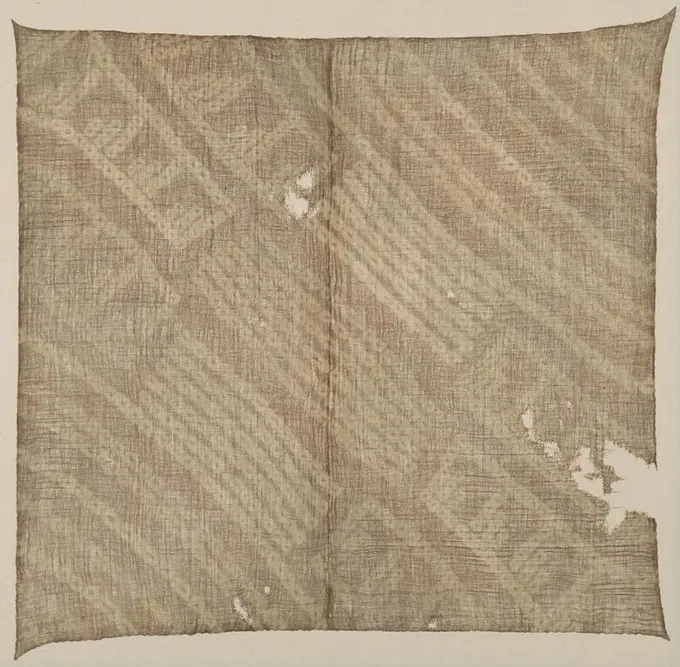
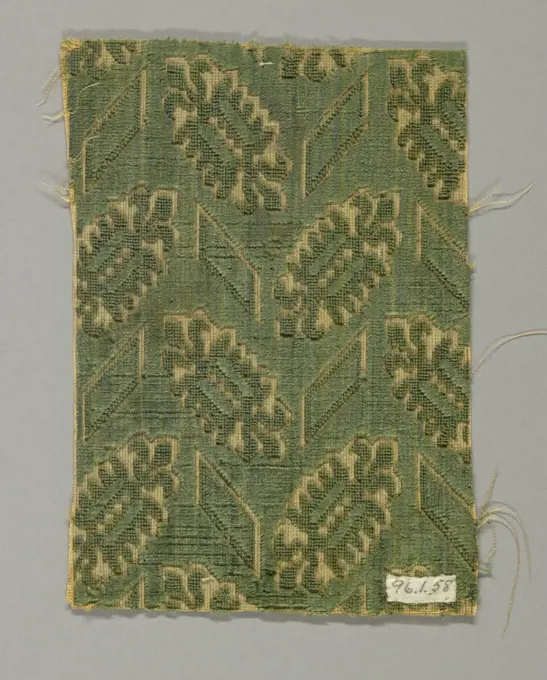
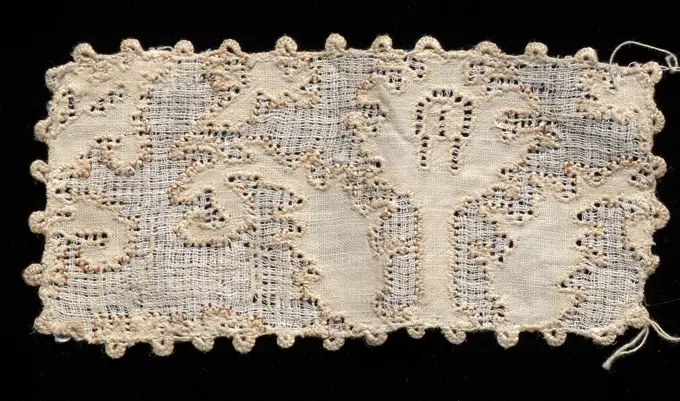
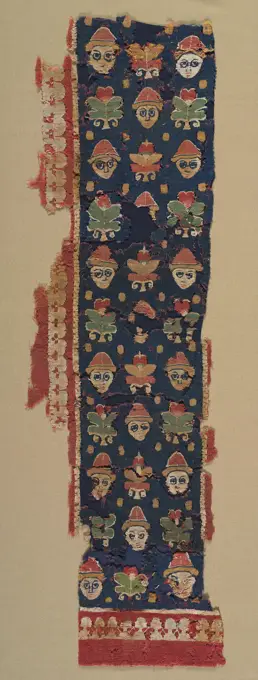
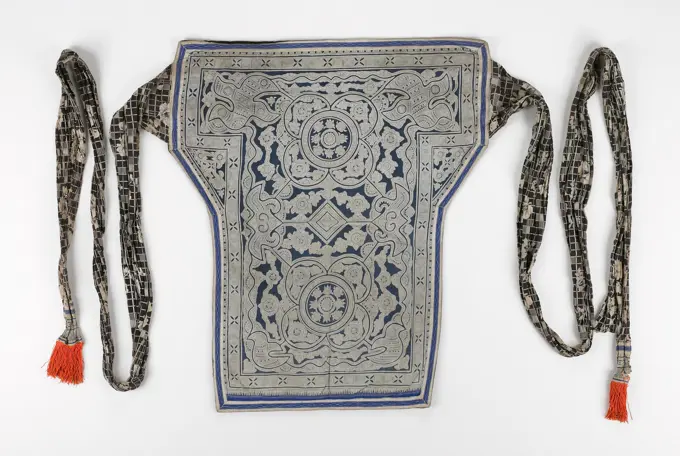
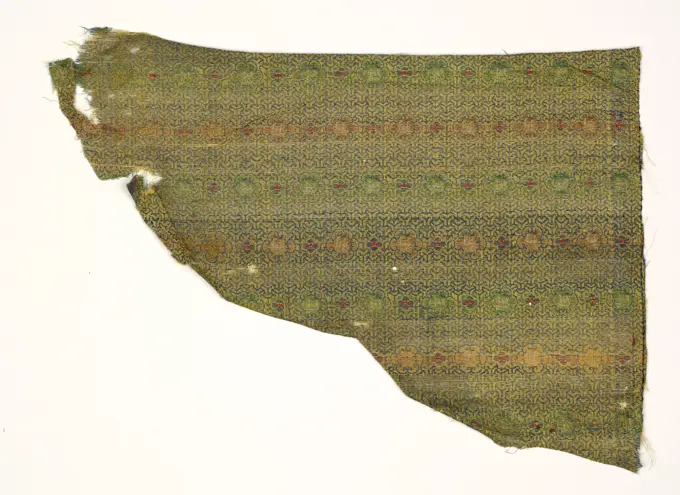
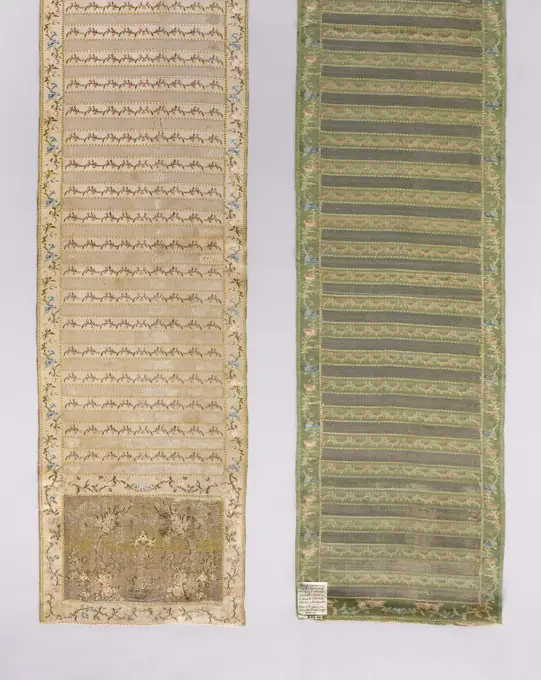
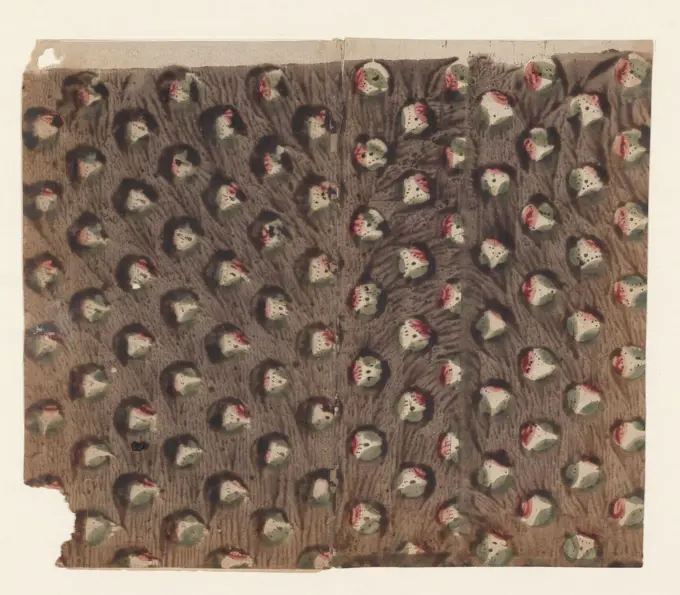
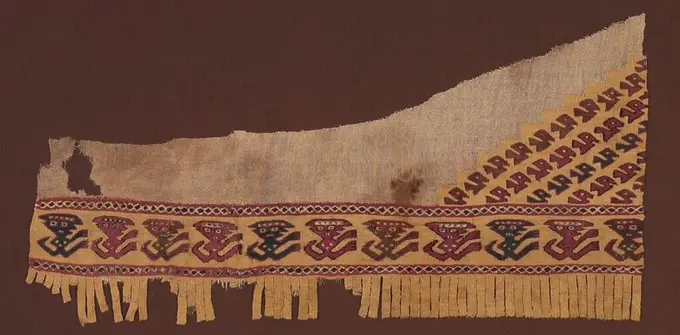
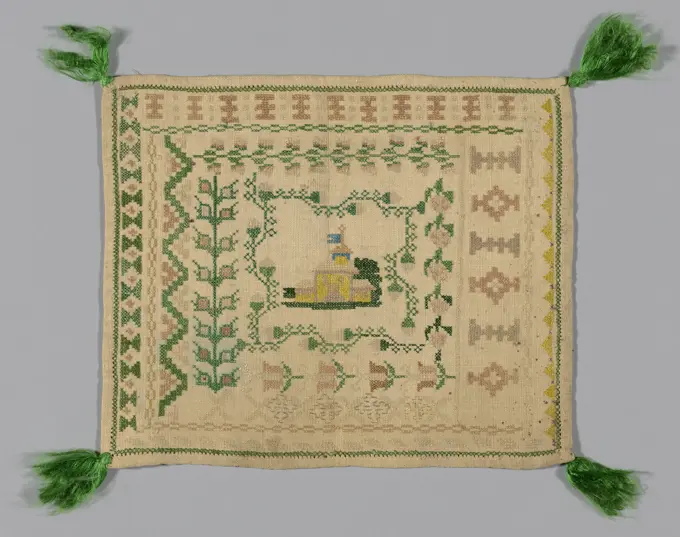
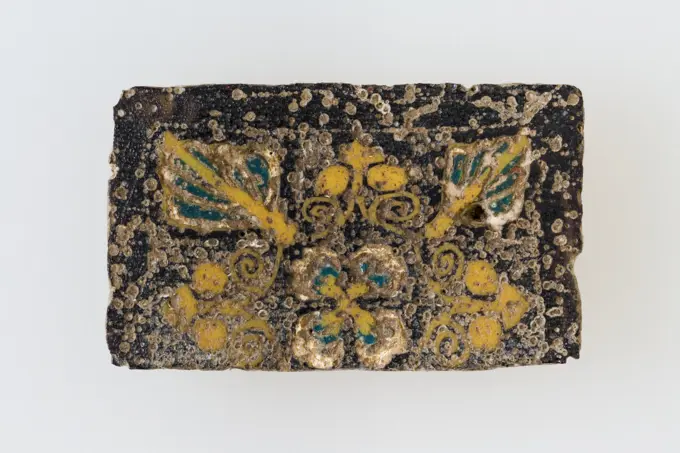
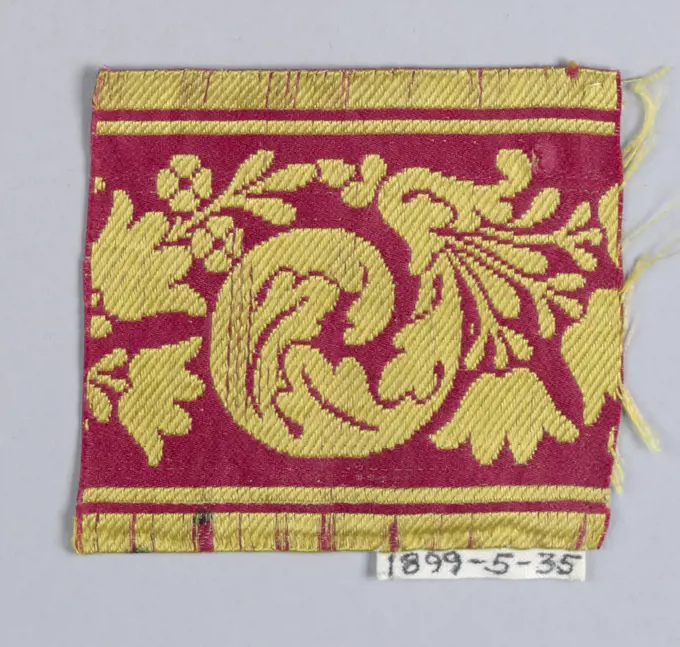
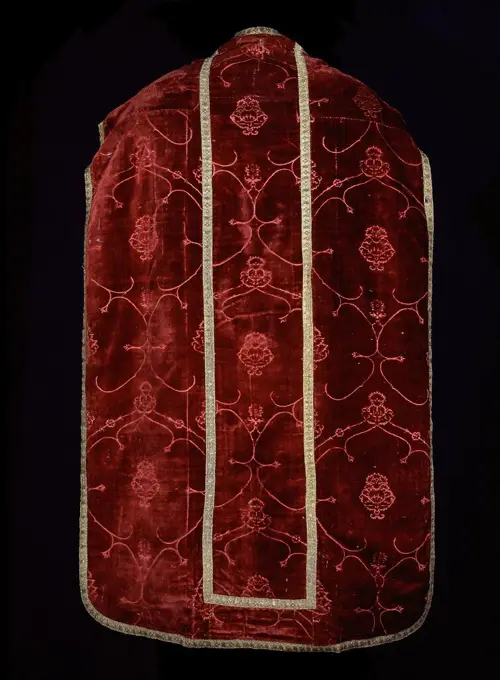
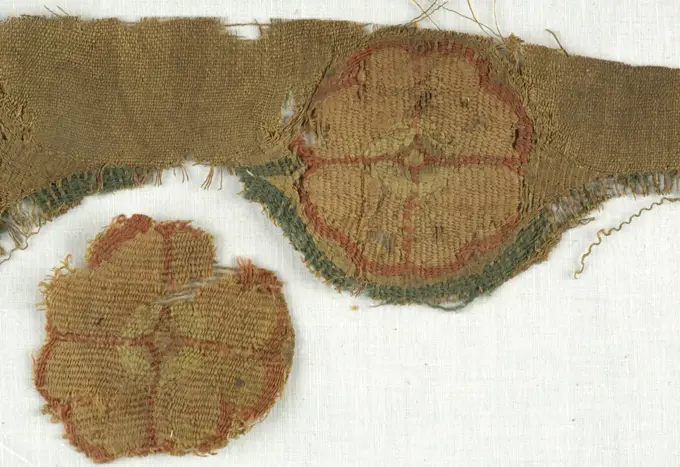
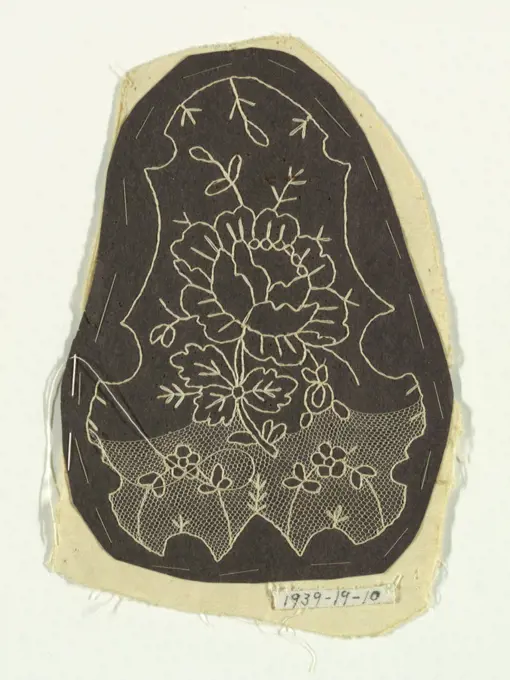
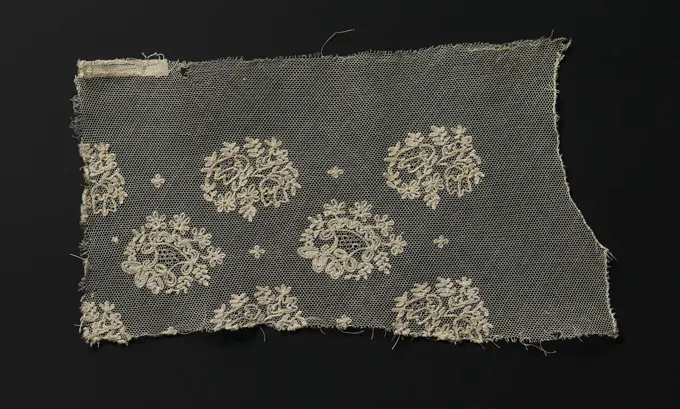
Fragment of the fabric;  18th century (1701-00-00-1800-00-00);fabricsFragment. Italy. Date: 1201-1400. Dimensions: 6.4 x 28.3 cm (2 1/2 x 11 1/4 in.). Silk and gilt-metal-strip-wrapped silk, warp-float faced warp chevron twill weave with plain interlacings of secondary binding warps and supplementary patterning and brocading wefts. Origin: Italy. Museum: The Chicago Art Institute, Chicago, USA.Fragment, Medium: silk, linen, metallic Technique: compound twill (samite), Roundels containing birds set in a square grid., Spain, 13th century, woven textiles, FragmentPillow sham, Medium: cotton Technique: quilted plain weave, White quilted pillow sham with a central basket of flowers and grapes is flanked by two cornucopias with flowers. Sides and bottom have a deep border of grapevines. There is an empty rectangle below basket for the year. Top edge is slightly gathered., USA, early 19th century, embroidery & stitching, Pillow shamSampler, Medium: silk on cotton Technique: cross, long-armed cross, running, satin and back stitch on plain weave foundation; counted stitches, Scattered motifs and curving floral bands in red, blue and yellow silk. At the center a deer with a branch of flowers coming from his mouth and a crowned lion., Mexico, late 18th century, embroidery & stitching, SamplerTextile Fragment 17th century. Textile Fragment 446821Fragments, 1100s - 1300s. India, 12th-14th century. Plain cloth, resist dyed; cotton; average: 6.4 x 27.3 cm (2 1/2 x 10 3/4 in.).Carpet 16th century. Carpet 447533Border late 18th century French. Border 223082Textile Fragment. Italy, 17th century. Textiles; fragments. Silk plain weave with metallic-thread supplementary weft-patterning bound in plain weave (lampas)Square cashmere scarf with plain orange fond, along which a narrow band with continuous flowers Square cashmere scarf of wool with plain orange foundation, along which a narrow band with continuous flowers within a list of green and pink motifs. Long orange fringes sewn along two edges.  whole: Wool Square cashmere scarf of wool with plain orange foundation, along which a narrow band with continuous flowers within a list of green and pink motifs. Long orange fringes sewn along two edges.  whole: WoolBand from a TokapuTunic.  Artist: UnknownTextile Fragment 5th-6th century. Textile Fragment. 5th-6th century. Wool; tapestry weave. Attributed to Egypt. TextilesFragment of a Shoulder Band 5th-6th century. Fragment of a Shoulder Band 443777Brocade Fragment, 1800s. India, 19th century. Brocade; overall: 16.2 x 36.5 cm (6 3/8 x 14 3/8 in.).Fragment silk tissue with lilies. Fragment of a tissue with white silk necklace and impacts of yellow, white, red and with gold wound yellow silk. Pattern of red flames raised golden lilies on white ground.Textile (France); wool; 1952-102-6Ceremonial Textile (PuaKumbu)Embroidered spot sampler 17th century British Spot samplers feature motifs that are scattered in a seemingly random fashion over the surface of the foundation fabric, usually linen. These samplers are rarely signed or dated, and often include motifs that are only partially worked, leading to the conclusion that this type of sampler was made as a personal stitch reference for its maker, and not for display, as band samplers were signed by student embroiderers. In addition to geometric designs that are of the type that would have been used to decorate small purses, cushions, and other accessories, the sampler includes "slips," motifs that would have been worked in tent stitch and then cut out and appliqued onto larger pieces of work that would have been too large and unwieldy to embroider on their own. On this sampler, these motifs include flowers, caterpillars, birds, and dogs, as well as a leopard, stag, and squirrel.. Embroidered spot sampler. British. 17th century. Silk and metal thrMary Berner, Neck Band, 1935 1942 Neck BandPiece 18th century China. Piece 71549Piece 18th-19th century Japan. Piece 65805Sarah F Williams, Woven Coverlet, 1935 1942 Woven CoverletHeaddress 19th century Russian. Headdress 173377Textile Fragment 4th century. Textile Fragment 443399Two chestnut leaves. Patron for the polychrome of the House of the Medical Society in Krakow Wyspiały, Stanis Aw (1869 1907)Doily (Mexico); cotton, glass beadsTunic Fragment 7th-9th century Wari. Tunic Fragment 307681Table Cover (Italy); linenFragment Made 201 CE-1000 Egypt. . Ancient EgyptianKesa Made 1767-1900 Japan. Priest robe (kesa) larger than usual and made in strips set together by conching in gold thread in scrolls. Of kinran fancy compound satin of silk and gilded paper strips cut very finely. Design in blue, red, green, brown, yellow and white on a dark blue ground, r epresents five-clawed dragons, flaming yewels and floating clouds. It is bordered with blue brocaded silk with leaf and flower design; lined with heavy cotton.Priest robe (kesa) Larger than usual and made in strips set together by conching in gold thread in scrolls. Of kinran fancy compound satin of silk and gilded paper strips cut very finely. Design in blue, red, green, brown, yellow and white on a dark blue ground, r epresents five-clawed dragons, flaming jewels and floating clouds. It is bordered with blue brocaded silk with leaf and flower design and lined with heavy cotton. .Napkin, with woven peel pattern, anonymous, c. 1750 - c. 1800 Napkin made of linen with peel pattern, cut out of a larger piece; Zoomed on four sides .. Netherlands linen (material) Napkin made of linen with peel pattern, cut out of a larger piece; Zoomed on four sides .. Netherlands linen (material)Towel or Napkin Made 1850-1900 Turkey. embroidered .Strook naaldkant met zonnen waarom een sierlijst met hoekig omkrullende lijnen die rechthoekjes vormen.Strip natural-colored sunny side (needle side): Tenerife. The repeating pattern consists of a square field with a 'sun' in it: a circular center from which bundled wires form the sun's rays. Around the center there are narrow concentric decorative moldings, which are becoming more wider. Halfway a list of angular curling lines stands up, which form a concatenation of rectangular motifs. In the outer decorative frame a concatenation of dots. In the square field are in every corner, outside the circle, three circles whose middle circle forms a sun, with a dot at the end of each sunburst. The top of the strip is finished with a narrow linen band, with a cut-away border. The strip shows two-and-one-half sun.Fragment: Back of a Coat, after 1830. India, Kashmir, 19th century. Twill weave, brocaded; wool; overall: 119.9 x 36.8 cm (47 3/16 x 14 1/2 in.).Covering Cloth. Possibly Chancay; Peru, Possibly central coast. Date: 1000-1476. Dimensions: 96.5 x 101.6 cm (38 x 40 in.). Cotton, plain weave; tie dyed. Origin: Peru. Museum: The Chicago Art Institute, Chicago, USA.Textile Fragment 6th century. Textile Fragment 443857Fragment, Medium: silk Technique: supplementary warp forming cut and uncut pile (velvet) in a plain weave foundation, Lozenges and bars facing in alternate directions in alternate rows. In green on gold., 17th century, woven textiles, FragmentFragment, Medium: silk Technique: cut and uncut velvet in plain weave foundation, Shapes within a diamond grid. All in green., 17th century, woven textiles, FragmentPurse (France); silk and straw embroidery on silk foundationFragments, Medium: silk, metallic Technique: woven, Isolated irises repeated on a gold metallic ground., Indo-Persia, 17th century, woven textiles, FragmentsFragment; silkSash, 20th century, 81 3/4 x 20 1/2 in. (207.6 x 52.1 cm), Silk, 20th centuryTextile Fragment. Italy or Spain, circa 1600. Textiles; fragments. Silk cut and uncut velvet with silk supplementary warp patterningPanel. Italy for the Portuguese market or Portugal for export to Macao. Date: 1675-1725. Dimensions: 92.2 x 57 cm (36 1/4 x 22 3/8 in.)Weft repeat: 18 cm (7 1/8 in.). Silk, silvered-metal-strip-wrapped silk, warp-float faced 7:1 satin weave with supplementary brocading wefts and self-patterned by ground wefts. Origin: Portugal. Museum: The Chicago Art Institute, Chicago, USA.Needlepoint (Drawnwork) Lace Cuff, 19th century. Italy, 19th century. Lace, needlepoint: linen; average: 8.3 x 17.2 cm (3 1/4 x 6 3/4 in.).Bracelet -STOPPLAP OF MOLOGED SIDE SIDE on linen., C. 1860 - c. 1880  Silk stop patch on linen. The embroidery has several stops. Amsterdam (possibly) silk. linen (material) embroideringCap crown 18th century Southern German. Cap crown. Southern German. 18th century. Metal thread on velvet. Textiles-EmbroideredBorder of Heads and Palmettes from a Large Hanging , 500s. Egypt, Antinoë, Byzantine period, 6th century. Dyed wool, undyed linen; slit-tapestry weave; overall: 76.2 x 26 cm (30 x 10 1/4 in.); mounted: 89.2 x 34.3 cm (35 1/8 x 13 1/2 in.).Veil. unknown, authorFragment, Medium: linen Technique: bobbin lace, Binche-style fragment with scrolling stems with blossoms and leaves. 'Cinq trous' ground., Belgium, 17th-18th century, lace, FragmentLinen mark, Wah ca. 1981-1975 B.C. Middle Kingdom. Linen mark, Wah 564905Band, Medium: silk on linen Technique: deflected element work using cross and over-casting stitches, Band with a design of an angular curving vine bearing fruit and leaves. Pattern in reserve on a background in red silk. Fragment from a larger pieces. Upper edge finished with different color silk., Italy, 17th century, embroidery & stitching, BandHead Scarf, 30 x 9 in. (76.2 x 22.86 cm) (length including fringe), Cotton, ChinaSilk Fragment: David (or Samson) killing the Lion, 600s - 700s. Byzantium, 7th - 8th century. Compound twill weave, silk; overall: 8.6 x 4.8 cm (3 3/8 x 1 7/8 in.).Baby Carrier, 31 x 26 in. (78.74 x 66.04 cm), Cotton; needlework, ChinaPurse; silk, gilt wire, metal-wrapped silk, coils of gilt and silver wire, and gilt spangles on silk foundationSilk Fragment, 13th century. Spain, Islamic period or Mudejar, 13th century. Lampas weave, brocaded; silk and gold thread; overall: 68.6 x 64.4 cm (27 x 25 3/8 in.).Fragment, Medium: silk Technique: 2/1 expanded twill with complementary wefts, Two fragments of a geometrical interpretation of a foliate pattern., 6th-9th century, woven textiles, FragmentFragment, 1800s. China, 19th century. Silk; overall: 25.4 x 19 cm (10 x 7 1/2 in.).Kontusz sash/belt. Królewska manufaktura jedwabna w Grodnie (Grodno; wytwórnia tkanin jedwabnych i pasów; 1768-1780), manufactureFringe (Italy); gilt foil on a silk coreStarch paint paper in brown, red and green with pressed round motif, anonymous, c. 1770 - c. 1800 paste paper Starch paint paper in brown, red and green with pressed round motif. Used as a cover for a publication from 1779. Netherlands (possibly) paper.Fragment. Chancay; Peru, Central coast. Date: 1000-1476. Dimensions: 30.5 x 61 cm (12 x 24 in.). Cotton, plain weave and cotton and wool (camelid), slit tapestry weave with eccentric and wrapping outlining wefts; slit tapestry tab fringe. Origin: Peru. Museum: The Chicago Art Institute, Chicago, USA.Fragment, Medium: wool, linen Technique: tapestry weave, Fragment of a square tapestry woven panel of purple wool and undyed linen. Some slit-tapestry. Design showing large roundel with scrolls, and an animal form at center. Geometric shapes at border., Egypt, 300-500, woven textiles, FragmentSampler Made 1701-1900 France. Linen, plain weave; embroidered with silk in cross and straight stitches .Inlay, palmette 100 BC-100 AD Ptolemaic Period-Roman Period A mosaic glass technique allowed multiples of an image to be created: a figural or design composition was made by bundling colored glass canes, which were then drawn out into a long bar. The bar was then sectioned at right angles, probably by striking the bar with appropriate tools, to produce small inlay tiles. The tile would then be smoothed and polished on the face intended to appear outwards.. Inlay, palmette. 100 BC-100 AD. Glass. Ptolemaic Period-Roman Period. From Egypt2 Band Fragments with Botanical Decoration Coptic. 2 Band Fragments with Botanical Decoration, 5th-7th century C.E. Linen, wool, Combined measurements: 1 3/4 x 9 3/4 in. (4.4 x 24.8 cm).   Egyptian, Classical, Ancient Near Eastern Art 5th-7th century C.E.Textile Fragment 5th-6th century. Textile Fragment 443741Trimming fragment, Medium: silk Technique: woven, Curving scroll in yellows on red, France, ca. 1830, woven textiles, Trimming fragmentSaput (man's Outer Hip Wrapper) (Indonesia); silk, metallic threadsWrapper for a Kesa, 18th century, Unknown Japanese, 35 3/16 x 49 3/16 in. (89.38 x 124.94 cm), Silk, metallic thread; supplementary weft patterning, Japan, 18th centuryCASULLA DE TERCIOPELO BORDADA - PARTE TRASERA. Location: INSTITUTO VALENCIA DE DON JUAN-COLECCION. MADRID. SPAIN.Handkerchief, 1700s. France , 18th century. Embroidery on linen ground; lace edging; overall: 54 x 52.1 cm (21 1/4 x 20 1/2 in.).Fragment, Medium: silk Technique: cut and uncut voided supplementary warp pile (velvet) in a plain weave foundation, Green pile on a tan foundation has a design of rosettes set in the corners of squares that enclose a double row of diamond shapes. The square shapes have irregular areas of cut and uncut pile., Italy, 18th century, woven textiles, FragmentStrip with embroidery, anonymous, 1700 - 1725 Strip with golden embroidery on karmozijnrode, velvet soil.  velvet (fabric weave). Strip with golden embroidery on karmozijnrode, velvet soil.  velvet (fabric weave).Fringe 18th century probably European. Fringe 213722Fragment with Botanical Decoration Coptic. Fragment with Botanical Decoration, 5th-7th century C.E. Wool, linen, 64.114.269a: 2 5/8 × 11 in. (6.6 × 28 cm).   Egyptian, Classical, Ancient Near Eastern Art 5th-7th century C.E.Fragment of a Swedish Ship Flag, anonymous, c. 1658 ship flag Large fragment of a ship's flag, blue with a yellow Scandinavian cross and a forked flight. Probably a royal crown in the top neck. With double notch on the flight side. This Swedish flag was captured by Admiraal van Wassenaer Obdam at the Battle in the Sont on November 8, 1658. Karlberg Palace wool  flag, colours (as symbol of the state, etc.) Sweden. SontTextile Fragment 5th-6th century. Textile Fragment 444365Textile Fragment 6th-7th century. Textile Fragment 445848Fragments (Italy); silk, metallicCape for an ecclesiastical figurine, Medium: silk, metallic yarns Technique: plain weave with discontinuous supplementary weft (brocade), Cape for ecclesiastical figurine, made of a fabric that is patterned with the figure of a man in Chinese costume sitting on rocks under a tree playing a flute., 1750-1800, costume & accessories, Cape for an ecclesiastical figurineDress of needle side with palmets and woven window, anonymous, c. 1900 Dress of natural -colored needle side: Venetian relief side. Square model with a four -sided, hollow sculpted linen center piece. A lace window has been set in the center of the linen. A border runs around the linen that is made up of an inner list with broken meanders. The corner motif is the same for every angle and consists of a drop -shaped cartouche with a palmet in it. Italy (possibly) linen (material) Venetian raised work Dress of natural -colored needle side: Venetian relief side. Square model with a four -sided, hollow sculpted linen center piece. A lace window has been set in the center of the linen. A border runs around the linen that is made up of an inner list with broken meanders. The corner motif is the same for every angle and consists of a drop -shaped cartouche with a palmet in it. Italy (possibly) linen (material) Venetian raised workTextile Fragment 6th-7th century. Textile Fragment 444088Fringe late 18th century Spanish. Fringe 224903Textile Fragment 14th century. Textile Fragment 448691Pattern with uncompleted lace, Medium: paper, wool, linen Technique: needle lace with ground of loop & twist with loop & twist return, Outlining thread is couched on pattern in design of a rose with bud and leaf, and a small 5 petalled flower with leaves. Part of the ground has been worked., Belgium, late 19th century, lace, Pattern with uncompleted laceConciliate belt; Royal Manufacture of Jedwabna in Grodno (Grodno; Silk fabric and belt fabric factory; 1768-1780); around 1780 (1700-00-00-1780-00-00);Arthur G Merkley, Red and White Napkin, c 1941 Red and White NapkinCape For An Ecclesiastical Figurine; silk, metallic yarnsExcerpt multicolored, striped silk mexicaine, anonymous, 1750 A fragment of green, white and pink striped silk, between which multi -colored bouquets. France silk A fragment of green, white and pink striped silk, between which multi -colored bouquets. France silkSampler, Medium: cotton, wool Technique: plain weave with discontinuous supplementary weft (brocade), Bands of geometric pattern in brown, green and orange on a natural ground., Peru, 11th-15th century, woven textiles, SamplerUren sleigh upholstery, anonymous, c. 1800 - c. 1850 Upholstery of a horse -drawn sleigh. Northern Netherlands (possibly)Netherlands (possibly) textile materials Upholstery of a horse -drawn sleigh. Northern Netherlands (possibly)Netherlands (possibly) textile materialsTextile Fragment 4th-5th centuryFragment kantborduurwerk op machinale tule.Fragment natural-colored edge embroidery: tambourish on machine tulle, Lierse side. Rectangular shape with a cut down at one short side. A round shapes pattern made up of flour branches and round shapes made up of a flowerpot surrounded by flowers and leaves. Between the round, a small four-leaf clover constitutes four. The side with the turn is finished with a wire or braid, the other edges are not finished.Iberian decorative plate for belt clasp Iberian decorative plate for belt clasp, silver and gold, Huelva Museum, Huelva, Andalusia, Spain Copyright: xZoonar.com/BartomeuxBalaguerxRotgerx 21720837Fragment Made 1575-1600 Italy. Silk, cut, uncut, and voided velvet against plain weave foundation .Crib Quilt, c. 1940, Unknown Amish, 43 x 32 in. (109.2 x 81.3 cm), Cotton; quilted, Canada, 20th century