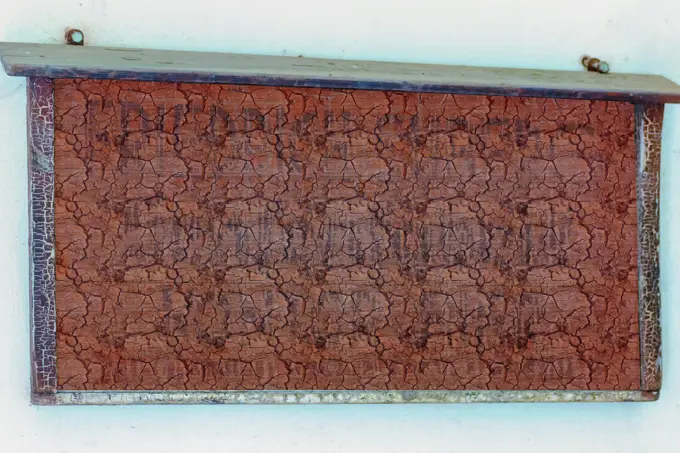
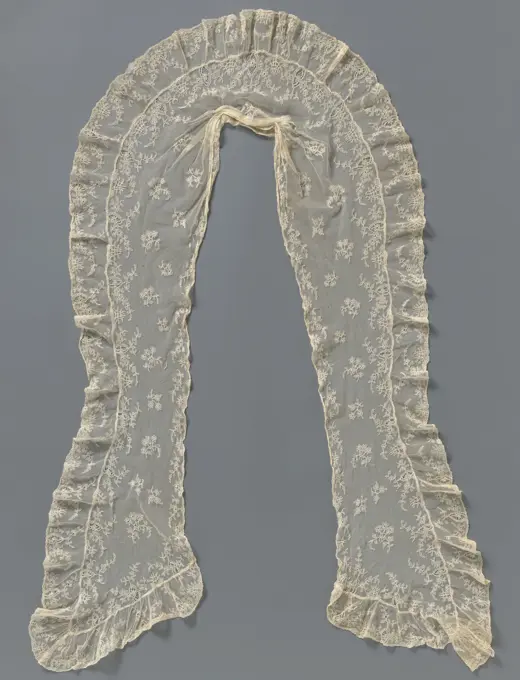
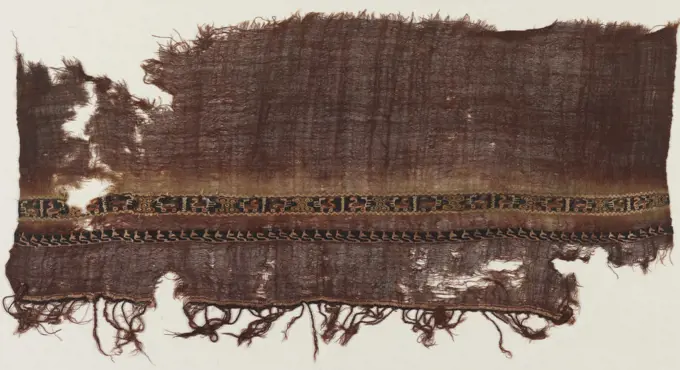
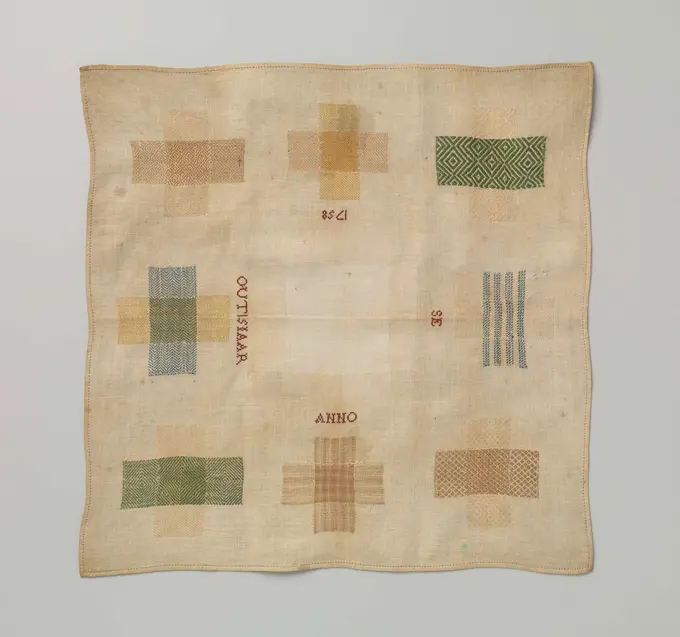
Geometric Textile Patterns

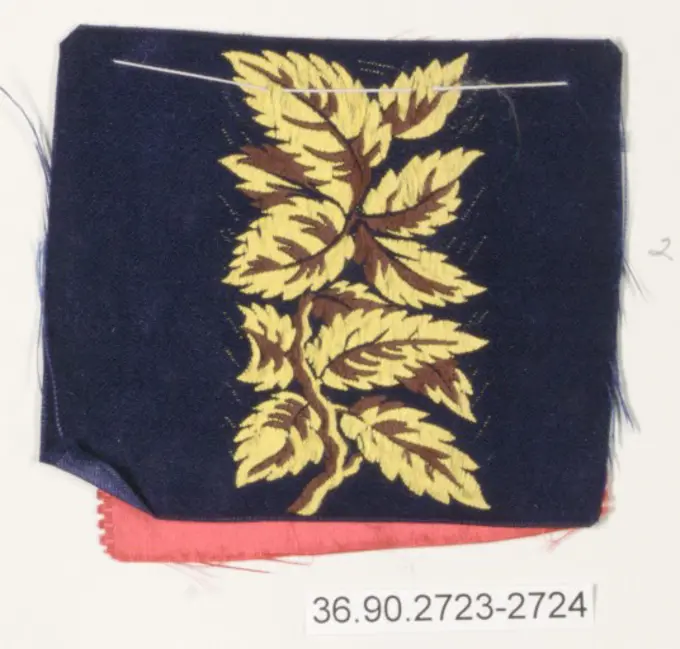
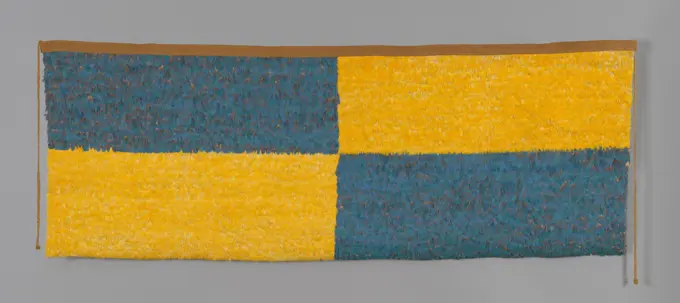
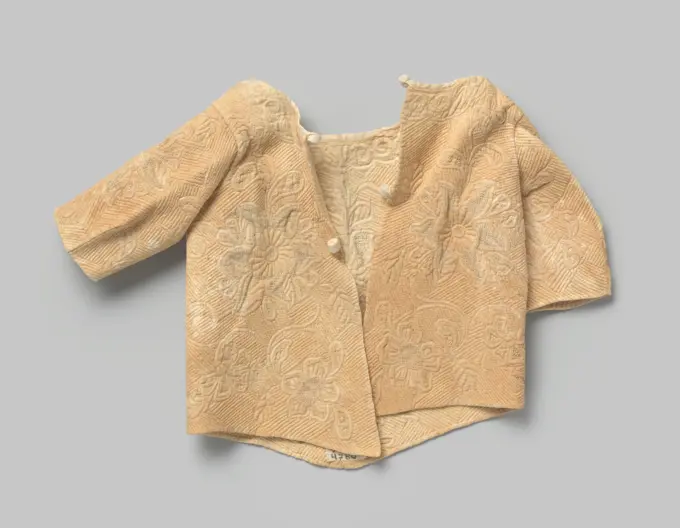
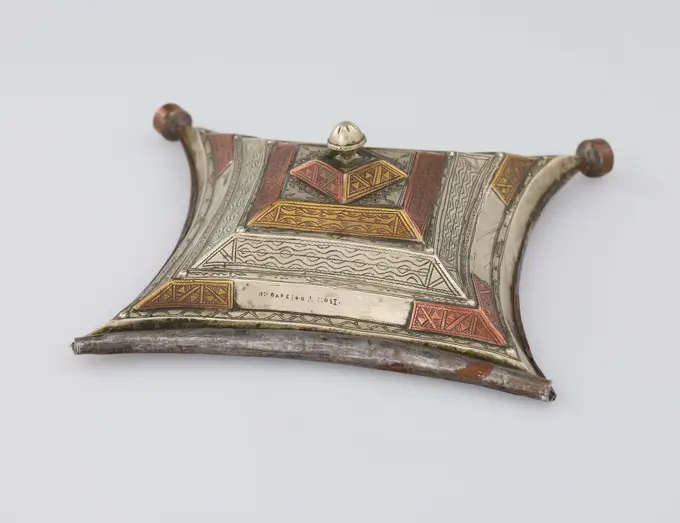
Textile fragments featuring geometric designs, showcasing diverse weaving techniques and historical significance from different cultural contexts.

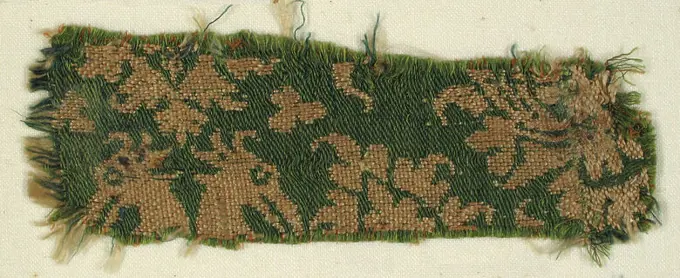
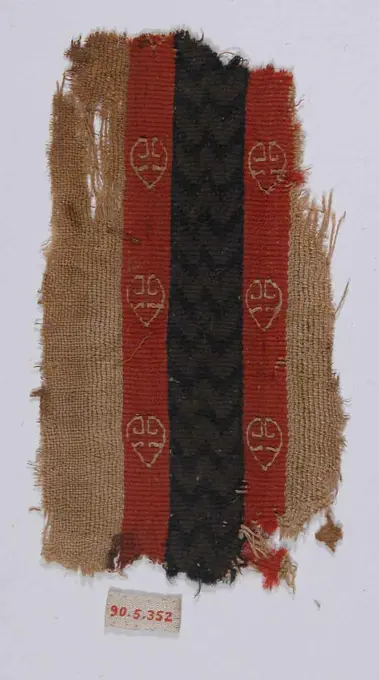
Fragment, Medium: wool, linen Technique: plain weave with warp and weft floats, Geometric lozenge design in salmon pink and white., Spain, 17th century, woven textiles, Fragment
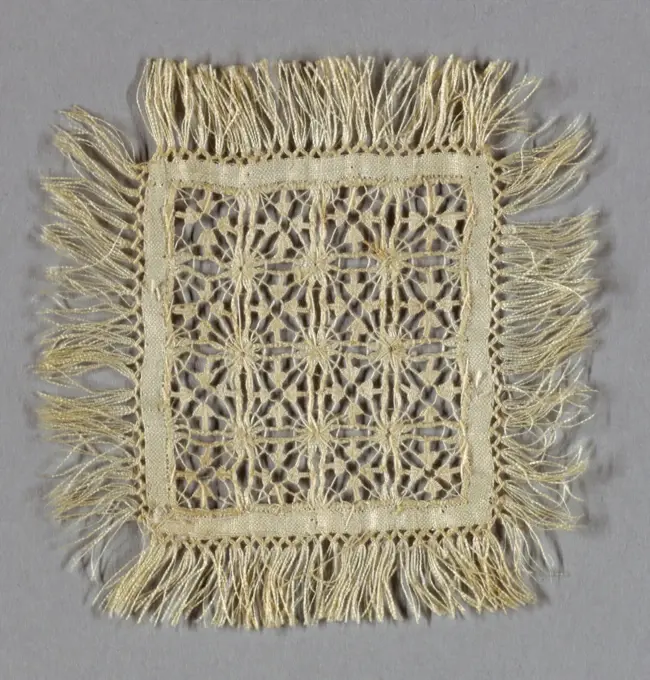
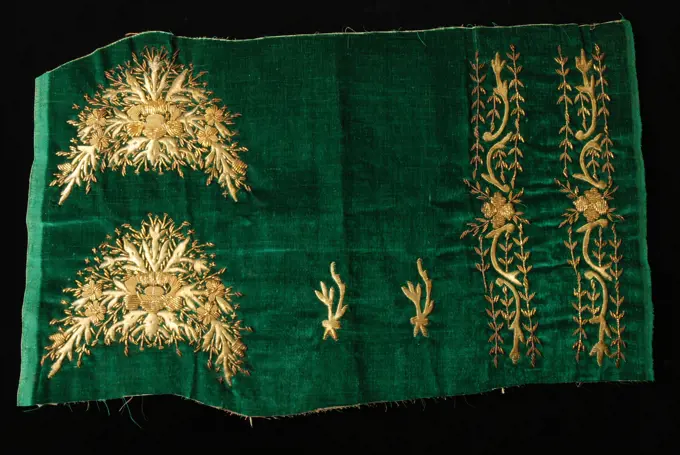
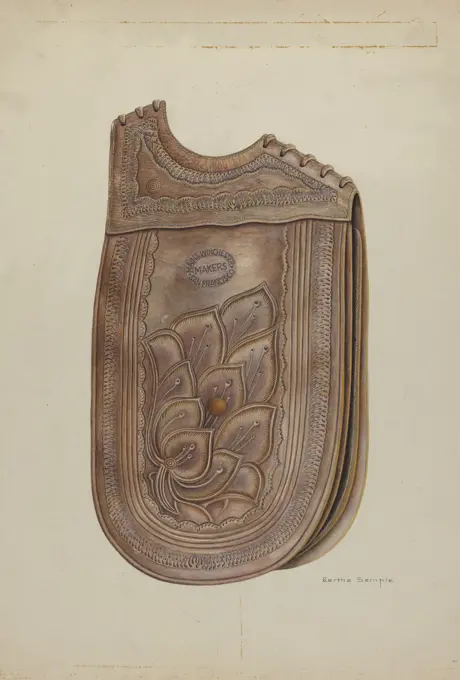
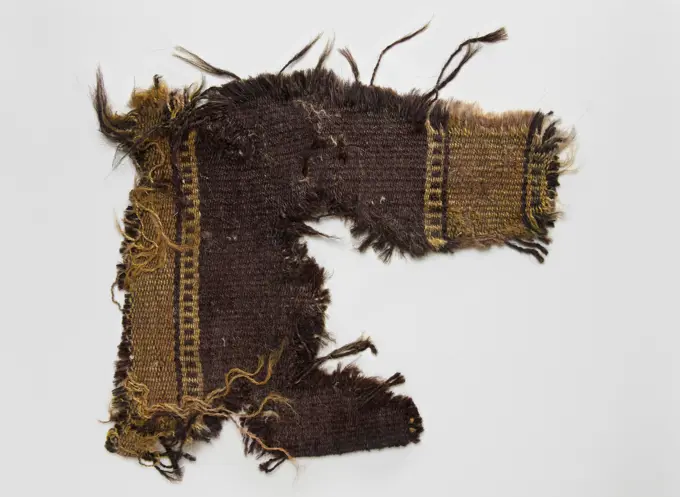
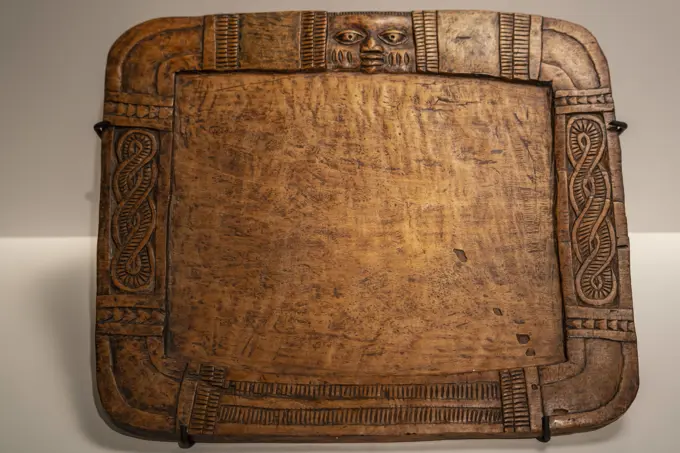
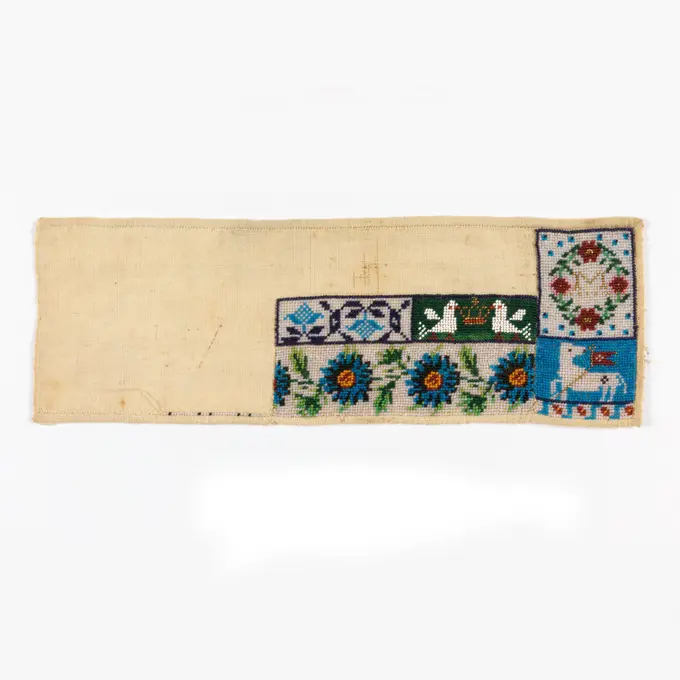
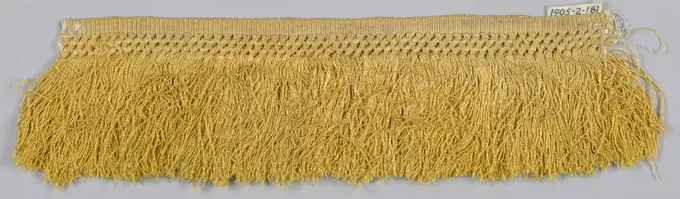
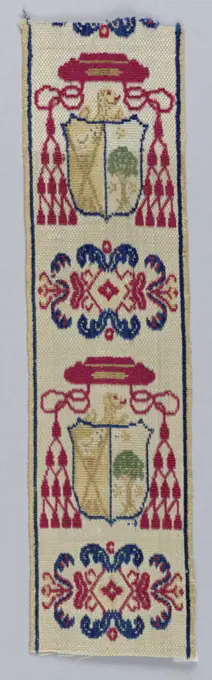
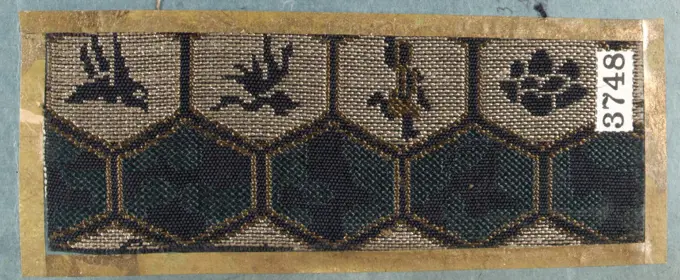
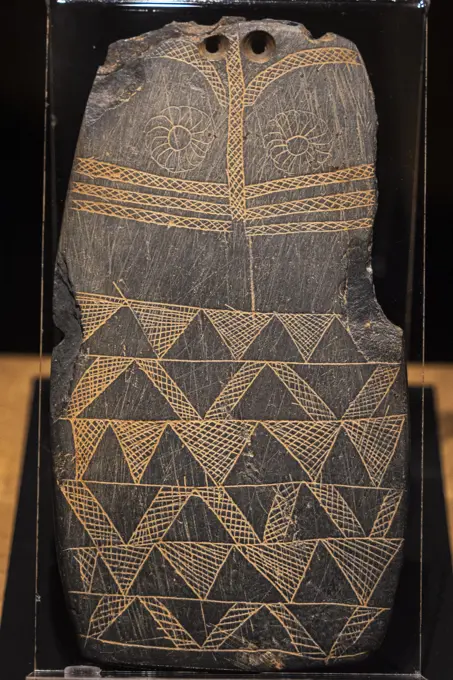
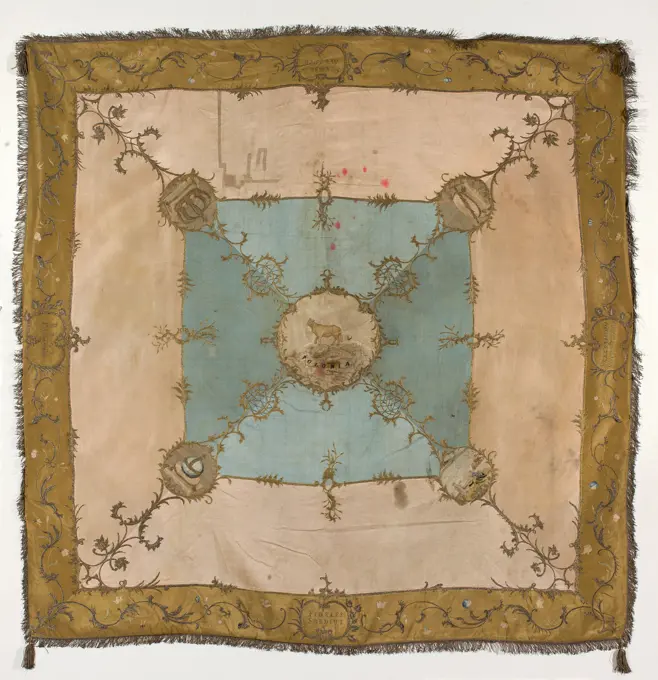
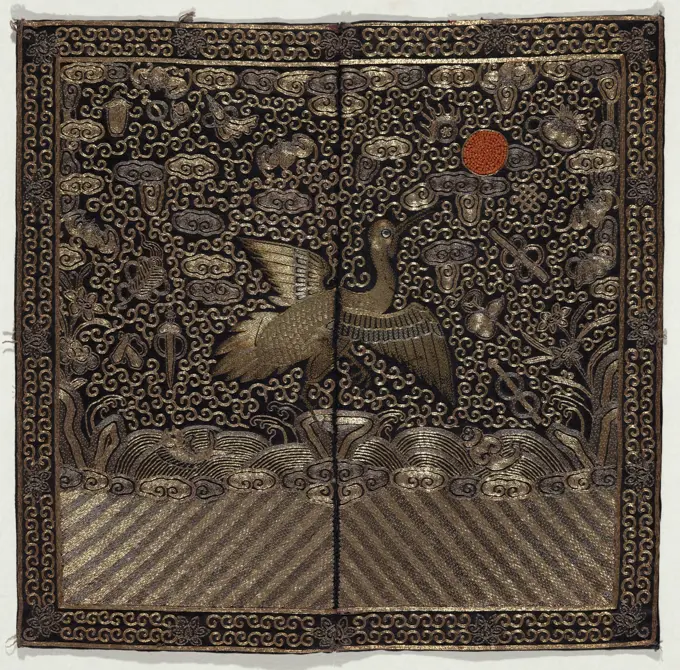
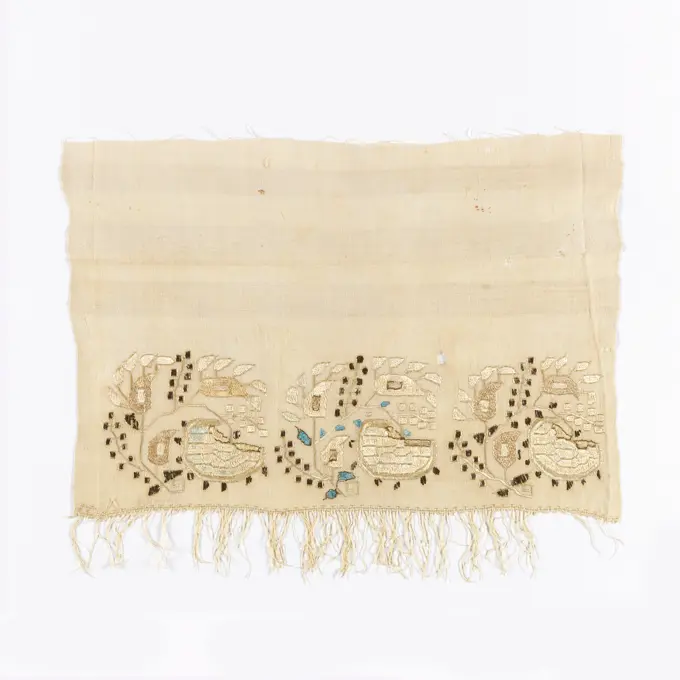
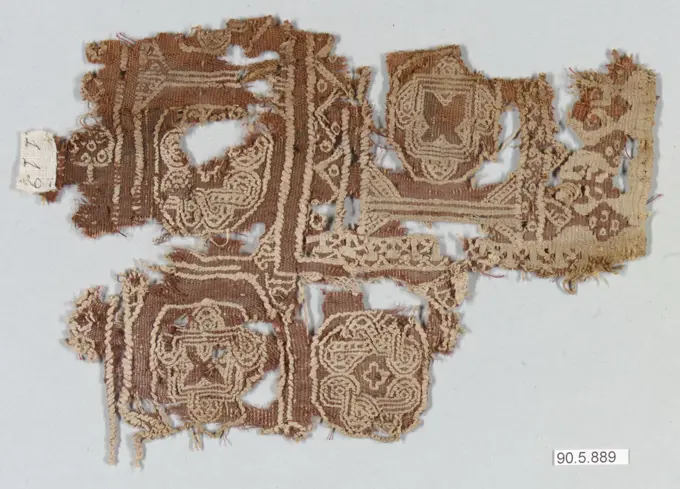
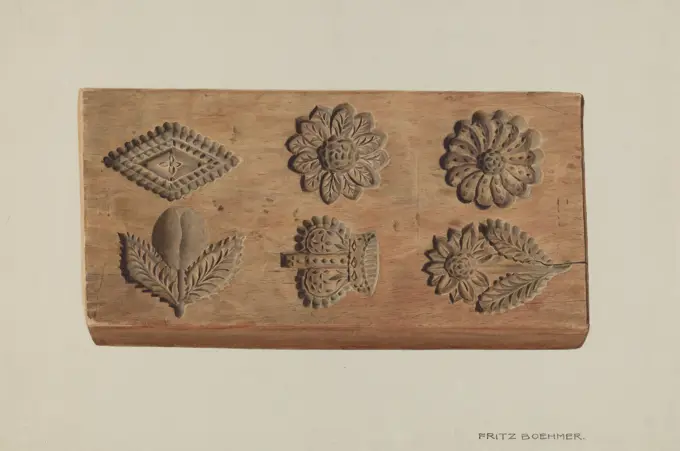
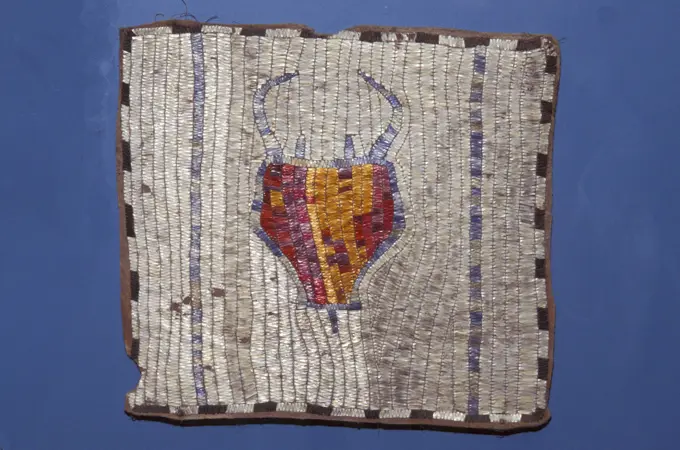
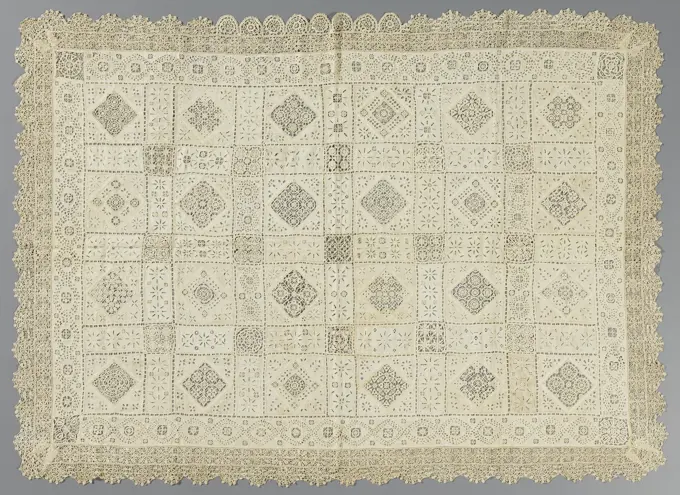
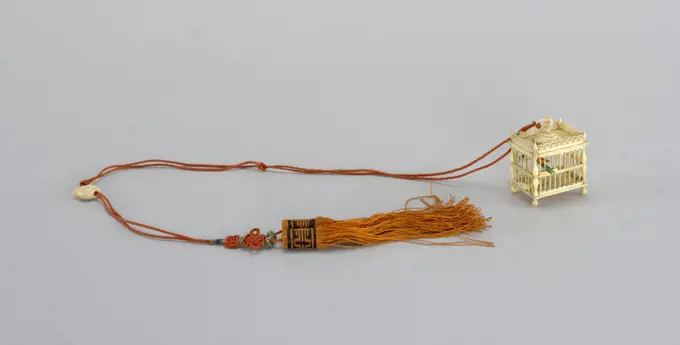
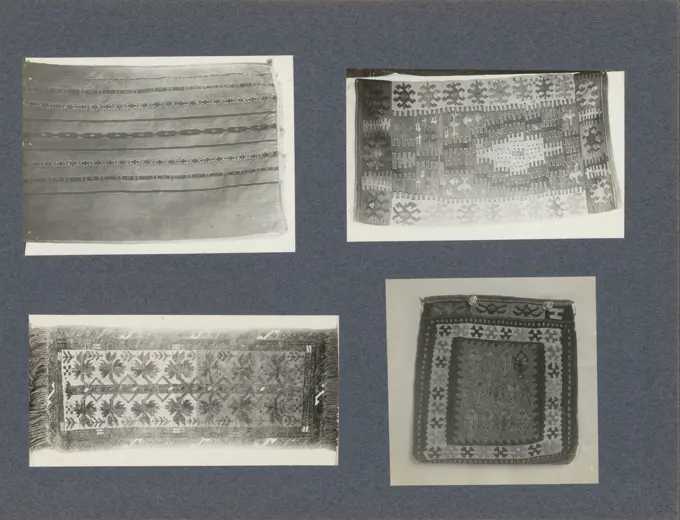
Fragment (India); cottonSample, Medium: linen Technique: grid of withdrawn element with needle lace, reticella style, Square of fringed linen with center portion ornamented with drawn and cutwork with lace stitches. One of six samples mounted on a piece of blue satin ribbon., New York, USA, 1892, lace, SampleFragment of the fabric;  18th century (1701-00-00-1800-00-00);Bobińska, Jadwiga (1862 - 1940) - collection, gift (provenance), fabricsStomacher 1720s British. Stomacher 87492Sampler (England); Embroidered by Elizabeth Andrew (English); silk embroidery on linen foundationPanel Fragment 5th-6th century. Panel Fragment 444368Chinese ornamentA children's spread of white, stitched satin with bow edge, anonymous, 1700 - 1800 A children's spread of white, stitched satin with bow edge. Fed.  satin A children's spread of white, stitched satin with bow edge. Fed.  satinFragment 16th century Italian. Fragment 230586Stole. unknown, authorFragment, Medium: silk Technique: velvet, Genoa, Italy, 17th century, woven textiles, FragmentNetwork 17th century Italian. Network 219378Lap of green velvet with gold thread embroidery in the form of shoe cover, mops can be made of the cloth, part semi-finished shoe footwear clothing velvet metal, textile embroided trimmings shoe makerSteel bobbin with coarse wire as an example of the connecting racroc stitch, anonymous, c. 1900 - c. 1930 sample Steel natural-colored bobbin side with coarse wire as an example of a racroc stitch with a fragment Chantilly side in which this technique is used. The racroc stitch is applied as a connection in sides with a tulist or drochel soil. The date concerns the steel. Amsterdam cotton (textile) bobbin laceTextile with Figures 14th century Italian. Textile with Figures 463301Fragment 13th century Crusader. Fragment 475349Silk Fichu, Anonymous, c. 1790 - c. 1810 Silk Fichu, equipped with narrow rolling soil. Netherlands whole: Silk Silk Fichu, equipped with narrow rolling soil. Netherlands whole: SilkChintz Fragments (India); cottonBertha Semple, Saddle Bag, c 1939 Saddle BagGeorge Constantine, Shaker Linen, 1935 1942 Shaker LinenDarning Sampler (unfinished) (Germany); cotton, woolTextile Goats Hair TapestryTarock game, tw, With Wiener Type,Volksleben representations - ten cross,meetingTAPIZ DE PLUMAS DE HACE 2000 ANOS. Location: EMBAJADA PERUANA. MADRID. SPAIN.Fragment 18th century Bulgarian or Russian. Fragment 215496Ifa-Wahrsagetablett Ifa divination tray, Opon Ifa, Yoruba, Ketu region, Dahomey, Benin, 19th century, carved wood, MEB, Barcelona, Catalonia, Spain LicenseRF Copyright: xZoonar.com/BartomeuxBalaguerxRotgerx 23171521Fragment (USA)Sampler (Mexico); glass beads, cottonFringe, Medium: silk Technique: plain weave, Yellow fringe with a plain weave heading, band in a trellis pattern above yellow skirt threads., Spain, 17th century, trimmings, FringeLivery trimmings, Medium: silk Technique: cut and uncut supplementary warp pile (velvet) in a woven foundation, Eight fragments of trimmings for coach or livery in multicolored velvet with the heraldry of family, profession or Catholic Church., France or Spain, 18th century, trimmings, Livery trimmingsBobbin Lace Cuff, 18th century. Italy, Milan, 18th century. Lace, bobbin: linen; overall: 22 x 19 cm (8 11/16 x 7 1/2 in.).Silversmith's Art, Italy 20th century. Mario Buccellati, Silver powder compact with gold push button and hinged cover ornated with an engraving depicting a typical lace of Burano.Fragment of a Tunic 6th century. Fragment of a Tunic 443679Fragment of embroidery for shoe covering unknownRibbon (France)Textile Sample from Sample Book 19th century Japan. Textile Sample from Sample Book 68225eyed plate idol eyed plate idol, slate, 2500-2000 BC, Los Gabrieles 2, Valverde del Camino, Huelva Museum, Huelva, Andalusia, Spain Copyright: xZoonar.com/TOLOxBALAGUERx 21720754Handkerchief fourth quarter 19th century French. Handkerchief 168358Fragment of a Cover or Blanket with Interlace Square 4th-5th century The rich purple color of this fragment is due to the use of a highly prized murex (shellfish) dye. The use of this dye was a controlled privilege. This purple was imitated, with varying success, by overdying more common colors. The loop pile seen here was created using a supplemental weft thread.. Fragment of a Cover or Blanket with Interlace Square 443248SERVATE;  1783 (1783-00-00-1783-00-00);Stanisław August Poniatowski (King of Poland - 1732-1798), Strzałecki, Antoni Jan (1844-1934) - collection, purchase (provenance)Rank Badge with Wild Goose for Civil Official (FourthRank)Sampler (Austria); silk and linen embroidery on linen foundationFragment (Bonnet Trim) Made 1840-1850 Europe. Straw and silk, simple gauze weave with ground wefts turning after each gauze crossing; edged with straw in pairs of joined braids of oblique interlacing; top horizontal openwork pattern with four rows of heavy zig-zag lines superimposed; lower edge two rows of additional zig-zag lines, in brown .Wooden sign without lettering Wooden sign without lettering with textured pattern Copyright: xZoonar.com/JFsPicx 12782828Pieces 18th century Dutch. Pieces 230824Piece of a costume 1774-92 French. Piece of a costume 220181Passe -Partout for Painting with geese in a landscape, Anonymous, 1400 - 1600 Passe-partout for geese in a landscape. Japan paper. ink. dye Passe-partout for geese in a landscape. Japan paper. ink. dyeCap crown, Medium: linen Technique: bobbin lace, Brussels style, Cap crown worked with floral design and central floral motif., Belgium, 18th century, lace, Cap crownNeedlecase Sampler Made 1775-1800 England. .Fichu made of cotton tulle through with floral pattern, with long slips to be worn over the chest, anonymous, c. 1875 - c. 1900 Fichu made of cotton tulle with floral pattern, with long slips to be worn crosswise over the chest. Model: consisting of a tapered, smooth part to which a wrinkled strip on the outside. Taken together around the neck in different places by means of stitches. Lying flat around the neck and with the ends crossing over the chest, knotted or tied on the back. Decoration: Along the edge flower garlands and a stylized angular ornament with thickened contour threads. Above spread bouquets. Plauen (Possibly) whole: Cotton (textile). Decoration: Cotton (textile). whole: bobbin lace Fichu made of cotton tulle with floral pattern, with long slips to be worn crosswise over the chest. Model: consisting of a tapered, smooth part to which a wrinkled strip on the outside. Taken together around the neck in different places by means of stitches. Lying flat around the neck and Fringe Swiss 19th centuryFragment, Medium: linen, wool Technique: plain weave, resist dyed, tapestry weave, wefts single, eccentric wefts, slits, vertical wrapping, One end of a loosely woven plain weave wool fabric with tapestry woven bands at one one. One band derived from Arabic script in black and ivory. The wider band a repeat of units containing two birds and a polychrome geometric band. The wider band reserved in the dying of the fabric to produce a deep red. Warp fringe at bottom., Egypt, 10th-12th century, woven textiles, FragmentPyx veil, embroidered unknownRussian Empire. Russian Army of Novotroitskiy. Belt of a Cuirassier Regiment officer. Russia, 1763-1778. Latvian War Museum. Riga. Latvia.Steel bobbin with coarse wire as an example of a soil in mains, anonymous, c. 1900 - c. 1930 sample Steel natural -colored bobbin with coarse wire as an example of a soil in mains stroke with a fragment side in which this technique is used. The date concerns the steel. Amsterdam cotton (textile) bobbin laceBand. Date/Period: 17th century. Band. Medium: cotton . Technique: two complementary integrated structures, plain weave plus plain weave. Author: UNKNOWN.Plug of multicolored silk on cotton muslin .. stoppaper with multicolor embroidery. The embroidery consists of the initials SE and Anno 1758.Sampler (Austria); silk embroidery on linen foundationPiece 18th-19th century Japan. Piece 66939Stomacher first quarter 18th century British. Stomacher 102662Fragment. Egypt. Date: 201 AD-400 AD. Dimensions: Diameter: 8.3 cm (3 1/4 in.). Linen and wool, tapestry weave. Origin: Egypt. Museum: The Chicago Art Institute, Chicago, USA.Fragments, Medium: cotton Technique: printed on plain weave, Brown and purple on a white ground in a design of one inch brown vertical stripes alternating with wider bands in a floral design., England, 1870-80, printed, dyed & painted textiles, FragmentsRibbon French 19th centuryFragment of fabric unknownCoca Bag. Culture: Moche. Dimensions: H. 5 x W. 6 in. (12.7 x 15.2 cm). Date: 5th-7th century. Museum: Metropolitan Museum of Art, New York, USA.Feathered Panel A.D. 600-900 Wari The discovery of an ancient burial or ceremonial site in the upriver region of the Churunga Valley, in far south Peru, received little attention in the turbulent world of 1943. Decades later, it would take two generations of Andean scholars to painstakingly piece together the puzzling story of this discovery, which included the largest and most spectacular find of Precolumbian Peruvian feather work to date.Protected from decay by being rolled, placed into large ceramic jars, and buried in the arid soil, the cache included an estimated ninety-six panels, each densely covered with tens of thousands of small glossy macaw body feathers, primarily from the blue and yellow macaw (Ara ararauna). Although these panels were found in the dry western foothills of the Andes, the birds home is the Amazonian rainforest, far to the east. The effort required to secure such a mind-bogglingly large supply of either feathers or live birds suggests that colorful feathersBorstrok with Zaans stitching with a few open stitches, anonymous, c. 1700 - c. 1800 Borstrok with Zaans stitching with a few open stitches. Lower-over-Heembeek  embroidering Borstrok with Zaans stitching with a few open stitches. Lower-over-Heembeek  embroideringGallon;  beginning of the 19th century (1801-00-00-1810-00-00);Amulet container, late 1800s, 6 1/8 × 6 3/4 × 2 1/4 in. (15.56 × 17.15 × 5.72 cm), Iron, brass, copper, silver, Niger or Algeria, 19th century, Tuareg men and women wear metal amulets containing Quranic verses and other protective messages suspended from cords around their necks. The large example is especially rare because of an inscription incised on the outside in Tifinar script, which is related to ancient Libyan scripts dating to 150 BCE. The inscription, whose letters are made up of lines, circles, and dots, reads from right to left and transcribes as NK SDLMQTR G XLYFA. It means, 'I am Mr. Lmqtar Khalifa,' likely referring to a previousTextile with Figures. Culture: Italian. Dimensions: Overall: 1 1/4 × 3 3/4 in. (3.2 × 9.5 cm)Storage (Mat with 09.50.985-.987): 8 1/2 × 13 in. (21.6 × 33 cm). Date: 14th century. Museum: Metropolitan Museum of Art, New York, USA.Embroidered travel bag, c. 1910 Embroidered travel bag.  textile materials. metal Embroidered travel bag.  textile materials. metalFragments sits with stripe pattern on white soil with eggplant -colored ovals, contained in vertical garlands, c. 1785 - c. 1795 Fragments sits with stripe pattern on white soil with eggplant -colored ovals, contained in vertical garlands. Pattern: On a wide white track there are five different stripes between two equal eggplant -colored tires. The middle of the five consists of light blue garlands with rose branch, interrupted by eggplant -colored ovals. Marked on two separate fragments: E in accolade -shaped list in Orange; Drincklerin in Geel; brands in aubergine -colored edge; Le ... () In red; E. Malin in red; Dubvel o and (broken) m.kr ... in black. On the second sample: MC12, .16.15 and 1221. Fragment individually numbered as -a, -b and -c. Alsace cotton (textile) printing Fragments sits with stripe pattern on white soil with eggplant -colored ovals, contained in vertical garlands. Pattern: On a wide white track there are five different stripes between two equal eggplant -colorePair of Neck Defenses (Crinet) and Breast Defense (Peytral) from a Horse Armor 15th-17th century Tibetan or Mongolian These three pieces are remarkable for their excellent state of preservation, and rank among the most elaborately decorated examples of Tibetan leather horse armor known. The vivid decoration consists of repeating patterns of stylized lotus, peony, and other blossoms in gold, set against alternating reddish orange, black, and maroon grounds. The lacquerlike effect appears to consist of a base layer or layers of pigmented shellac, the gold floral designs in gold leaf, a layer of shellac over the gold leaf upon which the details were painted in fine black lines, and a final coat or coatings of a tung oil glaze. In addition to their elaborate decoration and fine workmanship, these pieces are very strongly made and would have been fully functional as defensive armor. They, and the few examples like them, represent a high point not only in Tibetan armor making but also in TibBelt buckle and decorative plaques 7th century China Belts embellished with plaques made of various materials were worn in many of the nomadic cultures that roamed the Central Asian steppe in the first millennium B.C. and later. Some were made in China for its northern neighbors; others were fashioned and used domestically, particularly from the fifth to the eighth century, when nomadic confederacies often ruled parts of northern China.This elegant set is an unusual example of such adornments made using glass, a precious commodity in Tang China that was both produced locally and imported from western Asia. Minute pieces of comma-shaped brown and green glass have been carefully placed into small enclosures defined by thin gilt bronze wires to create images of a bird against a floral background in the rectangular plaques and a flower with four petals in the square one. Tiny seed pearls fill the borders of all the plaques, which were once backed with silk. This extraordinarily rare group Sample early 19th century French. Sample 219334Textile Fragment 6th-7th century. Textile Fragment 443689Folding Fan with Scene of Figures in a Courtyard Garden Chinese, for the European Market 19th century View more. Folding Fan with Scene of Figures in a Courtyard Garden. Chinese, for the European Market. 19th century. Silk and ivory. FansTowel End; cotton with copper stripes and colored silksConciliate belt; Manufaktura Aleksander Unruga (Kobyłka; Pasów Factory; 1781-1787); 1781-1784 (1781-00-00-1784-00-00);Padement of gold and silver thread. Idesement or Gold and Silver Wire.Pall, Appiiqué unknownPanel Fragment 5th-6th century. Panel Fragment 444366Purse ca. 1860 American. Purse 79226Sampler (United States or England); wool and silk embroidery on linen foundationLetter case late 17th or early 18th century French. Letter case. French. late 17th or early 18th century. Silk and metal thread. Textiles-WovenGlass Fragment. Culture: European. Dimensions: Overall: 3 3/4 x 2 1/2 in. (9.5 x 6.5 cm). Date: 14th-15th century. Museum: Metropolitan Museum of Art, New York, USA.One of the 3,000 oriental rugs from Arthur T. Gregorian Inc., 2284 Washington Street, Newton Lower Falls, Mass. 02162 , Rugs, Textile industry, Tichnor Brothers Collection, postcards of the United StatesTrimming (Italy); white, black, and colored silks in velvet weave.; Overall: 16.5 x 5.5 cm (6 1/2 x 2 3/16 in.)Bamboo slipRenaissance Fringe Made 1501-1600 Italy. Silk and gold gilt strip wound around silk fiber core, warp-faced plain weave with extended ground wefts loop fringe .Fritz Boehmer, Pa German Springerle Board, 1935 1942 Pa. German Springerle Board1889 Quillwork of the head of a buffalo design to decorate a chest ornament that would be sewn onto the front of a warriors buckskin shirtTrimming Fragment; silkFragment of a Shoulder Band 5th-6th centurySpread of linen with embroidery and reticella, anonymous, c. 1550 Sprei consisting of linen squares and rectangles that are embroidered (open sewing) with oval leaves, in which a length axle of a double thread runs. An intermediate brush of needle side - Reticella - and a sculpy strip runs all around. The embroidery shows stars, rosettes, leaves and Margrites. The side has a pattern of wheels and stars. A strip of linen with a double pendulum of oval and squares runs around the bedspread. MDL (1550) is embroidered in the outside. Southern Netherlands (possibly) linen (material) embroidering Sprei consisting of linen squares and rectangles that are embroidered (open sewing) with oval leaves, in which a length axle of a double thread runs. An intermediate brush of needle side - Reticella - and a sculpy strip runs all around. The embroidery shows stars, rosettes, leaves and Margrites. The side has a pattern of wheels and stars. A strip of linen with a double pendulum of oval and squares rFragment, Medium: cotton Technique: printed on plain weave, Ground of dark and medium purple stripes patterned with small dots and vermicelli. Over the stripes is a design of red and white circles and curlycues., Normandy, France, ca. 1850, printed, dyed & painted textiles, FragmentTable Cover (USA); cottonWhite handicraft in macramé. Handicraft in the shape of a square in macramé with frills, white. Belonging to series of eight white and ten colored needlework, manufactured by Aagje tapp for obtaining the deed beautiful and / or useful needlework to the industrial school, BK-1974-105-A to R.Cricket cage, Ivory, silk (cord and tassel), Rectangular cage (a) with turned corner posts terminating in pointed finials at top, ball feet; pierced gallery around top edges; hinged door at one side; rectangular, partitioned 'food trough' in cage, next to door; two red and orange ivory birds sit on flat green perch suspended in cage. Orange silk cord attached to ring at top of cage, and decorated with orange and black tassel, flat ivory bird (b), and knotted green bands near tassel., Japan, India, late 19th century, containers, Decorative Arts, Cricket cageCarpets (2), c. 1910 - c. 1911 photograph Album magazine with four photos of carpets. Part of photo album of the Palthe family from Almelo.  cardboard. paper. photographic support gelatin silver print carpet, rug