Geometric Textile Patterns

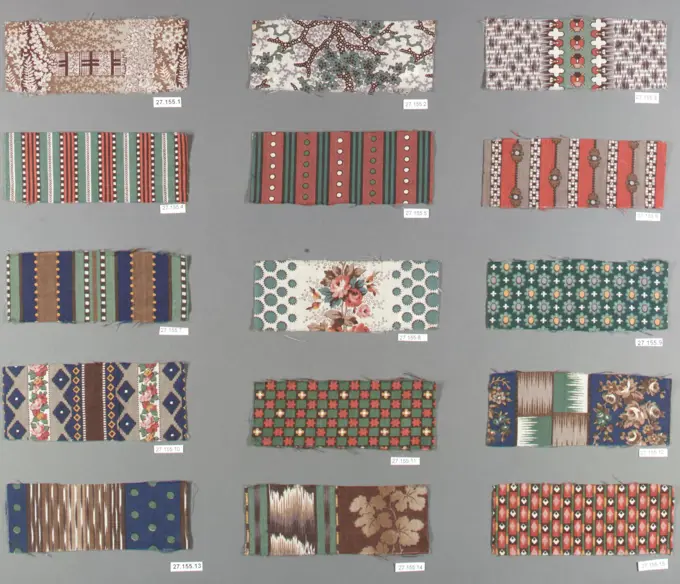
Textile fragments featuring geometric designs, showcasing diverse weaving techniques and historical significance from different cultural contexts.

Fragment, Medium: wool, linen Technique: plain weave with warp and weft floats, Geometric lozenge design in salmon pink and white., Spain, 17th century, woven textiles, Fragment
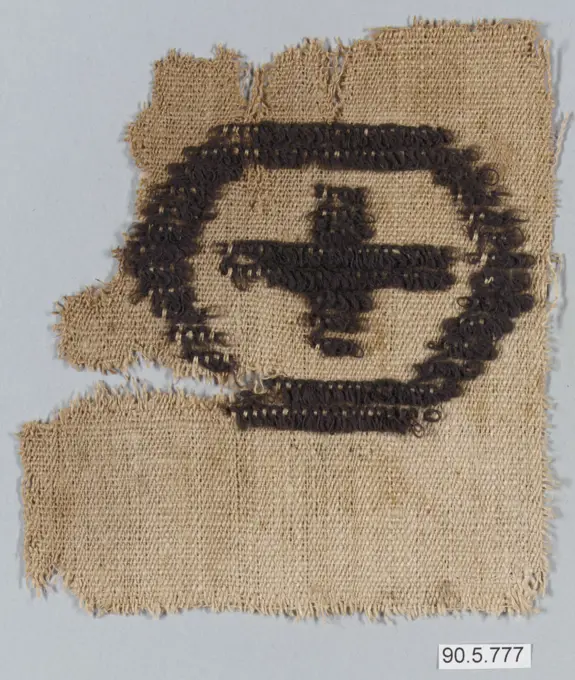
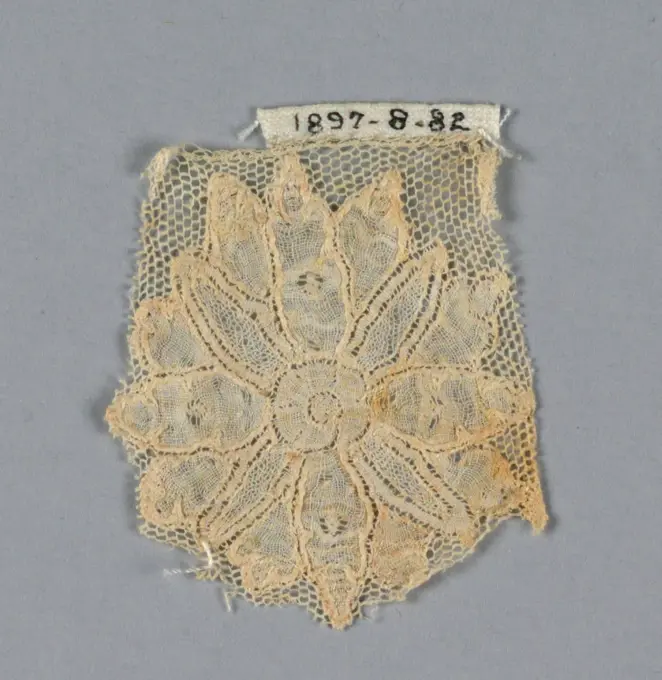
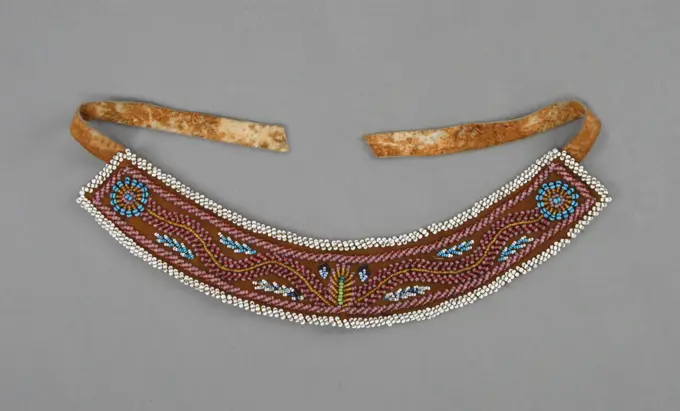
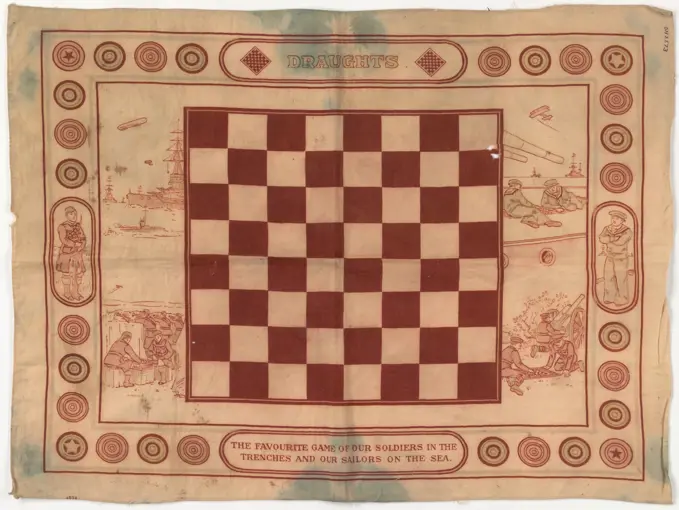
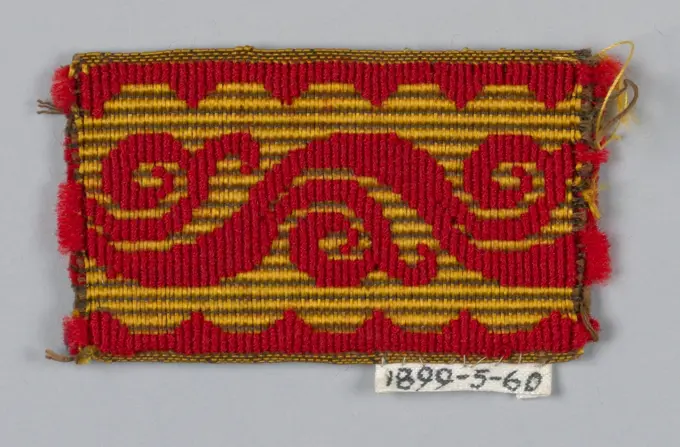
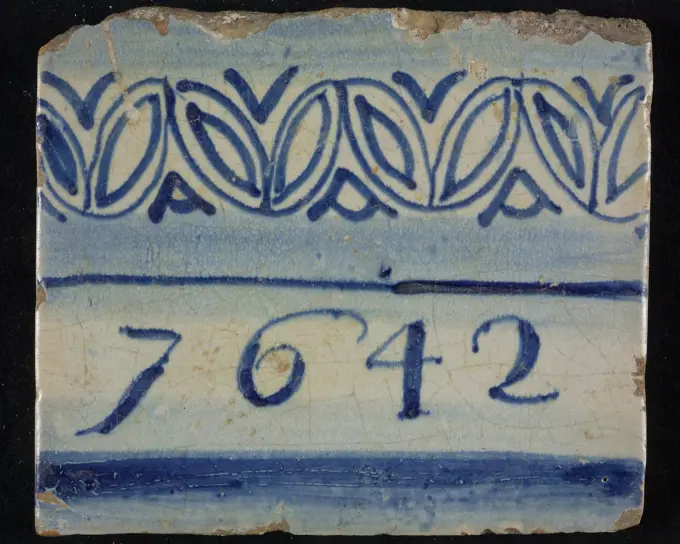
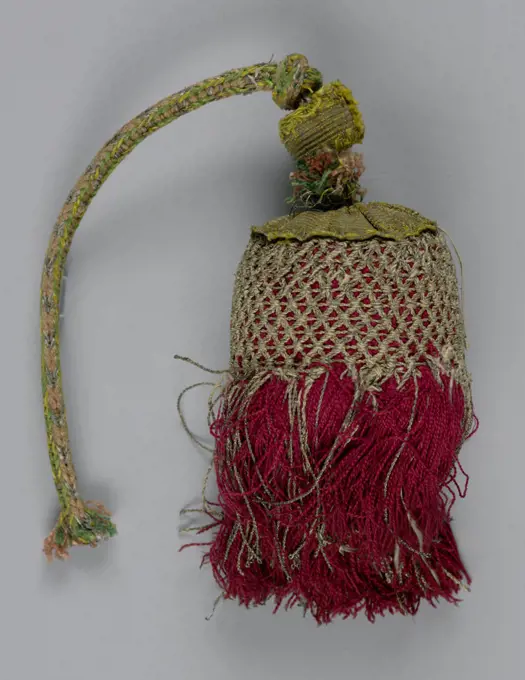
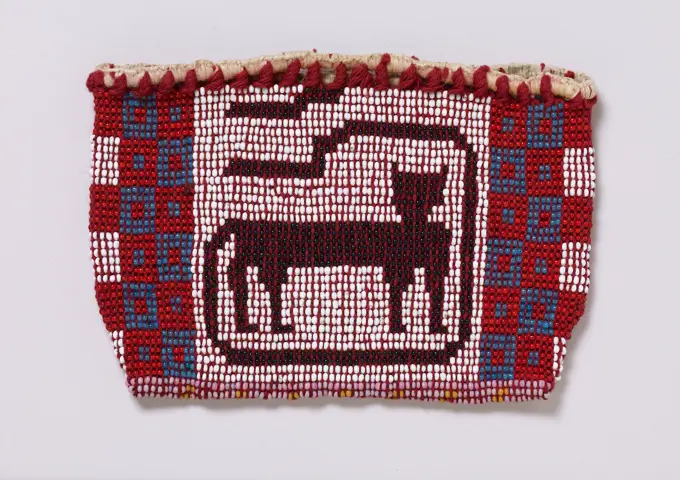
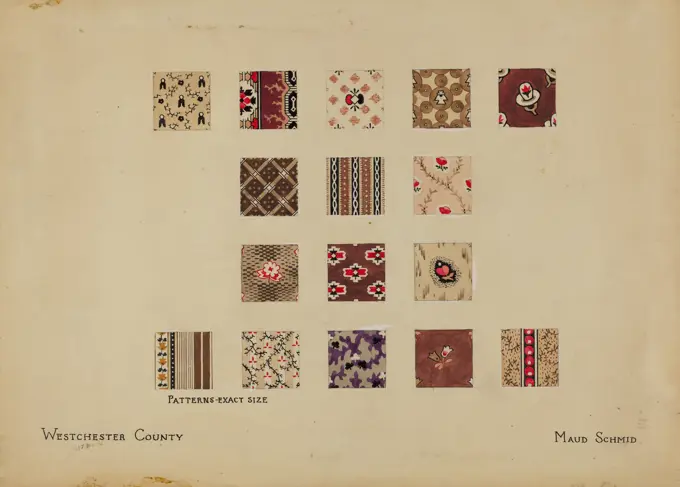
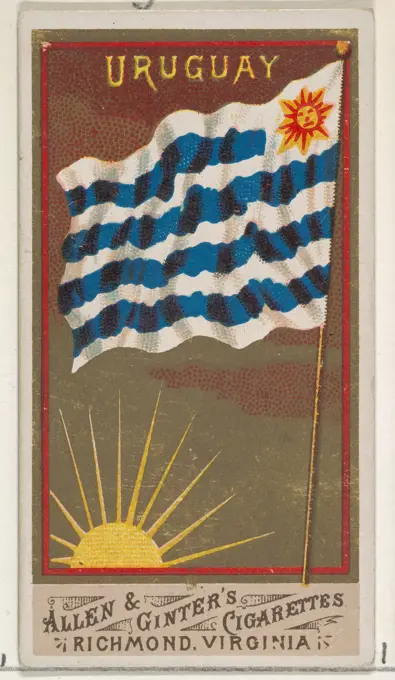
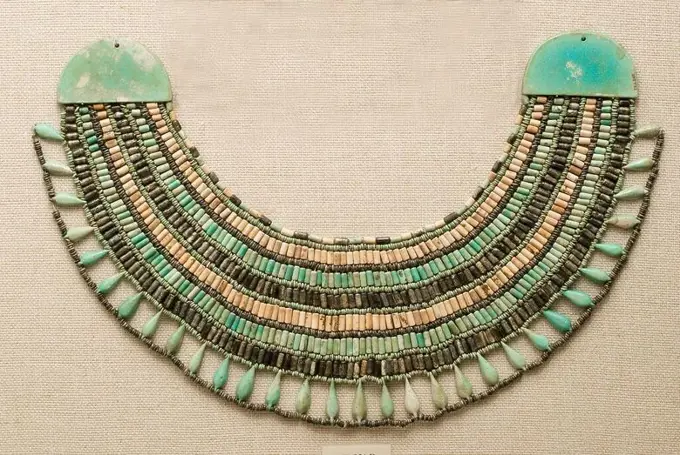
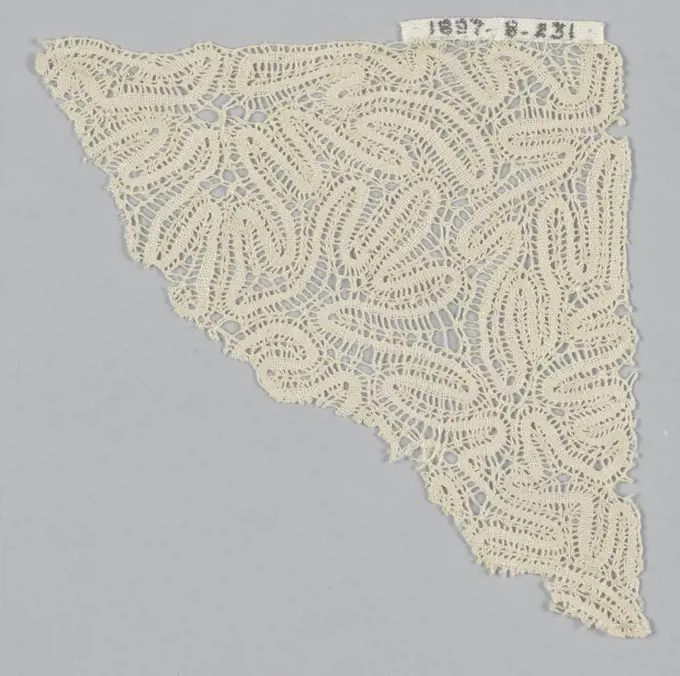
Lace 16th century Italian. Lace. Italian. 16th century. Bobbin lace. Textiles-LacesPiece 18th-19th century Japan. Piece 67650Piece 19th century Japan. Piece. Japan. 19th century. Silk / Compound weave. Textiles-WovenAltar-cloth. unknown, authorWiennerische Finger = Calenderl to the year  , Viennese finger calendar, On the year , A year of switching v,  daily, In addition to normal Sparrow, Vienna, printed with von Ghelische Writings, in the new Michaeler-Haus, Johann Leopold van Ghelen -, publishing houseSample early 19th century French. Sample 224810Comb Decorated with Sacred Geese 12th Century. Sri Lanka.Fragment, Medium: linen Technique: needle lace, Fragment with a flower bud and a portion of the stem., Venice, Italy, 17th century, lace, FragmentTextile Fragment 4th-5th century. Textile Fragment 444256Fragment; linenFragment of side of chasuble unknownMedallion, Medium: Warp; S-spun linen, Wefts; S-spun linen, S-spun wool, Technique; slit tapestry with supplementary weft wrapping., A circle with a maze pattern in the center of an eight pointed star. Black on off-white ground., Egypt, 3rd-4th century, woven textiles, MedallionComb ca. 1295-1070 B.C. New Kingdom, Ramesside. Comb 551960Collar -Trimming, White, black, and colored silk in velvet weave., Two shields, each under a crown. One shows two trees (green and black on yellow). The other shows armorial devices in blue within a red band ornamented with red castles., possibly Portugal, early 19th century, trimmings, TrimmingSteel climbing side with coarse thread as an example of rose ground (Groundground). Steel natural colosside with coarse thread as an example of a rose ground with a fragment side in which this technique has been applied. The date concerns the steel.Fringe probably European 19th centuryBorder (France); block-printed on paper; 19 x 8 cm (7 1/2 x 3 1/8 in.)Case printing in the form of a belt with two letters: s and z;  1916 (1916-00-00-1916-00-00);Draughts board, 1915, maker unknown. Gift of Mr H. Ackerley, 1966.napkins on a trayInlaid throne, Tutankhamun's Treasure, EGYPT.Trimming Fragment (France); silk, wool, cotton; Warp x Weft: 8 x 4.6 cm (3 1/8 x 1 13/16 in.)Cornelius Christoffels, Coverlet, c 1940 CoverletTile of chimney pilaster, blue on white, between two blue shaded edges 1642, above edge with ornaments, chimney pilaster tile pilaster footage fragment ceramics pottery glaze, baked 2x glazed painted in the decoration: 1642 adornStop flap of colored silk on cotton .. Stoppipe from silk on cotton. The embroidery has various pattern stops and the name AC van Duuren.Backrest -Piece 18th-19th century Japan. Piece. Japan. 18th-19th century. Silk. Textiles-WovenPRIEST'S COPE, BY VAN HALLE, OF BRUSSELSTassel, Medium: silk, metal thread on linen core, linen, Over a linen core, a skirt of red silk partly covered by a trellis of silver thread and topped with a galloon (probably a later addition). Cord of knotted pink and green silk and silver thread with a knob of galloon (later addition)., Italy or Spain, late 17th century, trimmings, TasselRelic of St. Gertrude, c. 1045. Germany, Lower Saxony, Romanesque period, 11th century. Plain weave variant rose colored silk with an extant selvage; This relic is housed in the portable altar commissioned by Countess Gertrude of Brunswick, one of the Guelph Treasure’s earliest and most sumptuous objects.Swatches, Medium: silk Technique: woven (velvet), Six samples by Worth., France, late 19th century, woven textiles, SwatchesFragment (France); linenManuscript Box (Sadaik), late 19th-early 20th century, 5 9/16 x 26 7/16 x 7 9/16 in. (14.1 x 67.2 x 19.2 cm), Teakwood with relief-moulded lacquer (thayo), gold-leaf, glass and mirror decoration, Myanmar (Burma), 19th-20th century, Burmese Buddhist textscarriers of Buddhist dharma, or teachingsand other religious manuscripts are considered sacred objects. They are stored in heavily embellished and gilded chests called sadaik, which, when displayed within the monastery, are often set on high ornamented stands. Lacquer molding, called thayo, typically decorates these boxes.Tunic with Ornamental Inscription, 1329-1955. Iran or Iraq , 14th-20th century. Lampas weave, silk; overall: 127 x 149.8 cm (50 x 59 in.).Traditional Navajo woven basket tray used for placing food and household items.Lap of embroidered silk, anonymous, c. 1799 - c. 1800 Fragment of white rips side with moiré effect on which a pattern of flowers in pink, green, blue, white and yellow is embroidered.  silk Fragment of white rips side with moiré effect on which a pattern of flowers in pink, green, blue, white and yellow is embroidered.  silkMirror 19th century China. Mirror 69707Ceremonial skirt (pa sin), early 20th century, 36 x 26 15/16 in. (91.44 x 68.42 cm), Cotton, silk, Thailand, 20th centuryBand (Italy); linen, silkSamples 1856 Pacific Mills American. Samples 14913Individual cloth pennant or string flag High resolution isolated sack cloth pennant with blank surface ready for your message to create pennant flag messages in the sky Copyright: xZoonar.com/StevexHeapx 9542342Charm Bag, c. 1870-1880, 3 5/8 x 5 3/8 in. (9.21 x 13.65 cm), Beads, wool, cotton, United States, 19th century, Many Meskwaki and other Great Lakes artistic creations stem from a belief in 'Manitous,' supernatural beings who help anyone who appropriately seeks their services. This pouch depicts one kind of Manitou: an Underwater Panther. An important spiritual force, these powerful and potentially dangerous beings could disrupt the waters with their long and sometimes jagged tails, pulling people beneath the surface. The points on the head are horns, not ears.Sampler, 1800s. England, 19th century. Embroidery: silk on linen tabby ground; overall: 13.1 x 12.4 cm (5 3/16 x 4 7/8 in.).Two Orphrey Sections made into a runner; Top of an Orphrey late 19th or early 20th century Italian, French, American. Two Orphrey Sections made into a runner; Top of an Orphrey 461601Byzantine ornamentInr with Auspicious Characters late 18th-early 19th century Japan. Inr with Auspicious Characters. Japan. late 18th-early 19th century. Seven cases; lacquered wood with silver hiramaki-e on gold groundNetsuke: bone; lacquer and maki-e chestnutOjime: silver bead. Edo period (1615-1868). InrYellow-ground kimono with horizontal stripes, second half 19th century, Unknown Japanese, 51 7/16 × 48 3/4 in. (130.65 × 123.83 cm), Cloth: silk pongee (tsumugi) and cotton; twill weave, Japan, 19th centurySample. France. Date: 1825-1850. Dimensions: 8.8 × 11.25 cm (3 1/2 × 4 3/8 in.). Silk and straw, plain weave self-patterned by stripes of twill interlacing over plain interlacing; woven on loom with Jacquard attachment. Origin: France. Museum: The Chicago Art Institute, Chicago, USA.Maud Schmid, Friendship Quilt Patchwork Section, c 1936 Friendship Quilt-Patchwork SectionUruguay, from Flags of All Nations, Series 1 (N9) for Allen & Ginter Cigarettes Brands 1887 Issued by Allen & Ginter American Trade cards from the set, "Flags of All Nations," Series 1 (N9), issued in 1887 in a series of 48 cards to promote Allen & Ginter Brand Cigarettes. The museum's collection contains the 48 cards from the Series 1 set, as well as 10 variations and 5 mis-printed cards.. Uruguay, from Flags of All Nations, Series 1 (N9) for Allen & Ginter Cigarettes Brands 407145Figure playing and two dancing women, Anonymous, 1800 - 1900 Indian miniature. drawing The left side of the strip of cardboard is described with Oud-Indian script; The right side contains the performance; Between the performance and on both sides of show and text, a number of decorative tires in black and colors. The strip has a punch hole in the middle and is also evenly divided between text and show. Orissa cardboard brushSarape, c. 1865. America, Native North American, Southwest, Mexico, Saltillo, Post-Contact, Late Classic Period. Tapestry weave: cotton and wool; overall: 243.9 x 133.3 cm (96 x 52 1/2 in.).Handkerchief, Silk; England; cotton; Warp: 21cm. (8 1/4 in. ) by weft (selvedge on right) 28cm (11in.)Broad collar. Dimensions: h. 26 cm (10 1/4 in); w. 38.5 cm (15 3/16 in). Dynasty: Dynasty 12, early. Date: ca. 1950-1900 B.C.. Museum: Metropolitan Museum of Art, New York, USA.Sample (France)Piece 16th-17th century Italian. Piece 215547Tibetan prayer flagsSampler (USA); Embroidered by Mary Lufman; silk embroidery on linen foundationRibbon Fragment (Italy); silkPiece 18th-19th century Japan. Piece 67692Band of the Interior Forces, 1945 Blue band of the domestic armed forces with two white ribbons on either side to tie the tire to tie the upper arm. An orange stripe runs over the tire in the entire width with a white border on either side. In the orange part is written with black ink 'orange', in a standing rectangle a black climbing lion. Netherlands textile materials Blue band of the domestic armed forces with two white ribbons on either side to tie the tire to tie the upper arm. An orange stripe runs over the tire in the entire width with a white border on either side. In the orange part is written with black ink 'orange', in a standing rectangle a black climbing lion. Netherlands textile materialsPortion of an Orphrey Band with Coat-of-Arms Made 1401-1500 Cologne. Linen, silk and gilt-animal-substrate-wrapped linen, bands of weft-float faced 1 2 twill weave with inner warps and bands of weft-float faced 1 2 complementary twill weave .Fragment, Medium: linen Technique: bobbin lace (continuous tape with connections), Triangular fragment with a fine, open, symmetrical, wavy, and ribbon-like design., Belgium, 17th century, lace, FragmentEmbroidered message on a wall hanging, Sweden.Embroidered message on a wall hanging, Sweden.