Glassware and Vases

Elegant glass and ceramic vases, showcasing intricate styles and colors, ranging from ancient Roman designs to modern interpretations.
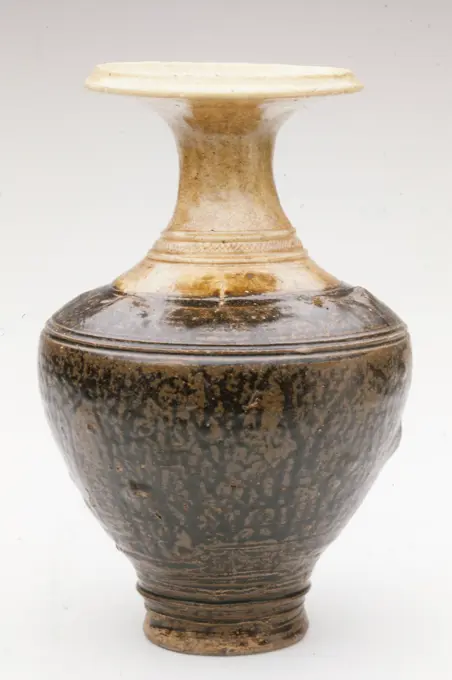
Baluster Jar, 13th century, 11 3/4 x 7 13/16 x 7 13/16 in. (29.85 x 19.84 x 19.84 cm) (at shoulder), Khmer ware Stoneware with incised decor under green and brown glaze, Thailand, 13th century
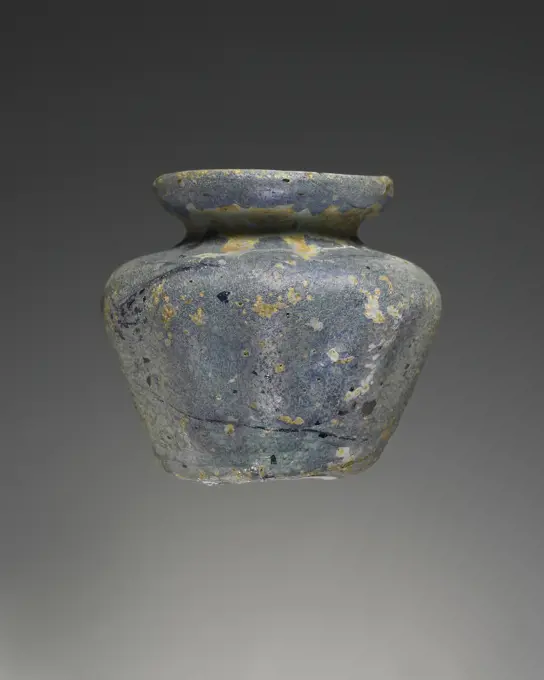
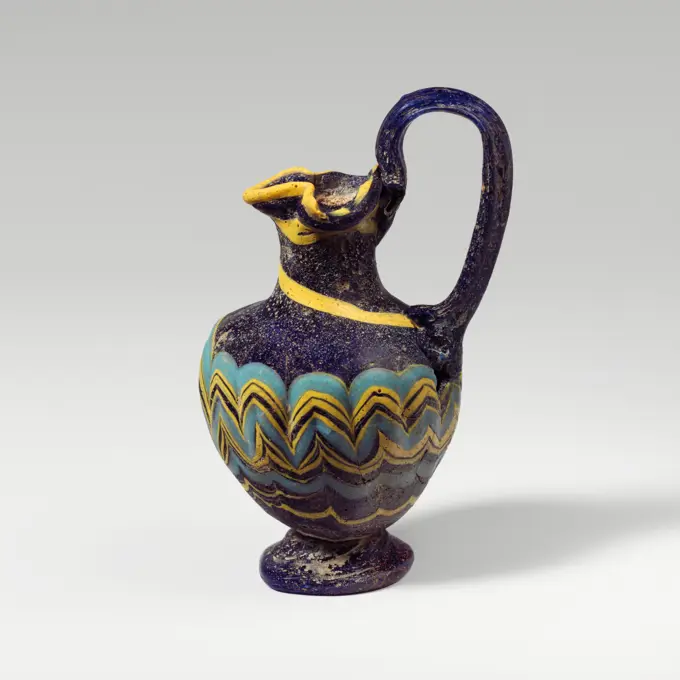
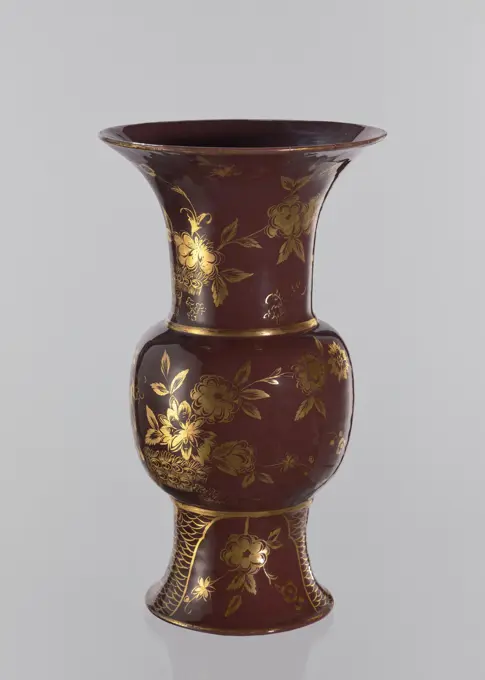
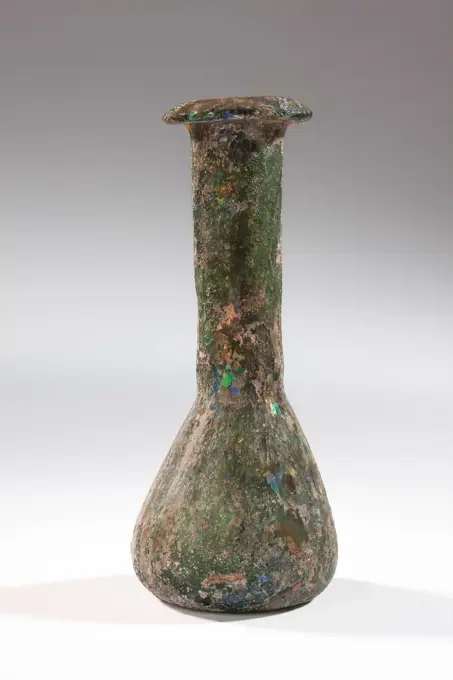
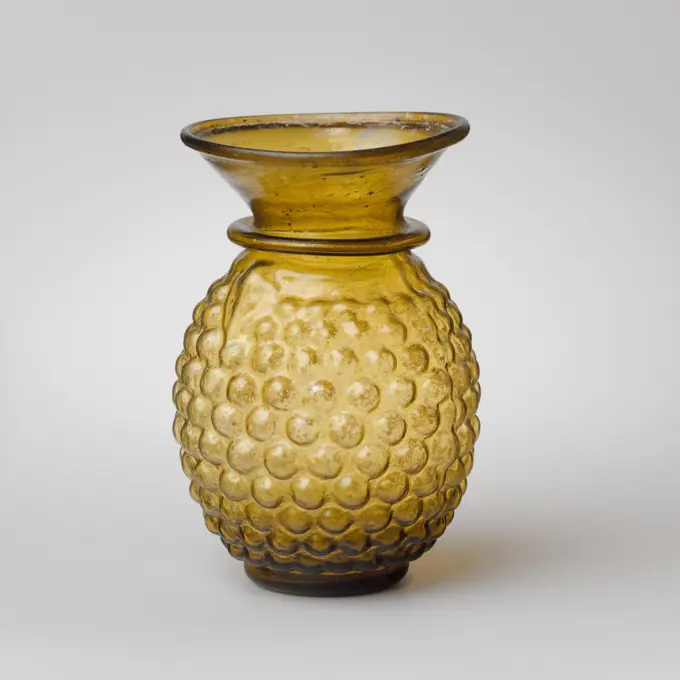
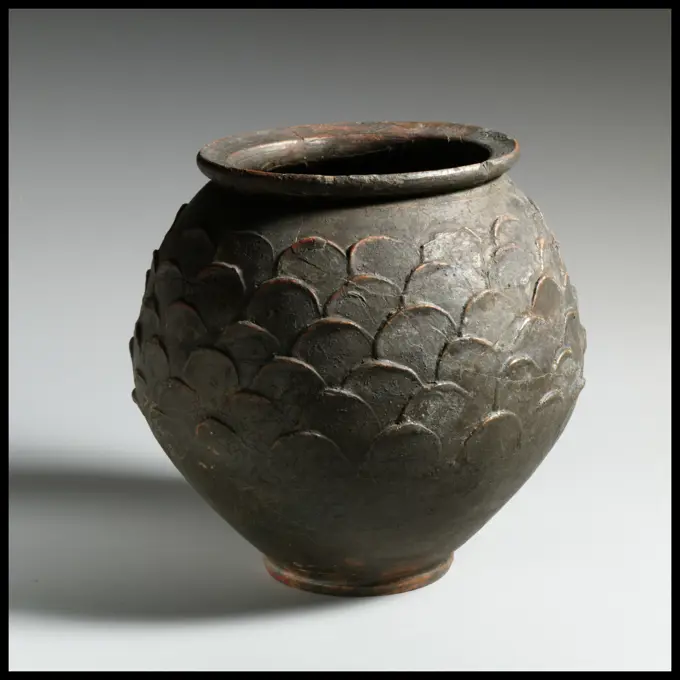
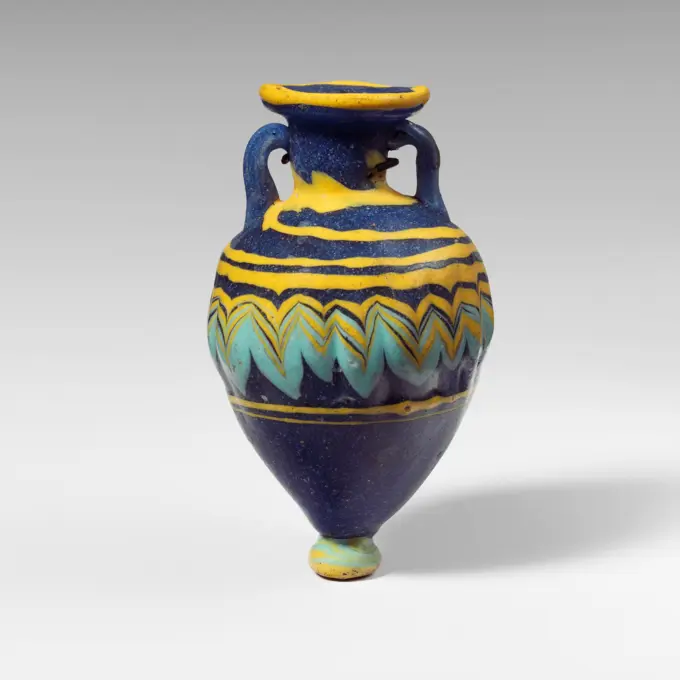
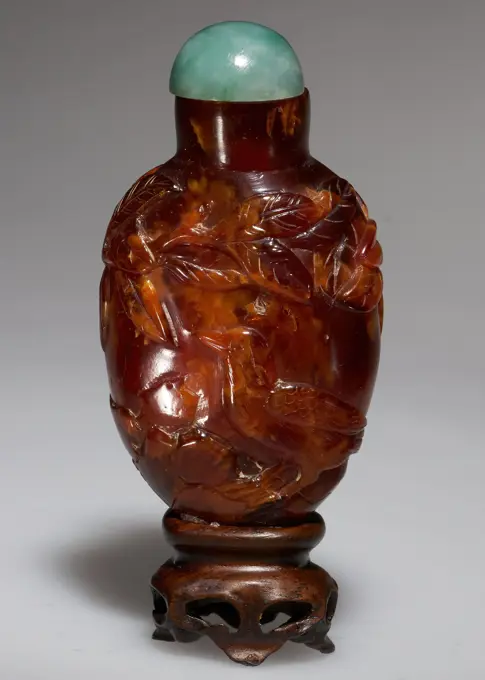
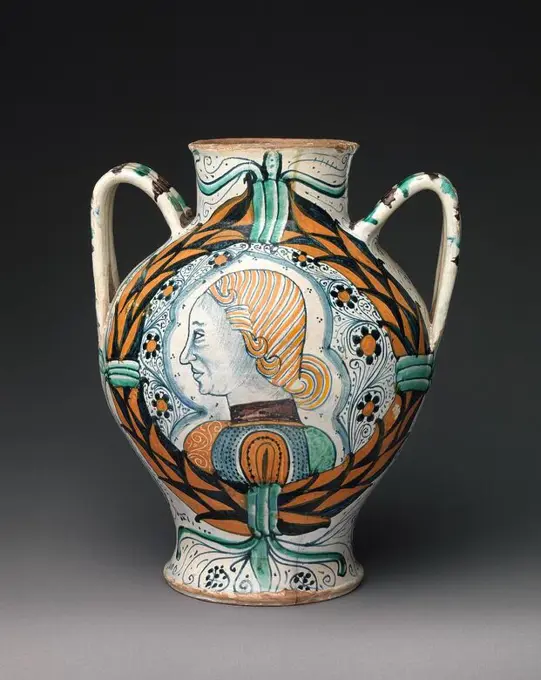
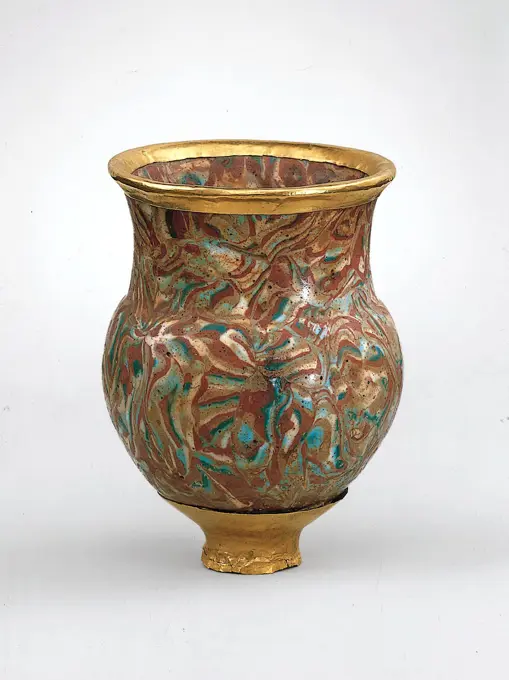
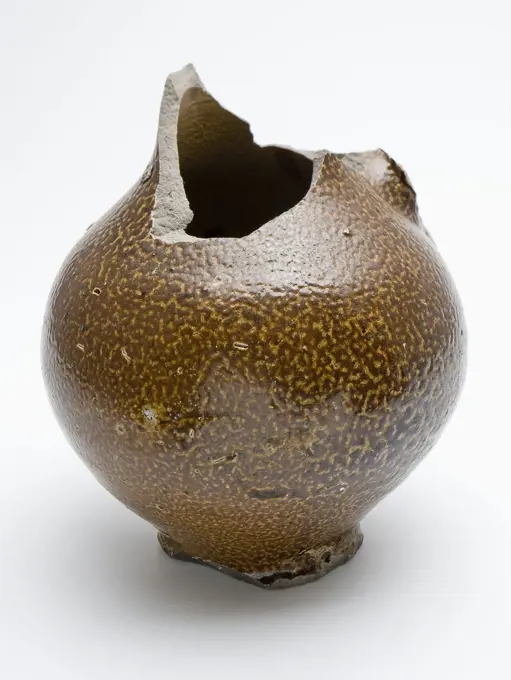
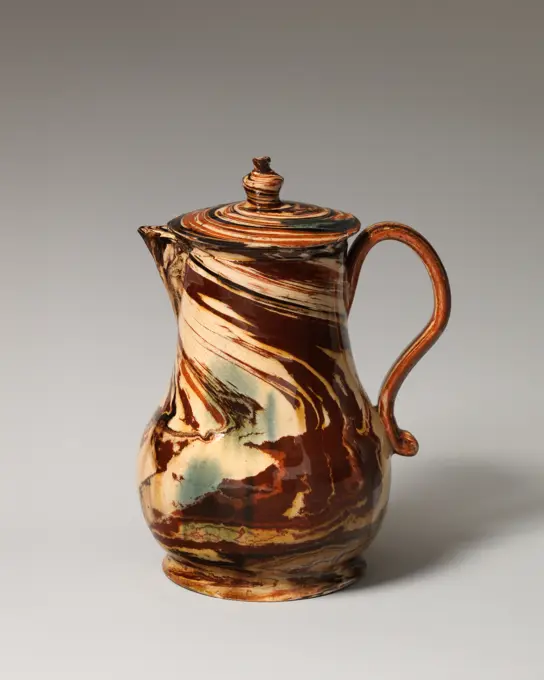
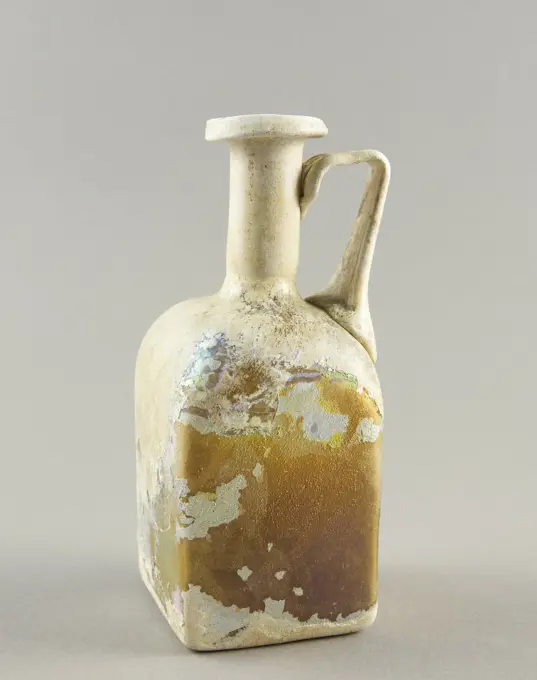
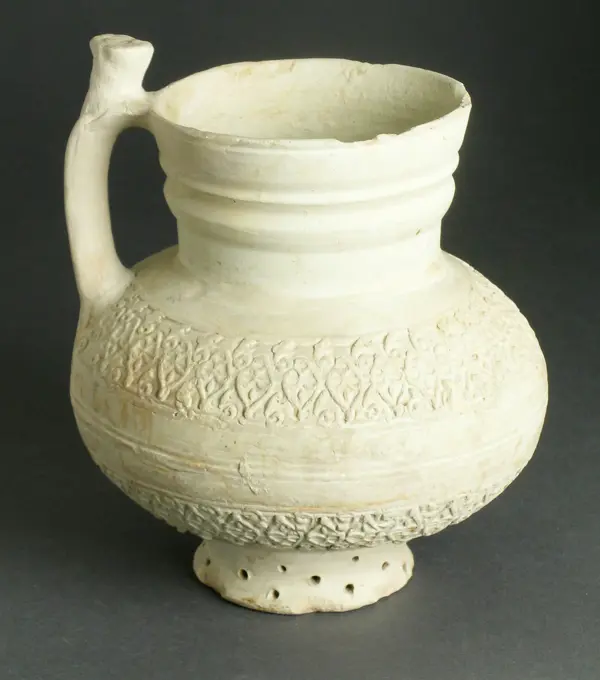
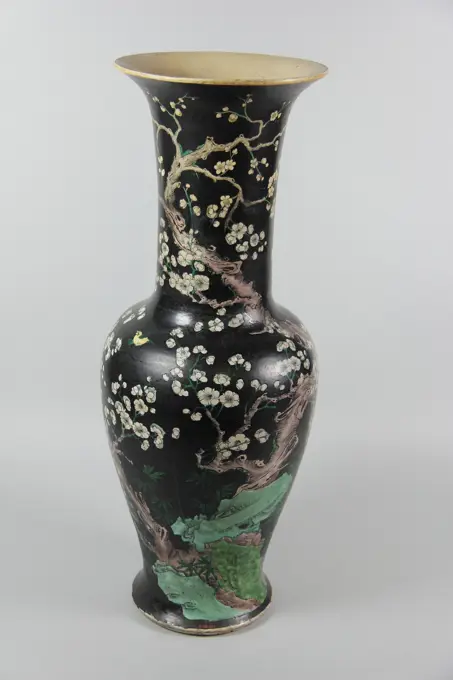
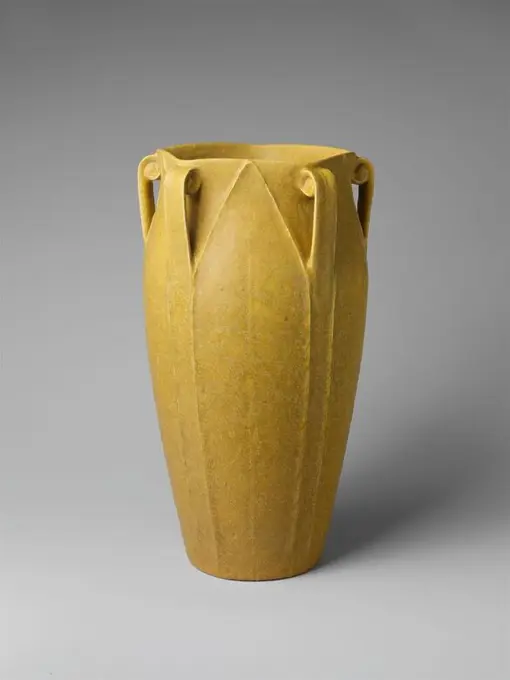
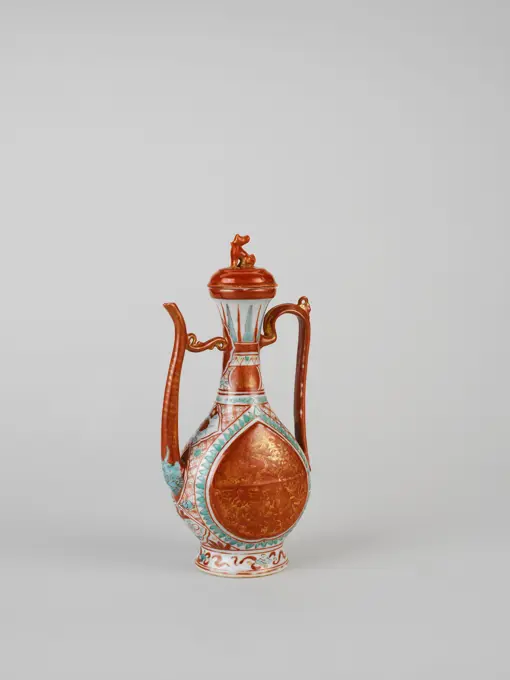
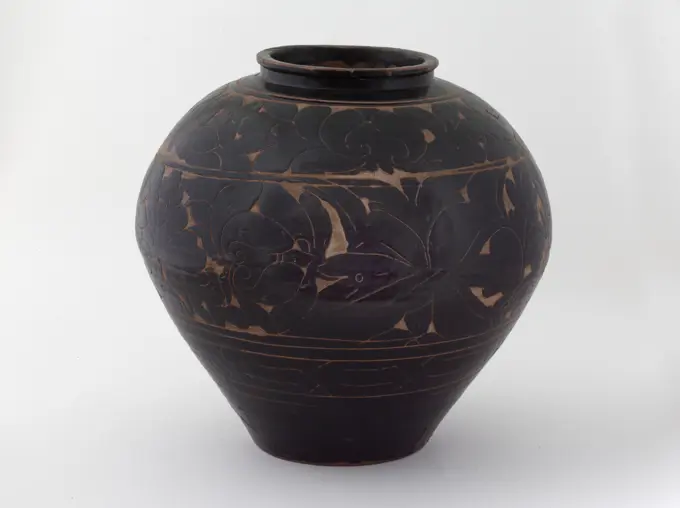
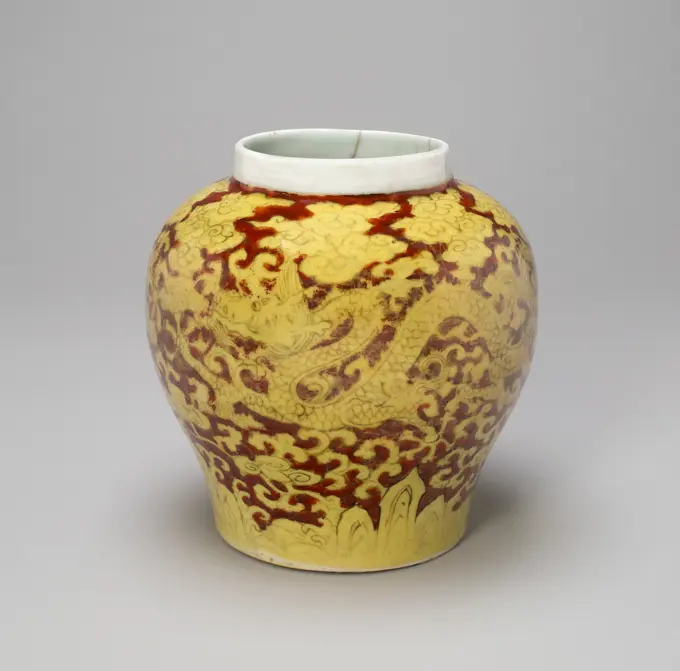
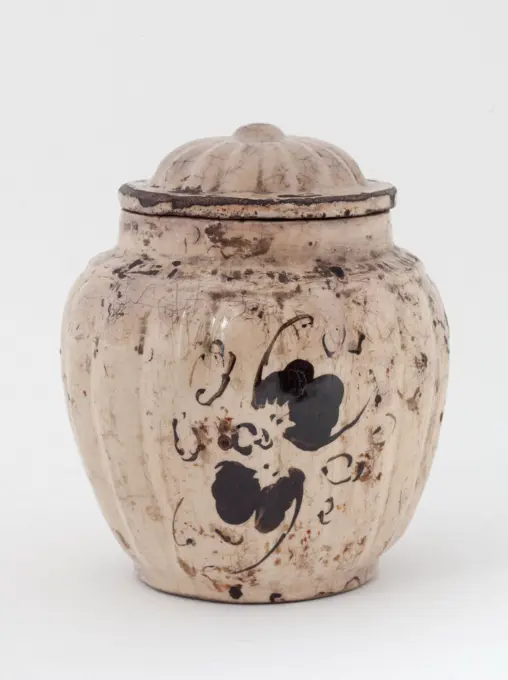
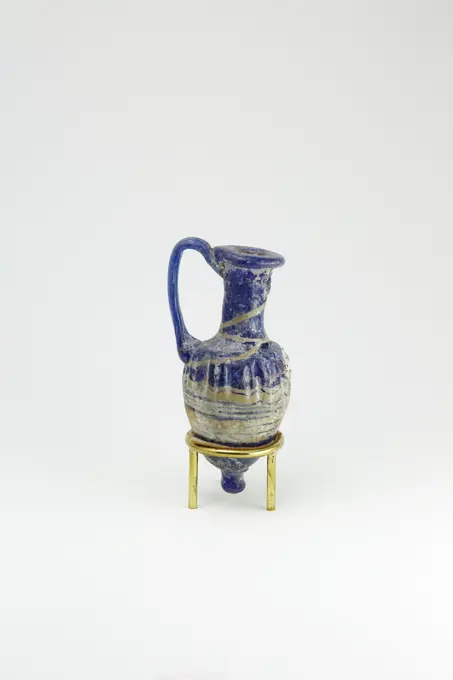
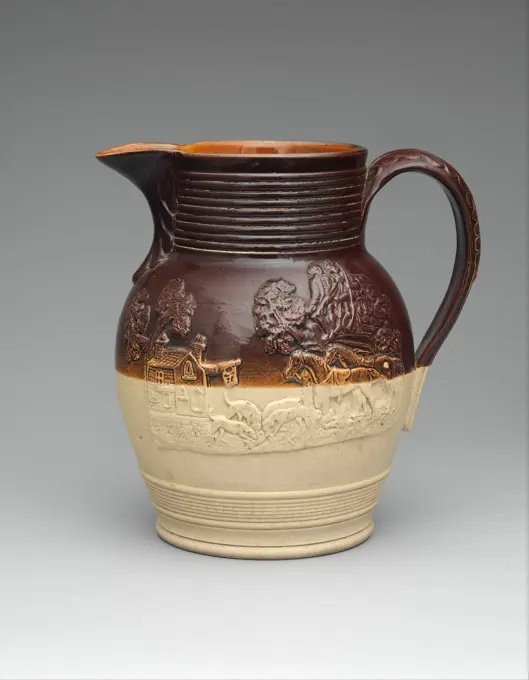
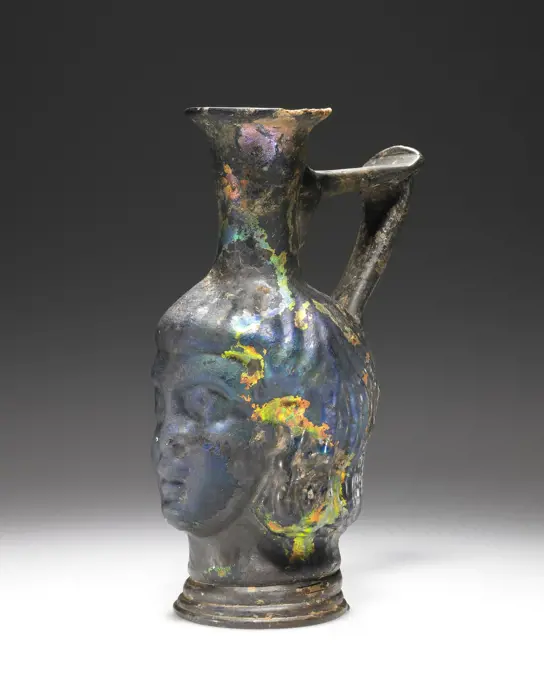
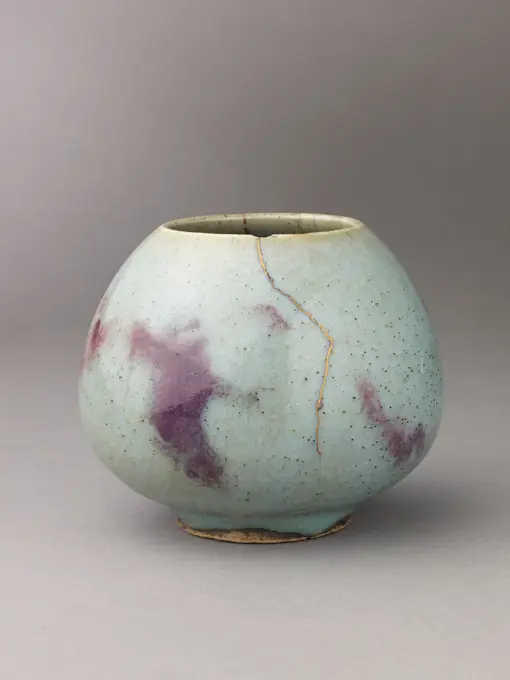
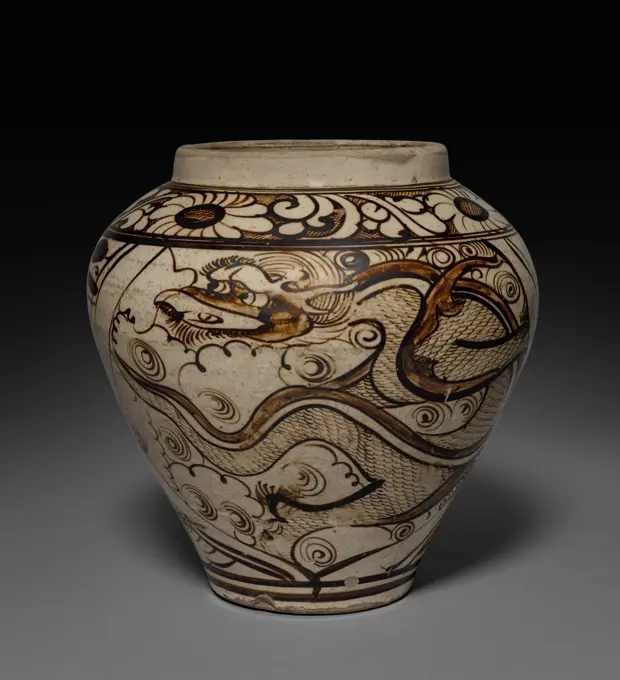
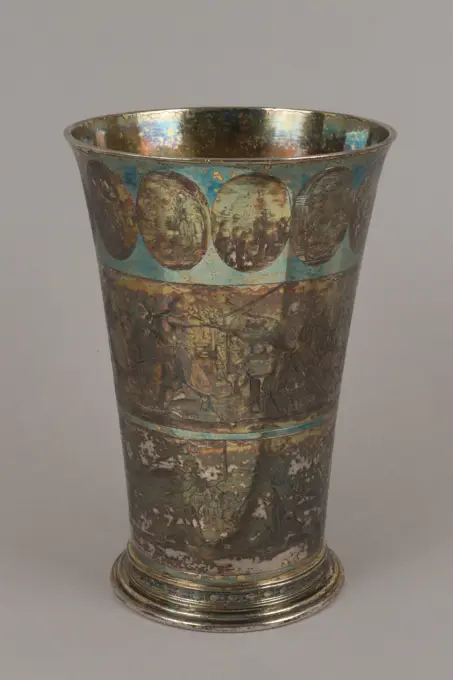
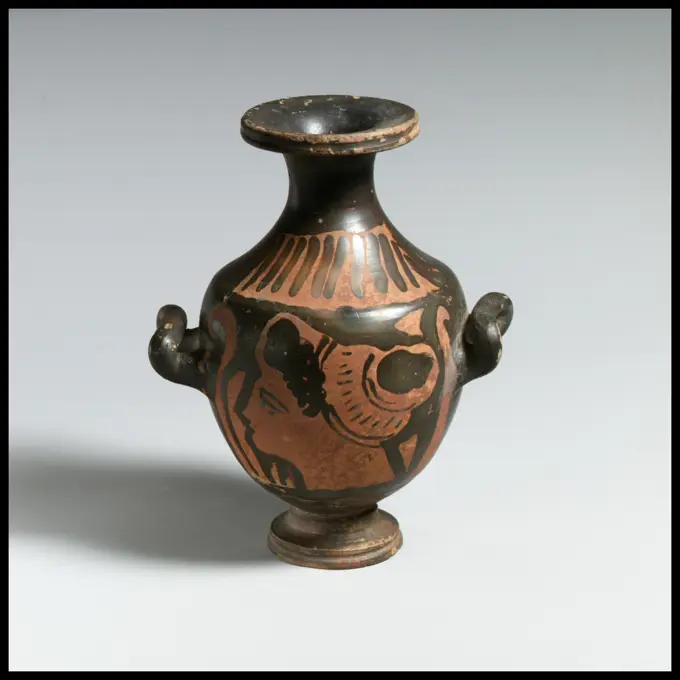
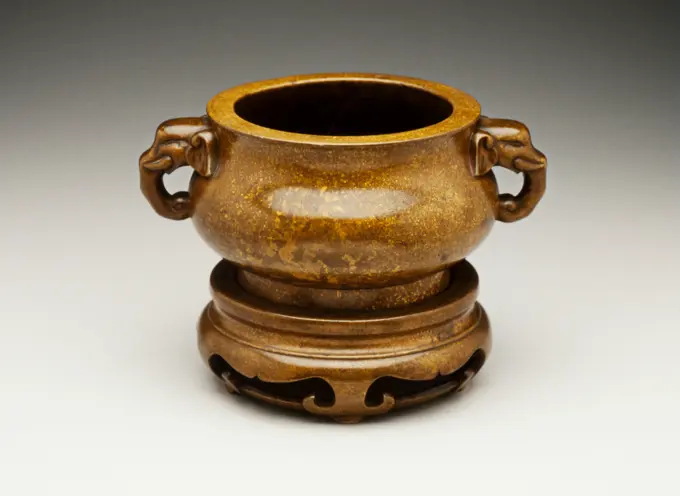
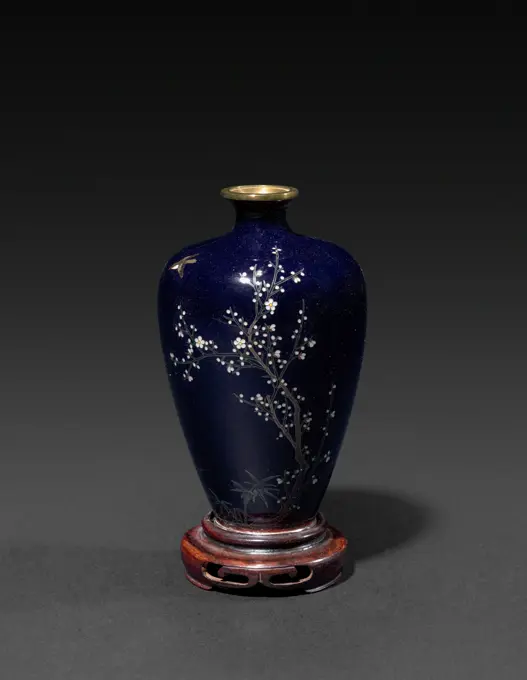
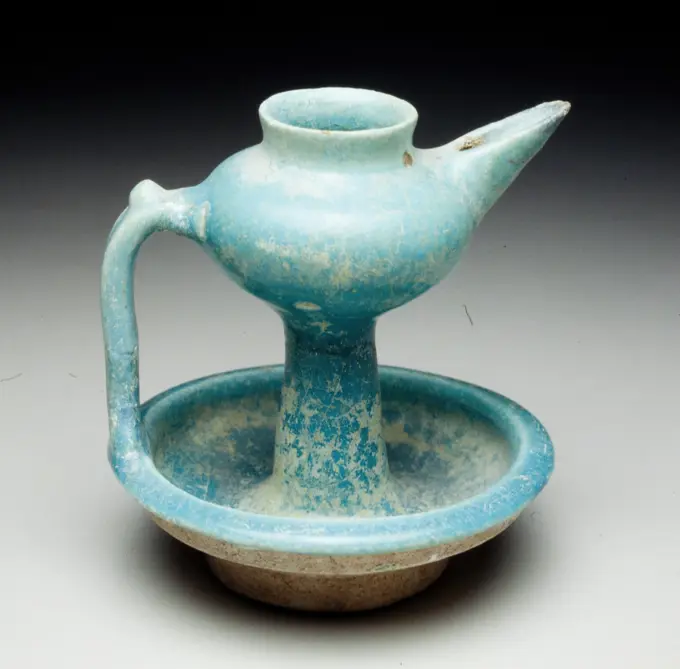
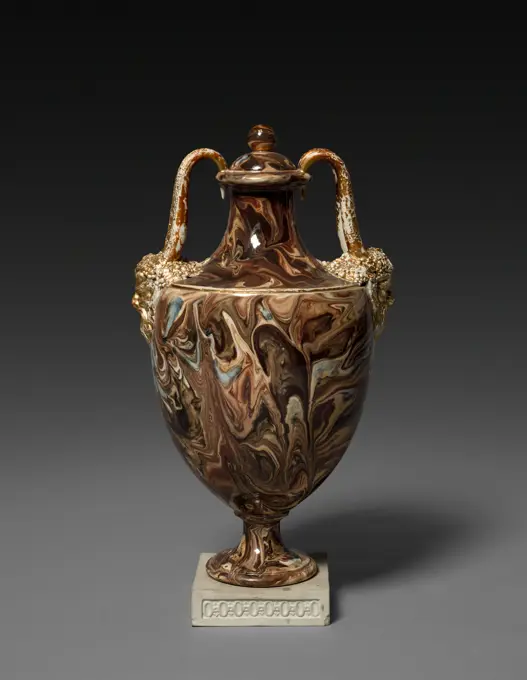
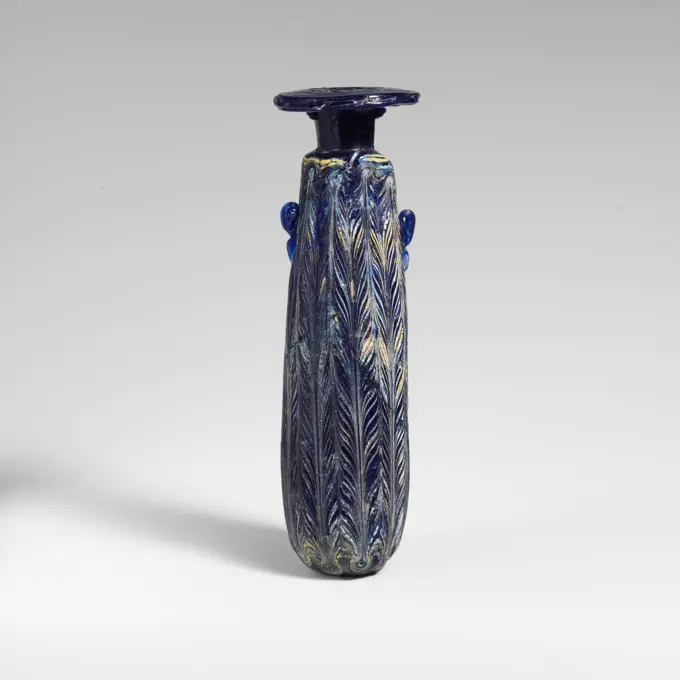
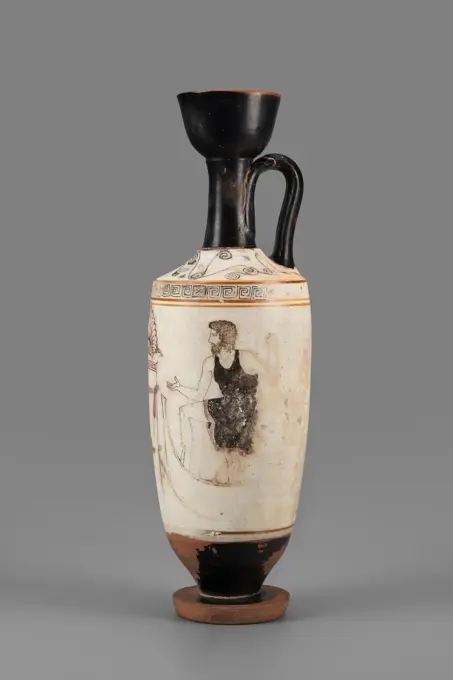
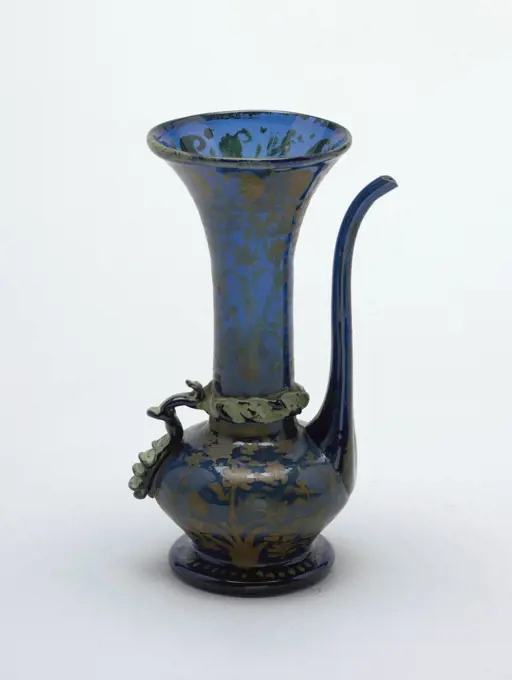
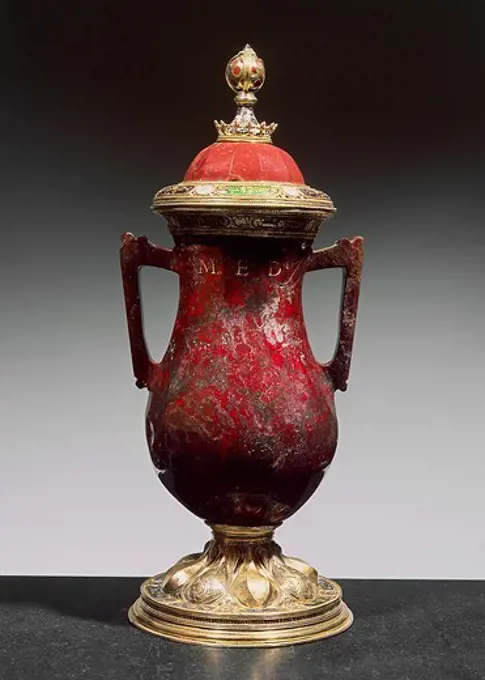
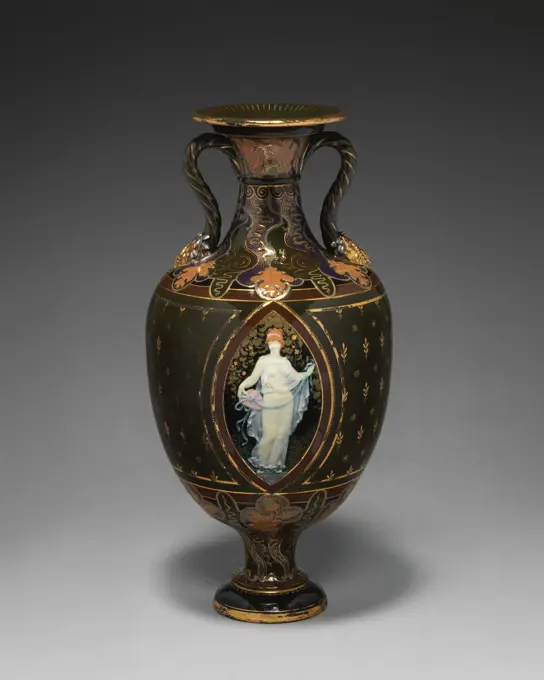
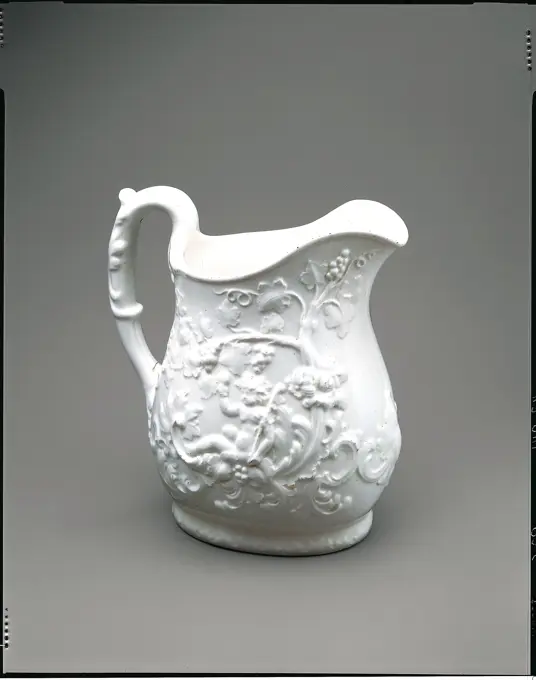
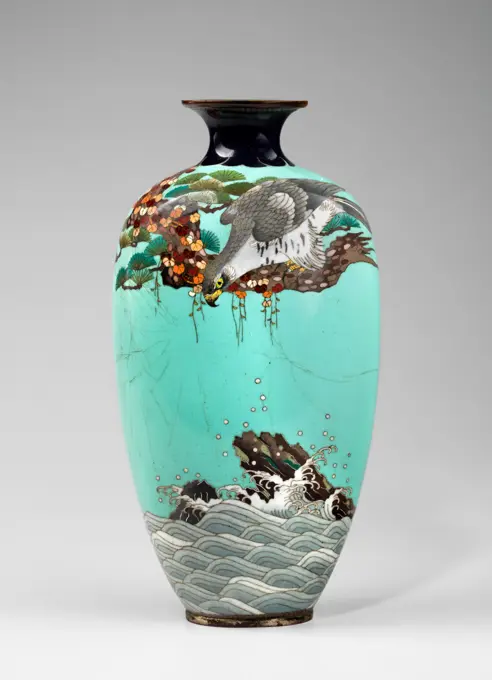
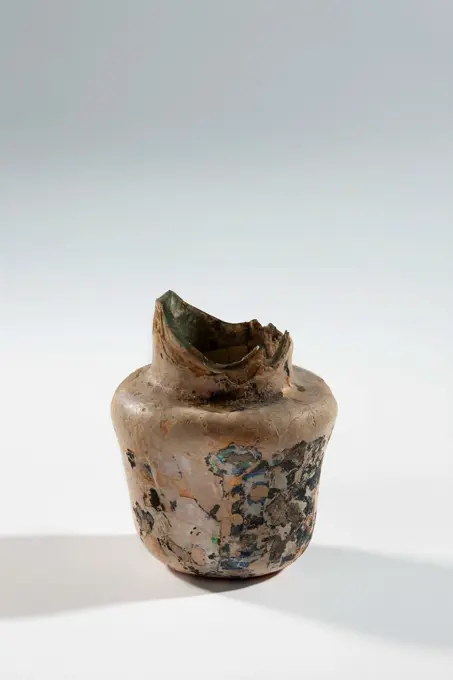
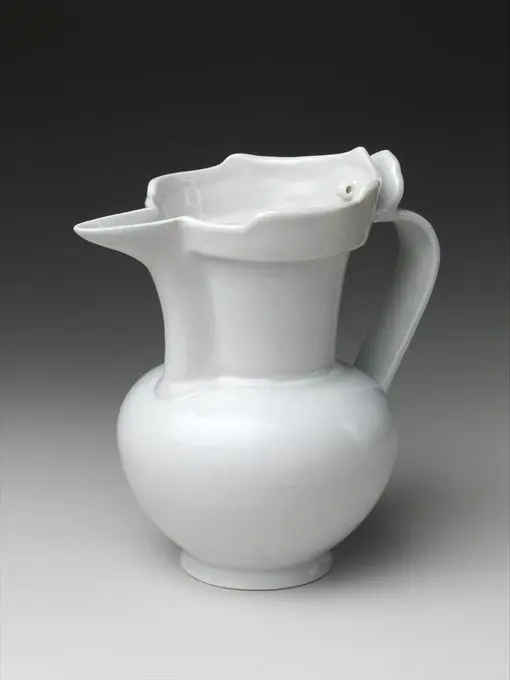
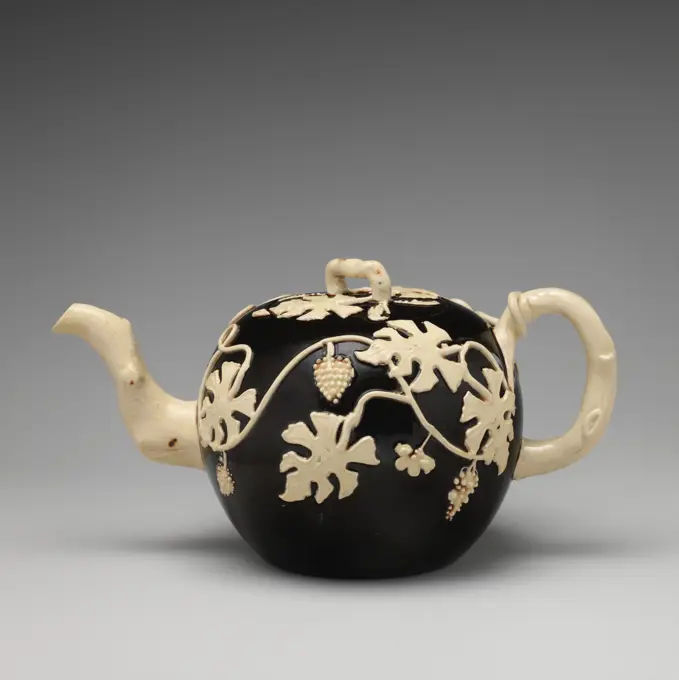
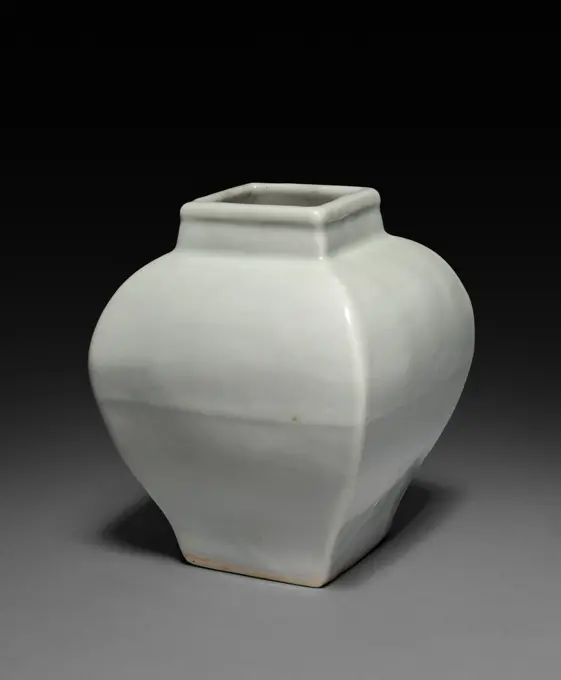
Square Jar, 1522-66. China, Jiangxi province, Jingdezhen kilns, Ming dynasty (1368-1644), Jiajing mark and reign (1522-66). Porcelain with white glaze; diameter: 4.8 cm (1 7/8 in.); overall: 12.1 x 10.1 cm (4 3/4 x 4 in.).Opaque blue Miniature pot; Eastern Mediterranean; 1st - 2nd century; Glass; 2.8 x 3 cm (1 1,8 x 1 3,16 in.)Glass oinochoe (perfume jug) late 6th-5th century B.C. Greek, Eastern Mediterranean Translucent cobalt blue, with handle in same color; trails in opaque yellow and opaque turquoise blue.Applied broad trefoil rim-disk; rather tall cylindrical neck; broad sloping shoulder; ovoid body; applied outsplayed foot with uneven deep concave bottom; handle attached in a large pad to shoulder over trail decoration, drawn up and out, then turned in, arching well above rim-disk, and pressed on to back of neck below rim.Yellow trail attached at edge of rim-disk; a wide yellow trail applied unevenly to top of neck and wound down spirally across shoulder, then tooled on body around upper half of body with deep vertical ribs; a thick turquoise blue trail added over yellow, forming a striking zigzag pattern in alternate colors; below this, the yellow trail continues as an irregular festoon pattern around lower body.Broken and repaired, with parts of rim-disk, neck, and body missing; dulling, pitting, andVase; Bielino (Manufaktura Fajansu; 1779-1800), Wolff, Karol (fl. Ca 1800); 1779-1800 (1779-00-00-1779-00-00);Vial. unknown, craftsmanVase, anonymous, c. 1750 - c. 1799 Calebas -shaped bottle of porcelain with a slightly spreading edge, painted in undermglaze red with a continuous decoration of small gourds, leaves and tendrils with bats in between. On the bottom an old label with: Royal Academy of Arts, London/ International Exhibition of Chinese Art, 1935-6/ SER. Nos. 1054/ Owner R. May, Zeist, Holland and a torn old label with: Friends of Asian art. Underglaze copper red. China porcelain. glaze. copper (metal) painting / vitrification Calebas -shaped bottle of porcelain with a slightly spreading edge, painted in undermglaze red with a continuous decoration of small gourds, leaves and tendrils with bats in between. On the bottom an old label with: Royal Academy of Arts, London/ International Exhibition of Chinese Art, 1935-6/ SER. Nos. 1054/ Owner R. May, Zeist, Holland and a torn old label with: Friends of Asian art. Underglaze copper red. China porcelain. glaze. copper (metal) painting / vitrificationVial 10th-11th century. Vial 452385Glass jar in the shape of a bunch of grapes ca. 3rd century A.D. Roman, Palestinian Translucent greenish yellow.Rim folded out, over, and in, then flattened into mouth; funnel neck; hollow projecting roll above shoulder collar; ovoid body; low cylindrical base, with concave bottom. Pontil scar at center of bottom. Body blown into a three-part mold of two vertical sections, extending from base to shoulder, and a disk-shaped base section.On body, a pattern of stylized grapes comprising ten interlocking rows of twenty-one hemispherical knobs, and two small leaves, pointing downwards and with a central vertical ridge, opposite each other and centered between the mold seams; on the bottom, three concentric narrow circles.Intact; bubbles, blowing striations, and some black impurities; faint iridescence.Yellow jar with hollow roll around neck.. Glass jar in the shape of a bunch of grapes. Roman, Palestinian. ca. 3rd century A.D.. Glass; blown in a three-part mold. Late Imperial. GlassSprinkler Flask. UnknownGlass alabastron (perfume bottle). Culture: Greek, Eastern Mediterranean. Dimensions: H.: 5 1/2 in. (14 cm). Date: 3rd-2nd century B.C..Translucent cobalt blue, with handles in same color; trails in opaque yellow.Uneven, almost horizontal rim-disk, with rounded edge; cylindrical neck; small, sloping shoulder; cylindrical body, with slightly convex sides, tapering in to uneven rounded bottom; two horizontal lug handles applied over trail at top of body.Two trails applied around edge of rim-disk, wound down in a spiral, both tooled into a feather pattern on body in five panels of alternating upward and downward strokes, then trailed off on bottom.Intact, but with parts of trails completely weathered, leaving only indentation in body; dulling, severe pitting and weathering, and faint iridescence. Museum: Metropolitan Museum of Art, New York, USA.Canopa (Votive Container) in the Shape of aCamelid.  Artist: UnknownSmall Pitcher, 1st-5th century, 4 1/4 x 2 7/8 x 2 3/8 in. (10.8 x 7.3 x 6.03 cm), Glass, Syria, 1st-5th centuryBottle. Roman; Levant or Syria. Date: 101 AD-300 AD. Dimensions: H. 8 cm (3 1/8 in.); diam. 3.8 cm (1 3/8 in.). Glass, blown technique. Origin: Syria. Museum: The Chicago Art Institute, Chicago, USA. Author: ANCIENT ROMAN.Long-Spouted Ewer with Incised Decoration 1599-1699 Iran. This elegant ewer features lightly incised decoration under a transparent glaze. A type of ceramics commonly known as Gombroon ware, the name is derived from the port of Bandar-e ëAbbas (known as Gombroon by the British), from where these ceramics were exported in the 18th century. Both the Dutch and English East India Companies populated Bandar-e ëAbbas and traded heavily in ceramics. This ware was popular outside of the Islamic world because its delicate, glassy appearance was thought to closely resemble Chinese porcelain.. Fritware, with incised decoration under a transparent glaze . IslamicTerracotta jar with barbotine decoration 2nd century A.D. Roman Brown glazed bowl with brown barbotine scale decoration on shoulder.. Terracotta jar with barbotine decoration 250098Pear-shaped vase with incised flowering plants, anonymous, c. 1700 - c. 1799 Pear -shaped vase of porcelain, covered with a translucent white, crawlsed glaze. The wall is decorated with flowering plants. White porcelain, monochromes. China porcelain. glaze engraving / vitrification Pear -shaped vase of porcelain, covered with a translucent white, crawlsed glaze. The wall is decorated with flowering plants. White porcelain, monochromes. China porcelain. glaze engraving / vitrificationGlass amphoriskos (perfume bottle) late 6th-5th century B.C. Greek, Eastern Mediterranean Translucent blue, with handles in same color; trails in opaque yellow and opaque turquoise blue.Broad inward-sloping rim-disk; cylindrical neck; broad sloping shoulder; top-shaped body; circular base-knob with deep indent on bottom; two vertical strap handles applied to shoulder, drawn up, and pressed onto neck.A yellow trail attached at edge of rim-disk; another yellow trail applied in a thick irregular circle around neck and top of shoulder, wound in a spiral across shoulder and around top of body, then tooled into an uneven zigzag pattern on upper half of body, where a turquoise blue trail is added, mingling with the yellow, forming vertical ridges in sides; below, a fine yellow trail wound horizontally nearly twice around lower body; a turquoise blue trail and a yellow trail wound around base-knob.Intact; bubbles and gritty white impurities; slight dulling and pitting, but very little weatheriCantaro, Figueres. Museu Català de les Arts i Tradicions Populars.Snuff Bottle, 17th-19th century, 2 1/2 x 1 3/8in. (6.4 x 3.5cm), Amber, China, 17th-19th centuryVase. unknown, craftsmanSmall Jug. Roman, 1st century A.D.. Furnishings; Serviceware. SilverVase late 16th-17th century China. Vase 50524Jug. Gray with blue jug of stoneware. Decorated with the arms of Amsterdam.Glass beaker with snake-thread decoration. Culture: Roman, Rhineland. Dimensions: H. 15.7 cmDiameter of rim: 8.3 cmDiameter of base: 6.2 cmDiameter of body: 7.6 cm. Date: 3rd century A.D..Colorless with green tinge; trails in same color.Outsplayed, uneven, knocked-off rim; vertical side to body, then tapering to form hollow stem; low foot, with rounded, tubular edge, made by folding; pushed-in bottom with domed kick at center and pontil mark.On body, side divided into four vertical panels, each containing a snake-thread trail (three of nine loops, one of eight) with a trailing-off tail below, all tooled flat with cross-hatch pattern; between panels, a slender vertical trail applied to lower body, drawn up, tooled to form horizontal ribs, then folded down over ribs as a plain trail.Intact; some pinprick bubbles; dulling, creamy weathering, and iridescence on exterior, soil encrustation and thicker black and brown weathering on interior.After the beaker had been blown, decorationTwo-handled pharmacy or storage jar with arms of the Orsini family and profile head of a man. Culture: Italian, probably Deruta. Dimensions: Overall (confirmed): 14 × 11 1/2 × 10 5/8 in. (35.6 × 29.2 × 27 cm). Date: ca. 1460-80.The arms of the Orsini, a powerful Roman family, appear on one side of this jar, while the profile of a young man is delicately painted on the other. Numbers scratched into the underside note its weight when empty--useful information when measuring goods. Museum: Metropolitan Museum of Art, New York, USA.Belly bottle, storage bottle bottle bottle holder soil find glass, bottom. Body with convex ascending wall to convex shoulders and rejuvenated neck with unevenly imposed all-round sharp glass thread and flattened lip archeology wrappingGlass perfume bottle. Culture: Roman. Dimensions: 5 1/8in. (13cm)Other: 1 9/16 in. (4 cm)Diam. of rim: 15/16 in. (2.4 cm). Date: 2nd-3rd century A.D..Translucent blue green.Uneven rounded rim; flaring mouth; long, cylindrical neck, expanding downward and tooled in around base; squat, conical body; slightly concave bottom. Thick, heavy glass, especially on bottom.Intact; pinprick bubbles; patches of pitting and iridescent weathering. Museum: Metropolitan Museum of Art, New York, USA.Glass rectangular bottle 2nd century A.D. Roman Translucent deep blue green; handles in same color.Rim folded out, round and in, with broad, flattened upper surface; cylindrical neck, slightly tapering downward, with horizontal tooling marks around the base; horizontal shoulder with rounded corners; rectangular body with flat sides, tapering downward on short sides; thick, concave bottom with circular pontil scar; two broad handles, each with three ribs, applied as a long pad to short edge of shoulder, drawn up vertically, then bent in and down, and attached to neck with upward trail extending to underside of rim.Intact, except for one weathered chip in rim; pinprick and a few larger bubbles; dulling and pitting, thin patches of weathering on exterior, and greater iridescence on interior.Rectangular two-handled bottle with round neck.. Glass rectangular bottle 245183Drinking Cup ca. 1479-1425 B.C. New Kingdom This jar was probably imported from western Asia and may have been brought to Egypt by one of the foreign wives of Thutmose III as part of her dowry. The form, which has a button-shaped base now masked by gold leaf over plaster restoration, has a long history in Mesopotamia. Fragments of glassy faience vessels with a similar variegated pattern have been found at the site of Nuzi (modern Yorgan Tepe, Iraq), which flourished in the kingdom of Mitanni during the fifteenth and fourteenth centuries B.C. Glass making appears to have originated in Mesopotamia and been imported into Egypt early in Dynasty 18. Egyptian artisans had been making faience, a substance related to glass, for more than a thousand years and they quickly mastered the art of glassmaking as well.. Drinking Cup. ca. 1479-1425 B.C.. Glassy faience, gold. New Kingdom. From Egypt, Upper Egypt, Thebes, Wadi Gabbanat el-Qurud, Wadi D, Tomb of the Three Foreign Wives of Thutmose III. DPitcher;  4th century (301-00-00-400-00-00);Juglet. Egypt, Second Intermediate Period (1640 - 1532 BCE). Furnishings; Serviceware. CeramicStoneware jug, sphere model with brown and gray speckled glaze, jug holder soil find ceramic stoneware glaze salt glaze, hand turned glazed baked stoneware jug gijs and brown speckled glaze. Globe model slightly widened stand archaeology Rotterdam Kralingen-Crooswijk Struisenburg Oostmaaslaan Buizengat indigenous pottery import store packaging drinking kitchen Soil discovery: Buizengat Oostmaaslaan Rotterdam an old landfill of municipal waste.Milk pot with cover ca. 1750 British, Staffordshire. Milk pot with cover. British, Staffordshire. ca. 1750. Lead-glazed earthenware. Ceramics-PotteryPitcher 101 CE-300 CE Syria. Glass, blown technique . Ancient RomanEwer. Iran, 12th-13th century. Ceramics. Earthenware, moldedVase with birds and flowers 19th century China. Vase with birds and flowers. China. 19th century. Porcelain painted inpolychrome enamels over black ground (Jingdezhen ware, famille noire). Qing dynasty (1644-1911). CeramicsVase. Culture: American. Dimensions: H. 11 in. (27.9 cm); Diam. 6 in. (15.2 cm). Maker: Ruth Erikson (working 1899 - 1910) (active 1899-1910). Manufacturer: Grueby Faience Company (1894-ca. 1911). Date: 1899-1910.William H. Grueby (1867-1925), founder of Grueby Faience Company, developed the characteristic glazes for which the pottery became renowned. A number of important designers, including George Prentiss Kendrick and Addison LeBoutillier, contributed to the look and design of Grueby pottery. Although Grueby pottery is traditionally known for the matte green glaze that became ubiquitous in Arts and Crafts potteries, this vase features an unusual mustard yellow glaze. At Grueby, potters crafted the pots and modelers--usually female--finished them. The design of the vase, which alternates between stylized flat leaf and thin elegant scroll, is attributed to the Grueby company's first director of design, George P. Kendrick. Museum: Metropolitan Museum of Art, New York, USA.Snuff Bottle late 18th-early 19th century China. Snuff Bottle 41241Pilgrim Flask. China. Date: 701 AD-750 AD. Dimensions: 19.2 × 15.5 × 14.5 cm (7.6 × 6.1 × 5.7 in.). Earthenware with three-color (sancai) lead glazes. Origin: China. Museum: The Chicago Art Institute, Chicago, USA.Vase with reaper ca. 1885 Haviland & Co. American and French The cylindrical shape, rough texture, and agricultural theme were inspired by folk pottery from Normandy. The abstract rendering of the woman, with strong incised outlines, makes the piece feel modern. The subject matter of the reaper was popular among some Impressionist painters.. Vase with reaper. French, Paris. ca. 1885. Stoneware. Ceramics-PotteryPhial;  XIII-XIV century (1290-00-00-1310-00-00);Ewer with peacock and peonies mid-16th century China This brightly painted porcelain ewer has a flattened pear-shaped body, long, narrow handle and spout, and a lid with a seated lion. Bright red enamel painted with gold defines the two peach-shaped cartouches on either side, as well as the handle, spout, and lid. Pheasants stand among flowering peonies in the two central panels, while flames decorate the handle and spout. Remnants of gilding are visible at the neck and on the lid. Red enamel with gold decoration of blossoming flowers also covers the small oval cartouches on the lower part of the neck, and an additional diamond-shaped element near the handle. Turquoise flames surround the central panels, red and turquoise leaves are painted on the neck, and a turquoise dragons head is painted on the base of the spout. Additional decoration also painted in red, turquoise, yellow, brown, and gold fills the surface of the ewer. This includes the cross-hatching that provides the backgrounJarre. "Grès à couvert brunette. Jin / yuuu. Parigi, Cerneys. Chinese art, Chinese ceramic, champleve brunette covered, leaf, flower, gres, jar, decorative motifSnuff Bottle with Stopper, 1736-95. China, Qing Dynasty (1644-1911), Qianlong reign (1736-95). Porcelain; overall: 7.7 cm (3 1/16 in.).Bottle. Culture: China. Dimensions: H. 5 1/4 in. (13.3 cm). Museum: Metropolitan Museum of Art, New York, USA.Jar with Paired Dragons Chasing Flaming Pearls amid Stylized Clouds 1522-1566 China. Porcelain painted in overglaze enamels .Vase ". Sandstone, slip-in-brown cream under transparent cover. China, Song dynasty (960-1279) / Yuan (1279-1368). Paris, Cernuschi museum. Chinese art, Chinese ceramic, container, lid, Song dynasty, Yuan dynasty, Song time, Yuan time, GRES, Decorative Pattern, Content, Terracotta, VaseBeaker. Western Iran, circa 3000-1000 B.C. with modern inscription. Furnishings; Serviceware. Bronze, hammeredPerfume vase 664-30 B.C. Late Period-Ptolemaic Period. Perfume vase 552059Glass alabastron (perfume bottle). Culture: Greek, Eastern Mediterranean or Italian. Dimensions: H.: 5 1/16 in. (12.9 cm)Diam.: 1 1/8 x 1 1/8 in. (2.9 x 2.9 cm). Date: mid-4th-early 3rd century B.C..Translucent cobalt blue, with handles in same color; trails in opaque yellow and opaque turquoise blue.Thick horizontal rim-disk, with rough inner edge to mouth; cylindrical, slanting neck; small sloping shoulder; straight-sided cylindrical body, with slight upward taper; convex bottom, with small tooled hole to one side; on body, two lug handles, applied over trail pattern; one with a tooled upward horizontal indent, the other with a sideways vertical indent.A fine yellow trail attached at edge of rim-disk; another broader yellow trail applied around top of body and wound round in a spiral; another trail in turquoise added below, and both tooled in six alternating bands into a widely spaced feather pattern with five vertical panels of upward and downward strokes, ending around edge of Pitcher Manufacturer D. & J. Henderson Flint Stoneware Manufactory American ca. 1829-33Blue Head Flask; Eastern Mediterranean; 4th - 5th century; Glass; 17 cm (6 11,16 in.)Vase with four ribs on the body and a light blue, silver-spotted enamel, anonymous, c. 1900 - c. 1925 Vase of stoneware, plastically decorated at the foot, with four ribs on the body, which run into plastic ornaments at the shoulder. Completely covered with a light blue silver-spotted enamel. Unnoticed. West-Europa stoneware vitrification Vase of stoneware, plastically decorated at the foot, with four ribs on the body, which run into plastic ornaments at the shoulder. Completely covered with a light blue silver-spotted enamel. Unnoticed. West-Europa stoneware vitrificationBelly (bell or hammer) bottle, belly bottle bottle holder soil find glass, free blown and shaped glass application Circular bottle in clear green glass. Pontil mark under irregularly high and wide (h 4.0 cm, cm) raised bottom. Body with almost vertically ascending wall to convex shoulders and rejuvenated neck with imposed all-round sharp glass thread under flattened lip archeology packagingGlass. Dated: 1935/1942. Dimensions: overall: 30.6 x 22.9 cm (12 1/16 x 9 in.). Medium: watercolor, gouache, and graphite on paperboard. Museum: National Gallery of Art, Washington DC. Author: Vincent Burzy.Dzbanek. unknown, authorPocket bottle. Culture: American. Dimensions: H. 5 5/16 in. (13.5 cm). Date: 1815-40. Museum: Metropolitan Museum of Art, New York, USA.Vase;  2. PO. 19th century (1868-00-00-1900-00-00);Jug c 1790-1830 New England. Earthenware . Artist unknownBottle. Culture: China. Dimensions: H. 5 1/2 in. (14 cm). Museum: Metropolitan Museum of Art, New York, USA.Half-pint flask 1830-38 Probably Dyottville Glass Works. Half-pint flask. American. 1830-38. Glass, mold-blown. Probably made in Philadelphia, Pennsylvania, United StatesAmphoriskos. UnknownDouble Gourd ShapedEwerVase with Trumpet-Shaped Mouth 1000-1099 China. Stoneware with amber lead glaze .Vase;  2. PO. 19th century (1851-00-00-1900-00-00);Jar, Jun ware ca. 13th century Chinese. Jar, Jun ware. Chinese , Jin/Yuan Dynasty. Chinese. ca. 13th century. Stoneware with splashed blue glaze.. CeramicsVase. Iran, early 17th century. Ceramics. Fritware, molded and glazedJar with Dragon: Cizhou Ware, 1271-1368. China, Yuan dynasty (1271-1368). Glazed buff stoneware with underglaze slip application; overall: 28 cm (11 in.).Beaker Engraver Hans Bas Flemish 1632 View more. Beaker. Flemish, Antwerp. 1632. Silver, parcel-gilt. Hans Bas (Flemish, active 1632). Metalwork-SilverHydria ca. 350-325 B.C. Greek, South Italian, Apulian. Hydria 244860Glass perfume bottle. Culture: Roman. Dimensions: Overall: 6 1/16 in. (15.4 cm)Diam.: 3 1/2 x 1 5/16 in. (8.9 x 3.3 cm). Date: 2nd-3rd century A.D..Translucent pale blue green.Rim folded out, over, and in, flattened on top and forming slight constriction to mouth; cylindrical neck, expanding slightly downwards, with tooled indent around base; bulbous body; flat bottom.Intact; pinprick bubbles and blowing striations; dulling, pitting, and iridescent weathering, with soil encrustation on interior. Museum: Metropolitan Museum of Art, New York, USA.Censer with Stand, Xuande period (1426-1435), 5 3/8 x 7 5/8 x 5 3/4 in. (13.65 x 19.37 x 14.61 cm), Gold-splashed bronze, China, 15th century, This censer, a container for burning fragrant incense, takes the form of an ancient Chinese ceremonial bronze vessel known as a gui. It has elephant-head handles, popular during the Ming dynasty, and a matched stand that is relatively rare. Secular incense burners resembling ancient ritual vessels evolved during the Ming dynasty from the intellectual elites interest in antiquarian studies. Such burners were usually kept on small stands or tables reserved specifically for them. Delicate fragrances, gained from burning rare, imported, and often expensive aromatic woods, were highly prized by Chinas elite. The censer, along with incense and tongs for handling it, became an important part of the scholars study. Although incense was used ceremonially by all levels of Chinese society, the literati developed a true connoisseurship for it and incorpoVase, early 1900s. Japan, Meiji period (1868-1912) to Taishō period (1912-26). One of a pair; cloisonne with carved wood base; without base: 9.4 x 5.4 cm (3 11/16 x 2 1/8 in.).Votive Oil Lamp, c. 1200, 4 1/2 x 4 x 4 in. (11.4 x 10.2 x 10.2 cm), Stonepaste with turquoise glaze, Iran, Seljuk period (1038- c. 1194)Glass perfume bottle. Culture: Roman. Dimensions: Overall: 4 3/16in. (10.7cm)Diam.: 7/8 x 13/16 in. (2.2 x 2.1 cm). Date: 1st-2nd century A.D..Very slender unguentarium.Translucent blue green.Fine rim folded out, over, and in; flaring mouth; cylindrical neck with tooled indent around base; elongated ovoid body; small, concave bottom with traces of pontil scar.Intact; pinprick bubbles and blowing striations; dulling, pitting, and patches of iridescent weathering on exterior, soil encrustation and whitish enamel-like weathering on interior of neck. Museum: Metropolitan Museum of Art, New York, USA."Cup-Tosser" Pitcher 1847-57 E. & W. Bennett Pottery. "Cup-Tosser" Pitcher 20752Pitcher; moulded and thrown unglazed stoneware (black basalt), encaustic silver decoration; 10.5 x 10.1 cm (4 1/8 x 4 in.); Bequest of Erskine Hewitt; 1938-57-310Agateware Vase with Cover, c. 1770. Wedgwood and Bentley (British, Staffordshire, 1769-1780). Marbled earthenware (agateware) with gilt decoration; overall: 28 cm (11 in.).Glass alabastron (perfume bottle) late 4th-early 3rd century B.C. Eastern Mediterranean or Italian Translucent cobalt blue, with handles in same color; trails in opaque yellow, opaque white, and opaque turquoise blue.Broad slightly uneven rim-disk, made as a spiral coil around top of neck; cylindrical neck, tapering downwards; narrow angular shoulder; straight-sided cylindrical body, with slight upward taper; convex lop-sided bottom; on upper body, two vertical ring handles, with short pointed trails, applied over trail pattern, one slightly higher than the other.A yellow trail attached at edge of rim-disk; on body, alternating bands of yellow, white, and turquoise blue, tooled from top of body to undercurve at bottom into a close-set feather pattern in nine vertical panels with alternating upward and downward strokes, forming large round loops at bottom.Broken and repaired around body, with three large holes and several smaller cracks and chips; most of trails completely weathered, leBottle Vase (Meiping) with Dragons Rising from Waves. China. Date: 1723-1735. Dimensions: H. 35.8 cm (14 1/16 in.); diam. 19.9 cm (7 13/16 in.). Porcelain with underglaze incised decoration. Origin: China. Museum: The Chicago Art Institute, Chicago, USA.Flower vase with dragon handles 14th century China This vase embodies the experimental spirit of Yuan bronze designers. It features an extravagant fusion of various contemporary decorative motifs: bold dragon handles, intricate plant scrolls, and two types of dragons along its rim and its foot. Tellingly, the two-dimensional representation of entwined dragons on its foot is replicated in three-dimensional form by a brush rest from the early 14th century. The high relief chevrons encircling the belly of the vessel have no clear precedent. Instead, this bold design feature represents the artist confidently creating a new style that departs from archaic prototypes. This experimental spirit is the most noteworthy feature of Yuan bronze designs. This decorative freedom gradually disappears during the following Ming and Qing dynasties.. Flower vase with dragon handles. China. 14th century. Copper alloy. Yuan dynasty (1271-1368). MetalworkA track with a designer of Charon in Łódź, reaching out towards the deceased woman; Unknown attic workshop; 440-430 BC (-440-00-00--430-00-00);Charon (mitol.), Czartoryski, Greece, Witold (1864-1945), Witold (1864-1945)-collection, painted dishes, ritual vessels, classic period, steleEwer, Gilt and enameled glass, Blue glass vessel with painted gold decoration; long flaring neck and stout globular body; handle of applied glass and long upturned spout; painted green at handle and base of neck., Iran, 17th-18th century, glasswares, Decorative Arts, EwerGlass beaker Roman mid-1st-early 2nd century CE Translucent light yellow.Short, outsplayed rim with uneven, knocked-off lip; convex curving side; pushed-in bottom.Around mid-point of body, a horizontal band of very light wheel-abraded lines, now very indistinct.Intact; pinprick and larger bubbles, and blowing striations; dulling and iridescence weathering. View more. Glass beaker. Roman. mid-1st-early 2nd century CE. Glass; blown and cut. Imperial. GlassSilversmith's art, Italy, 15th century. Red jasper, enamelled gilded silver vase with two handles and lid. Height cm. 42. Signed LAV.R.MED.Vase ca. 1898-1909 Grueby Pottery. Vase 19979Olive-green ground vase with pte-sur-pte decoration 1884 Minton(s) Solon, a ceramic technician who initially trained at Sèvres, developed this cameo-type decoration at Minton. At the Staffordshire manufactory, Solon combined pte-sur-pte with rich ground colors such as the olive green seen on this vase.. Olive-green ground vase with pte-sur-pte decoration. British, Stoke-on-Trent, Staffordshire. 1884. Bone china, with enamel and pte-sur-pte decoration and gilding and platinum. Ceramics-PotteryLazio Roma Subiaco Monastery of S. Scolastica Archaeological Museum6. Hutzel, Max 1960-1990 Antiquities: Views of antiquities in museum, including sarcophagi, plates, vases, coins. General Notes: Hutzel guide says we have negatives, but we cannot find them. German-born photographer and scholar Max Hutzel (1911-1988) photographed in Italy from the early 1960s until his death. The result of this project, referred to by Hutzel as Foto Arte Minore, is thorough documentation of art historical development in Italy up to the 18th century, including objects of the Etruscans and the Romans, as well as early Medieval, Romanesque, Gothic, Renaissance and Baroque monuments. Images are organized by geographic region in Italy, then by province, city, site complex and monument.Pitcher ca. 1855 William Boch and Brothers. Pitcher. American. ca. 1855. Porcelain. Made in Brooklyn, New York, United StatesVase (Meiping) with Peach, Pomegranate, Peapod, and Lychee 1403-1424 China. Porcelain with underglaze incised decoration .Vase;  19th/20th century (1891-00-00-1910-00-00);Glezmer, Stanisław (1853-1916) - collection, cloisonné, gift (provenance), Japanese (culture), eagle (iconogr.), Pine, Japanese art, vasesSmall bottle. unknown, craftsmanSugar bowl. Culture: American. Dimensions: H. 6 in. (15.2 cm). Date: 1820-45. Museum: Metropolitan Museum of Art, New York, USA.Oinochoe. Culture: Greek, South Italian, Apulian, Canosan. Dimensions: H. 15.67 cm.; diameter 8.99 cm.. Date: ca. 350-300 B.C.. Museum: Metropolitan Museum of Art, New York, USA.Vase. Culture: China. Dimensions: H. 20 1/2 in. (52.1 cm). Museum: Metropolitan Museum of Art, New York, USA.Ewer in the Shape of a Tibetan Monk's Cap. Culture: China. Dimensions: H. 8 in. (20.3 cm); W. at spout 8 in. (20.3 cm); Diam. of foot 3 in. (7.6 cm). Date: early 15th century.Possibly originally intended for use in Buddhist rituals, ewers like this, which allude to the shape of a Tibetan monk's cap, were first produced in the fourteenth century. Museum: Metropolitan Museum of Art, New York, USA.Vase with flambé type decoration unknownVase.Teapot ca. 1740 Style of John Astbury Listen to experts illuminate this artwork's story Listen Play or pause #407. Teapots Supported by Bloomberg Philanthropies We're sorry, the transcript for this audio track is not available at this time. We are working to make it available as soon as possible.. Teapot. British, Staffordshire. ca. 1740. Lead-glazed earthenware. Ceramics-PotteryCreamer c 1825-1830 England. Earthenware .