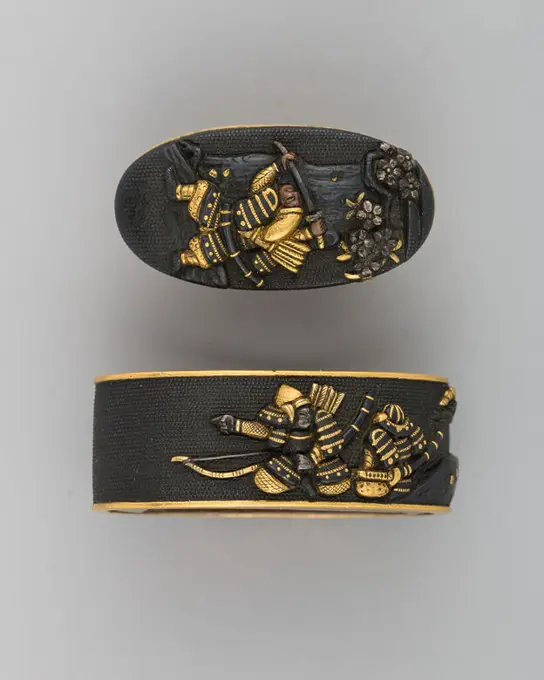
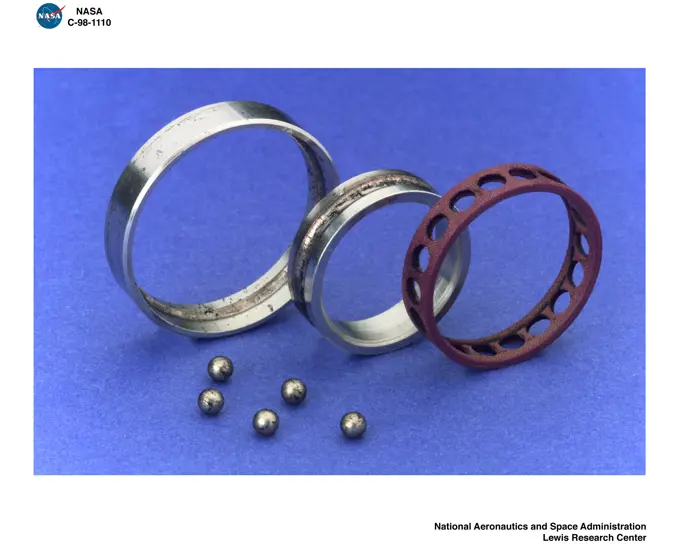
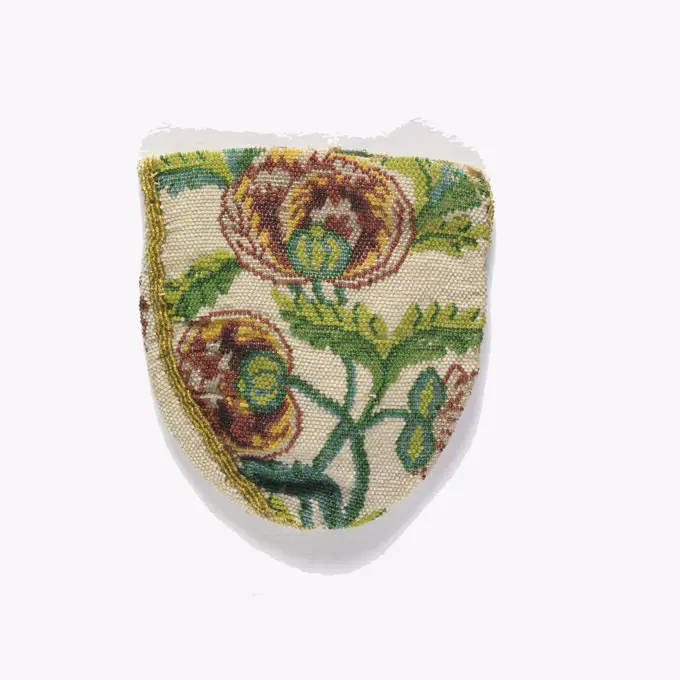
Gold Ancient Jewelry

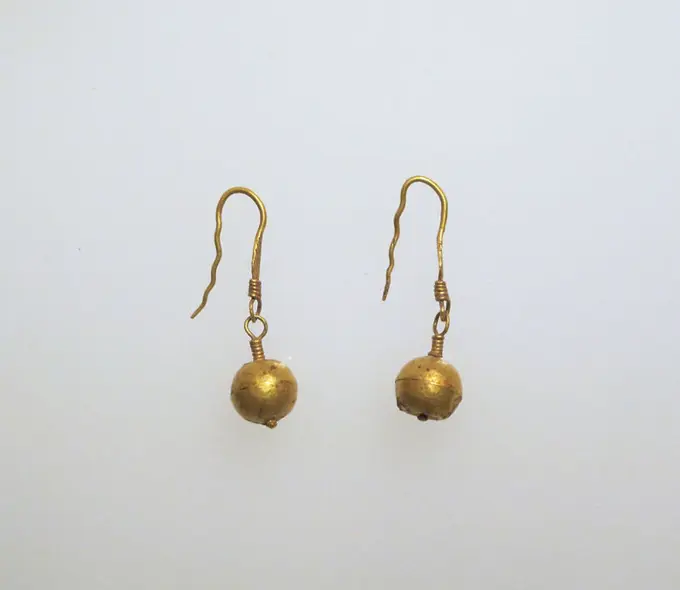
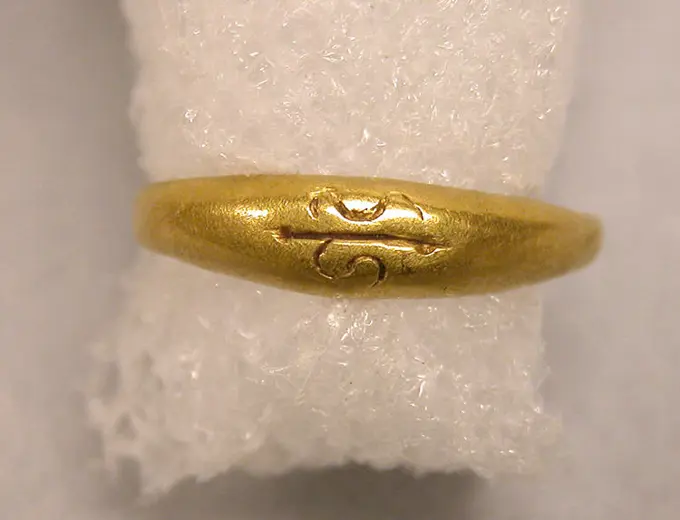
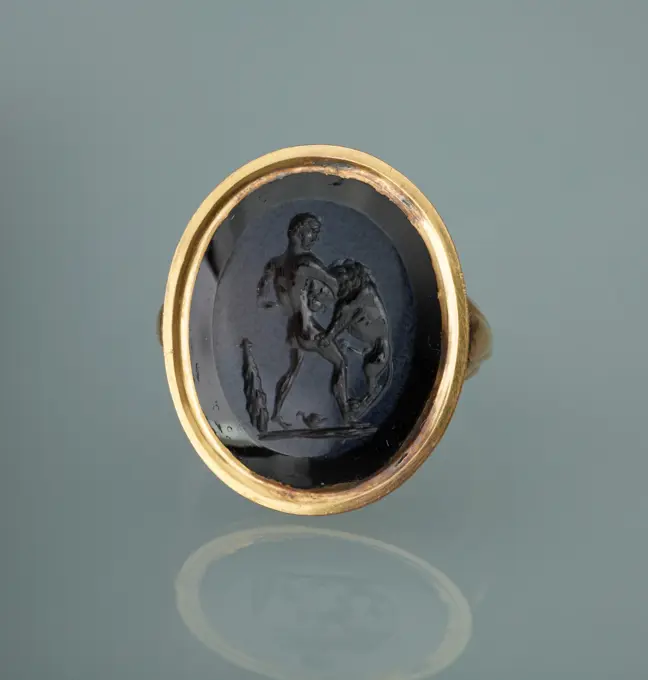
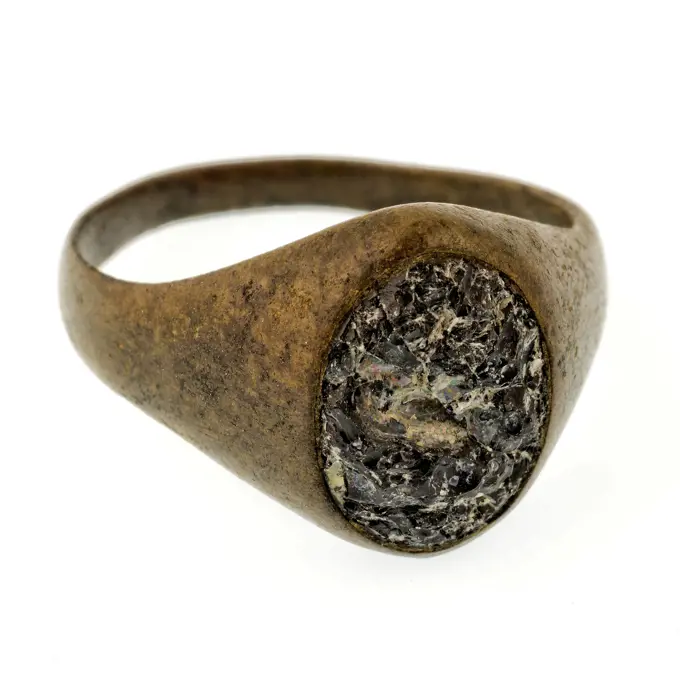
An assortment of gold jewelry pieces, including earrings and decorative items from various ancient cultures, showcasing historical craftsmanship.

Lobster Claw with Pearl Matchsafe; probably Japan; brass, glass pearl; 2.6 x 5.6 x 1.6 cm (1 x 2 3/16 x 5/8 in. )
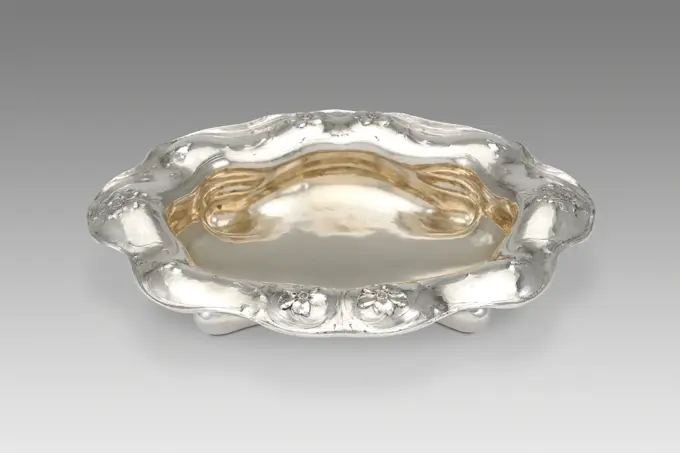
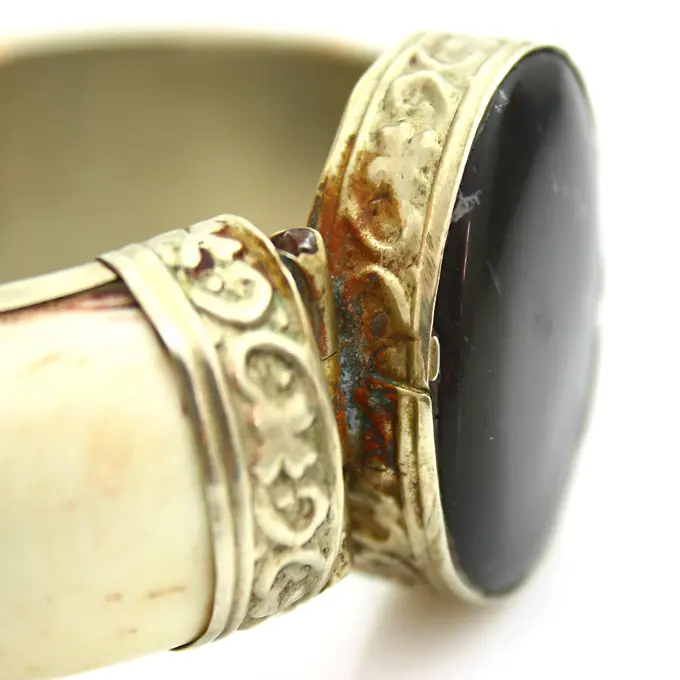
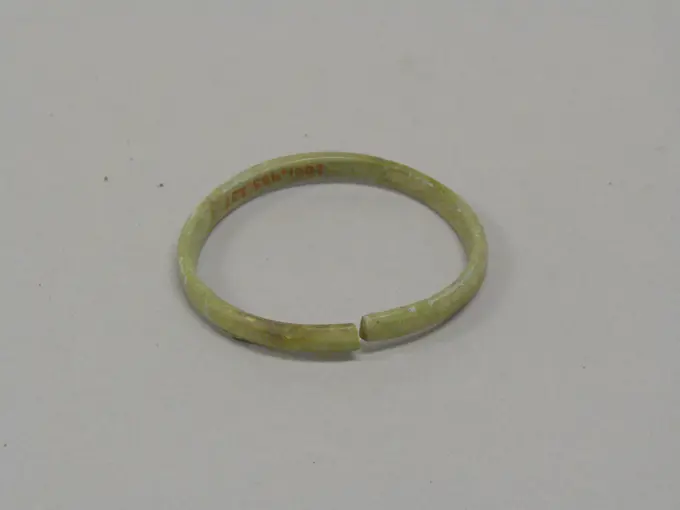
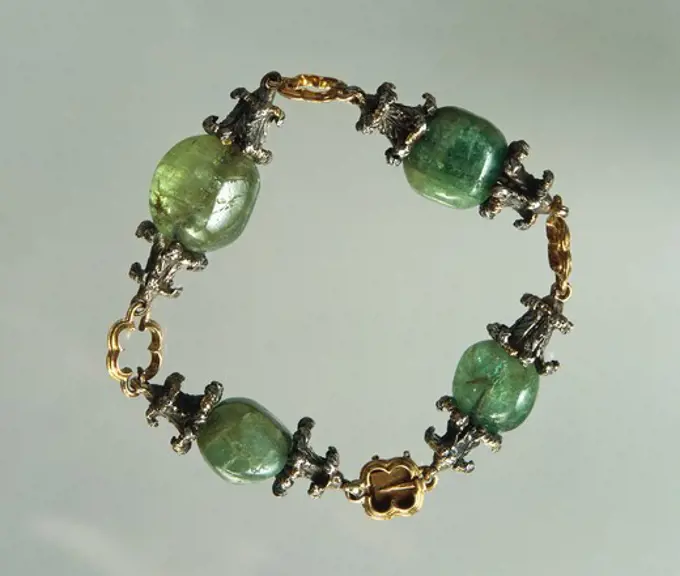
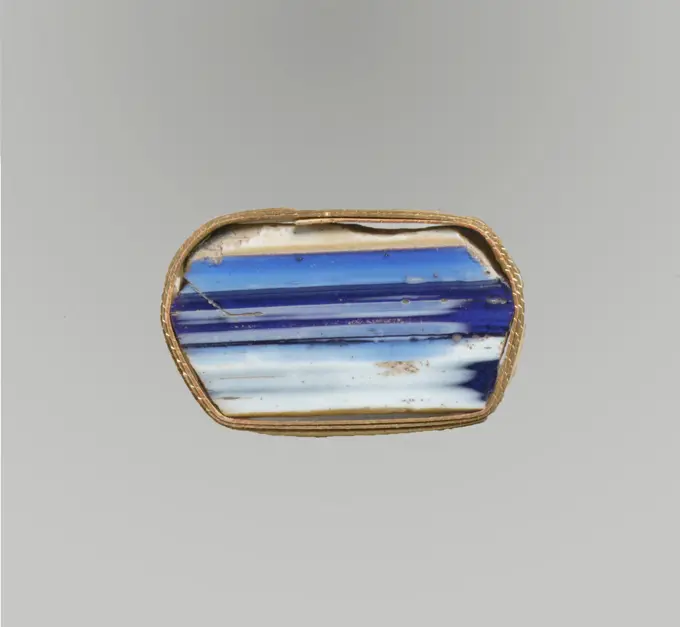
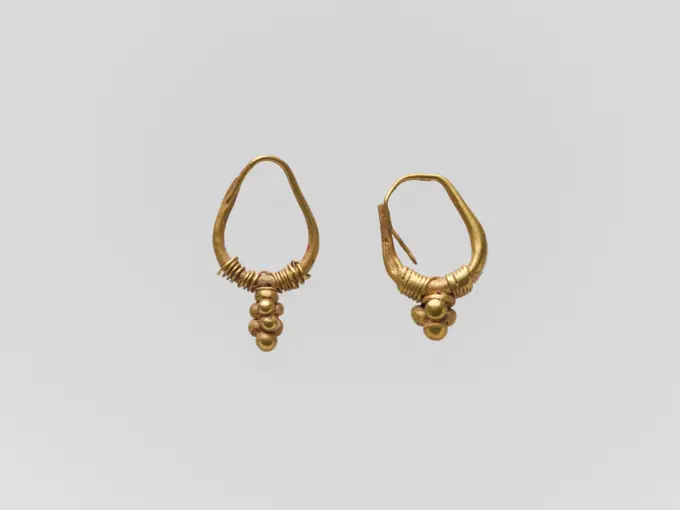
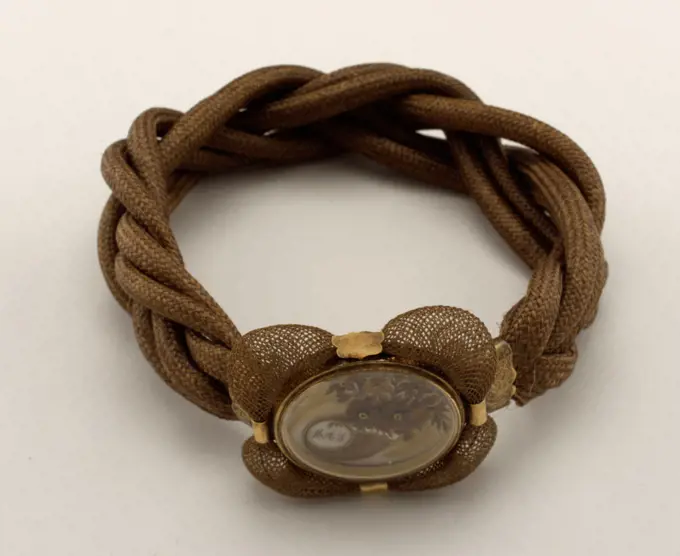
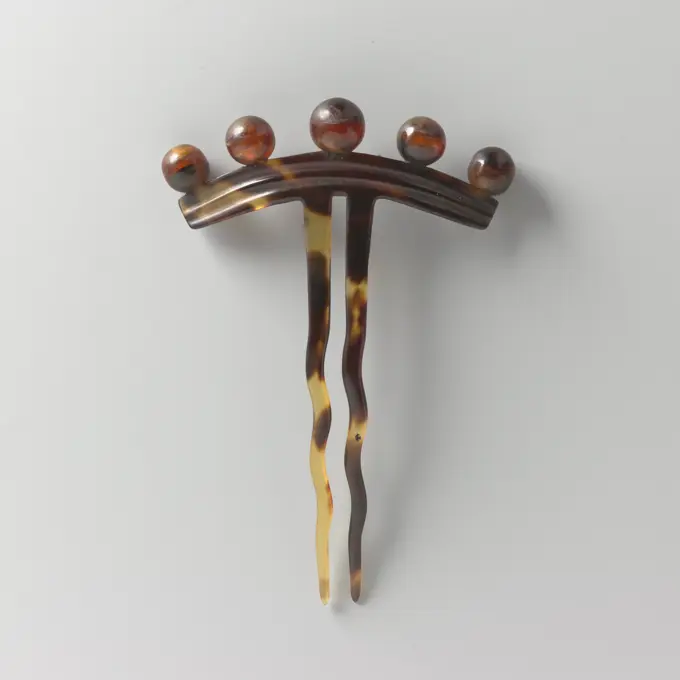
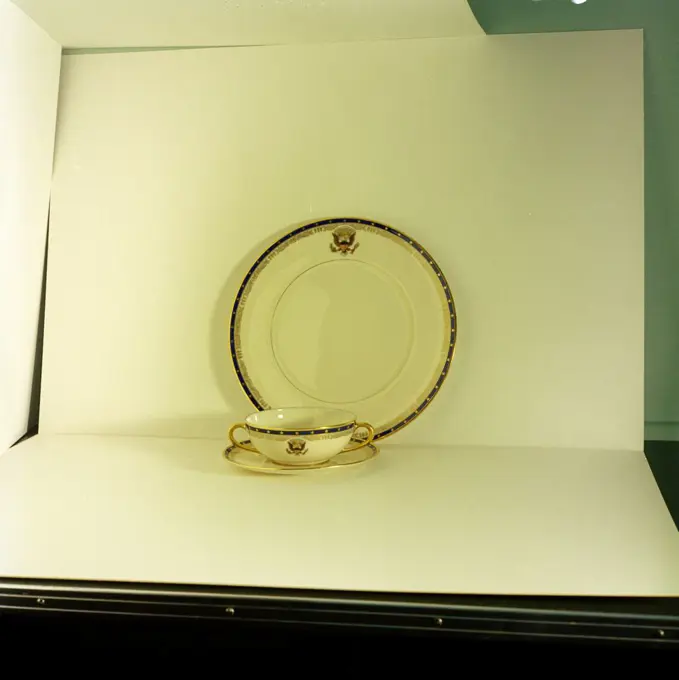
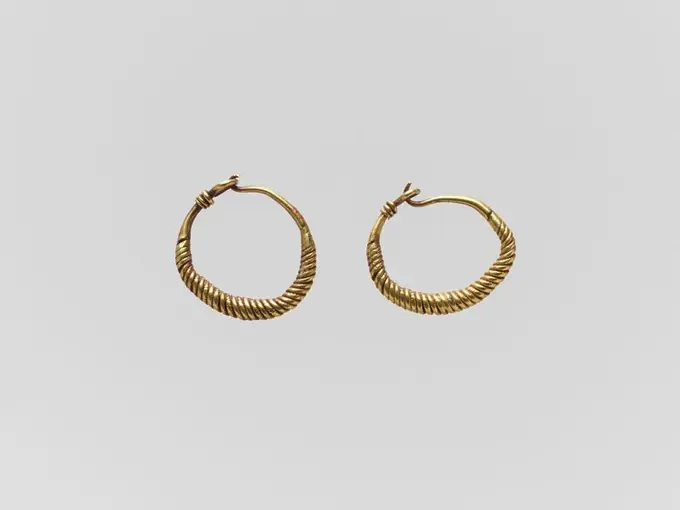
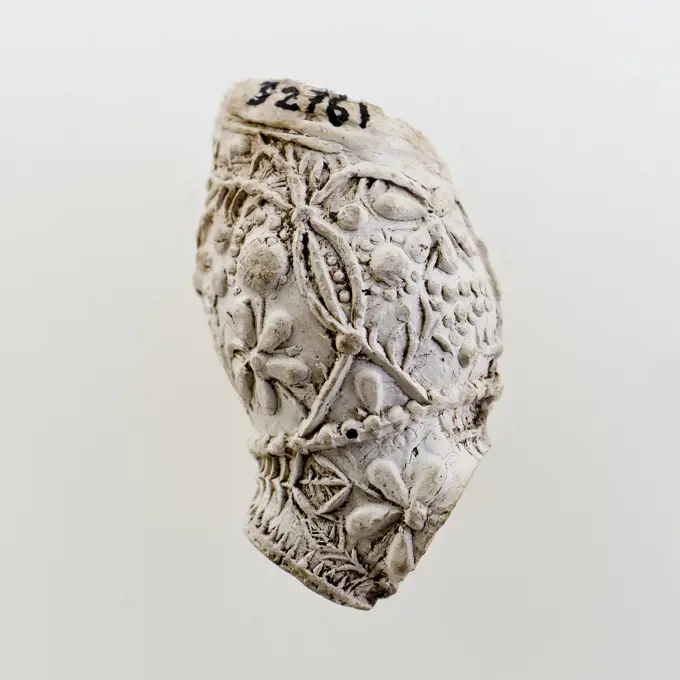
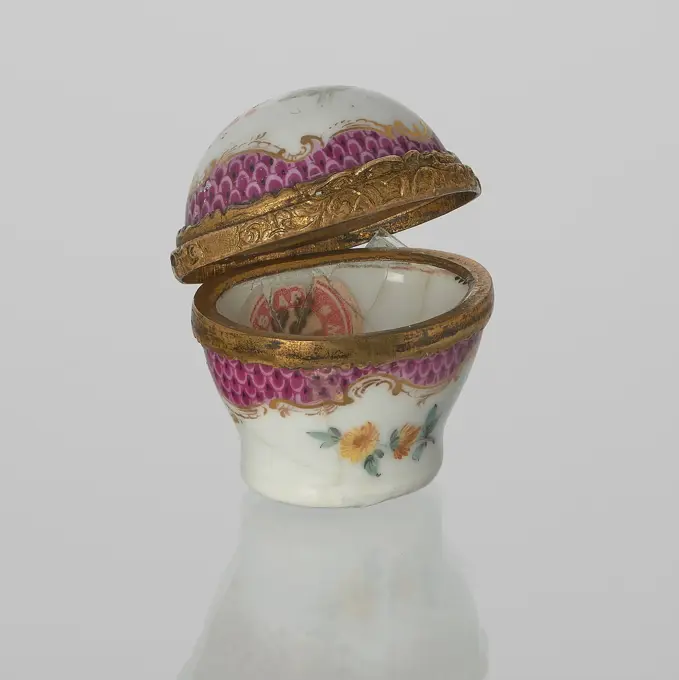
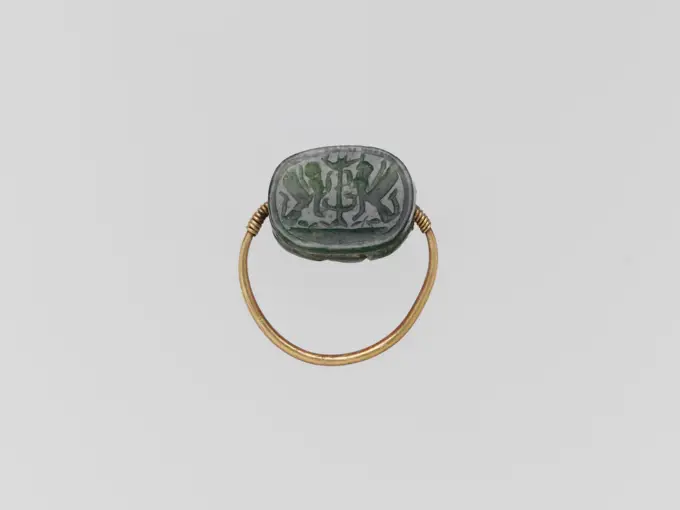
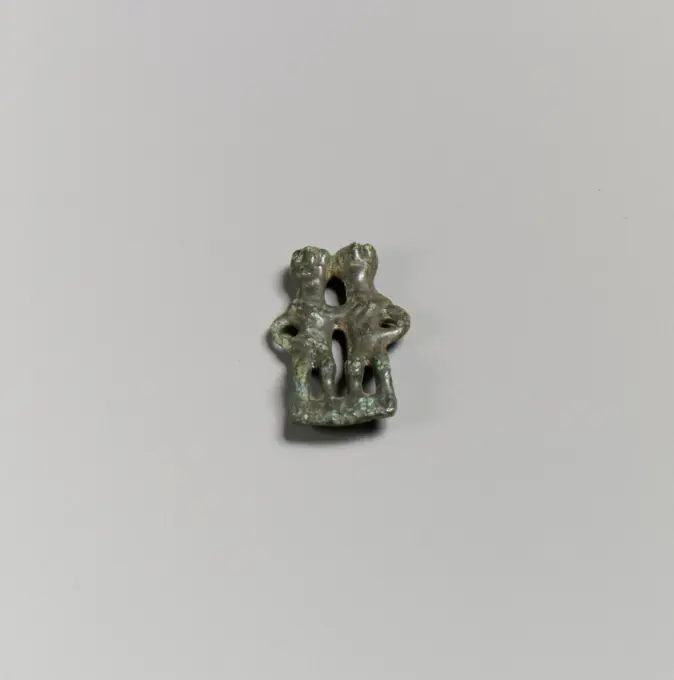
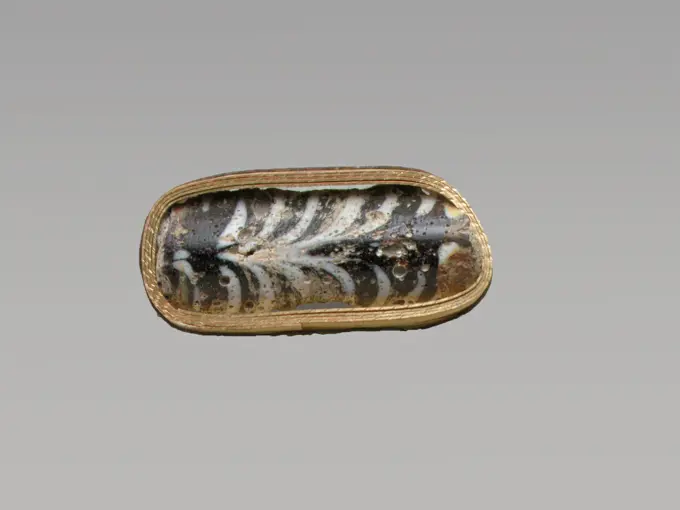
Glass mosaic fragment late 1st century B.C.-early 1st century A.D. Roman Translucent deep purple, appearing black, opaque white, yellow, and red.Rounded edge.Decoration of white marvered trails, tooled into a festoon pattern, with small areas in yellow and red.Polished exterior, with pitting of surface bubbles; interior covered in silvery weathering; jagged edges.Possibly part of an inlay.. Glass mosaic fragment. Roman. late 1st century B.C.-early 1st century A.D.. Glass; cast. Early Imperial. GlassHarness Ornament with Bird's-Head Terminals 4th century B.C. Northwest China. Harness Ornament with Bird's-Head Terminals 59493Dish (part of a set) Made 1900 Providence. Silver with gold wash . Gorham Manufacturing CompanyBracelet 14th-16th century or later The earliest known examples of this type of seamless mosaic glass bracelet are from the late thirteenth century; it continued to be produced well into the nineteenth century at Hebron, in Palestine. These two bracelets, together with thirty-two others in the collection, come from UpperEgypt and were probably made during the Mamluk period.. Bracelet 446029Daniel Boone Matchsafe; USA; patinated brass; 7.2 x 4.1 x 1.1 cm (2 13/16 x 1 5/8 x 7/16 in. )Schmuck Schmuck Copyright: xZoonar.com/JulianxWeberx 877114Bangle 4000 B.C.-A.D. 400 Thailand. Bangle 53358Goldsmith's art, Italy, 20th century. Mario Buccellati, emerald root, silver and gold bracelet, 1950s.. Shoe buckle of strass, put in a double oval silver-colored setting. A vertical attachment at the back.Glass mosaic inlay fragment late 1st century B.C.-early 1st century A.D. Roman Translucent cobalt blue and opaque white.Thin, flat strip or panel, with straight sides and angled ends; uneven surface on underside.Bands of streaky white overlay on upper surface; one broad central band of white on blue ground on underside.Some edges chipped and uneven; polished upper surface; pitting of surface bubbles on upper surface; dulling and creamy weathering on underside and edges.Probably used as decoration in wall or ceiling revetment or as inlay for furniture.. Glass mosaic inlay fragment. Roman. late 1st century B.C.-early 1st century A.D.. Glass; cast. Early Imperial. Glass. Pendant in the shape of a path. Shaped from baroque beads, gold and email.Pair of bracelets (churi), anonymous, c. 1750 Bracelet with hinge and lock, silver with gold covered. Decorated with battles made up of six small balls; One bilt serves as a lock. Two pearl edges. Note: see inv. No. BK-NM-7051-A. Surat gold (metal). silver (metal) forging Bracelet with hinge and lock, silver with gold covered. Decorated with battles made up of six small balls; One bilt serves as a lock. Two pearl edges. Note: see inv. No. BK-NM-7051-A. Surat gold (metal). silver (metal) forgingButtons, steel and copper, circular, flat buttons made of small facetted knobs arranged in two rings around a central boss - backed with copper - copper shank., component -a is on card 60, Components -h/-j are on Cooper Union Exhibition card 1, France, mid-19th century, costume & accessories, Decorative Arts, ButtonsBelt Buckle. Iran, about 150 B.C.-A.D. 225. Costumes; Accessories. Bronze, castGlass mosaic ribbed bowl fragment late 1st century B.C.-early 1st century A.D. Roman Body fragment.Translucent deep honey brown, cobalt blue, and opaque white.Outsplayed at top towards rim; straight side tapering downward.Spiral mosaic pattern formed from sections of a single cane in brown ground with white and blue threads in parallel horizontal lines; on exterior, two vertical ribs extending to curve with rounded outer edge but slightly flattened at top.Polished interior; pitting of surface bubbles; dulling, pitting, creamy weathering and iridescence on exterior and jagged edges.. Glass mosaic ribbed bowl fragment. Roman. late 1st century B.C.-early 1st century A.D.. Glass; cast and tooled. Early Imperial. GlassEar pendant with lamb on the book with seven stamps, anonymous, c. 1580 Ear pendant, part of a pair, of gold, email and baroque pearl, in the form of a hanging book on which a lamb (lamb of God on the book of the seven seals). maker: Midden-Europajeweler: Germany gold (metal). pearl. Ear pendant, part of a pair, of gold, email and baroque pearl, in the form of a hanging book on which a lamb (lamb of God on the book of the seven seals). maker: Midden-Europajeweler: Germany gold (metal). pearl.Jewelry from Indian Arts and Crafts Board displayGold earring with clustered sphere 2nd-3rd century A.D. Roman The hoop is slender; at the lowest point is a cluster of hollow gold balls, rendered as if attached to the hoop by a lashing gold wire.. Gold earring with clustered sphere. Roman. 2nd-3rd century A.D.. Gold. Imperial. Gold and SilverBracelet, Hair, gold, ivory, seed pearls, pailettes, Band of tightly braided brown human hair hinged with gold mounts to oval framed decoration of pearls, pailettes, hair and the initials MAS in form of horn-of-plenty, England or USA, ca. 1837, jewelry, Decorative Arts, BraceletString of 4 beads. Dimensions: l. 4.7 cm (1 7/8 in.). Date: 3rd to 4th Century A.D.. Museum: Metropolitan Museum of Art, New York, USA.Hair comb of imitation turtle with a narrow back on which five balls, two flinged teeth, anonymous, c. 1885 - c. 1900 Hair comb of imitation turtle with a narrow back on which five balls. Two sliced teeth. Netherlands (possibly) celluloid (cellulosic). cellulose acetate filing / polishing Hair comb of imitation turtle with a narrow back on which five balls. Two sliced teeth. Netherlands (possibly) celluloid (cellulosic). cellulose acetate filing / polishingLluís Masriera / Pendientes, 1913. Colección privada. Author: LLUÍS MASRIERA I ROSÉS.Tape Measure Case (USA); Manufactured by Unger Brothers; silverGoldsmith's art, Germany, 17th century. Gold, enamels and precious stones Memento mori rings.White House china from the Franklin Delano Roosevelt (FDR) administration. White House china from the Franklin Delano Roosevelt (FDR) administration.Pair of gold earrings. Culture: Roman. Dimensions: Diam.: 3/4 in. (1.9 cm). Date: 1st-3rd century A.D..In the form of rings of twisted gold. Museum: Metropolitan Museum of Art, New York, USA.Stirrup-Shaped Ring with Rectangular Bezel 8th-early 10th century Indonesia (Java). Stirrup-Shaped Ring with Rectangular Bezel 50303Ring Figure of a Fish 1390 BCE Egypt. Faience . Ancient EgyptianVinaigrette. Thomas Newbold; Birmingham, England. Date: 1816-1827. Dimensions: Diam. 2.5 cm (1 in.). Silver gilt and turquiose. Origin: Birmingham. Museum: The Chicago Art Institute, Chicago, USA.Shirt Stud; stoneGold earring with glass pendant in the form of a club. Culture: Greek. Dimensions: Other (Pendant): 5/8 x 1/4 in. (1.7 x 0.7 cm)Diameter (earing): 7/16 in. (1.1 cm). Date: 4th-1st century B.C..Pendant:Dark cobalt blue.Flattened top; cylindrical body expanding downwards and pierced near top with suspension hole; uneven rounded bottom.Intact; pitting, blackish weathering, and patches of brilliant iridescence. Museum: Metropolitan Museum of Art, New York, USA.Cup of clay pipe with floral decoration embossed on kettle, with mark under heel, clay pipe smoking equipment smoke floor foundry pottery, w 3,2, pressed finished baked Cup of clay pipe with floral decoration embossed on kettle with mark under heel. Baroque pipe Decoration consists of plant branches of flowers and fruits, in particular grape bunches. heel mark: crowned Tudor rose on round stamping plate archeology indigenous pottery import smoking tobacco baroqueRożek for GunpowderMonkeyfigure.  Artist: UnknownPink vessel. Koenigliche Porcellain Fabrique, Meissen (1710-1763), factoryGold hoop with plasma scarab 6th-5th century B.C. Cypriot On the bezel, two sphinxes flanking a tree.. Gold hoop with plasma scarab. Cypriot. 6th-5th century B.C.. Gold, green plasma. Archaic3D rendering of two rings isolated in white background. 3D rendering of two rings isolated in white studio background. Copyright: xZoonar.com/HugoxKurkx 13920292Ojime 19th century Japan. Ojime. Japan. 19th century. Edo period (1615-1868). OjimeNecklace. UnknownReinforcing Abdominal Defense. Culture: Italian. Dimensions: H. 12 in. (30.5 cm); W. 9 in. (22.9 cm); Wt. 2 lb. 12.5 oz. (1261.6 g). Date: ca. 1550 to 1575.This reinforcing abdonimnal defense is part of an unusually large armor garniture (acc. no. 27.159.1) from the armory of the Dos Aguas family in Valencia, Spain. The garniture contains pieces for use in battle and for the tilt in both the Italian and German fashions. The tilt was a tournament fought on horseback between two opponents armed with lances and separated by a lengthwise barrier.The armor as mounted is equipped with a helmet and vambraces (arm defenses) for the tournament. The buffe (chin defense), second breastplate (27.159.2), and manifer (reinforced left gauntlet) (27.159.6) would have been added to make the armor ready for exchange pieces for different forms of the tournament. For the German tilt, the trellised targe (shield) (27.159.7), small elbow defense (27.159.5), and small stomach defense (27.159.3) were added.Vinaigrette 1820-1830 Scotland. Silver gilt, horn, and cairngorm .Hibiscus tea for making a drink on a white background Hibiscus tea for making a drink on a white background. Copyright: xZoonar.com/BUTENKOVxALEKSEYx 14775839Earring, crescent-shaped 5th-4th century B.C. Etruscan. Earring, crescent-shaped 245947Bracelet probably 14th-15th century The earliest known examples of this type of seamless mosaic glass bracelet are from the late thirteenth century; it continued to be produced well into the nineteenth century at Hebron, in Palestine. This bracelet, together with thirty-three others in the collection, comes from UpperEgypt and was probably made during the Mamluk period.. Bracelet 446032Undecorated Bracelet 1000 B.C.-A.D. 400 Thailand. Undecorated Bracelet 53321Bracelet 11th-12th century. Bracelet. 11th-12th century. Silver. Attributed to Iran. JewelryPair of Ear Clips in the Shape of a Starfruit 8th-early 10th century Indonesia (Java). Pair of Ear Clips in the Shape of a Starfruit 49947Gold earring with rock crystal bead. Culture: Roman. Dimensions: Other: 1 1/2 in. (3.8 cm). Date: 1st-2nd century A.D..Earring of the loop-type with hook-and-eye fastening and rock crystal bead. Museum: Metropolitan Museum of Art, New York, USA.Ring with Tortoise Motif on Circular Bezel 8th-early 10th century Indonesia (Java). Ring with Tortoise Motif on Circular Bezel. Indonesia (Java). 8th-early 10th century. Gold. late Central Javanese period. JewelryEye, 1900s. America, 20th century. Watercolor on ivory set in brooch; framed: 1.5 cm (9/16 in.); diameter: 1 cm (3/8 in.).Bracelet, 20th century, 2 1/2 x 3/4 in. (6.35 x 1.91 cm), Silver, turquoise, United States, 20th centuryFragment. Culture: European or Middle Eastern. Dimensions: L. 1 1/2 in. (3.8 cm). Date: ca. 1150-ca. 1250. Museum: Metropolitan Museum of Art, New York, USA.Bronze pendant in the form of a paired couple 8th century B.C. Villanovan Solid-cast bronze figure of a nude couple. They may represent a human couple or perhaps a divine pair such as Tinia and Uni, the later Etruscan versions of the Greek gods Zeus and Hera, who are often depicted as immortal lovers.. Bronze pendant in the form of a paired couple 256043Earring with pendants. Culture: Roman. Dimensions: Diameter (.97): 5/16 × 1 1/4 in. (0.9 × 3.1 cm)Diameter (.98): 5/16 × 1 3/16 in. (0.8 × 3 cm). Date: 1st century B.C.-3rd century A.D.. Museum: Metropolitan Museum of Art, New York, USA.Engraved Ring 8th-12th century Indonesia (Central Java). Engraved Ring 64254RingRing with oval black stone inlaid, ring ornament clothing accessory clothing soil find buyer metal glass, Ring of undefined metal Oval black stone or glass as decoration. Open setting. Narrow and wide. Possibly marked archeology carry prosperity statusRound cufflink from copper, with engraved wreath decoration. Round cufflink from copper, with engraved wreath decoration.Hand holding Galata Tower modelSword-Hilt Collar and Pommel (Fuchigashira). Culture: Japanese. Dimensions: Fuchi (a); H. 1 1/2 in. (3.8 cm); Wt. 0.9 oz. (25.5 g); kashira (b); H. 1 3/8 in. (3.5 cm); Wt. 0.5 oz. (14.2 g). Date: late 18th-early 19th century. Museum: Metropolitan Museum of Art, New York, USA.Figure two on the bottom of the soup tureen on white background.. Figure two on the bottom of the tureen.RETAINERLESS OOZE FLOW BEARING CARTRIDGEGlass striped mosaic bowl fragment late 1st century B.C.-early 1st century A.D. Roman Body fragment.Translucent turquoise blue mainly layered with yellow appearing green, purple appearing opaque brick red, and opaque yellow.Convex curving side. Decorated with broad, vertical () bands forming a pattern: green, yellow, red, turquoise blue, green, and yellow.One long internal crack; pinprick bubbles; exterior polished, with pitting of surface bubbles; dulling and creamy iridescent weathering on interior and edges.. Glass striped mosaic bowl fragment. Roman. late 1st century B.C.-early 1st century A.D.. Glass; cast. Early Imperial. GlassBracelet, AD 350-500. Syria, Roman, late Roman period, mid 4th-5th Century. Glass; diameter: 7.6 cm (3 in.).Purse, Medium: glass beads, silk thread and steel Technique: looping, Purse made of beads held in place by buttonhole stitches in a design of flowers and leaves in color on white ground. Purse is possibly cut down from a larger one as there are raw edges at the top., England, early 19th century, costume & accessories, Pursebead necklace with gallon decoration, Ibero-Roman era, Riotinto mines, Huelva Museum, Huelva, Andalusia, Spain.Ring6-side tea with lid; Koenigliche Porcellain Fabrique, Meissen (1710-1763), Boettger, Johann Friedrich (1682-1719); 1 W.XVIII century (1711-00-00-1720-00-00);