Gold Artifacts and Ornaments

Historical gold objects including spirals, furniture mounts, and decorative pieces from various periods and cultures.

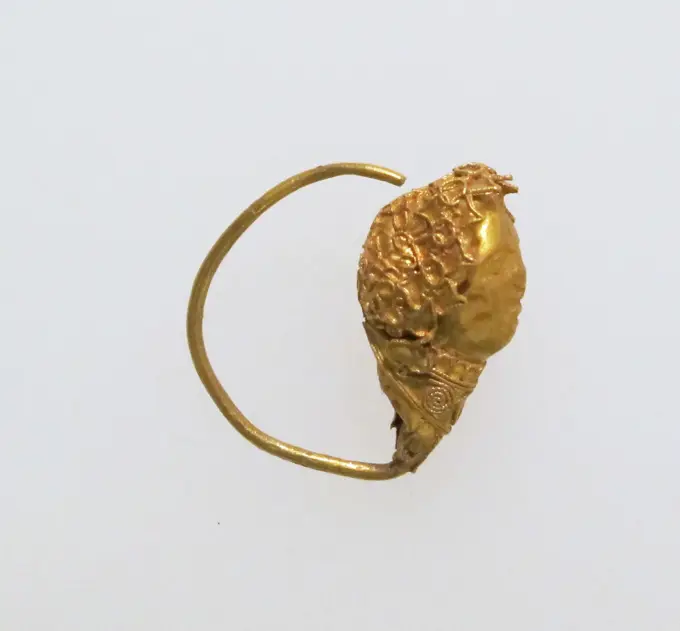
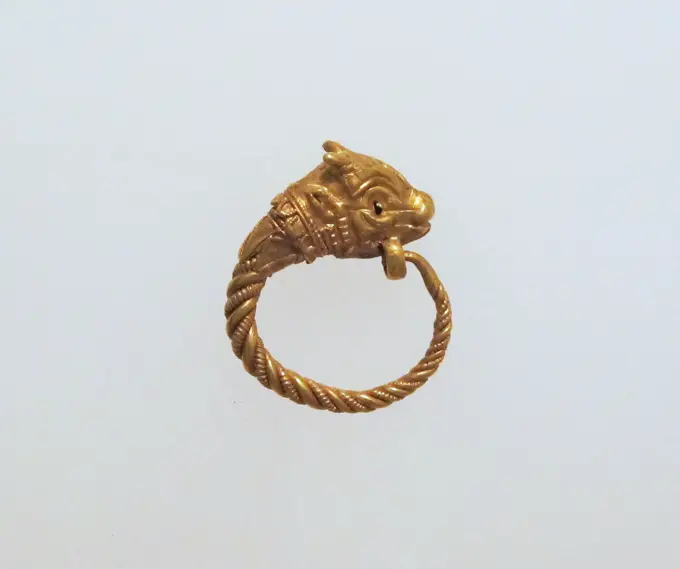
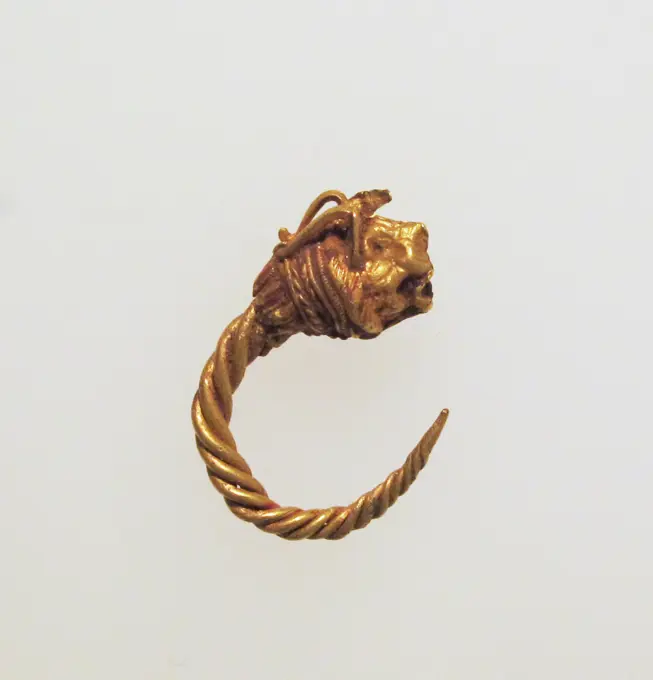
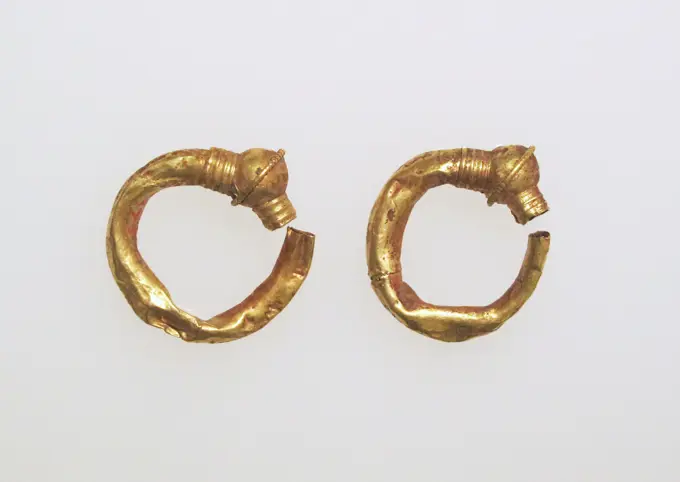
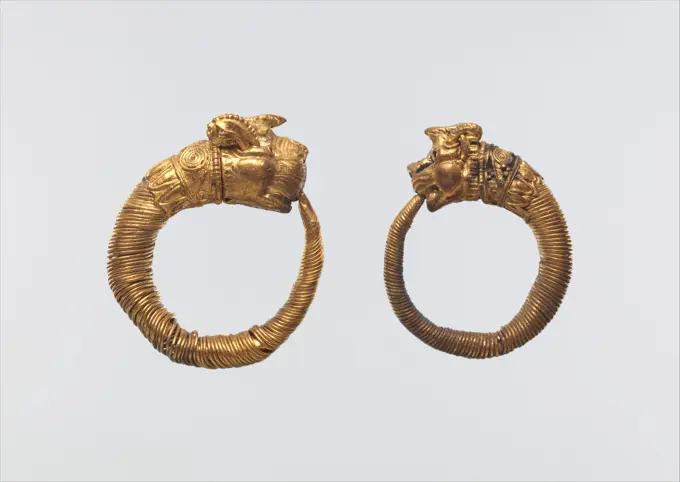
Hair Ringlet with Ram Head, c. 4th Century BC. Greece, Hellenistic period. Gold; overall: 3.5 cm (1 3/8 in.).
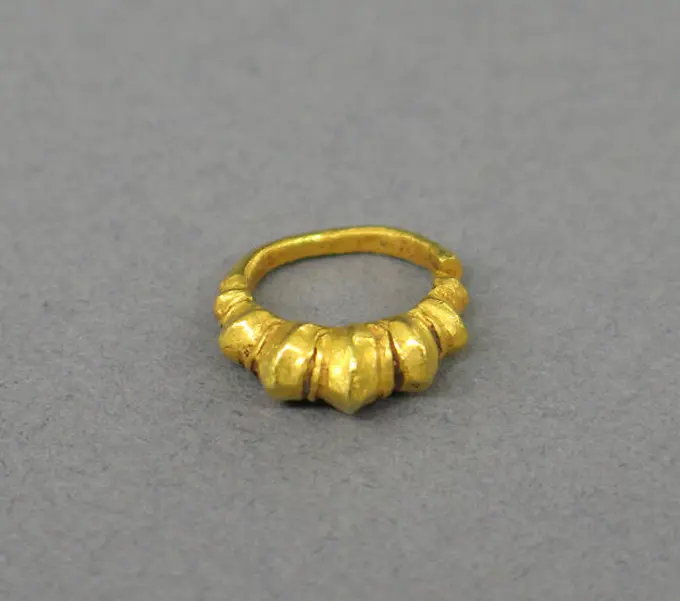
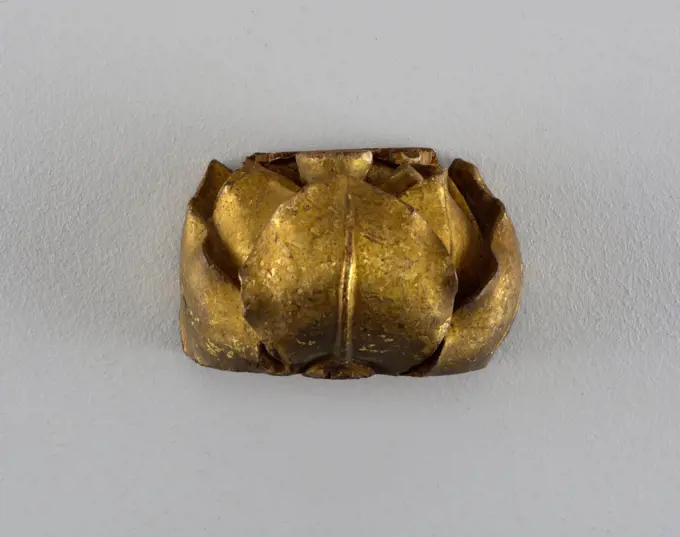
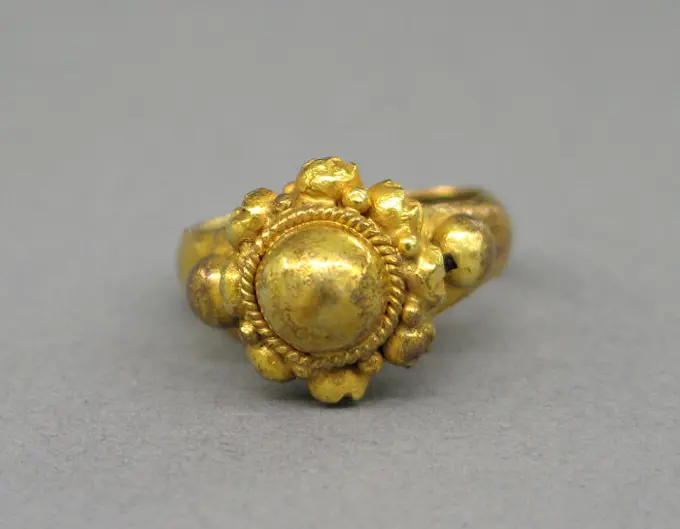
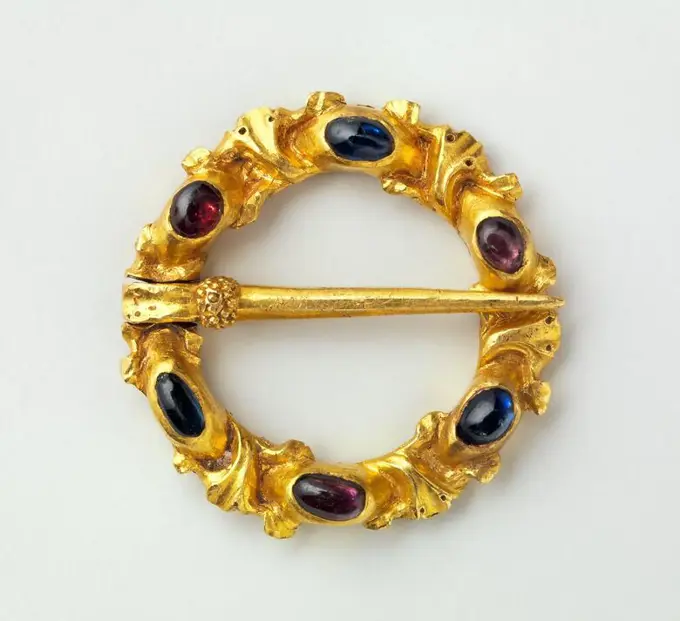
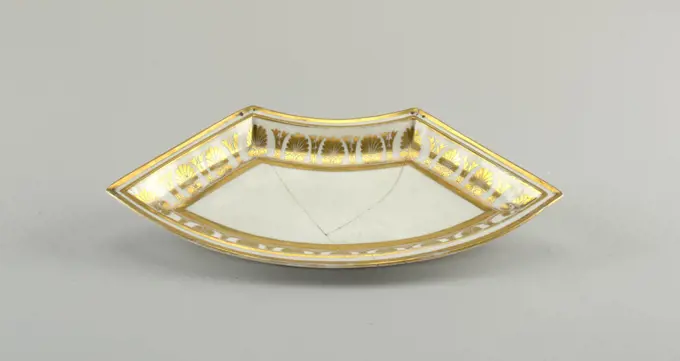
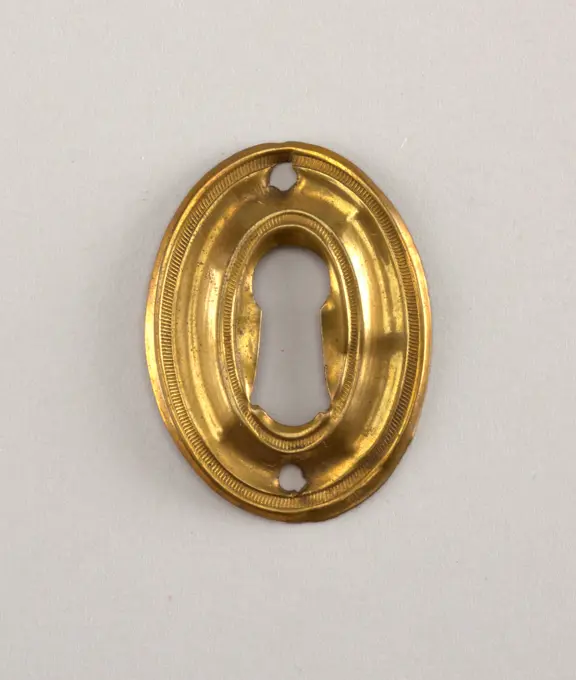
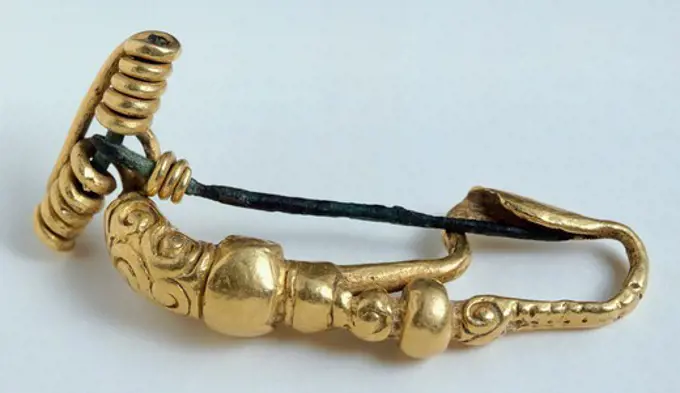
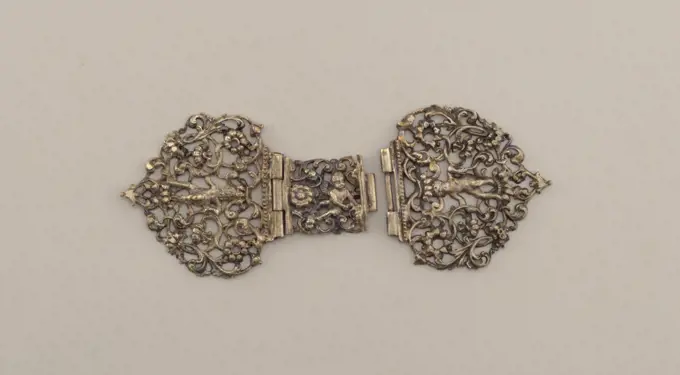
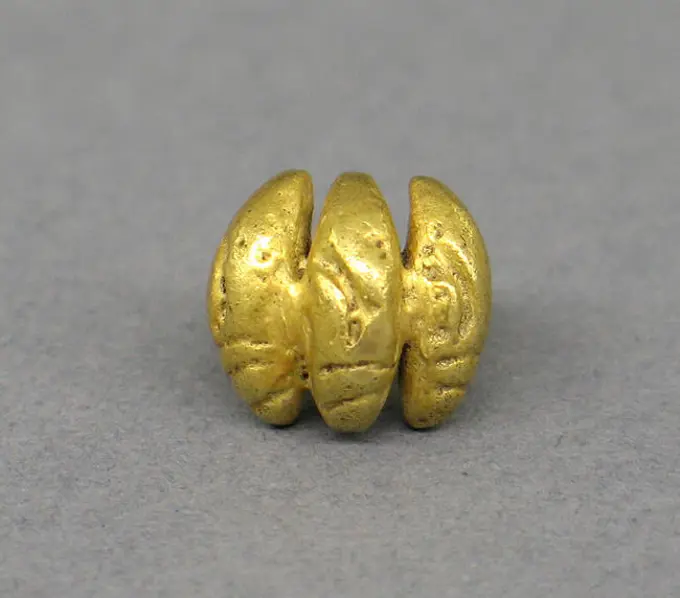
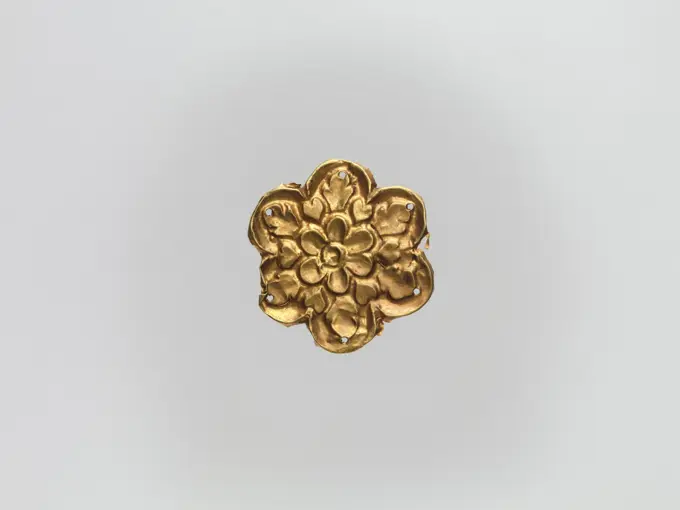
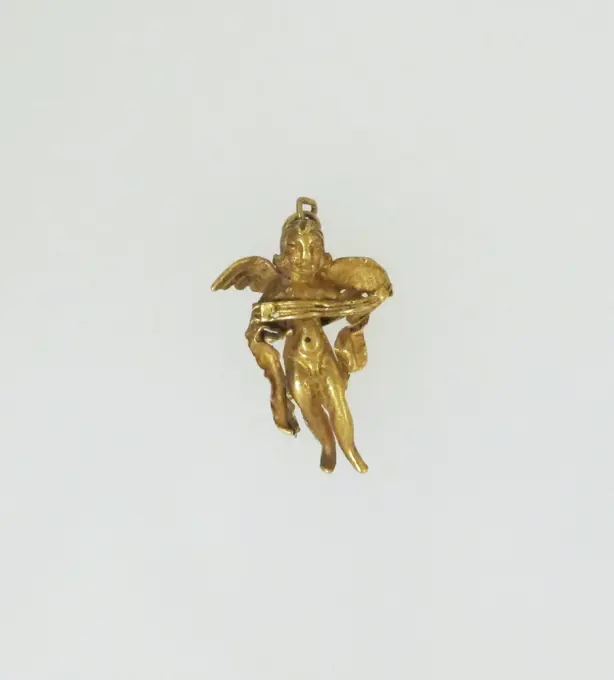
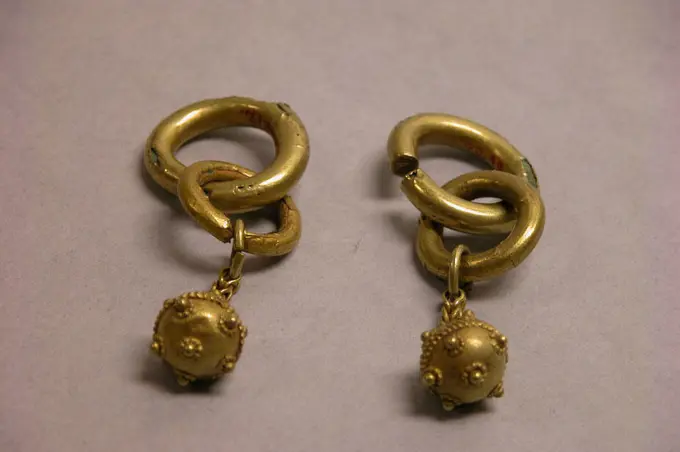
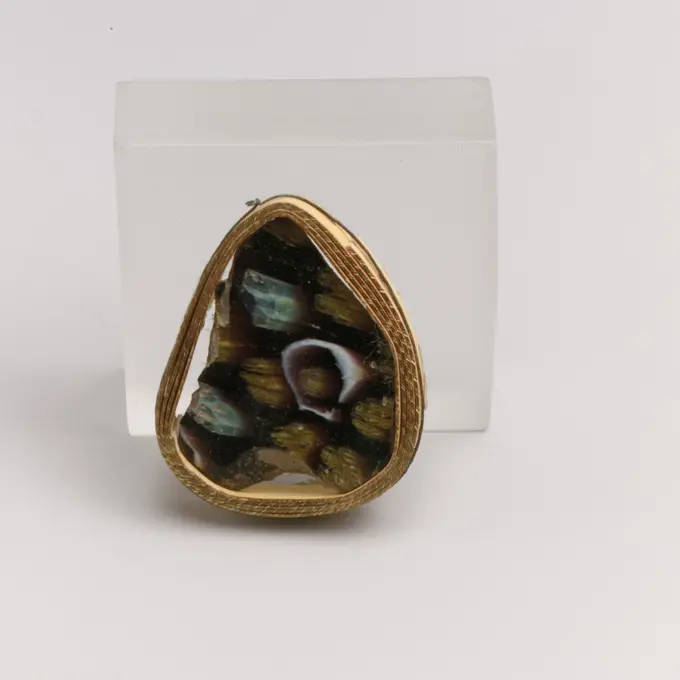
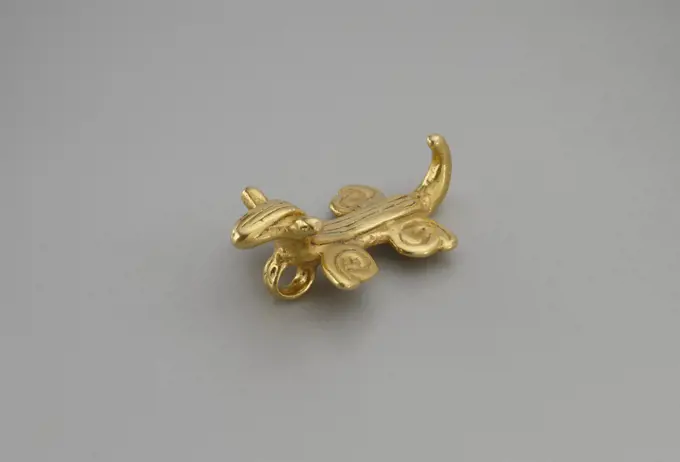
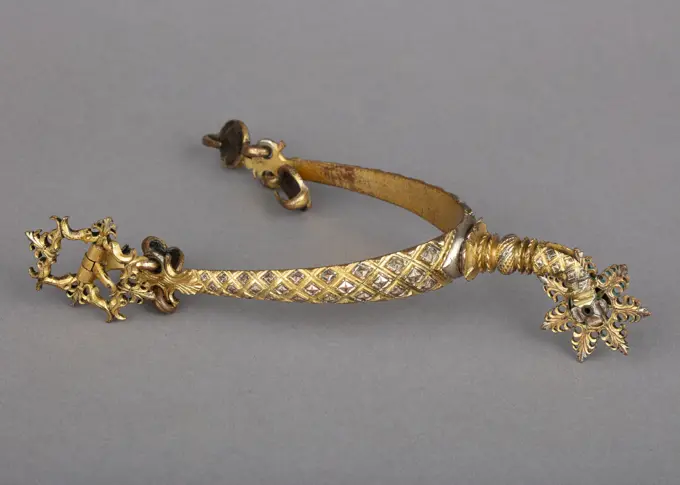
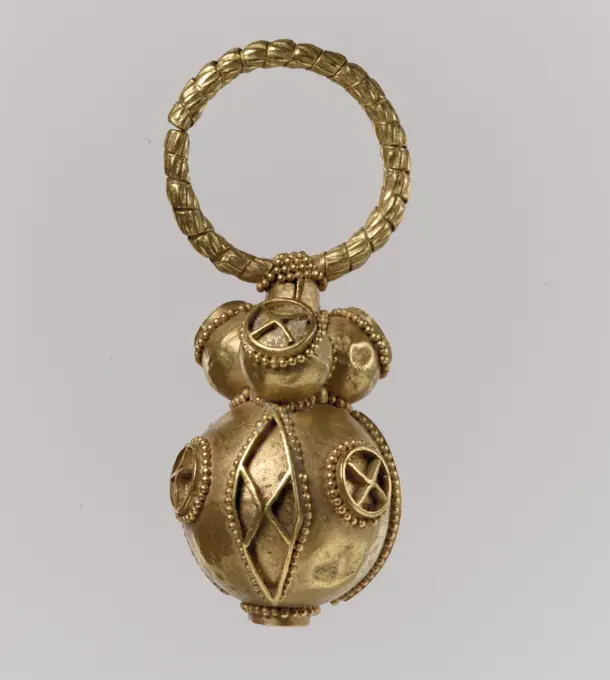
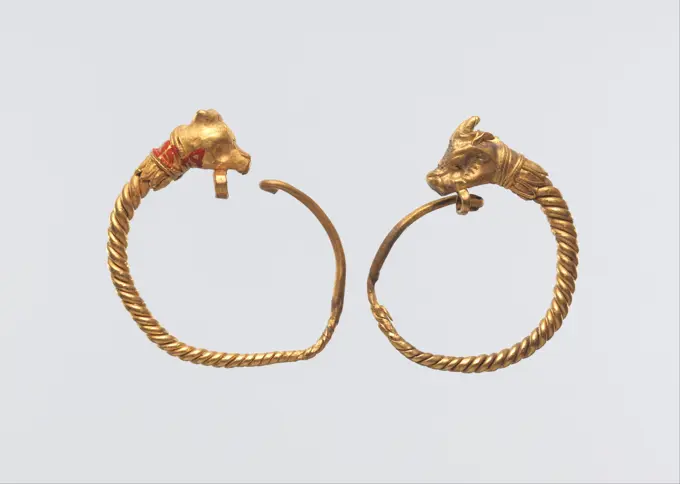
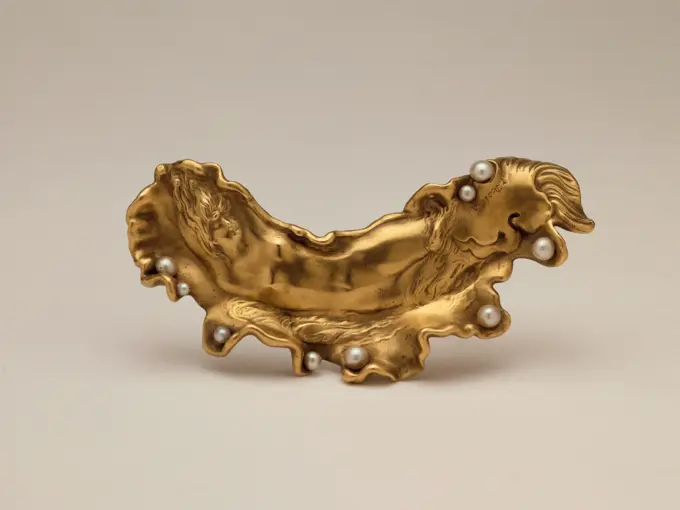
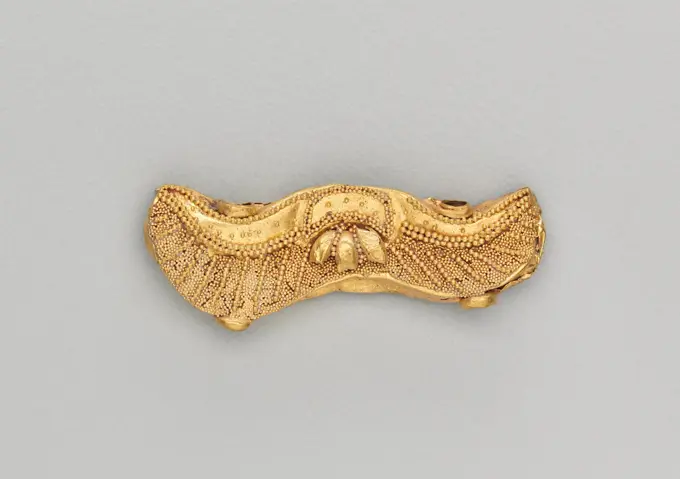
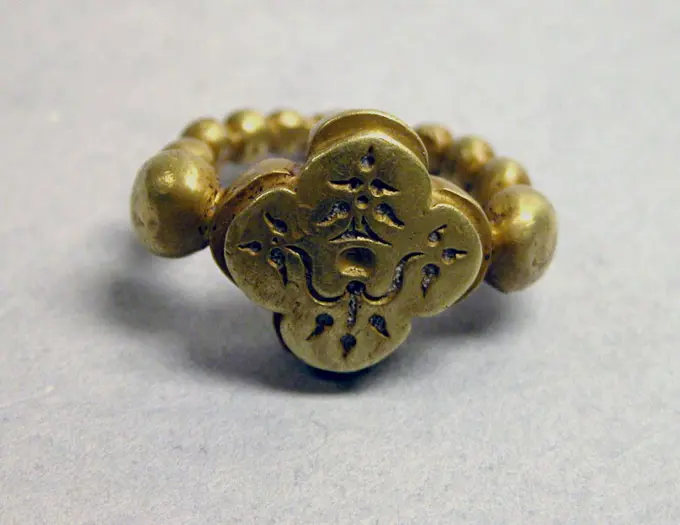
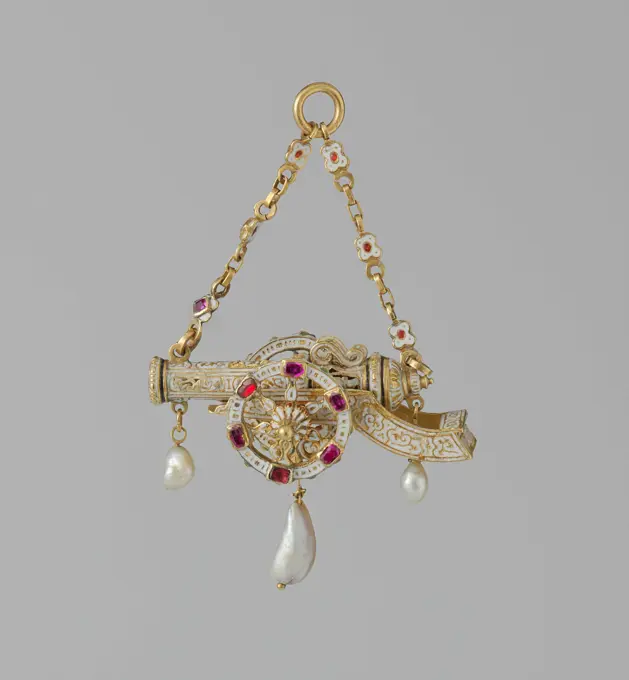
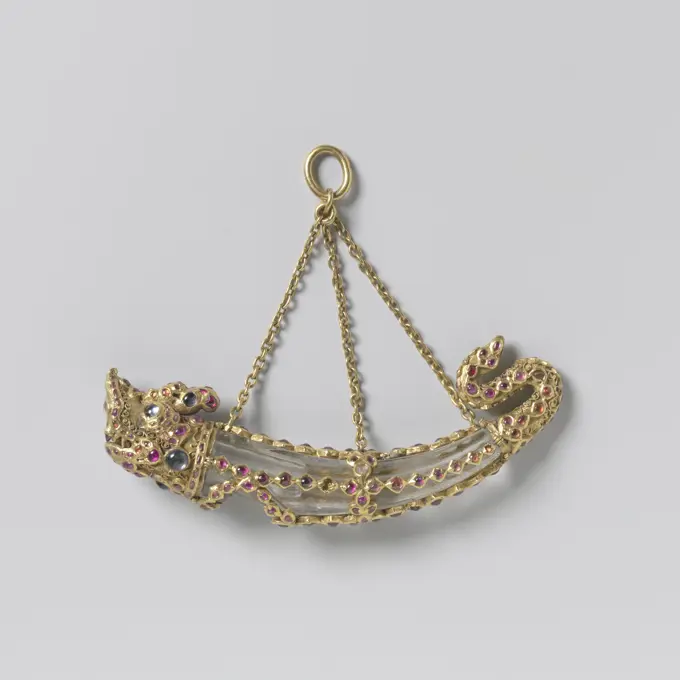
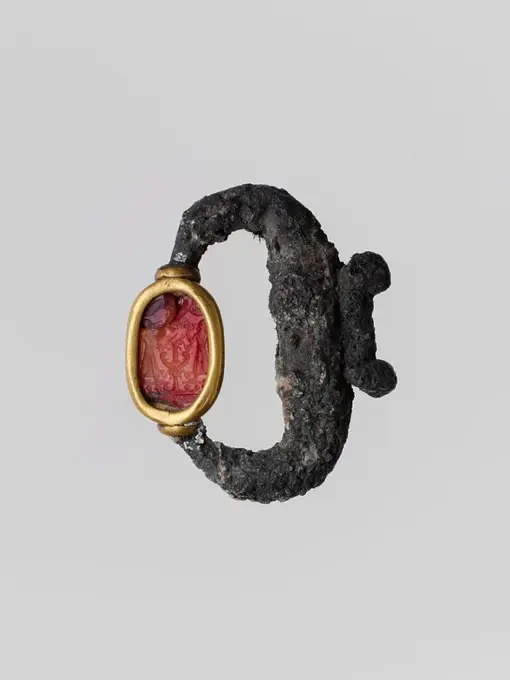
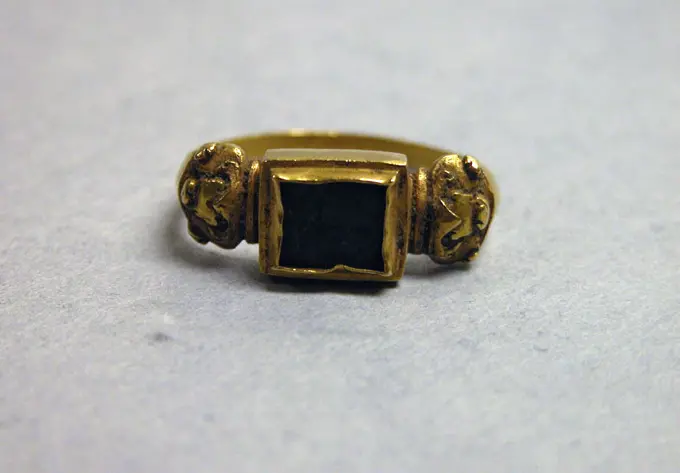
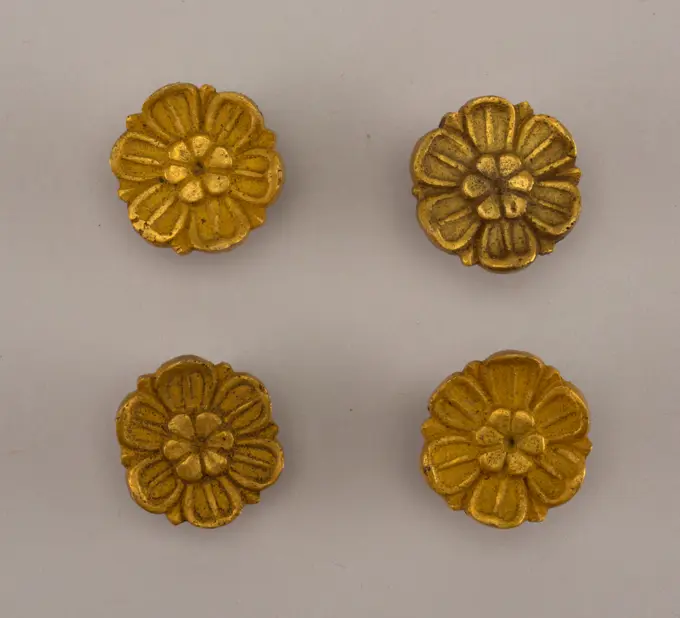
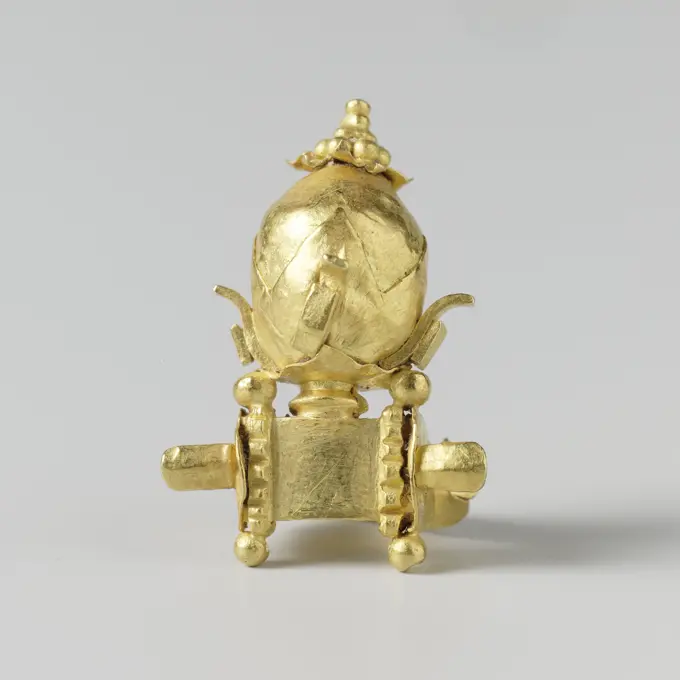
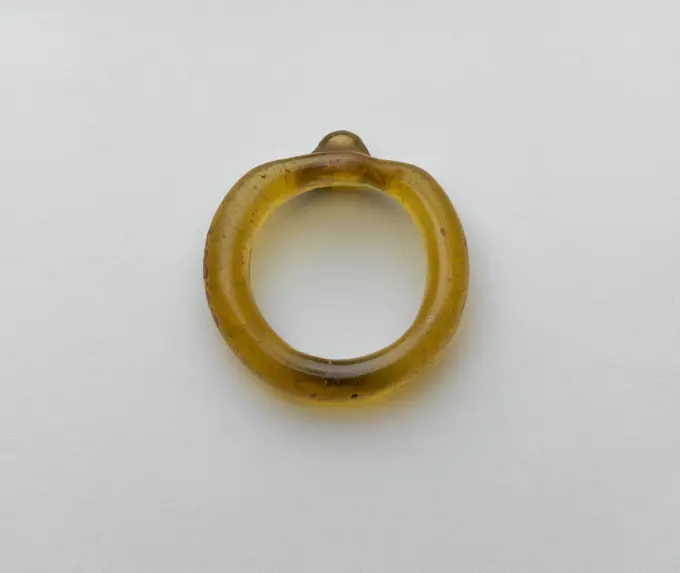
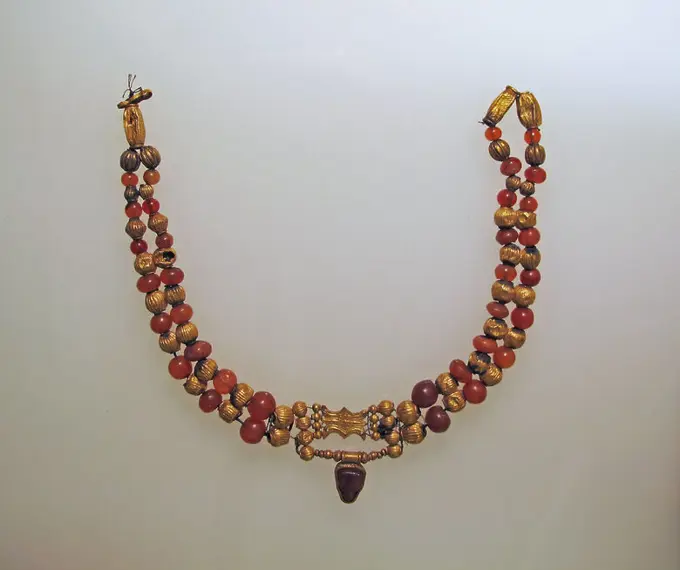
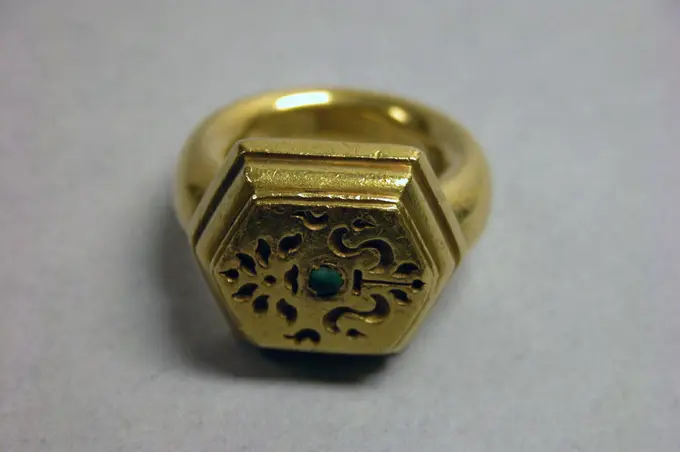
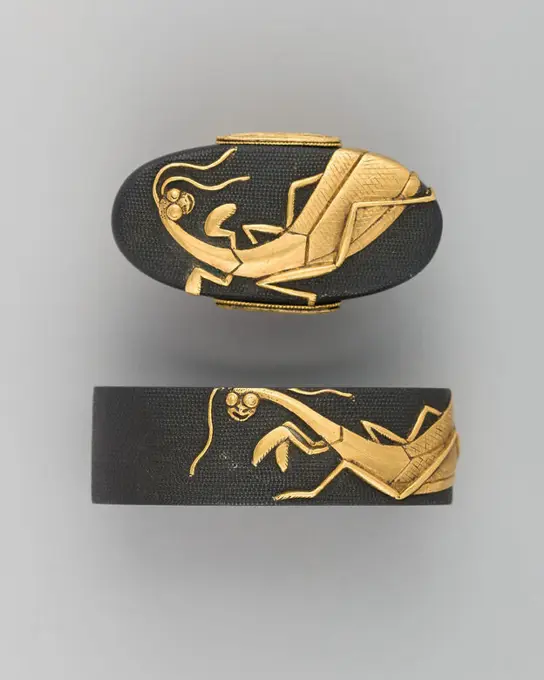
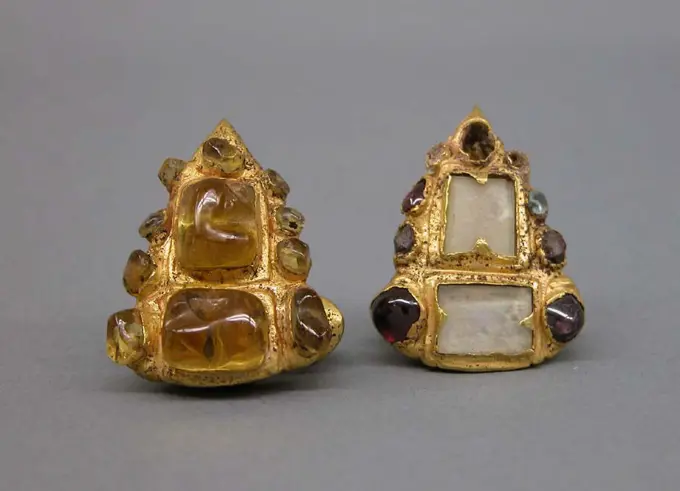
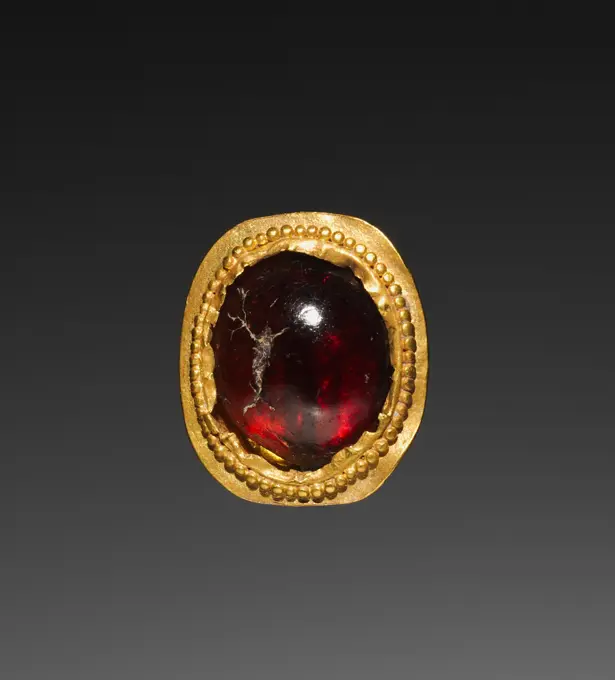
Gold spiral 7th-6th century B.C. Etruscan With four revolutions ornamented with beading and globules.. Gold spiral. Etruscan. 7th-6th century B.C.. Gold. Late Geometric-Archaic. Gold and SilverFurniture Mount (France); gilt bronzePair of Ear Clips Second half of the 8th-second half of the 10th century Indonesia (Java). Pair of Ear Clips 49953Part of a gilded silver list, Joachim Siegismund Wiedemann, c. 1715 - c. 1720 Part of a gilded silver frame and two pins. Berlin silver (metal) gilding Part of a gilded silver frame and two pins. Berlin silver (metal) gildingFragment, floral, wood, gilded, Italy, late 18th century, Decorative Arts, Fragment, floralEar Ornament Second half of the 8th-second half of the 10th century Indonesia (Java). Ear Ornament 49994Hair Ringlet with Ram Head, c. 4th Century BC. Greece, Hellenistic period. Gold; overall: 3.5 cm (1 3/8 in.).Earring, crescent-shaped 6th-5th century B.C. Greek. Earring, crescent-shaped. Greek. 6th-5th century B.C.. Gold. Hellenistic. Gold and SilverARRACADA. (DEPOSITO: MUSEO ARQUEOLOGICO NACIONAL).Fragment, wood, gilded, flower head, Germany, Netherlands, 19th century, Decorative Arts, FragmentEarring, crescent-shaped. Earring, crescent-shaped 243282Ring with Large Central Boss Flanked by Series of Same Last quarter of the 10th-last quarter of the 15th century Indonesia (Java). Ring with Large Central Boss Flanked by Series of Same 50433Ring Brooch. Culture: British or French. Dimensions: Overall: 15/16 × 3/16 in. (2.4 × 0.4 cm). Date: 1250-1300.Brooches such as this were among the objects most frequently produced by goldsmiths. Simple and repetitive in design, the quality of these forms of adornment could vary widely. This is an example of a more finely wrought gold brooch. In addition to its comparatively lively, vegetal design, it is also embellished with semiprecious stones rather than glass paste. Museum: Metropolitan Museum of Art, New York, USA.Dish, Meissen Porcelain Manufactory, German, active from 1710 to the present, hard paste porcelain, gold, White, with stylized palmettes in gilt. A) circular bowl, the flaring rim with vine motif. B) low cover with knob handle, rests inside rim bowl. C to F are curved to form a circle around the bowl., Germany, ca. 1810, ceramics, Decorative Arts, dish, dishGold earring with head of a bull 4th-3rd century B.C. Greek. Gold earring with head of a bull 242839Gold earrings with bull's head 4th-3rd century B.C. Greek Circlet of twisted gold wire, which tapers from the bull's head at the front end to a hooked point which passes through a loop below the animal's throat.. Gold earrings with bull's head. Greek. 4th-3rd century B.C.. Gold. Classical or Hellenistic. Gold and SilverEscutcheon; 1914-27-14Gold earring with disc and pendant 2nd century A.D. Roman. Gold earring with disc and pendant 243191La Tene type gold fibula (pin), from Este, Veneto, Italy. Goldsmith art. Paleoveneti Civilization, 3rd Century BC.Earring with head of woman Etruscan Ornamented with filigree.. Earring with head of woman 245968Pair of Sword-Grip Ornaments (Menuki) 18th century Japanese Menuki are a pair of ornamental sword fittings attached to either side of a sword hilt.. Pair of Sword-Grip Ornaments (Menuki). Japanese. 18th century. Gold. Sword Furniture-MenukiBracelet 4th century B.C. Greek. Bracelet. Greek. 4th century B.C.. Gold. Late Classical. Gold and SilverNecklace with Two Pendants. .Book clasp, Silver, Two hinged parts of heart-shaped clasp, relief decorated with scroll and openwork and putti; single piece identical to hinged parts., probably Italy, probably 17th century, metalwork, Decorative Arts, Book clasp. Wedding ring of gold, in the form of a spiral injured belt. Initous Inscription.Ear Clip with Repeated Vegetable Motif Second half of the 8th-second half of the 10th century Indonesia (Java). Ear Clip with Repeated Vegetable Motif. Indonesia (Java). Second half of the 8th-second half of the 10th century. Gold. Central Javanese period. JewelryFlower-Shaped Clothing Plaque 7th-9th century China (Xinjiang Autonomous Region, Central Asia) The nomadic communities of Central Asia used such plaques to embellish clothing and horse trappings. As these nomadic cultures herded animals and were constantly moving, their artistic production was expressed in portable objects that marked the wearers status and wealth. The outstanding preservation of these fragile ornaments suggests they were used in conjunction with burials, where the body was aggrandized with valuable textiles and augmented with gold. Although it is difficult to date and place these objects geographically, their presence in Central Asia and has a long, established history.. Flower-Shaped Clothing Plaque 65209Ring, inscribed Etruscan Bezel inscribed: "FE/.". Ring, inscribed. Etruscan. Gold. Gold and SilverGold earring with head of a bull 4th-3rd century B.C. Greek. Gold earring with head of a bull 242855Gold earring with head of a lion 4th-3rd century B.C. Greek. Gold earring with head of a lion 242883Defects;  19th century (1801-00-00-1900-00-00);Pendant in the form of Eros 4th-3rd century B.C.. Pendant in the form of Eros. 4th-3rd century B.C.. Gold. Late Classical or Hellenistic. Gold and SilverStirrup-shaped Ring with Oblong Bezel and "Shankha" Second half of the 9th-first quarter of the 10th century Indonesia (Java). Stirrup-shaped Ring with Oblong Bezel and "Shankha" 50391Earring with head of lion 4th-3rd century B.C. Greek. Earring with head of lion 242859Fitting for a Staff with Tumpal Motif Second half of the 8th-second half of the 10th century Indonesia (Java). Fitting for a Staff with Tumpal Motif 50114Hinged Bracelet Second half of the 8th-second half of the 10th century Indonesia. Hinged Bracelet. Indonesia. Second half of the 8th-second half of the 10th century. Gold. Central Javanese period. JewelryEarring (One of a Pair) 5th-6th century Korea. Earring (One of a Pair) 53017Ring. Dimensions: L. 1.9 x W. 1.6 cm (3/4 x 5/8 in). Dynasty: Ptolemaic Dynasty. Date: 200-30 B.C..This ring is set with a garnet cabochon, that is, a garnet cut and polished so as to be rounded rather than faceted. Such rings became popular in the later Hellenistic Period. Museum: Metropolitan Museum of Art, New York, USA.Earring pendant, bird Etruscan Hollow, with incised details.. Earring pendant, bird 245977KnobMosaic glass fragment late 1st century B.C.-early 1st century A.D. Roman Body fragment.Translucent deep purple, pale greyish blue, opaque white and yellow.Convex curving side.Mosaic pattern formed from polygonal sections of three canes: one in a purple ground with a white circle and a central fine yellow spiral; another in a purple ground with a rosette pattern of tiny yellow spirals, and a third in a lattice pattern of blue rods outlined in white.One large chip on exterior; polished exterior; pitting of surface bubbles on exterior; dulling, pitting, and creamy weathering on interior and jagged edges.. Mosaic glass fragment 257315Pendant in the form of a ram's head. Pendant in the form of a ram's head. Gold. Gold and SilverPair of breeches buckles, Silver, New York, New York, USA, ca. 1800-65, jewelry, Decorative Arts, Pair of breeches bucklesOrnament with Dragon Design, 1100s. Korea, Goryeo period (918-1392). Bronze; overall: 3.4 x 2.5 cm (1 5/16 x 1 in.).Earring, trumpet-shaped 5th-3rd century B.C. Etruscan. Earring, trumpet-shaped 245951Reptilependant, A.D.700-1550, Gold, 3.6 × 1.9 cm (1 7/16 × 3/4in.), Made in Costa Rica, Costa Rica,Diquis, 8th-16thcentury, JewelryGold earring with two bulls' heads 3rd century B.C. Greek. Gold earring with two bulls' heads. Greek. 3rd century B.C.. Gold. Early Hellenistic. Gold and SilverOrnament, One of a Pair 12th-13th century. Ornament, One of a Pair. 12th-13th century. Gold; set with glass. Attributed to Iran. JewelryWallet Bead, 1540-1296 BC. Egypt, New Kingdom, probably Dynasty 18. Gold; overall: 0.9 cm (3/8 in.).Ring: with Inlaid Openwork Bezel. Egyptian. Date: 1350 BC. Dimensions: W. 0.6 cm (1/4 in.); diam. 1.9 cm (3/4 in.). Faience. Origin: Egypt. Museum: The Chicago Art Institute, Chicago, USA. Author: Ancient Egyptian.Rowel Spur (Left) ca.1560 Italian The neck and arms of this luxurious spur are chiseled all over with a diaper pattern, the faceted diamond bosses silvered on a golden background. The points of the fragile rowel are shaped as very delicate palmettes. The three circular tabs with hooks feature the gilded profile of a young boy with a ruff collar on a silvered background. These heads seem inspired by the medal of the Infante Carlos, son of Philip II of Spain, aged 12, made in 1557 by Pompeo Leoni.The decoration and the fragility of this spur indicate that it was meant to be used in a festive or ceremonial context. For carousels and other equestrian games, noble riders would commission for themselves and their horses splendid outfits and tacks covered with elaborate motifs often repeated on the different elements composing them.. Rowel Spur (Left). Italian. ca.1560. Copper alloy, gold, silver. Equestrian Equipment-SpursOne of a Pair of Gold Earrings 550-650 Avar In the 500s and early 600s, when the Avars were regularly receiving enormous payments from the Byzantine Empire, virtually all free men and women wore distinctive large earrings fashioned from the pure gold of melted Byzantine coins.. One of a Pair of Gold Earrings 465086 Avar, One of a Pair of Gold Earrings, 550650, Gold, Other: 2 3/16  7/8  13/16 in., 0.514 Troy Ounces (5.5  2.3  2 cm, 16g) Other (hoop): 7/8 in. (2.3 cm) Other (bead): 1 3/16 x 13/16 x 13/16 in. (3 x 2 x 2 cm). The Metropolitan Museum of Art, New York. Gift of J. Pierpont Morgan, 1917 (17.191.4)Bracelet (Pahunchi), One of a Pair 18th-19th century. Bracelet (Pahunchi), One of a Pair. 18th-19th century. Gold. Attributed to Northern India. JewelryEarrings with bull head terminal 4th-3rd century B.C. Ptolemaic Period Hoops formed of wound wire with animal head terminals are the commonest type of Hellenistic earring. The bull-head earring appears throughout the Mediterranean, probably a positive image because of the physical and sexual prowess attributed to bulls. Examples like this one with a simple collar composed of a series of tongues mostly date to the early Ptolemaic Period.. Earrings with bull head terminal 551294Chain of the Guild of Saint Sebastian in Hulst, anonymous, c. 1500 - c. 1549 Militia chain, belonging to tradition at St. Jorisgilde in Hulst. The chain consists of eight hinged pieces decorated with imposed late gothic leaf work, between which in round medallions, surrounded by a cable edge, weapons are applied, the following of which are known: 1 St. Joris or Footboogschuttersgilde; 2 Lamzweerde family, living in Hulst and moved to Utrecht in 1550; 3 Van Deinse family, of which a member, Joannes, was Abbot van Baudeloo, died 1539 or 1542; 4 Carpentier family, of which a member was ships in Hulst from 1553-1556 (or family of the Putte); 5 Jacques de Draeyere, Abbot van Baudeloo, died 1562 (or Van der Zijpe family); 6 Abbey of Baudeloo, established in Petit-Sinay, who had a refuge in Hulst and in Ghent. The chain hangs a medallion with a cast representation of St. Sebastiaan, above which the weapon of Petrus Everaert, 33rd abbot of Baudeloo, died 1703. Seven other shields attached to tGuarrazar Hoard. Two arms of a gold processional cross. Visigothic goldsmithing. Dated between 621 and 672 AD. From Guarrazar (Guadamur, province of Toledo, Spain). National Archaeological Museum. Madrid. Spain.Jules Desbois (1851-1935). Pin. However, 9 fine pearls. Museum of Fine Arts of the City of Paris, Petit Palais. Pin, shell, woman, gold, pearl, fine pearl, sireneSet of Pendants Ending in a Bull's Head, 185-72 BC. India, Sunga Period (185-72 BC). Gold repoussé with granulation;fibula discoidal, Museo de los Concilios y la Cultura Visigoda, Iglesia de San Román,Toledo, Castilla-La Mancha, Spain.Ring with Quatrefoil-shaped Bezel with "Sri" Inscription Second half of the 9th-first quarter of the 10th century Indonesia (Java). Ring with Quatrefoil-shaped Bezel with "Sri" Inscription. Indonesia (Java). Second half of the 9th-first quarter of the 10th century. Gold. late Central Javanese period. JewelryPendant in the shape of a gun on affuit. Hanger of gold and email in the shape of a cannon on affuit. The wheels are busy with rubies and a diamond. There are three pearls at the bottom.Makara-shaped Pendant, anonymous, c. 1600 Pendant of rock crystal and gold, occupied with rubies. The pendant has the shape of a Makara and is actually a piece of cake. Goa gold (metal). sapphire (mineral). ruby (mineral) Pendant of rock crystal and gold, occupied with rubies. The pendant has the shape of a Makara and is actually a piece of cake. Goa gold (metal). sapphire (mineral). ruby (mineral)Buckle decorated with anemones, anonymous, c. 1900 - c. 1910 Buckle of gold in Art Nouveau style. Decorated with floral motifs (anemones). Paris gold (metal) Buckle of gold in Art Nouveau style. Decorated with floral motifs (anemones). Paris gold (metal)Pair of Ear Ornaments Second half of the 8th-second half of the 10th century Indonesia (Java). Pair of Ear Ornaments 49751Silver pendant with carnelian scarab. Culture: Cypriot or Phoenician. Dimensions: Other: 5/16 × 9/16 × 11/16 in. (0.8 × 1.4 × 1.7 cm)Diameter: 1 11/16 in. (4.3 cm). Date: 6th-5th century B.C..On the scarab, two figures flanking a tree.This type of pendant, that undoubtedly also served an amuletic function, was Phoenician in origin and widely distributed throughout the Mediterranean. Museum: Metropolitan Museum of Art, New York, USA.Ring with Stylized Flame Motif and Ribbed Hoop Second half of the 8th-second half of the 10th century Indonesia (Java). Ring with Stylized Flame Motif and Ribbed Hoop 50141Sword Guard (Tsuba) ca. 1615-1868 Japanese A tsuba is a sword guard and part of a sword mounting. It is mounted between the swords blade and grip to protect the users hands.. Sword Guard (Tsuba) 34427Torc 4th-8th century () Celtic. Torc 466359Ring with Inset Rectangular Cut Stone Second half of the 8th-second half of the 10th century Indonesia (Java). Ring with Inset Rectangular Cut Stone. Indonesia (Java). Second half of the 8th-second half of the 10th century. Gold with stone. Central Javanese period. JewelryGold earring with rosette disk 3rd century A.D. Roman. Gold earring with rosette disk 243238Ring, spiral with overlapping ends. Ring, spiral with overlapping ends 243494RosetteEarring with Green Stones 8th-12th century Indonesia (Central Java). Earring with Green Stones 64328Earth jewel in the form of a ring, 800 - 900 Easter juice in the form of a ring on top of a decoration on a lotus cushion. Java gold (metal). ruby (mineral) Easter juice in the form of a ring on top of a decoration on a lotus cushion. Java gold (metal). ruby (mineral)Gold ring with inscribed bezel 1st century B.C.-3rd century A.D. Roman. Gold ring with inscribed bezel. Roman. 1st century B.C.-3rd century A.D.. Gold. ImperialPendant or Earring, 1-200. Parthian, 1st-2nd Century. Gold; diameter: 1.8 cm (11/16 in.); overall: 3.7 cm (1 7/16 in.).Glass ring ca. 2nd century A.D. Roman Translucent greenish yellow.Circular cross section to hoop with round finger hole; slightly wider, flattened oval bezel decorated with projecting hemispherical knob.Complete but with crack (seam ) acorss bezel; slight dulling and pitting.. Glass ring. Roman. ca. 2nd century A.D.. Glass, amber; rod-formed and tooled. Imperial. GlassGold Pair of Earrings. Korea, Three Kingdoms period, Old Silla kingdom (57 B.C.-A.D. 668), 5th-7th century. Jewelry and Adornments; earrings. Hammered, cut, soldered, and riveted gold with twisted gold wireDisk stud Etruscan Disk ornamented with globules on a cylindricl shank.. Disk stud. Etruscan. Gold. Gold and SilverEarring with lion-griffin head terminal 4th-3rd century B.C. Ptolemaic Period Hoops formed of wound wire with animal head terminals are the commonest type of Hellenistic earring. The griffin is a mythical winged animal that could have an eagle head or a horned lion-head. The latter is the only sort found on Egyptian jewelry; it has been suggested that it was associated with the Macedonian dynasty, while the eagle griffin was associated with the Achamenid Persians.The 'collar' behind the lion-griffin's head is decorated with granulation and filagree.. Earring with lion-griffin head terminal 560738Necklace. Culture: Cypriot. Dimensions: center goldl plaque: 7/16 × 11/16 × 1/16 in. (1.1 × 1.7 × 0.2 cm)Diameter (largest carnelian bead): 3/8 in. (1 cm)Diameter (smallest carnelian bead): 1/4 in. (0.6 cm)Length (68 elements): 12 in. (30.5 cm)bull pendant: 7/16 × 1/4 × 11/16 in. (1.1 × 0.7 × 1.8 cm)largest gold bead: 5/8 × 5/16 in. (1.6 × 0.8 cm)Diameter (smallest gold bead): 3/16 in. (0.5 cm)clasp: 5/16 × 1/2 in. (0.8 × 1.3 cm). Museum: Metropolitan Museum of Art, New York, USA.Ring with Hexagonal Bezel and Stone with "Sri" Inscription Second half of the 9th-first quarter of the 10th century Indonesia (Java). Ring with Hexagonal Bezel and Stone with "Sri" Inscription. Indonesia (Java). Second half of the 9th-first quarter of the 10th century. Gold with stone. late Central Javanese period. JewelrySword-Hilt Collar and Pommel (Fuchigashira). Culture: Japanese. Dimensions: Fuchi (a); H. 1 1/2 in. (3.8 cm); Wt. 0.8 oz. (22.7 g); kashira (b); H. 1 3/8 in. (3.5 cm); Wt. 0.5 oz. (14.2 g). Date: second half 18th century. Museum: Metropolitan Museum of Art, New York, USA.Gold torc with lion head terminals worn by a wealthy Byzantine woman. Dated 4th Century.Torque, 9 3/4 x 9 1/2 x 1 3/4 in. (24.77 x 24.13 x 4.45 cm), Silver, ChinaMountPair of Ear Ornaments Inlaid with Stones Second half of the 8th-second half of the 10th century Indonesia (Java). Pair of Ear Ornaments Inlaid with Stones 50078Bracelet, One of a Pair 14th century. Bracelet, One of a Pair. 14th century. Gold. Made in Spain. JewelryGarnet, 1-200. Parthian, 1st-2nd Century. Gold and garnet; overall: 0.3 x 0.8 x 0.9 cm (1/8 x 5/16 x 3/8 in.); with mount: 0.3 x 0.8 x 2.4 cm (1/8 x 5/16 x 15/16 in.).Ring with Lotus Motif on Bezel Second half of the 8th-second half of the 10th century Indonesia (Java). Ring with Lotus Motif on Bezel 50147FinialGold ring with glass paste ring stone 5th century B.C. Greek or Cypriot Ring with a high swivel socket and pale paste stone.. Gold ring with glass paste ring stone. Greek or Cypriot. 5th century B.C.. Gold, glass paste. Classical. Gold and SilverEarrings Cypriot. Earrings 242602NecklaceSirih box, anonymous, c. 1700 - c. 1799 A sirihpot 'Goela Klapa', part of a pair (A and B) with gilded lid from the 18th century with Louis XVI decoration with brushes and garlands in driven silver. On the golden caps a peacock or bird motif has been applied and not, as would be expected, the motif of a dying gareda. The lid is attached to the pot with a chain. The pot is round and stands on a foot. Indonesia silver (metal). gold (metal) gilding A sirihpot 'Goela Klapa', part of a pair (A and B) with gilded lid from the 18th century with Louis XVI decoration with brushes and garlands in driven silver. On the golden caps a peacock or bird motif has been applied and not, as would be expected, the motif of a dying gareda. The lid is attached to the pot with a chain. The pot is round and stands on a foot. Indonesia silver (metal). gold (metal) gildingBracelet (USA); gold, enamelPendant in the form of Hathor's head. Pendant in the form of Hathor's head 242693RingGold ring with carnelian intaglio: Eros with flaming torch late 1st century B.C.-1st century A.D. Roman, Cypriot Eros leaning on an inverted torch.These items, all found on Cyprus, are very representative of Roman decorative jewelry, in which various designs are combined and highlighted with colored gems in order to make them look as rich and impressive as possible. Similar jewelry is found throughout the Roman Empire.1. Gold, beryl, and garnet earrings, 3rd century A.D. (74.51.3967, .3968)2. Gold and carnelian ring, carved with the figure of Eros, late 1st century B.C.-1st century A.D. (74.51.4233)3. Gold and carnelian ring, 1st-early 3rd century A.D. (74.51.4234)4. Gold and pearl earrings, 3rd century A.D. (74.51.3853, .3854)5. Gold and garnet ring, 1st century B.C.-1st century A.D. (74.51.4261)6. Gold and beryl ring, late 1st century B.C.-early 1st century A.D. (74.51.4272)7. Gold and banded agate ring, 1st-2nd century A.D. (74.51.4264)8. Gold and garnet ring, 2nd century A.D. (74.5