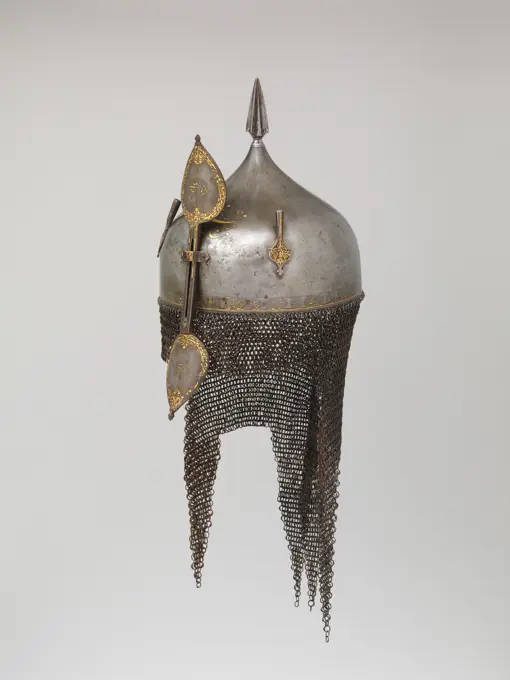
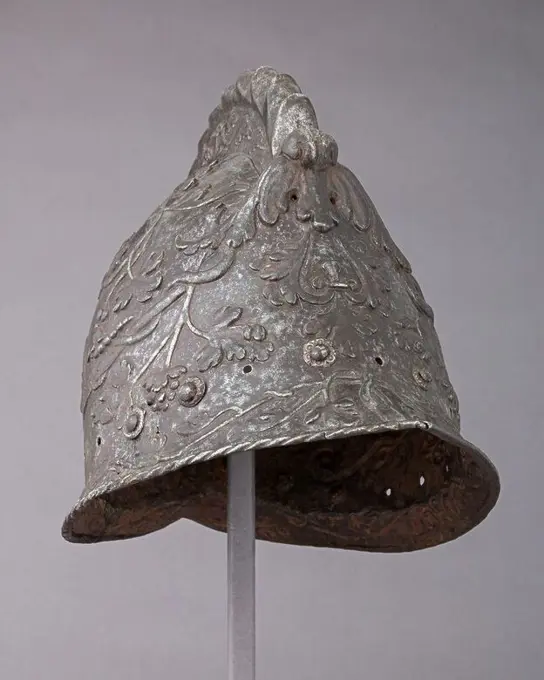
Historic Armor and Helmets

A selection of intricate helmets and armor pieces from different eras, highlighting craftsmanship and functional design.
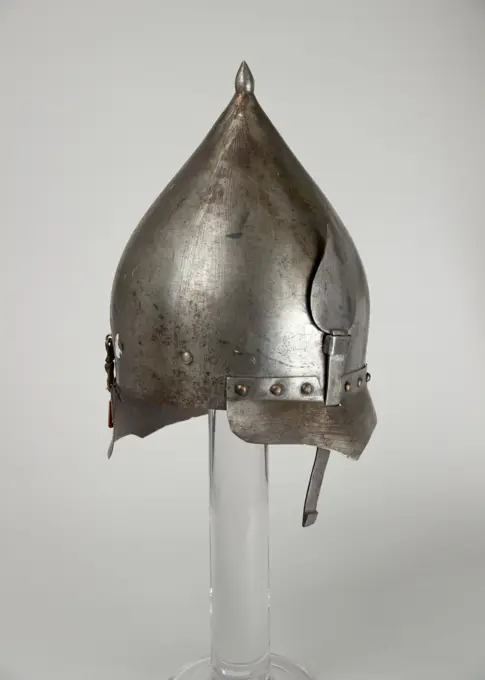
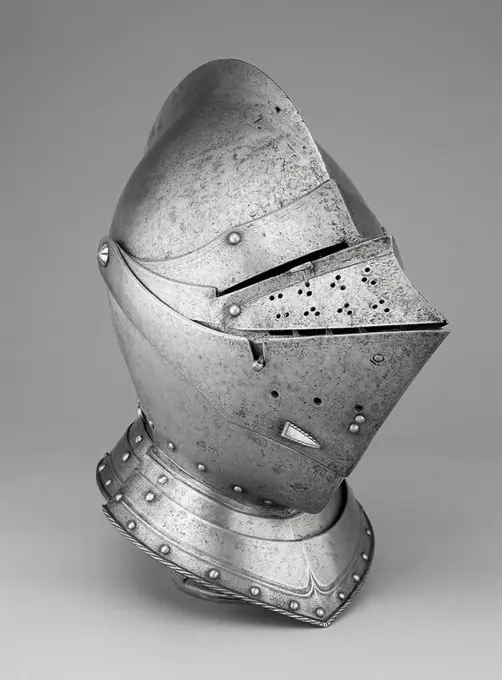
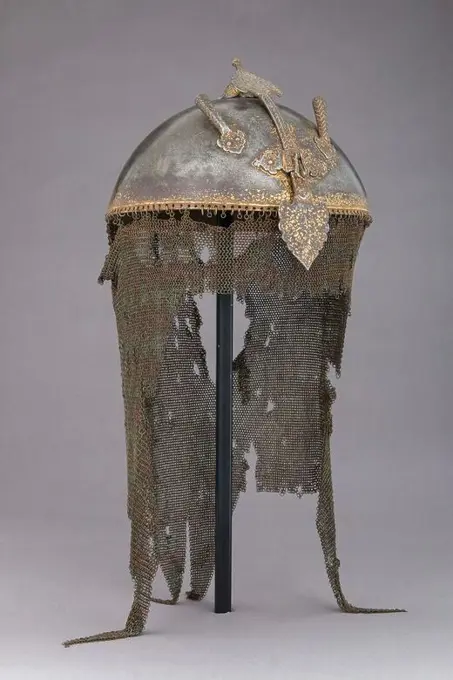
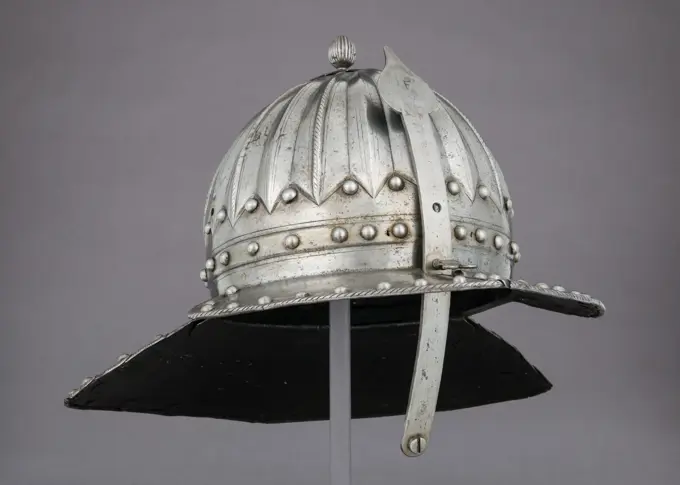
Helmet 16th-17th century Turkish. Helmet 24003
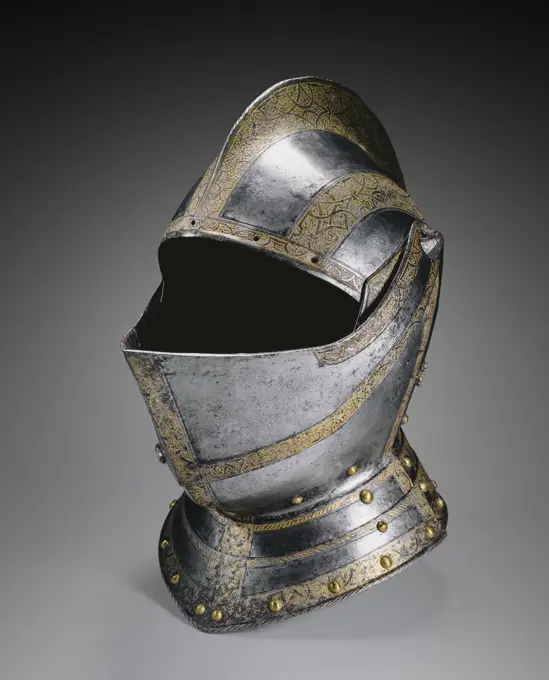
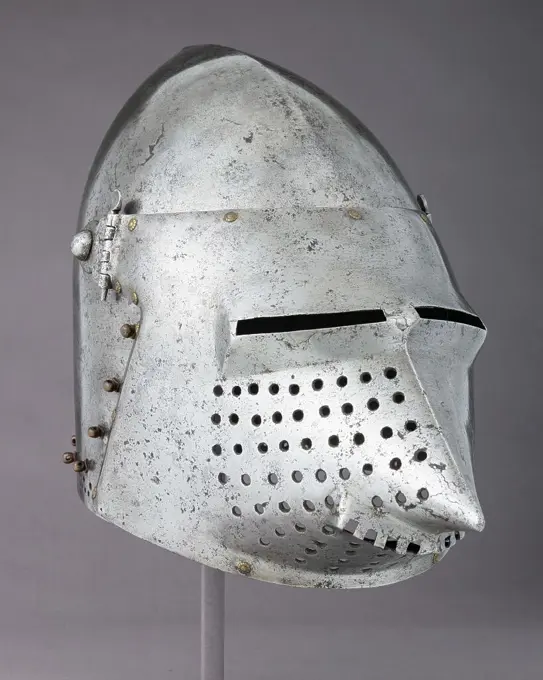
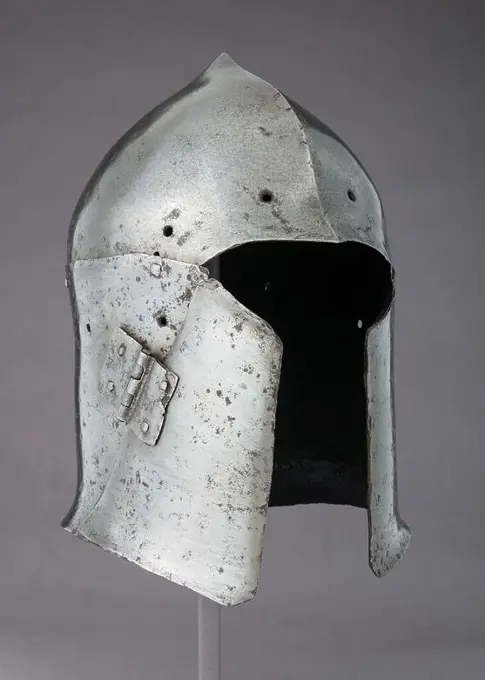
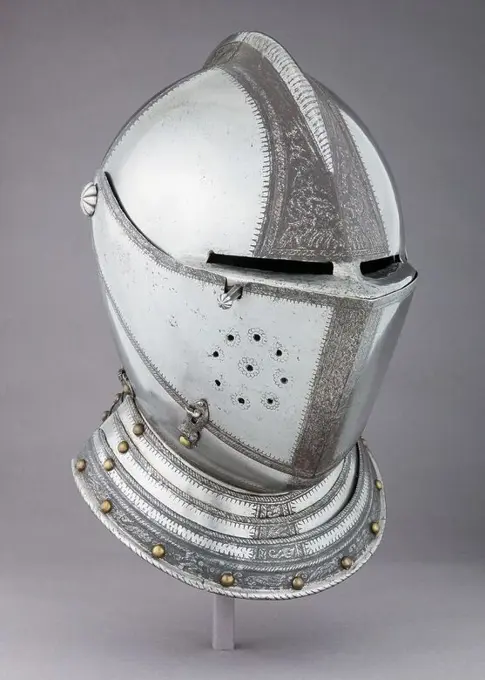
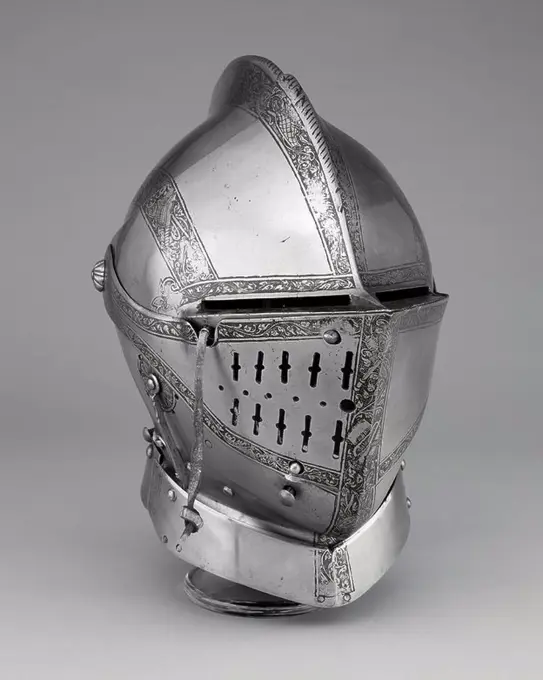
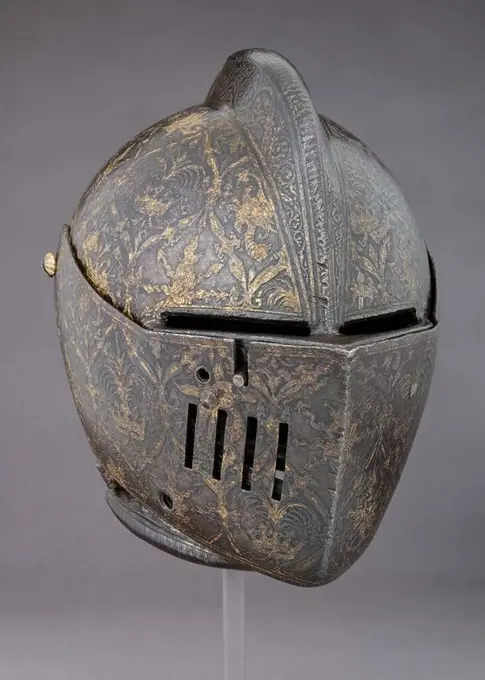
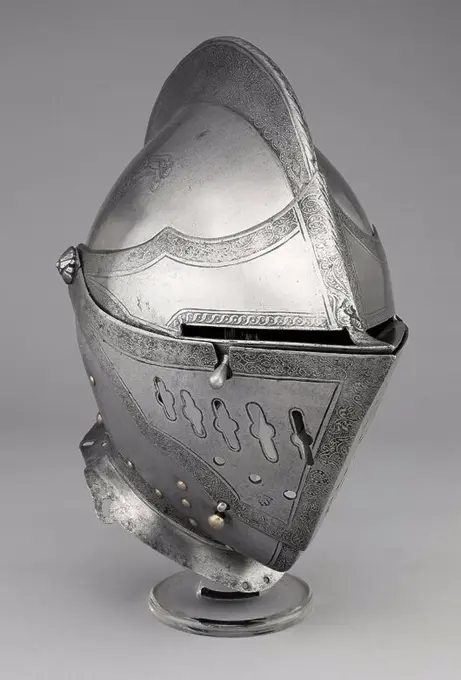
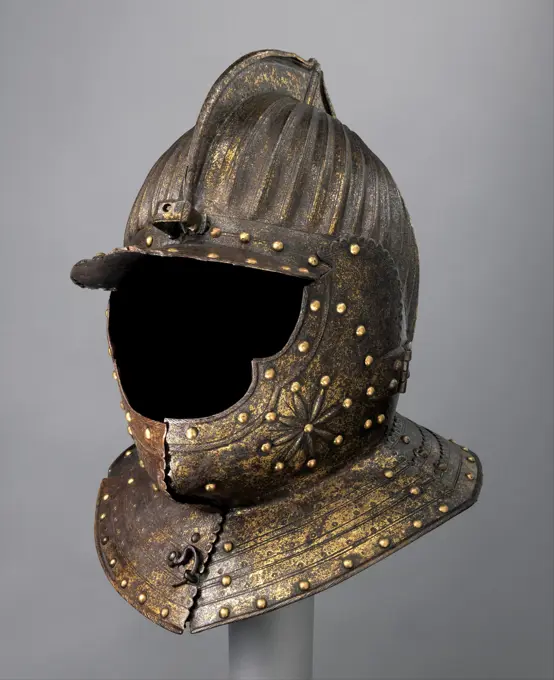
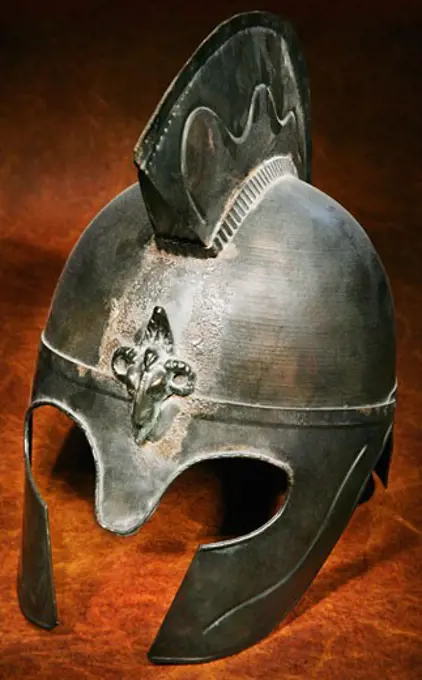
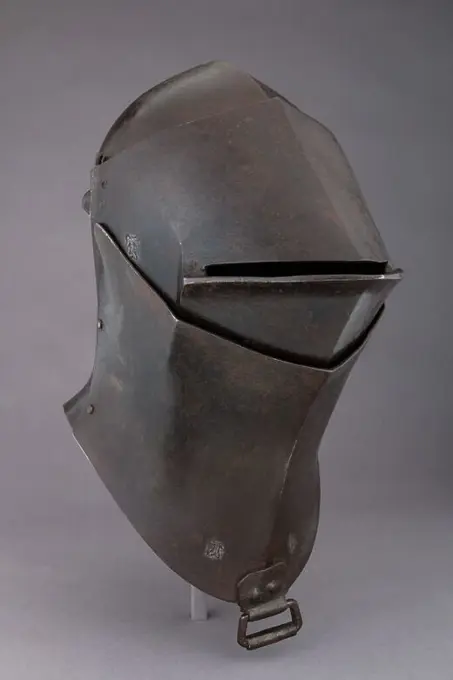
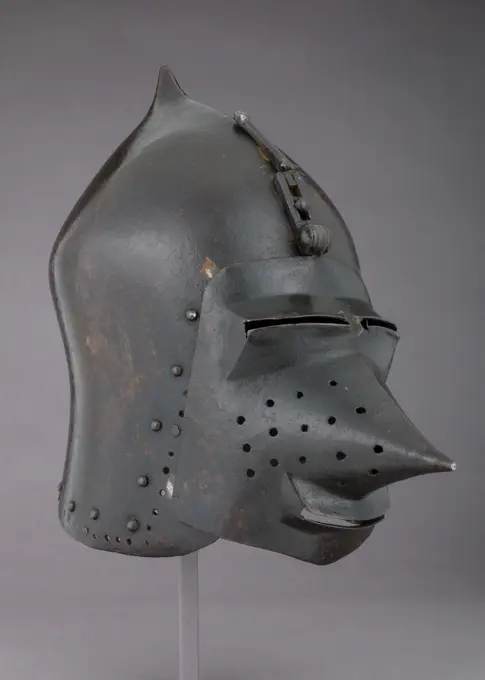
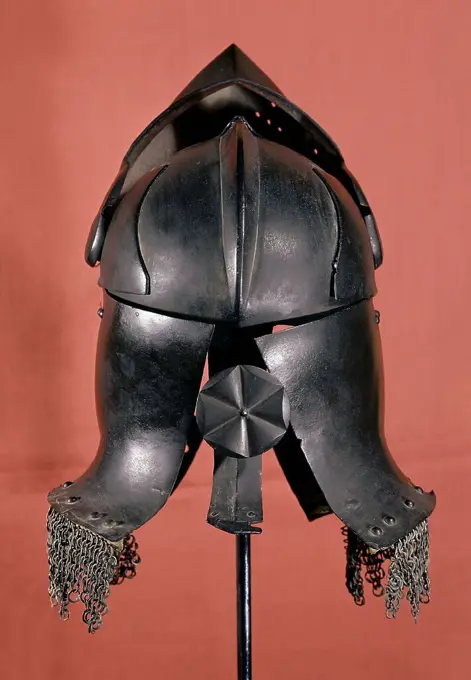
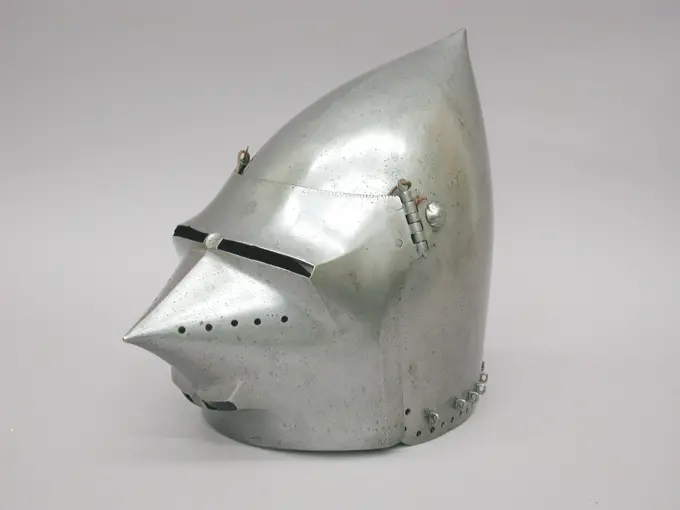
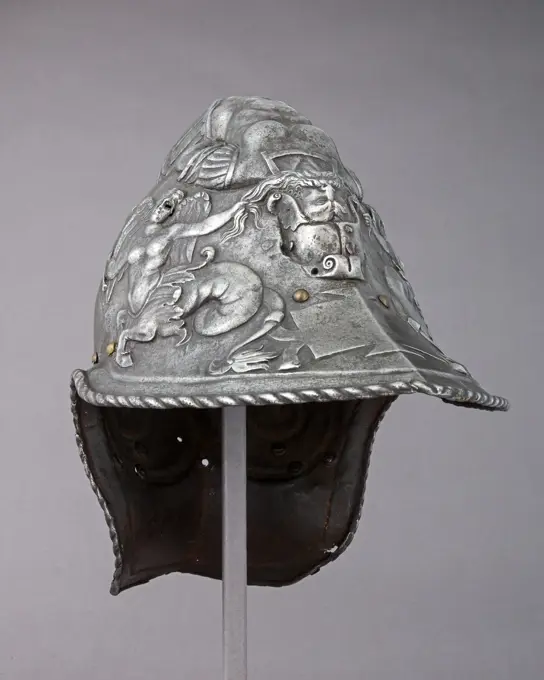
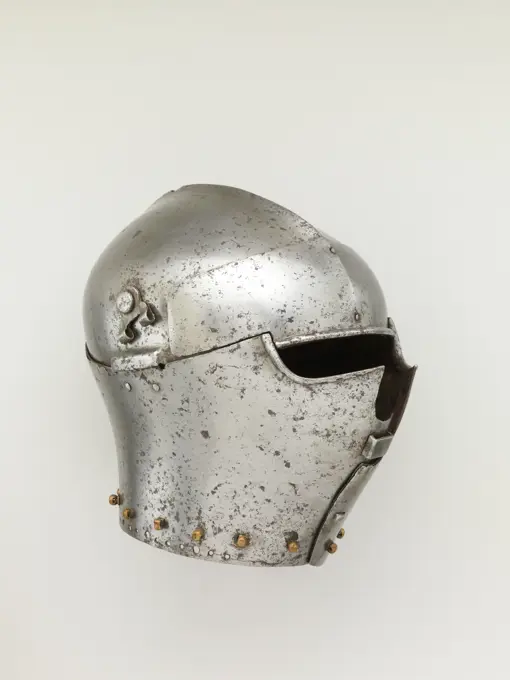
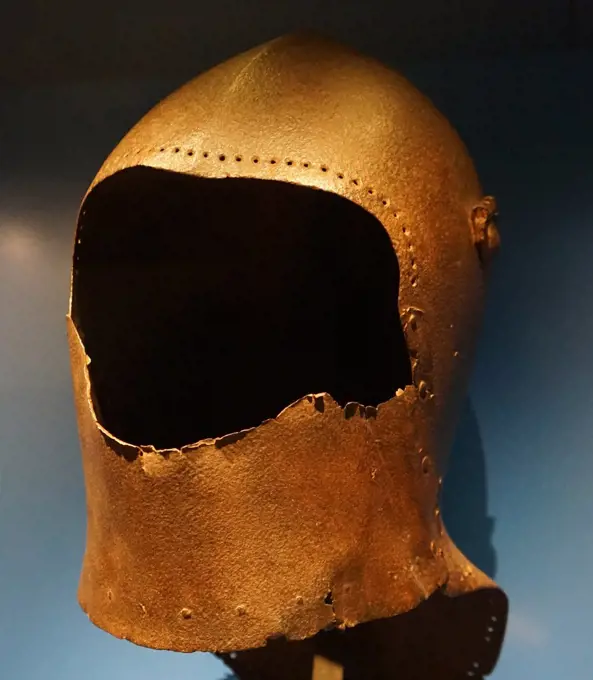
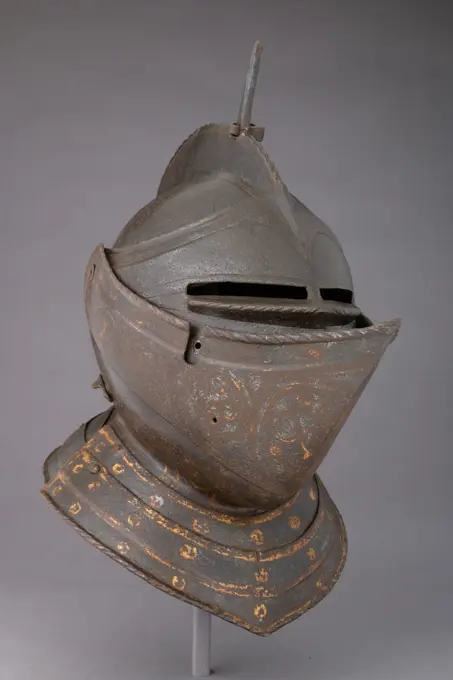
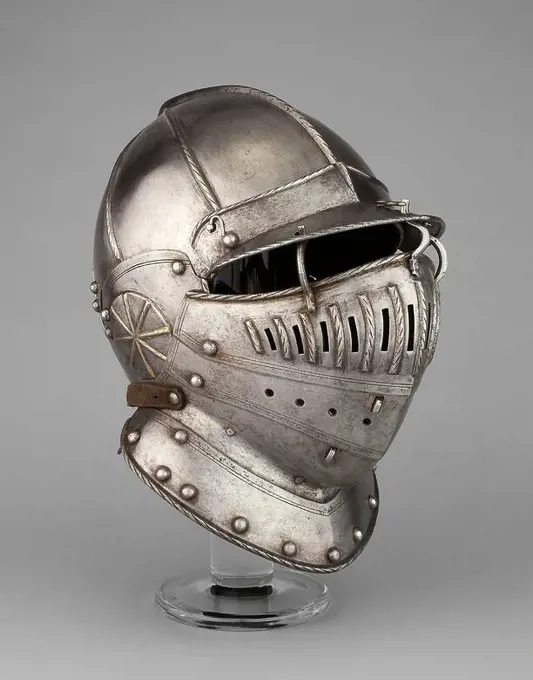
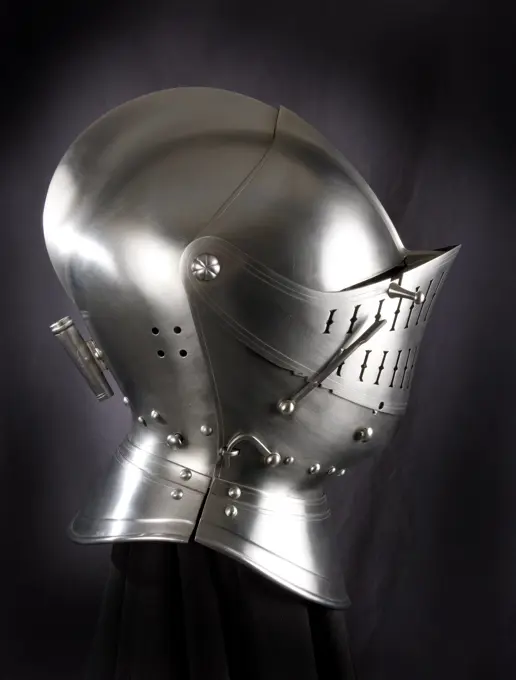
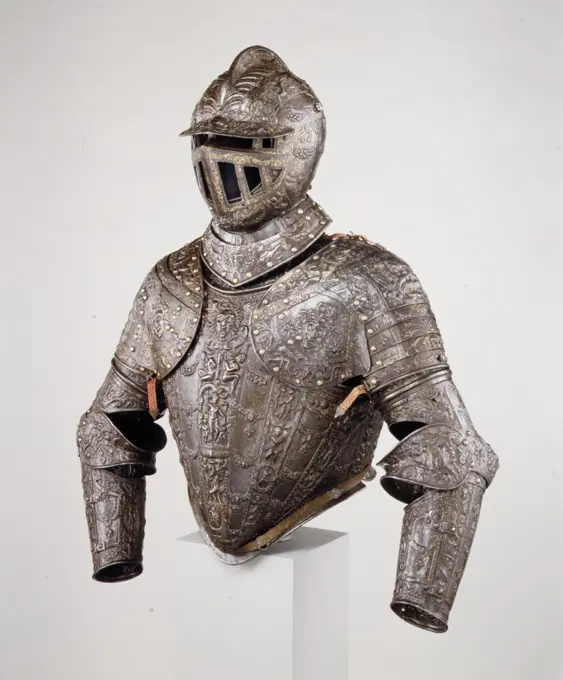
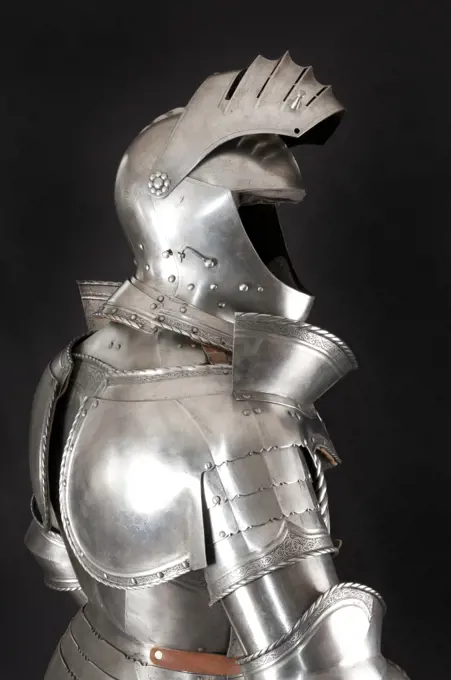
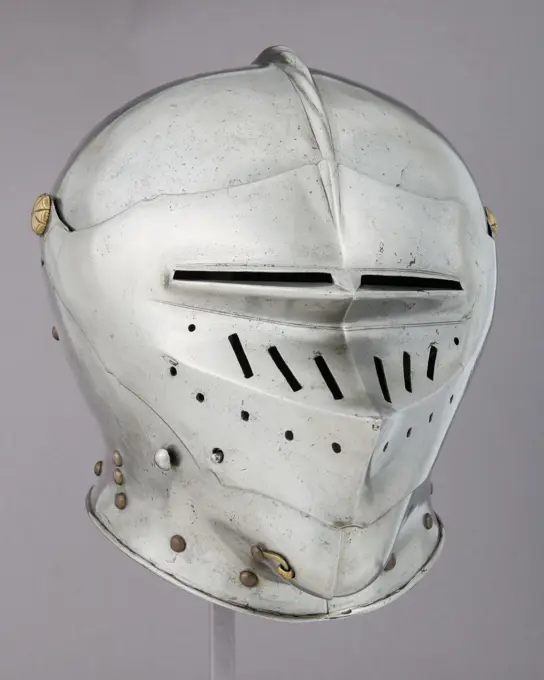
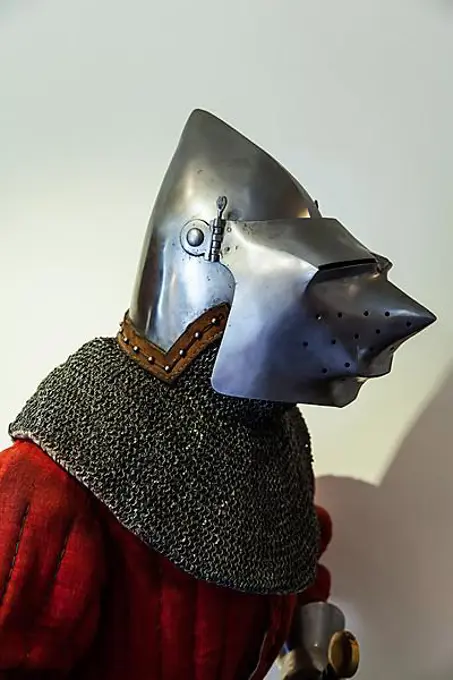
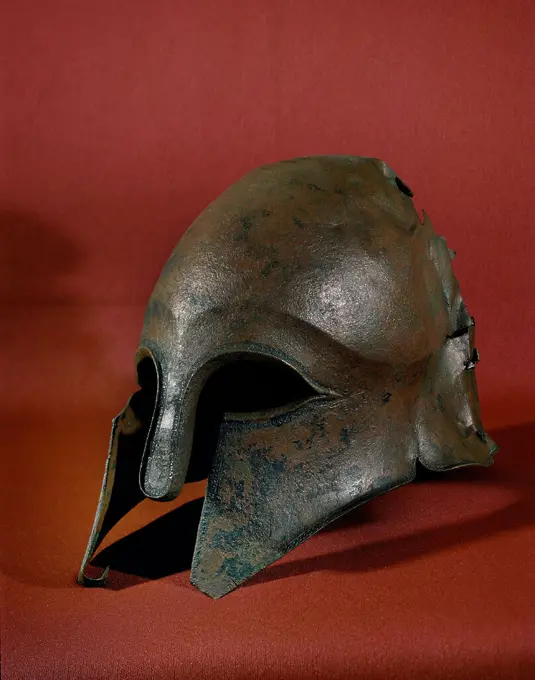
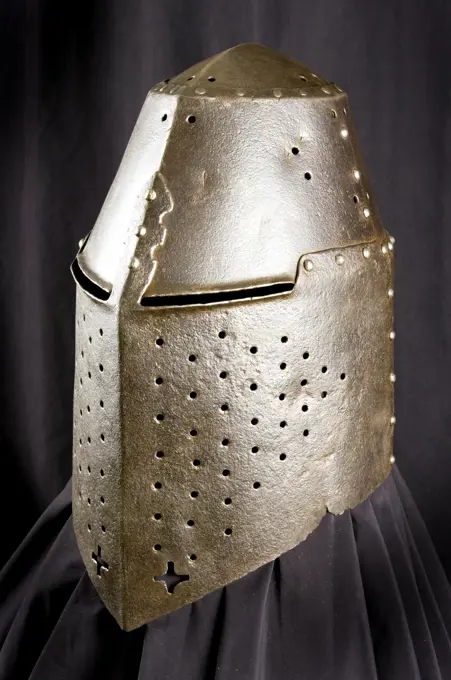
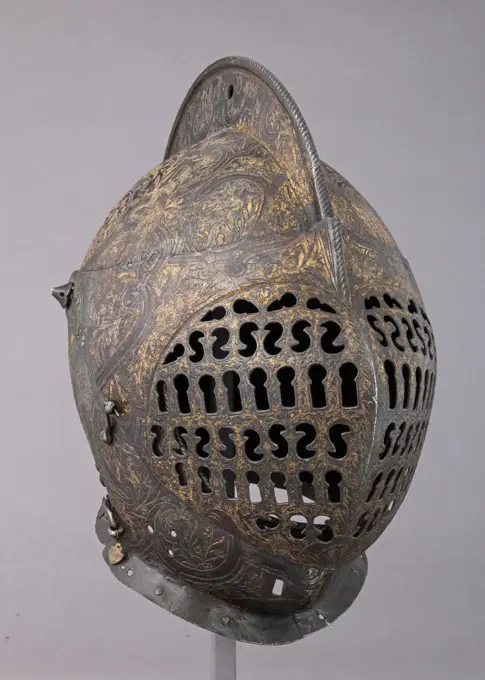
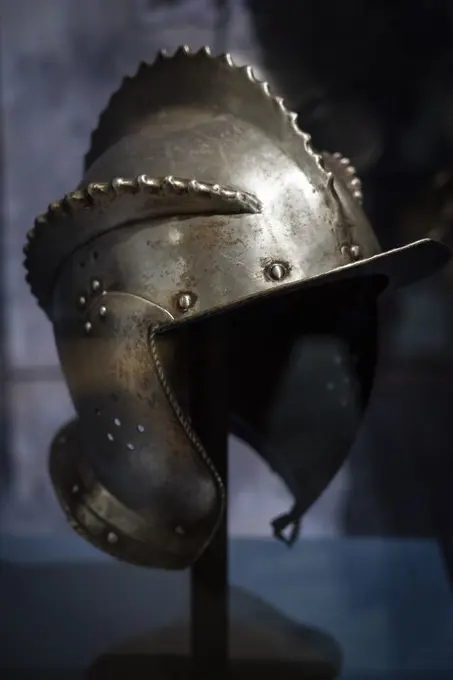
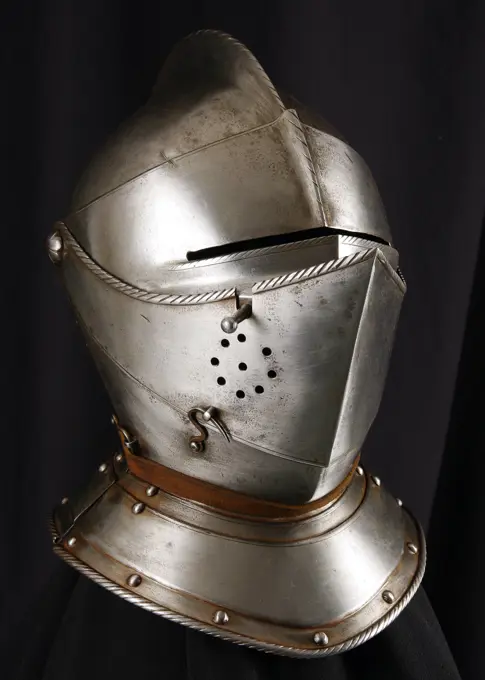
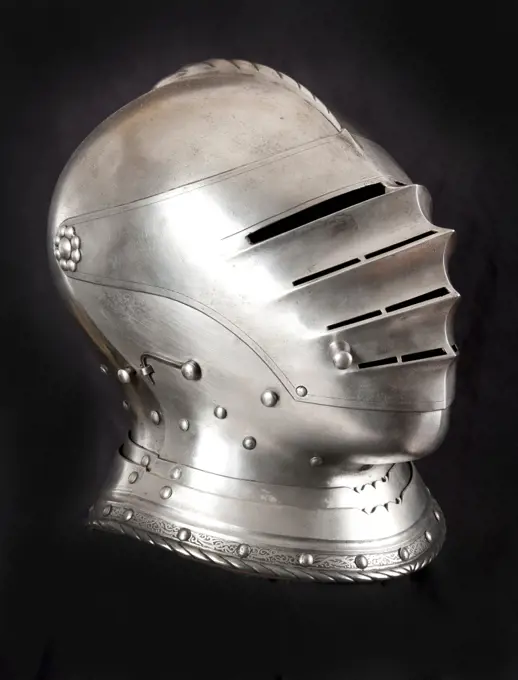
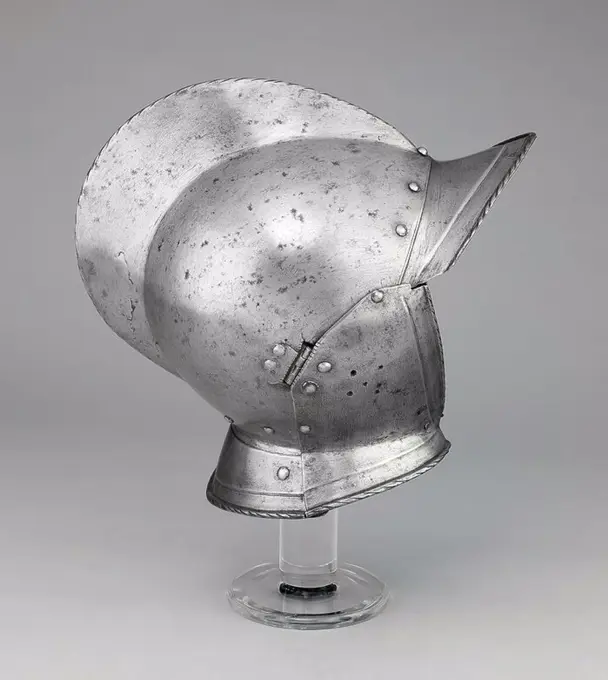
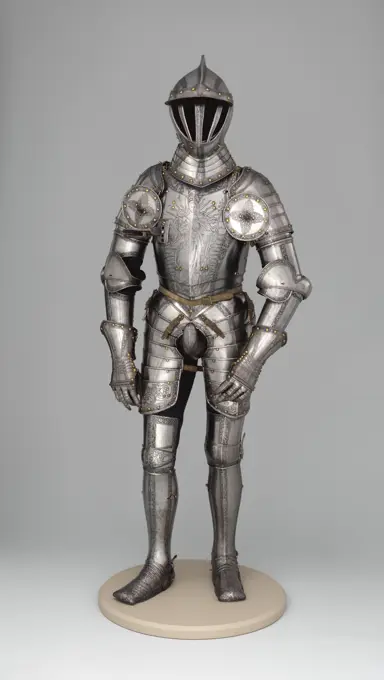
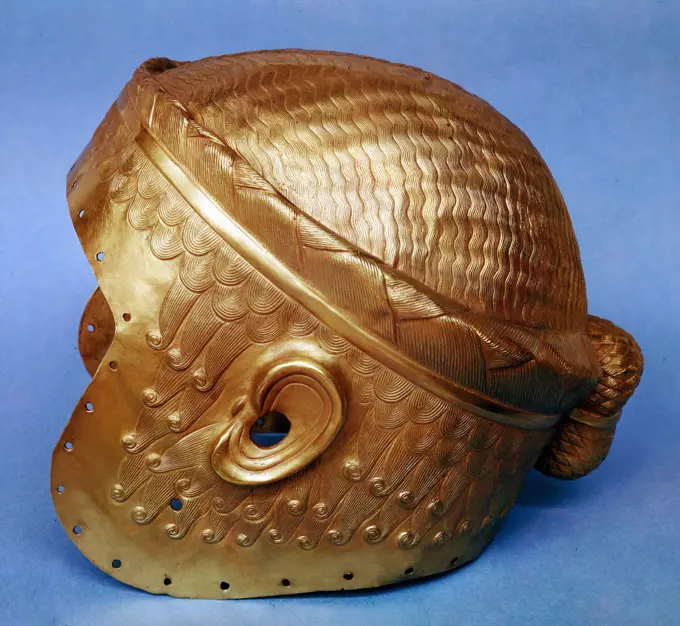
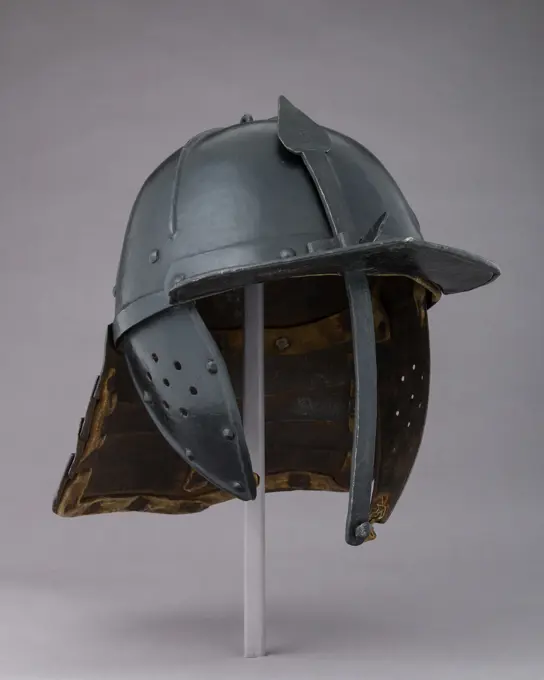
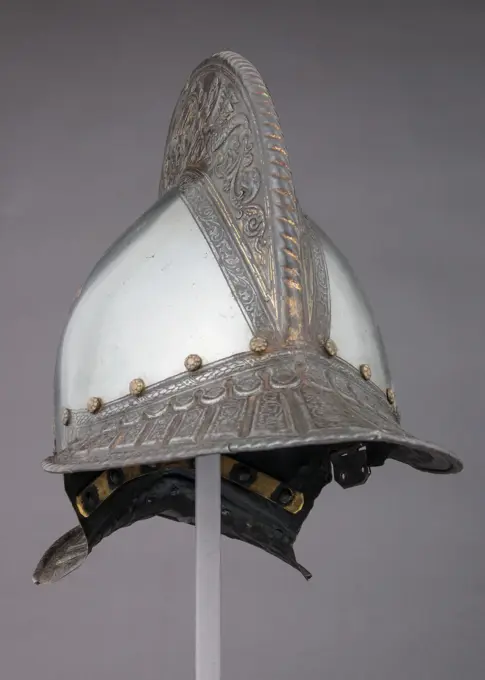
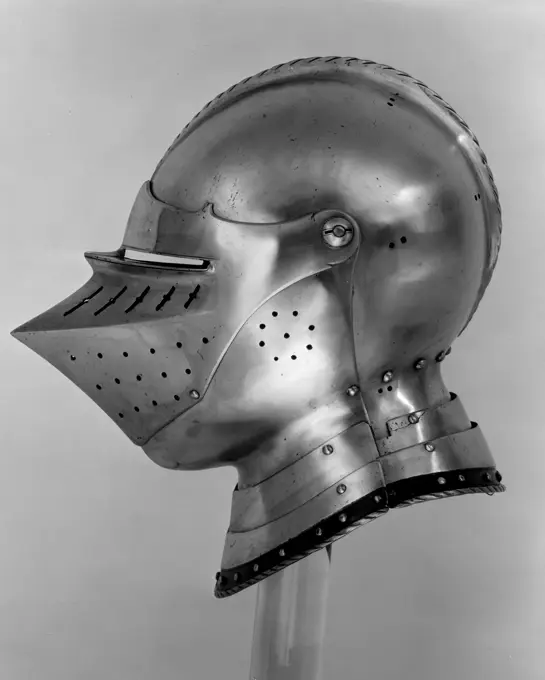
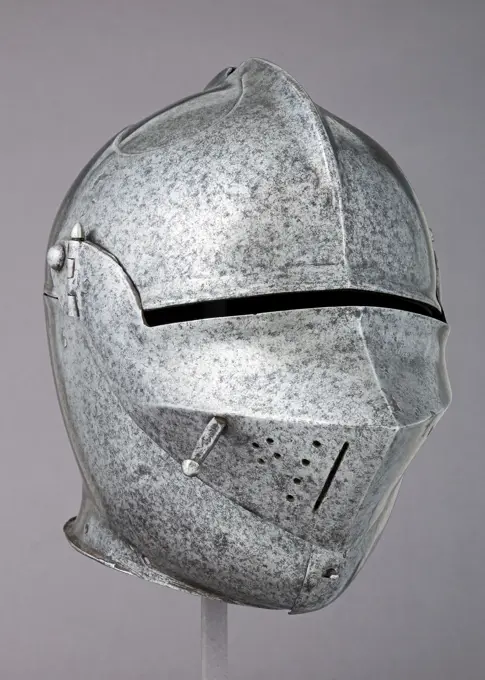
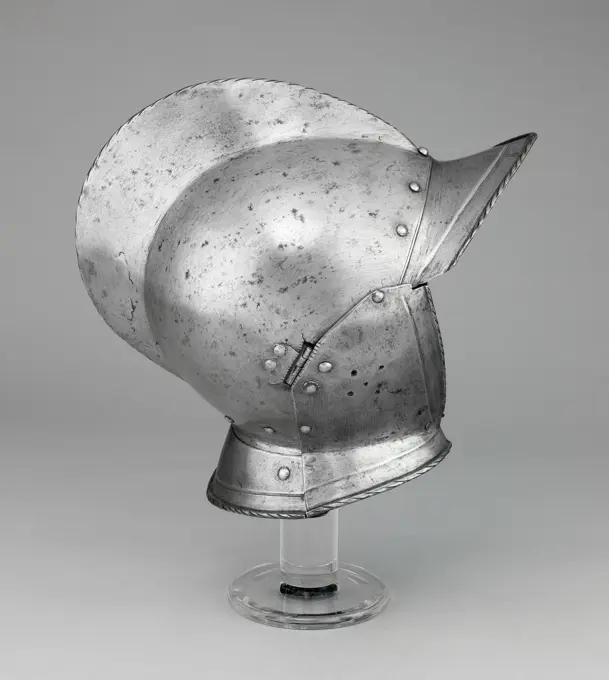
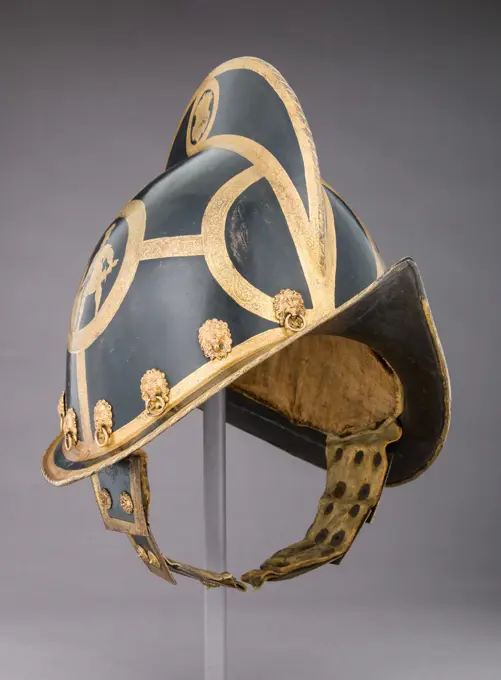
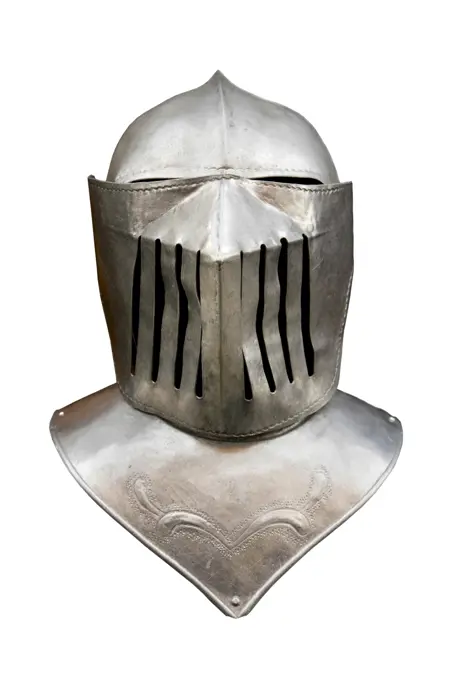
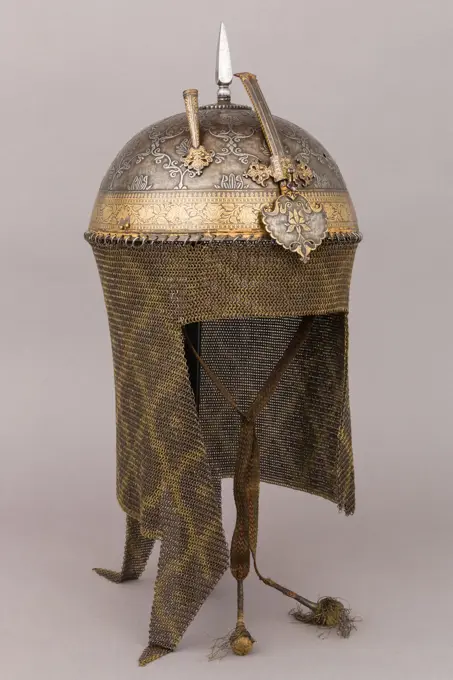
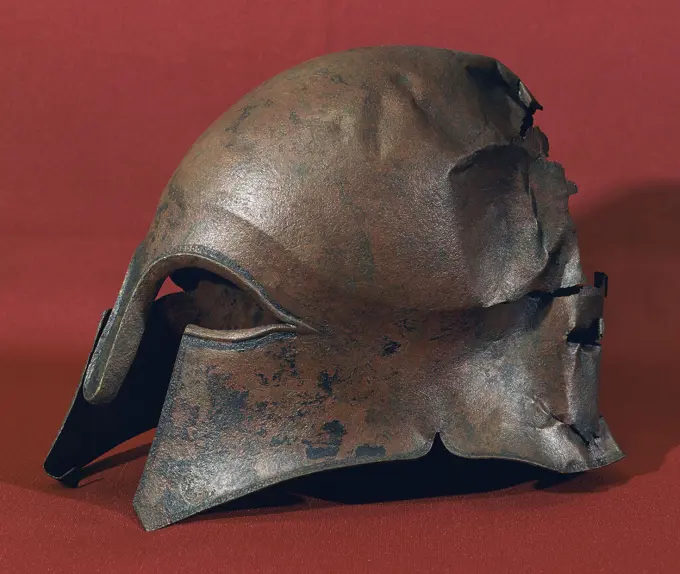
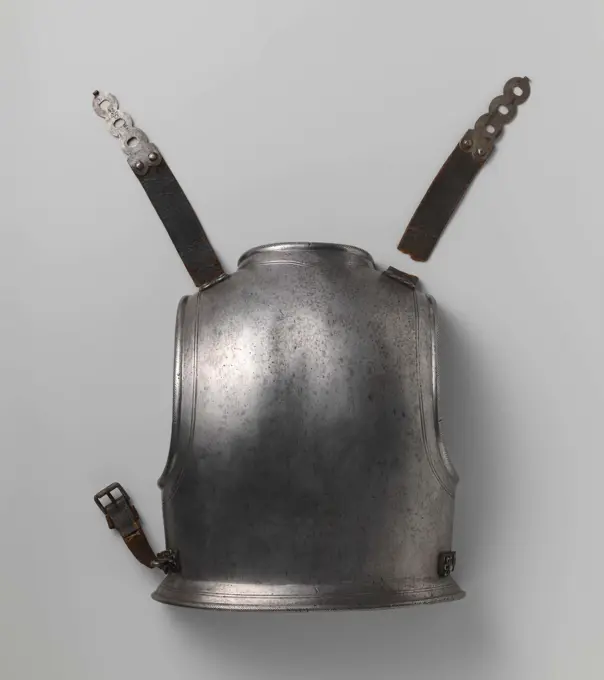
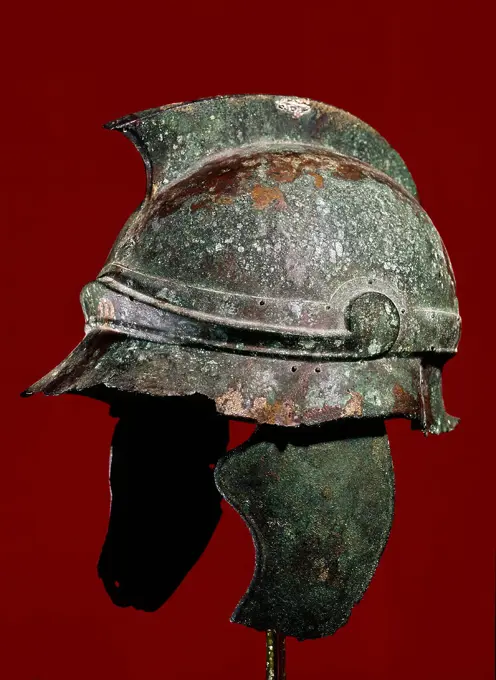
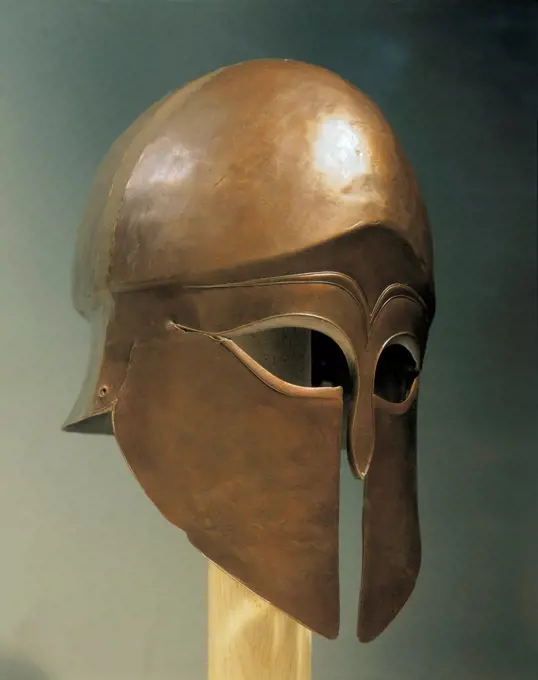
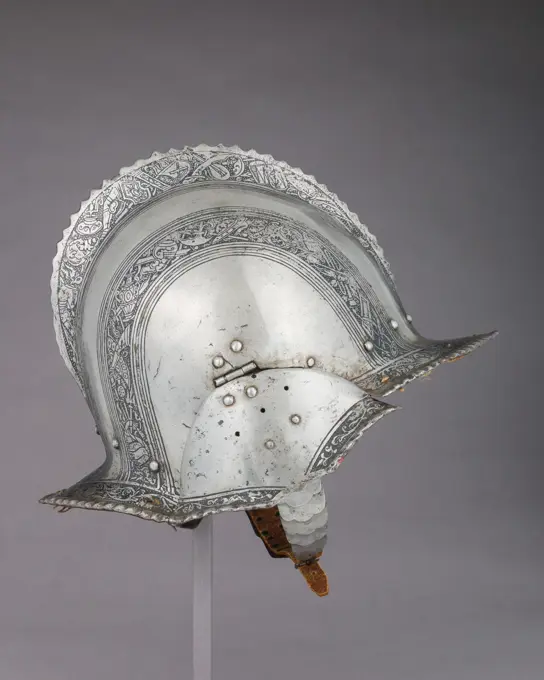
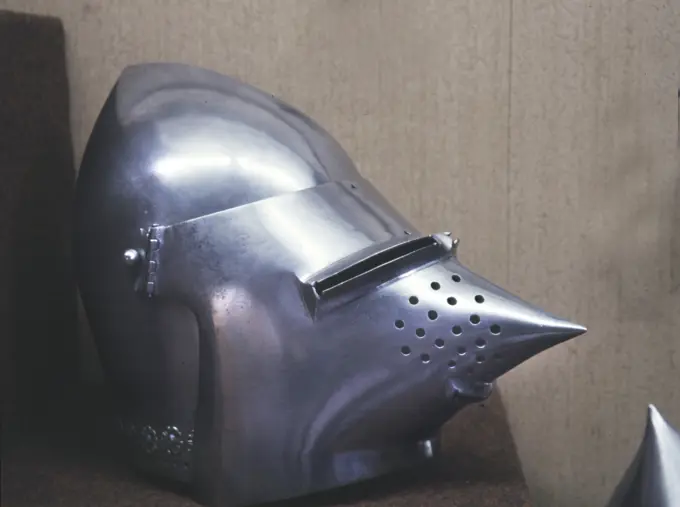
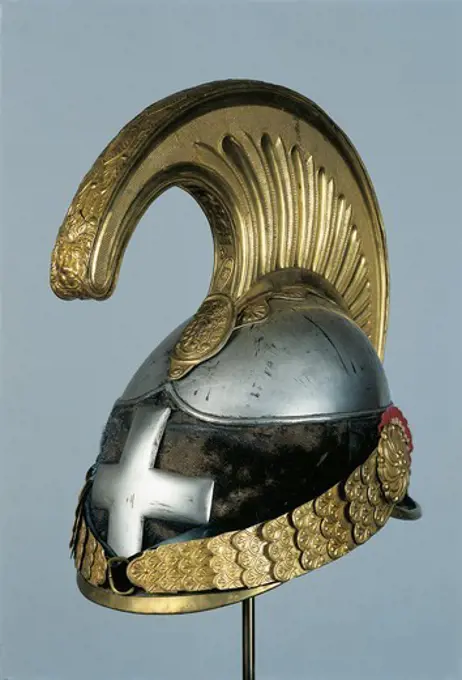
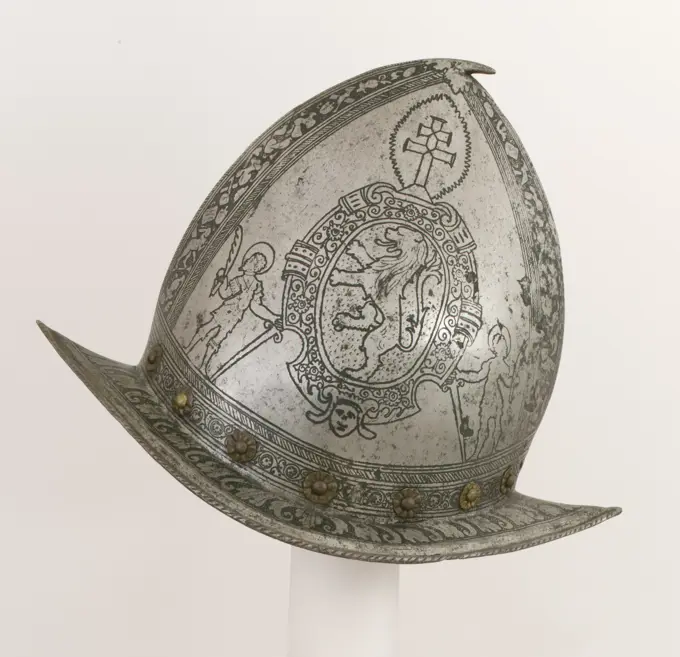
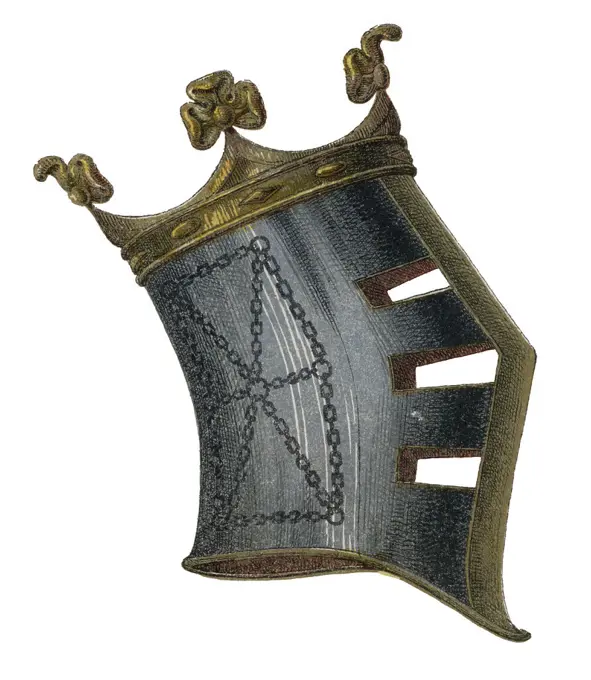
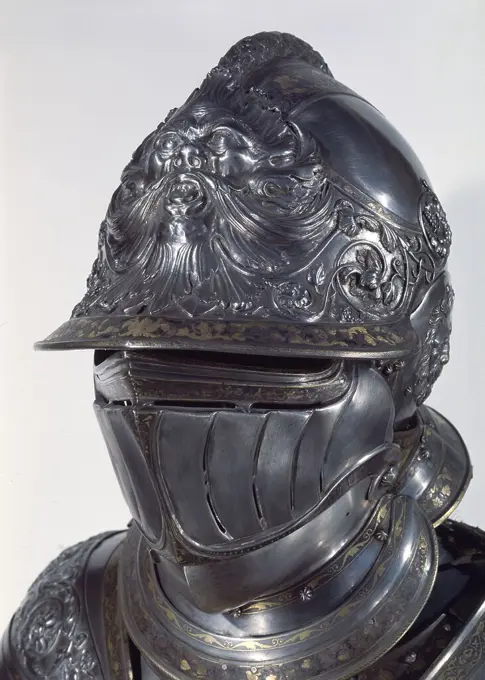
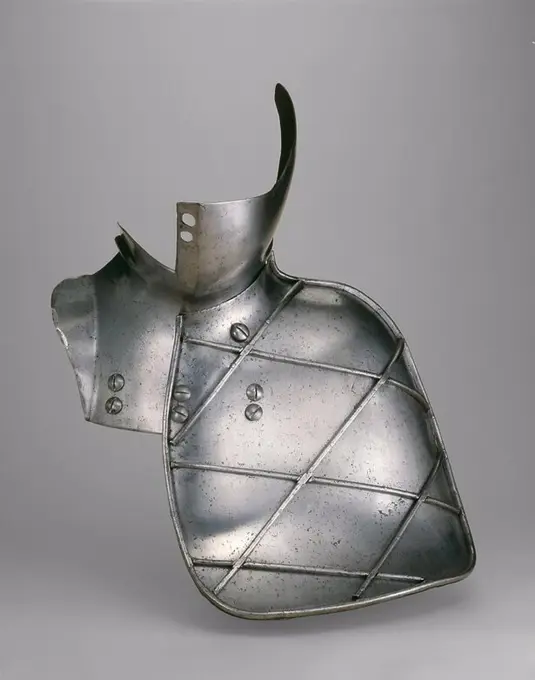
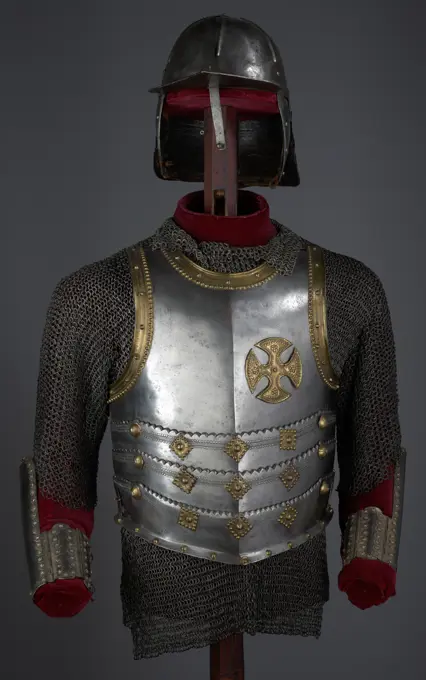
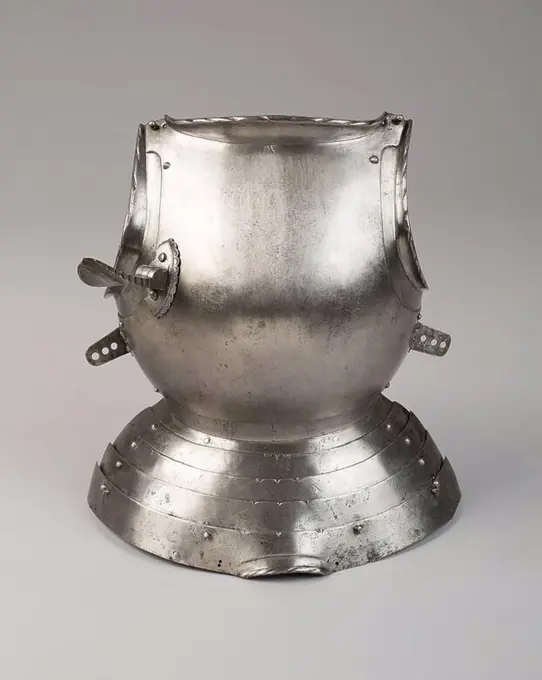
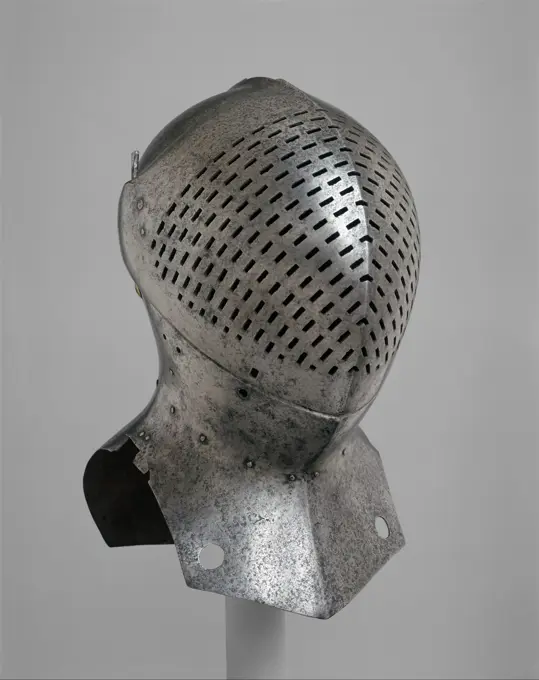
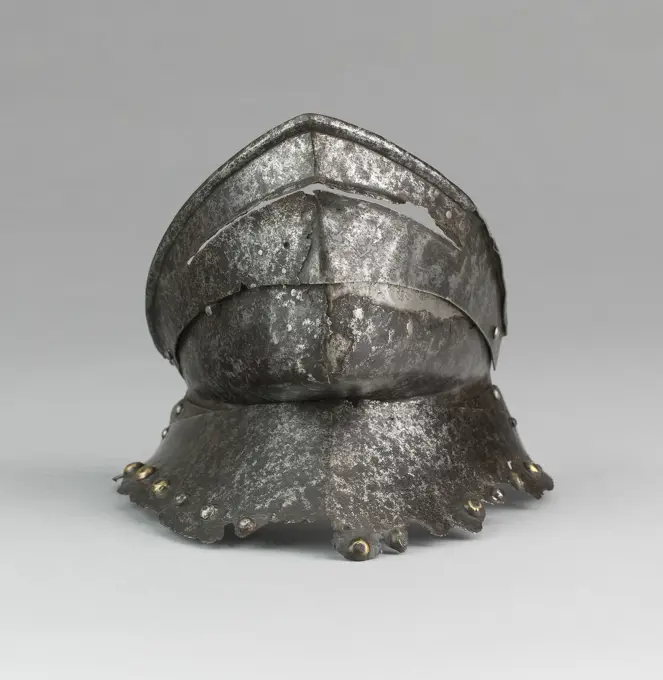
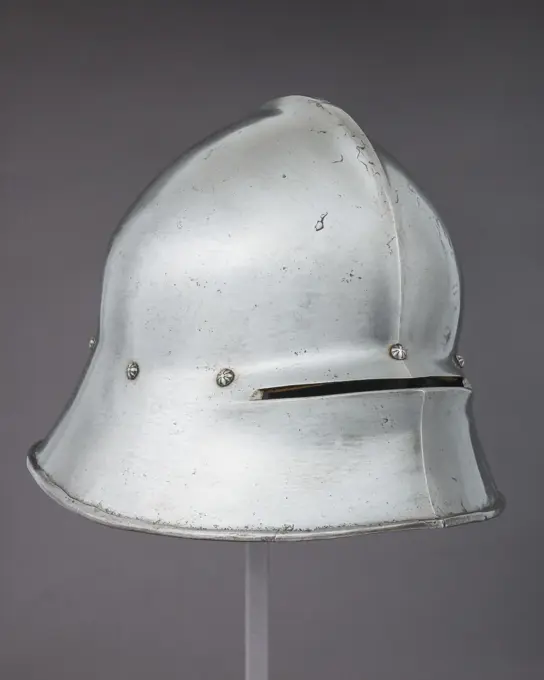
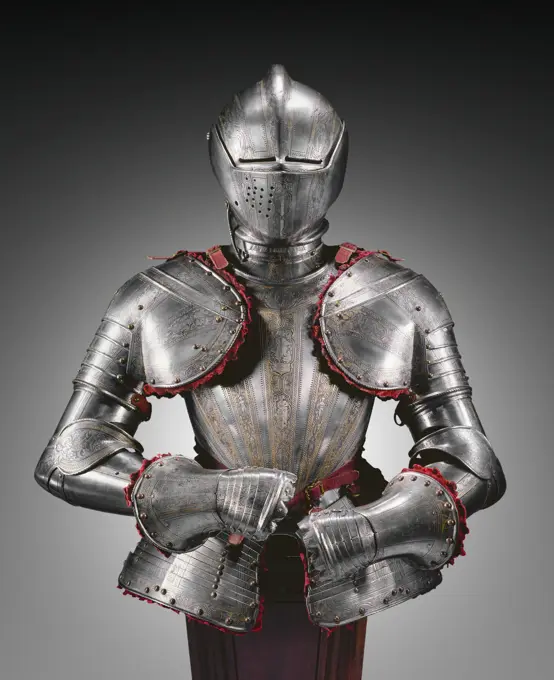
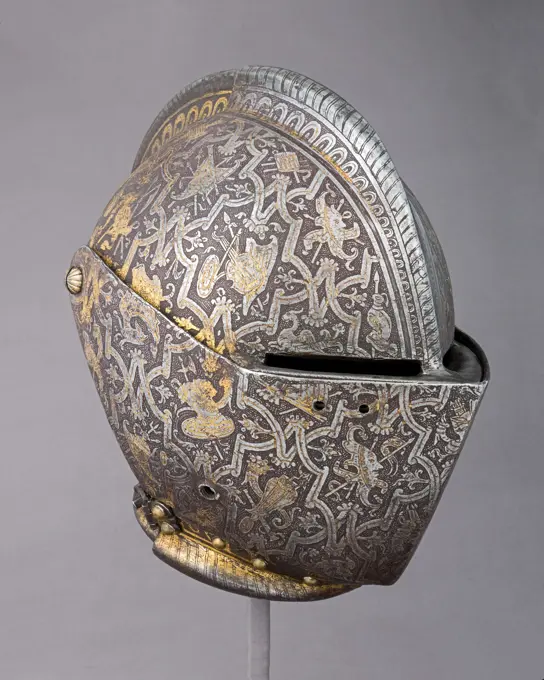
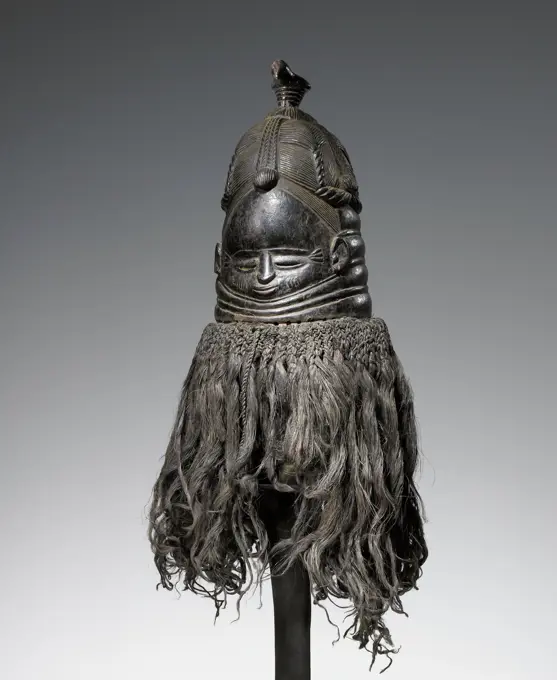
Close Helmet. Austrian; Innsbruck. Date: 1540-1570. Dimensions: H. 23.5 cm (9 1/4 in.). Steel. Origin: Innsbruck. Museum: The Chicago Art Institute, Chicago, USA.Close Helmet (from a Small Garniture, perhaps for Siegmund Friedrich, Freiherr von Herbertstein d.1621), c. 1580. Germany, Augsburg (?), 16th century. Steel, etched and gilded, brass rivets; overall: 40 x 35.5 x 23 cm (15 3/4 x 14 x 9 1/16 in.). This helmet appears to belong to a garniture for man and horse of which other elements survive in the Higgins Armory Museum, Worcester, Massachusetts, and the Philadelphia Museum of Art. The associated visor has been removed to better show the beautiful etched and gilded strapwork decoration.Visored Bascinet. Culture: German. Dimensions: H. 13 in. (33 cm); W. 9 in. (22.9 cm); D. 13 3/4 in. (34.9 cm); Wt. 6 lb. 10 oz. (3005 g). Date: ca. 1400. Museum: Metropolitan Museum of Art, New York, USA.Bascinet. Culture: Italian. Dimensions: H. 12 1/4 in. (31.1 cm); W. 8 7/16 in. (21.4 cm); D. 9 5/8 in. (24.4 cm); Wt. 7 lb. 2.2 oz. (3237.5 g). Date: 1425-50. Museum: Metropolitan Museum of Art, New York, USA.Close Helmet, c. 1510-30. Germany, 16th century. Steel with black paint; overall: 27.3 x 33 cm (10 3/4 x 13 in.).Armet. Culture: Italian. Dimensions: H. 14 1/4 in. (36.2 cm); W. 8 3/4 in. (22.2 cm); D. 11 in. (27.9 cm); Wt. 5 lb. 5 oz. (2410 g). Date: ca. 1570. Museum: Metropolitan Museum of Art, New York, USA.Helmet 16th-17th century Turkish. Helmet 24003Close Helmet for the Tourney. South German; Landshut. Date: 1550-1570. Dimensions: H. 25.4 cm (10 in.). Steel and leather. Origin: Landshut. Museum: The Chicago Art Institute, Chicago, USA.Close-Helmet for the Tournament on Foot. Armorer: the Master of the Castle Mark (Italian, Milan, active ca. 1590-1620). Culture: Italian, Milan. Dimensions: H. 13 in. (33 cm); W. 9 1/2 in. (24.1 cm); D. 11 9/16 in. (29.4 cm); Wt. 11 lb. 13 oz. (5360 g). Date: ca. 1600-1610.This helmet comes from a garniture made by the Maestro dal Castello (Master of the Castle), so named for the castle mark found at the top of the breastplate on this and other examples of his work. He was probably a follower of the great Milanese armorer Pompeo della Cesa (recorded 1572-1593). Among the patrons of the Maestro dal Castello were the dukes of Savoy and King Philip III of Spain. The helmet for the tournament is from an unidentified garniture. Museum: Metropolitan Museum of Art, New York, USA.Close Helmet for the Tourney. South German; Nuremberg. Date: 1540-1570. Dimensions: H. 22.2 cm (8 3/4 in.)Wt. 7 lb. 8 oz. Steel. Origin: Nuremberg. Museum: The Chicago Art Institute, Chicago, USA.Bevor ("Falling Buff") and Gorget Plate. Spanish. Date: 1485-1495. Dimensions: . Steel. Origin: Europe. Museum: The Chicago Art Institute, Chicago, USA.Burgonet ca. 1610 French This helmet ranks among the best examples of a type that was fashionable in France and the southern Netherlands in the early seventeenth century. It is remarkable for the excellence of its workmanship, particularly the symmetrically radiating fluting of the bowl, the precise embossed and engraved ornamentation, and the preservation of most of its gilding.. Burgonet 623095A helmetTournament Helm. Culture: possibly Italian or French. Dimensions: H. 15 in. (38.1 cm); W. 8 5/8 in. (22 cm); D. 9 7/8 in. (25.1 cm); Wt. 16 lb. 5 oz. (7399 g). Date: ca. 1420-30.Although very similar helmets are depicted in early fifteenth century works of art, almost no other actual examples of this type exist today. Perhaps originally designed for use in battle, it appears to have been converted into a jousting helmet during its working lifetime. The armorer's mark, a Gothic letter T, is found on at least three other pieces of fifteenth-century armor. The helmet was acquired by the Museum as part of the Duc de Dino's collection in 1904. Museum: Metropolitan Museum of Art, New York, USA.Armet with Wrapper armet, ca. 1460-70; wrapper, ca. 1450; rondel, probably 18th-19th century Italian The armet was the typical headpiece of the Italian mounted knight in the fifteenth century. Completely enveloping the head, it was constructed of a bowl with separate brow reinforce, close-fitting cheekpieces hinged at the sides and closing at the chin, and a pivoting visor. The armet usually was worn with a secondary face defense, or wrapper, which covered the lower face and neck and prevented the visor from being struck open. The wrapper strapped around the armet and buckled at the back; the rondel projecting from the base of the bowl protected the straps and the closing of the cheekpieces at the back.The Museum's armet and wrapper are contemporary but associated. The bowl is struck on either side of the medial ridge at the back with a Brescian-style armorer's mark consisting of the letters IA () beneath the abbreviation sign. The wrapper bears the marks of the famous Missaglia familHelmet (Basinet) with Detachable Visor ca. 1420-30 probably German One of the most widely used head defenses of the fourteenth century, the bascinet went out of general fashion soon after 1400. The present example is of a rare late type distinguished by its deep and elegantly curved sides and by its centrally hinged, detachable visor. Especially in Germany, this form remained popular well into the first half of the fifteenth century and eventually influenced the development of another helmet type, the sallet, examples of which can be found in the Metropolitan Museum's collection (acc. nos. 29.150.4a, 29.150.8a, 29.158.11).. Helmet (Basinet) with Detachable Visor. probably German. ca. 1420-30. Steel, leather. HelmetsALMETE (CASCO). Location: PALACIO REAL-REAL ARMERIA DE MADRID. MADRID. SPANIEN.Visored Bascinet in the 14th century style 19th century French. Visored Bascinet in the 14th century style. French. 19th century. Steel. ForgeriesBurgonet after Filippo Negroli about 1545-50 Italian, Milan This closely resembles two helmets by Filippo and Francesco Negroli in Madrid and Paris. Later over-cleaning removed the original dark surface and damascened decoration of our burgonet.. Burgonet after Filippo Negroli 24809Armet ca. 1430-40 Italian In Italy from 1410 to 1510, the armet was the standard helmet for cavalry. This rare early example has flanges to protect the hinges of the cheekpieces and a staple at the front where a visor was secured.. Armet. Italian. ca. 1430-40. Steel, copper alloy. HelmetsClose Helmet Made 1510-1530 Nuremberg. Steel .A great bacinet Helmet, the first helmets to be worn with a complete suit of plate armour. Dated 15th CenturyClose-Helmet ca. 1560 British or Flemish The prow-like lower visor of this helmet is the most recognizable characteristic of a distinctive style that was made about the middle of the sixteenth century in either England or Flanders. This particular helmet is interesting because it was later adapted and reused as a funerary achievement, meaning that it was hung in a church above the tomb of a gentleman. Indicators of this are the painted decoration and the relatively crude spike, designed to hold a crest, piercing the comb at the top. Funerary helmets are rare, particularly outside the context of English churches.. Close-Helmet 35953Burgonet with Falling Buffe possibly from an Armor of William Herbert, Earl of Pembroke. English; Greenwich. Date: 1550-1560. Dimensions: H. 21.6 cm (8 1/2 in.)Wt. 4 lb. 7 oz. Steel, gilding, and leather. Origin: Greenwich. Museum: The Chicago Art Institute, Chicago, USA.. Ruiter helmet or jacket helmet. The helmet is made of polished iron and equipped with a comb that has been filed to mimic hair; At the rear an ajour processed plum cooker is attached; The visor is punished and has a long lifting pole on the right; On either side there is a large rivet in the shape of a flower celk; The viewing plate is on both sides Ajour decorated with four hearts around a circle surrounded by 16 rounds; The rear hook has an extra eye for a leather lace that made it easier to open with gloves on the hook; This equestrian helmet has a push button or lifting pole to keep the visor up instead of a sight support; The edges of the helmet are decorated in the same way as the comb and continue with a double incised line, and with round rivets deposited. The appearance and manufacture of the helmet are entirely Dutch; A typical Dutch element is the decoration of the edges, so that you get eyebrows as the true eyebrows.Close Helmet. South German, Probably Nuremberg. Date: 1510-1530. Dimensions: H. 24.6 cm (9 3/4 in.). Steel. Origin: Nuremberg. Museum: The Chicago Art Institute, Chicago, USA.Armour Armour of the medieval knight. Metal protection of the soldier against the weapon of the opponent Copyright: xZoonar.com/ValeryxxSibrikovx 2418592Close Helmet Made 1540-1570 Innsbruck. Steel .Sallet and Bevor 1480 German. Sallet and Bevor 34258Close Helmet Made 1520-1540 Nuremberg. Steel .Close Helmet for Foot Tournament at the Barriers Made 1580-1600 Augsburg. Steel, brass, gilding, and leather . Anton PeffenhauserMorion. Morion, iron, blank, made of two plates, deep helmet globe with high-folded ridge and front and behind steps. Edge of the valve is folded. Around the base of the helmet bulb around six glasses of decorative rosons. Three jigsidates are missing on both sides. Blackened inside, two white scratches on weather from the comb slot.Helmet, Cuirass, and Pair of Arm Defenses. Culture: Persian. Dimensions: H. including mail 19 in. (48.3 cm); H. including nasal 9 in. (22.9 cm); H. excluding mail and nasal 5 in. (12.7 cm); W. 7 3/4 in. (19.7 cm); D. 8 1/4 in. (21 cm); Wt. 2 lb. 1.9 oz. (961 g). Date: 17th-18th century. Museum: Metropolitan Museum of Art, New York, USA.Old_fashioned knight´s helmetRight arm cover, 1499 - 1699  Arm cover, iron, white, consists of a articulated shoulder plate, upper arm pipe, an elbow hood and a forearm pipe. There is an iron buckle on the top of the shoulder plate, underneath a articulated strip that is sturled at the oven pip, the edges are high -quality and tilted. The upper arm pipe consists of two parts that are sounded together on two points, a cacked bone in the middle. The elbow hood has two parts and has flared wired edges. The lower arm pipe consists of two parts are stuck together with two hinges so that the pieces can be opened. The whole is painted from black. Europe iron (metal)Rüstung Armour of the medieval knight. Metal protection of the soldier against the weapon of the opponent Copyright: xZoonar.com/ValeryxxSibrikovx 2628259Helmet. Culture: Indian. Dimensions: H. 6 1/2 in. (16.5 cm); W. 6 3/4 in. (17.1 cm); D. 9 1/4 in. (23.5 cm); Wt. 1 lb. 6.6 oz. (640.7 g). Date: 19th century. Museum: Metropolitan Museum of Art, New York, USA.Armor of the Dukes of Alba ca. 1575-85 Lucio Piccinino Italian This is one of the few armors attributable to Lucio Piccinino, the last of the great Italian armor embossers. Distinctive of Piccinino's style is the covering of the armor surface with a dense network of embossed ornament with vertical bands connected laterally by swags of acanthus and fruit. Originally, the steel ground was blued and highlighted with gold and silver damascening. Although damaged by fire in the nineteenth century, this armor amply demonstrates Piccinino's skill in designing a complex program of Classically inspired decoration.Acquired directly from the ancestral collection of the dukes of Alba in Madrid in 1861, this armor appears to combine the remains of two armors of nearly identical size and style. They were probably made for two of the sons of Fernando Alvarez de Toledo (1507-1582), third duke of Alba, a famous Spanish general.. Armor of the Dukes of Alba. Italian, Milan. ca. 1575-85. Steel, gold, silvArmour of the medieval knight. Metal protection of the soldier against the weapon of the opponentMaximilian Armet ca. 1510 German, probably Augsburg. Maximilian Armet. German, probably Augsburg. ca. 1510. Steel, leather, copper alloy. probably Augsburg. HelmetsTuscany, Italy. Detail of an original Medieval armourCASCO CORINTIO HALLADO EN HUELVA EN 1930 - S VI AC ARTE GRIEGO-FENICIO. Location: ACADEMIA DE LA HISTORIA-COLECCION, MADRID.Armour Armour of the medieval knight. Metal protection of the soldier against the weapon of the opponent Copyright: xZoonar.com/ValeryxxSibrikovx 2425284Close Helmet ca. 1575 French The shape of the tall set-back comb and the style of etching identify this helmet as a distinctly French type of the late sixteenth century. The decoration includes medallions with allegorical figures of Faith, Prudence, Hope, and Justice.. Close Helmet 21973Bourguignotte helmet, castle of Foix, 10th century, Foix, department of Ariège, Occitanie, Pyrenean mountain range, France.Waistcoat cuirass, ca.1580. North Italian. Armoury. Grandmaster Palace. Valletta. Malta.Kuras breastpiece for Kurassier, Anonymous, 1810 - 1830  Iron breast-shaped piece with neck and arm openings, edges reinforced. Set with copper nails all around. Two knots are mounted on the chest. Painted inside of Kuras in brown. A few remnants of the linen lining and slides visible.  iron (metal). leather. copper (metal). linen (material) forging  NetherlandsBreastplate with Associated Skirt for Half-Armor 1570-1600 Italy, northern. Steel, etched .Burgonet ca. 1630 French This is a rare, late example of French embossed armor. The gilt fleur-de-lis rivet heads along the edges, the fleur-de-lis plate at the apex of the bowl, and the laurel branches around the collar suggest it was made for Louis XIII of France (reigned 1610-43).. Burgonet 22231Szyszak husarskiArmour Armour of the medieval knight. Metal protection of the soldier against the weapon of the opponent Copyright: xZoonar.com/ValeryxxSibrikovx 2416561Helmet with visor belonging to an equestrian harness, helmet headgear protective clothing clothes horseman harness wrought iron leather, forged riveted iron helmet with visor belonging to horseman harness with lance support protect weapon equipment war lancer cover headIron helmet of the medieval knight. Very heavy headdressBurgonet. South German. Date: 1550-1570. Dimensions: H. 22 cm (8 5/8 in.). Steel and leather. Origin: Southern Germany. Museum: The Chicago Art Institute, Chicago, USA.Armor of Emperor Ferdinand I (1503-1564) dated 1549 Kunz Lochner German The ownership of this armor by Ferdinand I (1503-1564) is indicated by the heraldic emblems on the toe caps: the imperial double-headed eagle surmounted by a royal crown, which signifies Ferdinands honorific status as king of the Romans and designated successor to his brother, Emperor Charles V. The image of the Virgin and Child on the breastplate was also used by Charles V on his own armors. The backplate is decorated with crossed staves and firesteels, the insignia of the Order of the Golden Fleece, an elite chivalric society of which Ferdinand was a member.Kunz Lochner, Nurembergs most celebrated armorer of the period, made several armors for both Ferdinand and his son Archduke Maximilian (1527-1576), including two matching armors produced about 1546 that are very similar to the one exhibited here.The helmet of the Museums armor was not made for it originally but has been associated with the armor since at leBronze gladiator's helmetLobster-Tail Burgonet 17th century possibly British. Lobster-Tail Burgonet 27091Gold helmet from Mesopotamia. 2,500 BC. Iraq Museum.Lobster-Tail Burgonet 17th century German. Lobster-Tail Burgonet. German. 17th century. Steel, leather. HelmetsBurgonet ca. 1550 French. Burgonet 27138Armor ca. 1560 and later; greaves and sabatons, ca. 1570-80 German, Landshut; greaves and sabatons, German, Augsburg (). Armor 22253Armet ca. 1490 Italian The term armet is generally used to denote a visored helmet of particular construction, one in which large cheekpieces are hinged to the base of the bowl just above the ears and close in front of the chin. The face opening is formed in the space between the rim of the bowl and the edges of the cheekpieces, an area closed and protected by a short, pointed visor hinged to pivots on either side of the bowl. The right side of the visor is pierced with a slot and holes for ventilation, and has a lifting peg. A cusped brow reinforce riveted to the front of the bowl, and a circular plate (rondel) attached by a short stem to the base of the bowl at the rear of the helmet are two other features common to the armet. Apart from the rondel and stem, which are restorations, this armet is entirely homogeneous. Its original appearance would have included a protective curtain-like mail fringe attached by rivets to the lowermost edge of the helmet, and several plates known as a bBurgonet Made 1550-1560 Southern Germany. Steel and leather .Sallet Made 1480-1510 Milan. Steel and brass .Morion ca. 1600 German, Nuremberg Forged in one piece this helmet has a high comb across its rounded bowl and an elegantly swept brim rising to sharp points at the front and back. Cheekpieces with chin straps are built up from three overlapping plates. The decorative heads of the rivets securing the lining are lion's masks holding rings in their mouths; the rivet heads on the cheekpieces are brass rosettes. A brass plume holder in the shape of a winged female half-figurine is attached to the rear end of the comb. The entire surface is blackened except for etched and gilt bands of arabesques along the edges of brim and comb and circular medallions on bowl and comb. The smaller medallions on the comb show the arms of the Dukes of Saxony, barry of ten, or and sable, a crancelin vert in bend overall, on one side, and on the other those of the archmarshalship of the empire, per fess sable and argent, two swords gules in saltire overall. The large medallions on either side of the bowl show fClose helmet on a white backgroundHelmet and Arm Guards 16th century Indian. Helmet and Arm Guards. Indian. 16th century. Steel, gold, copper alloy, brass, textile, metallic thread. HelmetsLeft Cuisse with Poleyns (knee-cops), c.1550-1570. Germany, 16th century. Iron, steel, leather and brass rivets; overall: 34.5 x 20 x 31.2 cm (13 9/16 x 7 7/8 x 12 5/16 in.).Iron helmet Iron helmet of the medieval knight. Very heavy headdress Copyright: xZoonar.com/ValeryxxSibrikovx 2454329Sallet Made 1450-1470 Germany. In 15th-century Germany, the sallet was the most common helmet. This example is now missing a front visor that pivoted on two holes over the temples. Its deep, rounded form offered superior protection for the head and deflected blows away from the neck and shoulders. The design was so effective that sallets like this inspired the German helmet used in World War I and II.. Steel .CASCO CORINTIO HALLADO EN HUELVA EN 1930 - SIGLO VI AC ARTE GRIEGO-FENICIO. Location: ACADEMIA DE LA HISTORIA-COLECCION. MADRID. SPANIEN.Back plate of a harbus armor for a young man. Back plate of Harquebusiers harness for a young man. See Description Breast pieceCASCO DE UN CENTURION ROMANO. Location: MUSEO ARQUEOLOGICO NACIONAL-COLECCION. MADRID. SPAIN.Corinthian bronze helmet, from Celopek, Bulgaria. Thracian Civilization, 5th Century BC.Burgonet ca. 1560 South German. Burgonet. South German. ca. 1560. Steel, leather, textile. HelmetsEspalier, 1500s. Germany, 16th century. Steel; overall: 29.2 x 19.8 cm (11 1/2 x 7 13/16 in.).Helmet from a 15th c. Suit of Armour FRANCE.uMilitaria, Italy, 19th century. Carlo Alberto helmet with officer cross.Pointed Morion ca. 1570-80 Italian, Brescia The etched decoration includes a rampant lion, the heraldic emblem of the north Italian city of Brescia. Above the lion is a double-armed cross symbolizing the venerated reliquary of the Holy Cross in Brescia's cathedral, and to the sides are Saints Faustino and Giovita, protectors of the city. After Milan, Brescia was the largest producer of armor in Italy, and this helmet, which is one of a series of identical examples, provides concrete evidence of the Brescian style of armor decoration.. Pointed Morion. Italian, Brescia. ca. 1570-80. Steel, brass. Brescia. HelmetsSallet. German. Date: 1450-1470. Dimensions: H. 24.6 cm (9 3/4 in.). Steel. Origin: Germany. Museum: The Chicago Art Institute, Chicago, USA.Historia. Siglo XIII. Yelmo con corona y escudo de Navarra, elemento de la armadura que protege la cabeza y el rostro del guerrero.Barbute in 15th Century Spanish Style 19th century Spanish. Barbute in 15th Century Spanish Style 26543CASCO DE LA ARMADURA DE CARLOS V - SIGLO XVI. Location: PALACIO REAL-REAL ARMERIA DE MADRID. MADRID. SPAIN.Reinforcing Bevor and Grandguard for the Joust. South German; Augsburg. Date: 1545-1575. Dimensions: H. 62.2 cm (24 1/2 in.) Weight: Buffe: 2 lbs. 15 oz.Targe: 5 lbs. 10 oz. Steel. Origin: Augsburg. Museum: The Chicago Art Institute, Chicago, USA.Zischägge Helmet of the Pappenheimer Type unknownCorinthian helmet, c. 540 BCE, Unknown Greek, 11-13/16 x 7-7/8 x 10-1/2 in. (30.0 x 20.0 x 26.7 cm), Bronze, Greece, 6th-5th century BCE, This magnificent bronze helmet is an exceptional example of Corinthian personal armor. It is skillfully beaten from a single sheet of bronze. Developed in the early 600's BCE, the 'Corinthian style' helmet had no ear holes, but had a cap-shaped crown, solid nose guard, and flared cheek pieces. For display and further protection, a horsehair crest would have been attached to the top of the crown ridge. Small holes pierced along this ridge would have been used to secure the missing crest. Away from combat, the helmet could be pushed up to rest above the face. A typical set of Greek armor from this period also included a bronze breastplate and metal shin guards called greaves. The pure abstract form, simple curvilinear eyebrows, and restrained floral décor make this an especially beautiful, utilitarian object.Iron helmet of the medieval knight. Very heavy headdressBreastplate with Folding Lance Rest and Fauld. German, Innsbruck; Mark: Michel Witz the Younger of Innsbruck. Date: 1540-1560. Dimensions: . Steel. Origin: Innsbruck. Museum: The Chicago Art Institute, Chicago, USA.Medieval helmet, illustration, vector on white background.Foot-Combat Helm of Sir Giles Capel (1485-1556) ca. 1510 possibly British This helm, or great bascinet,” for the tournament fought on foot, formerly hung above the tomb of Sir Giles Capel (1485-1556) in Rayne Church, Essex, as specified in his will that this, his beste helmett,” and his sword be placed there. Sir Giles was part of the retinue of Henry VIII that challenged all comers during the tournaments held at the Field of Cloth of Gold, the famous summit meeting between England and France at Calais in 1520. Sir Giles may have worn this helm on that occasion. It is arguably the finest of its kind to survive from that period. Listen to experts illuminate this artwork's story Listen Play or pause #4424. Foot Combat Helm of Sir Giles Capel Supported by Bloomberg Philanthropies We're sorry, the transcript for this audio track is not available at this time. We are working to make it available as soon as possible.. Foot-Combat Helm of Sir Giles Capel (1485-1556). possibly British. ca. 1Bevor ( Falling Buff ) 1490-1510 Germany. Steel .Sallet ca. 1480 German. Sallet 27122Half Armor for the Foot Tournament, c. 1590. Pompeo della Cesa (Italian, active 1572-93). Etched and gilded steel, brass rivets, leather and velvet fittings; overall: 31.7 x 27.7 x 21.6 cm (12 1/2 x 10 7/8 x 8 1/2 in.). This armor was designed for the foot tournament, an event that was separate from the equestrian jousts popularized during the Middle Ages and still favored among Renaissance aristocracies throughout Europe. Foot tournaments were commonly fought over a barrier that separated the combatants and gave protection to their legs, so a half-armor such as this one provided sufficient protection. The original owner of this suit would have worn it with colorful puffed and slashed britches and hose. The use of outlandish accessories, such as a large ostrich feather plume (a brass plume holder may be seen on the back of the helmet) and red velvet pickadils between the steel plates, provided additional splendor.Close Helmet for Foot Combat ca. 1600 Italian, Milan. Close Helmet for Foot Combat 22228Armour Armour of the medieval knight. Metal protection of the soldier against the weapon of the opponent Copyright: xZoonar.com/ValeryxxSibrikovx 2470290Sande mask, second quarter of 20th century, 13 x 8 x 8 in. (33.0 x 20.3 x 20.3 cm), Wood, raffia, Sierra Leone, 20th century, A mask sometimes embodies ideals of physical and moral beauty or goodness. Here, the high forehead, downcast eyes, and elaborate coiffure suggest the pinnacle of female attractiveness among the Mende people. One of the very few types of masks worn by women in Africa, it accompanied young girls who had undergone initiation into the Sande association that prepared them for adulthood. The dyed raffia attached to the mask was part of a larger costume that would have entirely covered the dancer.Helmet 17th-18th century Indian, Deccan, possibly Golconda The helmet is decorated with Koranic inscriptions, including (Koran 61:13), "Help from Allah and a speedy victory." In the nineteenth century, it belonged to Albert Goupil, brother-in-law of the painter Jean-Leon Gérôme (1824-1904). It appears in Gérôme's 1869 painting Un Marchand d'armes au Caire.. Helmet 24029Burgonet. Culture: Italian, Milan. Dimensions: H. 10 1/8 in. (25.7 cm); H. of comb 2 1/16 in. (5.3 cm); W. 8 3/16 in. (20.8 cm); D. 13 1/4 in. (33.7 cm); Wt. 3 lb. 5 oz. (1502 g). Date: ca. 1550. Museum: Metropolitan Museum of Art, New York, USA.Iron helmet with silver inlaid, anonymous, 1600 - 1868 Iron helmet with silver inlaid, consisting of a forehead valve, an upper part that is divided into eight segments and a jealousy-shaped rear section. Japan iron (metal). textile materials Iron helmet with silver inlaid, consisting of a forehead valve, an upper part that is divided into eight segments and a jealousy-shaped rear section. Japan iron (metal). textile materials