Historic Belt Buckles

A collection of ancient belt buckles showcasing intricate historical designs, crafted from metal and bone, reflecting cultural significance.

Art Nouveau choker plaque, of sycamore keys, in carved horn set with opals. designed by Rene Lalique (1860-1945) French, Paris, about 1900
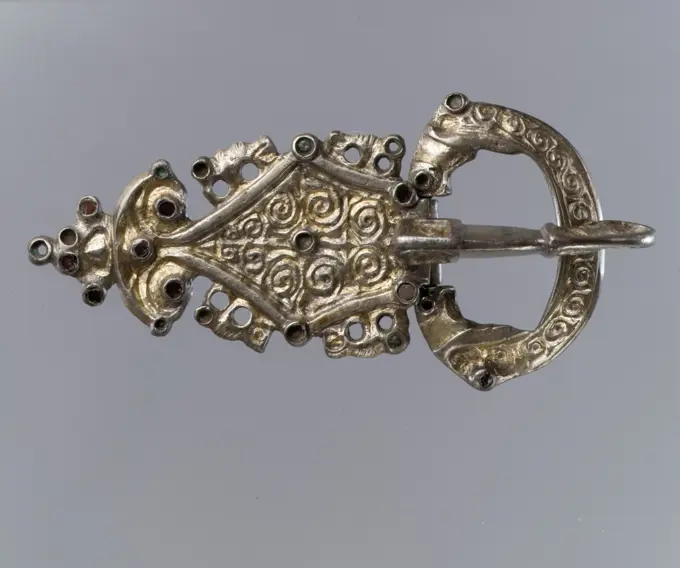
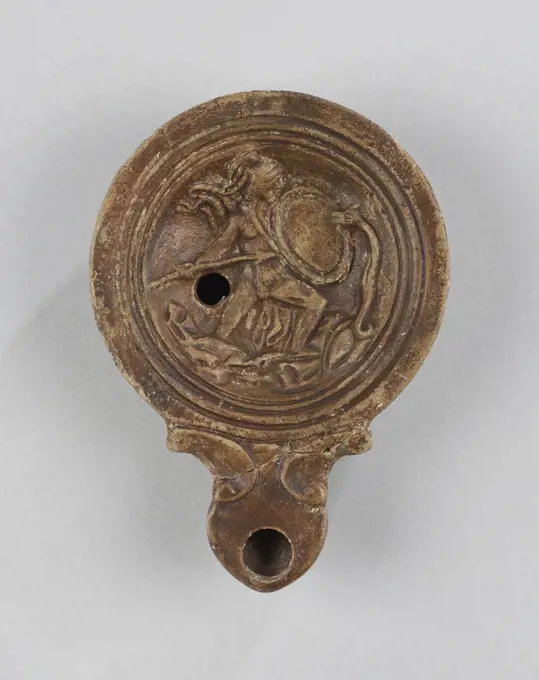
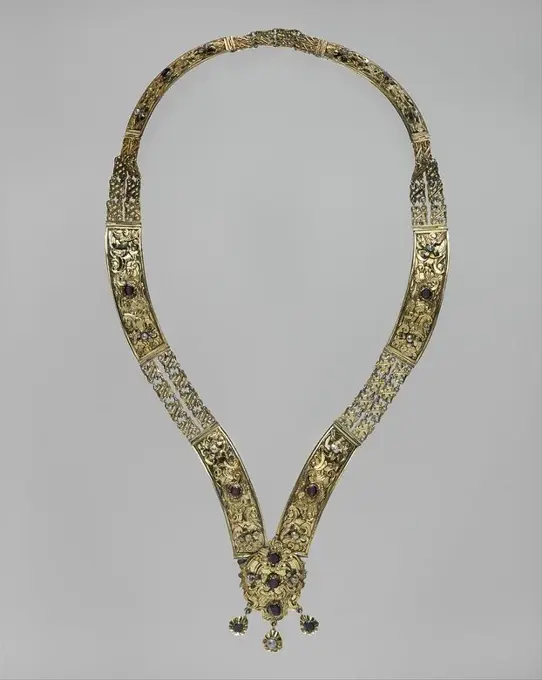
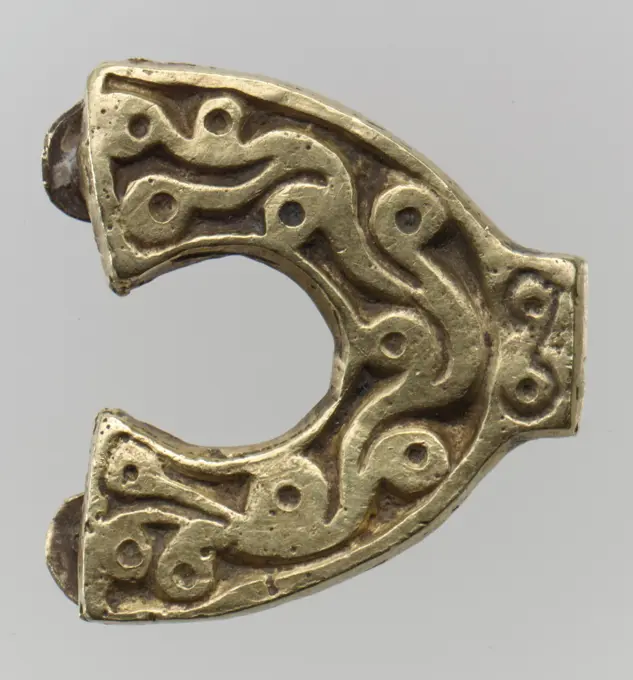
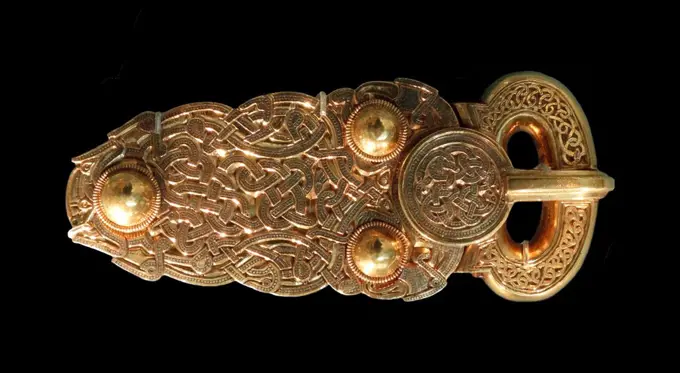
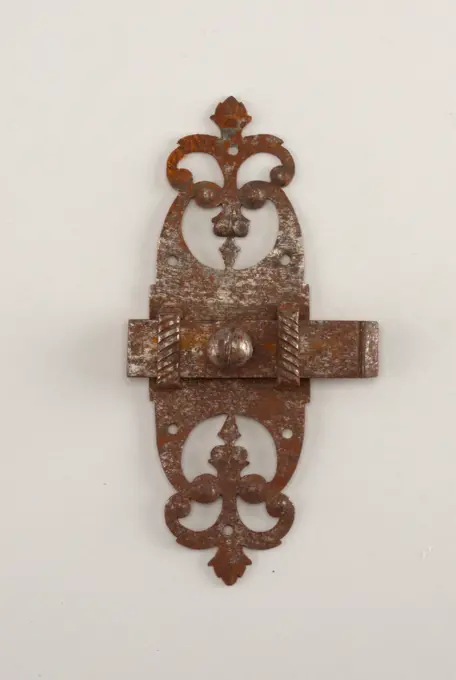
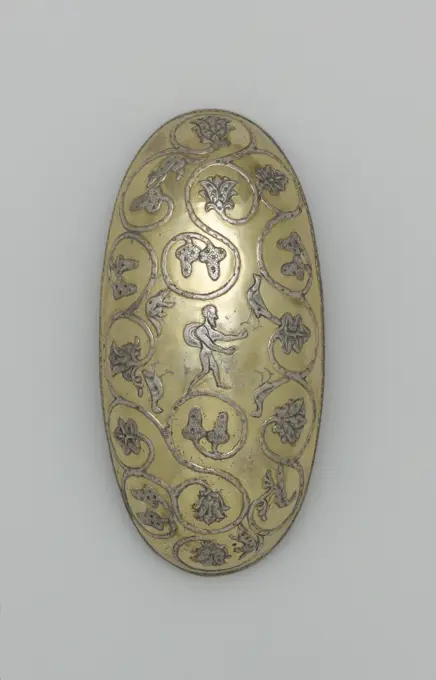
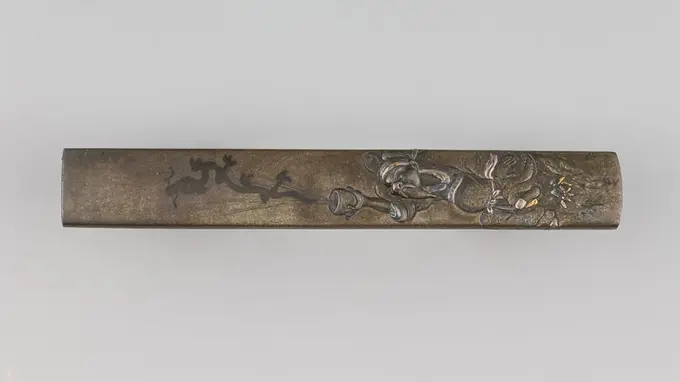
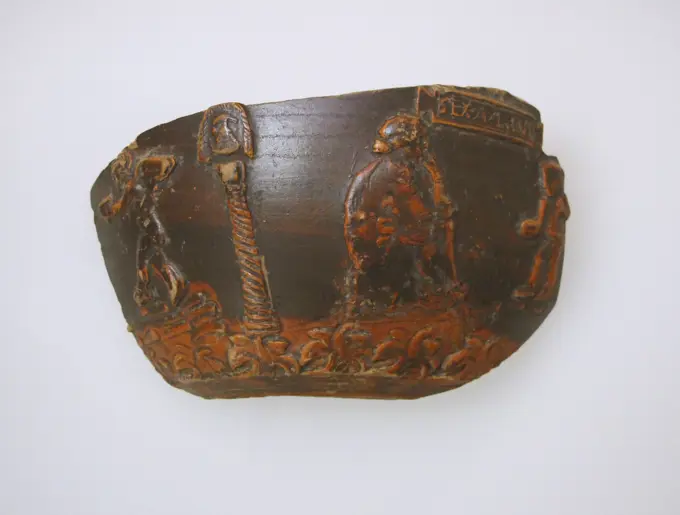
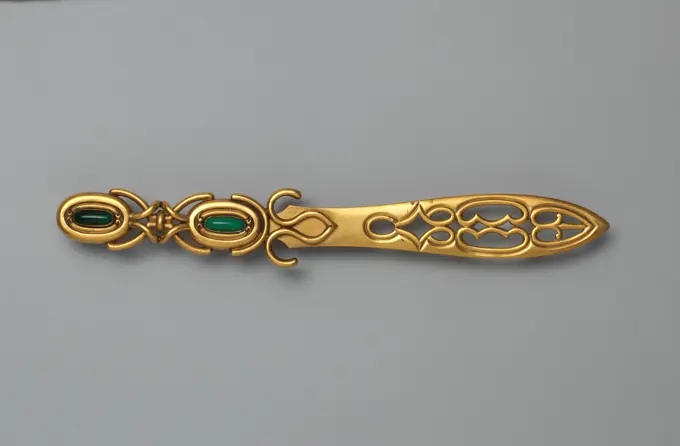
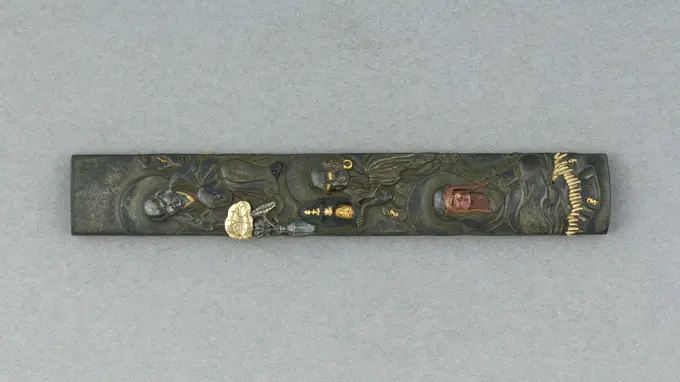
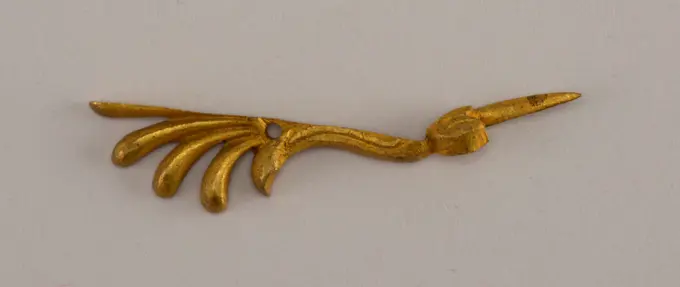
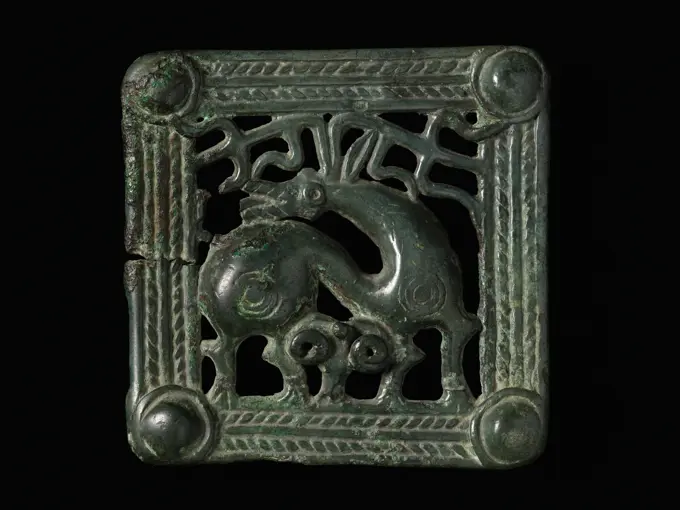
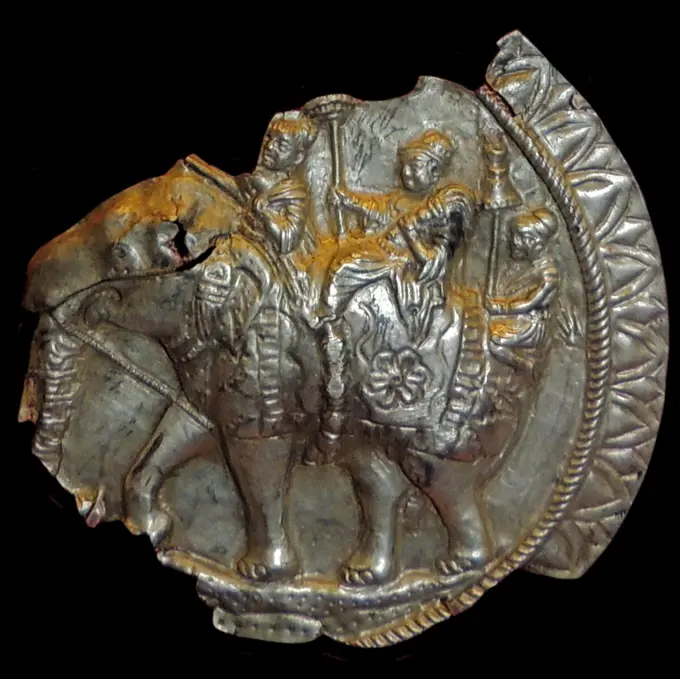
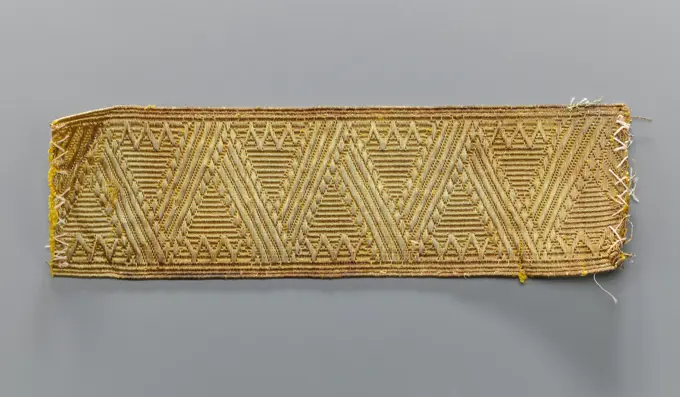
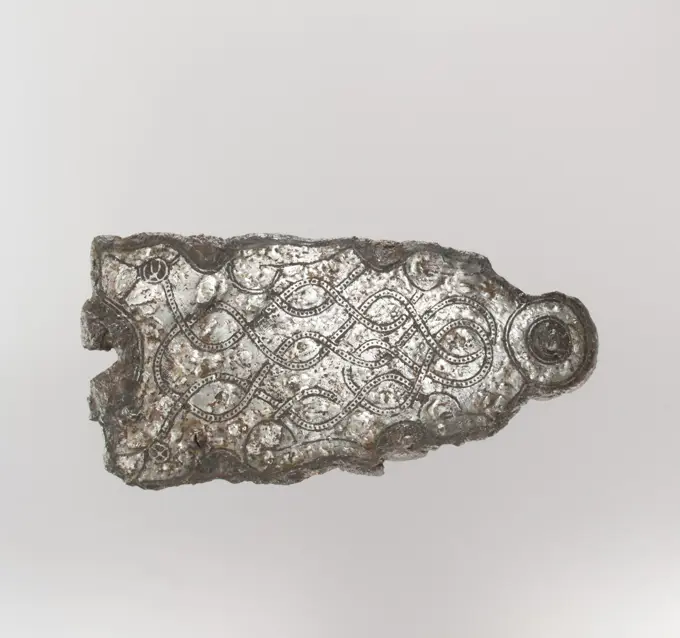
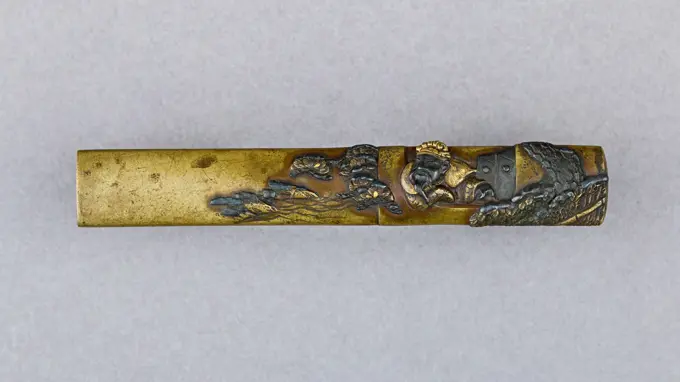
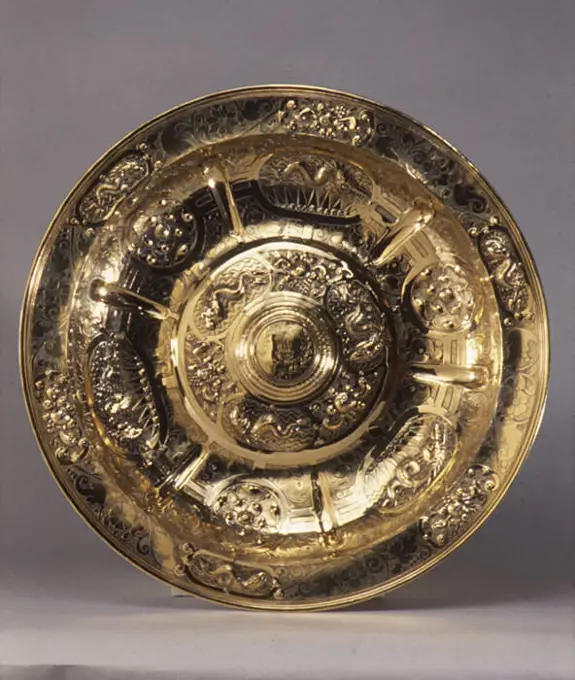
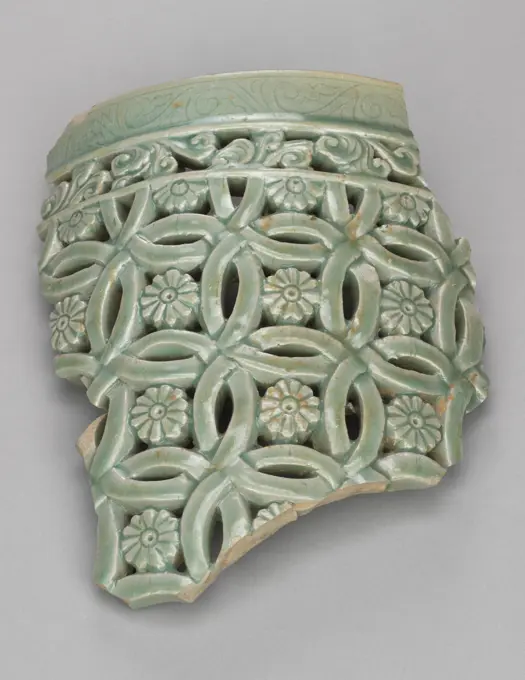
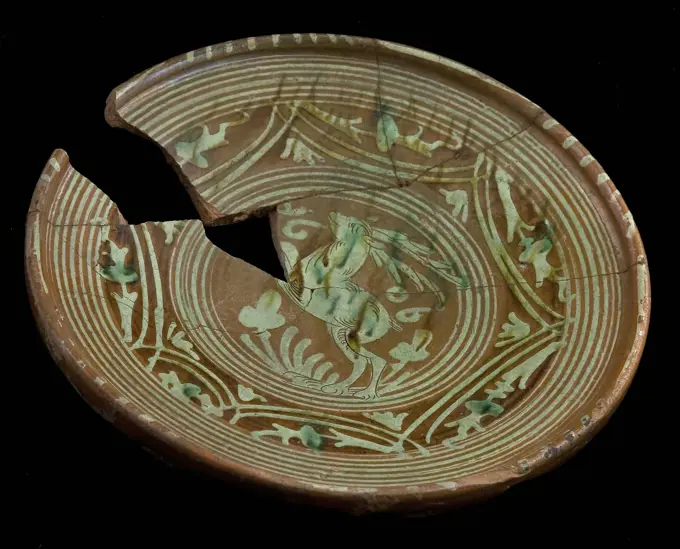
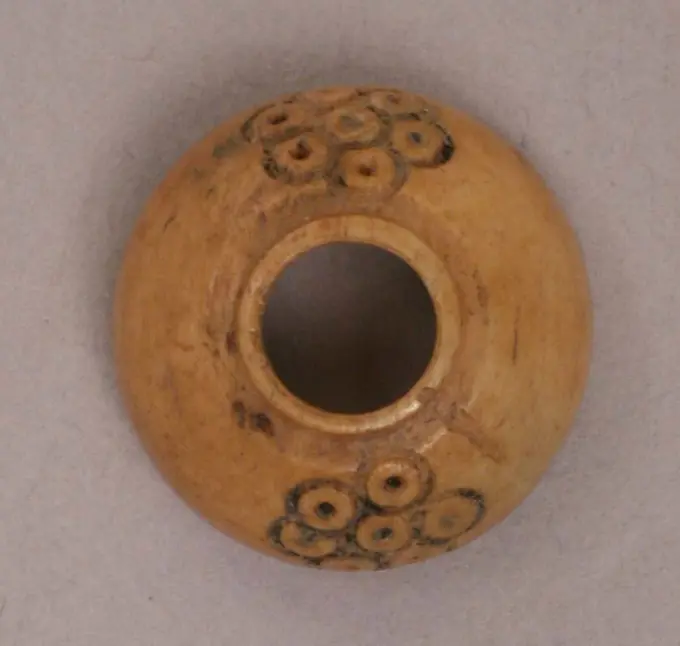
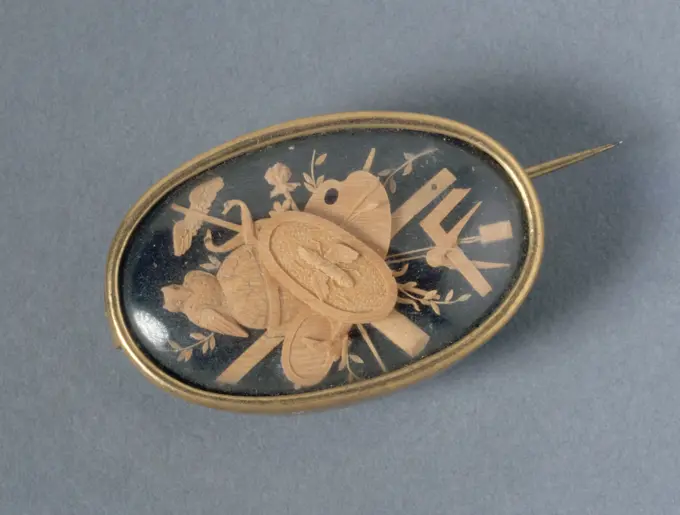
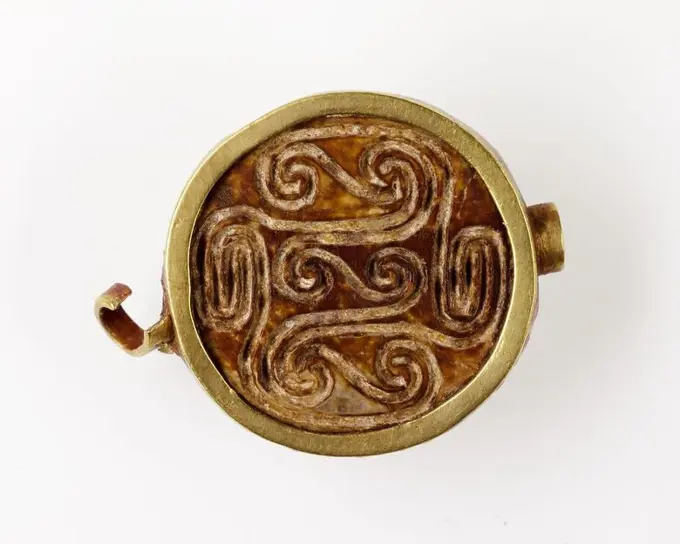
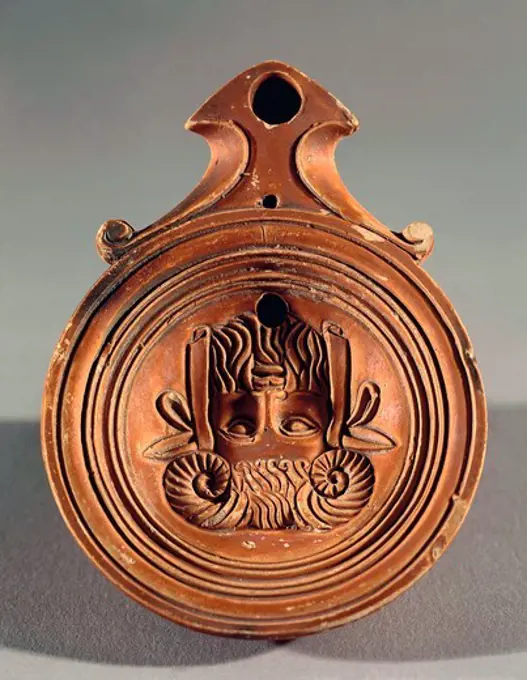
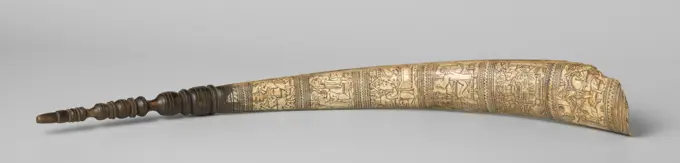
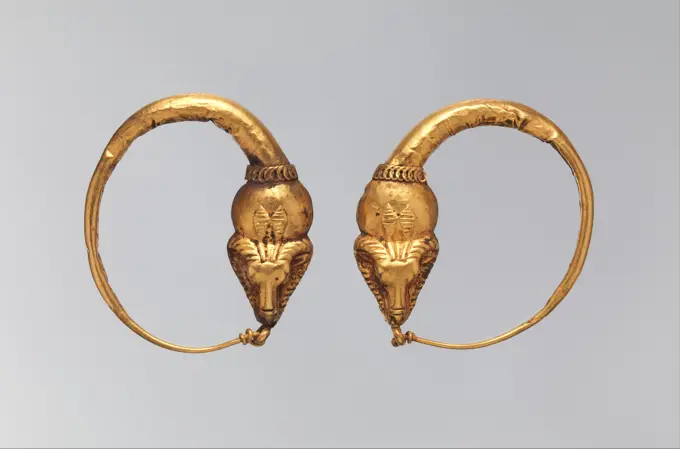
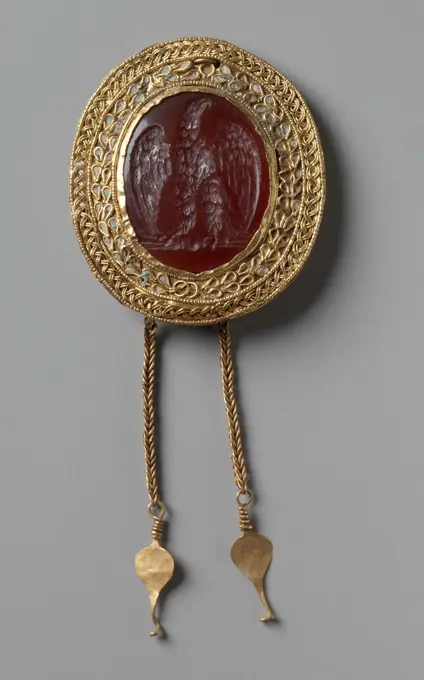
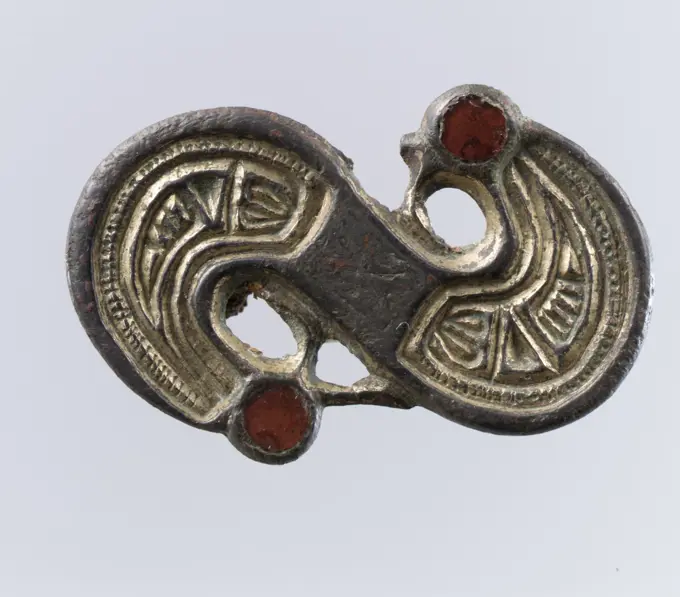
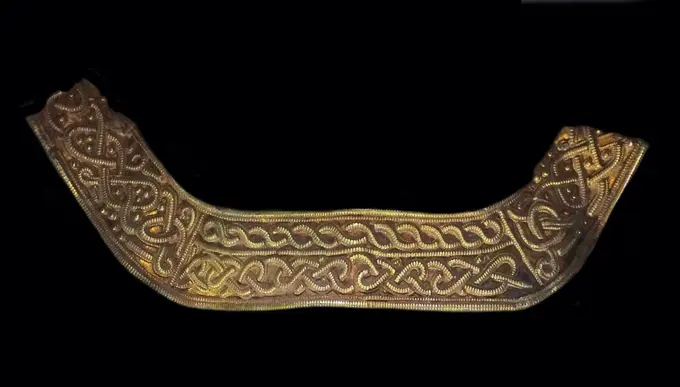
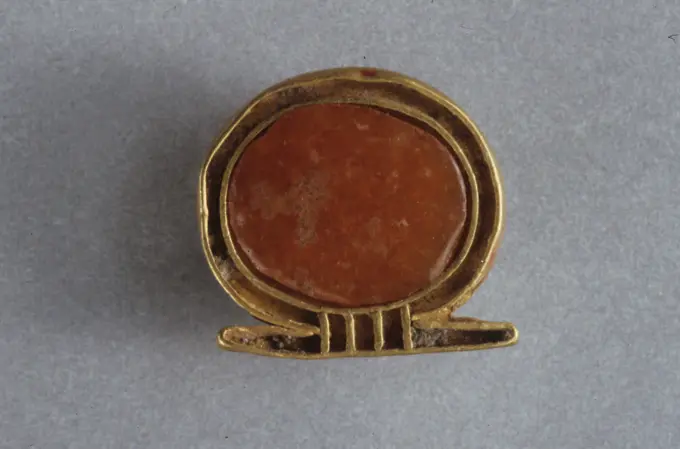
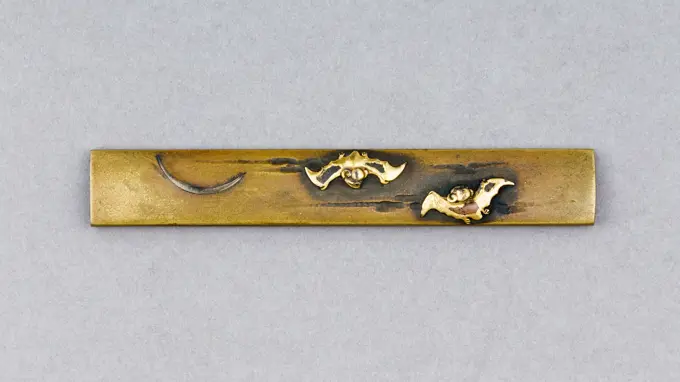
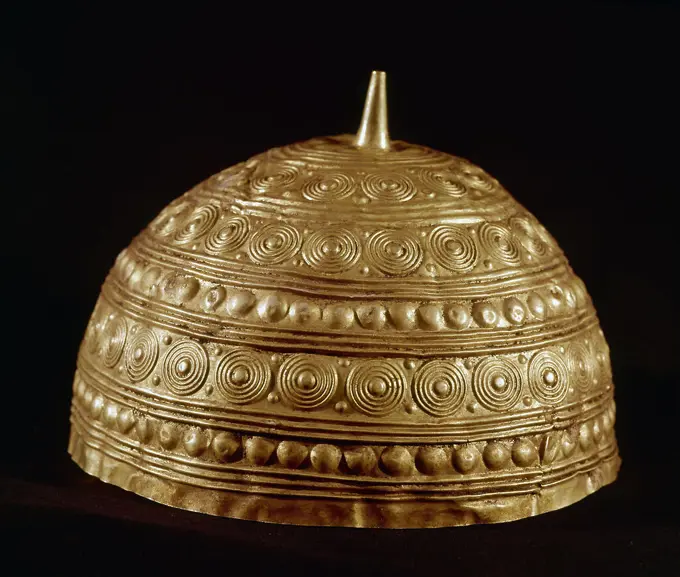
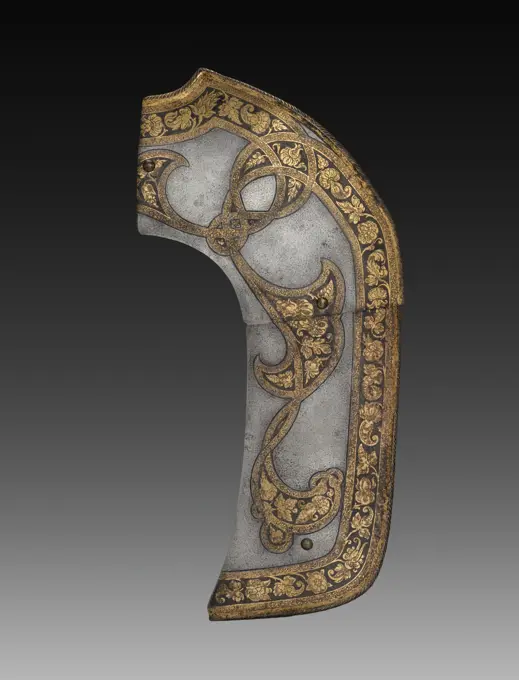
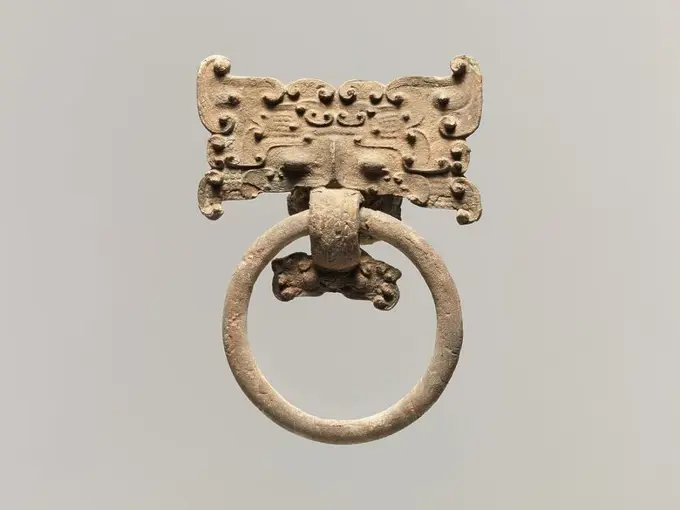
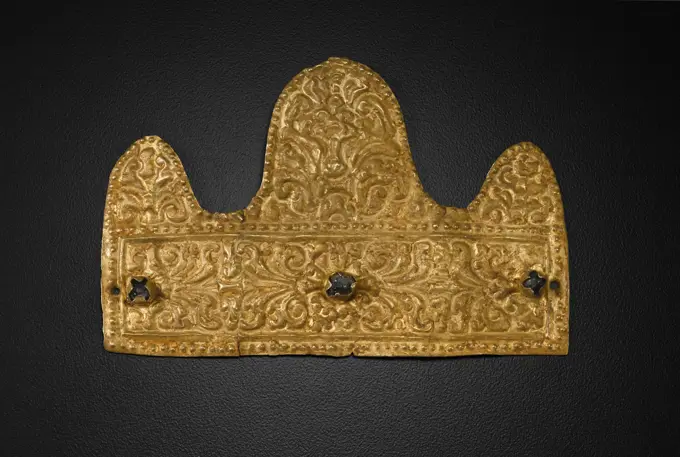
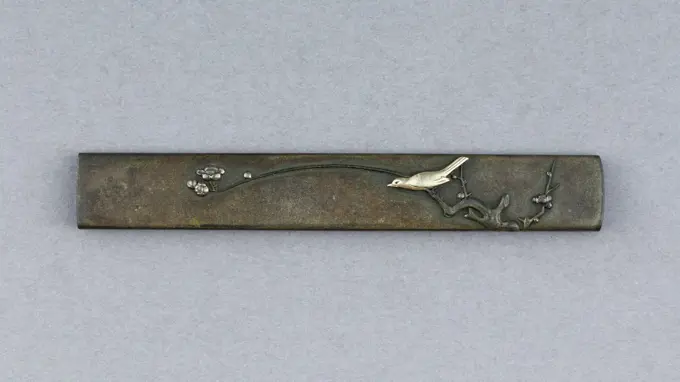
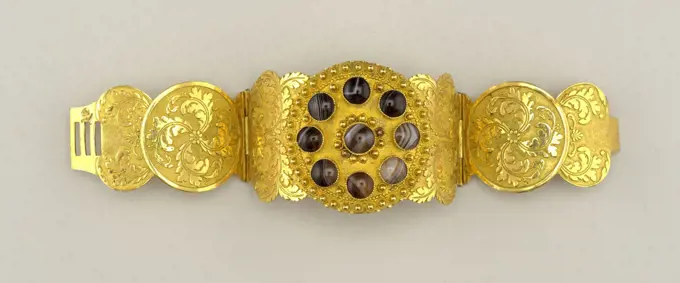
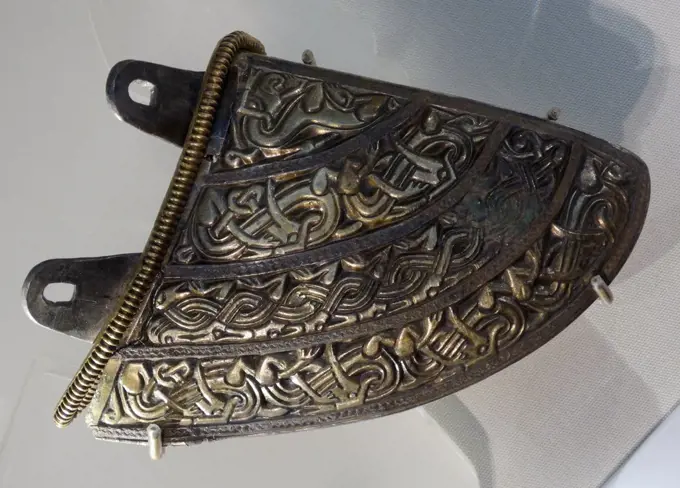
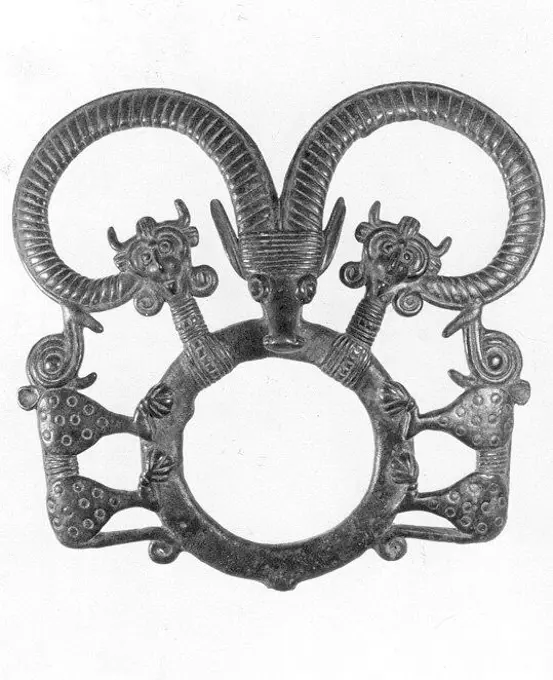
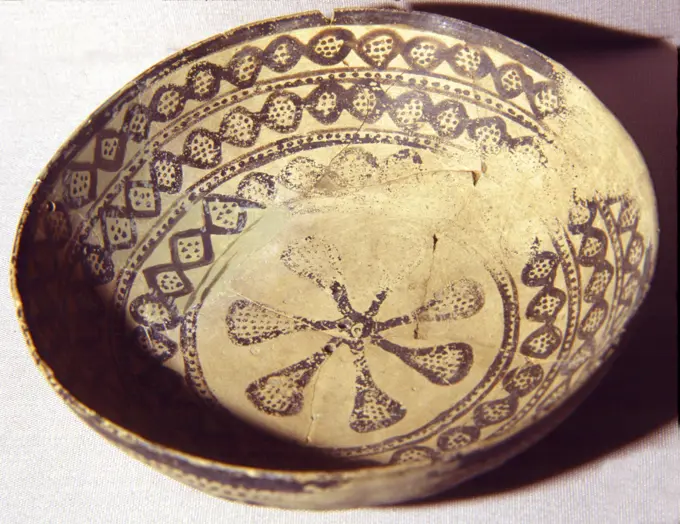
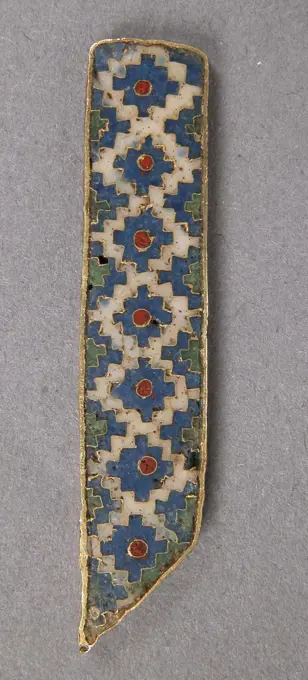
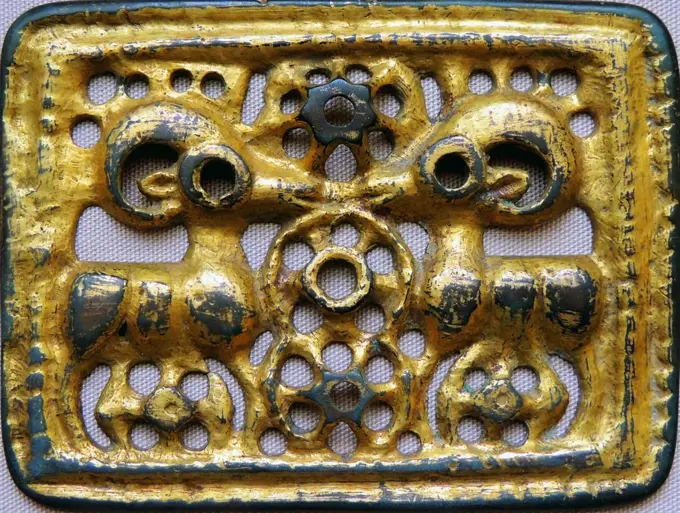
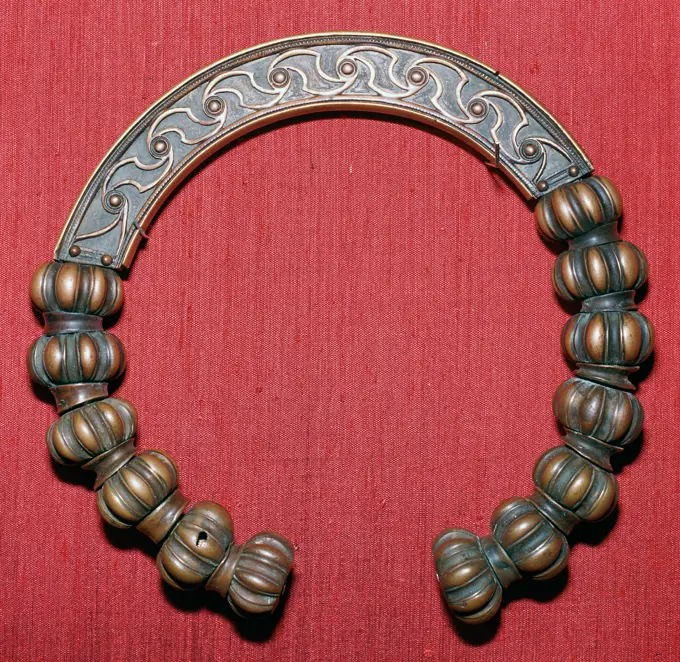
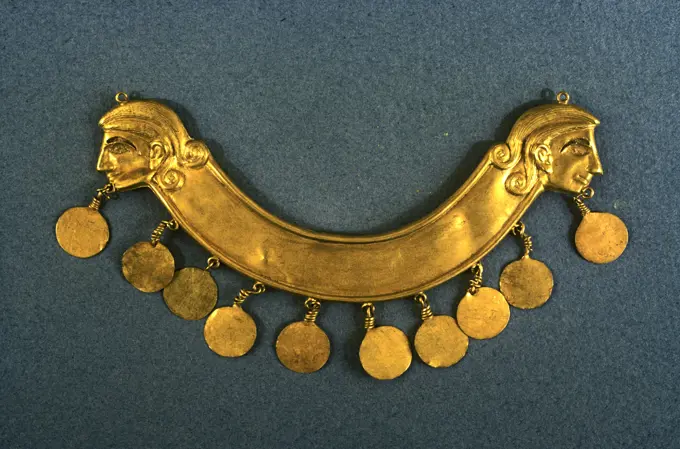
Plaque from a Tantric Ritual Apron with a Skeleton 16th century or later Tibet. Plaque from a Tantric Ritual Apron with a Skeleton. Tibet. 16th century or later. Bone. BoneBelt Buckle 7th century Frankish. Belt Buckle 465303 Frankish, Belt Buckle, 7th century, Iron, silver inlay, copper alloy, Overall: 5 1/2 x 2 5/8 x 13/16 in. (14 x 6.7 x 2 cm). The Metropolitan Museum of Art, New York. Gift of J. Pierpont Morgan, 1917 (17.192.235)Miniature Square-Headed Brooch first half 6th century Anglo-Saxon The affinity of these brooches, found in France, with objects from Kent is evidence of the spread of artistic traditions through export or copying.. Miniature Square-Headed Brooch 465090 Anglo-Saxon, Miniature Square-Headed Brooch, first half 6th century, Silver-gilt; iron pin, Overall: 1 1/2 x 3/4 x 3/8 in. (3.8 x 1.9 x 0.9 cm). The Metropolitan Museum of Art, New York. Gift of J. Pierpont Morgan, 1917 (17.191.43)Plate, Loop, and Tongue of Belt Buckle 450-550 Ostrogothic The Ostrogoths who settled in Italy buried their dead in formal dress. Thus, splendid belt buckles such as this one appeared in the graves of prosperous Ostrogothic women, alongside earrings, necklaces, and brooches.. Plate, Loop, and Tongue of Belt Buckle 468995Art Nouveau choker plaque, of sycamore keys, in carved horn set with opals. designed by Rene Lalique (1860-1945) French, Paris, about 1900FragmentLamp, North Africa; 1st - 4th century; Terracotta; 2.5 x 8.9 x 12.2 cm (1 x 3 1,2 x 4 13,16 in.)Sword Guard (Tsuba) 18th century Japanese A tsuba is a sword guard and part of a sword mounting. It is mounted between the swords blade and grip to protect the users hands.. Sword Guard (Tsuba) 642391Belt. Culture: Hungarian, Brass. Dimensions: Overall: 31 1/2 in. (80 cm). Maker: Michael Erkeder (master in 1736, died 1756). Date: mid-18th century.Garnets and pearls provide lovely accents for the movable joints of this spectacular girdle. Although its patron is not known, its exquisite quality and similarity in shape to several collars produced for other European aristocrats suggests this piece was made for a Hungarian nobleman.ReferencesElemr Koszeghy. Magyarorszgi tvsjegyek a kzpkortl 1867-ig / Merkzeichen der Goldschmiede Ungarns vom Mittelalter bis 1867. Budapest, 1936, no. 269 maker's mark.Wolfram Koeppe 2015. Museum: Metropolitan Museum of Art, New York, USA.Long-Case Clock (régulateur).Gold Belt Hole Guard 700s Avar The treasure contains an array of belt fittings, some elaborately decorated, some unfinished or defectively cast. Some show no signs of use, while others are quite worn.The AvarsThe Avars were a nomadic tribe of mounted warriors from the Eurasian steppe. The Byzantine emperor Justinian negotiated with them in the sixth century to protect the Empires northern border along the Black Sea. Emboldened by their subjugation of numerous tribes, they unsuccessfully attempted to seize the Empires capital, Constantinople. They remained a scourge of both Byzantium and the Western kingdoms until Charlemagne defeated them through a series of campaigns in the 790s and early 800s.All the money and treasure that the Avars had been years amassing was seized, and no war in which the Franks have ever engaged.. brought them such riches and such booty. Up to that time the Avars had passed for a poor people, but so much gold and silver was found.. that one may well think thatSutton Hoo buckle or Great gold buckle. Anglo-Saxon, early 7th century AD masterpiece of early medieval craftsmanship. with curved sides and three domed bosses resembles Frankish buckles.Bolt; 1904-21-66Chair (Sgabello) 16th century Italian. Chair (Sgabello) 197161Snuifrasp uit palmhout gesneden met bovenaan twee leeuwen.Sliced slid meat from palm wood with two lions wearing a crown with the letters i.i.p. Byond this a crown carrying double eagle. Down 1770. Around surrounded by ornaments.Limestone fragment of a sarcophagus 3rd century B.C. Cypriot This piece once formed one of the long sides of a sarcophagus. The symmetrical decoration consists of two small bulls that flank two wreaths. At the upper corners of the panel a ring is carved in relief, imitating the handles of a chest. The style of the panel shows the influence of woodcarving. Stone funerary architecture often imitated wooden constructions, and this sarcophagus was probably based on a wooden prototype.. Limestone fragment of a sarcophagus 242042Oval bowl with grapevine scrolls inhabited by birds and animals ca. 6th-7th century A.D. Sasanian This oval bowl, made from a single piece of hammered silver, is an example of one of the new vessel forms popular during the second half of the Sasanian period (A.D. 224-651): the shape is typical for wine drinking and most likely derives from Chinese prototypes. The background of the bowls exterior was carved out and then gilded, leaving the silver decoration in high relief. Tendrils of vine scrolls, one of the most popular motifs in Sasanian art, are arranged symmetrically along with grape clusters, lotus palmettes, birds and animals. The bearded dancing figure in the center most likely represents Silenos, leader of the satyrs, who along with the grapes and vines, attests to the continuing popularity of imagery associated with the Greek god Dionysos. The cups interior features a bird (probably a cock) holding a leaf in its beak, surrounded by bosses created by punching from the exterioEmperor's gate Yu (Dragon Gate) - decorative vain;  19th century (1801-00-00-1900-00-00);Plaque. Mongolia or southern Siberia, 2nd-1st century B.C.. Sculpture; plaques. Bronze, castKnife Handle (Kozuka). Culture: Japanese. Dimensions: L. 3 13/16 in. (9.7 cm); W. 9/16 in. (1.4 cm); thickness 1/4 in. (0.6 cm); Wt. 1.1 oz. (31.2 g). Maker: Hamano Yasuyuki (Japanese). Date: 18th century. Museum: Metropolitan Museum of Art, New York, USA.Fragment of a drum tympanum. Bronze. Cernuschi Museum, Asia Museum of Asia in the city of Paris.Pair of Sword-Grip Ornaments (Menuki). Culture: Japanese. Dimensions: L. of each 2 7/8 in. (7.3 cm); Wt. of each 0.4 oz. (11.3 g). Date: possibly early 17th century. Museum: Metropolitan Museum of Art, New York, USA.Terracotta bowl fragment ca. 10 B.C.-A.D. 20 Roman Arretine ware fragment depicting parts of two scenes with winged cupids and a seated woman, divided by a spiral-fluted column supporting a theatrical mask. Above the figures in one of the scenes is the maker's stamp in the form of a tabula ansata, inscribed SEXAVLIENI (of Sextus Aulienus).. Terracotta bowl fragment. Roman. ca. 10 B.C.-A.D. 20. Terracotta. Early Imperial, Augustan. VasesPaper cutter (part of a set) 1851 Asprey British The set (1982.88.1-.8) was shown at the Crystal Palace exhibition in 1851. Except for the paper knife, each piece is engraved underneath with Asprey's name and address and the words Exhibition 1851. Listen to experts illuminate this artwork's story Listen Play or pause #417. The Great Exhibition Supported by Bloomberg Philanthropies We're sorry, the transcript for this audio track is not available at this time. We are working to make it available as soon as possible.. Paper cutter (part of a set). British, London. 1851. Gilt bronze, malachite. Metalwork-Gilt BronzeKnife Handle (Kozuka) ca. 1615-1868 Japanese A kozuka is a handle of a by-knife that is part of a sword mounting. It is kept in a slot on the reverse of a katana scabbard, often with a matching kgai (hairdressing tool).. Knife Handle (Kozuka). Japanese. ca. 1615-1868. Copper-silver alloy (shibuichi), gold, copper-gold alloy (shakud), silver, copper. Sword Furniture-KozukaPalmette, HalfApplied. Ordos. III millennium BC. Paris, Cernuschi museum. 35178-11 Applique, bronze, hetao, meridional Mongolia, ordos, prehistory, prehistoric, animalRight Half of a Cantle Plate from a Saddle 16th-18th century Tibetan or Chinese This plate comes from the right half of the cantle, or back rim, of what must have been an extremely luxurious ceremonial saddle, either made in Tibet or in China for the Tibetan market. Its iron ground is intricately pierced, chiseled, and damascened overall in gold and silver. The fineness and complexity of the workmanship, particularly on the scrollwork interspersed with dragons, are particularly noteworthy.. Right Half of a Cantle Plate from a Saddle 35632Silver roundel from 1st century AD. Found in the Punjab, Pakistan.Gallon;  beginning of the 19th century (1901-00-00-1910-00-00);Counter Plate of a Belt Buckle 7th century Frankish or Burgundian. Counter Plate of a Belt Buckle 465046 Frankish or Burgundian, Counter Plate of a Belt Buckle, 7th century, Iron, silver inlay; iron rivets, Overall: 5 1/2 x 2 5/8 x 1/2 in. (14 x 6.7 x 1.3 cm). The Metropolitan Museum of Art, New York. Gift of J. Pierpont Morgan, 1917 (17.191.331)Scarab with Scroll Pattern Decoration. Egypt, perhaps 12th - 16th Dynasty (1991 - 1600 BCE). Jewelry and Adornments. Brown steatite with remains of blue glazeKnife Handle (Kozuka) 18th century Japanese A kozuka is a handle of a by-knife that is part of a sword mounting. It is kept in a slot on the reverse of a katana scabbard, often with a matching kgai (hairdressing tool).. Knife Handle (Kozuka). Japanese. 18th century. Iron, copper-gold alloy (shakud), copper-silver alloy (shibuichi), gold. Sword Furniture-KozukaDoor knocker ca. 1550 Italian, Venice. Door knocker. Italian, Venice. ca. 1550. Bronze. Sculpture-BronzeBowl with Geometric Design (Two- part Feather), c 1000- 1150. Southwest, Mogollan, Mimbres, Pre-Contact Period, 11th-12th century. Ceramic; overall: 12 x 25 cm (4 3/4 x 9 13/16 in.).Planets-manager. Cornalet Collection Sites 2013-2016. Numismatic.Ax blade. Dimensions: L. 13.7 cm (5 3/8 in.); W. 9.4 cm (3 11/16 in.); Th. 0.8 cm (5/16 in.). Dynasty: Dynasty 19-20. Date: ca. 1295-1070 B.C.. Museum: Metropolitan Museum of Art, New York, USA.Collar, Medium: silk, metallic threads Technique: embroidered, A collar embroidered with metal and colored silk threads showing a stylized lily pattern., Russia, 18th century, embroidery & stitching, CollarEarflare Frontal 6th-7th century Moche (Loma Negra). Earflare Frontal 313418Mount; L x W x D: 5 x 7.3 cm (1 15/16 x 2 7/8 in.)Knife Handle (Kozuka) ca. 1615-1868 Japanese A kozuka is a handle of a by-knife that is part of a sword mounting. It is kept in a slot on the reverse of a katana scabbard, often with a matching kōgai (hairdressing tool).. Knife Handle (Kozuka) 25780Basin 1610-11 Symon Owen It is believed that this ewer and basin, which bear the mark of the prominent London goldsmith Symon Owen, were made for Henry Frederick, prince of Wales (1594-1612) and eldest son of James I of England. While ewers and their accompanying basins were originally intended for the washing of hands at the dining table, they were also employed as part of lavish displays of silver on sideboards or buffets in princely or aristocratic houses.. Basin 204940Anonymous, shoulder paw of an oberleutant of a numbered unit 11 (title awarded), 1900. Silver shed, blue son, red wool, brass. General Leclerc Museum of the Liberation of Paris - Jean Moulin Museum.Fragment of Garden Stool with Openwork Design, 1200s. Korea, Goryeo period (918-1392). Stoneware with celadon glaze, insiced scroll design, and carved openwork pattern with floral centers; overall: 27.5 x 20.3 cm (10 13/16 x 8 in.).Werra dish on stand surface, mirror decor with jumping doe in sludge technique and sgraffito, with 1606, dish crockery holder soil find ceramic earthenware glaze lead glaze clay, hand turned decorated glazed fried loin cord sgraffito Dish on stand surface Slanted sidewall without shoulder. Vertical dish edge. Red shard glazed only at the top Decorated in sludge technique and sgraffito Decoration consists of jumping deer and year in the mirror yellow circles in the flag between them band with arch motifs Sloppy rope motif over the saucer edge Yellow and green. date in mirror: 1606 archeology City Triangle Rotterdam Town Hall City Hall serving pottery serving food decorating tableLeft Gauntlet. Culture: possibly Spanish. Date: ca. 1560. Museum: Metropolitan Museum of Art, New York, USA.RELOJ DE BRONCE DORADO-ALEMAN S XVI. Location: PRIVATE COLLECTION. MADRID. SPANIEN.Dish. Central Asia, 19th century. Ceramics. Earthenware, brown slip, underglaze-paintedOrnament 15th century French. Ornament 464692Button or Bead 9th-10th century The dot-in-circle motif recalls designs presumed to be of magical significance, most likely an abstract eye to ward off the evil-eye, which serves an apotropaic function. Easily reproduced with a tool and visible in many cultures and times, this symbol may have lost its meaning, and become simply a decorative pattern, or may have one that we have not yet discovered.. Button or Bead. 9th-10th century. Bone; incised and inlaid with paint. Excavated in Iran, Nishapur. Ivories and Boneearthen lunette with decoration of the god Eros -Cupid-, 1st AD, underwater background of Porto Cristo, Manacor History Museum, Manacor, Mallorca, Balearic Islands, Spain.Pin with Saint-Simonian attributes in carved wood, having belonged to George Sand. Paris, Museum of Romantic Life. 35004-5 Allegory, Saint-Simonian attribute, jewel, sculpt, spindle, French writerScarab. Dynasty: Dynasty 12-18. Date: ca. 1981-1295 B.C.. Museum: Metropolitan Museum of Art, New York, USA.Italy, Fictile votive lamp with Jupiter Ammon head from the Rebatto tomb of AtesteBuckleBracelet 500 B.C.-A.D. 300 Thailand. Bracelet. Thailand. 500 B.C.-A.D. 300. Bronze. Bronze and Iron Age period. JewelryTESORO DE CHARILLA. Nº INV. 2786 (DIADEMA) (DIADEMA LONGITUD 21,6 CM. ANCHO 4,6 CM) MUSULMAN. (EXPOSICION :ARTE ISLAMICO ESPAÑOL)(DEPOSITO: MUSEO DE JAEN ).Bliżej Kultury unknownCostume Ornament. Culture: Peru; central coast (). Dimensions: L. 1 1/2 in. (3.8 cm). Date: 11th-12th century. Museum: Metropolitan Museum of Art, New York, USA.Disk Pendant (akrafokɔnmu), 1800s. Africa, West Africa, Ghana, Asante goldsmith. Gold; diameter: 9.8 cm (3 7/8 in.); overall: 1.3 cm (1/2 in.).Laarzenknecht, waarop gegraveerd zes voorstellingen uit de Gelijkenis van de Verloren Zoon.Horn shoehorn with twisted handle and on the convex side a six representations from the parable of the lost son (Luke 15: 11-24). From bottom to top are pictured: the son departs with his inheritance, the son in the midst of his friends to a banquet, chasing the son, the son who hats the boar, the son's return and slaughtering the late calf. Any performance through a cartel decoration insulated from the other.Earring with ram crowned by disk and 'uraei' 332-30 B.C., perhaps Ptolemaic Period The form of these earrings is unique.. Earring with ram crowned by disk and 'uraei' 561113Box with Lid 13th century. Box with Lid 449030Net-Pattern Bowl; Parthian Empire; 1st century B.C; Gilt silver and garnets; 20 × 6 cm (7 7,8 × 2 3,8 in.)Bracelet (the Latin words NONRELINQUES on one side, NONRELINQUAM on the other), Gold, Bracelet of thirteen linked disks with letters spelling 'NONRELINQUES' on one side, and 'NONRELINQUAM' on the other., Rome, Italy, ca. 1870, jewelry, Decorative Arts, Bracelet, BraceletNeckband, Medium: silk metal thead embroidery on silk foundation, backed with linen Technique: embroidered on plain weave foundation, Neckband from a vestment, embroidered in gold and silver with the Madonna and Child and the twelve Apostles., Russia, 18th century, embroidery & stitching, NeckbandThe Imperial Eagle, c. AD 1-25. Italy, Rome, probably Augustan, early 1st Century. Cornelian intaglio; diameter: 3.5 cm (1 3/8 in.).Brooch 100-300 Roman. Brooch 465837 Roman, Brooch, 100300, Champlev enamel, bronze, Overall: 1 3/4 x 1 3/16 x 5/8 in. (4.4 x 3 x 1.6 cm). The Metropolitan Museum of Art, New York. Gift of J. Pierpont Morgan, 1917 (17.194.1911)Hoop Earring with Raised Rosette. Egypt (), Roman Period (30 BCE - 395 CE) or later. Jewelry and Adornments; earrings. BronzeMountPanel 14th-15th century. Panel 445064Pistola de rueda, siglo XVII. Museu Etnogràfic de Ripoll.S-Shaped Brooch 6th century Frankish. S-Shaped Brooch 465152 Frankish, S-Shaped Brooch, 6th century, Silver-cast relief and settings; chased, punched; garnets, gilt; iron pin., Overall: 1 9/16 x 1 1/16 x 3/8 in. (4 x 2.7 x 0.9 cm). The Metropolitan Museum of Art, New York. Gift of J. Pierpont Morgan, 1917 (17.192.1)Stola with embroidery of gold and silver wire, blood corals, grenades and pearls. ,, c. 1675 - c. 1700 Stola with embroidery of gold and silver wire, blood corals, grenades and pearls. The Stola has fortress -shaped ends. The embroidery has an ongoing tivher pattern ending in golden flowers with silver blades. The flower hearts are filled with corals, grenades, pearls and a single stras diamond. The Stola is part of six ecclesiastical embroidery with invnrs. BK-1966-54-A to BK-1966-54-F. Italy silver thread. red coral (material). garnet (mineral). pearl. paste (glass) embroidering Stola with embroidery of gold and silver wire, blood corals, grenades and pearls. The Stola has fortress -shaped ends. The embroidery has an ongoing tivher pattern ending in golden flowers with silver blades. The flower hearts are filled with corals, grenades, pearls and a single stras diamond. The Stola is part of six ecclesiastical embroidery with invnrs. BK-1966-54-A to BK-1966-54-F. Italy silver thread. rNetsuke Awabi shell, early 19th century, Unknown Japanese, 5/8 x 1 1/2 x 1 13/16in. (1.6 x 3.8 x 4.6cm), Stag horn, Japan, 19th centuryPendant 14th century French. Pendant 464665Scythian animal shard. Iran, ziwiyé. End of the 7th century BC. Paris, Cernuschi museum. 35179-5 Scythe, terracotta, shard, animalGold hilt collar from a sword, from the Staffordshire Hoard. Dated 6th CenturyShen (Protection) Motto Clasp ca. 1648-1540 B.C. Second Intermediate Period. Shen (Protection) Motto Clasp 546044Knife Handle (Kozuka) ca. 1615-1868 Japanese A kozuka is a handle of a by-knife that is part of a sword mounting. It is kept in a slot on the reverse of a katana scabbard, often with a matching kgai (hairdressing tool).. Knife Handle (Kozuka). Japanese. ca. 1615-1868. Copper alloy (sentoku), copper-gold alloy (shakud), copper. Sword Furniture-KozukaCASCO CELTA DE ORO - SIGLO VI AC - PROCEDENTE DE LEIRO,RIANXO (LA CORUÑA). Location: MUSEO ARQUEOLOGICO / CASTILLO. LA CORUNA. A CORUÑA. SPAIN.Pommel Plates from the Garniture of Rudolf II, c. 1571. Anton Peffenhauser (German, 1525-1603). Blued, etched, and gilded steel; These plates, once part of a saddle, are from a tournament armor for man and horse made for the sons of Emperor Maximilian II, archdukes Rudolf and Ernst. Most of the remaining elements of this armor are still in the collections of the Imperial Armouries in Vienna. The decorative pattern (in the imperial colors of black and gold) forms elegant knots, with distinctive foliage and hop sprigs filling the loops.Belt Buckle with Raptor Attacking a Goat 2nd century B.C. Inner Mongolia. Belt Buckle with Raptor Attacking a Goat 65294Ring Handle. Culture: China. Dimensions: W. 2 1/2 in. (6.4 cm); L. 3 5/8 in. (9.2 cm). Museum: Metropolitan Museum of Art, New York, USA.Pectoral withGemsKnife Handle (Kozuka) ca. 1615-1868 Japanese A kozuka is a handle of a by-knife that is part of a sword mounting. It is kept in a slot on the reverse of a katana scabbard, often with a matching kōgai (hairdressing tool).. Knife Handle (Kozuka) 34698Chest Ornament(Taka)Bracelet, Gilded metal, agates, France, 1815-40, jewelry, Decorative Arts, BraceletCellini sword-hilt from the Meyrick Collection, 1869. An '...ornamented sword-hilt, by Benvenuto Cellini'. From "Illustrated London News", 1869.Plume 9th-11th century Lambayeque (Sicán). Plume 309433Stamped silver foil from the Staffordshire Hoard. Dated 6th CenturyFlower-Shaped Plaque mid-7th-9th century Northwest China/Eastern Central Asia. Flower-Shaped Plaque 65172Harness ring ca. 9th century B.C. Iran. Harness ring 327347Halaf Pottery, 5500-5000 BC. from Arpachiya. MESOPOTAMIA.Element of a Border for an Icon Frame 10th century Byzantine. Element of a Border for an Icon Frame 464528 Byzantine, Element of a Border for an Icon Frame, 10th century, Cloisonn enamel, gold, Overall: 1/4 x 1 7/16 x 1/16 in. (0.7 x 3.7 x 0.2 cm). The Metropolitan Museum of Art, New York. Gift of J. Pierpont Morgan, 1917 (17.190.657)Gilt Bronze belt buckles. Ordos type, 3rd-1st century BC. These buckles show pairs of animals in combat.Plate - "Washington and Lafayette". Dated: c. 1936. Dimensions: overall: 20.3 x 25.4 cm (8 x 10 in.) Original IAD Object: 10 1/8" in diameter. Medium: black and white photograph. Museum: National Gallery of Art, Washington DC. Author: Helmut Hiatt.Bronze Celtic torc, 1st century. Artist: UnknownEurope, Greece. Ancient Greece. Gold pectoral. Aegina Treasure. Minoan. 1700 BC. Bronze Age.CERAMICA IRANI-CUENCO DE BARRO S XIII. Location: MUSEO ARQUEOLOGICO NACIONAL-COLECCION. MADRID. SPAIN.