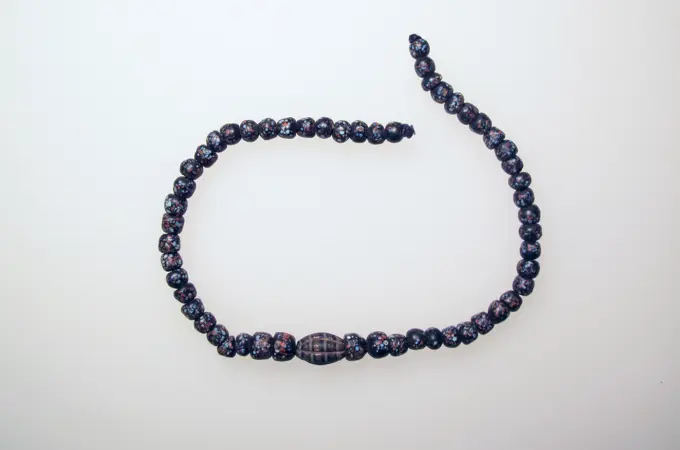
Historic Chains and Sling Artifacts

A collection of ancient woven slings, chains, and necklaces with intricate designs, showcasing craftsmanship from various cultures across different periods.
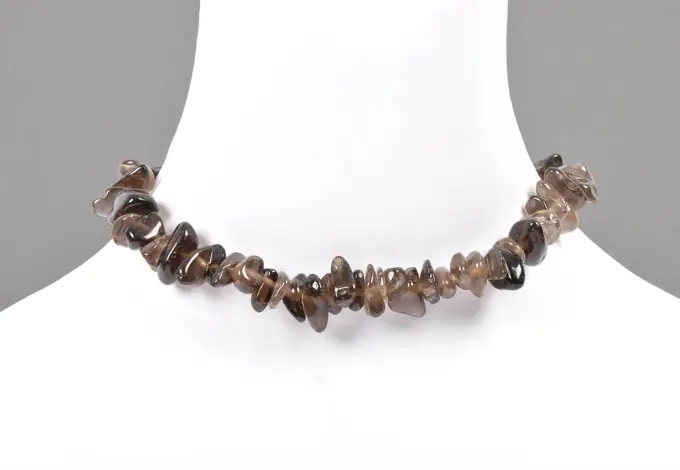
Rauchquarz Splitterkette auf Schmuckbueste - Splintered smoky quartz chain on bust Rauchquarz Splitterkette auf Schmuckbueste - Splintered smoky quartz chain on bust Copyright: xZoonar.com/lantapixx 9474173
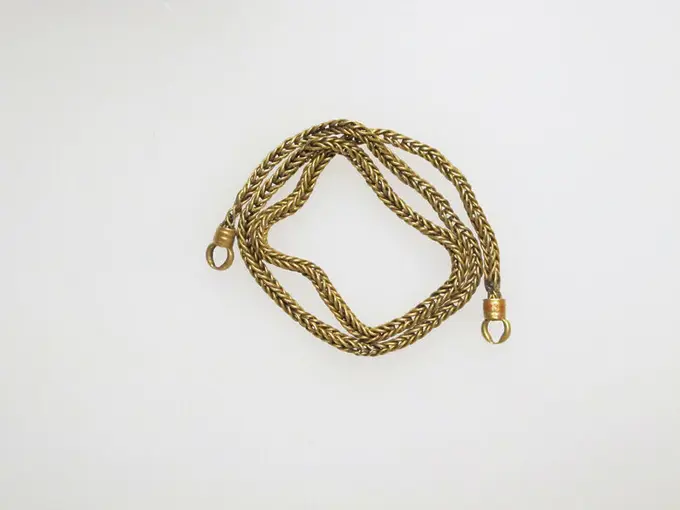
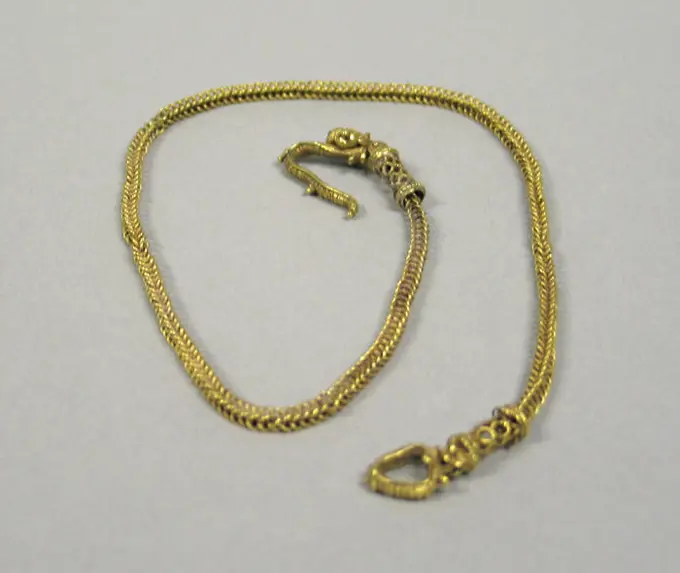
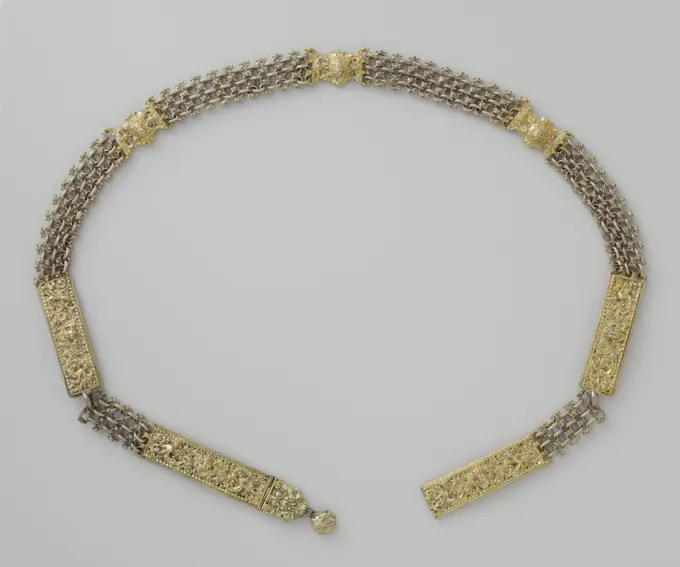
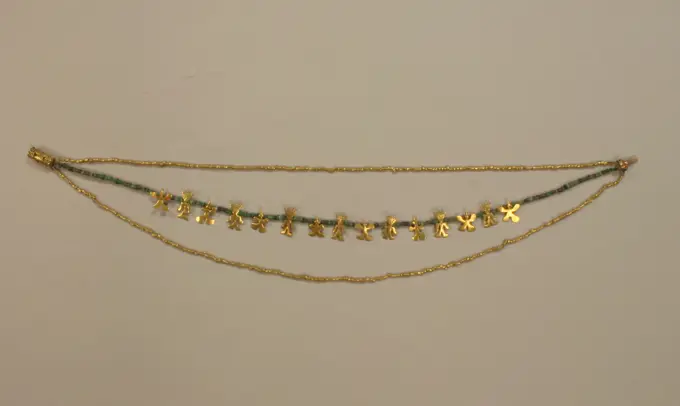
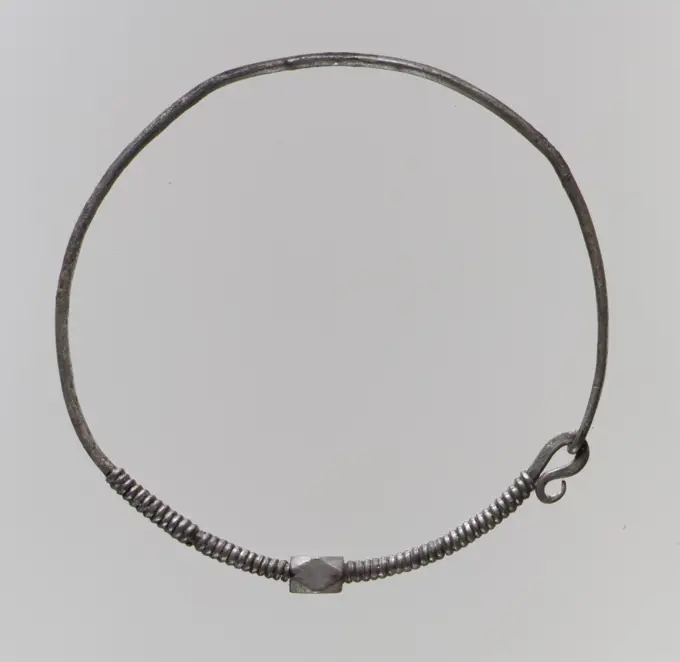
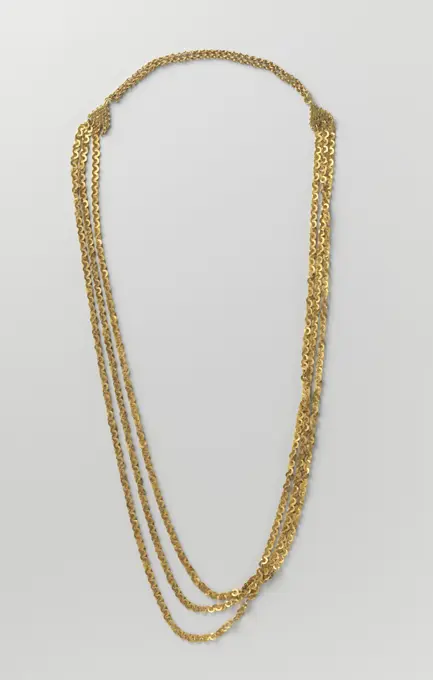
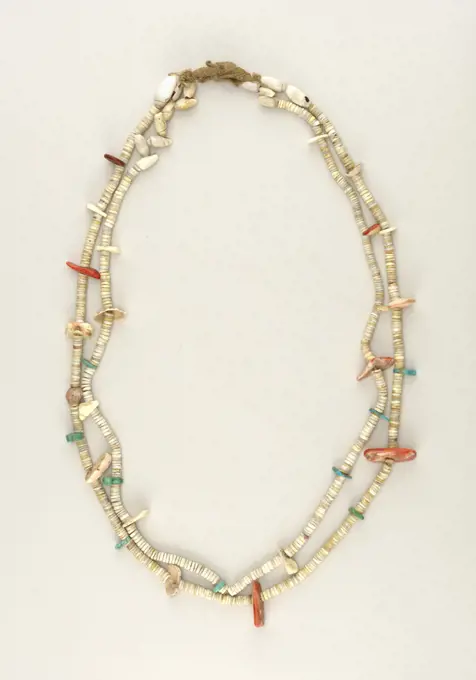
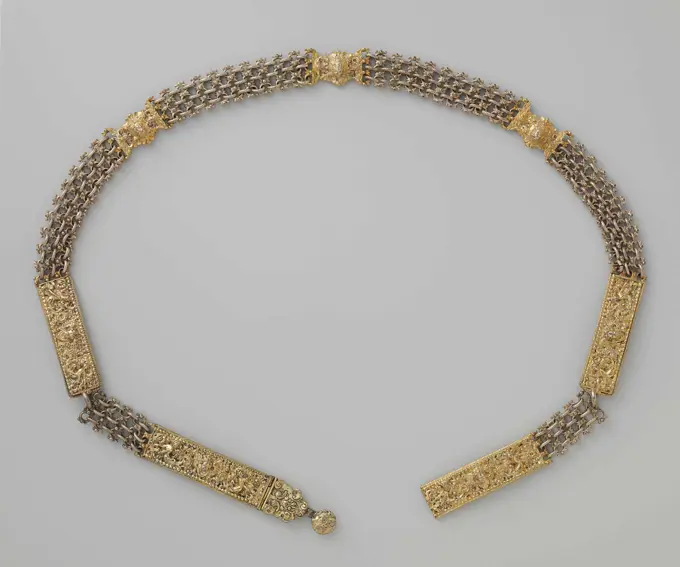
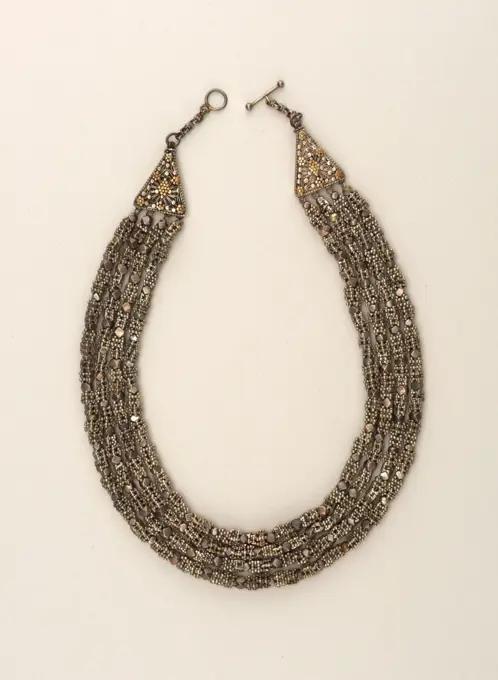
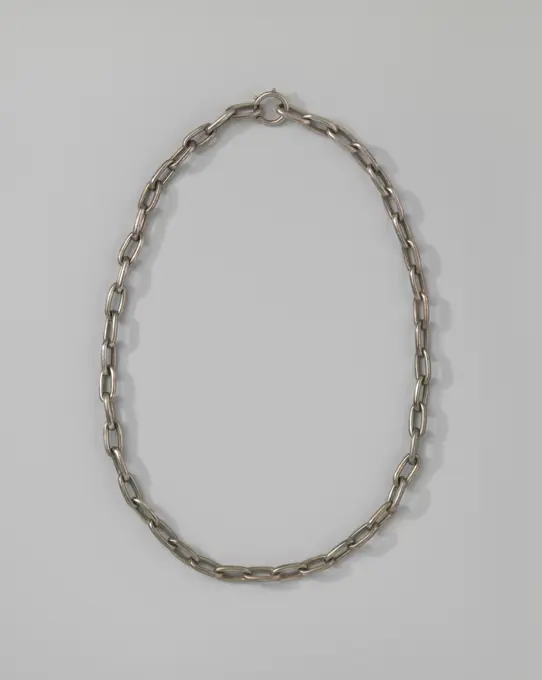
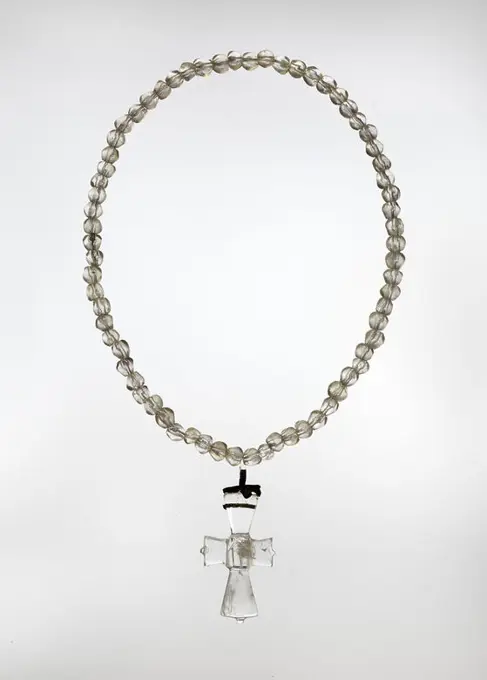
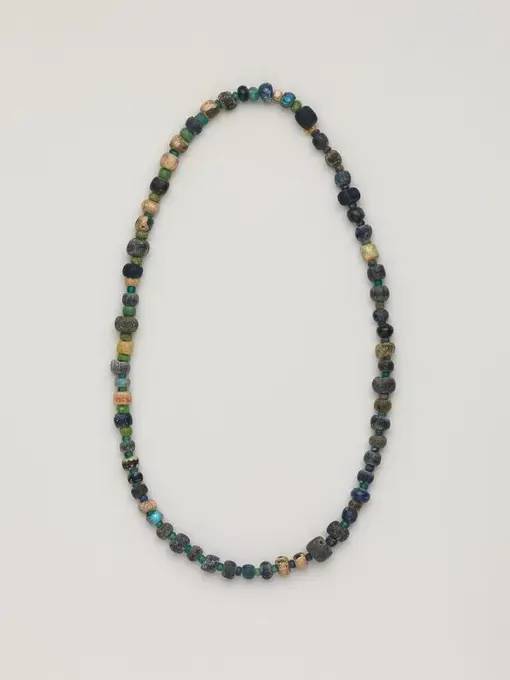
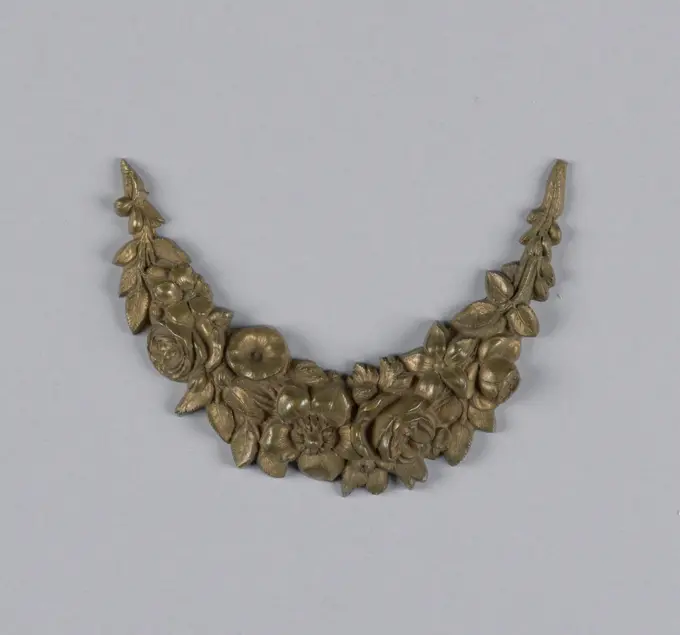
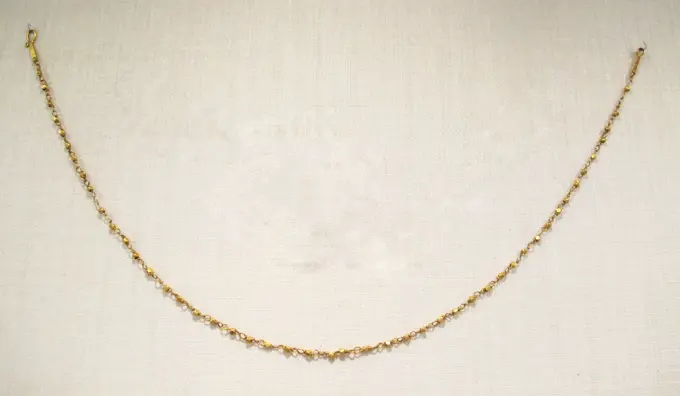
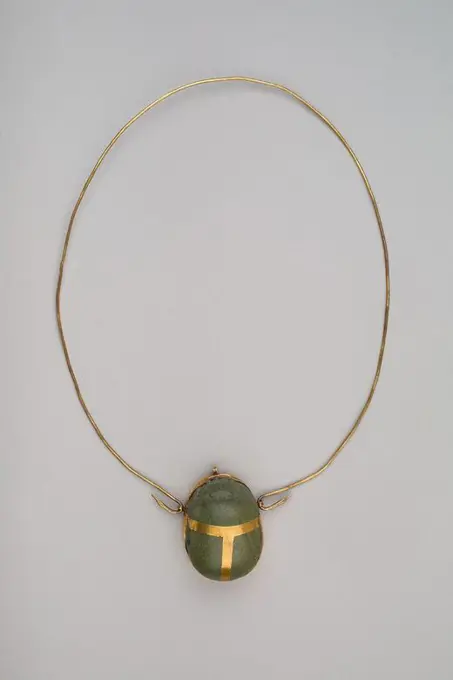
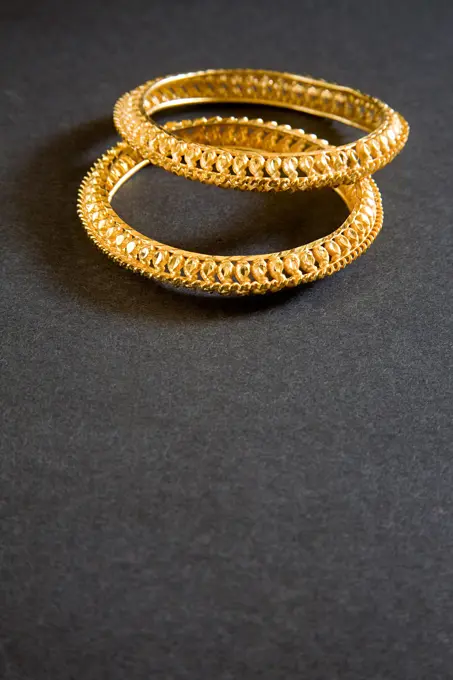
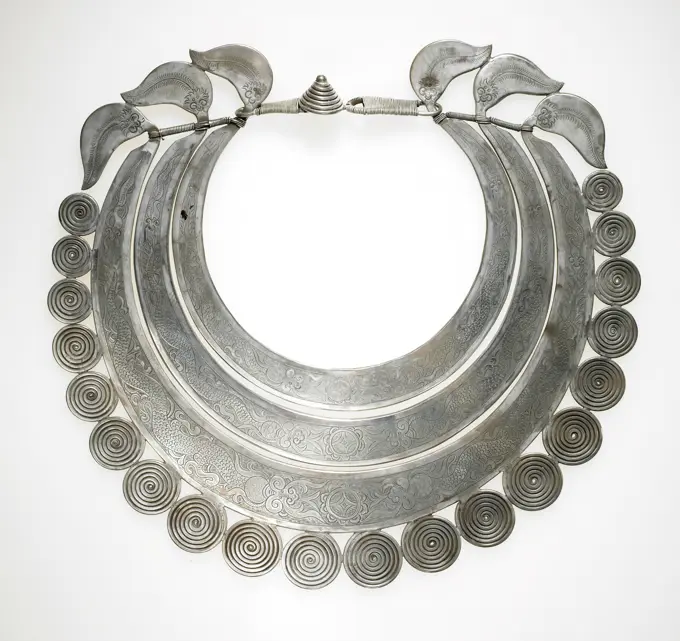
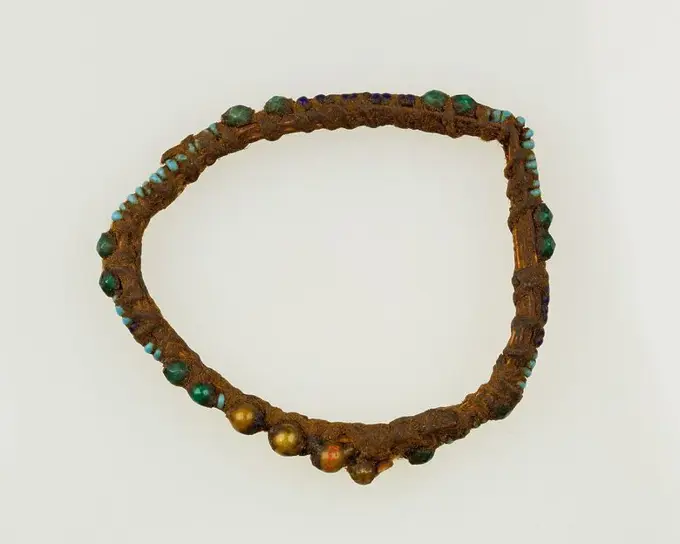
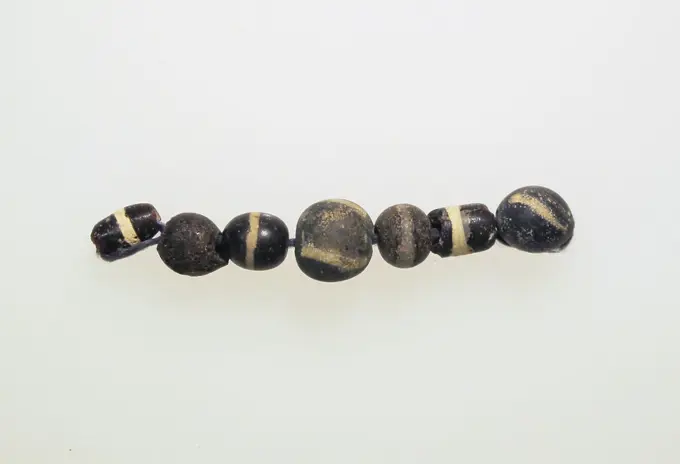
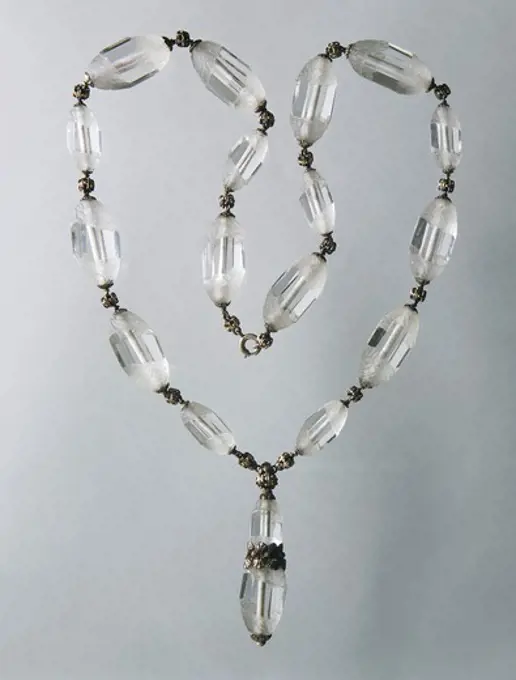
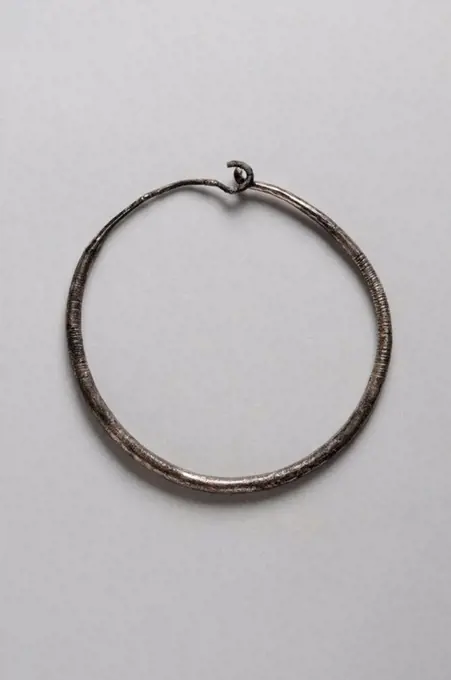
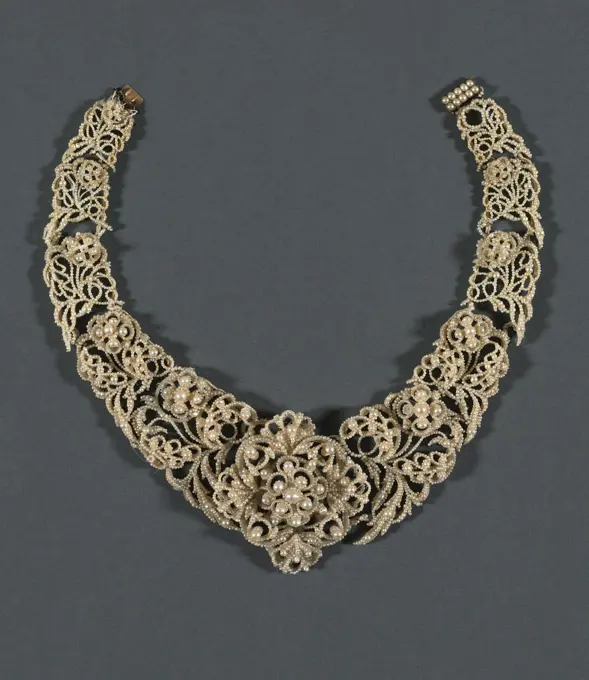
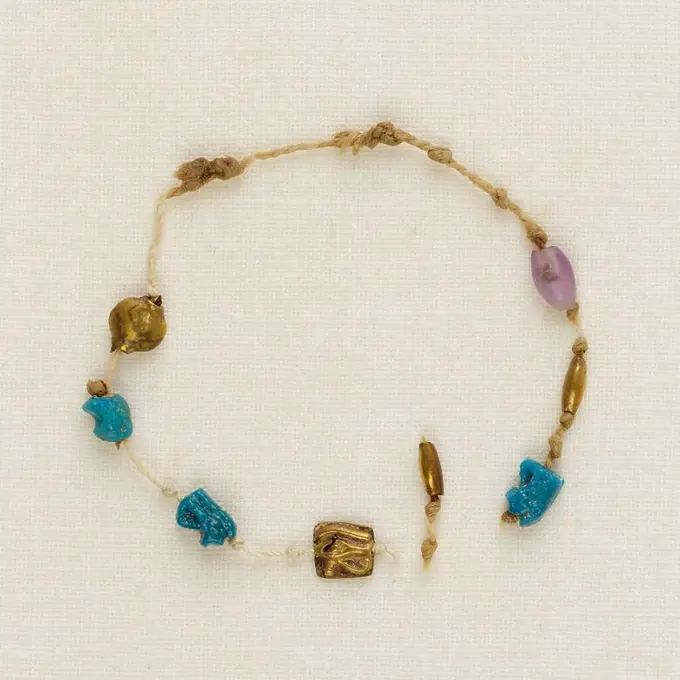
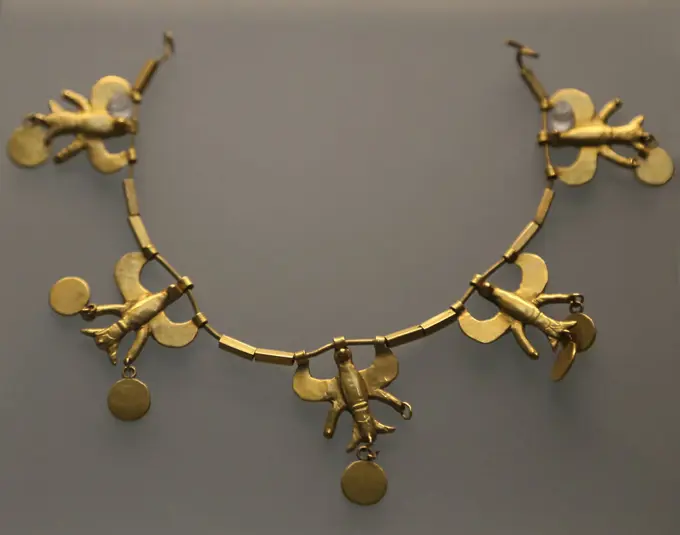
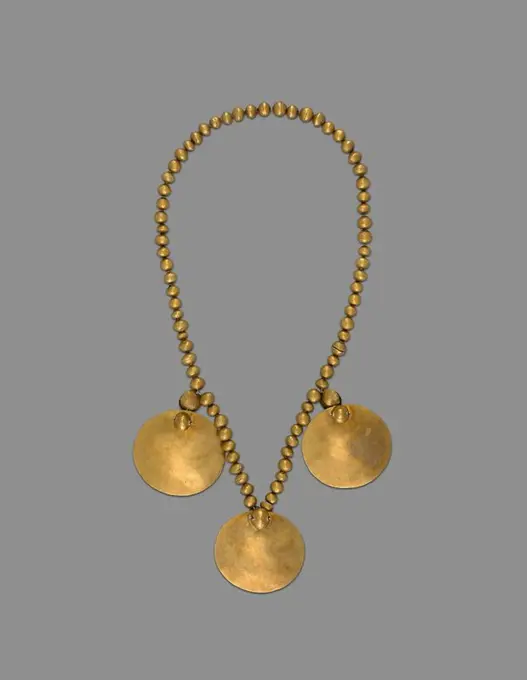
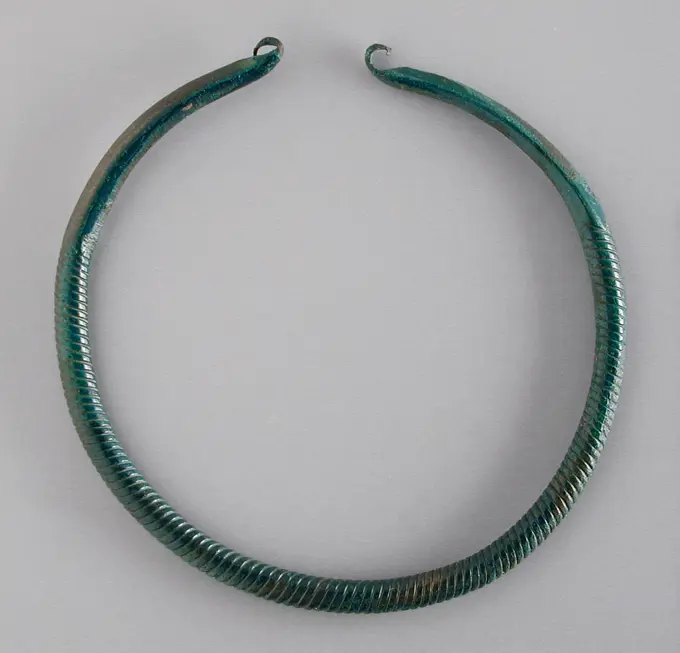
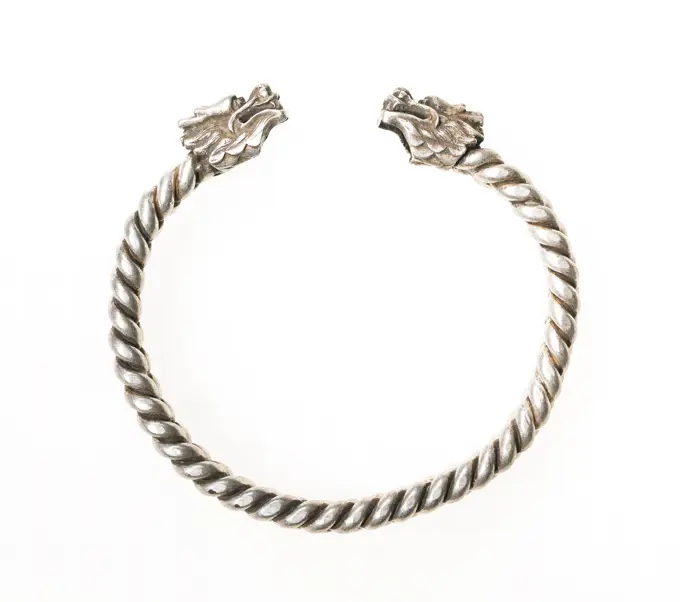
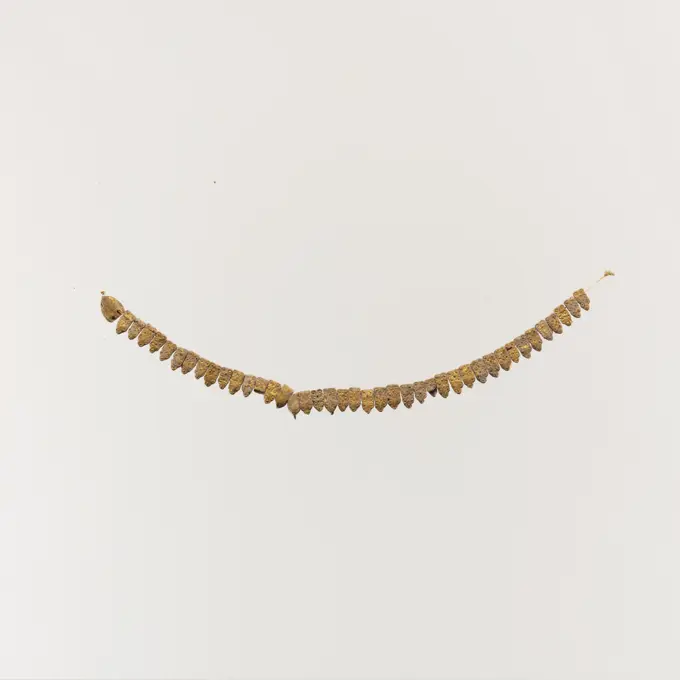
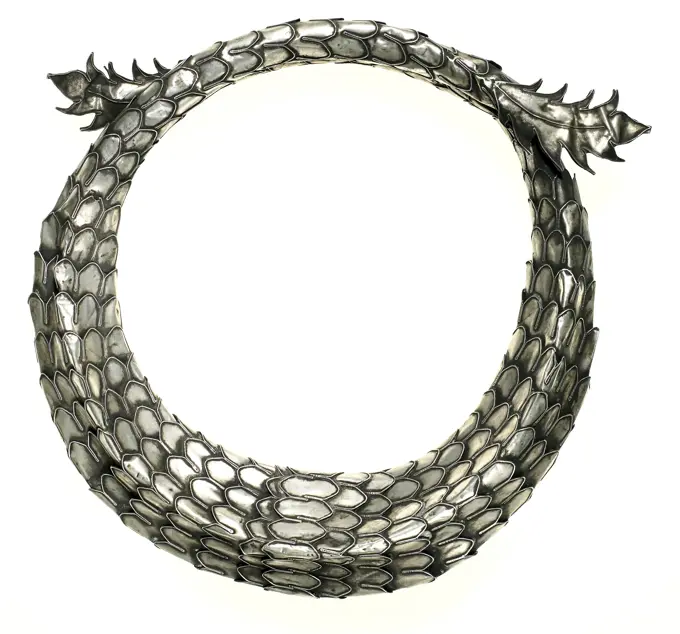
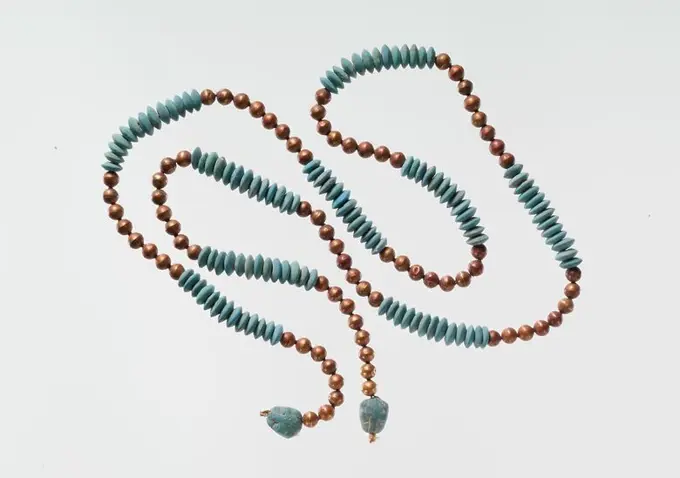
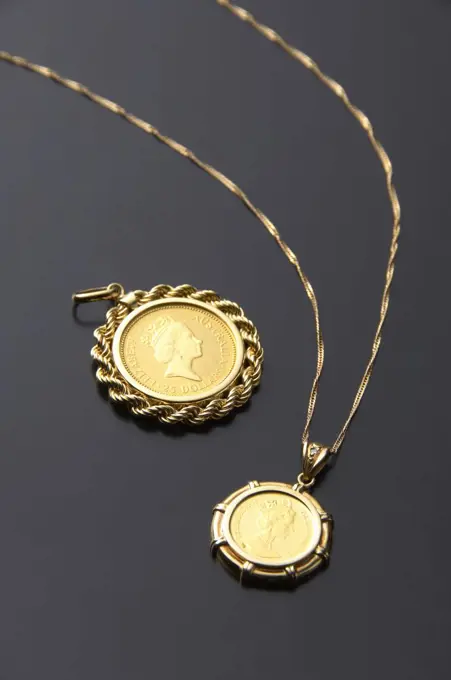
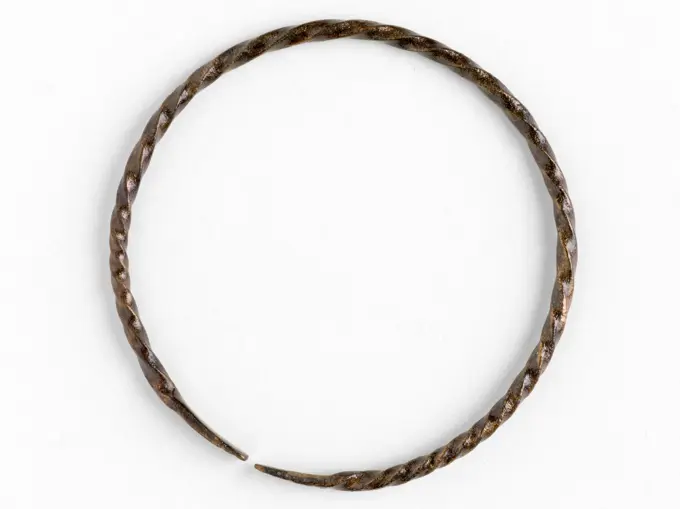
Sling A.D. 1450-1532 Quechua. Sling 316929Chain. Culture: Roman. Dimensions: Other: 13 3/4 in. (34.9 cm). Museum: Metropolitan Museum of Art, New York, USA.Braided Wire Chain with Clasp Last quarter of the 10th-last quarter of the 15th century Indonesia (Java). Braided Wire Chain with Clasp 50059Belt, decorated with Renaissance ornament in relief, anonymous, c. 1550 - c. 1600 Gordel of gilded silver, consisting of four elongated and three smaller parts with Renaissance ornament in relief, interconnected by non-gilded switching chains. Marked at the ends: Master sign CC in Ovaal. Low Countries (possibly) silver (metal) gilding Gordel of gilded silver, consisting of four elongated and three smaller parts with Renaissance ornament in relief, interconnected by non-gilded switching chains. Marked at the ends: Master sign CC in Ovaal. Low Countries (possibly) silver (metal) gildingRauchquarz Splitterkette auf Schmuckbueste - Splintered smoky quartz chain on bust Rauchquarz Splitterkette auf Schmuckbueste - Splintered smoky quartz chain on bust Copyright: xZoonar.com/lantapixx 9474173Necklace 7th-5th Century B.C. Etruscan. Necklace 246004Necklace 1st-7th century Calima (Yotoco). Necklace 310260Earring 675-725 Frankish Hoop earrings with polyhedral beads, derived from late Roman jewelry, remained fashionable among Frankish women from the 400s through the 700s. Many are delicate pieces, their beads decorated with garnets or precious stones. Others, often with the least imposing beads, impress by their large hoops and distinctive closures.. Earring 465412 Frankish, Earring, 675725, Silver, Overall: 3 3/8 x 1/4 in. (8.5 x 0.6 cm) Hoop: 3 3/8 in. (8.5 cm) Bead: 1/4 in. (0.6 cm). The Metropolitan Museum of Art, New York. Gift of J. Pierpont Morgan, 1917 (17.193.106)Necklace (chandanhar), anonymous, c. 1750 Long necklace (Chandanhar) of gold. Consisting of three cords (originally five) of flat rings. At the ends attached to triangular final pieces, which are connected to each other with two chains. Surat gold (metal) Long necklace (Chandanhar) of gold. Consisting of three cords (originally five) of flat rings. At the ends attached to triangular final pieces, which are connected to each other with two chains. Surat gold (metal)Necklace, Shell, leather, Necklace of two strands made of shell discs, whole shells, and larger pieces of turquoise and red stones strung on leather., USA, 19th century, jewelry, Decorative Arts, NecklaceString of cowrie shells Third Intermediate Period-Late Period ca. 1070-343 B.C. View more. String of cowrie shells. ca. 1070-343 B.C.. Cowrie shell. Third Intermediate Period-Late Period. From Egypt, Upper Egypt, Thebes, Deir el-Bahri, Middle Terrace, Late Dynastic intrusive burials, MMA excavations. Dynasty 21-30Belt, decorated with Renaissance ornament in relief. Woman scent of gold-plated silver. Consisting of four elongated and three smaller parts with Renaissance ornament embossed by non-gold-plated chains. Signature: cc in oval.Naszyjnik. unknown, authorTorque, 7 5/8 x 7 3/8 x 2 in. (19.37 x 18.73 x 5.08 cm), Silver, ChinaString of 8 kidney-shaped seeds Second Intermediate Period-Early New Kingdom ca. 1580-1479 B.C. View more. String of 8 kidney-shaped seeds. ca. 1580-1479 B.C.. Seeds, linen string. Second Intermediate Period-Early New Kingdom. From Egypt, Upper Egypt, Thebes, Asasif, East of Pabasa, Burial B44, neck of mummy, MMA excavations, 1918-19. Dynasty 17-18Necklace (India); silverBracelet of gold and four moonstones, c. 1906 - c. 1925 Bracelet of gold and four oval cabochon cut moonstones. The bracelet closes with a spring ring and a safety chain. Utrecht gold (metal). moonstone grinding Bracelet of gold and four oval cabochon cut moonstones. The bracelet closes with a spring ring and a safety chain. Utrecht gold (metal). moonstone grindingJacket of black sheet with decoration of silver thread (A), with office chain (B), box (c) and can (d). .Torque, 10 3/4 x 9 5/8 x 1 1/2 in. (27.31 x 24.45 x 3.81 cm), Silver, ChinaNecklace withBeadsMedal of Honor for Michiel de Ruyter, Anonymous, 1657  Oval gold medallion with accompanying triple chain, consisting of open, oval links. On the chain a large carrying ring, on which a smaller carrying ring hangs. From here, three small chains, consisting of thick, round links to three, carry the edge of the medallion attached. The medallion has the engraved weapon of Holland at the front: crowned lion with sword and bundle in claws within Cartouche. Reverse: the engraved weapon of the Amsterdam admiralty: lion, sitting in fenced garden, with two crossed anchors in front of themselves, between two letters A within Cartouche.  gold (metal) engraving / forging / striking (metalworking) coat of arms (as symbol of the state, etc.) Mediterranean. AmsterdamNecklace -Necklace and Pendant Cross. Culture: Coptic. Dimensions: (a) necklace only: length 26 in. × 7/16 in. (length 66 × 1.1 cm)(b) cross with silver mount: 3 3/8 × 1 5/8 × 1/2 in. (8.6 × 4.1 × 1.3 cm)(b) rock crystal cross only: 2 7/8 × 1 5/8 × 1/2 in. (7.3 × 4.1 × 1.3 cm). Date: 500-700.These works are thought to have been found near a Christian church dedicated to the popular warrior saint Theodore Stratelates and built on the grounds of Medinet Habu, the mortuary temple of Ramesses III from the early twelfth century b.c. They may have belonged to a ranking prelate there. Museum: Metropolitan Museum of Art, New York, USA.Necklace. Culture: Japan. Dimensions: L. 10 in. (25.4 cm). Date: 6th century. Museum: Metropolitan Museum of Art, New York, USA.Torque, 9 1/4 x 9 x 1 in. (23.5 x 22.86 x 2.54 cm), Silver, ChinaChain of the Veere Chamber of Rhetoric, anonymous, c. 1530 Chain of gilded silver. On the chain of double, twisted links, the diamond -shaped carrier is hanging with an engraved representation of the announcement. Between Maria and the angel a vase with lilies, around which a banderolle with the inscription: 'Growing in Reinder Jonste'. Under the vase on a pedestal the letters: A.B.C.D. A pear -shaped appendix to three points of the carrier; At the top an eye with a ring, so that the chain has been reached. Northern Netherlands silver (metal) gilding  Veere Chain of gilded silver. On the chain of double, twisted links, the diamond -shaped carrier is hanging with an engraved representation of the announcement. Between Maria and the angel a vase with lilies, around which a banderolle with the inscription: 'Growing in Reinder Jonste'. Under the vase on a pedestal the letters: A.B.C.D. A pear -shaped appendix to three points of the carrier; At the top an eye with a ring, so that the chain Torque, 11 x 10 3/4 x 3/4 in. (27.94 x 27.31 x 1.91 cm), Silver, ChinaBracelet -Beads, 38. Beads, 38. Glass. GlassNecklace with 16 beads 3rd century A.D. Roman. Necklace with 16 beads. Roman. 3rd century A.D.. Gold. Late Imperial. Gold and SilverMountNecklace, before 1532. Peru. Gold with gray and black polished stone beads; overall: 69.8 cm (27 1/2 in.).Gold necklace 1st century B.C.-1st century A.D. Roman Gold beads and gold links.. Gold necklace. Roman. 1st century B.C.-1st century A.D.. Gold. Gold and SilverJewelry from Indian Arts and Crafts Board displayNecklace Strung with Indigenous and Imported Beads 1000-1600 Central Coast. Glass, shell, and ceramic with string . ChancayBracelet. Iran, Achaemenid period (550-330 B.C.). Jewelry and Adornments; bracelets. SilverCollar last quarter 18th century British. Collar 78929Torque, 8 5/8 x 8 1/2 x 1 3/8 in. (21.91 x 21.59 x 3.49 cm), Silver, ChinaNecklace, c. 1930, 9 1/2 in. (24.13 cm), Silver, United States, 20th centuryHeart Scarab of Maruta. Dimensions: l. 7.5 cm (2 15/16 in); w. 4.6 cm (1 13/16 in); d. 3.3 cm (1 5/16 in); l. (wire and scarab) 35.5 cm (14 in). Dynasty: Dynasty 18. Reign: reign of Thutmose III. Date: ca. 1479-1425 B.C.. Museum: Metropolitan Museum of Art, New York, USA.Locket and Chain. Dimensions: Chain and hook: L. 19 1/2 in. (49.5 cm)Locket: 1 11/16 x 2 3/8 in. (4.3 x 6 cm). Date: ca. 1870. Museum: Metropolitan Museum of Art, New York, USA.Gold bangle india april 2011 India Copyright: xNirmalaxMishra/DinodiaxPhotoxTorque, 10 x 10 x 1 in. (25.4 x 25.4 x 2.54 cm), Silver, ChinaGrape shears, Charles Victor Gibert, French, Silver, Vine-like handles, two leaves with tendrils, snail., ca. 1885-90, cutlery, Decorative Arts, Grape shearsTorque, 12 1/2 x 13 1/2 x 1 1/8 in. (31.75 x 34.29 x 2.86 cm), Silver, ChinaGold necklace with emerald and variscite beads 3rd century A.D. Roman 24 green beads: 1 emerald and 23 variscite.. Gold necklace with emerald and variscite beads. Roman. 3rd century A.D.. Gold, emerald, and variscite. Late Imperial. Gold and SilverBracelet of beads strung on fiber. Date: A.D. 2nd-7th century. Museum: Metropolitan Museum of Art, New York, USA.correct symbol. chrome screwsBeads, 7. Culture: Roman. Dimensions: Other: 2 1/2 in. (6.3 cm)Diameter (largest bead): 7/16 in. (1.1 cm)Diameter (diameter smallest bead): 1/4 in. (0.7 cm). Museum: Metropolitan Museum of Art, New York, USA.Willow wreath. Round frame made of willow twigs. Easter wreath made of willow stalks.Vector flat illustration isolated on a white background. Design for invitations, postcards, printing.. Willow wreath. Round frame made of willow twigsChatelaine of gilded copper composed of two wire chains with slider, anonymous, c. 1800 - c. 1900 Watch chain of gilded copper composed of two wire chains with slider. Europe whole: copper (metal). Gilding (Material) gilding Watch chain of gilded copper composed of two wire chains with slider. Europe whole: copper (metal). Gilding (Material) gildingTwo necklacesNose Ring, 20th Century. India. Silver; overall: 6.4 cm (2 1/2 in.).Necklace, from a set of three, 12 1/4 x 12 1/16 x 3/8 in. (31.12 x 30.64 x 0.95 cm), Aluminum (), ChinaGoldsmith's art, Italy, 20th century. Mario Buccellati, briolette-cut rock crystal necklace, with gold and silver decorations, 1940s.Necklace 1st century B.C.-1st century A.D. Roman. Necklace. Roman. 1st century B.C.-1st century A.D.. Gold, Amethyst (or glass ). Early Imperial. Gold and SilverHoop earrings made of silver decorated with incised lines on both sides. Diameter 3 mm ( 6th - 7 th CE ) - Visigoth period, from the "Afflicted Necropolis - Villa del Val"- Archaeological site of Complutum in Alcalá de Henares ( Madrid ). SPAIN.Necklace ca. 1900-1850 B.C.. Middle Kingdom. Necklace 574907Bracelet with red beads, J. Stork Bracelet with red beads. Bracelet with red beads.Necklace (Parure), c. 1850. England, 19th century. Seed pearl on Mother-of-Pearl; overall: 44.4 cm (17 1/2 in.).Bracelet with 4 wedjat eyes, 2 barrel beads, and 1 acacia bead. Dimensions: Diam. ca. 3.8 cm (1 1/2 in.). Dynasty: late Dynasty 21. Date: ca. 1000-945 B.C..One of five bracelets found around the right wrist of Henettawy's mummy, this is a single strand of thin cord. Strung at intervals along the strand were four wedjat eye amulets, three of faience and one of gold; one gold and one amethyst barrel bead; and one gold acacia bead. The cord was broken, so the original order of the beads and amulets is uncertain. The wedjat eyes represent the healed eye of the falcon-god Horus, a powerful symbol of protection and regeneration. Museum: Metropolitan Museum of Art, New York, USA.Torque, 11 x 11 x 3/4 in. (27.94 x 27.94 x 1.91 cm), Silver, ChinaTreaty establishing Hittite domination of the city of Aleppo. Aleppo Treaty. 1300 BC. Central Turkey. British Museum.Earring (one of a pair) 6th-7th century Byzantine Earrings like these are found throughout the Byzantine world.. Earring (one of a pair) 464071Necklace with Three Round Pendant Disks. Near Guayaquil, Ecuador. Date: 1000-1400. Dimensions: . Gold. Origin: Ecuador. Museum: The Chicago Art Institute, USA.Torque (neck ring). Northwestern Iran, circa 1350-800 B.C.. Jewelry and Adornments; torques. Bronze, castBorder Fragment 2nd century B.C. Nasca. Border Fragment. Nasca. 2nd century B.C.. Camelid hair, cotton. Peru, Rio Grande de Nasca. Textiles-WovenBeaded Necklace, c 1900. Africa, Southern Africa, South Africa, Zulu, 20th century. Glass beads, probably plant fiber, sinew, horn beads, and claw; overall: 138.4 cm (54 1/2 in.).Bracelet, one of a pair, 2 7/8 x 3 x 1/2 in. (7.3 x 7.62 x 1.27 cm), Silver, ChinaStudio shot, Maunalea Lei, pink and white flowersGilt terracotta necklace 3rd century B.C. Greek, South Italian, Tarentine Terracotta pendants gilded in gold.. Gilt terracotta necklace 248629Ring, 1800s. India. Silver; diameter: 1.8 cm (11/16 in.).Torque, 10 3/4 x 12 x 2 1/2 in. (27.31 x 30.48 x 6.35 cm), Silver, ChinaFloral Crown Necklace, designed by Piero della Francesca, used in The Baptism of Christ, House of Piero della Francesca, Casa di Piero della Francesca, Sansepolcro, Tuscany, Italy, EuropeNecklace 18th-19th century. Necklace 446752String of Beads with Feline-head Amulets. Dimensions: L. 67 cm (26 3/8 in). Dynasty: Dynasty 18. Reign: reign of Ahmose-Thutmose III. Date: ca. 1550-1425 B.C..The use of feline's-head ornaments in jewelry is well known from the Twelfth Dynasty (ca. 1981-1802 B.C.) and continues in the early Eighteenth Dynasty. It is difficult to identify the type of cat that the Egyptians had in mind, although most seem to be leopards, an animal that, in the Middle Kingdom, has apotropaic properties. For a feline-head ring in the collection see 26.7.773. Museum: Metropolitan Museum of Art, New York, USA.Torque, 9 3/4 x 10 3/8 x 1 3/8 in. (24.77 x 26.35 x 3.49 cm), Silver, ChinaSolid Cast Oval Pendant withLoopTorque, 2 x 12 1/2 x 10 1/2 in. (5.08 x 31.75 x 26.67 cm), Silver, ChinaCoin pendantTorque, 9 1/2 x 9 1/8 x 1 1/2 in. (24.13 x 23.18 x 3.81 cm), Silver, ChinaNice elegant necklace isolated on white backgroundBracelet, one of a pair, 3 3/8 x 3 1/4 x 3/4 in. (8.57 x 8.26 x 1.91 cm), Silver, ChinaBracelet Roman. Bracelet 256667Collier with pendant, Lodewijk Willem van Kooten (II), c. 1908 - c. 1911 Collier with gold pendant, decorated with white email and twenty -seven rubies Amsterdam gold (metal). ruby (mineral). Collier with gold pendant, decorated with white email and twenty -seven rubies Amsterdam gold (metal). ruby (mineral).Bead bracelet or anklet Middle Kingdom ca. 2060-2010 B.C. View more. Bead bracelet or anklet. ca. 2060-2010 B.C.. Faience. Middle Kingdom. From Egypt, Upper Egypt, Thebes, Deir el-Bahri, Temple of Mentuhotep II, North Triangular Court, Pit 29, MMA excavations, 1922-23. Dynasty 11Twin bracelet, copper alloy. Bas-Empire (around 250-beginning of the 5th century). Paris, Carnavalet museum. Parallel features and non -symmetrical cross. Fashion accessory, copper alloy, antique, Roman antiquity, low-Empire, jewelry, torsade bracelet, setChain around a heart shaped object on canvasRouvenat, Léon (1809-1874). Necklace. Graphite pencil, ink, watercolor wash and white gouache enhancement on tray paper glued on paper. S.D. Petit Palais, Museum of Fine Arts in the city of ParisNecklace with 54 millefiori beads. Necklace with 54 millefiori beads. Glass. GlassToe Rings, 1800s. India. Silver; diameter: 12.8 cm (5 1/16 in.).Dog collar isolated on the white backgroundSpoon, silver, Elongated scallop-shell shaped bowl with perferations. Short curved handle with winged cherub's mask below a cast Cupid with flowers and rabbit., Netherlands, 19th century, cutlery, Decorative Arts, SpoonHammock end, 18th century, 15/16 x 12 1/4 x 9/16 in. (2.38 x 31.12 x 1.43 cm), Ivory, China, 18th centuryRing with hollow hoop. Ring with hollow hoop 243536Necklace Ornaments 5th-10th century Tolima. Necklace Ornaments. Tolima. 5th-10th century. Gold. Colombia, Rio Magdalena. Metal-OrnamentsRock style leather bracelets isolated on white background Bracelet probably 14th-15th century The earliest known examples of this type of seamless mosaic glass bracelet are from the late thirteenth century; it continued to be produced well into the nineteenth century at Hebron, in Palestine. This bracelet, together with thirty-three others in the collection, comes from UpperEgypt and was probably made during the Mamluk period.. Bracelet 446019Coaster; lead-glazed earthenware ("queens ware")Rolled Head, Neck or Waist band(Umgingqo)